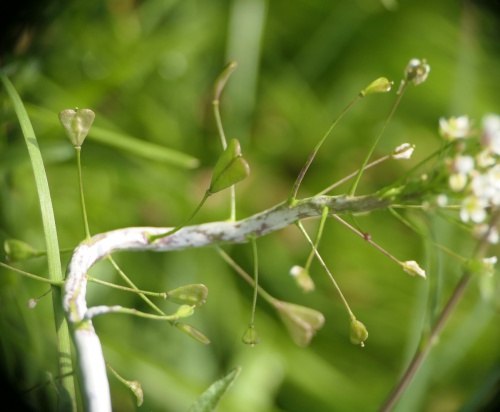
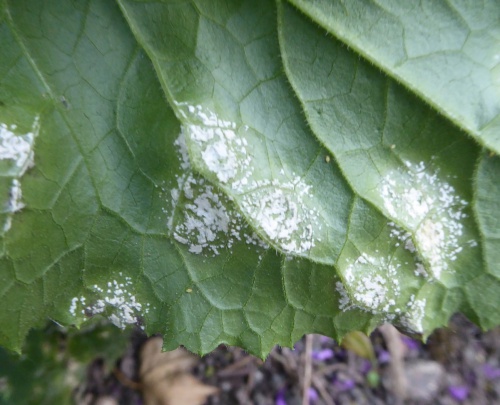
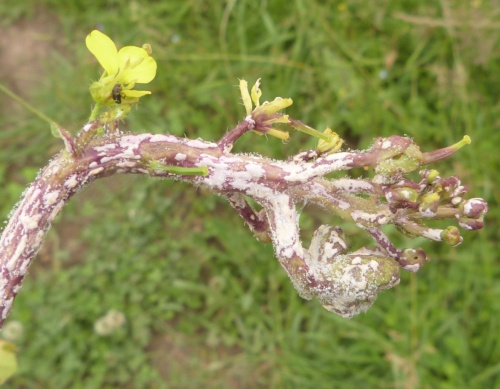
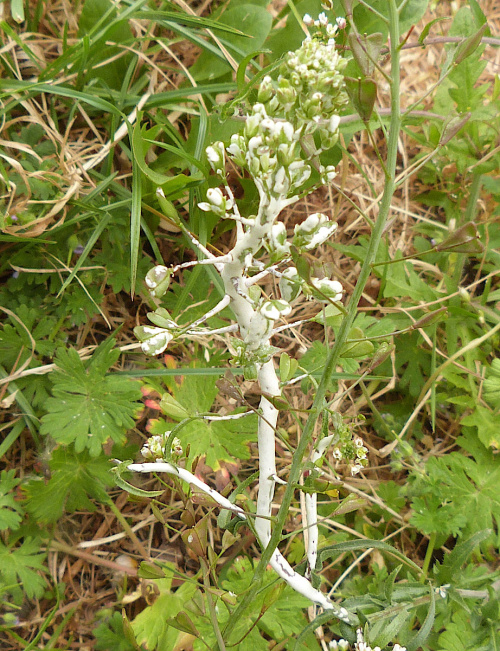
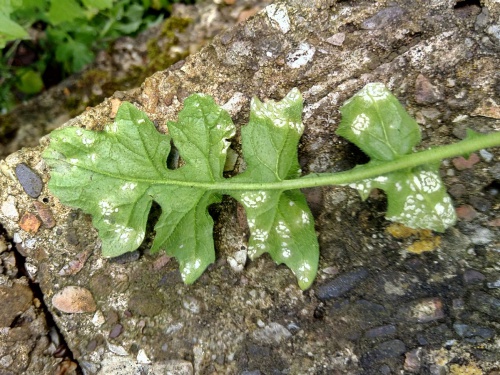
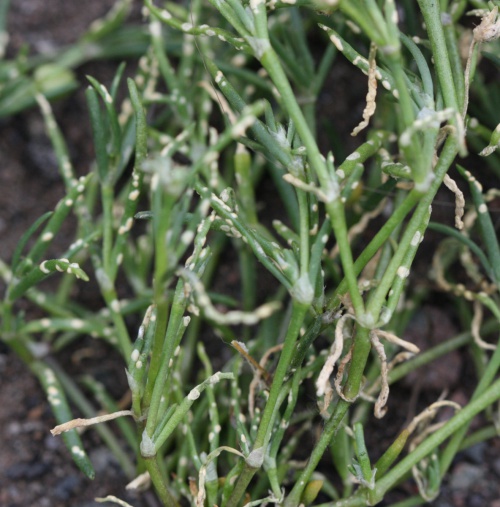
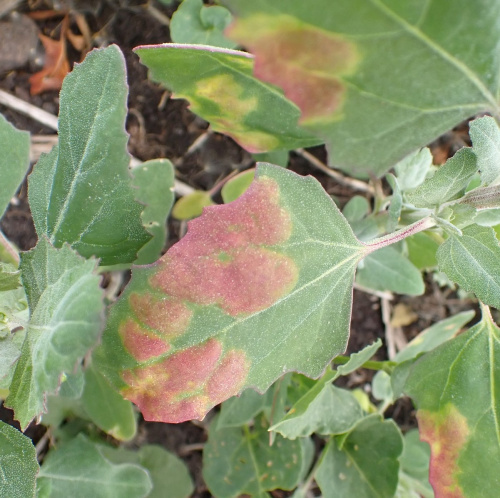
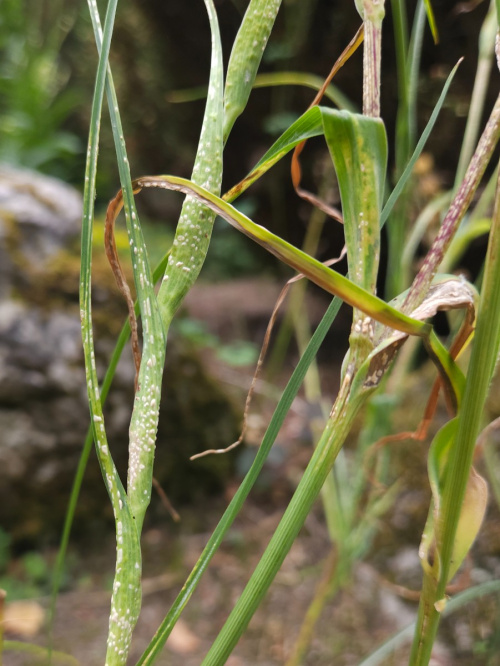
All images on this website have been taken in Leicestershire and Rutland by NatureSpot members. We welcome new contributions - just register and use the Submit Records form to post your photos. Click on any image below to visit the species page. The RED / AMBER / GREEN dots indicate how easy it is to identify the species - see our Identification Difficulty page for more information. A coloured rating followed by an exclamation mark denotes that different ID difficulties apply to either males and females or to the larvae - see the species page for more detail.
Galls
The British Plant Gall Society define a gall as ‘an abnormal growth produced by a plant or other host under the influence of another organism. It involves enlargement and/or proliferation of host cells, and provides both shelter and food or nutrients for the invading organism'. (https://www.britishplantgallsociety.org/)
Organisms that cause galls to form on plants encompass almost the entire spectrum of life – from viruses and bacteria, through Protozoa, fungi and allies, slime-moulds, nematodes, mites, aphids and psyllids, flies, beetles, moths, sawflies and wasps, and even a few algae and vascular plants. The organism that causes a gall is usually very difficult to identify, but often the gall can be identified. However, some galls are hard or impossible to identify, and it may be necessary to find the gall-causer and get expert help. The presence of parasitoids, inquilines or other organisms sheltering or feeding inside an occupied or vacated gall can be misleading, and it is common to find atypical specimens or chimaera formed by two or more organisms in close proximity - usually these can't be identified.
When recording galls, always start by identifying the host plant accurately and make sure you have included information on the host in the notes attached to your record. Most species of galls are specific to a host, and this is always the first step in identification.
The Field Studies' Council's AIDGAP guide by Redfern, M. & Shirley, P. (2023) ‘British Plant Galls’ (3rd edition). FSC is recommended.
The BPGS Facebook group can help with identifying galls: British Plant Galls.
Photos can be found on the BPGS website or on these northern European websites:
- Pflanzengallen - Comprehensive guide to galls of Germany.
- Plantengallen.com - English-language version of Dutch site.
- Volkers Pflanzengallen - Volker Fäßler’s gall website (in German).
- Leafminers and plant galls of Europe - Dr. Willem N. Ellis' website (‘Bladmineerders’).
- An excellent account of the ecology and biology of galls is in Redfern, M. (2011) Plant Galls. Collins New Naturalist.
In the accounts below, there are sometimes two or more Red-Amber-Green or 'RAG' ratings - one or two referring the gall, and one to the gall-causer. Galls usually have a lower 'RAG' rating then the causer. Click on the species to find out more.
Galls caused by rusts, smuts and allies
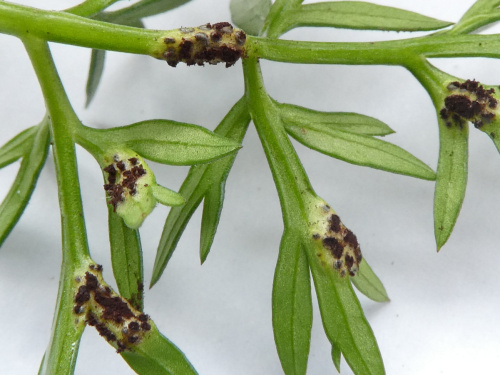
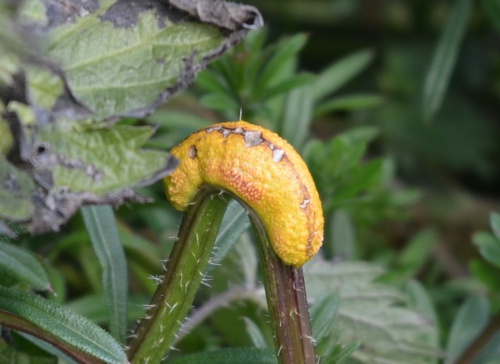
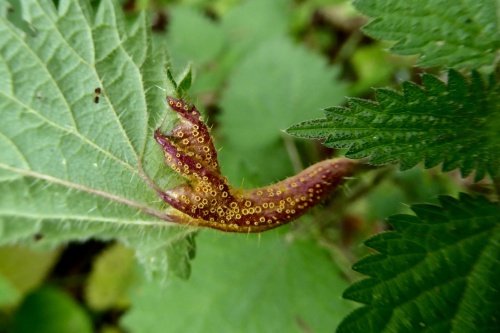
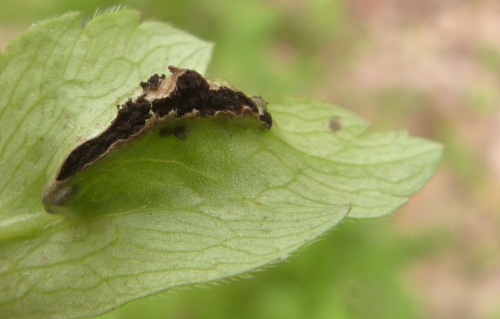
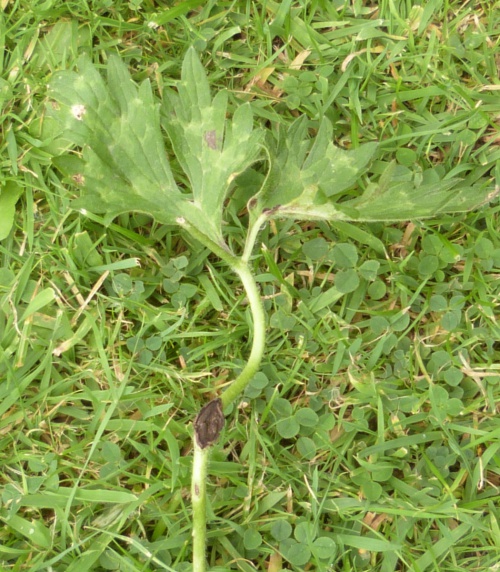
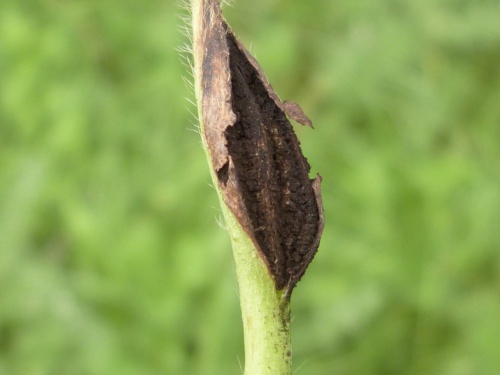
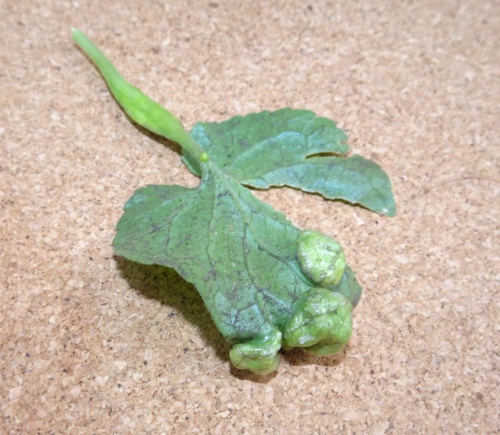
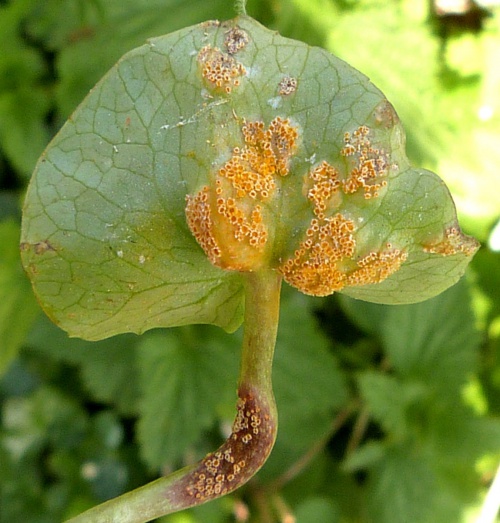
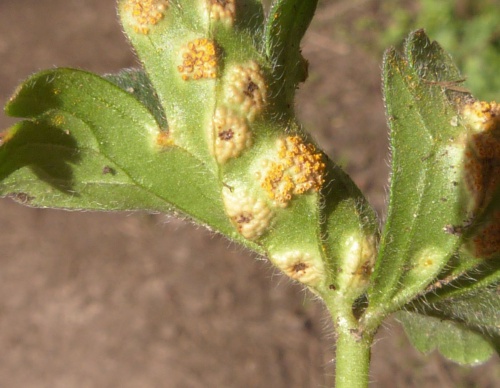
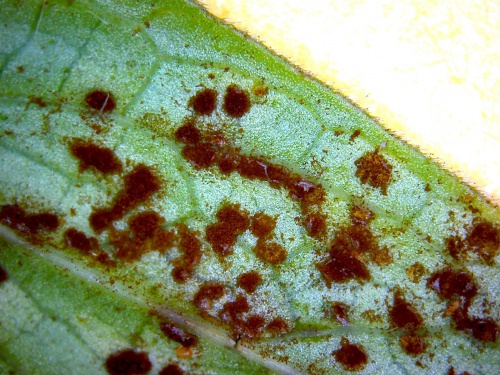
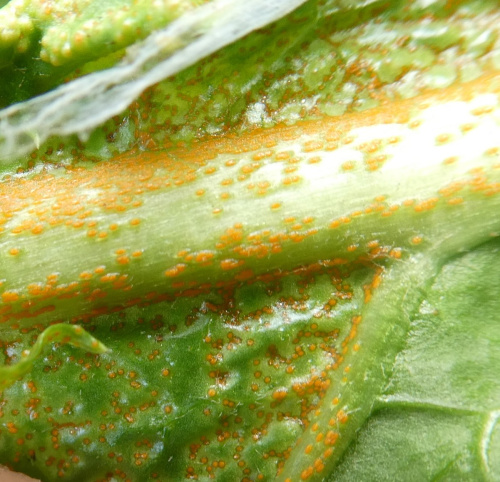
Some species of Rust can cause large swellings on the host plant which are very obviously galls, e.g. Gymnosporangium galls on Hawthorn, Pear and Juniper, or the Nettle Rust Puccinia urticata. Often the rust causes a very slight thickening of the host-plant tissue which may not be evident to the naked eye. The obvious orange or dark brown spores borne on the galls are not the gall itself, but the fruiting bodies of the fungus.
Rusts are currently placed in the Order Pucciniales (formerly Uredinales), with families including Coleosporiaceae, Melampsoraceae, Phragmidiaceae, Pucciniaeae, Puccinastraceae, Raveleniaceae and Uropyxidaceae. Life histories are complex and some species require two host plants in unrelated families to complete their life-cycle - known as the 'primary' and the 'alternate' or 'aecial' host. A classic example is cereal rust (Puccinia graminis), where various grasses including Wheat are the primary host, and Barberry the alternate host. Where there are alternating hosts, galls may not be produced on both hosts; .
Up to 5 types of spores are produced; a diagrammatic example of a life-cycle is here. In some species, one or more of these spore-types is missed from the cycle, and some species complete their life-cycles on one host. The 5 spore-types and the structures that bear them are:
- Basidiospores forming on basidia on the alternate host plant - these are produced in Spring when over-wintering teliospores germinate. The basidiospores are wind-dispersed, and if they land on the right host they produce a mycelium in the plant tissue.
- Spermatia and receptive hyphae borne in spermogonia - tiny haploid spores called 'spermatia' are formed by hyphae near the leaf surface of the alternate host, in spermogonia. Often the spores are in a sweet-smelling matrix exuded by the spermogonia, which is attractive to insects that then carry them to a new host. They may then unite with receptive hyphae in spermogonia on the new host to form a dikaryotic cell.
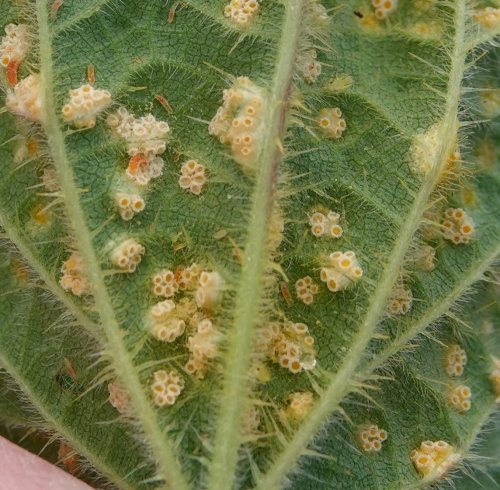
- Aeciospores - spores produced early i the year on the alternate host in cup-like aecia consisting of dikaryotic hyphae. Aecia (singular = aecium) are often orange or rust-coloured; many also cause galls in the host plant. Eventually the spores burst through the roof or 'periderm' of the aecium. The torn remains of the periderm may remain as a whitish fringe around the cup of the aecium (see example). The aeciospores are dispersed by the wind.
- Urediniospores borne on uredinia - if the aeciospores land on the right primary host, a different plant species, they germinate. The hyphae invade the host tissue, eventually producing pustules called uredinia, in summer. These are often brown in the Puccinaceae, or yellow/orange in some families. They release the urediniospores; often several cycles of this take place throughout summer spreading the fungus quickly to other plants.
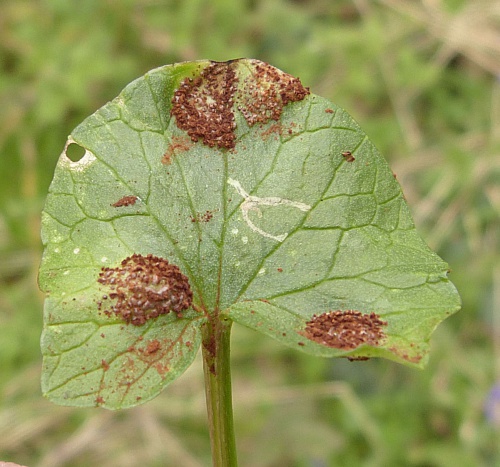
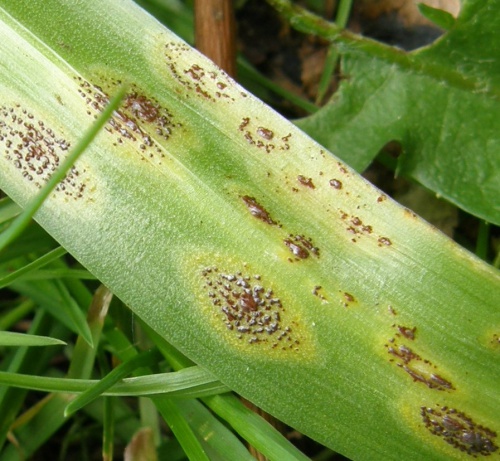
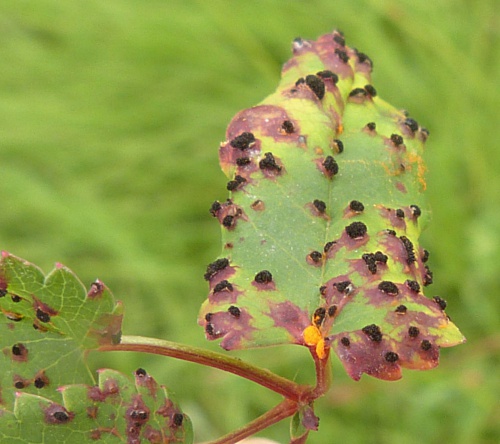
- Teliospores borne on telia - in late summer, dark brown or black pustules are produced on the primary host bearing the over-wintering teliospores (see example).
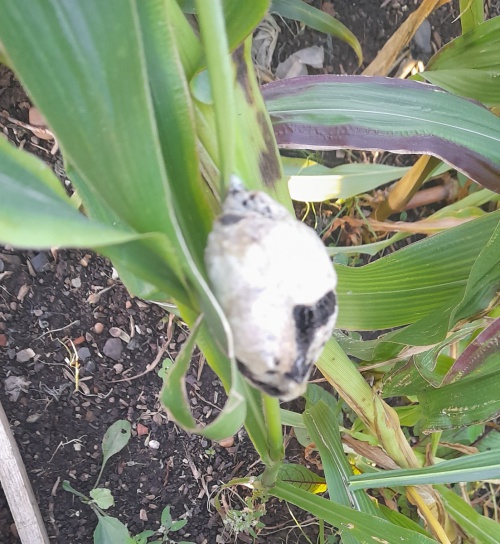
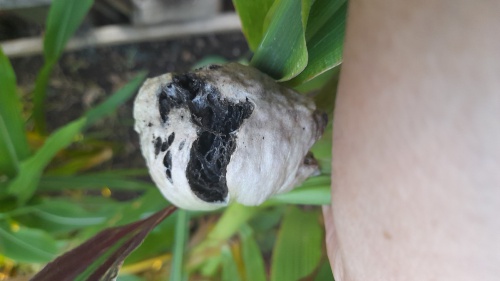
Smuts are characterised by sooty black masses of spores which often replace parts of the flower or grass, or erupt in streaks or lesions on stems. They are currently the order Microbotryales (the family Microbotryaceae), Ustilaginales (e.g. Farysiaceae and Ustilaginaceae) or Urocystidales (e.g. family Urocystidaceae). They have less complex life-cycles; there is no alternation between host plants species, and usually just 2 sorts of spores are produced: basidiospores, or sporidia, and teliospores. The teliospores develop in sori on the anthers, ovaries or swollen stems and leaves of the host, causing a gall. The fungus overwinters as the teliospore, which germinate in Spring to form basidiospores, which then disperse to infect new plants.
The Entylomataceae also produce smut-like spores.
To identify some species, spores need to be examined under the microscope. Details of life-cycles, hosts and spore descriptions are on the Bladmineerders website under the host species; this site also covers some of the unresolved taxonomy issues for some species with complex life-cycles..
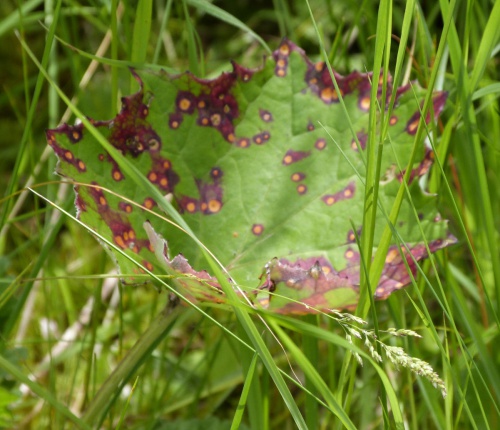


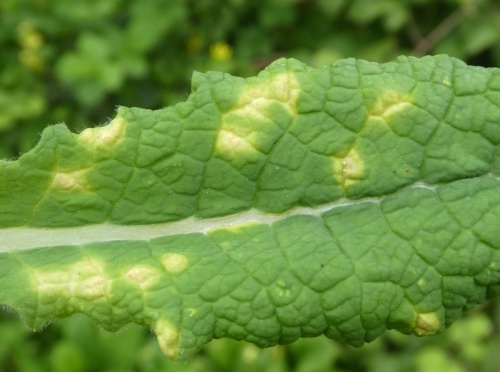
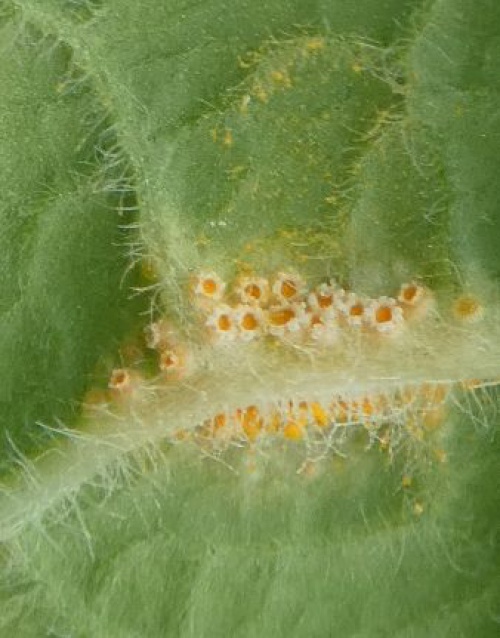
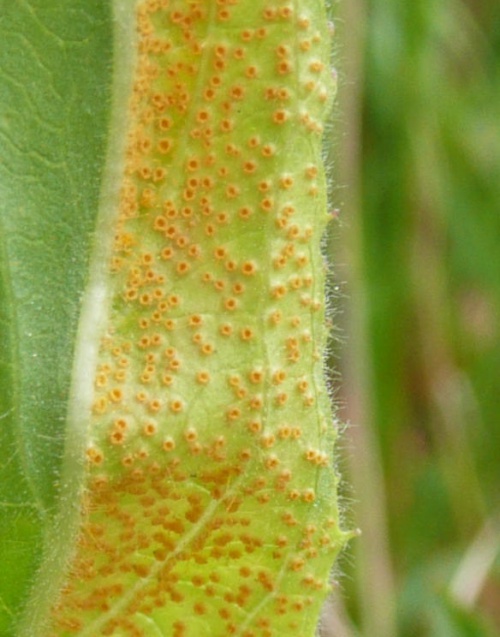

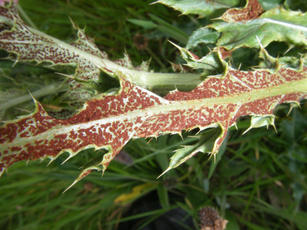
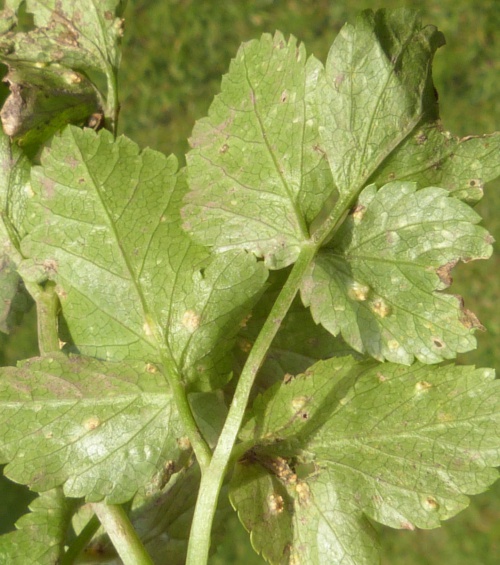
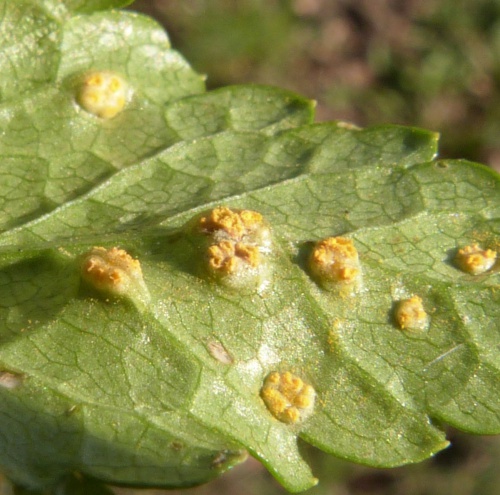
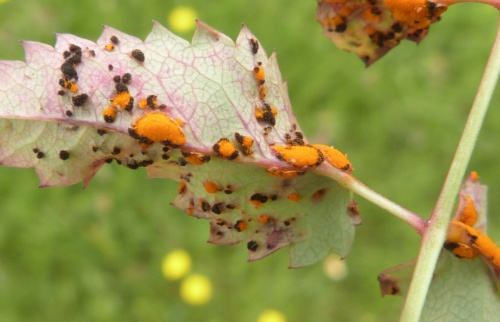
_gall.JPG)
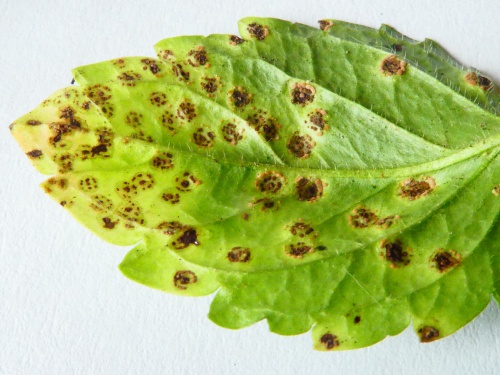
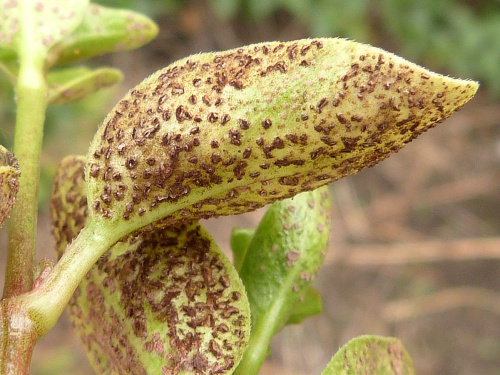
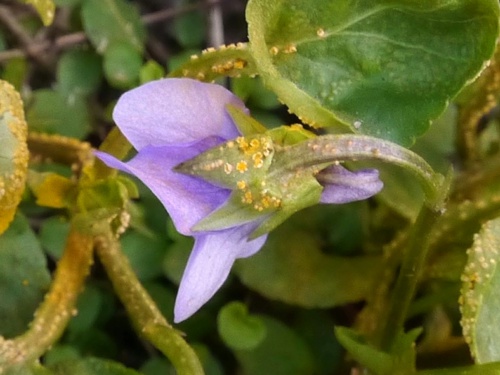
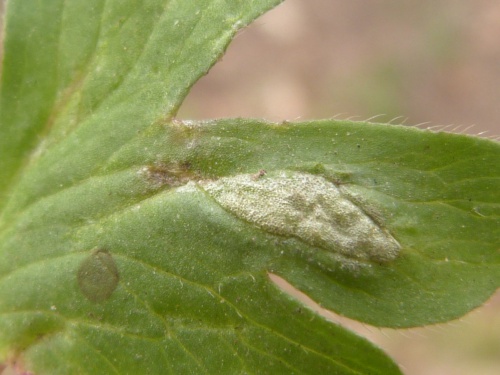
 on host (Filipendula ulmaria) Old Fosse Sapcote SP 5031 9290 (taken 28.5.2009)_gall.JPG)

Galls caused by Ergot and Choke
Ergots (Claviceps) and Chokes (Epichloe) are ascomycete fungi in the Clavicipitaceae family.
Ergots are elongate purplish-black galls that project from the individual florets of many species of grass and Spike-rushes.
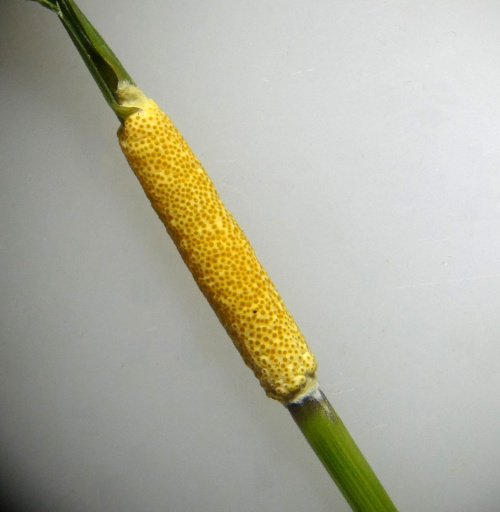
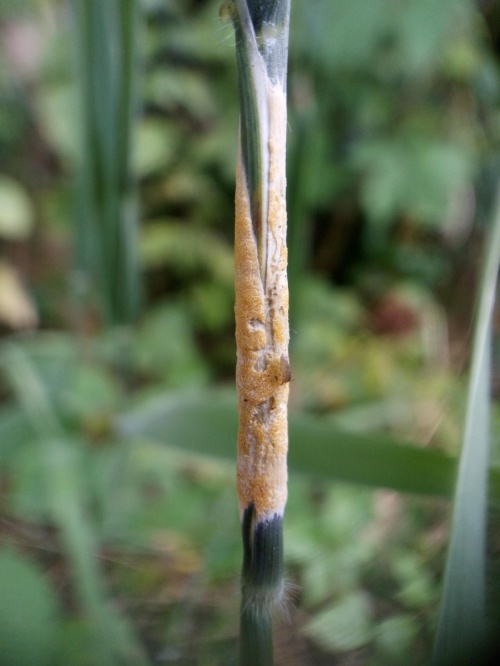
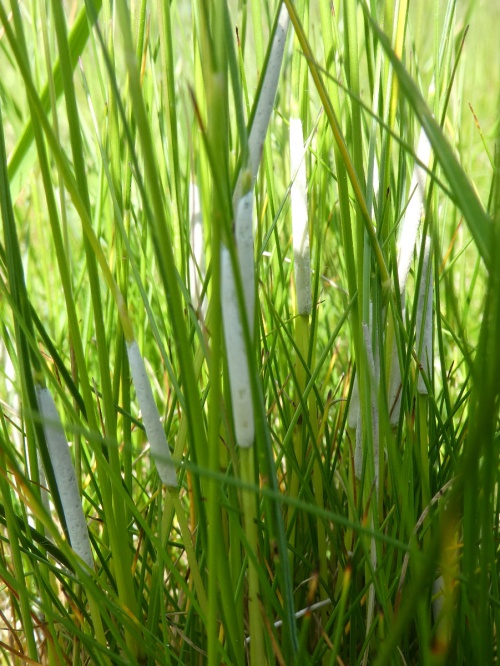
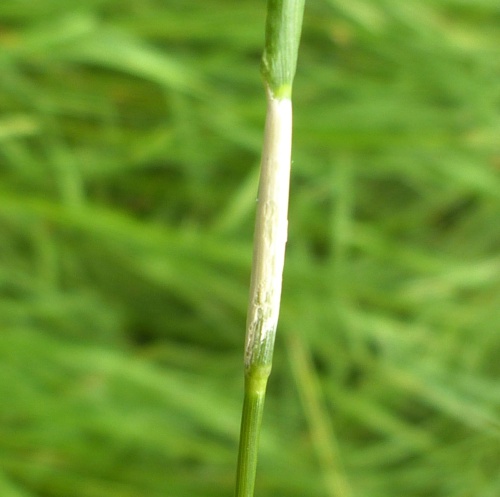
Chokes are formed by a conspicuous white or yellow stroma forming a tube encircling a grass-stem, sometimes including several stem-nodes. This prevents flowering. The stroma contains the asci and long narrow ascospores. It is now known that there are several species of Choke, depending on the species of grass affected: refer to British Plant Galls (Redfern and Shirley, 2023) for details.
- Agrostis (Bent) hosts = Epichloe baconii
- Holcus (Yorkshire Fog/Creeping Soft Grass) hosts = Epichloe clarkii
- Brachypodium sylvaticum (Wood False-brome) host = Epichloe sylvatica
- Bromus (Bromes) hosts = Epichloe bromicola
- Festuca (Fescues) hosts = Epichloe festucae
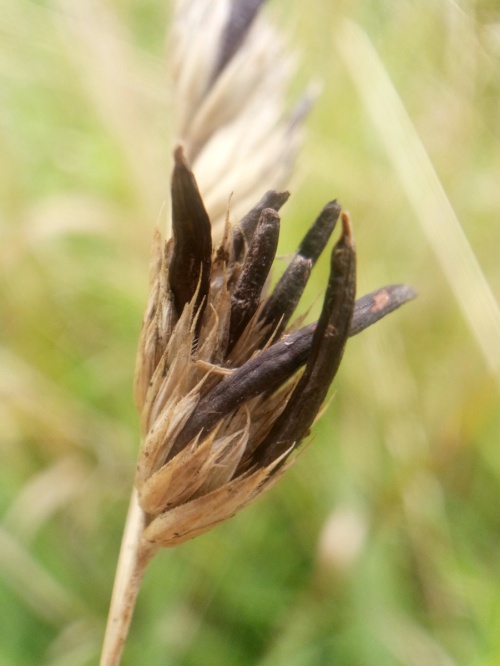
 ergots on Phleum pratense grass Field near Donkey Lane Sapcote SP 4860 9293 (taken 30.8.2009).JPG)
Galls caused by other types of fungi
Galls caused by fungoids - Oomycota
'Fungoid' is a term used to describe a species that appears similar to fungi, and was once classed with them, but is now assigned to a different Kingdom - the Chromista.
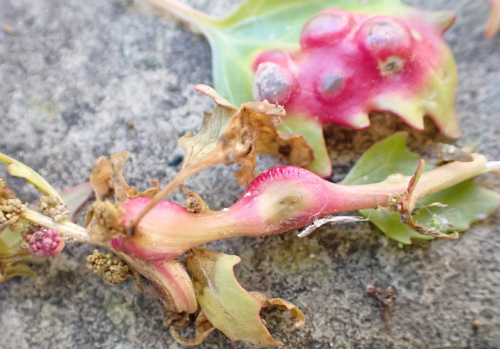
The Phylum Oomycota includes some species that resemble moulds or mildews. Galls are formed by some species.