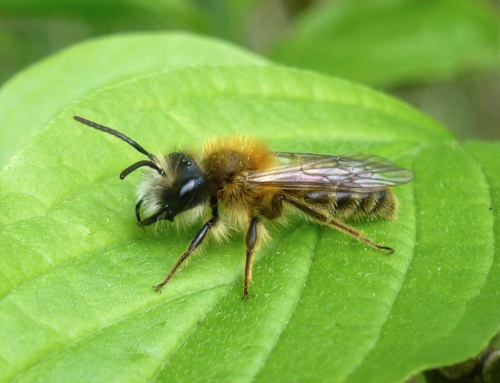
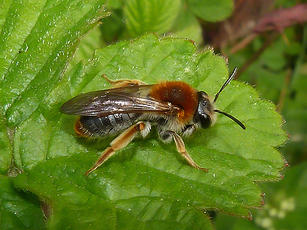
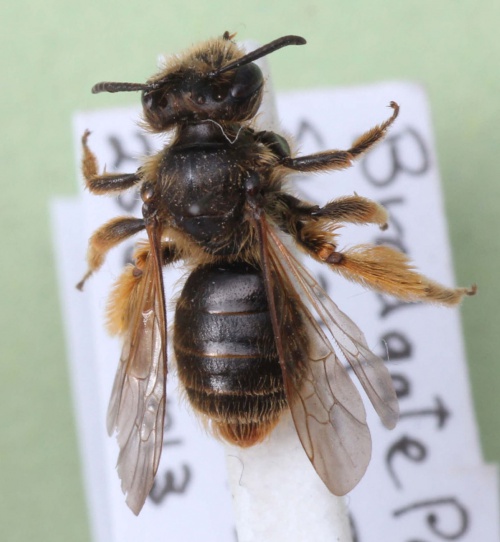
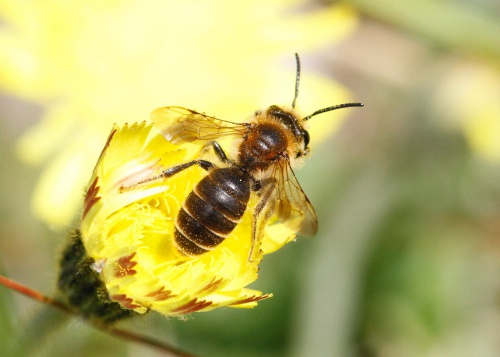
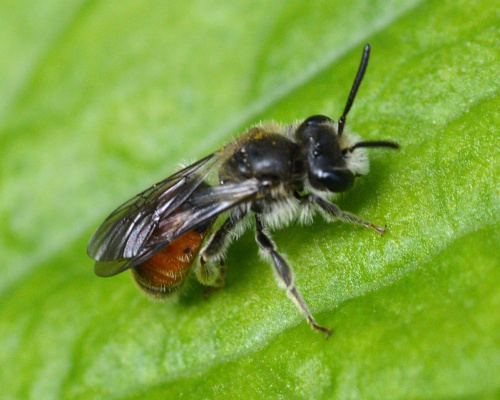
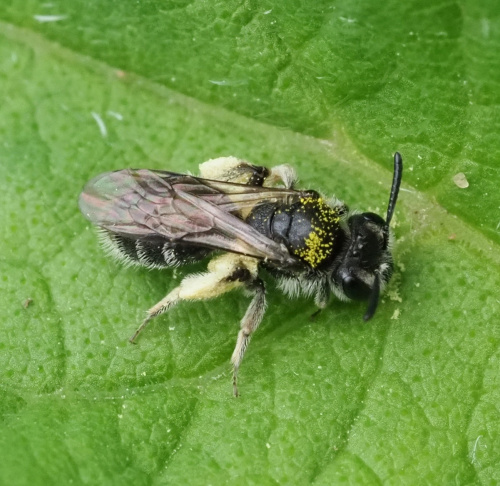
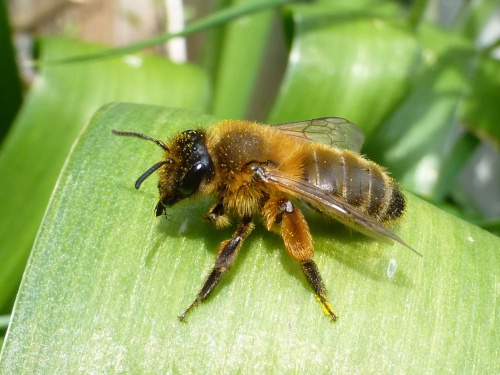
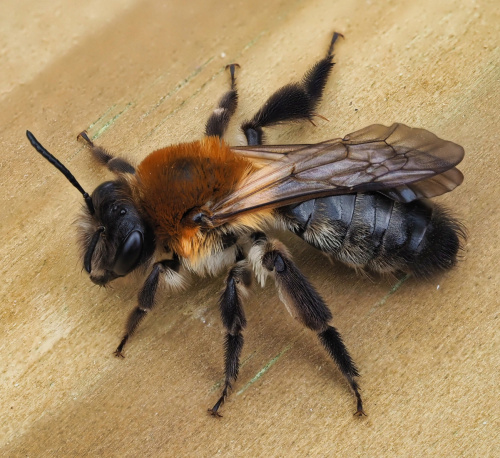
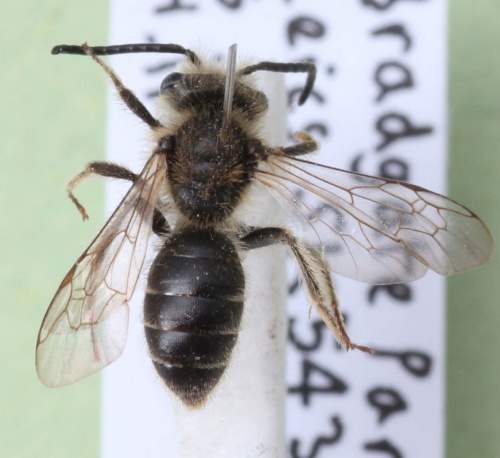
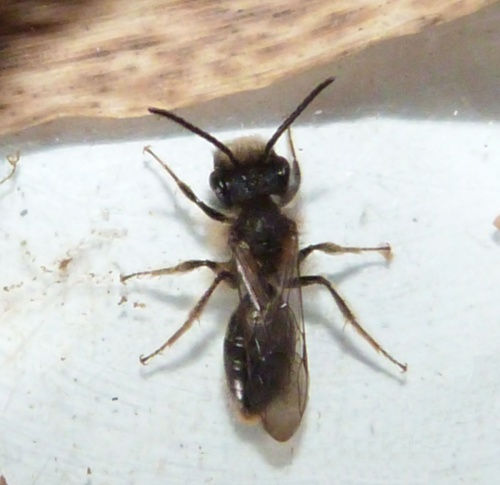
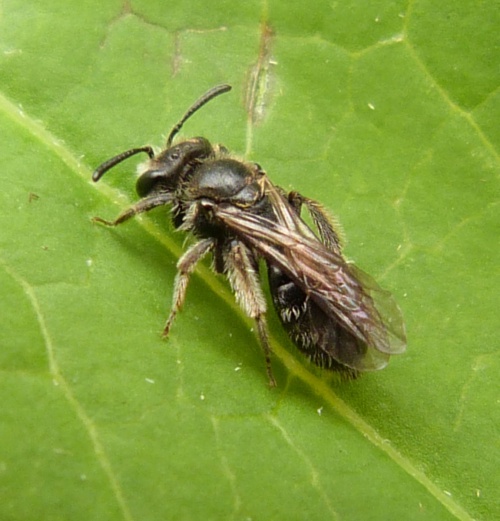
All images on this website have been taken in Leicestershire and Rutland by NatureSpot members. We welcome new contributions - just register and use the Submit Records form to post your photos. Click on any image below to visit the species page. The RED / AMBER / GREEN dots indicate how easy it is to identify the species - see our Identification Difficulty page for more information. A coloured rating followed by an exclamation mark denotes that different ID difficulties apply to either males and females or to the larvae - see the species page for more detail.
Bees, Wasps, Ants
Solitary bees
Andrenidae - Mining bees
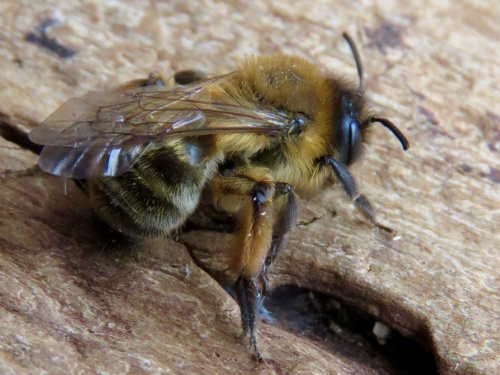
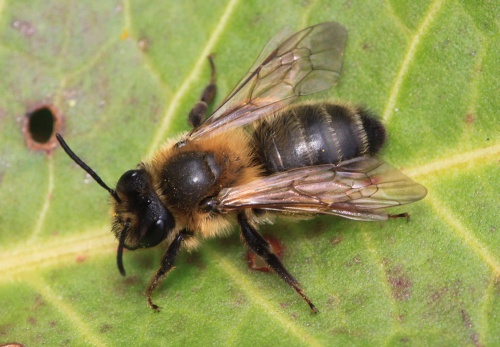
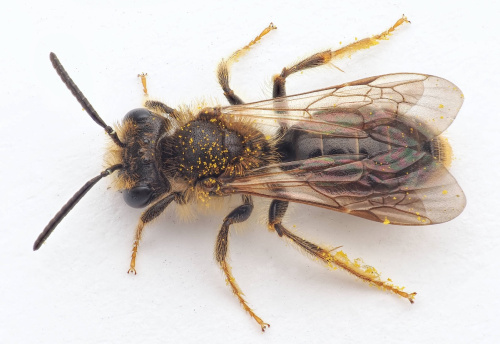
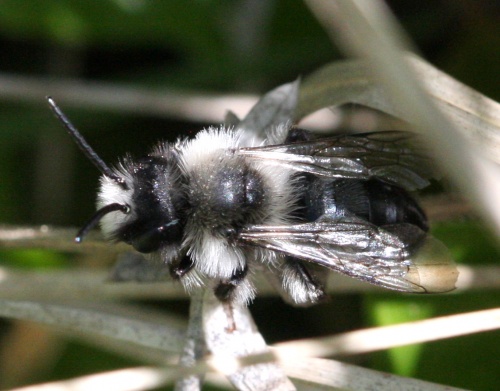
Andrena is the largest genus of bees found in the UK, in a diverse range of sizes from the tiny 'mini-miners' in the subgenus Micrandrena to species the size of honeybees. They all have 3 submarginal cells in the forewing, and the females have pollen-baskets on their hind-legs and the sides of the propodaeum at the rear end of the thorax.
Identification of some species is difficult. Male and females are often different in appearance, and are keyed out separately - and therefore you should always record sex in your comments for your record. Nests are usualy made in soil, sometimes singly but often in colonies - but none are true social bees.
The nests are attacked by many different cleptoparasites and parasitoids, including including Nomad bees (Nomada), Blood bees (Sphecodes), Bee-flies (Bombylius), Conopid flies in the Myopa genus (e.g.see M testacea) and the Anthomyiidae flies Leucophora. Species are frequently parasitised by Stylops, in the order Strepsiptera - the pupae of the parasite may be seen as a triangular structure protruding from between the abdominal tergites of a bee.
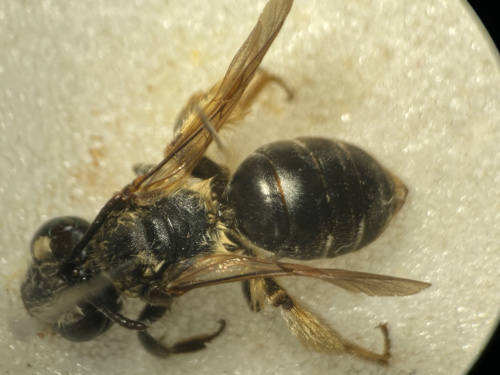




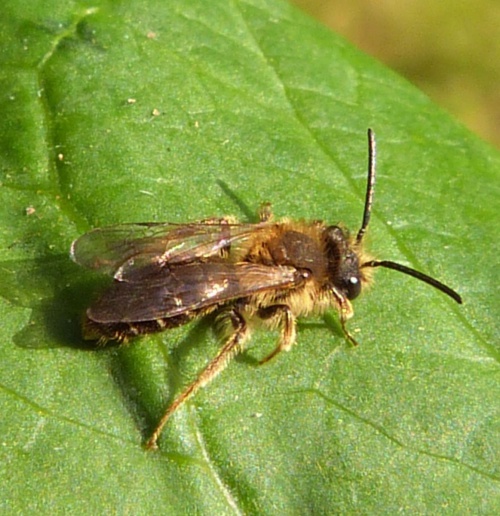
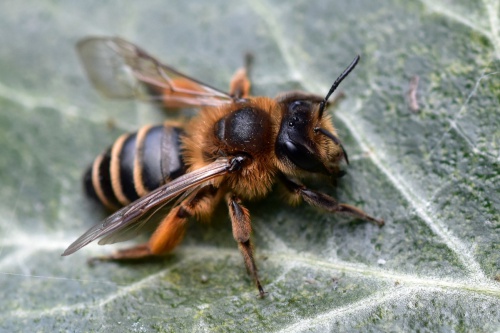

 (Andrena fulva ) 31 Harecroft Crescent Sapcote SP 4902 9371(taken 5.4.2009).JPG)