All images on this website have been taken in Leicestershire and Rutland by NatureSpot members. We welcome new contributions - just register and use the Submit Records form to post your photos. Click on any image below to visit the species page. The RED / AMBER / GREEN dots indicate how easy it is to identify the species - see our Identification Difficulty page for more information. A coloured rating followed by an exclamation mark denotes that different ID difficulties apply to either males and females or to the larvae - see the species page for more detail.
Chromista (Fungoids and Yellow-green algae)
'Fungoid' is a term used to describe a species that appears similar to fungi, and was once classed with them, but is now assigned to a different Kingdom - the Chromista.
Some algae-like species are also included in this kingdom in the Phylum Ochrophyta - e.g. the yellow-green algae Vaucheria and Botrydium. [Note that taxonomy is very confusing and subject to change.]
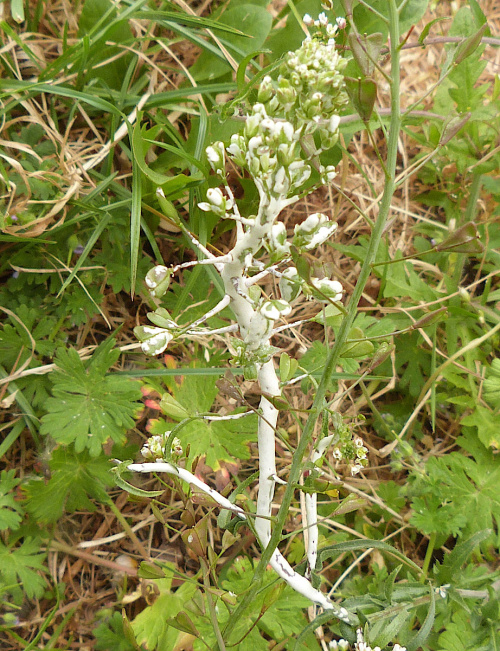
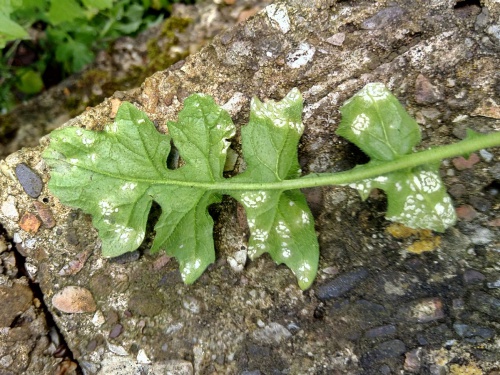
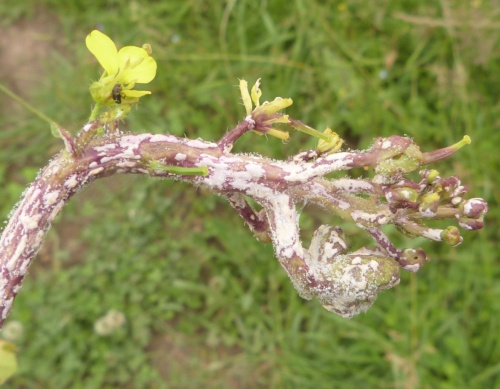
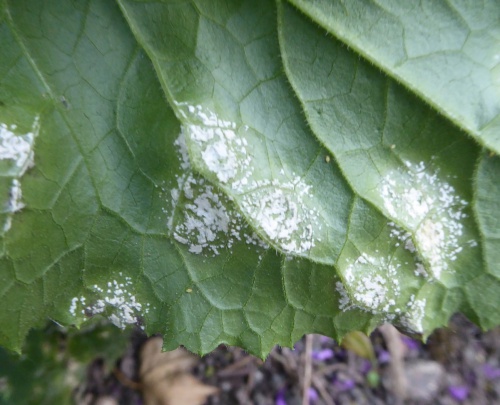
The Phylum Oomycota includes the Albuginaceae (White Blister-rusts) and Peronosporaceae (Downy Mildews) families of species that resemble moulds or mildews. Galls are formed by some species. This group of plant pathogens have a resemblance to fungi, but have cells walls of cellulose or glycan, rather than chitin.
Resources:
- A very good guide to White Blister-rusts and Downy Mildews is available to download from Aber University's website: Chater, A.O., Woods, R.G., Stringer, R.N., Evans, D.A., & Smith, P.A. (2020) Downy Mildews (Peronosporaceae) and White Blister-rusts (Albuginaceae) of Wales.
- See 'Plant Parasites of Europe' website ('Bladmineerders') for images
- Gall descriptions and notes are in Redfern, M. & Shirley, P. (2023) British Plant Galls. FSC
Albuginaceae - White Blister-rusts
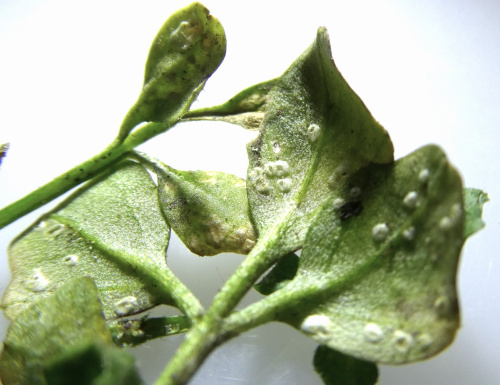
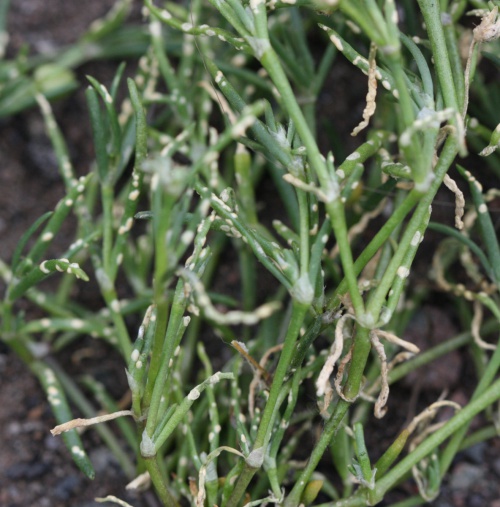
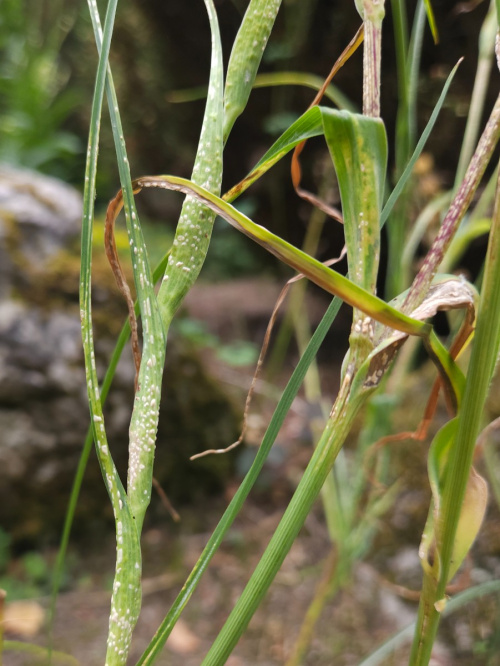
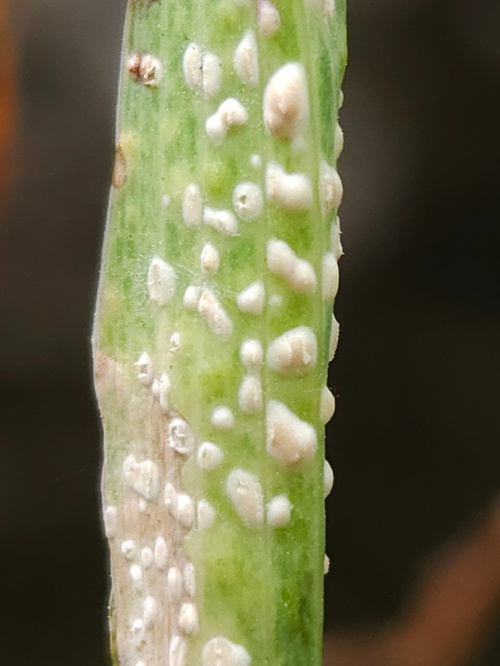
In the field these can be recognised by the dense white shiny crusts or pustules formed under the surface of the host leaf. The sporangiophores are short and club-shaped, and the sporangia bud off at the tip. Many are considered to be gall-causers.