

Alder - Alnus glutinosa
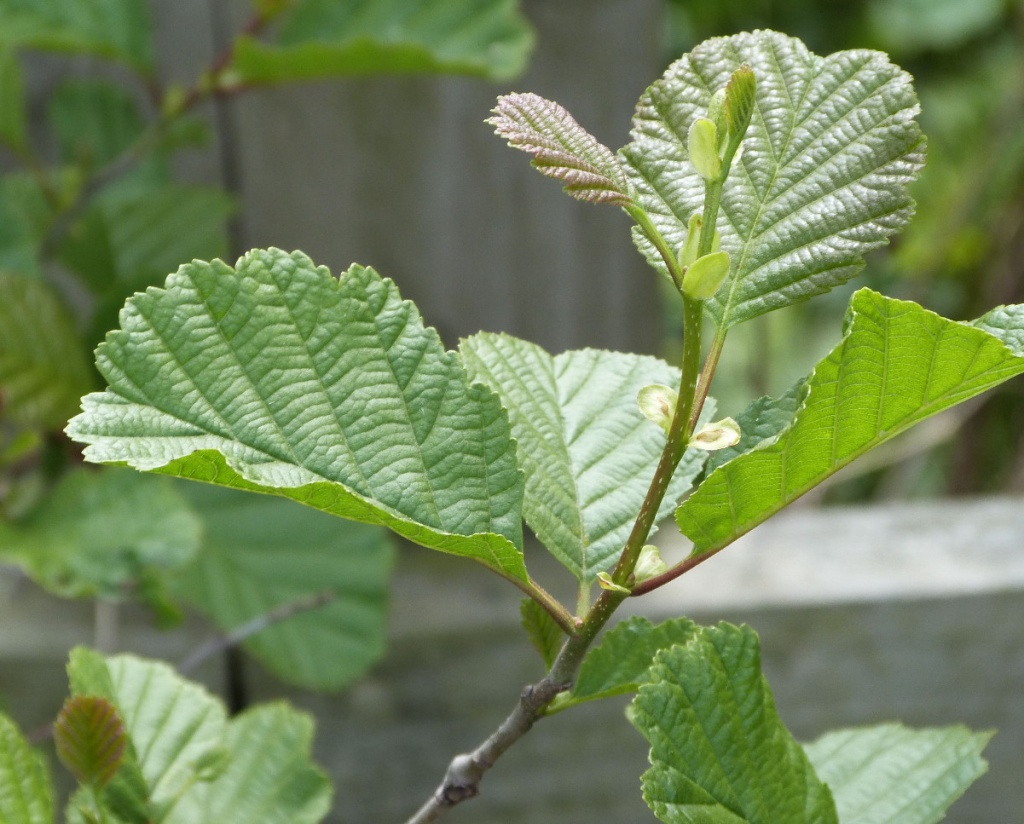
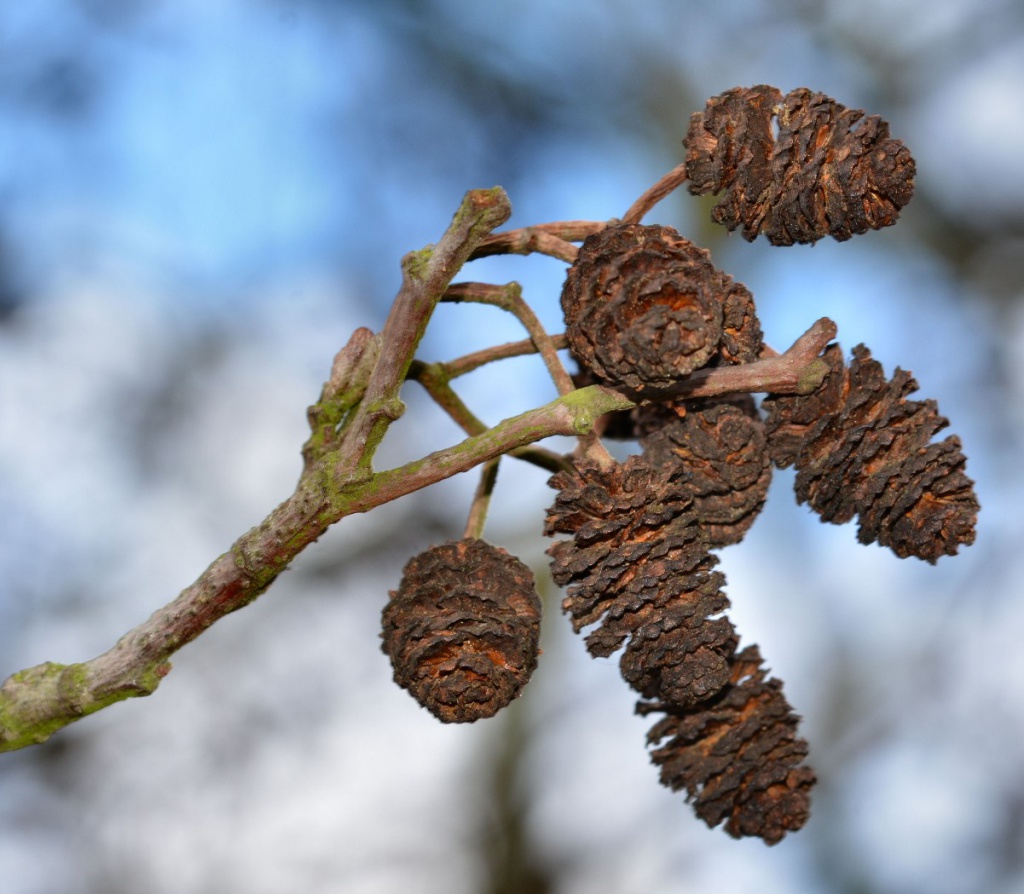
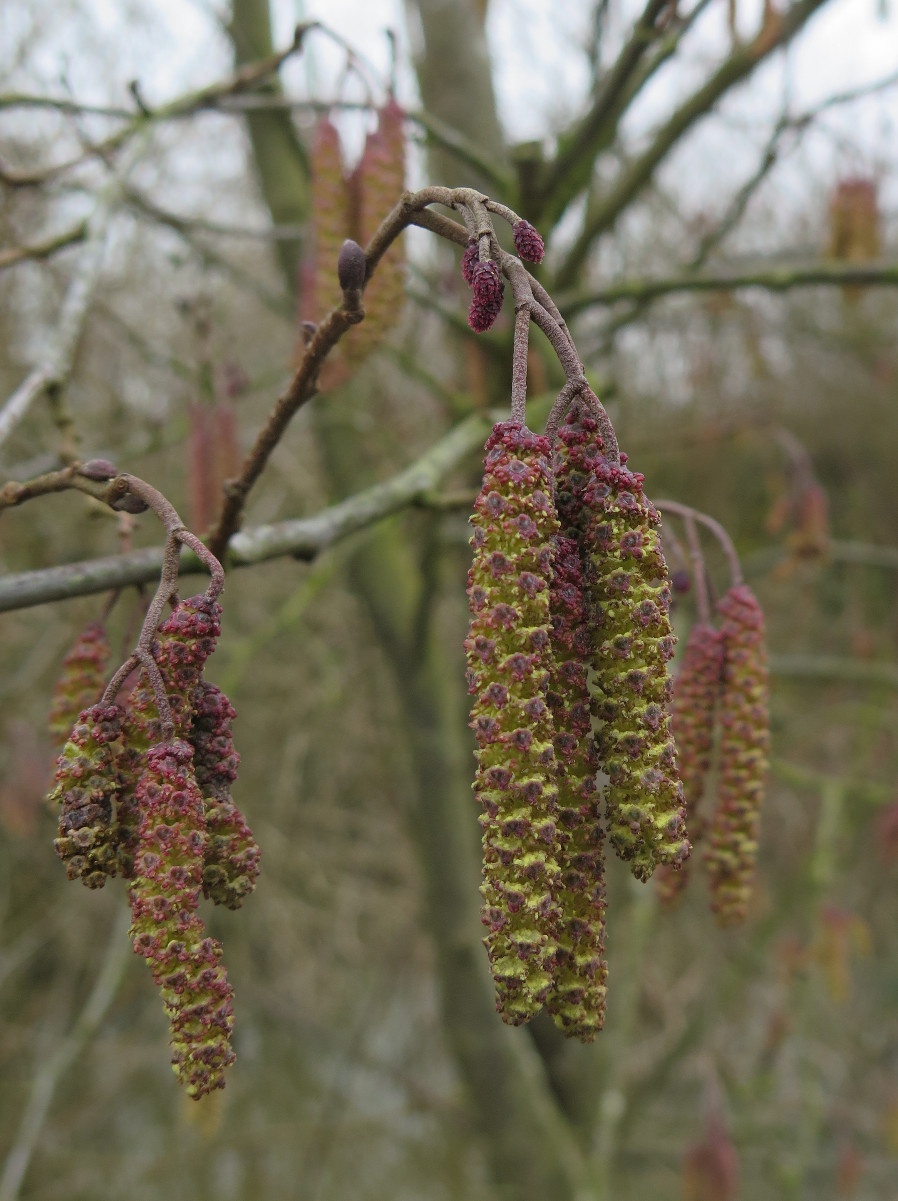
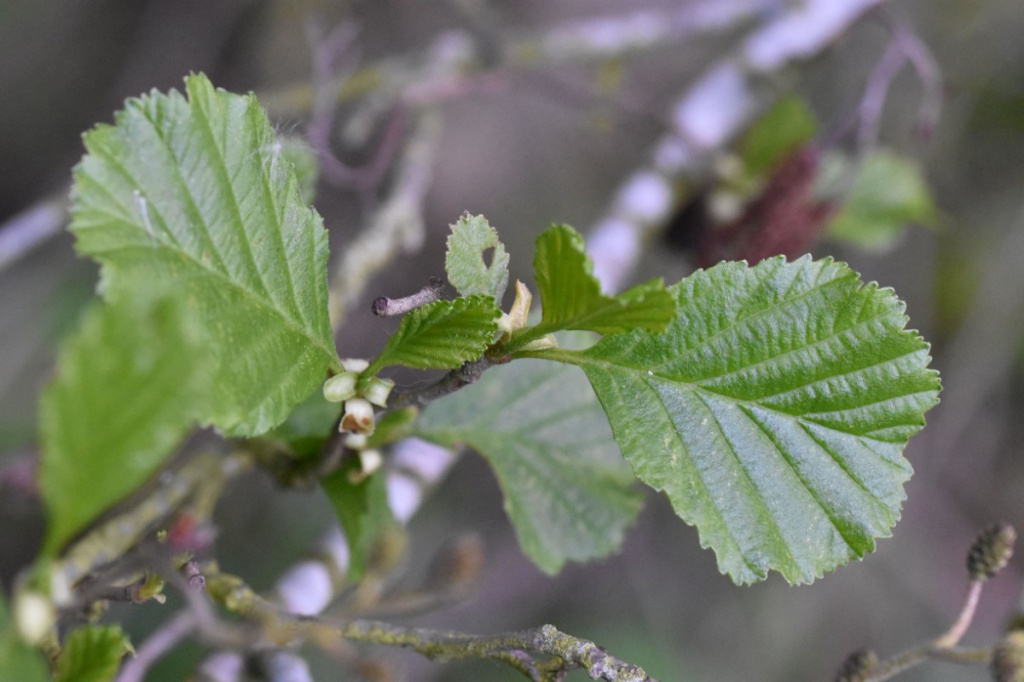
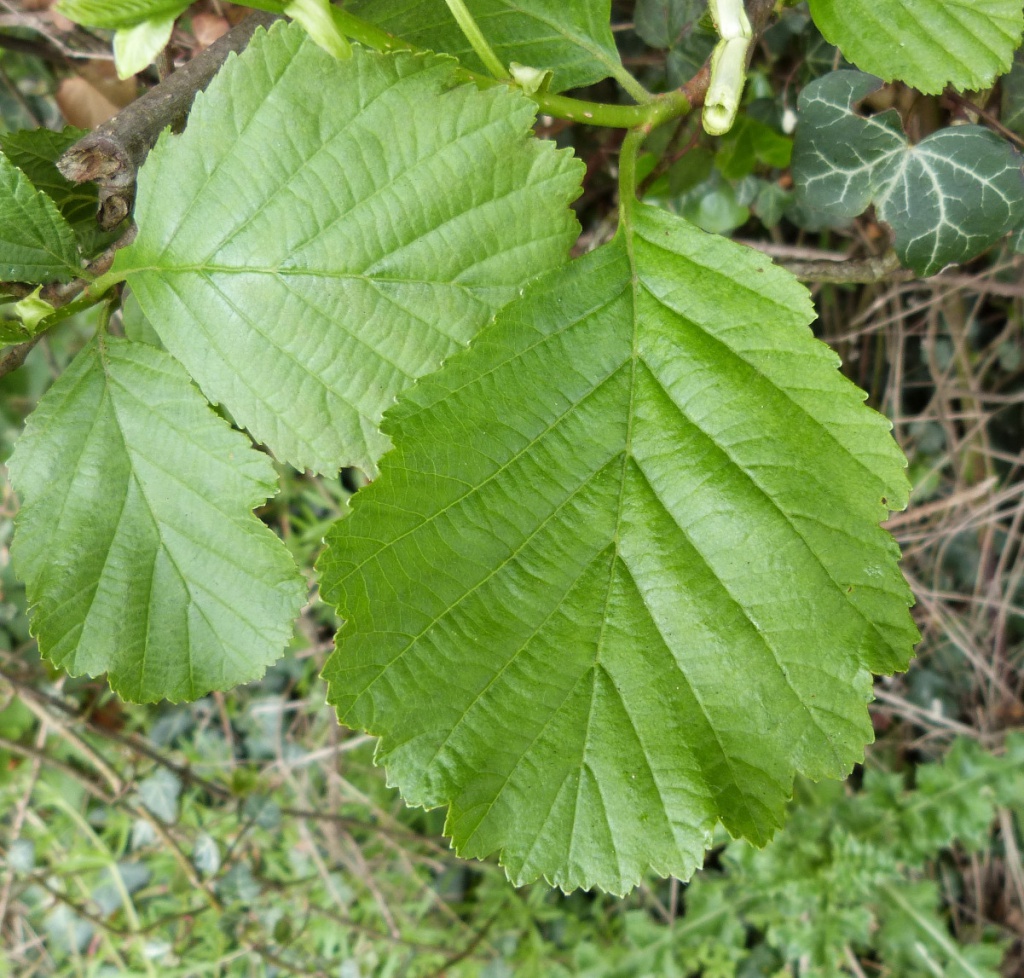
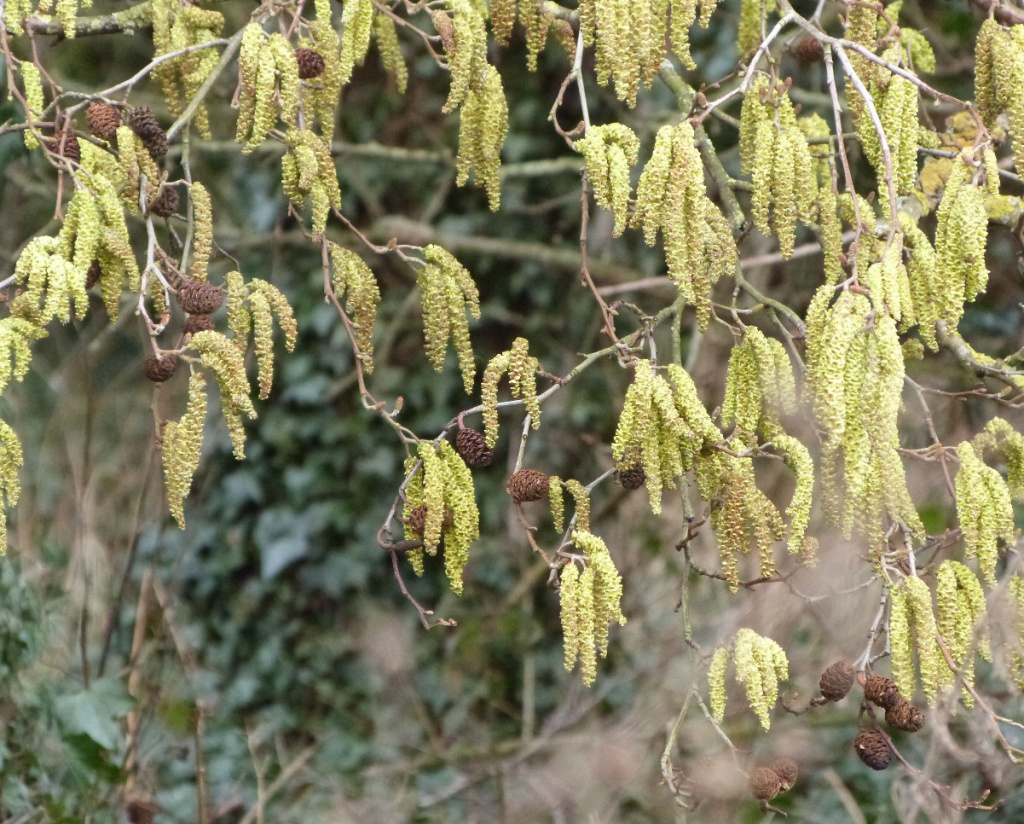
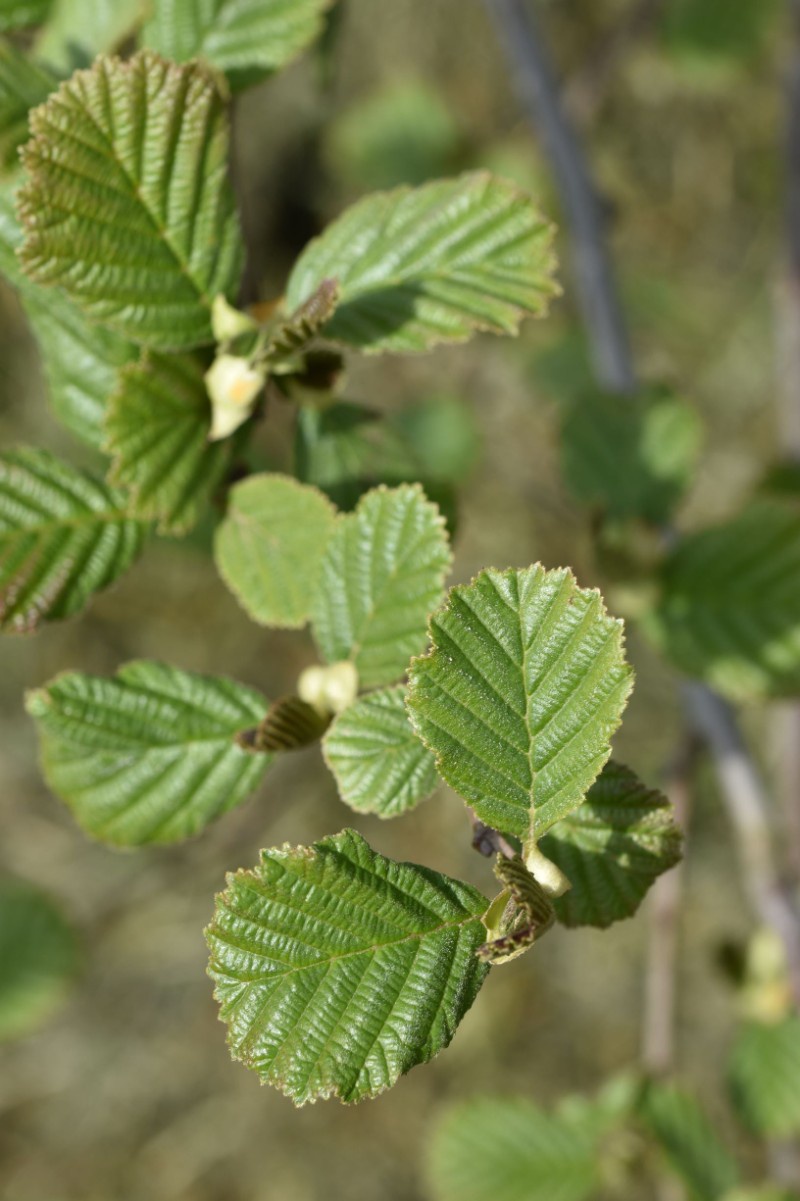
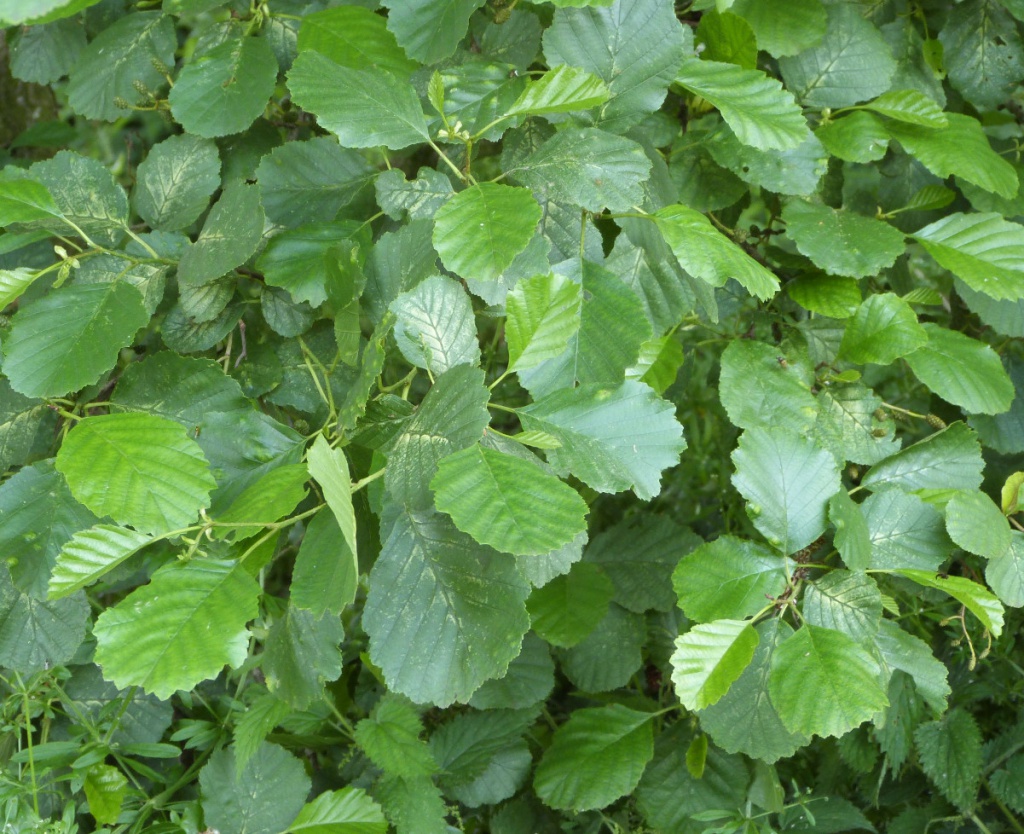
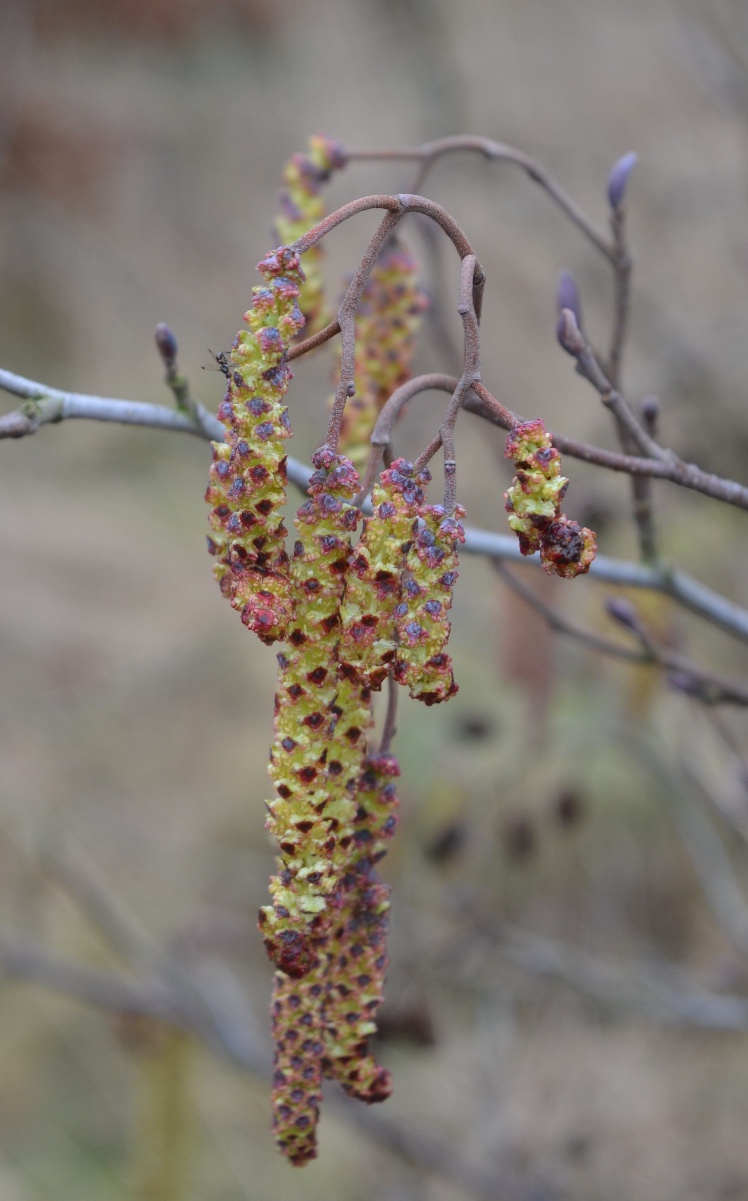
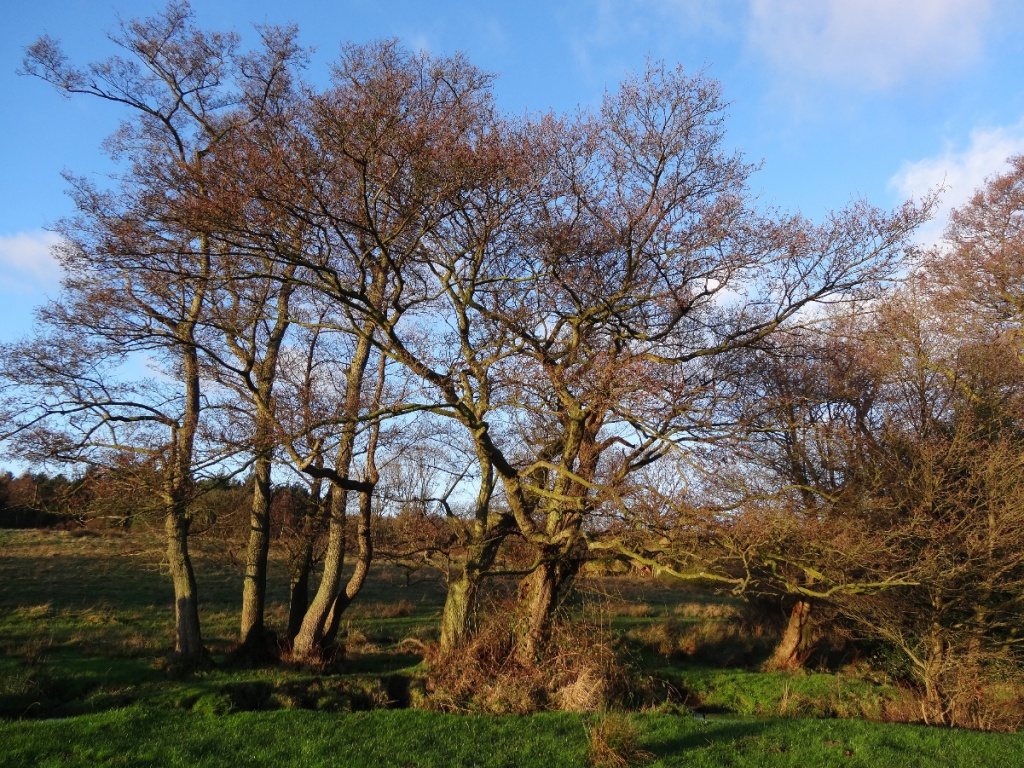
Tree or shrub to 20m. Leaves roundish, blunt ovate. Dark brown fissured bark on mature trees. Male catkins yellow, female flowers purplish, appearing before the leaves. Fruiting catkins cone like.
Alnus incana and other non-native alders are very similar when not in leaf.

When in leaf, Alnus glutinosa is unmistakable, but it is difficult to distinguish this species from other Alders from the winter buds, twigs, fruits, cones or catkins
Photos of leaves.
By water.
all year
Deciduous.
Fairly common throughout Britain.
Common by water in Leicestershire and Rutland, occasionally planted in drier areas. In the 1979 Flora survey of Leicestershire it was found in 287 of the 617 tetrads.
 Marsh near Old Fosse Sapcote SP 4950 9207 (taken 27.8.2007).JPG) Graham Calow
Graham Calow
Marsh near Old Fosse, Sapcote
27 August 2007
Unripe fruit cone David Nicholls
Ratby SUD
02 July 2023
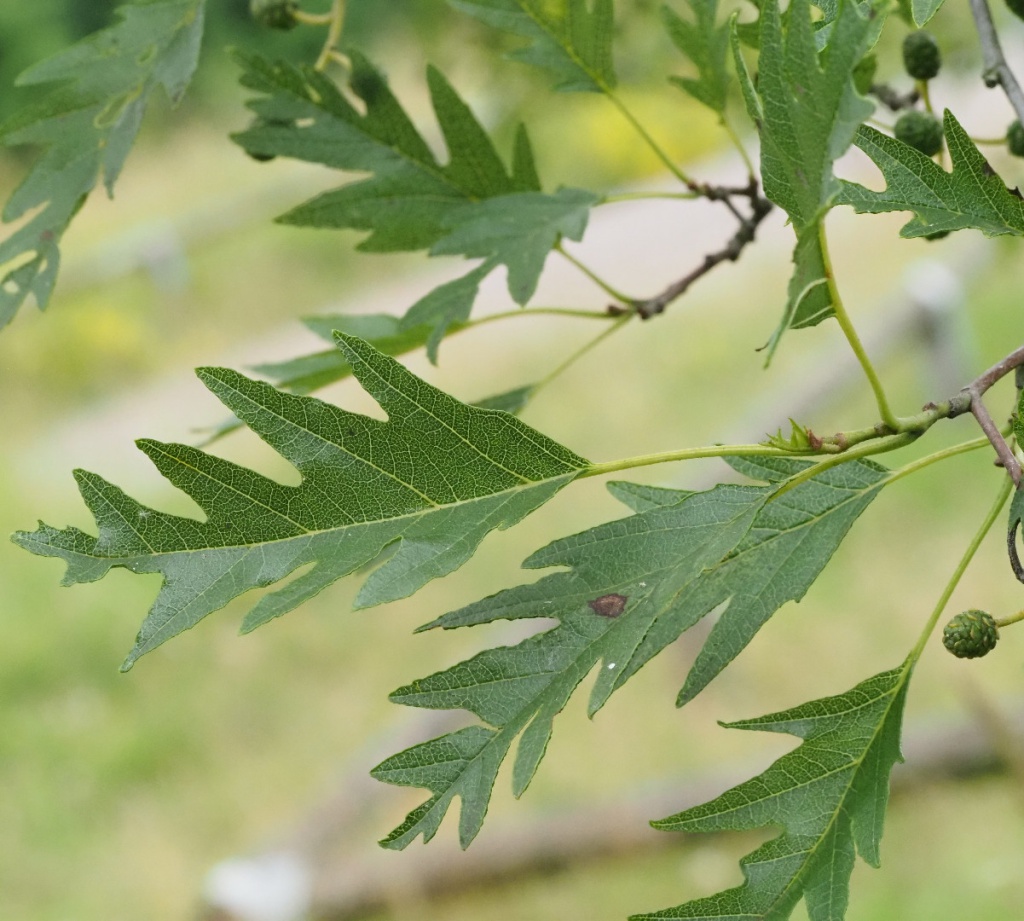
Cut-leaved Alder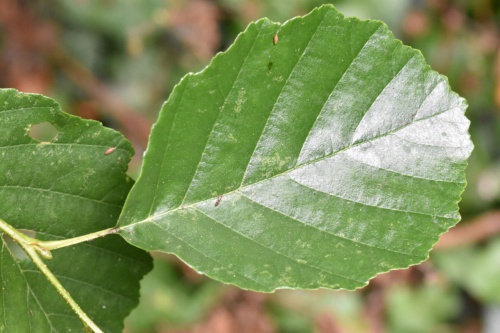 stepgray4
Woodland along A6006, Wymeswold
03 August 2021
Leaves are unevenly toothed male catkins Marsh near Old Fosse Sapcote SP 4950 9207 (taken 6.3.2008)..JPG) Graham Calow
Graham Calow
Marsh near Old Fosse, Sapcote
06 March 2008
Male Flowers (Catkins)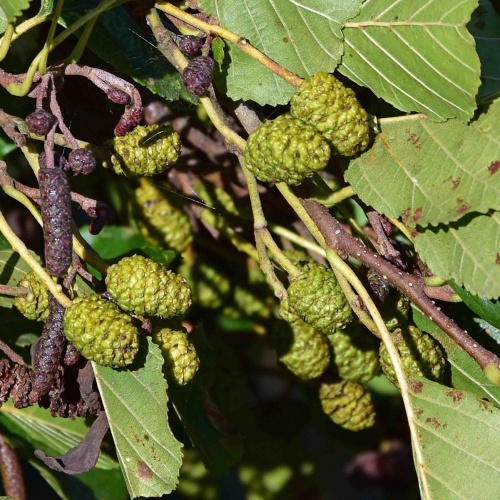 Andy's Rutland
Footpath-River Gwash-Empingham
21 October 2018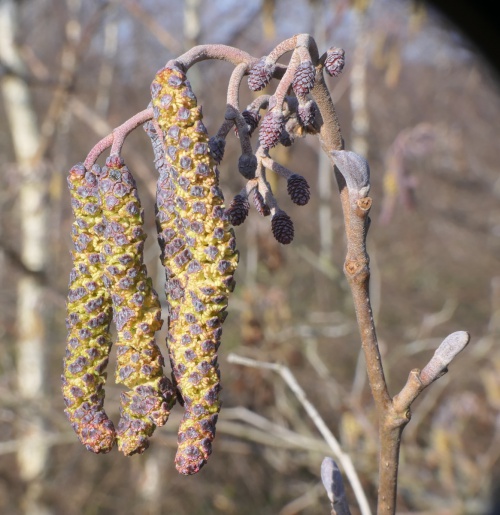 David Nicholls
Bagworth Heath
06 March 2020 stepgray4
Charnwood Lodge
22 November 2020
Purple Buds female flowers Marsh near Old Fosse Sapcote SP 4950 9207(taken 6.3.2008).JPG) Graham Calow
Graham Calow
Marsh near Old Fosse, Sapcote
06 March 2008
Female Flowers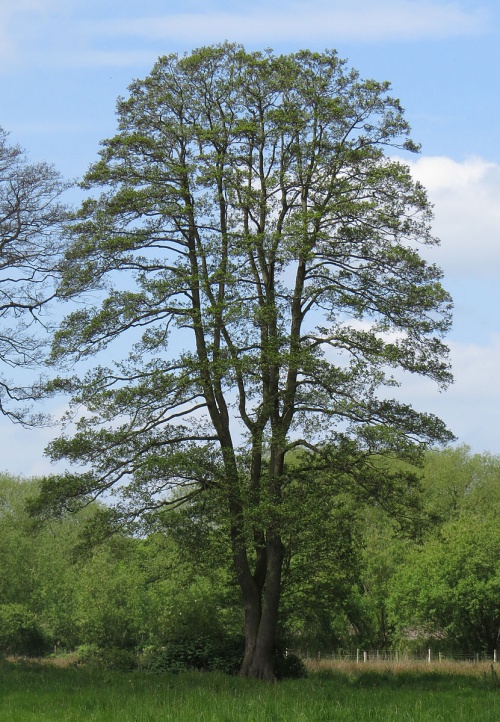 David Gould
Narborough Bog, Leics
21 May 2015
 Marsh near Old Fosse Sapcote SP 4950 9207 (taken 27.8.2007).JPG)


 male catkins Marsh near Old Fosse Sapcote SP 4950 9207 (taken 6.3.2008)..JPG)


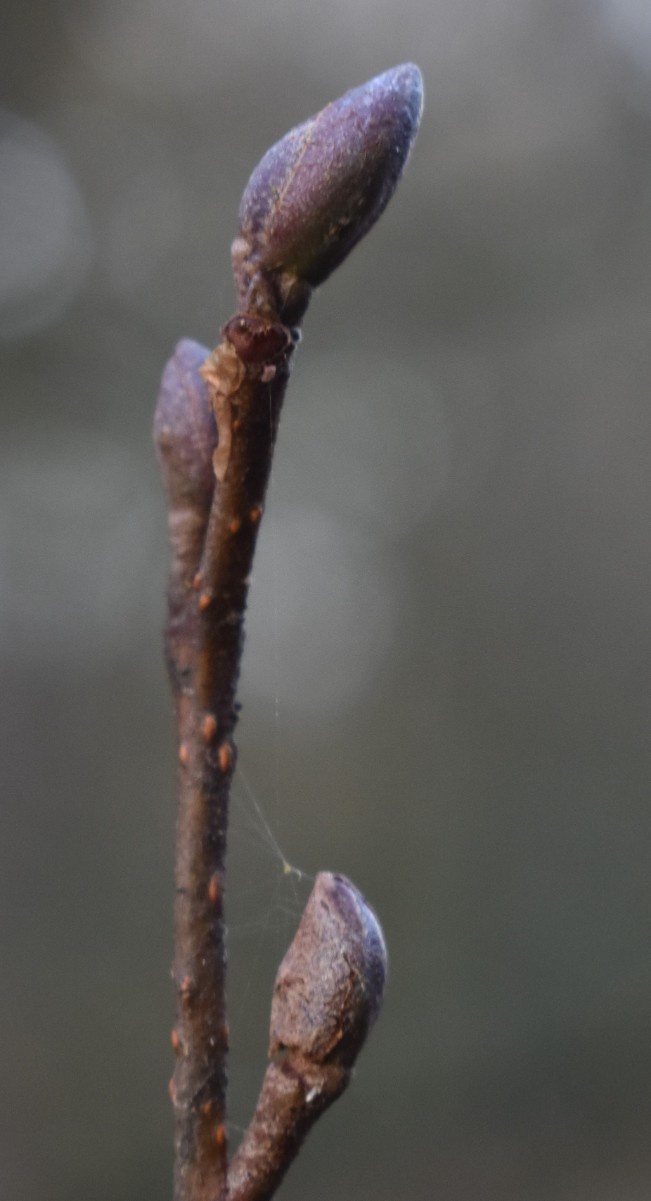
 female flowers Marsh near Old Fosse Sapcote SP 4950 9207(taken 6.3.2008).JPG)
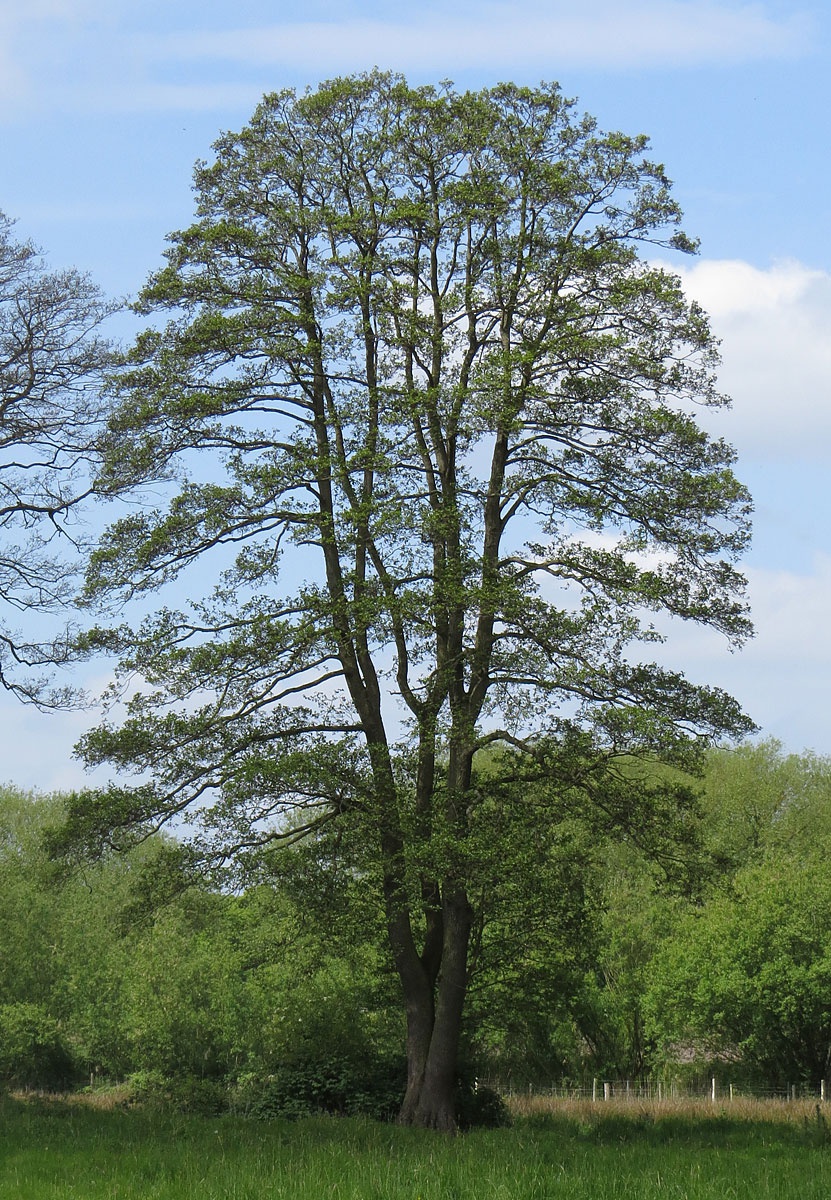
Leicestershire & Rutland Map
Enter a town or village to see local records
MAP KEY:
Yellow squares = NBN records (all known data)
Coloured circles = NatureSpot records: 2025+ | 2020-2024 | pre-2020
UK Map
Species profile
- Common names
- Alder
- Species group:
- flowering plant
- Kingdom:
- Plantae
- Order:
- Fagales
- Family:
- Betulaceae
- Records on NatureSpot:
- 357
- First record:
- 11/05/1992 (John Mousley;Steve Grover)
- Last record:
- 06/05/2026 (Higgott, Mike)
Total records by month
% of records within its species group
10km squares with records
The latest images and records displayed below include those awaiting verification checks so we cannot guarantee that every identification is correct. Once accepted, the record displays a green tick.
In the Latest Records section, click on the header to sort A-Z, and again to sort Z-A. Use the header boxes to filter the list.
Latest images
Latest records
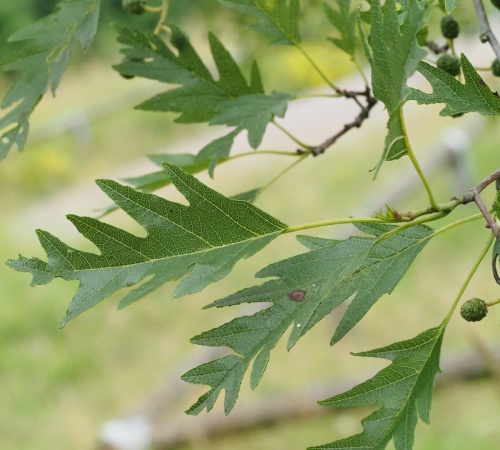 David Nicholls
Ratby SUD
02 July 2023
Cut-leaved Alder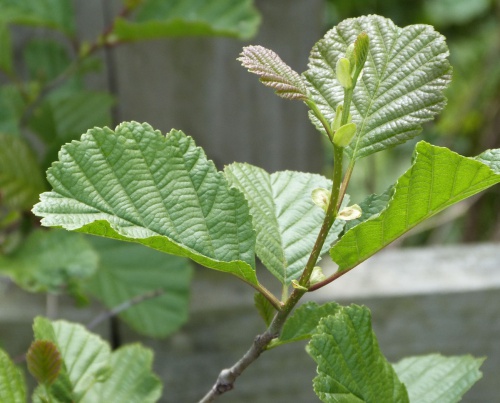 Graham Calow
Station Road, Elmesthorpe
27 May 2016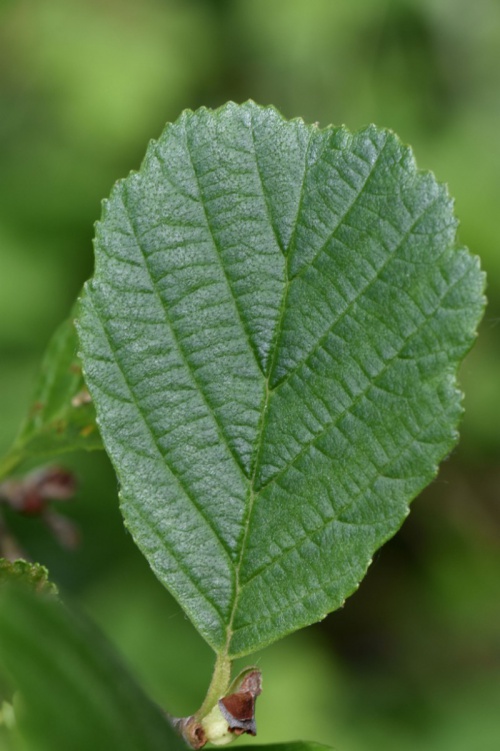 stepgray4
New Lount Nature Reserve
27 May 2021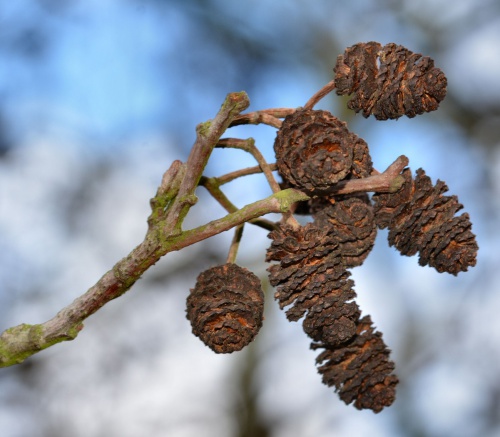 Barbara Cooper
Bradgate Park
18 January 2018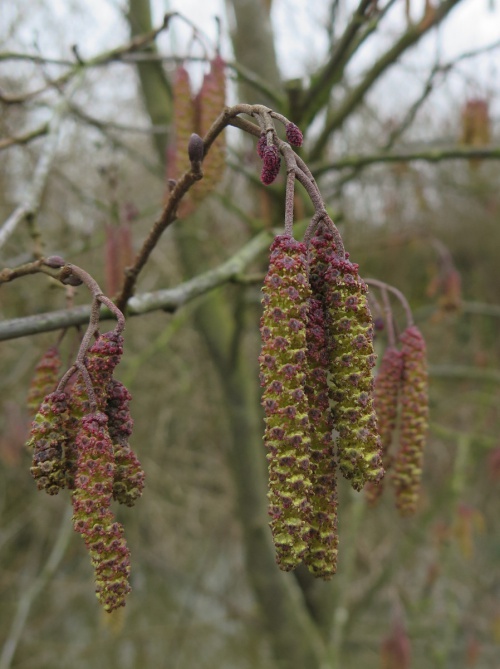 David Nicholls
Rutland Water
12 March 2016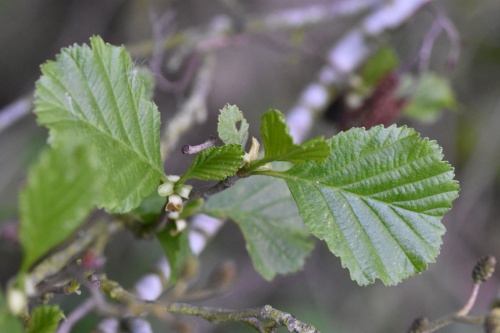 stepgray4
Wymeswold Plantation
15 May 2021 Graham Calow
Countesthorpe Road, Cosby
20 May 2016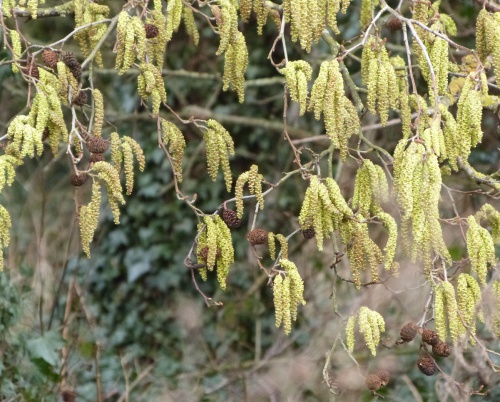 Graham Calow
Cambridge Road, Whetstone
22 February 2016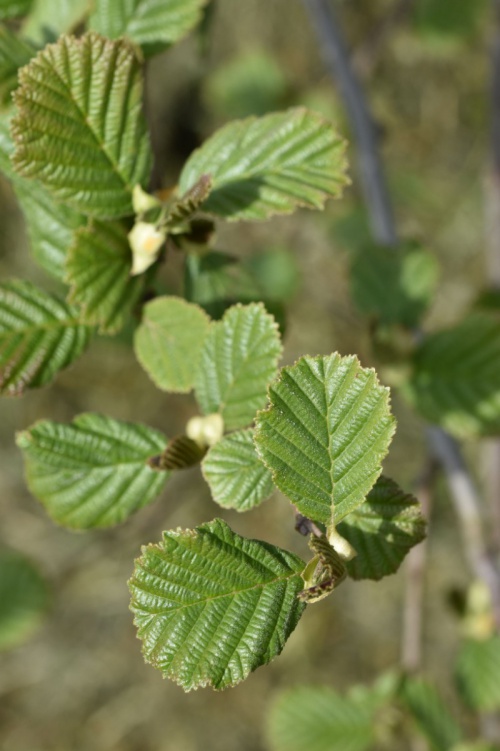 stepgray4
Burbage Common and Woods
02 May 2021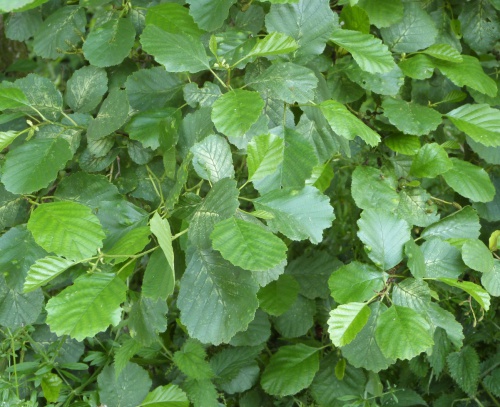 Graham Calow
Field near Stoney Stanton Playing Field
27 June 2016 Ken Charity
Cossington Meadows
02 January 2017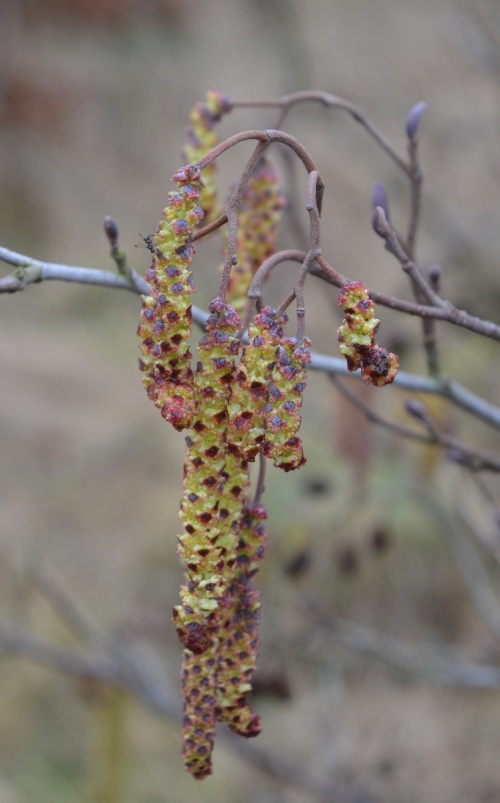 Steve Mathers
Bagworth Heath
21 February 2017 CAPochin
Launde
23 March 2021 Alan Semper
Melton Country Park
06 March 2015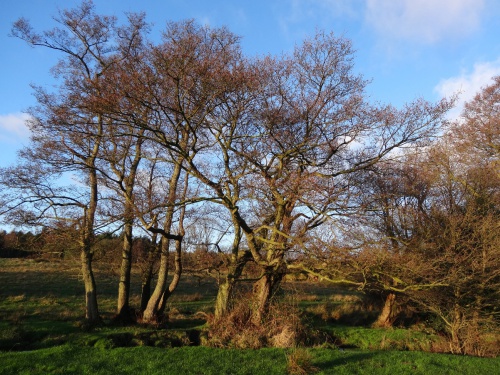 AJ Cann
Lea Meadows
31 December 2015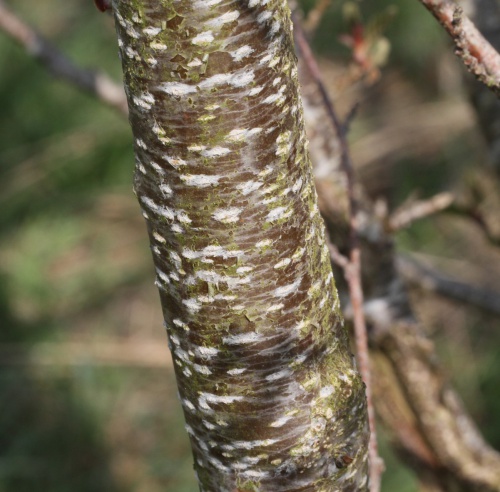 Craig Mabbett
Leire Stemborough Mill Footpath
18 April 2020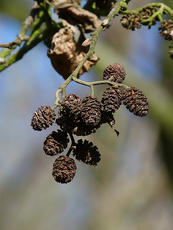 Mark Skevington
Watermead Country Park
19 March 2011






Heliozela resplendella
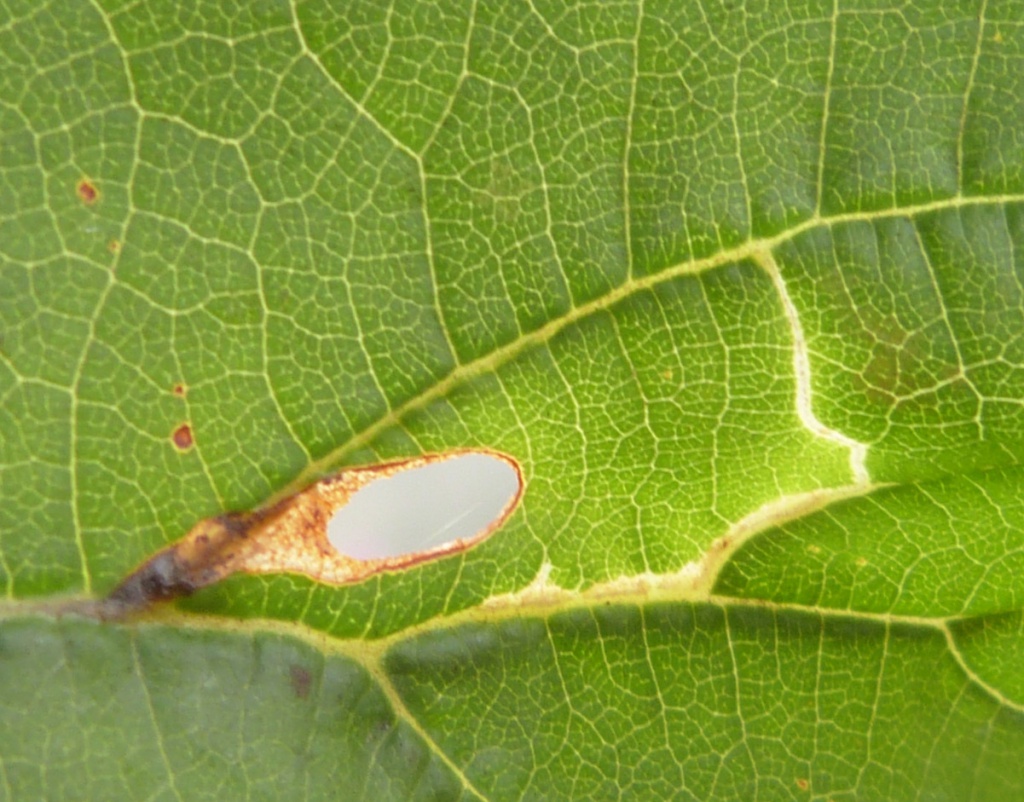
The larva of the moth Heliozela resplendella mines the leaves of Alder. The mine is initially in the midrib and then along a side vein. Then a narrow gallery is cut through to an adjacent side vein, and the larva mines down this to re-enter the midrib. Finally it makes an oval excision in the leaf blade. The larva inside this leaf sandwich drops to the ground to pupate.
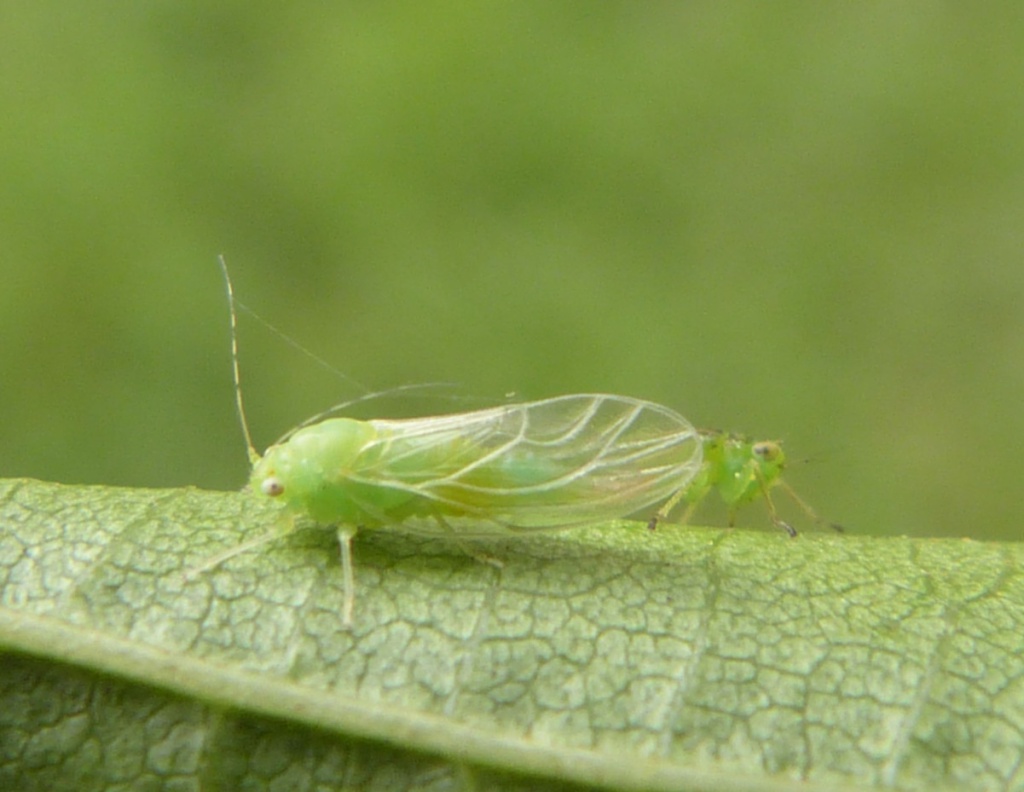
Baeopelma foersteri
The psyllid Baeopelma foersteri length is about 4 mm. The female terminalia are very long, with the flat apical section finely toothed on the upper surface. The genal cones are unusually short and rounded, the head short and wide, and the antennae unusually long. Pterostigma short. Psylla alni is very similar but the forewing veins are darker.
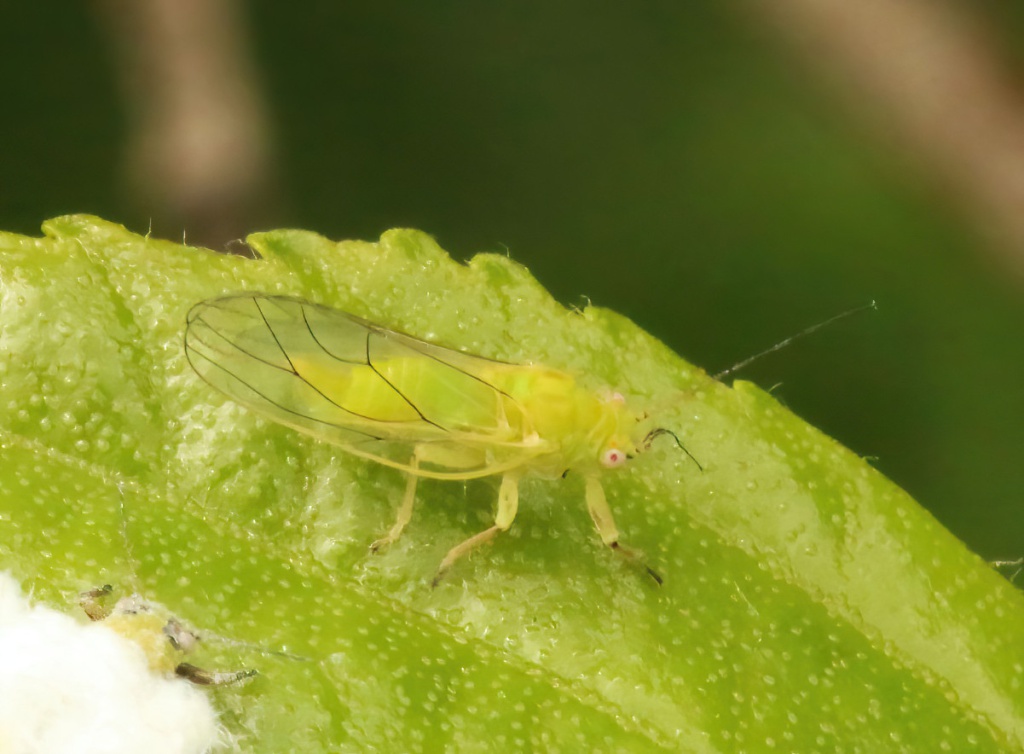
Psylla alni
Psylla alni is a very large psyllid (length 5 to 6 mm. ) which is predominantly green, including the costal marginal vein. The antennae are very long (more than 2.5 x head length). The wing veins are much darker than the membrane, which has dark spinules over much of the surface. The body can develop red or brown markings in late summer. The nymphs produce white fluffy wax which can cover the animal as protection. Baeopelma foersteri can appear similar but the veins are paler in that species.

Phyllonorycter klemannella
The larva of the moth Phyllonorycter klemannella mines the leaves of Alder, creating a tentiform mine between two veins on the underside, with a winkled surface withut sharp folds. The larva is white or yellow, and the pupa is in a cocoon with frass heaped to one side.
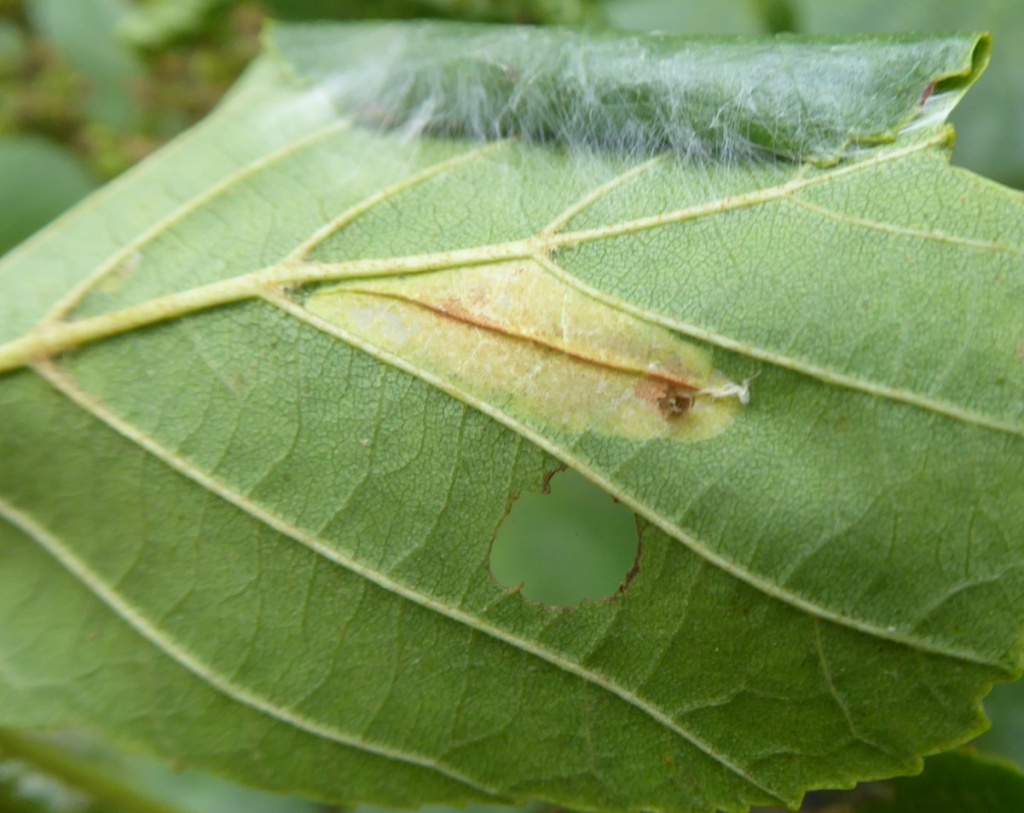
Phyllonorycter rajella
The larva of the moth Phyllonorycter rajella mines the leaves of Alder, creating an oval tentiform mine with a sharp crease on the under-surface. The larva is greenish, and pupates in a frass-encrusted cocoon inside the mine. This is visible as two dark lines either side of pupa.
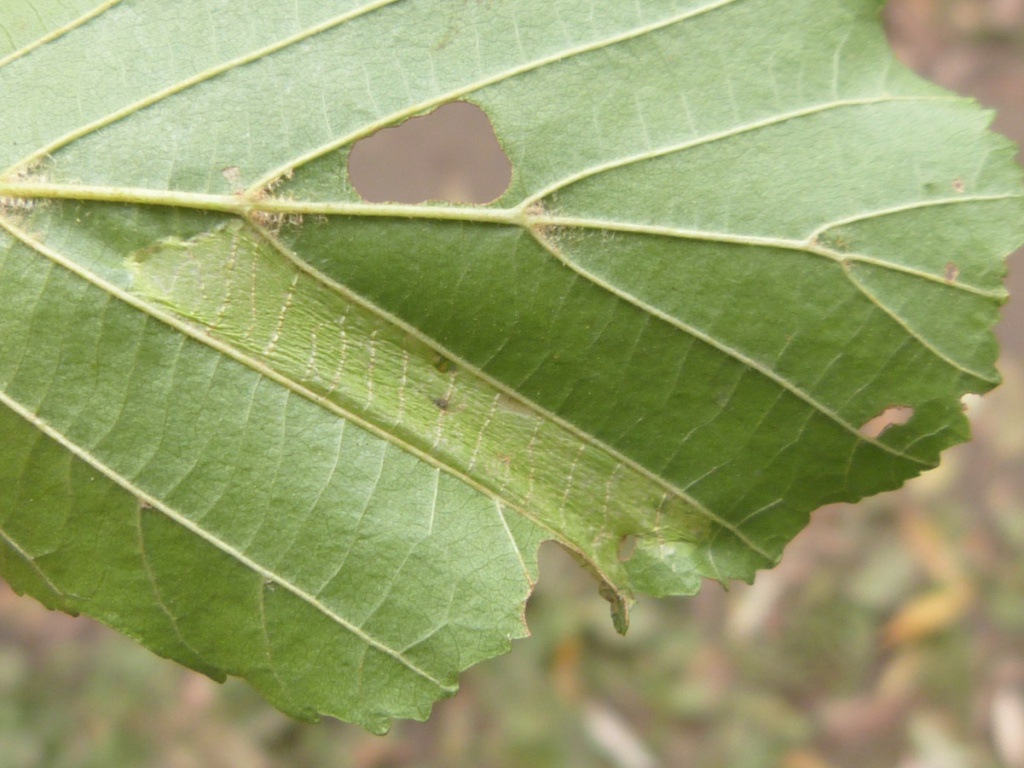
Phyllonorycter froelichiella
The larva of the moth Phyllonorycter froelichiella mines the leaves of Alder creating a large under-surface tentiform mine without clear folds. The mine is between two veins and often stretches from midrib almost to leaf-edge. The mature larva is greyish, and pupates in a frass-free cocoon in the mine.
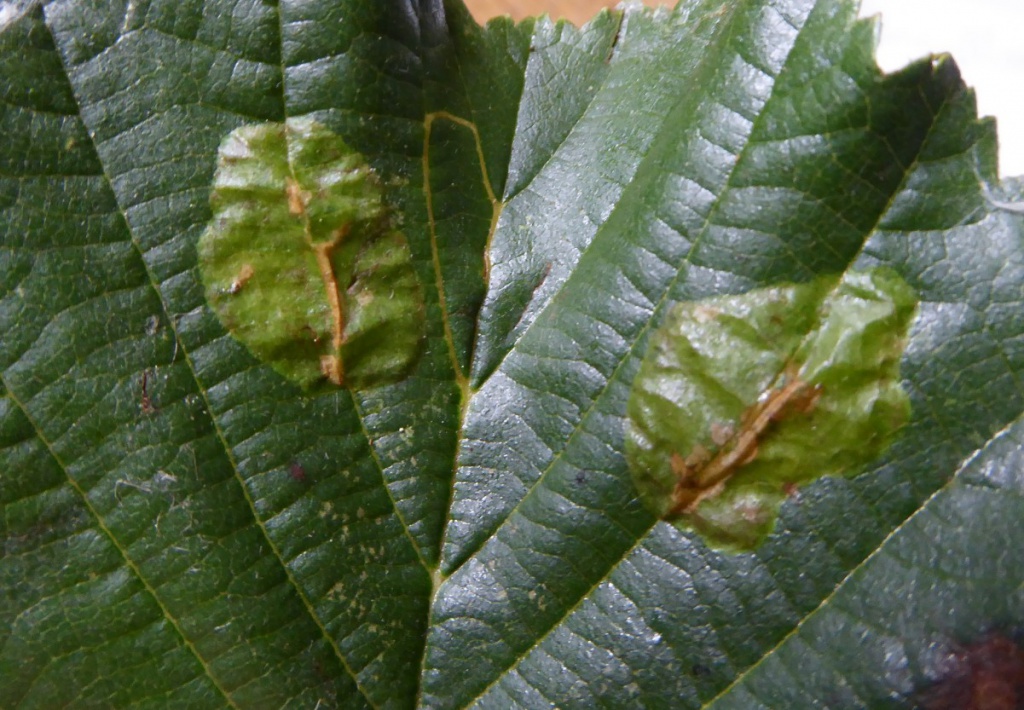
Phyllonorycter stettinensis
The larva of the moth Phyllonorycter stettinensis mines the leaves of Alder causing a small oval mine on the upper leaf surface (unike other Phyllonorycter on Alder, which mine under-surface). The surface of the mine may look glossy and often has a strong crease.
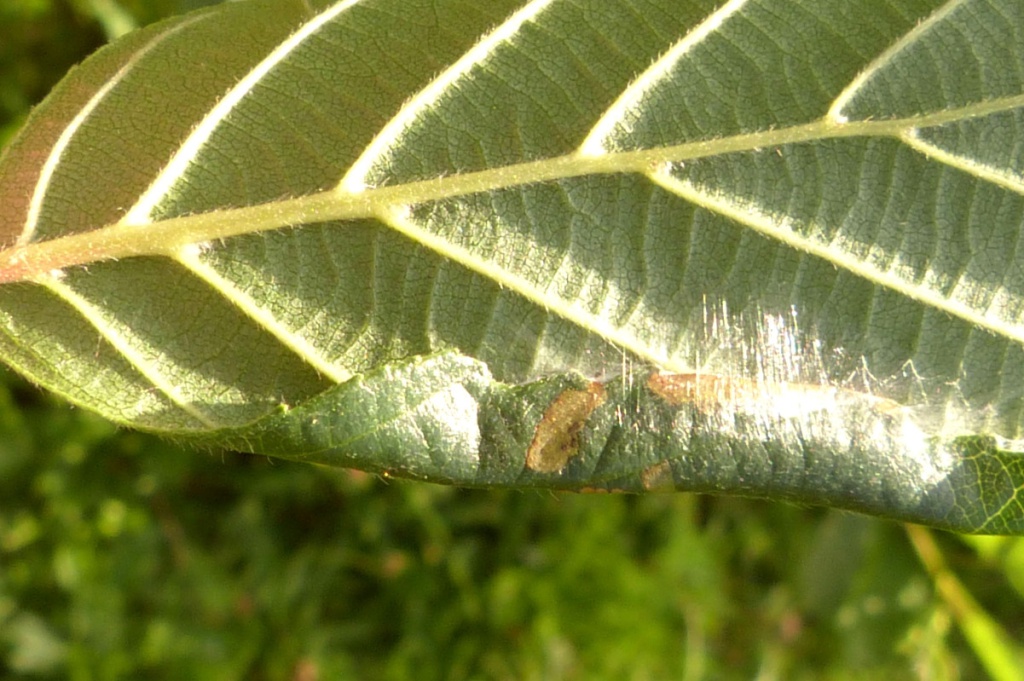
Caloptilia falconipennella
The larva of the moth Caloptilia falconipennella mines the leaves of Alder firstly producing a tent-like mine at the leaf edge and later two or three folds anchored by threads

Caloptilia elongella
The larva of the moth Caloptilia elongella mines the leaves of Alder, initially in an inconspicuous upper surface gallery. This lead to a silvery blotch over a vein, whch causes the leaf to contract. The larva then leaves the mine to feed in longitudinal rolls at the leaf edge. The larva is whitish with some dark markings but without any clear distinguishing features. Pupation is in a transparent, shining cocoon attached to the leaf underside.
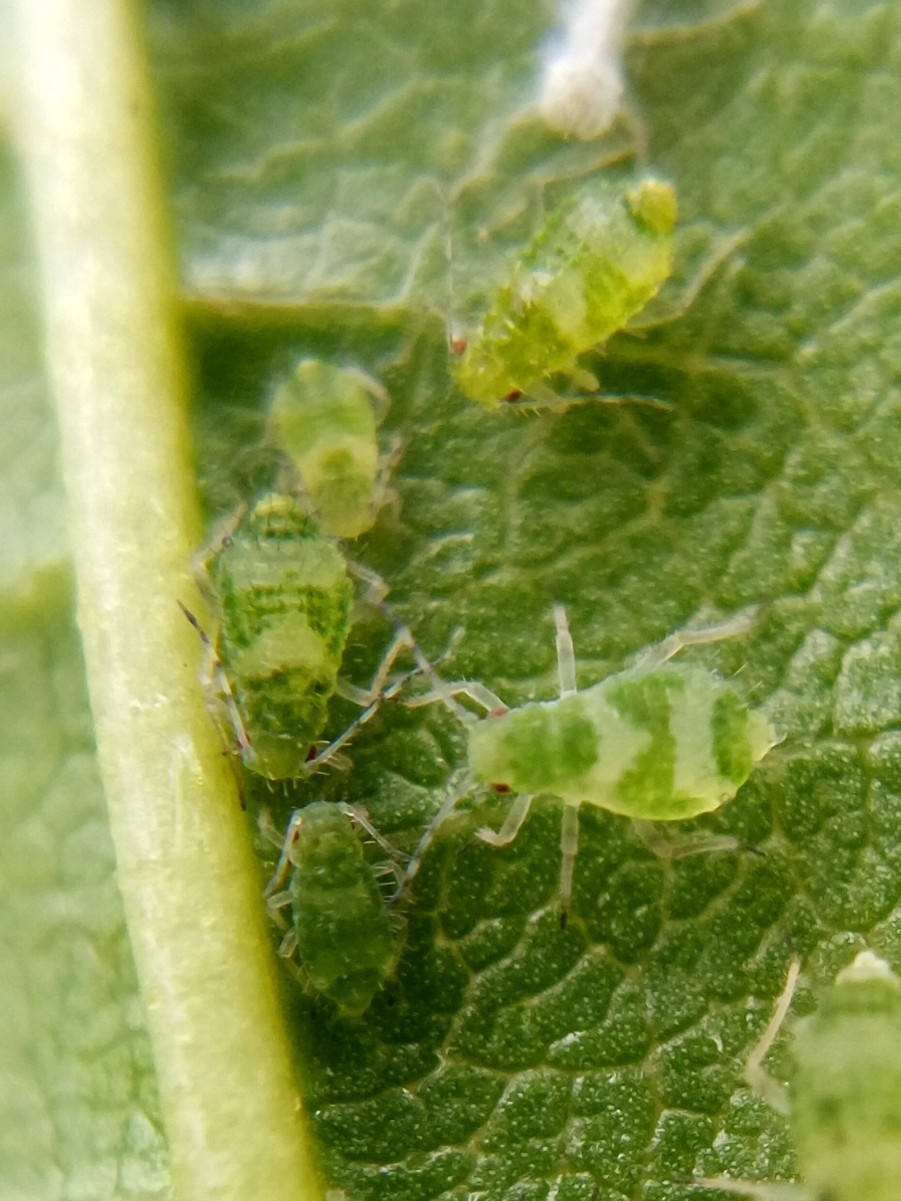
Pterocallis maculata
The aphid Pterocallis maculata usually lives in sizeable colonies on the leaves of Alder, often grouped around the mid-rib, and is nearly always attended by ants. Adult apterae are yellowish-green or green, with a pattern of diffuse dark green dorsal cross bands, giving an overall blotchy appearance. The body length of the aptera is 1.4 to 2.1 mm. The alate has a pale green abdomen and dark-tipped siphunculi.
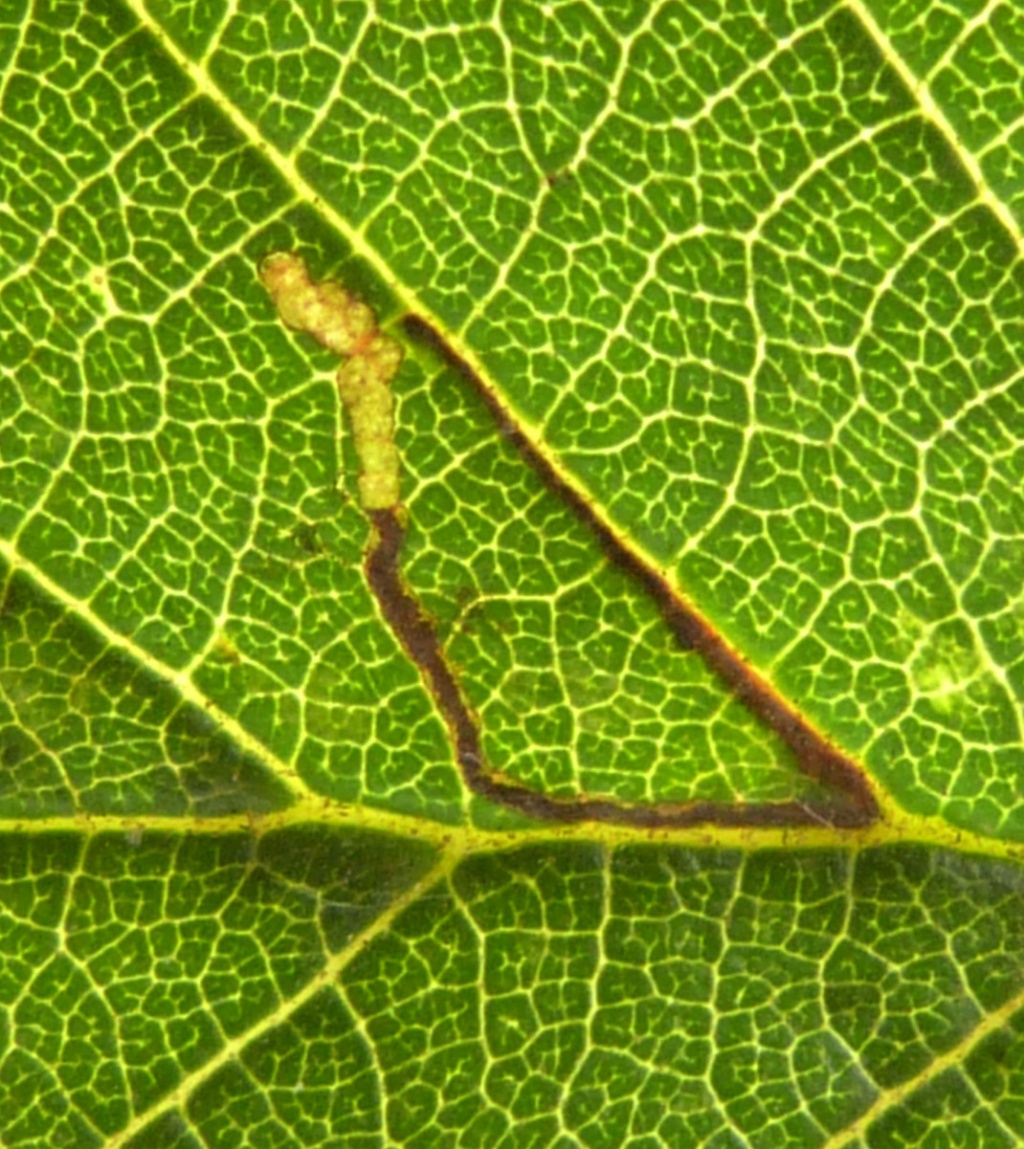
Bucculatrix cidarella
The larva of the moth Bucculatrix cidarella produces a short gallery mine on Alder. The mine is narrow and almost filled with black frass, starting from a rough black egg-case.
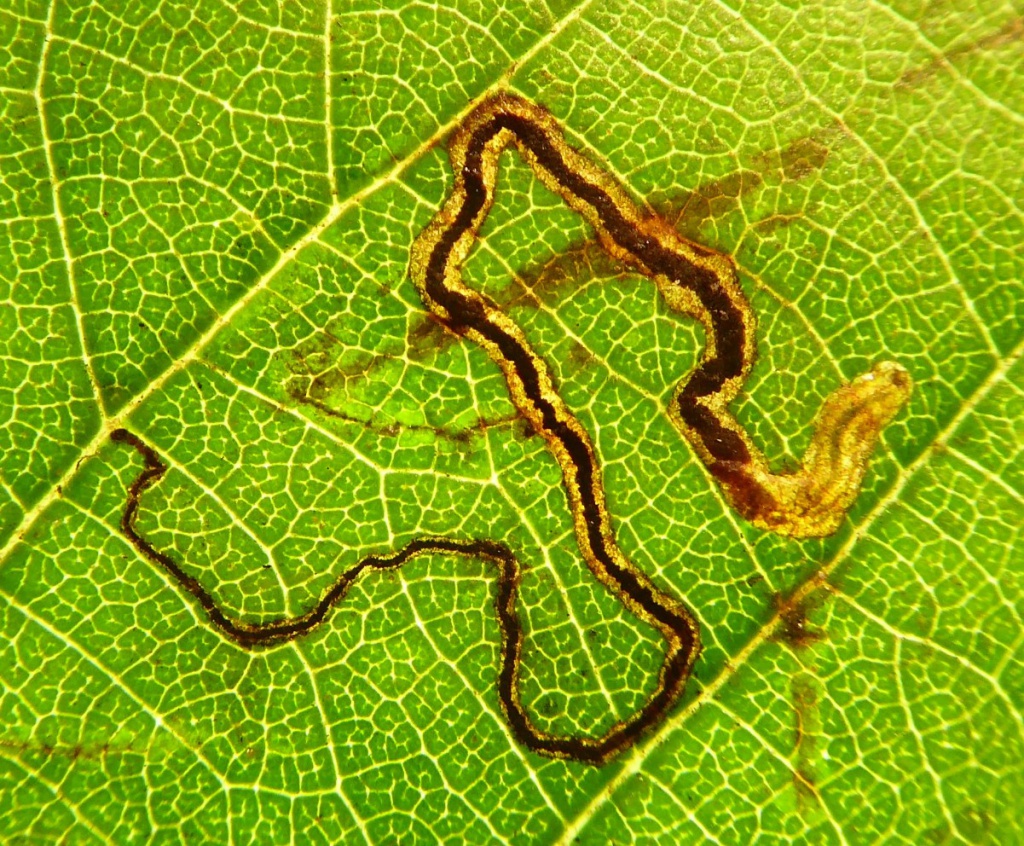
Stigmella glutinosae
The larva of the moth Stigmella glutinosae mines the leaves of Alder producing a gallery with frass partly dispersed, but sometimes in a thin line (similar to that of Stigmella alnetella). The leafmine can only be recorded when the larva is present. Mature Stigmella glutinosae larva has a brown head and a pale brown rectangular plate on the ventral surface of the prothorax, which is lacking in mature Stigmella alnetella. Stigmella glutinosae larvae mine leave with their underside (venter) upwards; Stigmella alnetella with the upper surface (dorsum) up.
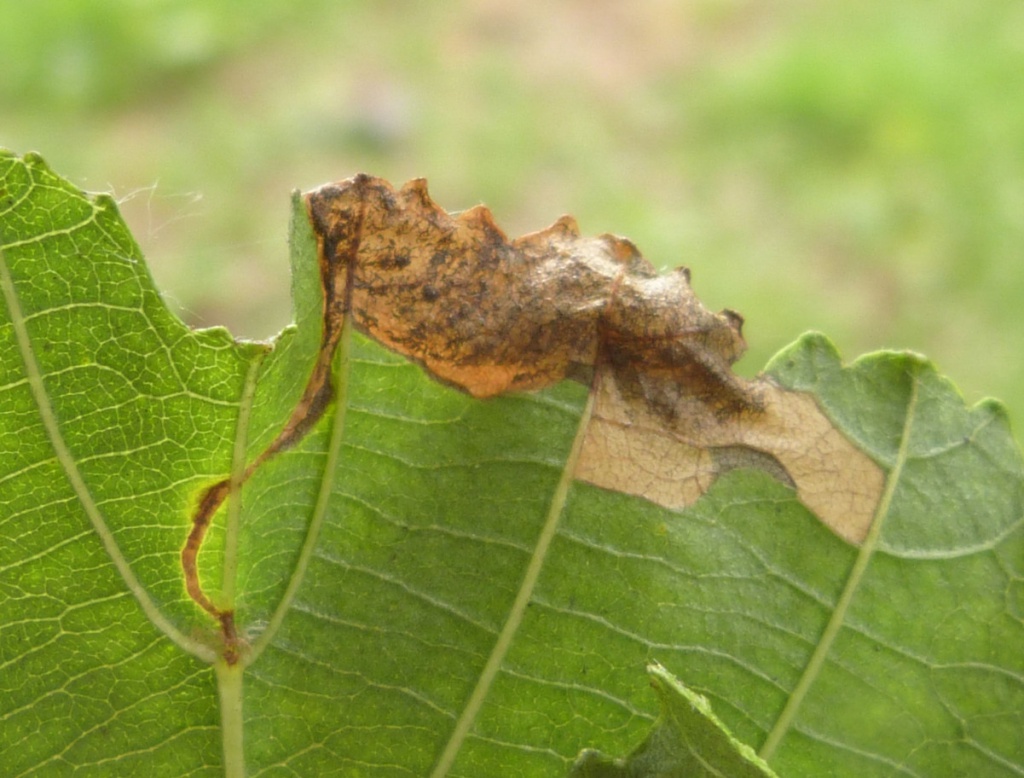
Jumping Weevil
The larva of the jumping weevil Orchestes testaceus mines the leaves of Alder species. Initially a gallery is formed which runs towards the leaf edge from a vein or midrib. The gallery widens quickly and then becomes a blotch - a spherical cocoon develops in this. The mine is brown.
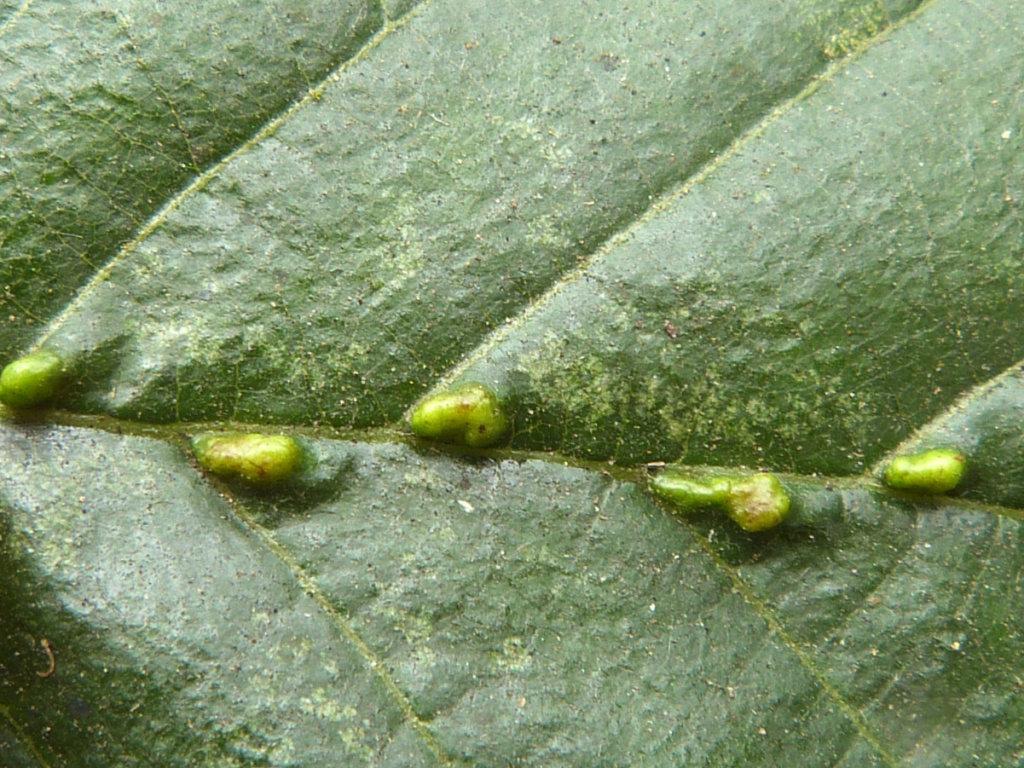
Eriophyes inangulis
The gall mite Eriophyes inangulis causes pouch galls to form on the leaves of Alder, in the angles between the midrib and the primary veins. They appear either alternately or in pairs and may run from the petiole to within two or three veins of the leaf apex. The galls are filled with russet hairs amongst which the mites live, and these hairs often project through to the underside of the leaf to form more or less triangular patches.
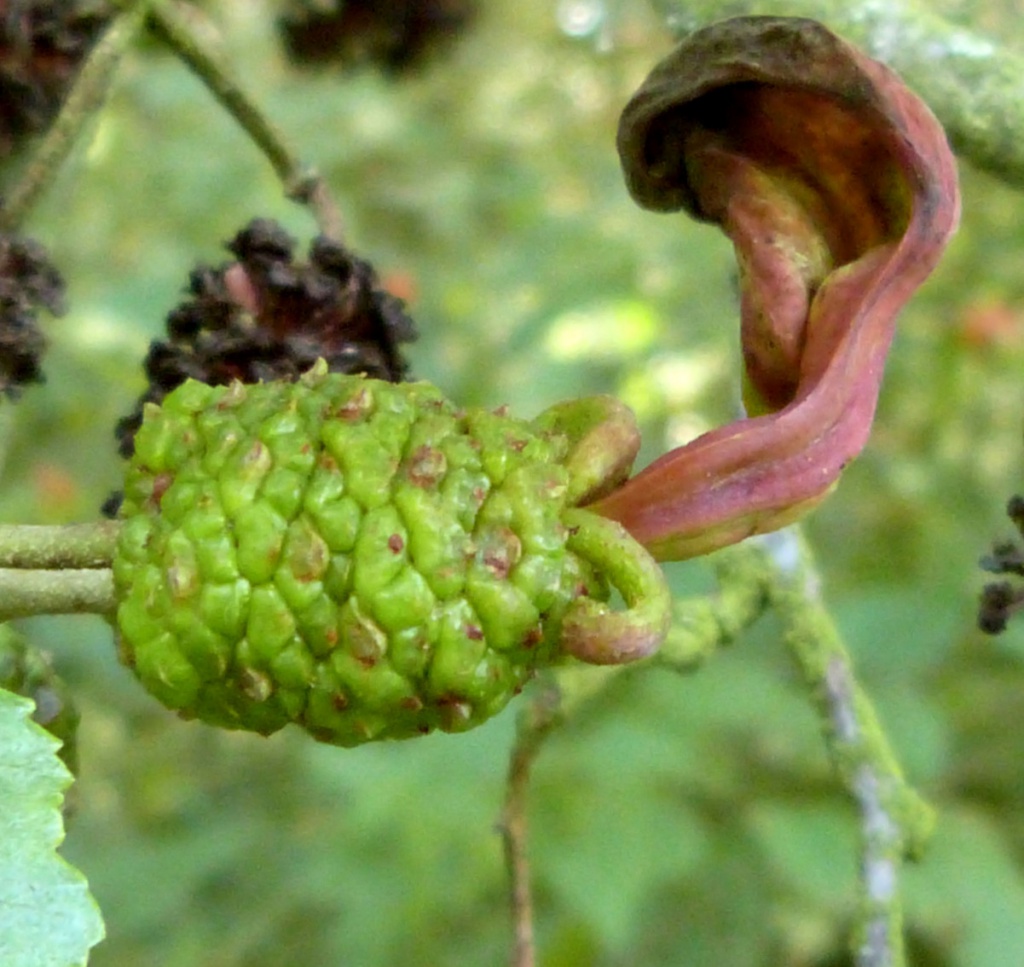
Alder Tongue
Taphrina alni is a fungus that causes Alder Tongue galls on female Alder catkins. Green at first, the galls gradually turn red and can then persist all year.
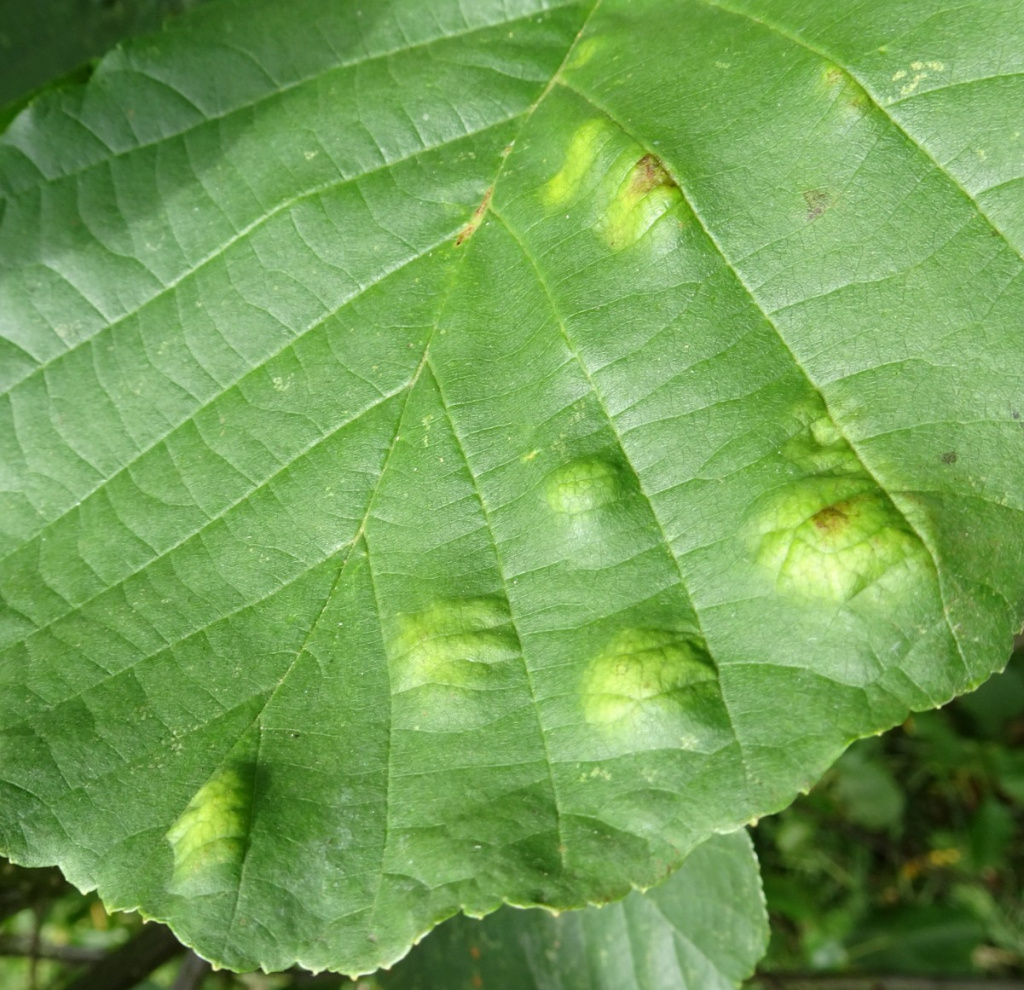
Taphrina sadebeckii
Taphrina sadebeckii is an ascomycete fungus that galls the leaves of Alder species, causing the leaf to bulge upwards. Underneath, the depression is bright yellow and lined with ascospores.
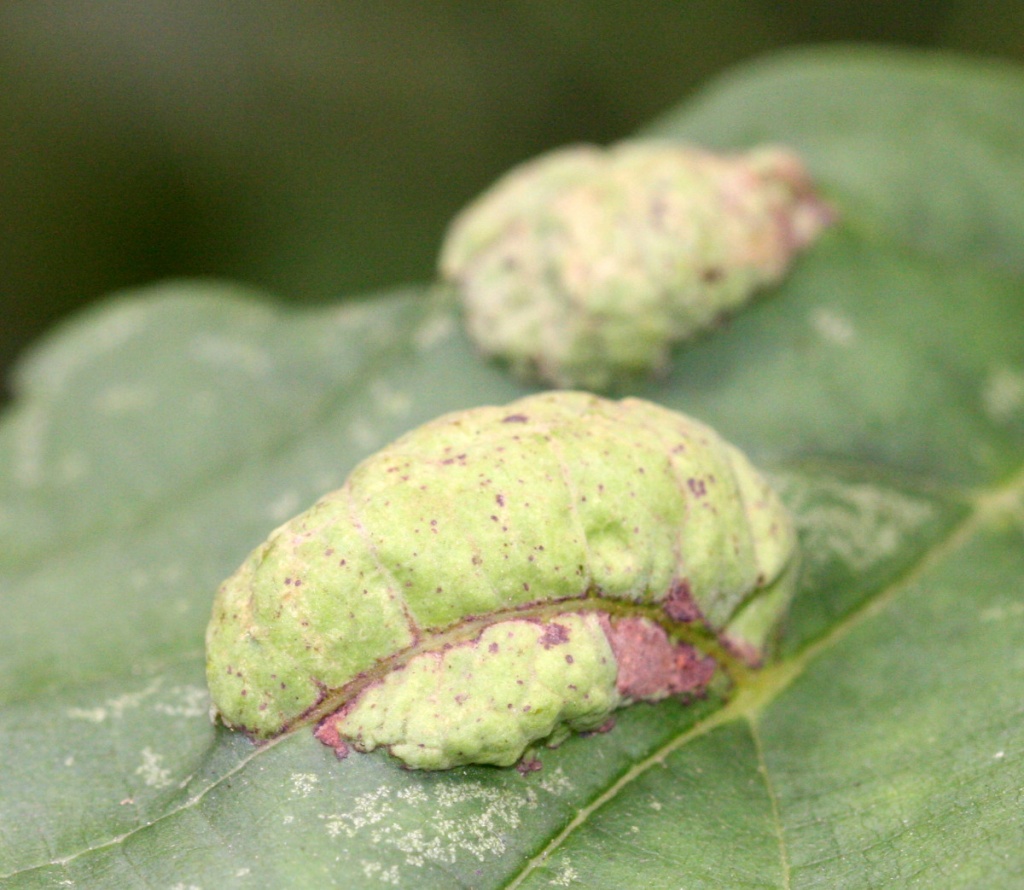
Taphrina tosquinetii
The fungus Taphrina tosquinetii causes large blisters on Alder leaves - on both surfaces. The leaves may be up twice normal size, Eventually the blisters become covered in a white bloom as the spore-bearing asci develop on the surface.
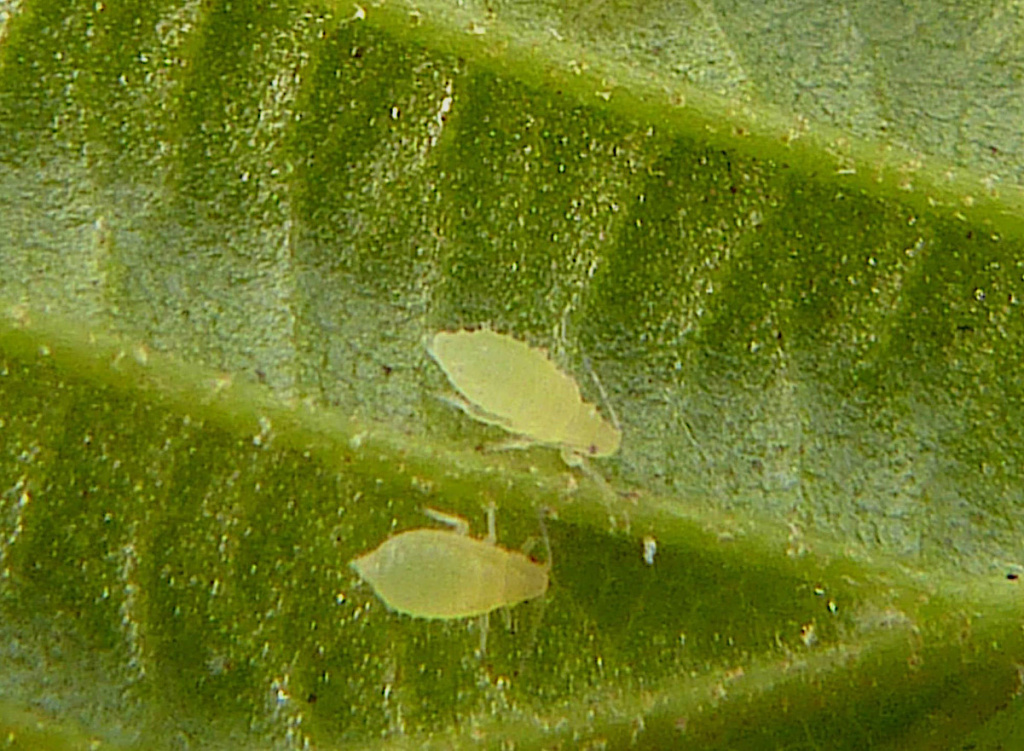
Pterocallis alni
In Britain Pterocallis alni is found almost exclusively on Common Alder, living dispersed on undersides of leaves. The body length of Pterocallis alni apterae is 1.3 to 2.0 mm. Both the winged and wingless adult viviparae are yellowish white to yellowish green.
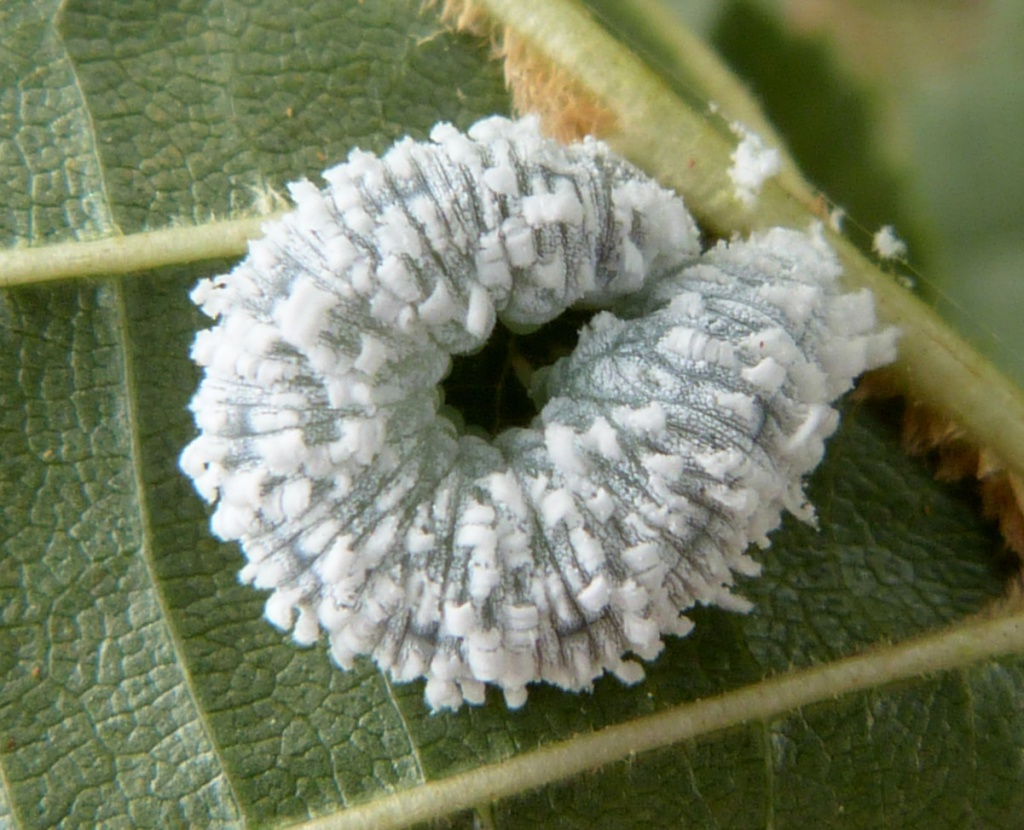
Alder Sawfly
The larvae of the Alder Sawfly (Eriocampa ovata) feed on Alder. They are up to 2 cm long and covered in a white powdery substance. They camouflage themselves as bird droppings. The white powdery substance is easily rubbed off and in the final instar, when feeding is finished, the white powder is lost and the larva adopts a pale green appearance. There are two generations each year.
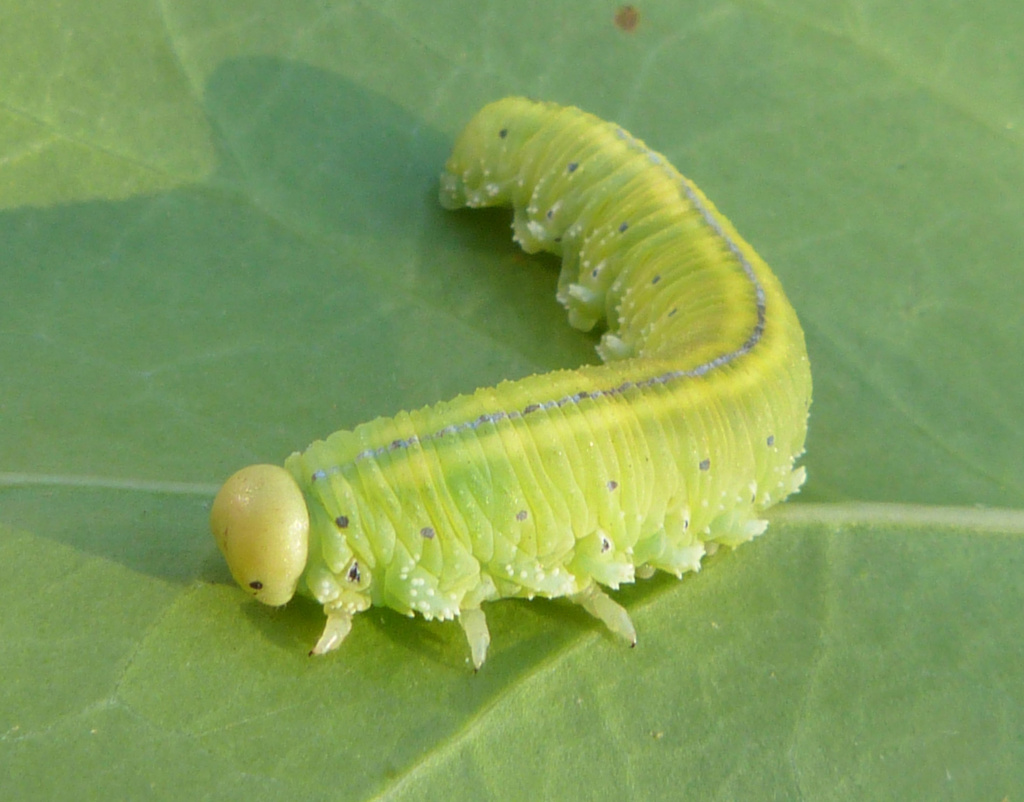
Cimbex connatus
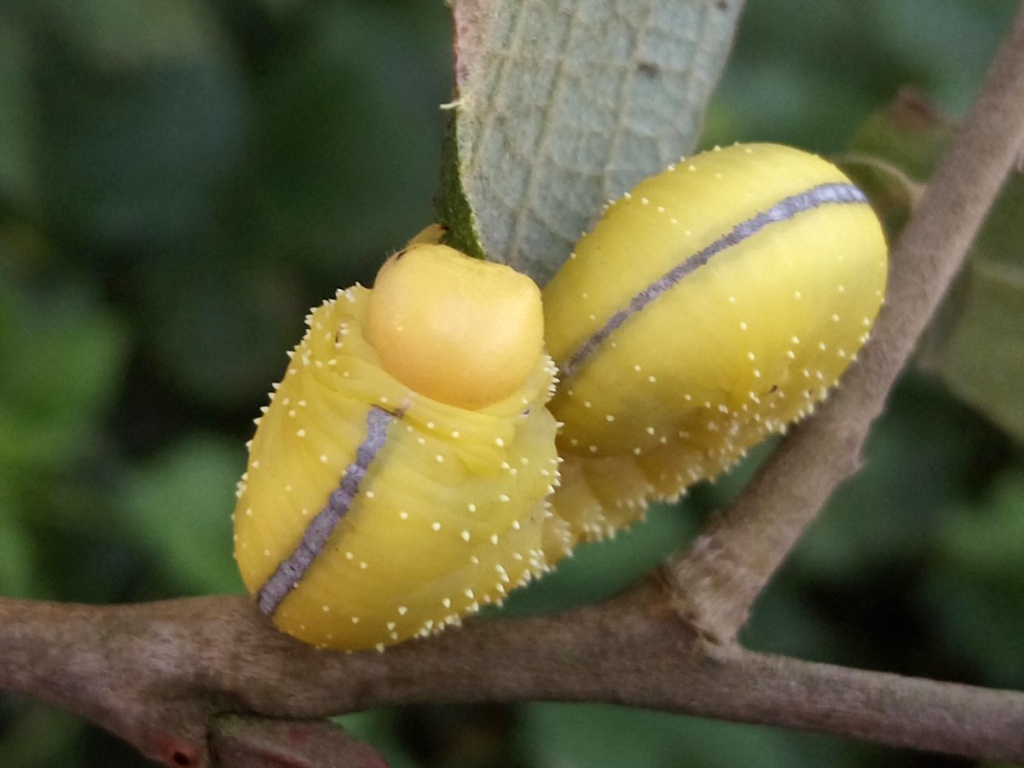
The larva of the sawfly Cimbex connatus feed on Alder species. They are up to 50mm, yellow/green with blue dots along the sides and large dorsal stripe.
Cimbex luteus
The larvae of the sawfly Cimbex luteus feed on Alders and Willows. It can reach up to 50 mm in length and is yellow in colour with a large dorsal stripe, and blue dots along its sides.

Fenusa dohrnii
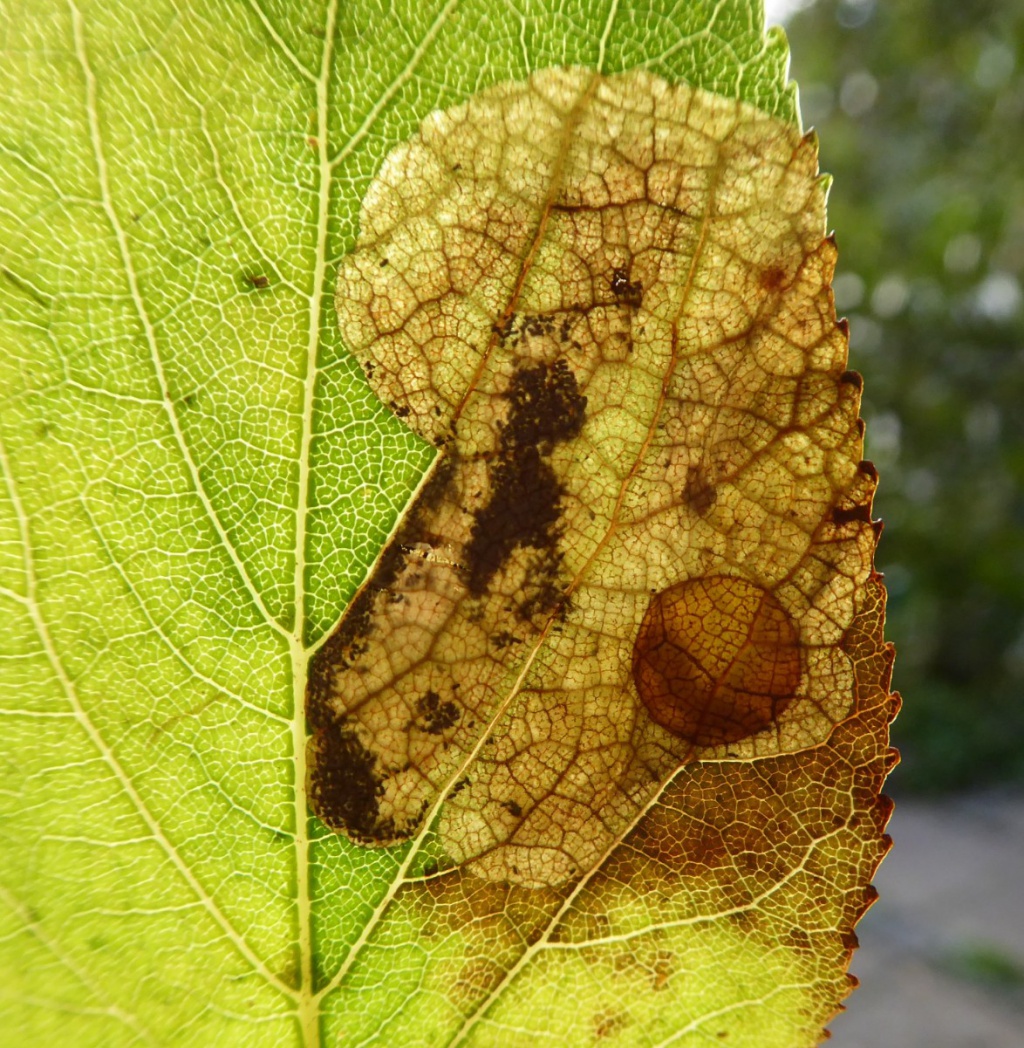
The larva of the sawfly Fenusa dohrnii mines the leaves of various Alder species. The mine takes the form of a large brownish blotch, without an initial corridor. Usually the mine starts near a vein axil, and expands towards the leaf margin. The mine mostly remains enclosed by two thick lateral veins.
Heterarthrus vagans
The larvae of the sawfly Heterarthrus vagans mine the leaves of Alder species. The white larva has ringed feet and a distinctive black mark near the head followed by 3 spots. It creates a large blotch that normally starts at, or near, the leaf margin, where some or much frass is ejected. The mine is brownish and the full grown larva makes a disc-shaped cocoon in which it pupates. The larva has a dark patch on the back of the head, and dark markings under the head. There are black dots on the thorax underneath, and the feet are short and stubby. The pigmentation is lost in the pre-pupal stage in the cocoon
Euura glutinosae
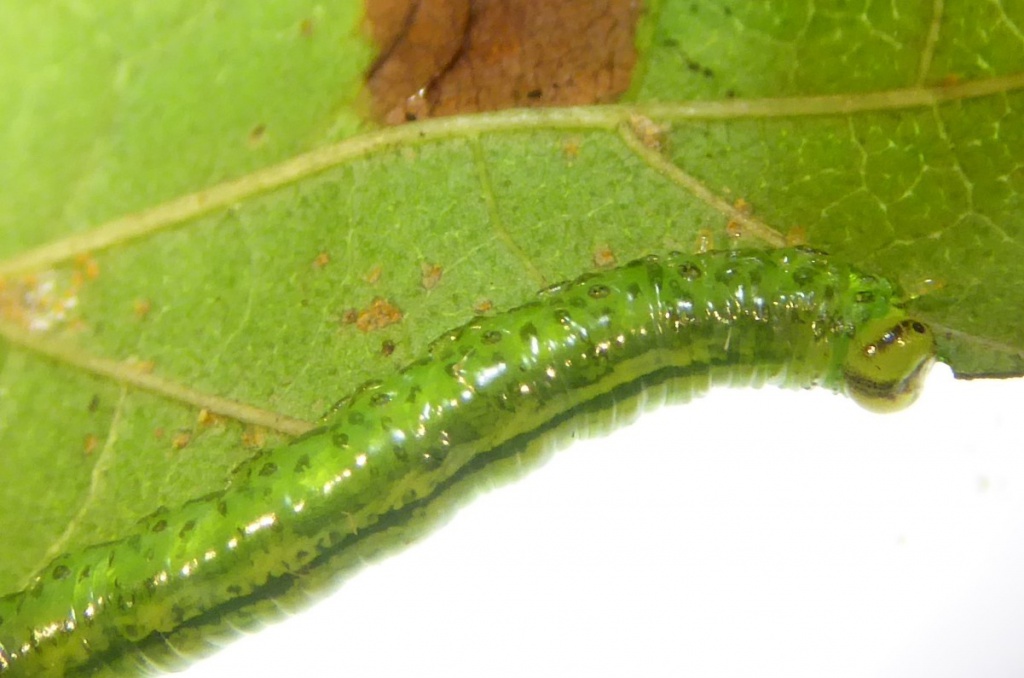
The larvae of the sawfly Euura glutinosae feed on Beech feeding along the leaf edge.
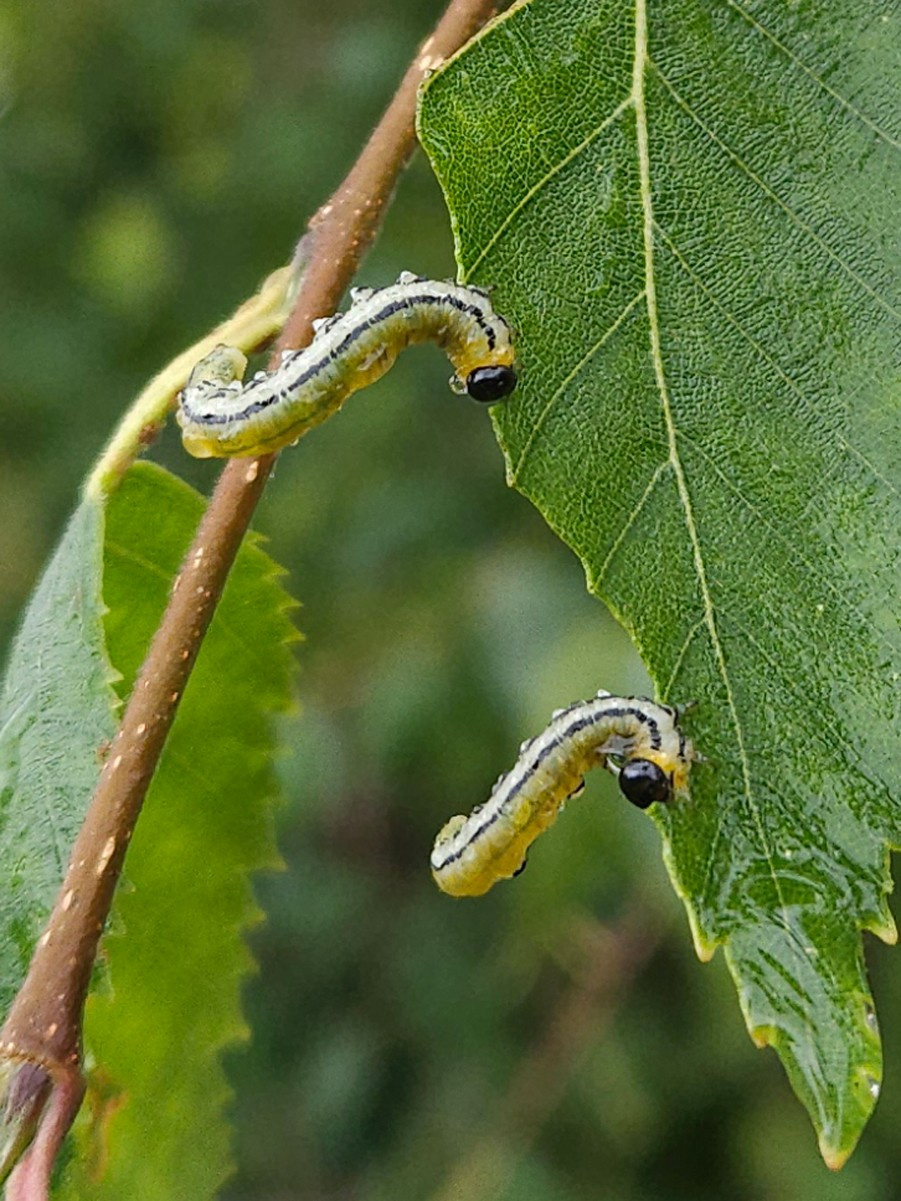
Hemichroa australis
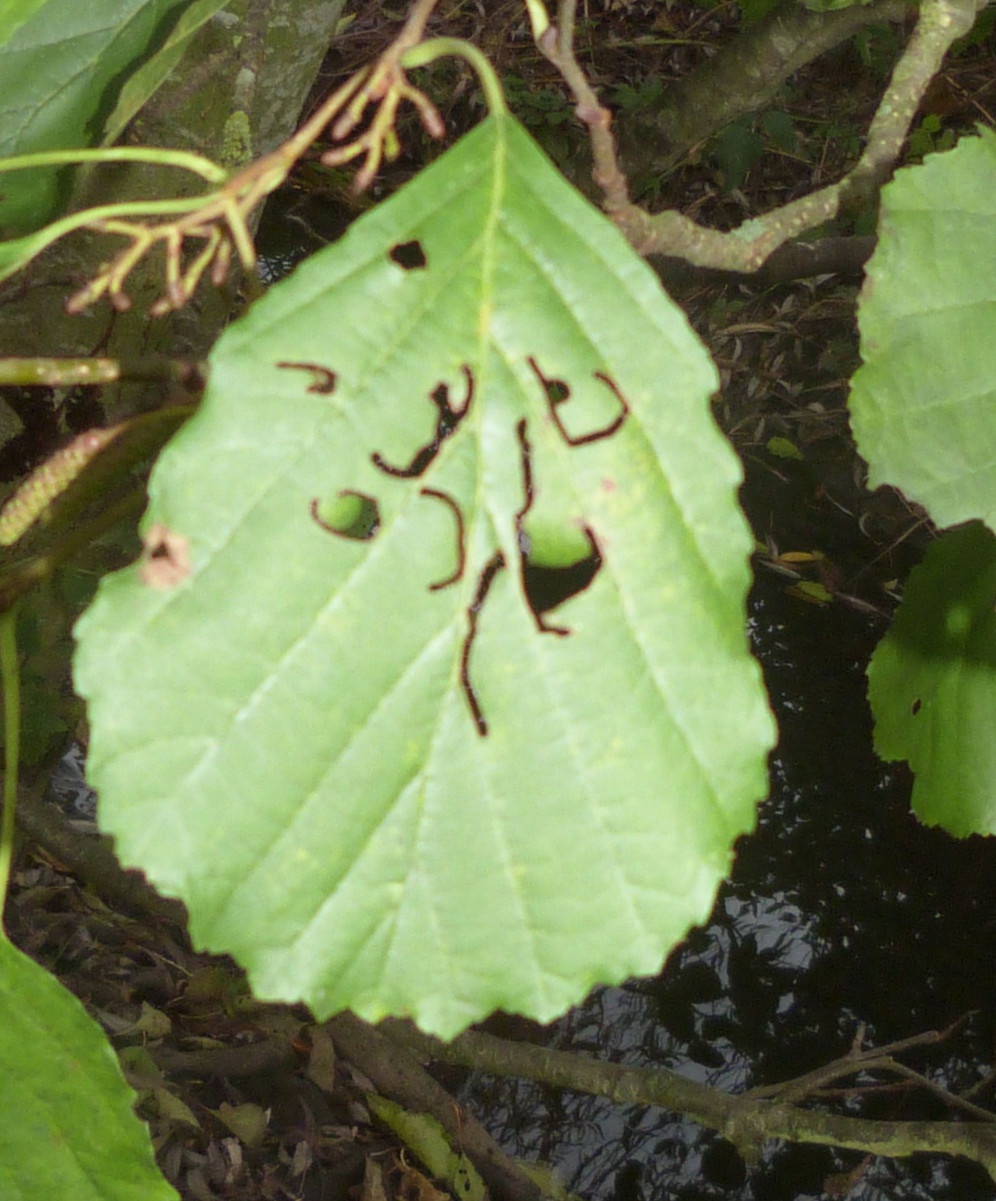
The larva of the sawfly Hemichroa australis feeds on the leaves of Birch and Alder species. When feeding, young larvae make holes in characteristic curved or angled lines in the leaves, whereas larger larvae feed on leaf edges.
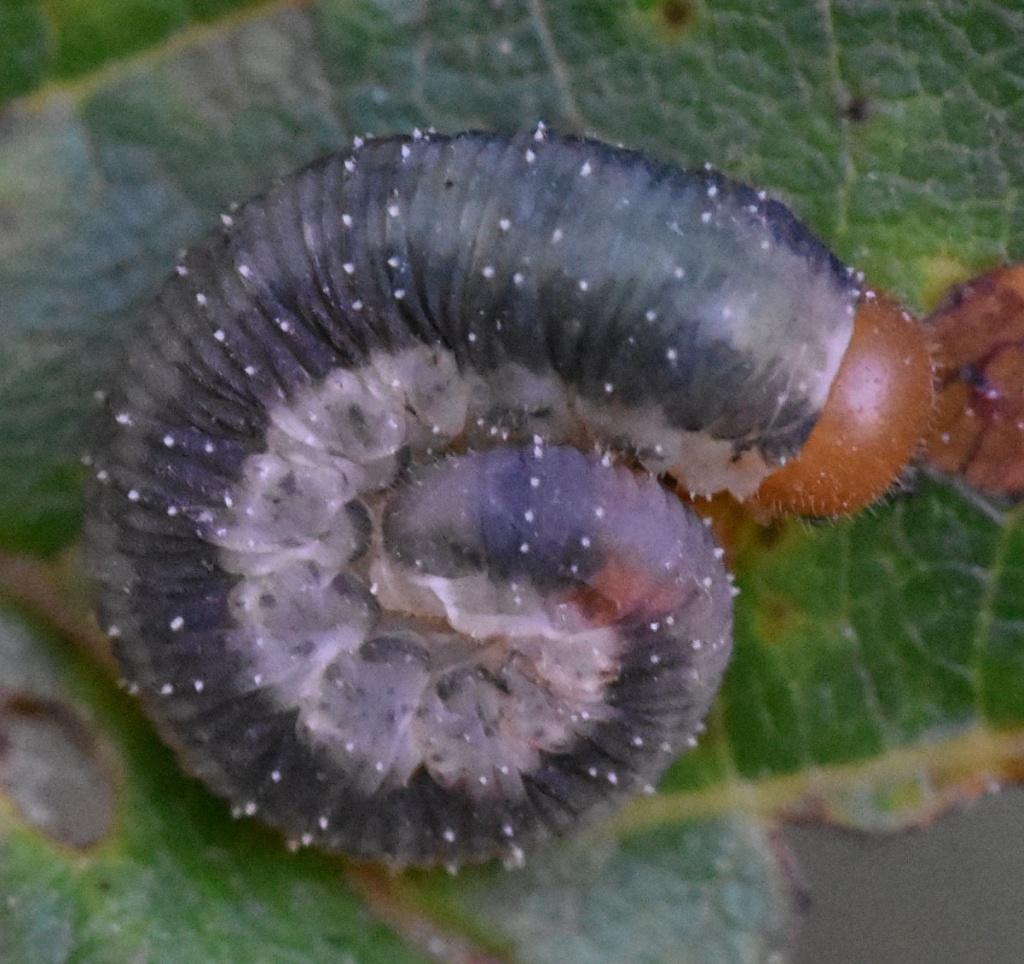
Nematinus fuscipennis
The larva of the sawfly Nematinus fuscipennis feeds on Alder. It has a greyish green body with a paler underside, orange head and white spots distributed evenly all over.
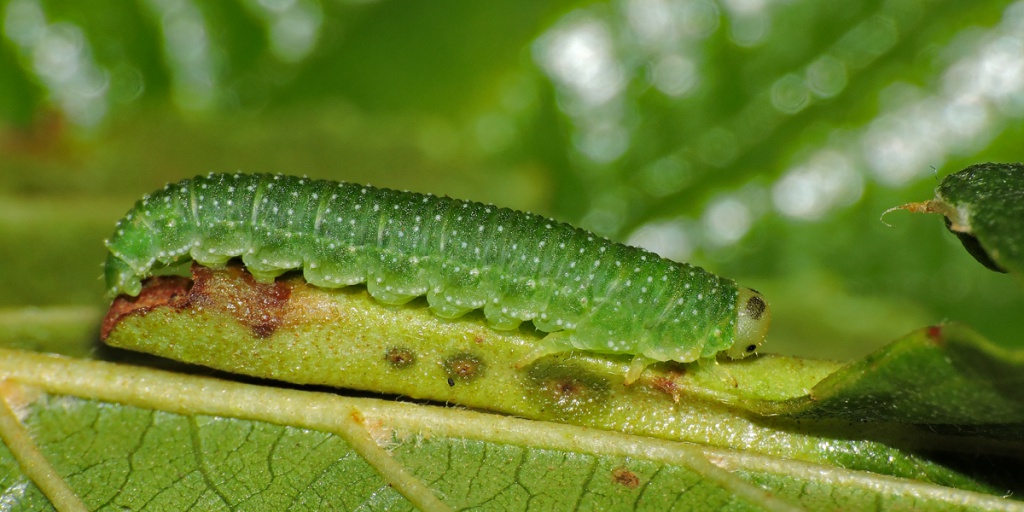
Nematinus steini
The larva of the sawfly Nematinus steini feeds on Alder. It has a green body with paler flecks.
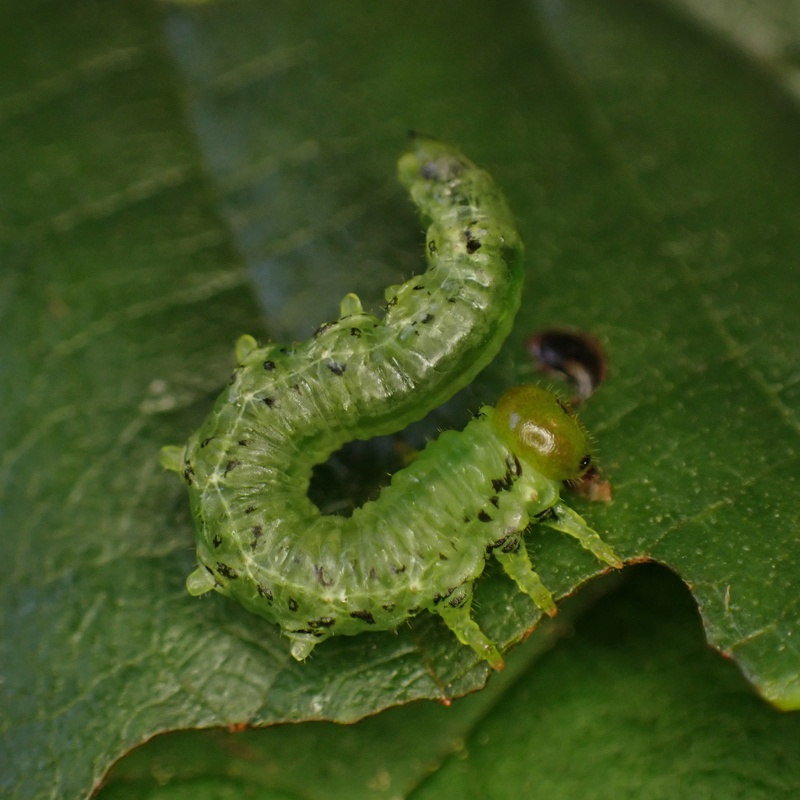
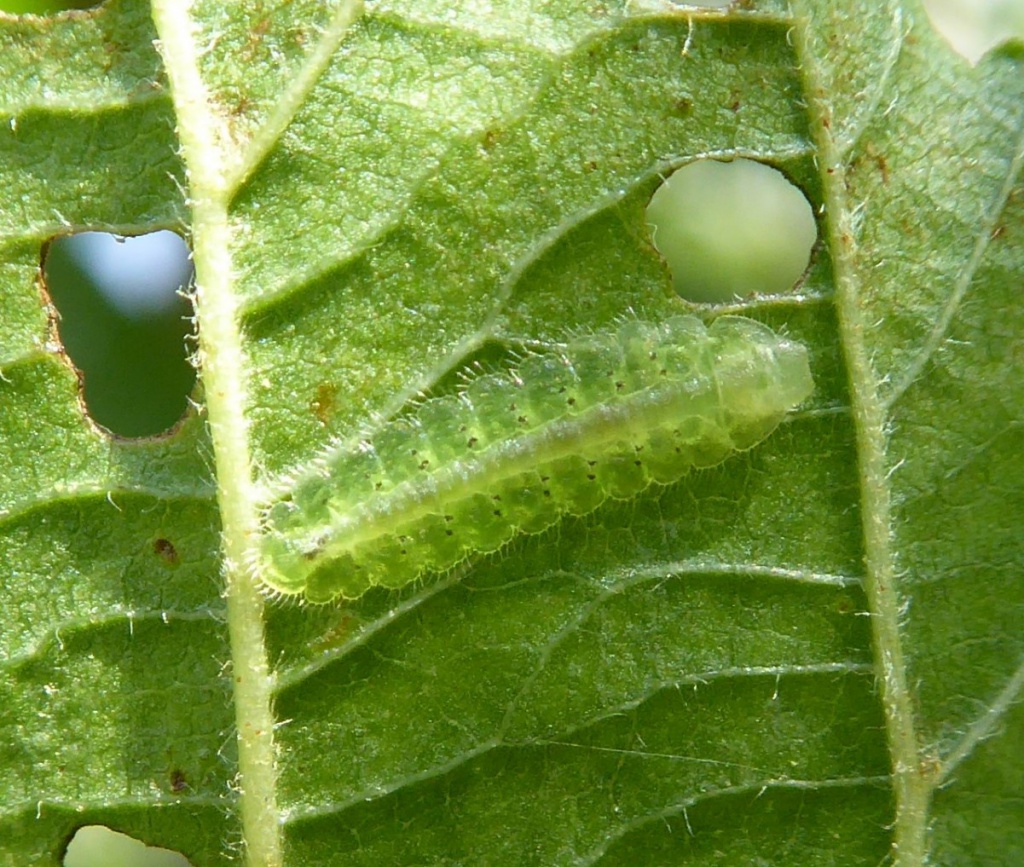
Platycampus luridiventris
The larva of the sawfly Platycampus luridiventris feeds on Alder. It is green, about 7 or 8 mm long, and is very flat.

Alder Leaf Beetle
Agelastica alni is a distinctive, dark metallic blue coloured species measuring around 7mm in length. It feeds mainly on Alder but is occasionally found on other deciduous trees such as Beech, Hazel and Hornbeam. The black larvae can be found in July and August when they can cause significant leaf damage.
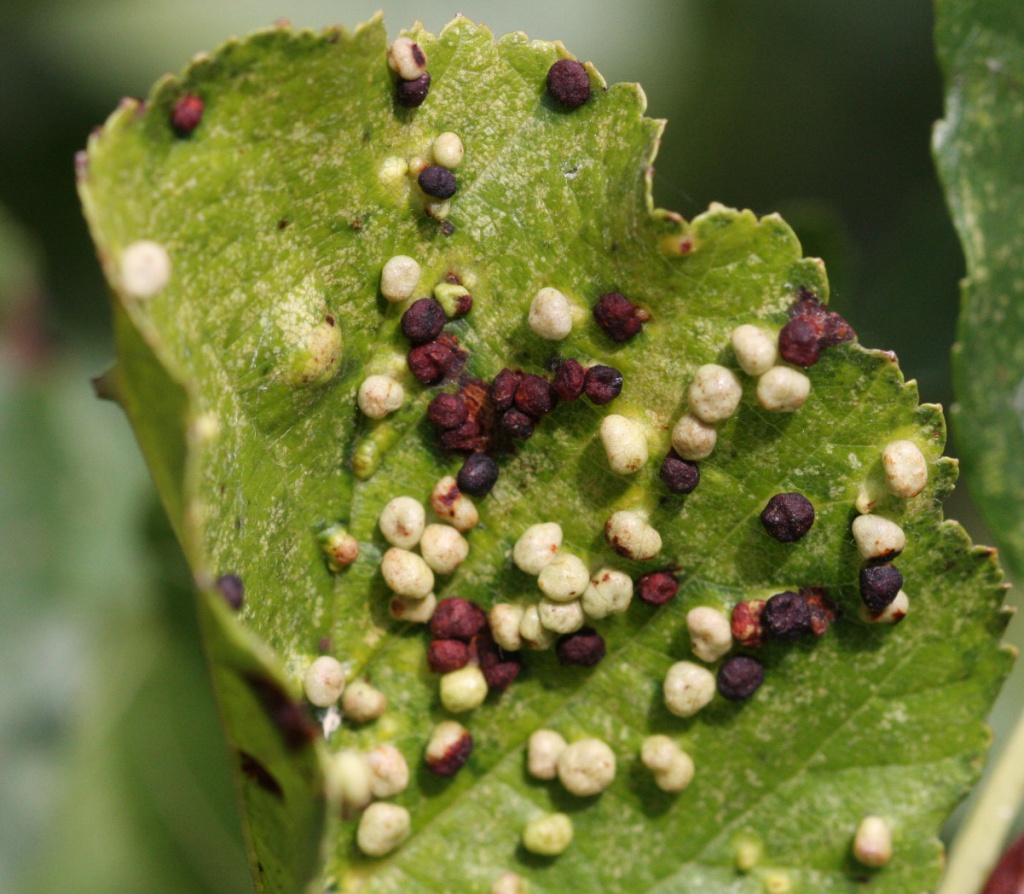
Eriophyes laevis
The mite Eriophyes laevis causes galls to form on the leaves of Alder (Alnus glutinosa). The galls start off shiny yellow, becoming green then red, purplish or brown. They are scattered over the leaf, often numerous, and with a small opening below. The gall is seen more often than the mite.

Acalitus brevitarsus
Acalitus brevitarsus is a mite that causes blister like galls to form on the leaves of Alder. Like many mite galls, the leaf is made to grow clusters of hairs, called erineum, among which the mites live. On the underside of the leaf these galls have a shiny pale brown appearance. The galls are seen more often than the mite.

Agromyza alnivora
The larvae of this fly mine the leaves of various species of Alder creating an upper surface gallery, narrow at first but widening considerably towards the end. Frass is typically in two rows.