

Silver Birch - Betula pendula
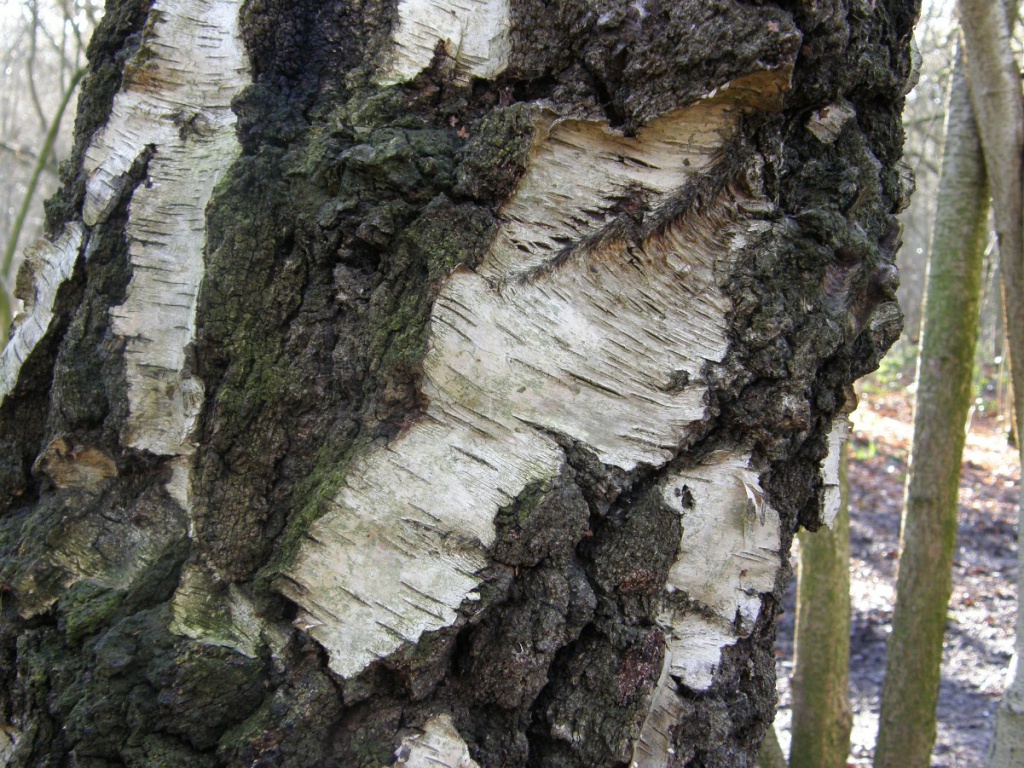
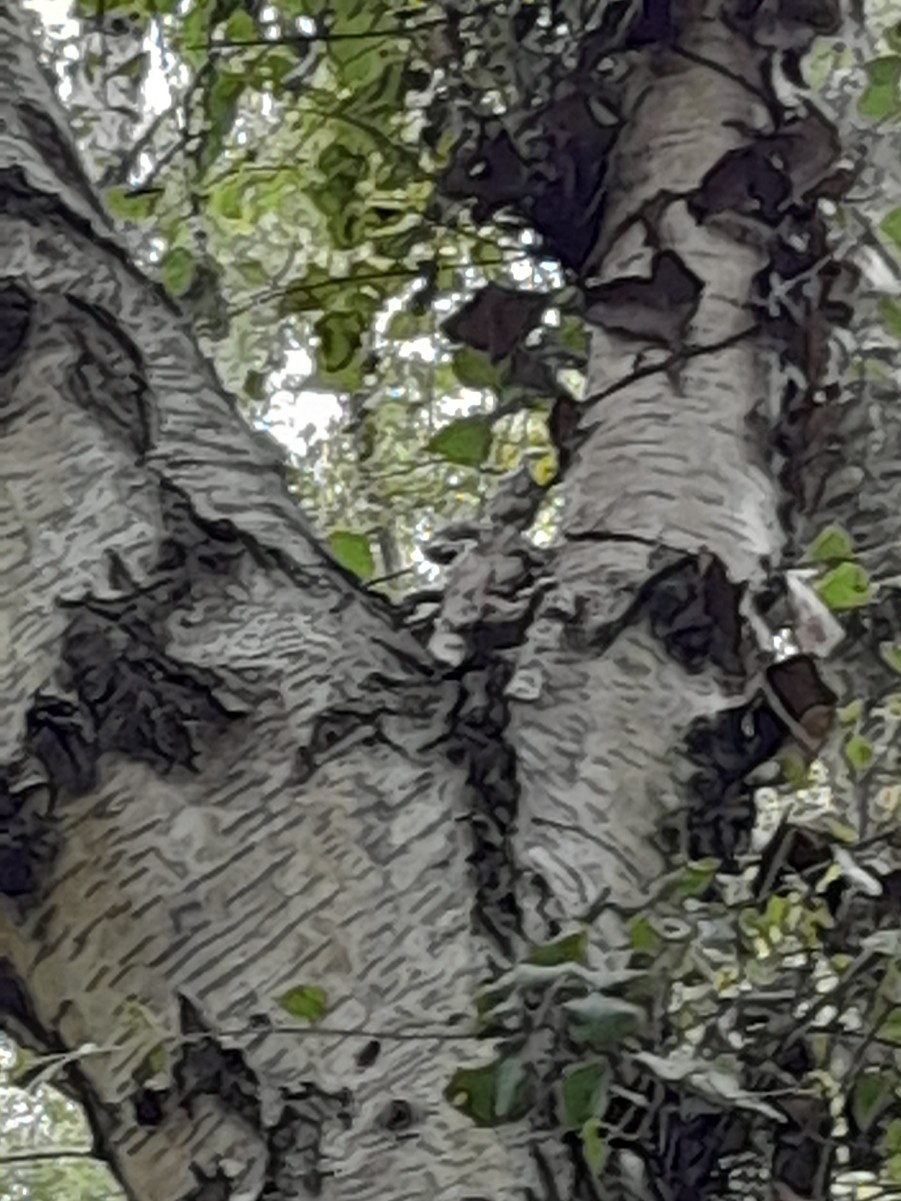
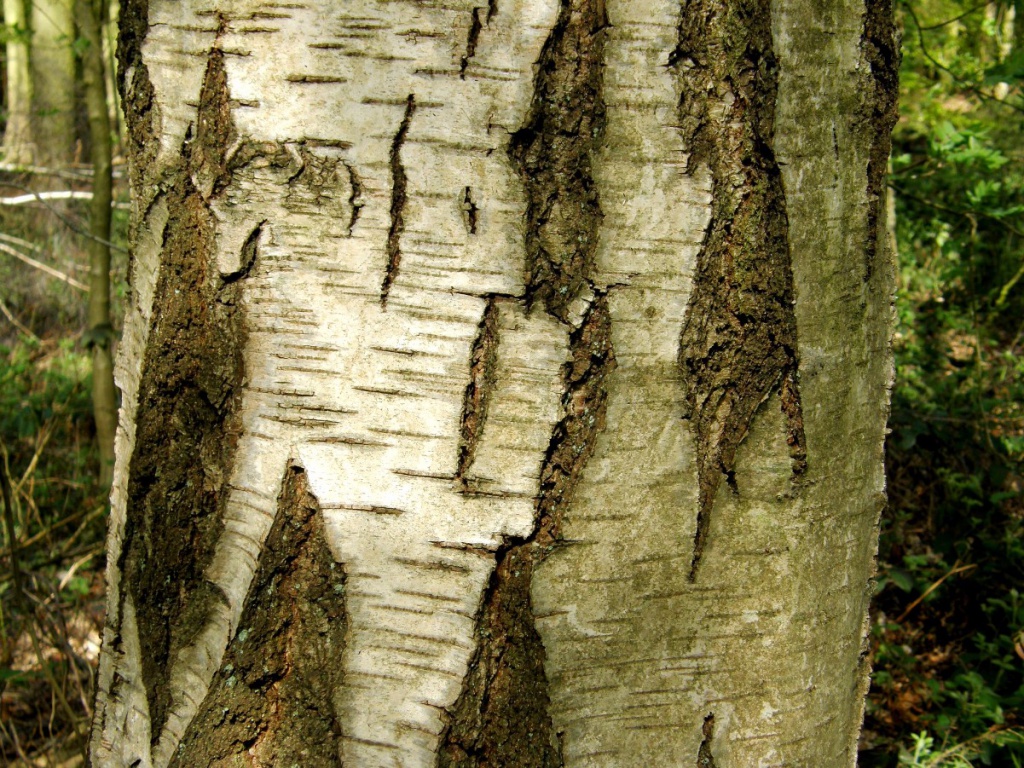
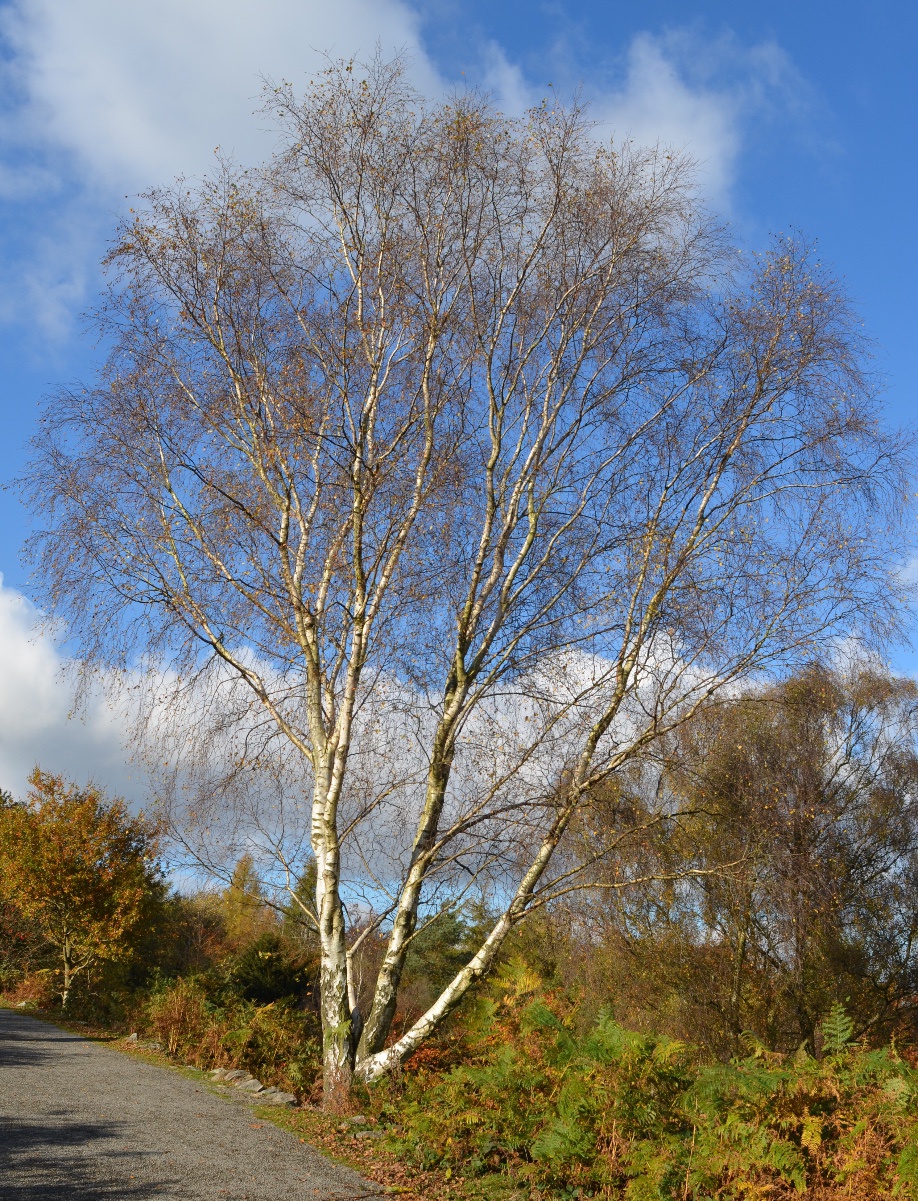
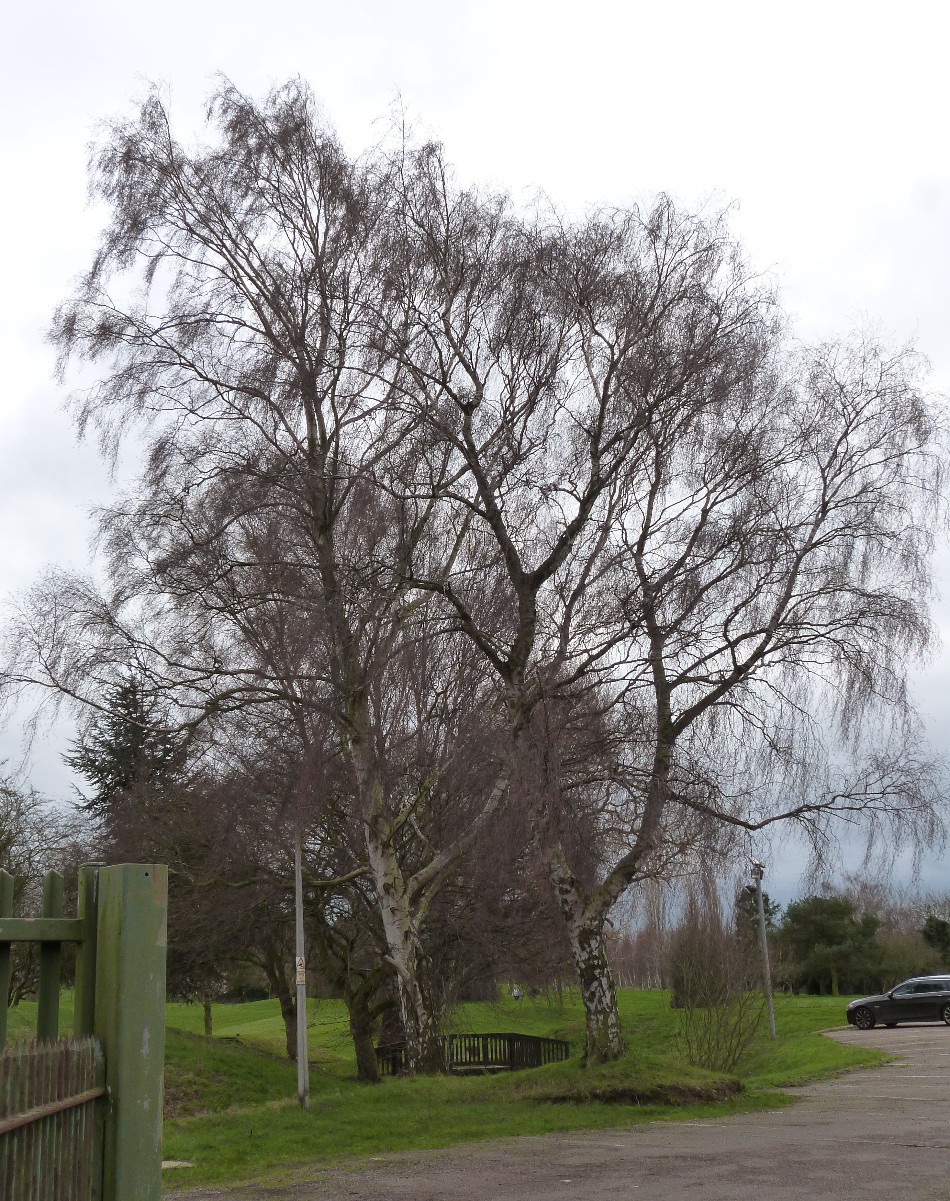
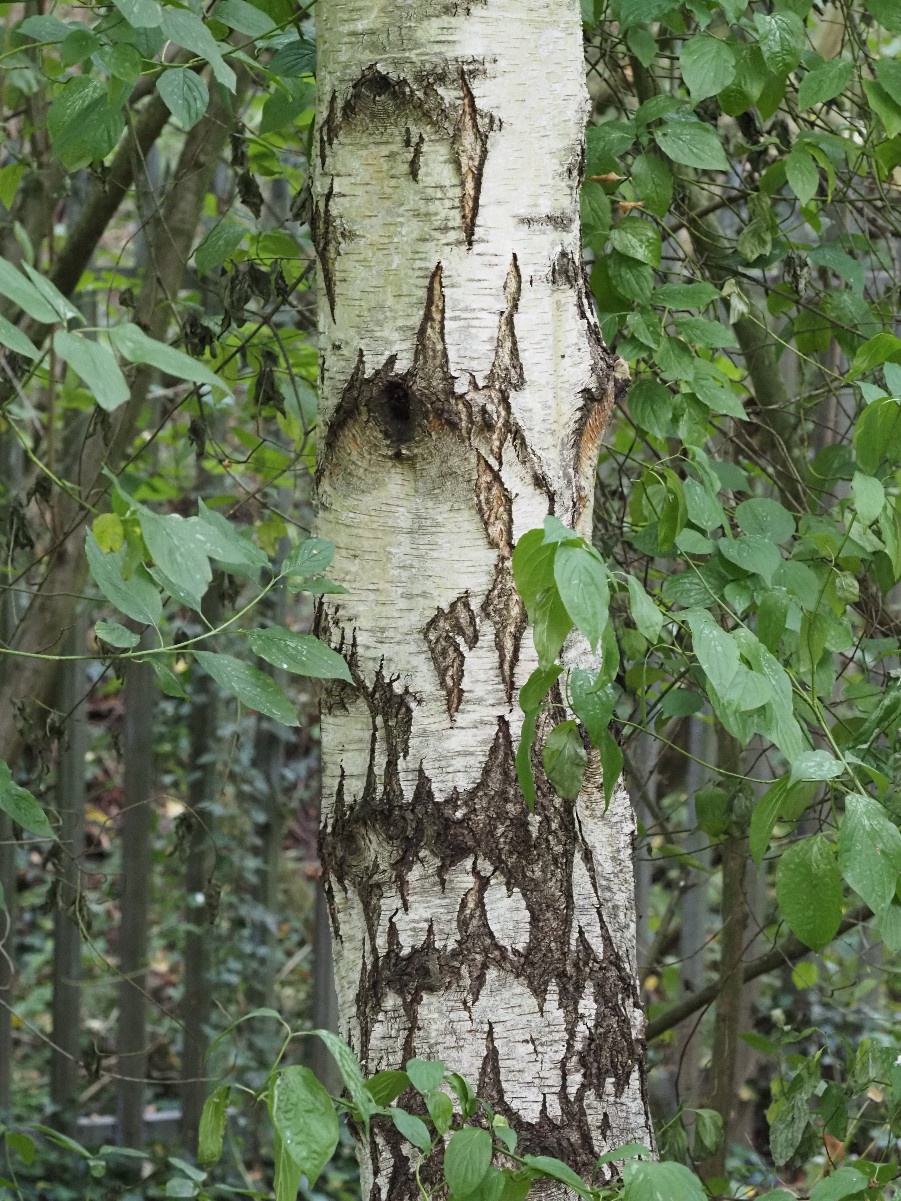
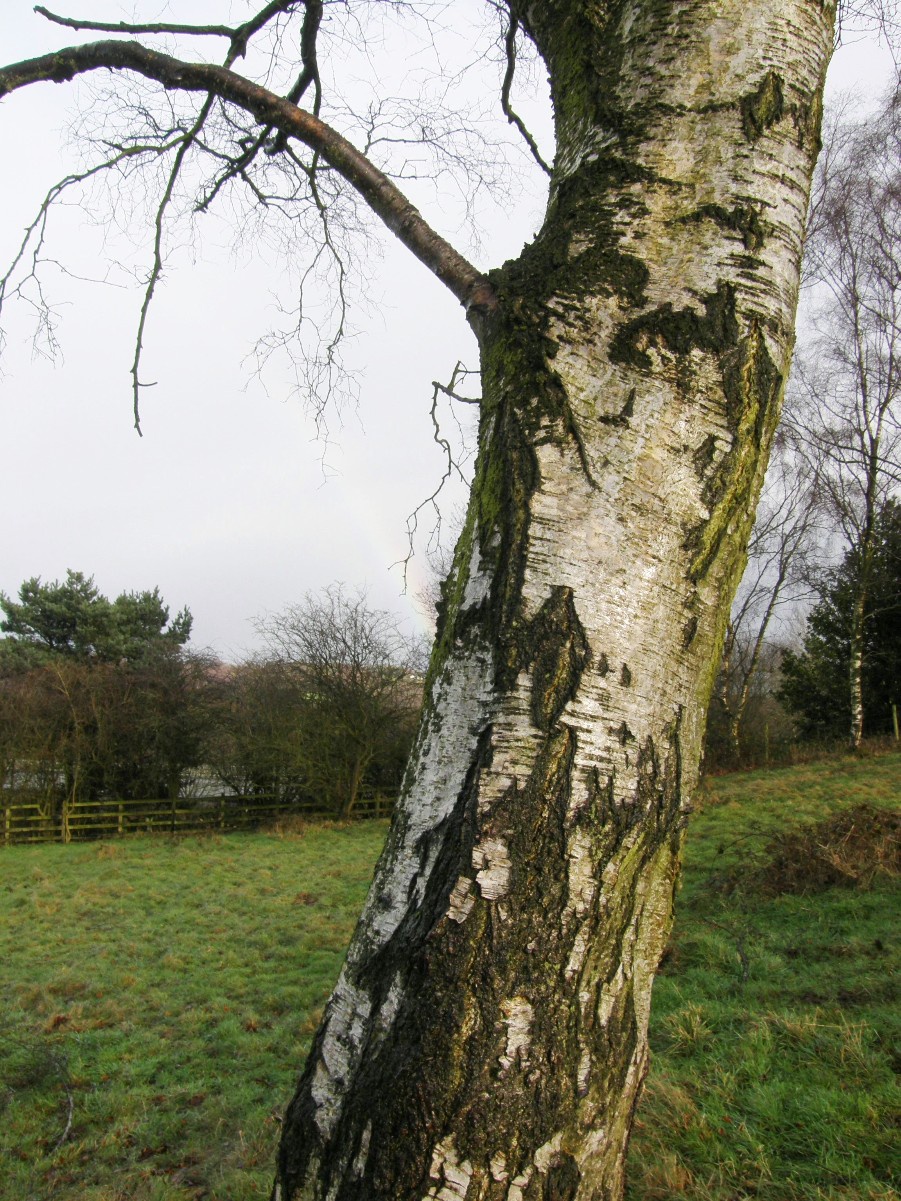
Erect tree to 30 metres. Bark silvery white in more mature trees and peeling, with rugged black fissures below. Young trees have reddish bark.
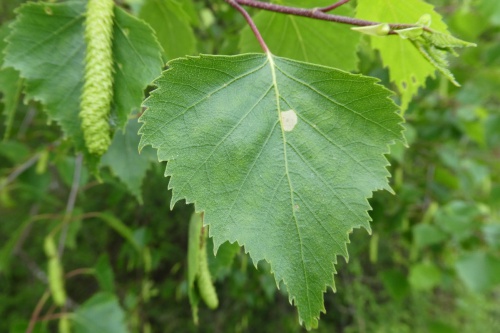
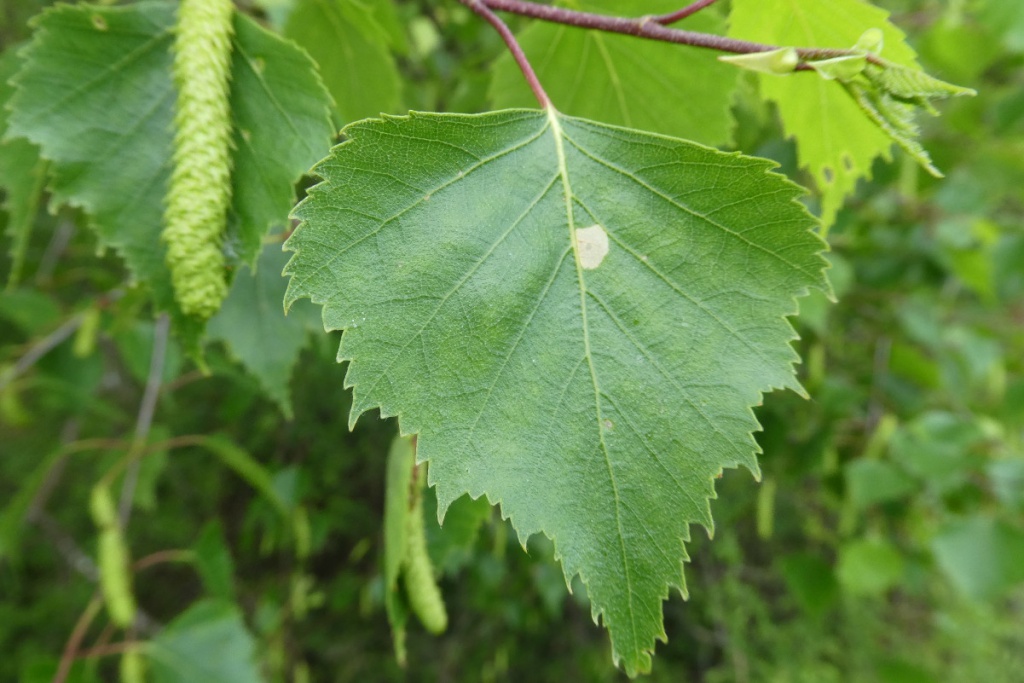
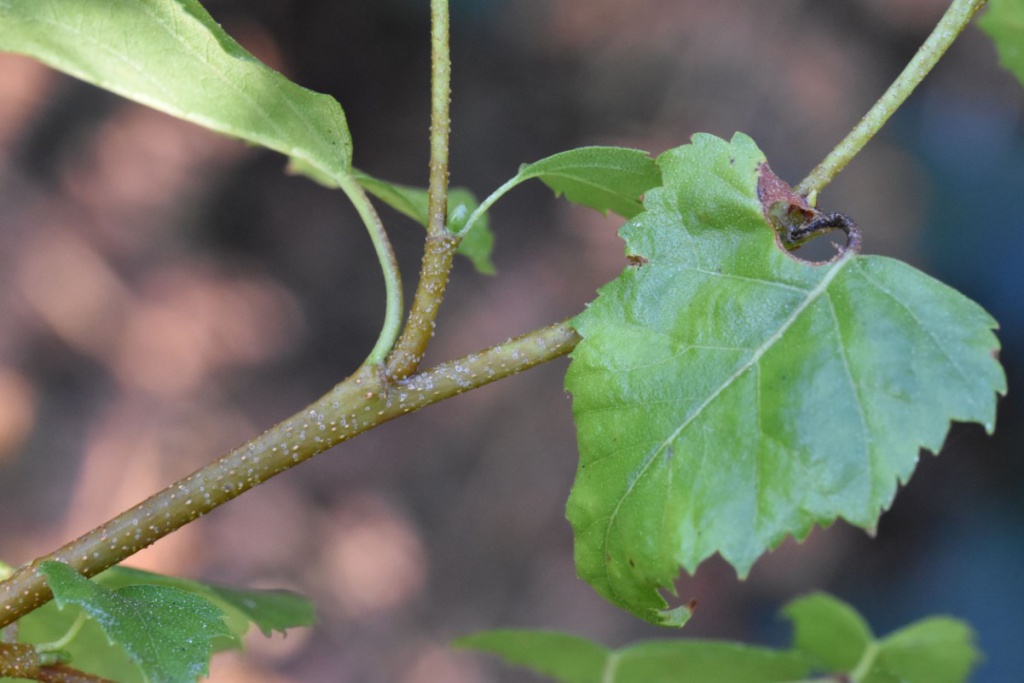
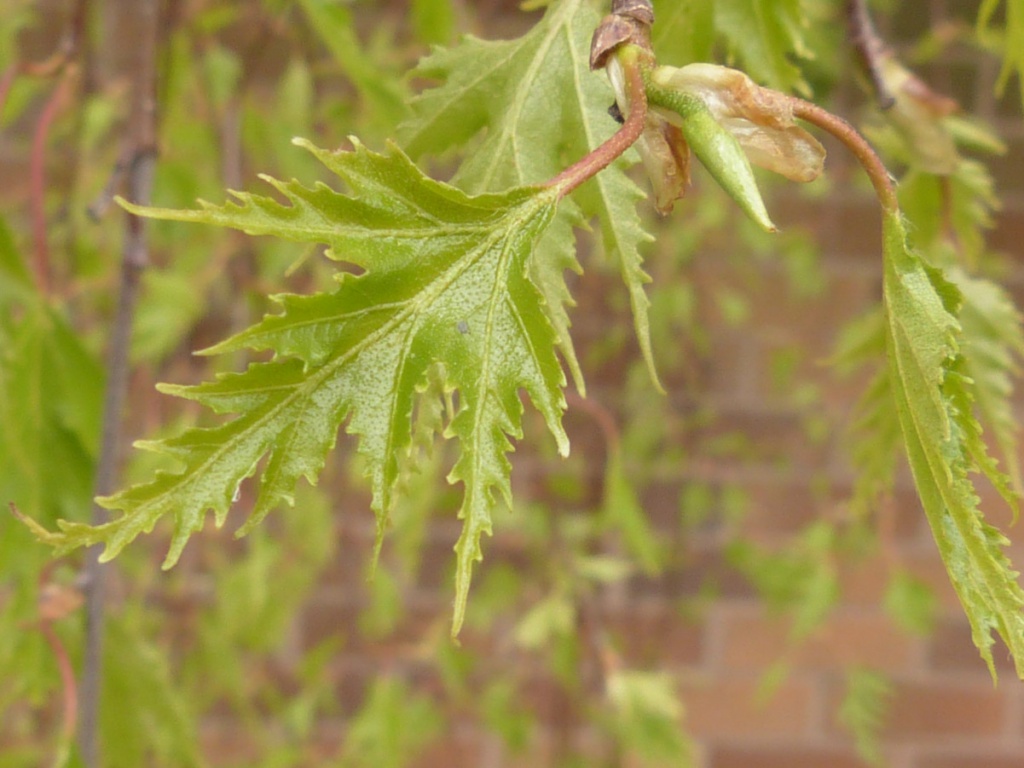
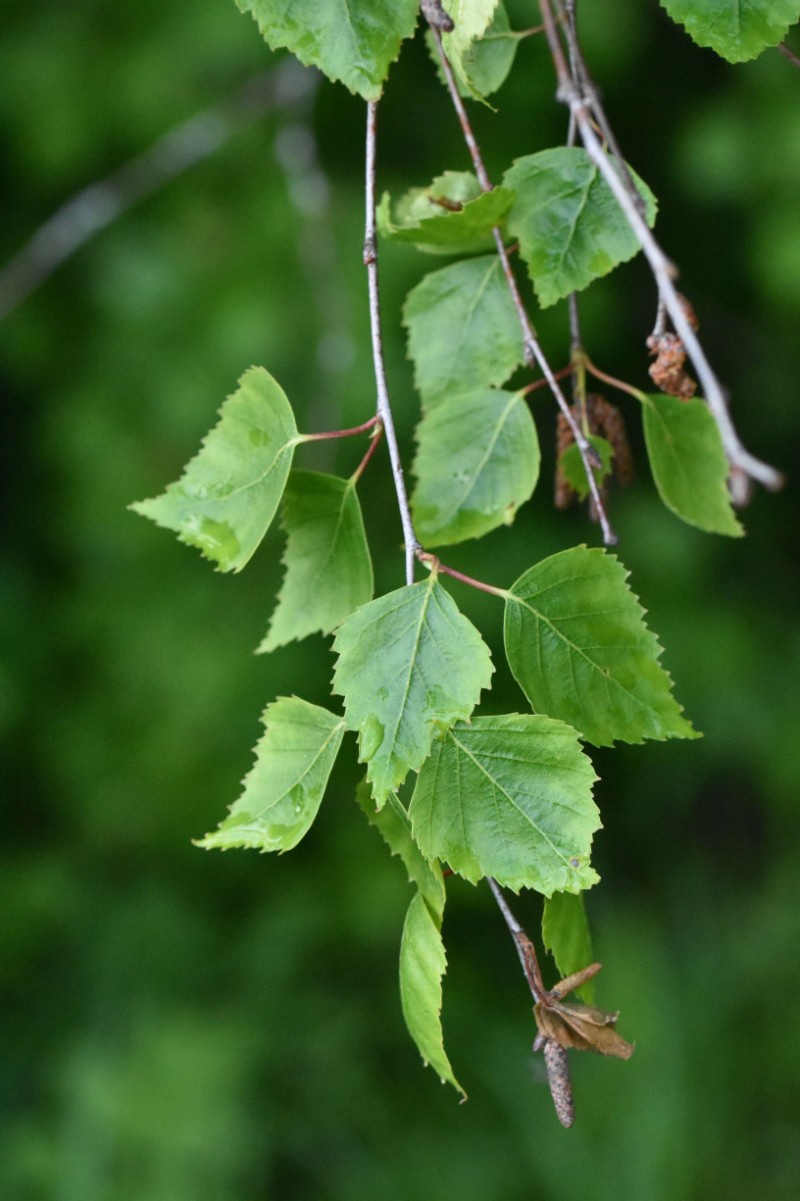
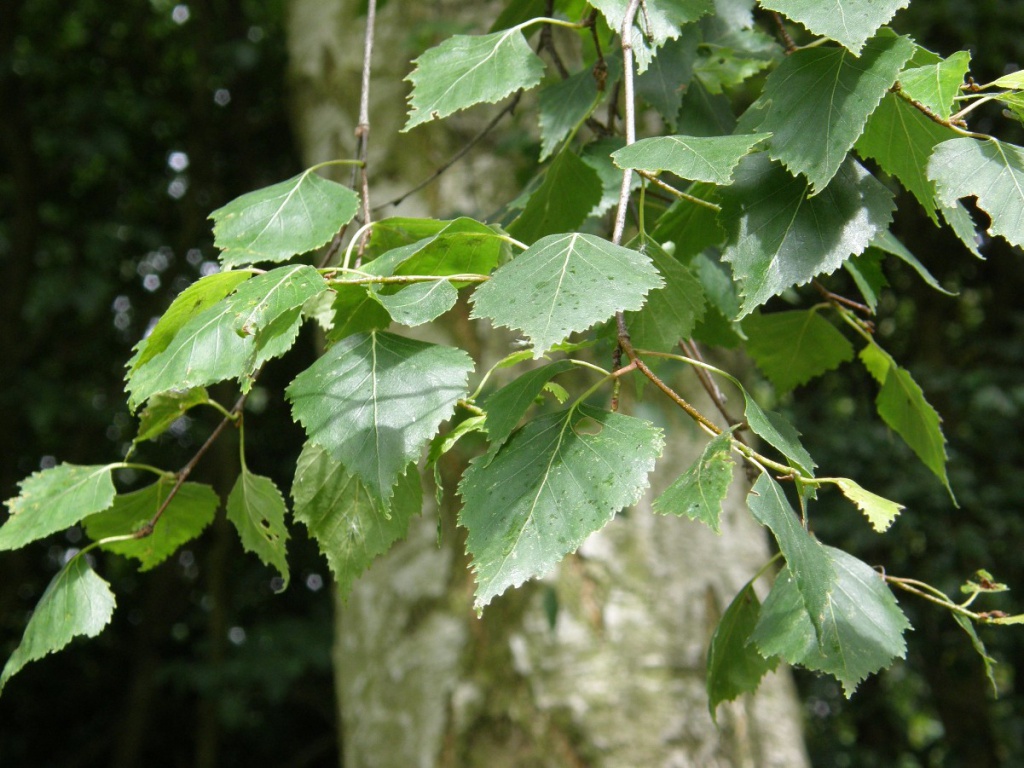
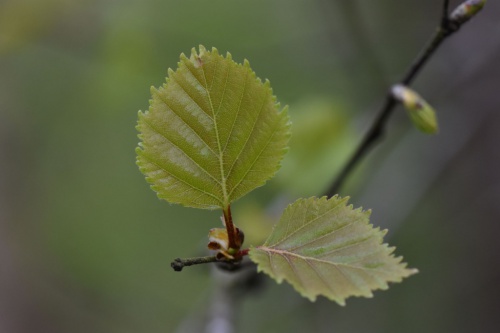
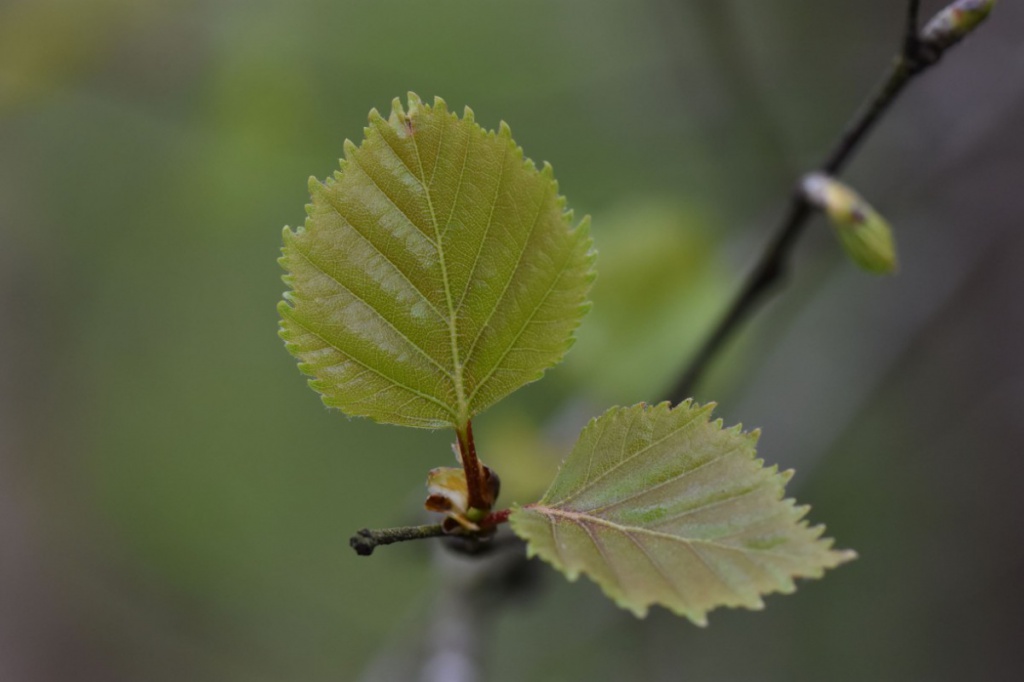
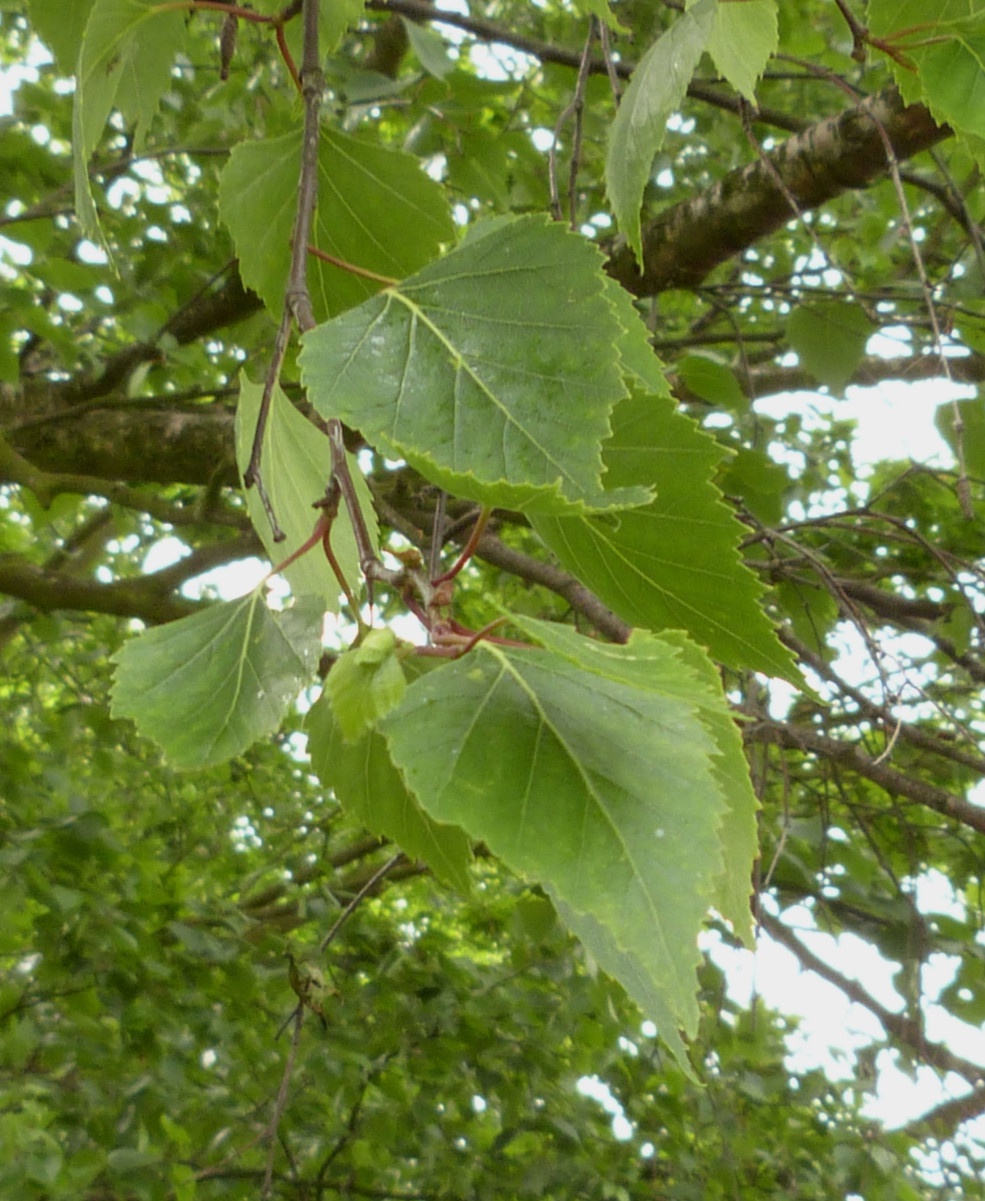
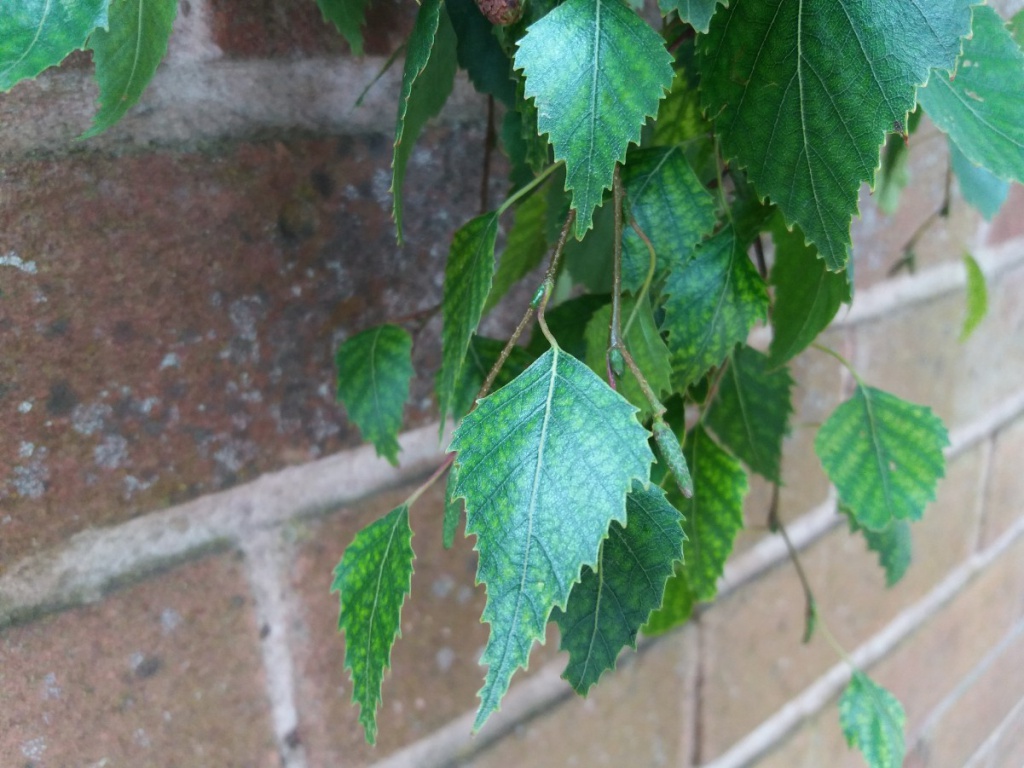
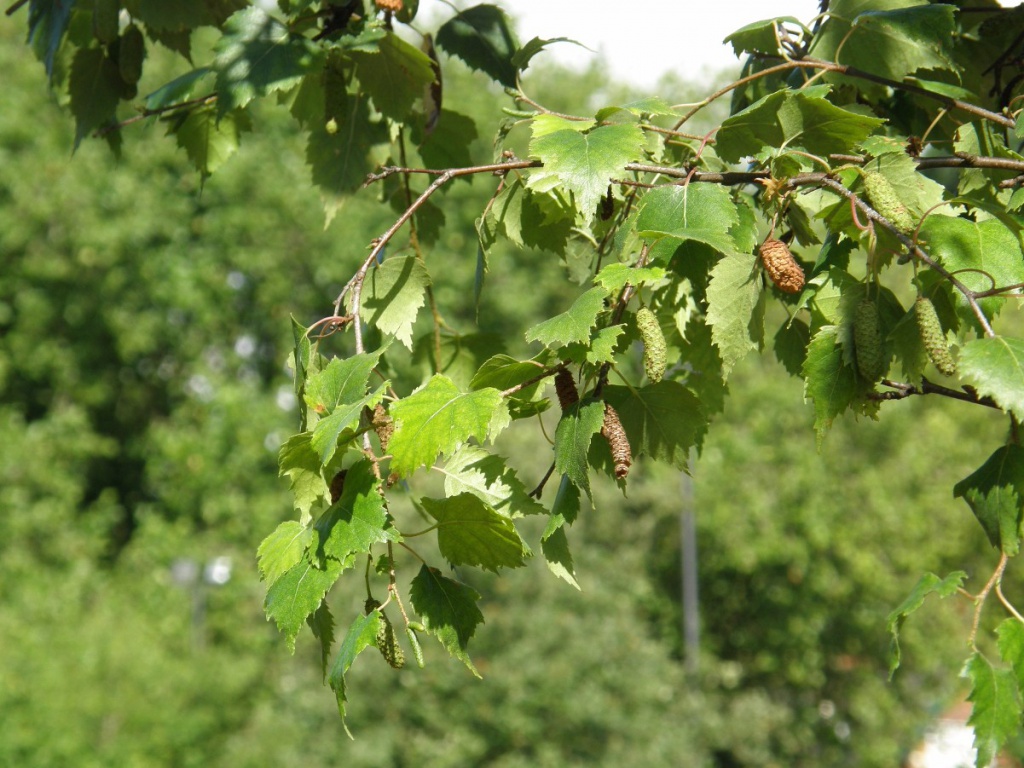
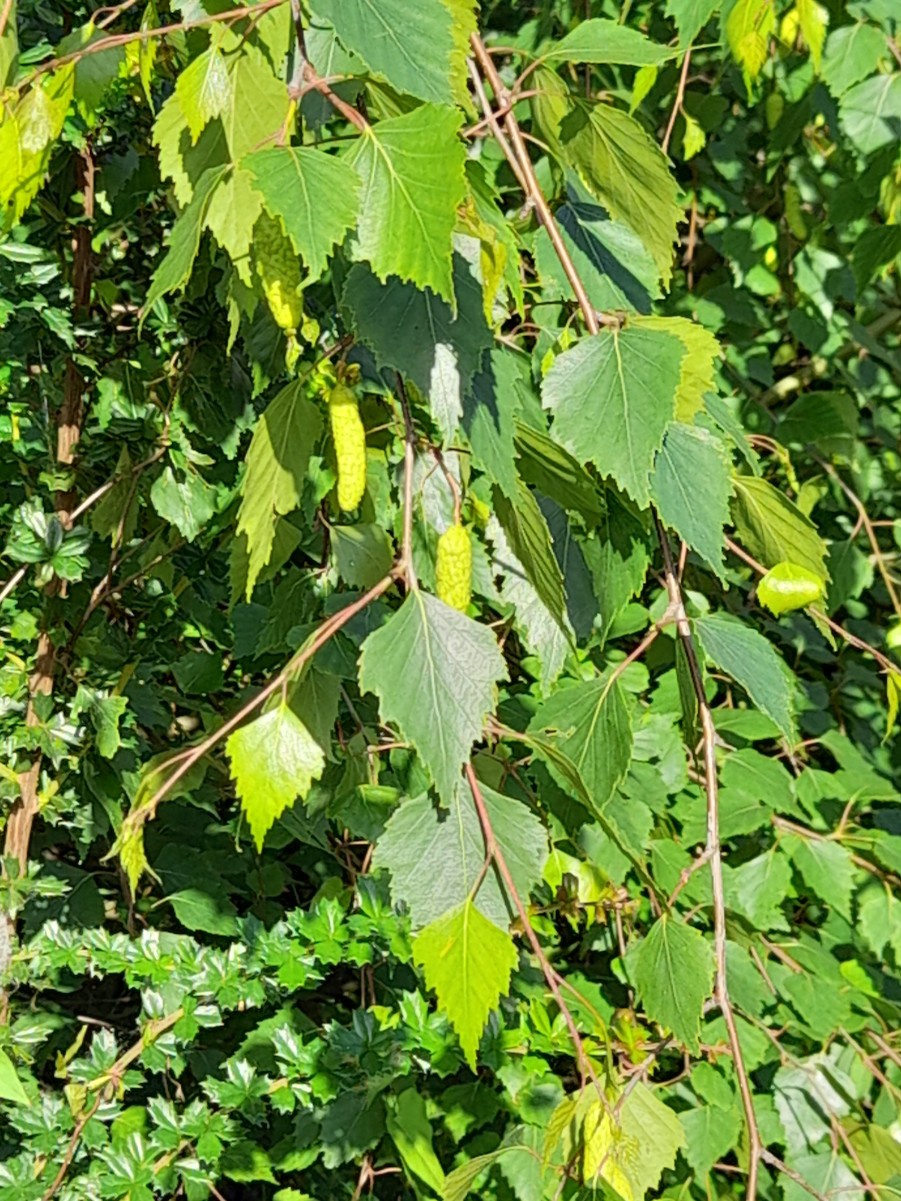
Leaves triangular and irregularly toothed, bi-serrate, with acuminate tips; glabrous when mature. Glabrous twigs, often with prominent paler warts - but note that young saplings and re-growth can have hairy twigs and leaves; in these case the leaf-shape should help to distinguish from Downy Birch.
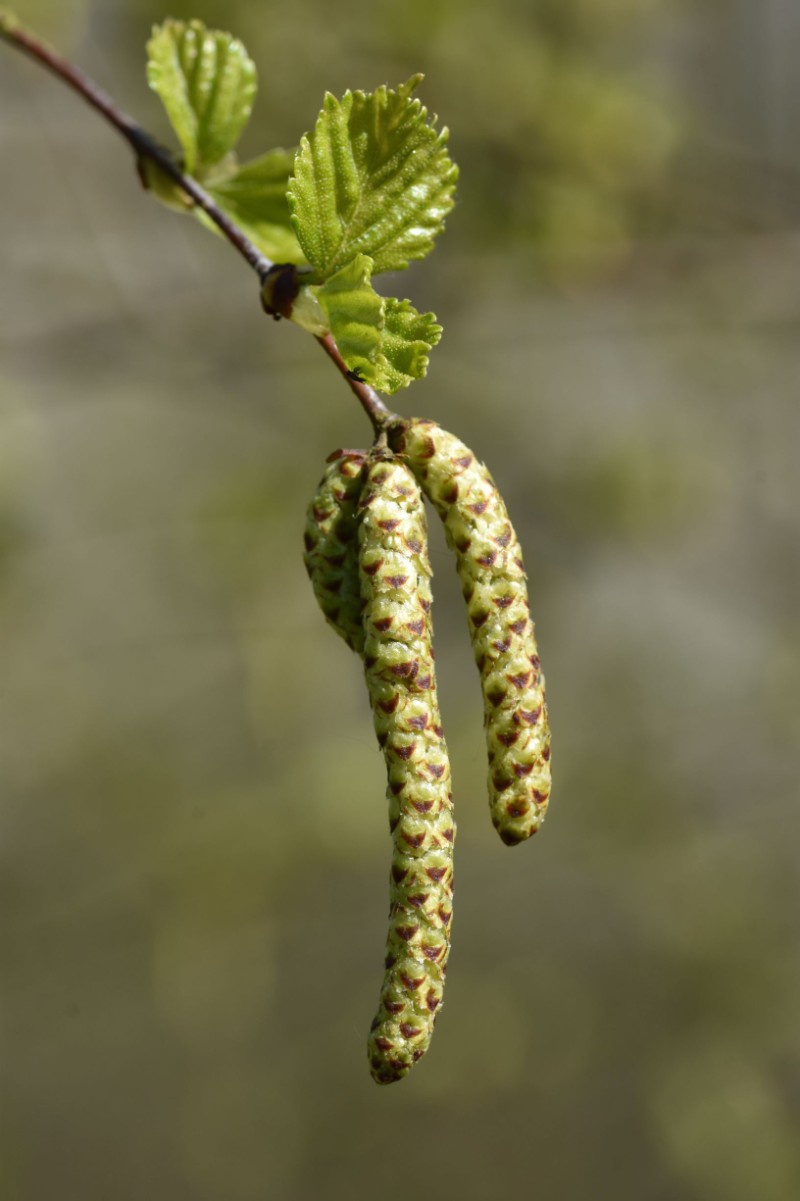
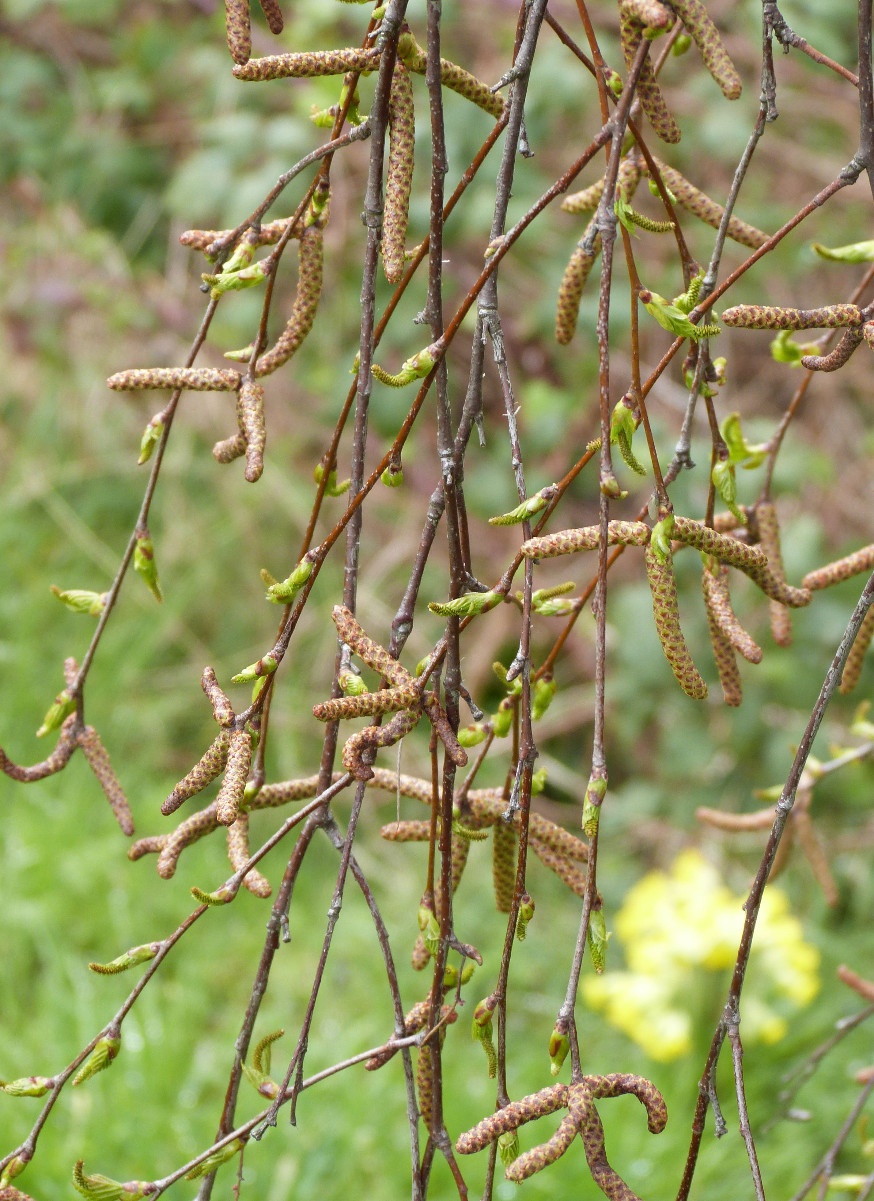
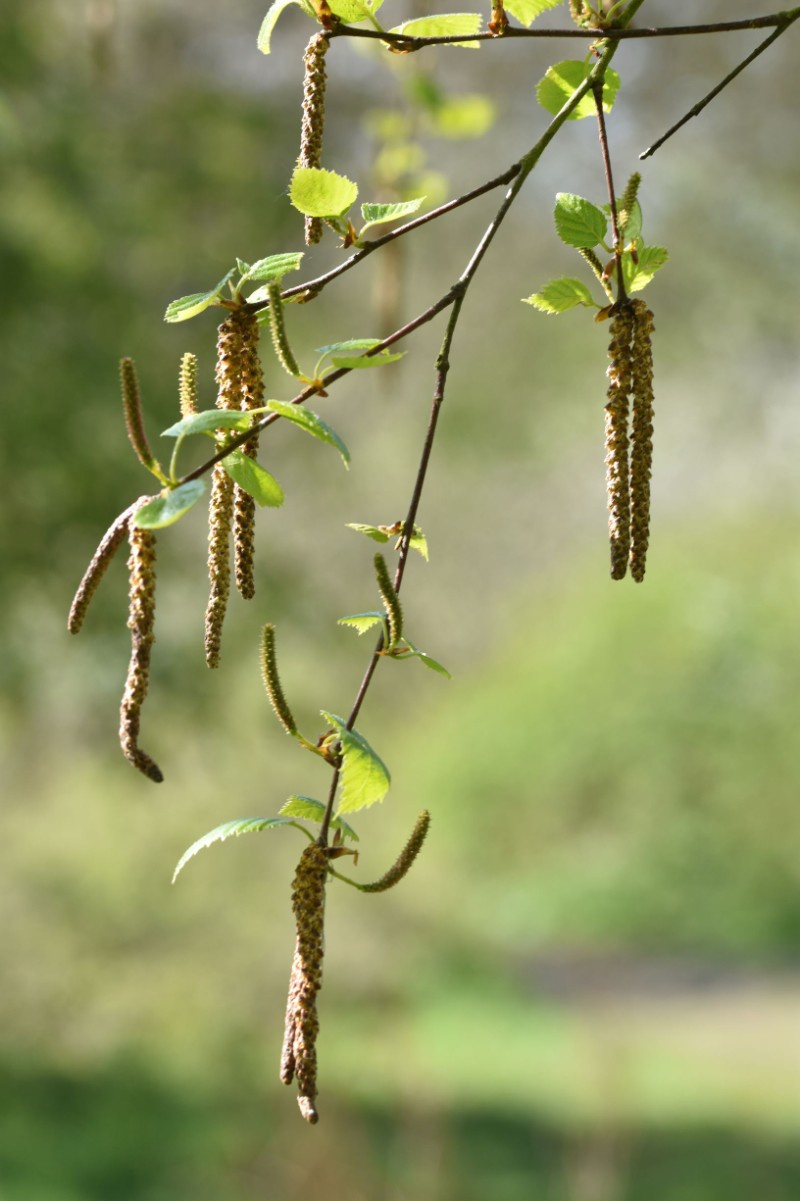
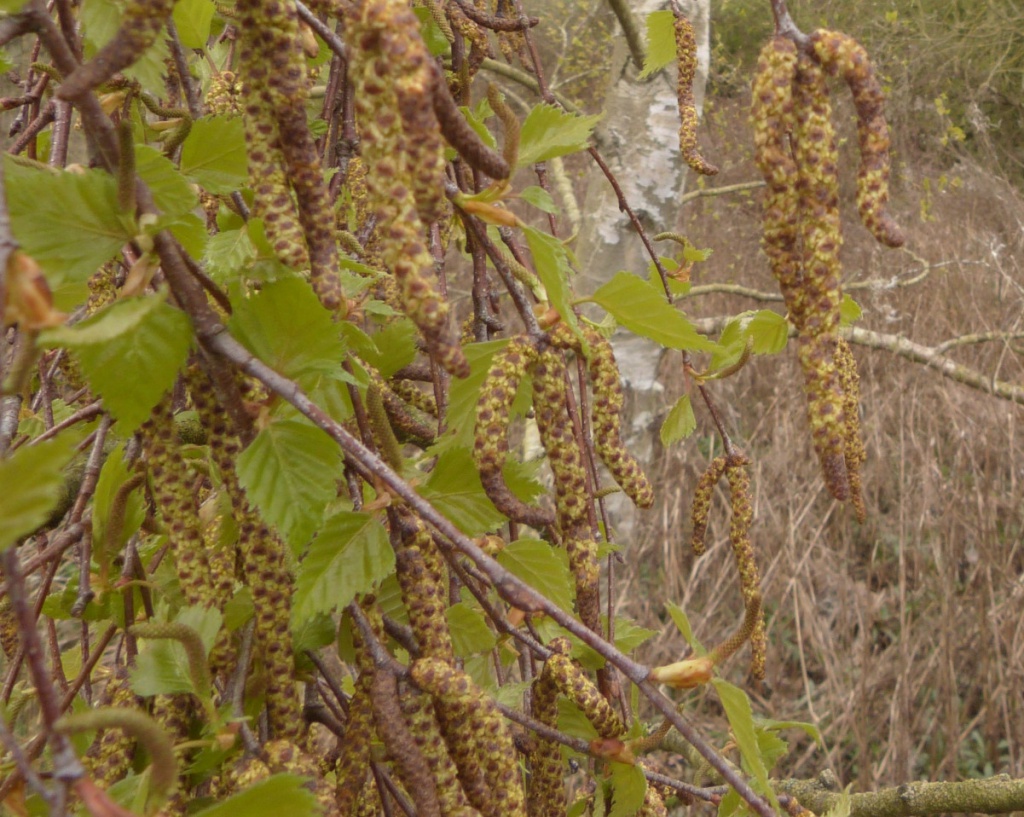
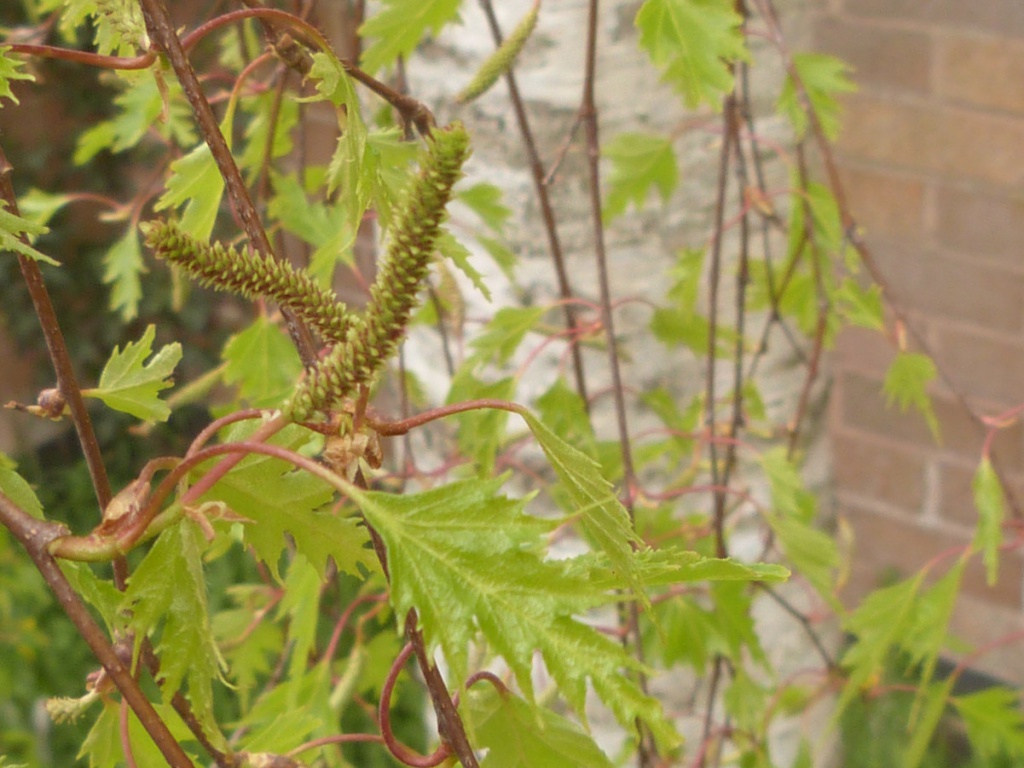
The yellow male catkins yellowish are present during winter, maturing with the leaves and then drooping. The female flower stands erect however.
Downy Birch (Betula pubescens). Non-native species may be planted for ornament in parks, gardens and as street trees - Betula utilis v. jacquemontii (Himalayan Birch) and Betula papyrifera (Paper-bark Birch) are the most frequent; both have larger ovate leaves, and most cultivars have very white bark.

Photos of leaves
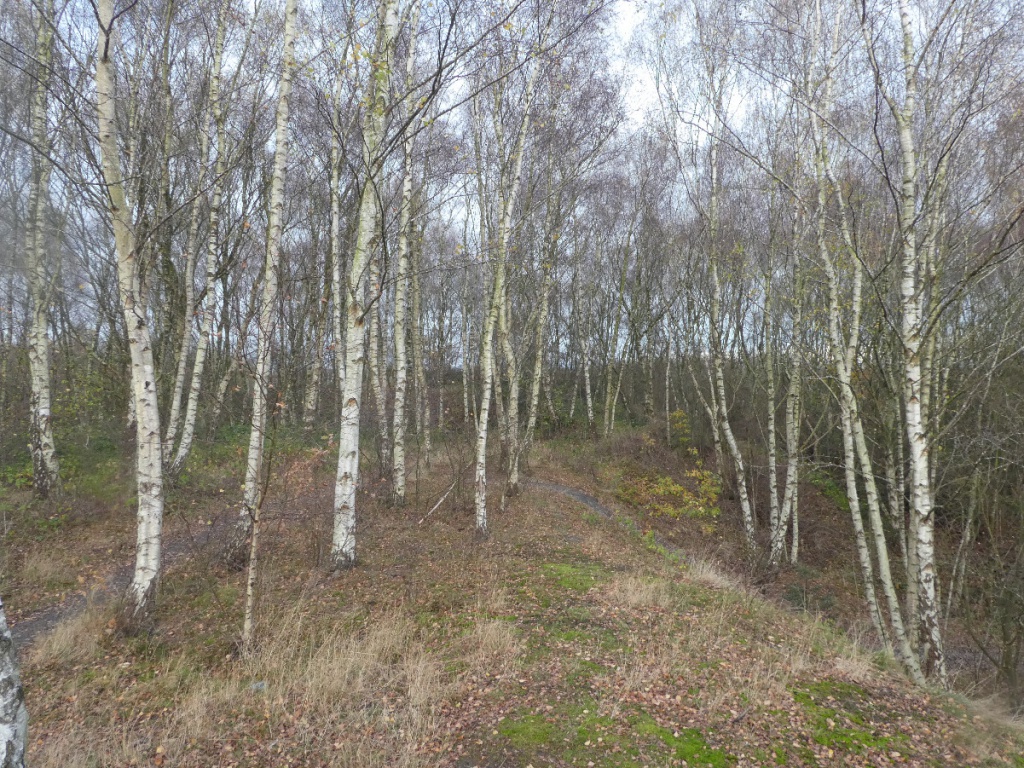
Woods and heaths on drier soils as a native tree.
all year
Deciduous.
Quite common throughout Britain.
Common in Leicestershire and Rutland as a native trees ,and also frequently planted. In the 1979 Flora survey of Leicestershire it was found in 312 of the 617 tetrads.
 Melinda Bell
Shepshed,Piper Wood
08 May 2022 Male Flower Corner of Green Lane Sapcote SP 4866 9318 (taken 23.4.2008).JPG) Graham Calow
Graham Calow
Sapcote
23 April 2008
Male Flowers (Catkins)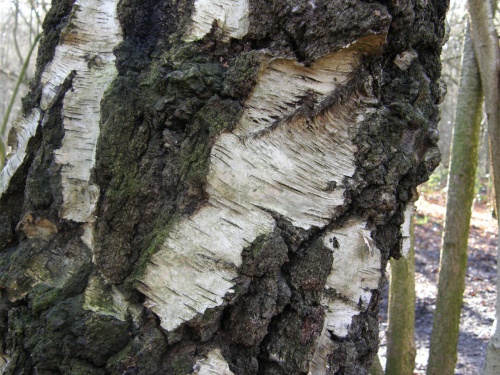 Saharima Roenisch
Swithland Wood
04 February 2018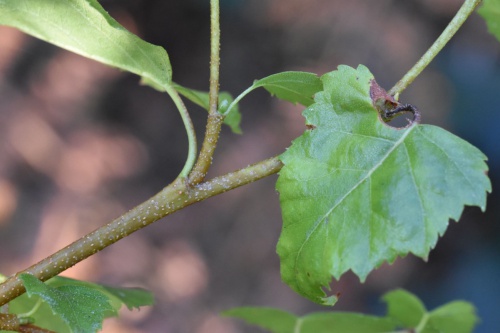 stepgray4
Ulverscroft NR
26 September 2021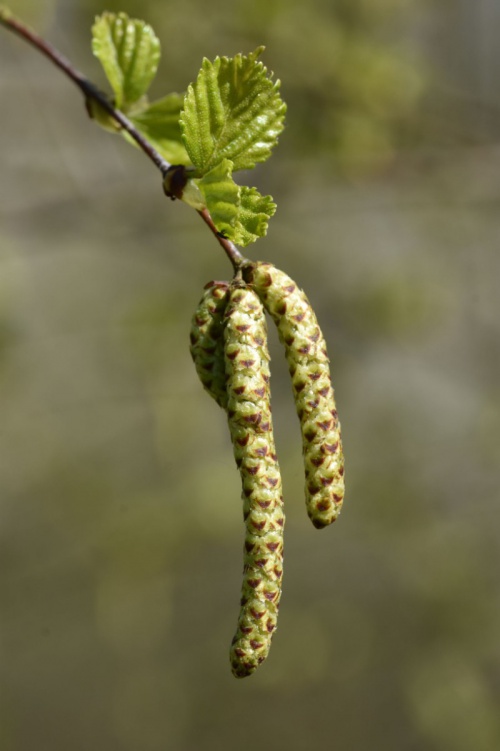 stepgray4
Launde Park Wood
19 April 2021 Female Flower Corner of Green Lane Sapcote SP 4866 9318(taken 23.4.2008).JPG) Graham Calow
Graham Calow
Sapcote
23 April 2008
Female Flower Kaye Lou
Loughborough, Outwoods
12 July 2022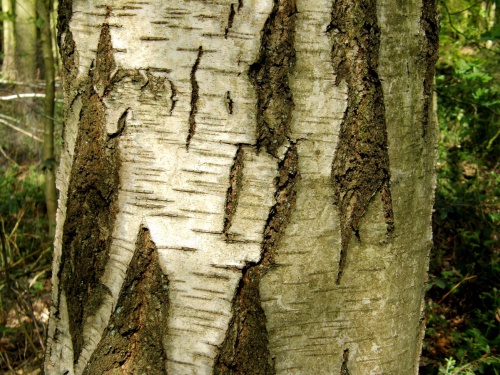 Saharima Roenisch
Beacon Hill Country Park
15 April 2017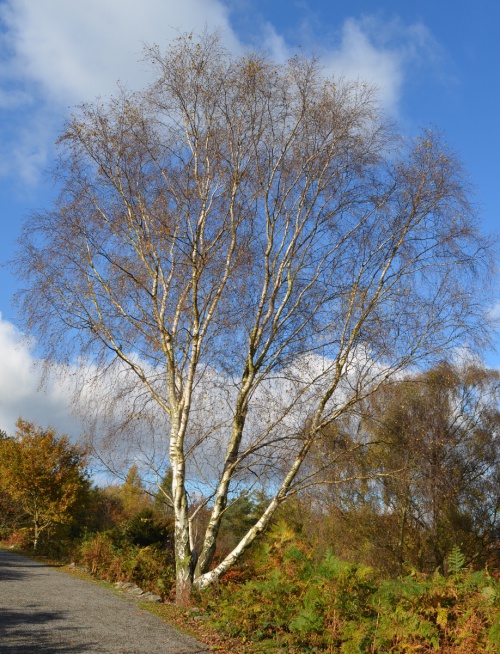 Steve Mathers
Beacon Hill Country Park (Western Part)
07 November 2016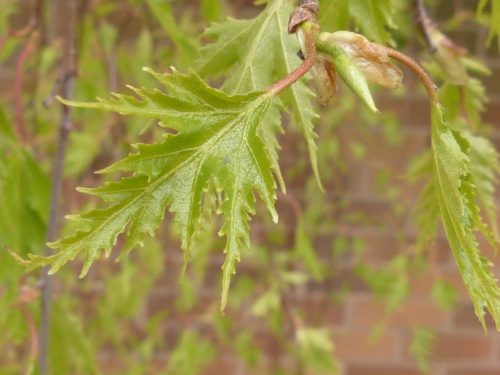 Graham Calow
Broughton Astley, Hallbrook Road
16 April 2021
Swedish Birch (Betula pendula 'Dalecarlica' )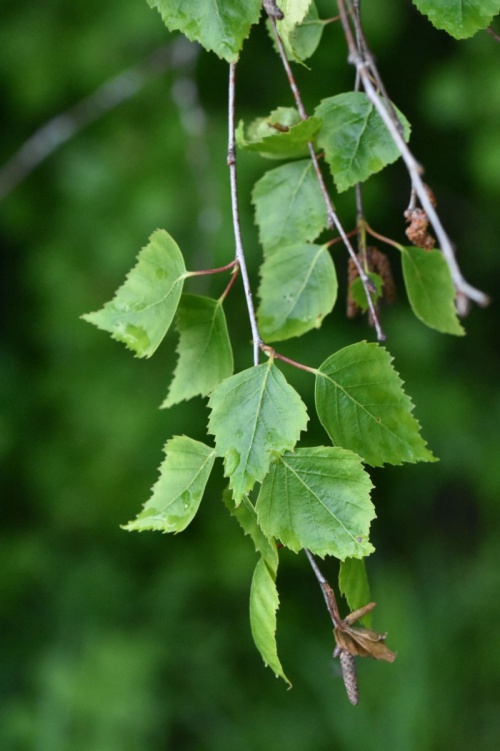 stepgray4
Wymeswold Plantation
15 May 2021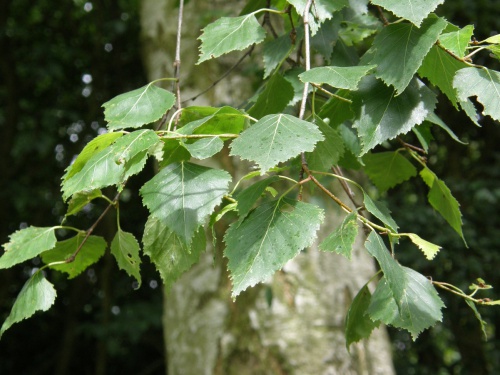 Saharima Roenisch
Evington Park
25 June 2017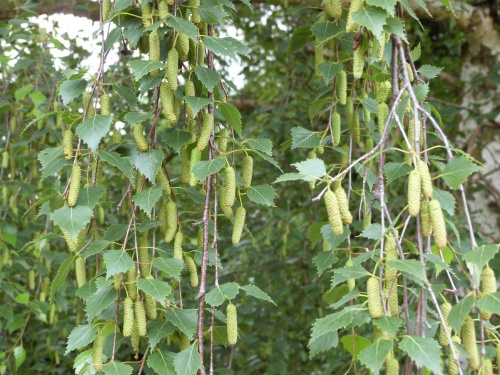 Graham Calow
Narborough Road, Cosby
17 June 2016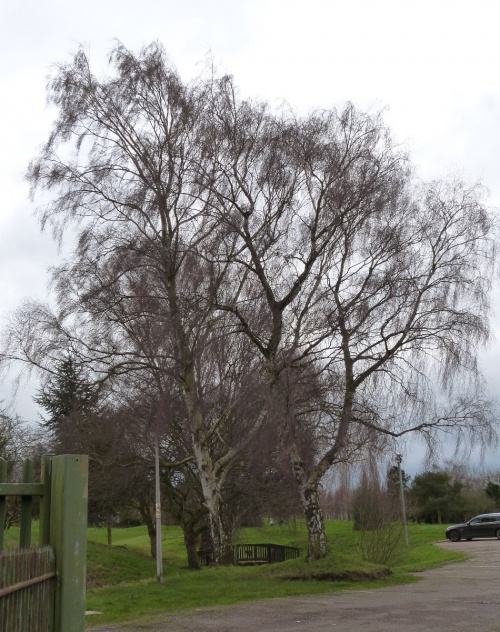 Graham Calow
Cosby Golf Club
05 February 2016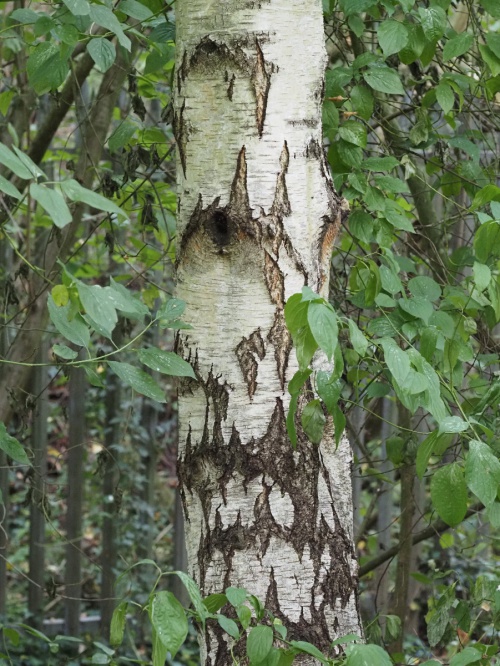 WTWTA
WTWTA
Washbrook Nature Area
26 July 2022
 Male Flower Corner of Green Lane Sapcote SP 4866 9318 (taken 23.4.2008).JPG)
 Female Flower Corner of Green Lane Sapcote SP 4866 9318(taken 23.4.2008).JPG)

Leicestershire & Rutland Map
Enter a town or village to see local records
MAP KEY:
Yellow squares = NBN records (all known data)
Coloured circles = NatureSpot records: 2025+ | 2020-2024 | pre-2020
UK Map
Species profile
- Common names
- Silver Birch
- Species group:
- flowering plant
- Kingdom:
- Plantae
- Order:
- Fagales
- Family:
- Betulaceae
- Records on NatureSpot:
- 397
- First record:
- 01/01/1979 (Patricia Evans)
- Last record:
- 03/02/2026 (Carter, Robert)
Total records by month
% of records within its species group
10km squares with records
The latest images and records displayed below include those awaiting verification checks so we cannot guarantee that every identification is correct. Once accepted, the record displays a green tick.
In the Latest Records section, click on the header to sort A-Z, and again to sort Z-A. Use the header boxes to filter the list.
Latest images
Latest records
 stepgray4
Stoke Dry Wood
01 May 2021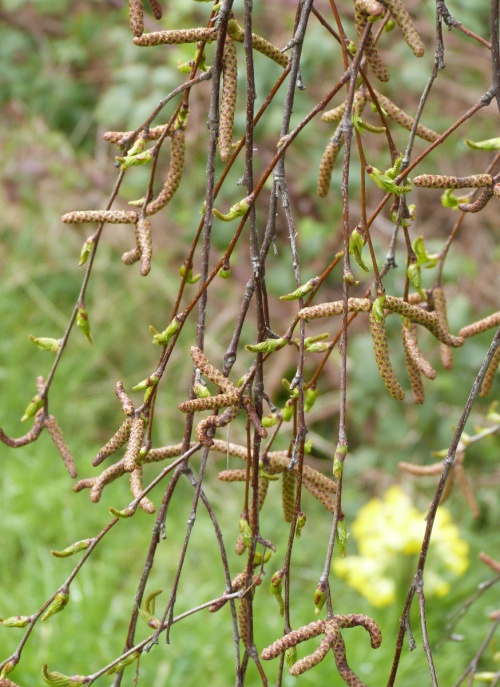 Graham Calow
Narborough Road, Cosby
12 April 2016
catkins Graham Calow
Witherley
27 May 2015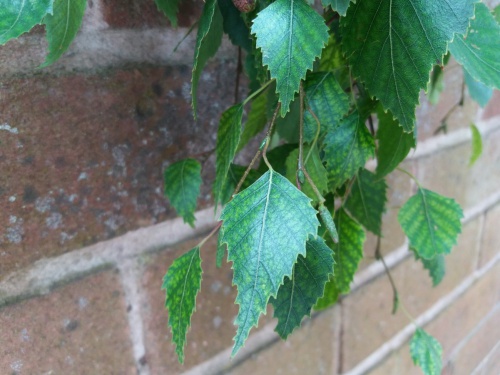 Ahmed
Ahmed
Hinckley Road/ Leicester
14 July 2020 stepgray4
Burbage Common and Woods
02 May 2021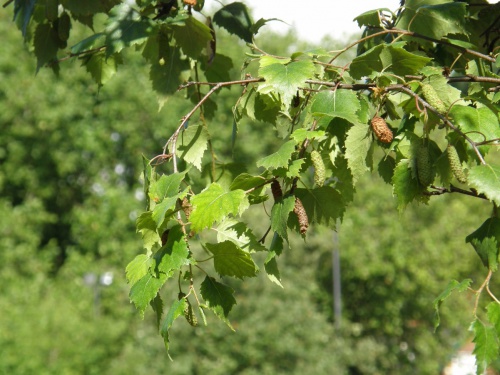 Saharima Roenisch
Spinney Hill Park
30 July 2017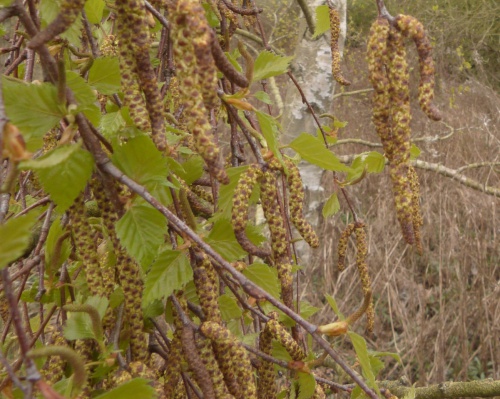 Craig Mabbett
Lutterworth Country Park
08 April 2021 Graham Calow
Broughton Astley, Hallbrook Road
16 April 2021
Swedish Birch (Betula pendula 'Dalecarlica' )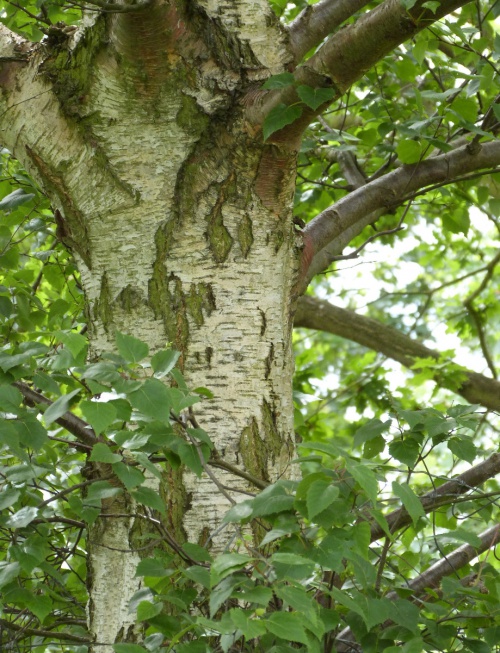 Graham Calow
Witherley
27 May 2015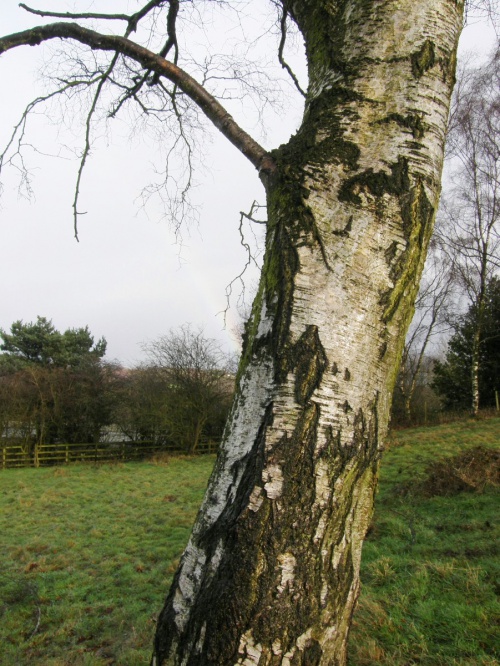 Saharima Roenisch
Altar Stones
01 January 2018 Melinda Bell
Albert Village,Pick Triangle
30 November 2021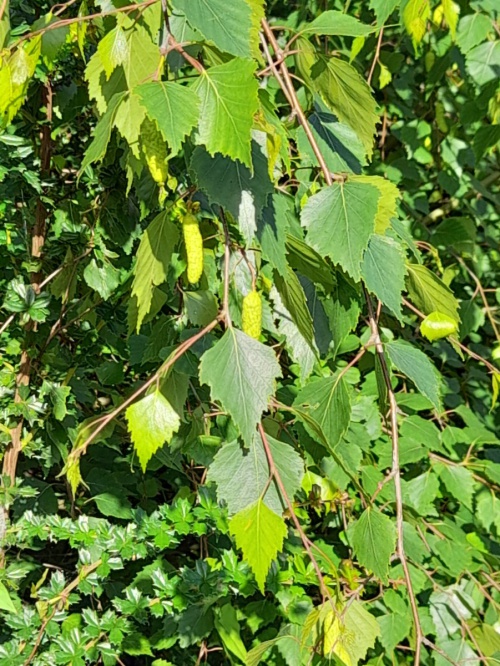 Kaye Lou
Leicester City Centre, DMU
27 May 2022

Massalongia rubra
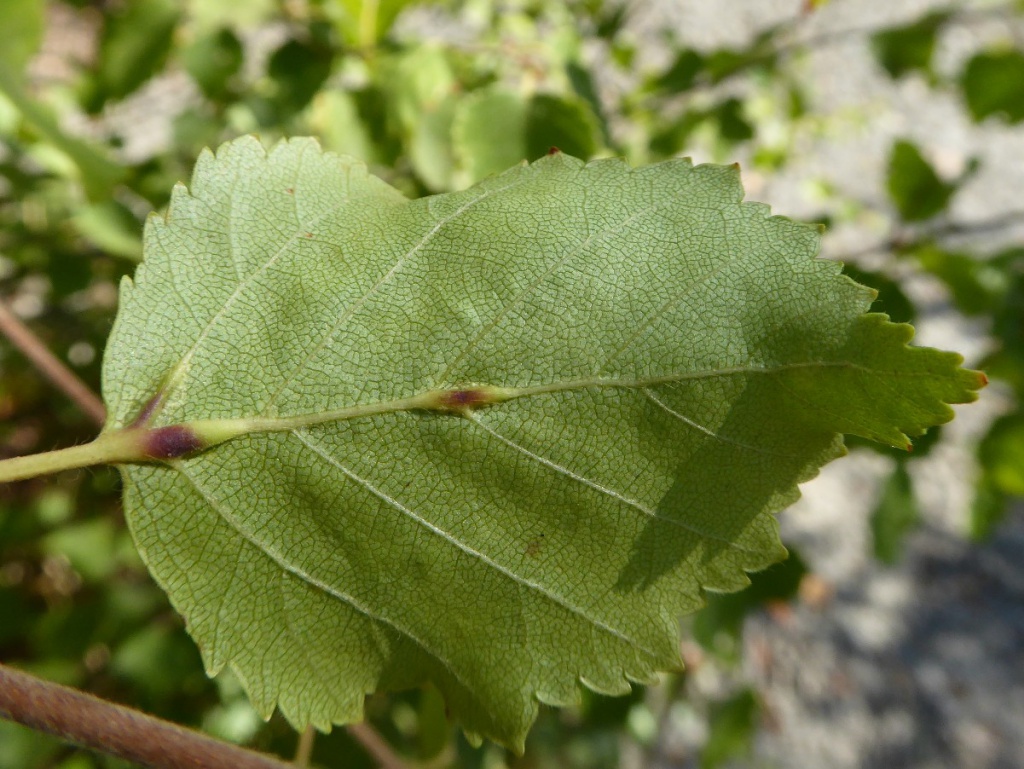
The larva of the gall midge Massalongia rubra galls the leaves of Birch (Betula). The gall takes the form of an elongated woody swelling along the midrib of a normally expanded leaf. The gall may be up to 10 mm in length. It may also affect the petiole or extend into the bases of lateral veins. It is most prominent on the underside of leaves and starts of green in colour becoming red-purple and then brown.
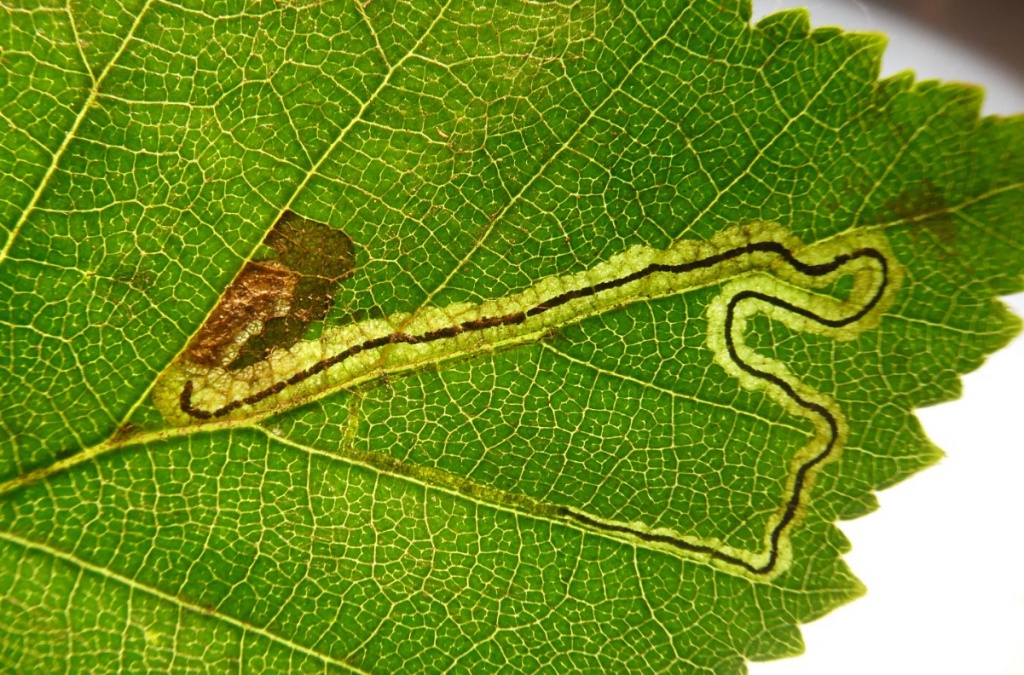
Stigmella lapponica
The larva of the moth Stigmella lapponica mines the leaves of Birch. The mine is long, filled with green frass to ¼, and then linear. The larva is a greenish white, head brown.
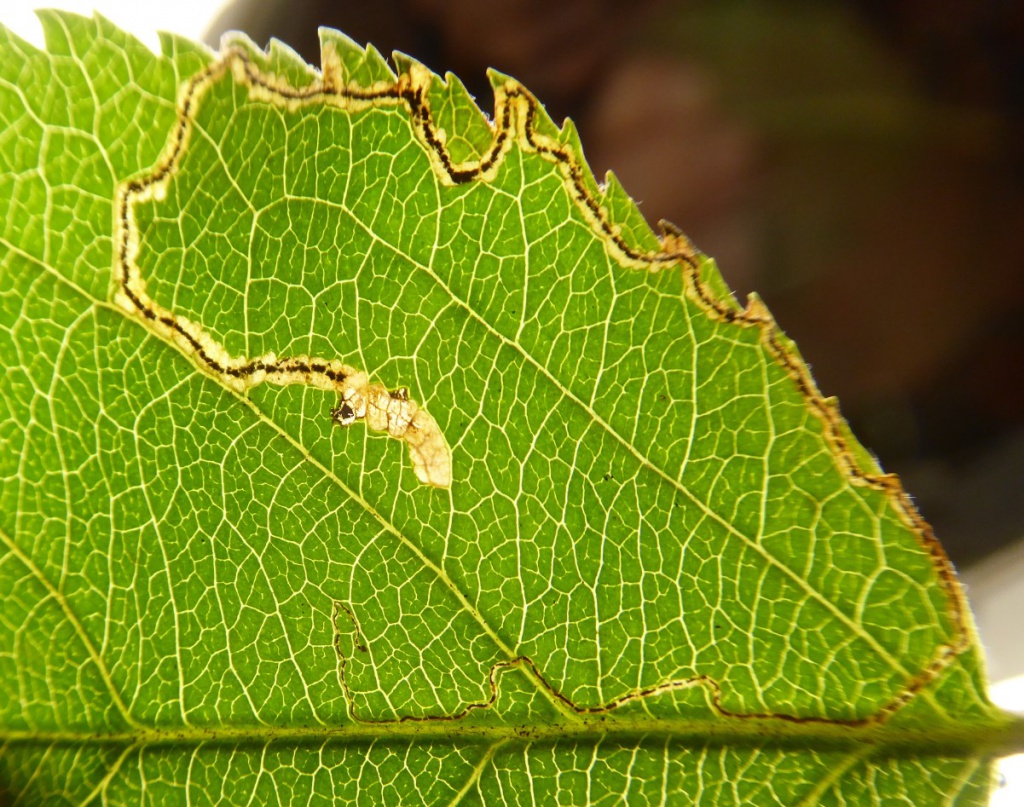
Stigmella confusella
The larva of the moth Stigmella confusella mines the leaves of Birch. The leafmine is similar in appearance to that of Stigmella lapponica, but has a black central line of frass throughout, unlike that species.
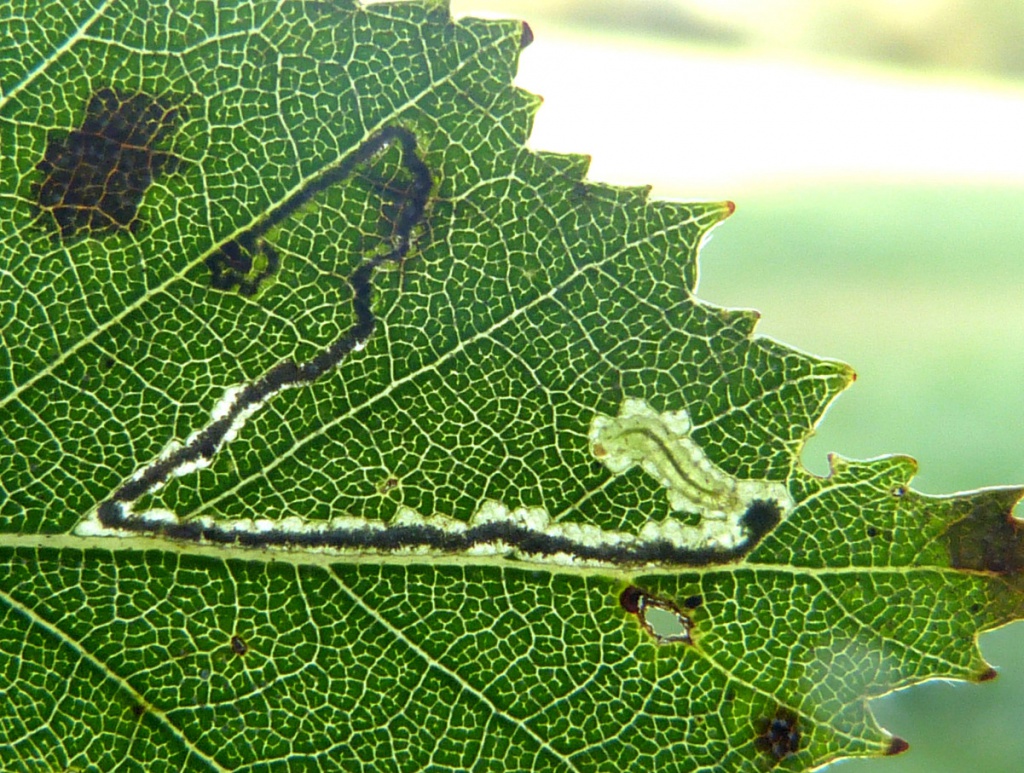
Stigmella luteella
The larva of the moth Stigmella luteella mines the leaves of Birch produving a mine with a gallery that has a contorted start and a thick line of linear frass.
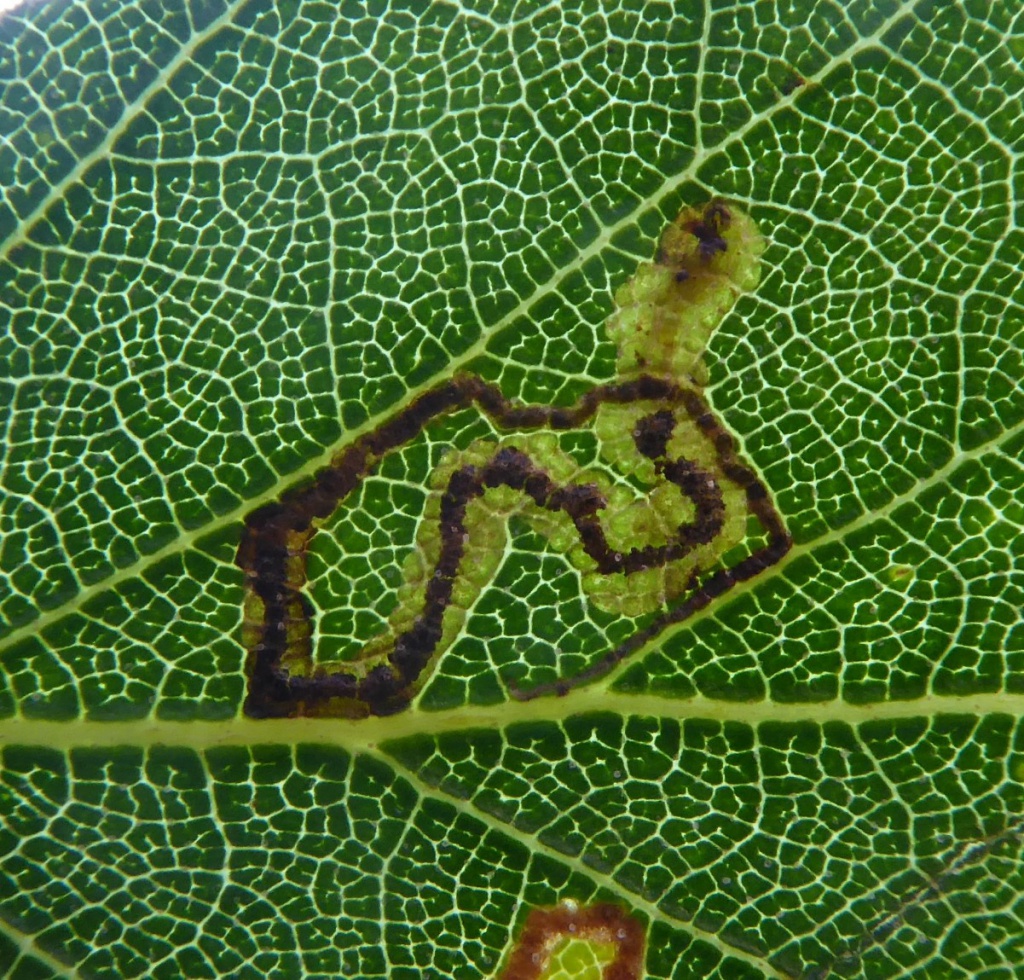
Stigmella betulicola
The larva of the moth Stigmella betulicola mines the leaves of Birch. The mine resembles that of Stigmella luteella, but is far less contorted at the beginning. The larva shows a line of dark ventral spots, unlike that of luteella, and tends to have a darker brown head.
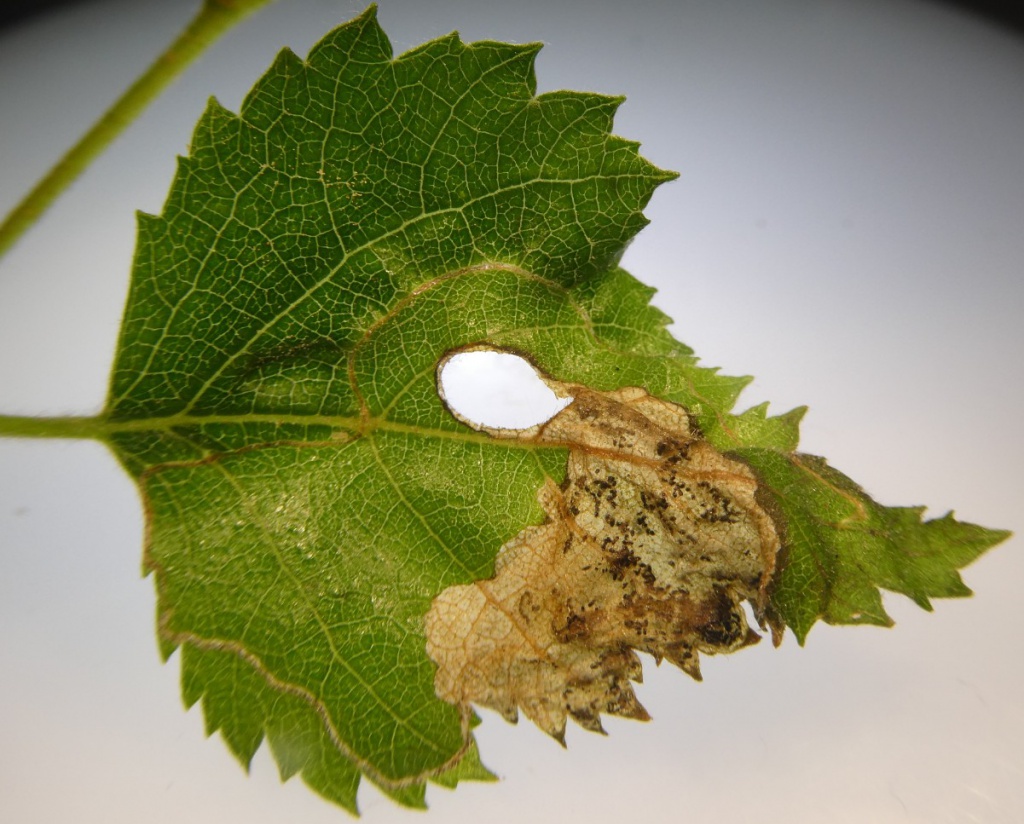
Phylloporia bistrigella
The larva of the moth Phylloporia bistrigella mines the leaves of Birch usually encircling a good part of the leaf, and finishing in a whitish blotch with scattered frass. It then cuts out an oval case from this position and drops to the ground. The leaf area enclosed within the mine becomes paler and vacated mines are quite distinctive.
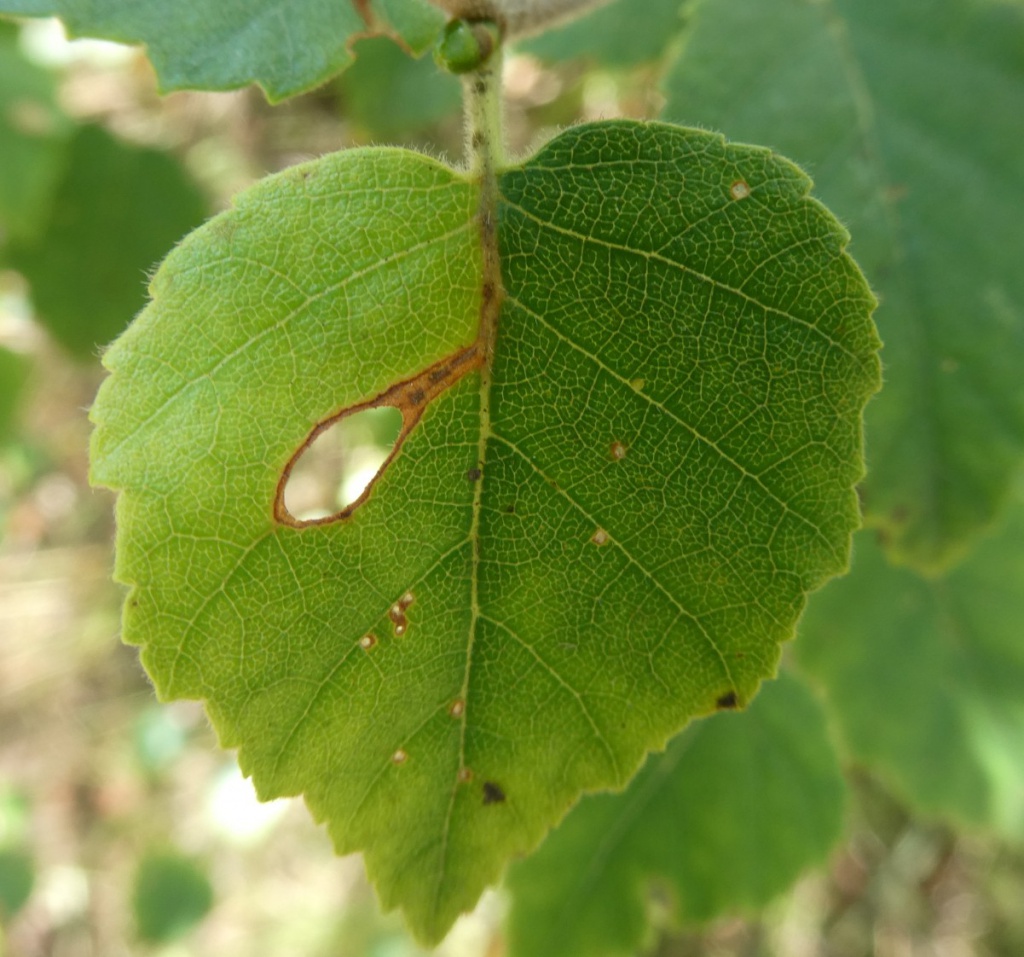
Heliozela hammoniella
The larva of the moth Heliozela hammoniella mines the leaves of Birch. The mine starts in the petiole and midrib then leads to an oval blotch, and finally a cut-out in the leaf-blade.
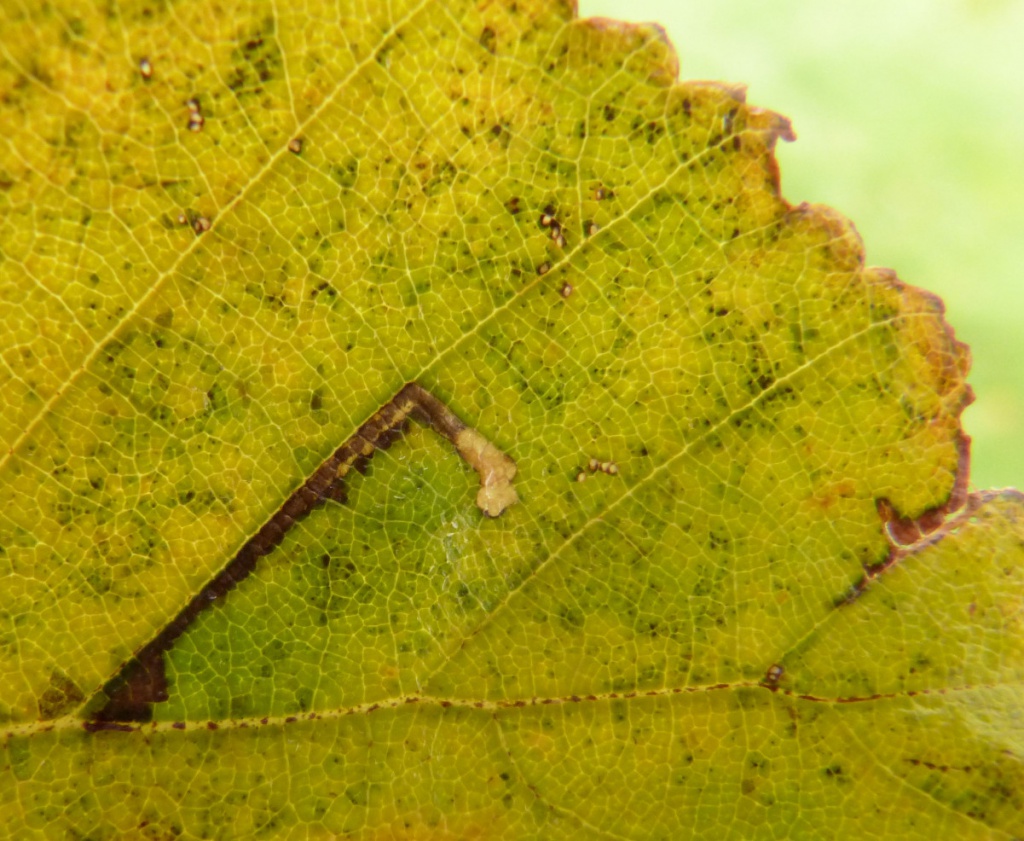
Bucculatrix demaryella
The larva of the moth Bucculatrix demaryella mines the leaves of Birch. The initial gallery is contorted and then follows a vein, before often turning at right angles.
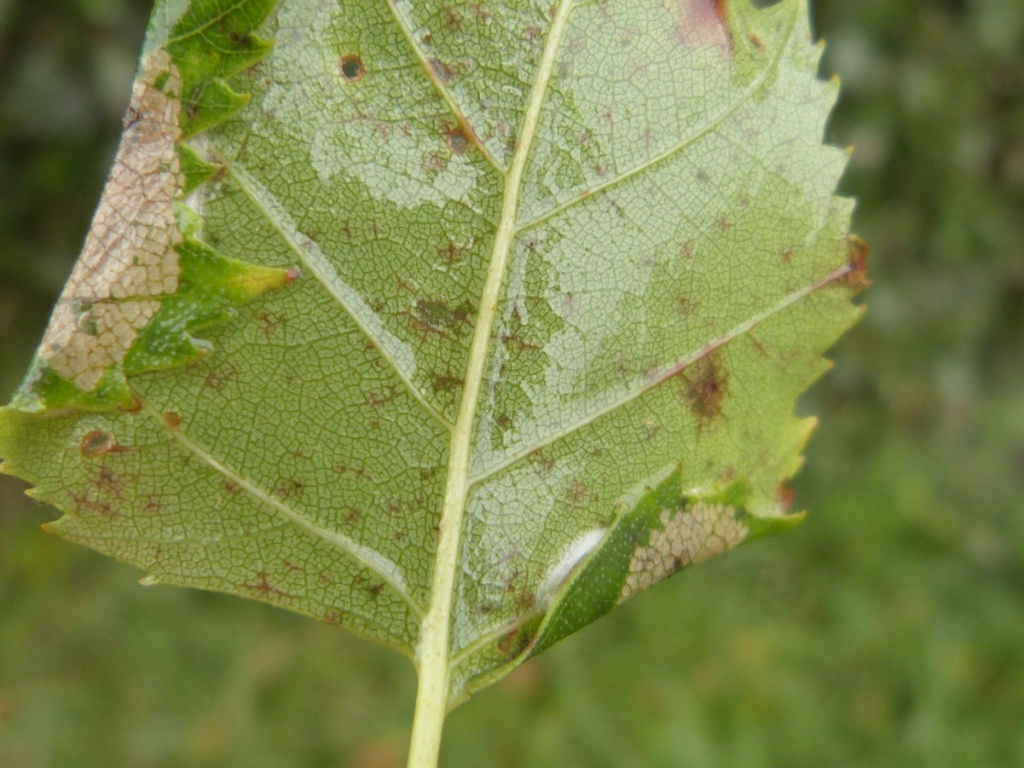
Parornix betulae
The larva of the moth Parornix betulae mines the leaves of Birch initially creating a narrow inconspicuous gallery leading to small tentiform mine with a brown lower epidermis; later feeding in a folded leaf-edge or tip.
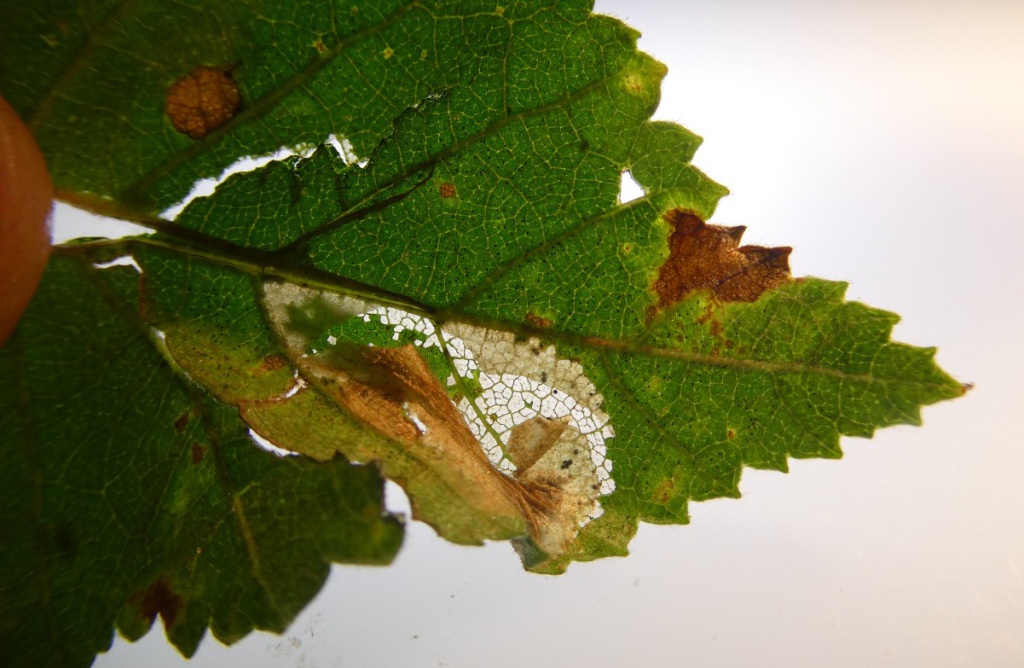
Phyllonorycter cavella
The larva of the moth Phyllonorycter cavella mines the leaves of Birch forming a large blister-mine on the underside of a leaf, occupying most of the leaf and causing it to pucker quite strongly. The mine has a number of strong creases on the lower epidermis.
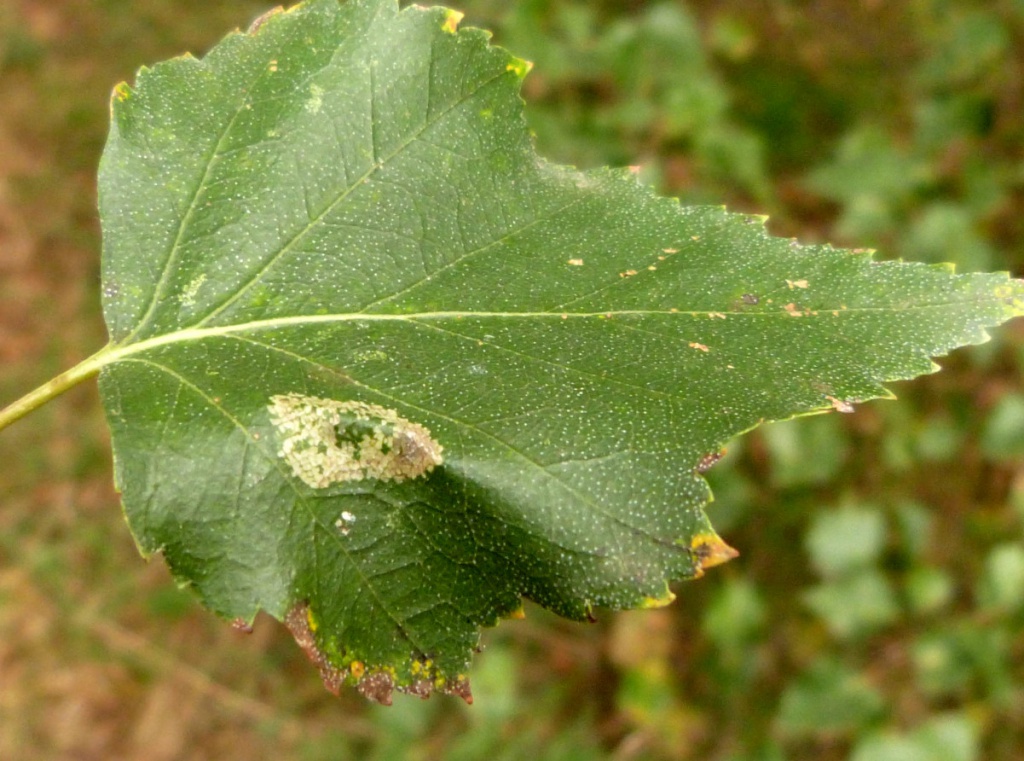
Phyllonorycter ulmifoliella
The larva of the moth Phyllonorycter ulmifoliella mines the leaves of Birch causing a small (<15mm) tentiform mine. The larva is pale yellow or whitish with a pale brown head.

Agromyza alnibetulae
The larva of the Agromyzid fly Agromyza alnibetulae produces a leaf mine in the leaves of Birch. The mine is an unusually long, upper-surface corridor that widens only little and winds freely through the leaf. Frass in two neat rows.
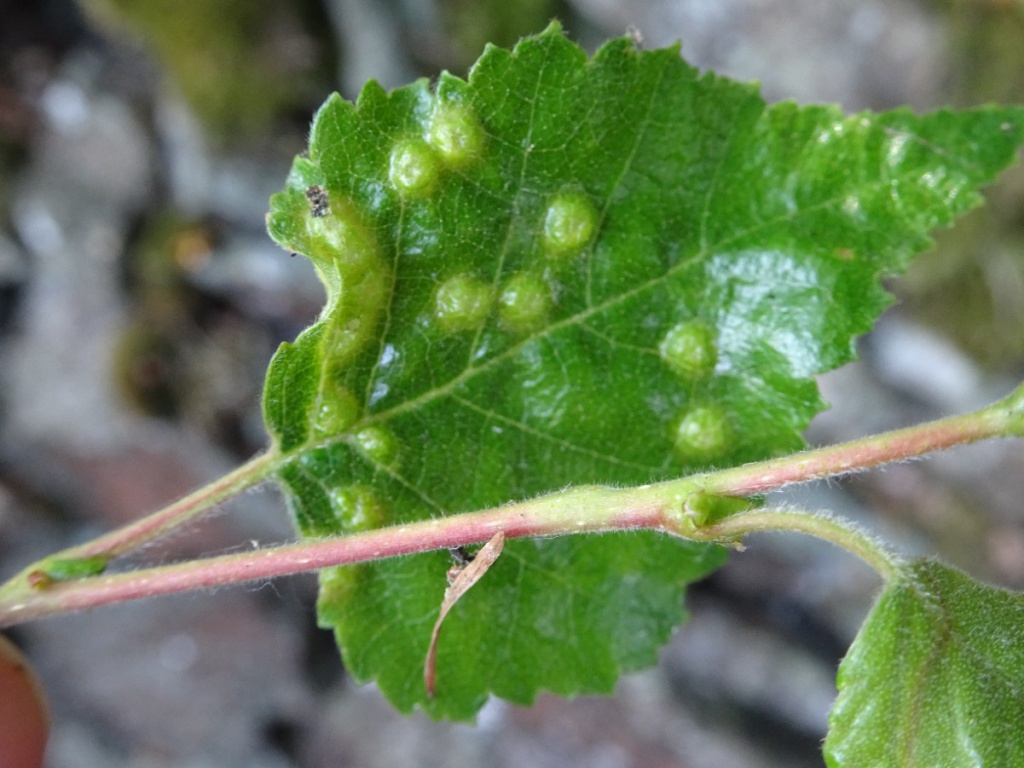
Anisostephus betulinus
The larvae of the gall midge Anisostephus betulinus cause galls to form on the leaves of Birch (Betula species). The galls take the form of a deep, circular blister about 3 mm across, 1.5 mm deep, yellowish to red-purple in colour, in the leaf blade or over veins and more prominent on the upper surface.
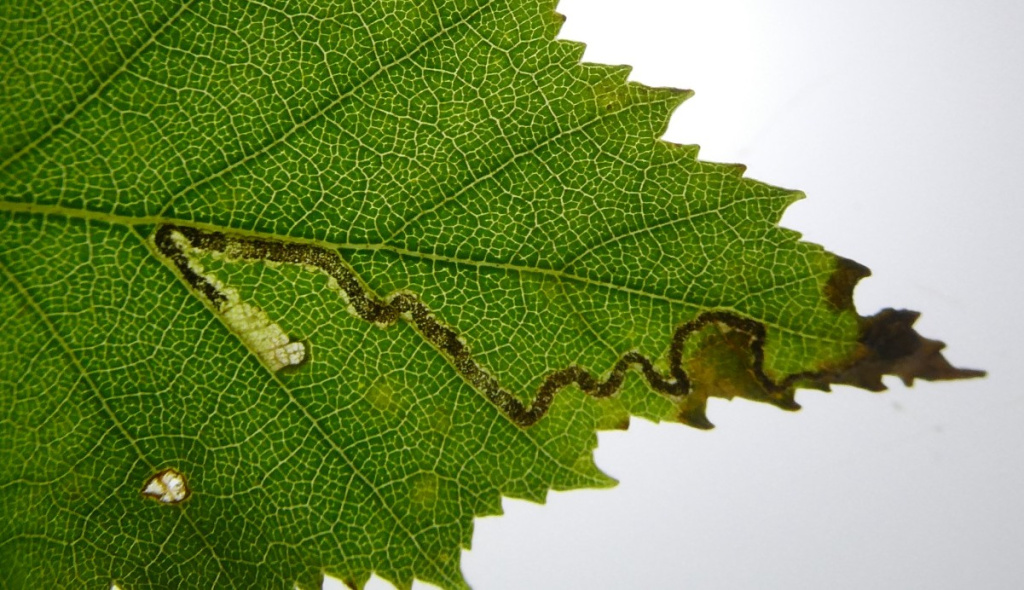
Stigmella sakhalinella
The larva of the moth Stigmella sakhalinella mines the leaves of Birch. The gallery is almost filled with coiled frass, leaving an intermittent transparent zone at either side. The corridor mostly begins close to the leaf margin, often near the tip of the leaf. The egg is usually on the underside of leaf.
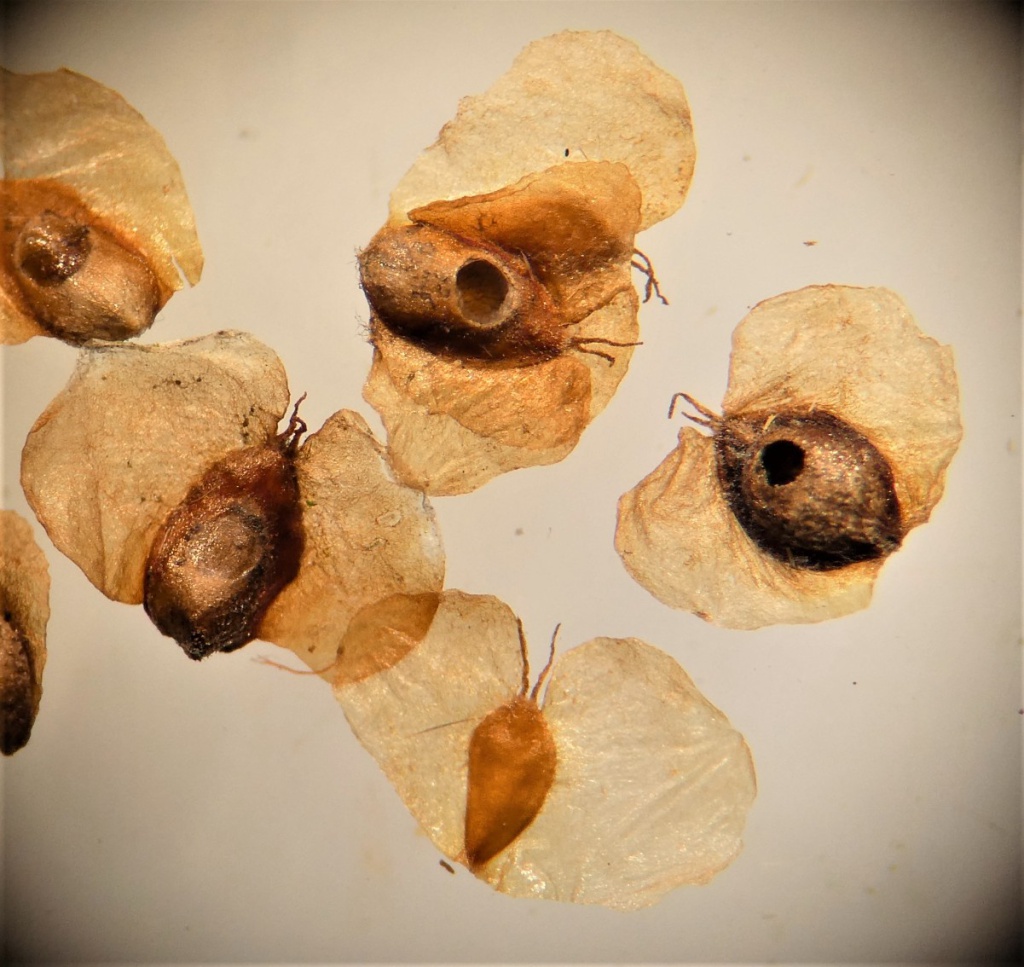
Semudobia betulae
The larva of the gall midge Semudobia betulae galls the catkins of Birch. The gall is small, <2 mm long, and in each individual fruit. The wings of the fruit are distorted and reduced in size. The gall has a distinct circular window pit; this is a pre-formed exit hole for the insect, which pupates inside the gall. Eventually, the catkin becomes brown where the fruits are galled; the remainder of the catkin stays green.
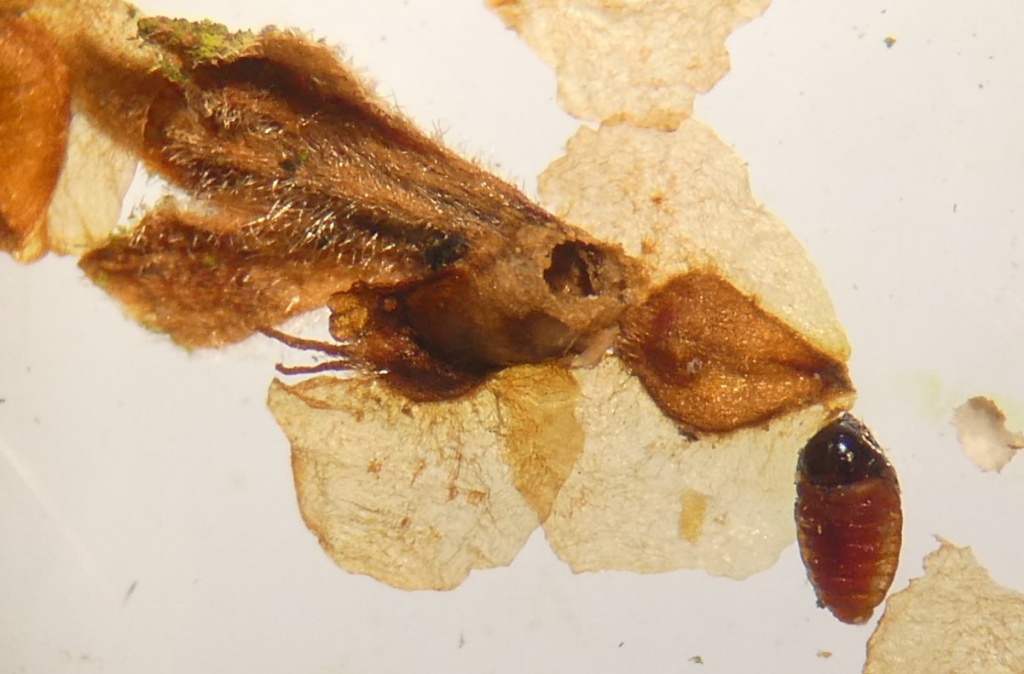
Semudobia skuhravae
The larva of the gall midge Semudobia skuhravae galls the catkins of birch. The gall is fused to the spindle of the catkin between this and the scale and fruit. It is up to 2mm long, without a 'window-pit'
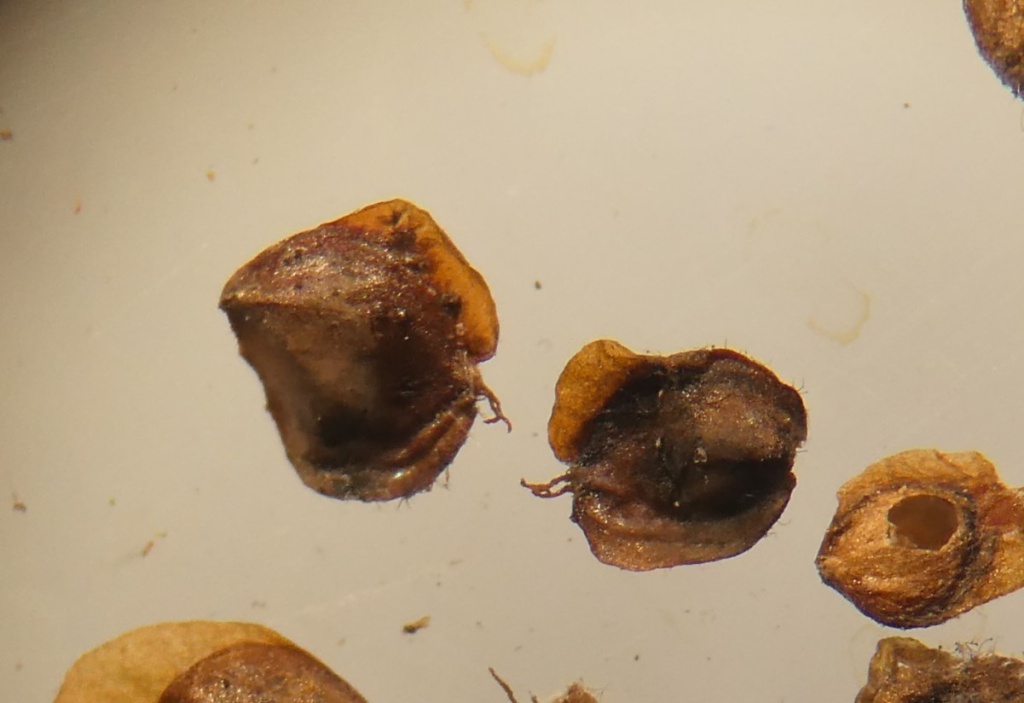
Semudobia tarda
The larvae of the gall midge Semudobia tarda cause galls to form in the catkins of Birch species. The gall is in the fruit, and is rounded, c. 2,, diameter, with a polished surface and hairs only at the apex; the wings of the fruit are almost completely absent. The 'window-pit' is absent or indistinct on this gall.
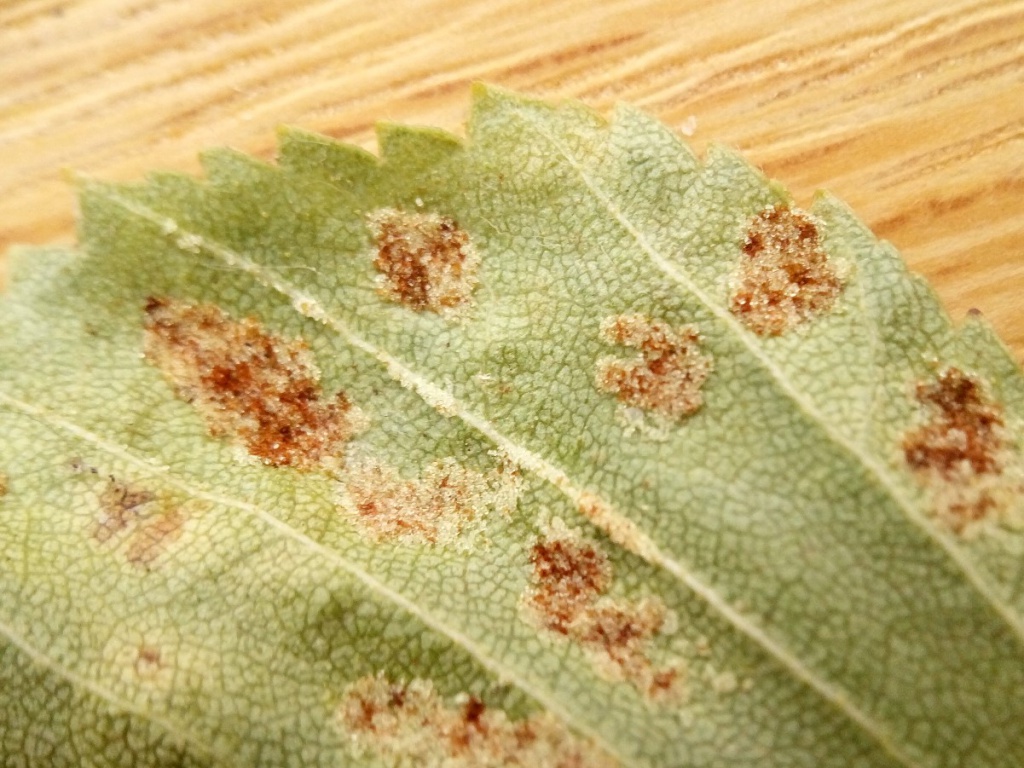
Acalitus rudis
Acalitus rudis is a gall mite that causes galls to form on the leaves of Birch (Betula species). The gall is an erineum between the veins of the leaf. It is usually on the underside of the leaf, with or without a bulge on the other side. The hairs are quite long, white or yellowish when young, later a deep red brown.
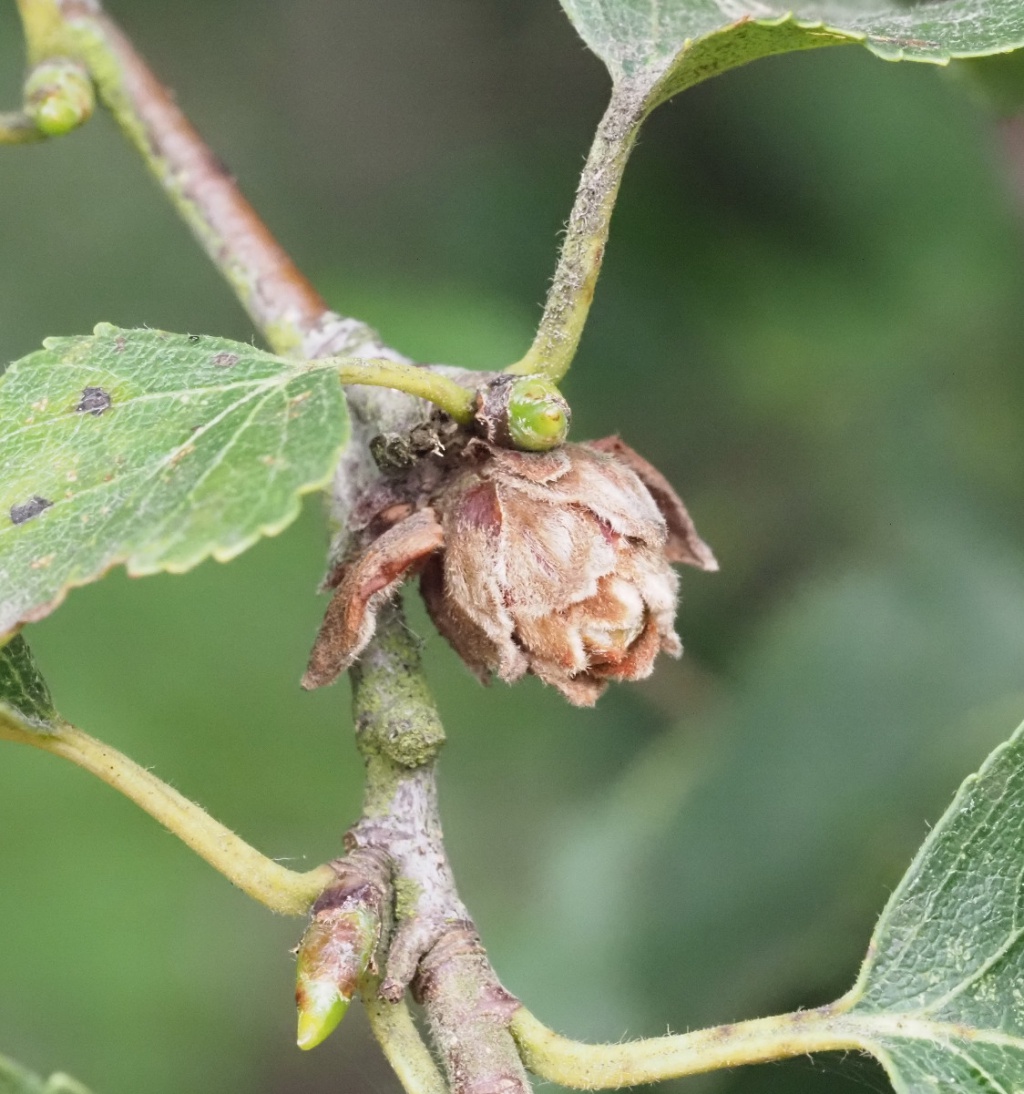
Acalitus calycophthirus
The mite Acalitus calycophthirus galls the buds of Silver Birch and Downy Birch causing the affected bud to enlarge. These galled buds may contain a large number of mites.
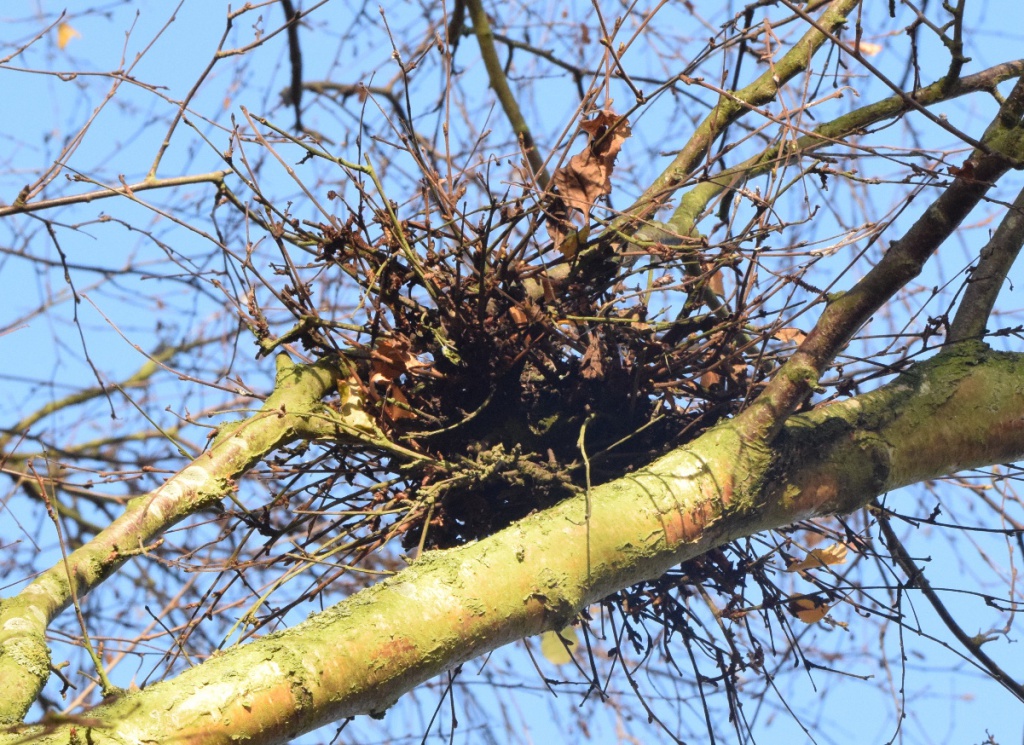
Witch's Broom
Witch's Brooms are masses of densely branched small twigs found amongst the branches of trees. Taphrina betulina affects Birch trees. A layer of yellow asci is produced on the underside of the swollen leaves within the broom; these stunted leaves are often produced and fall before the normal leaves open.
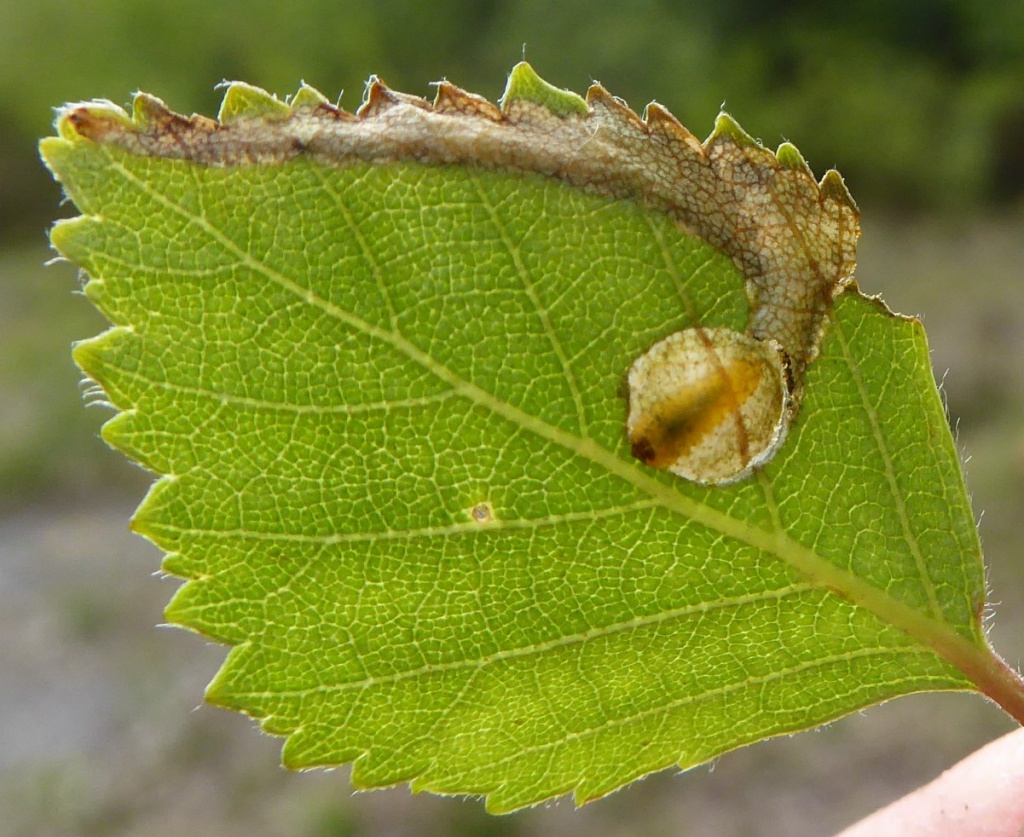
Orchestes rusci
The larva of the weevil Orchestes rusci mines Birch leaves, creating a broad gallery leading eventually to a hole in the leaf where the larva has cut out a circular leaf sandwich. This falls to the ground with the larva inside, and it pupates in leaf litter.
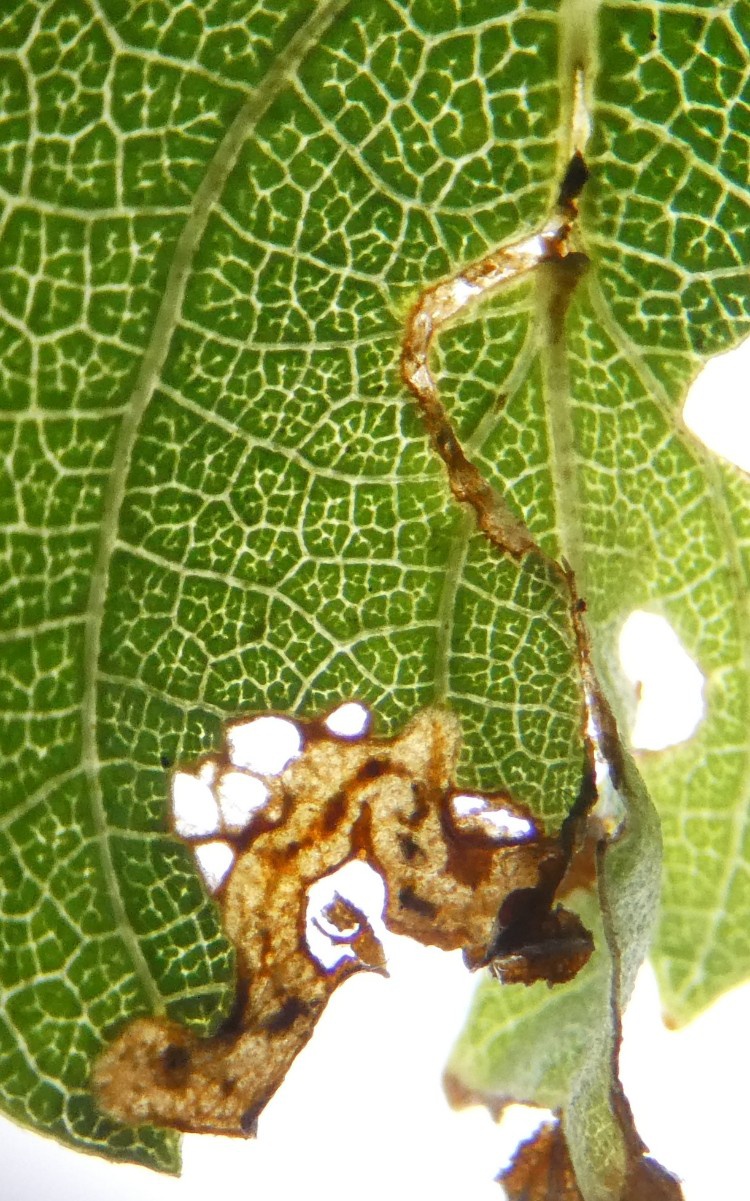
Anoplus plantaris
The larva of the weevil Anoplus plantaris mines Birch leaves producing a full depth gallery mine which starts by the midrib and distorts the leaf as it forms. The leaf edge becomes brown.
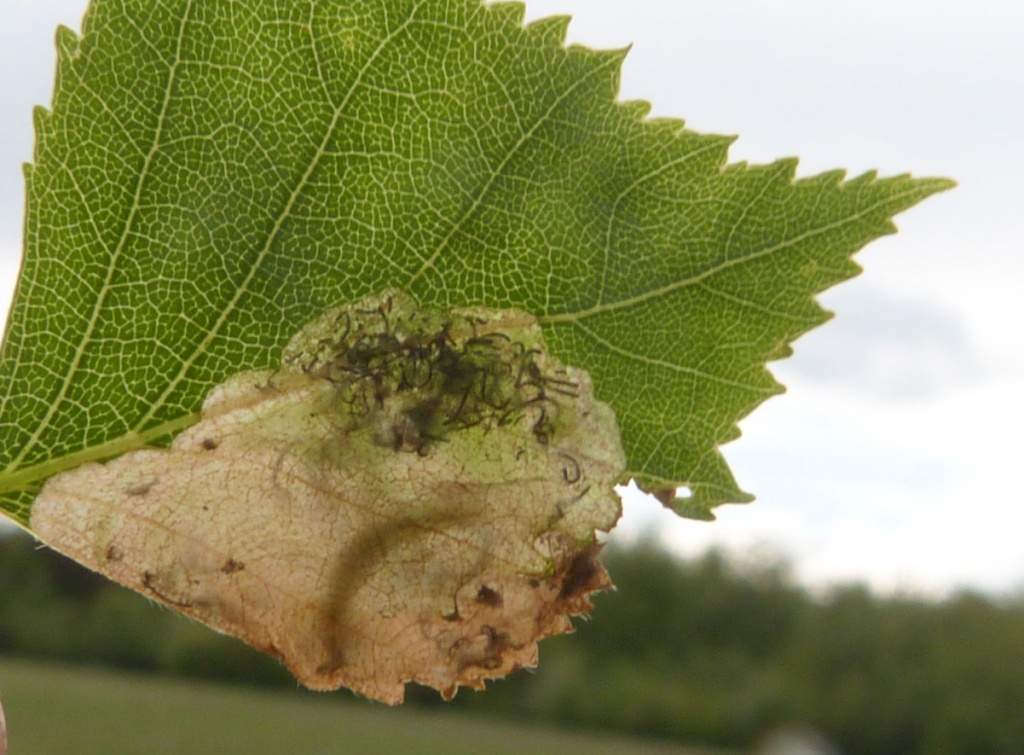
Eriocrania unimaculella
The larva of the moth Eriocrania unimaculella mines Birch leaves. All Eriocraniidae leafmines have spaghetti-like frass, in long threads. The larva when fully developed has a dark brown head capsule. This is retracted into the transparent prothorax but the dark head shows through as two dark spots on the pronotum. Two short lateral projections on the 1st adbominal segment are sometimes visible. Immature larvae have dark ventral spots on thorax and 1st abdominal segment. (ref: Bladmineerders.nl, accessed March 4th 2025)
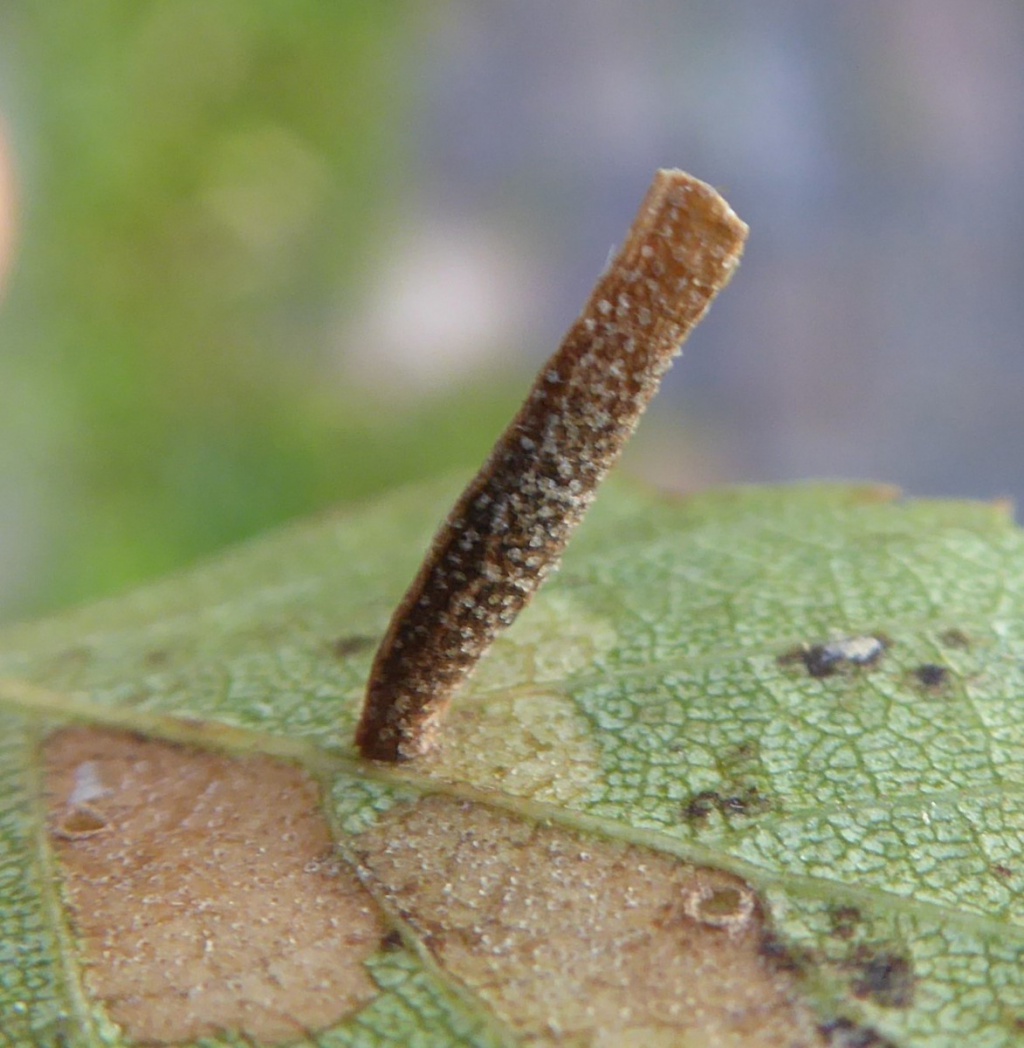
Coleophora milvipennis
The cased larva of the moth Coleophora milvipennis feeds on Birch. The larva constructs a long narrow, flattened case from which it feeds, creating brown blotches on the leaves. The case sometimes has a serrated edge; it is often recorded mining along the edge of the leaf close to the petiole.
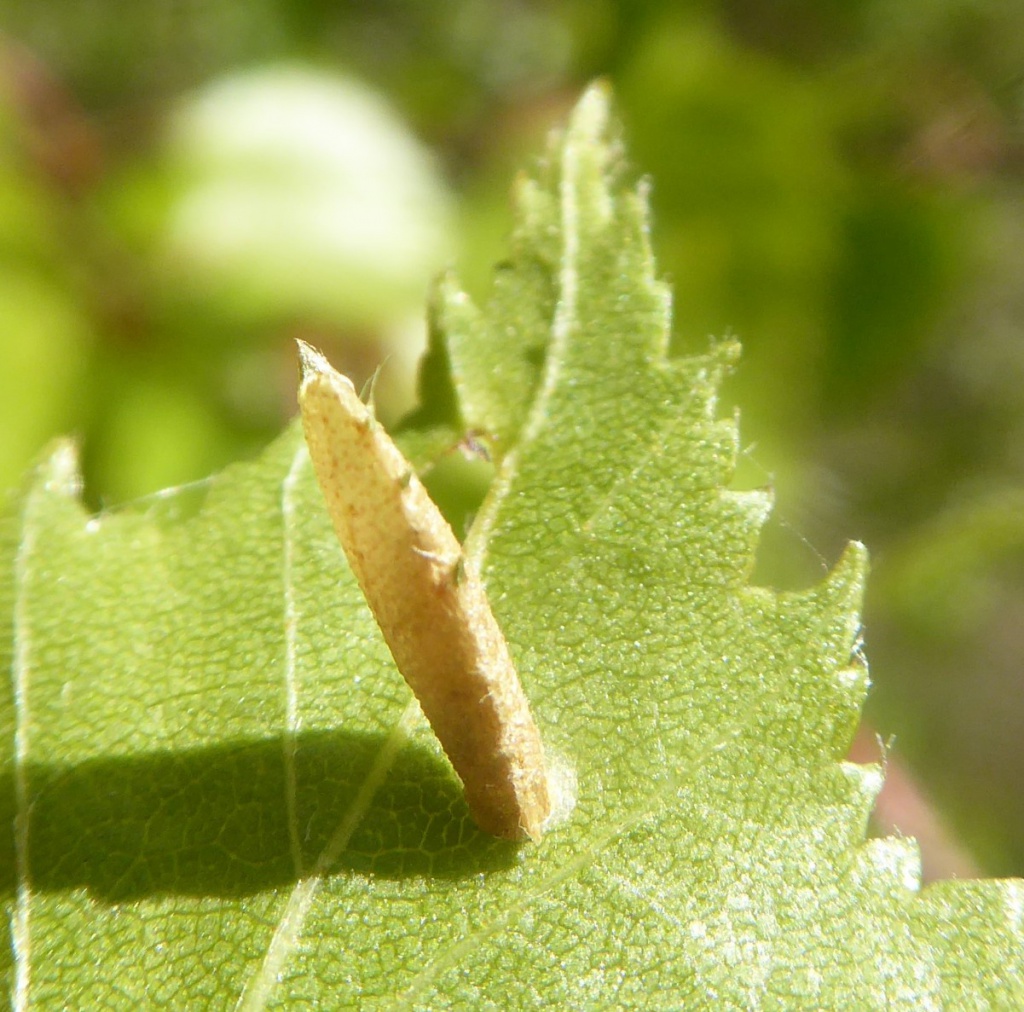
Coleophora serratella
The cased larva of the moth Coleophora serratella feeds on Birch and Elm. The first cases are very small and curved; final cases are tubular and usually have a serrated keel.
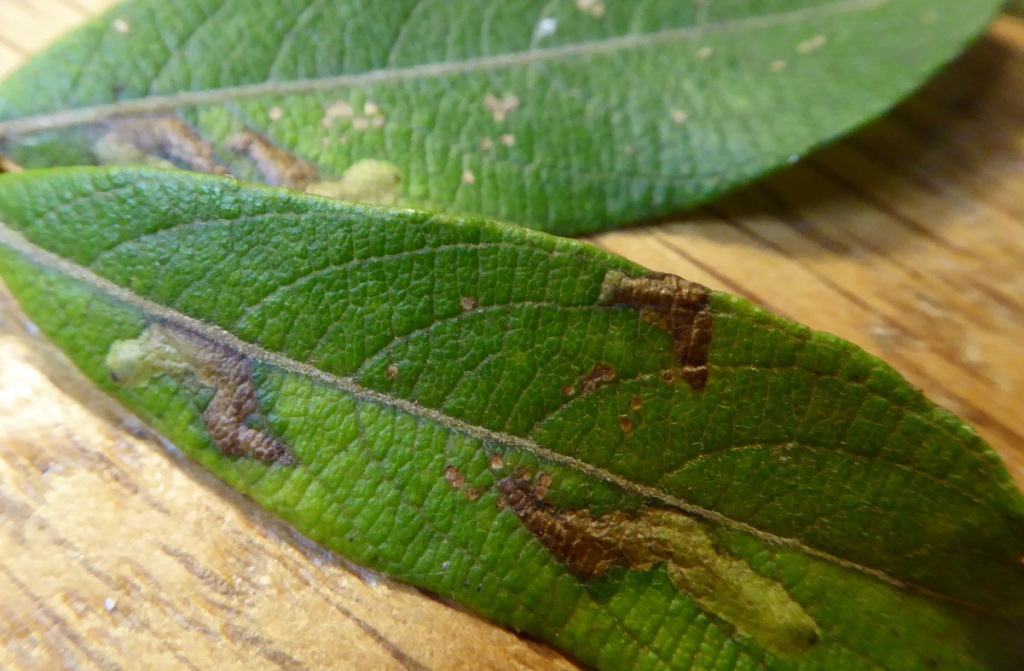
Rhamphus pulicarius
Mines are formed by the larva of the weevil Rhamphus pulicarius on the leaves of willow, poplar or ocasionally birch. The mine is a short, broad gallery becoming a blotch; often pear-shaped.. The larva is small, squat, and yellow or orange in colour, with a dark head.

Euceraphis betulae
The aphid Euceraphis betulae is found on Silver Birch. It is mainly green in colour but the body of the adult aphids is dusted with a pale bluish wax, which may also form a furry coating on the antennae and legs. A very similar species, Euceraphis punctipennis, is found on Downy Birch so identification of the host tree is important.

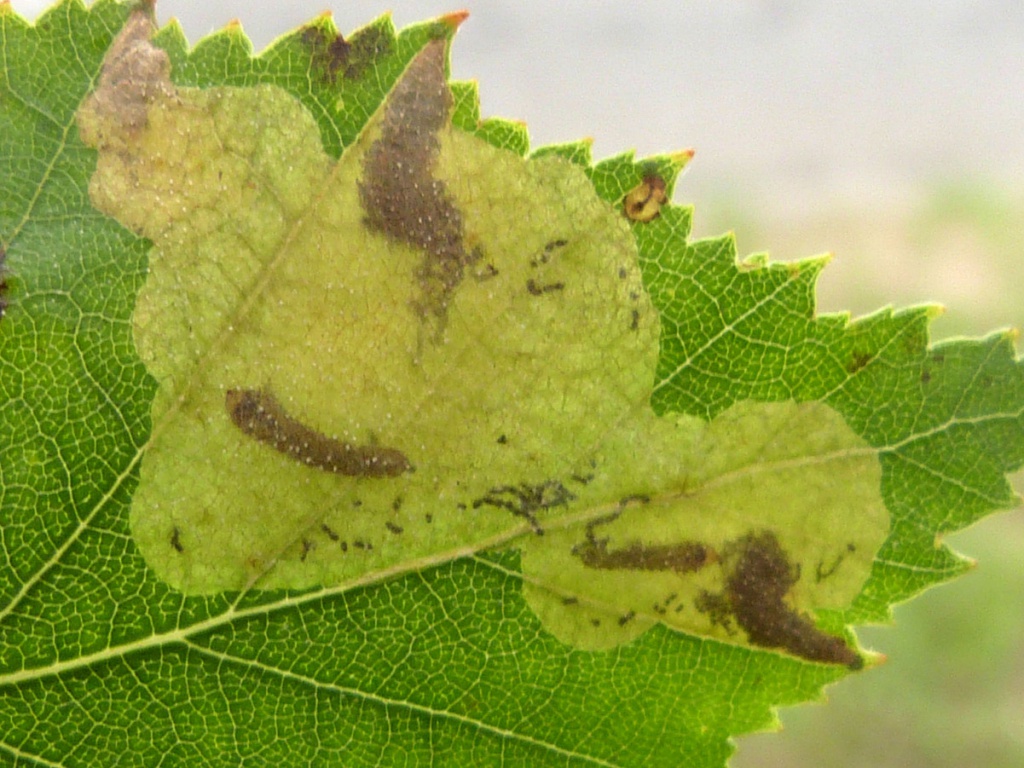
Fenusa pumila
The larvae of the sawfly Fenusa pumila mine the leaves of Birch producing a blotch on the upper side of the leaf. It starts near the midrib and extends outwards towards the leaf edge.
The larvae have four black spots underneath - the anterior spots (those near the head on the underside) being large which distinguishes it from Profenusa thomsoni. The feet are relatively long and slender. In the final pre-pupal instar, pigmentation is lost
Fenusella nana
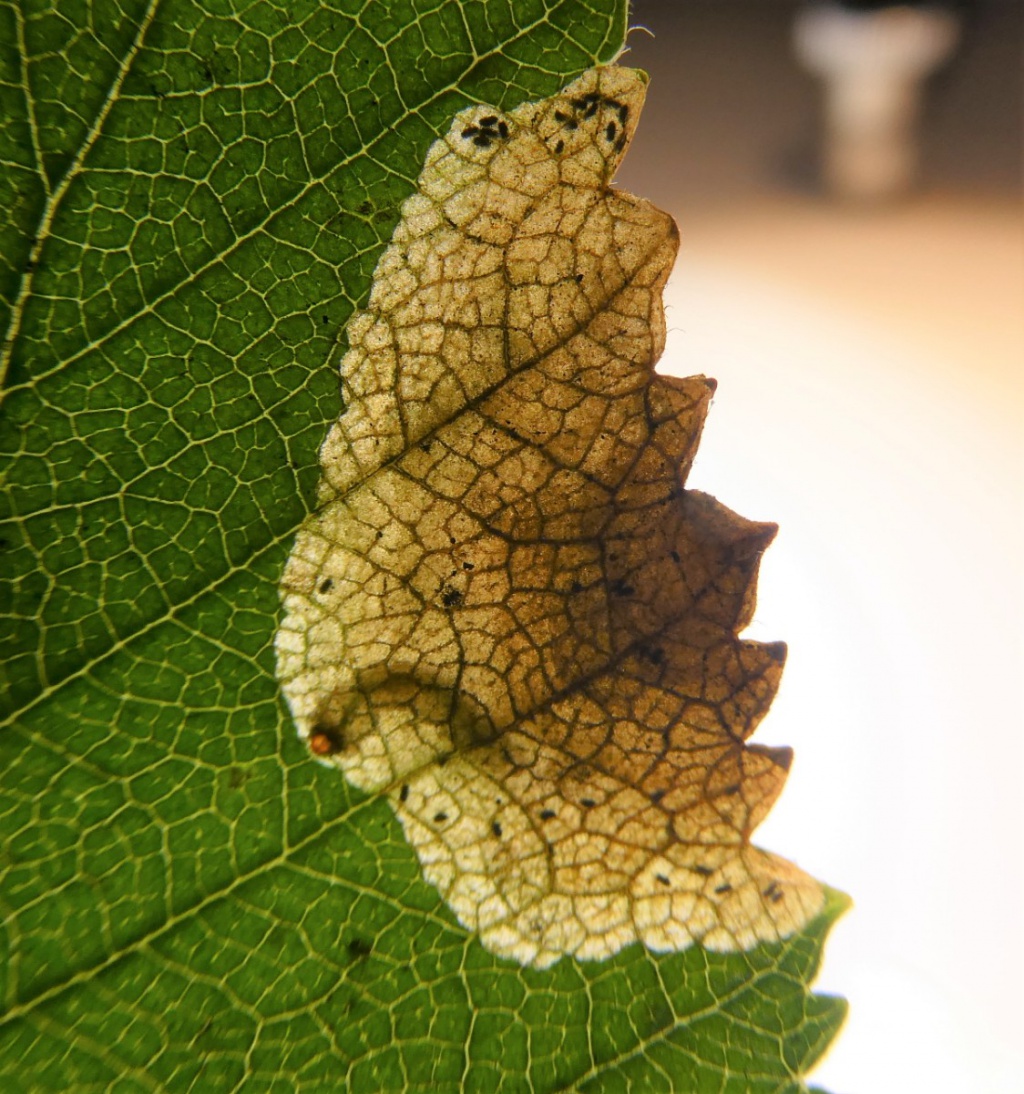
The larvae of the sawfly Fenusella nana mine the leaves of various Birch species. The mine starts at the tip of a vein at the leaf edge and a triangle or plug of frass is left at the start of the mine which takes the form of a large pale blotch. The larva is initially greenish, with dark spots underneath the thorax and a dark patch on the prothorax at the back of the head. It has long slender feet with dark marks at the base. It becomes a darker yellowish colour towards maturity.
Heterarthrus nemoratus
The larva of the sawfly Heterarthrus nemoratus mines the leaves of Birch. The older part of the mine is a reddish colour and most of the frass is ejected through a slit. The larva pupates in the mine in a disc-shaped cocoon.

Profenusa thomsoni
The larva of the sawfly Profenusa thomsoni mines the leaves of Birch. The mine starts in the centre of the leaf. The larva has brownish marks on head, and short, stubby, brownish feet

Scolioneura betuleti
The larvae of the sawfly Scolioneura betuleti mine the leaves of Birch (Betula) species and those of Green Alder. The leaf mines are large and transparent, without much frass. The larvae have dark markings on the pronotum, two dark spots on the thorax underneath, black legs and dark crescent shaped marks along the ventral side of the abdomen. The larvae lose pigmentation in the pre-pupal stage.
Hemichroa australis
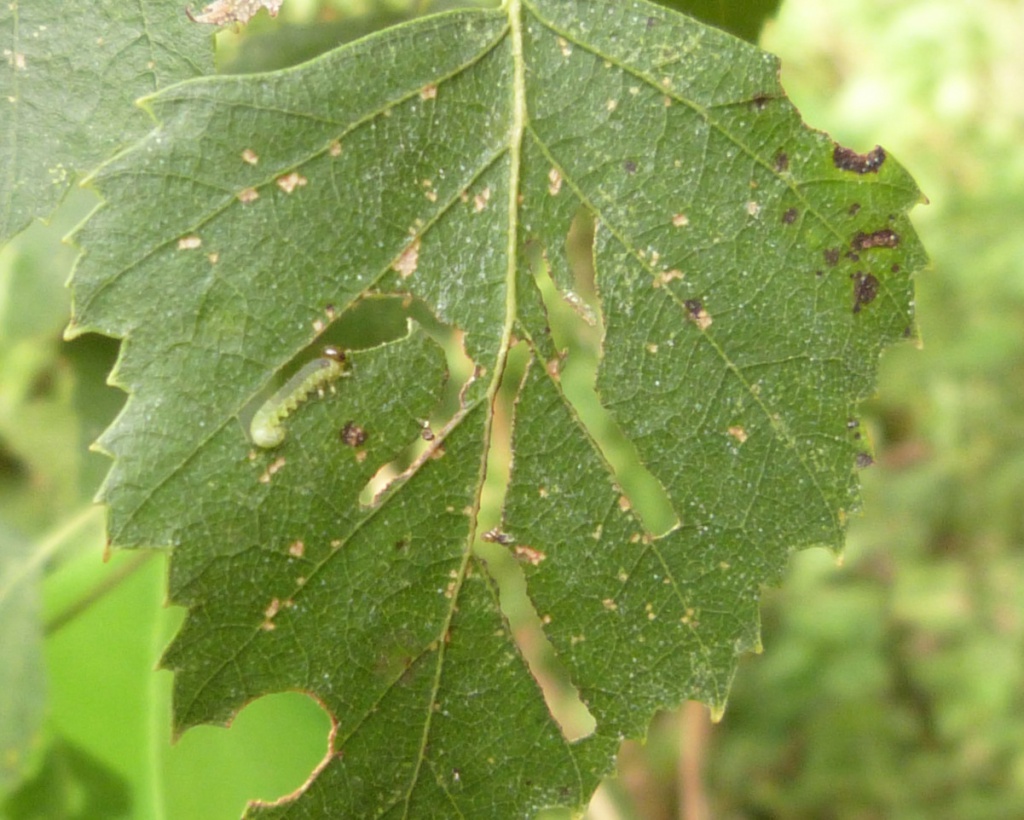
The larva of the sawfly Hemichroa australis feeds on the leaves of Birch and Alder species. When feeding, young larvae make holes in characteristic curved or angled lines in the leaves, whereas larger larvae feed on leaf edges.

Nematus latipes
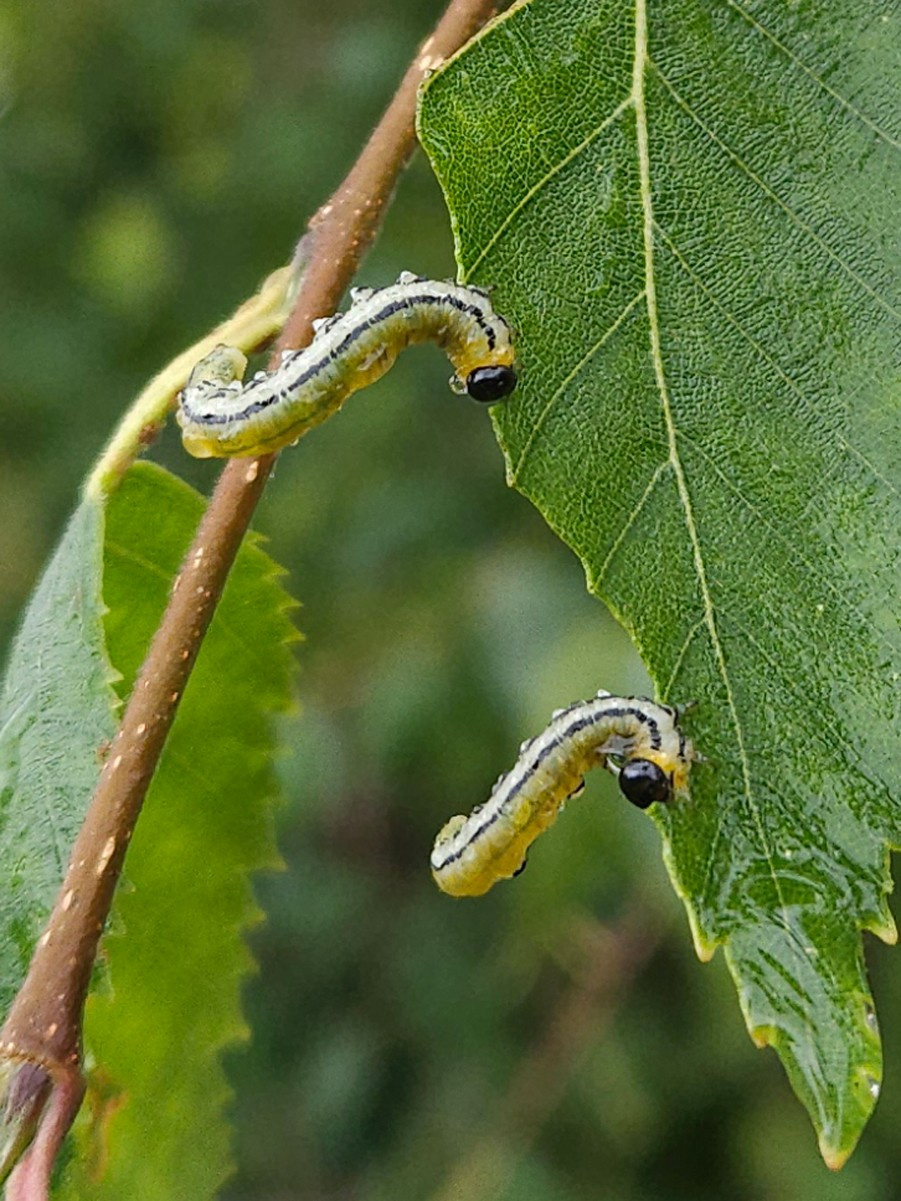
Nematus latipes is a sawfly whose larvae feed on Birch. The larva are almost black with side rows of faint yellow dots and yellow legs.

Nematus septentrionalis
The larvae of the sawfly Nematus septentrionalis feed on a number of trees including Birch.
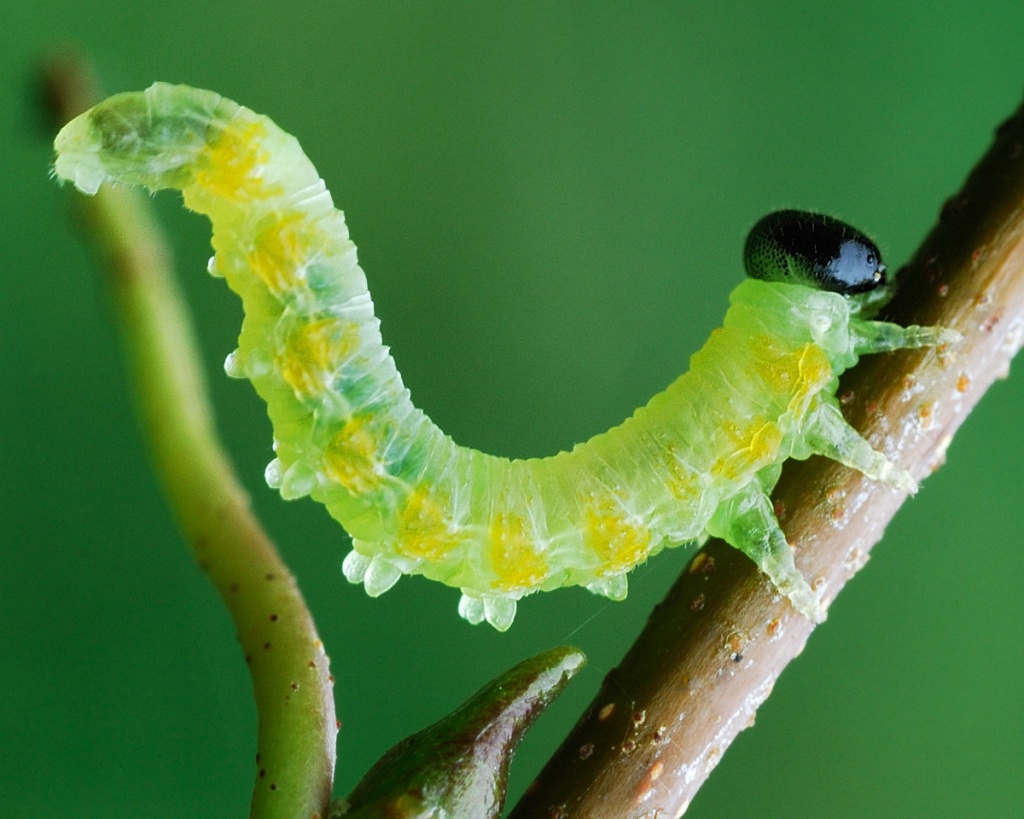
Pristiphora testacea
The larva of the sawfly Pristiphora testacea feeds on Birch. It has a distinctive yellow and green body and a shiny black head.
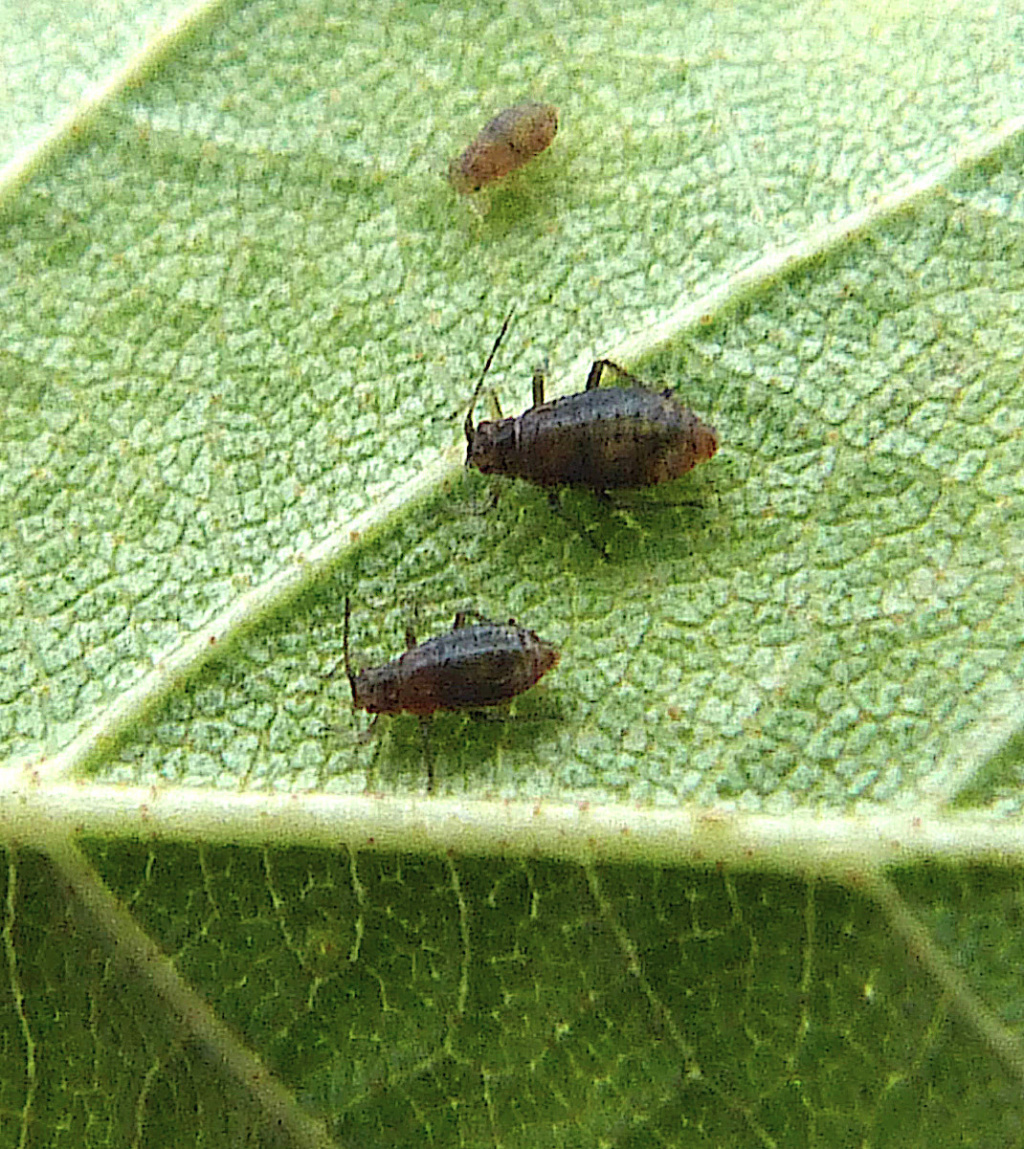
Betulaphis quadrituberculata
The Small Downy Birch Aphid (Betulaphis quadrituberculata) is usually found on the undersides of Downy Birch leaves, but may also use Silver Birch and very occasionally Grey Alder. Betulaphis quadrituberculata apterae are pale yellowish green but sometimes almost white. In autumn they may have patches of darker pigment. The antennae are shorter than the body. The sexual forms (oviparae) which develop in late autumn are dark brown in colour and rather unusual in shape because the posterior abdominal segment behind the siphunculi appear as an elongate ovipositor-like structure.
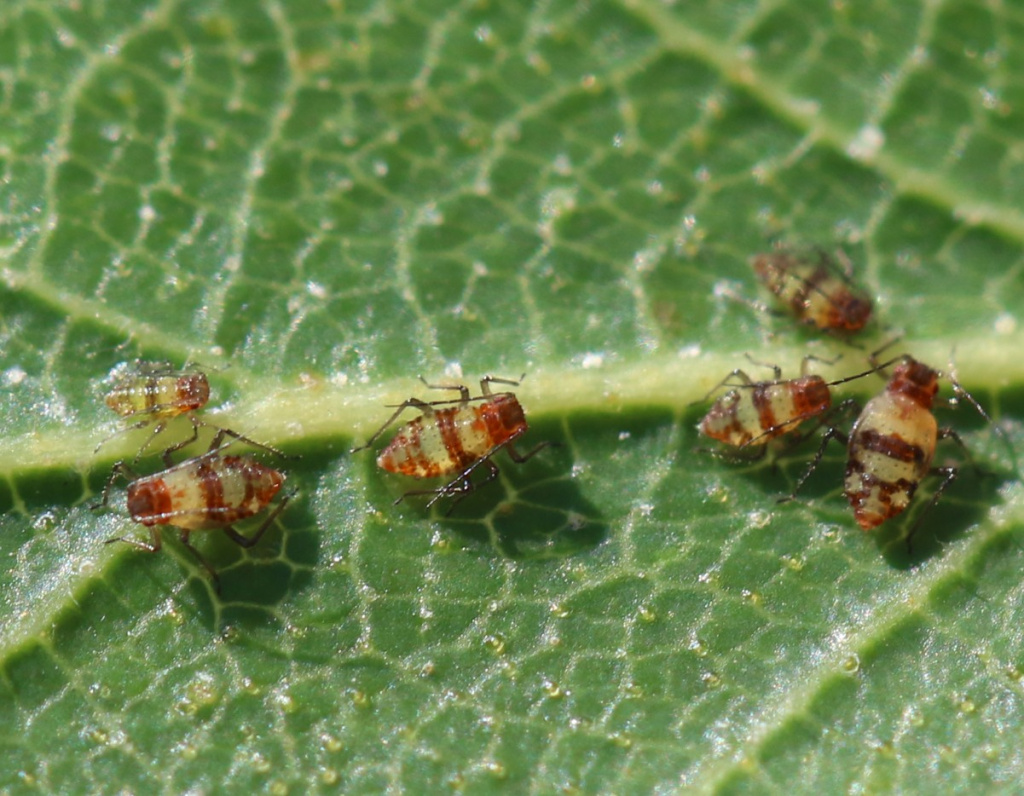
Callipterinella tuberculata
Callipterinella tuberculata aphids are found in colonies on young growth and scattered on older leaves of Silver Birch. The apterae are usually yellowish with a brown head, a reddish-brown dorsal band over the front of the abdomen and a dark quadratic patch on abdominal tergites 4-6. However, the dark markings are very variable. The body length of C. tuberculata apterae is 2.3 to 2.5 mm.
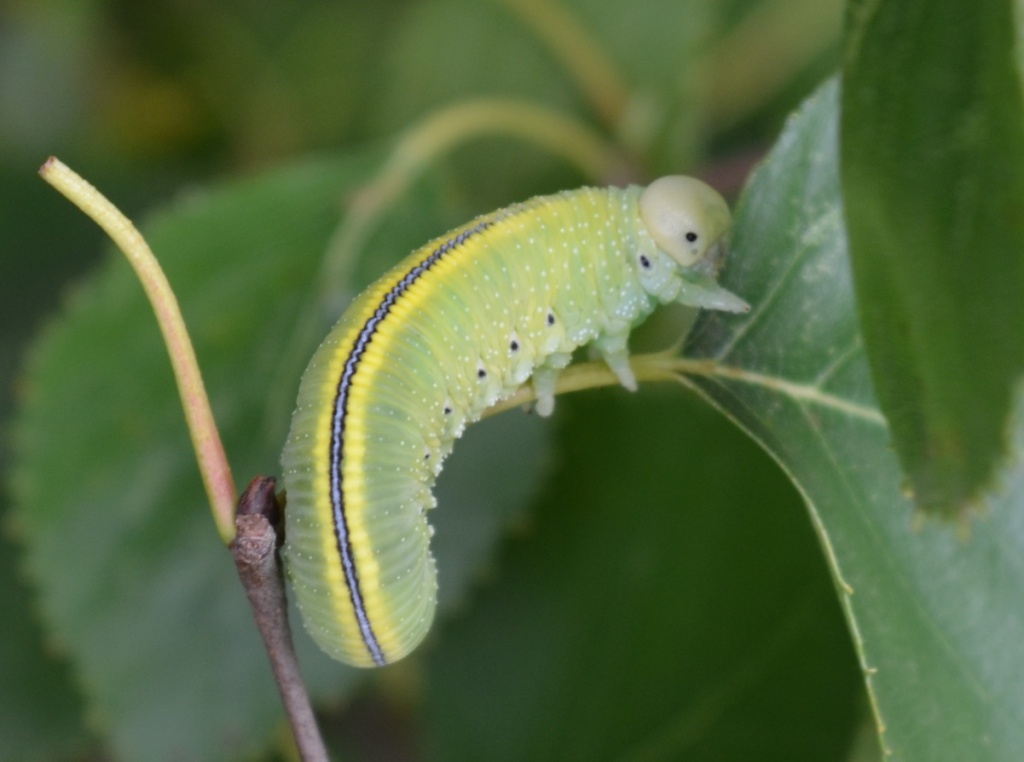
Birch Sawfly
The larva of the Birch Sawfly (Cimbex femoratus) feed on Silver Birch leaves between June and September and can grow up to 45mm in length. A black edged bluish stripe runs along the middle of the larva's back for the length of its body. There is a single row of black dots along the side of the body.
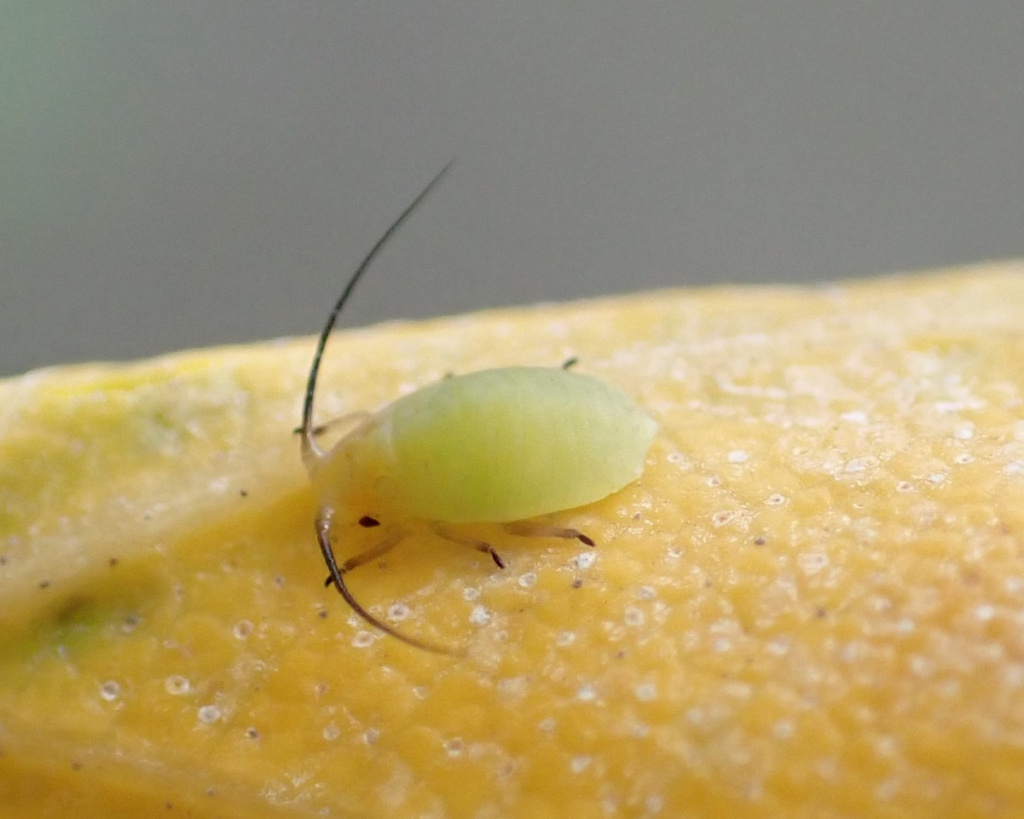
Solitary Birch Aphid
The Solitary Birch Aphid (Monaphis antennata) is associated with Birch. Winged adults and nymphs are green, oviparae are brownish and males are reddish, but all forms have very long and thick antennae that are black except at the base. Unusually for aphids, they are found on upper surface of the leaf, and are solitary or present in very low numbers.
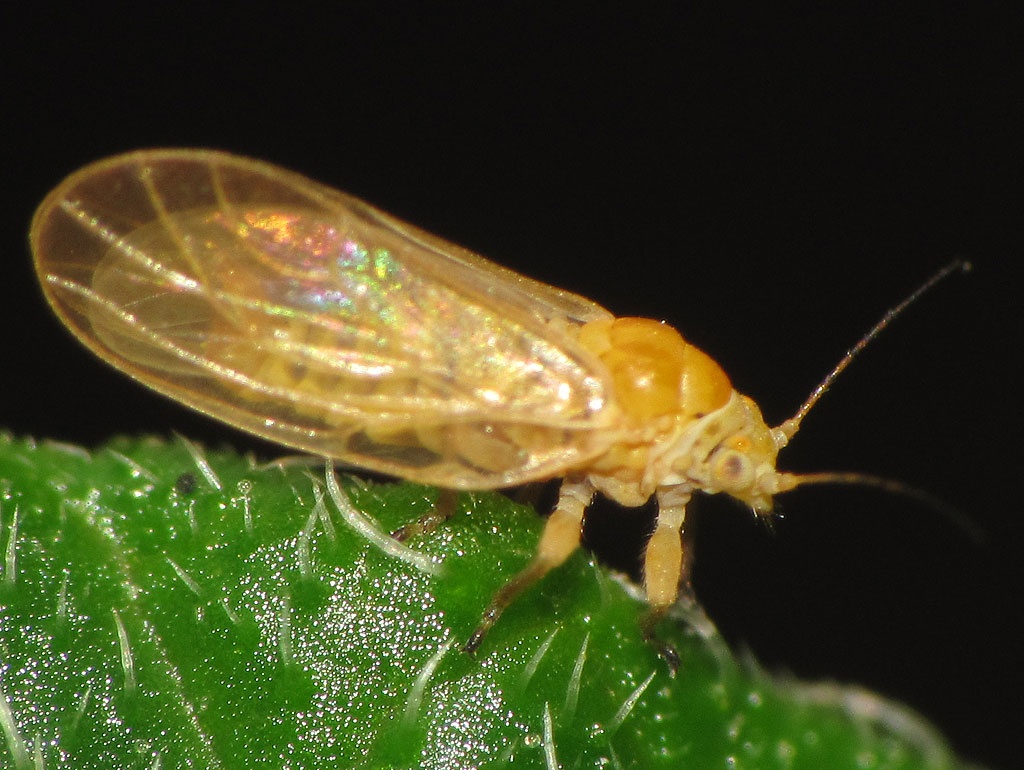
Chamaepsylla hartigi
Chamaepsylla hartigi is a small (length 3 mm) but quite distinctive psyllid, although care must be taken to rule out the similar Cacopsylla species. The body and wings are a dull yellow-orange although the pronotum and genal cones are often pale and the abdomen may occasionally be green. The long female terminalia are also distinctive.
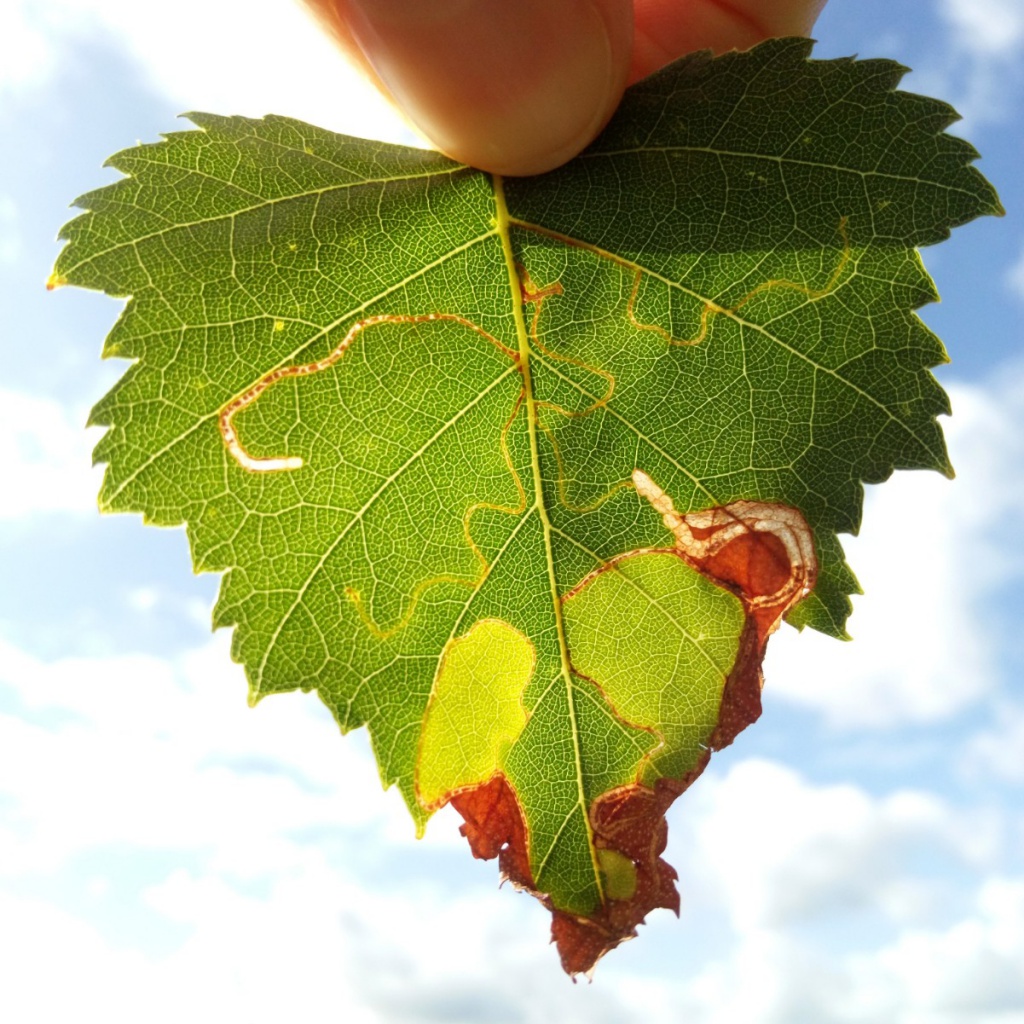
Apple Leaf Miner
Lyonetia clerkellais a tiny moth (wingspan 7 to 9 mm) with a silvery appearance but very attractively patterned when seen under magnification.
The larva produces a leafmine on a number of species, especially Cherry, Apple, Rowan, Hawthorn, Blackthorn and other trees and shrubs in the Rosaceae family as well as Birch. It is also commonly found on Birch. The mine is long smoothly curved gallery with frass in a central line; older mines look whitish. The larva is long and slender. It has a segmented body and 6 dark feet.
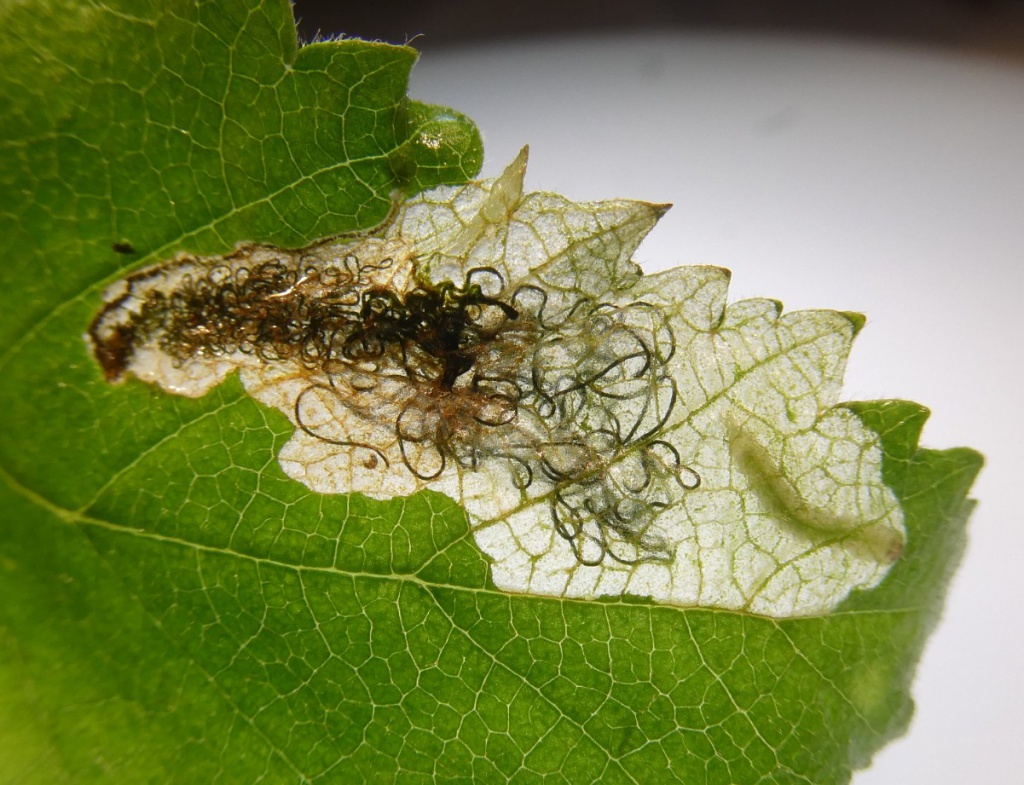
Eriocrania salopiella
The larva of the moth Eriocrania salopiella mines the leaves of Birch. All Eriocraniidae leafmines have spaghetti-like frass, in long threads. The mine starts in the centre of leaf, as a short gallery widening gradually into a blotch.
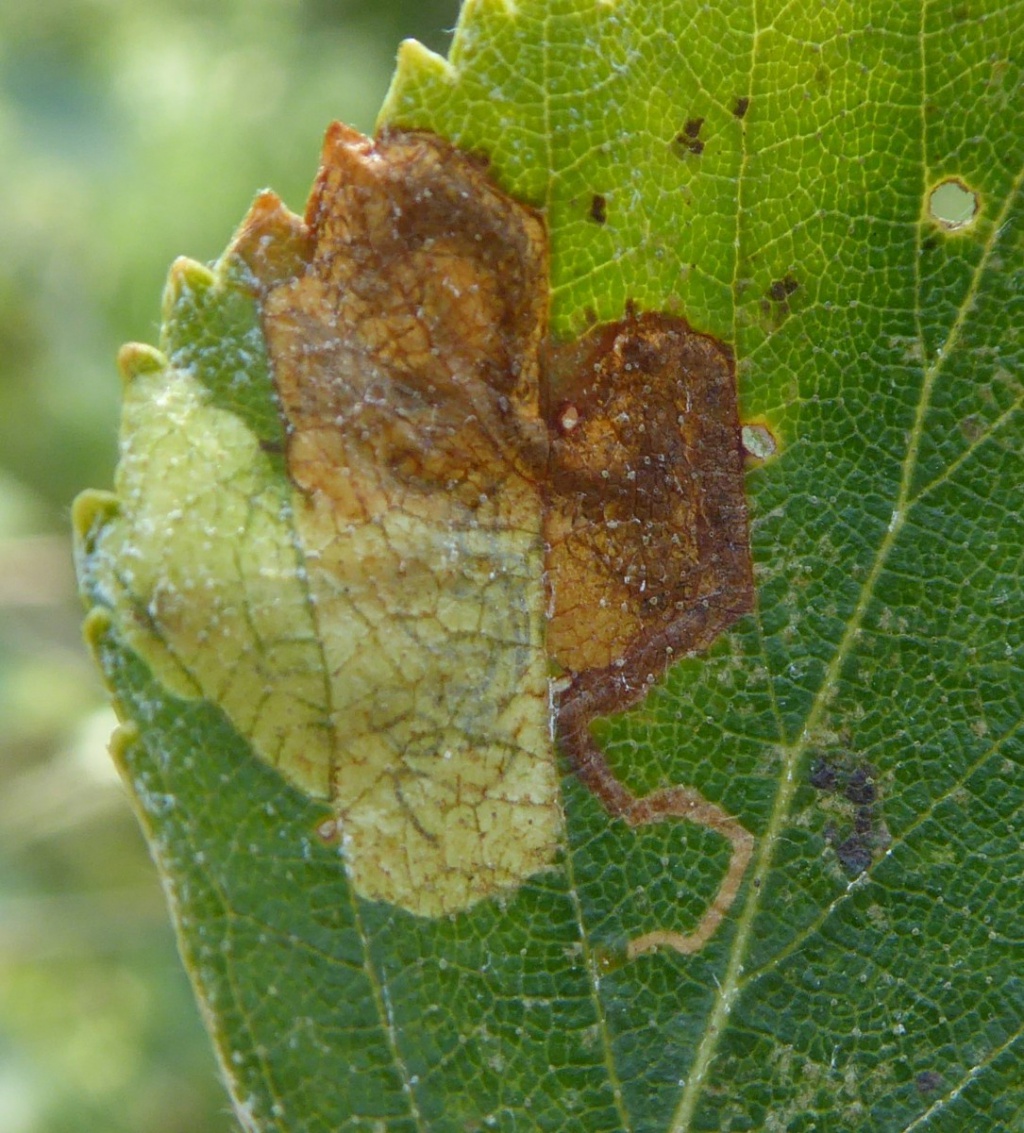
Eriocrania sparrmannella
The larva of the moth Eriocrania sparrmannella mines the leaves of Birch. The mine starts with a narrow gallery, widening abruptly into a blotch filled with filament-like threads of frass. The mine begins towards the centre of the leaf. The larva has two cloudy brown spots visible through the pronotum, but these can be very difficult to see.
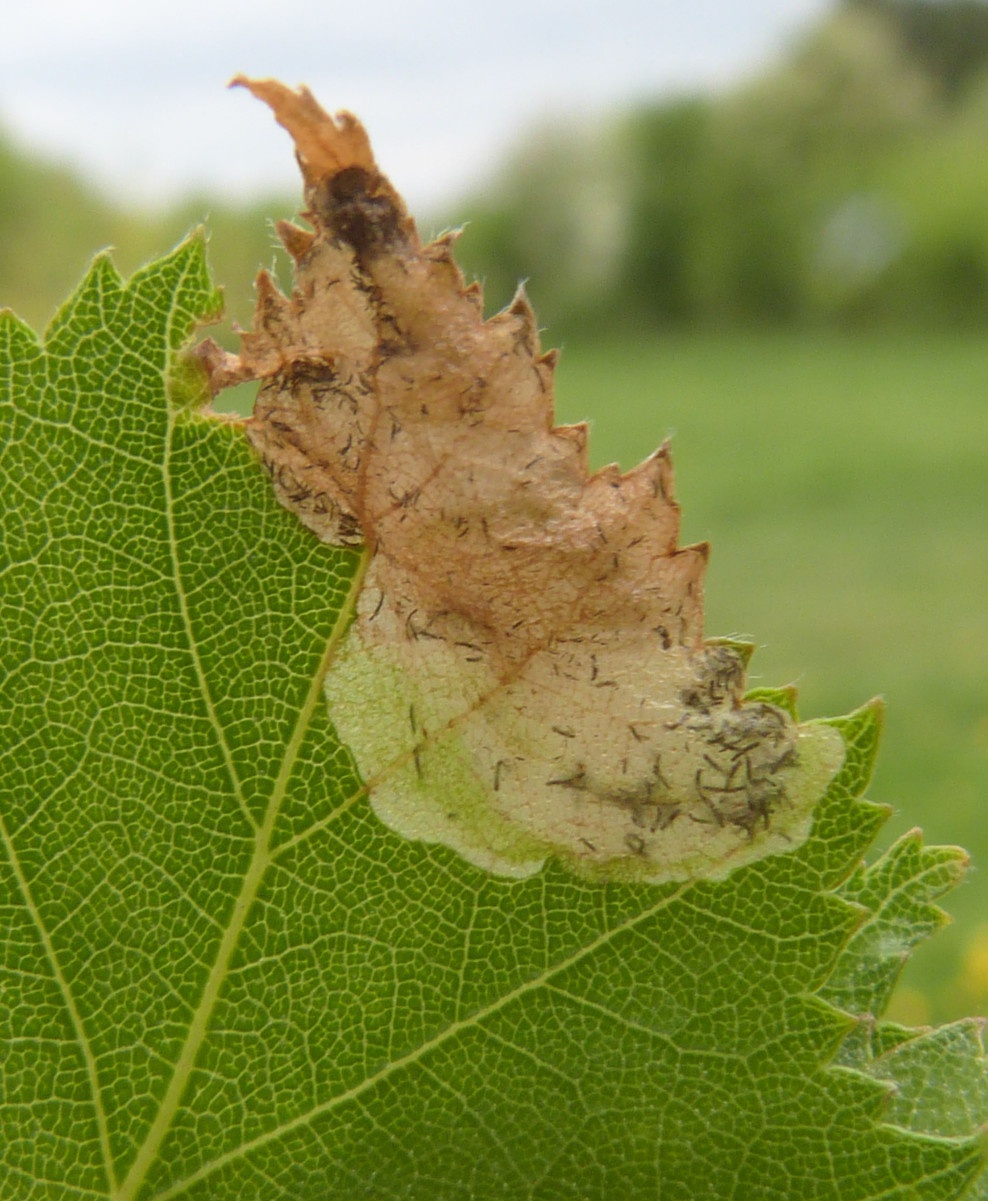
Eriocrania cicatricella
The larva of the moth Eriocrania cicatricella mines the leaves of Birch. The larvae usually feed communally on one leaf and often the mines run together into a large blotch, giving the appearance of several larvae in one mine. The larvae are small, pale and translucent.
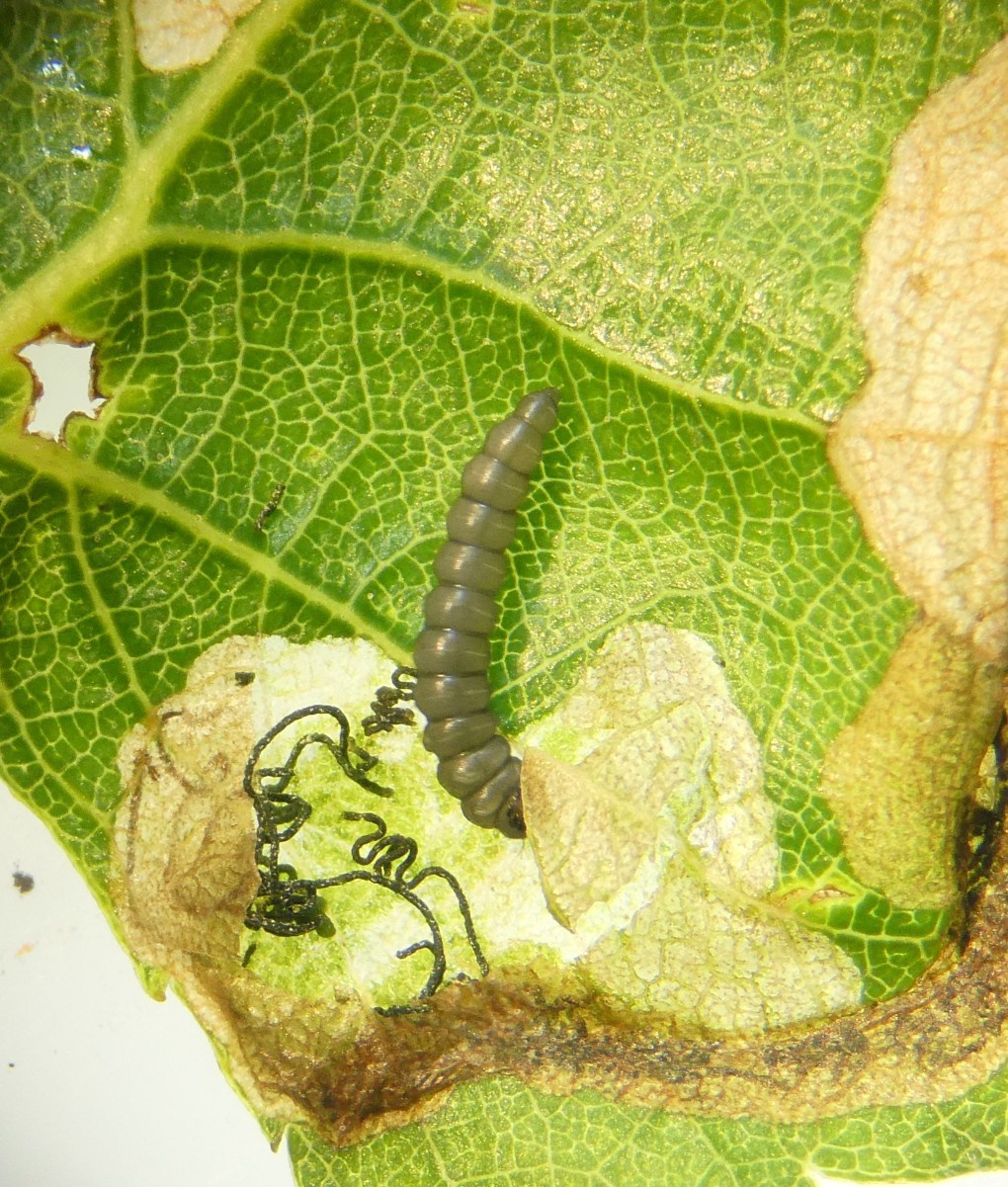
Eriocrania sangii
The larva of the moth Eriocrania sangii mines the leaves of Birch. All Eriocraniidae leafmines have spaghetti-like frass, in long threads. The larva of Eriocrania sangii is unusual in being grey.
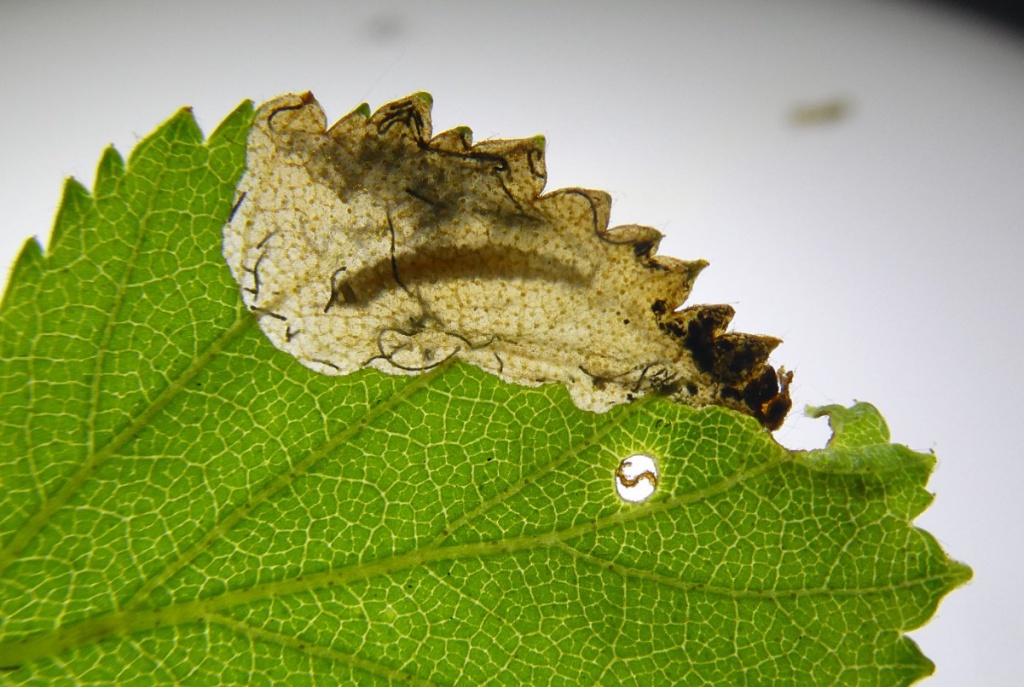
Eriocrania semipurpurella
The larva of the moth Eriocrania semipurpurella mines the leaves of Birch. All Eriocraniidae mines have spaghetti-like frass in long threads. The larvae live a blotch mine at the leaf margin which over-runs the short gallery at the start of the mine. The mature larvae are white with pale brown head.
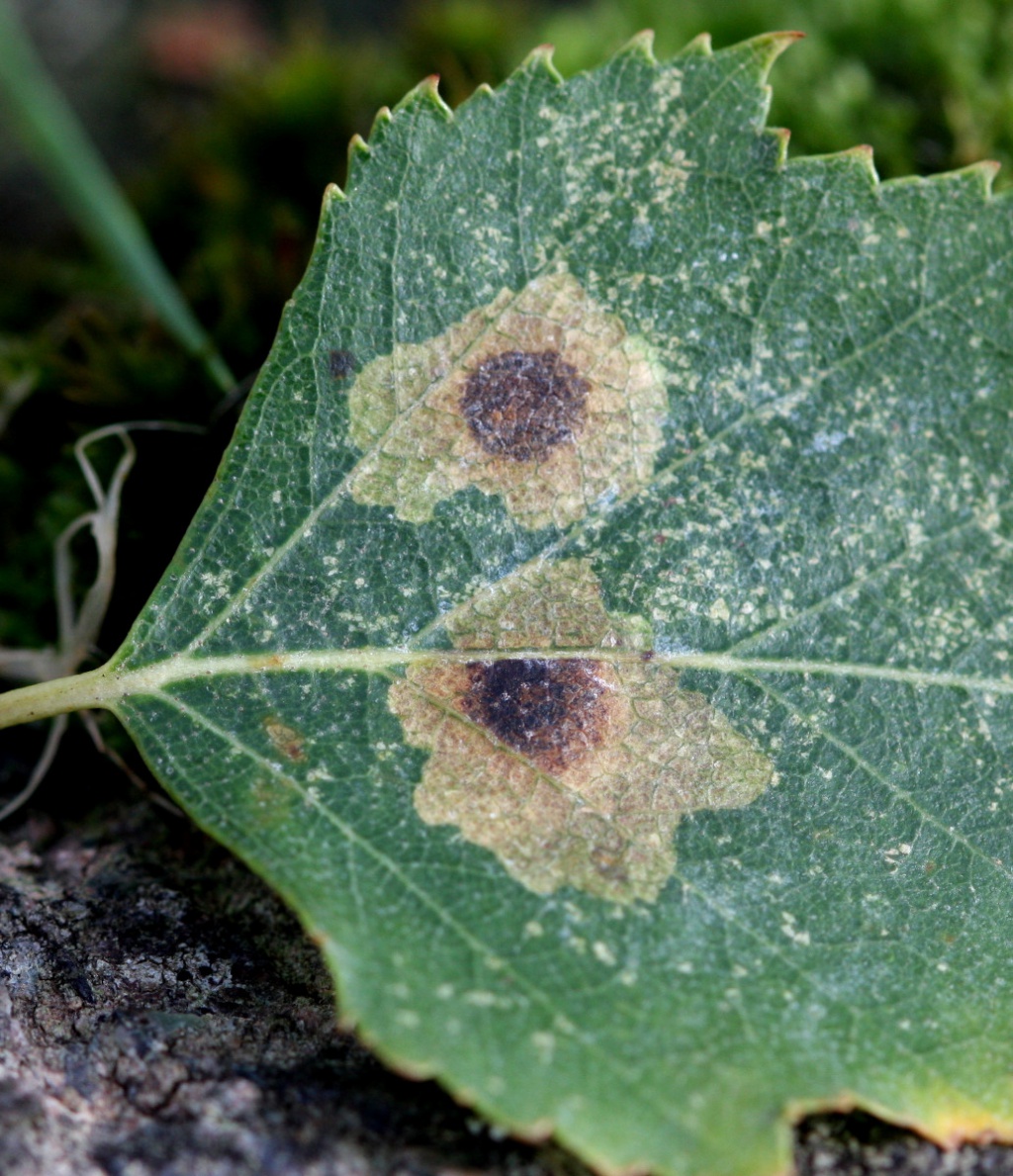
Ectoedemia occultella
The larva of the moth Ectoedemia occultella mines the leaves of Birch creating a distinctive mine which begins as a dark circular blotch, and is then extended into a larger pale blotch with a darker central circle.
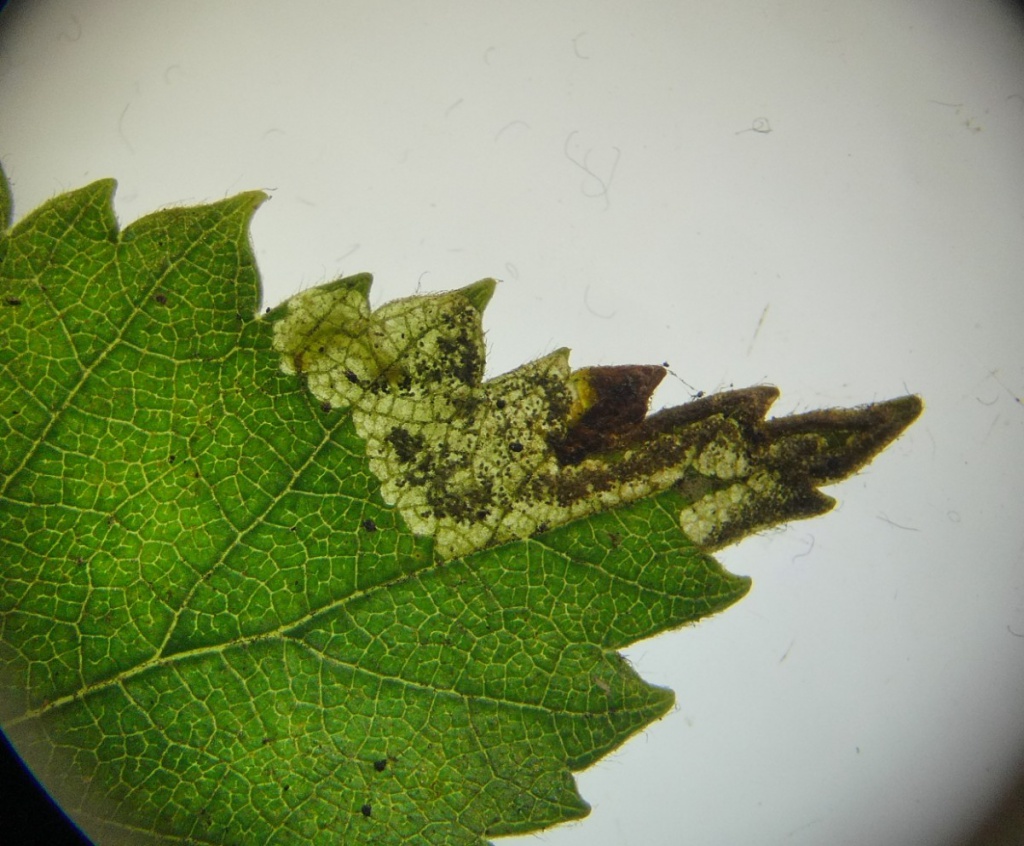
Ectoedemia minimella
The larva of the moth Ectoedemia minimella mines the leaves of Birch and Hazel creating a mine that begins as a contorted gallery which later becomes a blotch with scattered frass.
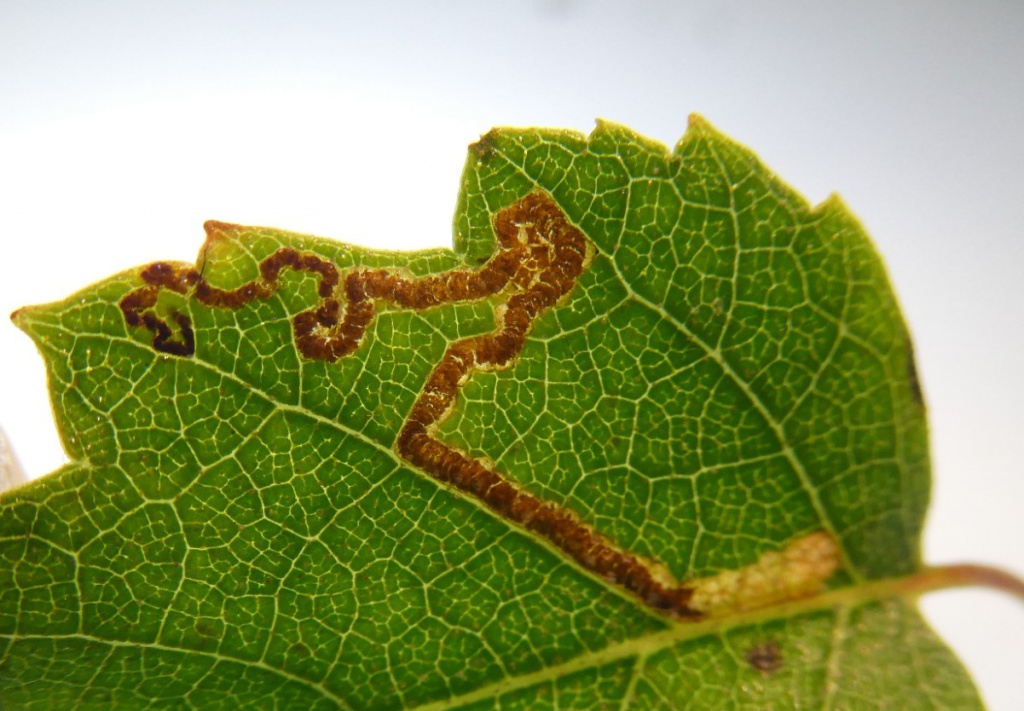
Stigmella continuella
The larva of the moth Stigmella continuella mines the leaves of Birch forming a mine that starts off with a brownish blotch and then becomes a gallery completely filled with greenish-brown frass.