

Orchard Apple - Malus domestica
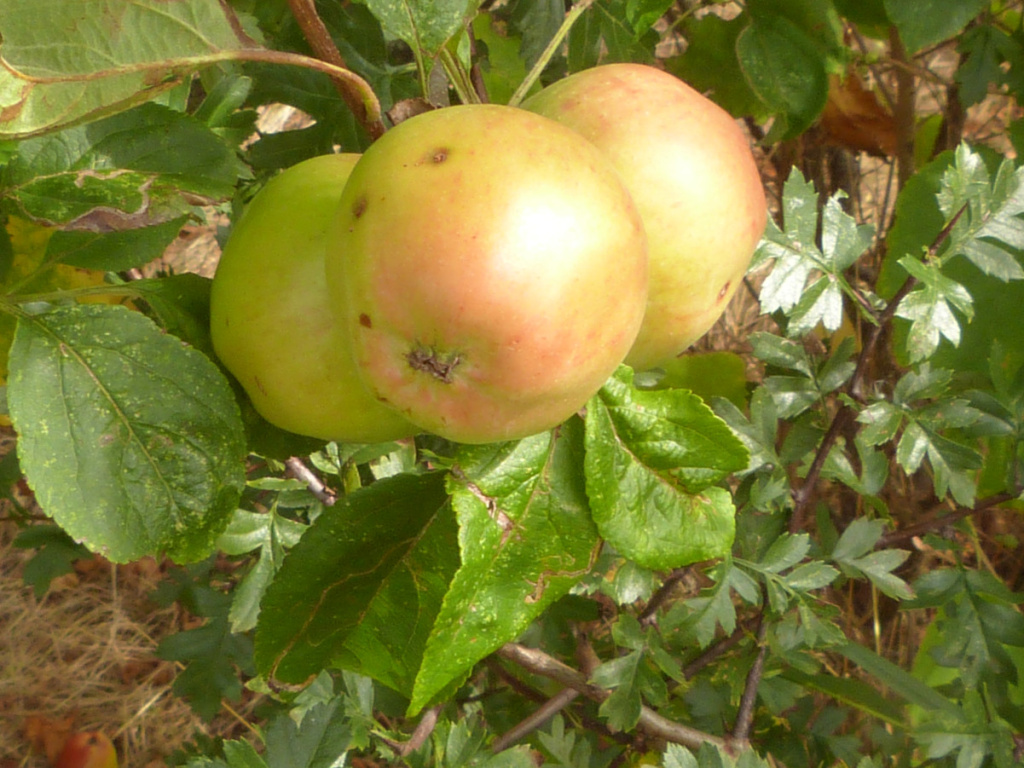
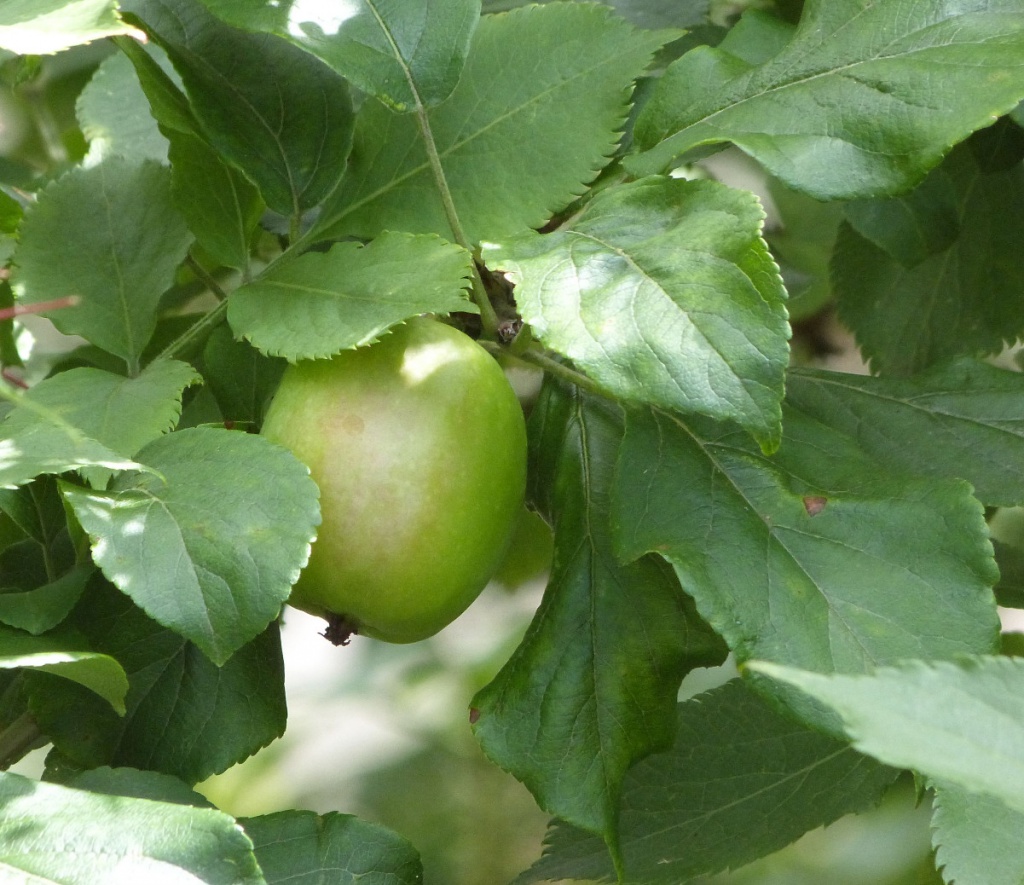
Tree growing to 7 meters usually grown domestically for its edible fruit.

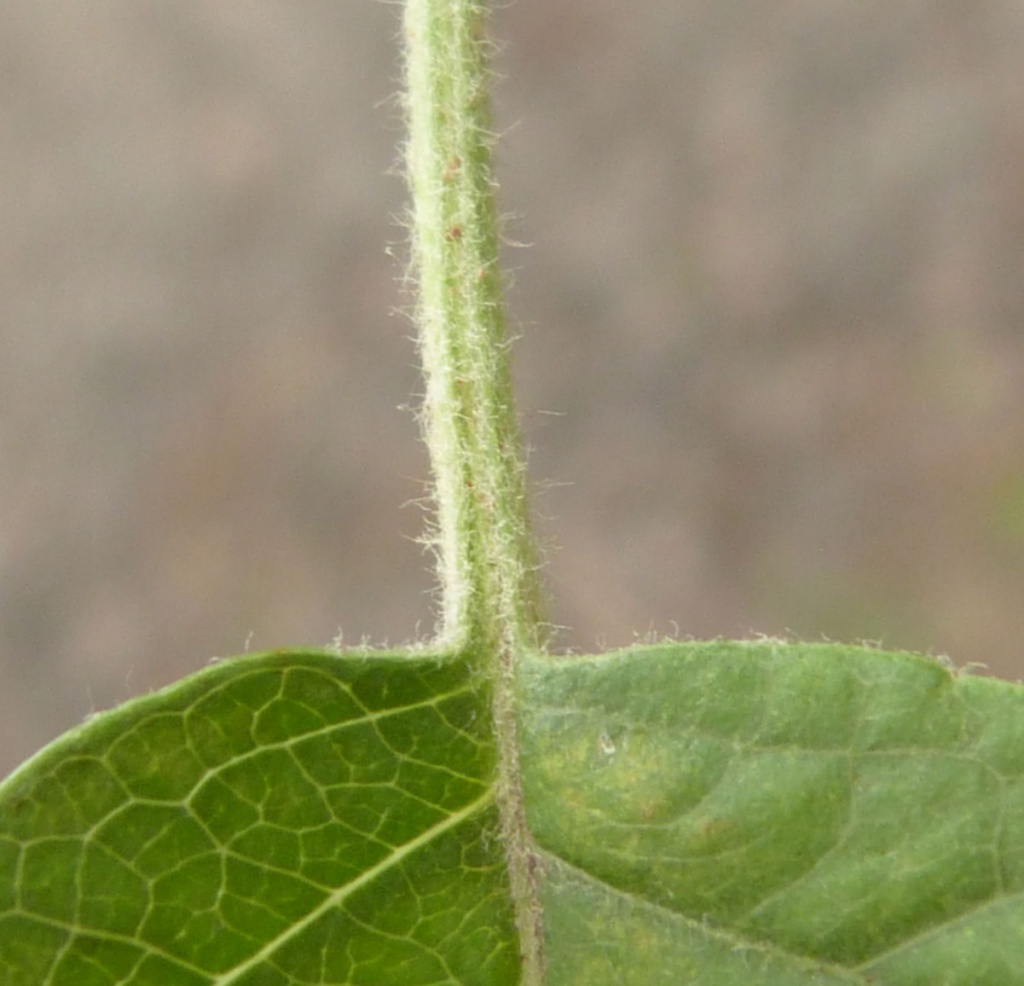
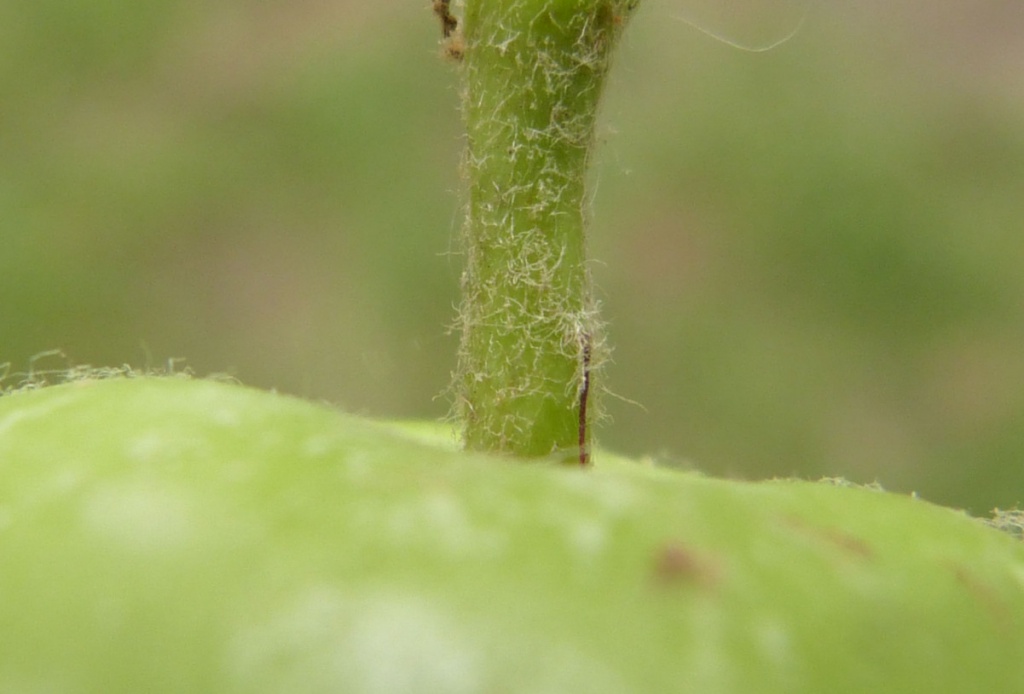
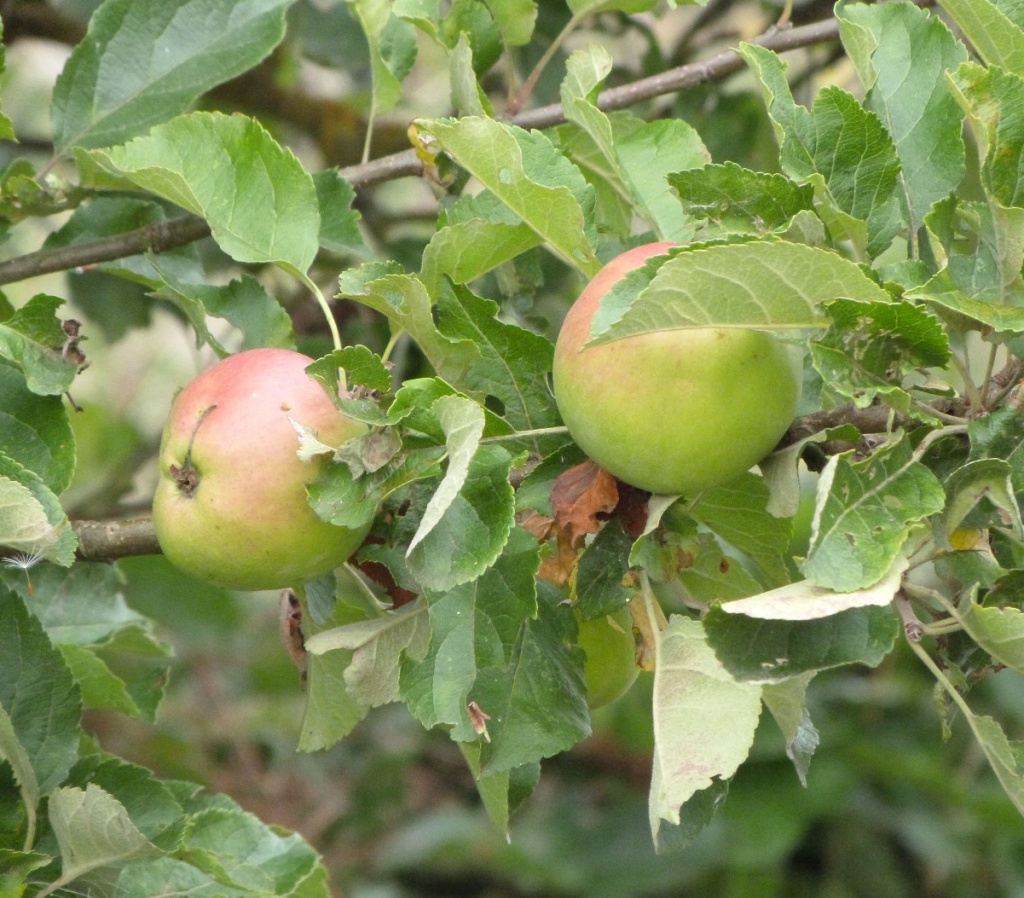
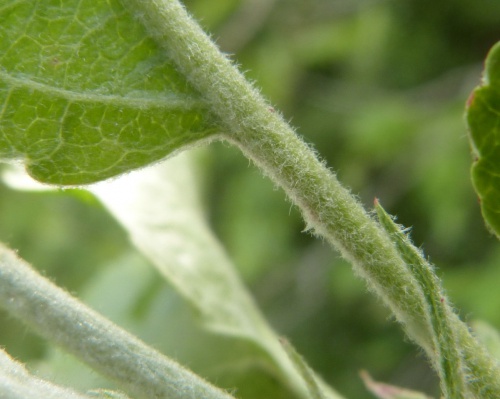
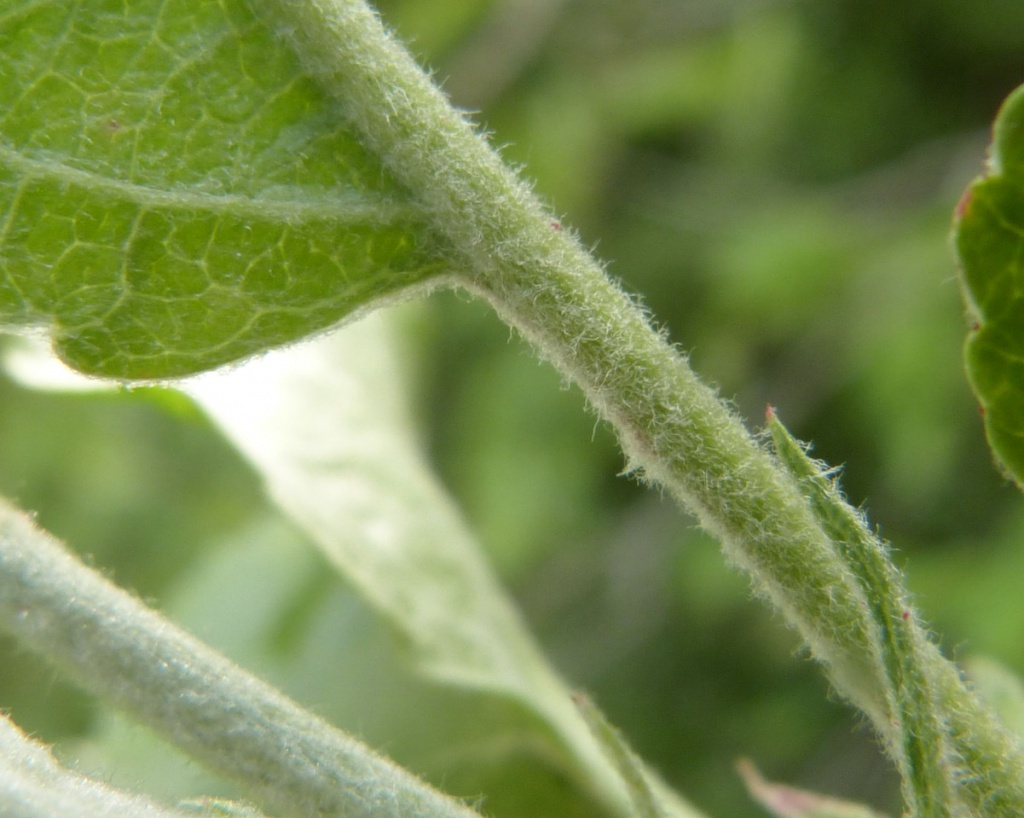
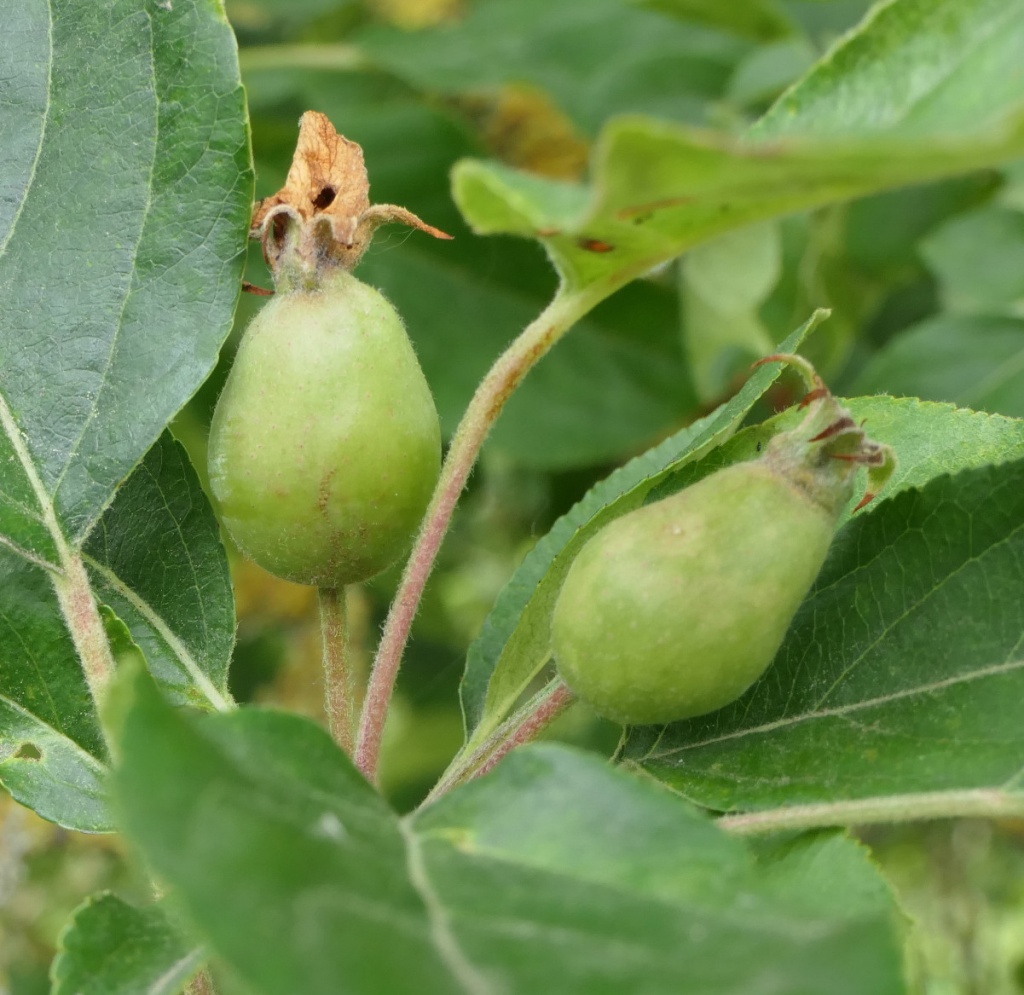
Photos showing underside of mature leaves, pedicels (flower-stalks) and calyx.
Found as an escape from cultivation in various habitats.
Flowers in April.
Deciduous.
Widespread as an escape from cultivation in Britain.
Occasional as an escape from cultivation in Leicestershire and Rutland. It was not recorded in the 1979 Flora survey of Leicestershire. In the past, mistakenly recorded as crab-apple; it is probably commoner than this native species and many trees in roadside hedges are likely to be M domestica
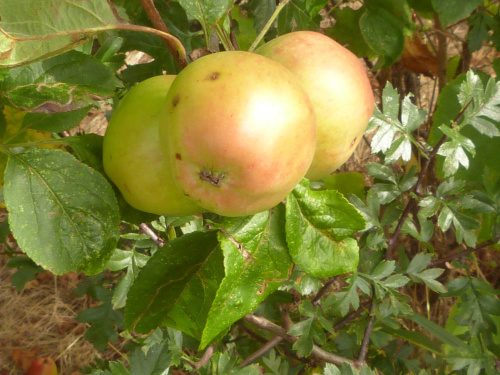 Graham Calow
Sapcote, land behind William Spencer Avenue
27 August 2024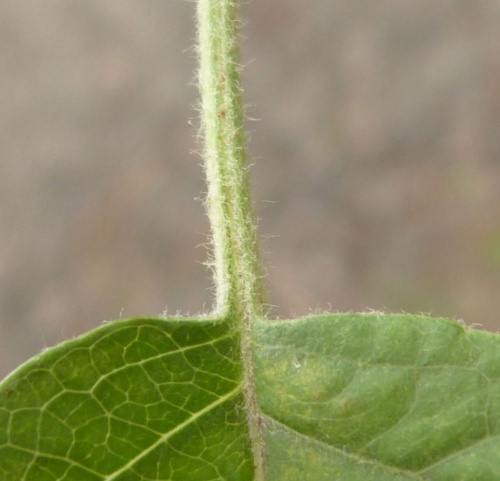 Graham Calow
Sapcote, Donkey Lane
06 July 2020
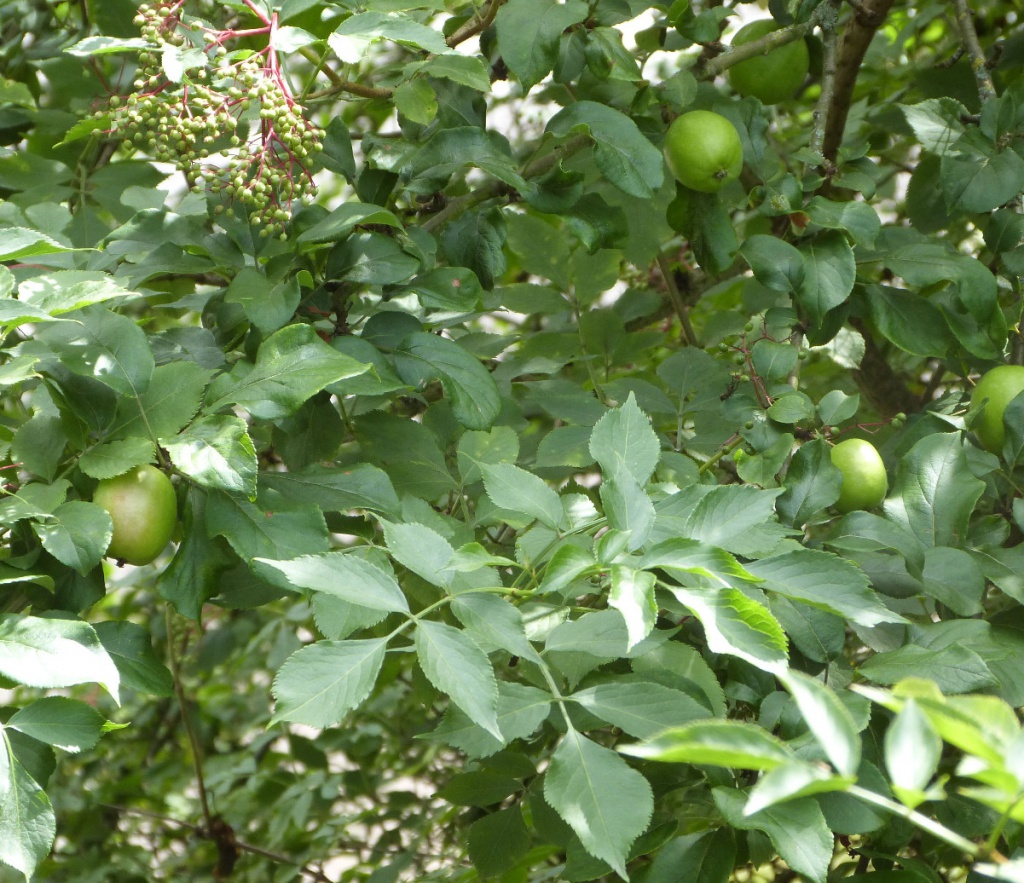
Hairy petiole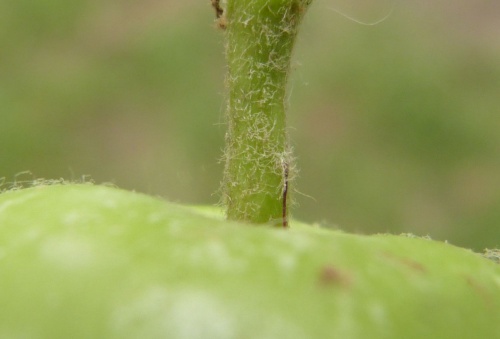 Graham Calow
Sapcote, Donkey Lane
06 July 2020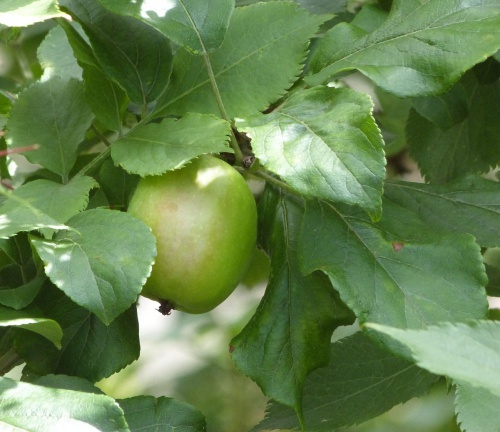 Graham Calow
Entance road to Stoney Cove
03 August 2016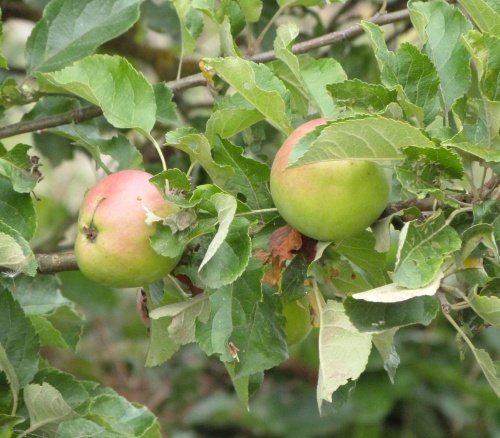 Graham Calow
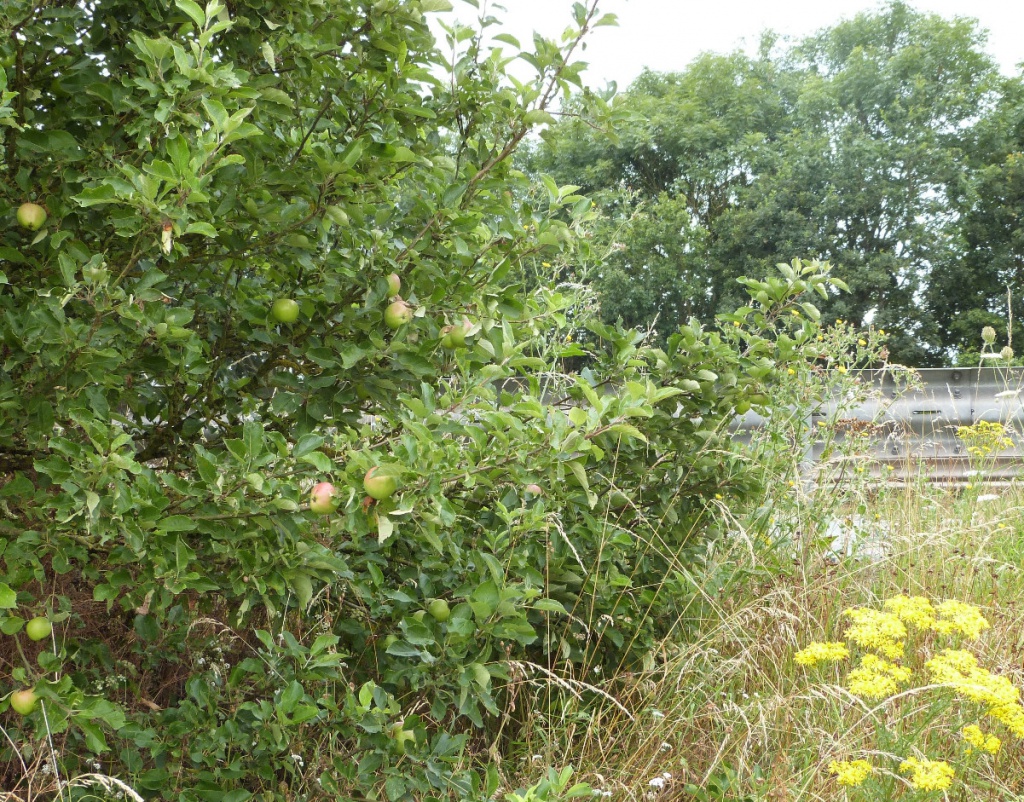
Road alongside M69, Elmesthorpe
01 August 2016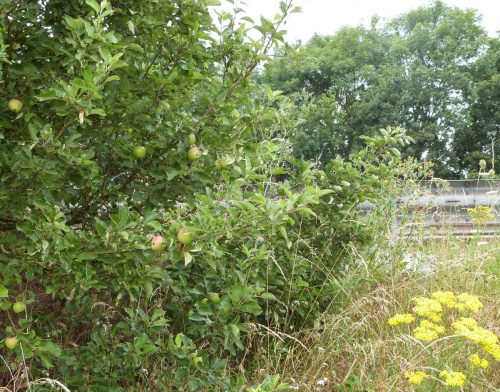 Graham Calow
Road alongside M69, Elmesthorpe
01 August 2016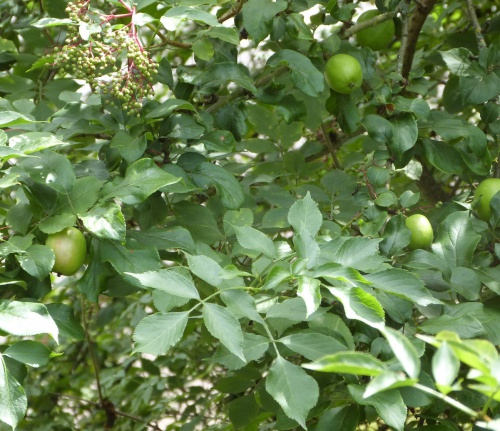 Graham Calow
Entance road to Stoney Cove
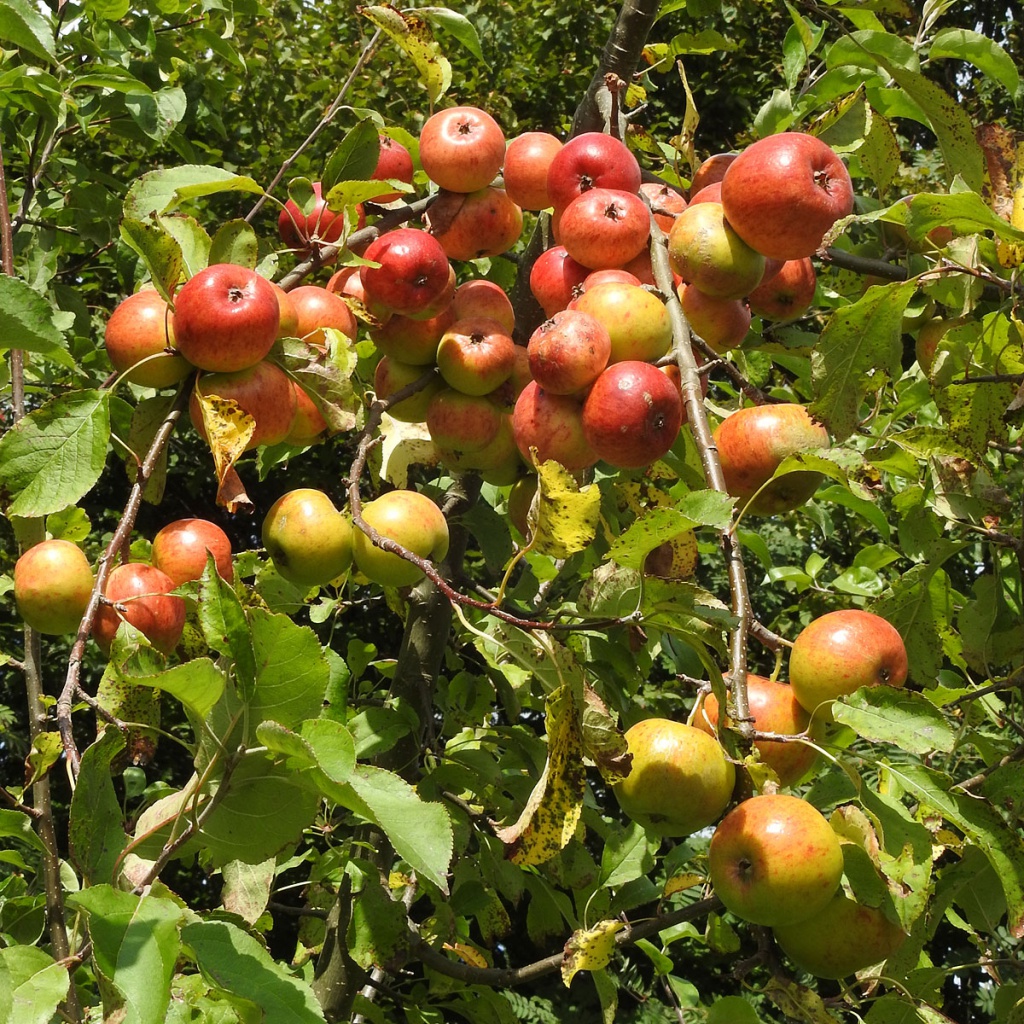
03 August 2016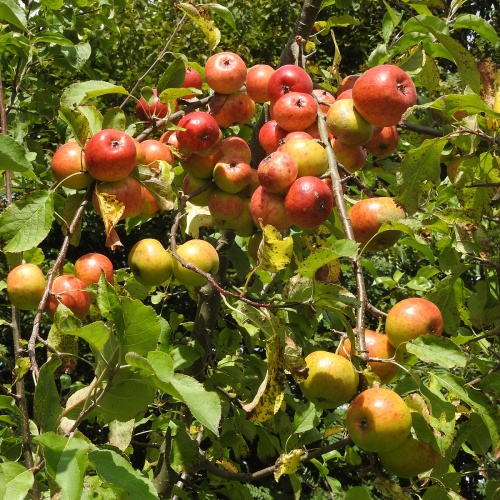 David Gould
The Spearwort Fields
20 August 2017
Leicestershire & Rutland Map
Enter a town or village to see local records
MAP KEY:
Yellow squares = NBN records (all known data)
Coloured circles = NatureSpot records: 2025+ | 2020-2024 | pre-2020
UK Map
Species profile
- Common names
- Apple, Apple Tree, Cultivated Apple
- Species group:
- flowering plant
- Kingdom:
- Plantae
- Order:
- Rosales
- Family:
- Rosaceae
- Records on NatureSpot:
- 69
- First record:
- 22/08/2007 (Dave Wood)
- Last record:
- 29/04/2026 (Calow, Graham)
Total records by month
% of records within its species group
10km squares with records
The latest images and records displayed below include those awaiting verification checks so we cannot guarantee that every identification is correct. Once accepted, the record displays a green tick.
In the Latest Records section, click on the header to sort A-Z, and again to sort Z-A. Use the header boxes to filter the list.
Latest images
Latest records
 Graham Calow
Stoney Stanton, Long St Quarry edge
22 May 2021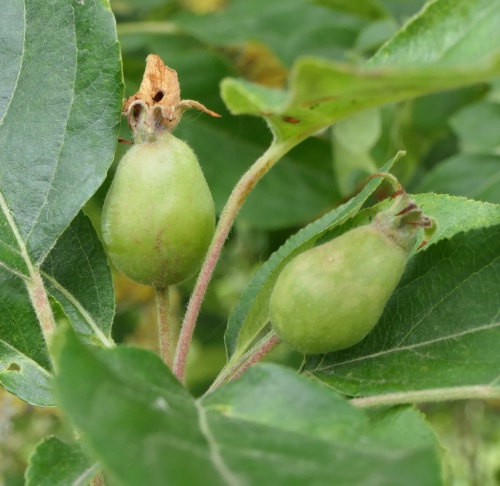 David Nicholls
Broughton Astley, Broughton Way
08 June 2020
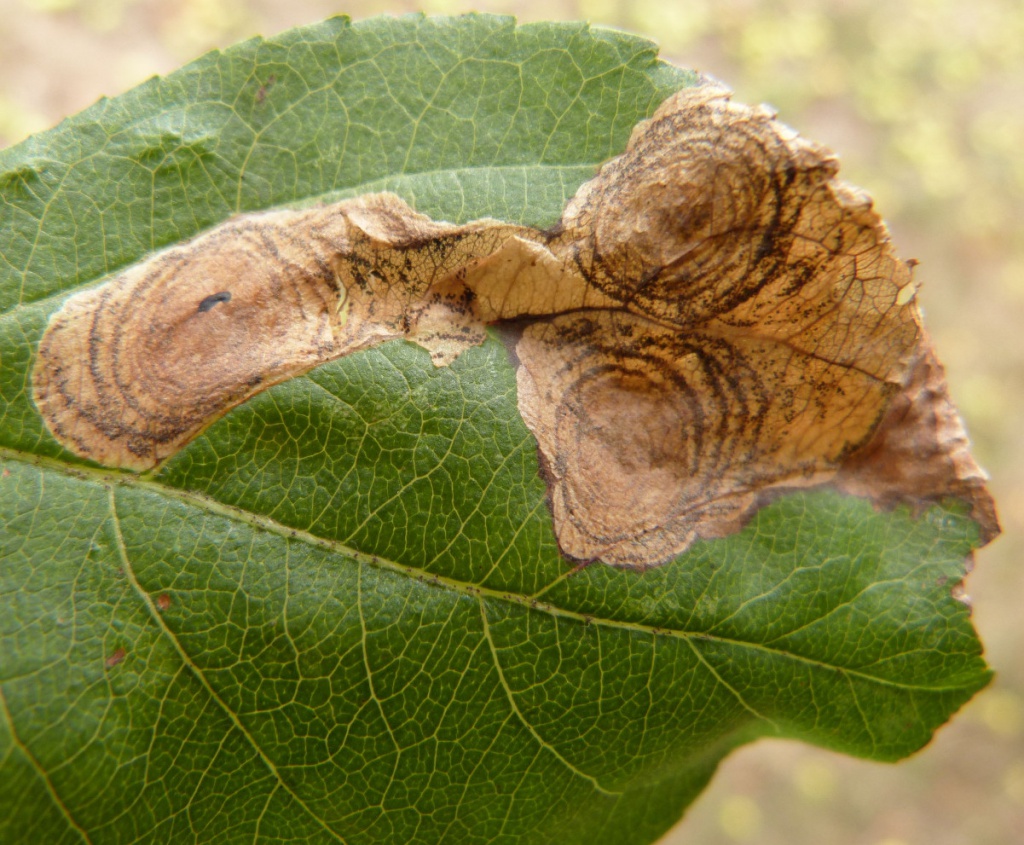
Pear Leaf Blister Moth
The larva of the Pear Leaf Blister Moth (Leucoptera malifoliella) makes a distinctive round blotch leafmine in a leaf of Apple, Hawthorn or Pear with a spiral frass pattern in concentric rings, sometimes several mines in one leaf. Occupied mines can be found in August and September.
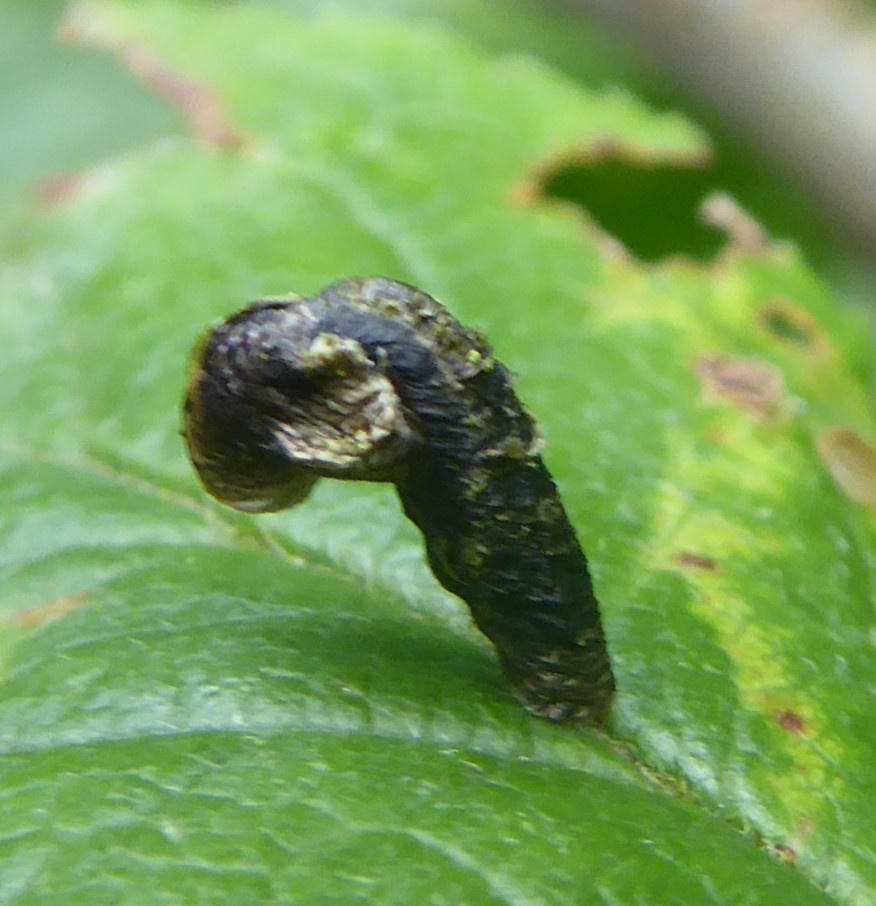
Pistol Case-bearer
The cased larva of the moth Coleophora anatipennella feeds on Blackthorn as well as other species such as Hawthorn and Apple. It is sometimes called a Pistol Case-bearer, so named from the resemblance of the larval case to an old flintlock pistol in shape.

Mistletoe
Mistletoe (Viscum album) is a yellowish green shrub, regularly branched, hairless forming rounded clumps up to one metre across on tree branches. Leaves oblong, leathery, opposite and untoothed. Flowers inconspicuous, unisexual with male and female on separate plants, 4 parted in small stalkless clusters. Fruit a white berry during winter.
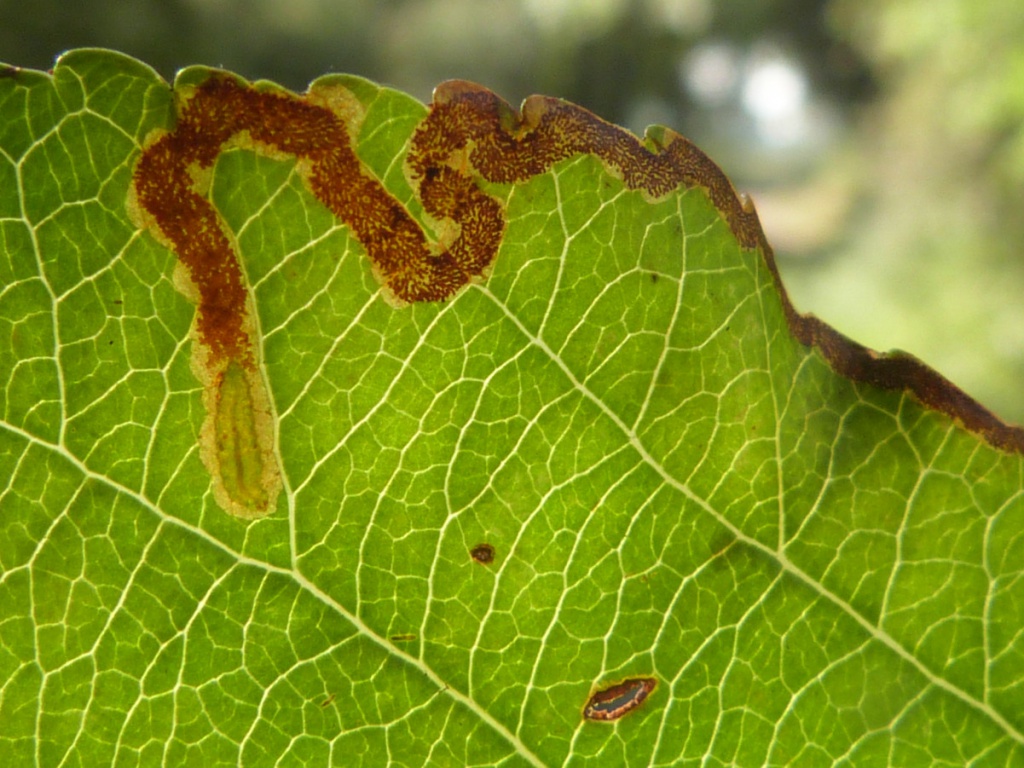
Stigmella oxyacanthella
The larva of the moth Stigmella oxyacanthella mies the leaves of Hawthorn, and also on Apple, Rowan and Pear. The mine has coiled frass and the larva is bright green with a pale brown head (re. Smart, 2018)
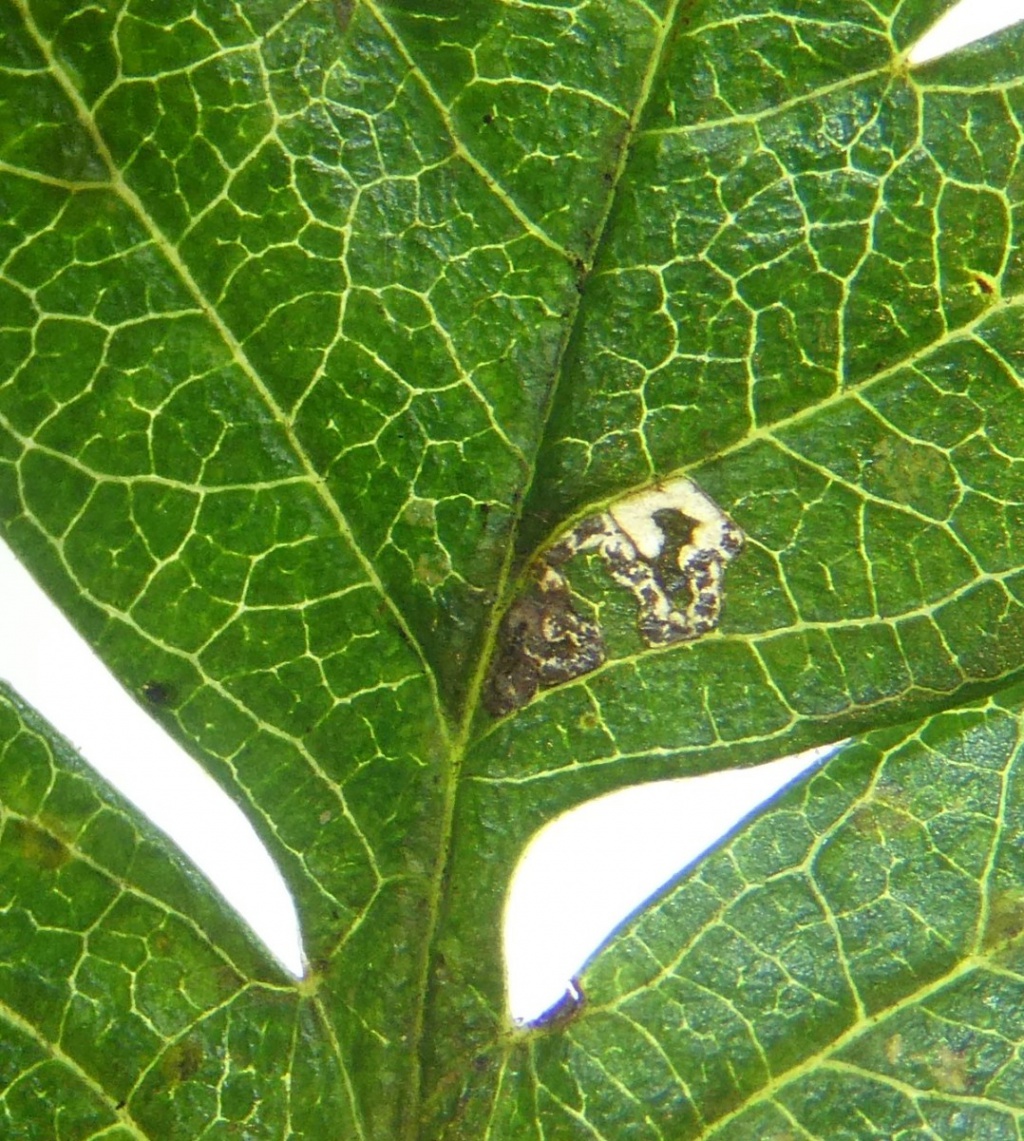
Bucculatrix bechsteinella
Bucculatrix bechsteinella is a small moth with a wingspan of 7 to 9 mm. It is pale buff with brown markings. The leafmine produced by the larva is usually on Hawthorn, and is small and in a vein axil, with blackish frass. The exit gallery is clear, and angular in shape.
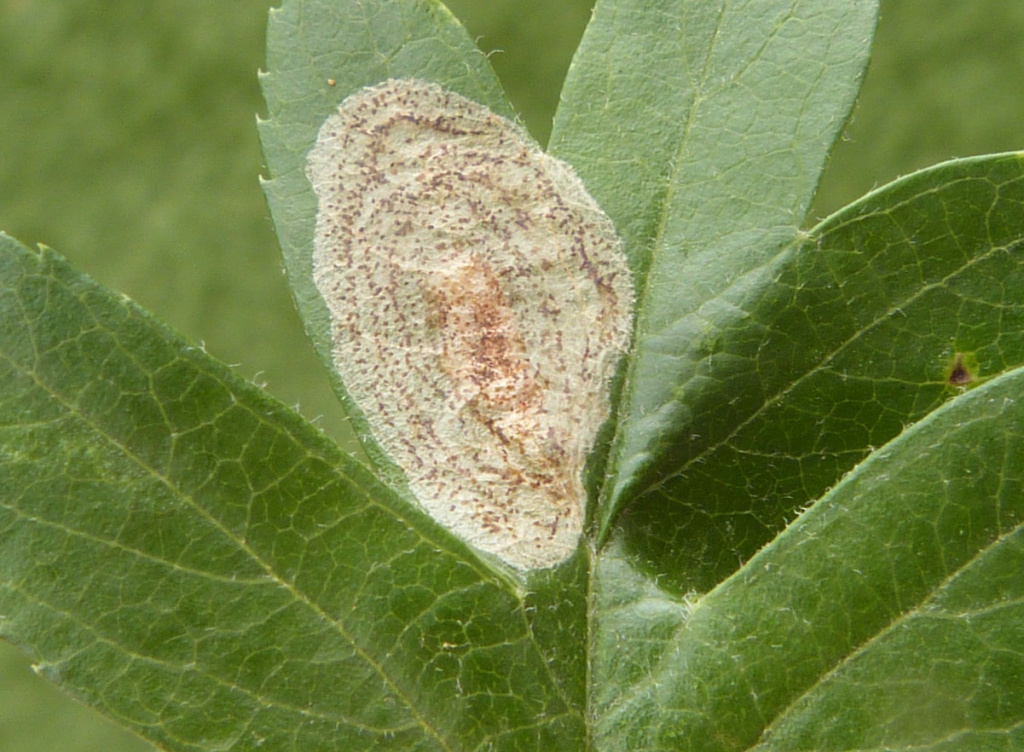
Phyllonorycter corylifoliella
The orangey coloured adult is weakly marked in comparison to some of its congeners. The larva mines the leaves of Hawthorn (and also on Apple, Cherry and others), creating an upper-surface mine, usually over the midrib or vein; the mine is rounded in shape and flecked with blackish-brown frass when mature.
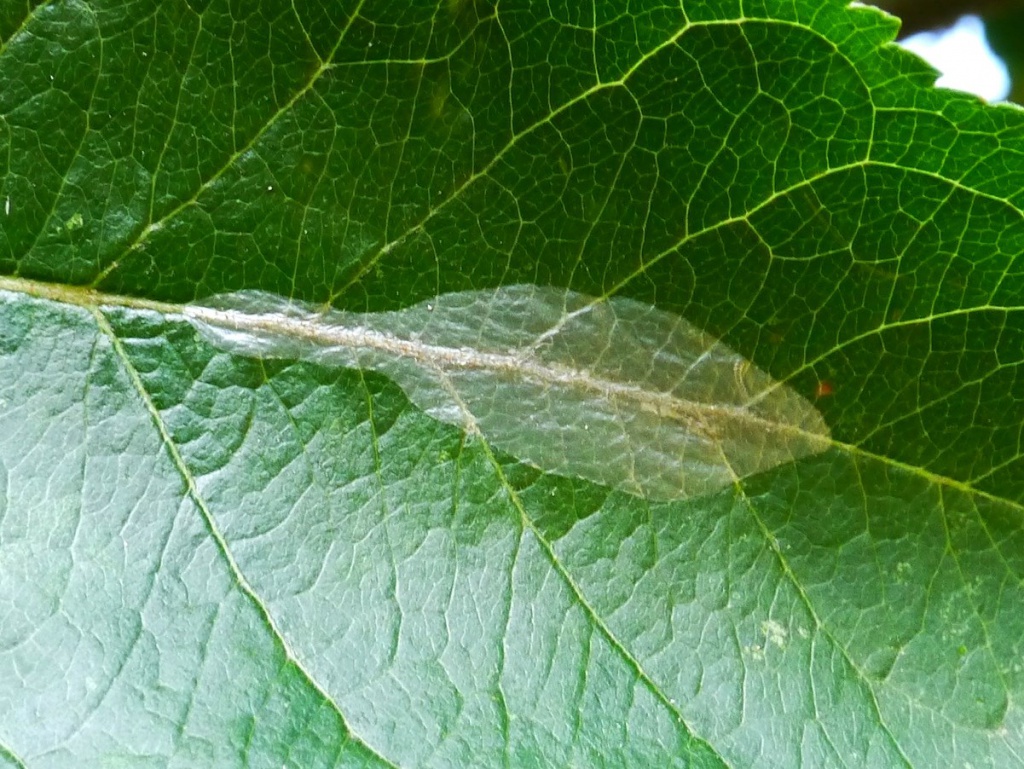
Firethorn Leaf Miner
The larva of the Firethorn Leaf Miner moth (Phyllonorycter leucographella) mine the leaves of a number of species including Firethorn (Pyracantha coccinea), Apple, London Plane and Hawthorn. The mine is usually on the upper side, silvery in appearance and over the midrib.
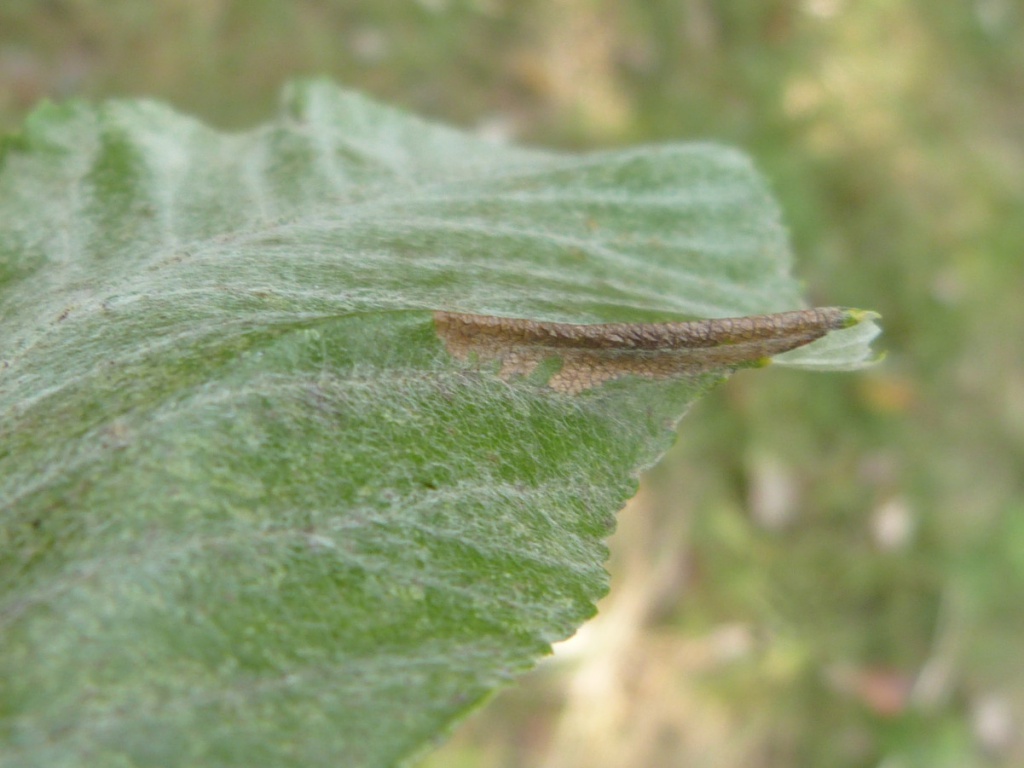
Parornix scoticella
The larva of the moth Parornix scoticella feeds on Rowan and Whitebeam and occasionally on Apple. A blotch is formed in the leaf which turns brown, and the larva pupates in a folded portion of the leaf.
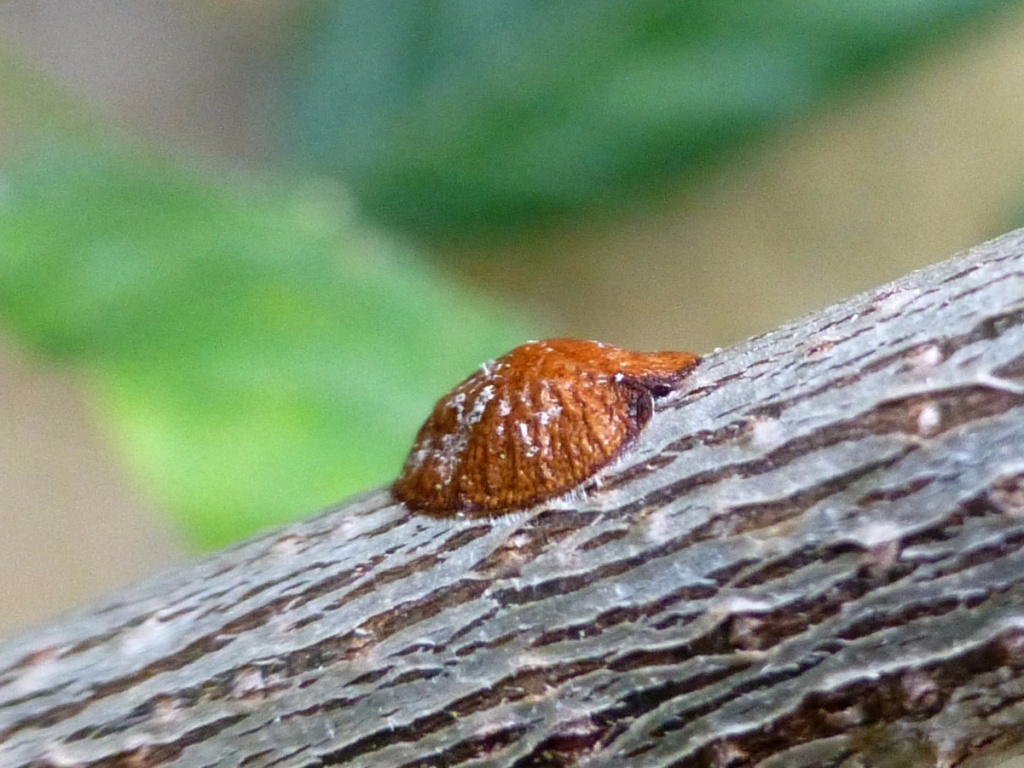
European Fruit Lecanium
European Fruit Lecanium (Parthenolecanium corni) can be found on the branches of various woody plants. It is broadly polyphagous and is an important pest of orchard trees such as Apple as well as ornamental and forestry trees.
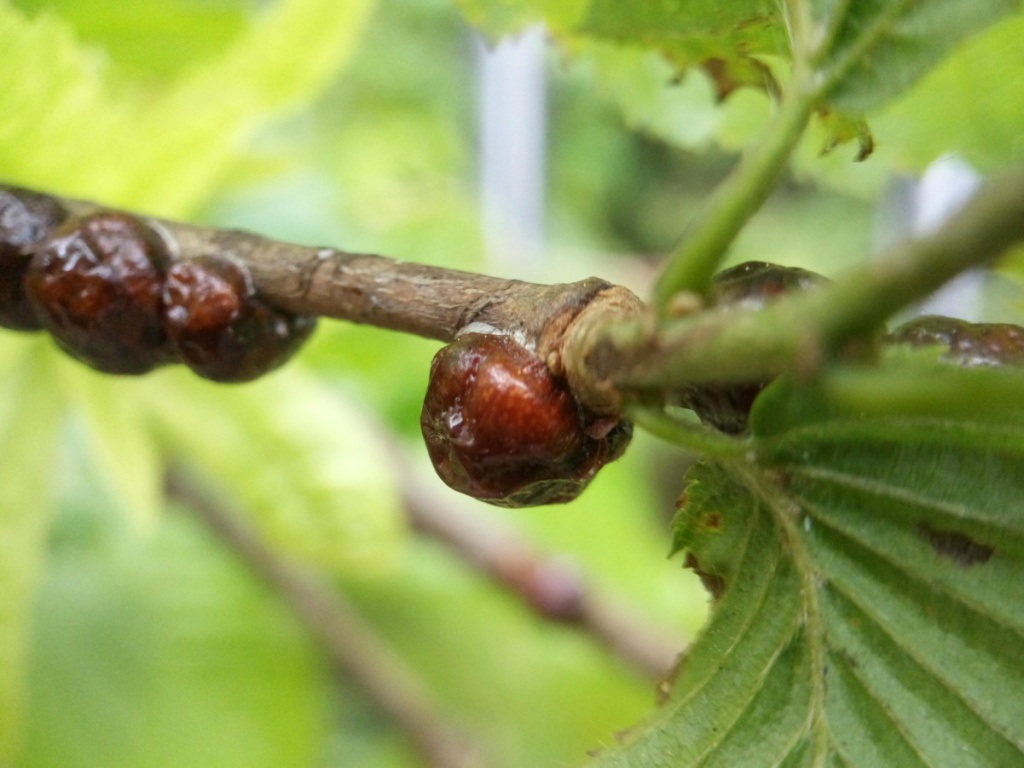
Nut Scale
Nut Scale (Eulecanium tiliae) affects various woody plants including trees and shrubs such as Hawthorn, Oak, Ash, Hornbeam, Field Maple and fruit trees such as Apple and Pear.
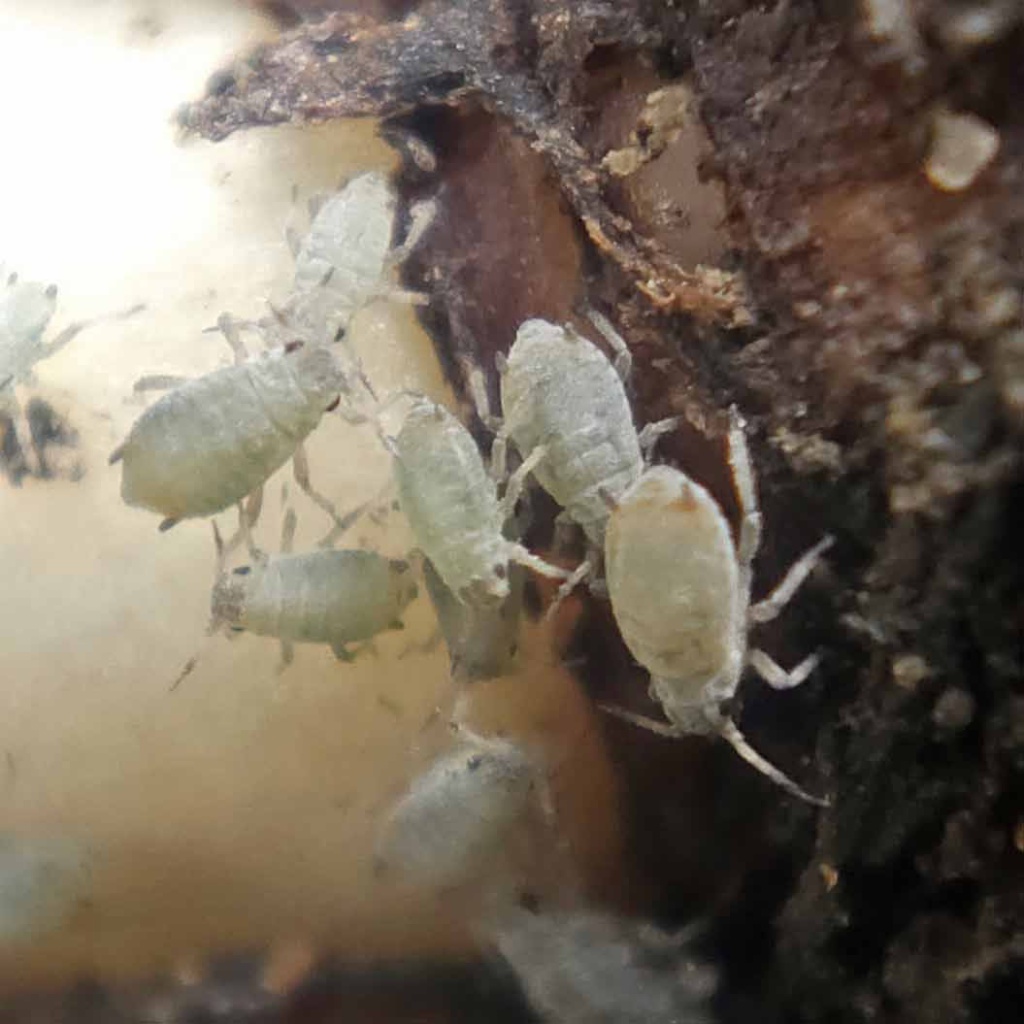
Dysaphis radicola
The aphid Dysaphis radicola alternates host between apples and the roots of docks. The apterae are greyish-brown or greyish-green.
Mistletoe
Mistletoe is a yellowish green shrub, regularly branched, hairless forming rounded clumps up to one metre across on tree branches. Leaves oblong, leathery, opposite and untoothed. Flowers inconspicuous, unisexual with male and female on separate plants, 4 parted in small stalkless clusters. Fruit a white berry during winter. It is parasitic on deciduous trees, especially Apple, Lime, Hawthorn and Poplar.
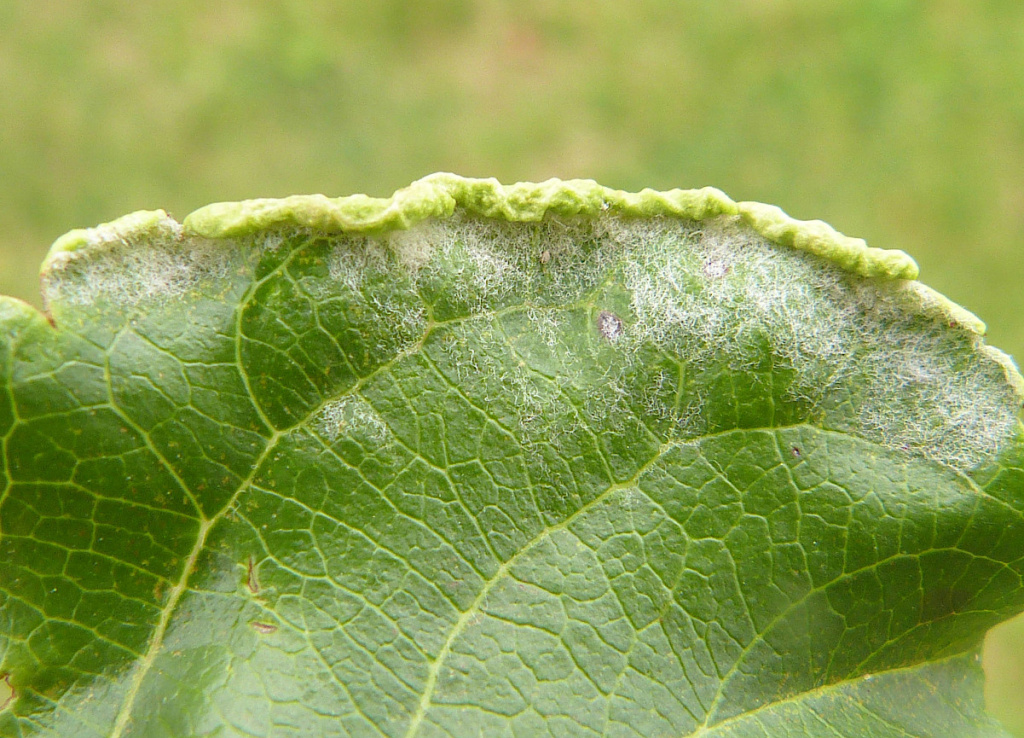
Epitrimerus malimarginemtorquens
The mite Epitrimerus malimarginemtorquens causes a leaf roll gall on the leaves of Apple. The leaf roll is narrow and hard, approx. 1 mm broad with white hairs alongside the roll on the upper surface (BPGS handbook).
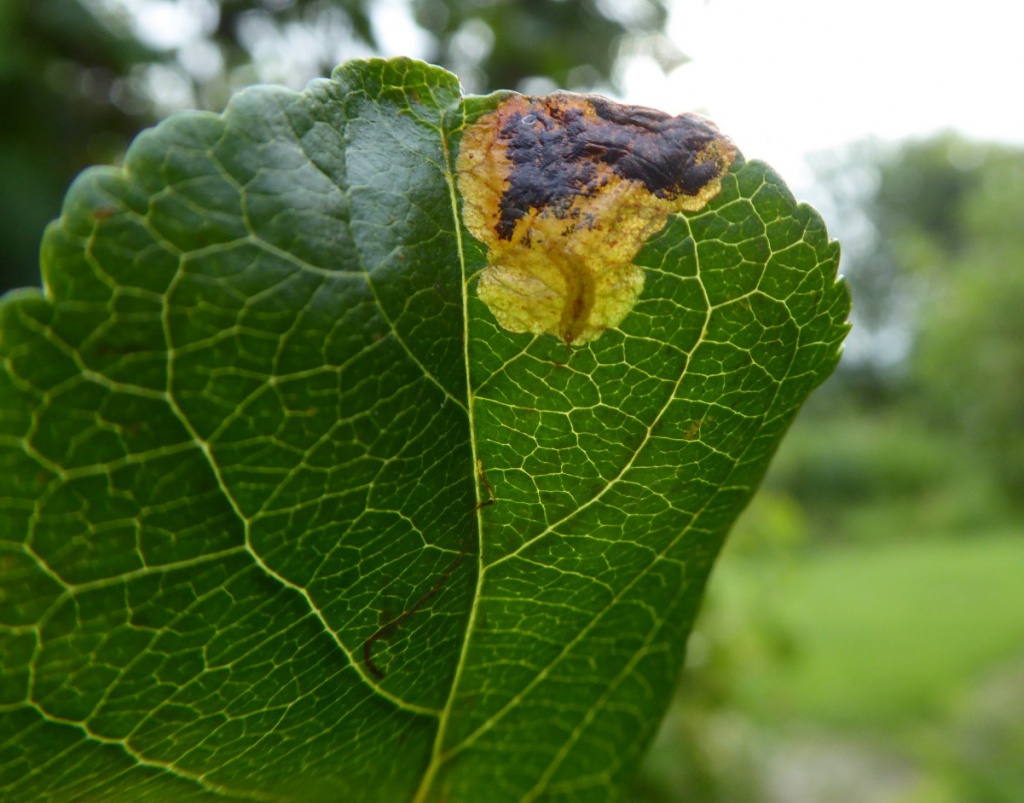
Bohemannia pulverosella
The larvae create a distinctive blotch mine in the leaves of Apple. The larva cuts an exit hole on the underside of the leaf, which distinguishes the mine from that of Ectoedemia atricollis.

Ectoedemia atricollis
The larvae of the moth Ectoedemia atricollis mine the leaves of Apple, Hawthorn and other Rosaceae species. It has a distinctive black head, usually visible in the mine without being dissected out. Initially, the larvae form galleries along the edge of the leaf, leading to a large blotch on the leaf margin.
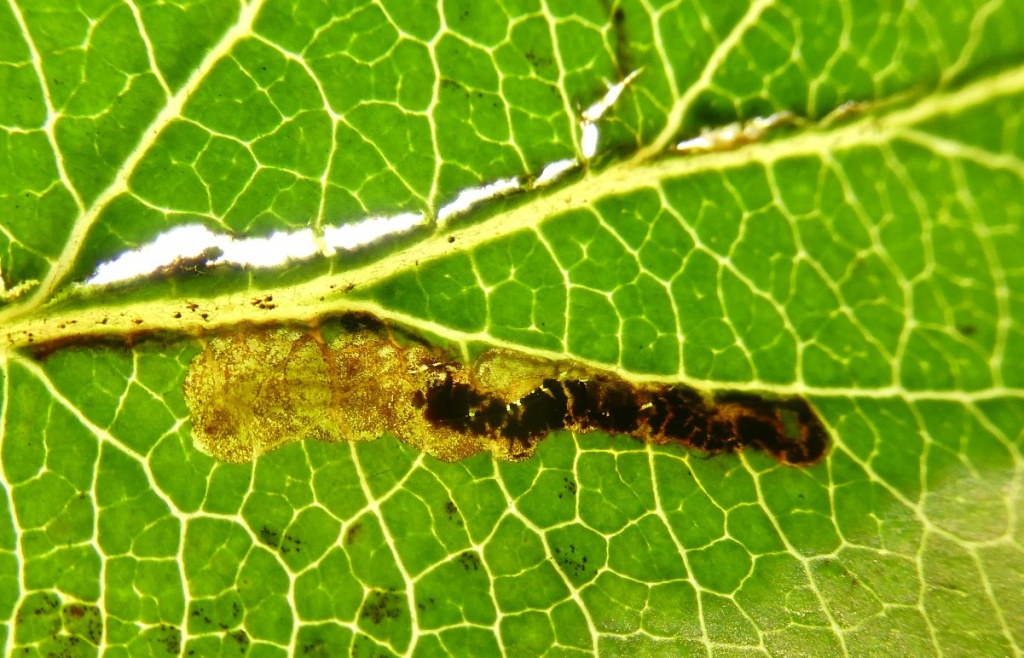
Stigmella incognitella
The larvae of Stigmella incognitella mine the leaves of Apple. The mines are found between veins. The initial gallery is narrow and then forms an orange-brown blotch.
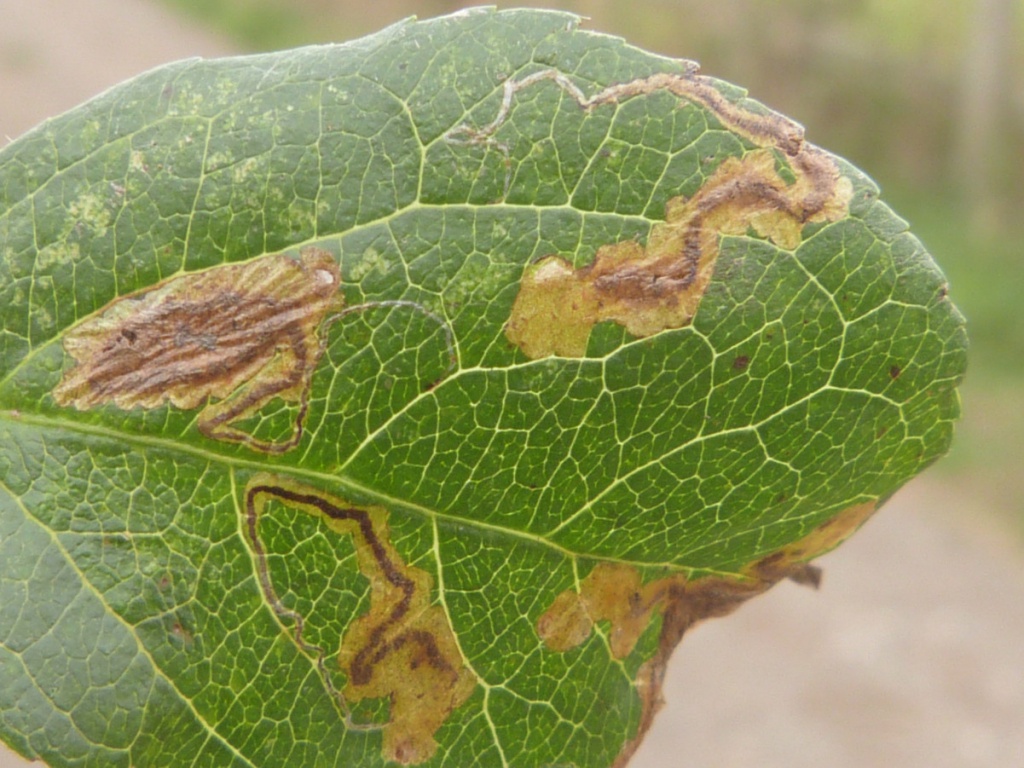
Apple Pigmy
The larvae of the tiny moth, Stigmella malella mine the leaves of Apple species producing a sinuous gallery, widening later, with linear frass. The may be several mines on a single leaf.
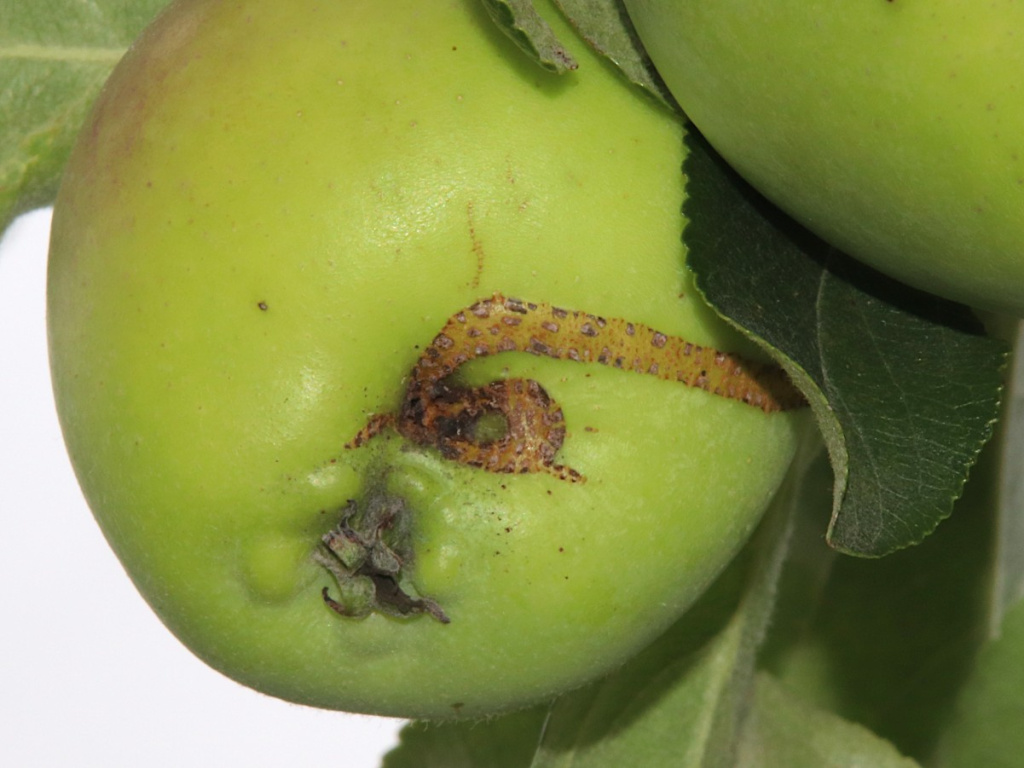
Hoplocampa testudinea
The eggs of the sawfly Hoplocampa testudinea are laid on apple blossom and the larva feed on the developing fruit causing surface scarring.
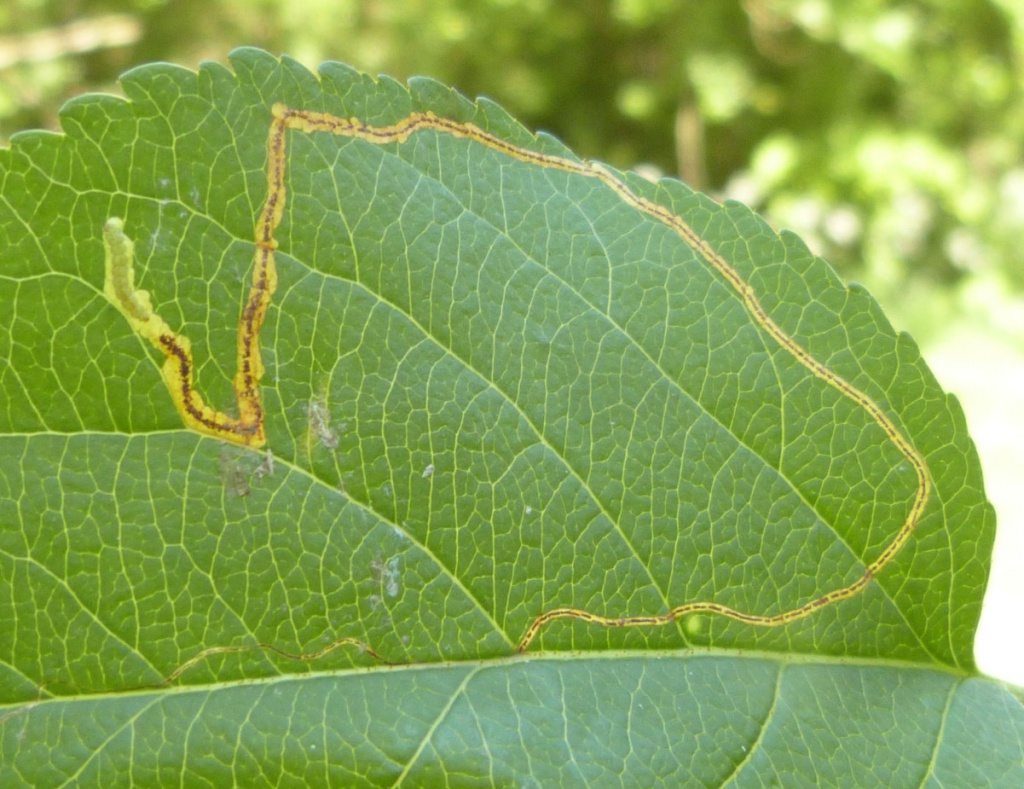
Apple Leaf Miner
Lyonetia clerkellais a tiny moth (wingspan 7 to 9 mm) with a silvery appearance but very attractively patterned when seen under magnification.
The larva produces a leafmine on a number of species, especially Cherry, Apple, Rowan, Hawthorn, Blackthorn and other trees and shrubs in the Rosaceae family. It is also commonly found on Birch. The mine is long smoothly curved gallery with frass in a central line; older mines look whitish. The larva is long and slender. It has a segmented body and 6 dark feet.
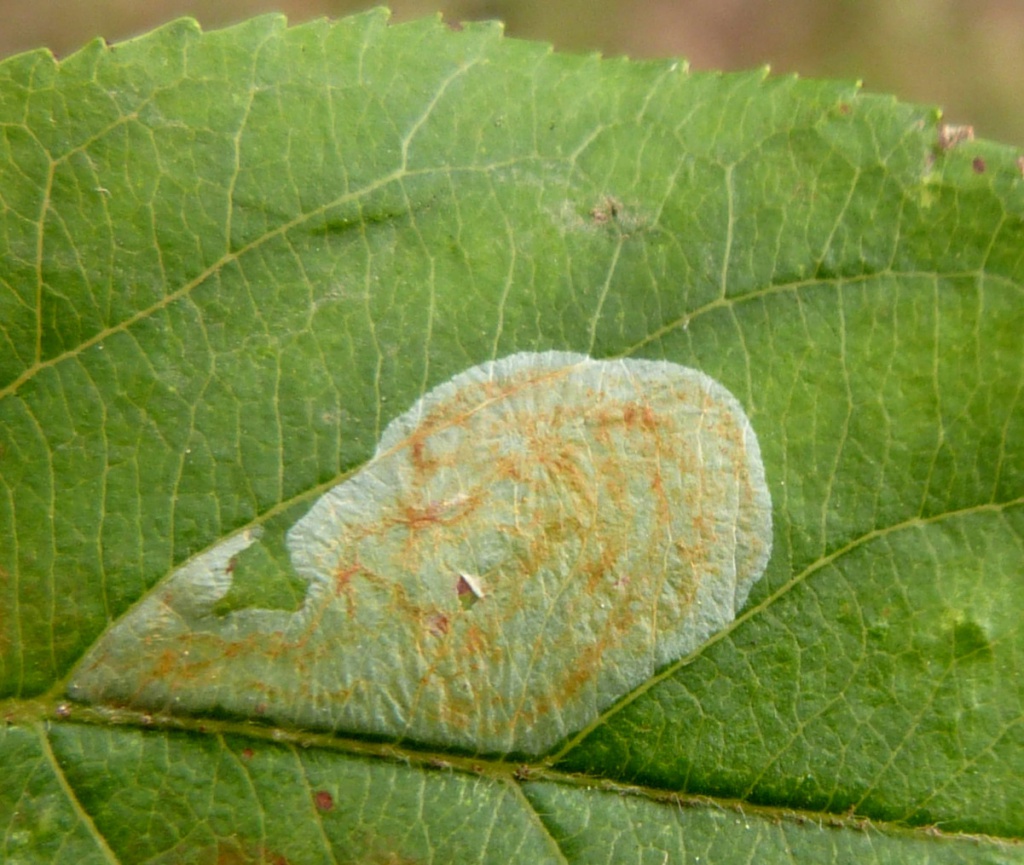
Callisto denticulella
The larvae of the moth Callisto denticulella mine the leaves of its foodplant, Apple (Malus), causing a gallery followed by a semi-translucent blotch on the upper surface of the leaf which is often orange tinted. It then vacates this and folds the edge of a leaf down to feed within, usually twice, before pupating externally among detritus.
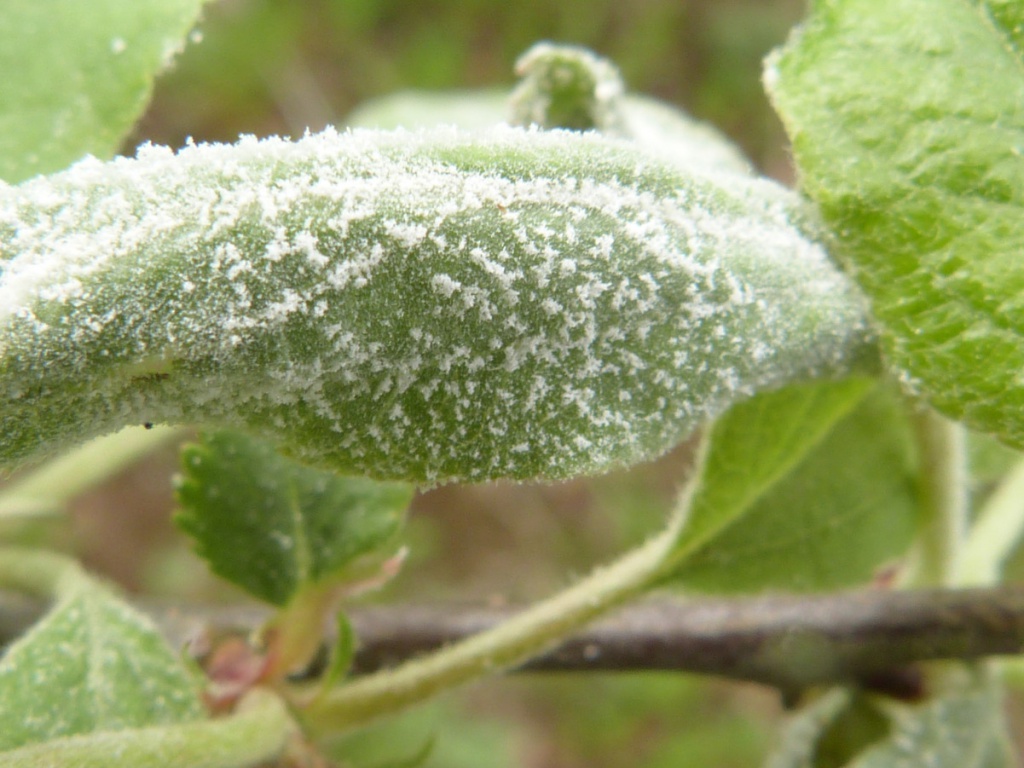
Podosphaera leucotricha
Podosphaera leucotricha is a mildew which affects the leaves and stems of woody Rosaceae species such as Apple (Malus sp.), producing a powdery, white coating. Infected leaves often become disfigured.
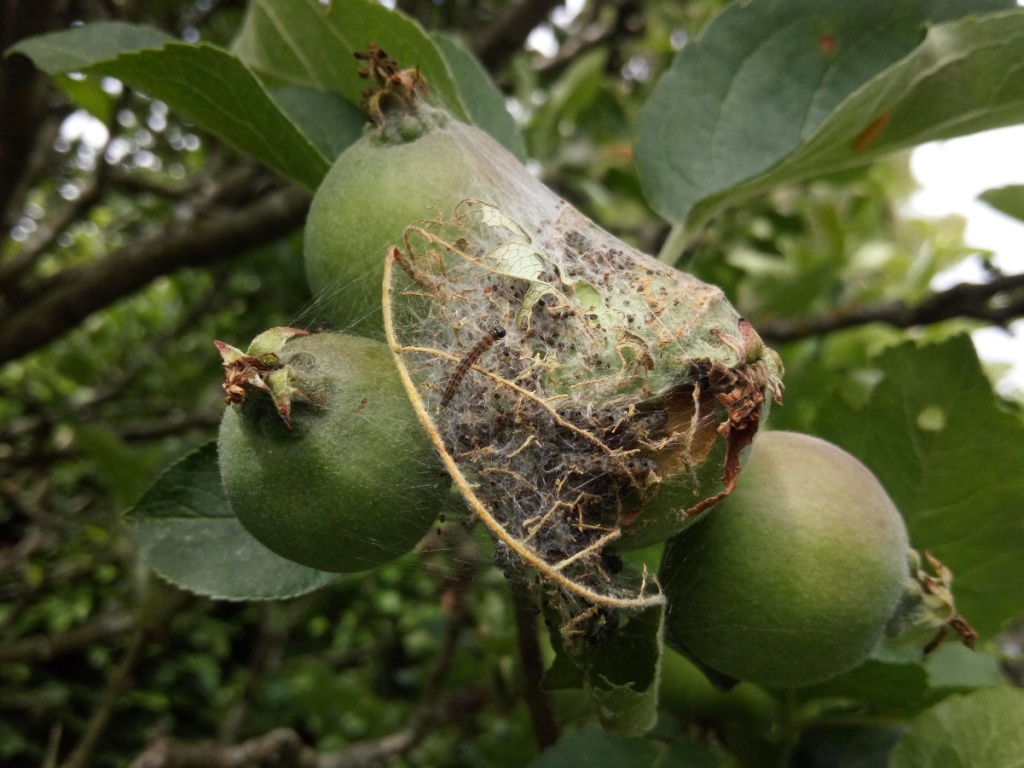
Apple Ermine
The Apple Ermine (Yponomeuta malinellus) is a moth species. The larva of this species live in a larval web on Apple.
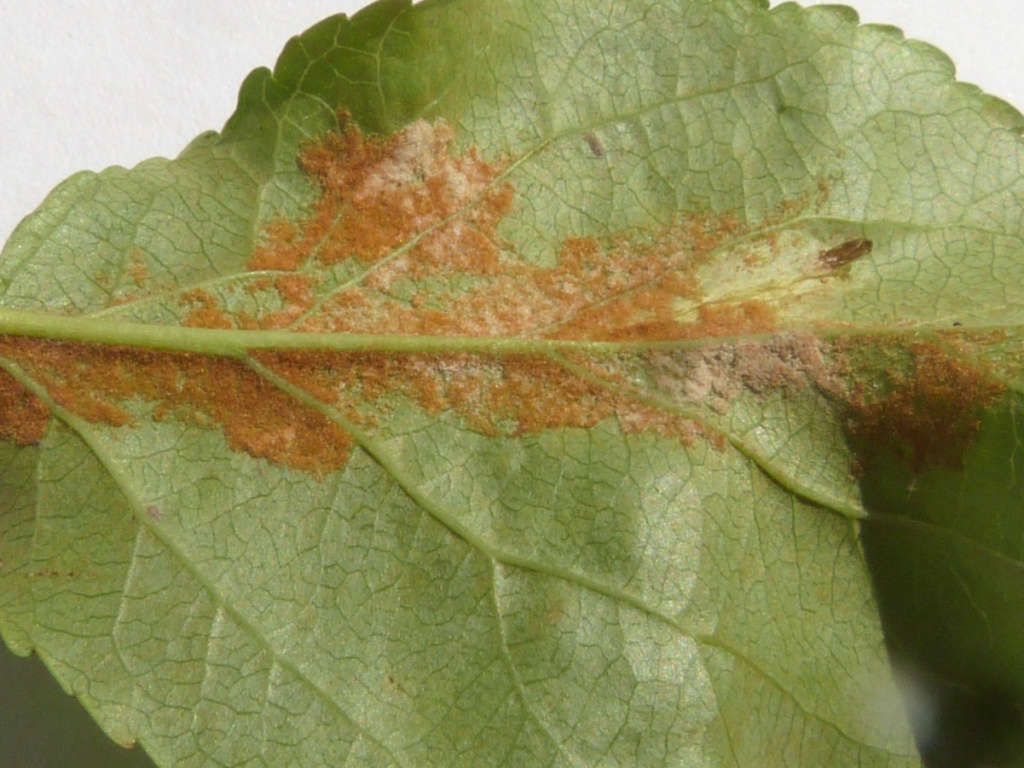
Phyllocoptes malinus
The mite Phyllocoptes malinus causes galls to form on the leaves of Apple species (Malus) including Crab Apple Malus sylvestris. The mites cause an erineum (an abnormal felty growth of hairs) to from the leaf epidermis on either the upper or underside. This may be whitish pink, or red at first but later becomes rust brown.
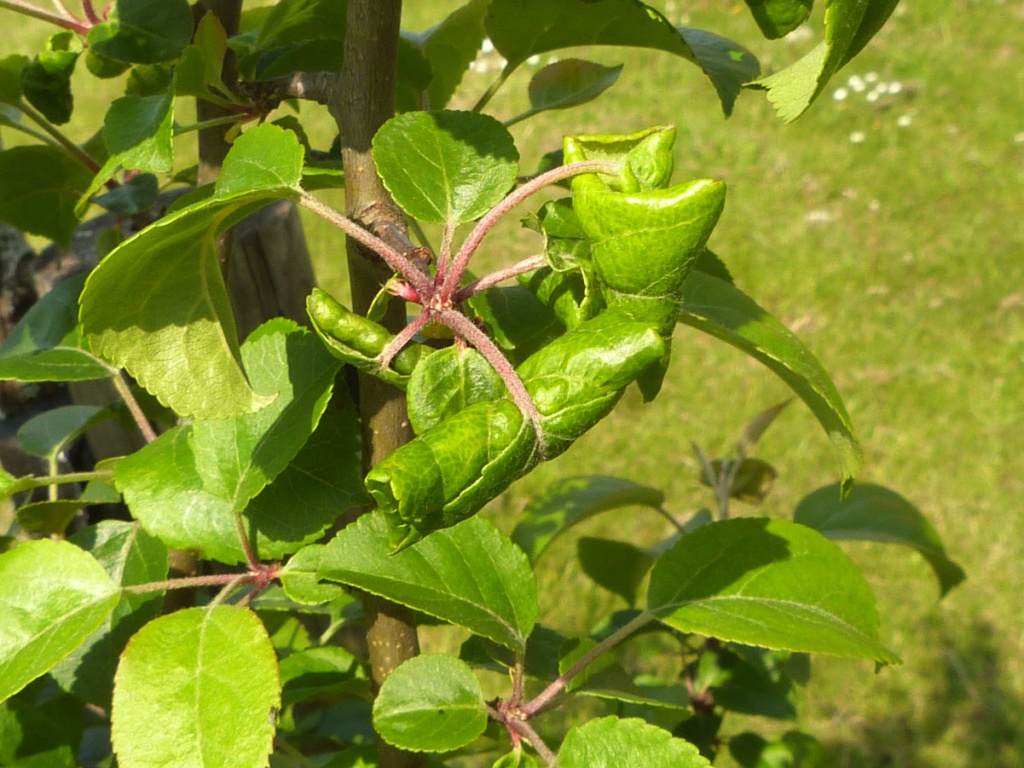
Rosy Apple Aphid
The aphid Dysaphis plantaginea induces yellowish crumpled leaf galls on apple in spring. The aphids within can be green or red.

Rosy Leaf-curling Aphid agg.
The Dysaphis devecta species group includes three species of aphid: D. devecta, D. anthrisci and D. chaerophylli. All members of the D. devecta group roll the edges of apple leaves and turn them red to produce a characteristic gall.
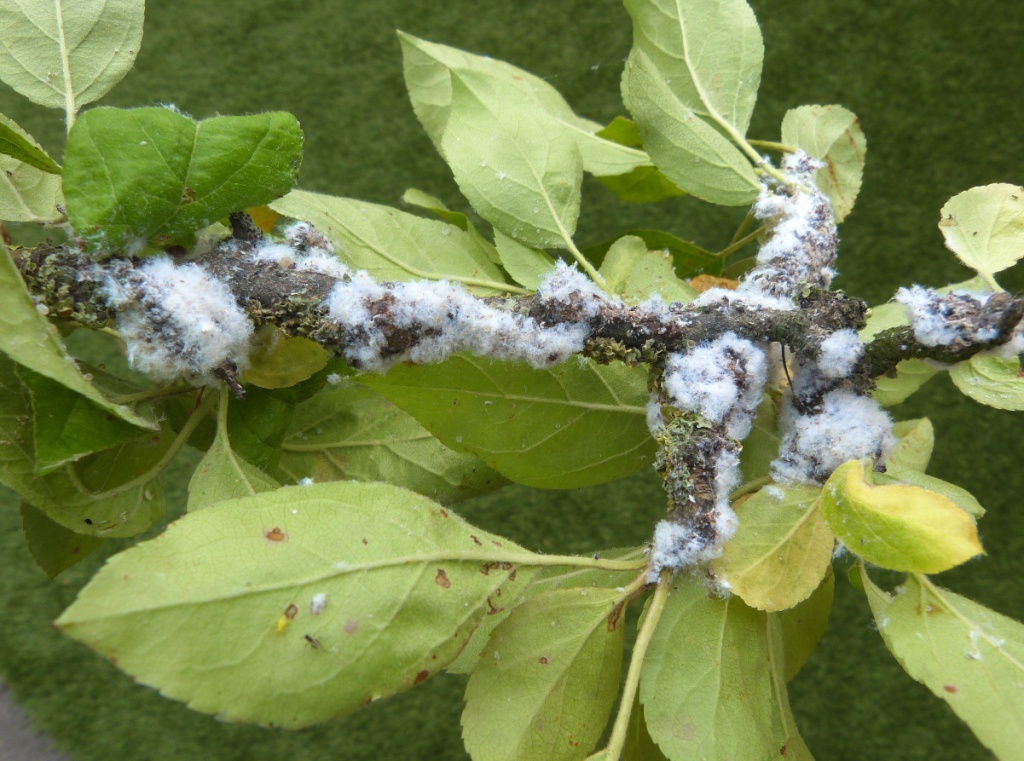
Woolly Apple Aphid
Eriosoma lanigerum wingless females (apterae) are purple, red or brown and are the most often recorded form of this aphid. They are usually found on their secondary host – Apple - causing lumpy irregular galls on branches, which become woody and persist after the aphids have left. The aphid is a considered to be a pest of orchards and can cause damage to the tree.
The aphids are covered in thick white flocculent (woolly) wax. This is produced by distinct wax glands on the head and along the thorax and abdomen. The body length of Eriosoma lanigerum apterae is 1.2 to 2.6 mm.