


This verge is being managed to benefit wildlife. Surveys in each of the last three years have shown that the plant diversity and structure of the grassland habitat are steadily improving. Here are some images of the wildflowers and other species found here, together with some notes to help you identify them. To see a full list and get up to date with the verge project, visit NatureSpot's Wild Place feature page for this verge. Click on any header to visit the NatureSpot page for that species to find out more.

Creeping Cinquefoil
The name tells you a lot about this plant (if you speak French!). Cinquefoil means 5 leaved and it is certainly a creeper, sending out long runners. It is a very short plant so does best near paths and at the edges of verges.
How to ID: Yellow flowers and 5 leaflets spread in a circle.
Where to see it: Path edges, bare or disturbed ground.
Similar species: None.

Yellow-rattle
This attractive plant is a parasite! Its roots attach to those of nearby grasses to feed off their nutrients, reducing their vigour thereby making more room for other flowers. Because of this it is often seeded into new meadows. By July, the seeds are held in paper-thin capsules where they rattle in the breeze. It is annual and requires exposure to winter frosts for the seeds to germinate.
How to ID: It grows to 40cm, has yellow flowers protruding from a capsule. Leaves are serrated in opposite pairs.
Where to see it: Meadows, verges.
Similar species: None.

Autumn Hawkbit
Despite its name, it often starts blooming in June. It doesn't grow tall so favours short grass such as the edge of verges.
ID: Leaves with finger-like lobes. Yellow, dandelion-like flowers, usually with red streaks under the petals. Flower capsule tapers into the stem.

Black Bryony
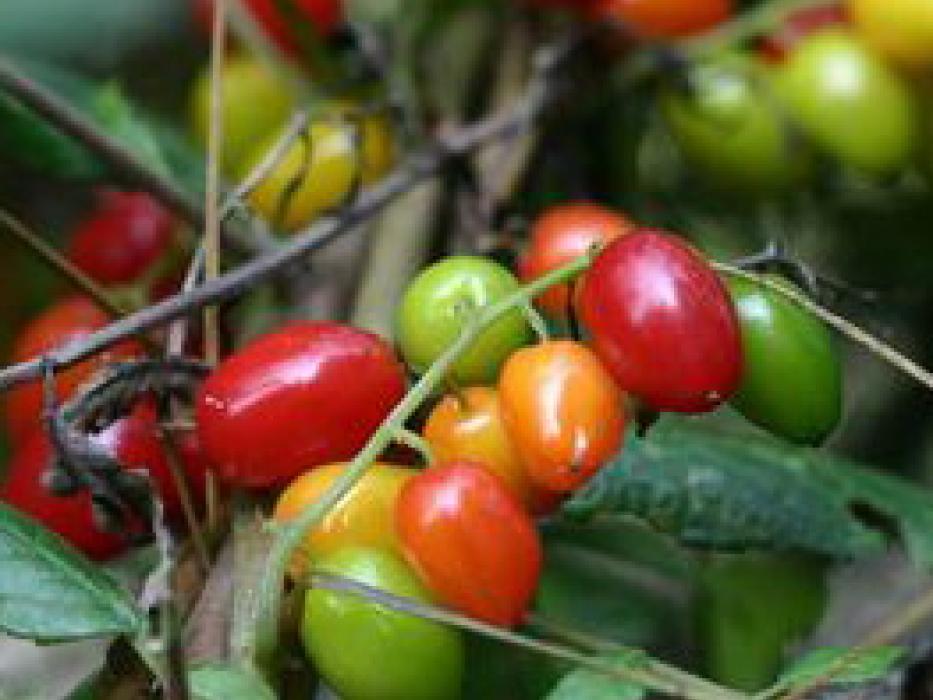
A common climber in hedges. If you get the timing right you can see green, amber and red berries all on the same plant. Beware these berries are poisonous, though not to the birds that eat them!
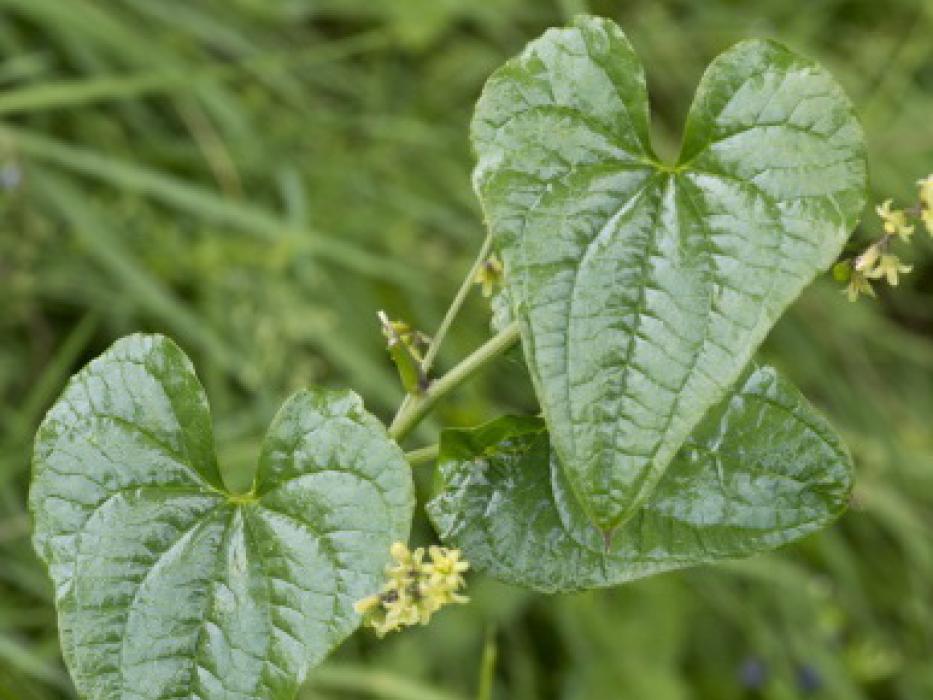
ID: Large, dark green and heart-shaped leaves. Flowers are tiny - greenish yellow. Produces large berries in the Autumn, turning from green to amber to red.

Small-leaved Lime
This large tree (growing to 30m) is rare in the wild, found in mainly old woodland. However it is often planted so can be found in built up areas too.
How to ID: Rounded leaves with heart-shaped base. Buff-orange hairs on leaf underside. Flowers (and fruits) on angled stalks (not perpendicular).
Where to see it: Woodlands but also widely planted.
Similar species: Common Lime has pale hairs under the leaves and the flowers hang straight down.

Common Green Shieldbug
This is one of the most common shieldbugs - so named because of their medieval shield shape. Adults overwinter and change colour to a bronzy brown to camouflage them in dead vegetation. Nymphs feed on the leaves of several trees but favour Hazel.
How to ID: Large - to 13mm. Bright green with red antennae. 'Shield' shaped.
Where to see it: On or under leaves in trees and shrubs.
Similar species: None (in their summer green colour).

Meadow Plant Bug
Though common, males and females look very different (sexually dimorphic) so it is easy to think you have seen two different species! They feed on a variety of grasses.
How to ID: 8mm. Long and slim with antennae as long as the body. Males are fully winged, females have short wings. Green-yellow with black markings, in males this turns more orange-red later in the year.
Where to see it: On grasses in meadows and verges.
Similar species: Leptopterna ferrugata is less common and tends to be pinkish-brown.

Broad Centurion
Soldier flies like this one get their names from their bright colours, resembling military uniforms from long ago. Many have military names to match.
How to ID: 9mm. Females have a metallic blue abdomen and a bronze thorax, in males the abdomen is bronze with a shiny green thorax. Hairy eyes.
Where to see it: May-August. Feeding on various flowers.
Similar species: A few other soldier flies have similar colours. Sargus species are longer and thinner and lack the hairy eyes.

Nursery Web Spider
This spider doesn't build a web but chases down prey. The female builds a silken tent amongst grasses in which she lays her eggs and then looks after the young until they are mature enough to leave.
How to ID: Large spider (to 15mm). Orange-brown to grey. Slender with a pale mid-line. 'Tear' marks at the sides of its head.
Where to see it: Sunbathing amongst low vegetation.
Similar species: None.

Yellow Meadow Ant
This attractive ant is a meadow specialist. Its nests look like over-sized mole mills but keep growing year after year, often covered in grasses. They are usually found in undisturbed grassland so their presence is often an indicator of quality habitat.
How to ID: Yellow-brown. Usually several nest mounds together.
Where to see it: Meadows, verges, permanent pasture fields.
Similar species: A few other ants are also yellow but these are rarely encountered in our area.
