

Small-leaved Lime - Tilia cordata
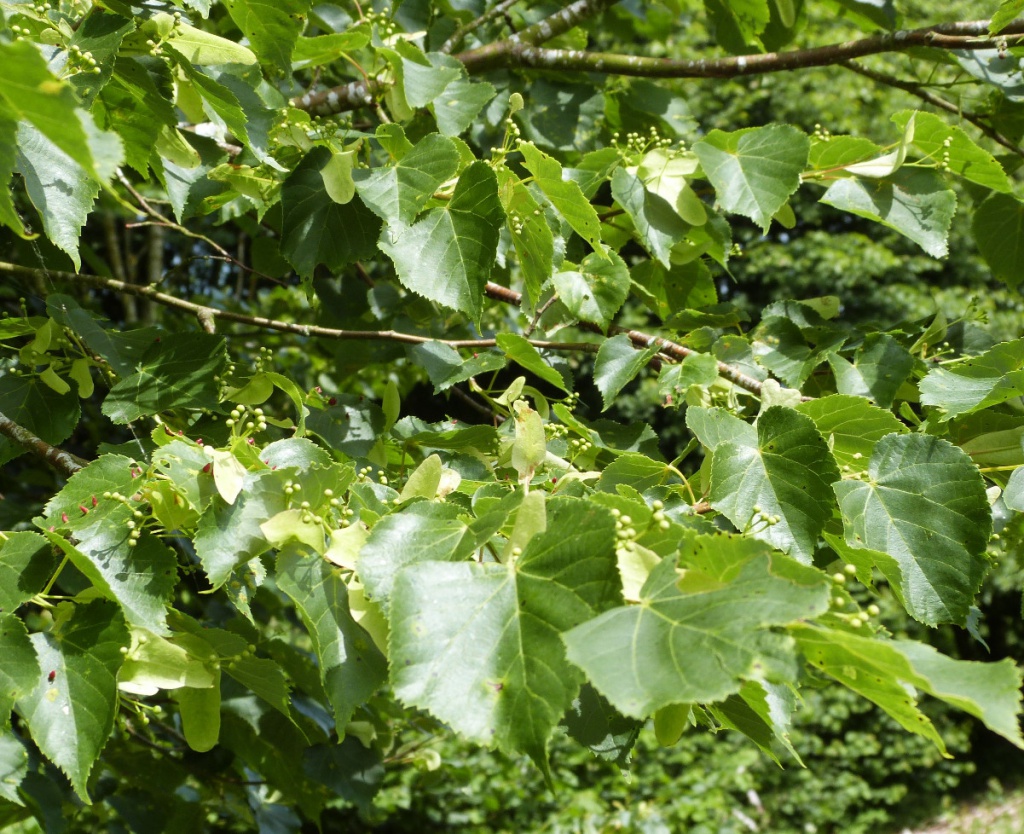
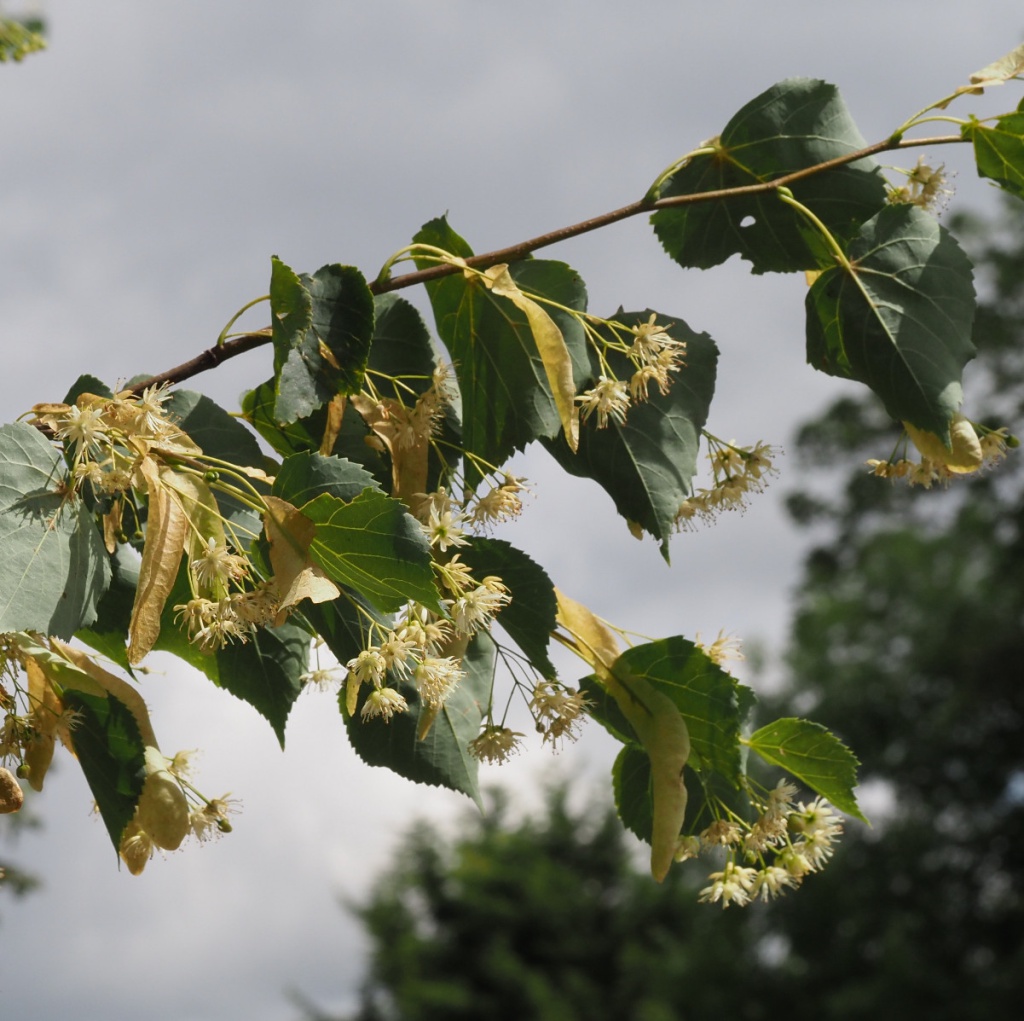
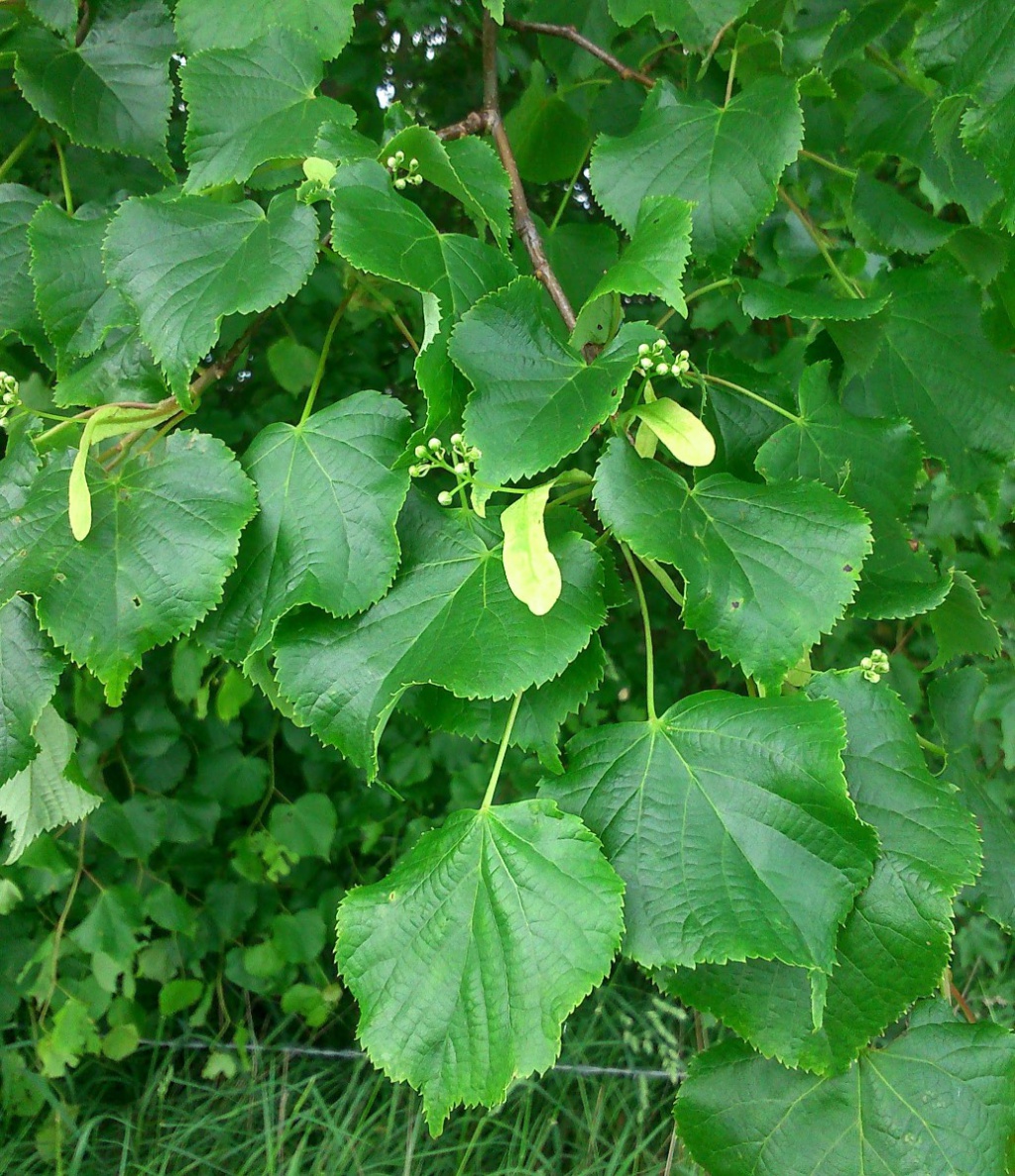
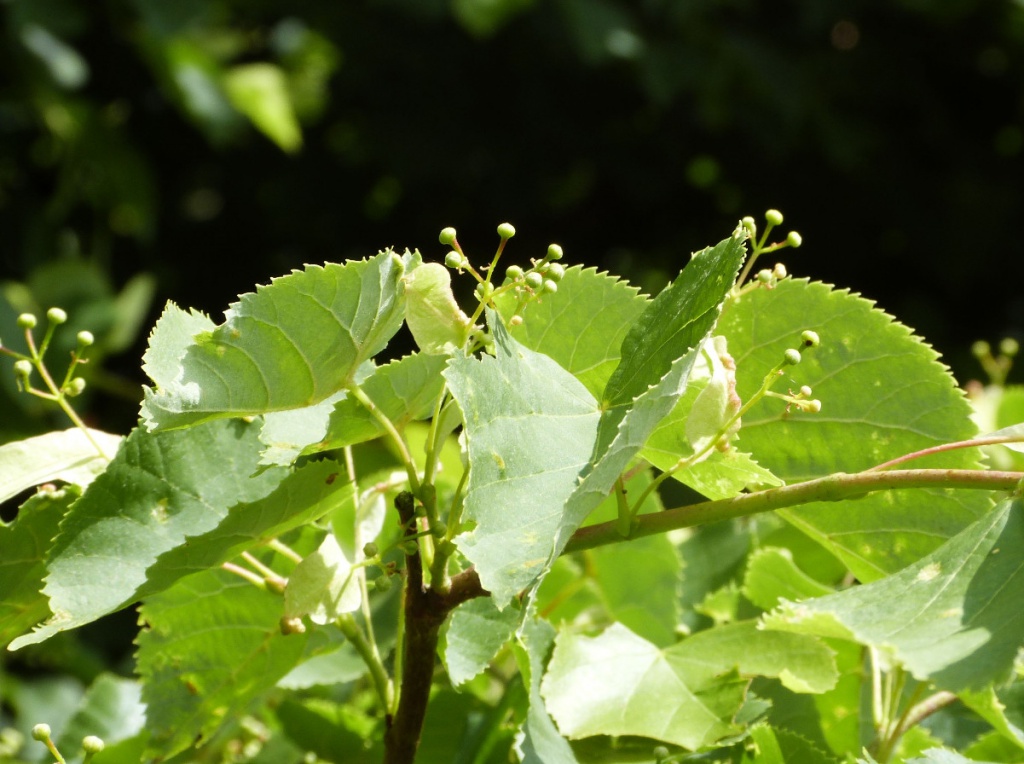
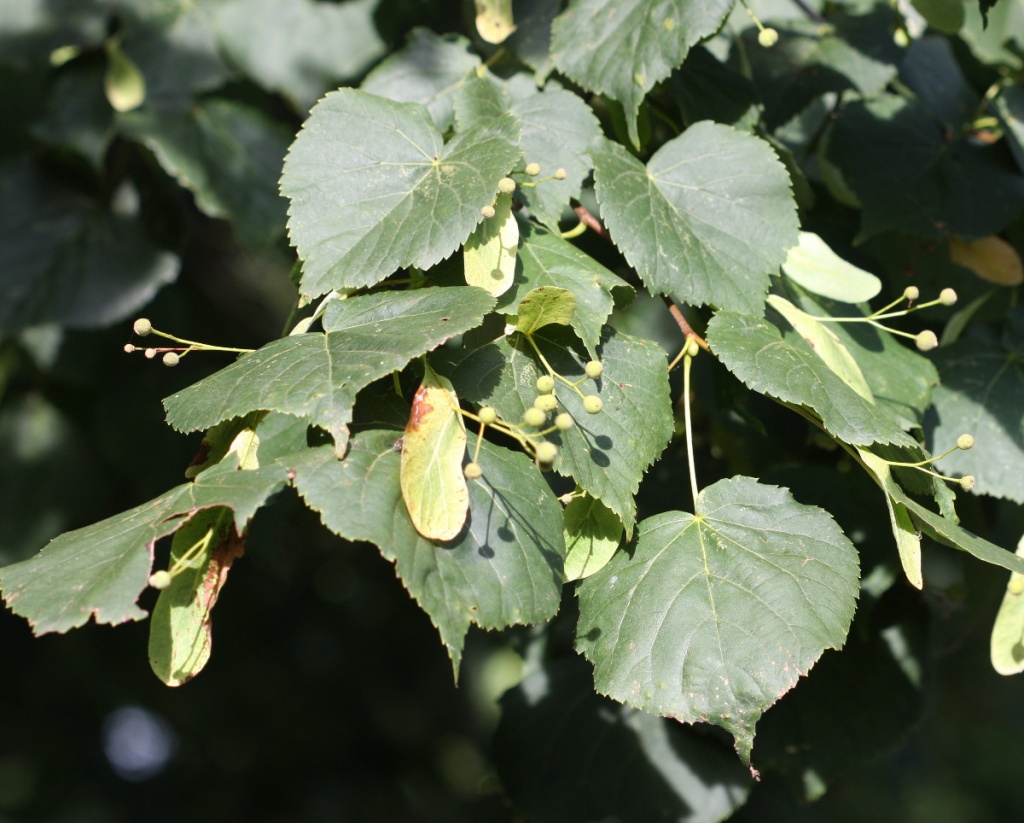
Large tree to 30 metres. Leaves almost rounded with a heart shaped base, sharply toothed, mostly 3 to 7 cm long. Leaves with buff-orange hair tufts in the underside vein axils, but orangey hairs may sometimes be found in the hybrid lime, so its isn't a reliable form of ID. . Flowers 7 to 8 mm, yellowish-white and fragrant, in erect or oblique cymes, held above horizontal.
other limes, especially the hybrid Common Lime

Only record this species for trees with consistently small crown-leaves (3-7cm) and with erect or obliquely erect cymes.
Photos of the flower cymes showing manner of growth
Woodland, but also widely planted, often as the form 'Greenspire'.
June and July.
Deciduous.
Records are widespread over much of England and into Wales.
Occasional/locally frequent as a native species in old woodlands in Charnwood Forest and Rutland, and frequently planted, increasingly as the cultivar 'Greenspire' as an aphid-free street and park tree.
The VC55 checklist (Jeeves 2011) states that it is scarce, but can be locally frequent, as in Buddon Wood, Owston Woods and Swithland Wood.
It was on the 2011 VC55 Rare Plant Register (Jeeves, 2011) but is not on the current RPR (Hall & Woodward, 2022); it is listed as 'data deficient' because it is not clear whether records are of introduced/escaped plants or natives.
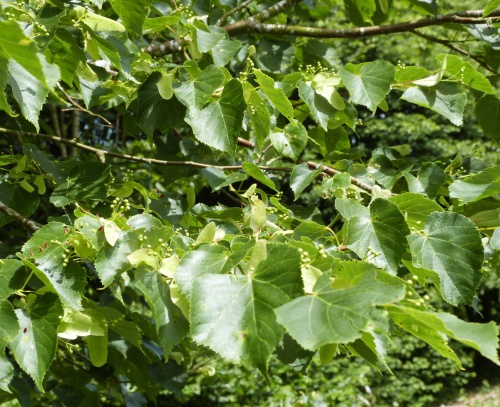 Graham Calow
Fosse Meadows, Sharnford
10 June 2018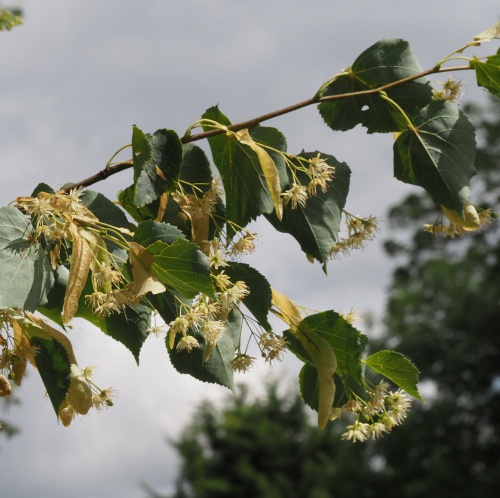 David Nicholls
Quorn, Loughborough Rd Verge
01 July 2023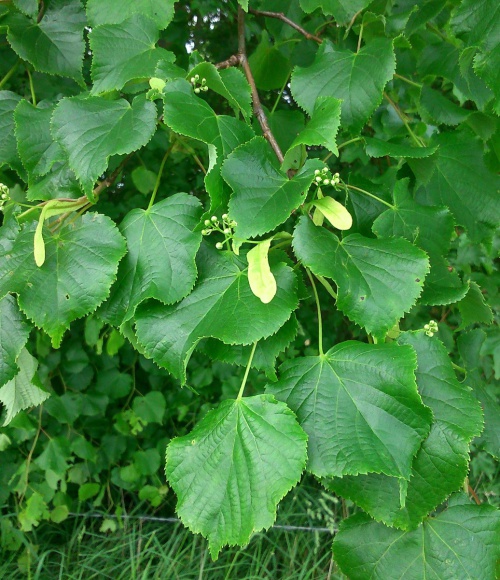 steven lewis
welby
30 May 2017
erect flowers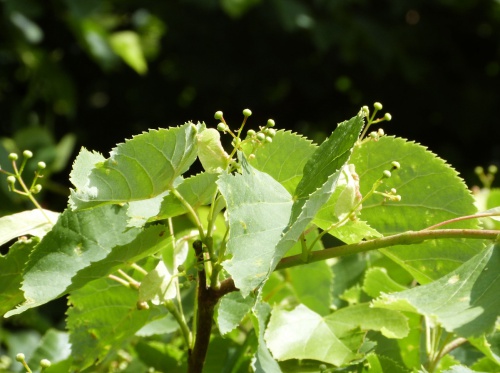 Graham Calow
Fosse Meadows, Sharnford
10 June 2018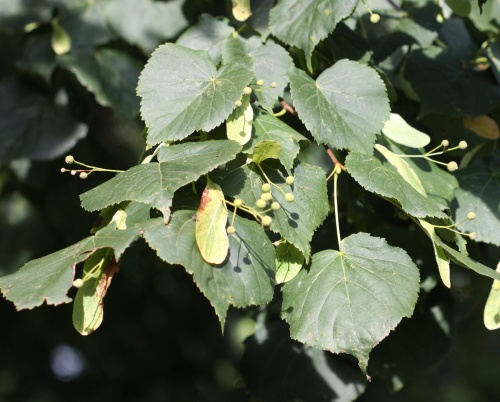 David Nicholls
Watermead Country Park
06 September 2012
Leicestershire & Rutland Map
Enter a town or village to see local records
MAP KEY:
Yellow squares = NBN records (all known data)
Coloured circles = NatureSpot records: 2025+ | 2020-2024 | pre-2020
UK Map
Species profile
- Common names
- Small-leaved Lime
- Species group:
- flowering plant
- Kingdom:
- Plantae
- Order:
- Malvales
- Family:
- Malvaceae
- Records on NatureSpot:
- 34
- First record:
- 21/09/2005 (Brice Ebert;Emma Williams)
- Last record:
- 30/05/2026 (Bates, Adam)
Total records by month
% of records within its species group
10km squares with records
The latest images and records displayed below include those awaiting verification checks so we cannot guarantee that every identification is correct. Once accepted, the record displays a green tick.
In the Latest Records section, click on the header to sort A-Z, and again to sort Z-A. Use the header boxes to filter the list.
Latest images
Latest records
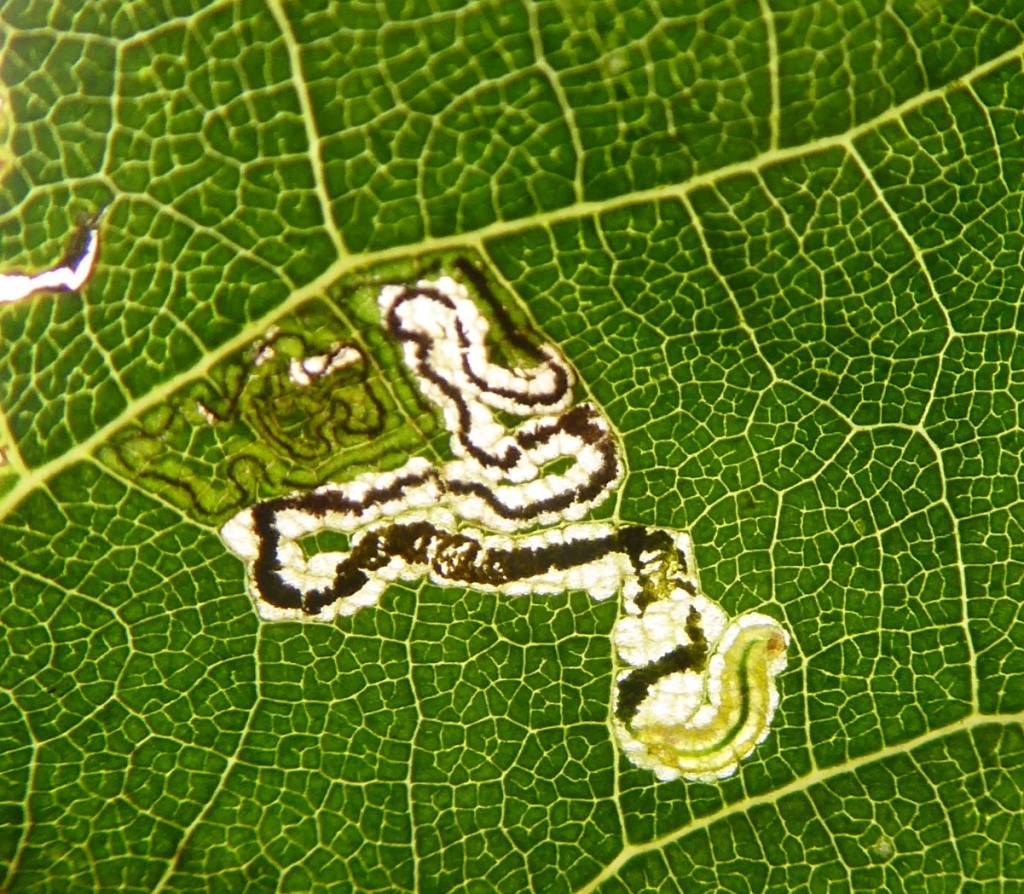
Stigmella tiliae
The adult Stigmella tiliae moth has a wingspan of 4.5 to 6 mm. It is similar to many other Stigmella, having plain dark bronzy brown fore-wings, a white collar and eye-caps. The larva mines the leaves of Lime producing a contorted gallery mine.
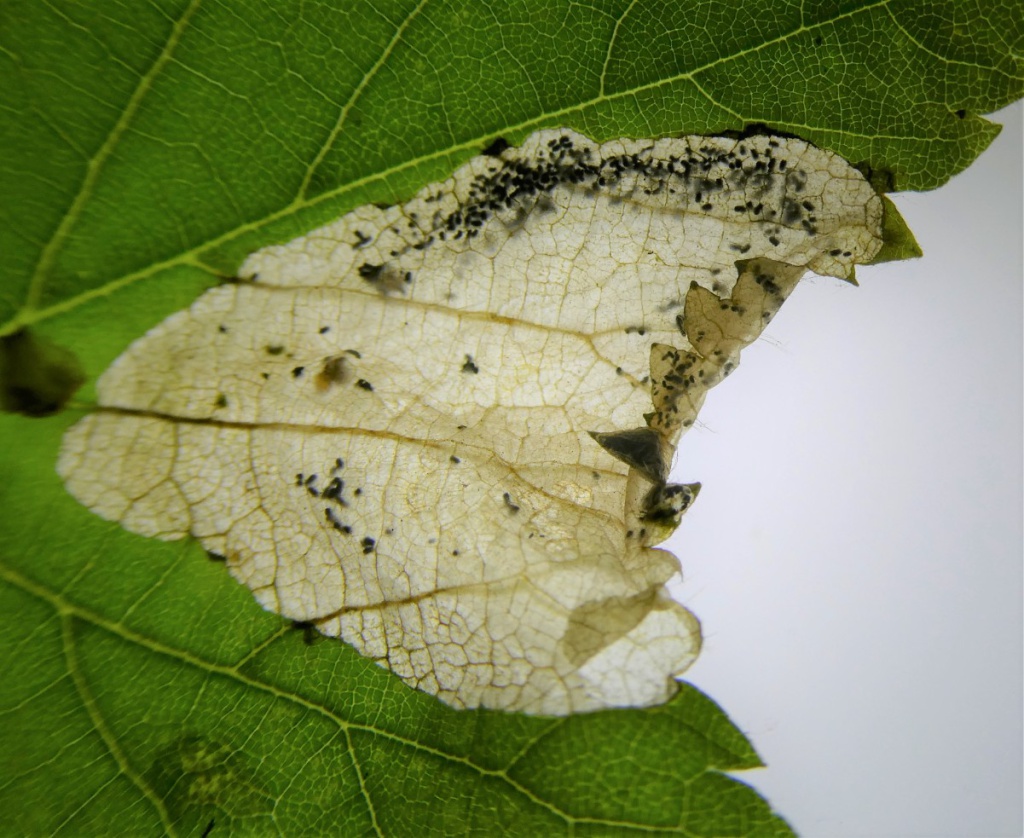
Parna apicalis
The adult Parna apicalis sawfly is 3.5 to 4 mm. The head, thorax and abdomen are all black or piceous. The tegulae and tibiae and tarsi are marked with yellow. The hind coxa, trochanters and femora are black. Parna apicalis larvae mine the leaves of Lime trees creating a blister mine in contact with the leaf edge but does not cause the leaf to curl as Parna tenella does. Rarely more than one mine per leaf. Mines mainly in the canopy. Frass grains elliptic, about 0.5 mm long.
Parna tenella
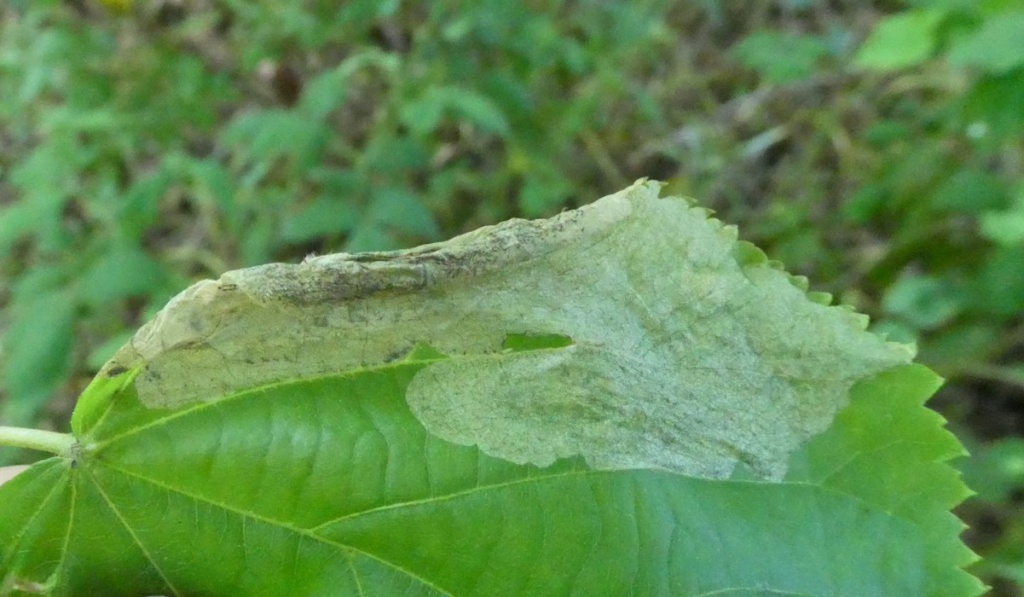
The adult Parna tenella sawfly is 4 to 5 mm. The head, thorax and abdomen are all black or piceous. In the male, the legs and much of the abdomen are reddish-yellow (darker basally). In the female, the tegulae are dark. The hind legs with the trochanters and femora entirely yellow. Parna tenella larvae mine the leaves of Lime, particularly Small-leaved Lime, producing a somewhat inflated full depth blotch, that begins at the leaf margin. The oviposition causes the leaf to roll inwards, covering (and often partly hiding) the mine. There are often several mines in a leaf. Mainly in suckers. Frass pellets up to 2 mm long.
Pristiphora leucopus
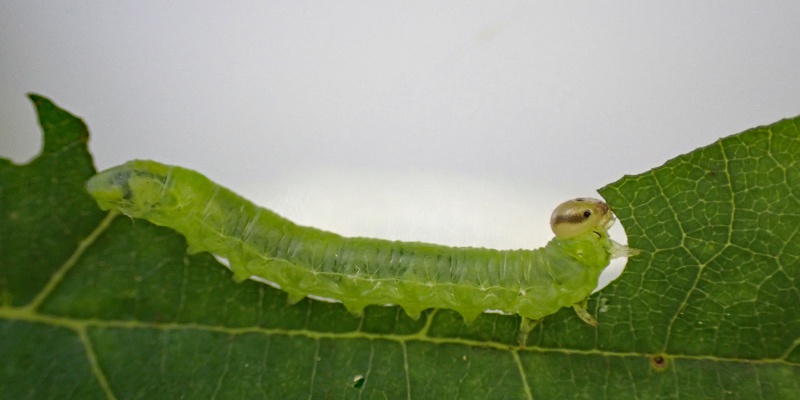
The larva of the sawfly Pristiphora leucopusfeeds on Small-leaved Lime and Common Lime. It is green with a paler head.

Mistletoe
Mistletoe is a yellowish green shrub, regularly branched, hairless forming rounded clumps up to one metre across on tree branches. Leaves oblong, leathery, opposite and untoothed. Flowers inconspicuous, unisexual with male and female on separate plants, 4 parted in small stalkless clusters. Fruit a white berry during winter. It is parasitic on deciduous trees, especially Apple, Lime, Hawthorn and Poplar.
Bucculatrix thoracella
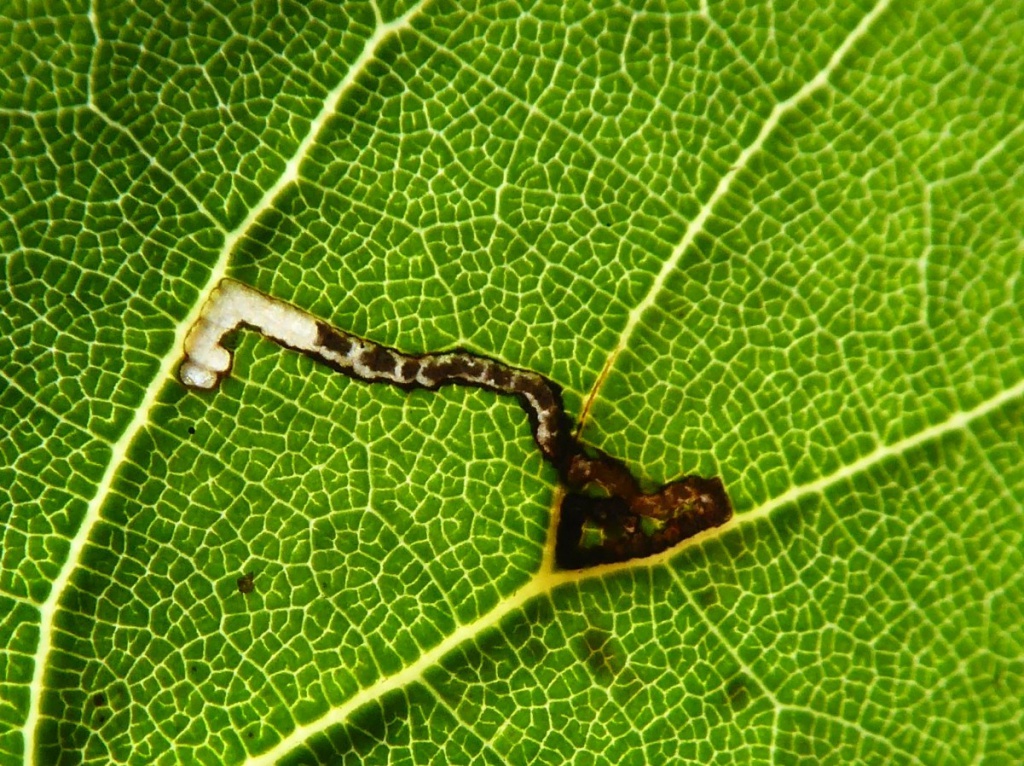
The adult Bucculatrix thoracella moth has a wingspan of 6 to 8 mm. A tiny but easily distinguished species, showing large brown patches on a yellow ground colour and a narrow brown streak extending into the cilia. The larva mines the leaves of Lime, creating a small hook-shaped mine; later instars feed freely on the leaves.
Didymomyia tiliacea
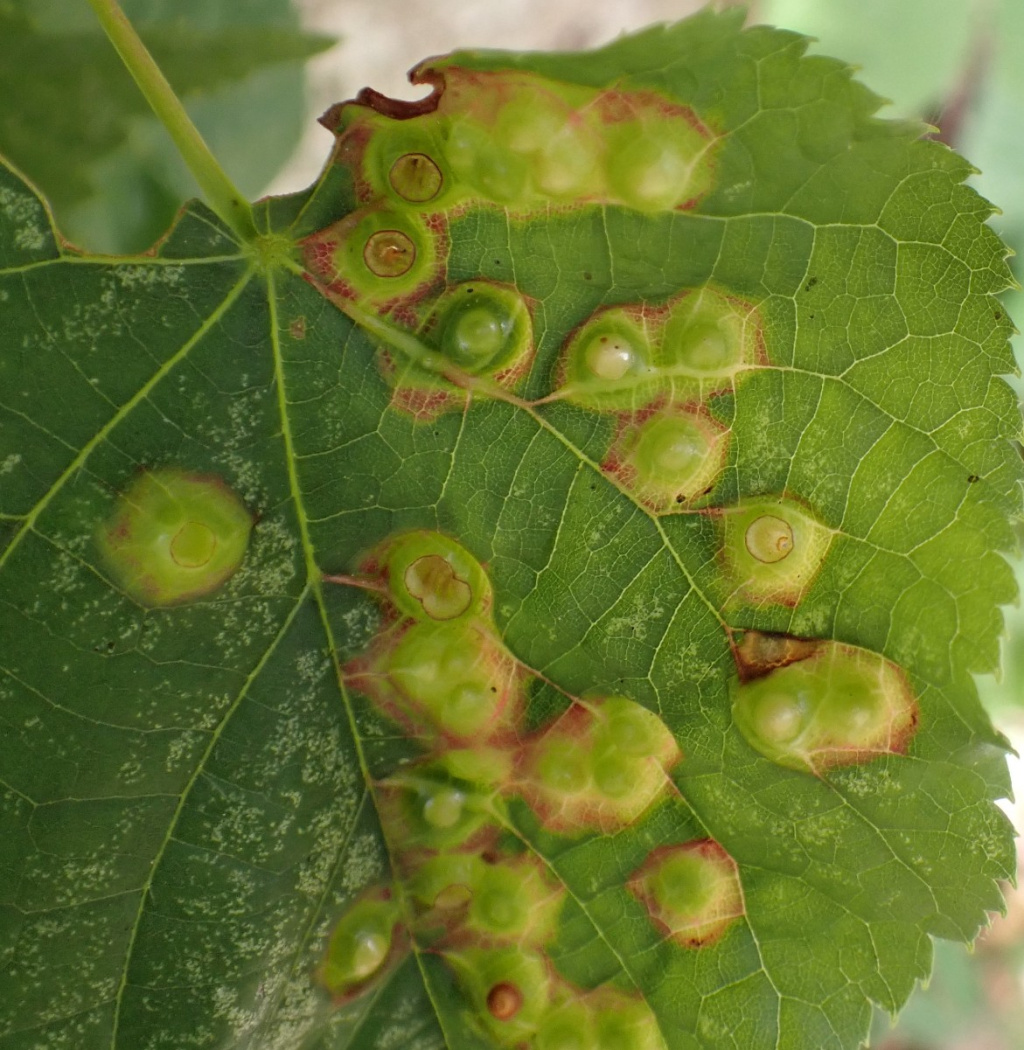
Didymomyia tiliacea is a gall forming midge found on Lime. The larvae produce a gall that is a woody swelling, most often on upperside, conical above and hemispherical below. In midsummer a inner gall sticks out from the cone, later falling and leaving a hole in the outer gall which then become covered over.
Physemocecis hartigi
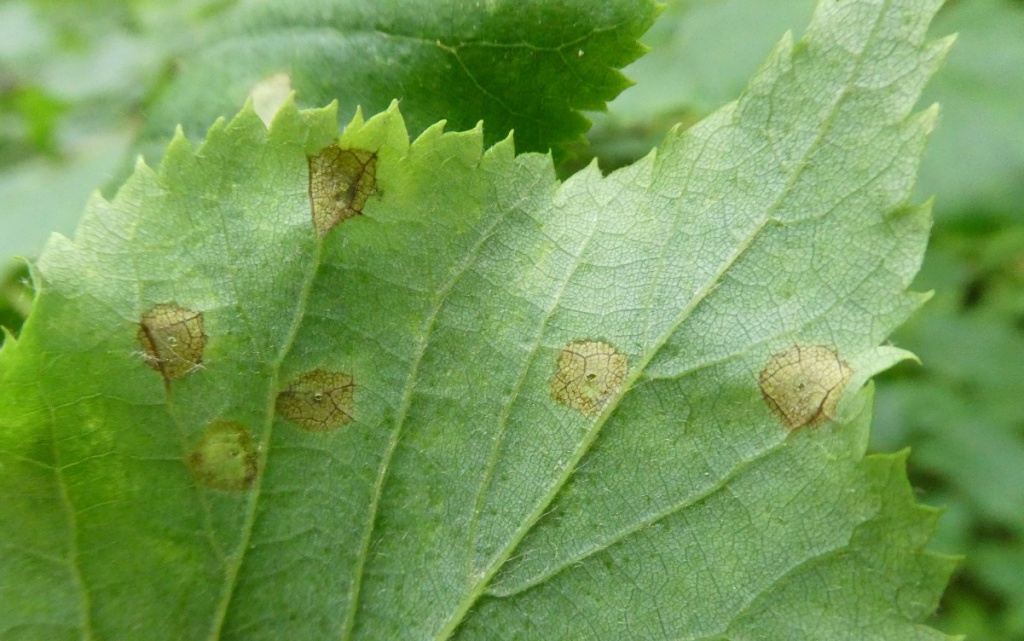
The larva of the midge Physemocecis hartigi produces a gall on the leaves of Lime, most commonly on Small-leaved Lime. The galls are small, flat and lens shaped, generally several on a leaf, each with one white larva that leaves the gall by an opening at the underside.