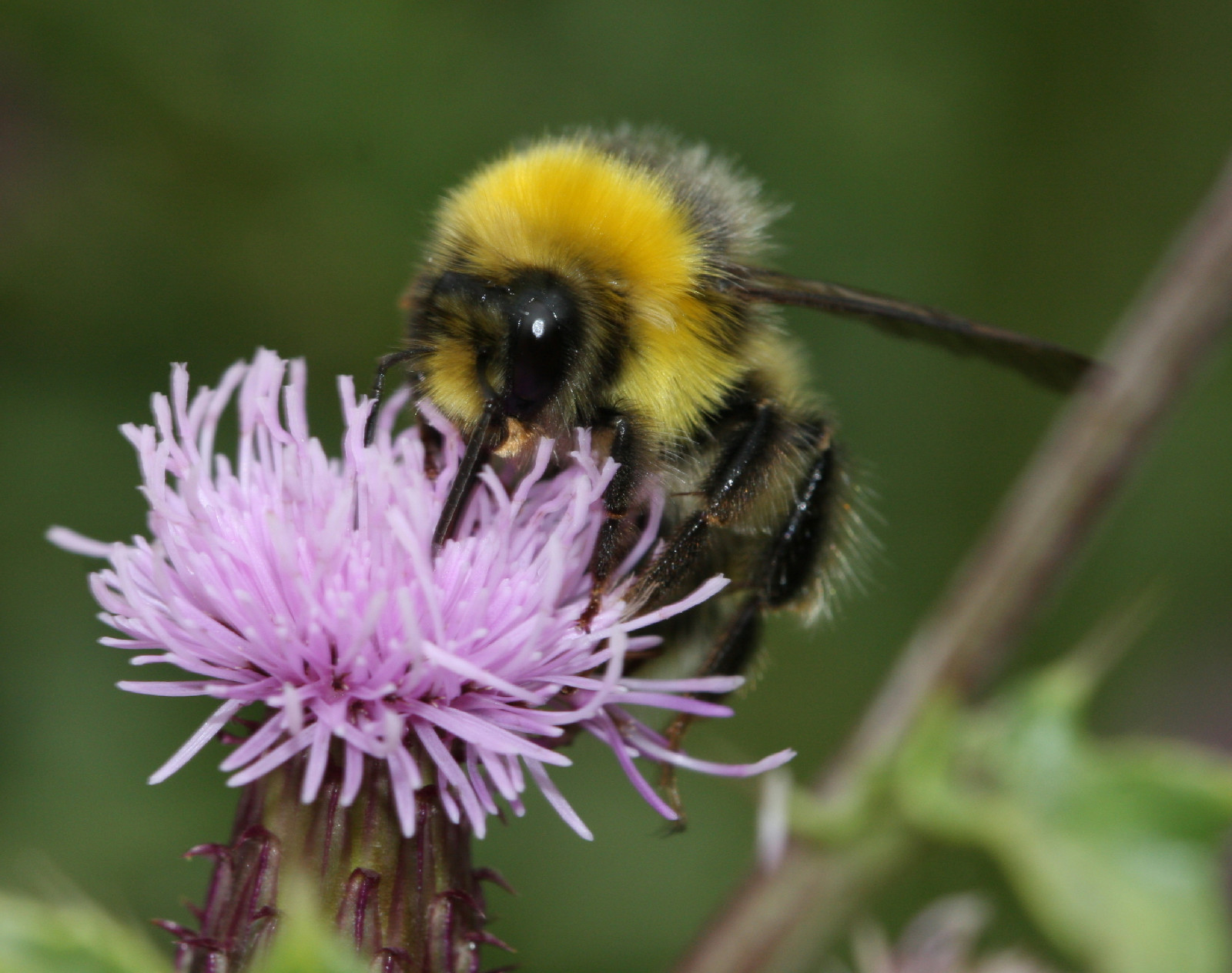
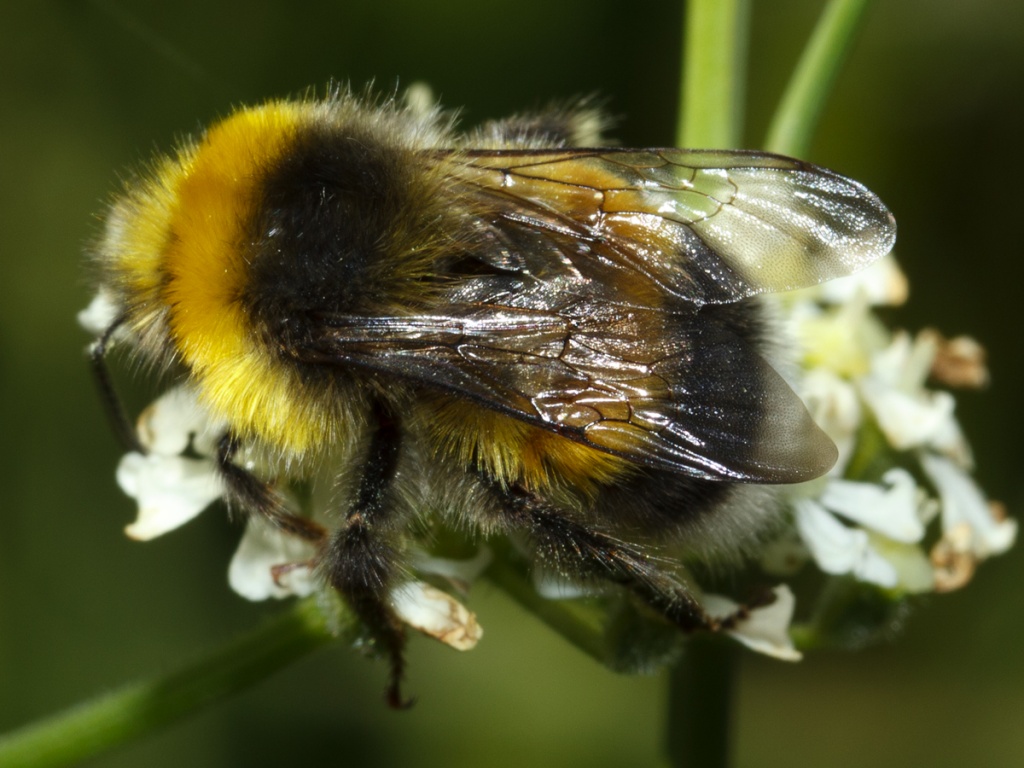
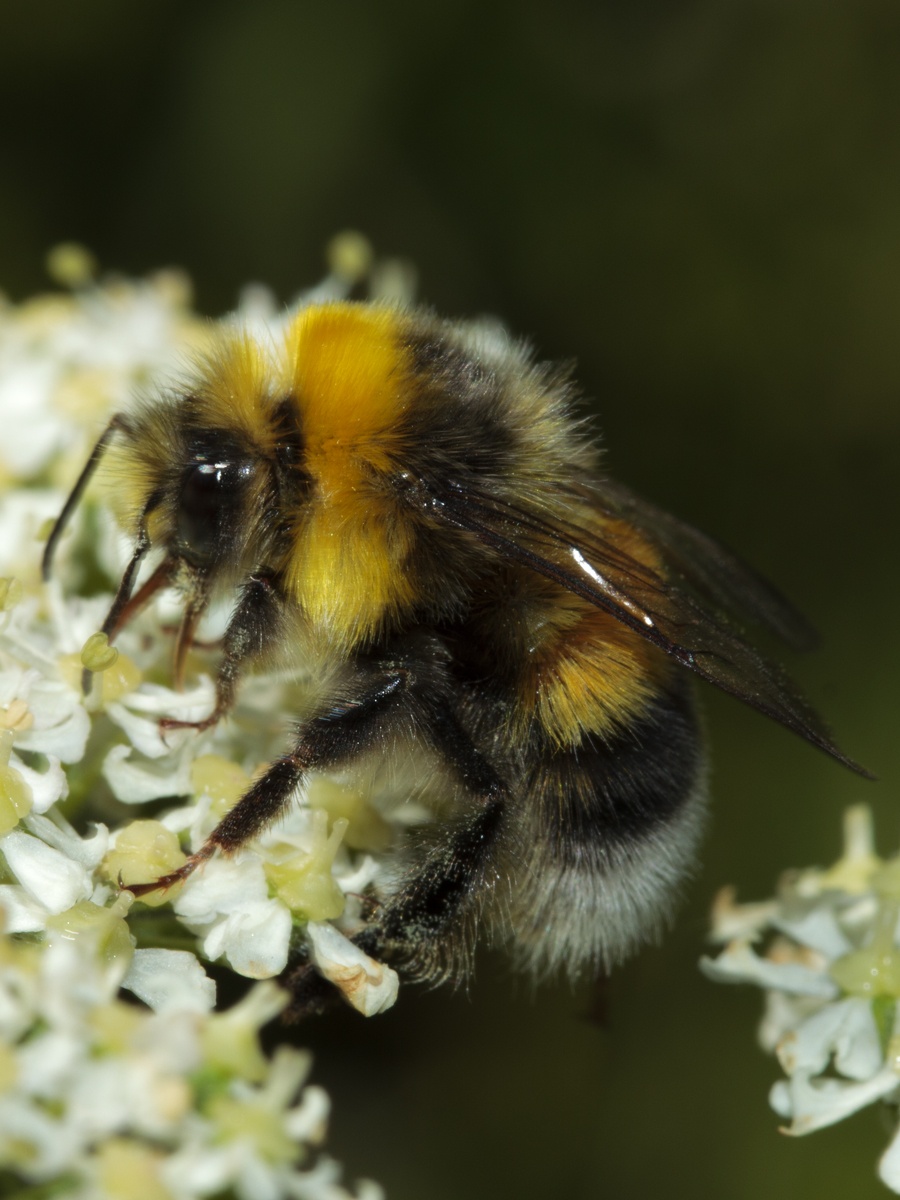
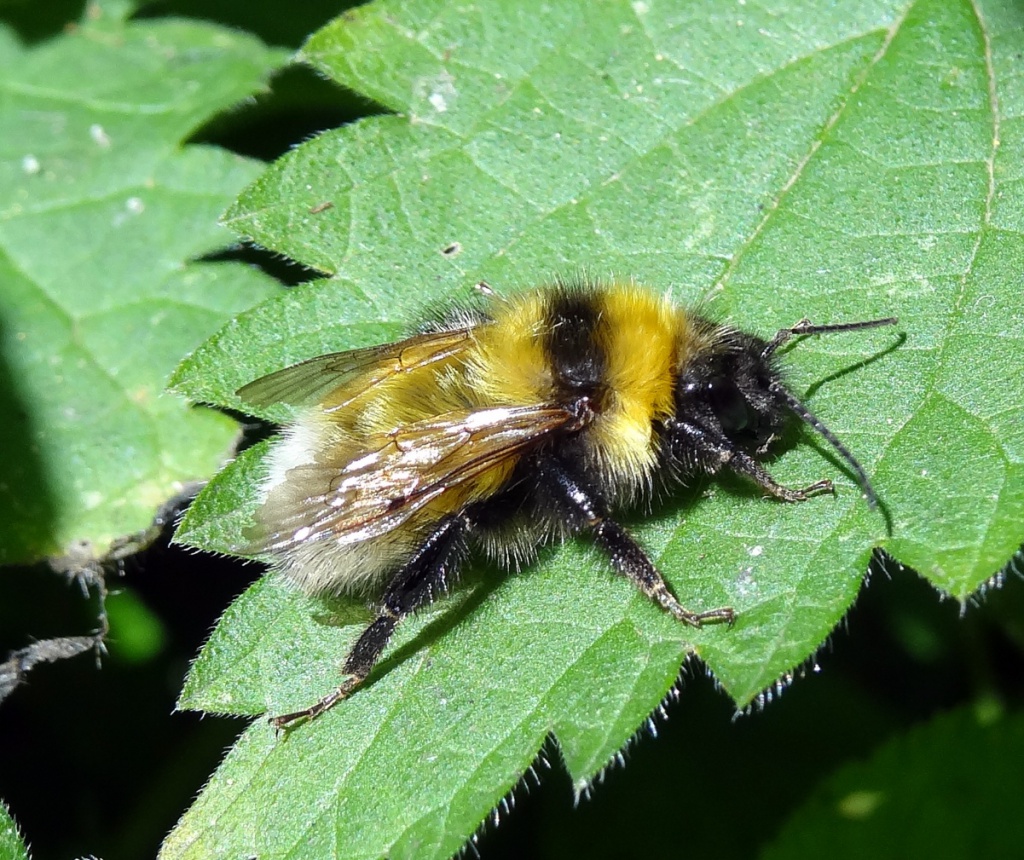
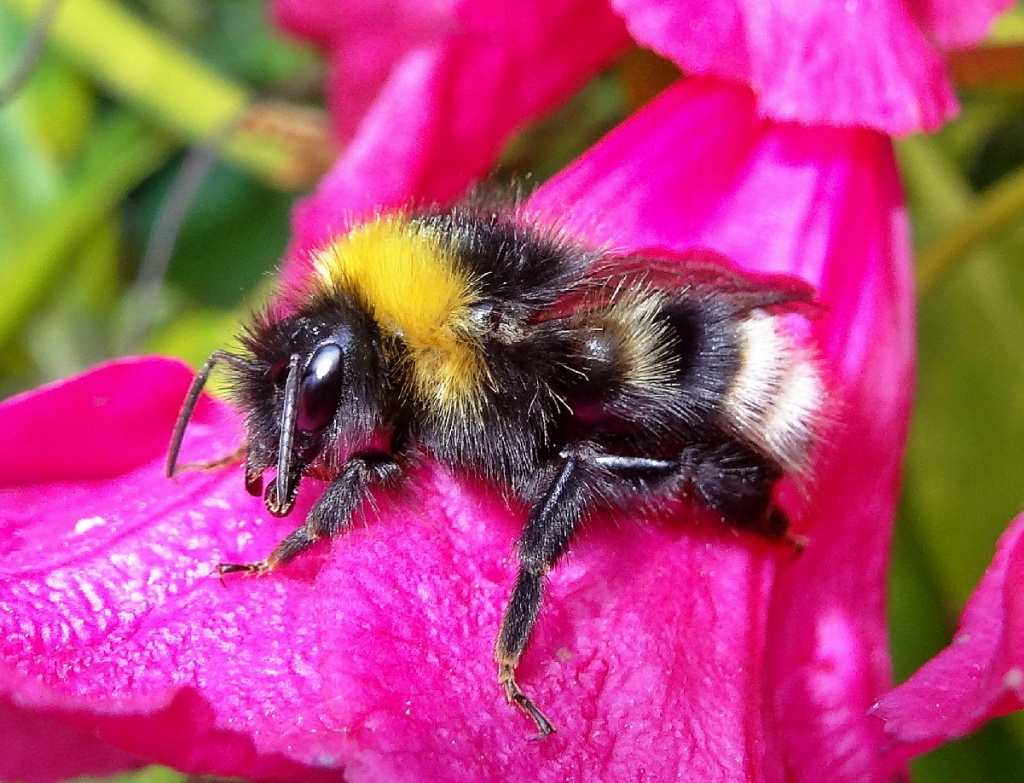
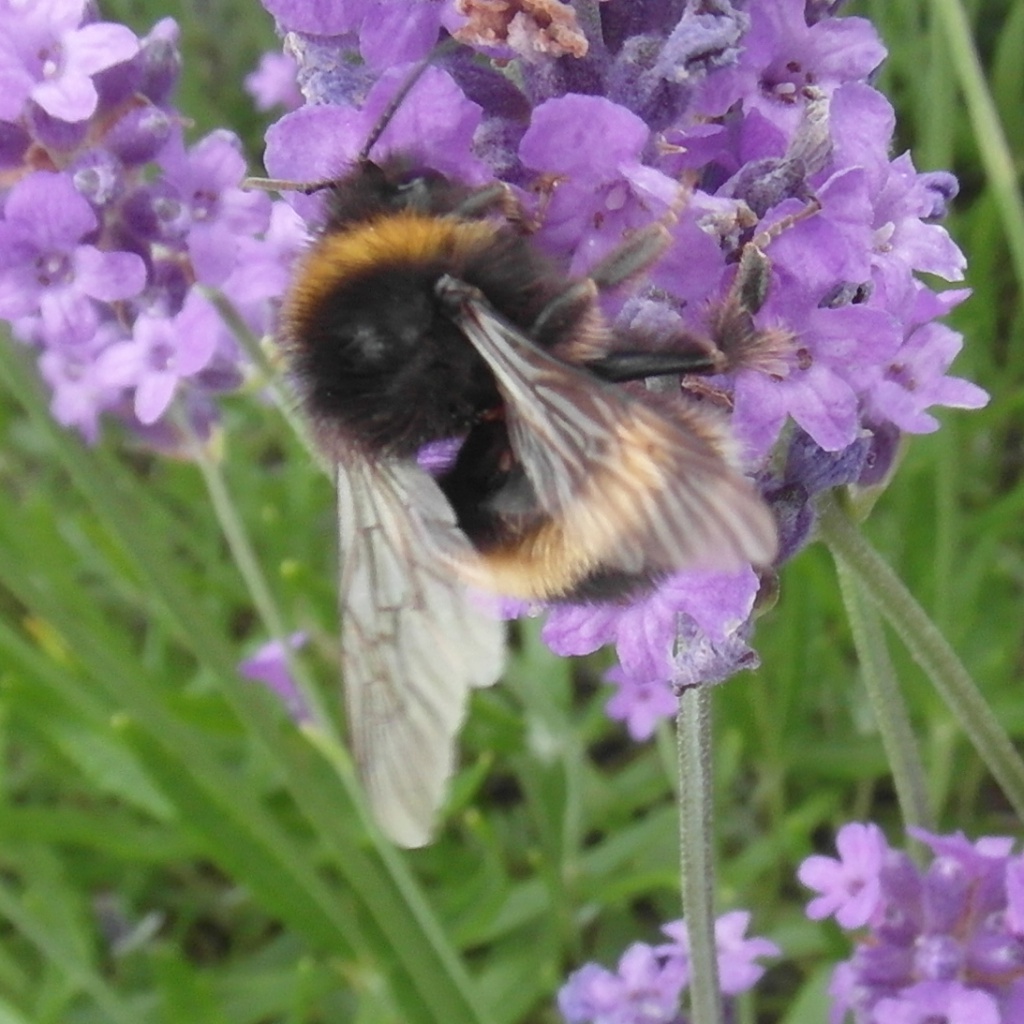
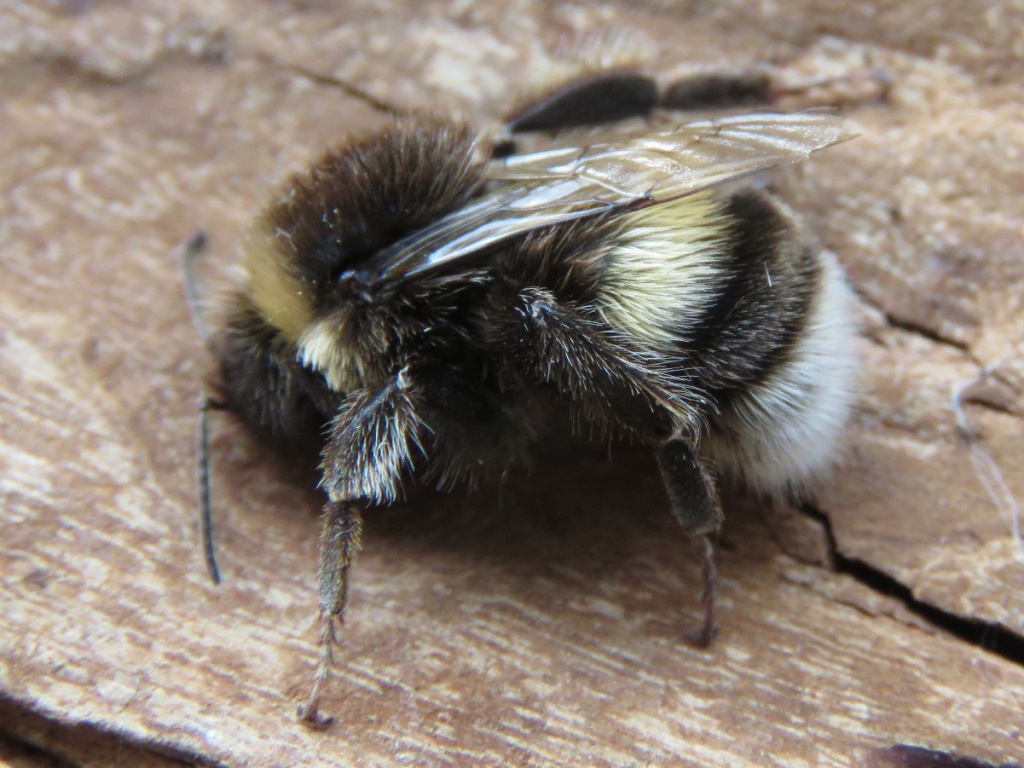
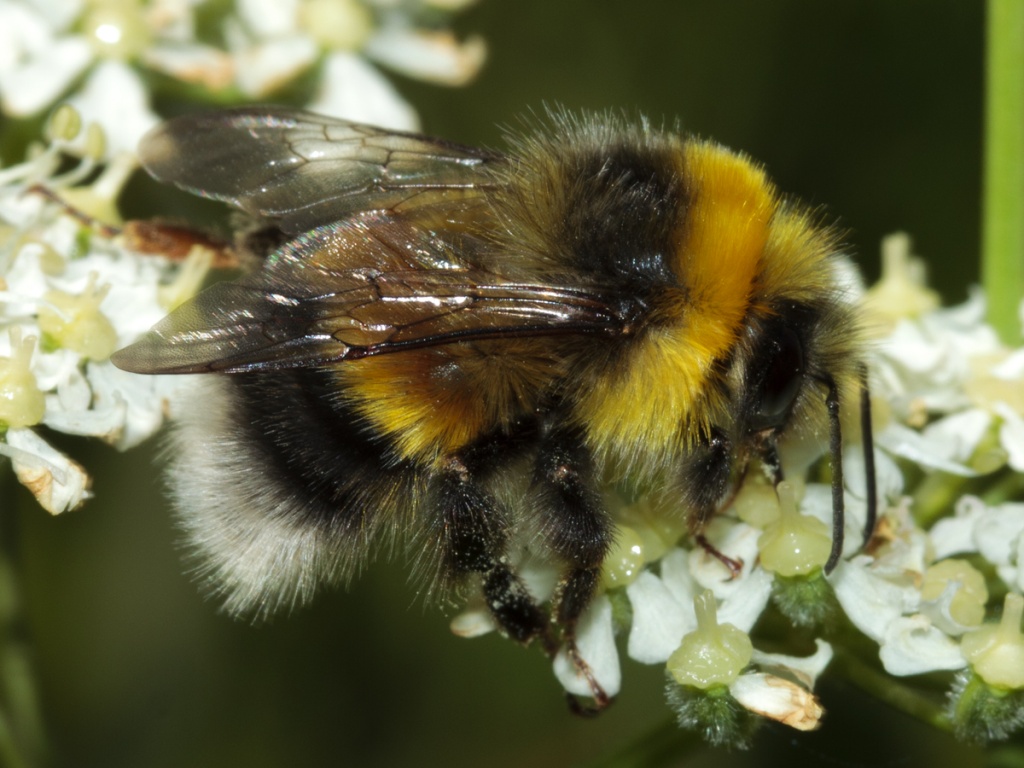
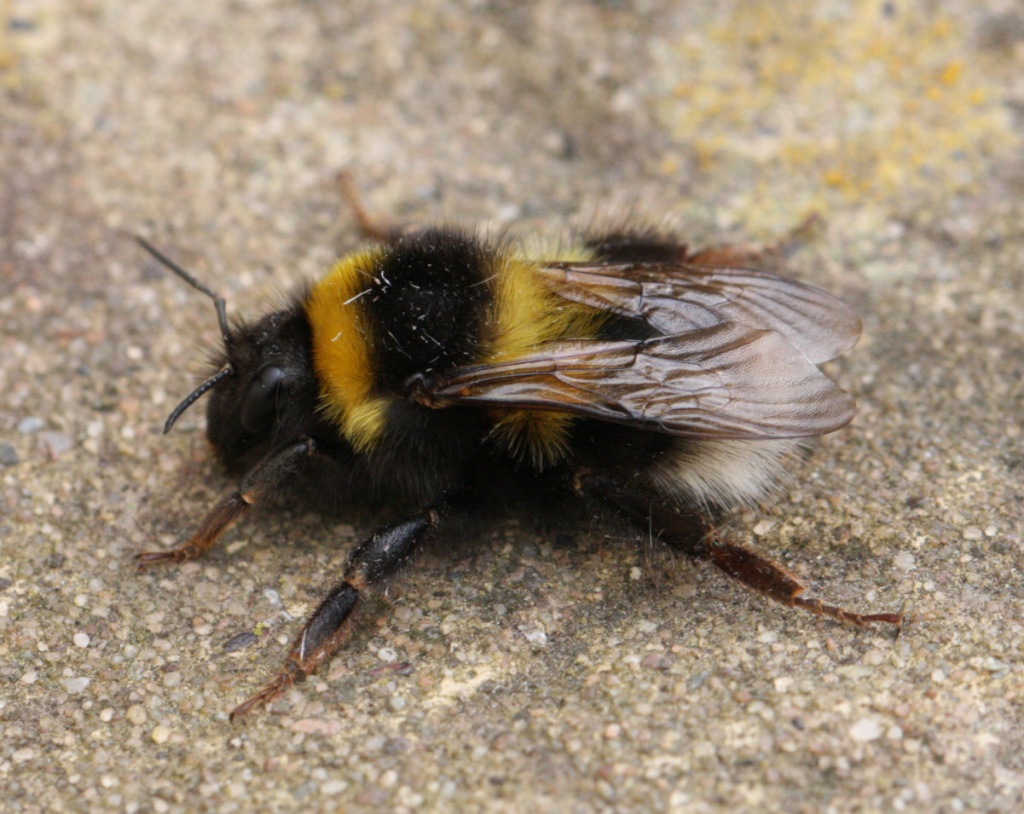
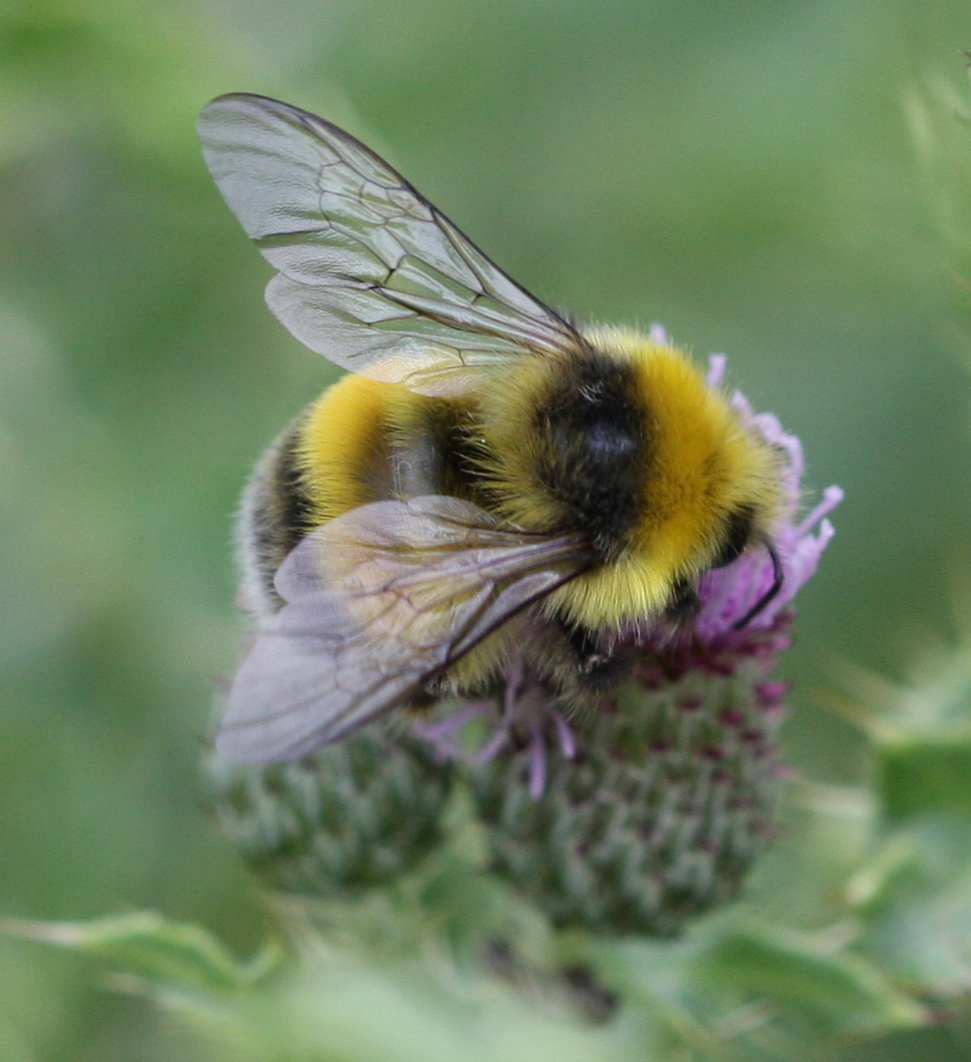
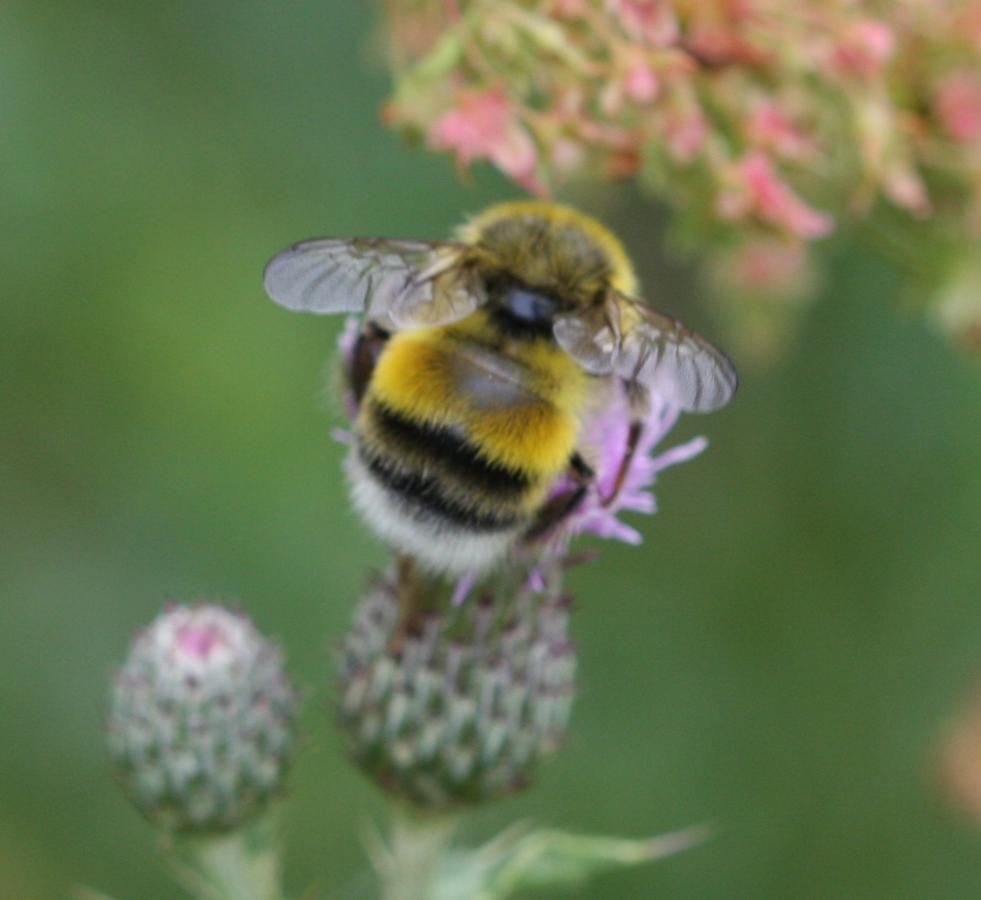
White-tailed Bumblebee - Bombus lucorum agg.
Lengths: Queen 19 to 20 mm, worker 11 to 17 mm, male 14 to16 mm. The Queens have a white tip to the abdomen. The species is slightly smaller than Bombus terrestris. In comparison, the yellow hair bands of B. terrestris appear more mustard-yellow whilst those of B. lucorum males are more lemon-yellow. However in workers there is much overlap in both the colour of the yellow bands and the whiteness of the 'tail' such that many cannot be separated.
There are three almost identical species: Bombus lucorum, Bombus magnus, and Bombus cryptarum that cannot be easily differentiated from one another by their appearances and require DNA analysis so these three are treated as an aggregate.

Workers of Buff-tailed Bumblebees and White-tailed Bumblebees can be almost impossible to tell apart. Unless it is a very clear example then record as "White/Buff-tailed Bumblebee Workers - Bombus lucorum/terrestris".
Around flowers.
Queens are amongst the first bees to emerge in spring, males do not usually emerge until about August.
The species has a short tongue for a bumblebee, so tends to forage on flowers with short corollas and daisy-type flowers; however it is sometimes resourceful enough to make a hole through the base of the corolla in other flowers to drink the nectar. They nest in the ground, often in an old mouse or vole nest.
Widespread and fairly common in Britain, however populations are believed to be declining.
Fairly frequent in Leicestershire and Rutland.
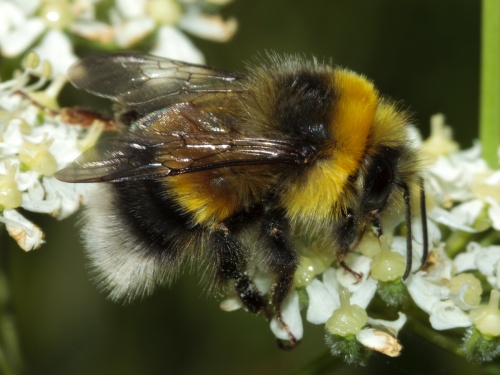 HAPeacock
The Orchards
19 June 2012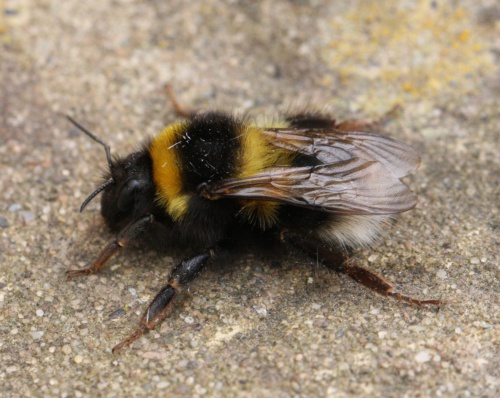 David Nicholls
Ratby garden
31 March 2017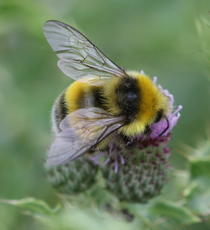 David Nicholls
Sheet Hedges Wood
23 July 2010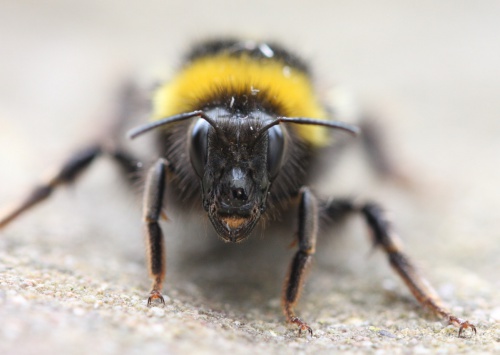 David Nicholls
Ratby garden
31 March 2017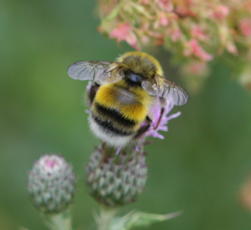 David Nicholls
Sheet Hedges Wood
23 July 2010
note thin yellow band above white tip

Leicestershire & Rutland Map
Enter a town or village to see local records
MAP KEY:
Yellow squares = NBN records (all known data)
Coloured circles = NatureSpot records: 2025+ | 2020-2024 | pre-2020
UK Map
Species profile
- Species group:
- insect - hymenopteran
- Kingdom:
- Animalia
- Order:
- Hymenoptera
- Family:
- Apidae
- Records on NatureSpot:
- 236
- First record:
- 04/07/2004 (Gamble, David)
- Last record:
- 31/05/2026 (McKeating, Ron)
Total records by month
% of records within its species group
10km squares with records
The latest images and records displayed below include those awaiting verification checks so we cannot guarantee that every identification is correct. Once accepted, the record displays a green tick.
In the Latest Records section, click on the header to sort A-Z, and again to sort Z-A. Use the header boxes to filter the list.
Latest images
Latest records
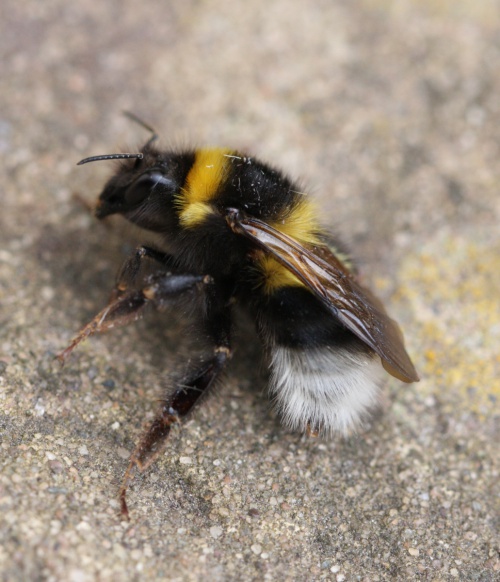 David Nicholls
Ratby garden
31 March 2017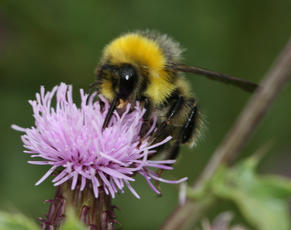 David Nicholls
Sheet Hedges Wood
23 July 2010
note yellow facial hair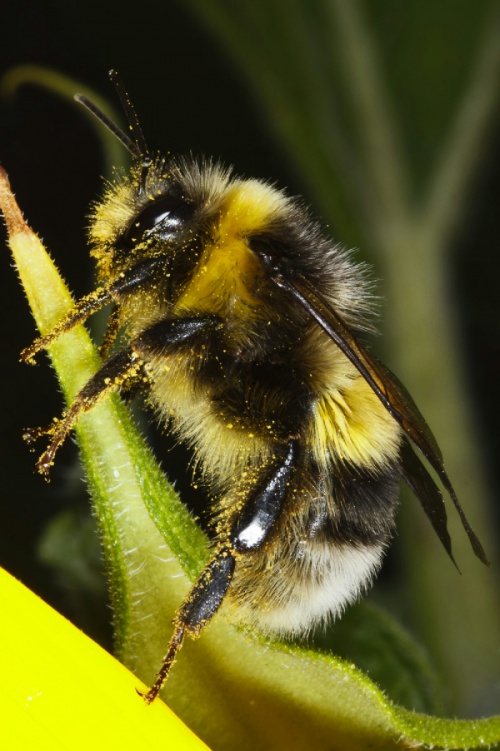 HAPeacock
Leicester Garden
06 August 2013
Male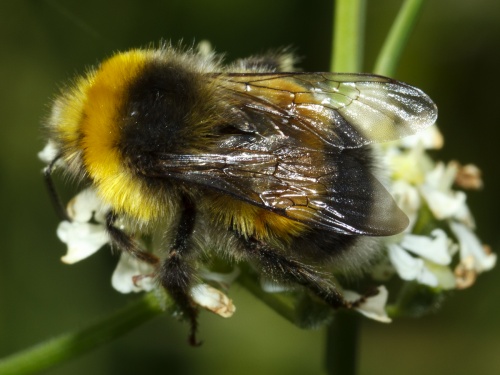 HAPeacock
The Orchards
19 June 2012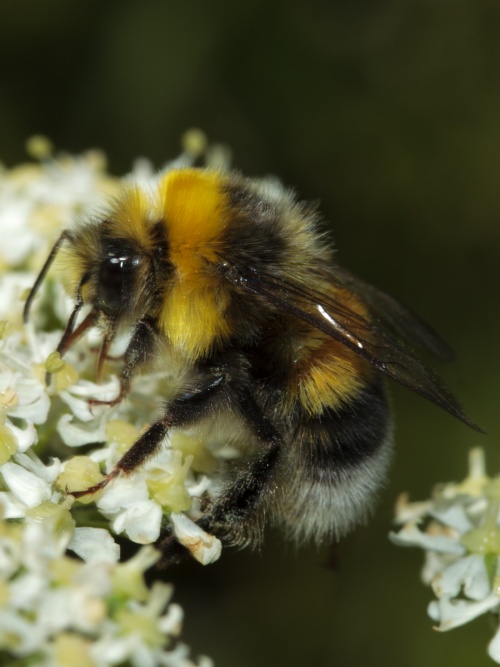 HAPeacock
The Orchards
19 June 2012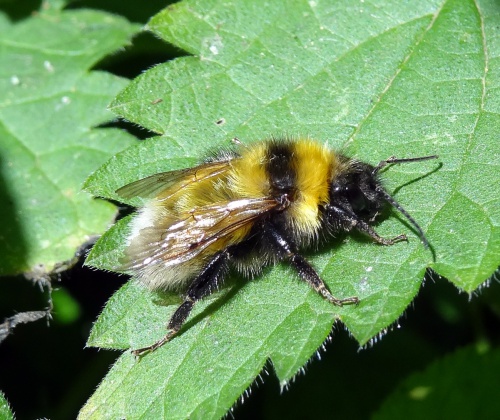 AJ Cann
Great Merrible Wood
25 July 2015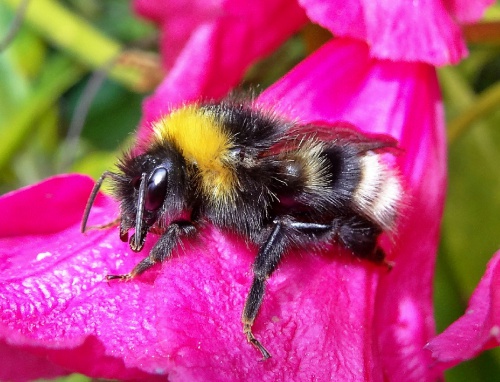 Lostash
Leicester Botanical Gardens
14 May 2014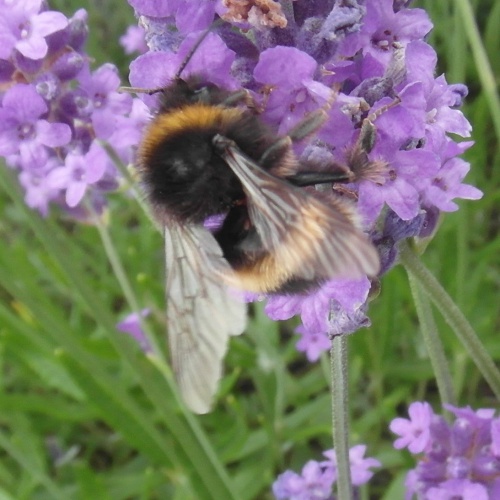 Alan Semper
Bottesford Millenium Gdns
20 July 2013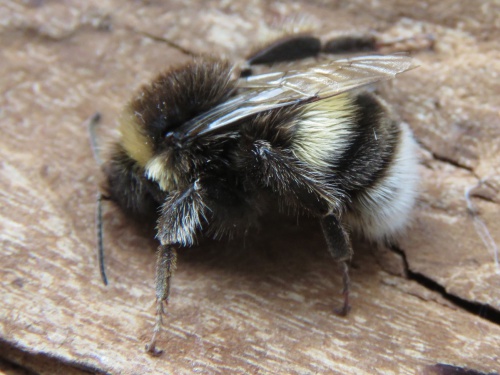 egaten
Thurlaston garden
30 July 2015