

Italian Alder - Alnus cordata
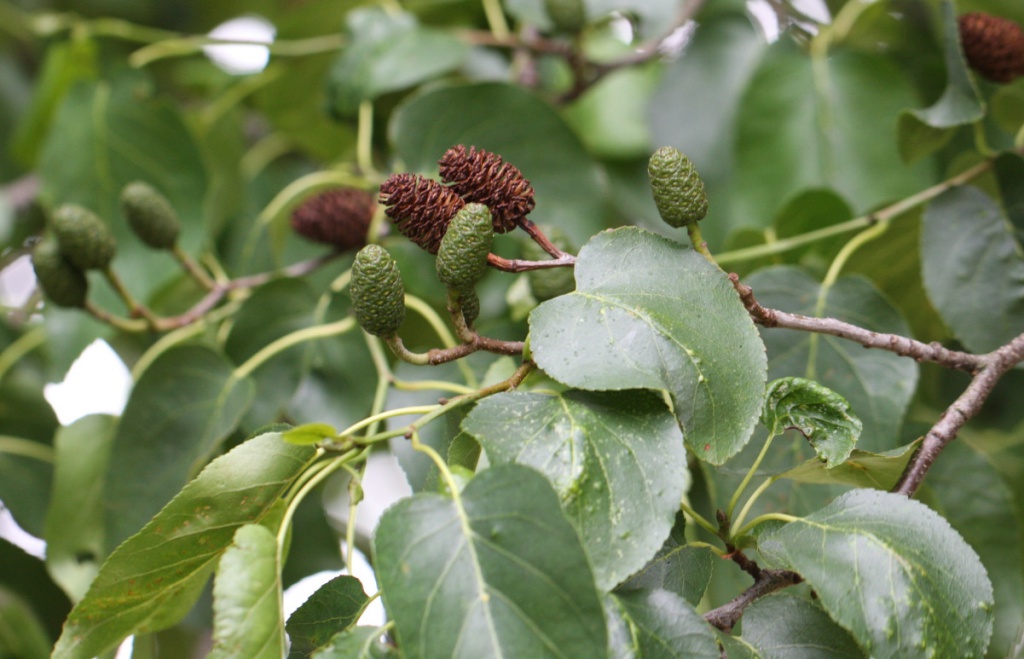
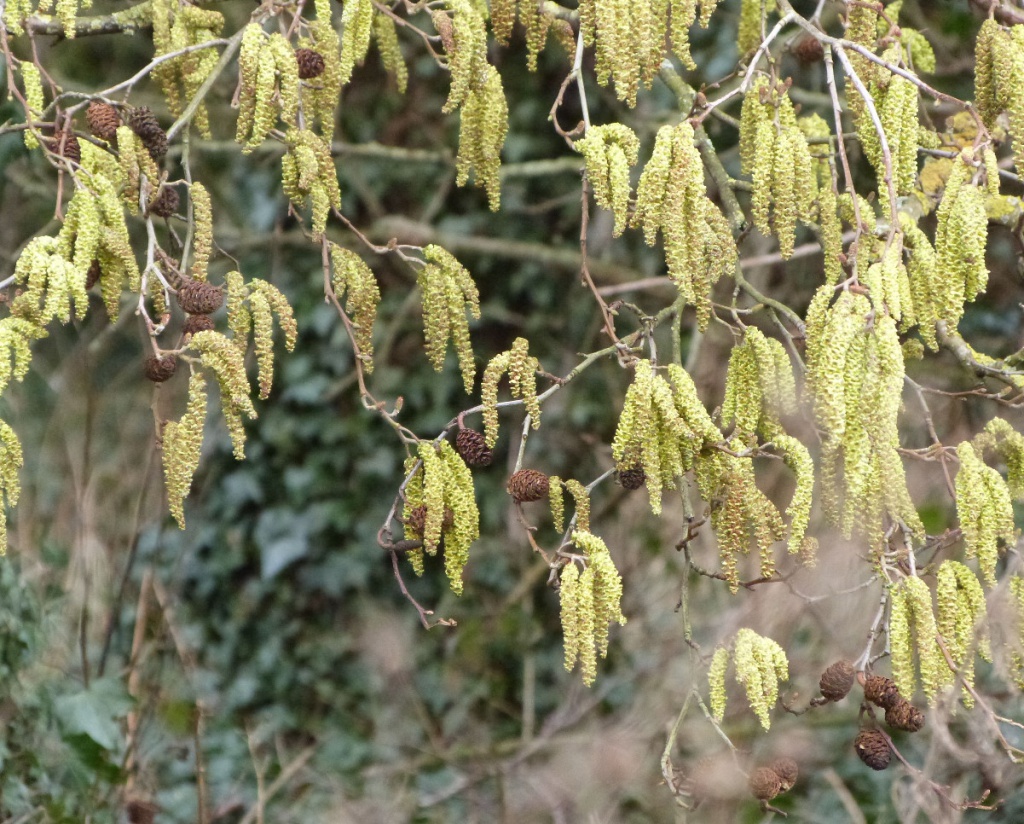
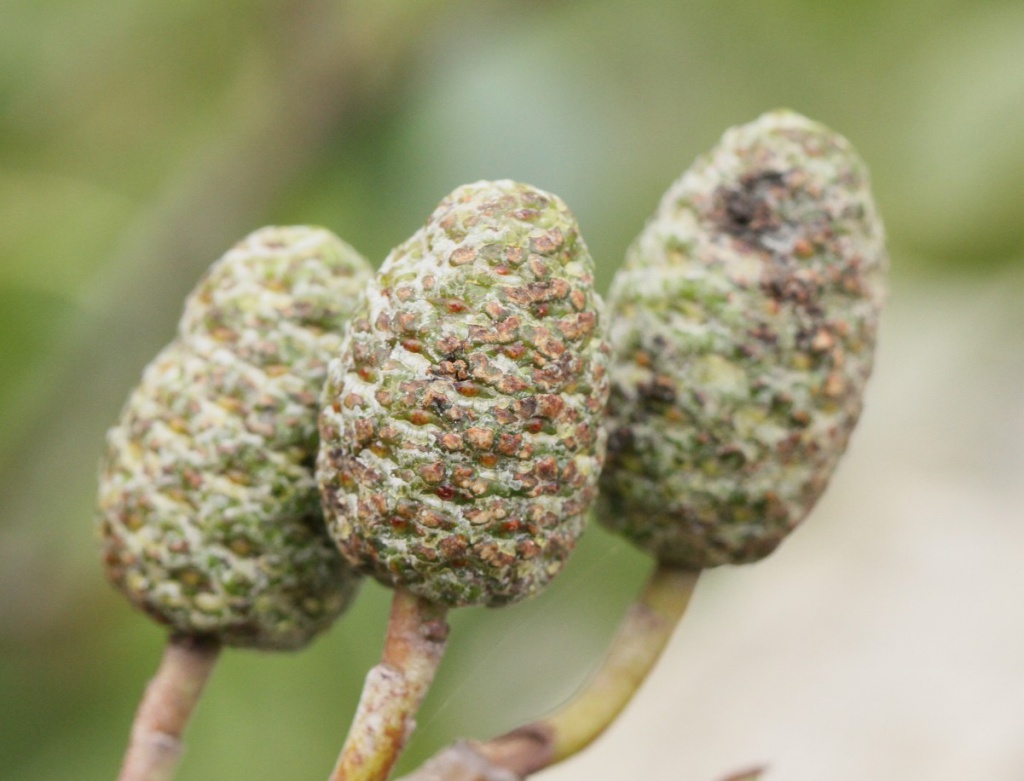
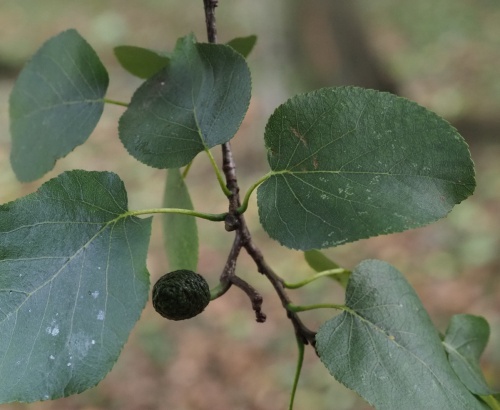
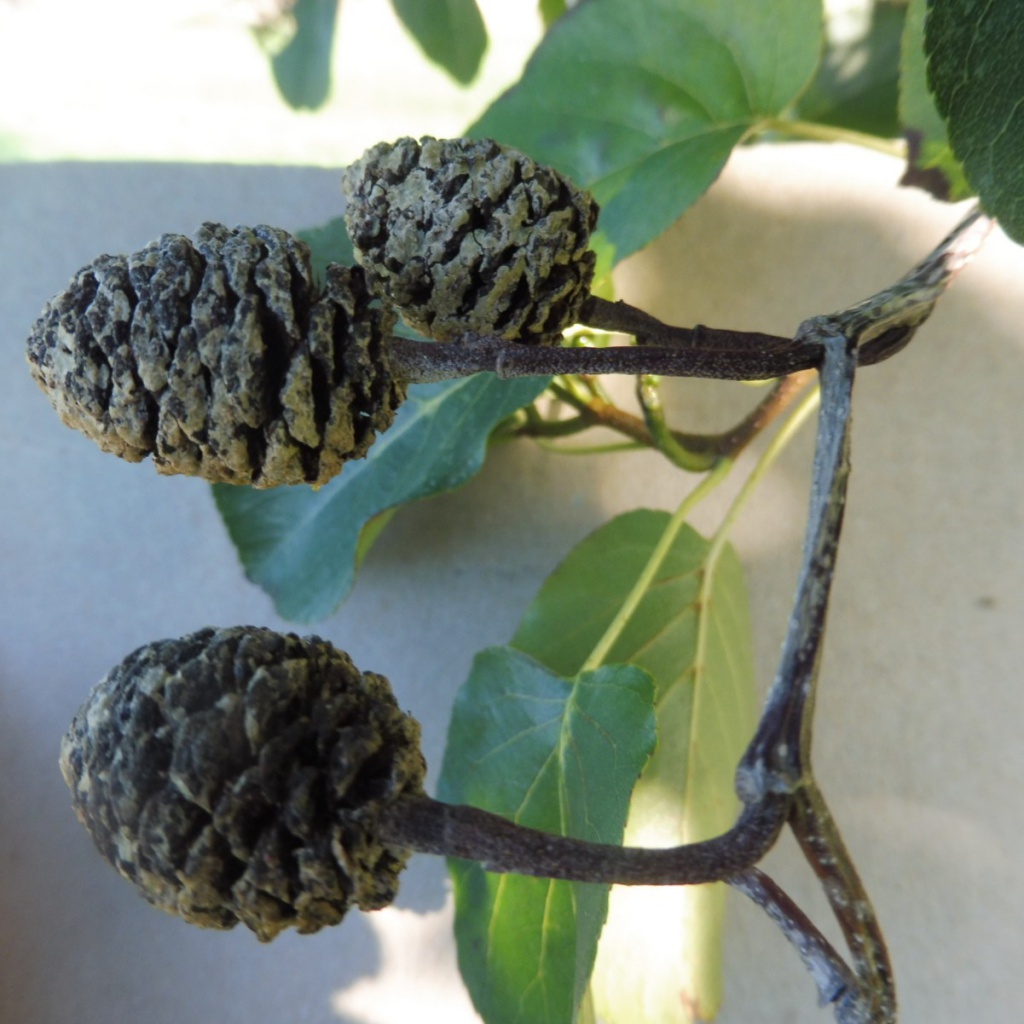
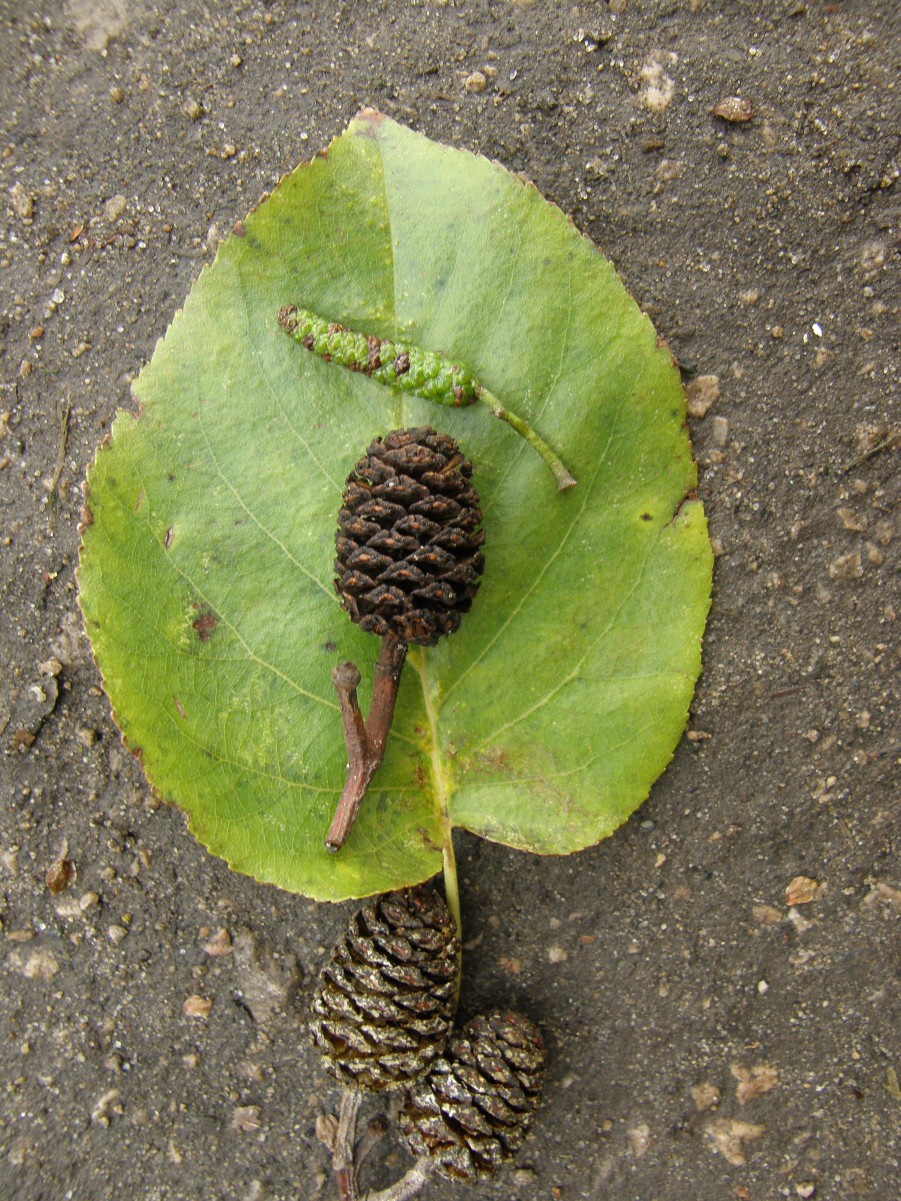
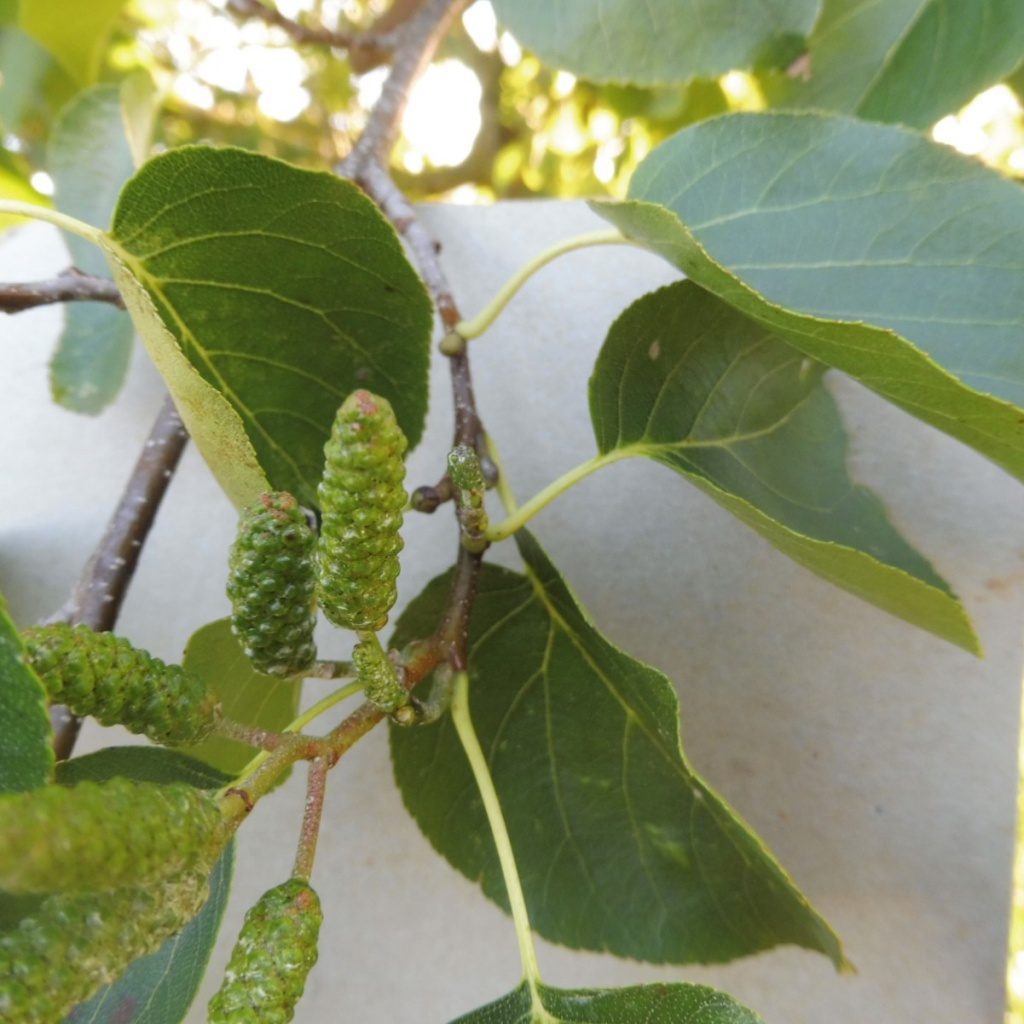
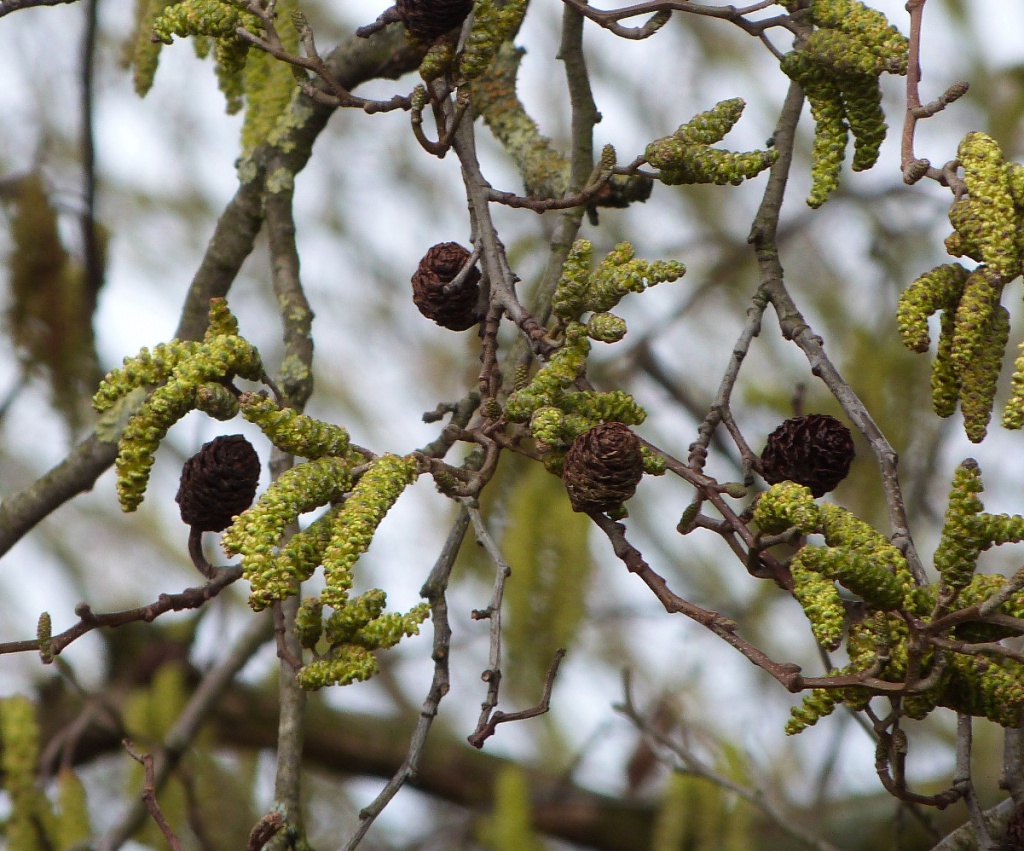
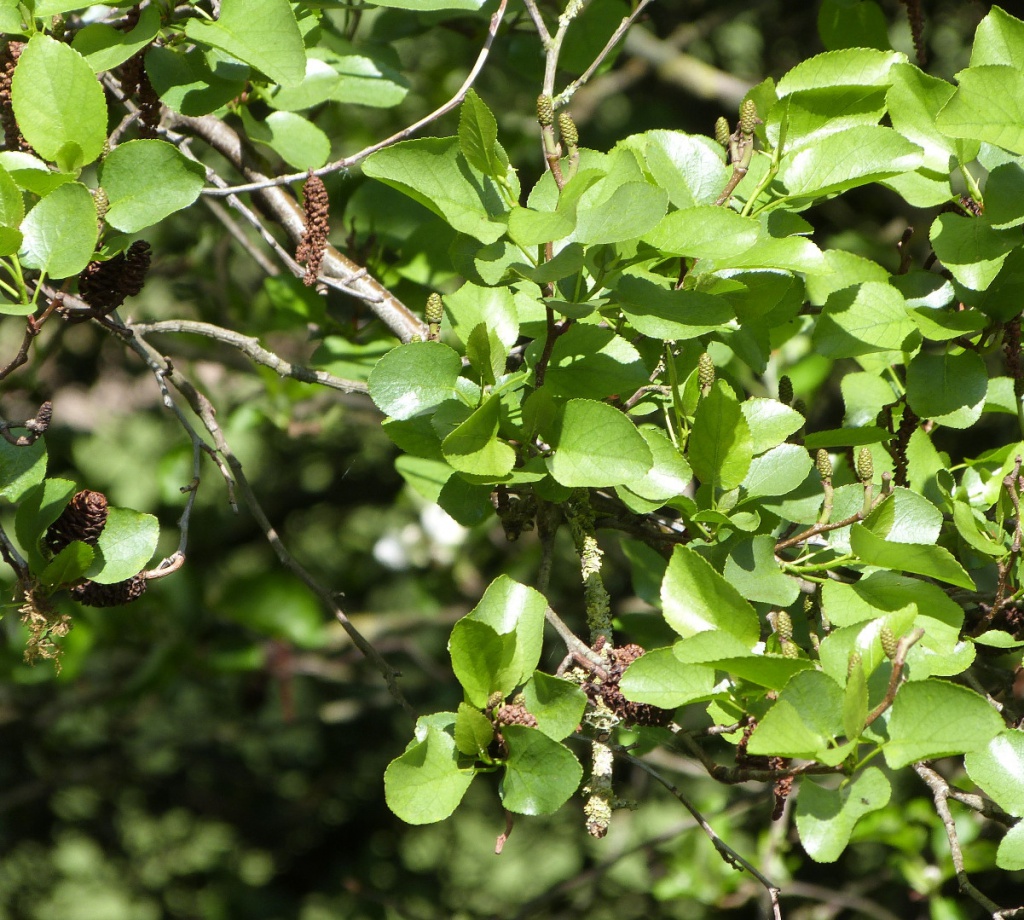
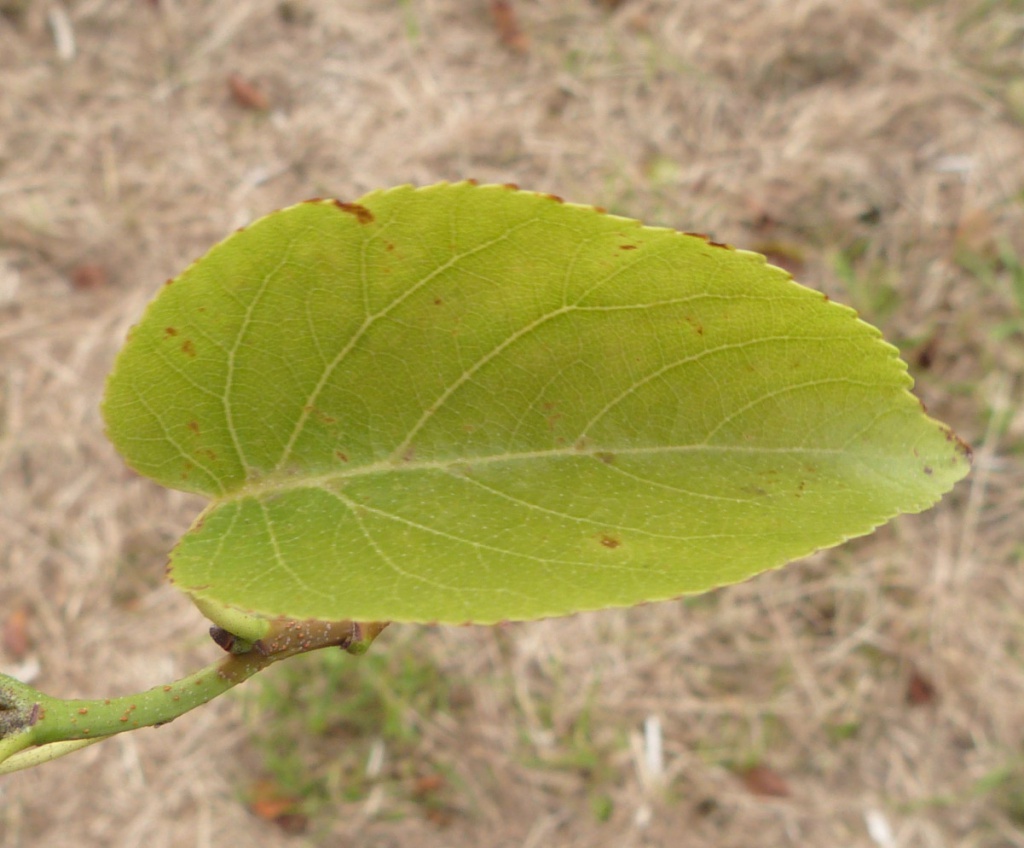
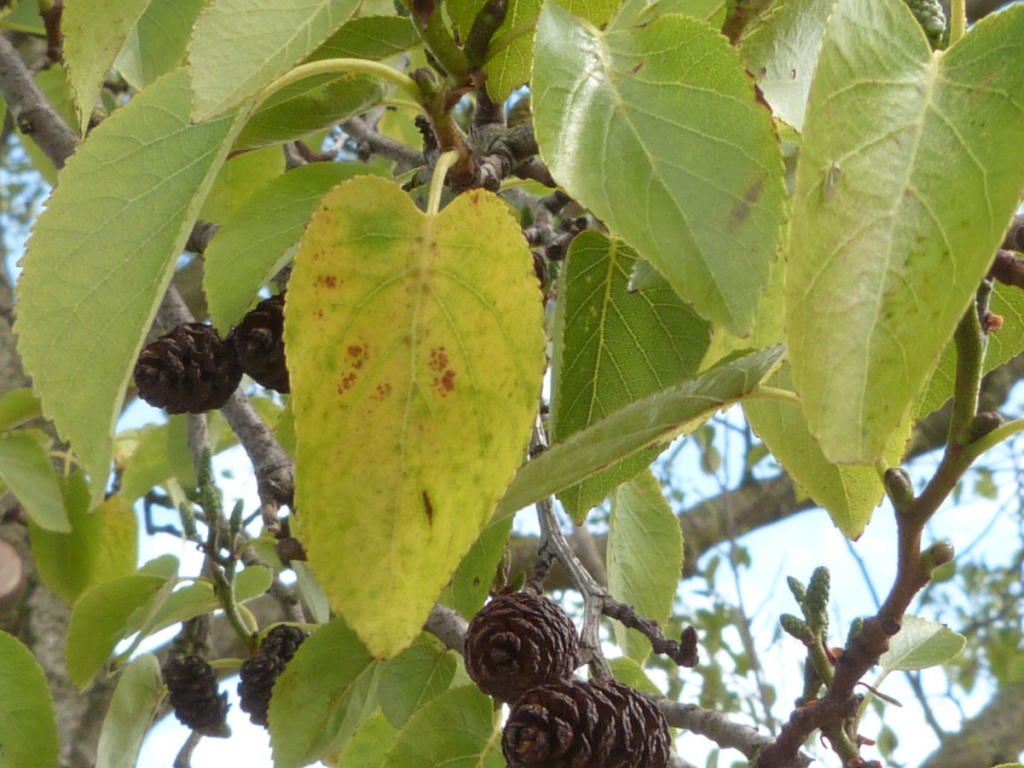
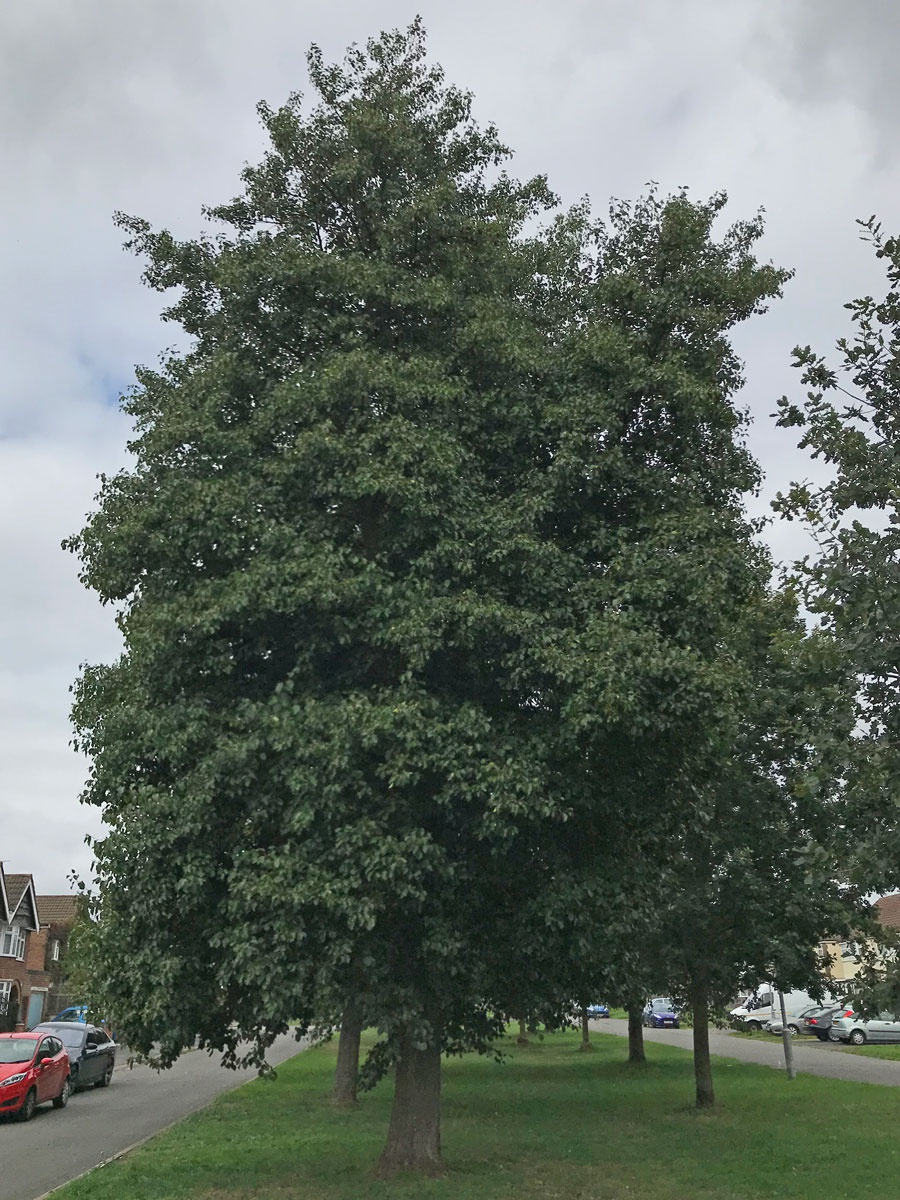
A tree with glossy green leaves that have heart shaped bases. It bears cones and catkins typical of the Alder family. The cones are in small clusters, single or in pairs or threes.
Other alders are similar when not in leaf

Photo of leaves
Often planted in parks and on roadsides.
all year
Deciduous.
Widespread around Britain as a planted tree.
Often planted on road verges and in parks in Leicestershire and Rutland, and sometimes naturalising. It was not recorded in the 1979 Flora survey of Leicestershire.
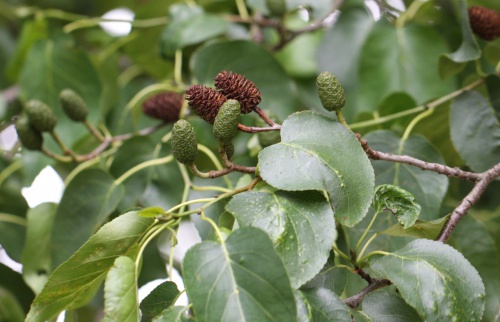 David Nicholls
Spearwort Fields
23 June 2017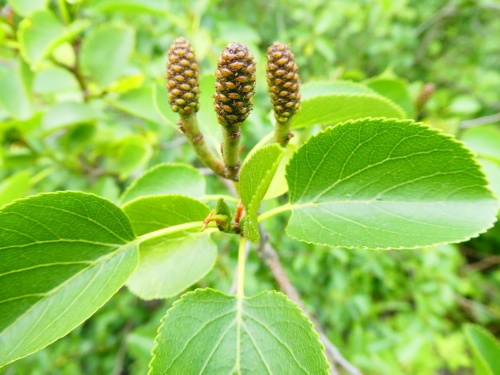 Melinda Bell
Forest Rock Wood
07 June 2021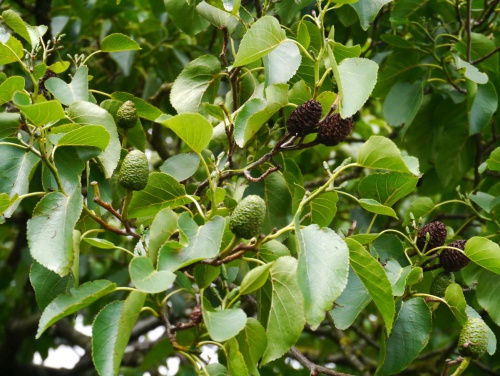 Peter Smith
Barrow upon Soar
17 July 2015
Glossy, heart-shaped leaves and large cones.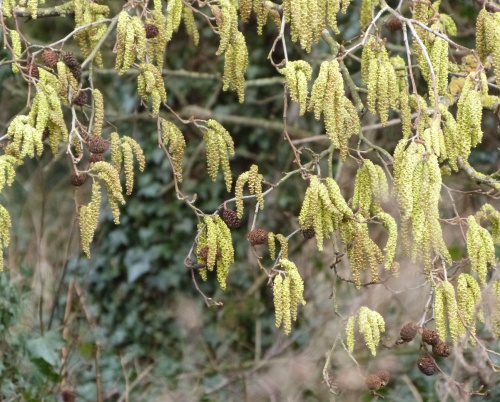 Graham Calow
Cambridge Road, Whetstone
22 February 2016 Craig Mabbett
Market Harborough Kettering Road On The River Welland
26 September 2020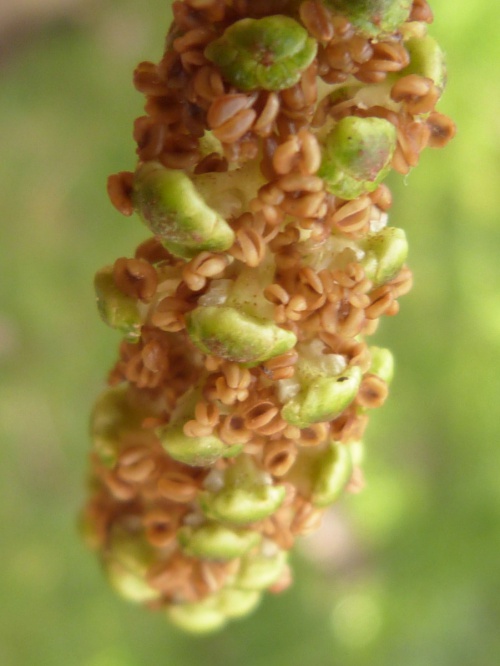 Graham Calow
Whetstone
22 February 2016
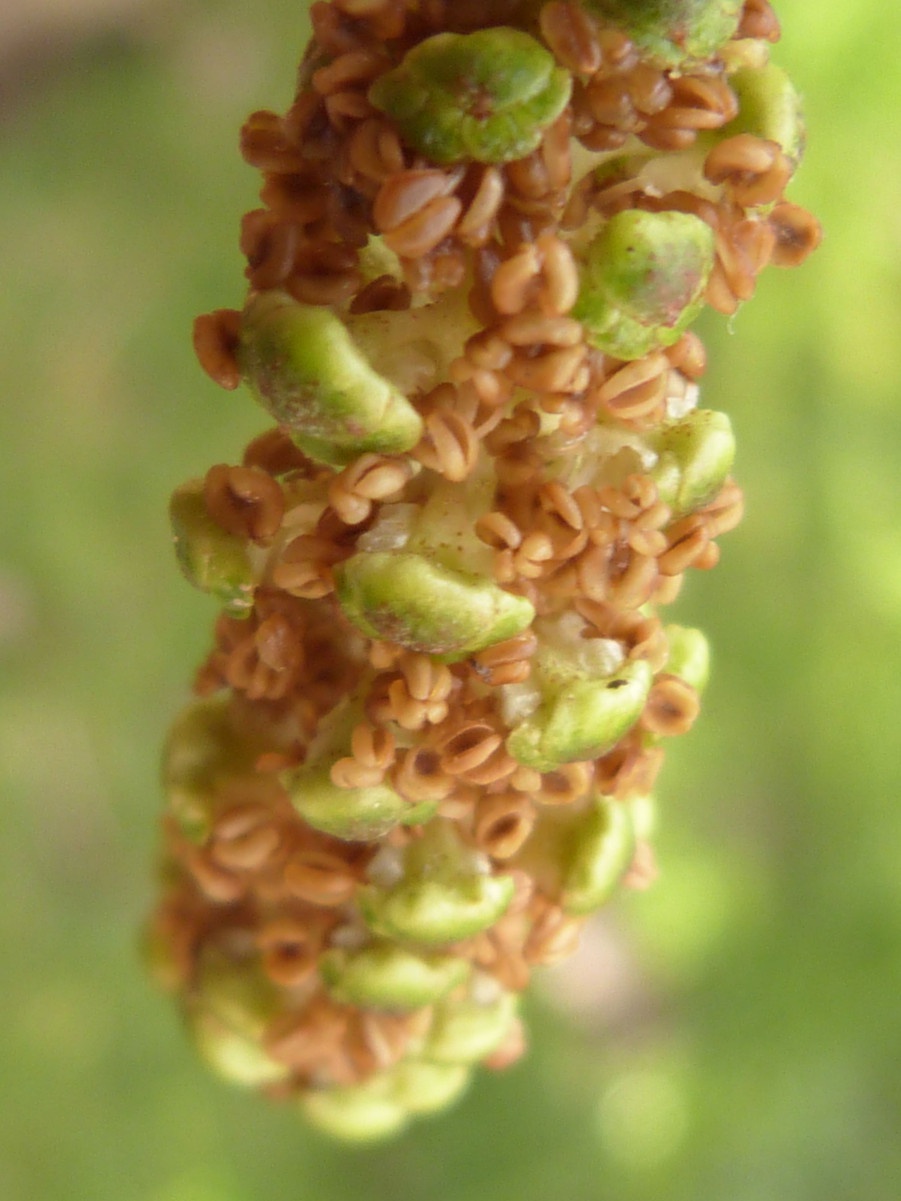
catkin detail


Leicestershire & Rutland Map
Enter a town or village to see local records
MAP KEY:
Yellow squares = NBN records (all known data)
Coloured circles = NatureSpot records: 2025+ | 2020-2024 | pre-2020
UK Map
Species profile
- Common names
- Italian Alder
- Species group:
- flowering plant
- Kingdom:
- Plantae
- Order:
- Fagales
- Family:
- Betulaceae
- Records on NatureSpot:
- 32
- First record:
- 17/07/2015 (Smith, Peter)
- Last record:
- 19/11/2025 (Smith, Peter)
Total records by month
% of records within its species group
10km squares with records
The latest images and records displayed below include those awaiting verification checks so we cannot guarantee that every identification is correct. Once accepted, the record displays a green tick.
In the Latest Records section, click on the header to sort A-Z, and again to sort Z-A. Use the header boxes to filter the list.
Latest images
Latest records
 David Nicholls
Kirby Muxloe Castle
13 September 2021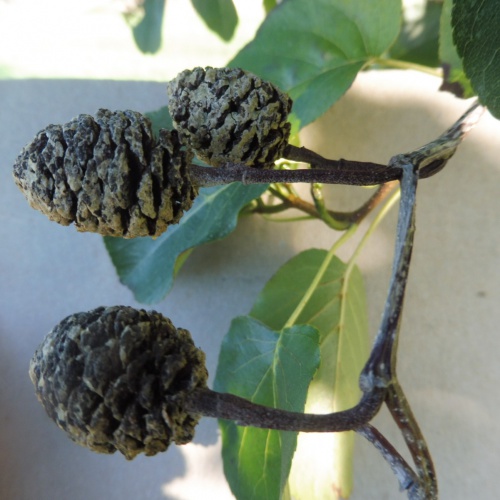 martindgrimes
Empingham, Hereward Way off Nook Lane
26 November 2020 Saharima Roenisch
Abbey Park
22 November 2017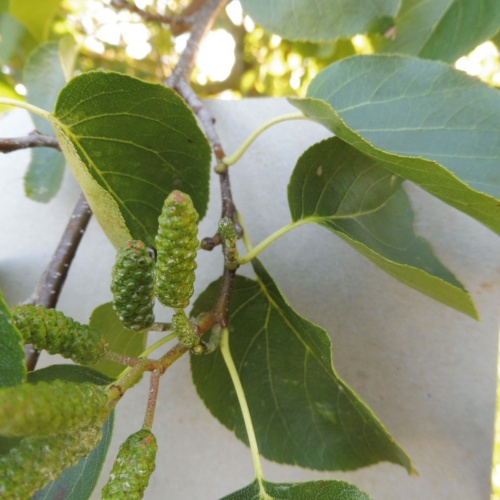 martindgrimes
Empingham, Hereward Way off Nook Lane
26 November 2020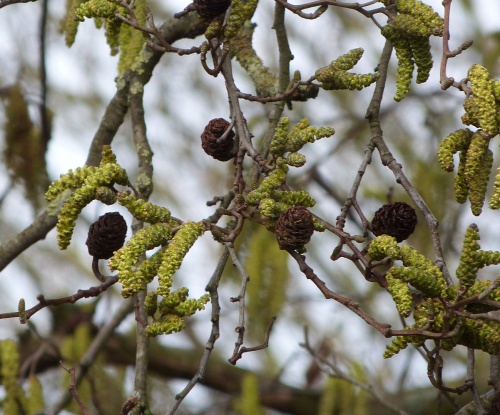 Graham Calow
Cambridge Road, Whetstone
22 February 2016 Graham Calow
Cambridge Road, Whetstone
15 May 2016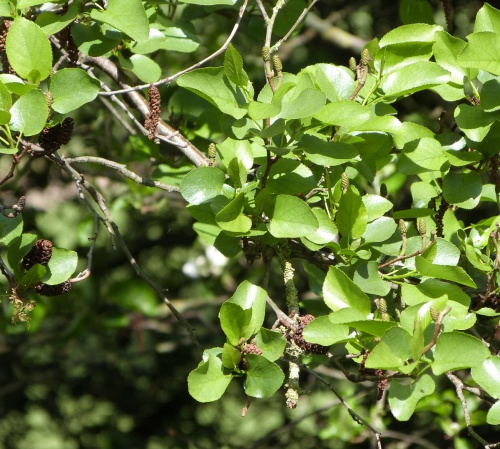 Graham Calow
Cambridge Road, Whetstone
15 May 2016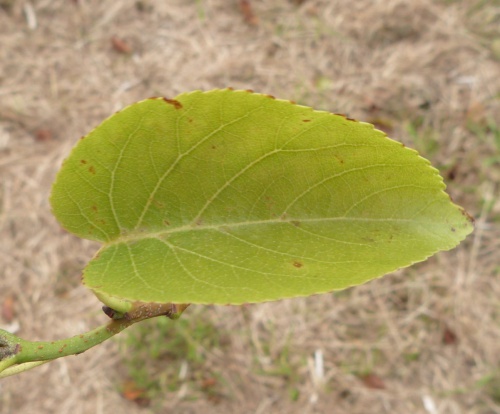 Graham Calow
Witherley
01 August 2015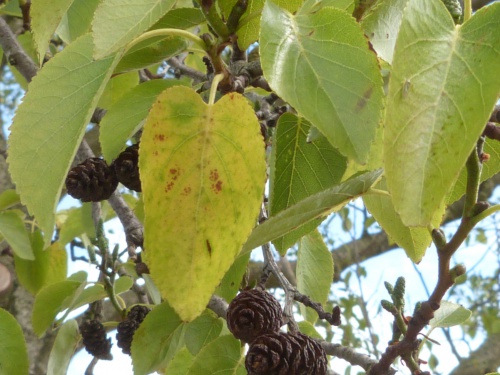 Graham Calow
Witherley
01 August 2015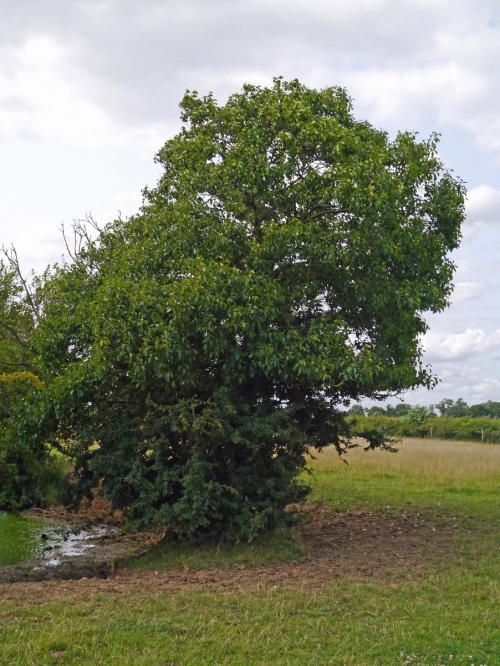 Peter Smith
Barrow upon Soar
17 July 2015
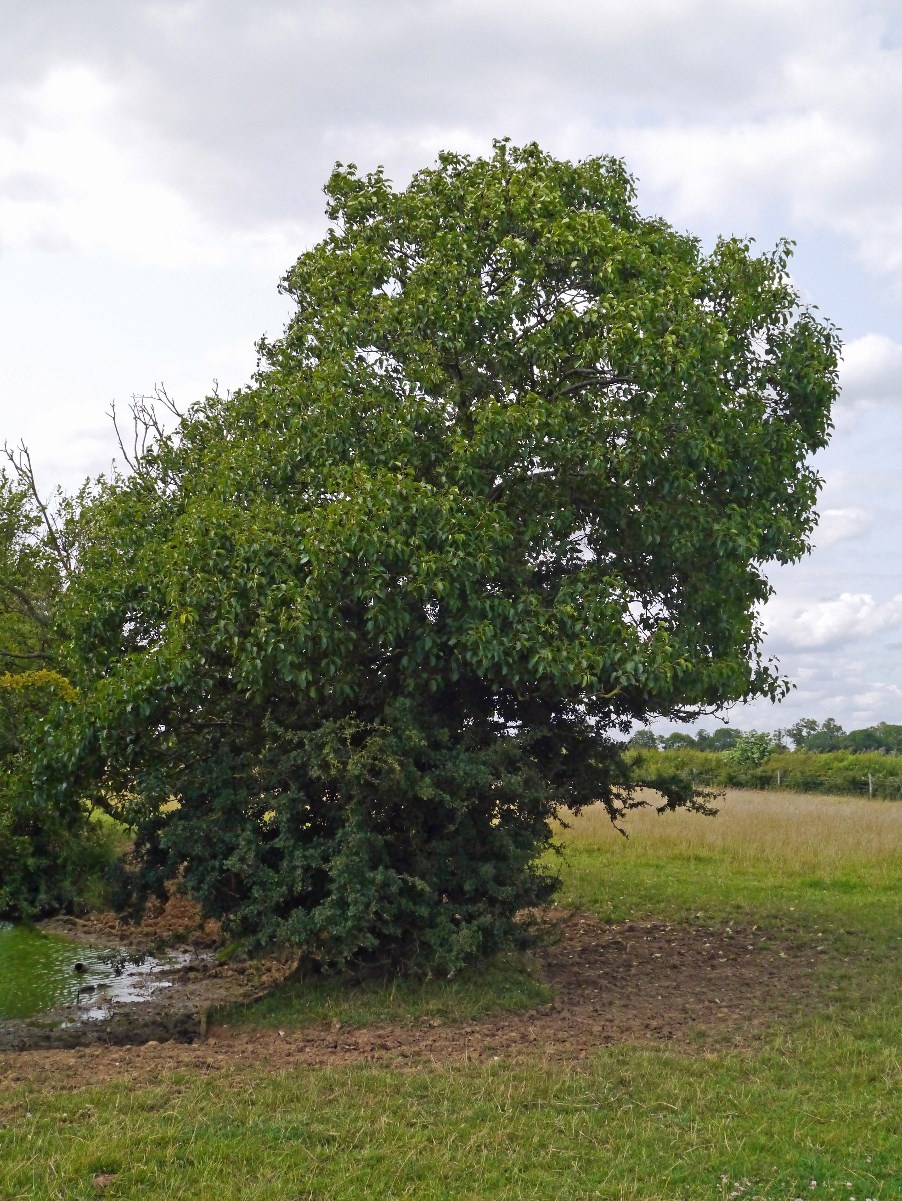
Italian alder (with hawthorn at base)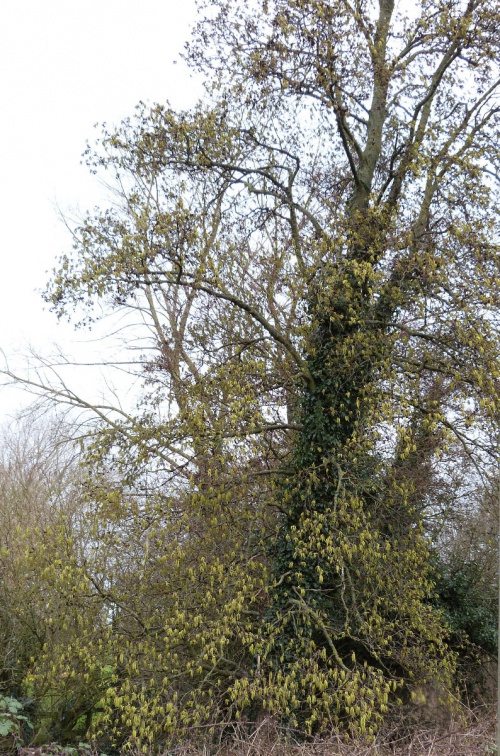 Graham Calow
Cambridge Road, Whetstone
22 February 2016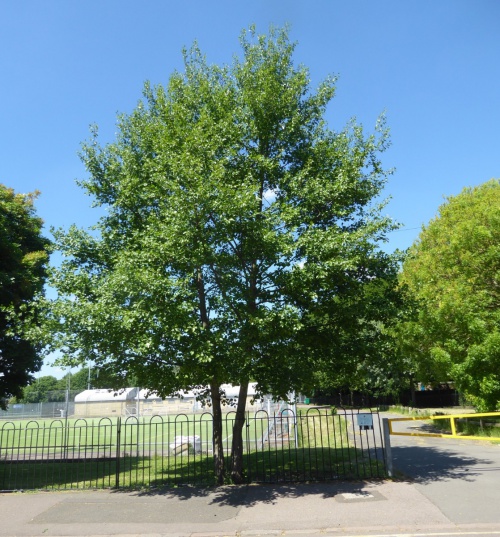 Saharima Roenisch
Leicester Abbey Park (St. Margaret's footpath)
21 May 2020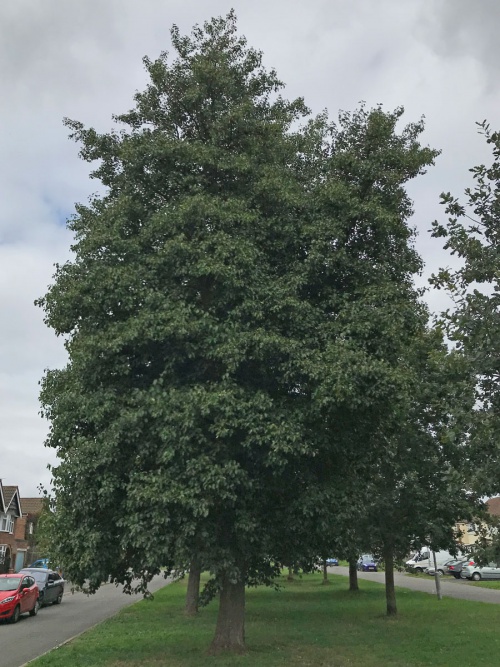 David Gould
Braunstone, Leicester
15 September 2018




Cimbex connatus
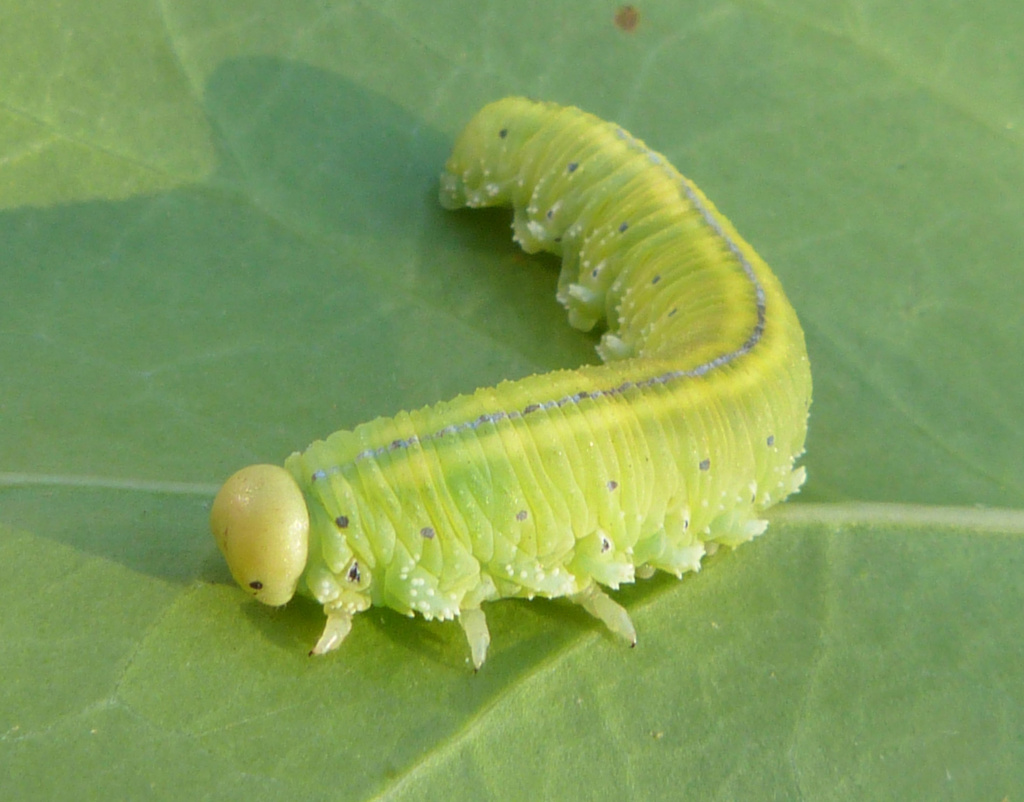
The larva of the sawfly Cimbex connatus feed on Alder species. They are up to 50mm, yellow/green with blue dots along the sides and large dorsal stripe.
Italian Alder Aphid
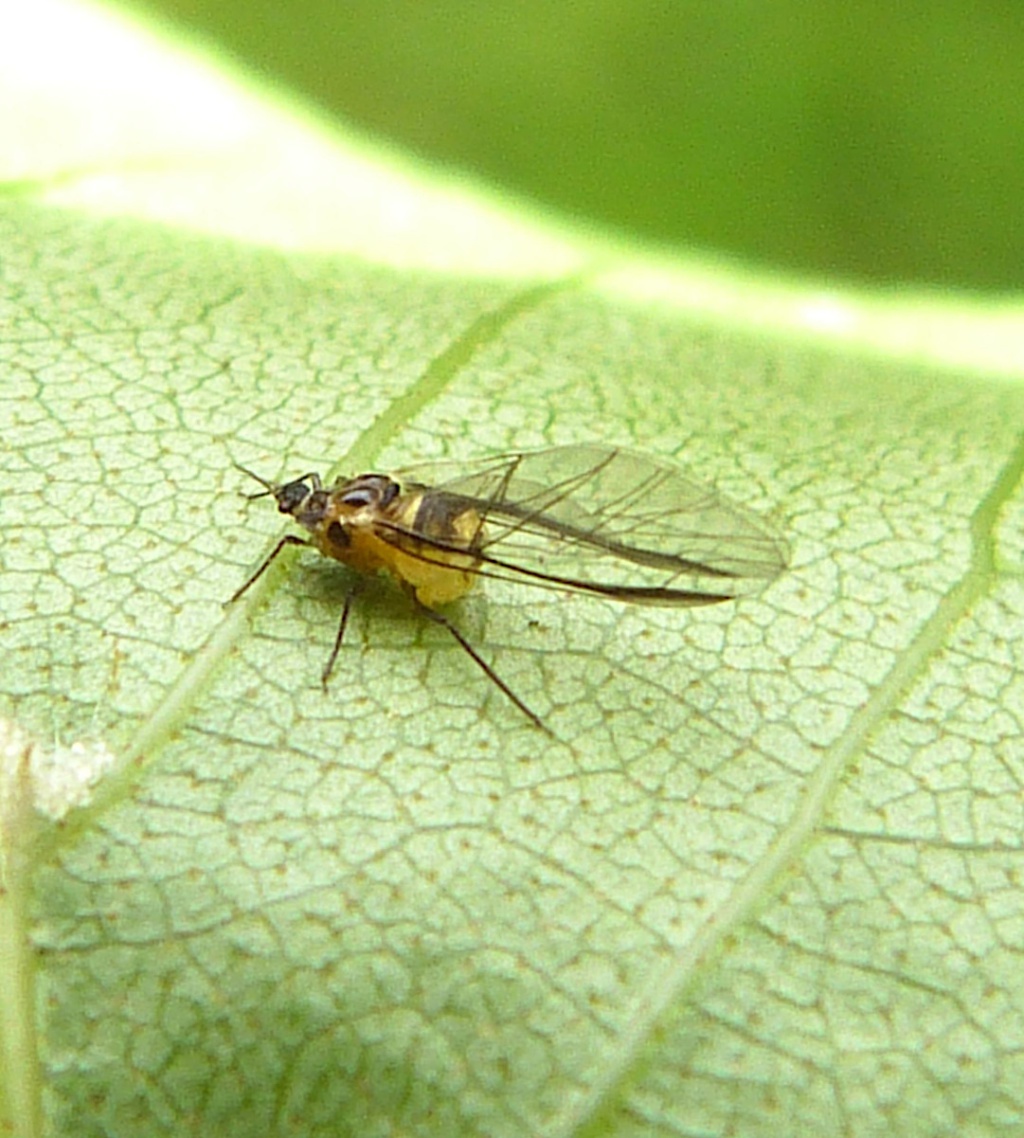
Italian Alder Aphid (Crypturaphis grassii) is a monophagous species of aphid feeding solely on Italian Alder (Alnus cordata).
Heliozela resplendella
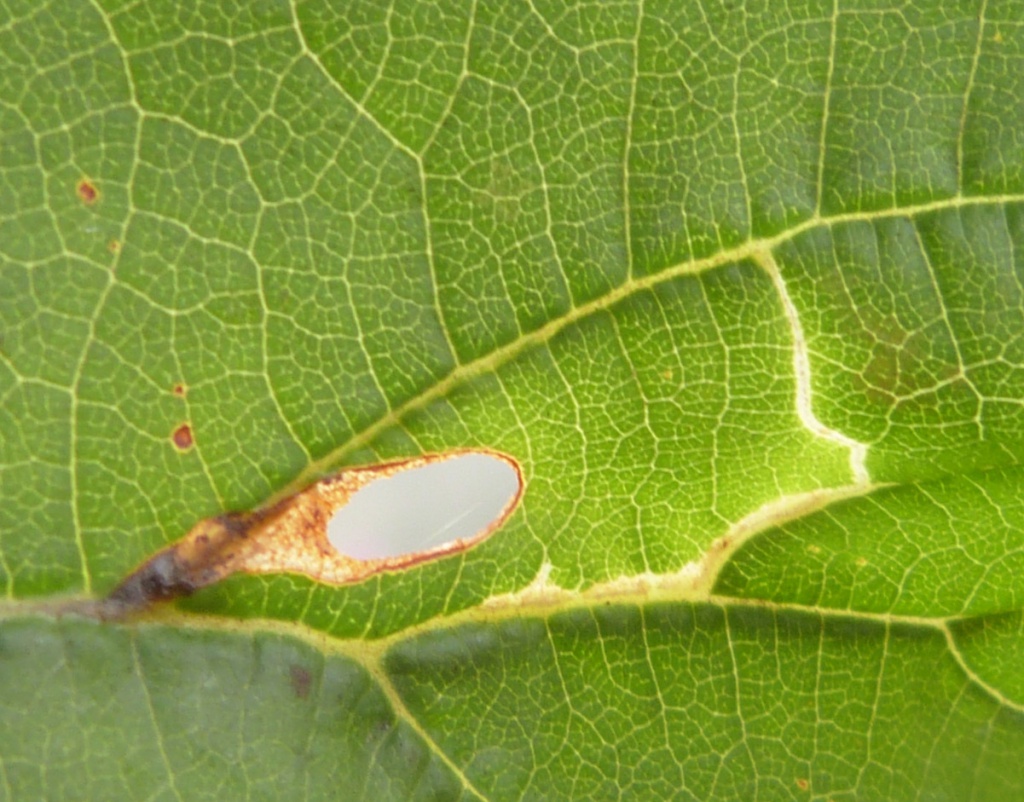
The larva of the moth Heliozela resplendella mines the leaves of Alder. The mine is initially in the midrib and then along a side vein. Then a narrow gallery is cut through to an adjacent side vein, and the larva mines down this to re-enter the midrib. Finally it makes an oval excision in the leaf blade. The larva inside this leaf sandwich drops to the ground to pupate.

Caloptilia elongella
The larva of the moth Caloptilia elongella mines the leaves of Alder, initially in an inconspicuous upper surface gallery. This lead to a silvery blotch over a vein, whch causes the leaf to contract. The larva then leaves the mine to feed in longitudinal rolls at the leaf edge. The larva is whitish with some dark markings but without any clear distinguishing features. Pupation is in a transparent, shining cocoon attached to the leaf underside.

Phyllonorycter klemannella
The larva of the moth Phyllonorycter klemannella mines the leaves of Alder, creating a tentiform mine between two veins on the underside, with a winkled surface withut sharp folds. The larva is white or yellow, and the pupa is in a cocoon with frass heaped to one side.
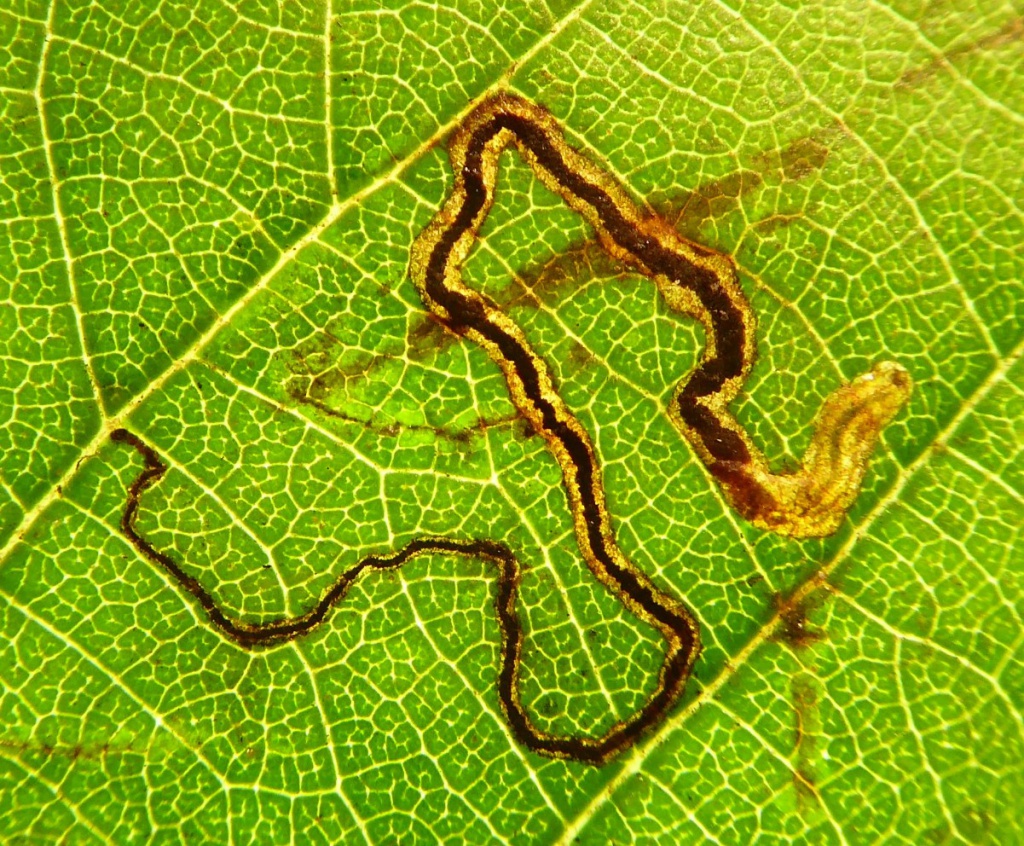
Stigmella glutinosae
The larva of the moth Stigmella glutinosae mines the leaves of Alder producing a gallery with frass partly dispersed, but sometimes in a thin line (similar to that of Stigmella alnetella). The leafmine can only be recorded when the larva is present. Mature Stigmella glutinosae larva has a brown head and a pale brown rectangular plate on the ventral surface of the prothorax, which is lacking in mature Stigmella alnetella. Stigmella glutinosae larvae mine leave with their underside (venter) upwards; Stigmella alnetella with the upper surface (dorsum) up.
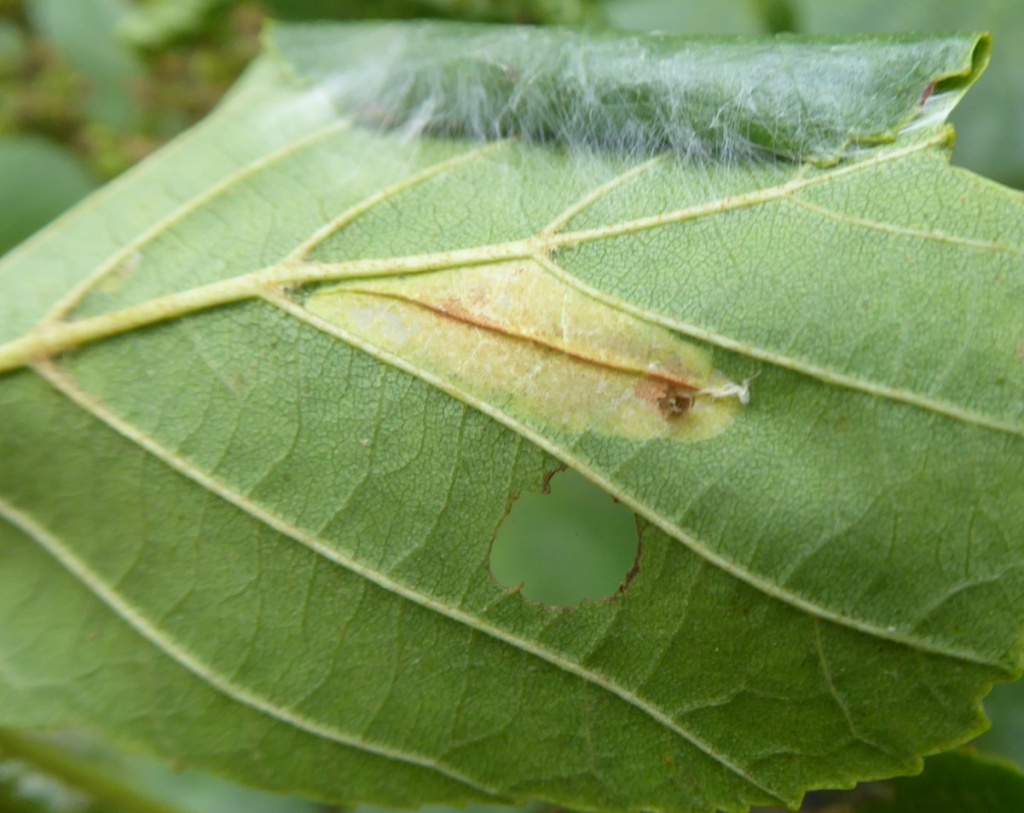
Phyllonorycter rajella
The larva of the moth Phyllonorycter rajella mines the leaves of Alder, creating an oval tentiform mine with a sharp crease on the under-surface. The larva is greenish, and pupates in a frass-encrusted cocoon inside the mine. This is visible as two dark lines either side of pupa.
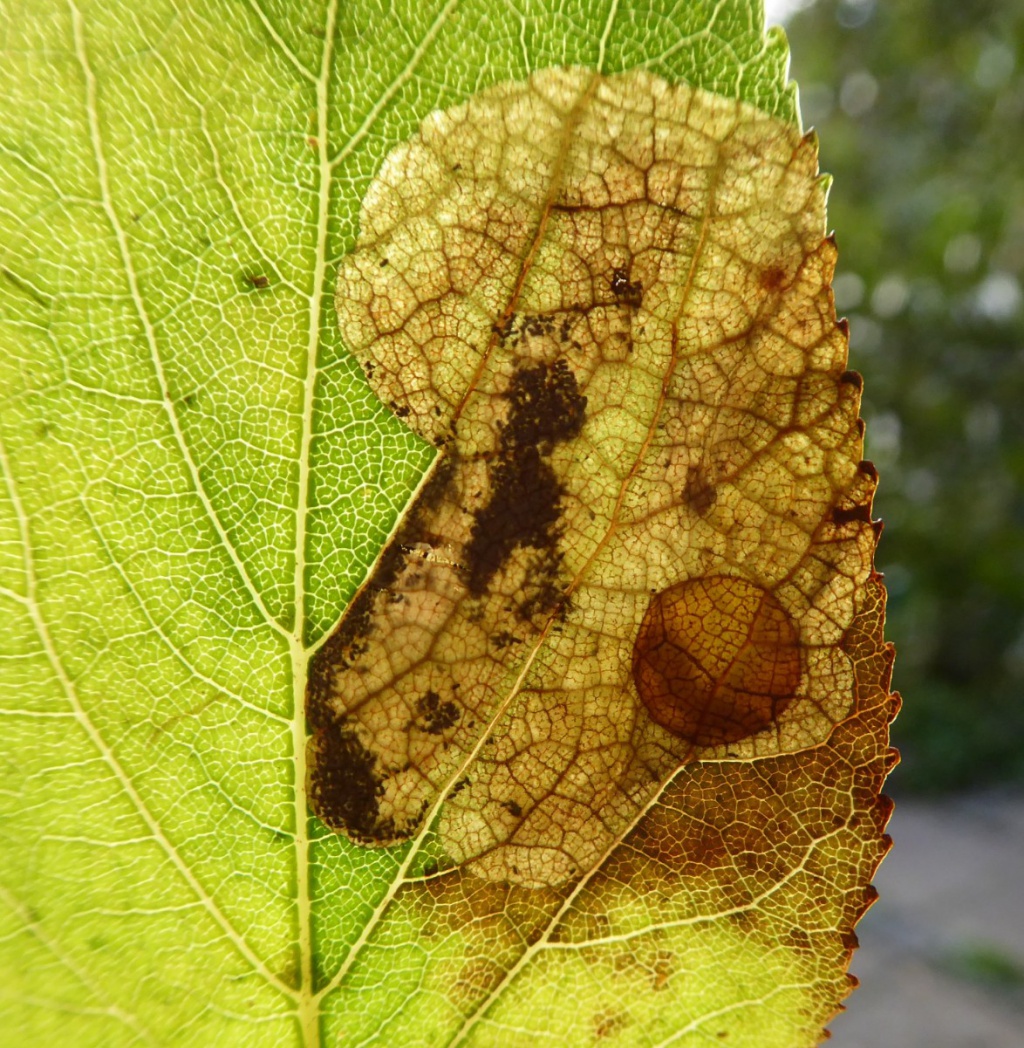
Heterarthrus vagans
The larvae of the sawfly Heterarthrus vagans mine the leaves of Alder species. The white larva has ringed feet and a distinctive black mark near the head followed by 3 spots. It creates a large blotch that normally starts at, or near, the leaf margin, where some or much frass is ejected. The mine is brownish and the full grown larva makes a disc-shaped cocoon in which it pupates. The larva has a dark patch on the back of the head, and dark markings under the head. There are black dots on the thorax underneath, and the feet are short and stubby. The pigmentation is lost in the pre-pupal stage in the cocoon
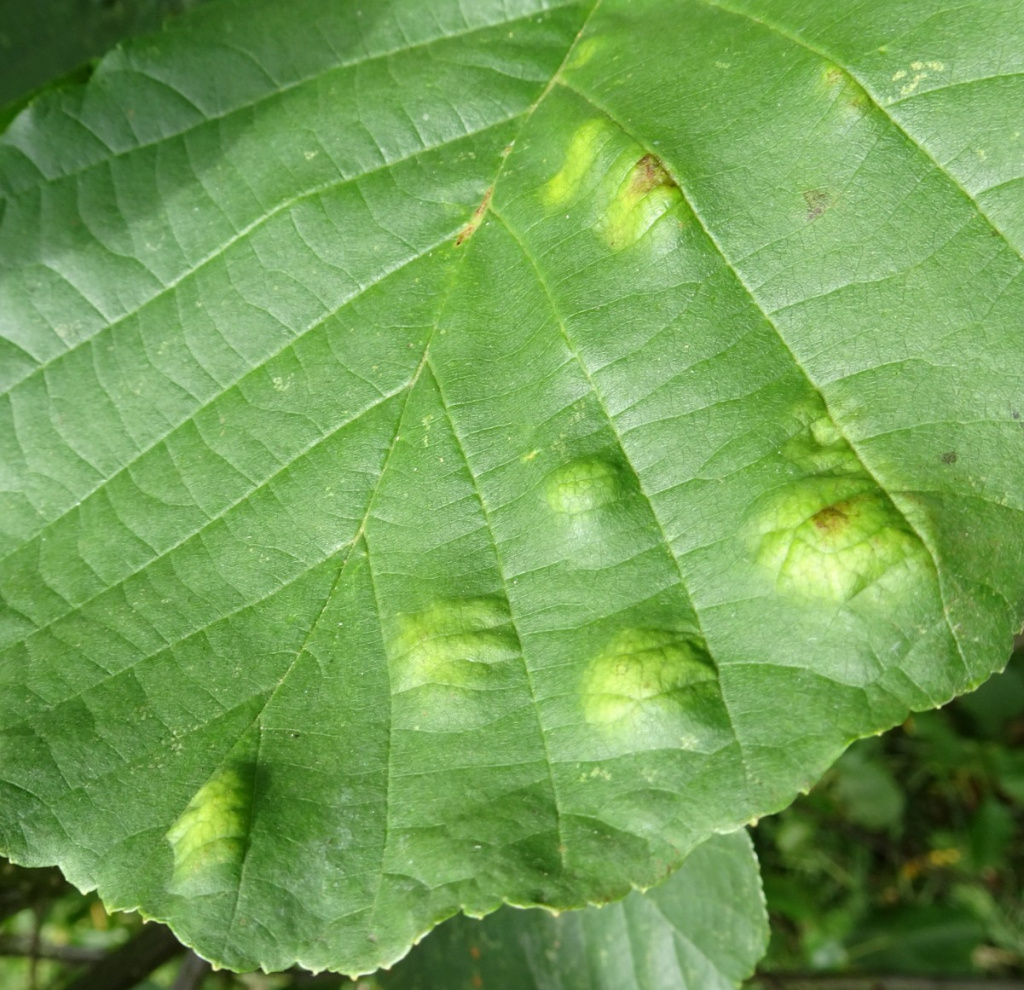
Taphrina sadebeckii
Taphrina sadebeckii is an ascomycete fungus that galls the leaves of Alder species, causing the leaf to bulge upwards. Underneath, the depression is bright yellow and lined with ascospores.
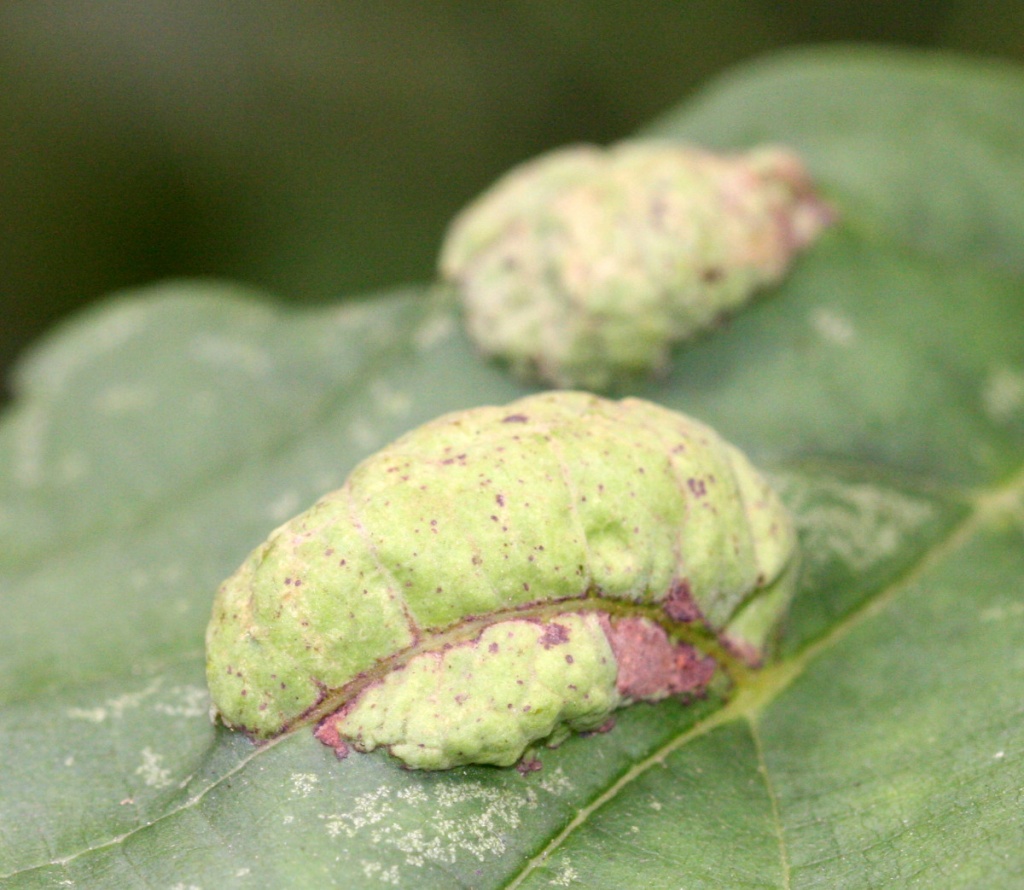
Taphrina tosquinetii
The fungus Taphrina tosquinetii causes large blisters on Alder leaves - on both surfaces. The leaves may be up twice normal size, Eventually the blisters become covered in a white bloom as the spore-bearing asci develop on the surface.

Agromyza alnivora
The larvae of this fly mine the leaves of various species of Alder creating an upper surface gallery, narrow at first but widening considerably towards the end. Frass is typically in two rows.