

Hornbeam - Carpinus betulus
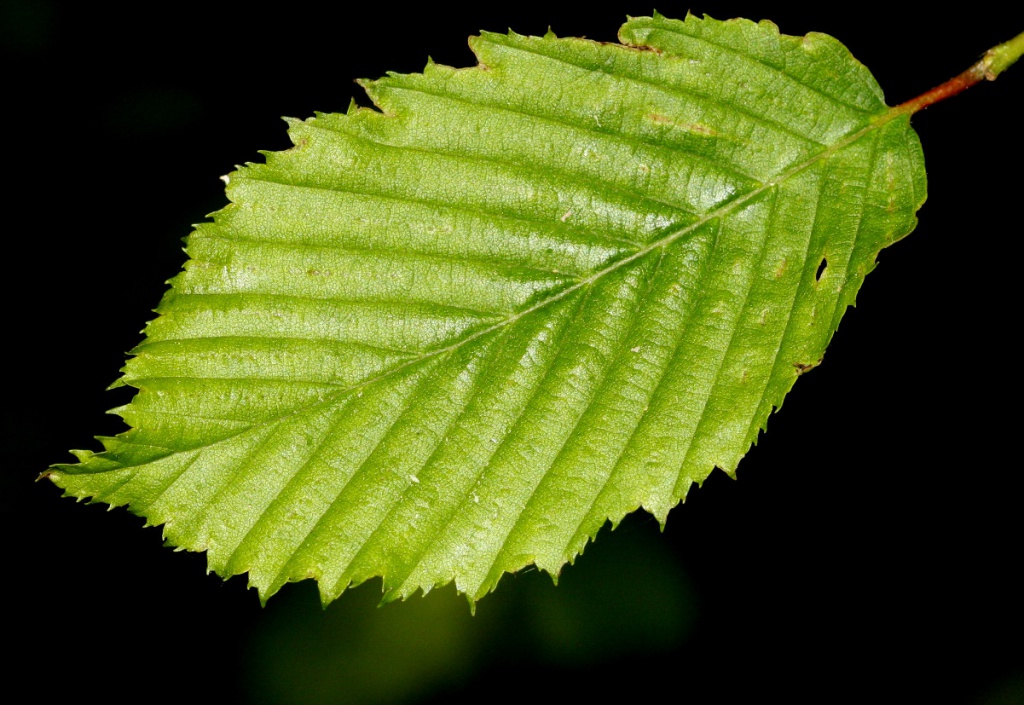
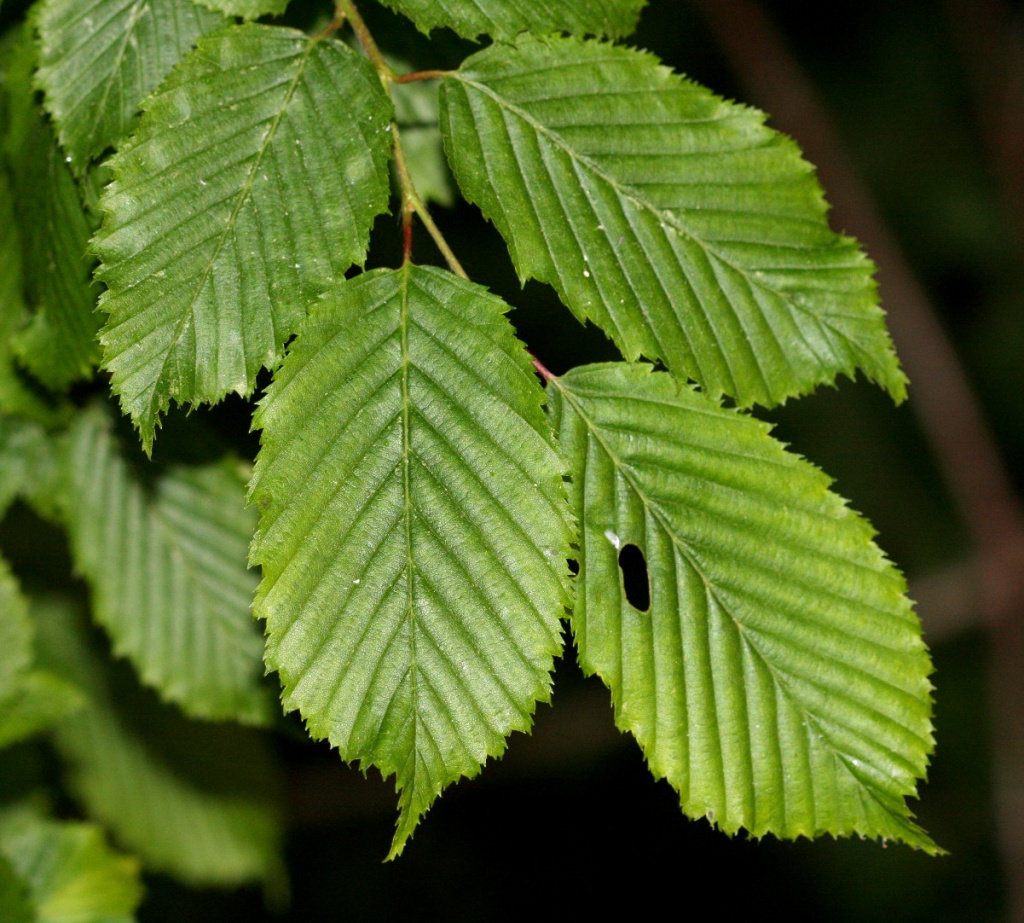
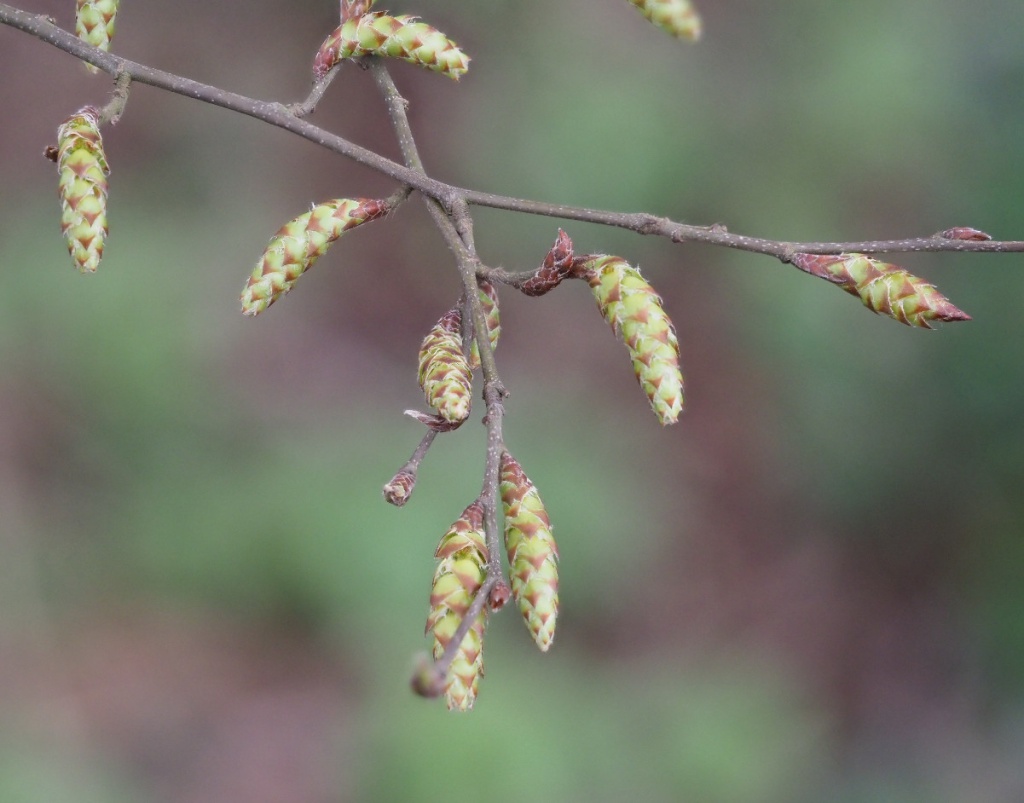
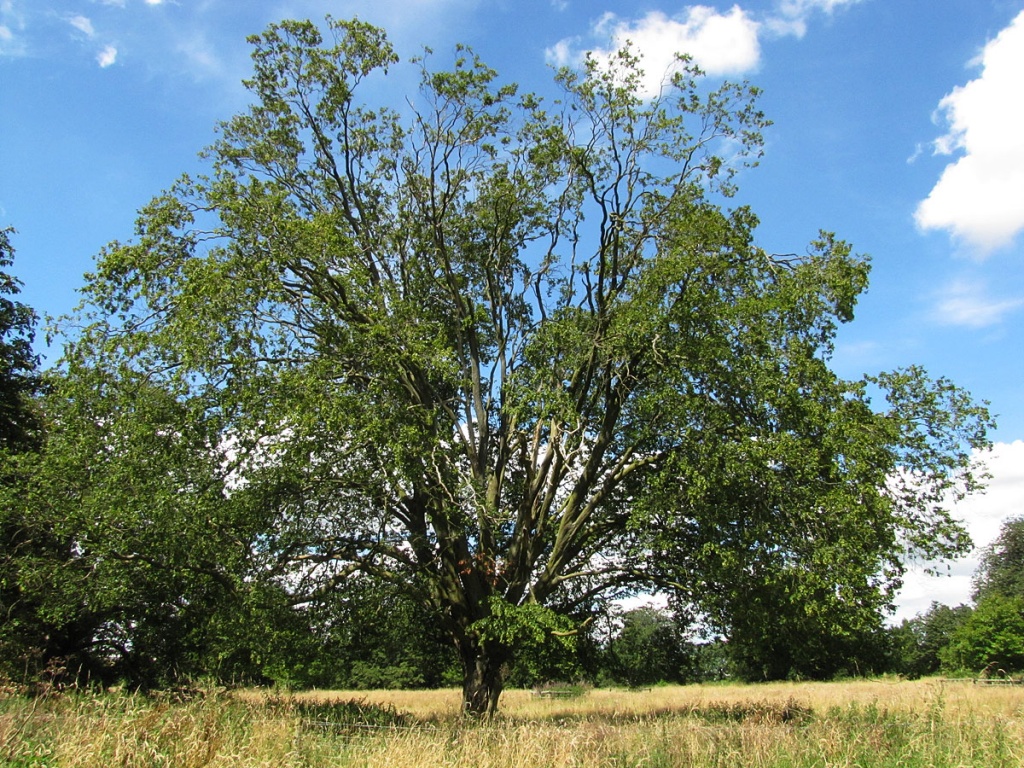
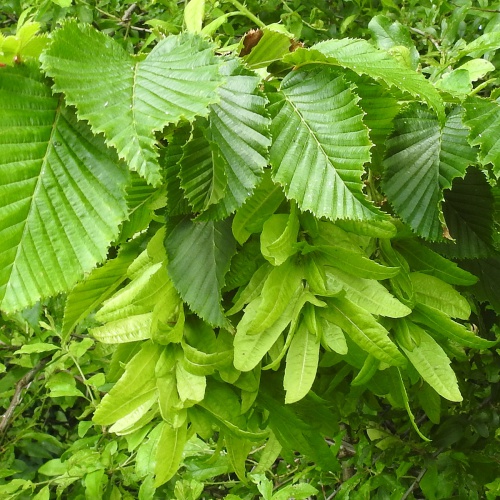
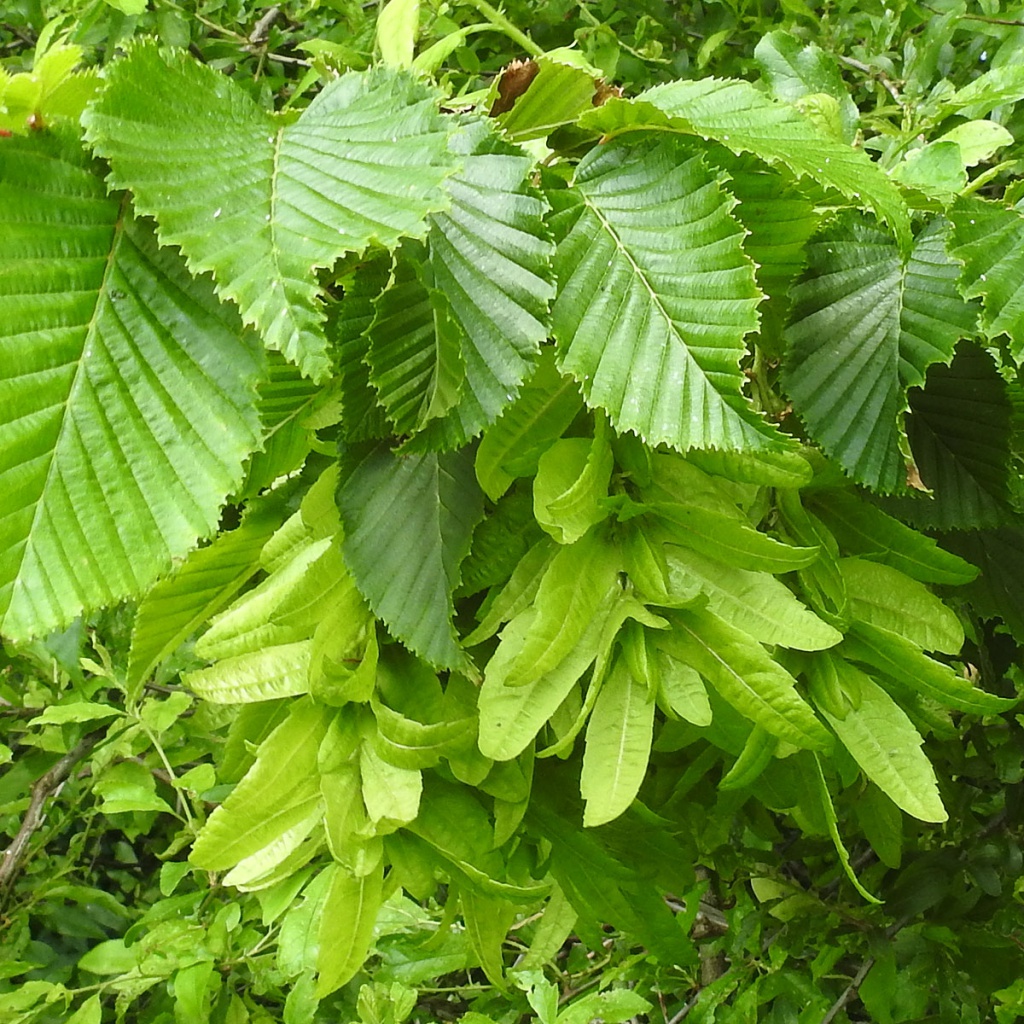
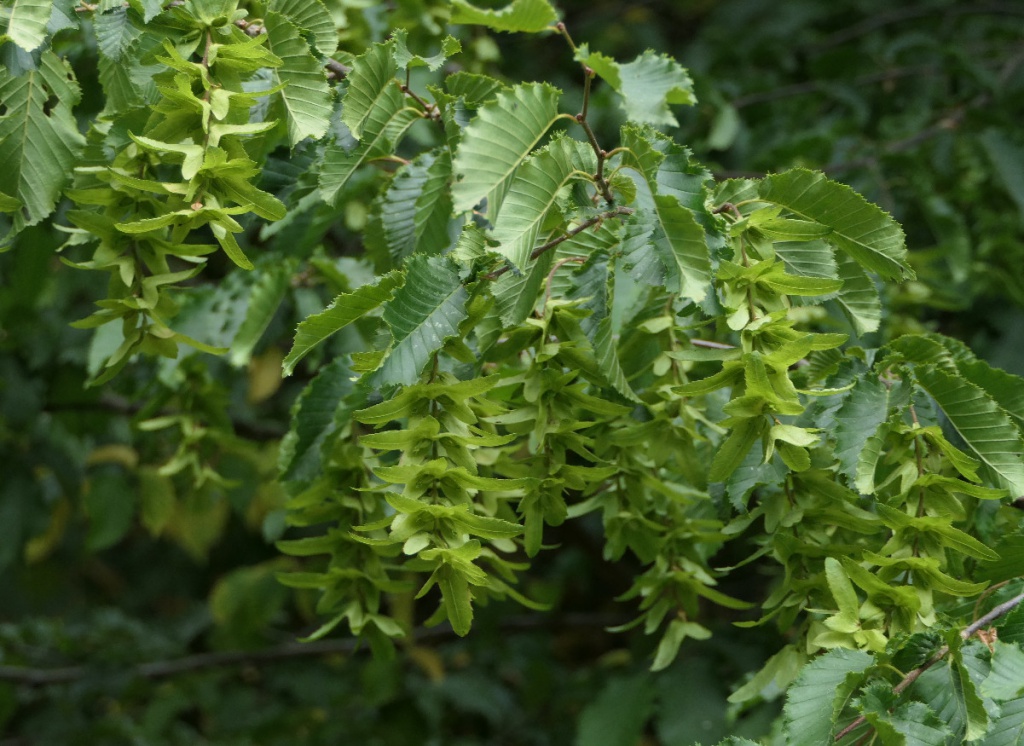
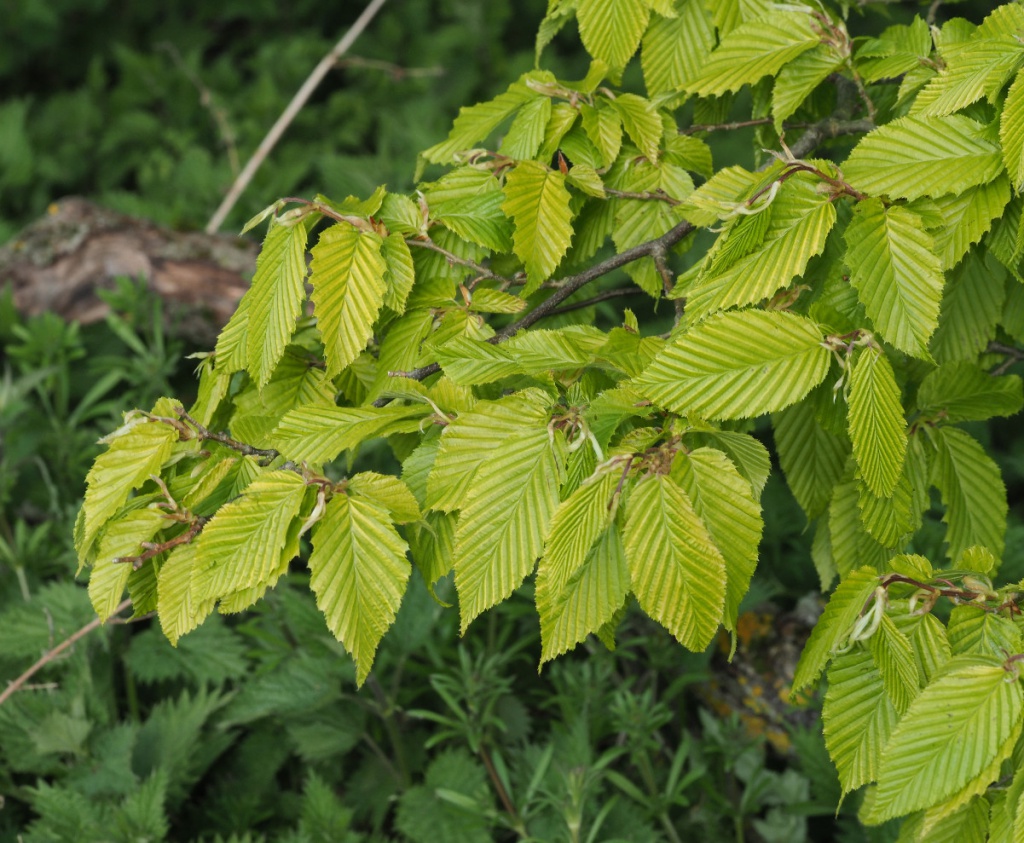
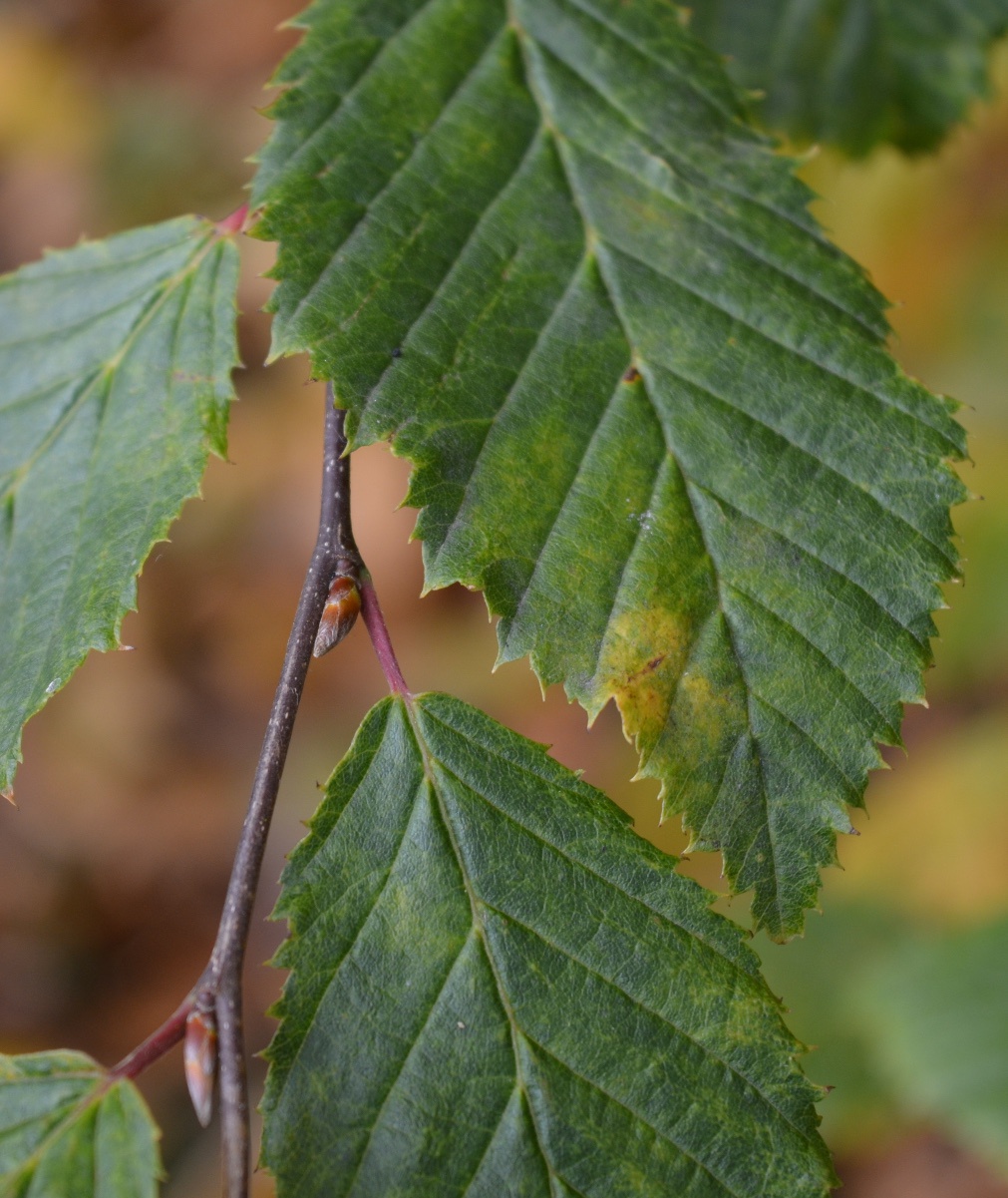
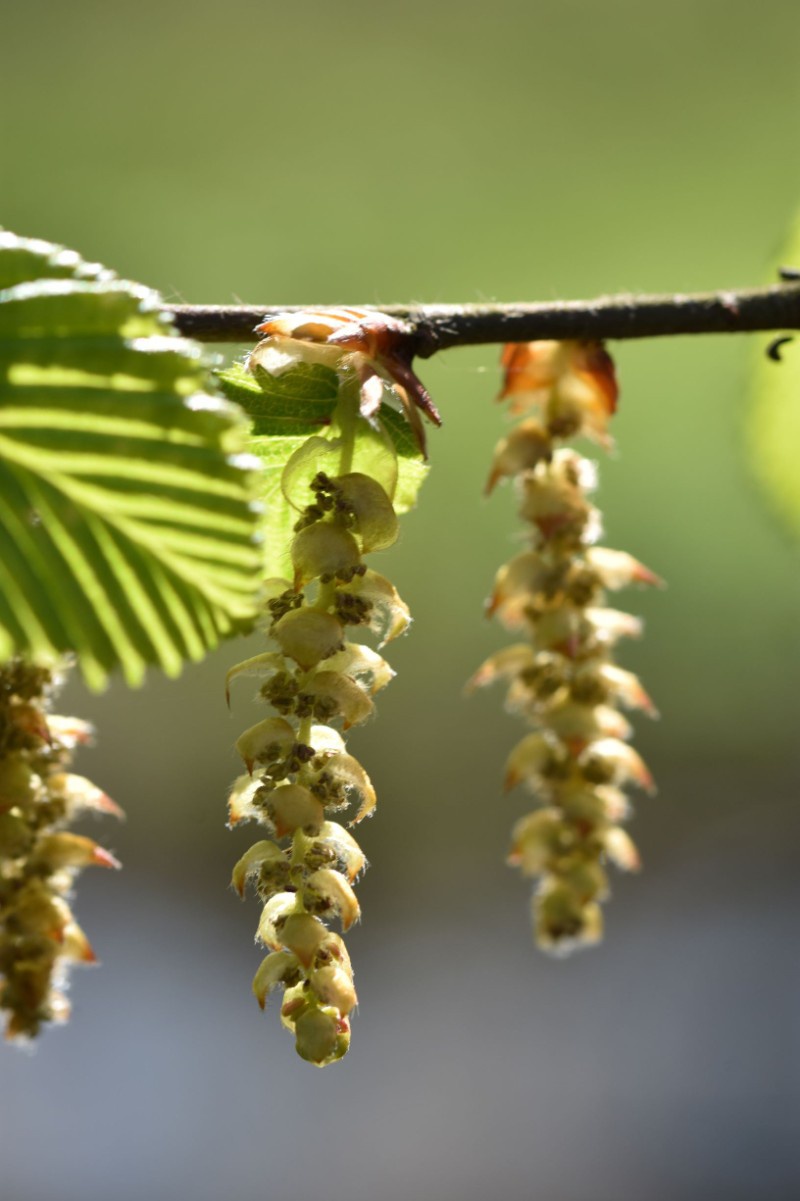
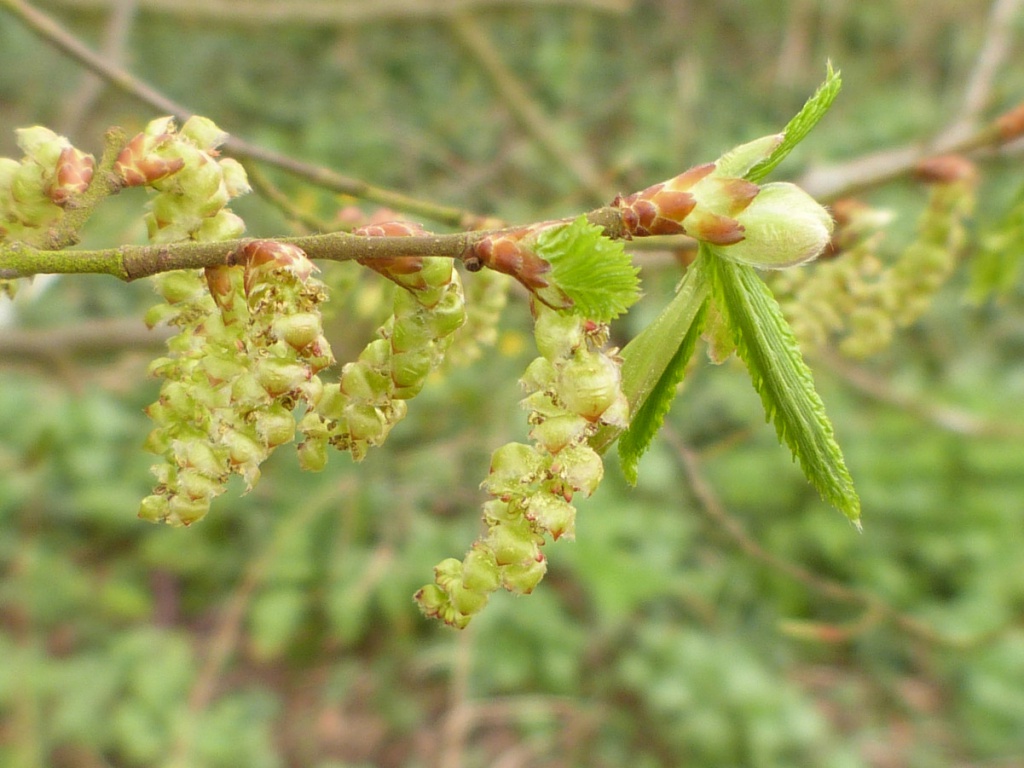
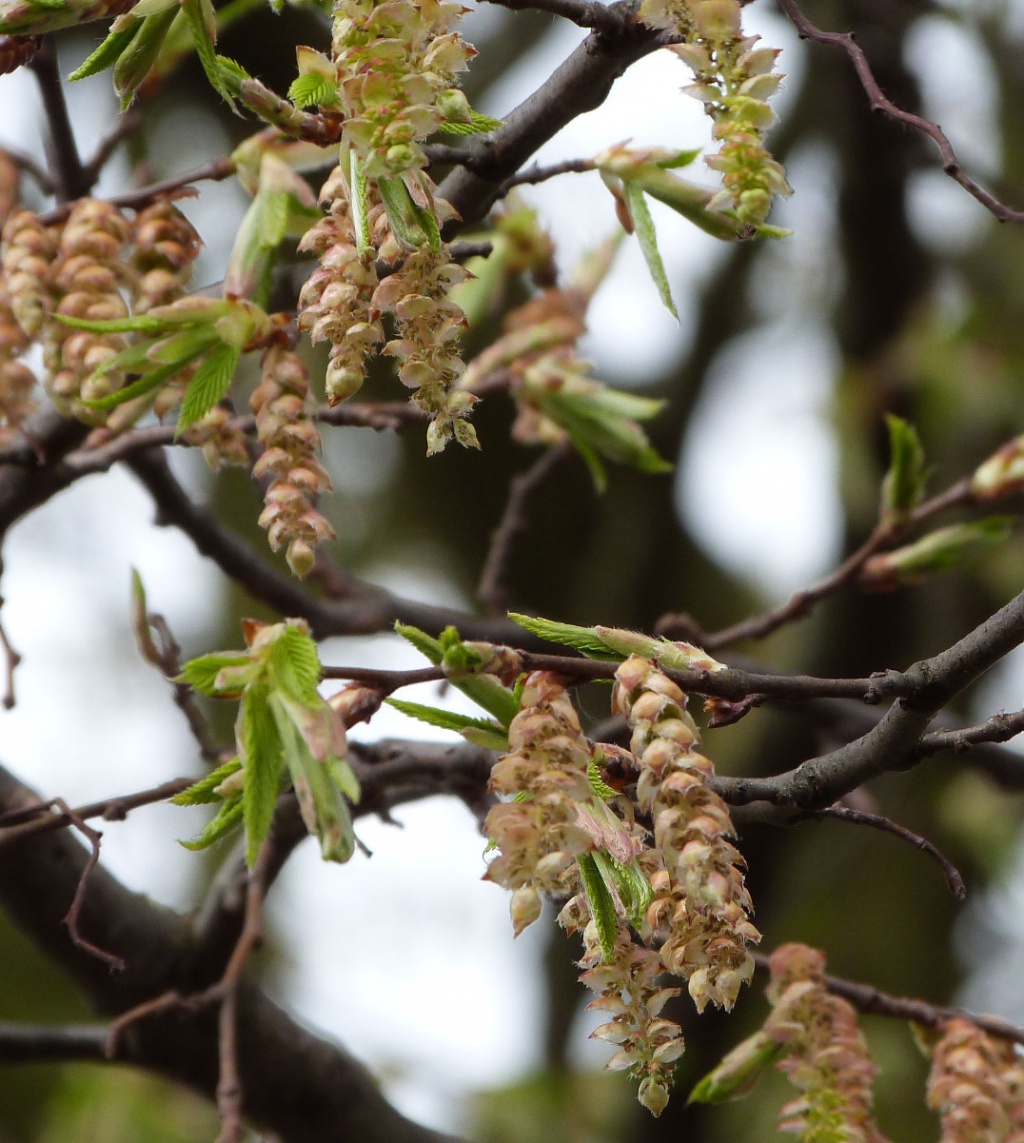
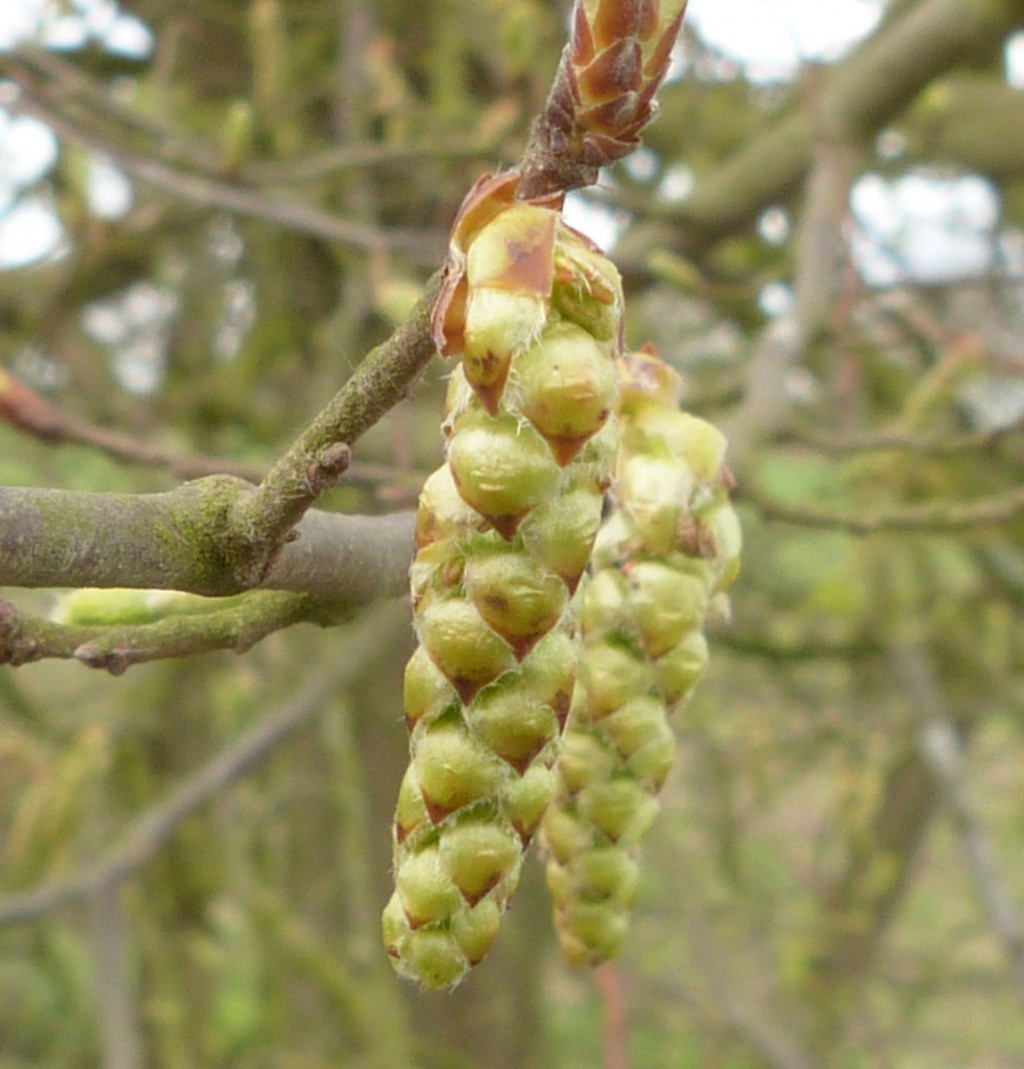
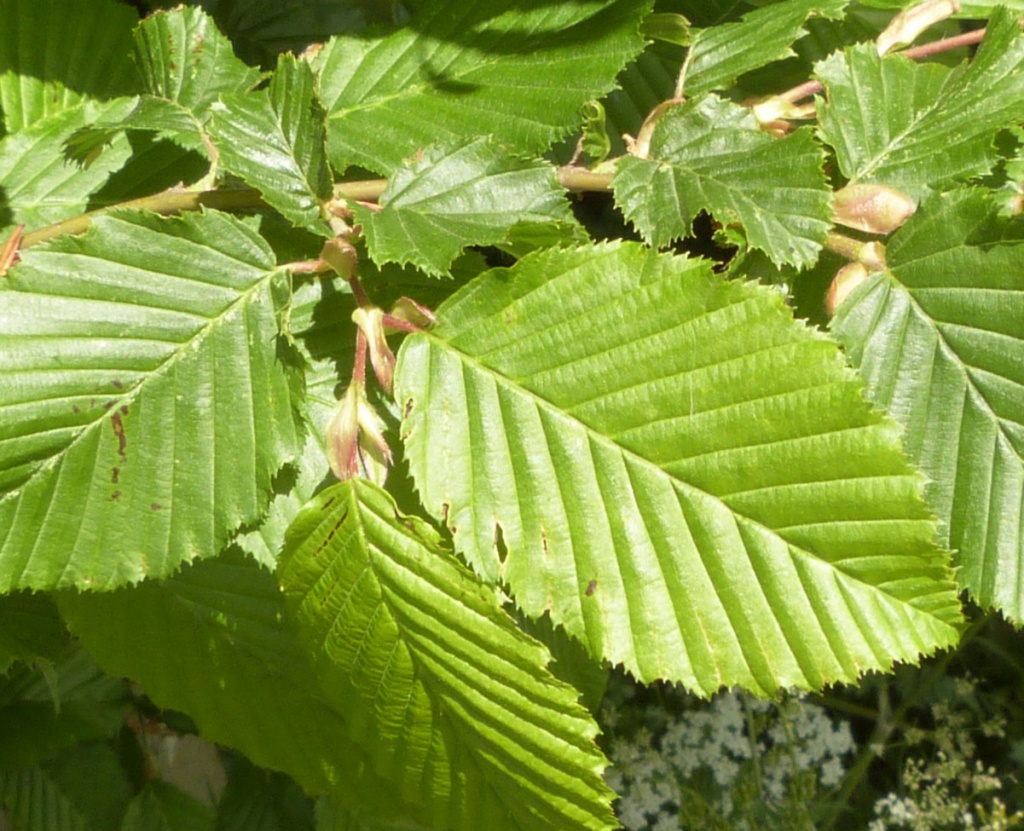
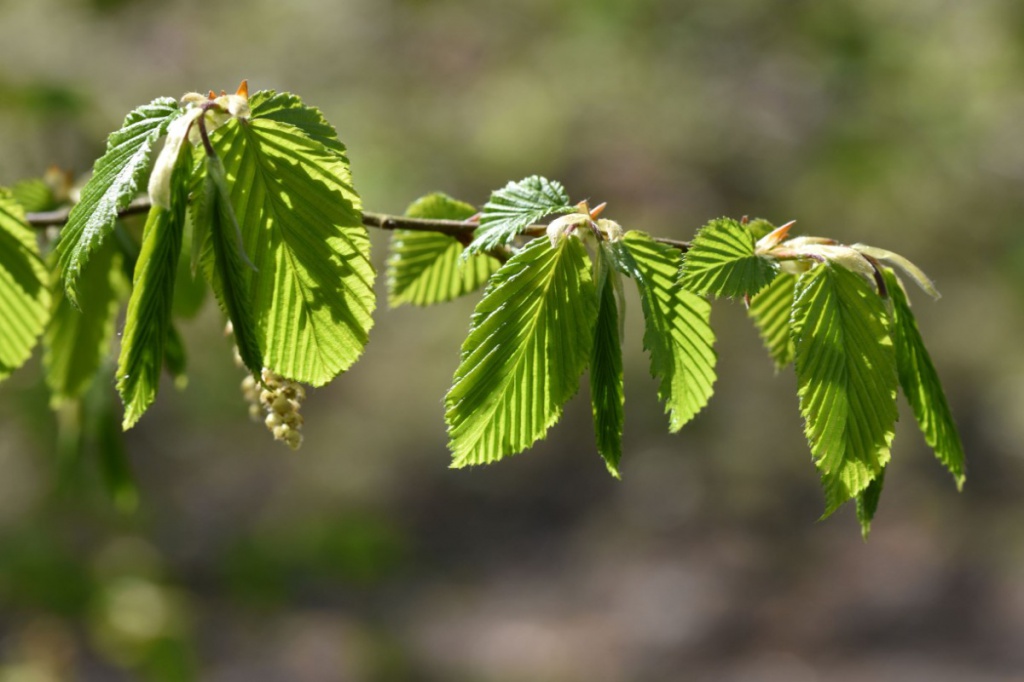
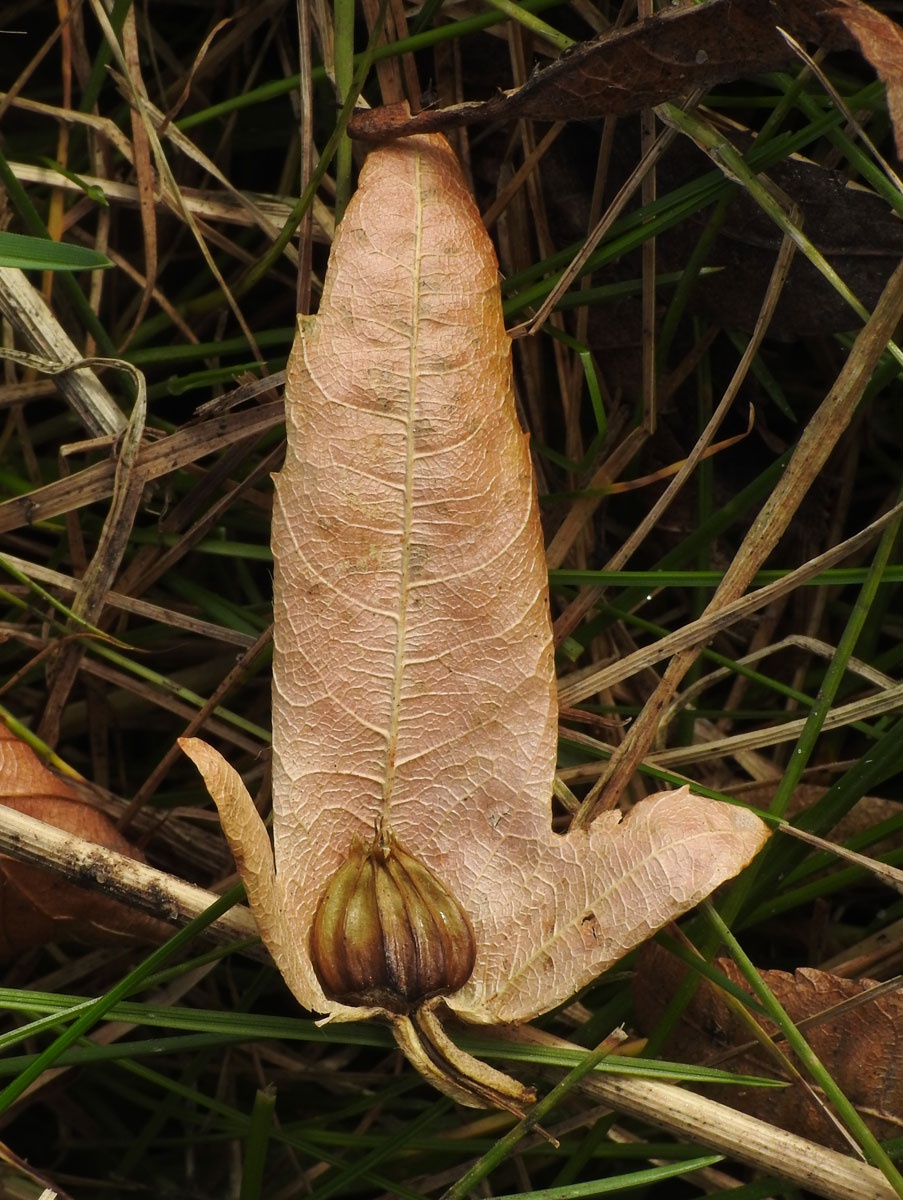
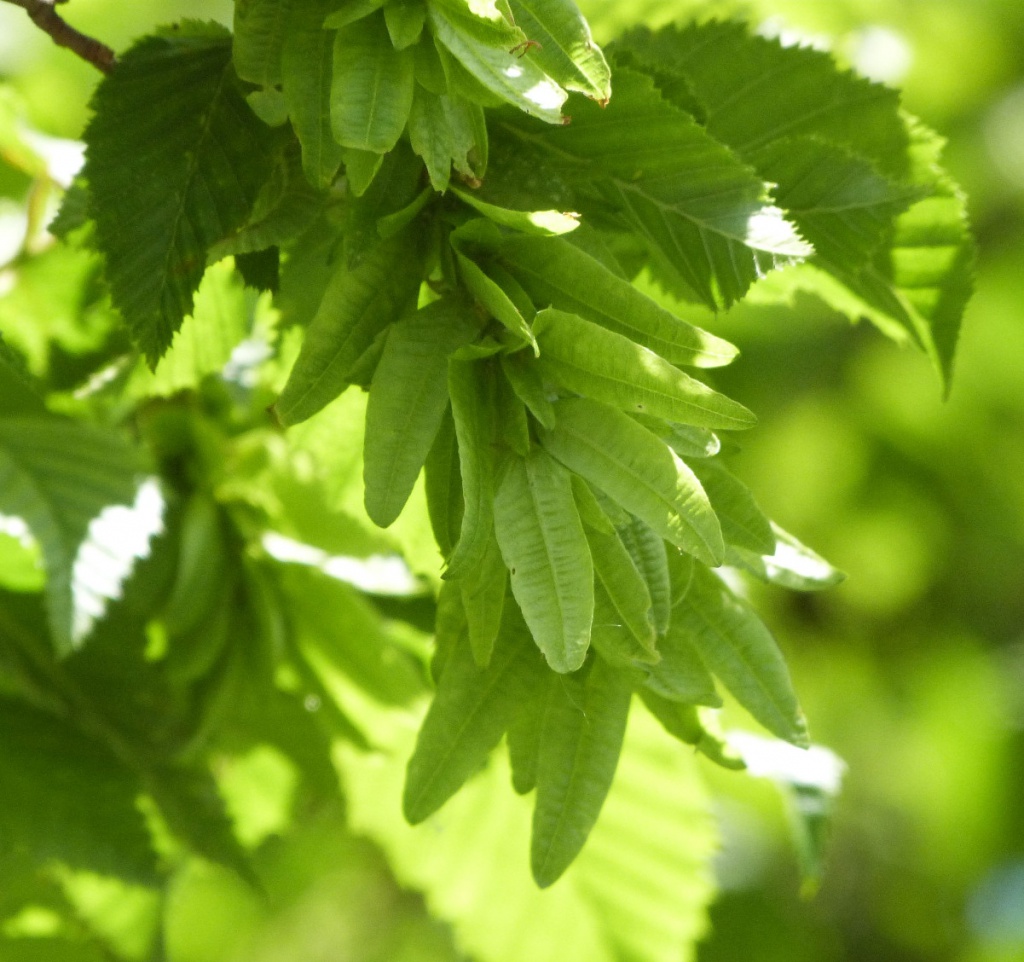
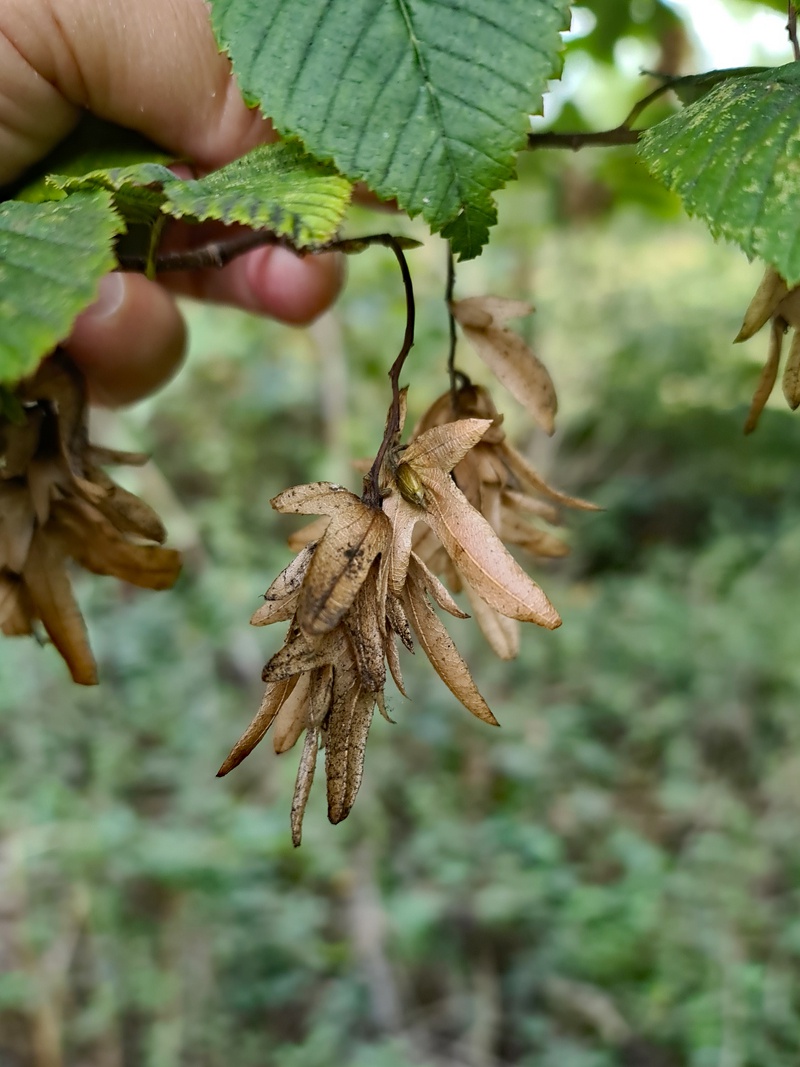
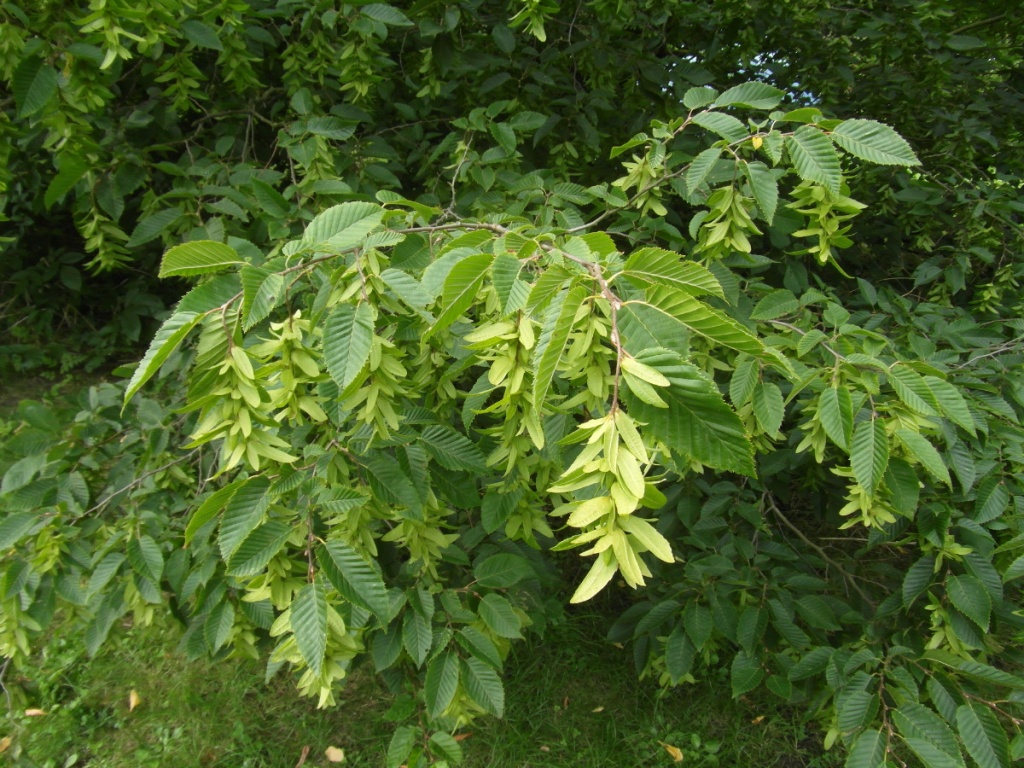
Tree to 25 metres. Leaves oval, pointed looking somewhat pleated and sharply toothed. Catkins greenish to 5 cm borne with the leaves. Fruit in pendent clusters surrounded by three lobed bracts; small nuts.

Woods and hedgerows.
In flower - April and May.
Deciduous - Many local specimens may be the result of unrecorded planting.
Mainly found in south-east England and East Anglia, though also occasional elsewhere.
Occasional in Leicestershire and Rutland. In the 1979 Flora survey of Leicestershire it was found in 70 of the 617 tetrads.
, Donkey Lane Sapcote SP 4865 9312 (taken 9.7.2007).JPG) Graham Calow
Graham Calow
Sapcote
09 July 2007
three lobed leafy bracts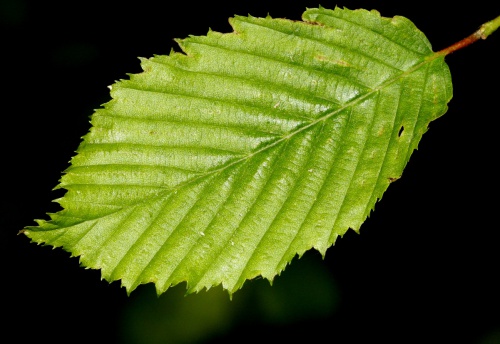 David Nicholls
Fosse Meadows
21 May 2014, Donkey Lane Sapcote SP 4865 9312 (revisited 19.4.2009)...JPG) Graham Calow
Graham Calow
Sapcote
19 April 2009
flower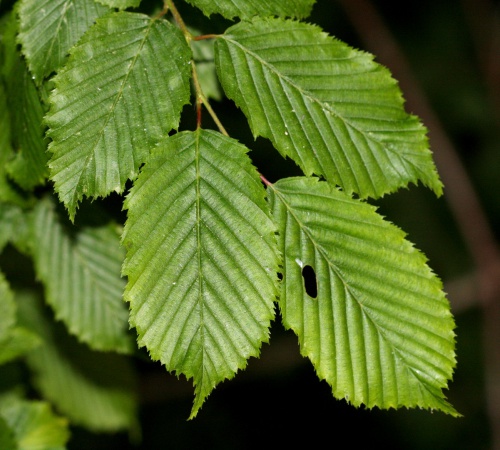 David Nicholls
Fosse Meadows
21 May 2014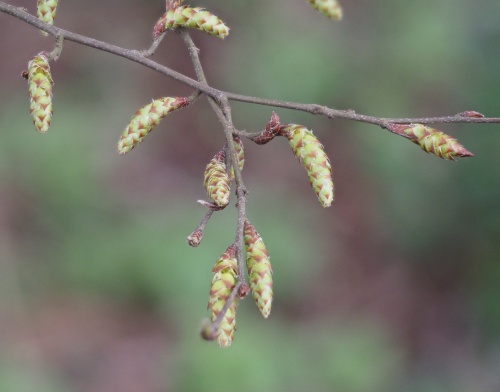 David Nicholls
Ratby
03 March 2023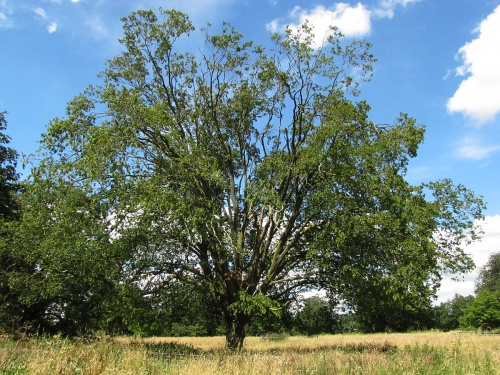 David Gould
Croft Glebe
10 August 2012
mature tree
, Donkey Lane Sapcote SP 4865 9312 (taken 9.7.2007).JPG)
, Donkey Lane Sapcote SP 4865 9312 (revisited 19.4.2009)...JPG)
Leicestershire & Rutland Map
Enter a town or village to see local records
MAP KEY:
Yellow squares = NBN records (all known data)
Coloured circles = NatureSpot records: 2025+ | 2020-2024 | pre-2020
UK Map
Species profile
- Common names
- Hornbeam
- Species group:
- flowering plant
- Kingdom:
- Plantae
- Order:
- Fagales
- Family:
- Betulaceae
- Records on NatureSpot:
- 109
- First record:
- 09/07/2007 (Calow, Graham)
- Last record:
- 07/05/2026 (Mabbett, Craig)
Total records by month
% of records within its species group
10km squares with records
The latest images and records displayed below include those awaiting verification checks so we cannot guarantee that every identification is correct. Once accepted, the record displays a green tick.
In the Latest Records section, click on the header to sort A-Z, and again to sort Z-A. Use the header boxes to filter the list.
Latest images
Latest records
 David Gould
The Spearwort Fields
25 May 2017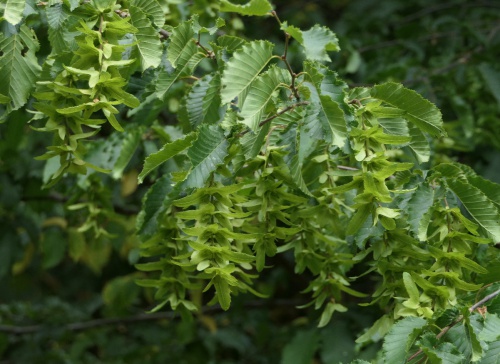 David Nicholls
Millenium Green, Glenfield
14 July 2018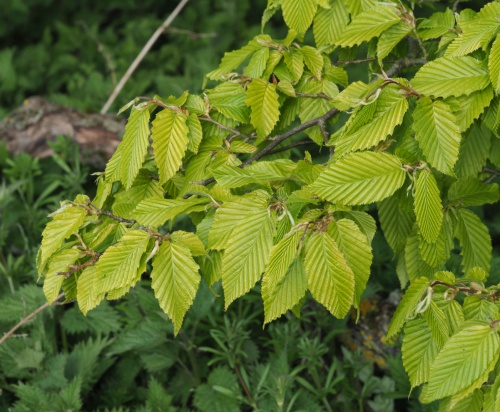 David Nicholls
High Cross
29 April 2021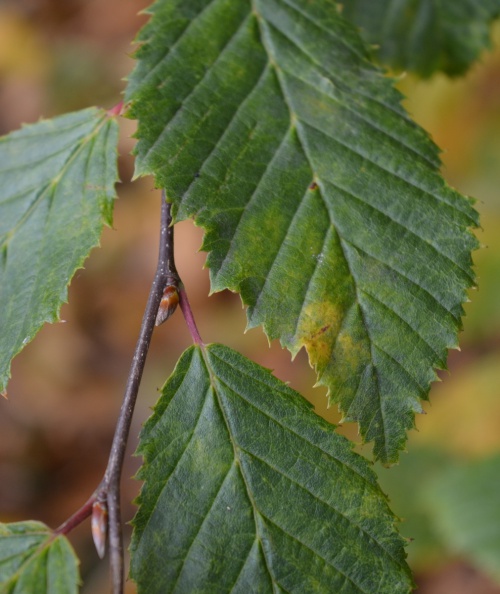 Steve Mathers
West Beacon Fields
07 November 2016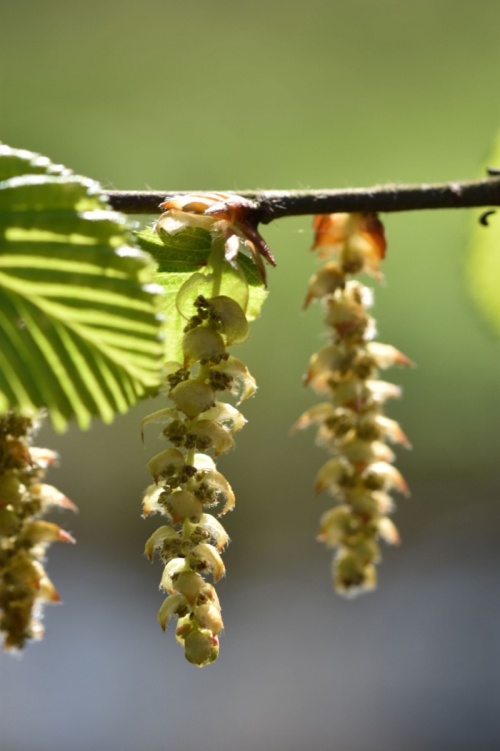 stepgray4
Burbage Common and Woods
02 May 2021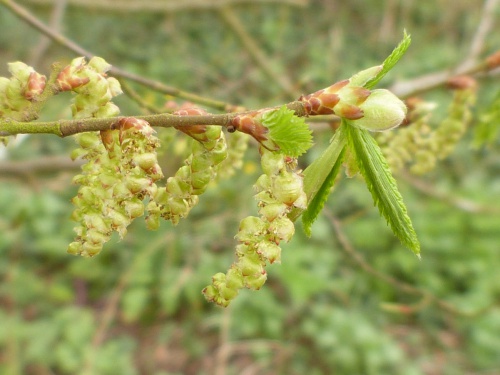 Graham Calow
Sapcote
04 April 2014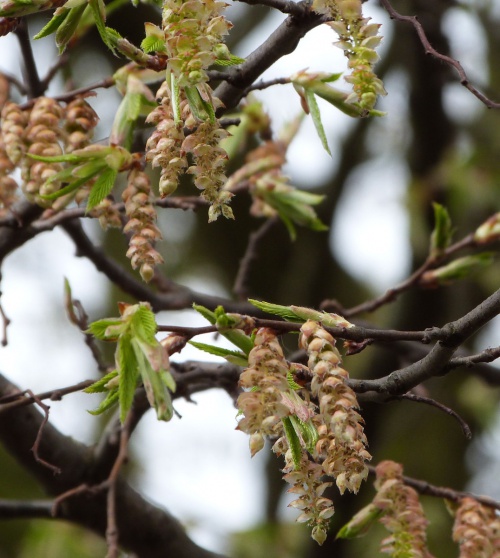 Graham Calow
Near Cosby Library
12 April 2016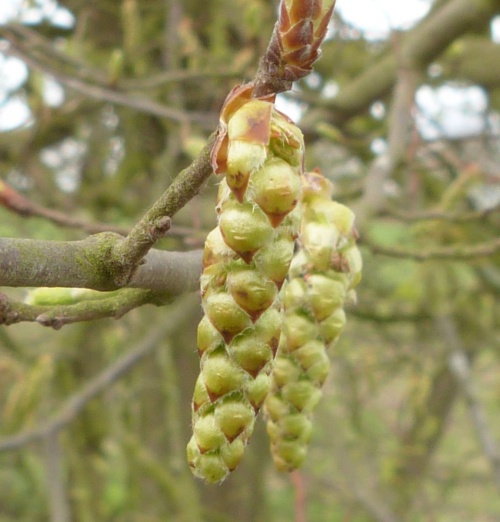 Graham Calow
Footpath near High Cross
05 April 2016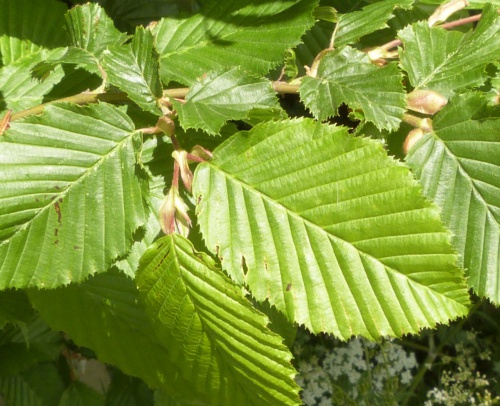 Graham Calow
Witherley
27 May 2015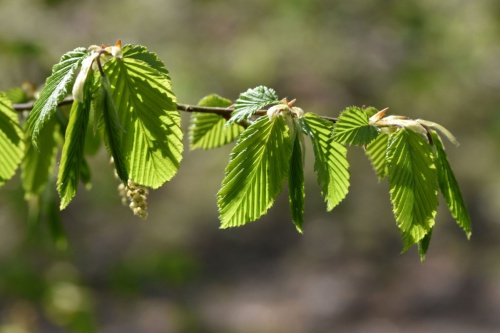 stepgray4
Burbage Common and Woods
02 May 2021. Donkey Lane Sapcote SP 4865 9312 (revisited 4.10.2009).JPG) Graham Calow
Graham Calow
Sapcote
04 October 2009
seeds - pair of nuts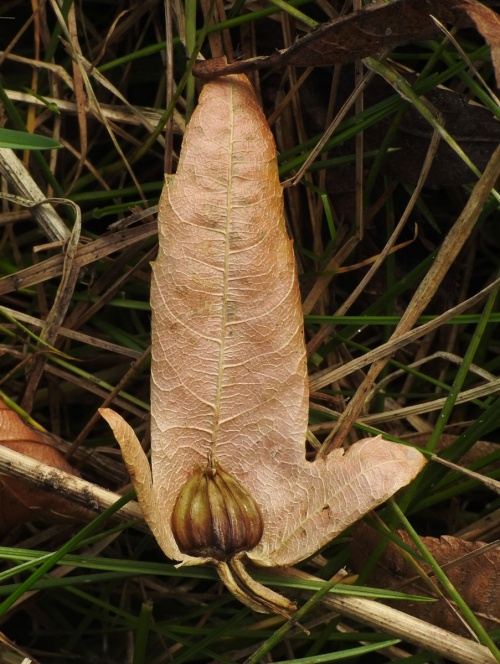 David Gould
The Spearwort Fields
08 October 2017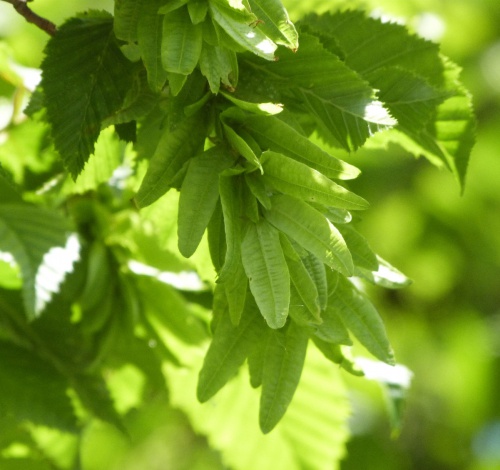 Graham Calow
Witherley
27 May 2015
seeds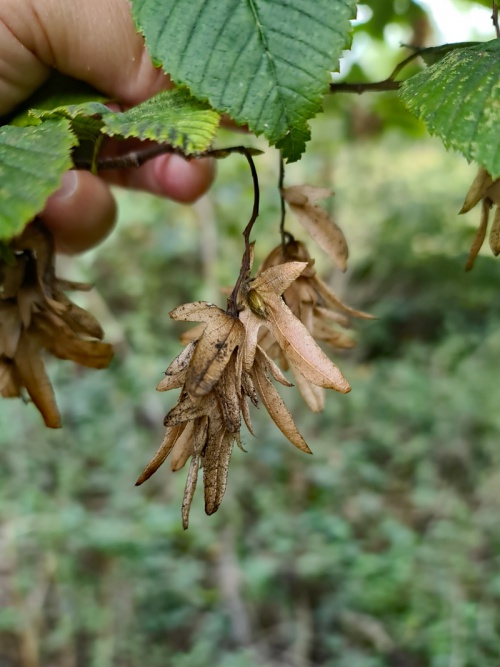 Mark Skevington
Whetstone
11 November 2021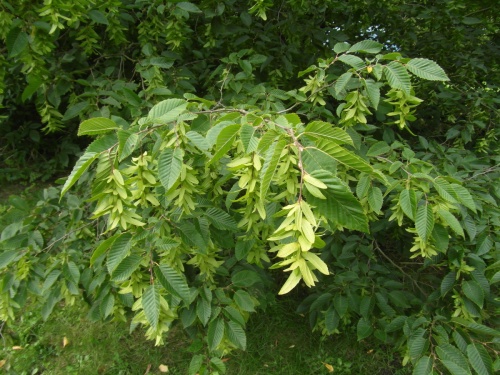 Alan Semper
Harby, nature reserve
31 August 2012
. Donkey Lane Sapcote SP 4865 9312 (revisited 4.10.2009).JPG)
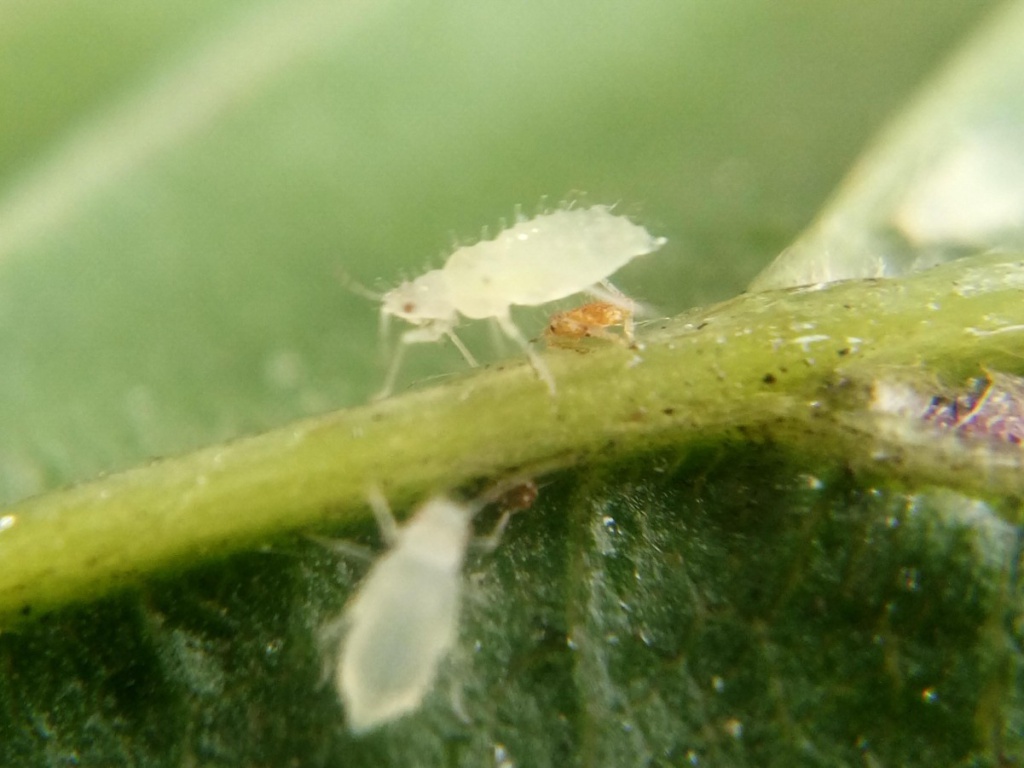
Myzocallis carpini
Immature Myzocallis carpini aphids are pale and unmarked and have the body hairs (and a few basal antennal hairs) capitate, and very much longer than those of the adult. Winged adult M. carpini viviparae are pale yellow to yellowish white, with no dorsal abdominal markings. The forewing has a black spot at the base of the pterostigma. Their antennae are ringed with black. The body length of alate Myzocallis carpini is 1.3 to 2.2 mm.
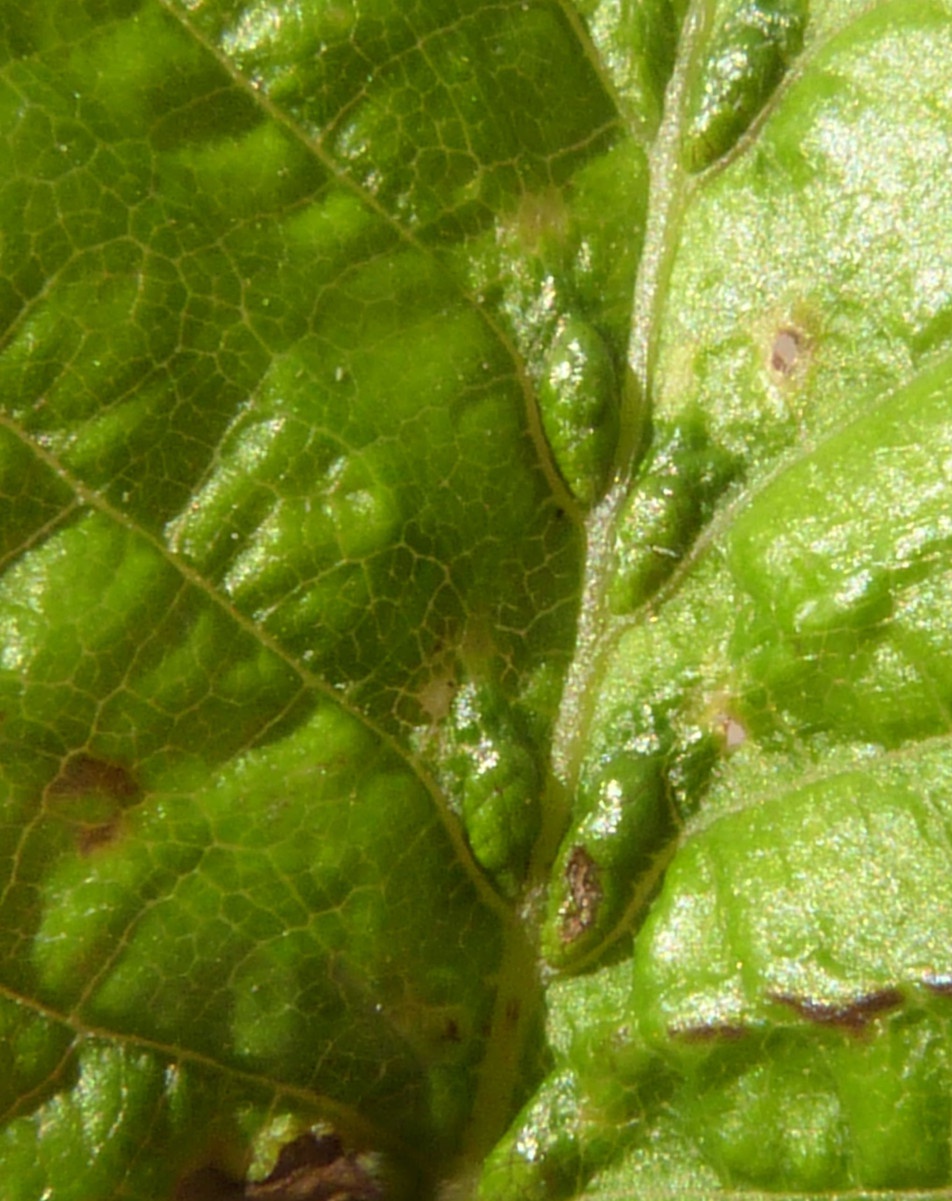
Aceria tenella
The mite Aceria tenella causes galls on the leaves of Hornbeam (Carpinus betulus). The galls occurs as a smooth, shiny bulge on the upperside of the leaf in the angle between the veins. The hairy opening below contains mites.
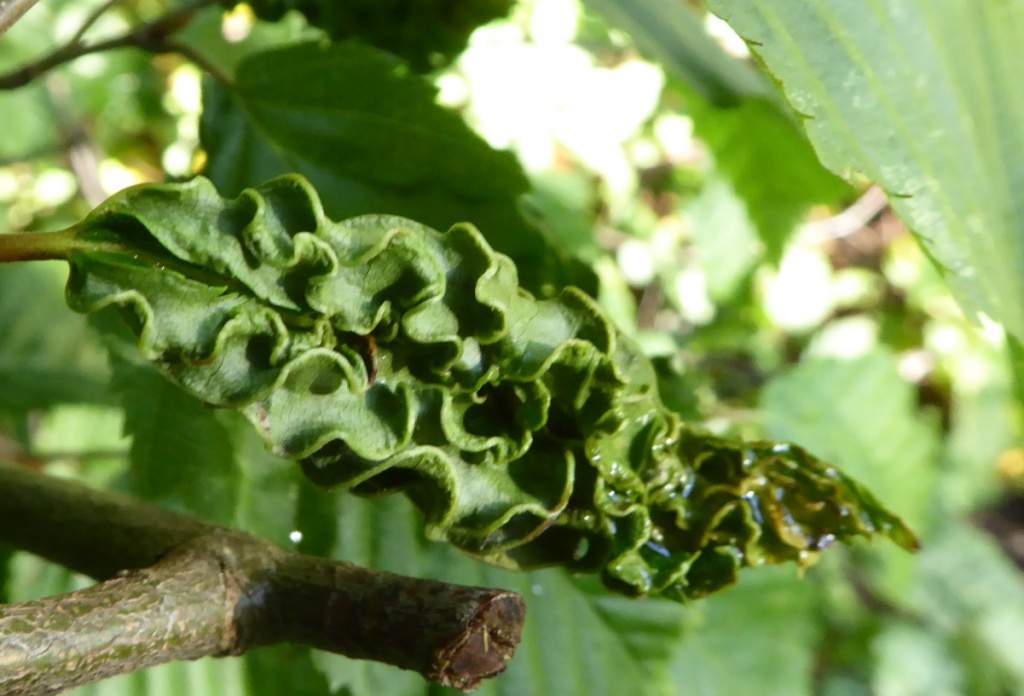
Aculops macrotrichus
The mite Aculops macrotrichus causes galls on the leaves of Hornbeam and Hop Hornbeam. The underside of the vein is modified into a wavy ridge with a slit like opening along the vein on the upperside. Several veins may be affected and leaves can become totally distorted.
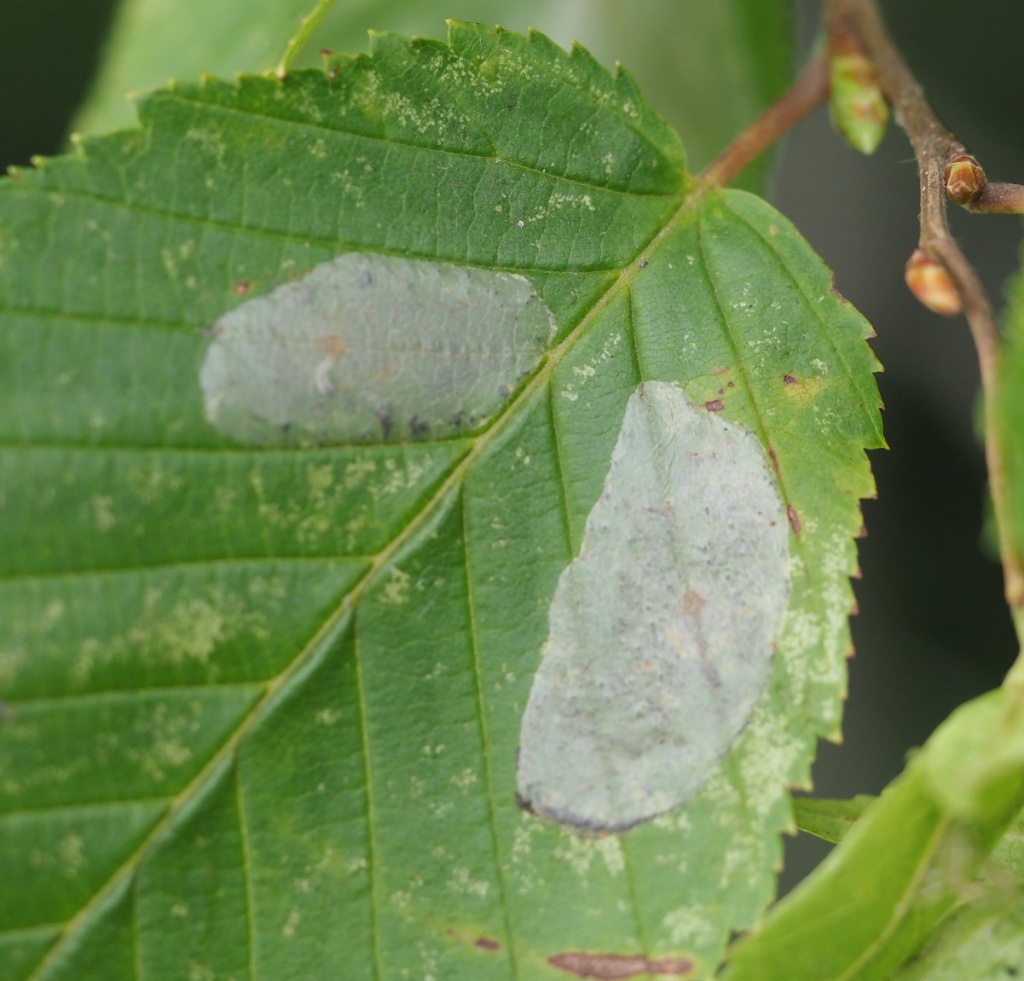
Phyllonorycter esperella
The larva of the moth Phyllonorycter esperella causes a rounded mine on the upper surface of leaves of Hornbeam; the mine has a white papery surface. Mature mines may cause the leaf to contract.
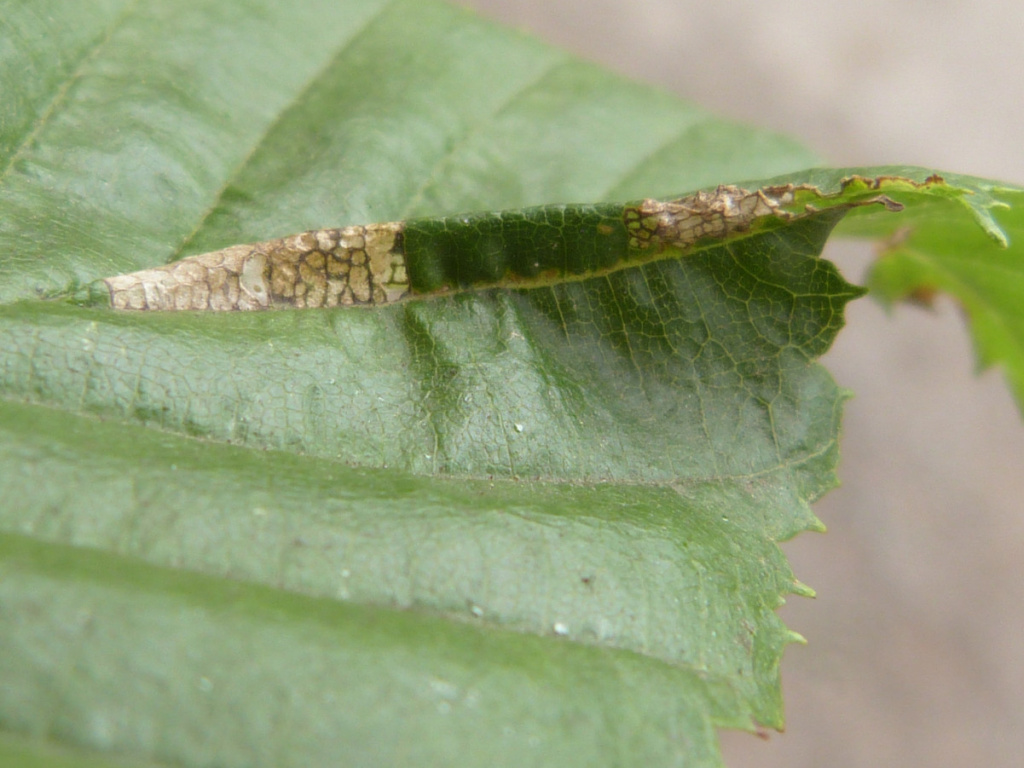
Phyllonorycter tenerella
The larva of the moth Phyllonorycter tenerella mines the leaves of Hornbeam, causing a narrow tentiform mine between two veins; it is strongly contracted and tubular when mature.

Stigmella microtheriella
The larva of the moth Stigmella microtheriella mines the leaves of Hazel and Hornbeam, creating a very long narrow mine; in Hazel this often wanders all over the leaf; on Hornbeam it tends to be thicker and follows main veins. The egg is underside, not in a leaf-axil.
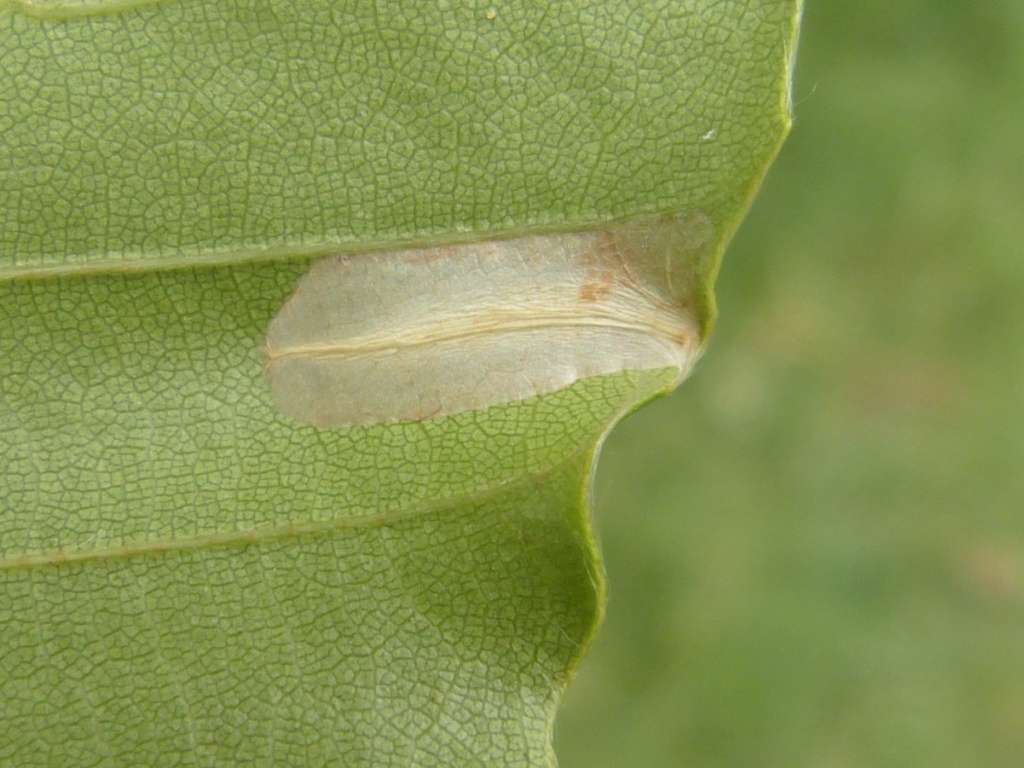
Phyllonorycter messaniella
The larvae of the moth Phyllonorycter messaniella mine the leaves of Oak, Hornbeam, Beech or Sweet Chestnut, and sometimes on other tree species. The leaf mines caused by the larvae are usually found on the underside and have a typical 'tented' appearance with a crease line across the surface. The mine is found between adjacent veins when on Beech and Hornbeam. If the mine is on Hornbeam it is best to examine the puparium which is held loosely in a flimsy cocoon with the frass edging the cocoon in a distinct U or V shape.
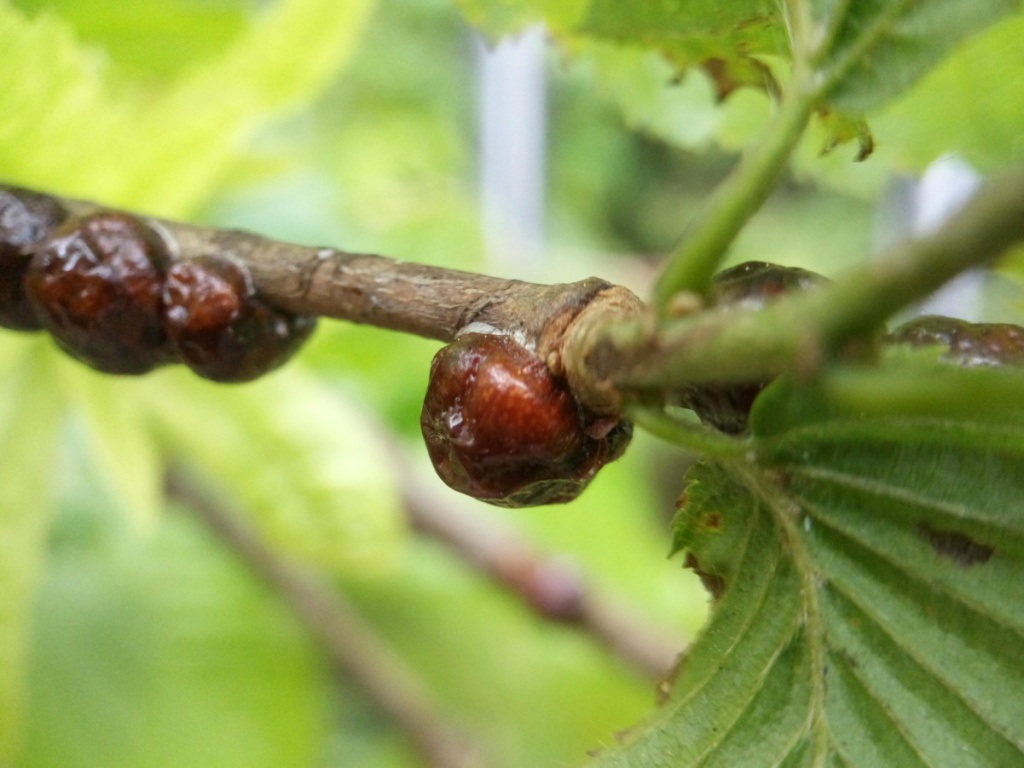
Nut Scale
Nut Scale (Eulecanium tiliae) affects various woody plants including trees and shrubs such as Hawthorn, Oak, Ash, Hornbeam, Field Maple and fruit trees such as Apple and Pear.