

Honeysuckle - Lonicera periclymenum
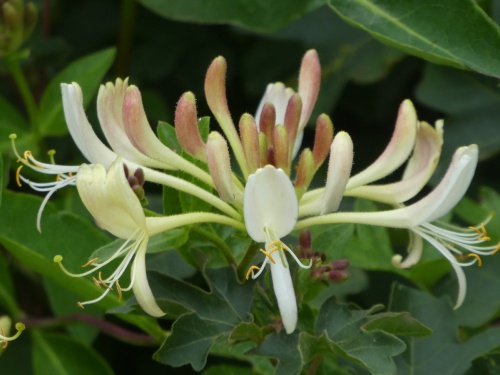
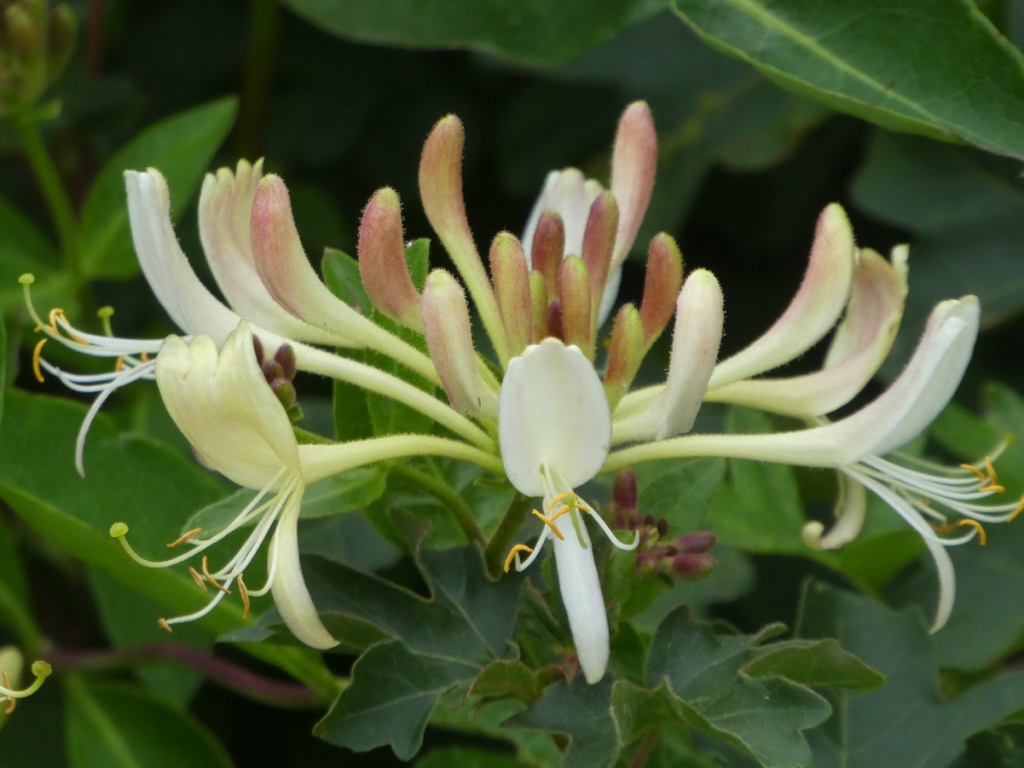
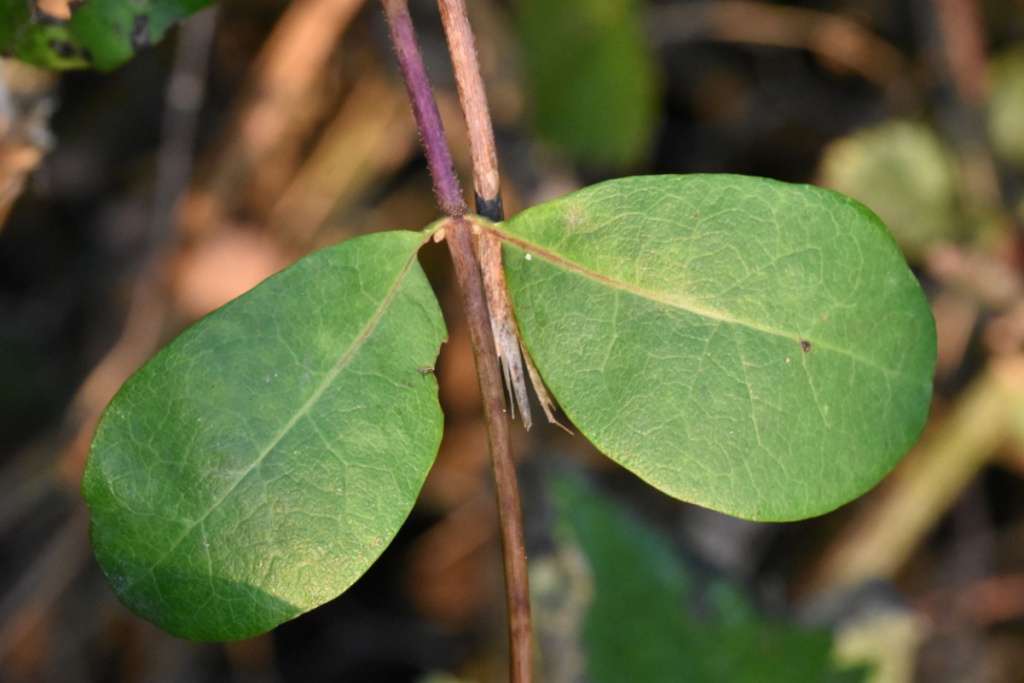
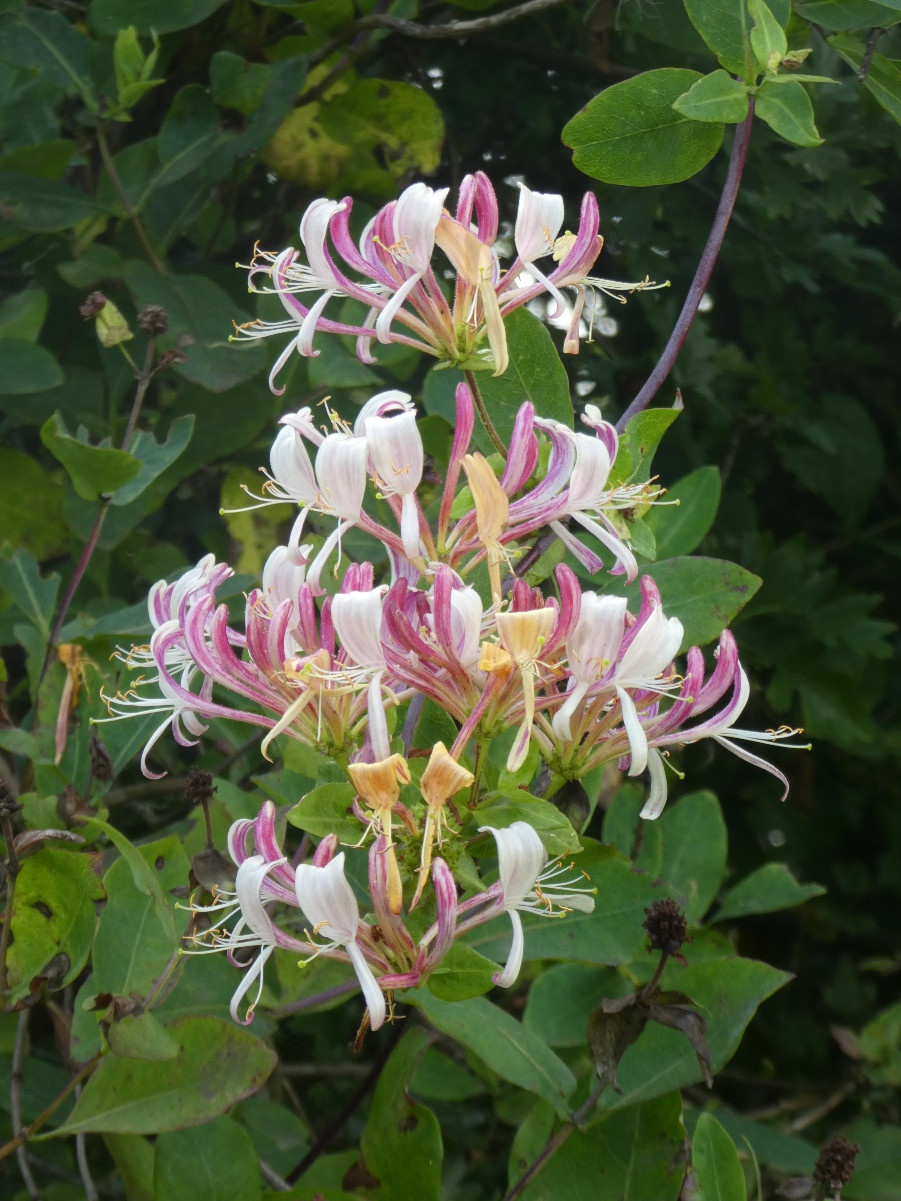
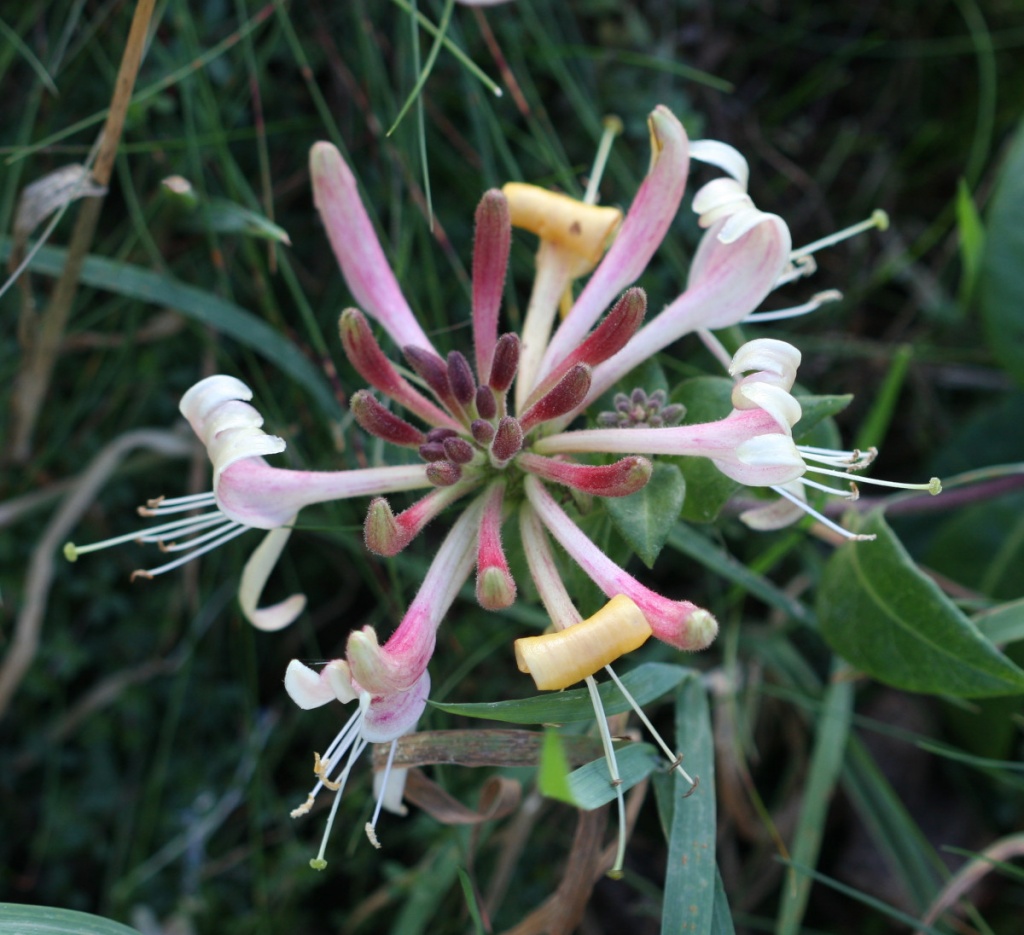
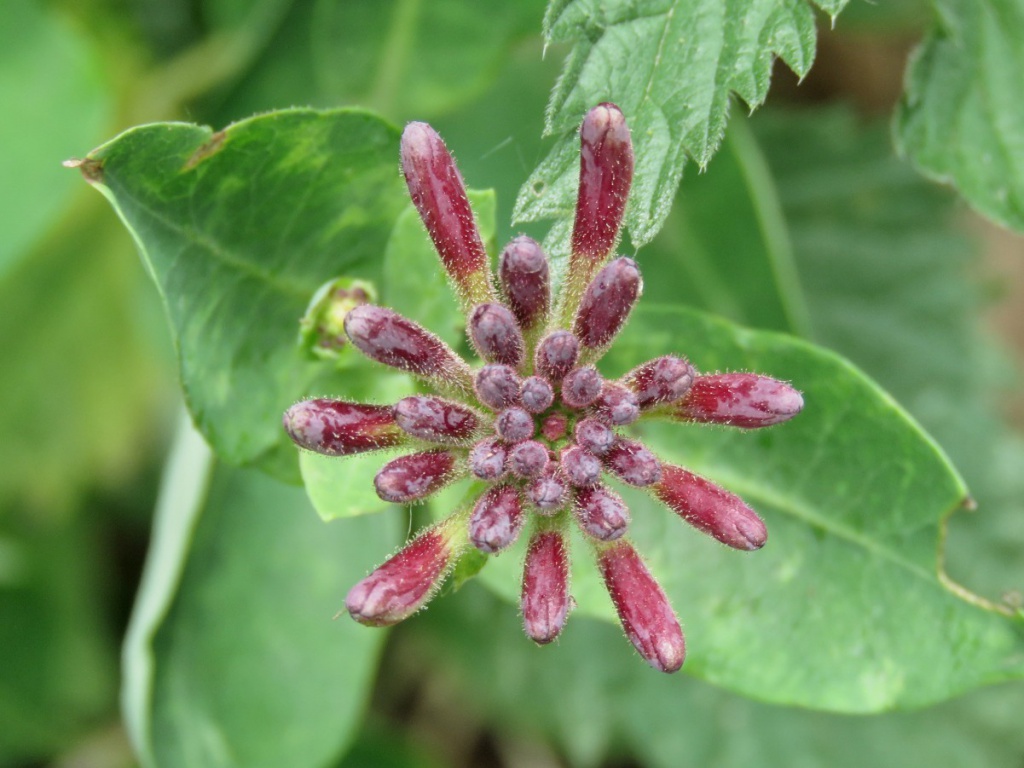
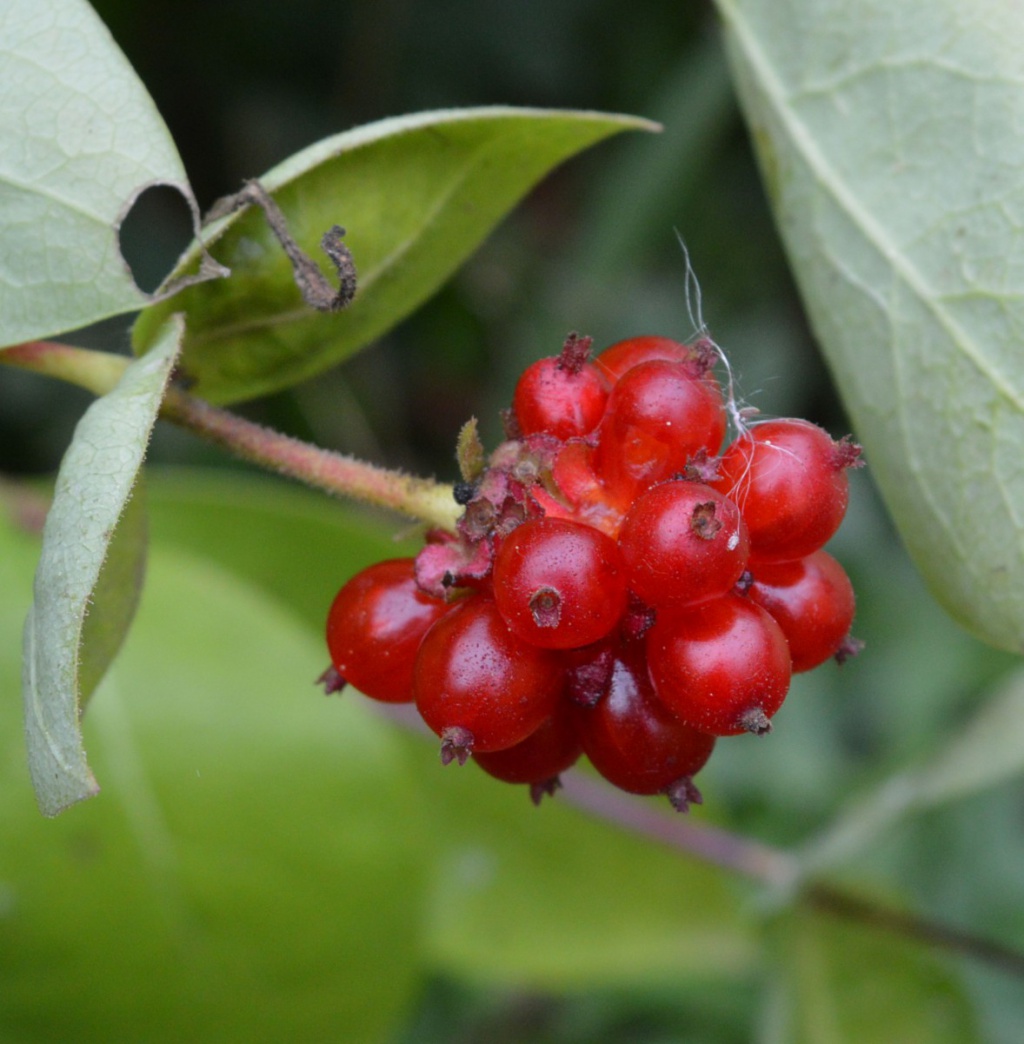
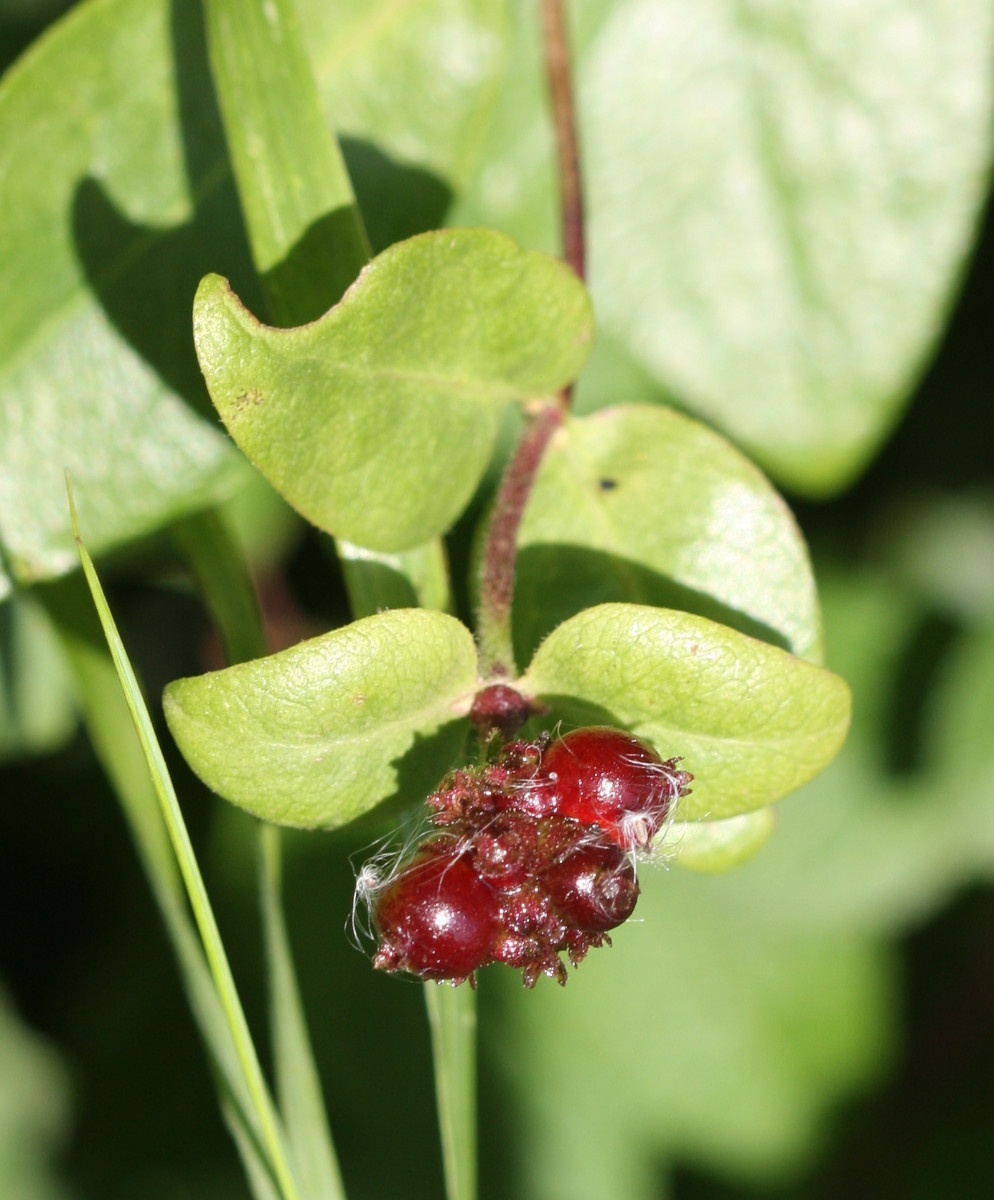
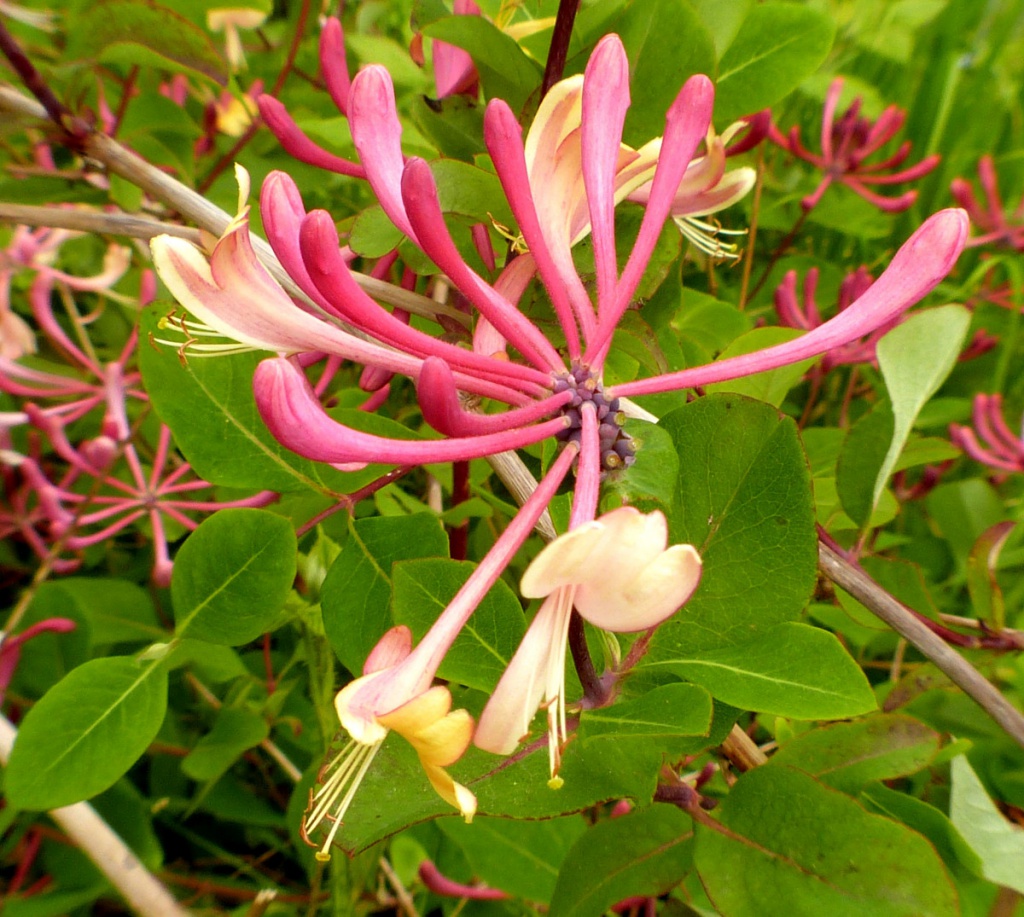
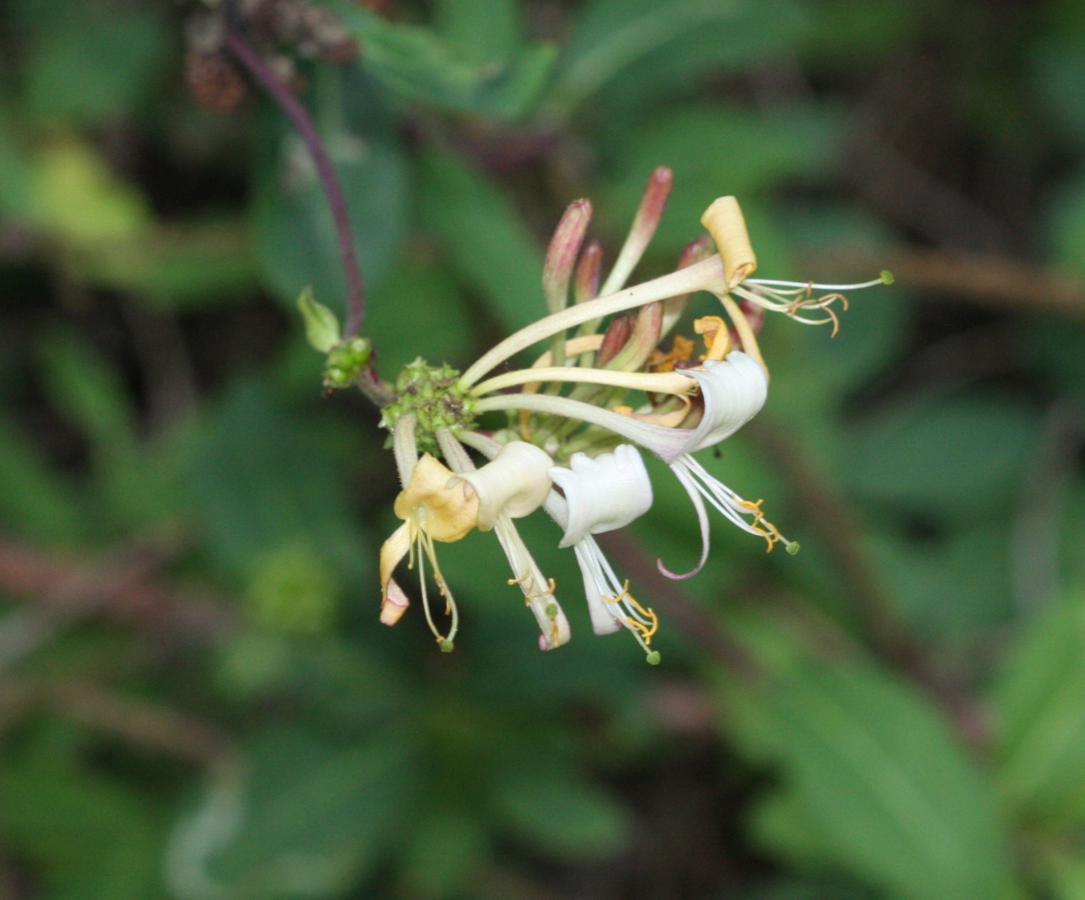
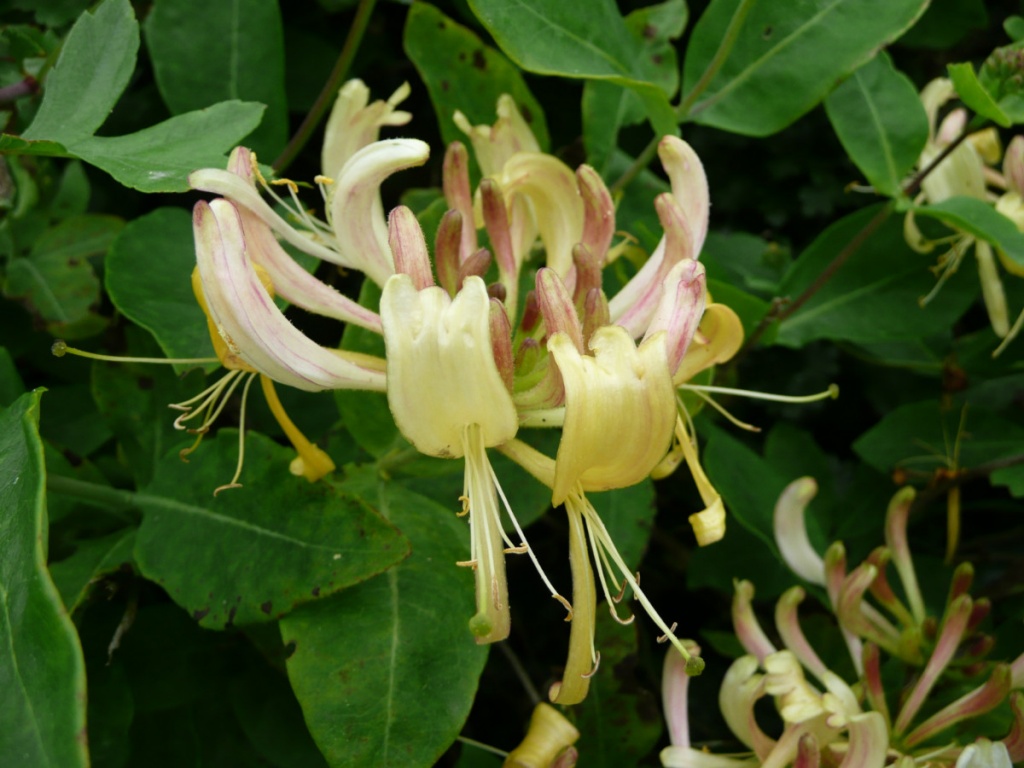
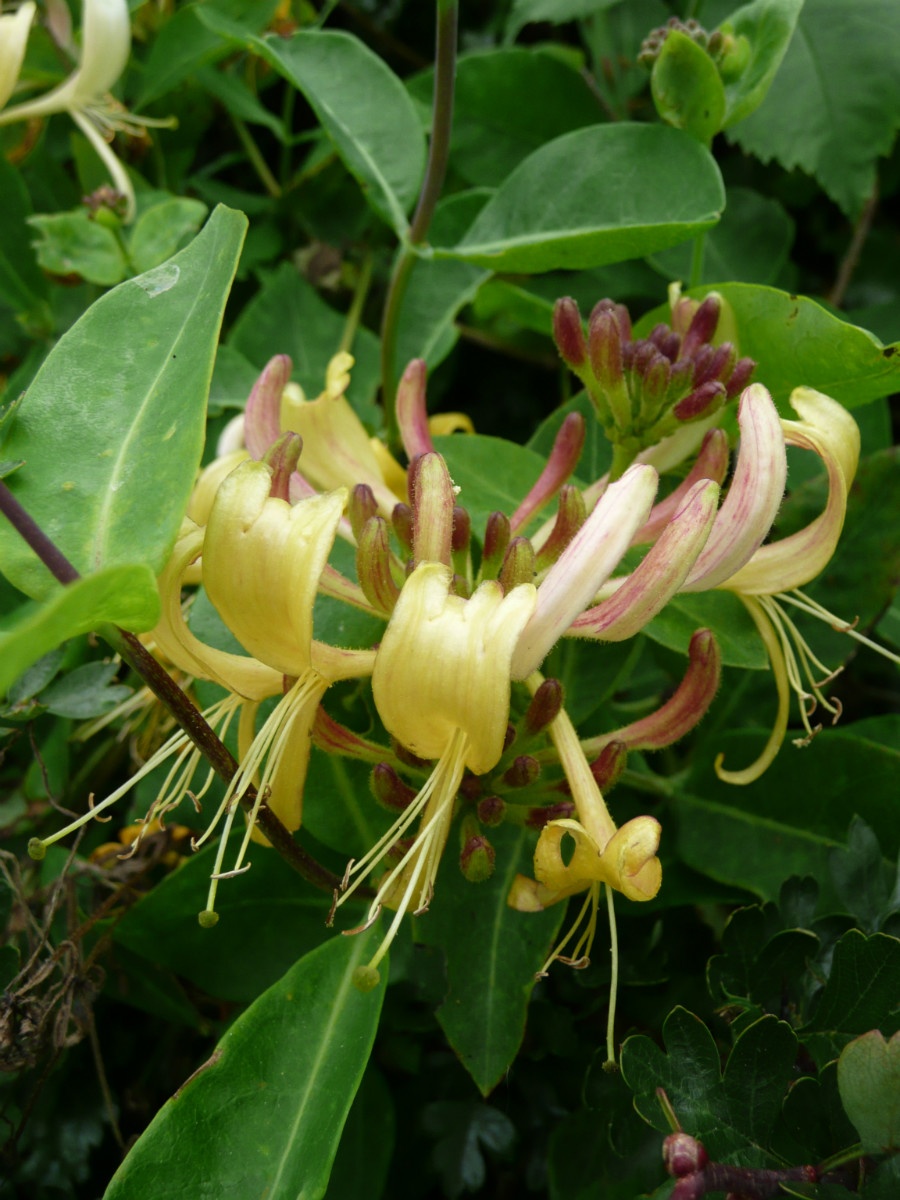
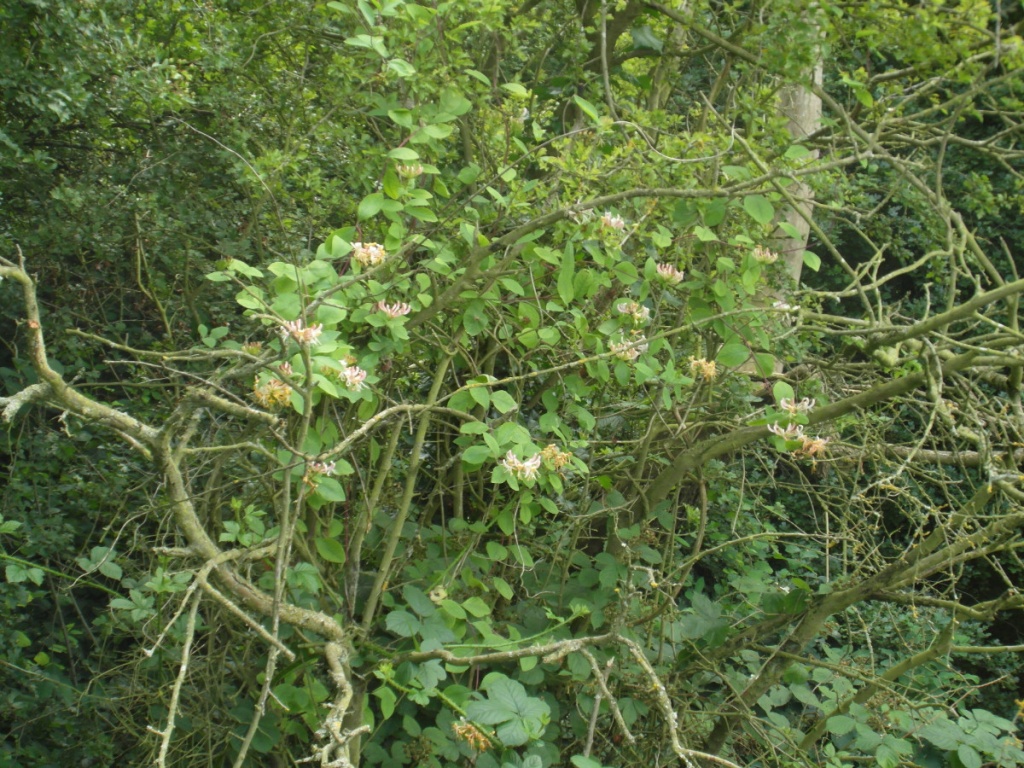
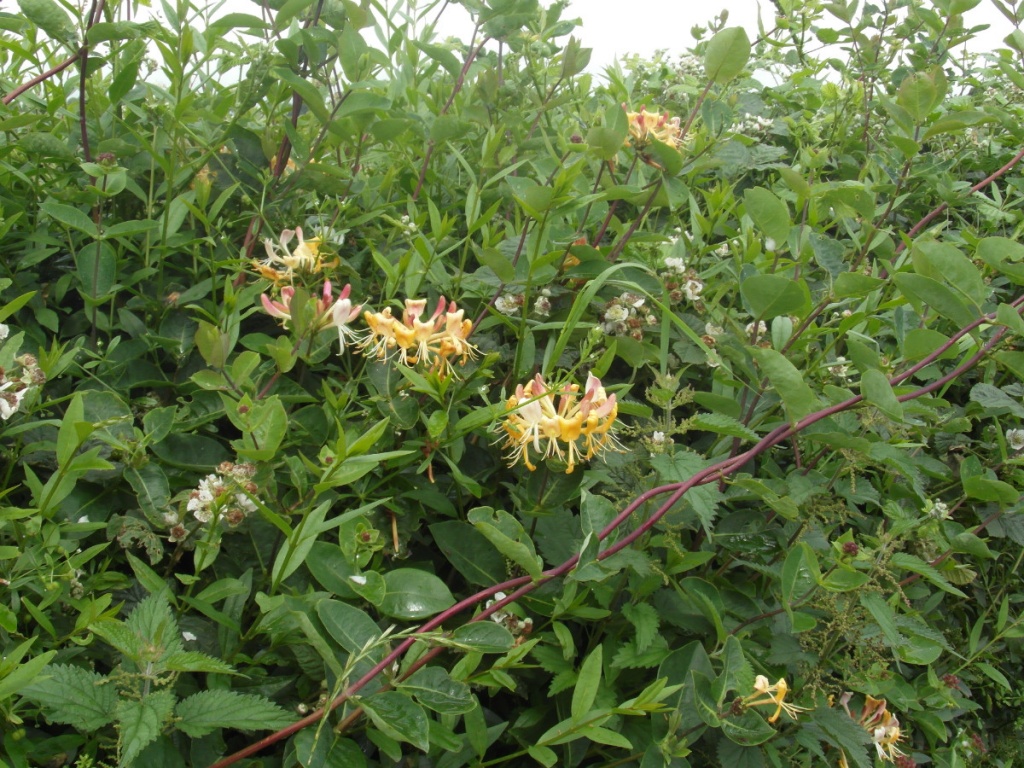
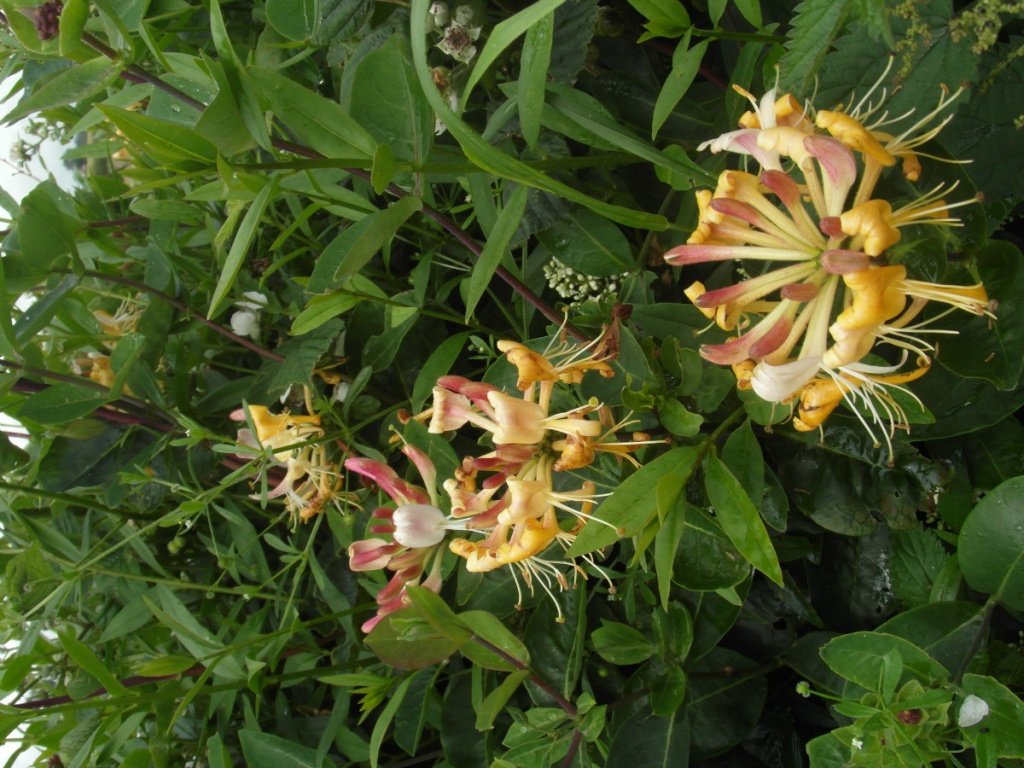
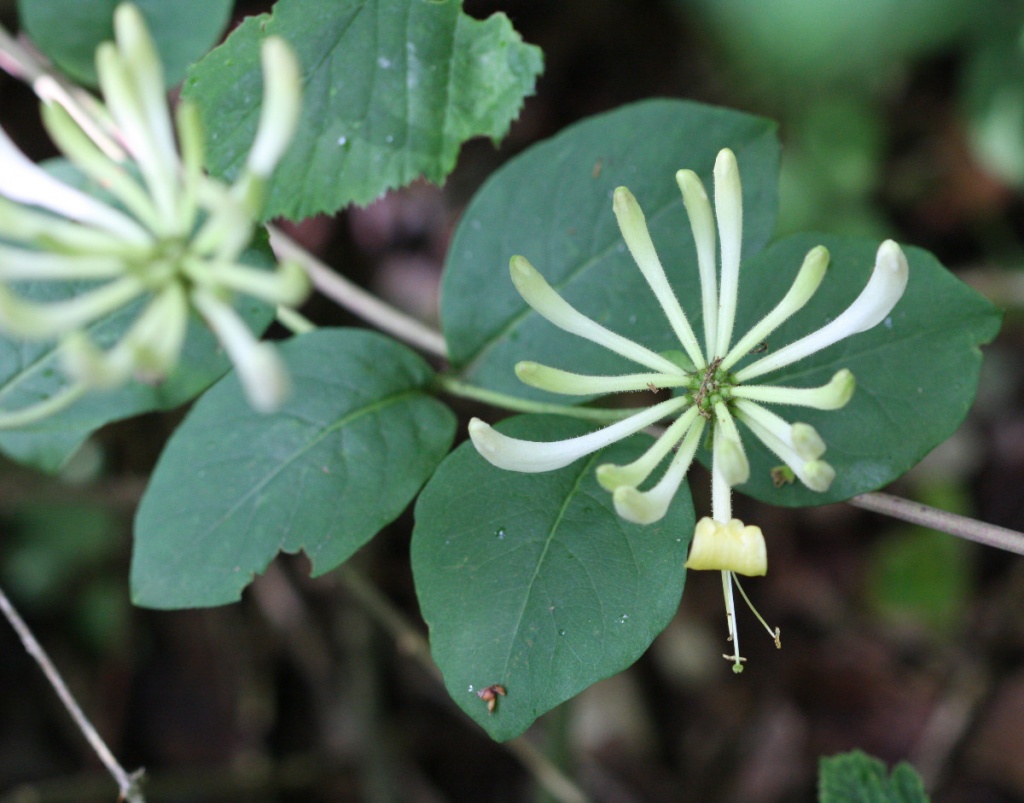
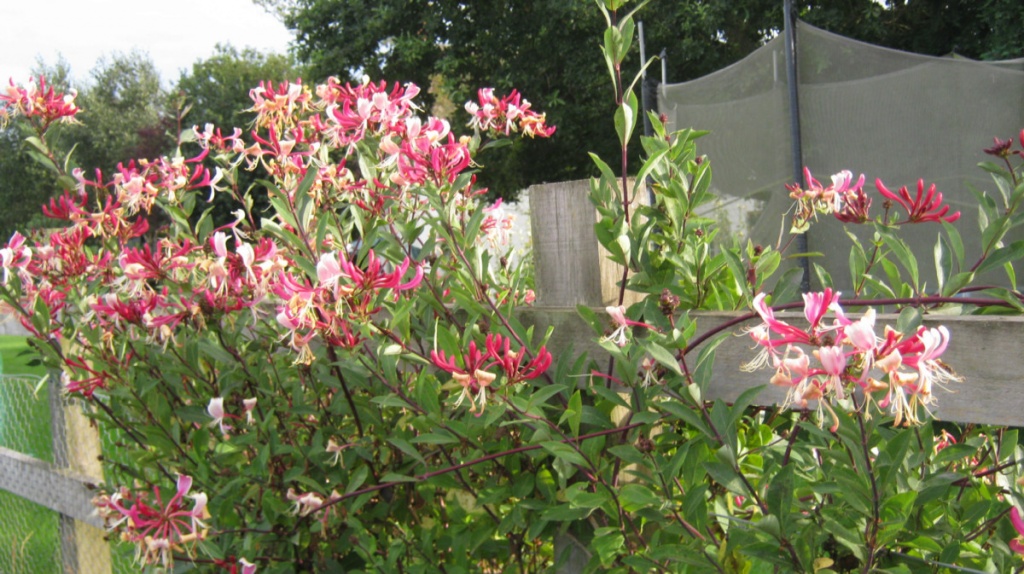
A robust, twining climber to 6 metres. Flowers are creamy white, changing to yellowish and sometimes tinged with purple 35 to 55 mm long, two lipped, very fragrant borne in terminal clusters. Berries globose, red when ripe.

Woodland scrub and hedgerows.
June to October.
Deciduous.
Common throughout most of Britain.
Quite common in Leicestershire and Rutland. In the 1979 Flora survey of Leicestershire it was found in 359 of the 617 tetrads.
 Melinda Bell
Netherseal,footpath by Nether Wood
04 July 2020 stepgray4
Wymeswold
25 September 2021 Graham Calow
Sapcote
14 May 2014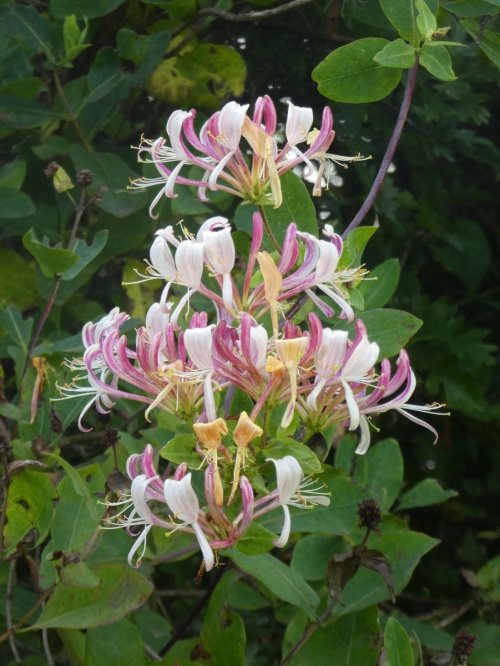 Melinda Bell
Whitwick,Coalville Meadow SSSI
02 August 2020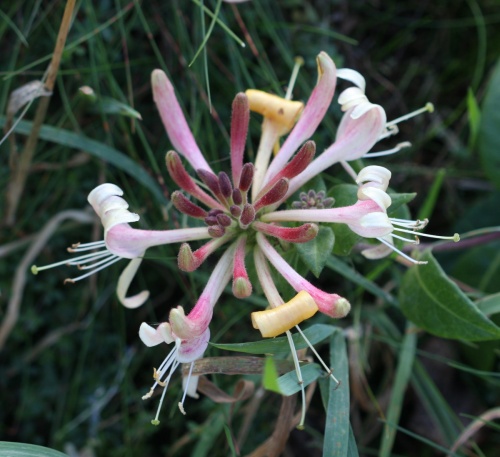 David Nicholls
Altar Stones
29 September 2012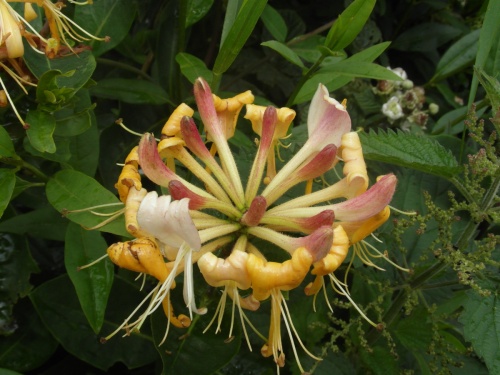 Alan Semper
Eastwell, Salt Rd
10 July 2012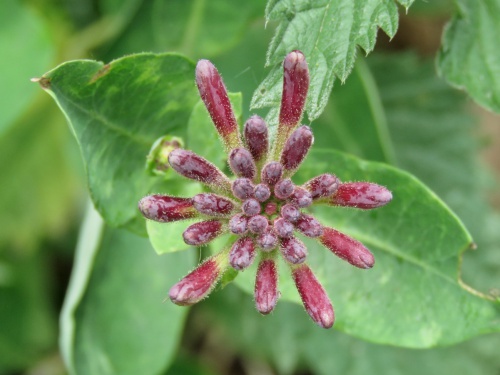 egaten
THURLASTON, DESFORD ROAD (NORTH VERGE)
22 June 2021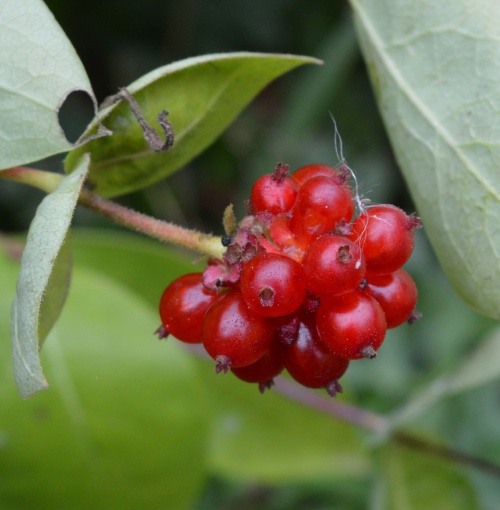 Barbara Cooper
Long Clawson
15 August 2018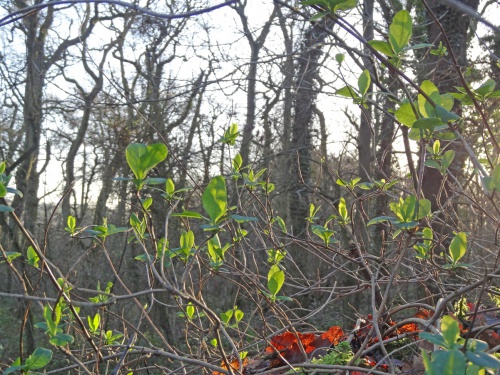 AJ Cann
Charnwood Lodge
23 December 2015


Leicestershire & Rutland Map
Enter a town or village to see local records
MAP KEY:
Yellow squares = NBN records (all known data)
Coloured circles = NatureSpot records: 2025+ | 2020-2024 | pre-2020
UK Map
Species profile
- Common names
- Honeysuckle
- Species group:
- flowering plant
- Kingdom:
- Plantae
- Order:
- Dipsacales
- Family:
- Caprifoliaceae
- Records on NatureSpot:
- 339
- First record:
- 01/01/1979 (Patricia Evans)
- Last record:
- 21/03/2026 (Bates, Adam)
Total records by month
% of records within its species group
10km squares with records
The latest images and records displayed below include those awaiting verification checks so we cannot guarantee that every identification is correct. Once accepted, the record displays a green tick.
In the Latest Records section, click on the header to sort A-Z, and again to sort Z-A. Use the header boxes to filter the list.
Latest images
Latest records
 David Nicholls
Ashby Canal, Shackerstone
15 September 2012
fruits Graham Calow
Near High Cross
18 August 2016
fruits Barbara Cooper
Clawson Hill
23 June 2012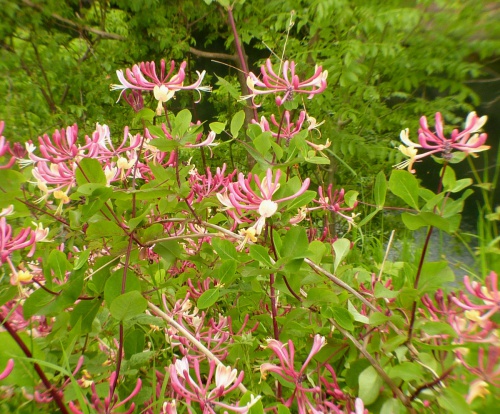 Graham Calow
Sapcote
11 June 2013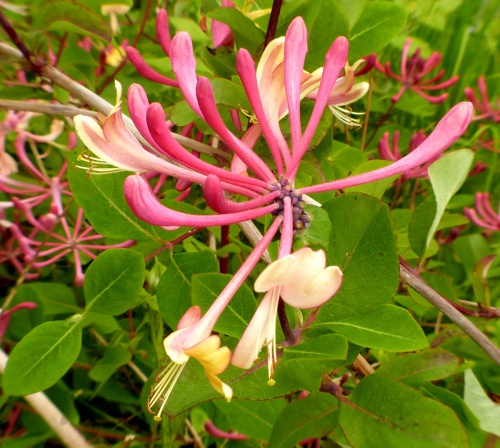 Graham Calow
Sapcote
11 June 2013 Graham Calow
Wykin
12 May 2015 Graham Calow
Wykin
12 June 2015 Freeholt Wood Sapcote SP 4606 9403 (taken 15.6.2006)..JPG) Graham Calow
Graham Calow
Sapcote
15 June 2006 David Nicholls
Martinshaw Wood
30 June 2011 Barbara Cooper
Clawson Hill
23 June 2012 Barbara Cooper
Clawson Hill
23 June 2012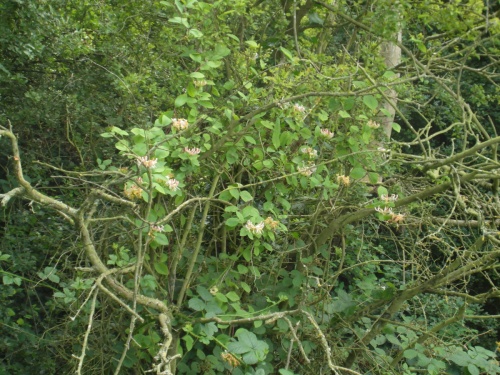 Alan Semper
Harby canal side
28 July 2012 Alan Semper
Eastwell, Salt Rd
10 July 2012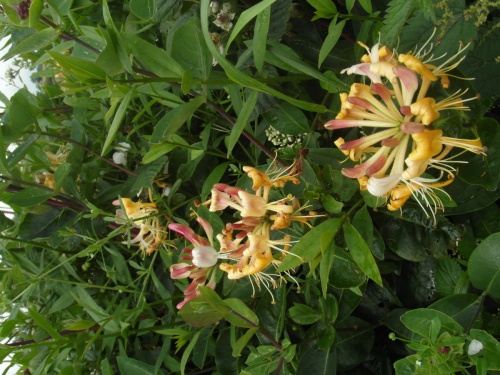 Alan Semper
Eastwell, Salt Rd
10 July 2012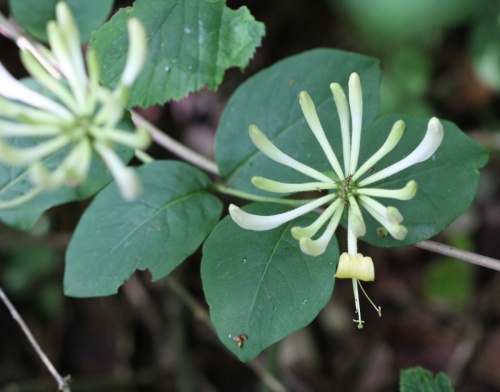 David Nicholls
Ratby
24 June 2012 Graham Calow
Sapcote
11 June 2013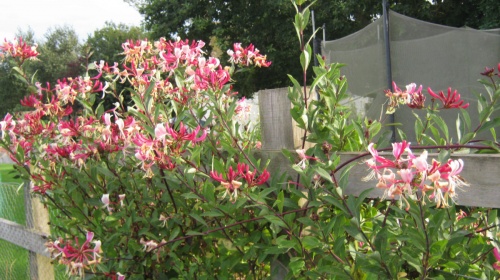 Ruth Dring
Broughton Astley
27 August 2012




 Freeholt Wood Sapcote SP 4606 9403 (taken 15.6.2006)..JPG)

Hyadaphis passerinii
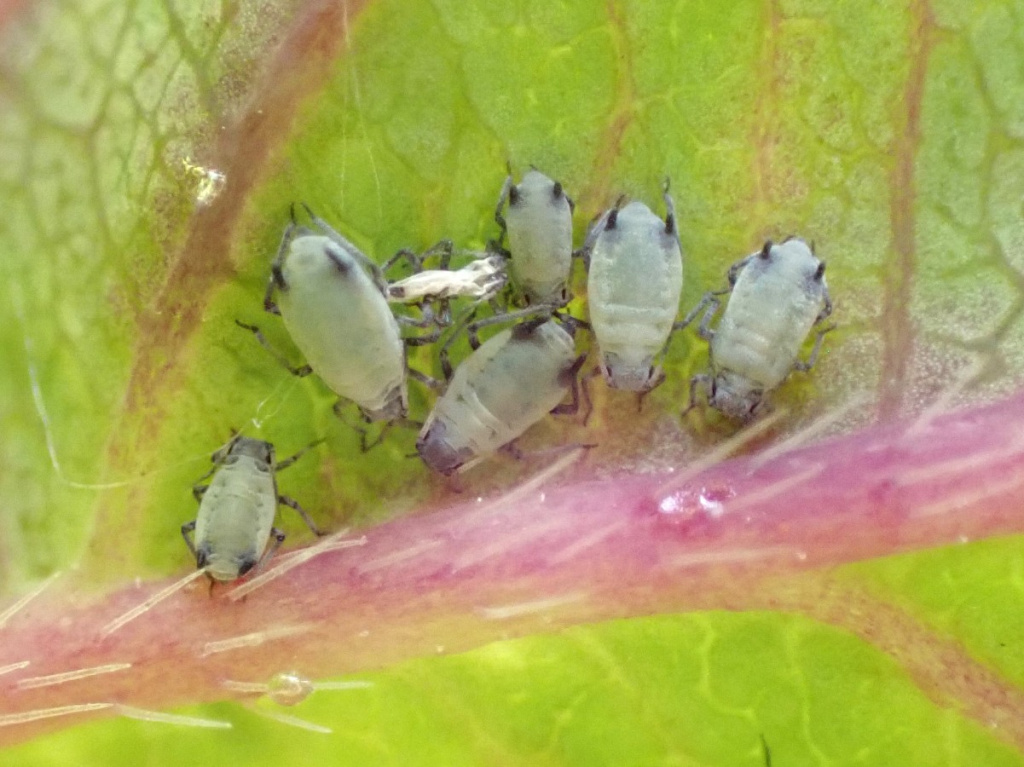
Hyadaphis passerinii apterae are elongate and greyish green with a waxy bloom. The antennae and legs are black as are the siphunculi and cauda. The apterae body length is 1.3 to 2.3 mm. It host alternates between honeysuckle species and umbelifers.

Rhopalomyzus lonicerae
The primary host of thie aphid Rhopalomyzus lonicerae is Honeysuckle, where is lives within a gall-like, crumpled leaf in spring. The secondary host are grasses, especially Phalaris. It is a small, pale creamy aphid, the body length of the adult aptera is 2.0 to 2.6 mm.
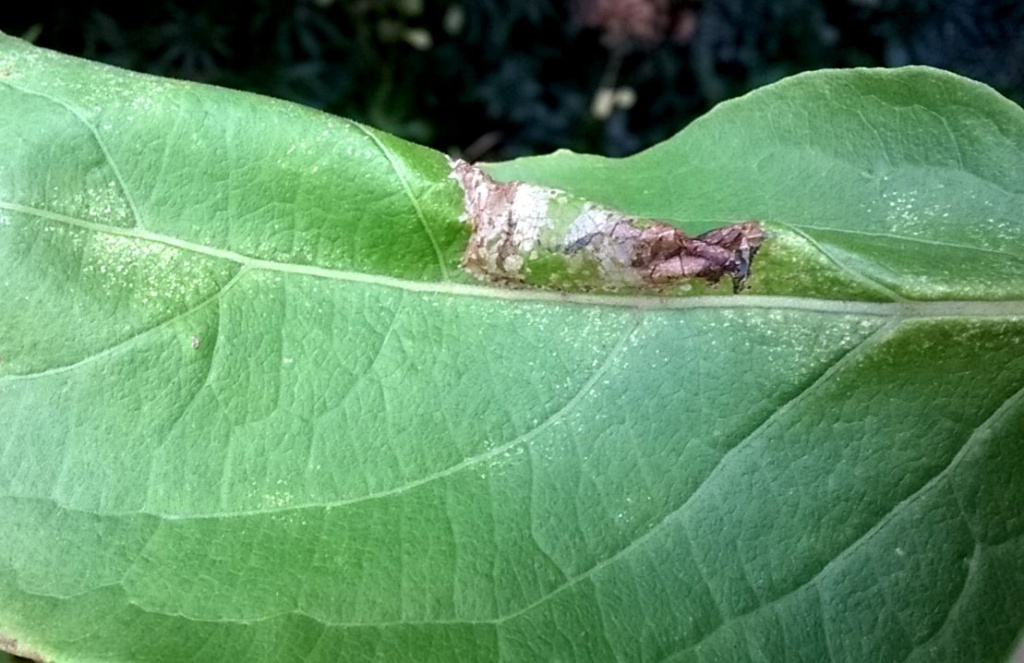
Phyllonorycter emberizaepenella
The larva of the moth Phyllonorycter emberizaepenella mines the leaves of various Honeysuckle species and Snowberry causing a large tentiform mine.
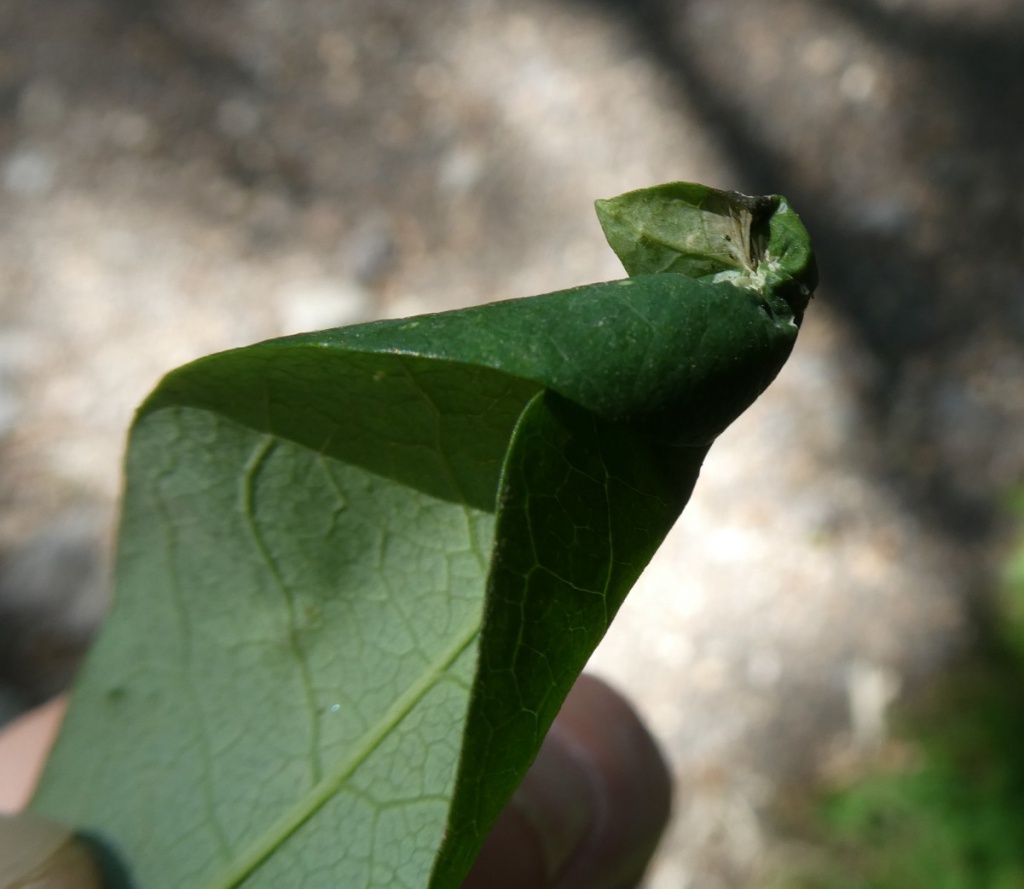
Phyllonorycter trifasciella
The larva of the moth Phyllonorycter trifasciella mines the leaves of various Honeysuckle species and Snowberry producing a small tentiform mine that contracts diagonally causing the leaf to roll up.
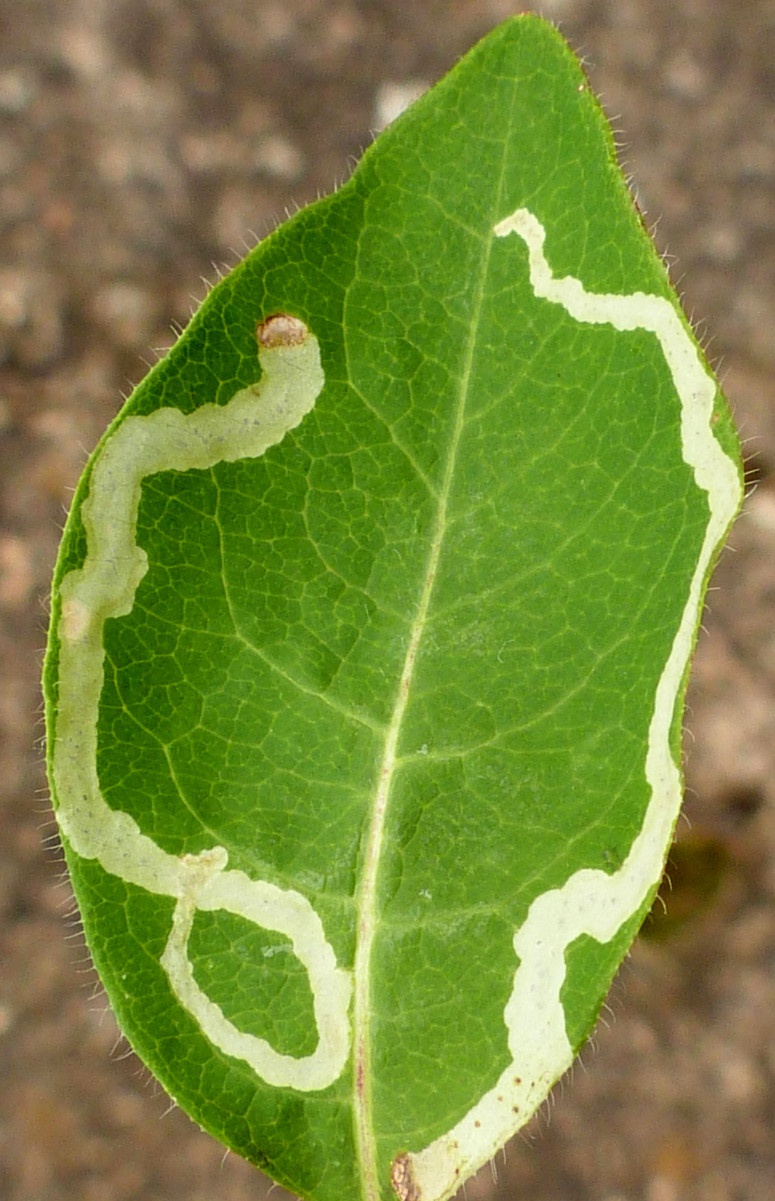
Aulagromyza hendeliana
The larva of the Agromyzid fly Aulagromyza hendeliana mines the leaves of Honeysuckles and Snowberry. The mine is upper surface, long and linear, with frass in a double row of black grains. The puparium should be examined in order to confirm this species.
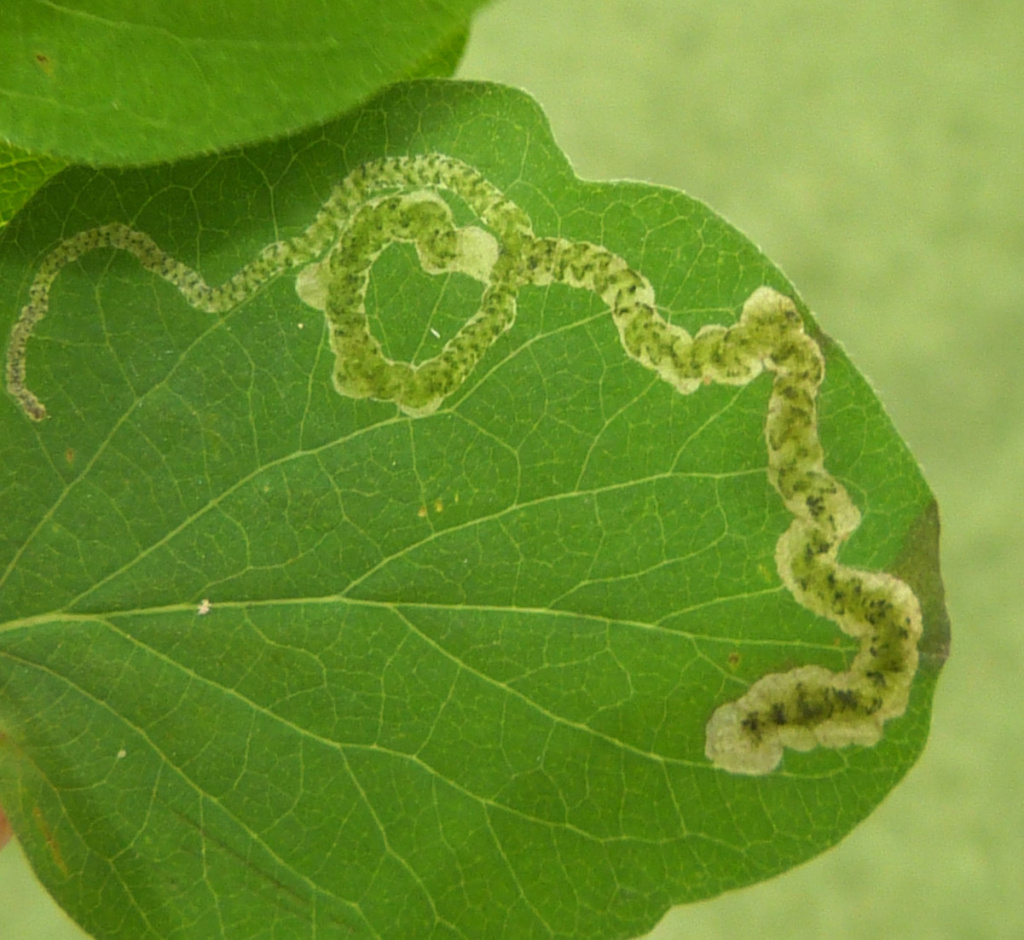
Aulagromyza luteoscutellata
The larva of the Agromyzid fly Aulagromyza luteoscutellata mine the leaves of Honeysuckle, Snowberry and Himalayan Honeysuckle. The mine is linear, with frass in a broad green band with scattered dark granules.
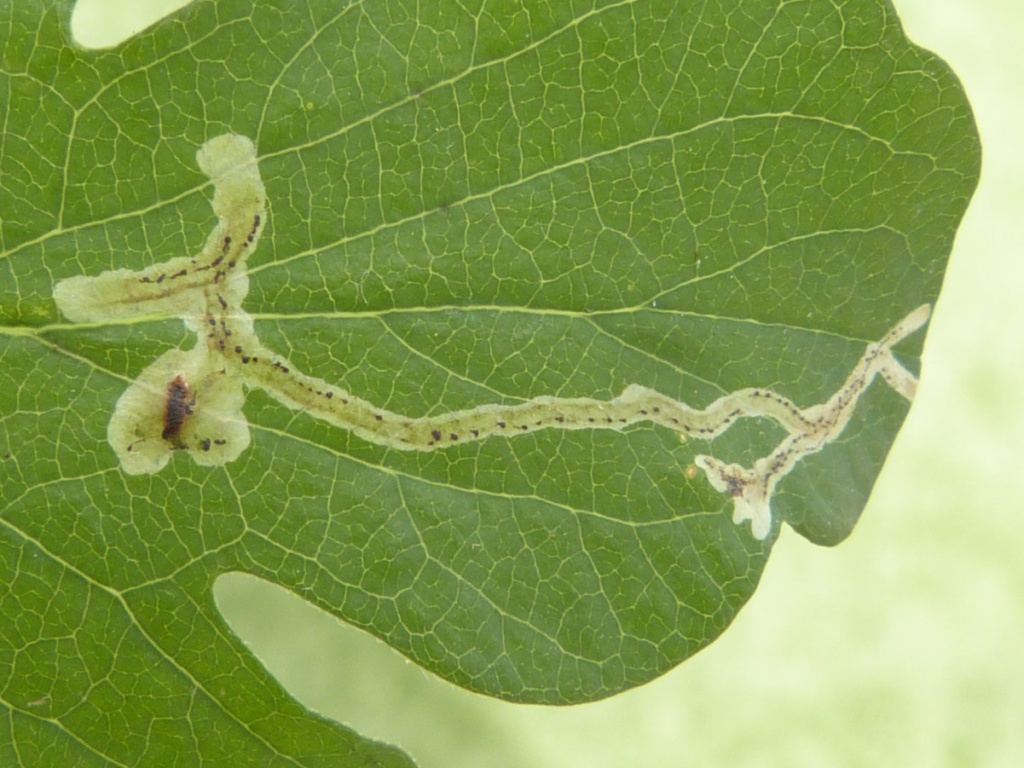
Chromatomyia lonicerae
The larva of the Agromyzid fly Chromatomyia lonicerae mines the leaves of Honeysuckle and Snowberry. The leafmine starts with an irregular star-like blotch with a later linear corridor. Frass is usually visible in pearl-strings. Pupation is internal with the pupa firmly adhered within the mine by frass.
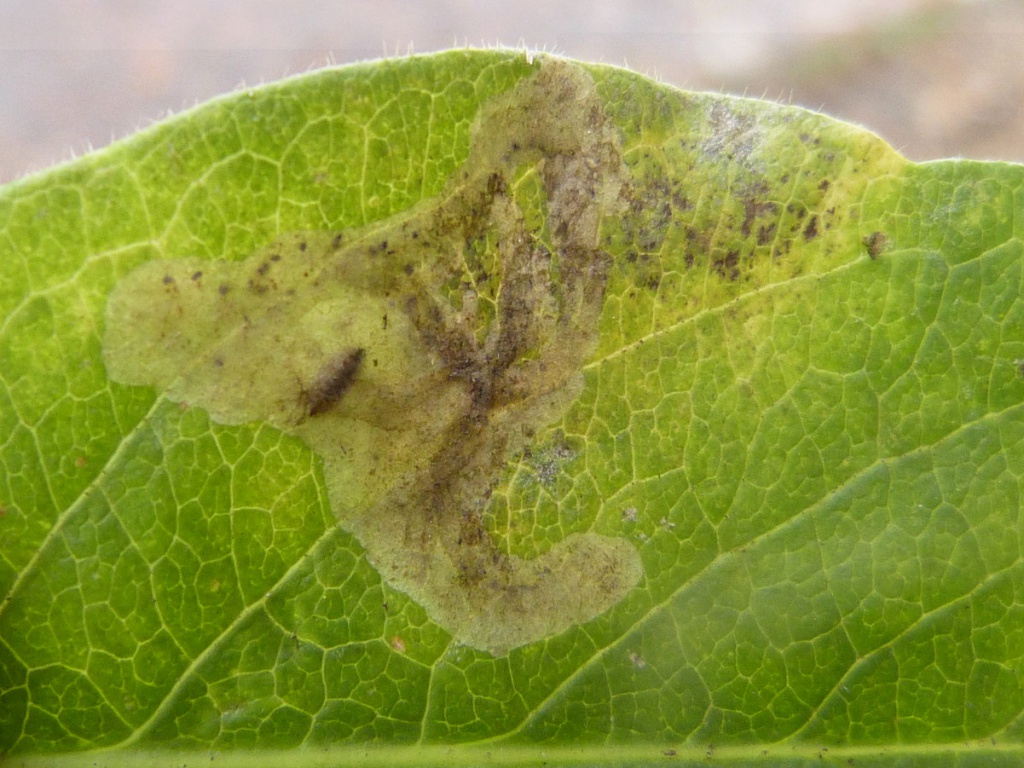
Chromatomyia periclymeni
The larva of the Agromyzid fly Chromatomyia periclymeni mines the leaves of various members of the Honeysuckle family, including Honeysuckle, Himalayan Honeysuckle and Snowberry. It is an upper surface mine and usually blotchy and not associated with the midrib. The young mine is arranged in a radiating pattern like a star and is initially purple in colour but turning brown as it ages.
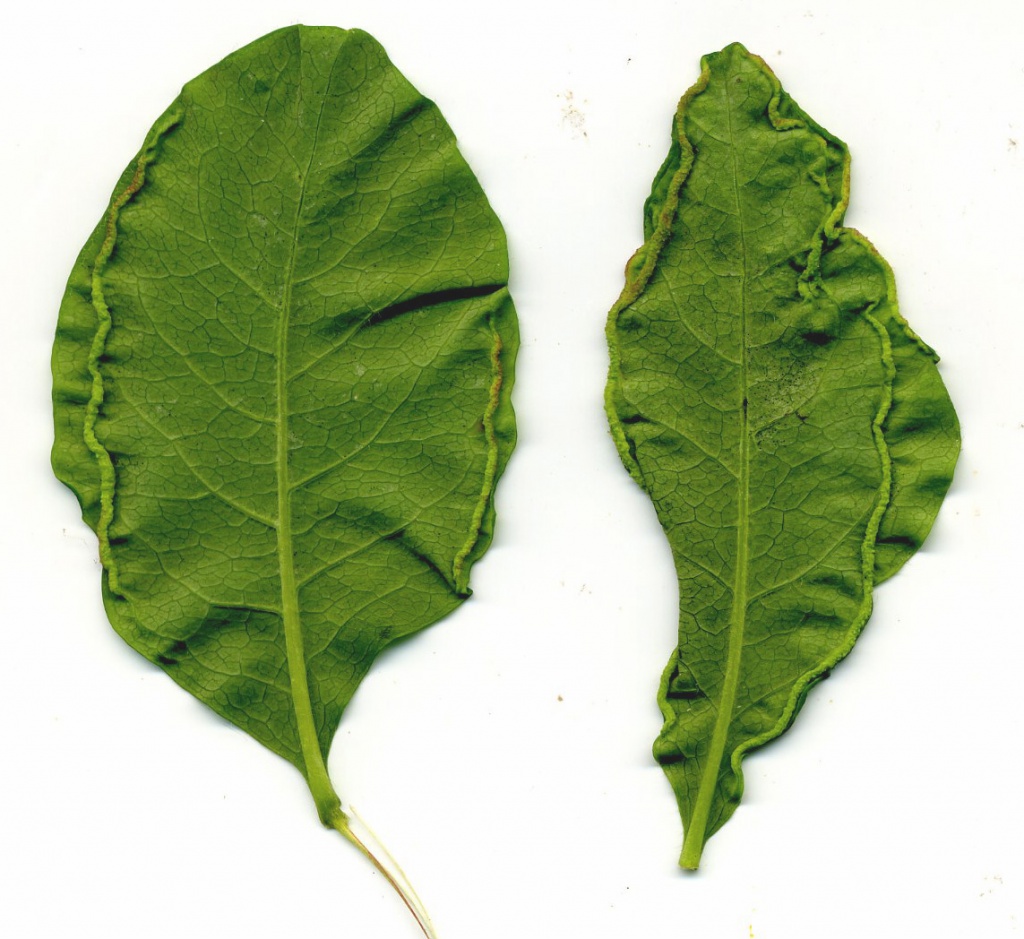
Aculus xylostei
Aculus xylostei is a mite that causes a leaf roll gall on the leaves of Honeysuckle. The leaves are affected by a narrow, tight roll, usually downwards, often reddish clearly thickened and causing crinkling of the leaf margin or a pleat parallel to the leaf margin. The roll is often lined with hairs containing mites.
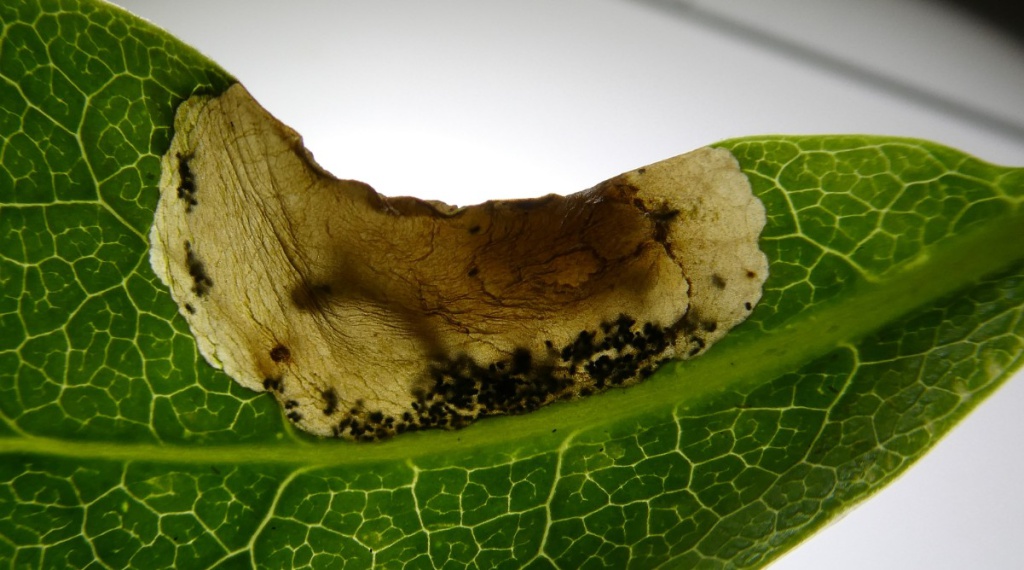
Perittia obscurepunctella
The larvae of the moth Perittia obscurepunctella mine the leaves of Honeysuckle, creating a large blotch mine. The mines can be found between June and August.
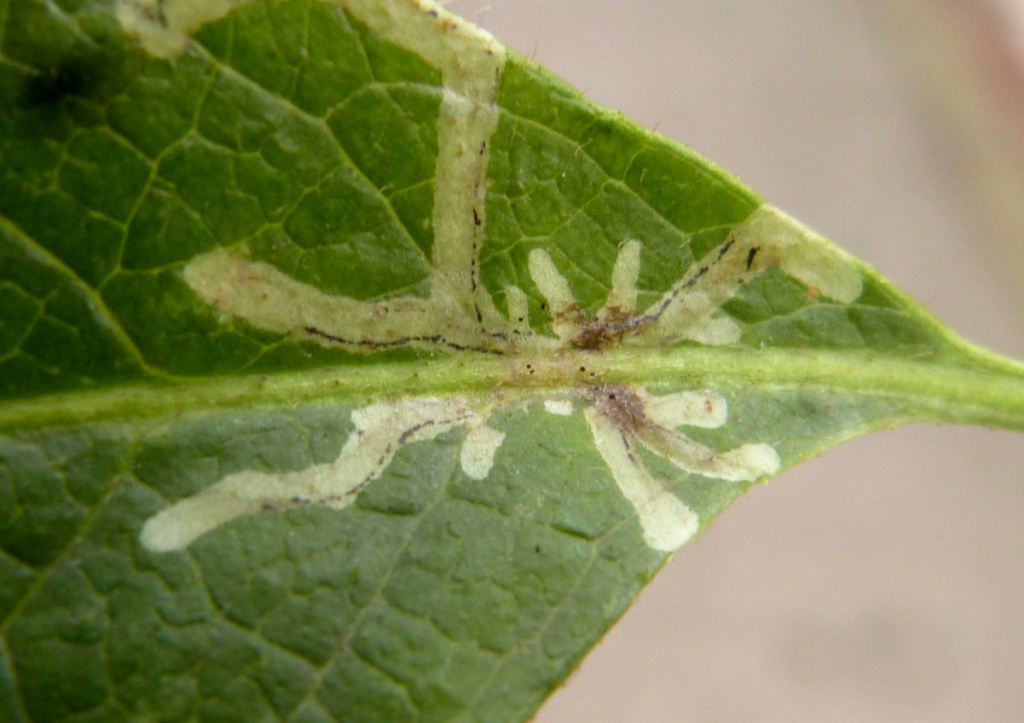
Chromatomyia aprilina
The larva of the Agromyzid fly Chromatomyia aprilina mines the leaves of Honeysuckle, forming a long corridors which radiate from the midrib on the upper leaf surface. In winter the mine may not be associated with the midrib. Frass occurs in long strips along the edges of the corridor.