

Grey Alder - Alnus incana
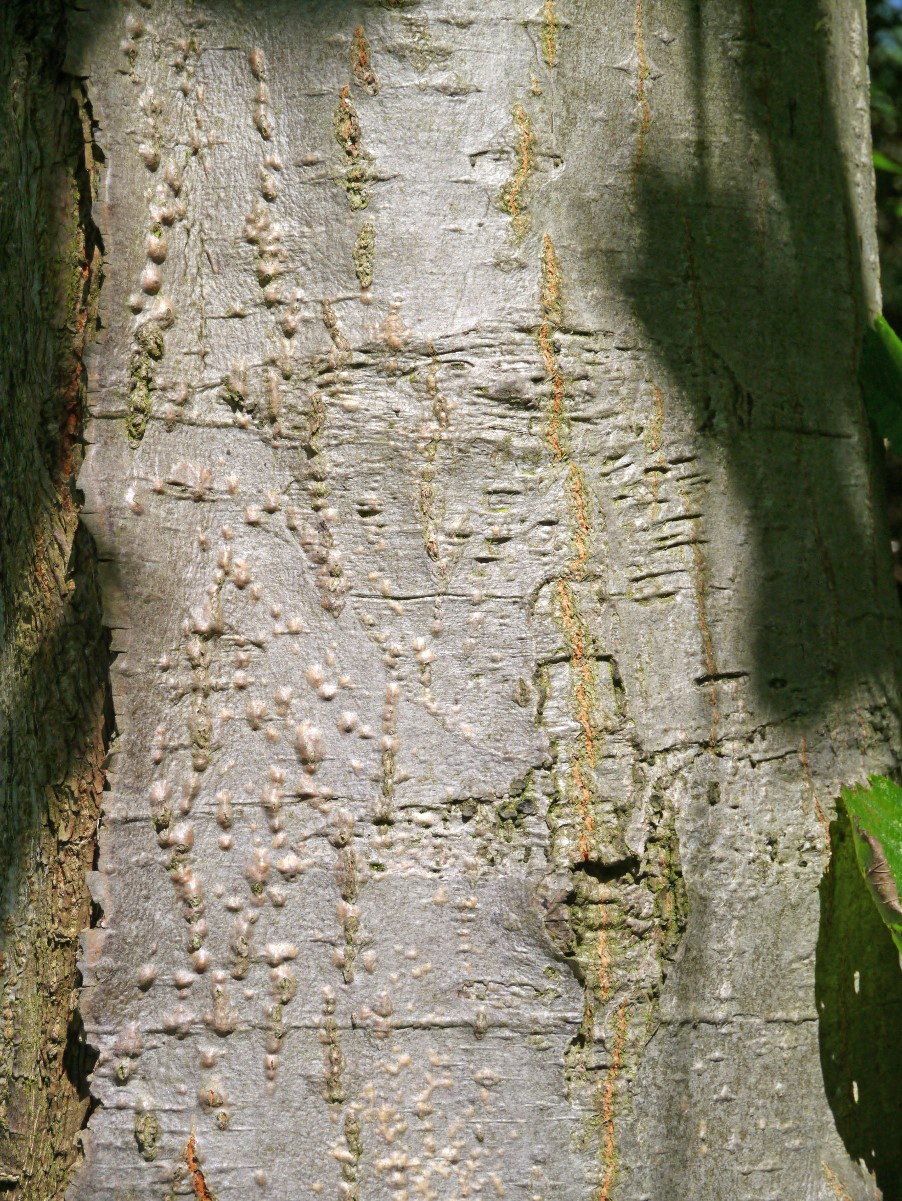
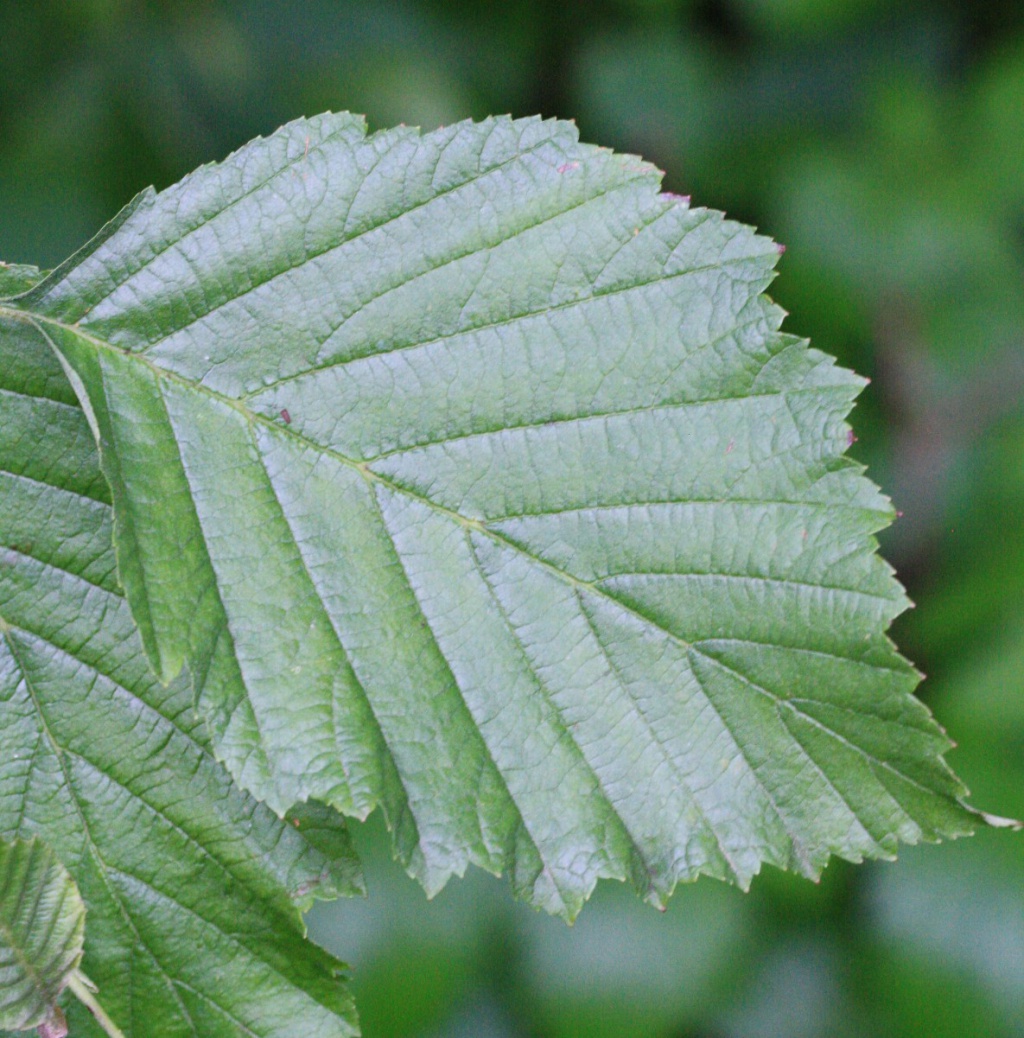
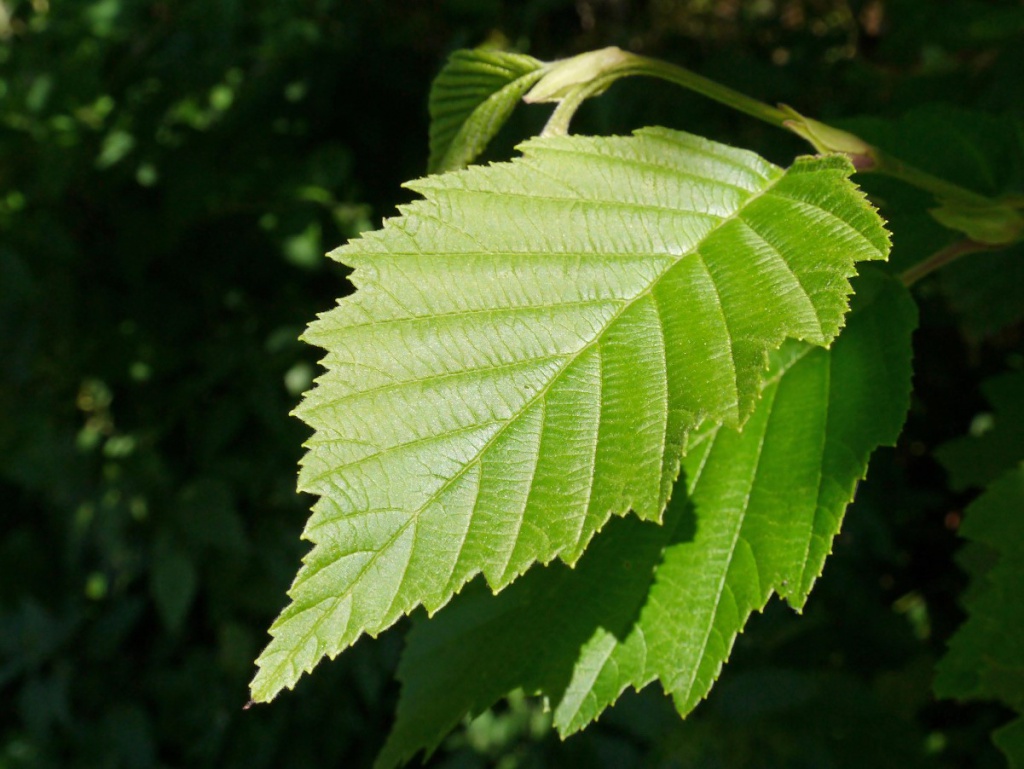
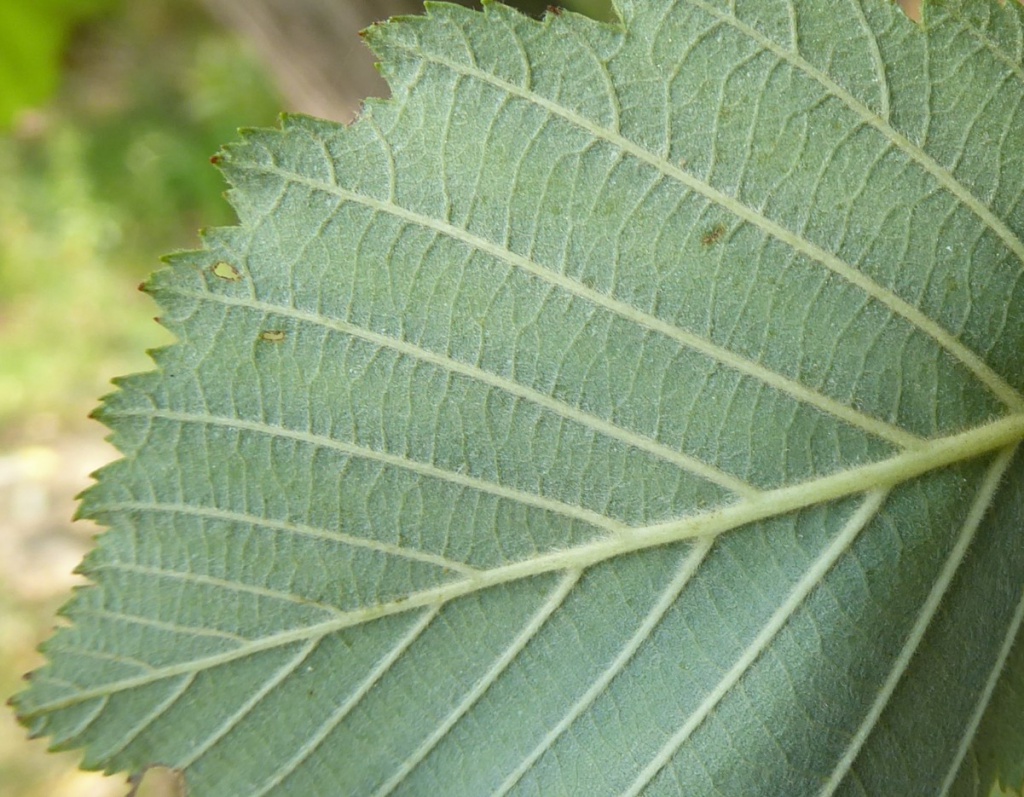
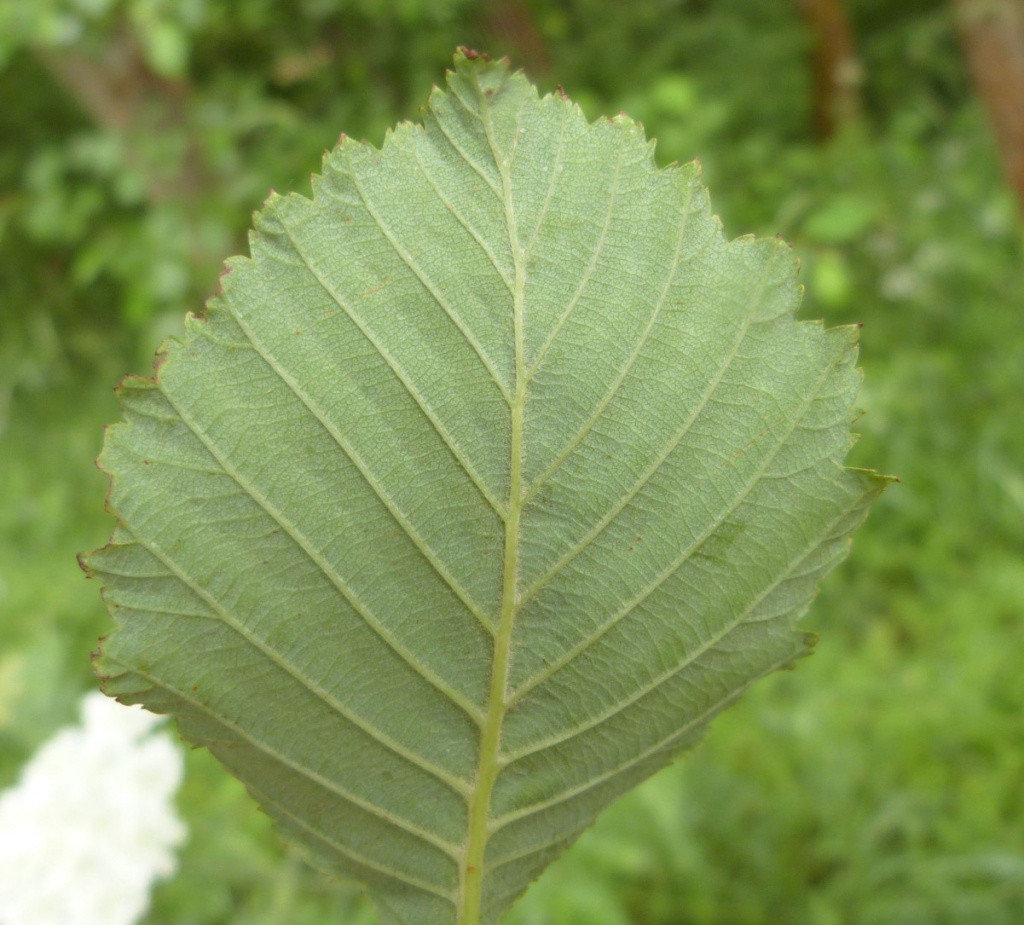
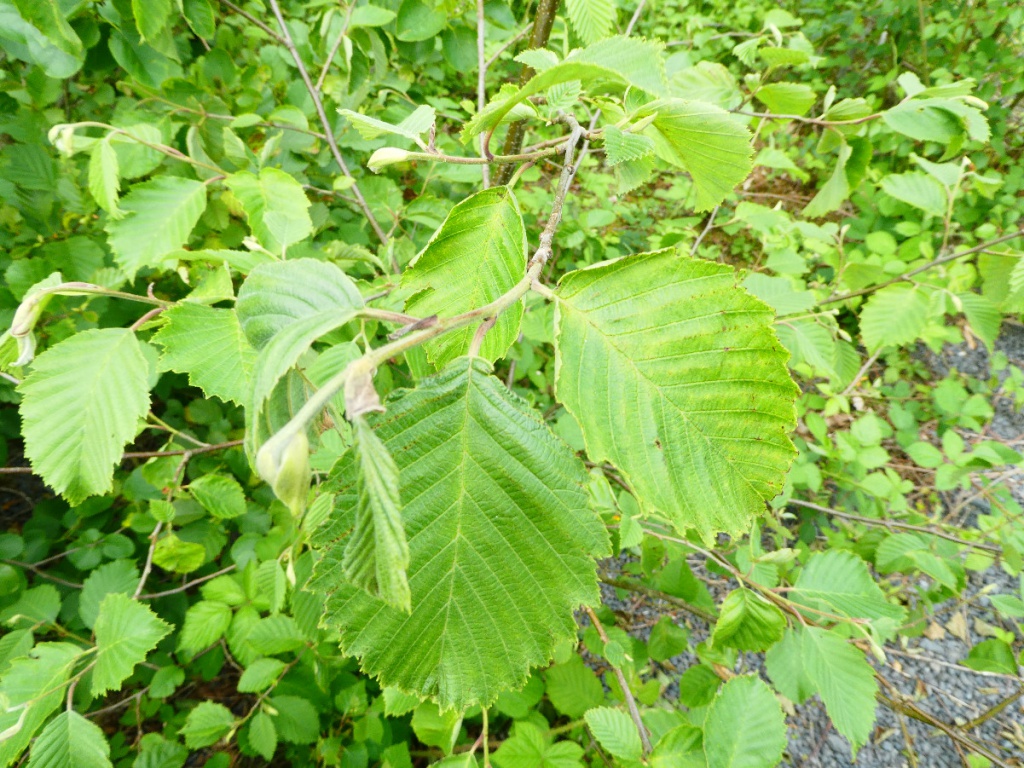
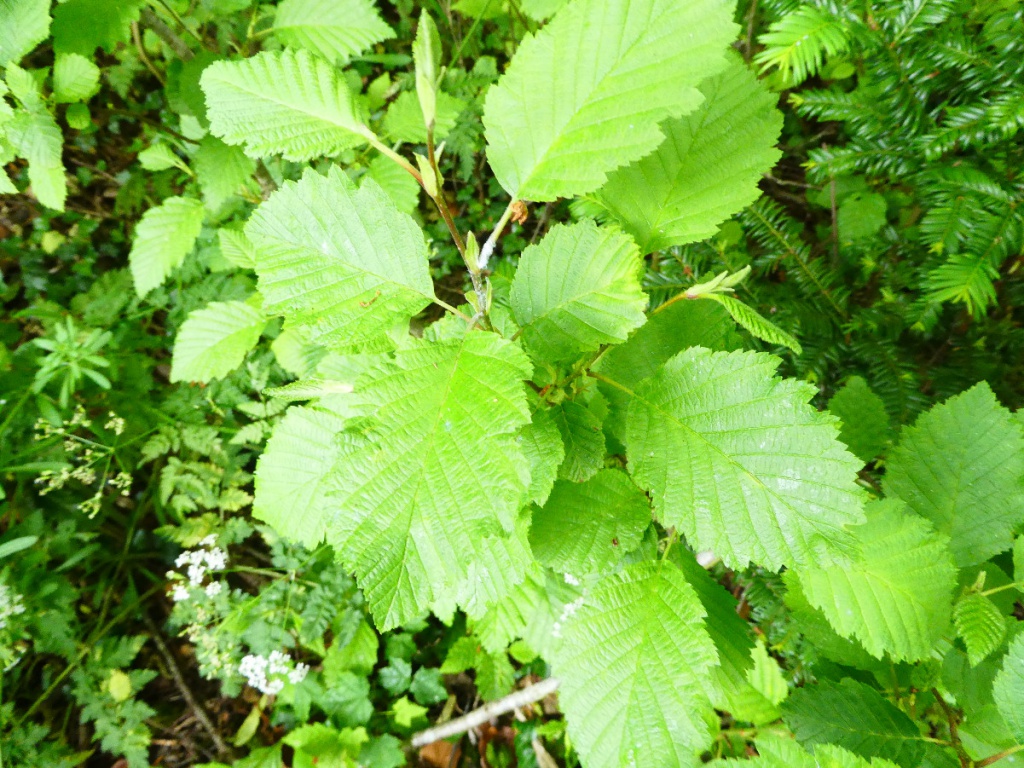
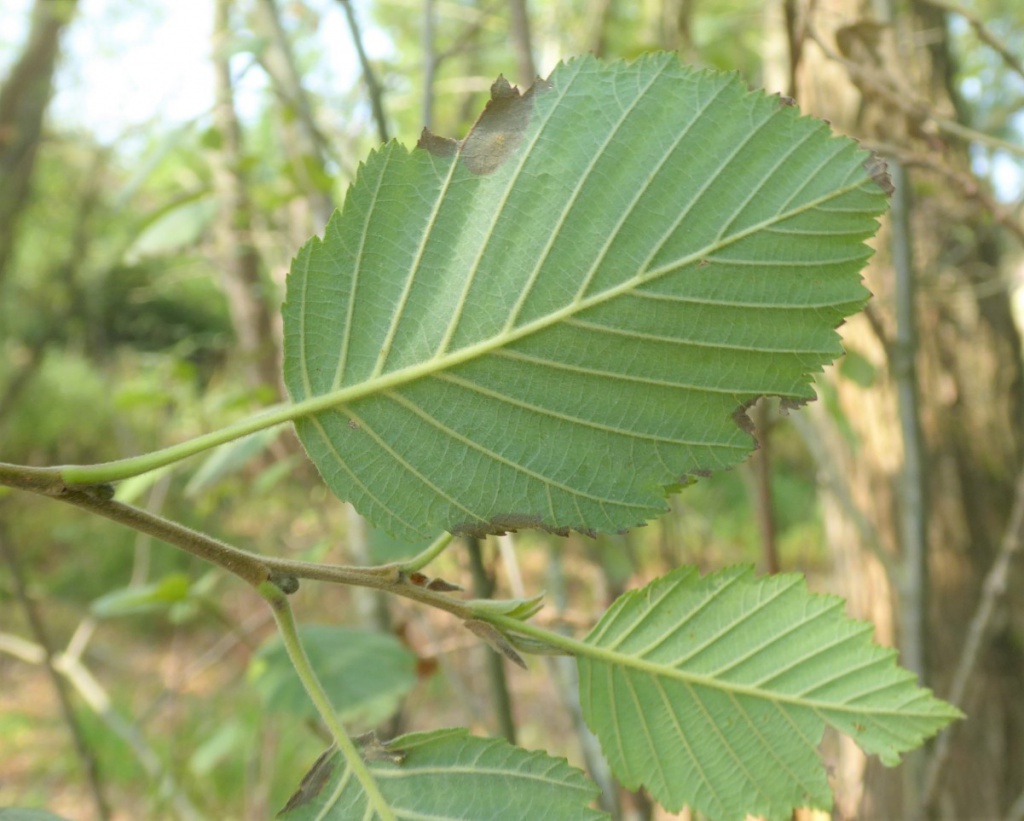
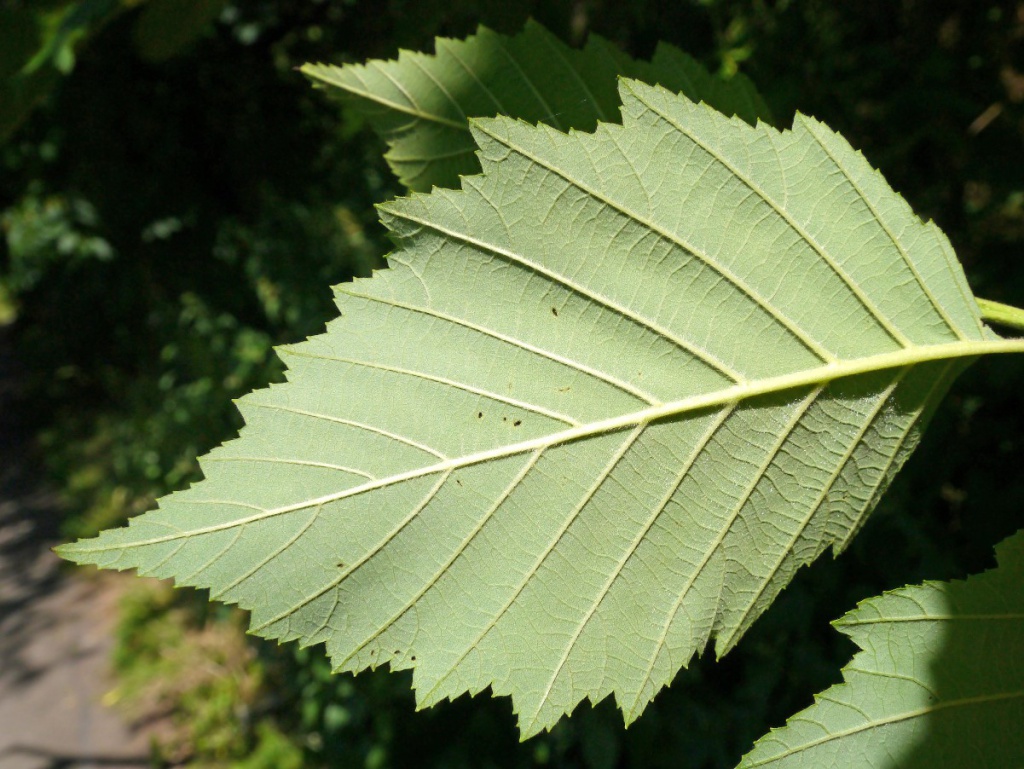
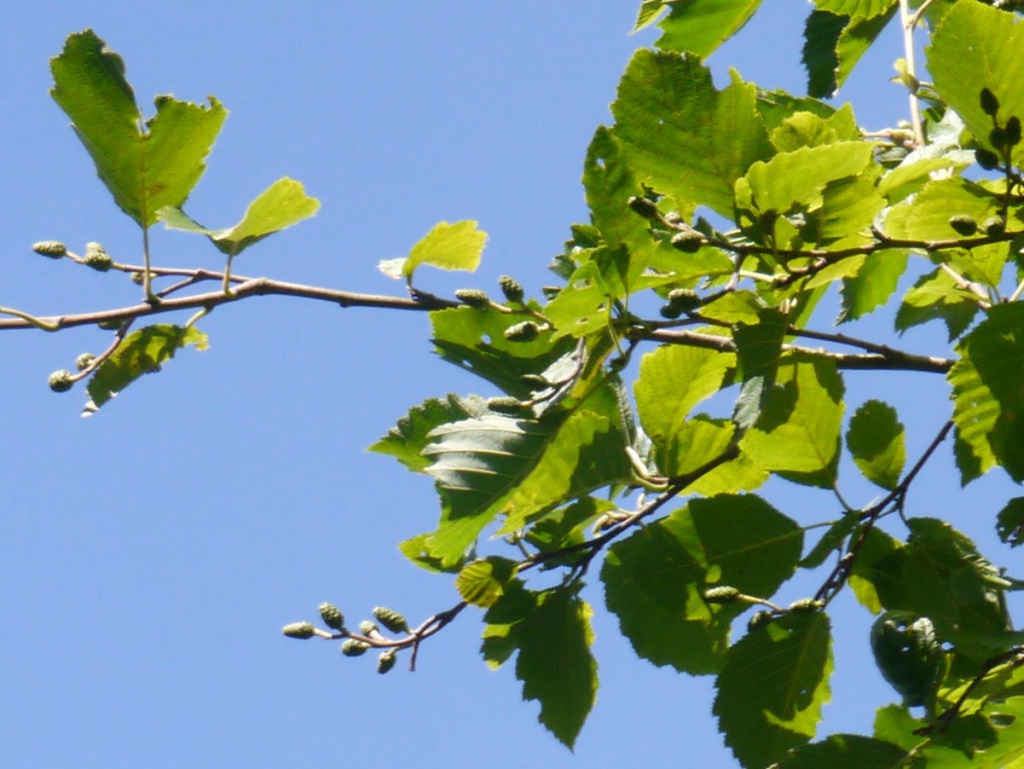
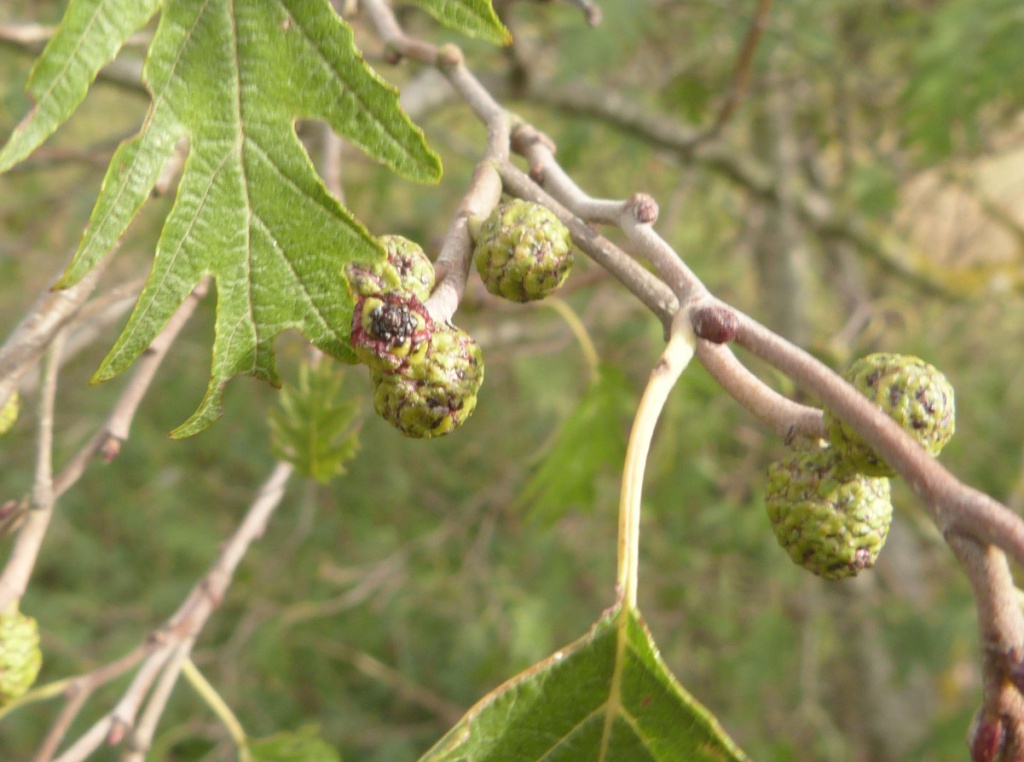
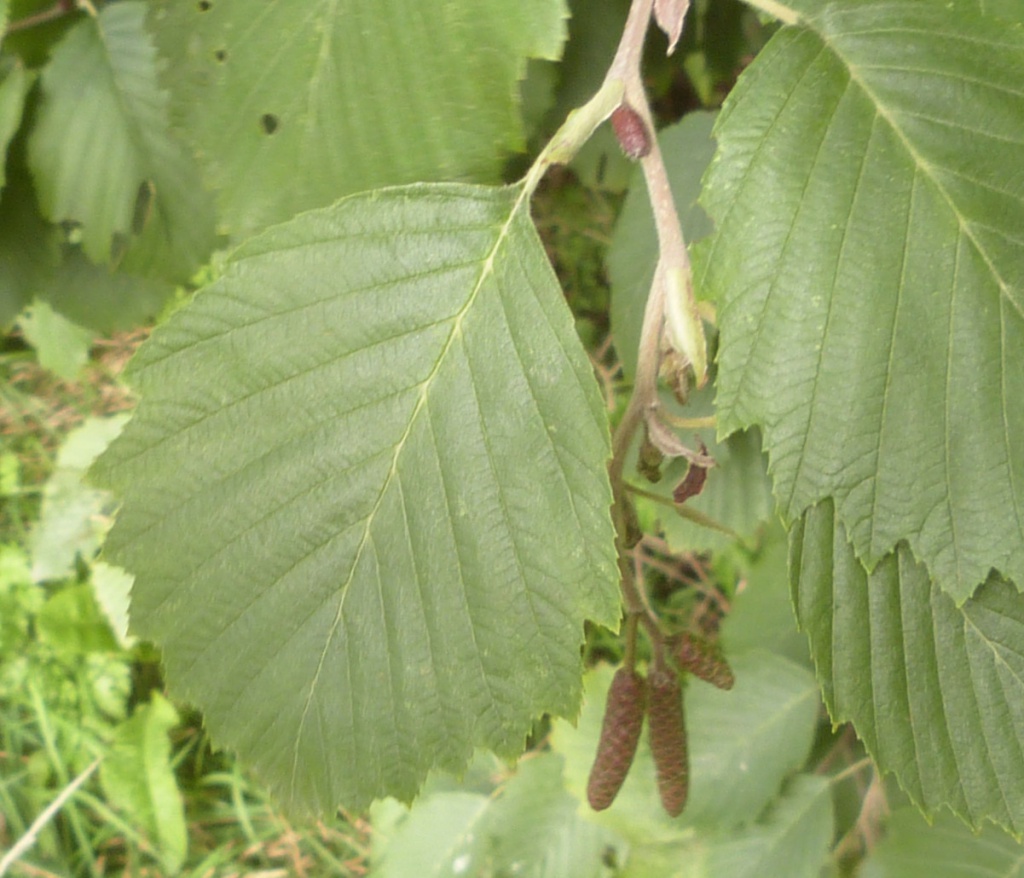
Tree or shrub to 10 metres with smooth grey bark. Young shoots hairy. Leaves oval-lanceolate, pointed, downy and grey beneath. Fruits are cone-like.
Other Alder including our native Alnus glutinosa are very similar when not in leaf.

Smooth grey bark on mature trees can indicate this species, but it is best to record it from the leaf-shape. It is hard to distinguish this species form other alders from the buds, twigs, fruits, cones or catkins.
Photos of leaves
Often planted, especially on former quarries and tips or on restored brownfield or previously developed land .
Spring and summer.
Deciduous tree.
Widespread in Britain, usually as planted stock.
Occasional in Leicestershire and Rutland usually as a result of planting; but often naturalised. It was not recorded in the 1979 Flora survey of Leicestershire.
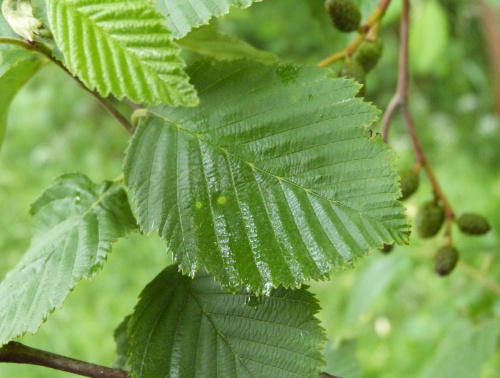 Graham Calow
Stanton Road, Elmesthorpe
15 June 2016 Craig Mabbett
Broughton Astley Church Brook
30 September 2016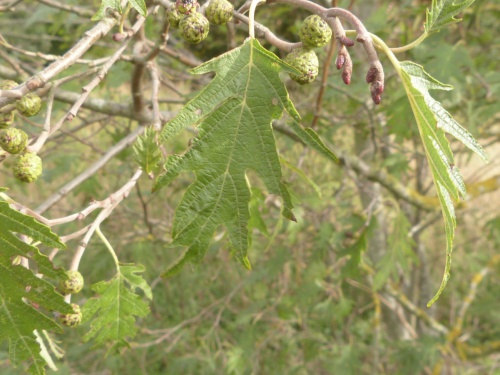 Graham Calow
Hinckley, Clarendon Park
03 October 2022
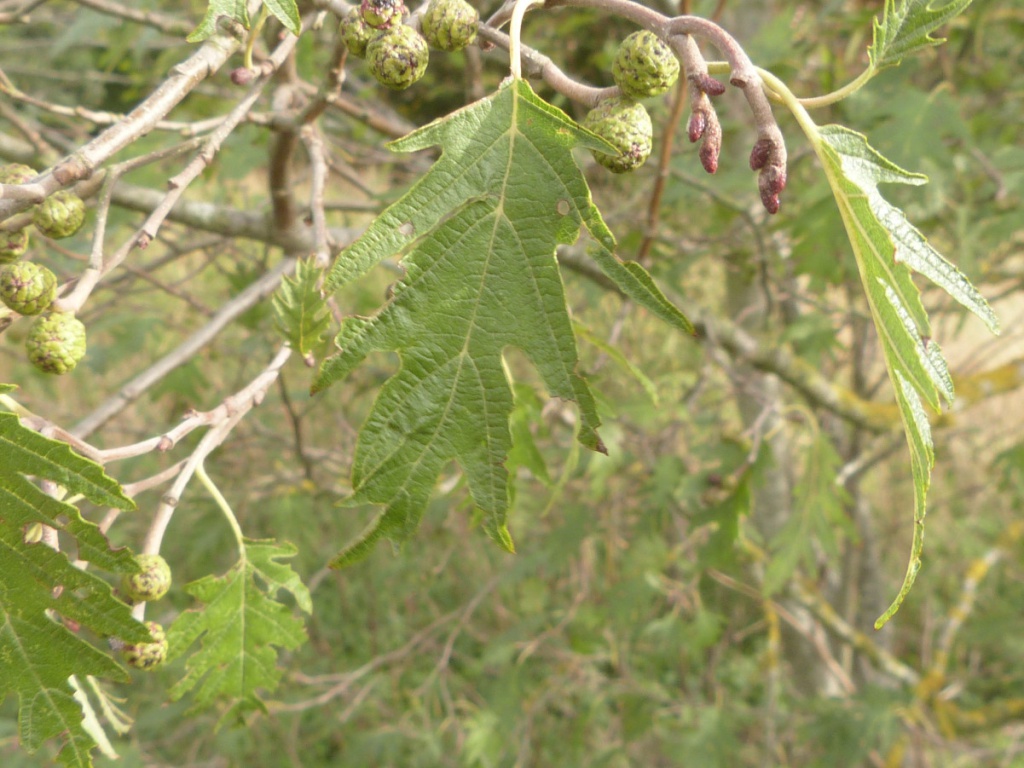
Alnus incana 'Laciniata'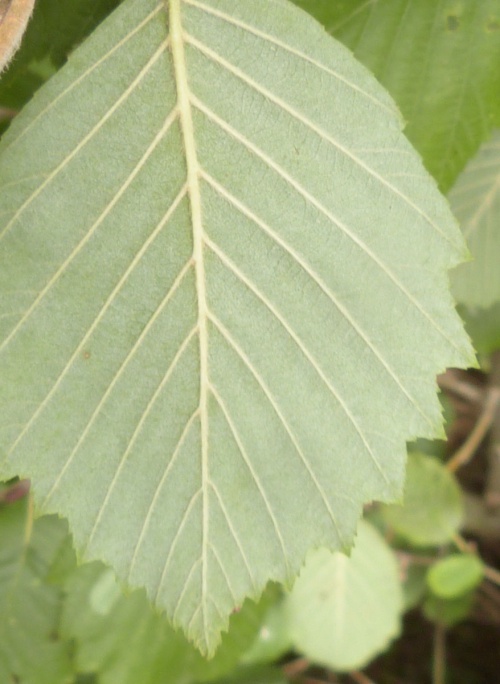 Graham Calow
Burbage,Sketchley Hill off Holt Road.
28 September 2022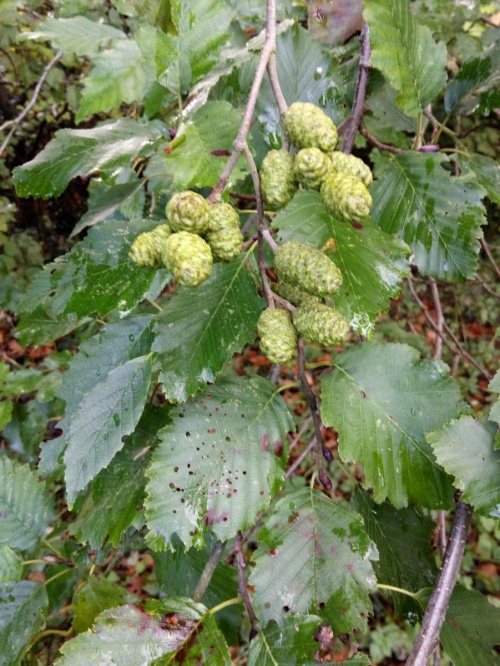 Peter Smith
Loughborough, Bramcote Road
26 October 2020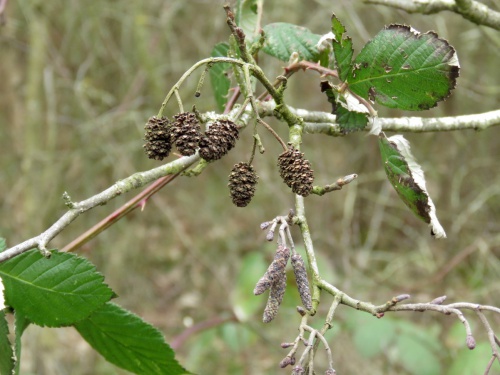 egaten
Bagworth Heath
23 February 2021 Peter Smith
Belgrave
18 July 2016
Bark



Leicestershire & Rutland Map
Enter a town or village to see local records
MAP KEY:
Yellow squares = NBN records (all known data)
Coloured circles = NatureSpot records: 2025+ | 2020-2024 | pre-2020
UK Map
Species profile
- Common names
- Grey Alder
- Species group:
- flowering plant
- Kingdom:
- Plantae
- Order:
- Fagales
- Family:
- Betulaceae
- Records on NatureSpot:
- 32
- First record:
- 30/04/2007 (Dave Wood)
- Last record:
- 09/06/2025 (Helen O'Brien)
Total records by month
% of records within its species group
10km squares with records
The latest images and records displayed below include those awaiting verification checks so we cannot guarantee that every identification is correct. Once accepted, the record displays a green tick.
In the Latest Records section, click on the header to sort A-Z, and again to sort Z-A. Use the header boxes to filter the list.
Latest images
Latest records
 Craig Mabbett
Broughton Astley Church Brook
30 September 2016 David Gould
Aylestone Meadows, Spearwort Fields
30 August 2021 Melinda Bell
Ashby,Giliwiskaw Brook
21 June 2021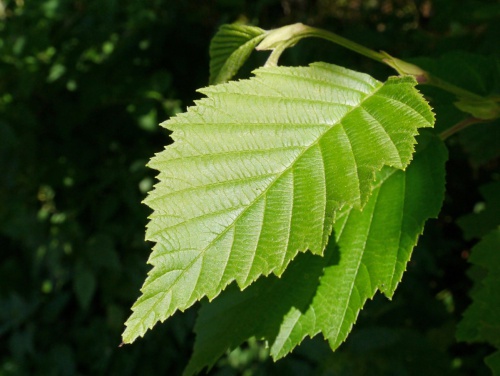 Peter Smith
Belgrave
18 July 2016
Top side of leaf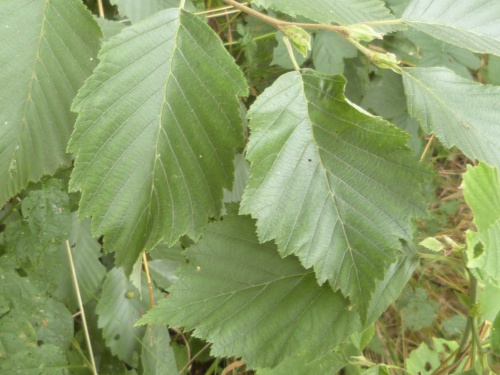 Graham Calow
Burbage Common
18 August 2021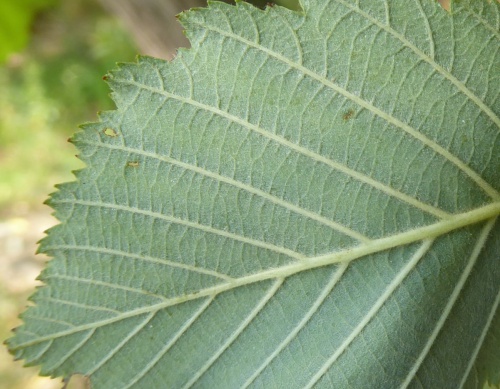 Saharima Roenisch
Thurnby Lodge Nature Area
11 August 2020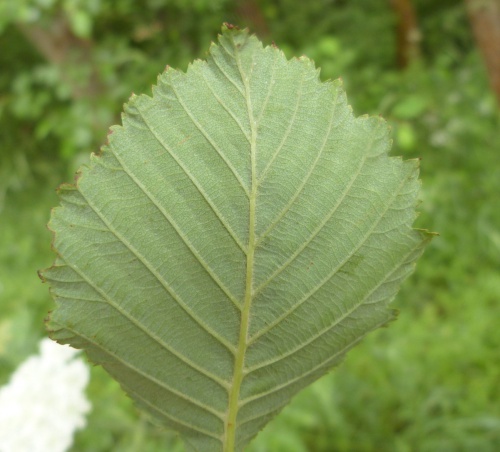 Graham Calow
Stanton Road, Elmesthorpe
15 June 2016 Saharima Roenisch
Thurnby Lodge Nature Area
11 August 2020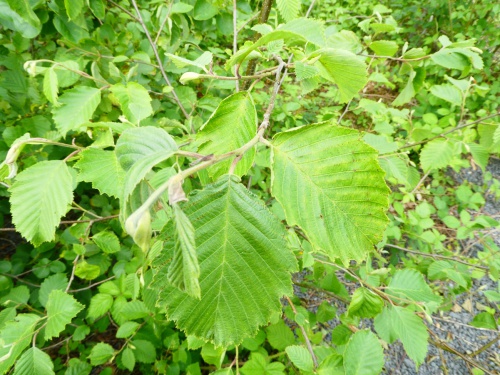 Melinda Bell
Forest Rock Wood
07 June 2021 Melinda Bell
Ashby, Lower Packington Road
09 June 2021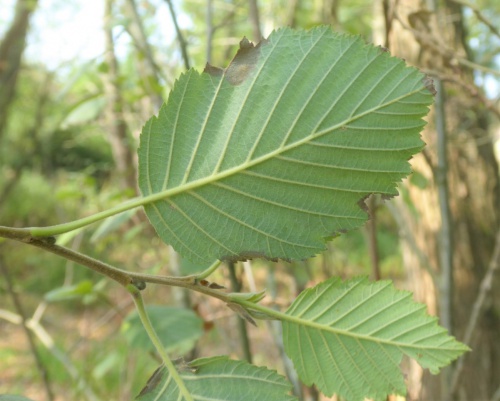 Saharima Roenisch
Thurnby Lodge Nature Area
11 August 2020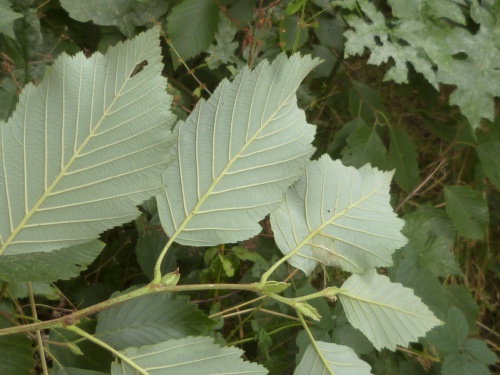 Graham Calow
Burbage Common
18 August 2021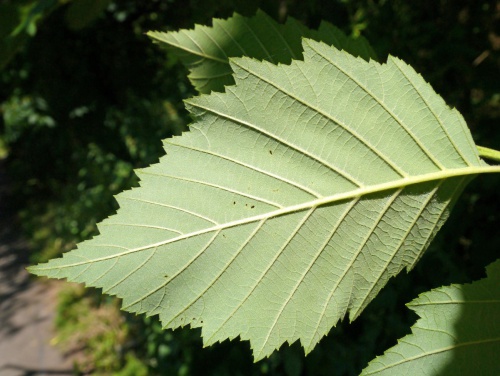 Peter Smith
Belgrave
18 July 2016
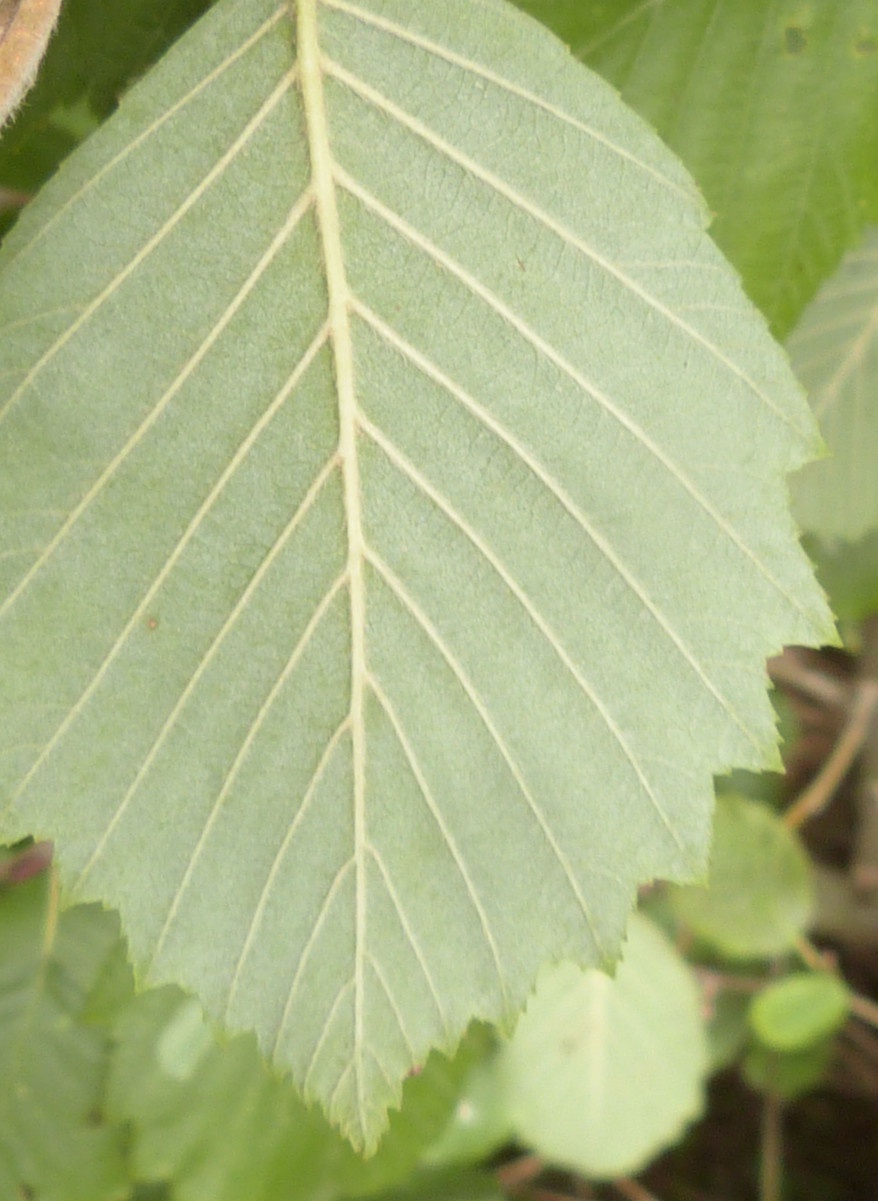
Underside of leaf David Gould
Aylestone Meadows, Spearwort Fields
30 August 2021 Graham Calow
Stanton Road, Elmesthorpe
15 June 2016 Graham Calow
Stanton Road, Elmesthorpe
15 June 2016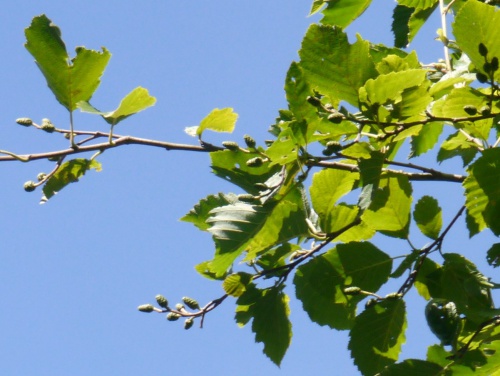 Peter Smith
Belgrave
18 July 2016
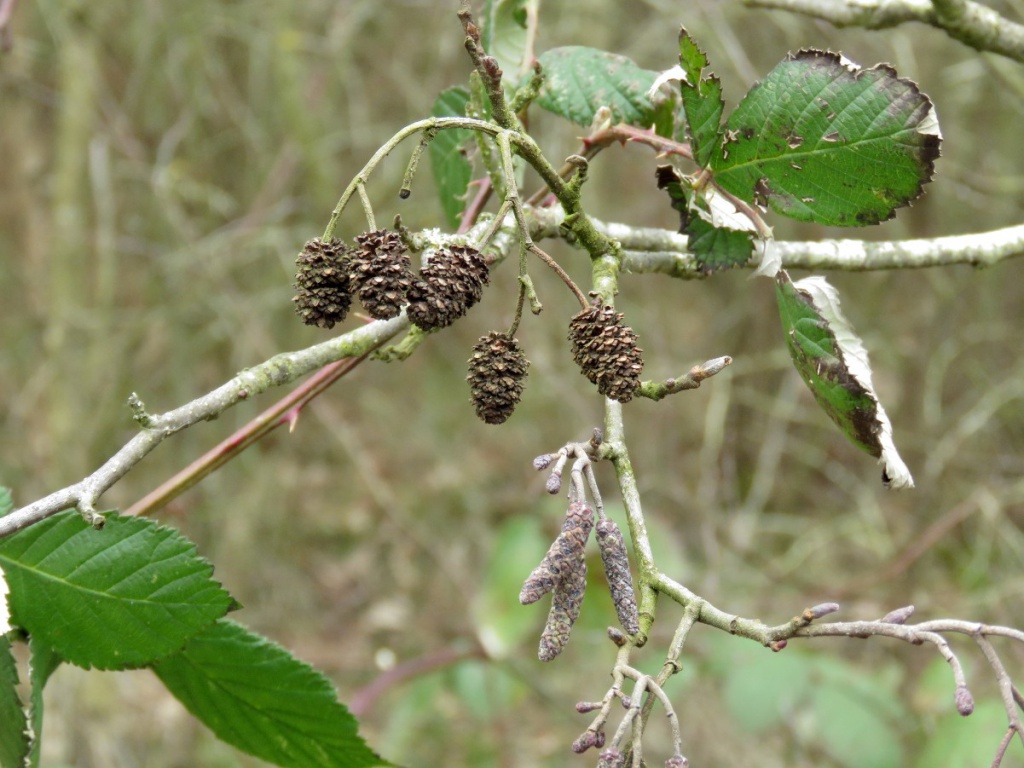
Cones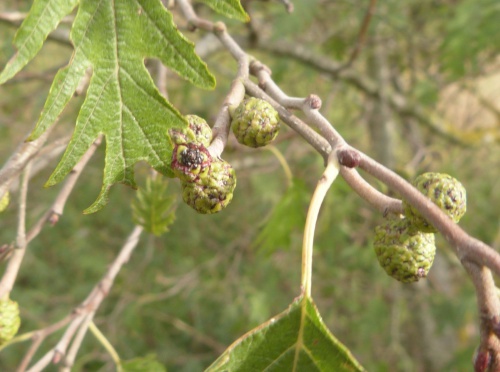 Graham Calow
Hinckley, Clarendon Park
03 October 2022
Alnus incana 'Laciniata' Graham Calow
Hinckley, Clarendon Park
03 October 2022
Alnus incana 'Laciniata'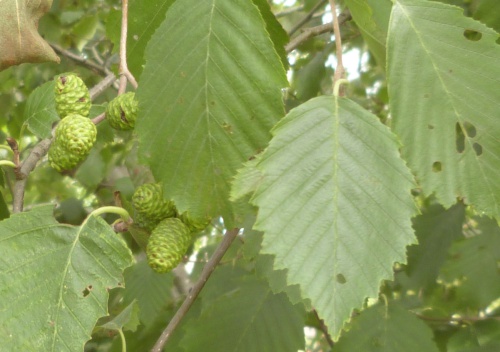 Graham Calow
Burbage,Sketchley Hill off Holt Road.
28 September 2022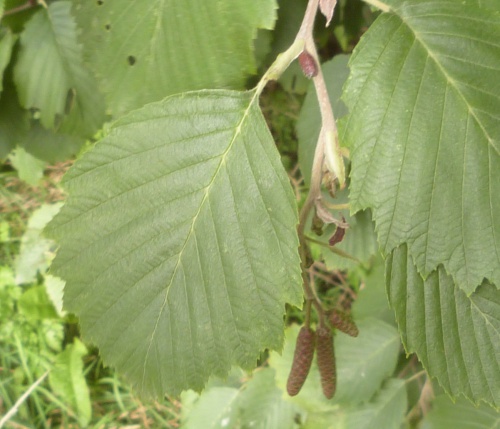 Graham Calow
Burbage,Sketchley Hill off Holt Road.
28 September 2022









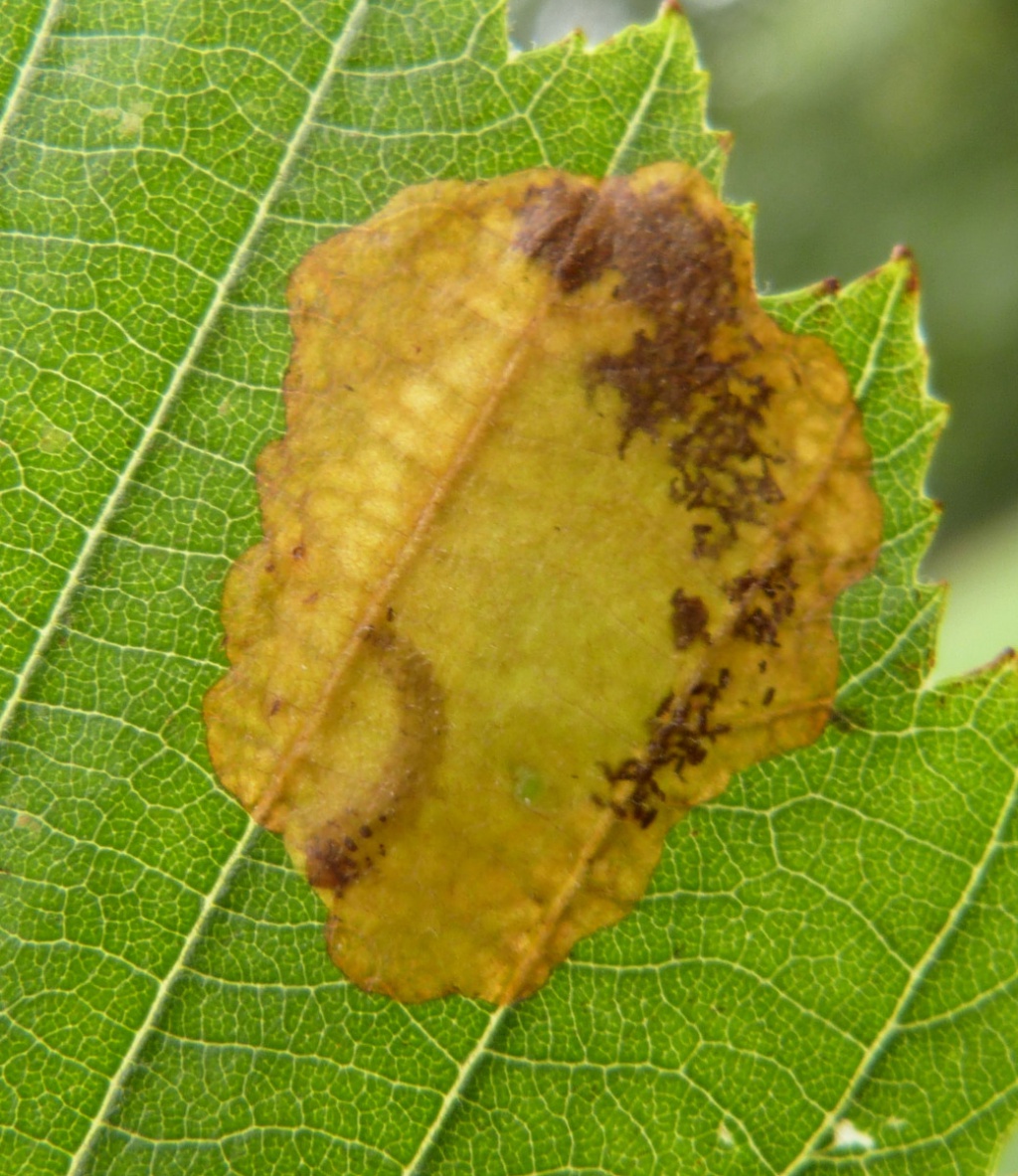
Heterarthrus vagans
The larvae of the sawfly Heterarthrus vagans mine the leaves of Alder species. The white larva has ringed feet and a distinctive black mark near the head followed by 3 spots. It creates a large blotch that normally starts at, or near, the leaf margin, where some or much frass is ejected. The mine is brownish and the full grown larva makes a disc-shaped cocoon in which it pupates. The larva has a dark patch on the back of the head, and dark markings under the head. There are black dots on the thorax underneath, and the feet are short and stubby. The pigmentation is lost in the pre-pupal stage in the cocoon
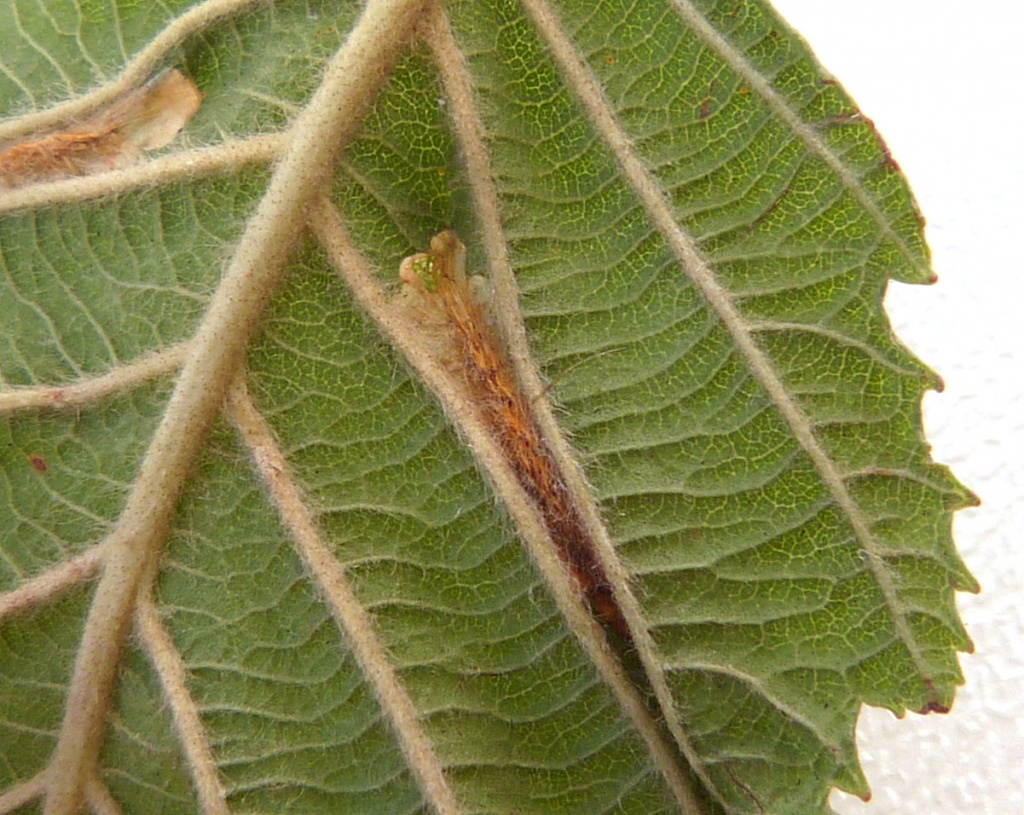
Phyllonorycter strigulatella
The larva of the moth Phyllonorycter strigulatella mines the leaves of Grey Alder causing a narrow strongly contracted tube-like mine between two veins.

Fenusa dohrnii
The larva of the sawfly Fenusa dohrnii mines the leaves of various Alder species. The mine takes the form of a large brownish blotch, without an initial corridor. Usually the mine starts near a vein axil, and expands towards the leaf margin. The mine mostly remains enclosed by two thick lateral veins.

Caloptilia elongella
The larva of the moth Caloptilia elongella mines the leaves of Alder, initially in an inconspicuous upper surface gallery. This lead to a silvery blotch over a vein, whch causes the leaf to contract. The larva then leaves the mine to feed in longitudinal rolls at the leaf edge. The larva is whitish with some dark markings but without any clear distinguishing features. Pupation is in a transparent, shining cocoon attached to the leaf underside.

Phyllonorycter klemannella
The larva of the moth Phyllonorycter klemannella mines the leaves of Alder, creating a tentiform mine between two veins on the underside, with a winkled surface withut sharp folds. The larva is white or yellow, and the pupa is in a cocoon with frass heaped to one side.
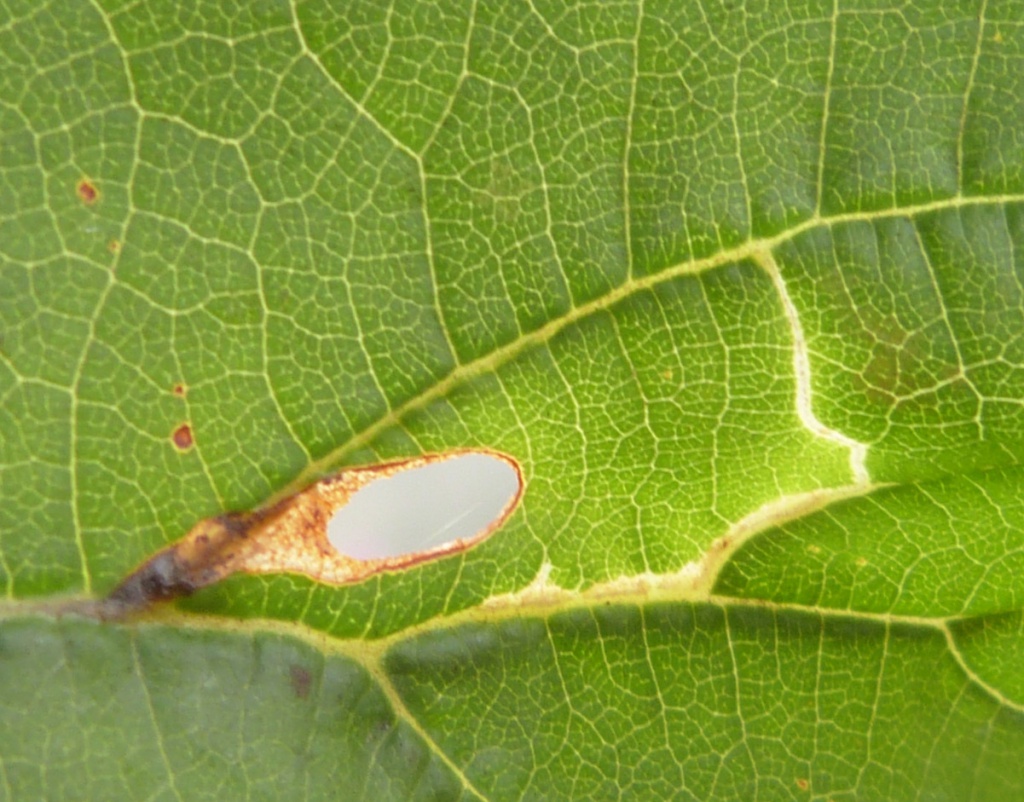
Heliozela resplendella
The larva of the moth Heliozela resplendella mines the leaves of Alder. The mine is initially in the midrib and then along a side vein. Then a narrow gallery is cut through to an adjacent side vein, and the larva mines down this to re-enter the midrib. Finally it makes an oval excision in the leaf blade. The larva inside this leaf sandwich drops to the ground to pupate.
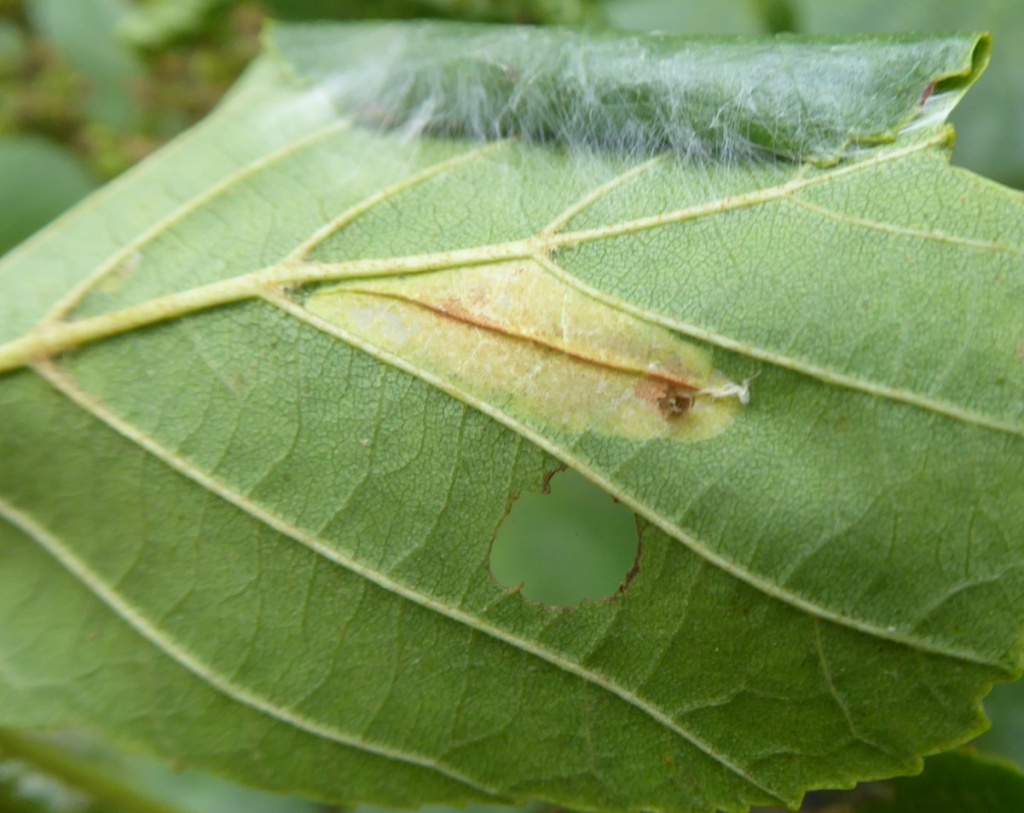
Phyllonorycter rajella
The larva of the moth Phyllonorycter rajella mines the leaves of Alder, creating an oval tentiform mine with a sharp crease on the under-surface. The larva is greenish, and pupates in a frass-encrusted cocoon inside the mine. This is visible as two dark lines either side of pupa.
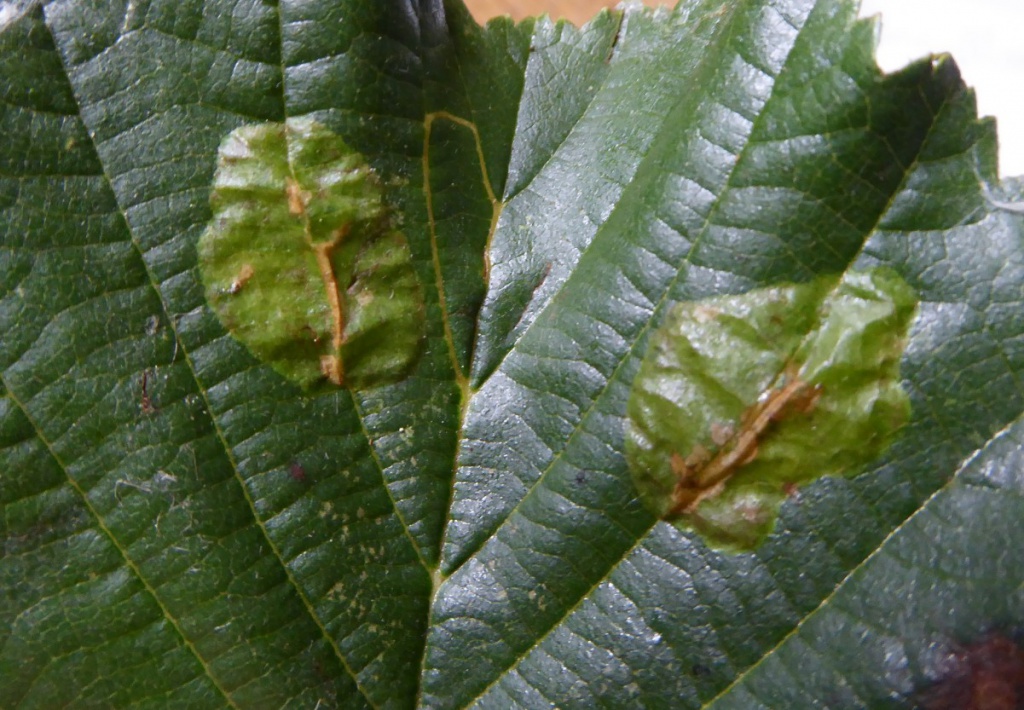
Phyllonorycter stettinensis
The larva of the moth Phyllonorycter stettinensis mines the leaves of Alder causing a small oval mine on the upper leaf surface (unike other Phyllonorycter on Alder, which mine under-surface). The surface of the mine may look glossy and often has a strong crease.