

Field Maple - Acer campestre
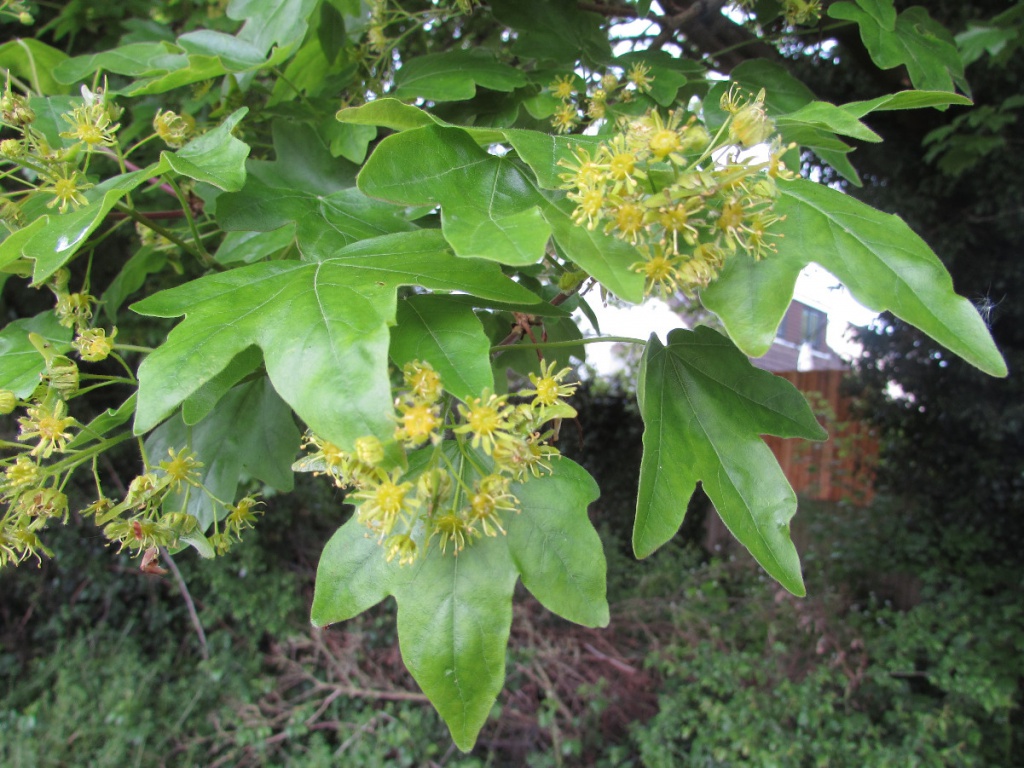
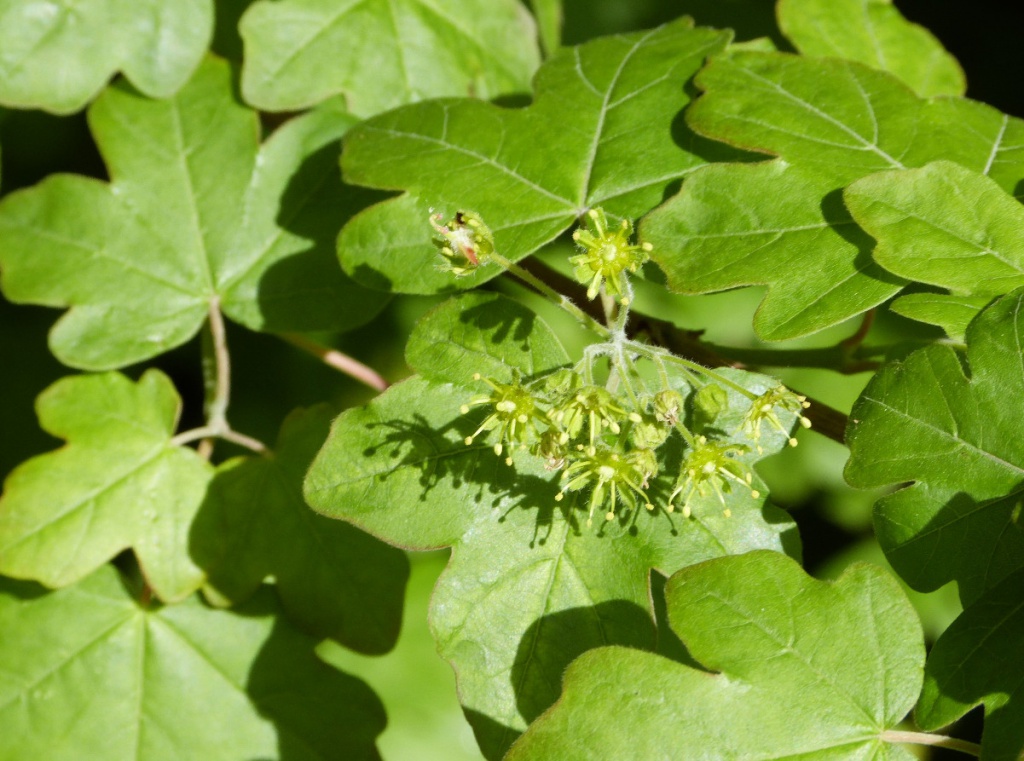
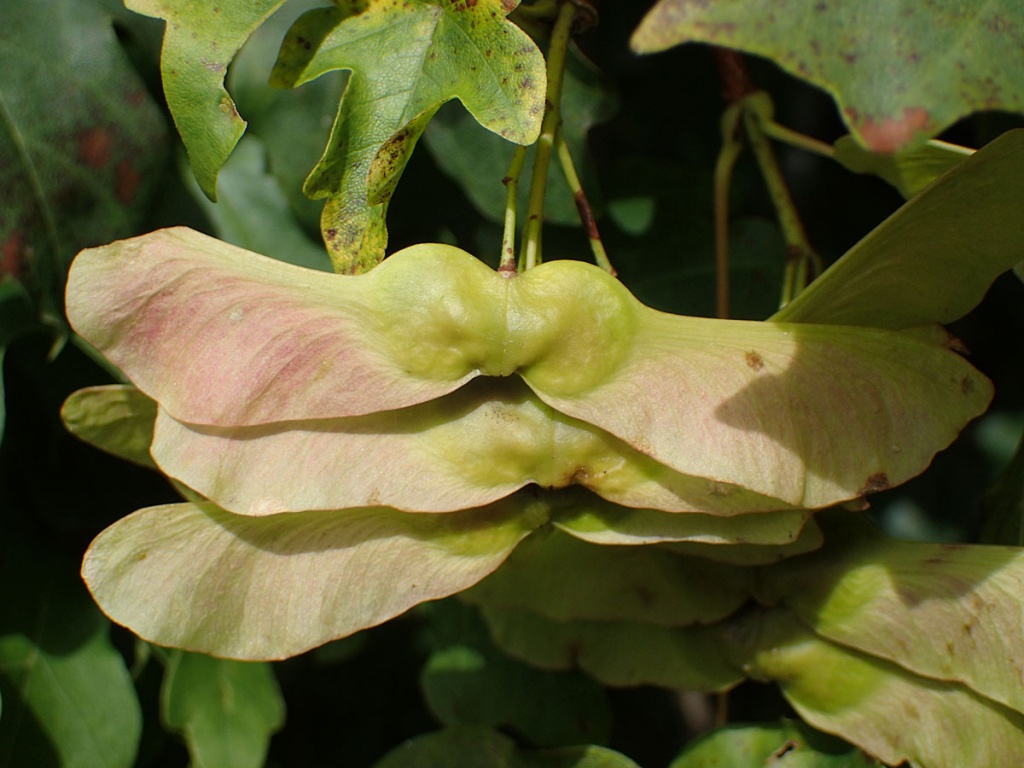
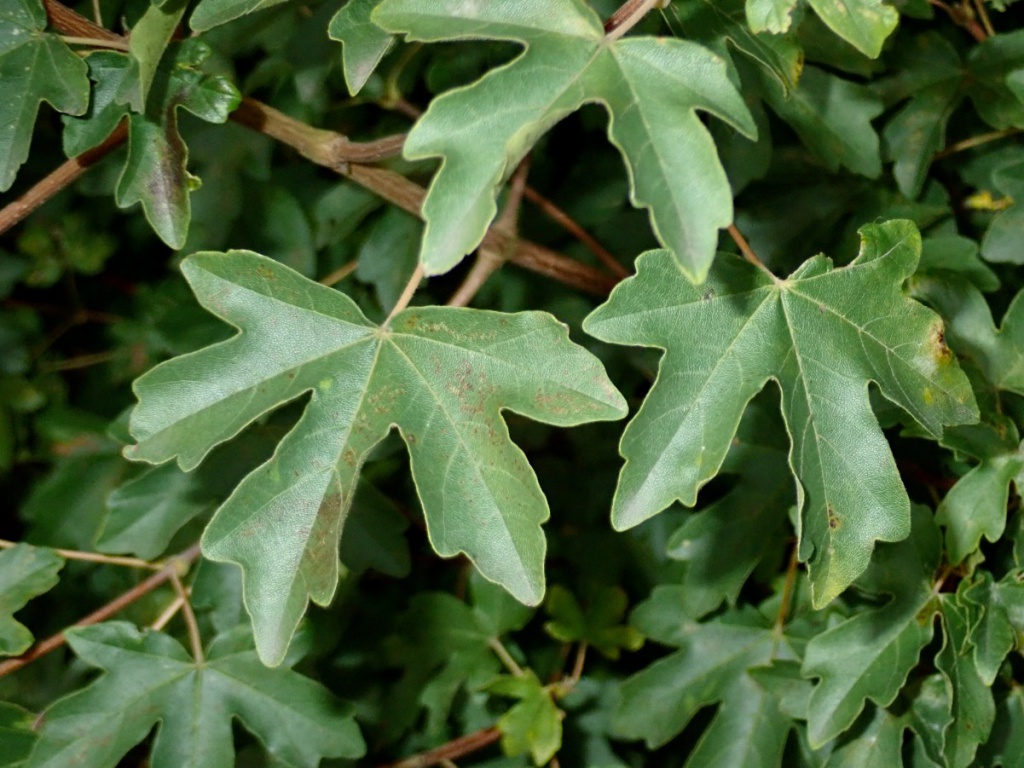
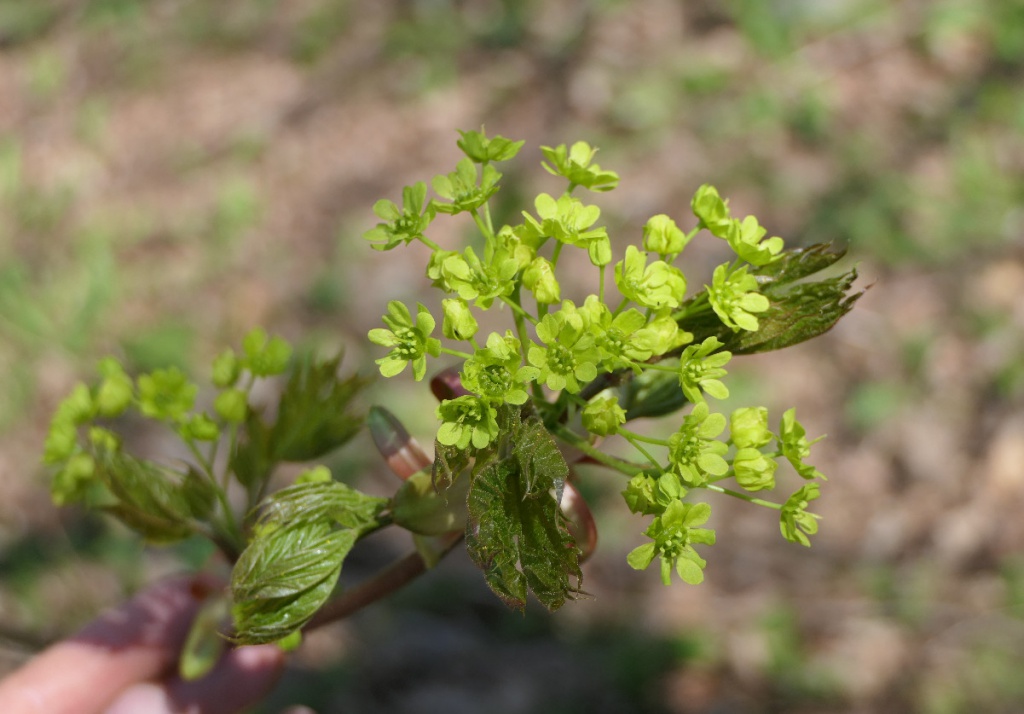
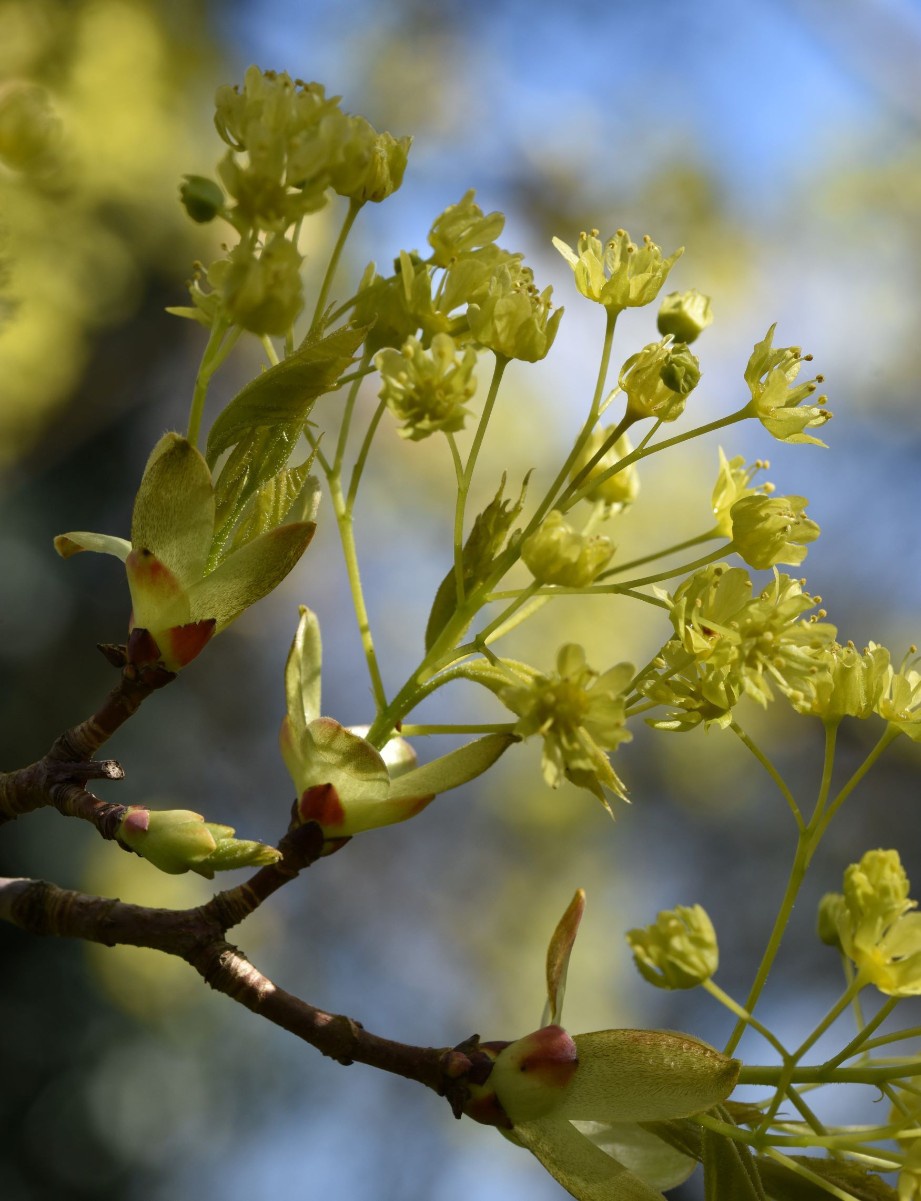
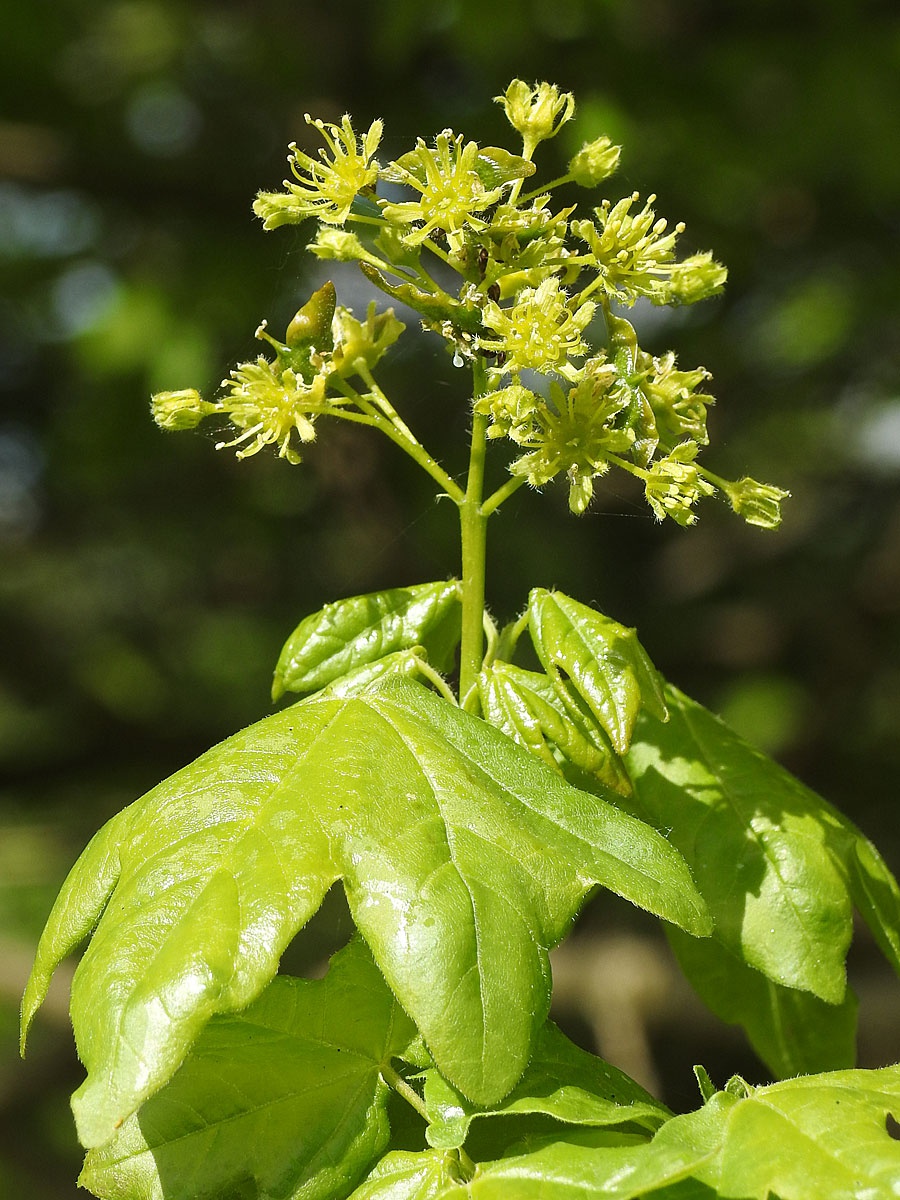
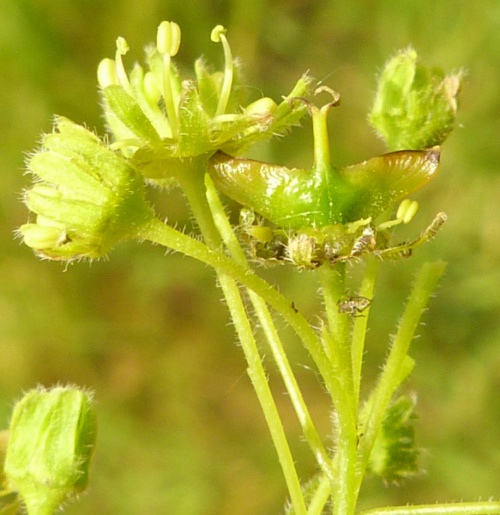
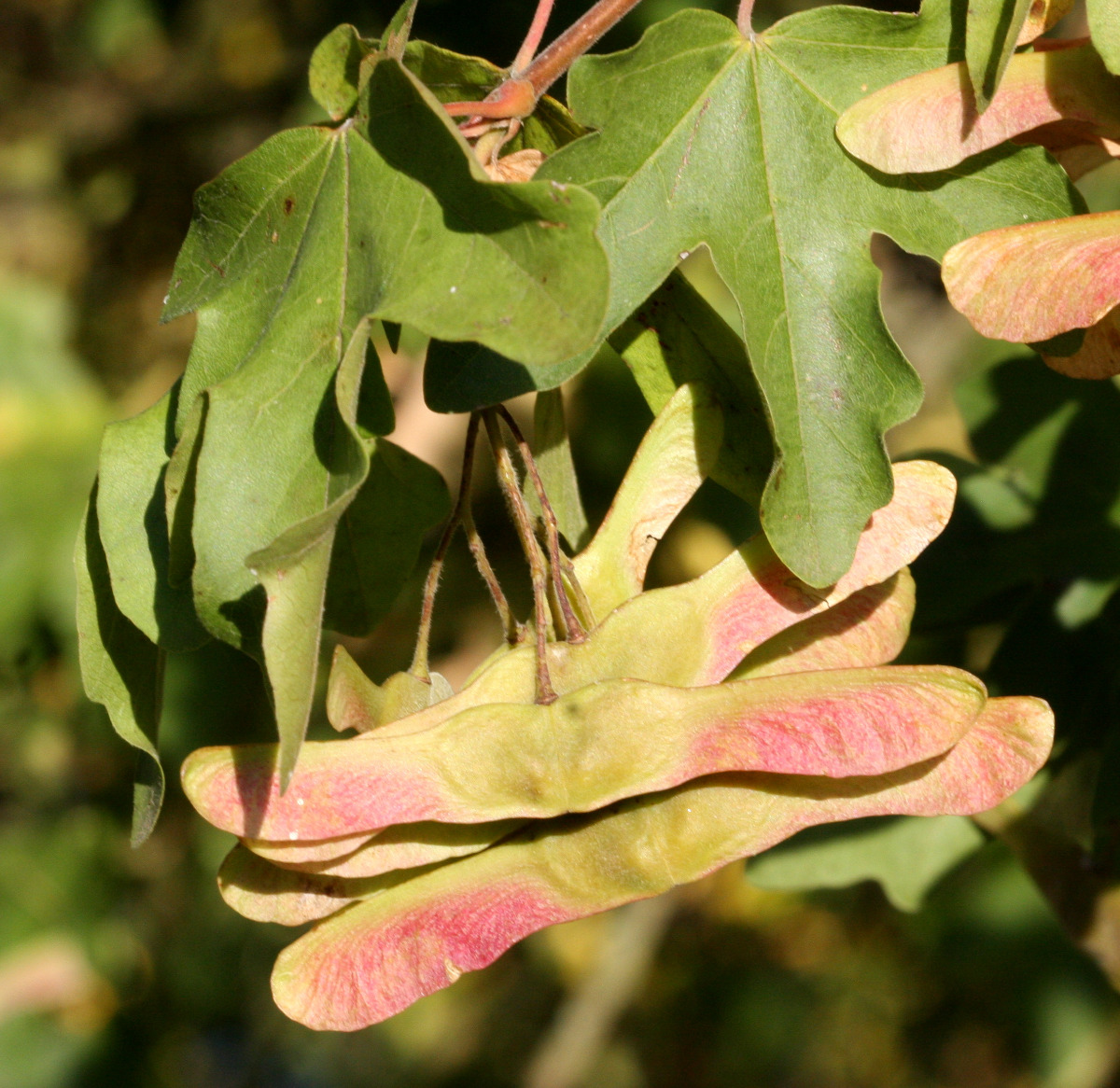
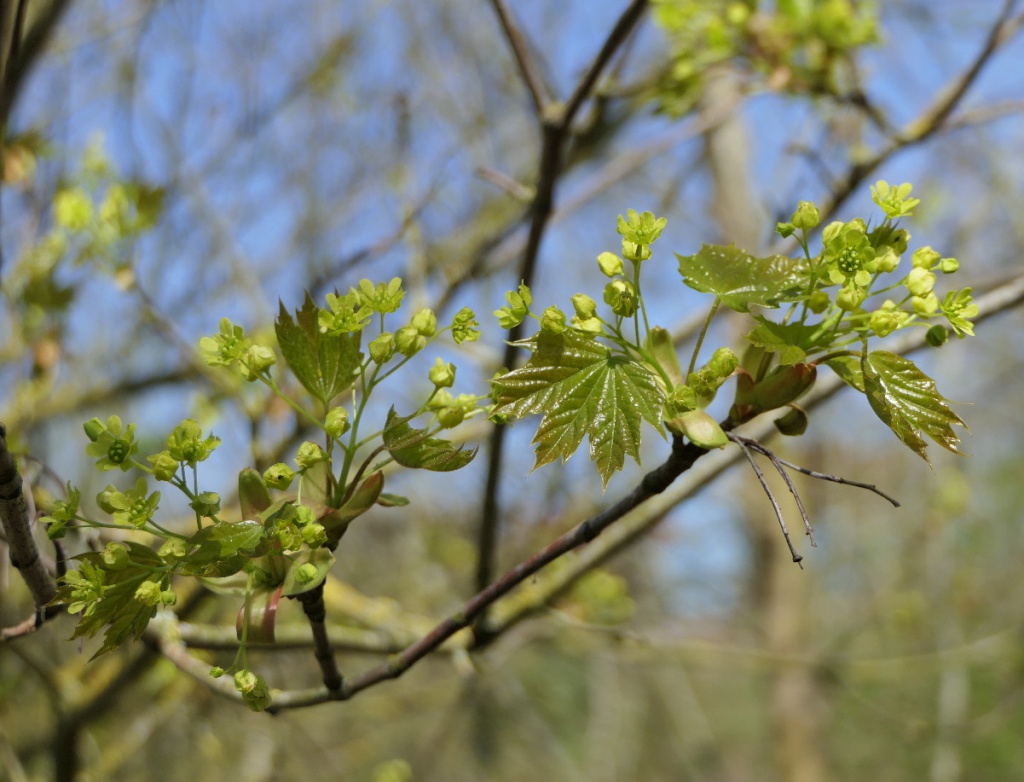
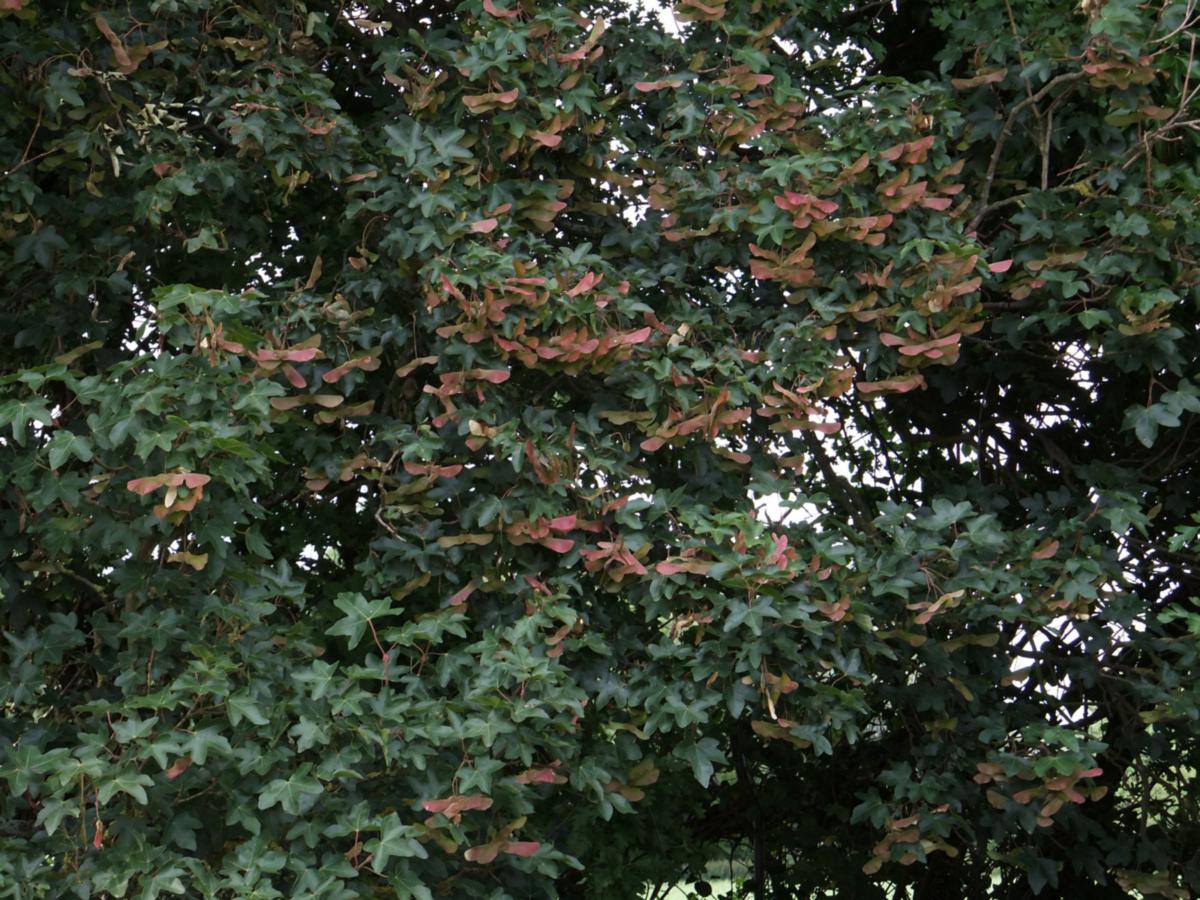
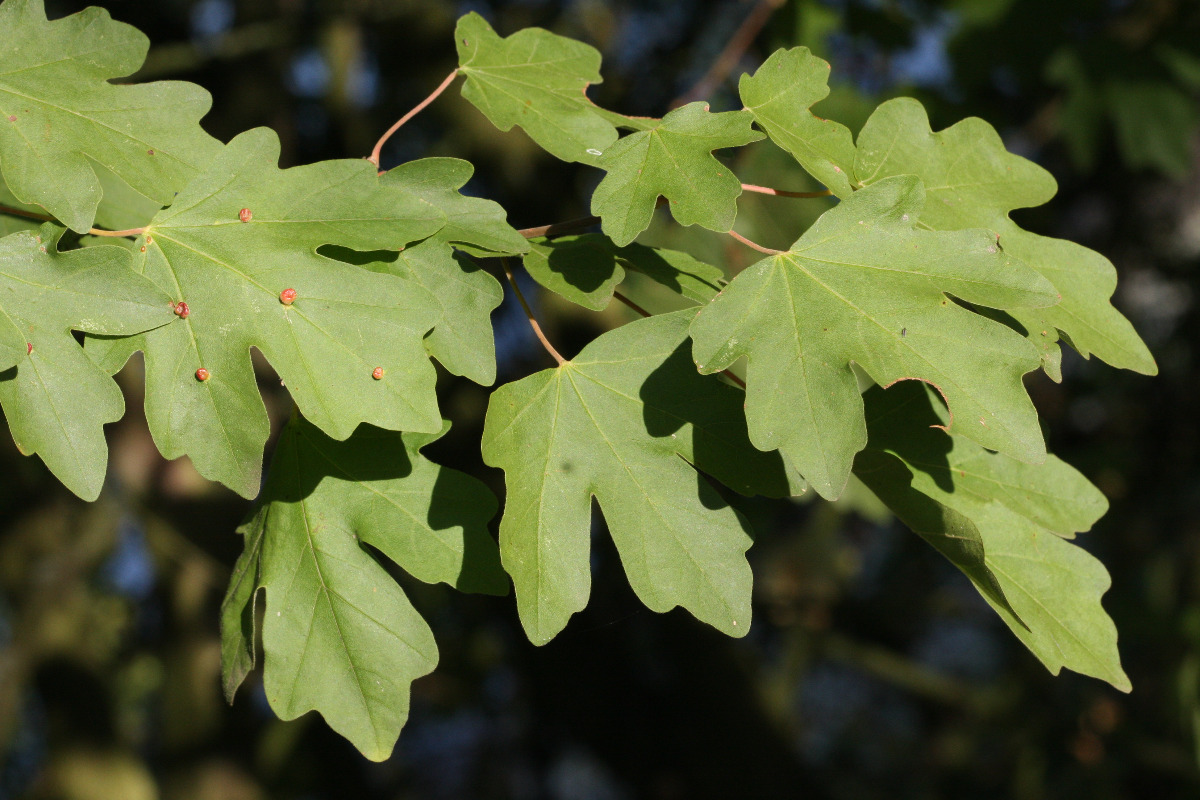
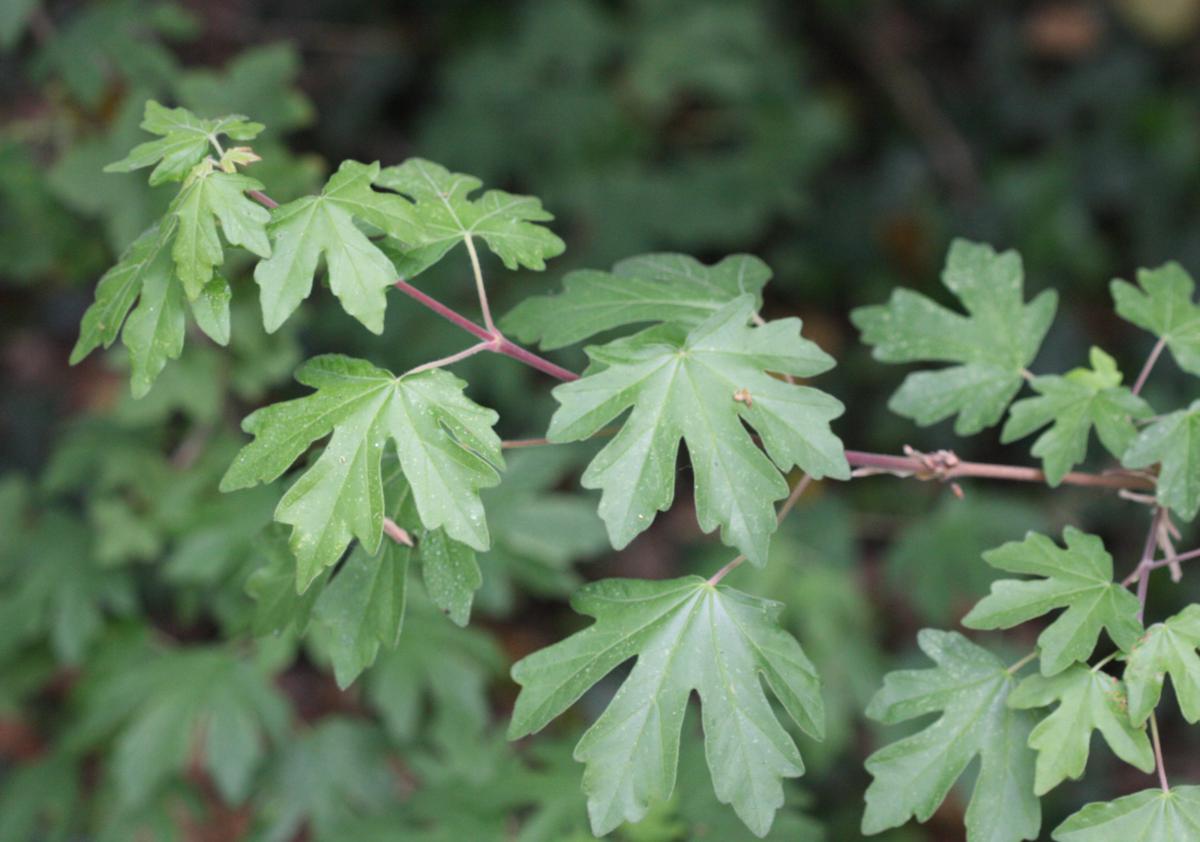
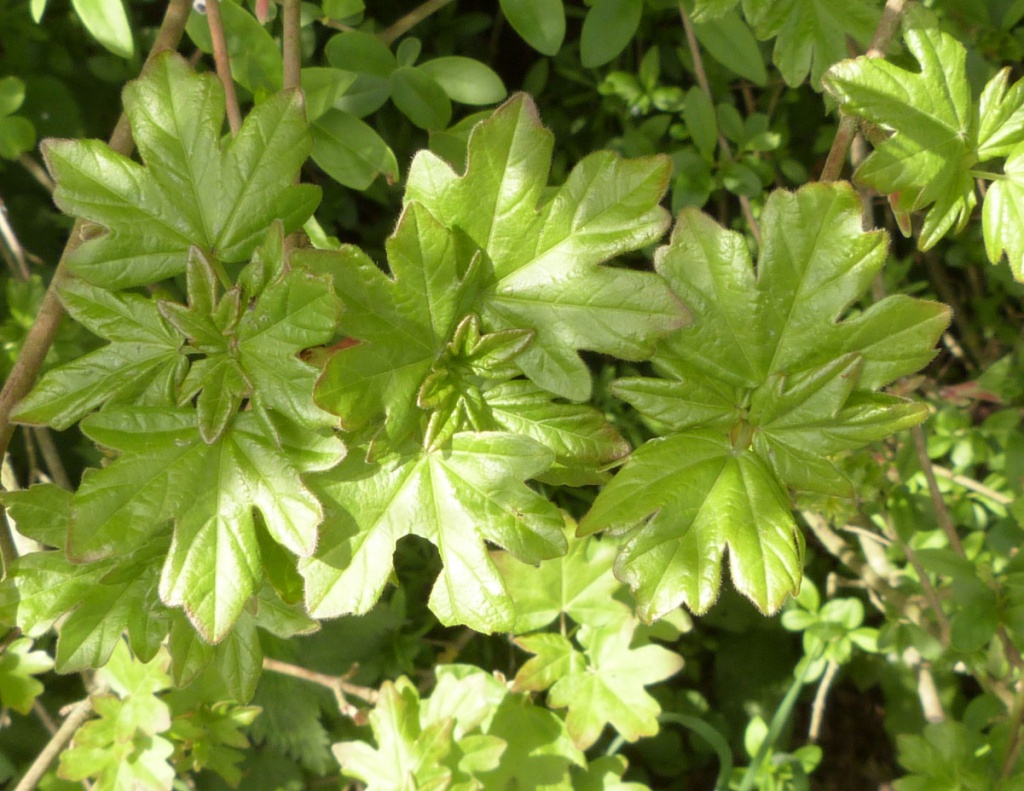
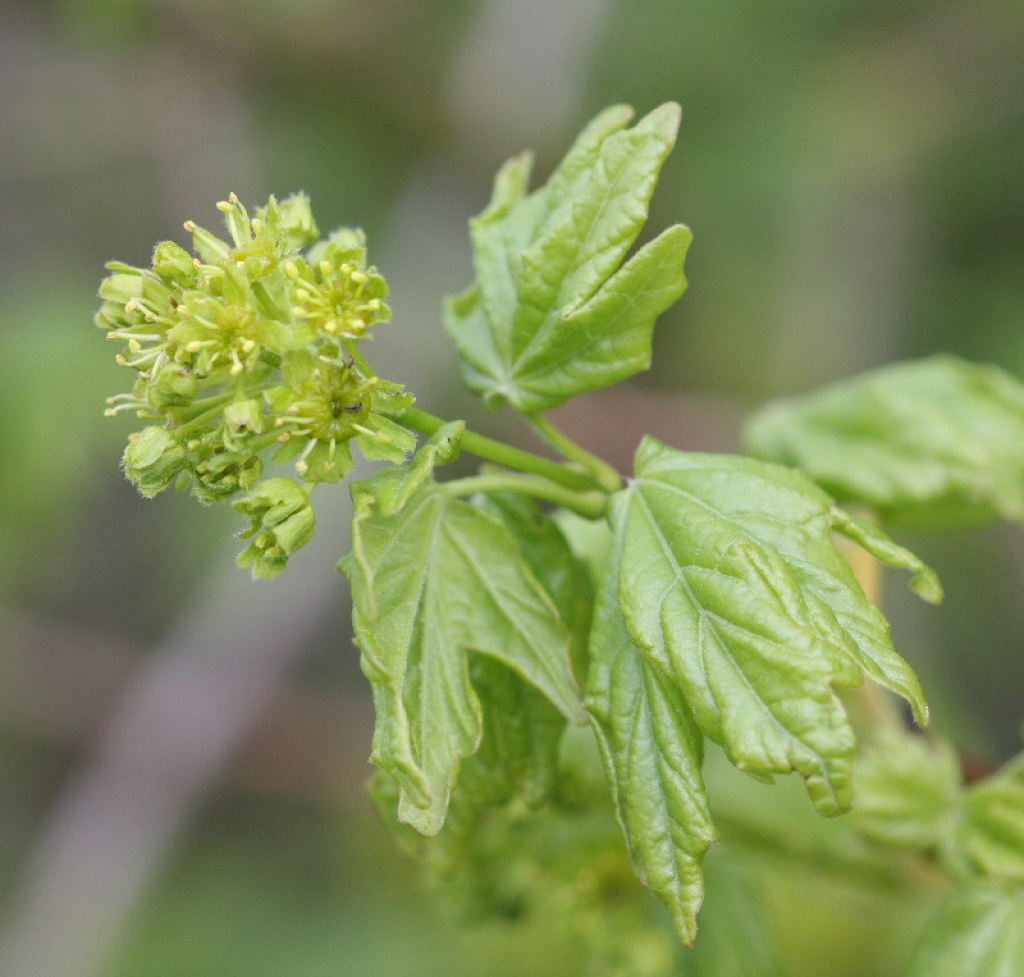
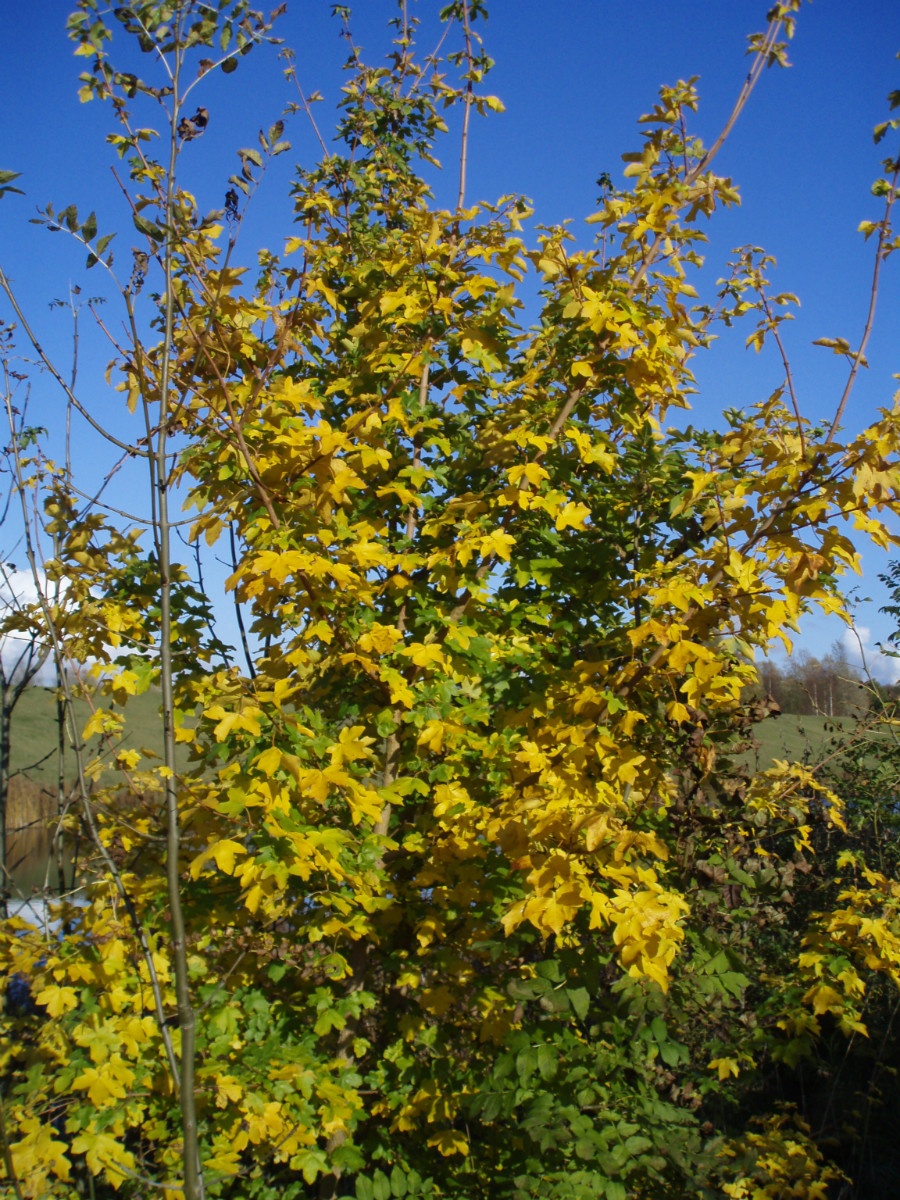
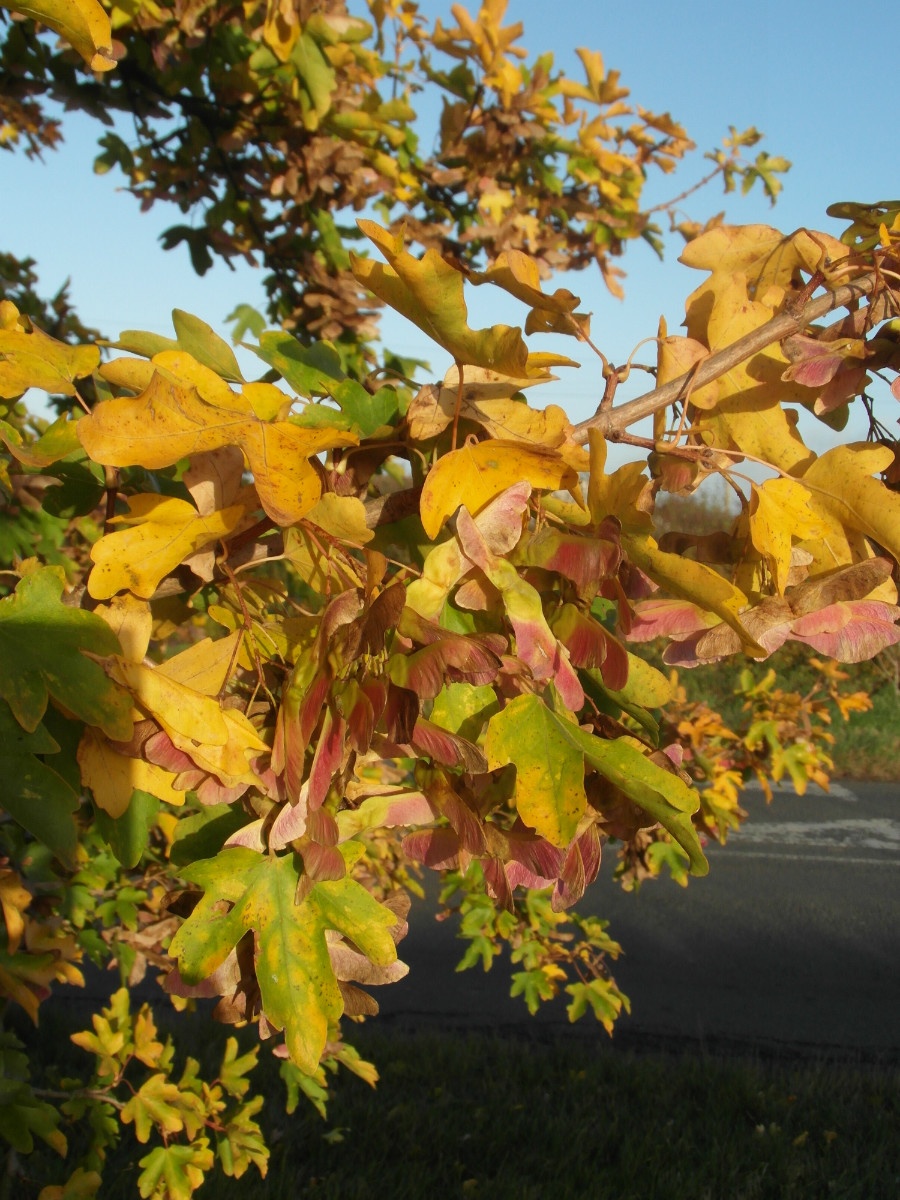
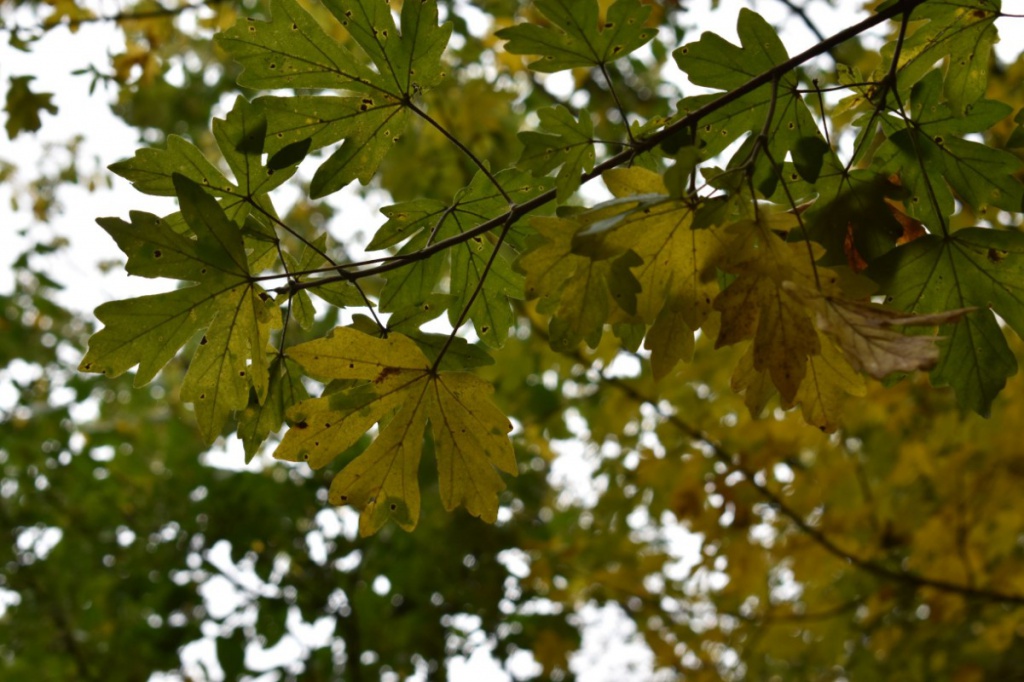
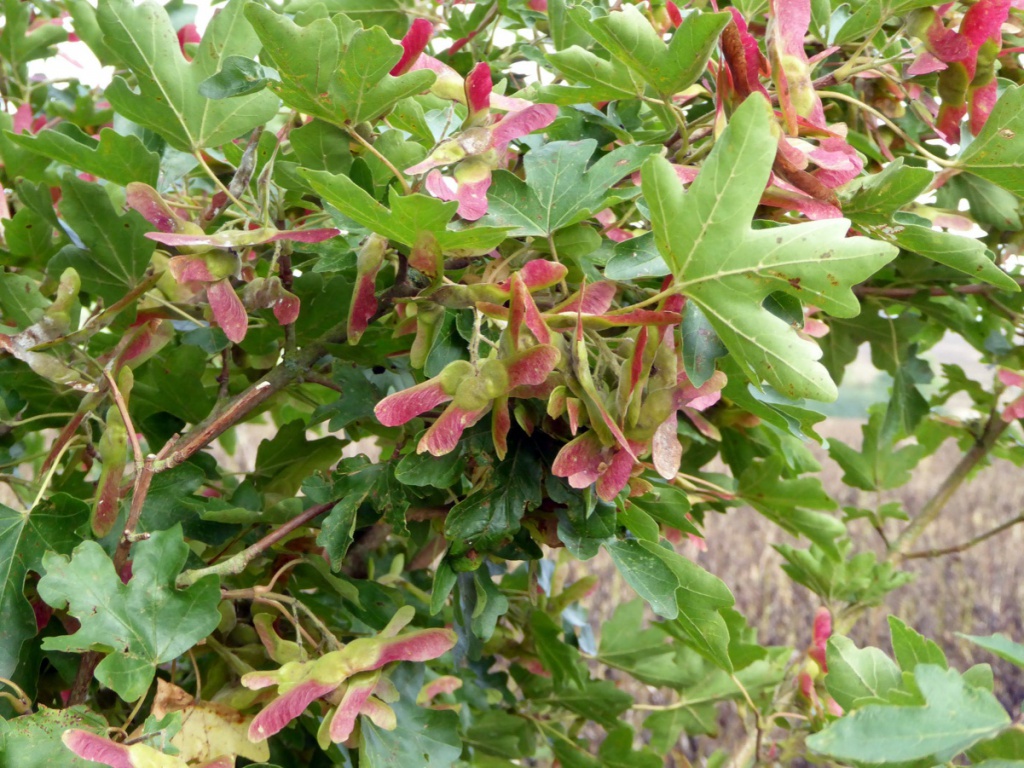
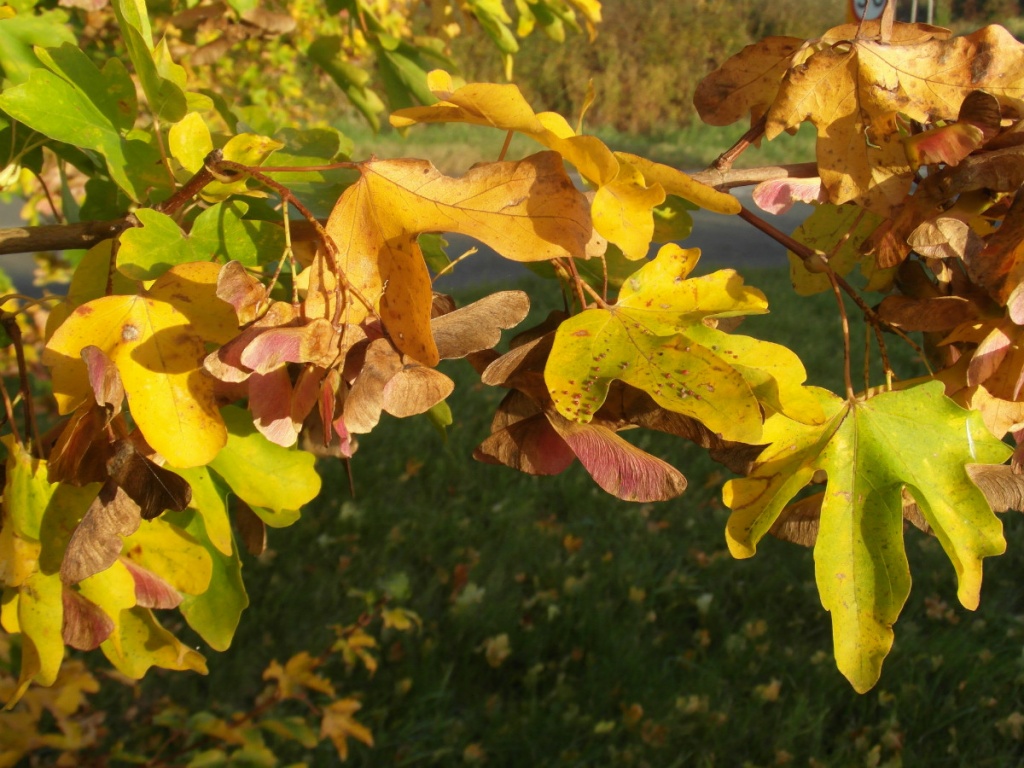
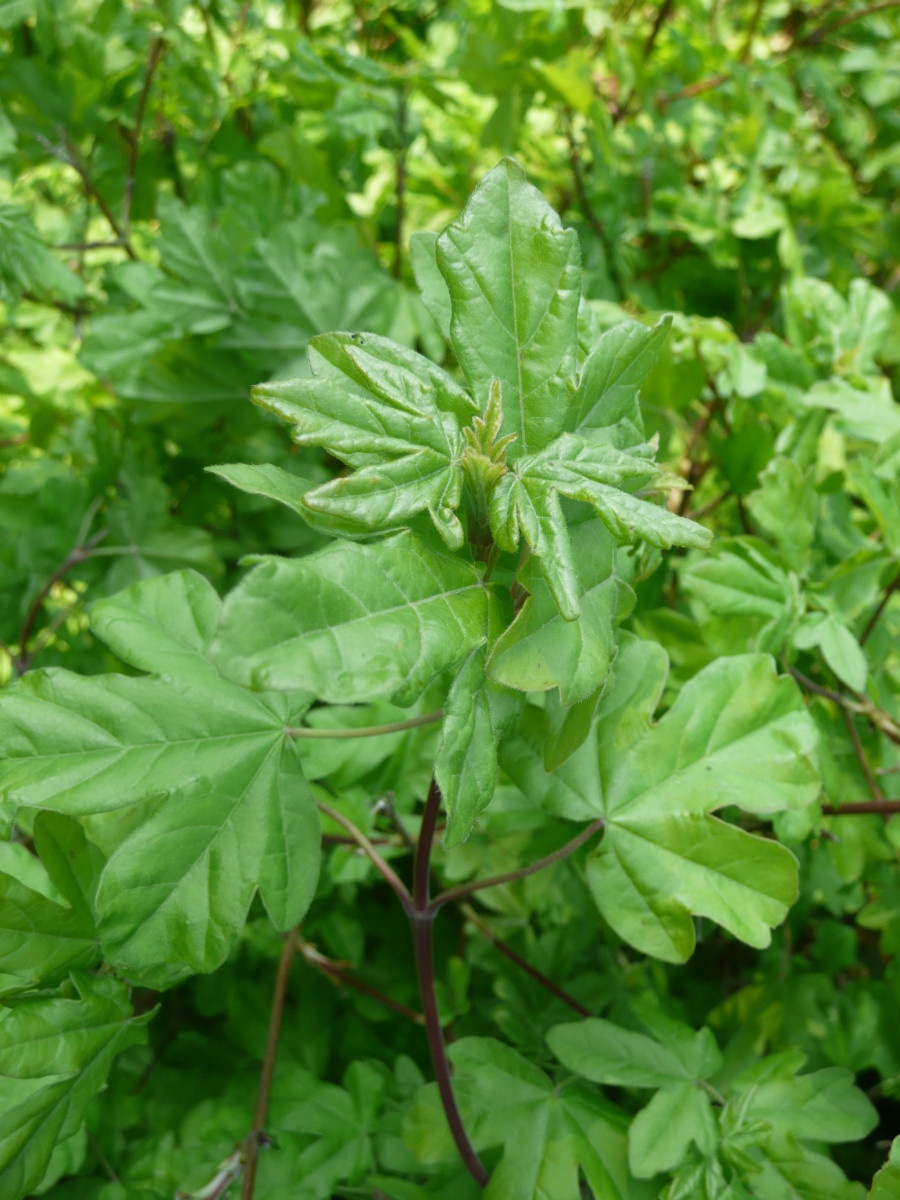
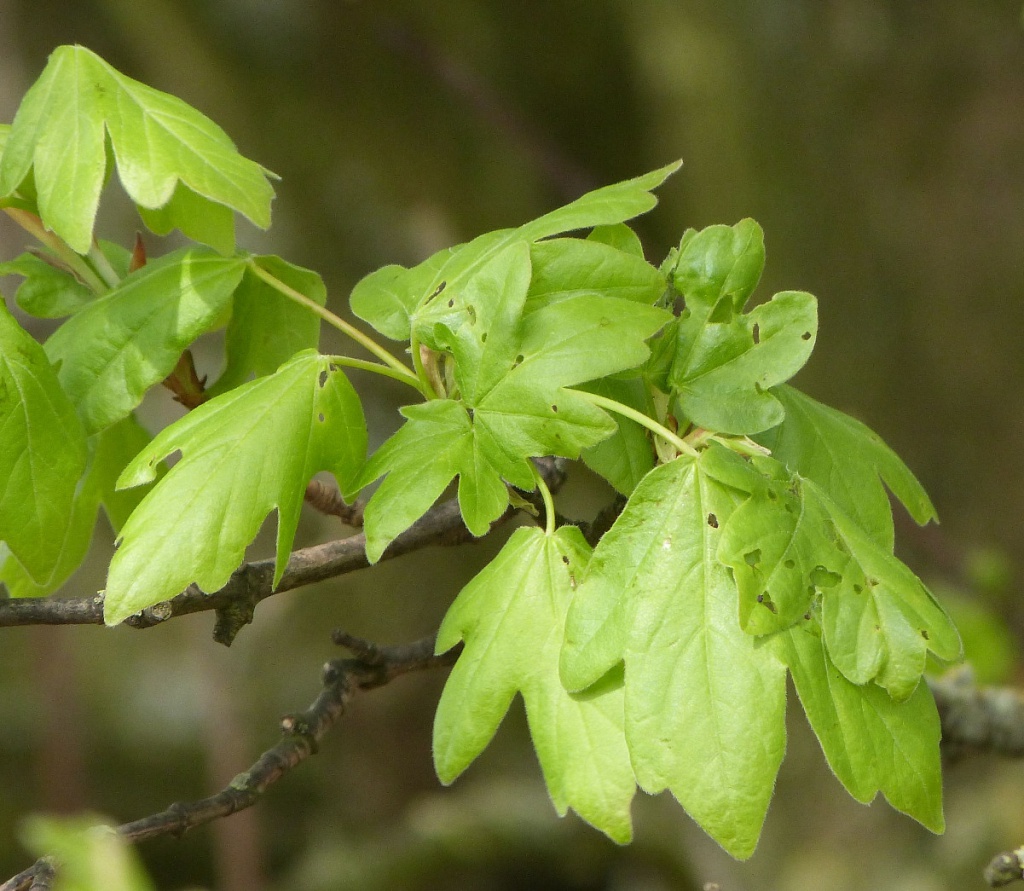
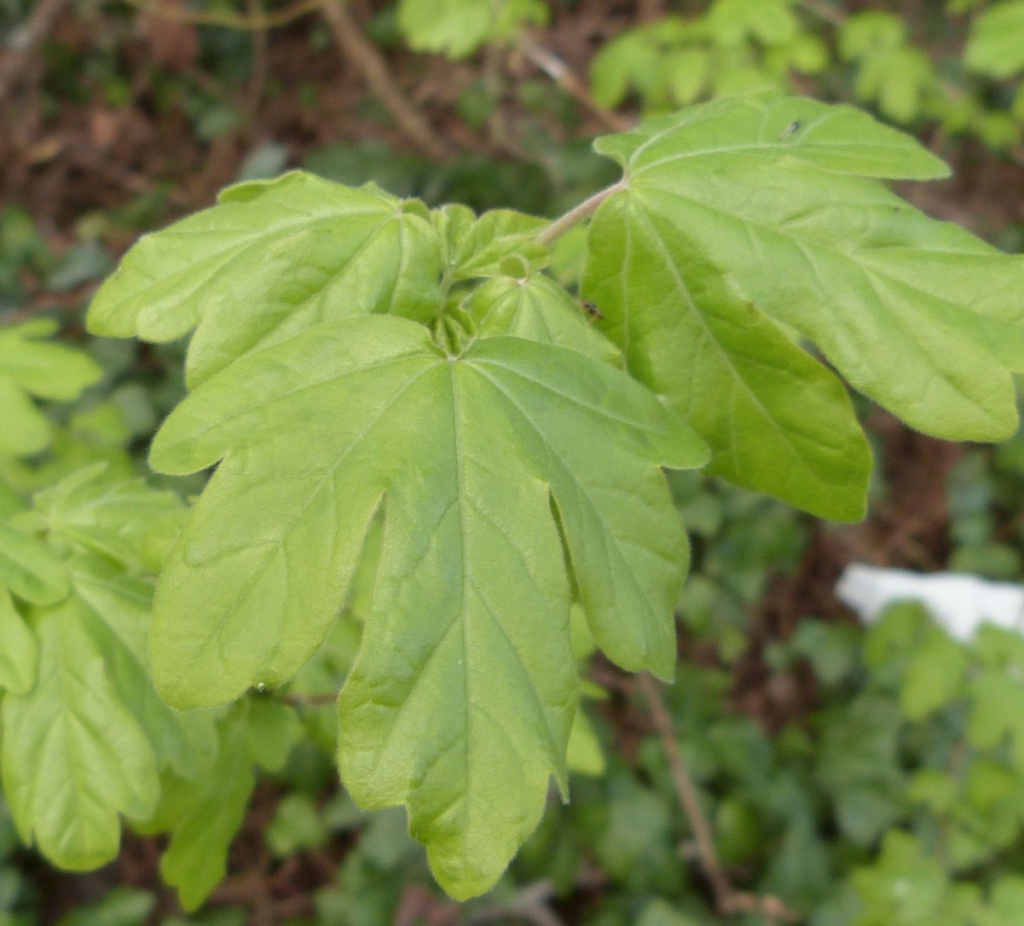
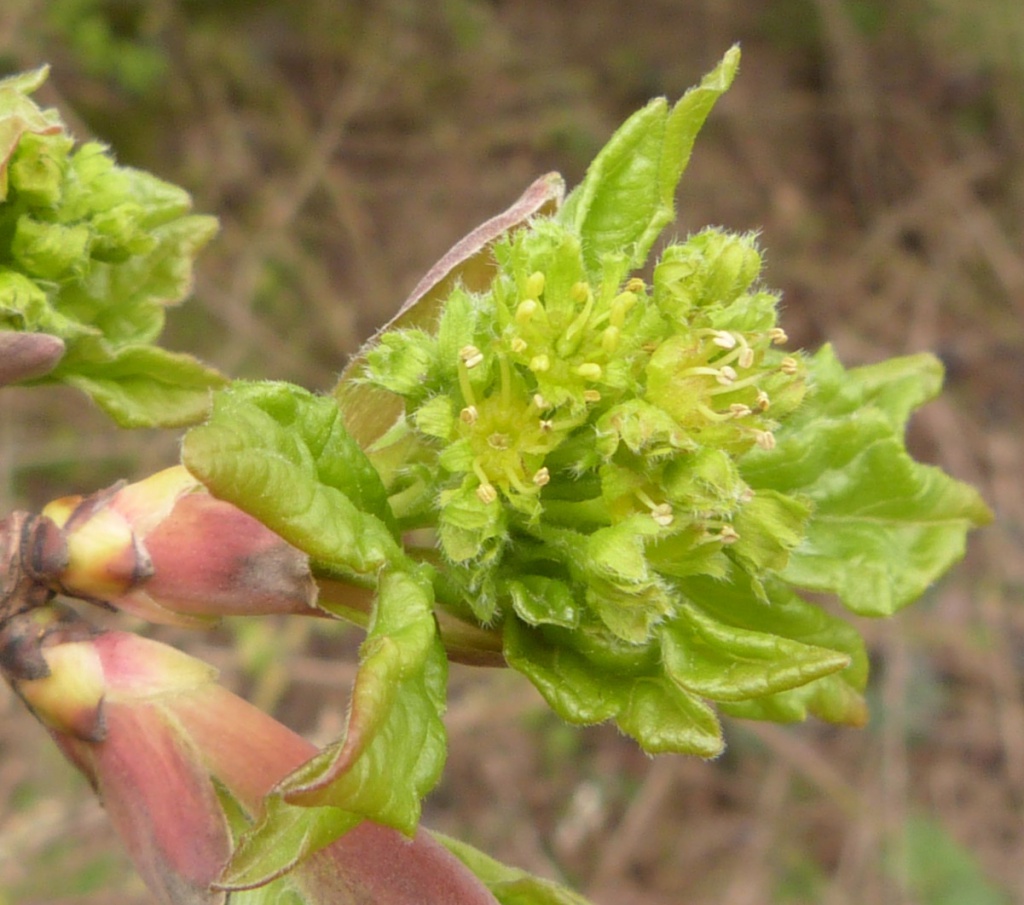
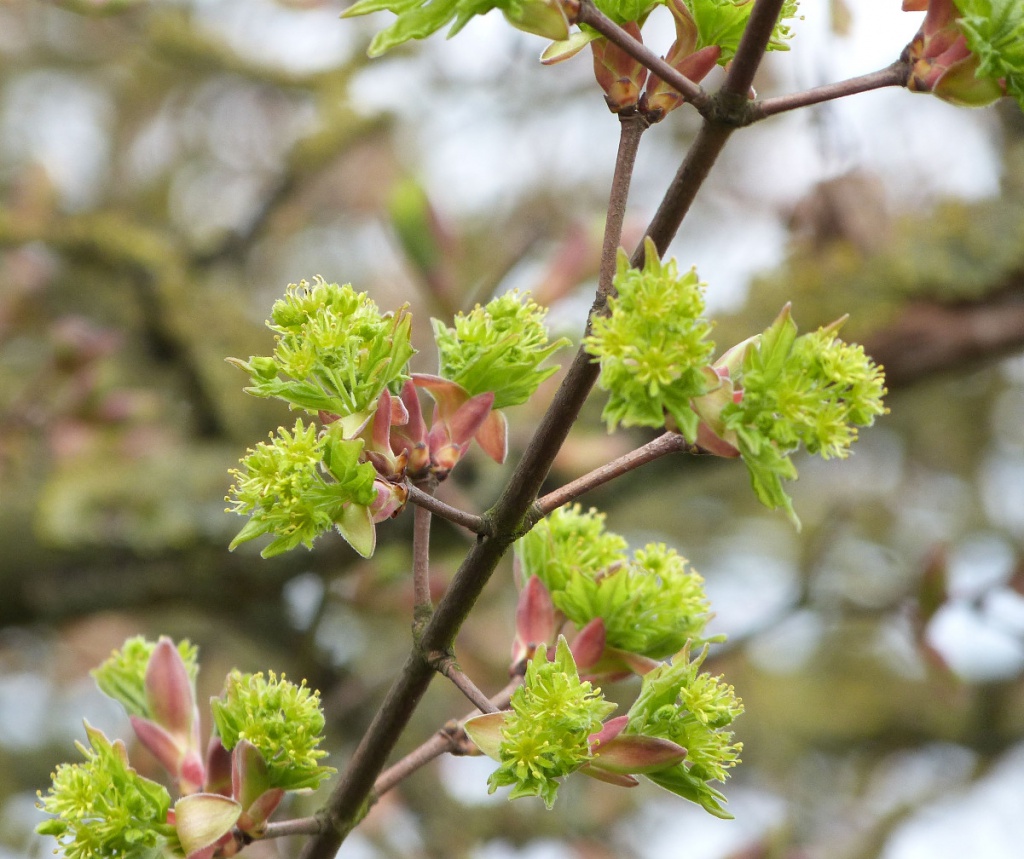
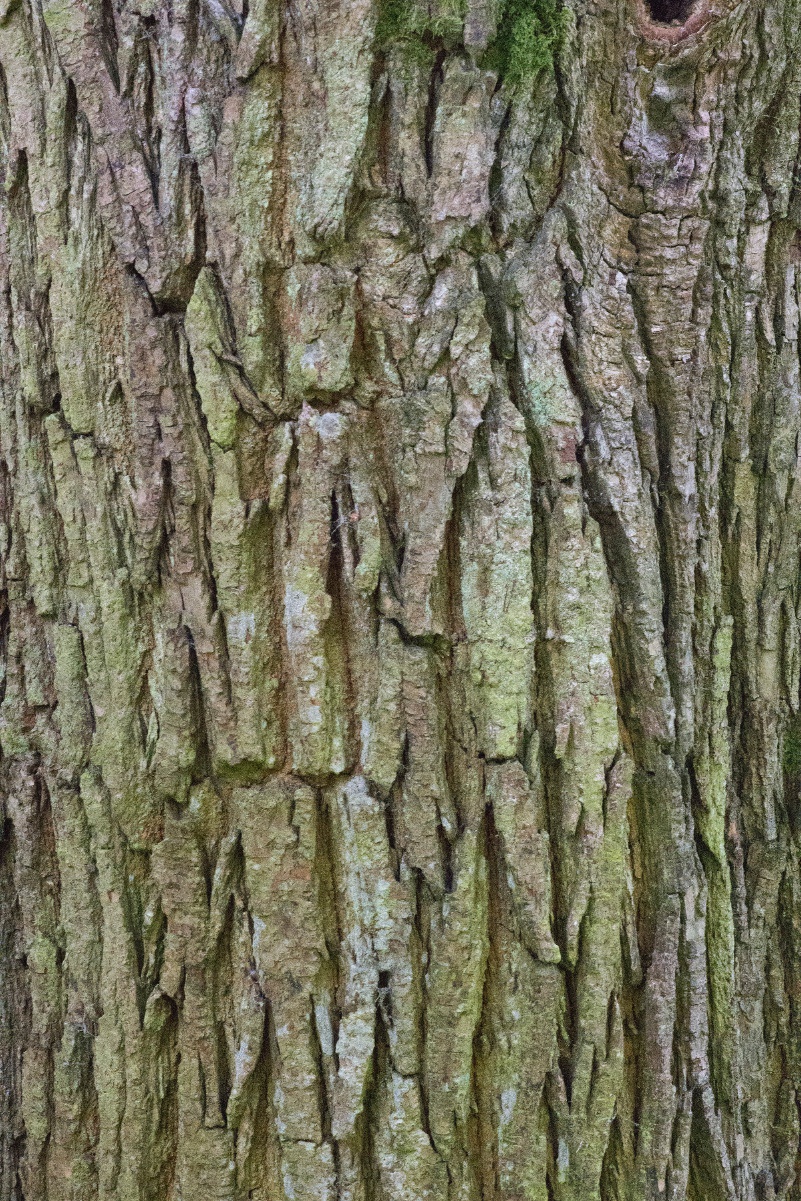
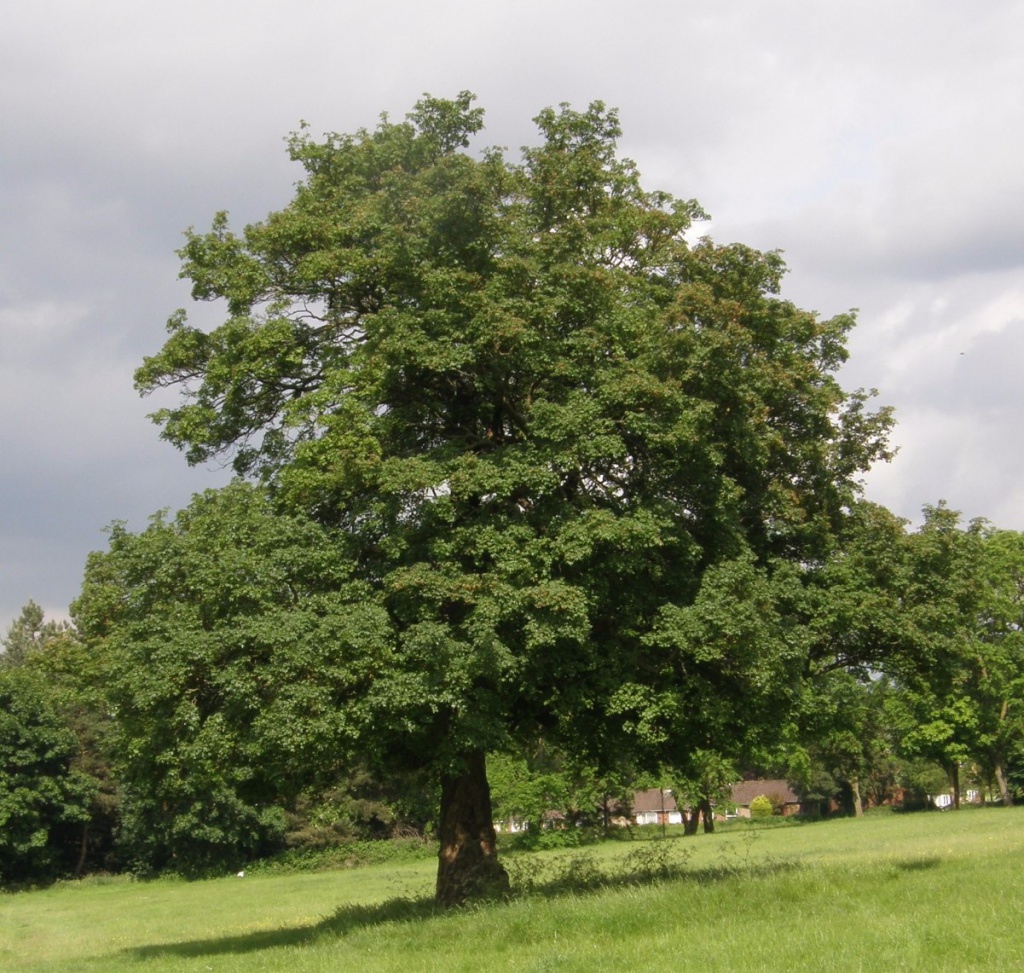
Bush or tree to 20 metres - leaves rather small 4 to 7 cm across. Leaves 3 to 5 lobed, the lobes oblong, blunt, generally untoothed. Flowers greenish yellow 5 to 6 mm in small, erect hairy clusters borne with the leaves. Fruits with horizontal wings.

Open woods, hedgerows and coppices.
April and May.
Deciduous.
Common as far north as Cumbria and Durham scarcer further north
Very common in Leicestershire and Rutland. In the 1979 Flora survey of Leicestershire it was found in 562 of the 617 tetrads.
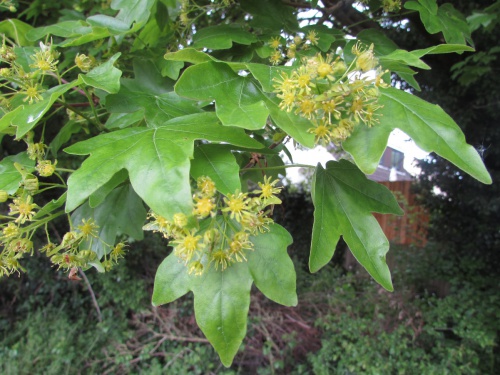 Dave Gamble
Forest East Spinney
03 May 2020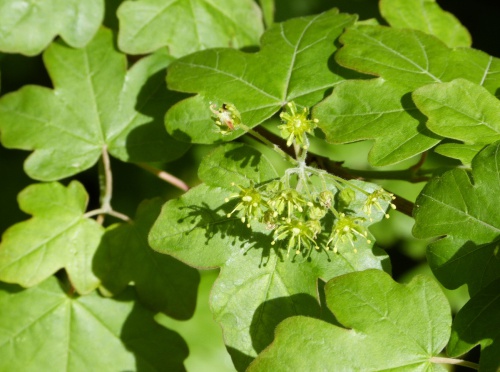 Graham Calow
Cambridge Road, Cosby
15 May 2016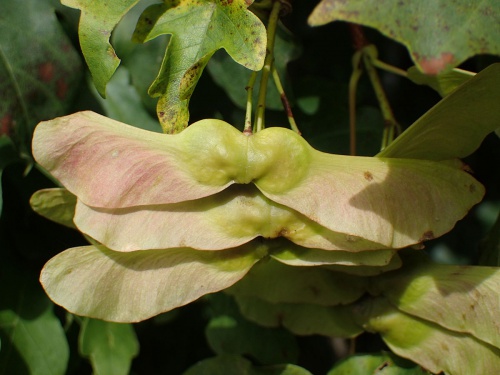 David Gould
The Spearwort Fields
25 August 2018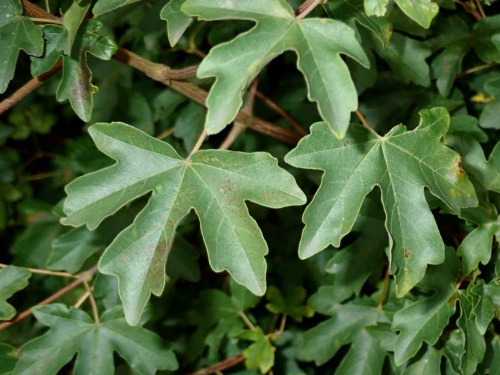 egaten
Huncote Enderby footpath
16 October 2020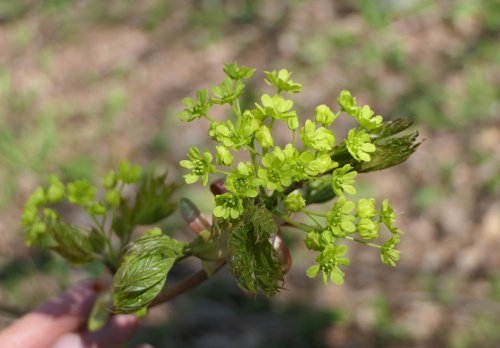 David Nicholls
Dunton Gorse
19 April 2018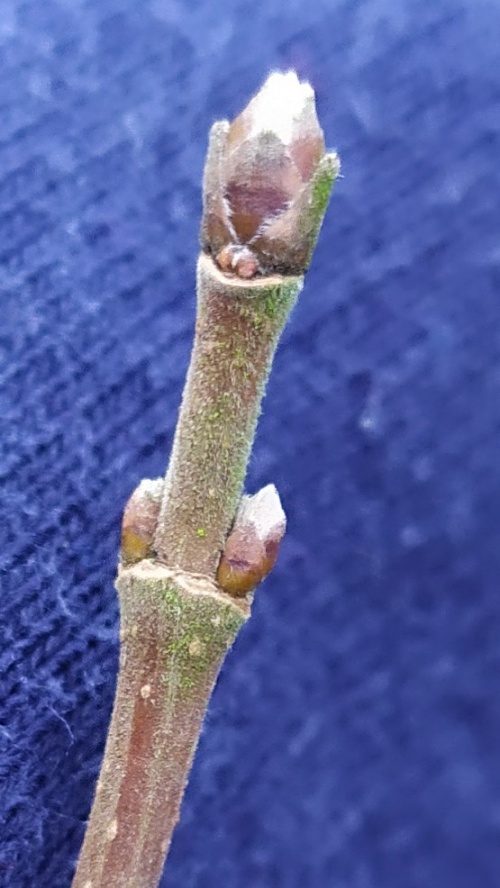 stepgray4
Wymeswold Woodland
25 February 2021
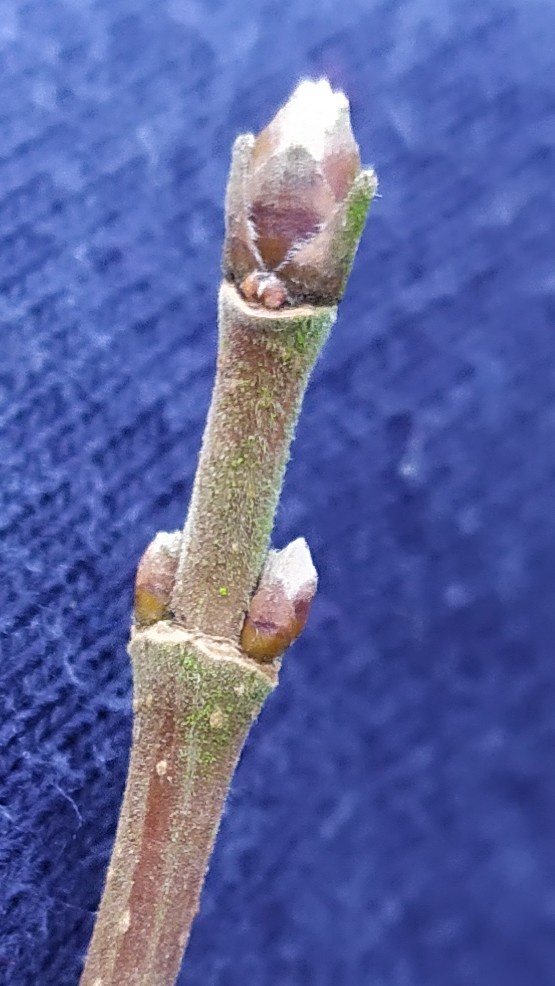
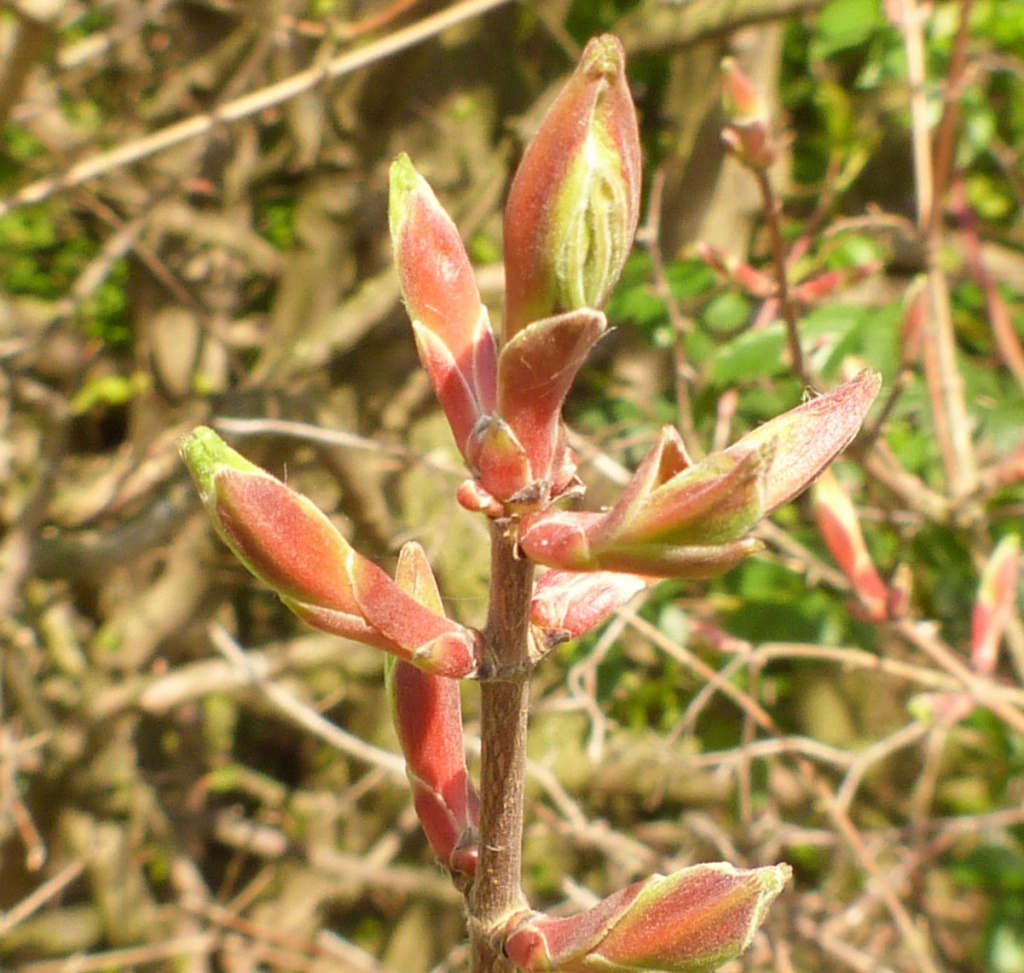
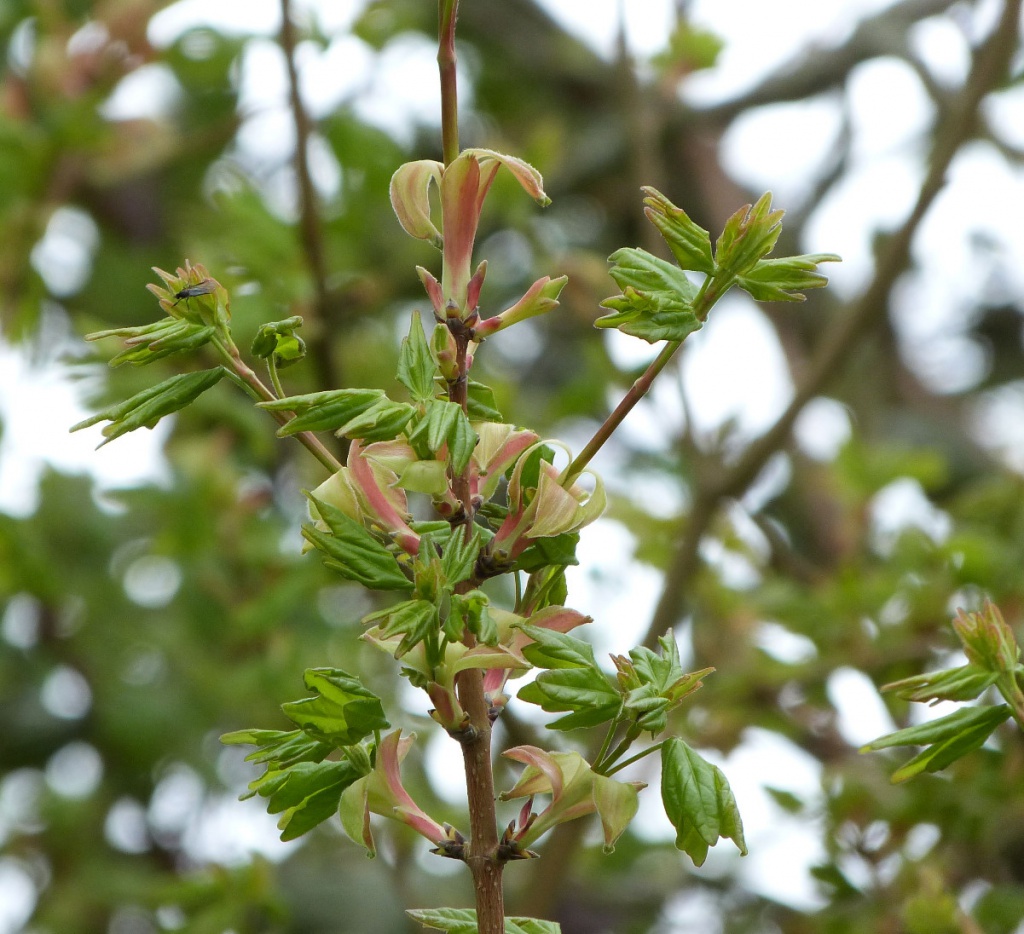
Buds are paired and grey/white in colour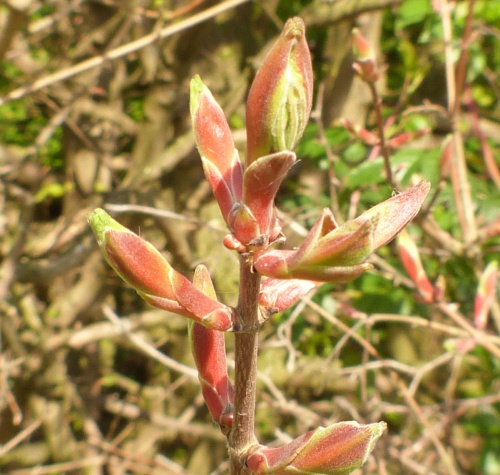 Graham Calow
Sapcote
18 April 2014
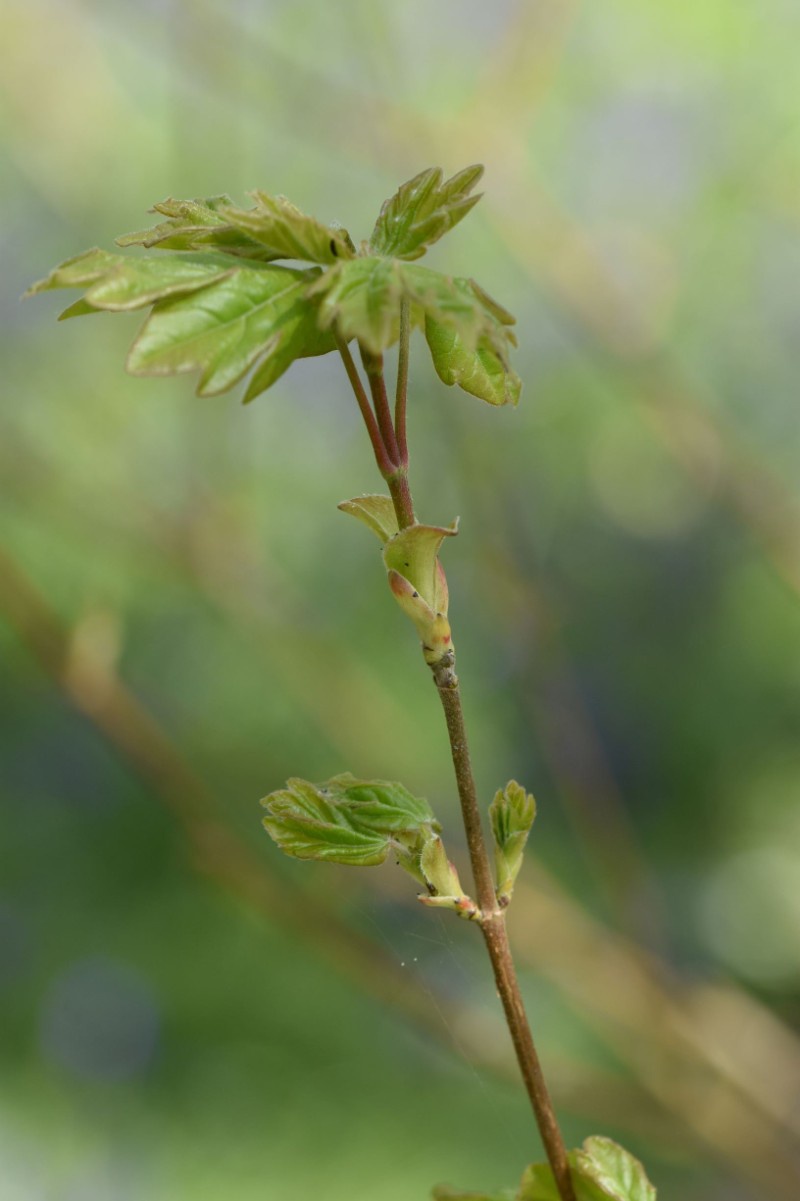
buds bursting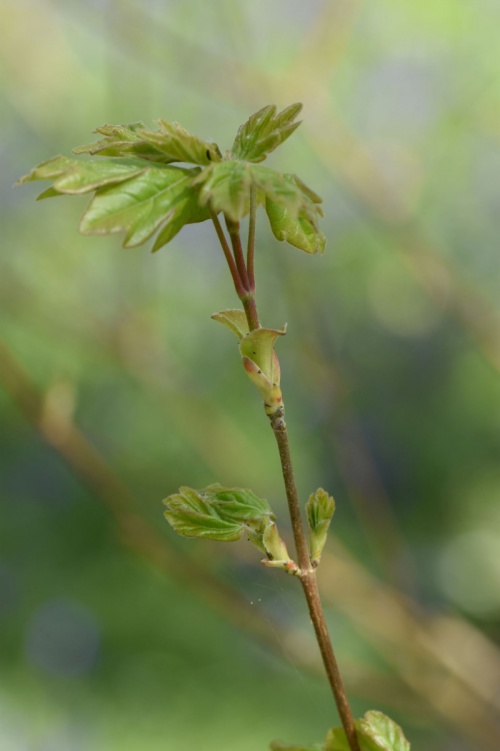 stepgray4
Great Merrible Wood
01 May 2021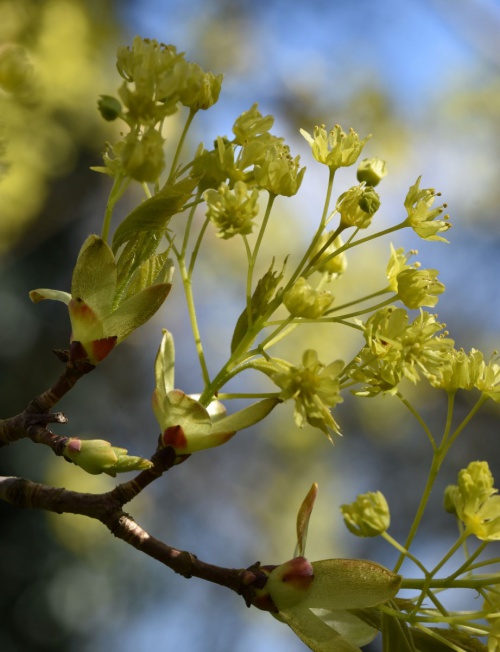 stepgray4
Walton on the Wolds
12 April 2021
Flowers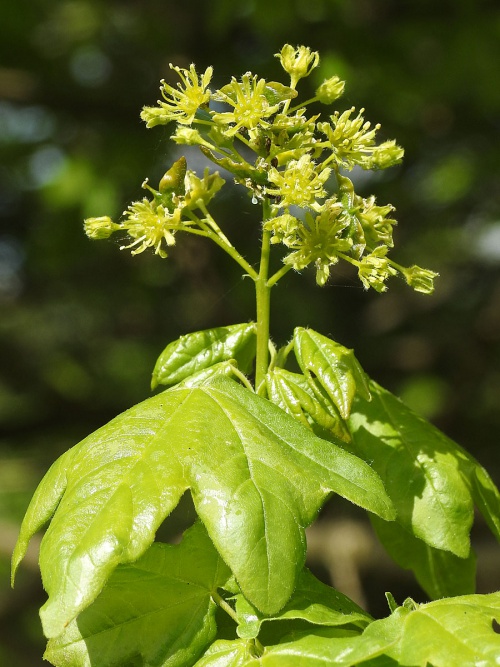 David Gould
The Spearwort Fields
23 April 2017
Leicestershire & Rutland Map
Enter a town or village to see local records
MAP KEY:
Yellow squares = NBN records (all known data)
Coloured circles = NatureSpot records: 2025+ | 2020-2024 | pre-2020
UK Map
Species profile
- Common names
- Field Maple
- Species group:
- flowering plant
- Kingdom:
- Plantae
- Order:
- Sapindales
- Family:
- Sapindaceae
- Records on NatureSpot:
- 469
- First record:
- 01/07/1998 (John Mousley)
- Last record:
- 21/05/2026 (Mabbett, Craig)
Total records by month
% of records within its species group
10km squares with records
The latest images and records displayed below include those awaiting verification checks so we cannot guarantee that every identification is correct. Once accepted, the record displays a green tick.
In the Latest Records section, click on the header to sort A-Z, and again to sort Z-A. Use the header boxes to filter the list.
Latest images
Latest records
 Graham Calow
Sapcote
15 May 2014
seeds developing Top of the 'Gravel Hole' Sapcote SP 4852 9400 (taken 15.4.2008).JPG) Graham Calow
Graham Calow
Hinckley Road Gravel Pit, Sapcote
15 April 2008
flowers emerging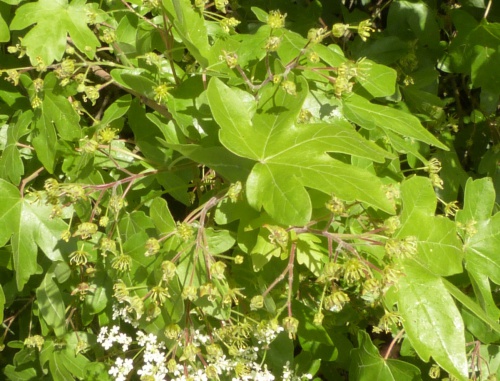 Graham Calow
Witherley
27 May 2015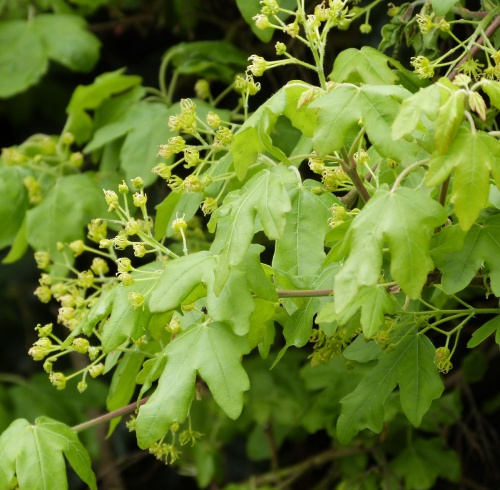 Graham Calow
Higham on the Hill
15 May 2015 Freeholt Wood Sapcote SP 4615 9378 (taken 10.5.2007).JPG) Graham Calow
Graham Calow
Sapcote
10 May 2007
Flowers and leaves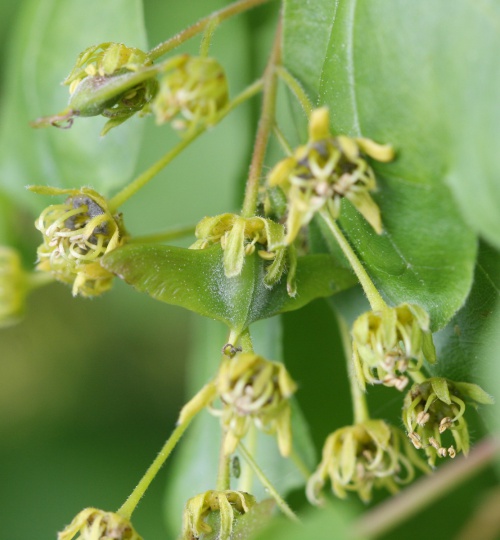 David Nicholls
Burroughs Road, Ratby
31 May 2013 Top of the 'Gravel Hole' Sapcote SP 4852 9400 (taken 29.8.2007).JPG) Graham Calow
Graham Calow
Hinckley Road Gravel Pit, Sapcote
29 August 2007
Leaves and seeds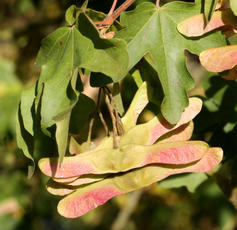 David Nicholls
Thornton Reservoir
30 September 2011 Field near Donkey Lane Sapcote SP 4860 9292 (taken 21.9.2009).JPG) Graham Calow
Graham Calow
Sapcote
21 September 2009
Seds - 'keys'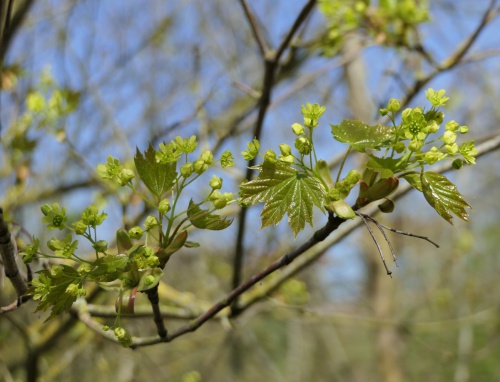 David Nicholls
Dunton Gorse
19 April 2018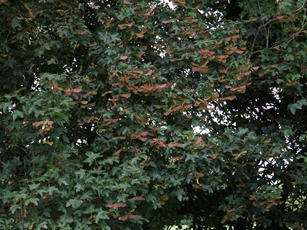 Ron.stevens
Broughton Astley
02 July 2011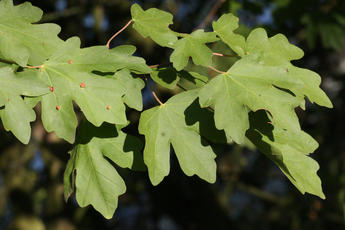 David Nicholls
Thornton Reservoir
30 September 2011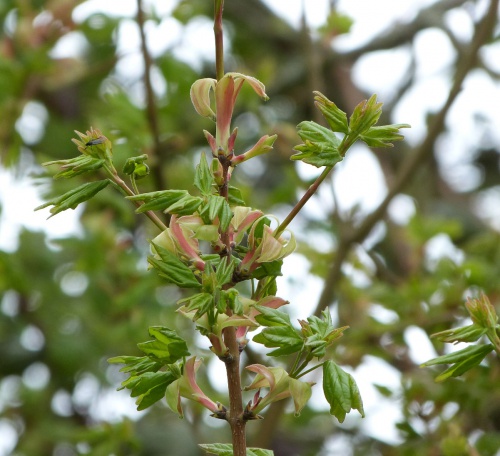 Graham Calow
Frolesworth
10 May 2015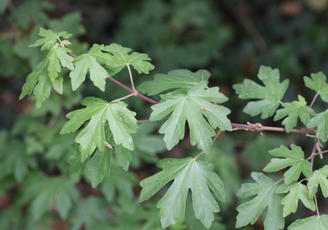 David Nicholls
Highway Spinney
05 May 2011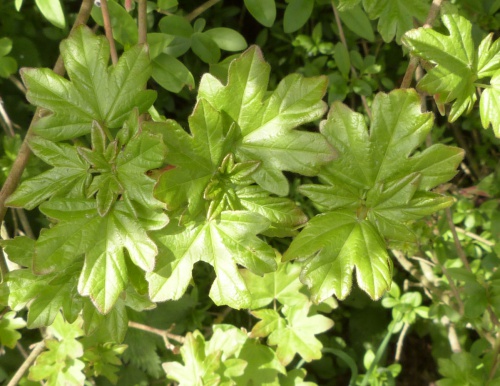 Graham Calow
Wykin
12 May 2015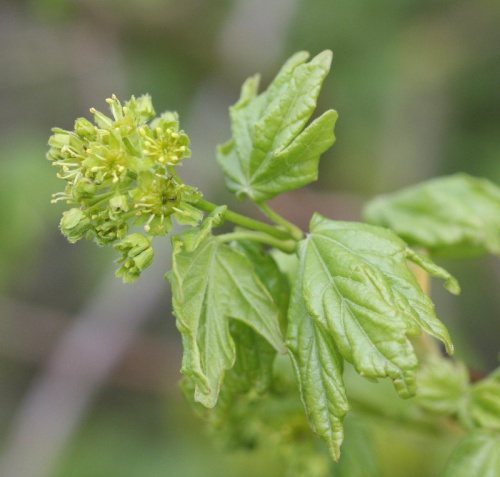 David Nicholls
Wirlybones Wood
05 May 2012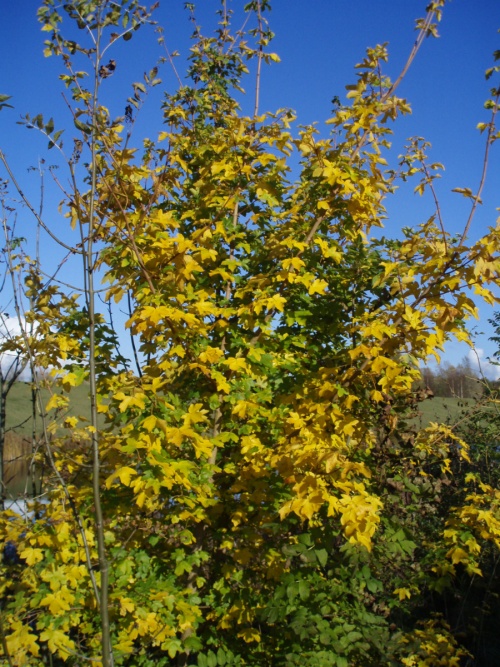 Alan Semper
Maple Country Park
01 November 2011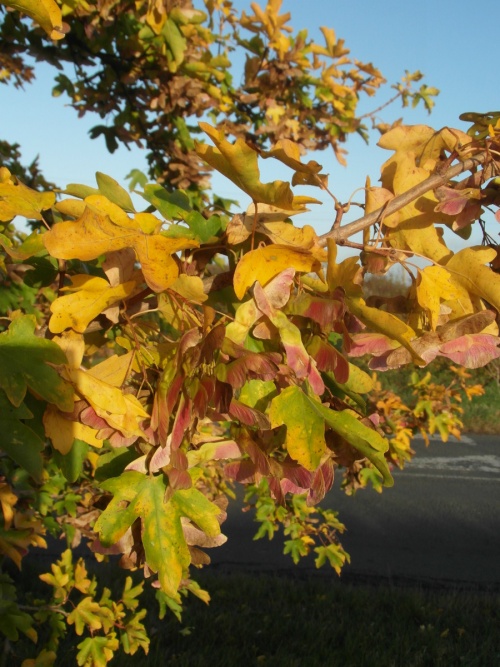 Alan Semper
Harby roadside
27 October 2012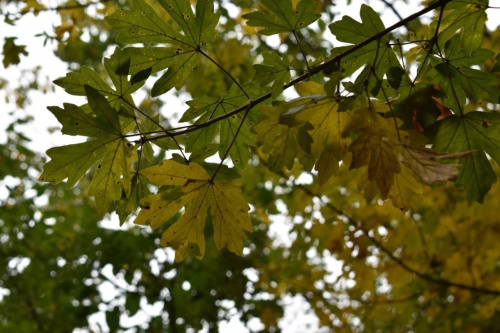 stepgray4
Cloud Wood
17 October 2020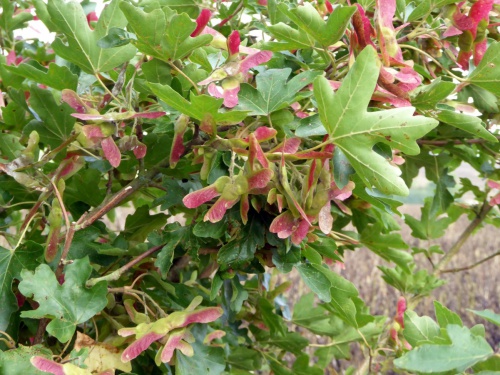 AJ Cann
Cold Overton
17 September 2021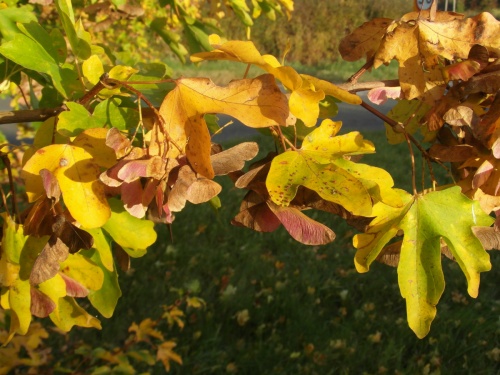 Alan Semper
Harby roadside
27 October 2012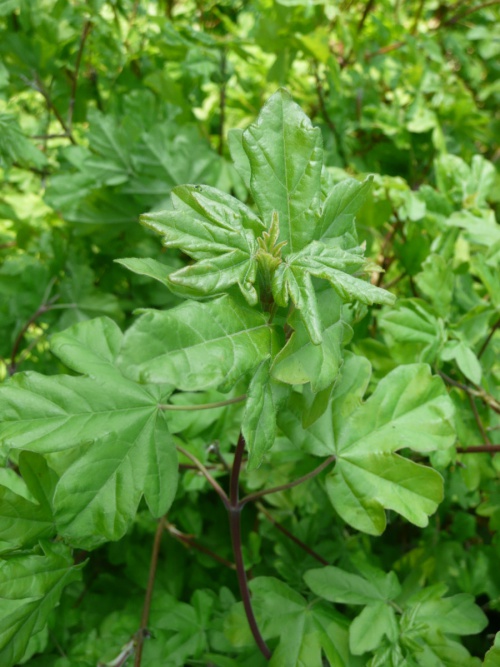 Barbara Cooper
Long Clawson
26 May 2013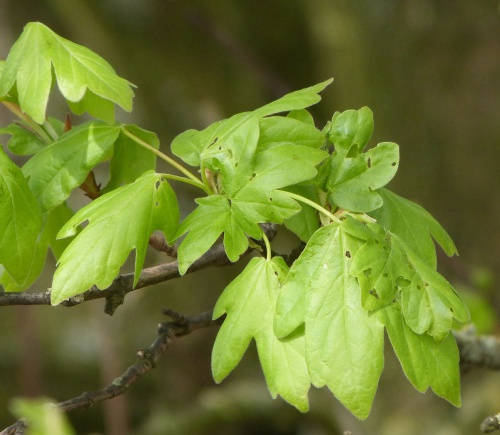 Graham Calow
Broughton Road, Cosby
14 April 2016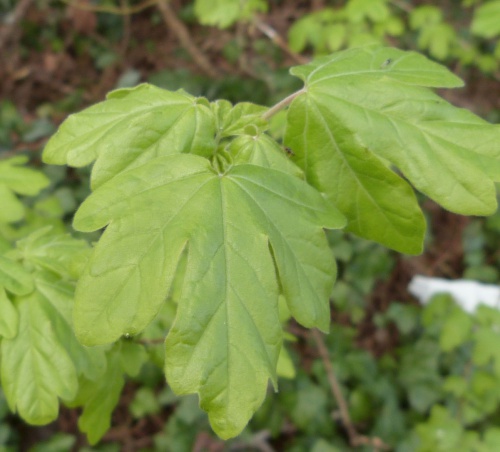 Graham Calow
Main Road, Claybrooke Magna
08 April 2016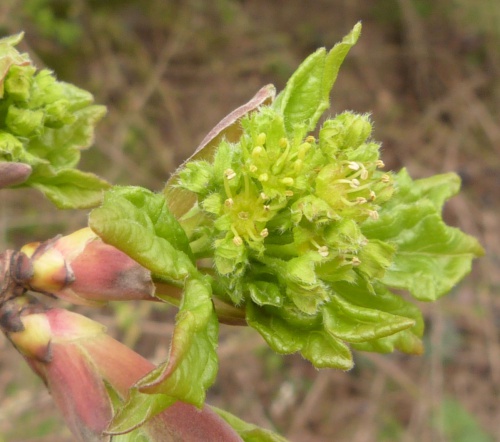 Graham Calow
Broughton Road, Cosby
14 April 2016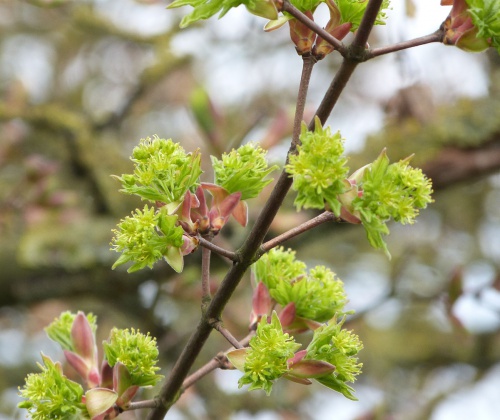 Graham Calow
Broughton Road, Cosby
14 April 2016 AJ Cann
Launde Big Wood
24 September 2016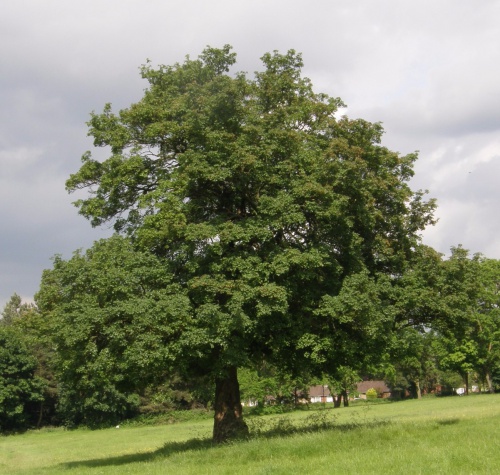 Saharima Roenisch
Evington Park
31 May 2017
overall form
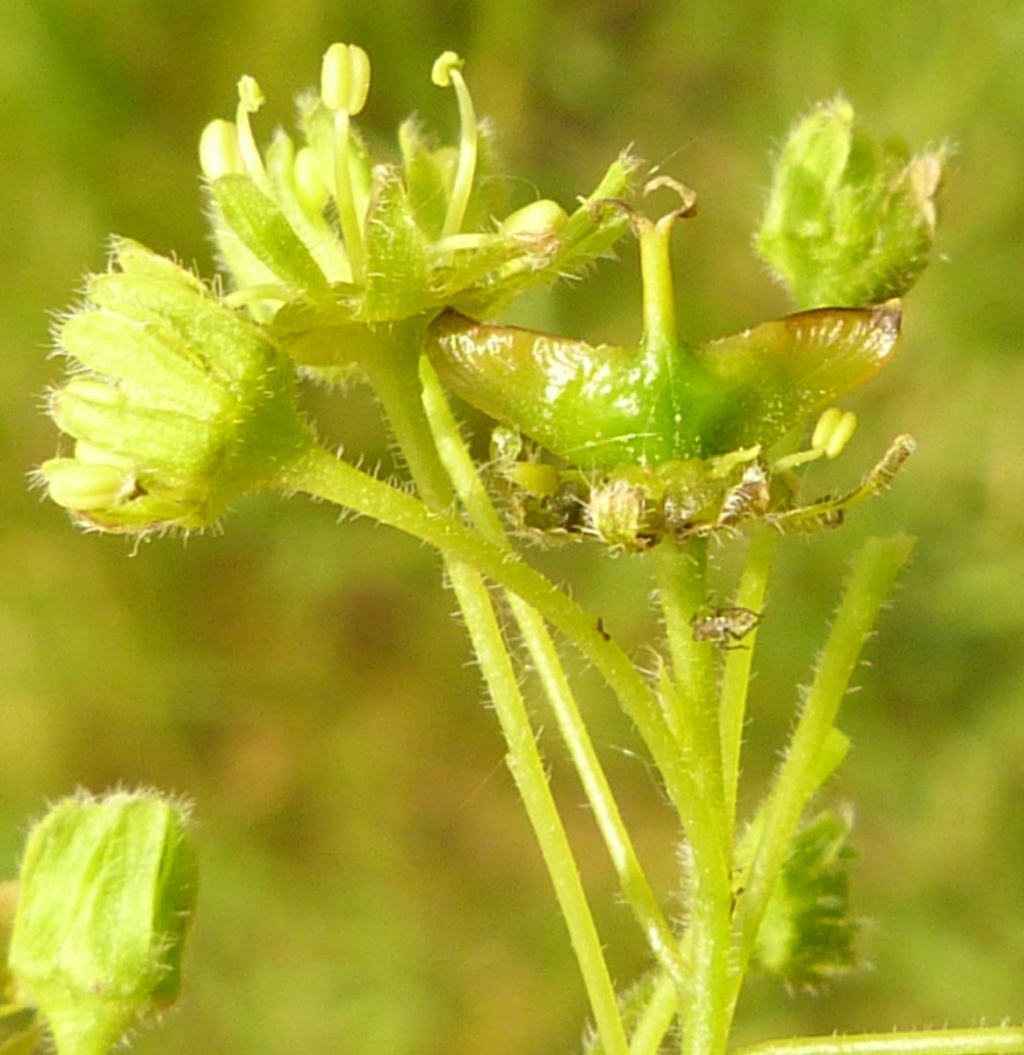
 Top of the 'Gravel Hole' Sapcote SP 4852 9400 (taken 15.4.2008).JPG)
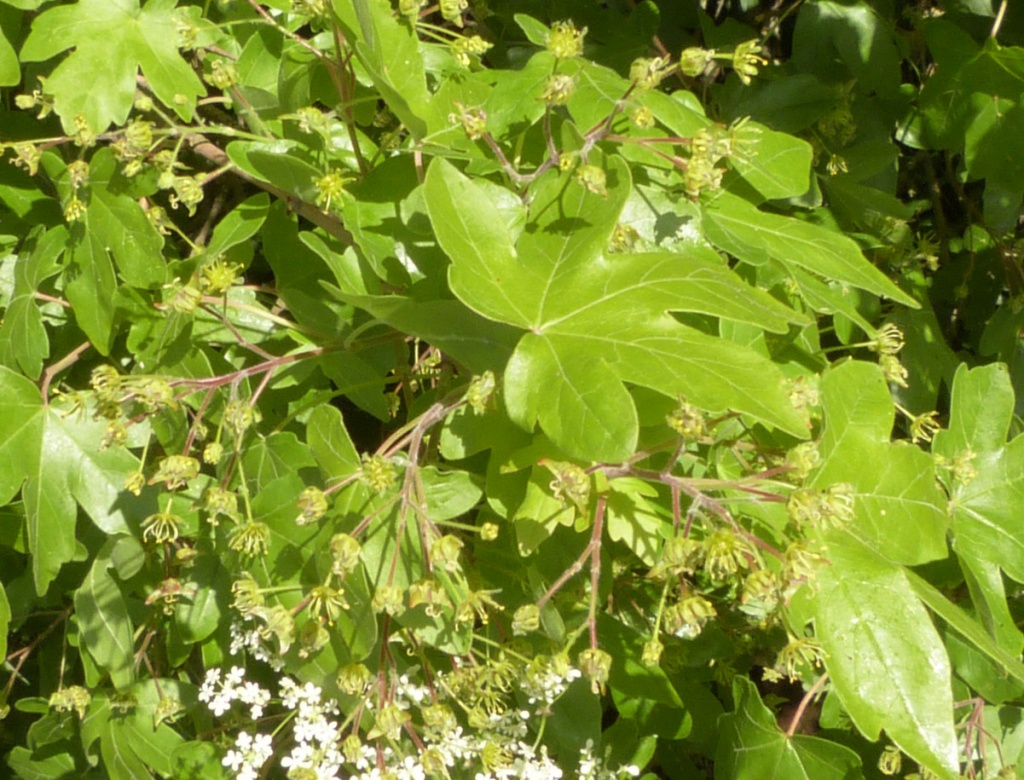
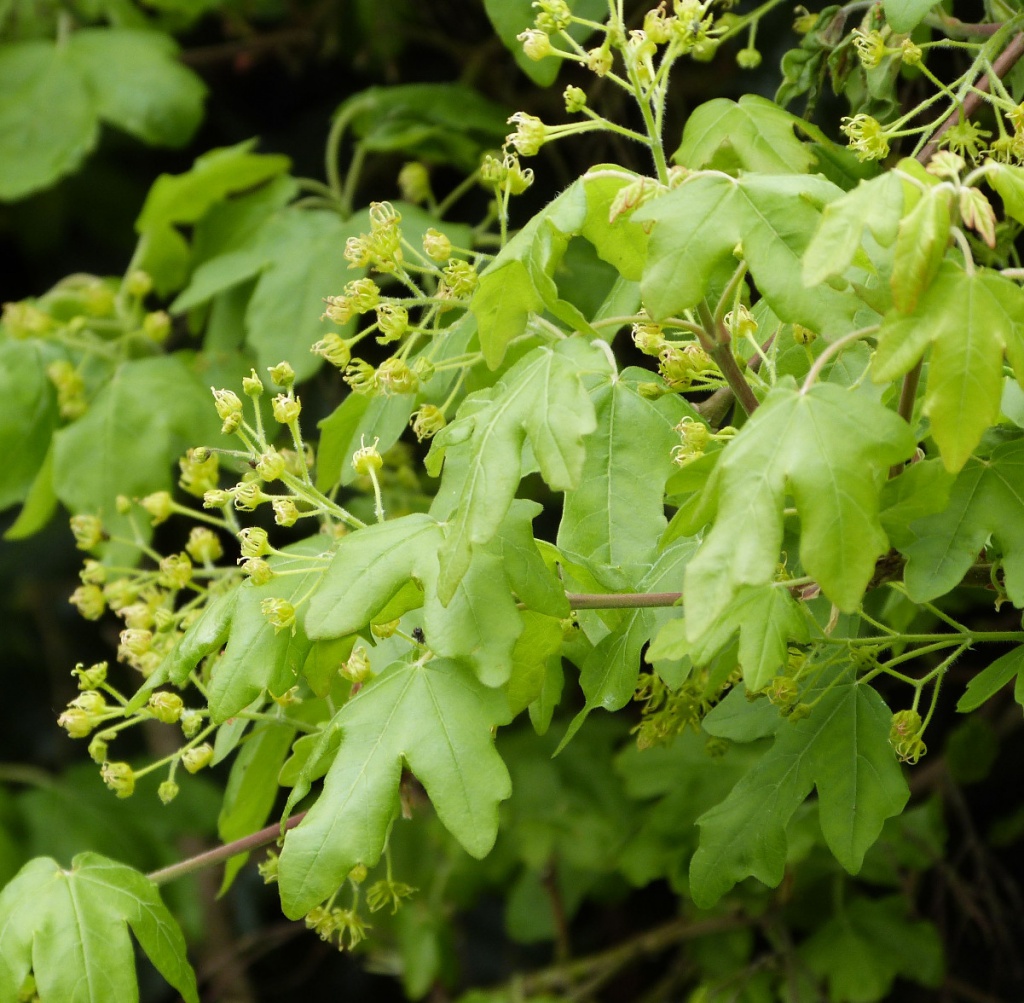
 Freeholt Wood Sapcote SP 4615 9378 (taken 10.5.2007).JPG)
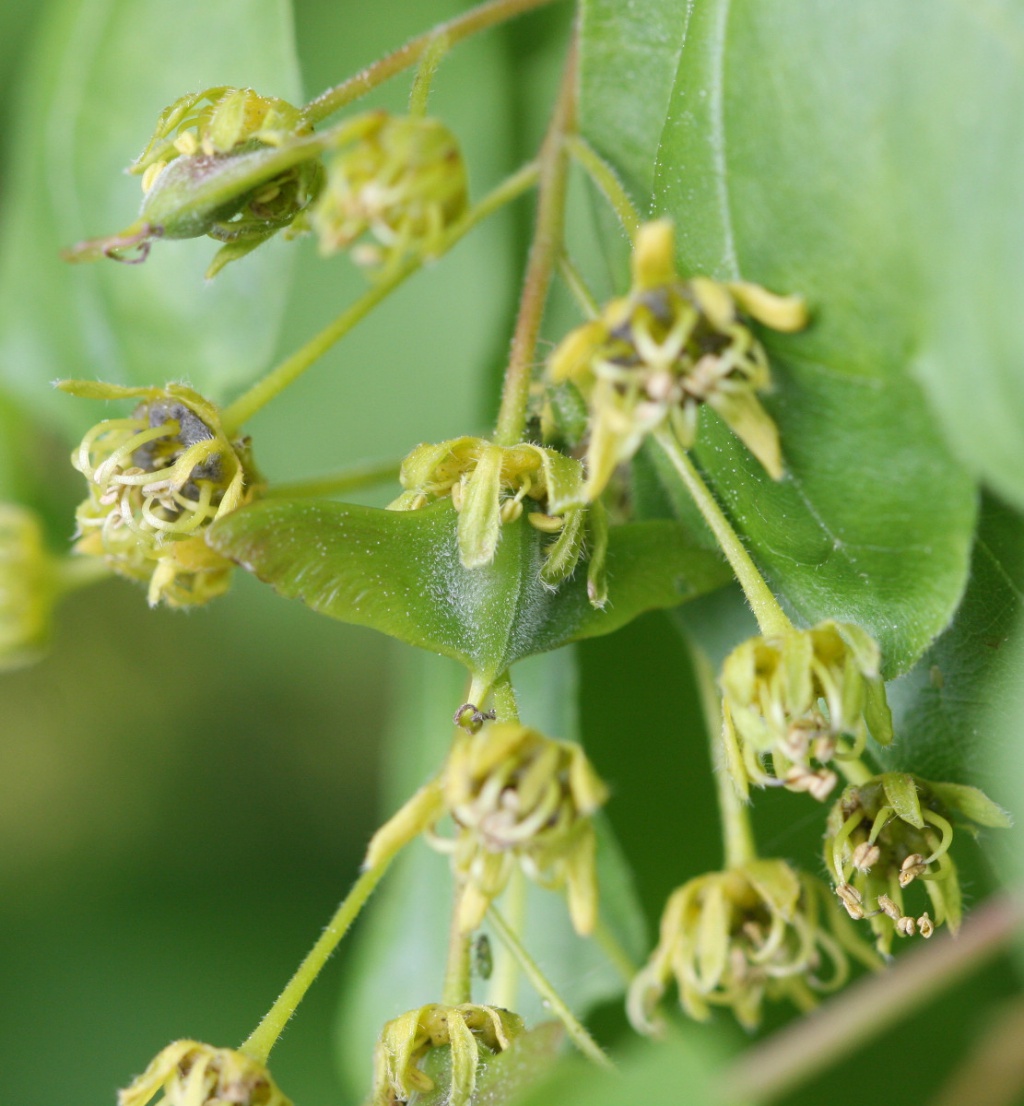
 Top of the 'Gravel Hole' Sapcote SP 4852 9400 (taken 29.8.2007).JPG)
 Field near Donkey Lane Sapcote SP 4860 9292 (taken 21.9.2009).JPG)
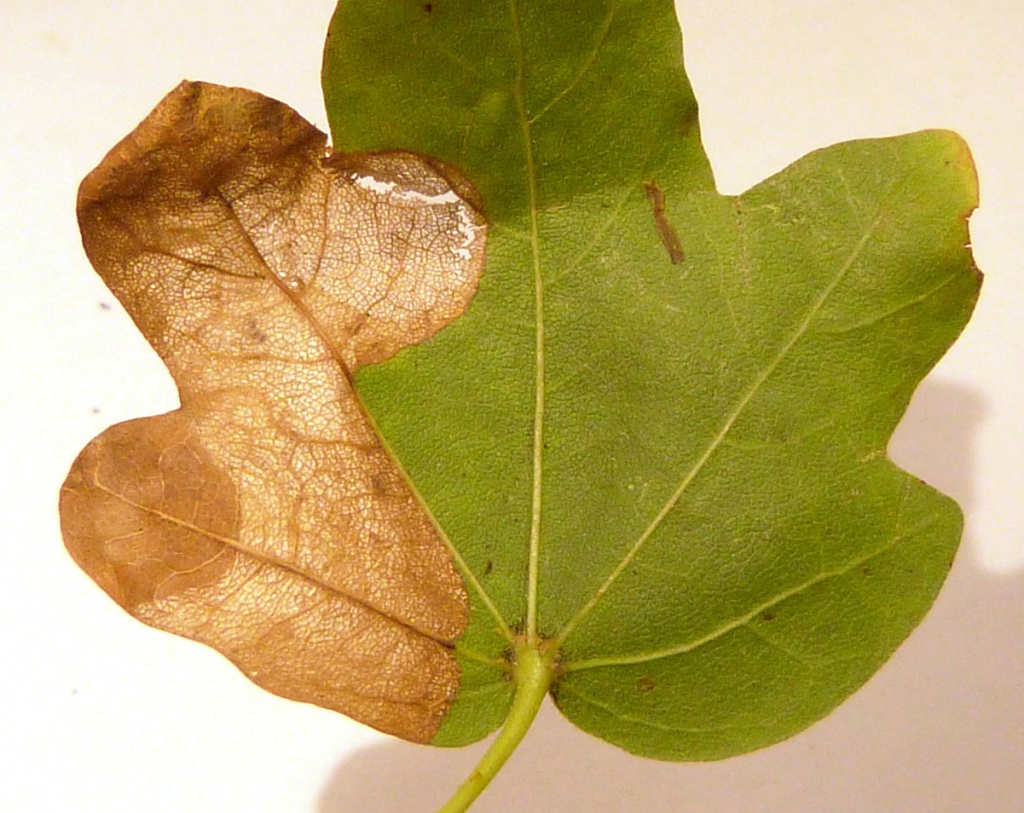
Heterarthrus wuestneii
The larva of Heterarthrus wuestneii creates a blotch like mine on the leaves of Field Maple. The mine usually includes the tip of a lobe, and the larva has dark marks on the prothorax and dark spot on the ventral side of the thorax. As with other Heterarthrus species, the feet are short and stubby. The larva pupates in a disc cut out of the leaf; in the pre-pupal stage the larva loses pigmentation.
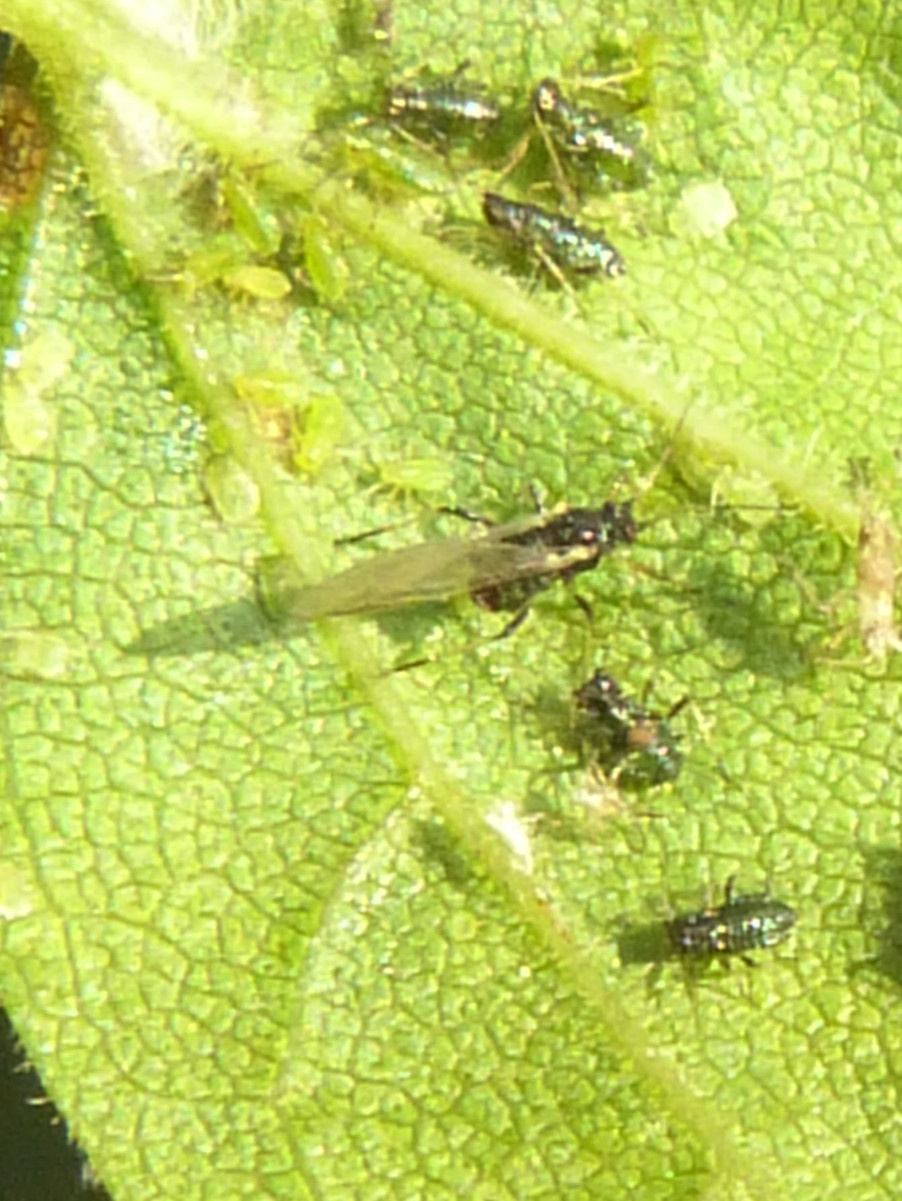
Periphyllus aceris
Periphyllus aceris aphids live on the underside of Acer species, especially Norway Maple, but also on Field Maple. The alates (winged adults) have widely separated broad black bands on the abdomen which helps with identification. The alate body length is 3.2 to 4.5 mm. The apterae (wingless forms) are yellow-green and can be much more difficult to identify to species.
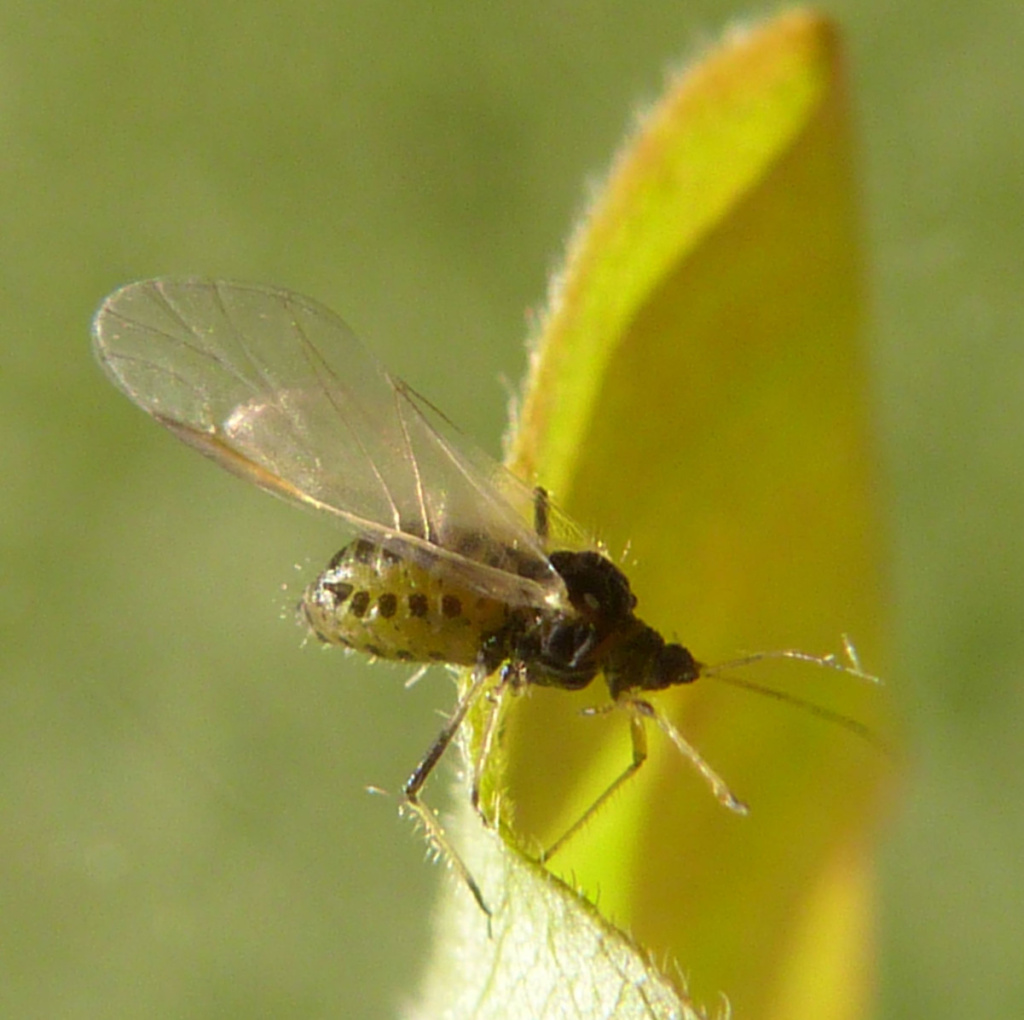
Common Maple Aphid
The Common Maple Aphid (Periphyllus testudinaceus) is associated with Maple sprecies. In the winged form of this aphid (alate) the pterostigma on the wing is brown, rather than black.
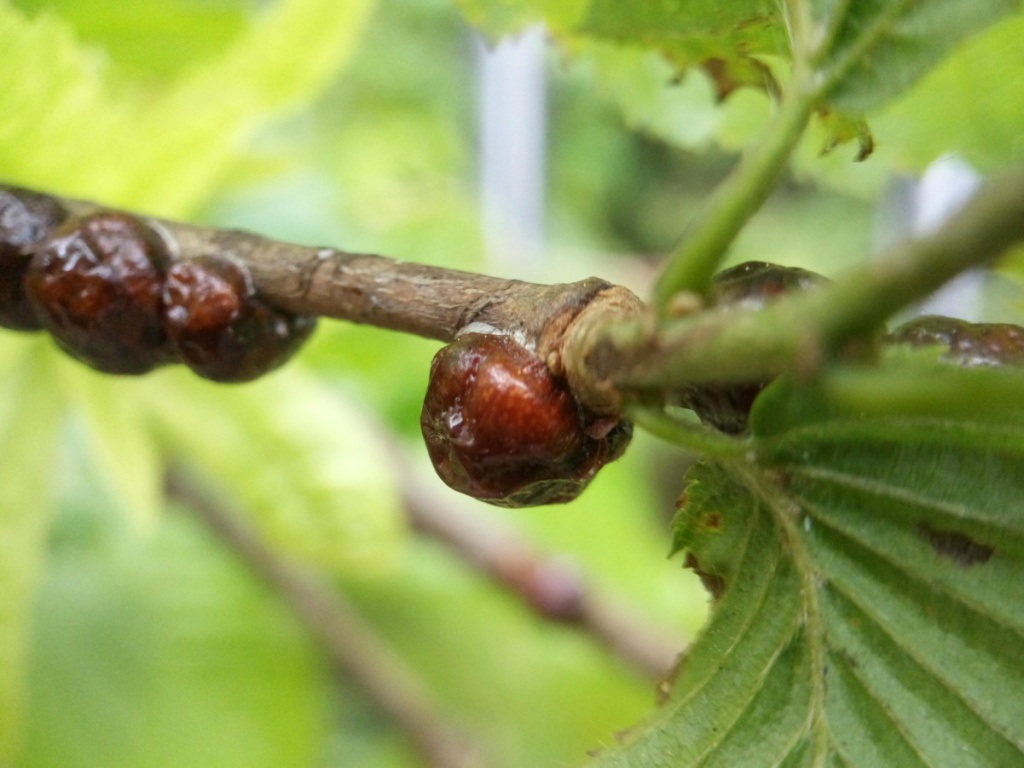
Nut Scale
Nut Scale (Eulecanium tiliae) affects various woody plants including trees and shrubs such as Hawthorn, Oak, Ash, Hornbeam, Field Maple and fruit trees such as Apple and Pear.
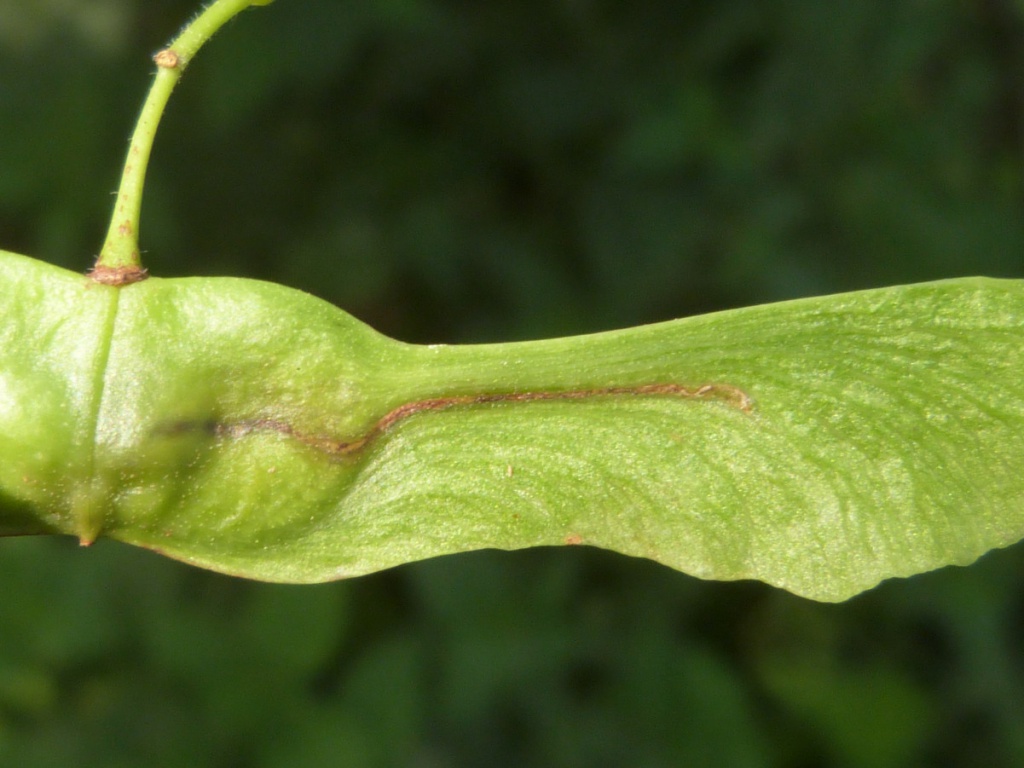
Etainia louisella
The larva of the moth Etainia louisella mines in the seeds (samaras or 'keys') of Field Maple forming an irregular gallery commencing in the wing and concluding in the seed itself.
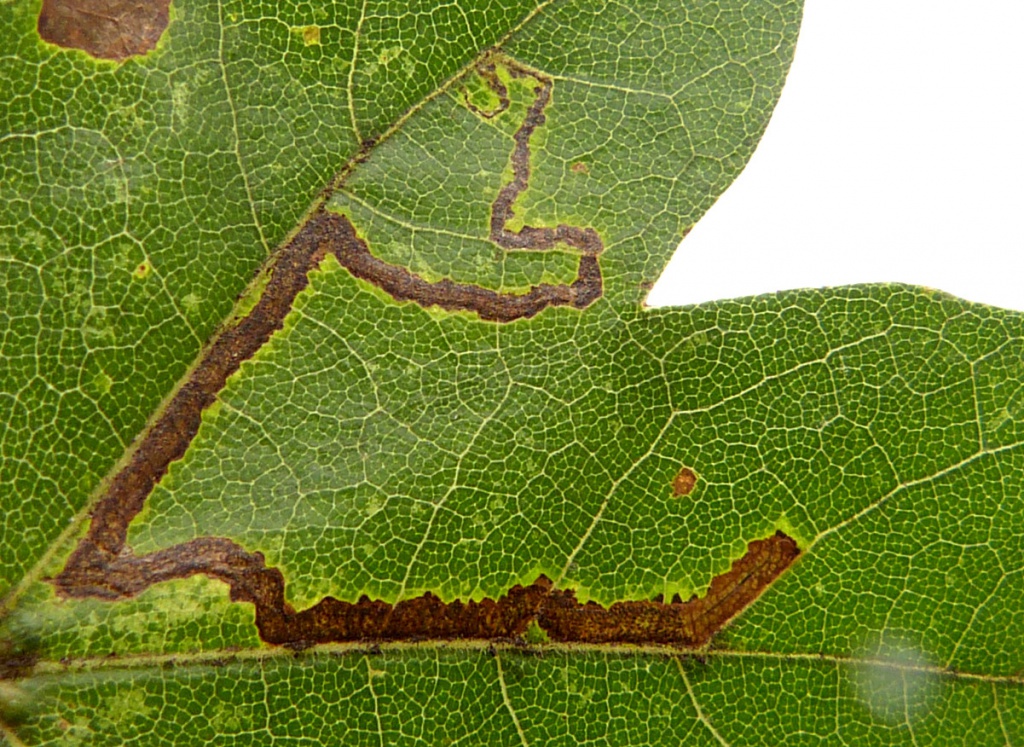
Stigmella aceris
The larva of the moth Stigmella aceris mines the leaves of Field Maple and Norway Maple making a gallery mine almost filled with coiled greenish frass; later on the frass darkens.
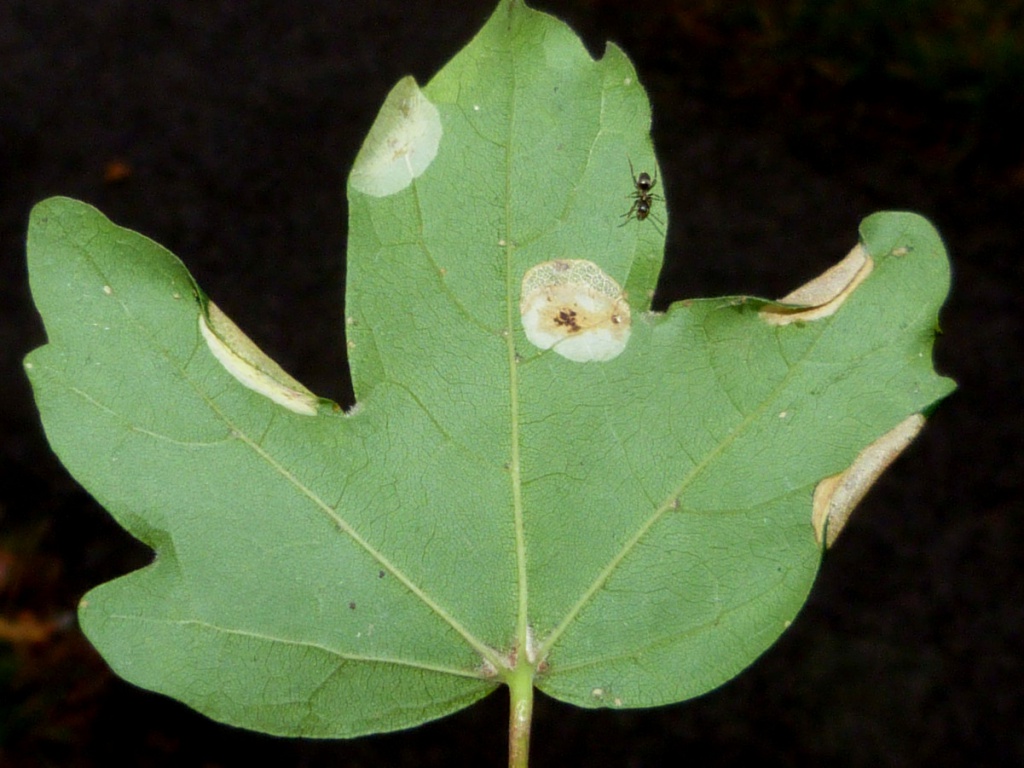
Phyllonorycter acerifoliella
The larva of the moth Phyllonorycter acerifoliella mines the leaves of Field Maple. The mine is tentiform and nearly always at the leaf edge or leaf tip, folding the leaf over. Occasionally it can be found on the leaf blade.
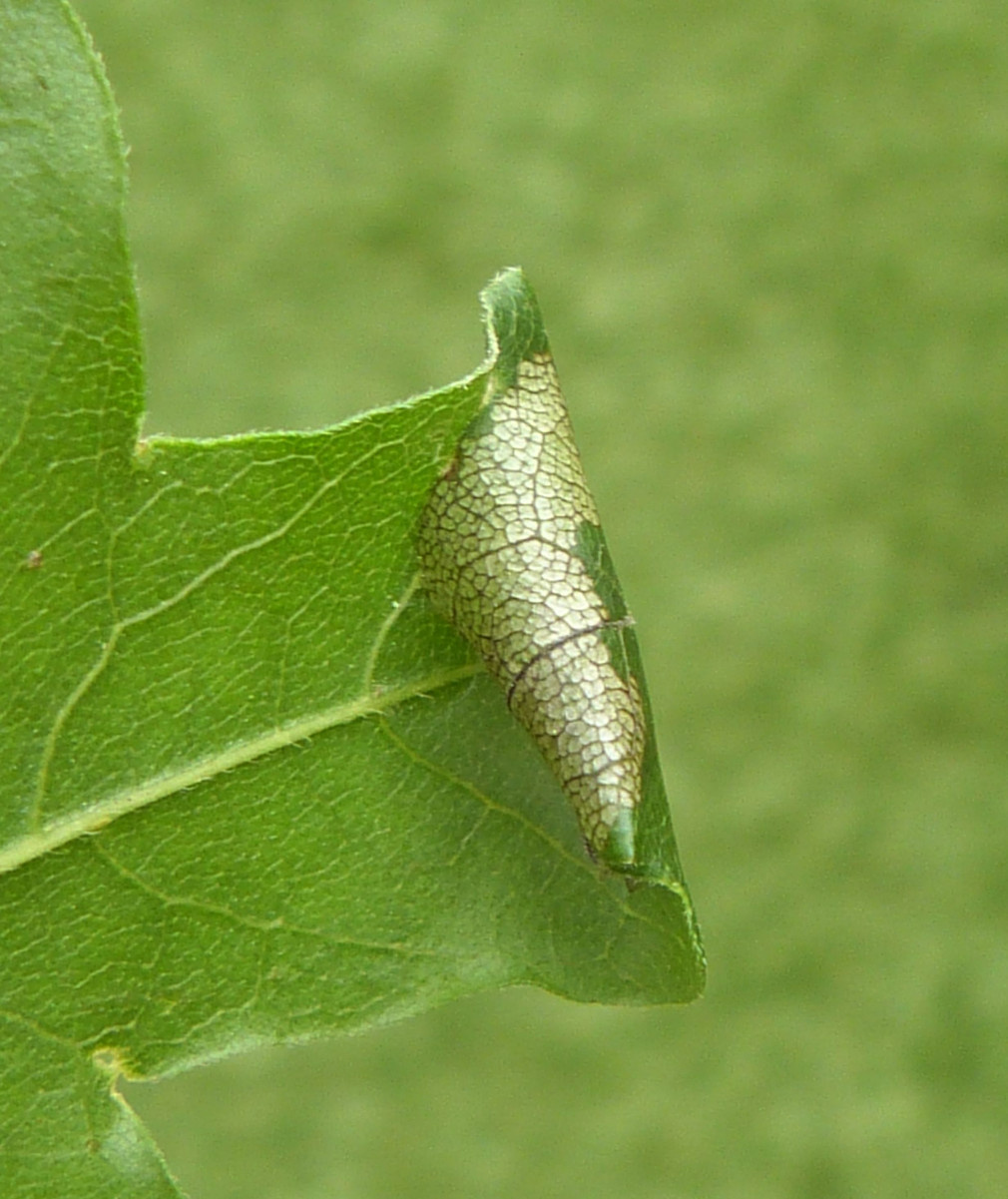
Caloptilia semifascia
Caloptilia semifascia is a small moth with a wingspan of 10 to 12 mm. The angled light streak starting at the leading edge of the forewing is characteristic, but it can be obscured on darker specimens. The larva mines the leaves of Sycamore, Field Maple and Norway Maple. The early mine is a gallery leading to a squarish blotch. It later forms up to three successive tubes or cones by folding the tips of leaves downwards . The moth must be bred to identify to species.

Acericecis campestre
The larvae of the gall midge Acericecis campestre gall the leaves of various members of the family Sapindaceae which include Maples and Sycamore. A single larva lives in a small depression at the underside of the leaf. The upper side has a corresponding small bulge, less than 1mm highwhich is surrounded by a pale yellowish circle. After the larva has vacated the gall, a yellow spot remains then eventually withers. The larva is whitish, almost hyaline, short and squat.
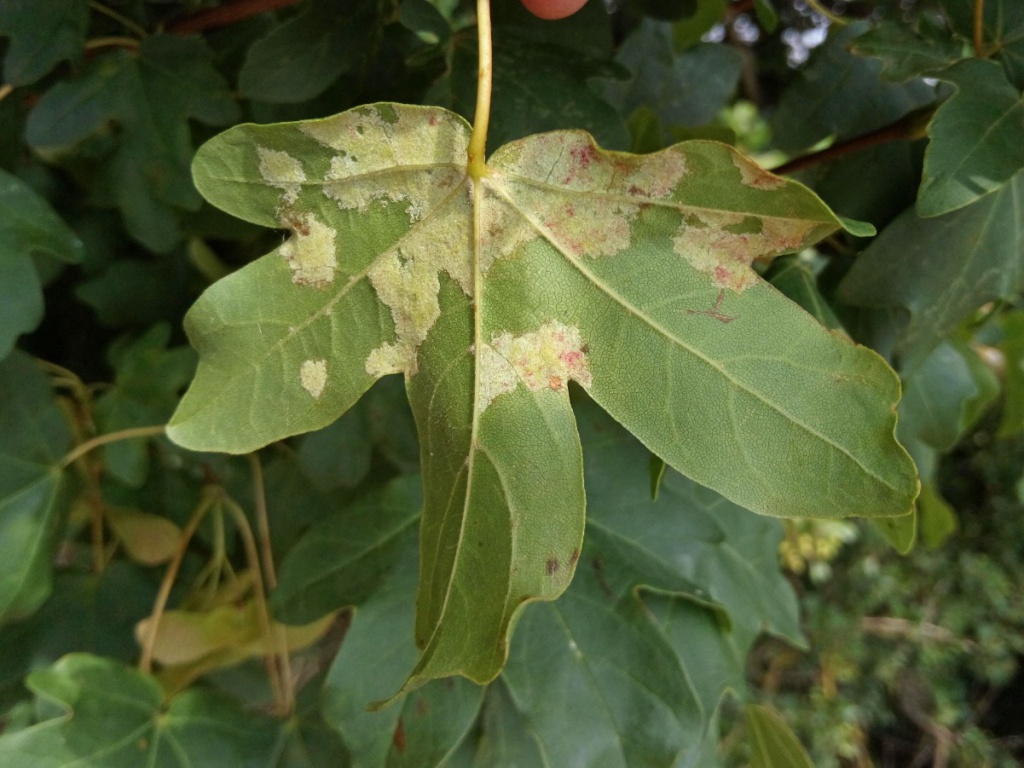
Aceria macrocheluserinea agg.
The Aceria macrocheluserinea agg. mites cause an erineum to form on Field Maple (Acer campestre), usually on the leaf underside. The mites live amongst the hairs of the erineum, which is white to begin with, then pink and then brown; the individual hairs (use a hand lens) are mushroom shaped with rounded bead-like tips.
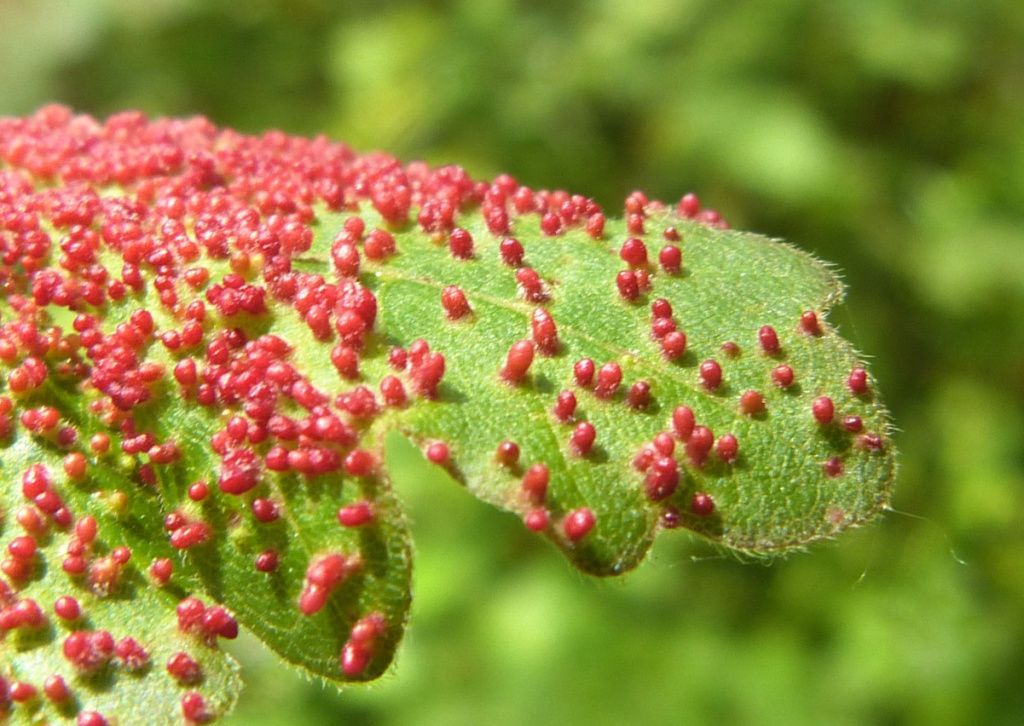
Aceria myriadeum
The mite Aceria myriadeum causes small red pustule galls on the upperside of the leaves of Field Maple
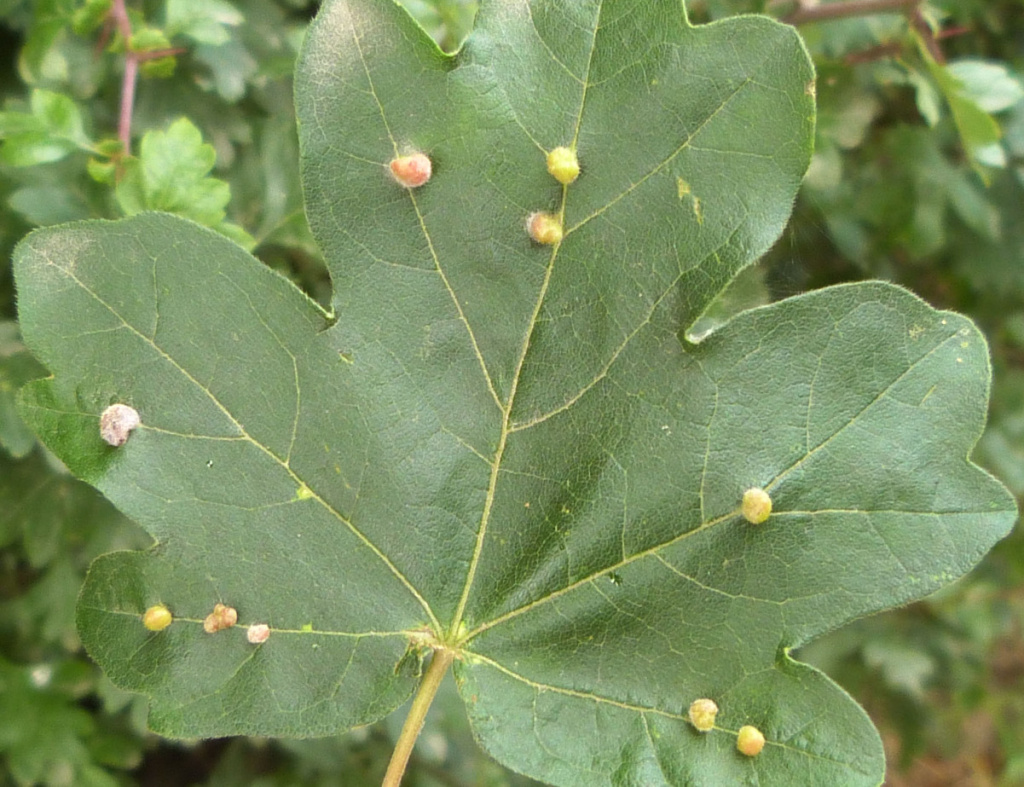
Aceria macrochela
Aceria macrochela is a gall mite that causes solitary galls to form on the leaves of Field Maple. The galls are seen more often than the mite that causes them. The gall is rounded, 2 to 4 mm across, with hard walls often in angle between veins; inner surface with many-celled hairs.