

Downy Birch - Betula pubescens
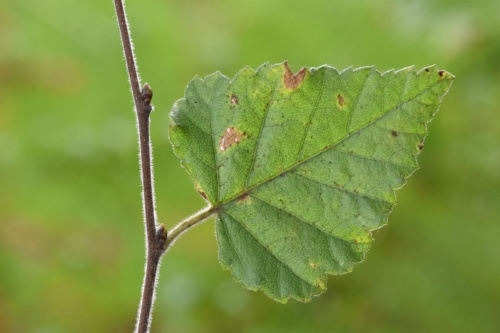
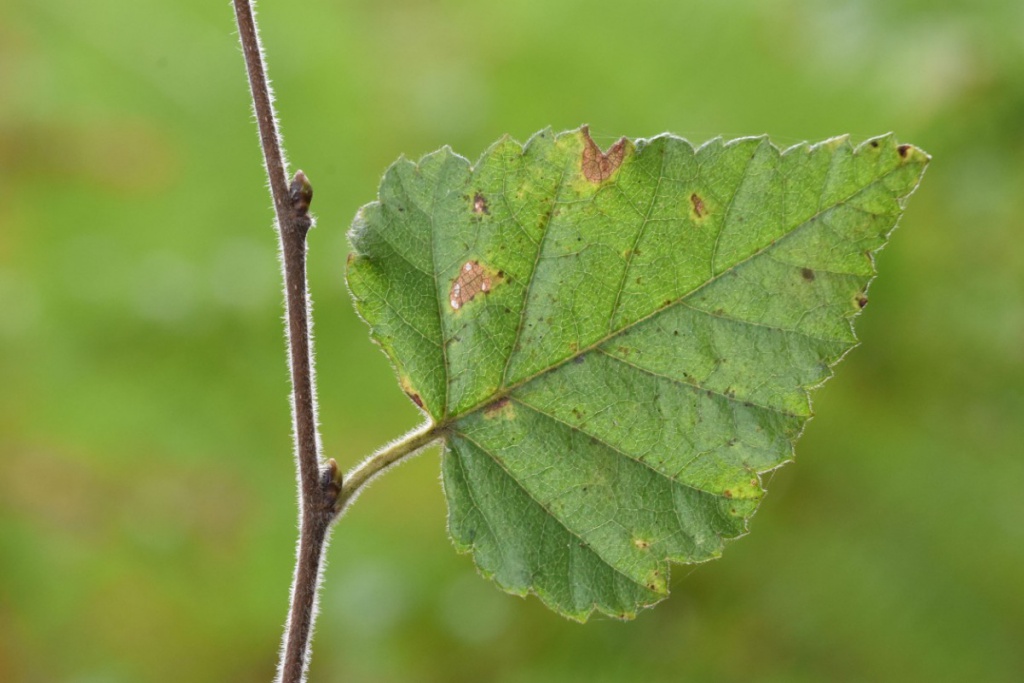
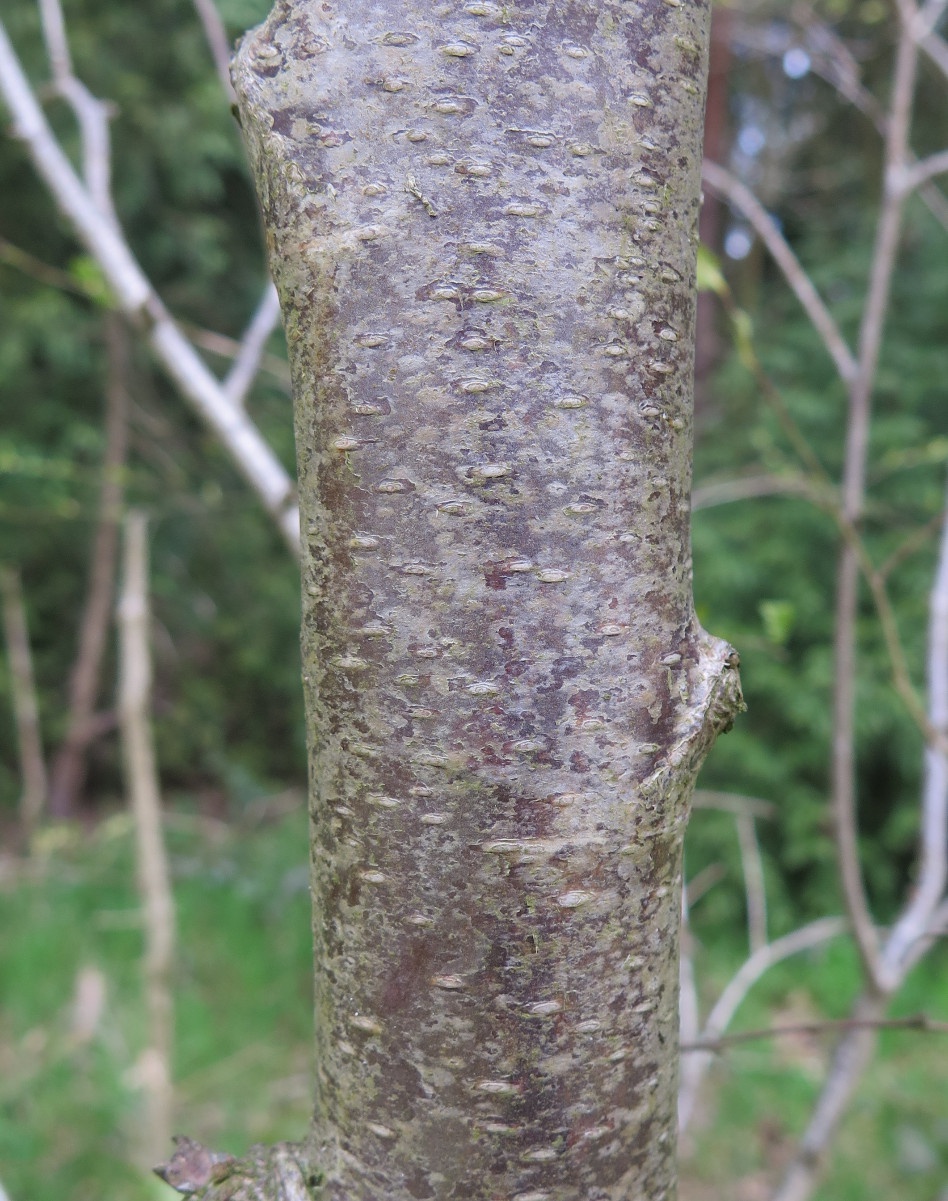
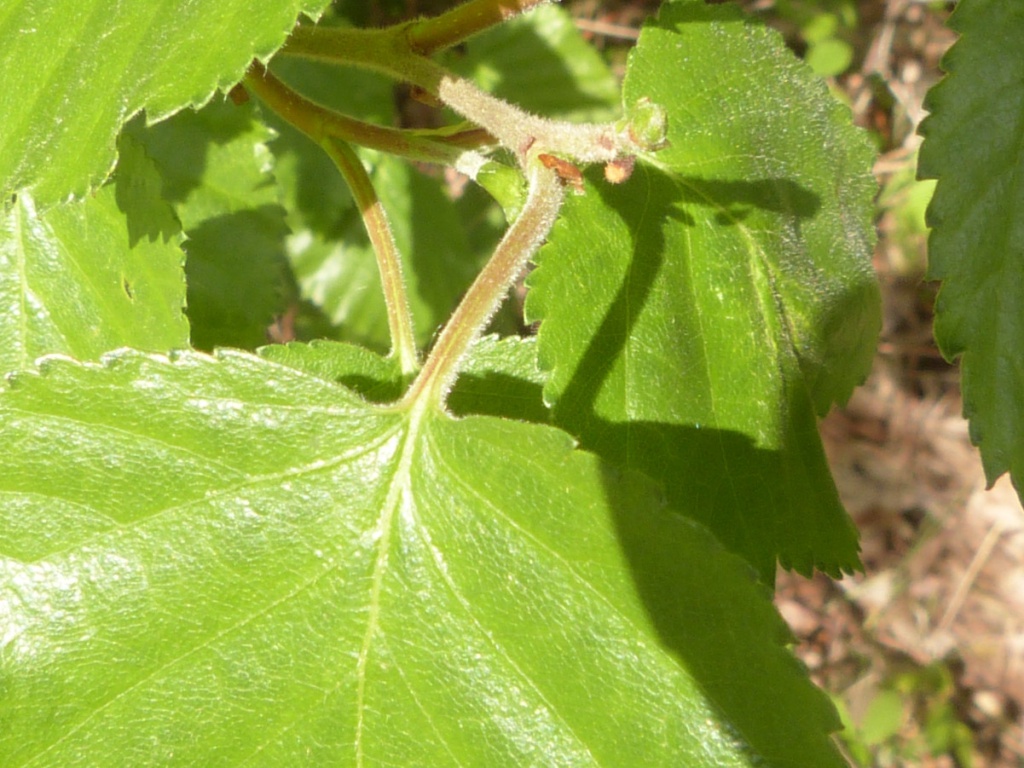
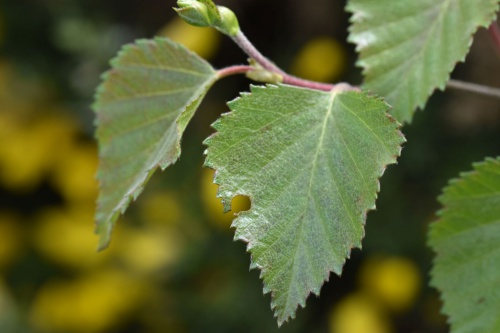
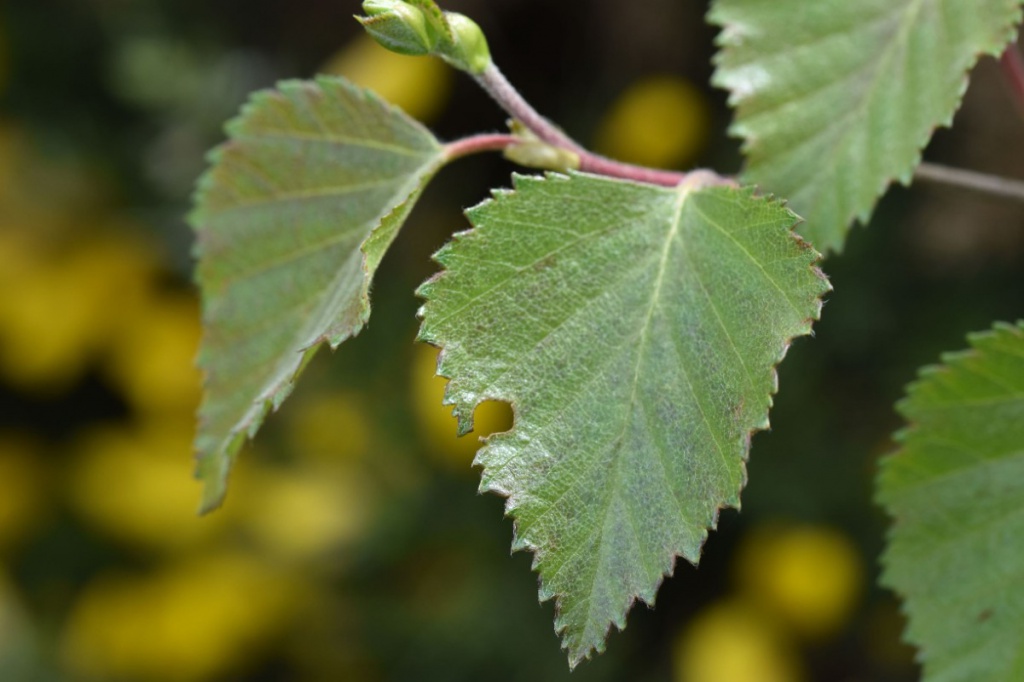
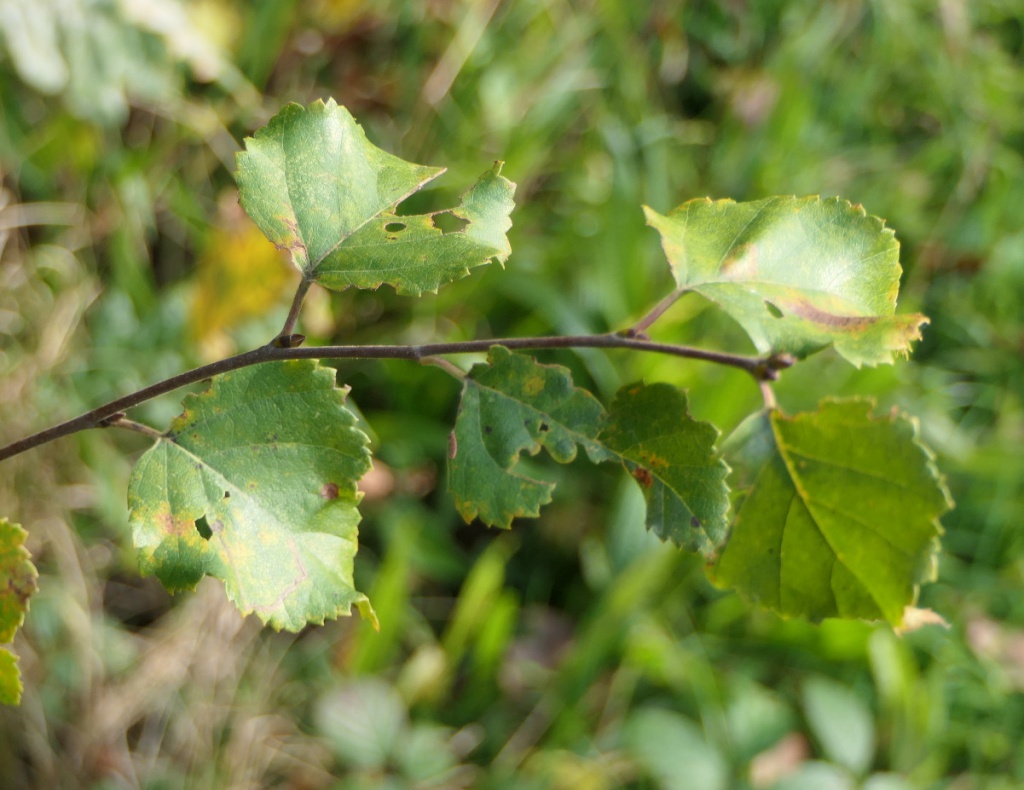
Leaves are ovate or rounded-triangular in shape, more rounded at the base than Silver Birch leaves. Leaf margins are more regularly toothed than Silver Birch and usually uni-serrate or weakly bi-serrate. Leaf stalks are usually downy, as opposed to hairless on Silver Birch - but note that Silver Birch saplings/regrowth can have hairy leaves, and mature Downy Birch can be glabrous. The bark is brown,. grey or white, but rarely has the contrasting rugged black fissures in the lower trunk that are seen in Silver Birch.
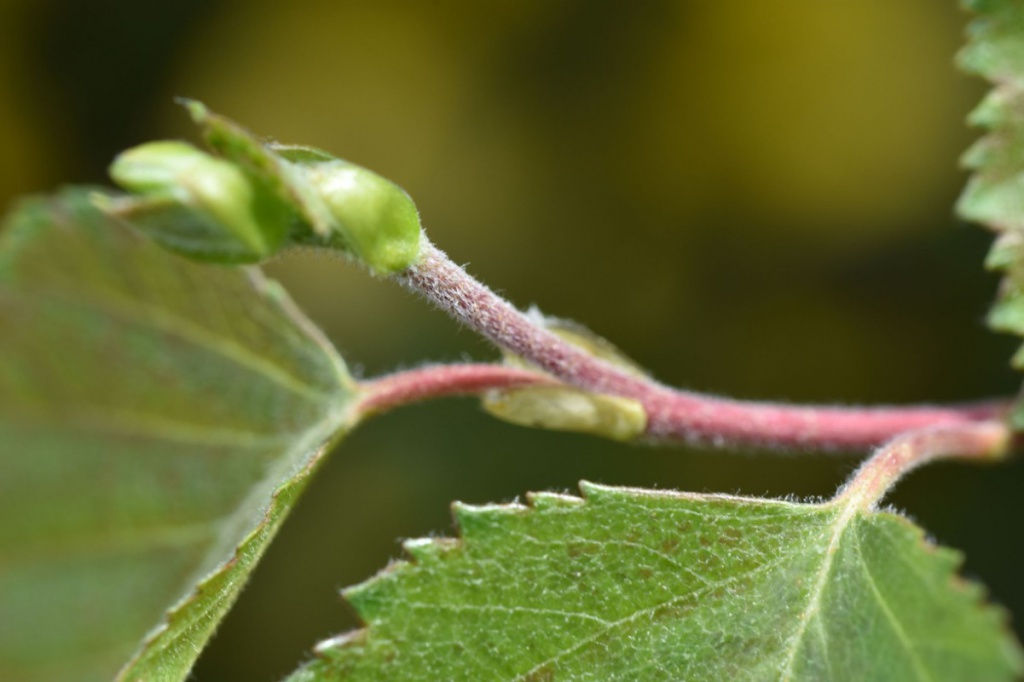
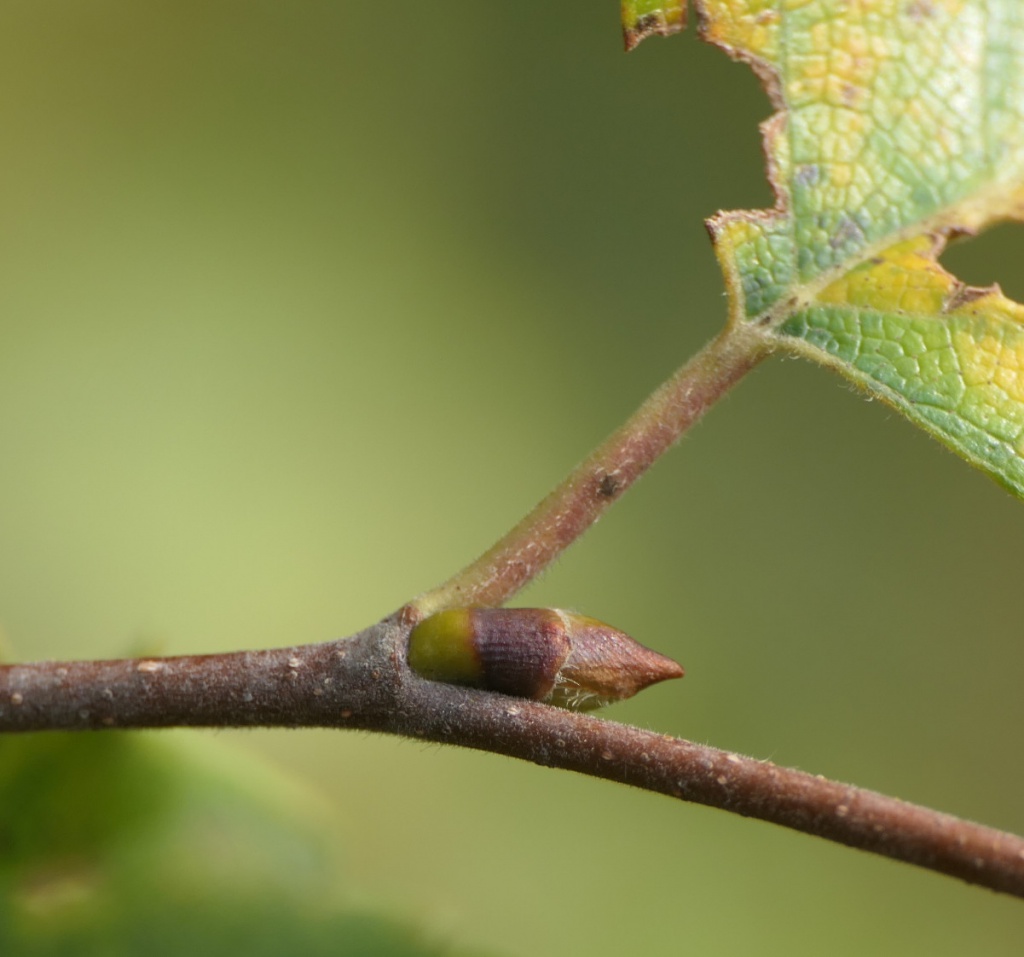
Downy Birch is monoecious, meaning both male and female flowers (catkins) are found on the same tree. Male catkins are long and yellow-brown in colour, and hang in groups of two to four at the tips of shoots, like lambs' tails. Female catkins are smaller, short, bright green and erect. Downy Birch shoots are covered in small downy hairs.
Silver Birch (Betula pendula). Non-native species may be planted for ornament in parks, gardens and as street trees - Betula utilis v. jacquemontii (Himalayan Birch) and Betula papyrifera (Paper-bark Birch) are the most frequent; both have larger ovate leaves, and most cultivars have very white bark.

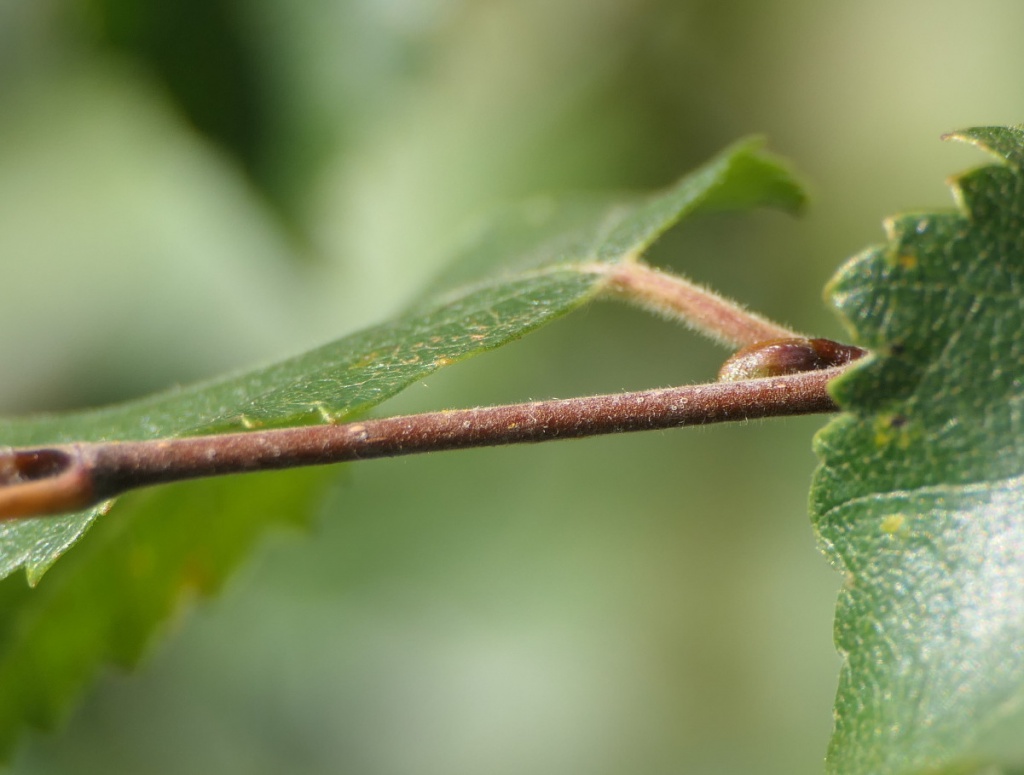
Photos of leaves and shoots; a photo of the tree in its habitat
Damp woodland. Downy Birch is often found on damper soils than Silver Birch, and can tolerate waterlogged or peaty conditions.
all year
Deciduous.
Widespread and fairly frequent in Britain.
Occasional in Leicestershire and Rutland, mainly in north-west area. In the 1979 Flora survey of Leicestershire it was found in 26 of the 617 tetrads.
 stepgray4
Ulverscroft NR
26 September 2021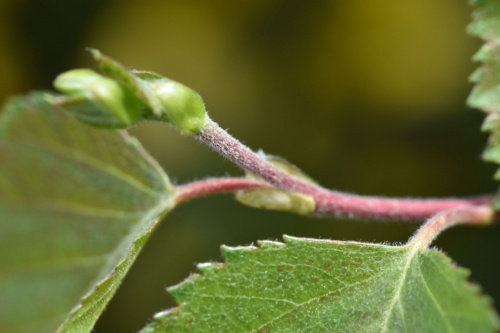 stepgray4
Ulverscroft NR
16 May 2021
Hairy stems and petioles (leaf stalks)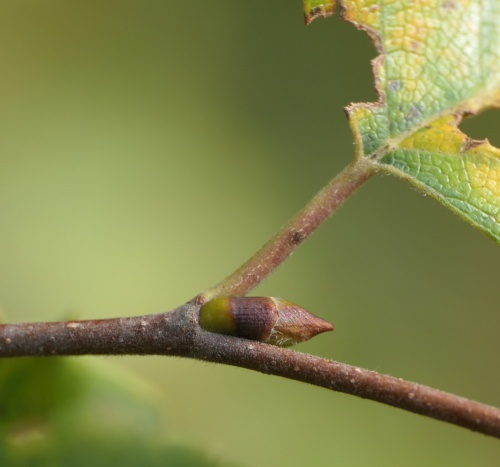 David Nicholls
Bardon Hill
04 November 2019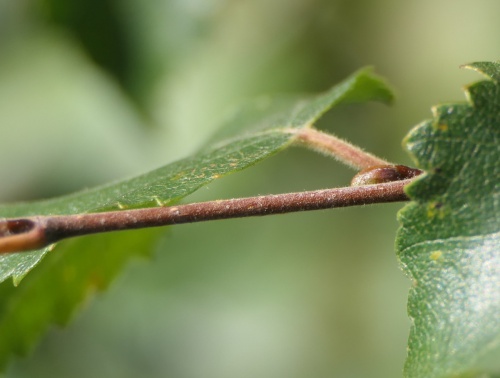 David Nicholls
Charnwood Lodge NR, Colony Reservoir
20 September 2019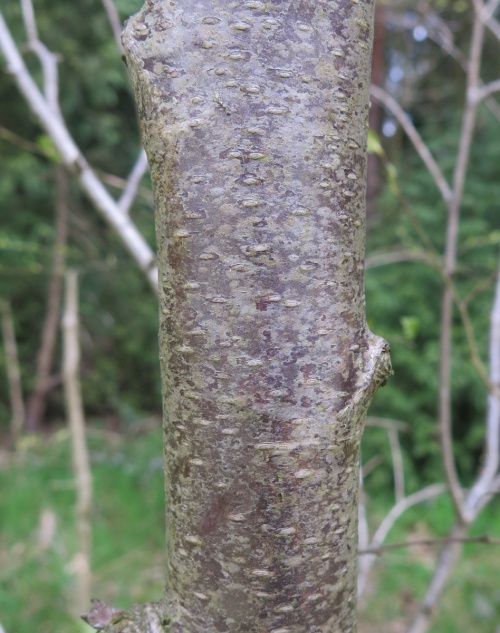 David Nicholls
Martinshaw Wood
30 April 2016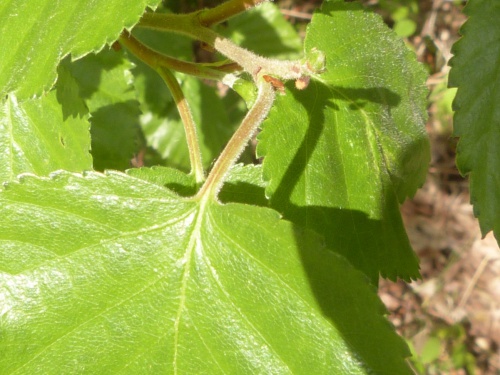 Graham Calow
Sharnford, Fosse Meadows
29 April 2023
Leicestershire & Rutland Map
Enter a town or village to see local records
MAP KEY:
Yellow squares = NBN records (all known data)
Coloured circles = NatureSpot records: 2025+ | 2020-2024 | pre-2020
UK Map
Species profile
- Common names
- Downy Birch
- Species group:
- flowering plant
- Kingdom:
- Plantae
- Order:
- Fagales
- Family:
- Betulaceae
- Records on NatureSpot:
- 25
- First record:
- 21/09/1998 (Anthony Fletcher)
- Last record:
- 15/10/2024 (Isabel Raval)
Total records by month
% of records within its species group
10km squares with records
The latest images and records displayed below include those awaiting verification checks so we cannot guarantee that every identification is correct. Once accepted, the record displays a green tick.
In the Latest Records section, click on the header to sort A-Z, and again to sort Z-A. Use the header boxes to filter the list.
Latest images
Latest records
 stepgray4
Ulverscroft NR
16 May 2021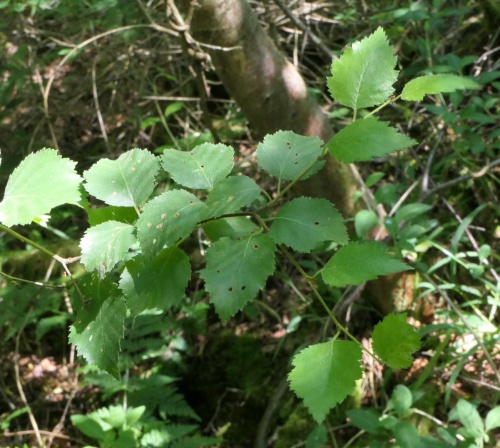 David Nicholls
Sandhills Lodge, Stinking Wood
25 June 2020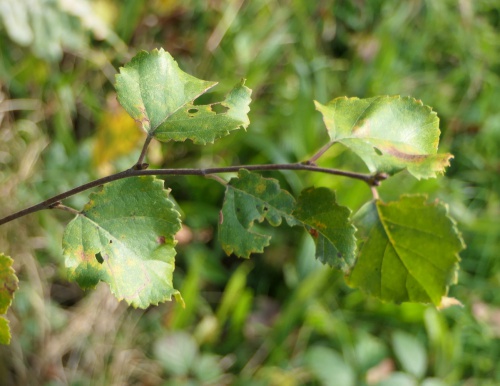 David Nicholls
Bardon Hill
04 November 2019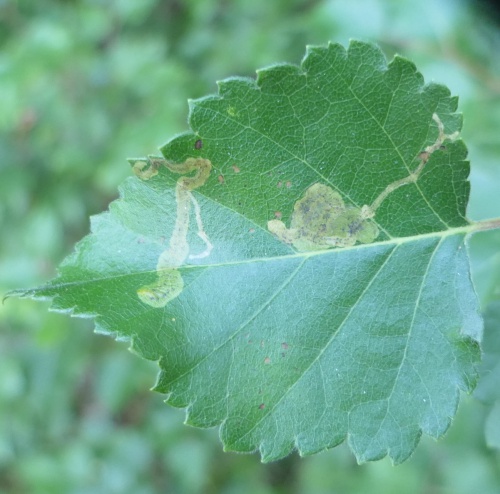 David Nicholls
Martinshaw Wood
21 September 2019

Betulaphis quadrituberculata
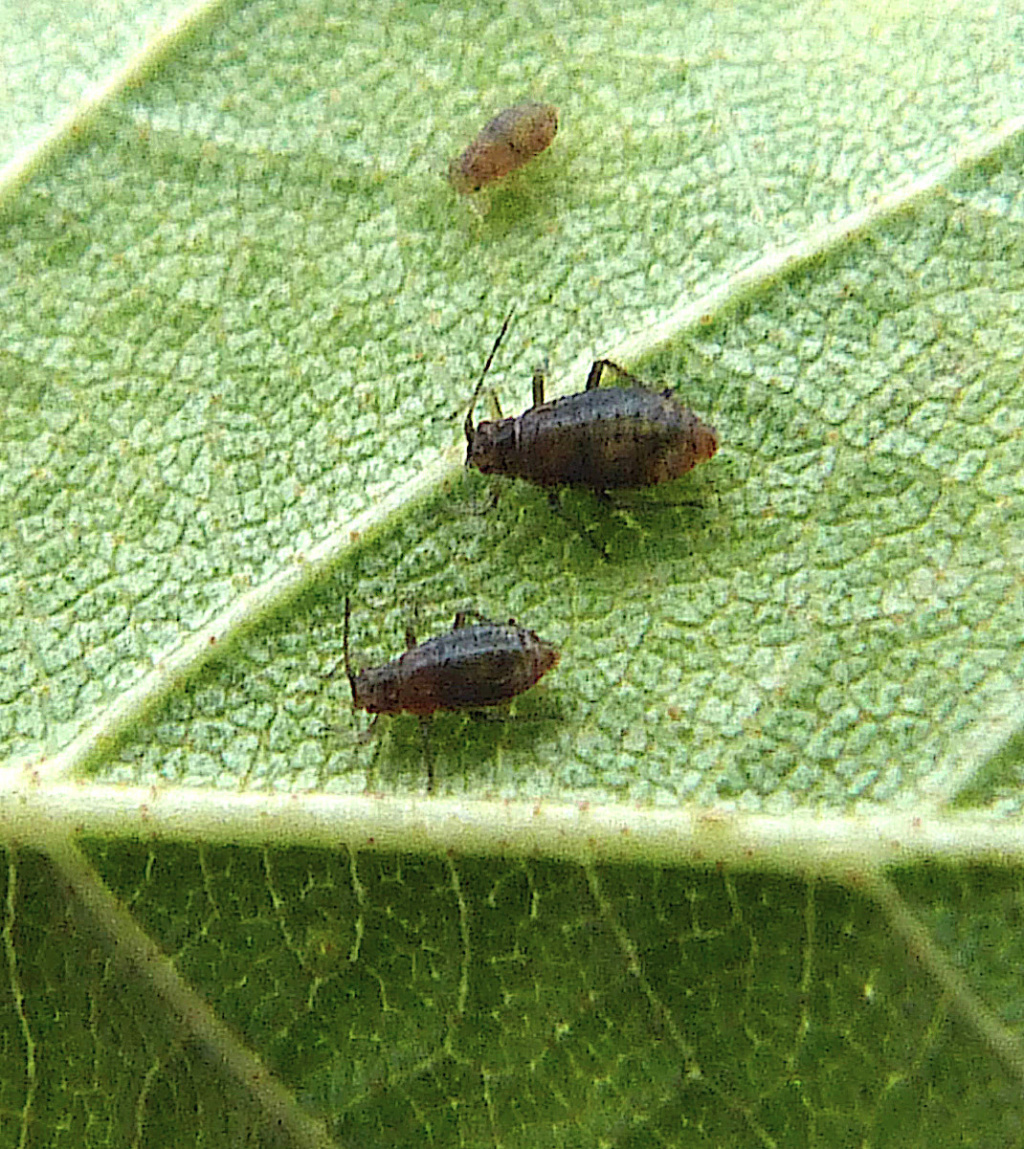
The Small Downy Birch Aphid (Betulaphis quadrituberculata) is usually found on the undersides of Downy Birch leaves, but may also use Silver Birch and very occasionally Grey Alder. Betulaphis quadrituberculata apterae are pale yellowish green but sometimes almost white. In autumn they may have patches of darker pigment. The antennae are shorter than the body. The sexual forms (oviparae) which develop in late autumn are dark brown in colour and rather unusual in shape because the posterior abdominal segment behind the siphunculi appear as an elongate ovipositor-like structure.
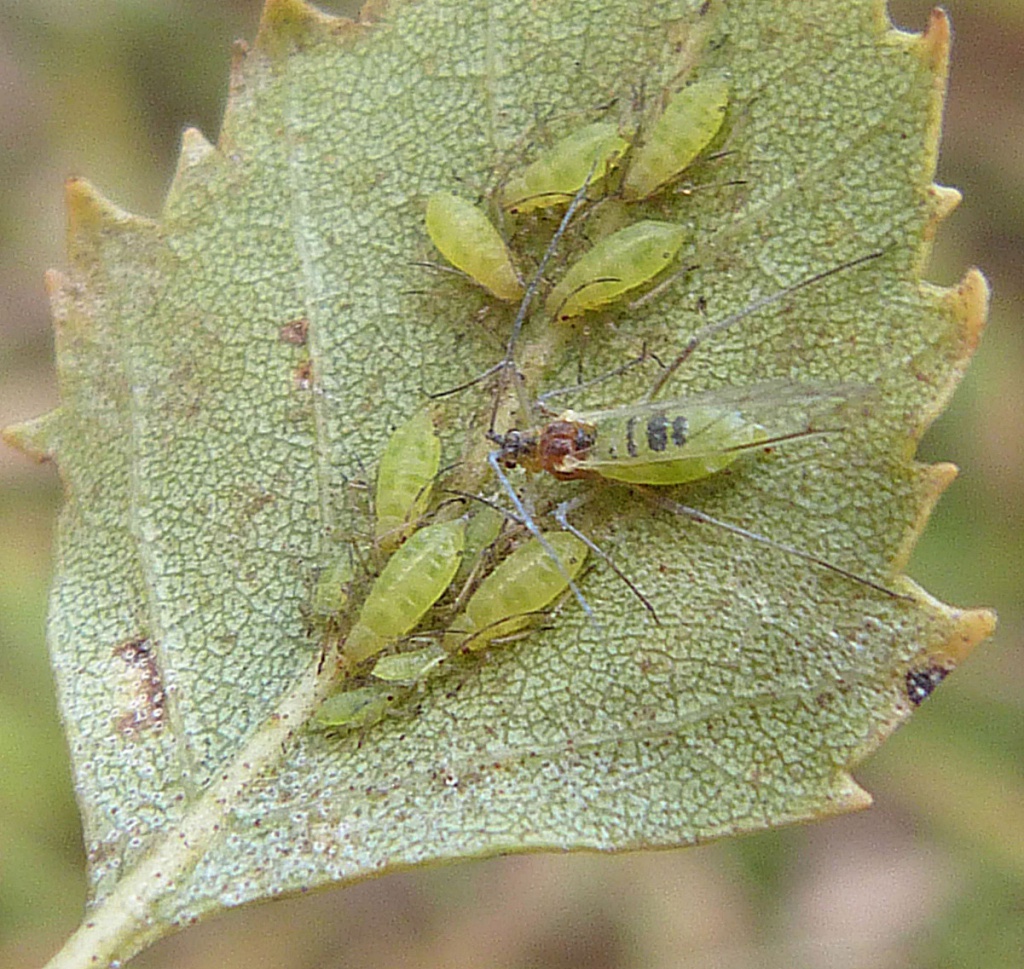
Downy Birch Aphid
The Downy Birch Aphid (Euceraphis punctipennis) feeds on Downy Birch. It is one of the larger aphids and has a pale green body, lightly dusted with bluish wax particles, membranous wings and long legs.
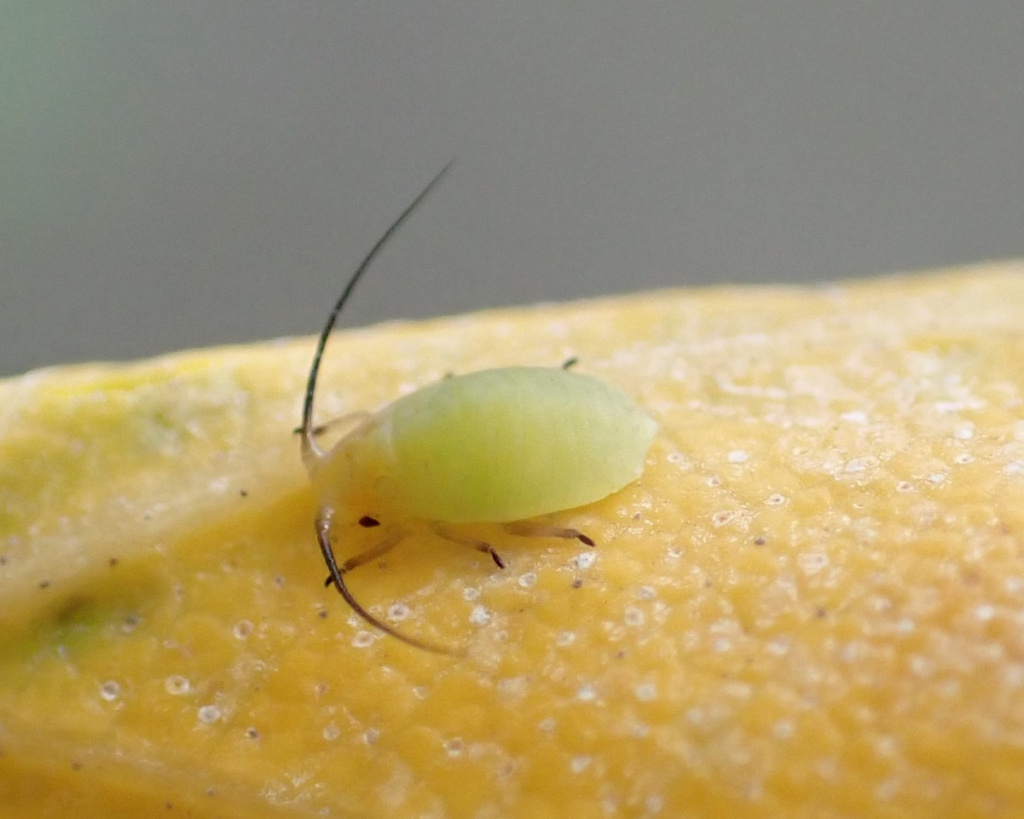
Solitary Birch Aphid
The Solitary Birch Aphid (Monaphis antennata) is associated with Birch. Winged adults and nymphs are green, oviparae are brownish and males are reddish, but all forms have very long and thick antennae that are black except at the base. Unusually for aphids, they are found on upper surface of the leaf, and are solitary or present in very low numbers.
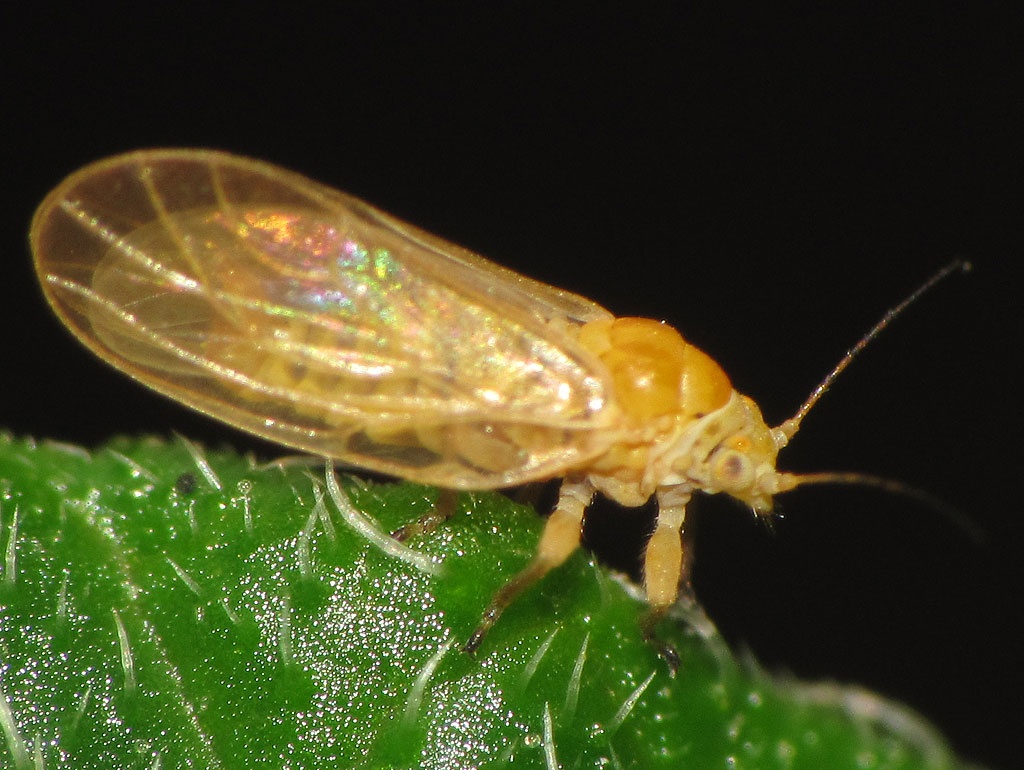
Chamaepsylla hartigi
Chamaepsylla hartigi is a small (length 3 mm) but quite distinctive psyllid, although care must be taken to rule out the similar Cacopsylla species. The body and wings are a dull yellow-orange although the pronotum and genal cones are often pale and the abdomen may occasionally be green. The long female terminalia are also distinctive.

Agromyza alnibetulae
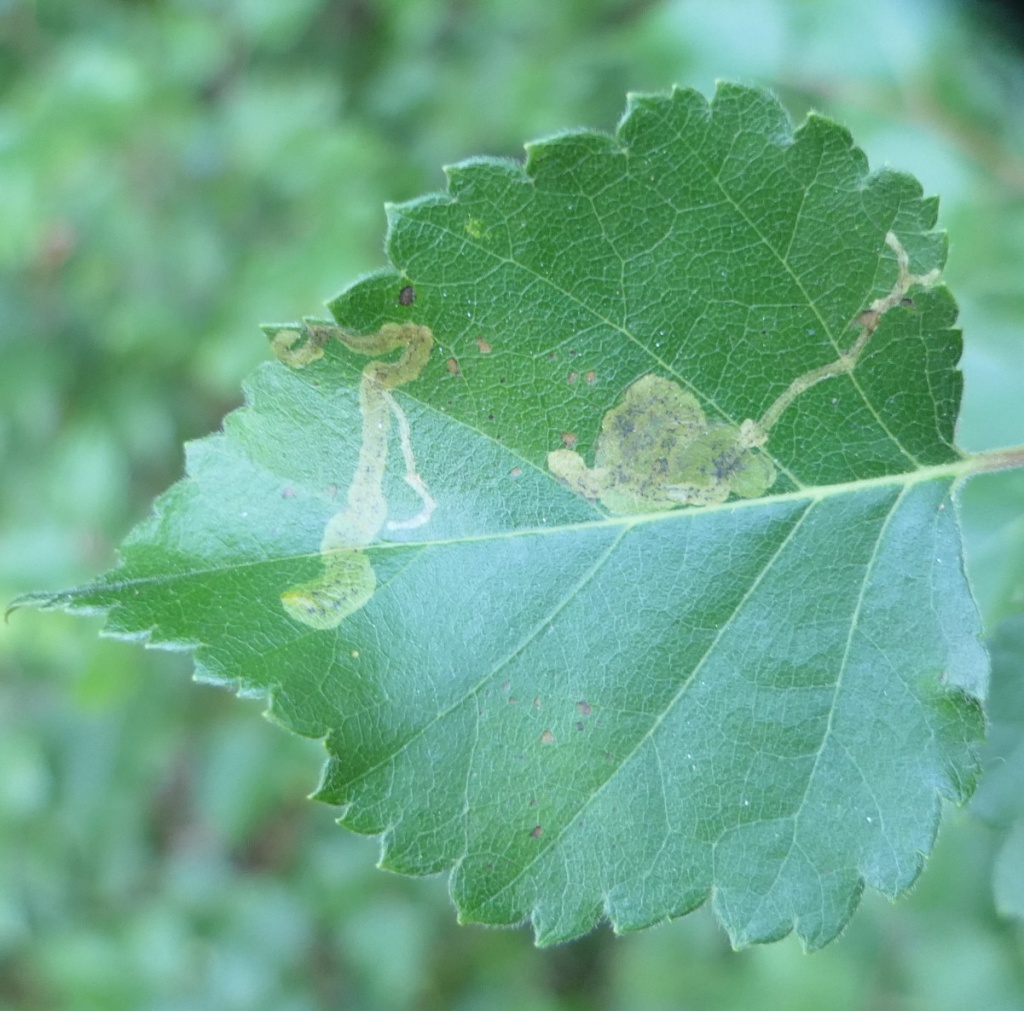
The larva of the Agromyzid fly Agromyza alnibetulae produces a leaf mine in the leaves of Birch. The mine is an unusually long, upper-surface corridor that widens only little and winds freely through the leaf. Frass in two neat rows.
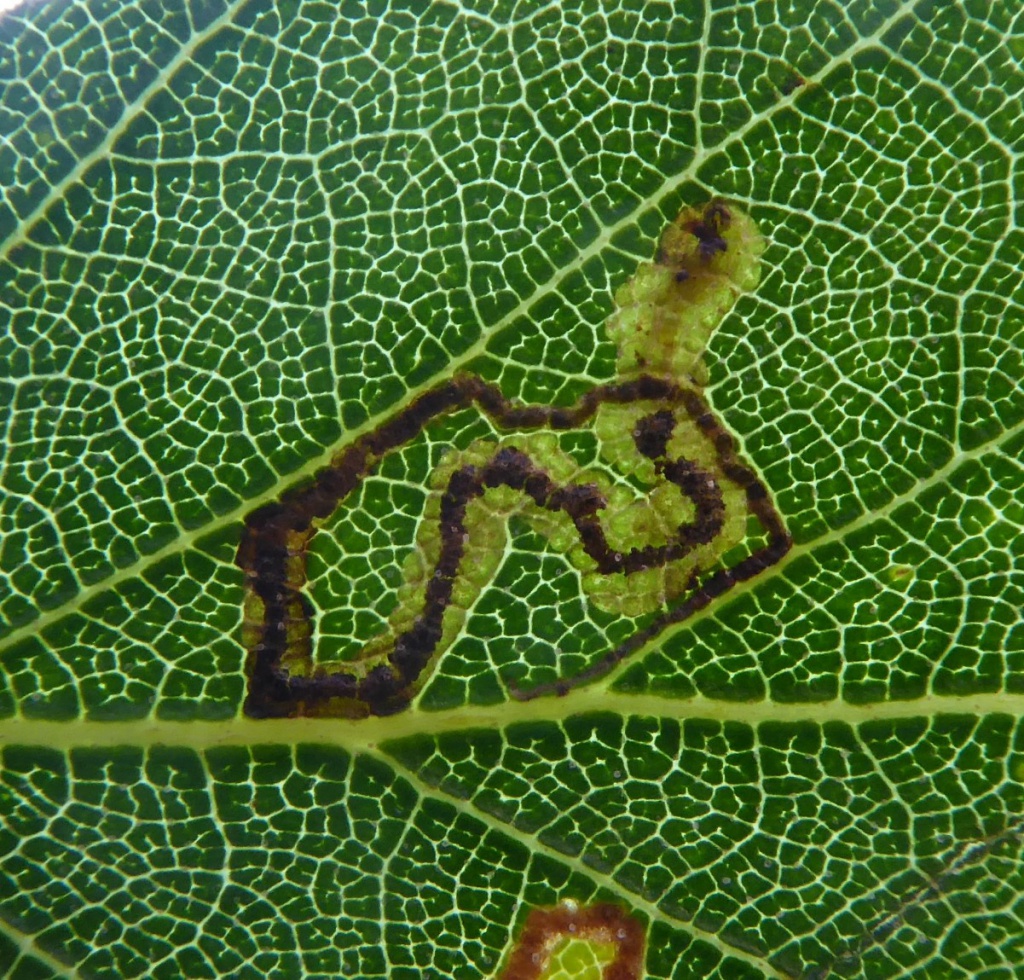
Stigmella betulicola
The larva of the moth Stigmella betulicola creates a contorted gallery mine in leaves of Birch (Betula), leaving a central irregular line of frass. The mine resembles that of S. luteella, but is far less contorted at the beginning. The larva shows a line of dark ventral spots, unlike that of luteella, and tends to have a darker brown head.
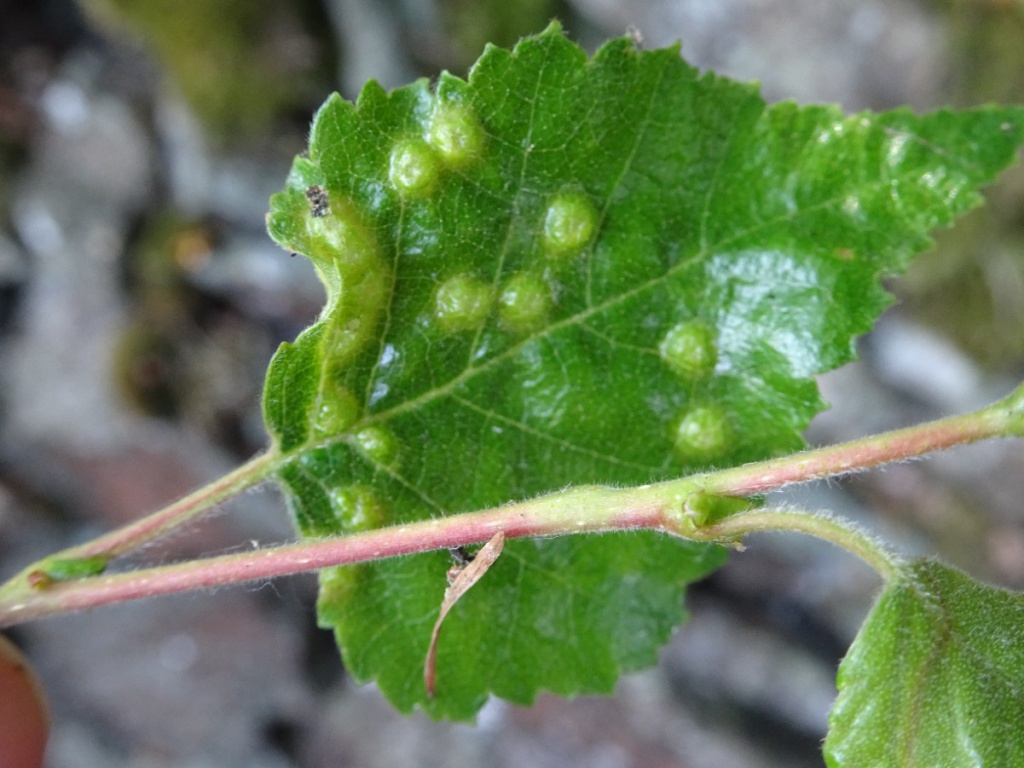
Anisostephus betulinus
The larvae of the gall midge Anisostephus betulinus cause galls to form on the leaves of Birch (Betula species). The galls take the form of a deep, circular blister about 3 mm across, 1.5 mm deep, yellowish to red-purple in colour, in the leaf blade or over veins and more prominent on the upper surface.
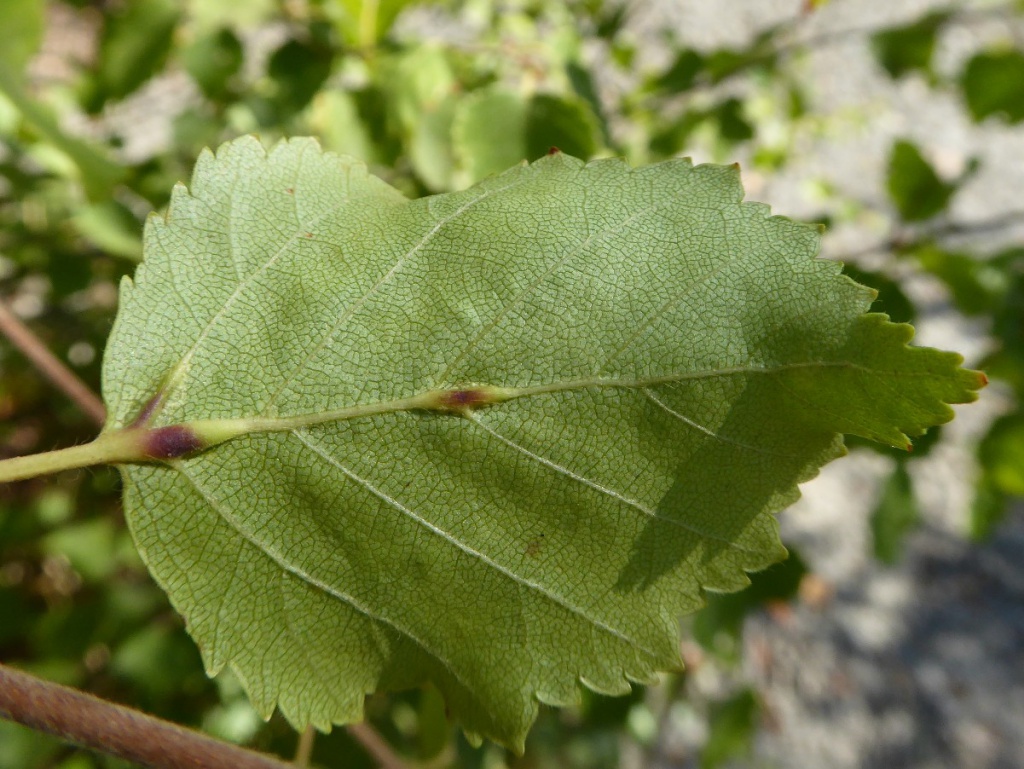
Massalongia rubra
The larva of the gall midge Massalongia rubra galls the leaves of Birch (Betula). The gall takes the form of an elongated woody swelling along the midrib of a normally expanded leaf. The gall may be up to 10 mm in length. It may also affect the petiole or extend into the bases of lateral veins. It is most prominent on the underside of leaves and starts of green in colour becoming red-purple and then brown.
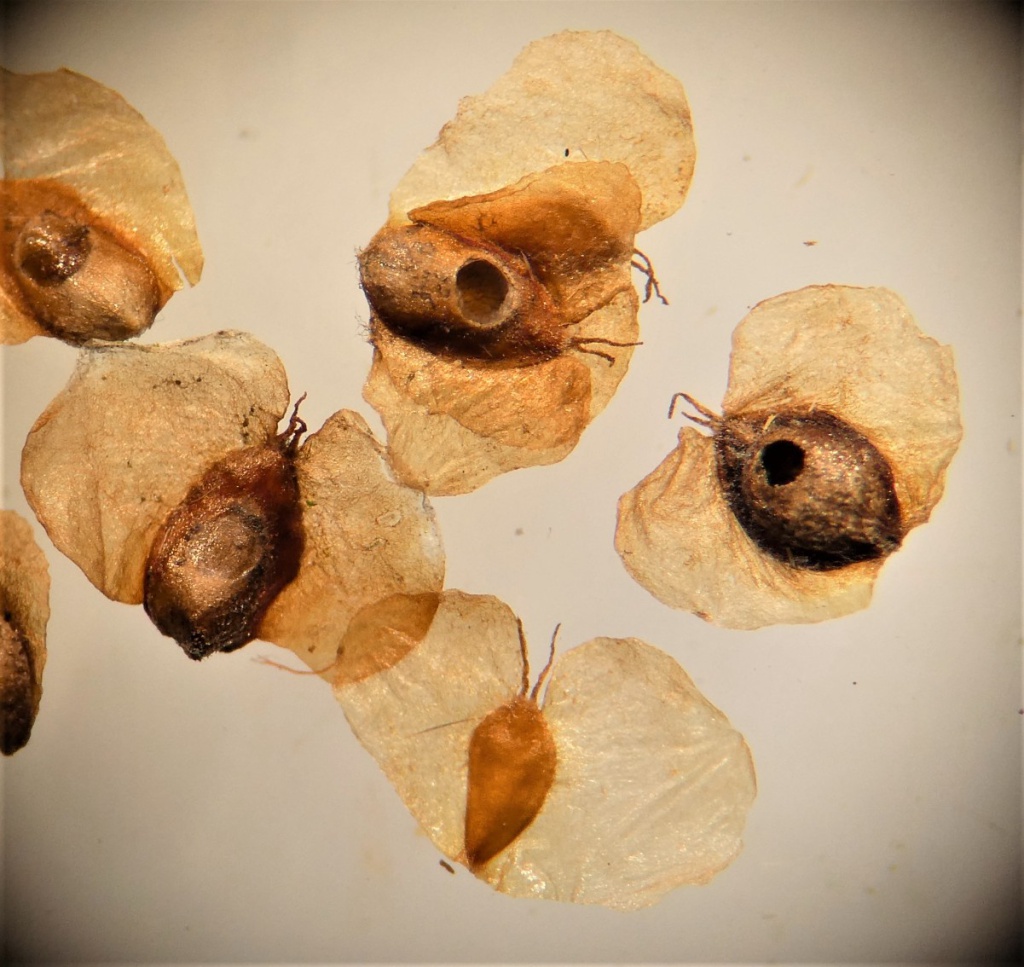
Semudobia betulae
The larva of the gall midge Semudobia betulae galls the catkins of Birch. The gall is small, <2 mm long, and in each individual fruit. The wings of the fruit are distorted and reduced in size. The gall has a distinct circular window pit; this is a pre-formed exit hole for the insect, which pupates inside the gall. Eventually, the catkin becomes brown where the fruits are galled; the remainder of the catkin stays green.
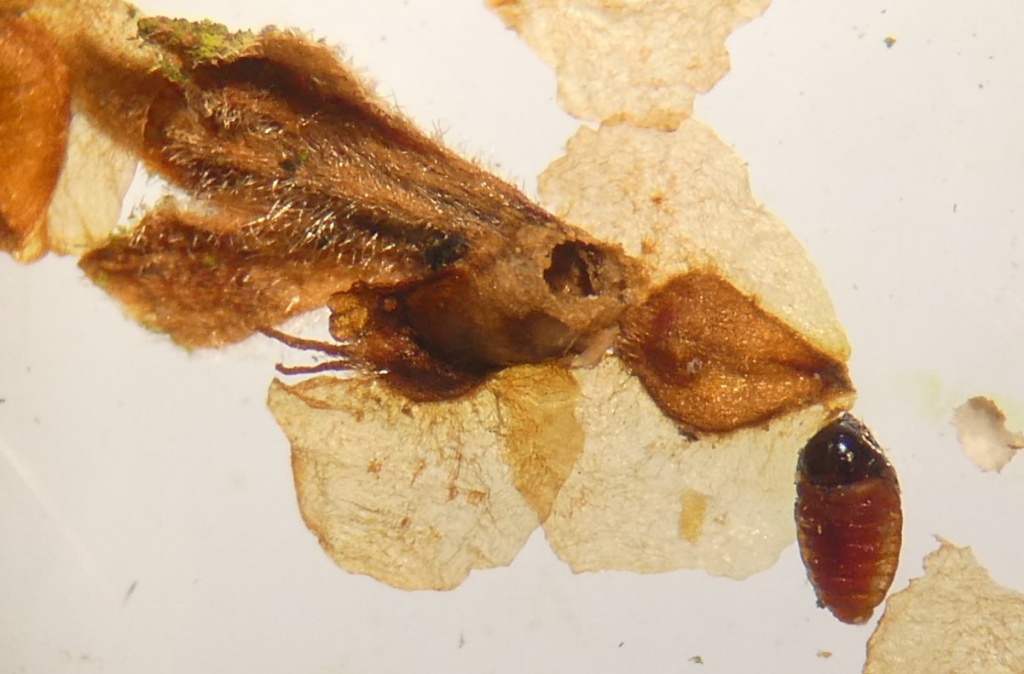
Semudobia skuhravae
The larva of the gall midge Semudobia skuhravae galls the catkins of birch. The gall is fused to the spindle of the catkin between this and the scale and fruit. It is up to 2mm long, without a 'window-pit'
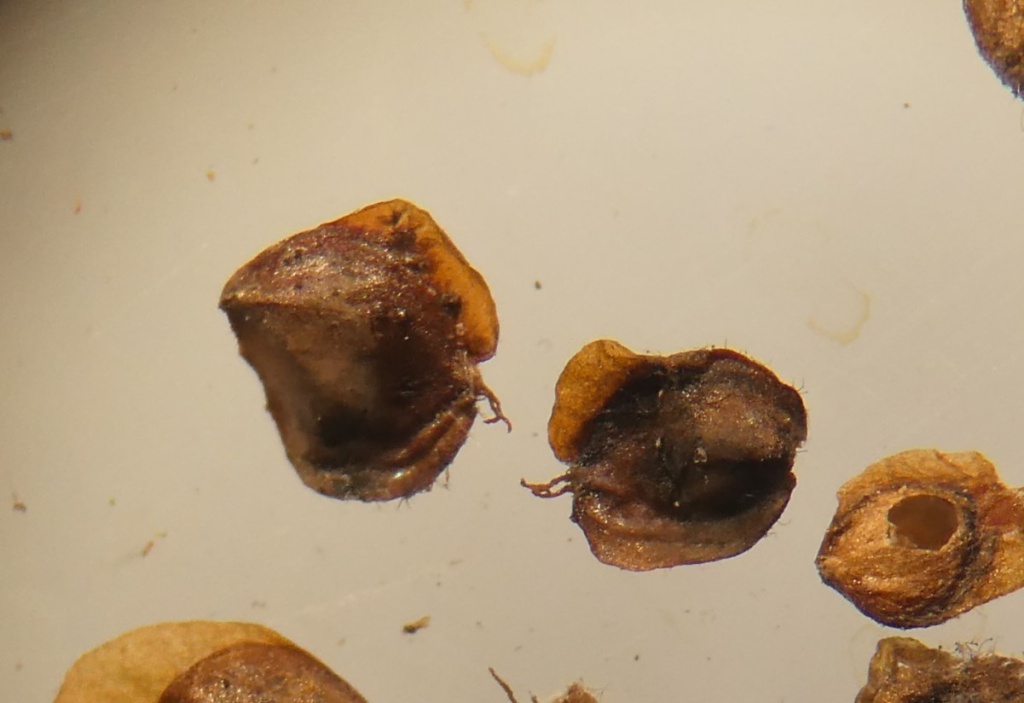
Semudobia tarda
The larvae of the gall midge Semudobia tarda cause galls to form in the catkins of Birch species. The gall is in the fruit, and is rounded, c. 2,, diameter, with a polished surface and hairs only at the apex; the wings of the fruit are almost completely absent. The 'window-pit' is absent or indistinct on this gall.
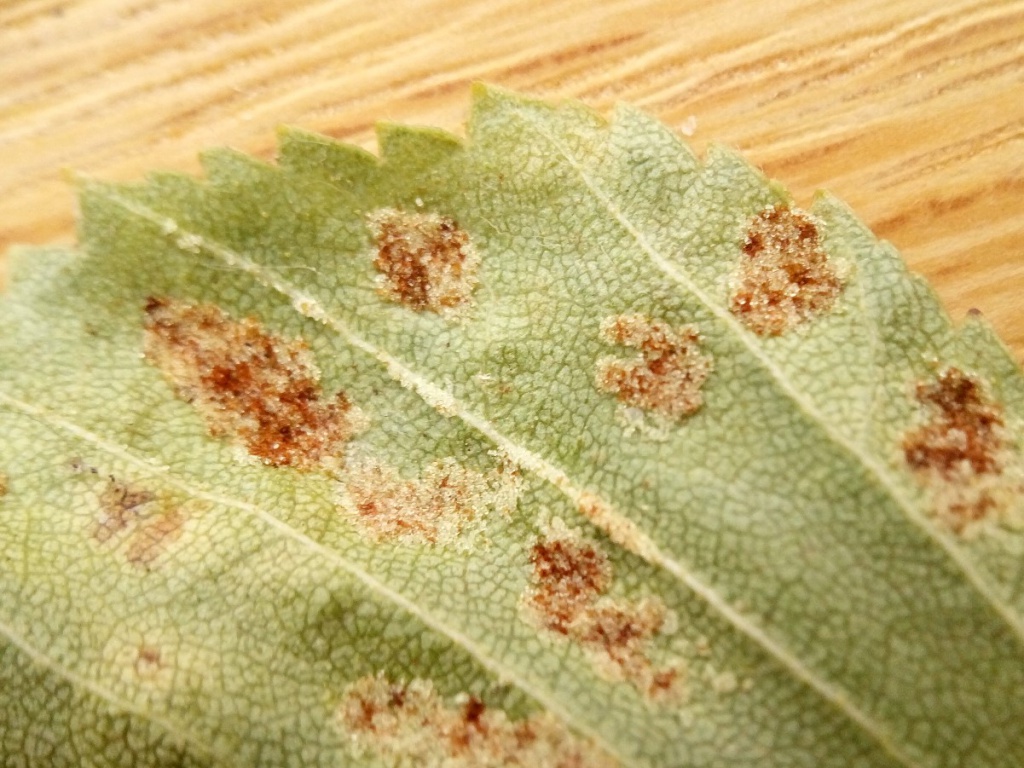
Acalitus rudis
Acalitus rudis is a gall mite that causes galls to form on the leaves of Birch (Betula species). The gall is an erineum between the veins of the leaf. It is usually on the underside of the leaf, with or without a bulge on the other side. The hairs are quite long, white or yellowish when young, later a deep red brown.
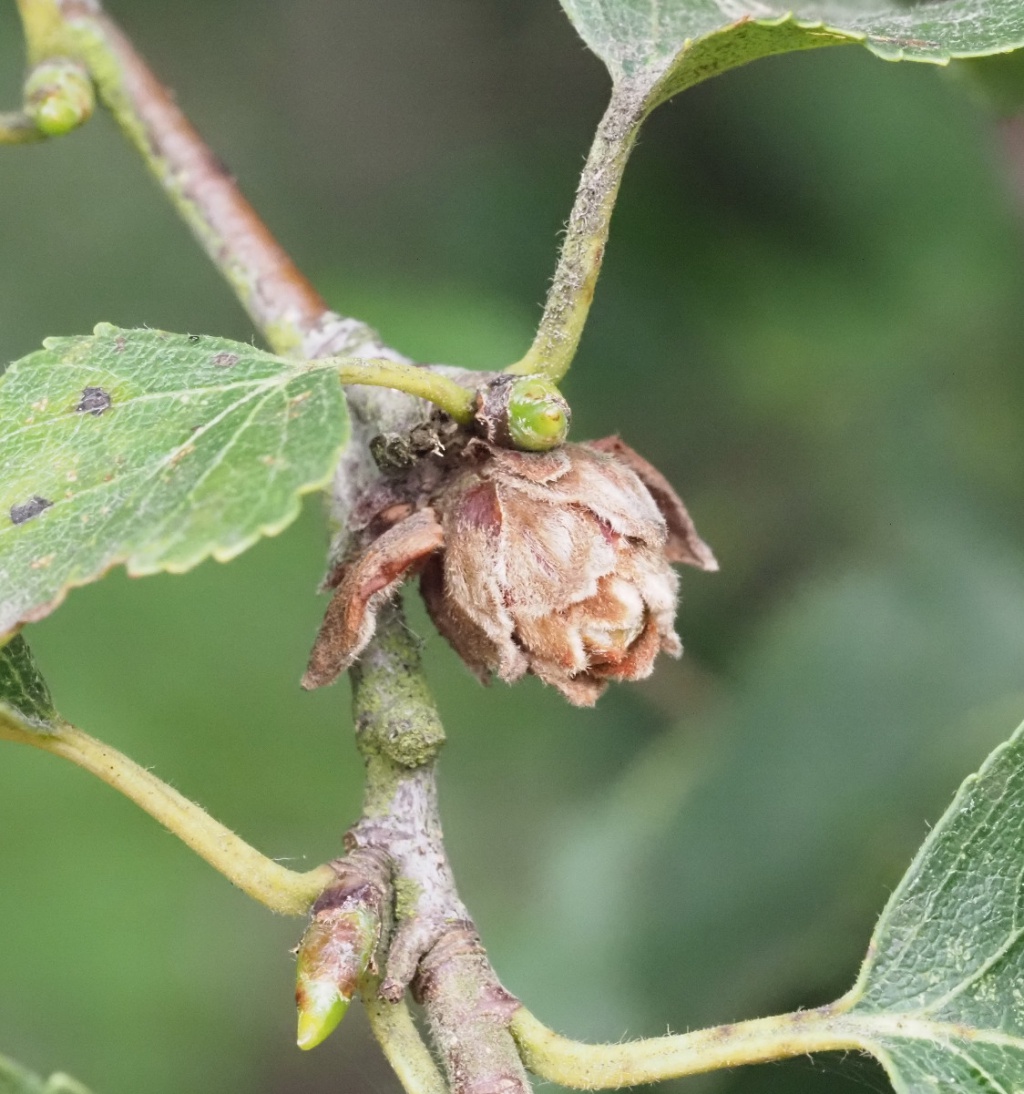
Acalitus calycophthirus
The mite Acalitus calycophthirus galls the buds of Silver Birch and Downy Birch causing the affected bud to enlarge. These galled buds may contain a large number of mites.
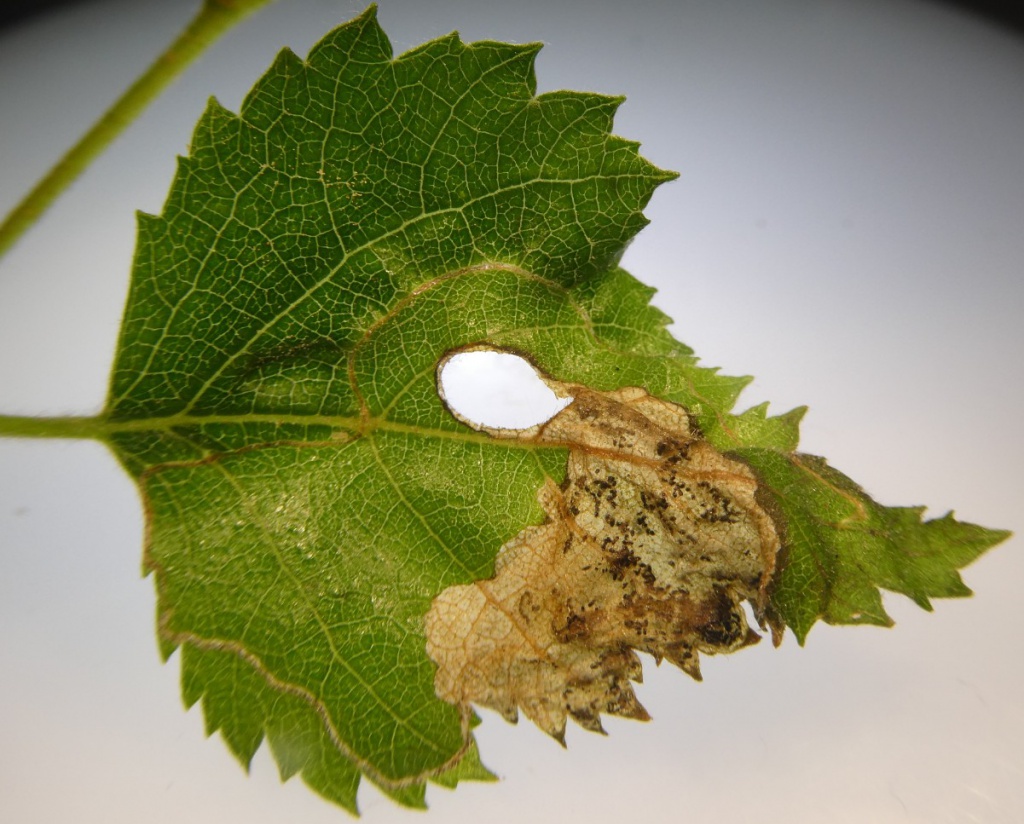
Phylloporia bistrigella
The larva of the moth Phylloporia bistrigella mines the leaves of Birch usually encircling a good part of the leaf, and finishing in a whitish blotch with scattered frass. It then cuts out an oval case from this position and drops to the ground. The leaf area enclosed within the mine becomes paler and vacated mines are quite distinctive.
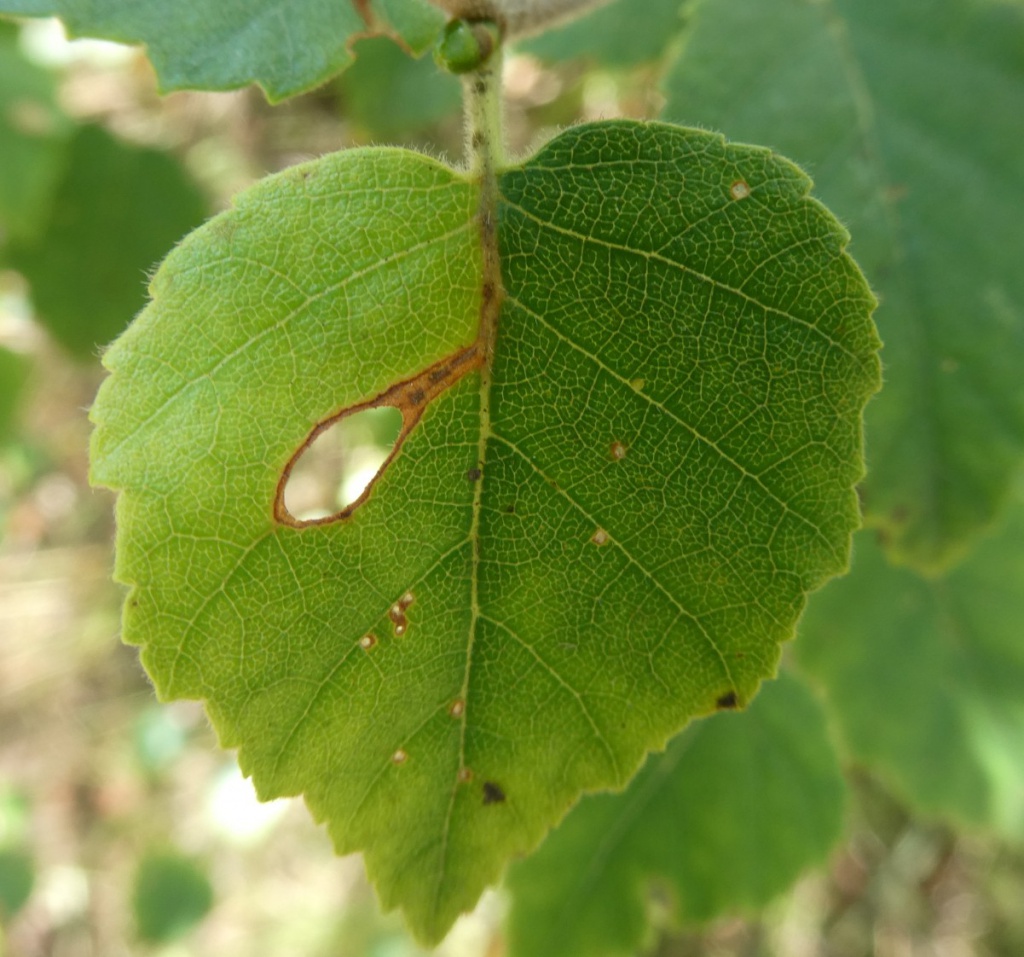
Heliozela hammoniella
The larva of the moth Heliozela hammoniella mines the leaves of Birch. The mine starts in the petiole and midrib then leads to an oval blotch, and finally a cut-out in the leaf-blade.
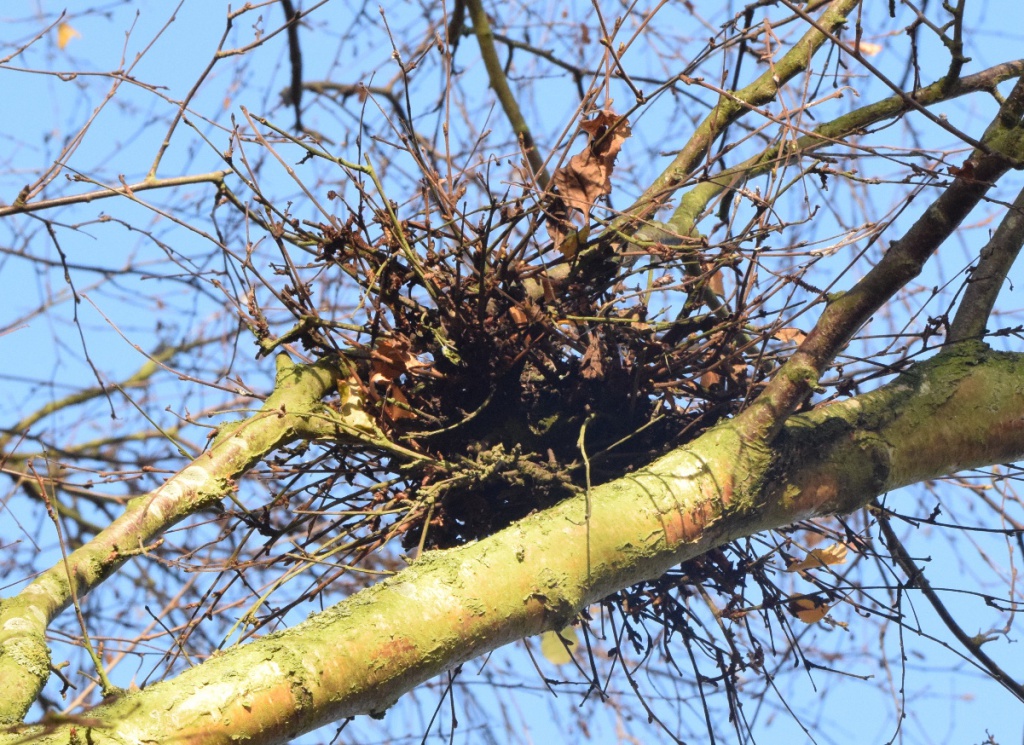
Witch's Broom
Witch's Brooms are masses of densely branched small twigs found amongst the branches of trees. Taphrina betulina affects Birch trees. A layer of yellow asci is produced on the underside of the swollen leaves within the broom; these stunted leaves are often produced and fall before the normal leaves open.