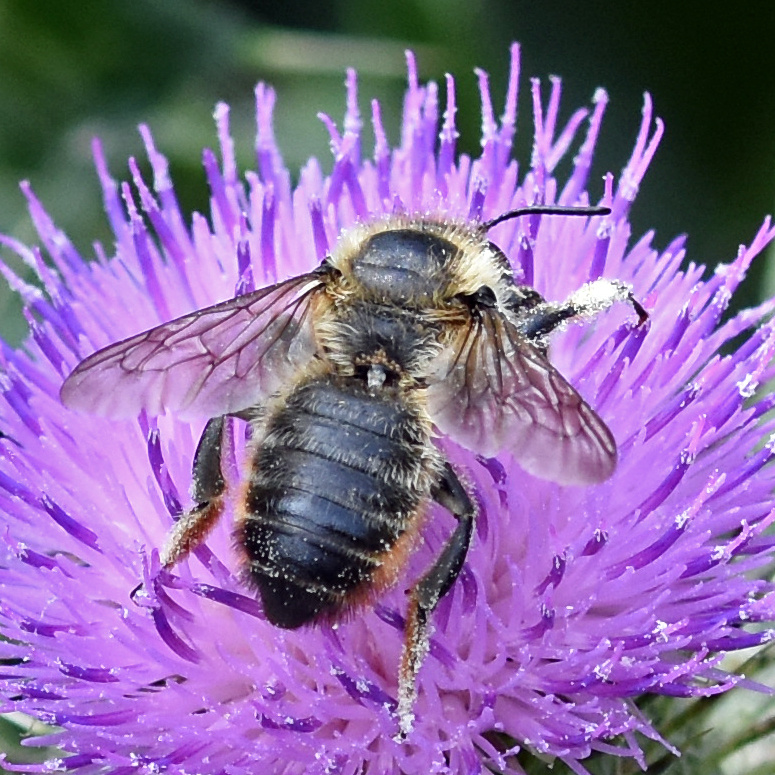
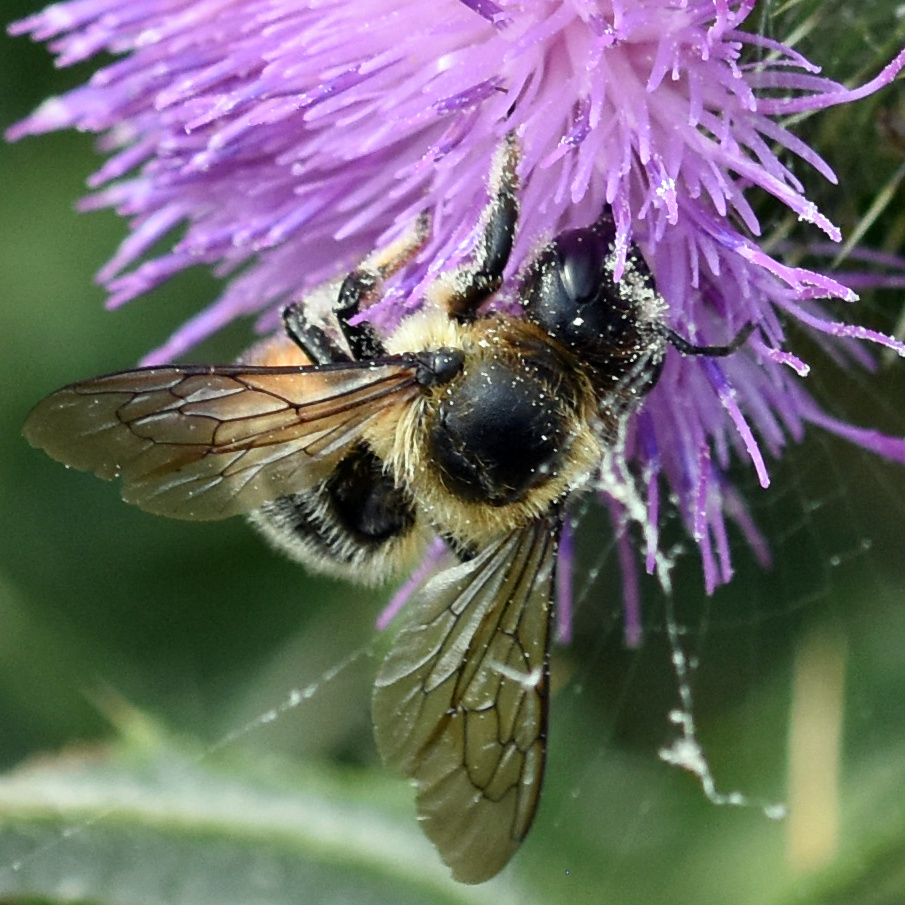
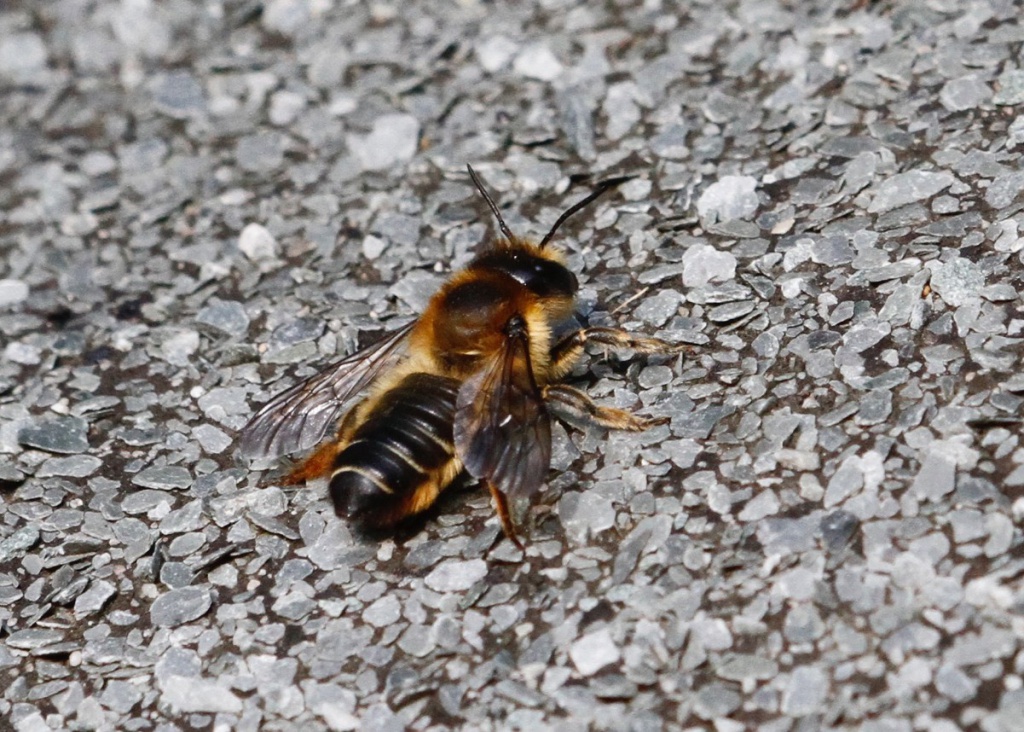
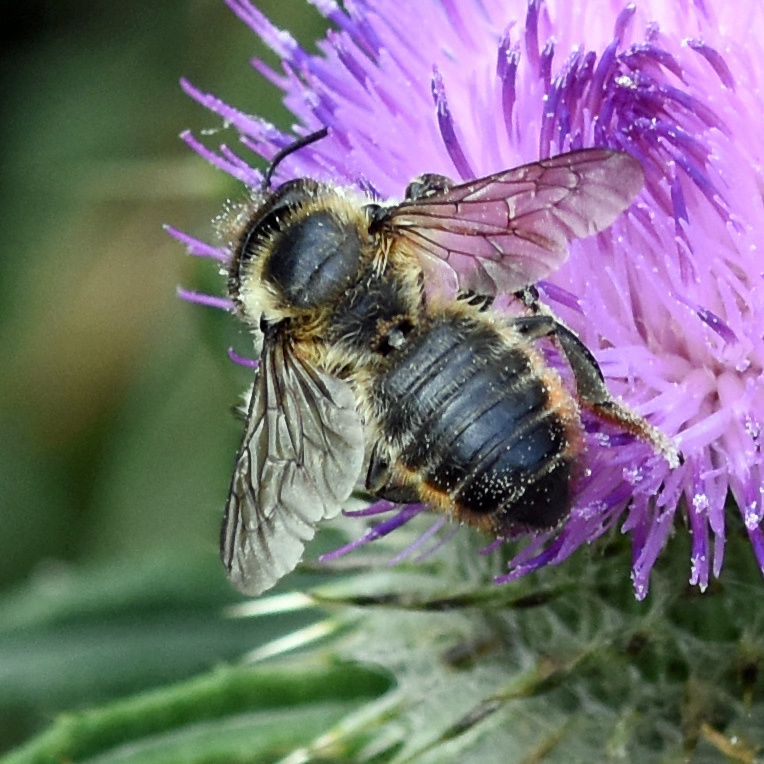
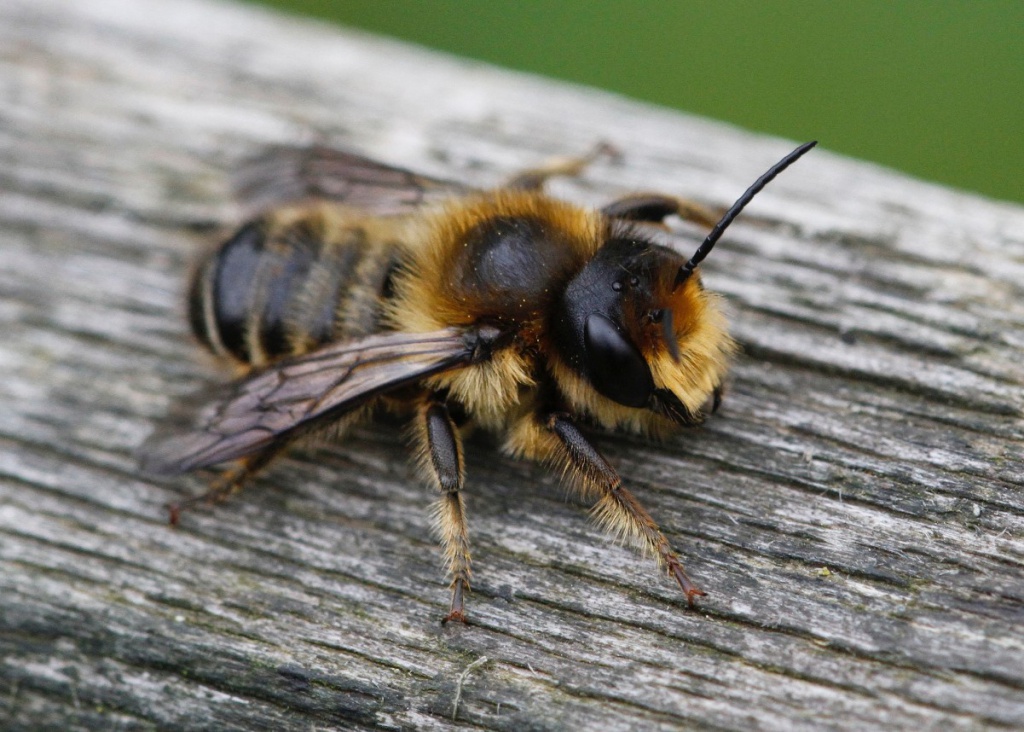
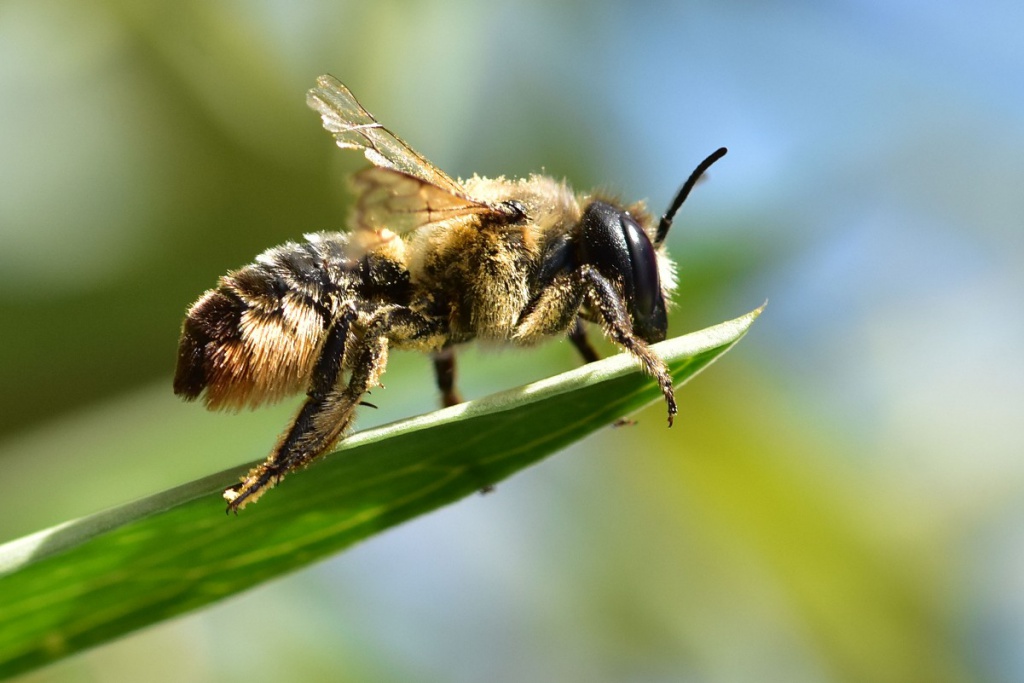
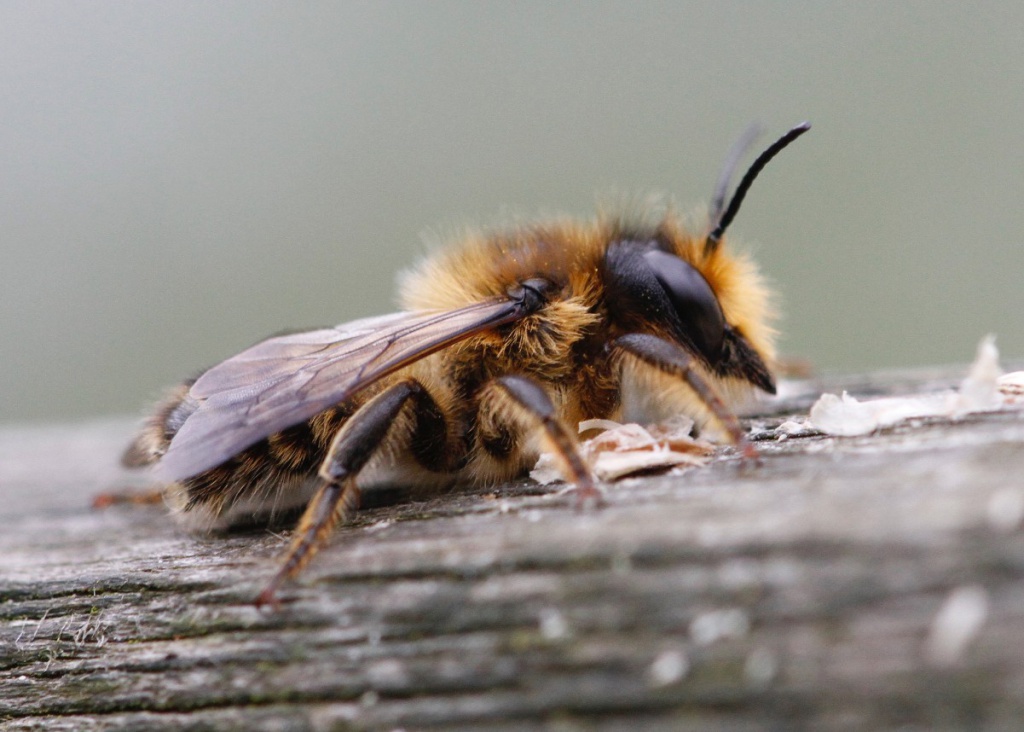
Megachile ligniseca
One of a suite of eight superficially similar species. All are medium to large sized solitary bees.

Most solitary bees and wasps are difficult to identify, and can rarely be identified from photos taken in the field. All red-rated records should include a photo or set of photos of the specimen, illustrating the key characters taken from a standard key, which should also be referenced (e.g. ‘Falk, 2015’). The full set of key characters are generally not visible in field photos and photos are rarely sharp enough. To aid in the verification of your records, please include face shot, side, top and wings. The notes should state whether male or female, and explain how the specimen met the key characters. Although NS may not be able to identify the species even if these reference photos are provided, the photos will be stored with the record and may allow it be identified in future. Alternatively, NS will accept records identified by a recognised local or national expert, or that have been identified via BWARS’ Facebook https://www.facebook.com/profile.php?id=100065021433202 . If you have obtained this advice, please note the name of the person/organisation identifying the record in the ‘determiner’ field (e.g. ‘Stuart Roberts, BWARS Facebook’) rather than just a comment of ‘BWARS Facebook’.
Since it is a species that utilises bramble, thistles and Himalayan balsam it is likely to be found at ruderal dominated sites. It has also been found on post-industrial sites where it was recorded feeding on Himalayan balsam and found frequently flying about standing deadwood and bramble thickets.
This is a summer-flying species with early records from mid-June to as late as early September. The majority of records however fall between early July and mid August.
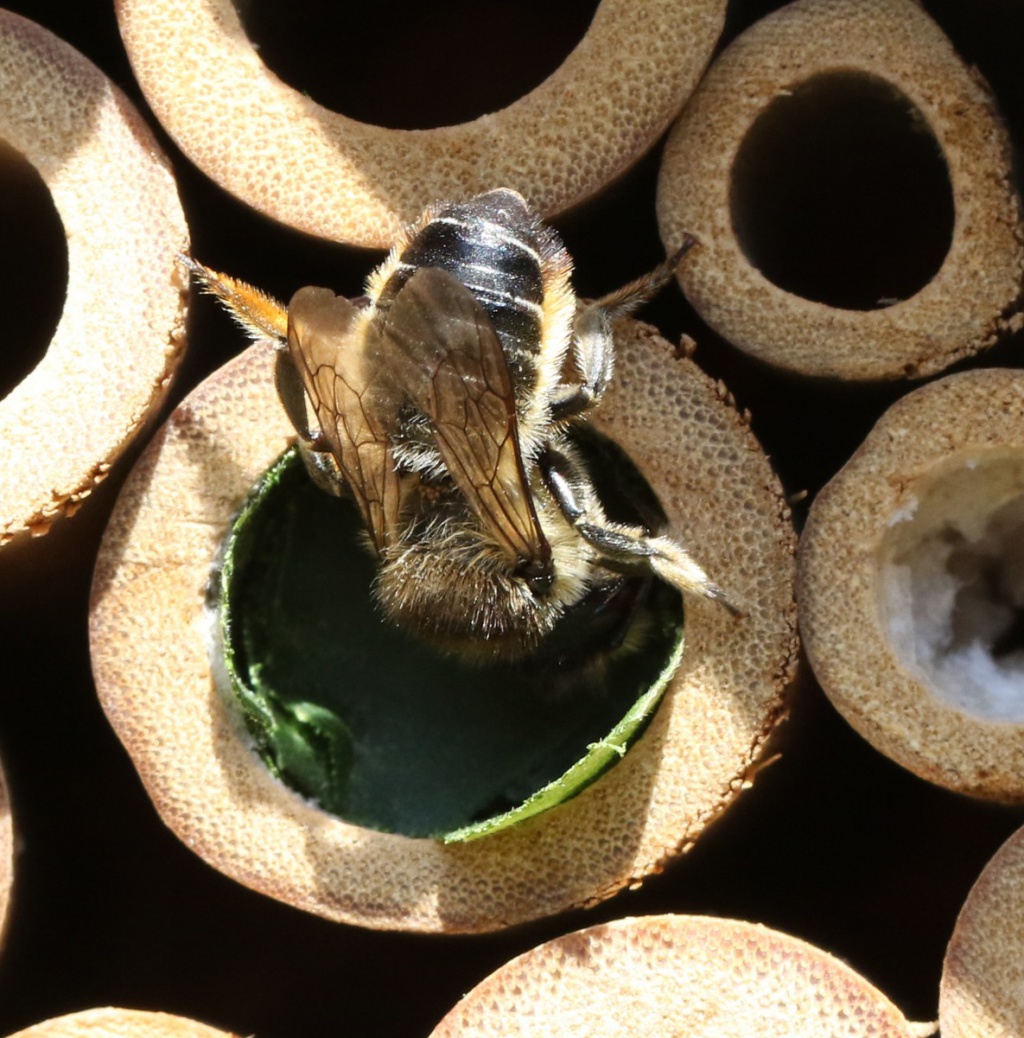
Nests in holes in various forms of timber either in standing deadwood or fence posts.
An uncommon species more frequently found in the south-east of mainland Britain. It has a more scattered distribution further north, seemingly reaching its extremity in north Yorkshire and two recent records from Staffordshire. There is also a cluster of records from south Wales though apparently absent from north Wales.
Infrequent in Leicestershire and Rutland.
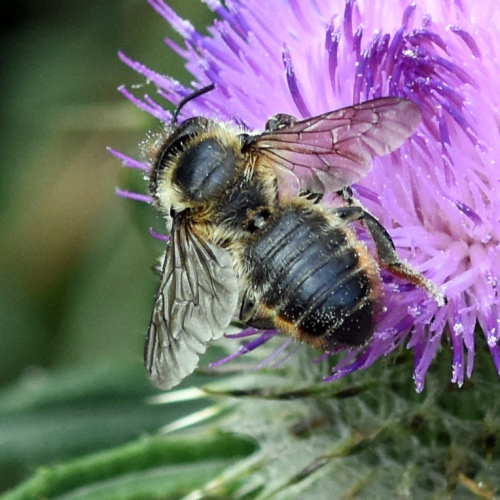 Andy's Rutland
Empingham garden
03 August 2024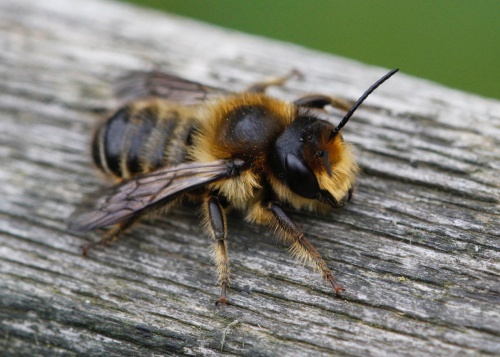 Matthew Berriman
Stocken
17 June 2019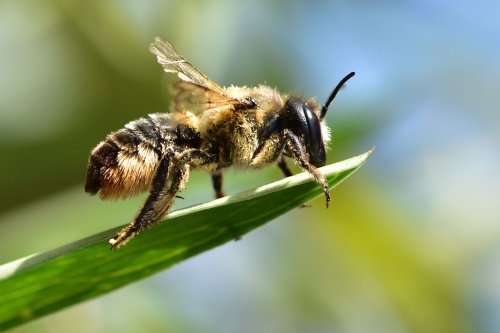 Andy's Rutland
Empingham garden
12 September 2019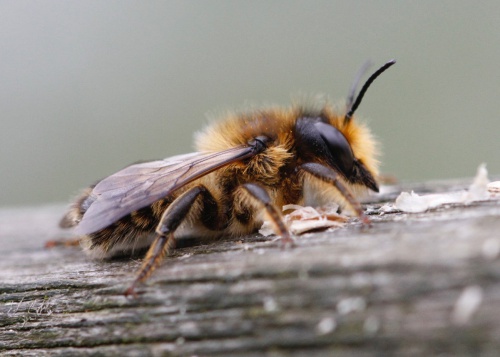 Matthew Berriman
Stocken
17 June 2019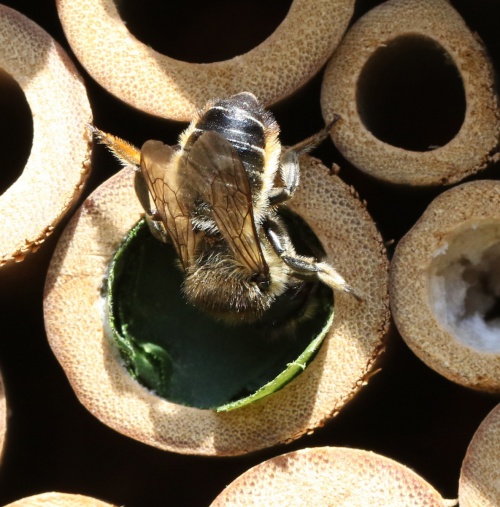 Jonesboy1
Broughton Astley
01 July 2018
Leicestershire & Rutland Map
Enter a town or village to see local records
MAP KEY:
Yellow squares = NBN records (all known data)
Coloured circles = NatureSpot records: 2025+ | 2020-2024 | pre-2020
UK Map
Species profile
- Common names
- Wood-Carving Leaf-Cutter Bee, Wood-carving Leafcutter Bee
- Species group:
- insect - hymenopteran
- Kingdom:
- Animalia
- Order:
- Hymenoptera
- Family:
- Megachilidae
- Records on NatureSpot:
- 15
- First record:
- 09/08/2015 (Frankum, Maggie)
- Last record:
- 10/07/2025 (Dejardin, Andrew)
Total records by month
% of records within its species group
10km squares with records
The latest images and records displayed below include those awaiting verification checks so we cannot guarantee that every identification is correct. Once accepted, the record displays a green tick.
In the Latest Records section, click on the header to sort A-Z, and again to sort Z-A. Use the header boxes to filter the list.
Latest images
Latest records
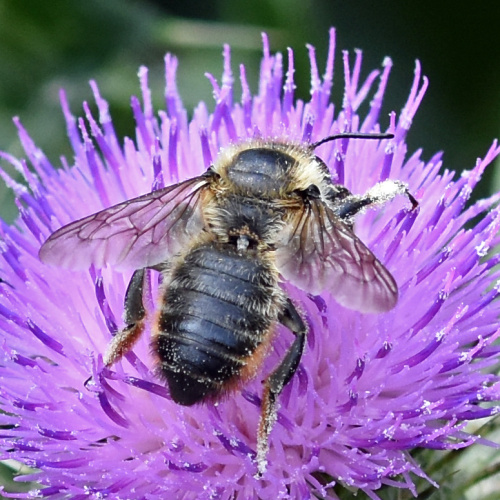 Andy's Rutland
Empingham garden
03 August 2024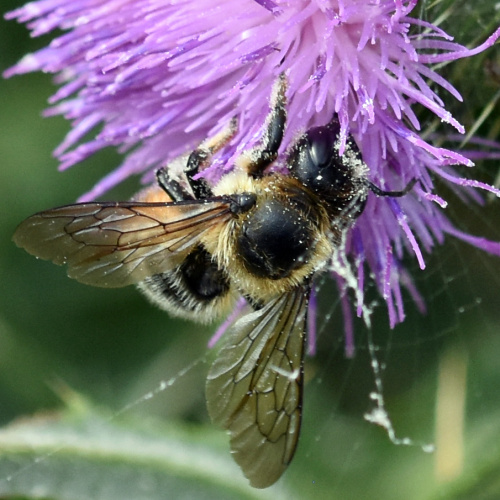 Andy's Rutland
Empingham garden
03 August 2024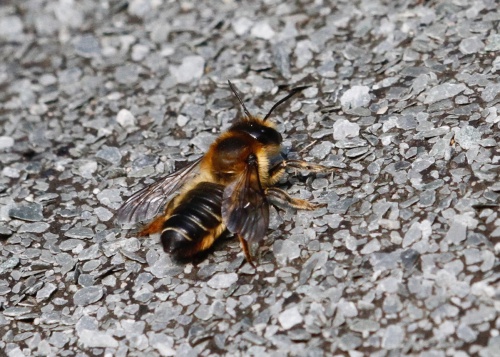 Matthew Berriman
Stocken
24 June 2019