

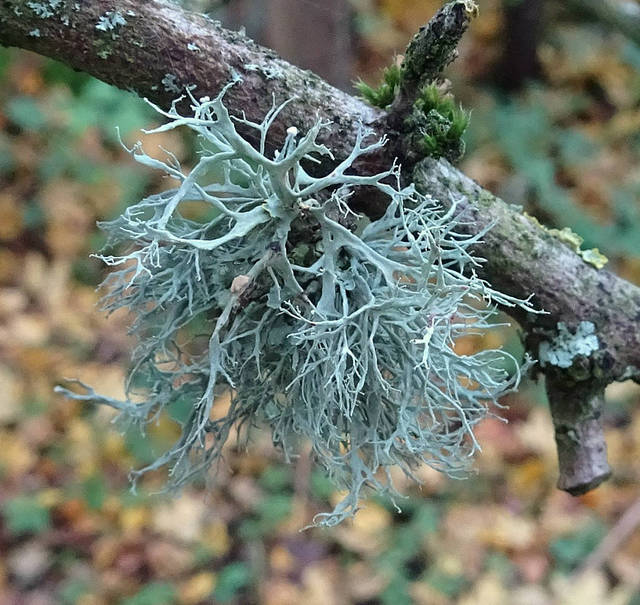
The NatureSpot Photo of the Month for November is this image of Cartilage Lichen, Ramalina farinacea, taken by NatureSpot contributor Hazel Graves. Read more...
Although it's possible to record lichens all year round, the number of lichen records NatureSpot receives goes up in winter when there are less ... distractions around. The total was helped this month by a remarkably successful mini-bioblitz at Peckleton Churchyard. Lichens are remarkable organisms which are not plants, algae, or fungi, but a unique partnership between these three kingdoms of life. In this symbiotic relationship, the photosynthetic algae or cyanobacteria provide the lichen with energy in the form of sugars, while the fungus provides the support and structure necessary for survival. This intricate alliance allows lichens to thrive in harsh environments that would be inhospitable to either of their individual partners. Lichens come in a remarkable variety of forms, ranging from crusts clinging to stone to leaf-like structures resembling miniature trees.
Most lichens are not easy to identify (many have been given a red rating, meaning that a photograph alone is not normally sufficient to be able to identify them to species level) but Cartilage Lichen is reasonably distinctive although there are similar species that it could be confused with. It's also quite common in Leicestershire and Rutland as it is quite tolerant to pollution. Lichens are an indicator of environmental health, many of them require very clean air to survive.
You don't need a fancy camera to take good photos - the best camera is the one you have with you, but read our Photography Help page: https://www.naturespot.org/photography
If you'd like to be a future NatureSpot Photo of the Month winner, submit your records! View all the nominated photos for November, plus winners and nominations from previous months, on our Photo of the Month page.