


Maple trees are generally easy to recognise by their lobed and pointed leaves (think of the Canadian national flag) - but how do you know which species they are? Whilst you may come across planted maples from anywhere in the world, there are a few species that are very commonly encountered and these are featured below. The London Plane isn't a maple but is included here as it has similar leaves.
Visit the Trees gallery on NatureSpot to see images of nearly all the trees recorded in Leicestershire and Rutland.

Field Maple
This is the only native maple in Britain. It is most commonly found as a shrub in hedgerows but if left to grow it will reach 20m.

- Small leaves with 3-5 lobes
- Untoothed (usually)
- Flowers greenish yellow in April-May
- 'Helicopter' seeds with horizontal wings

Sycamore
An introduced species but now widely naturalised. Can grow to 30m and live 400 years.
- Large leaves with 5-7 lobes
- Coarsely toothed
- Veins hairy underneath
- Leaf stalks red in young trees
- 'Helicopter' seeds held at right angles
- Bark smooth when young, becoming cracked with age

Norway Maple
Introduced in the 17th century, now naturalised. Grows to 25m.
- Leaves with 5 lobes
- Sharp points on each leaf lobe
- Leaf stalks ooze milky sap if squeezed
- 'Helicopter' seeds held at a slight angle
- Grey bark with fine ridges

London Plane
Not a maple but with leaves very similar to Norway Maple. It is as hybrid (between Oriental and American Plane) but widely planted in urban areas due to its tolerance of pollution.
- Leaves with 5 triangular lobes
- Lobes with pointed teeth
- Fruits are dangling, spiky balls (cherry-sized)
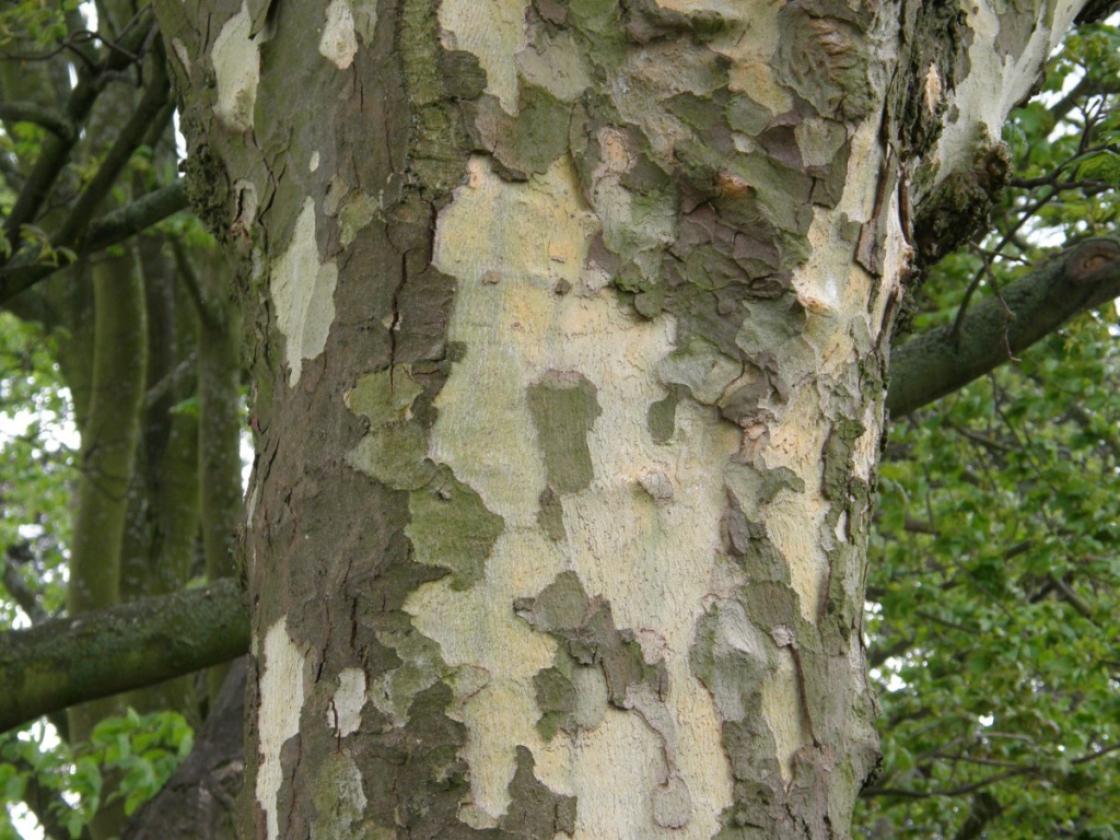
- Multi-coloured 'camouflage' bark - grey plates peel away to reveal creamy new bark
