

Eared Willow - Salix aurita
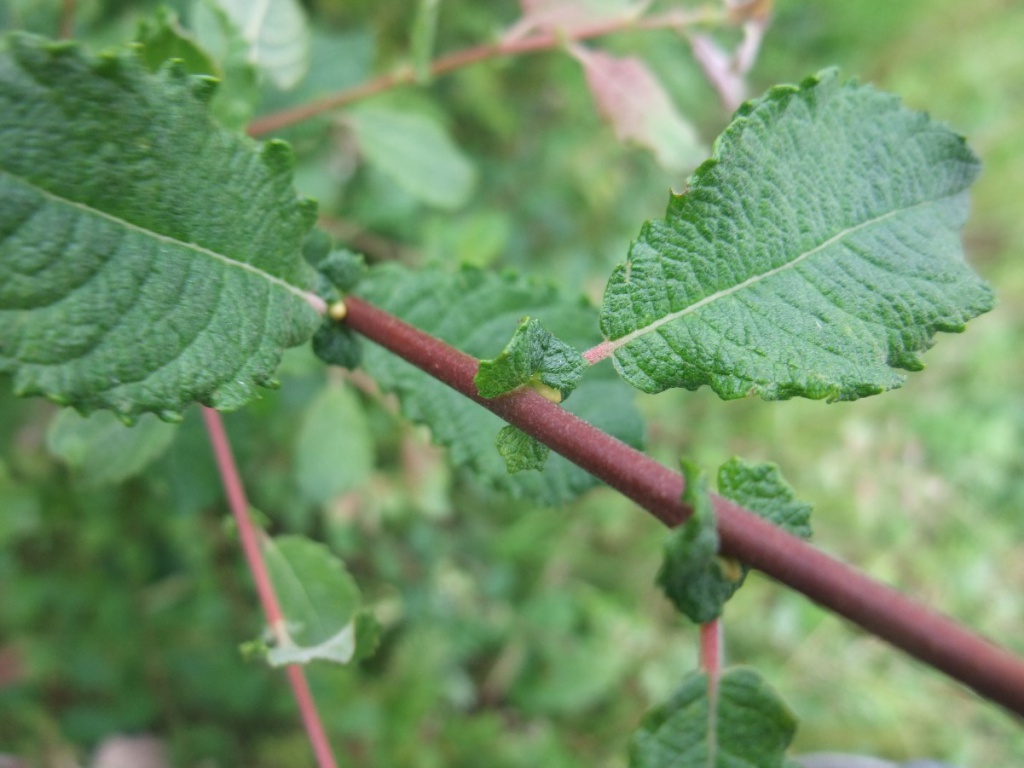
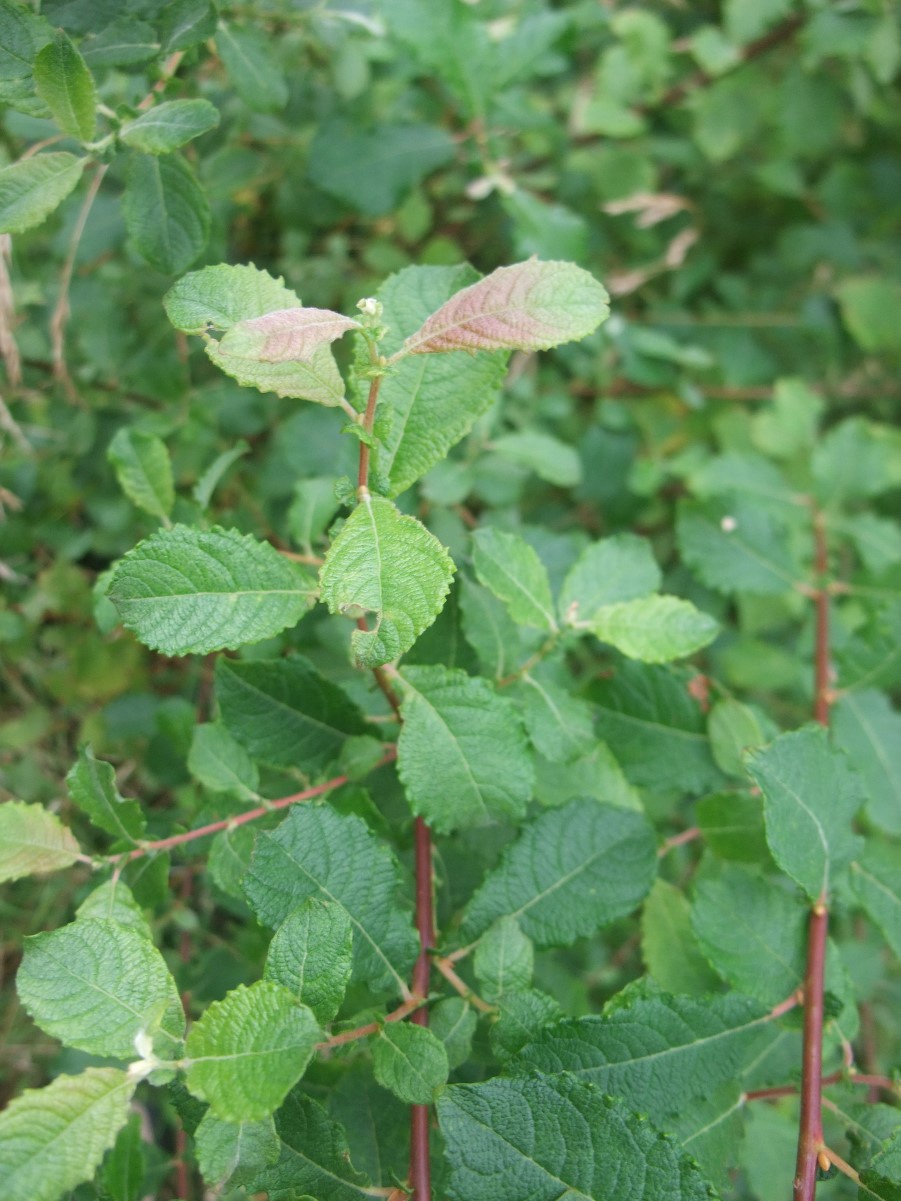
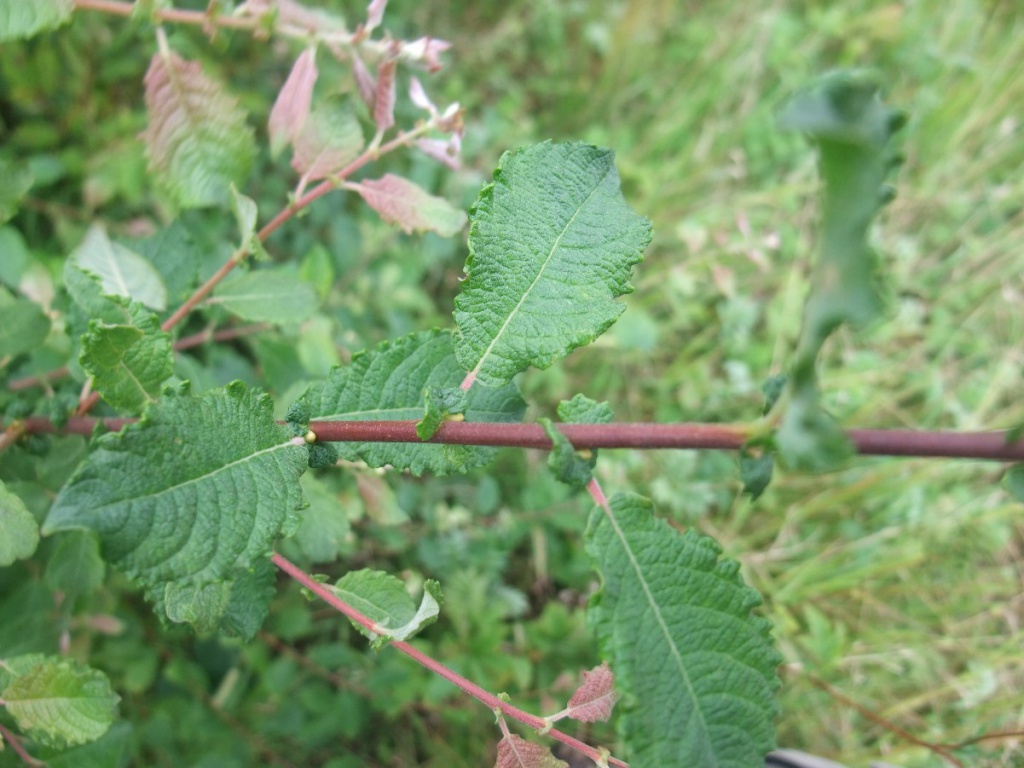
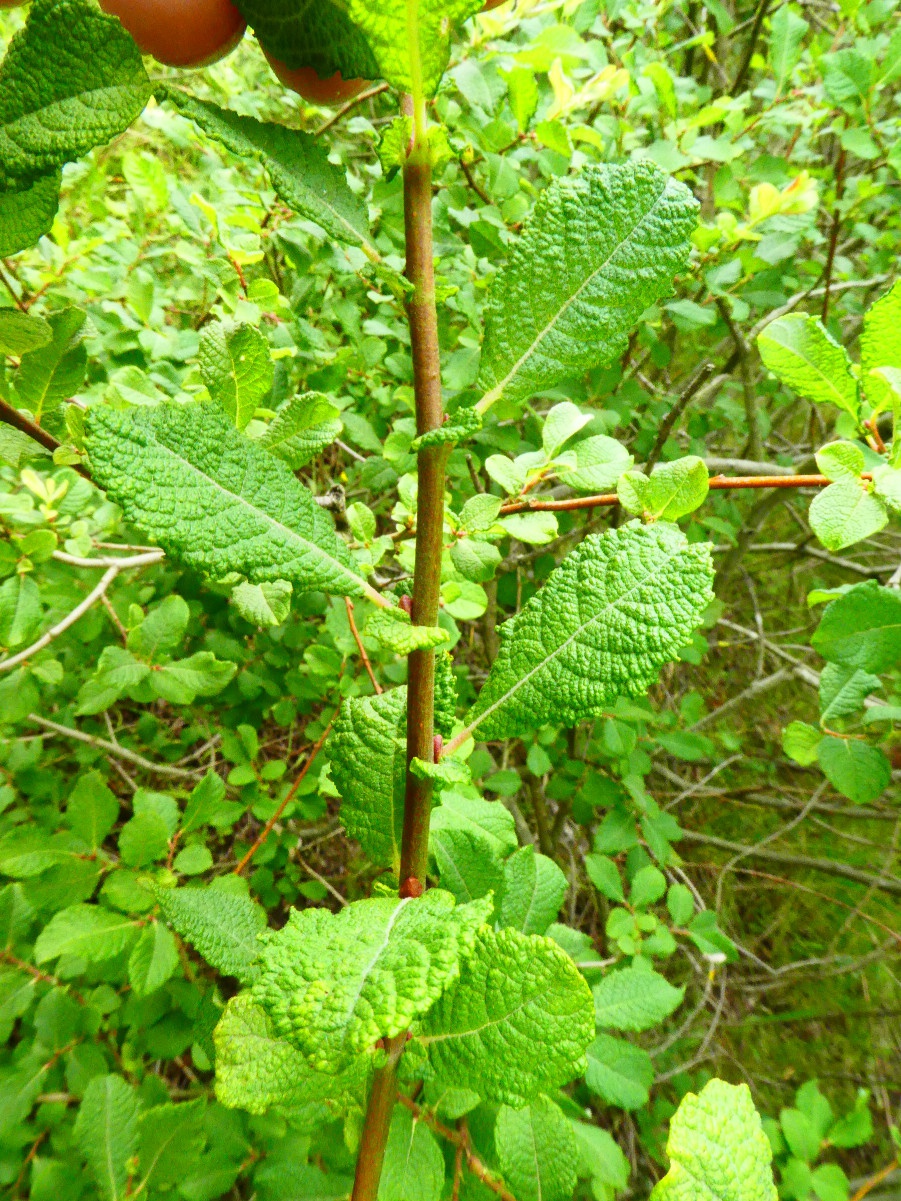
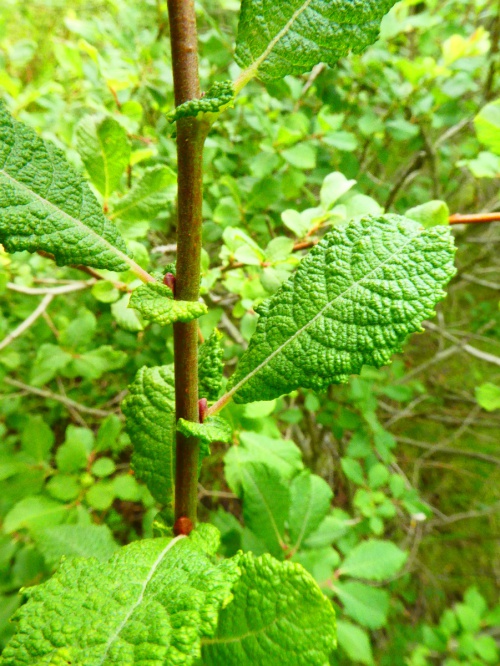
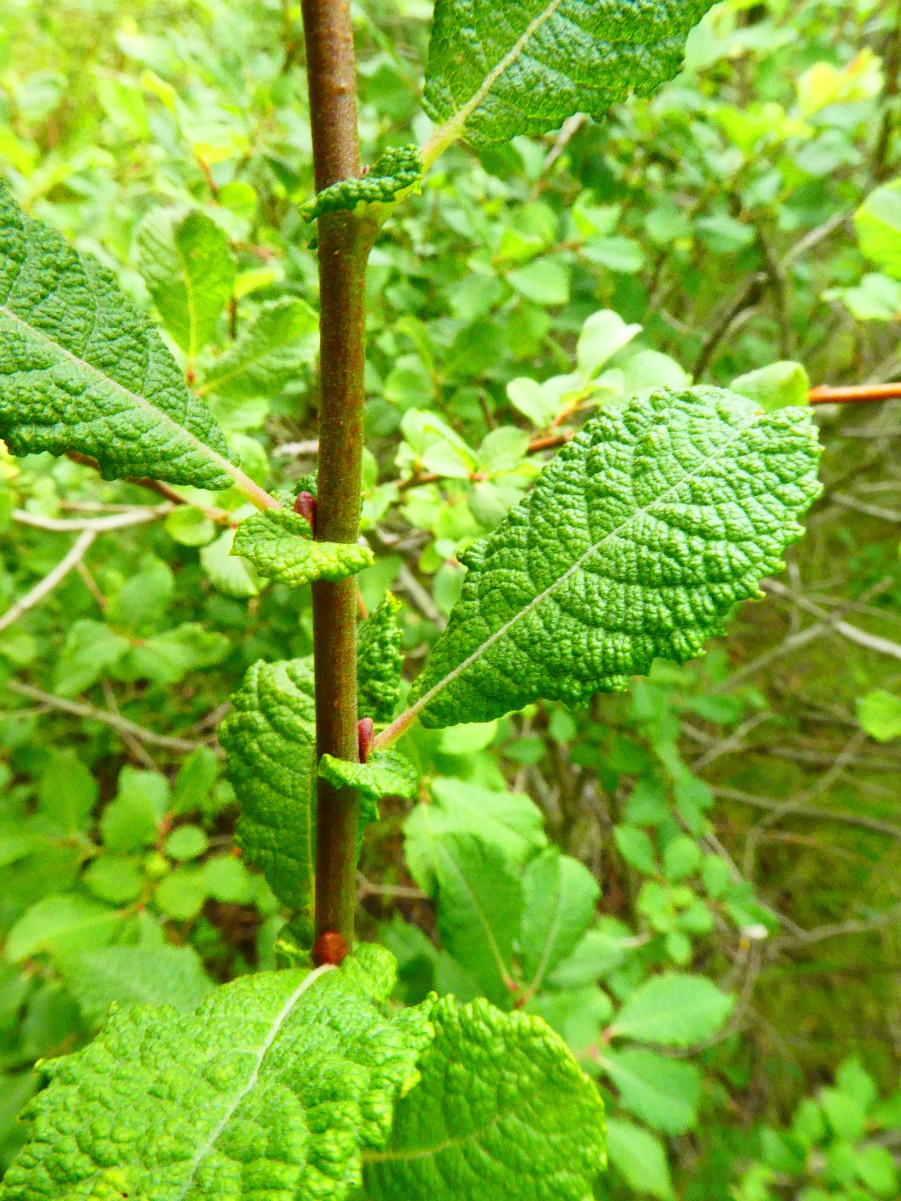
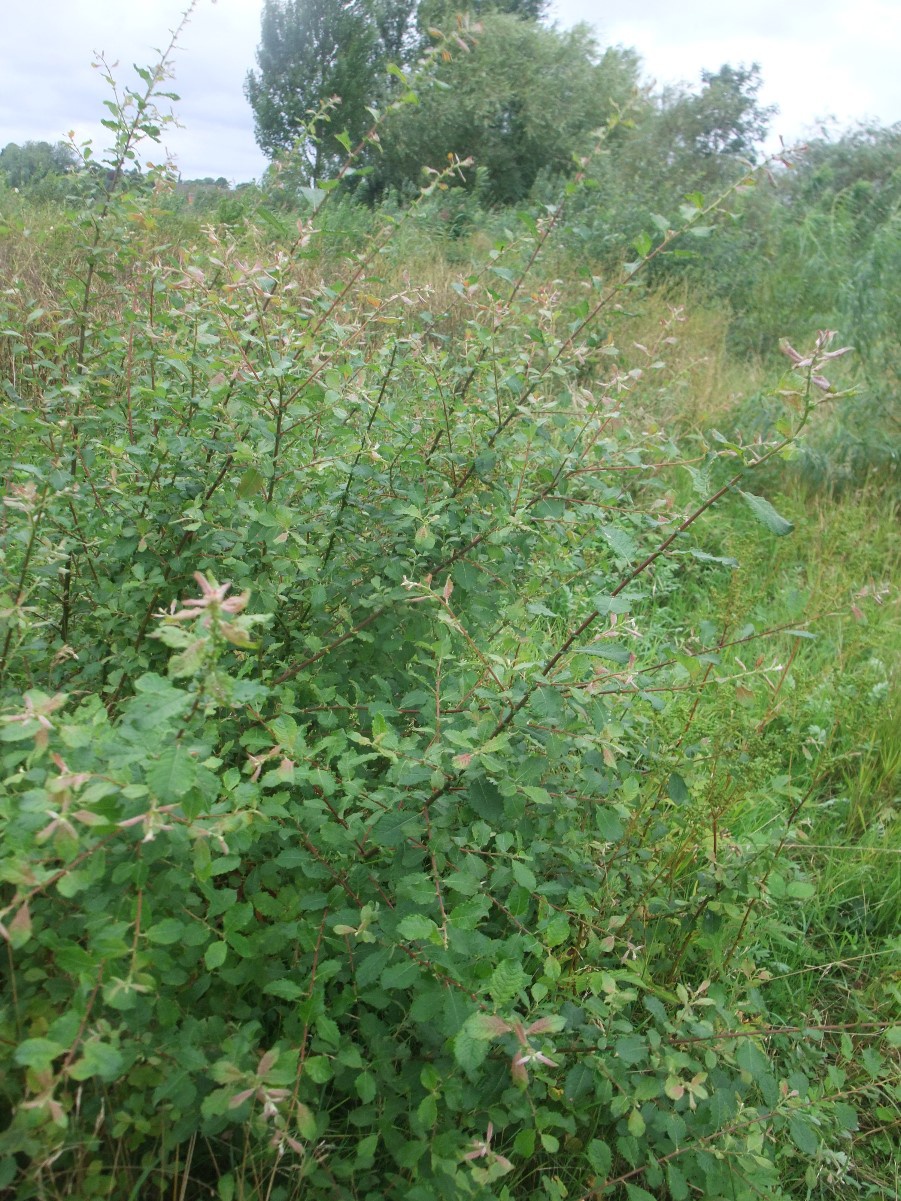
It is a shrub to 2.5 m in height, distinguished from the similar but slightly larger Salix cinerea by its reddish petioles and young twigs. It was named for its persistent kidney-shaped stipules along the shoots. Flowers are in the form of catkins with male and female flowers on separate plants.

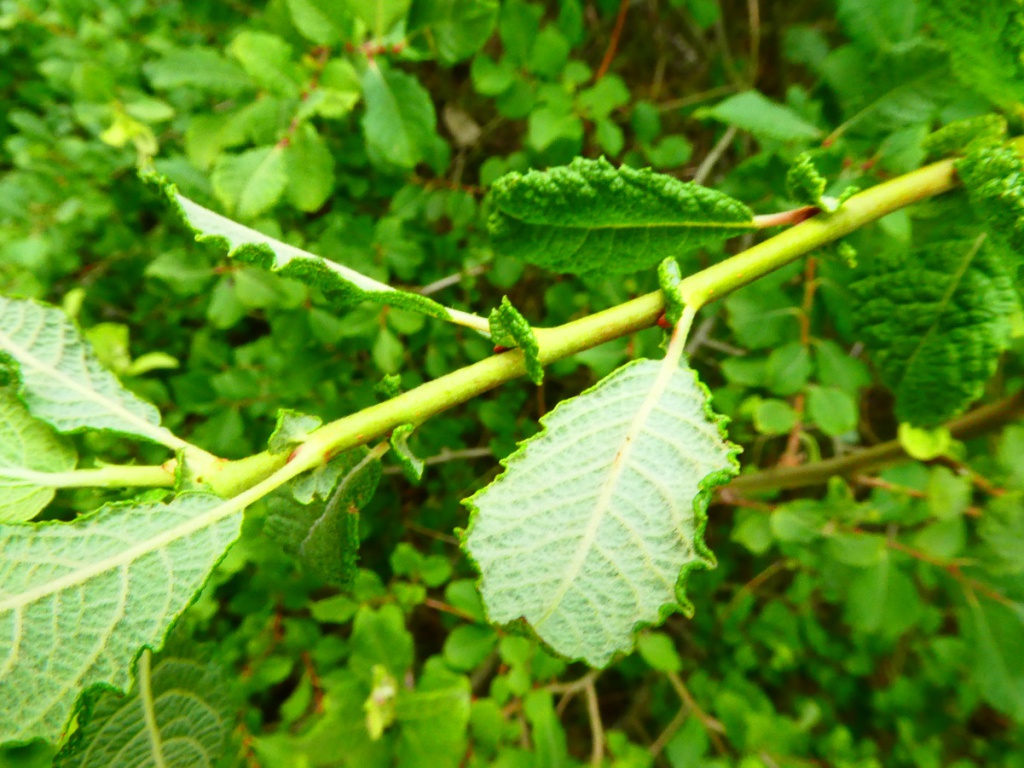
Photographs showing mature leaves and stipules (RPR)
Damper areas including woodland edge, scrub and hedgerows.
In flower during May and June.
Perennial.
Most common in northern and western Britain, more scattered elsewhere.
Scarce in Leicestershire and Rutland.
In the Flora of Leicestershire (Primavesi and Evans 1988) it was found in 10 of the 617 tetrads, but was not recorded in the Flora of Rutland (Messenger 1971).
It is listed on the current VC55 Rare Plant Register (Hall and Woodward 2022) as Locally Scarce (i.e. present in 4-10 sites)
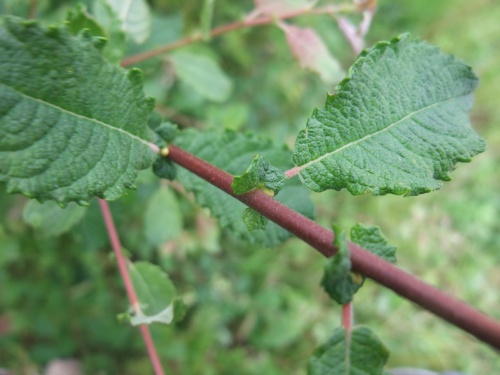 Geoffrey Hall
Watermead Country Park, South
22 August 2012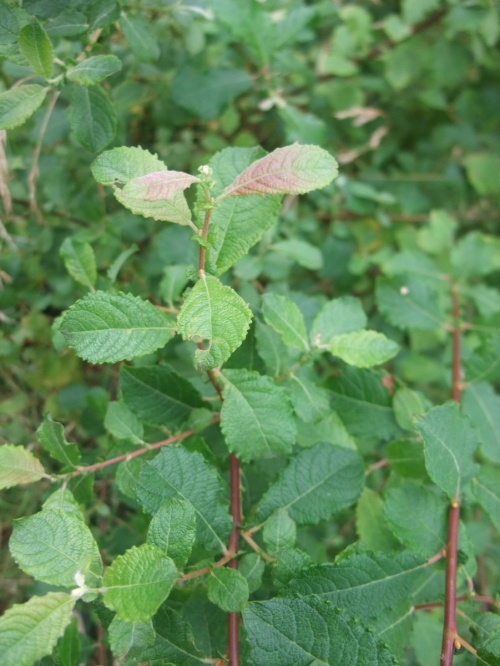 Geoffrey Hall
Watermead Country Park, South
22 August 2012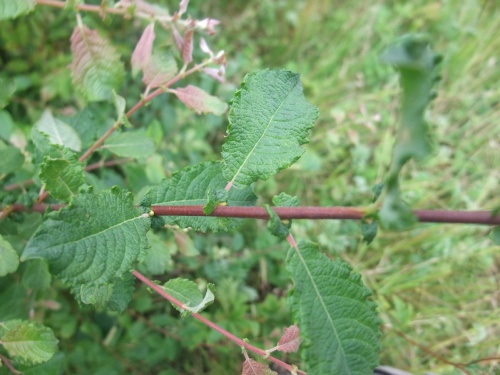 Geoffrey Hall
Watermead Country Park, South
22 August 2012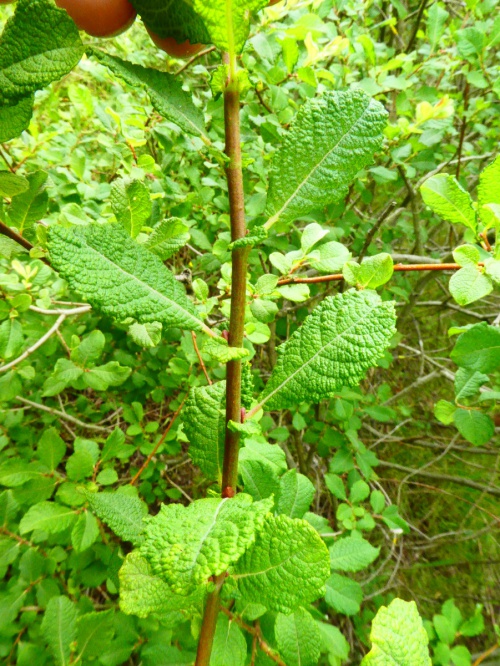 Melinda Bell
Albert Village, Lake
14 July 2020
ears at base of petioles
Leicestershire & Rutland Map
Enter a town or village to see local records
MAP KEY:
Yellow squares = NBN records (all known data)
Coloured circles = NatureSpot records: 2025+ | 2020-2024 | pre-2020
UK Map
Species profile
- Common names
- Eared Willow
- Species group:
- flowering plant
- Kingdom:
- Plantae
- Order:
- Malpighiales
- Family:
- Salicaceae
- Records on NatureSpot:
- 4
- First record:
- 22/08/2012 (Hall, Geoffrey)
- Last record:
- 08/07/2024 (Higgott, Mike)
Total records by month
% of records within its species group
10km squares with records
The latest images and records displayed below include those awaiting verification checks so we cannot guarantee that every identification is correct. Once accepted, the record displays a green tick.
In the Latest Records section, click on the header to sort A-Z, and again to sort Z-A. Use the header boxes to filter the list.
Latest images
Latest records
 Melinda Bell
Albert Village, Lake
14 July 2020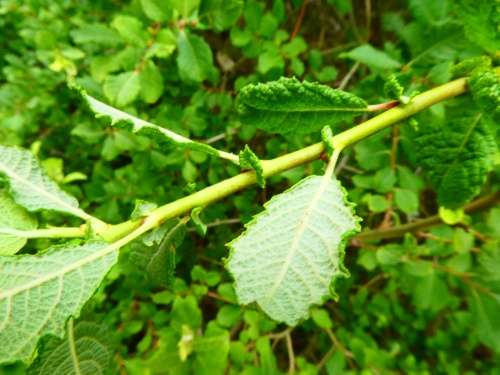 Melinda Bell
Albert Village, Lake
14 July 2020
wrinkly leaves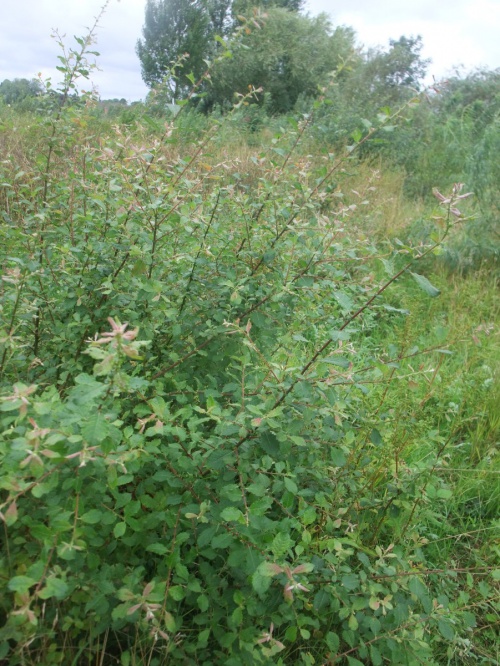 Geoffrey Hall
Watermead Country Park, South
22 August 2012

Rabdophaga salicis
The larva of the gall midge Rabdophaga salicis forms galls on certain Sallow and Willow species (Salix sp.) including Creeping Willow, Eared Willow, Grey Willow and Goat Willow. The gall is a smooth, globular or spindle-shaped swelling, usually on a twig or stem, sometimes several together and sometimes coalescing. The galls contain several larvae or pupae in separate chambers. The galls are usually at least 5mm wide and the larvae feed on the pith inside the gall. The gall occasionally occurs on the petiole, midrib, or side veins of a leaf.
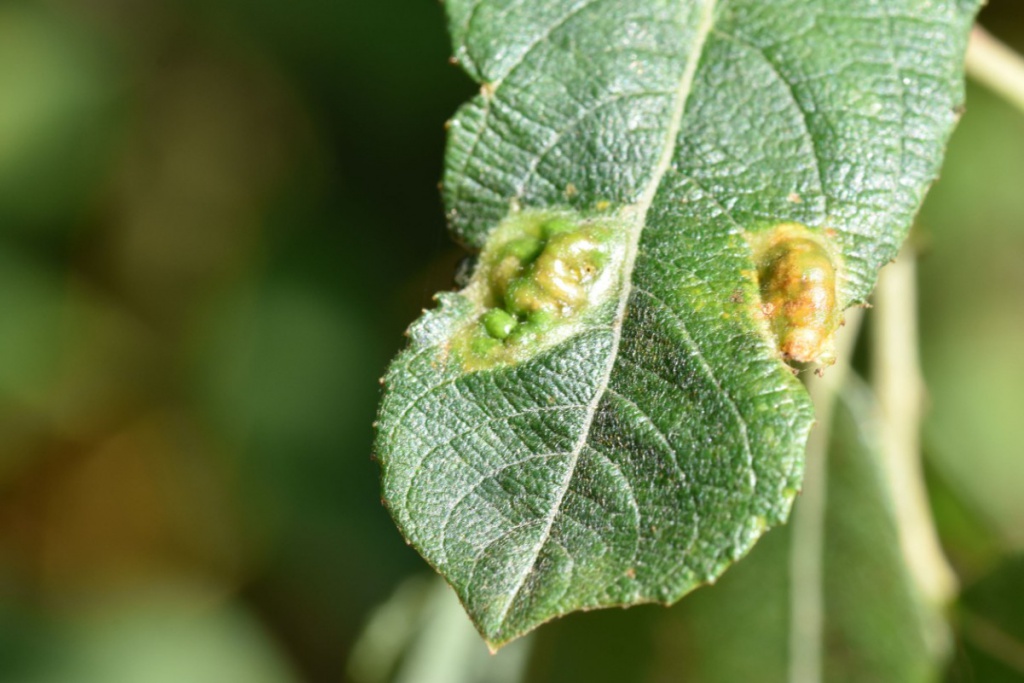
Euura bergmanni
The larva of the sawfly Euura bridgmanii causes a gall to form on broad-leaved species in the willow family, including Goat Willow, Grey Willow and Eared Willow. The galls protrude from both sides of the leaf, and are often reddish or purplish; they usually do not touch the midrib.
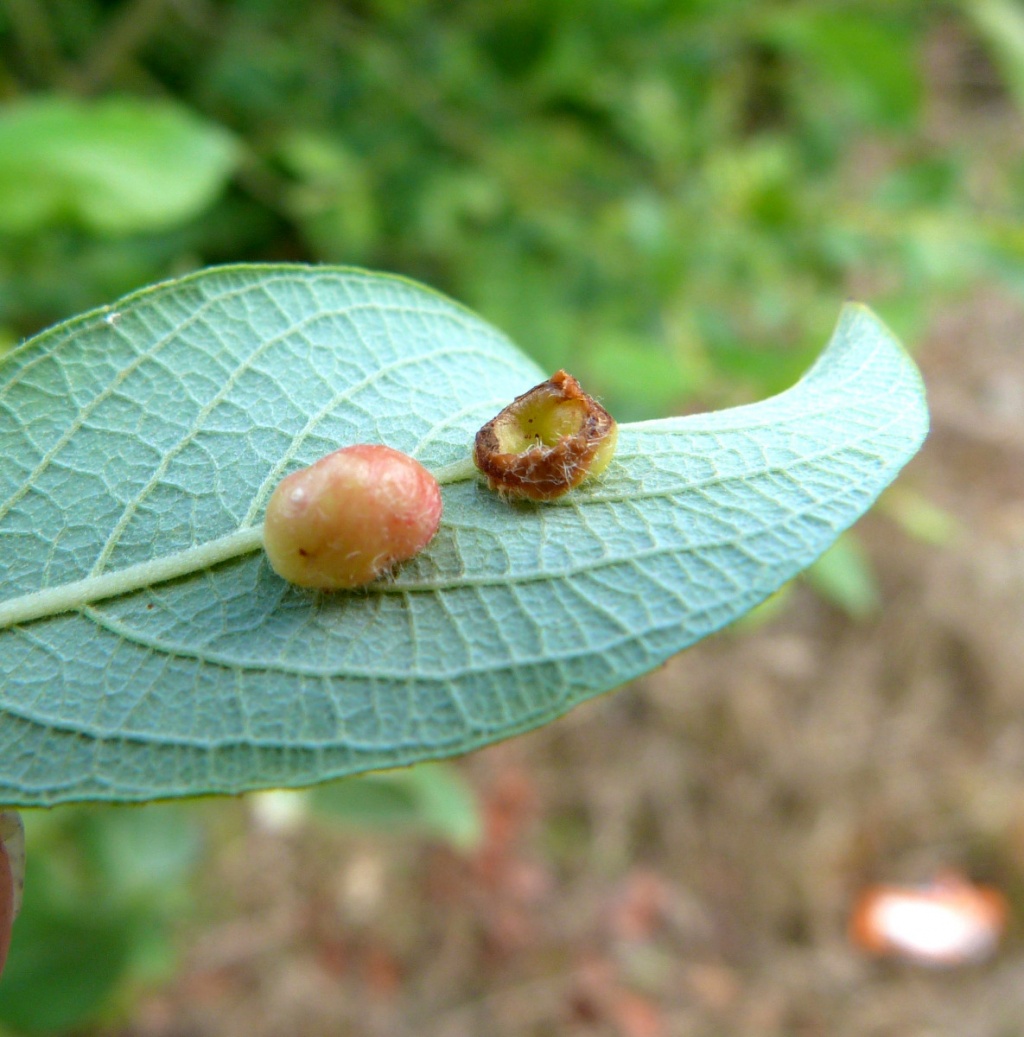
Willow Gall Sawfly
The larva of the Willow Gall Sawfly (Euura pedunculi) causes a gall on Goat Willow, Grey Willow and Eared Willow. The gall is generally pea-shaped, starting green but becoming red as it matures. It is hairy (sometimes very hairy, or sparsely so) and only found on the underside of the leaf; there may be a slight mark on the upperside.
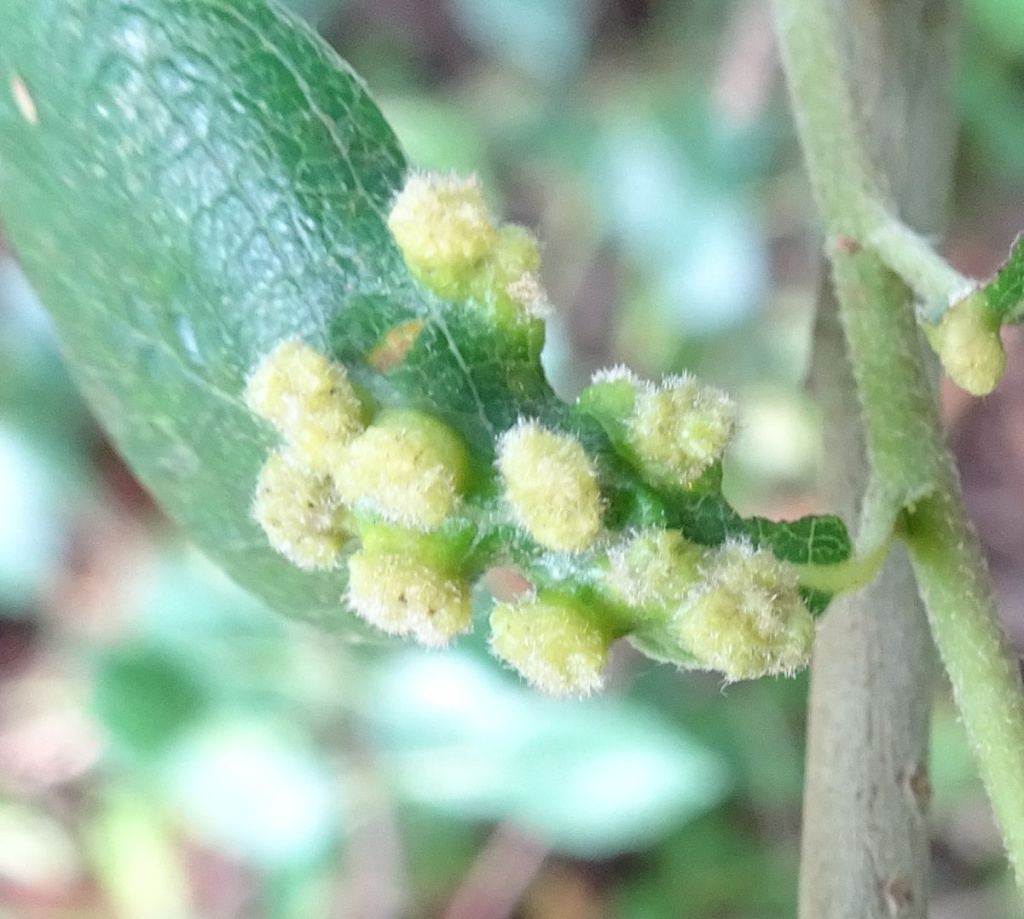
Aceria iteina
The gall mite Aceria iteina causes galls to form on the leaves of Grey Willow, Goat Willow and Eared Willow. The galls may be hairy in appearance, 2 to 4 mm tall and narrower at the base looking rather toadstool-like.
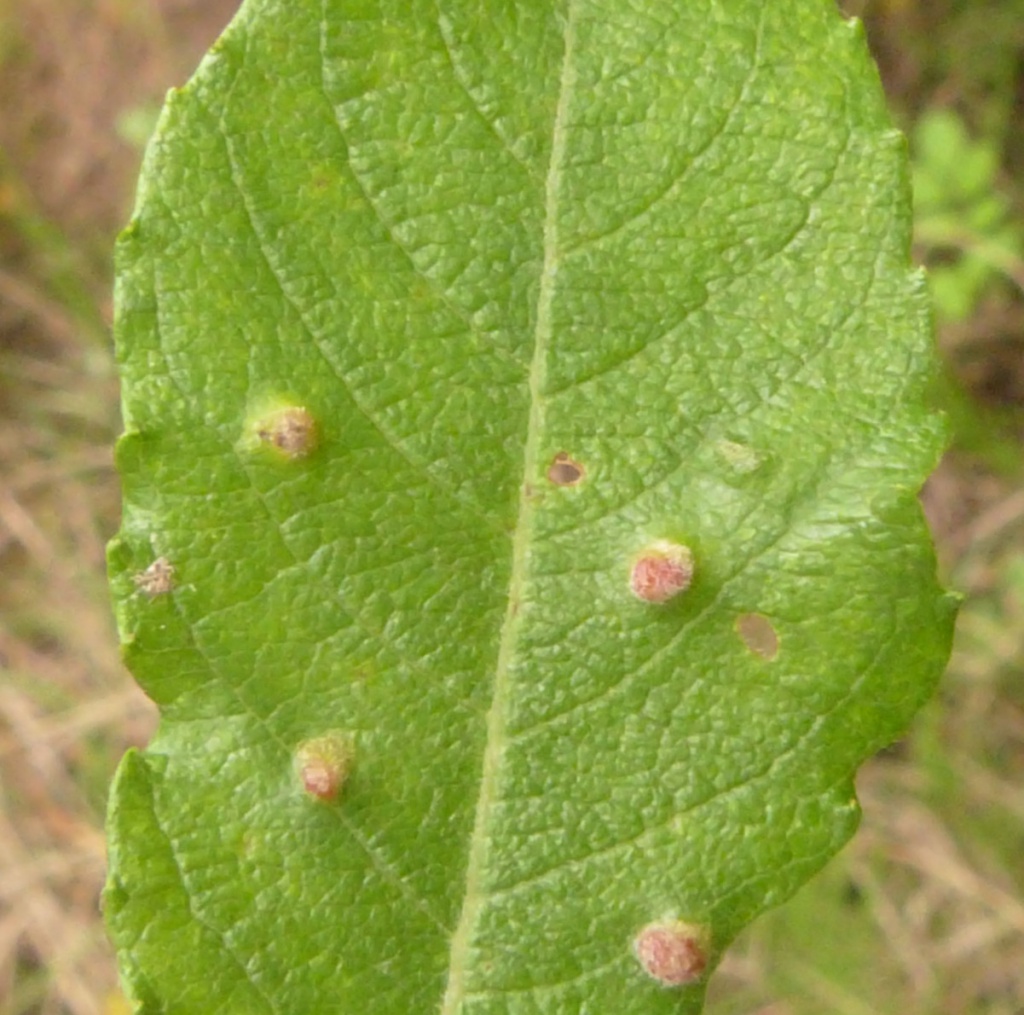
Aculus laevis
Aculus laevis is a gall mite that causes slightly hairy, more or less spherical galls to form on the leaves of sallows. The galls are 1 to 2 mm high and firmly attached to the leaves; the hairs protrude through the opening on underside. The galls may be on the leaf margin.
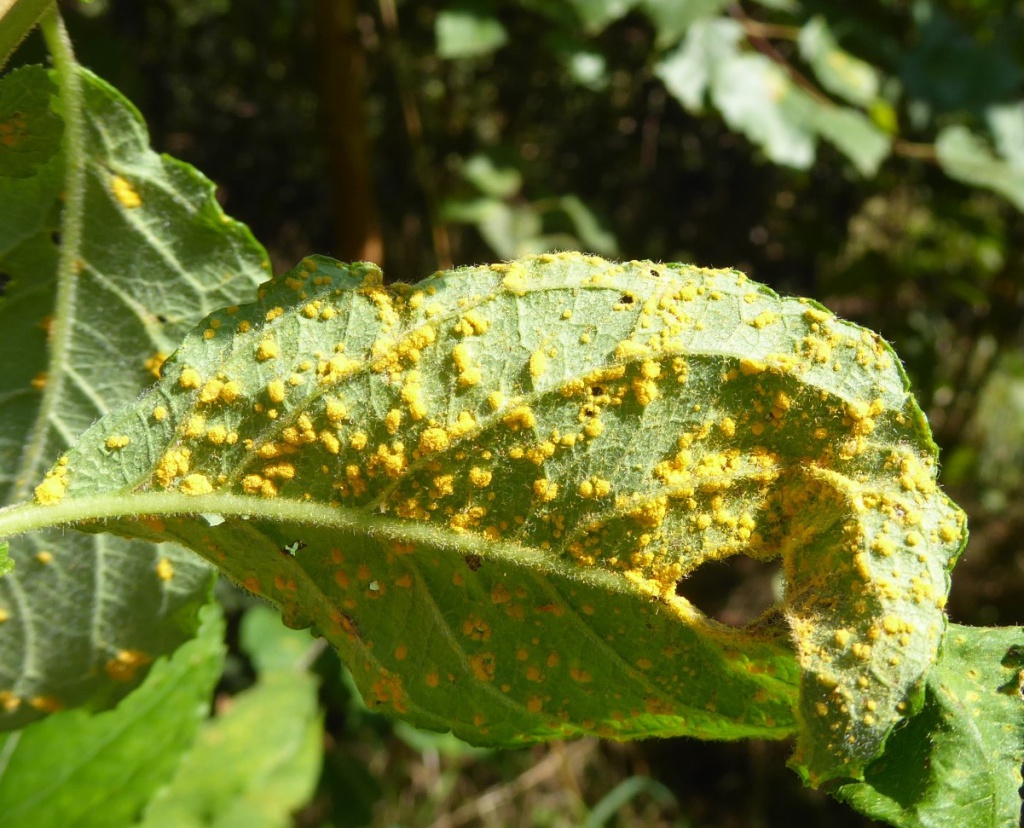
Melampsora caprearum
The rust fungus Melampsora caprearum affects various willows such as Goat Willow, Grey Willow and Eared Willow. The leaf blade or veins become distorted with irregular thickened spots bearing orange-yellow uredinia and later on, telia.