

Blue Tits - breeding success
Well-known Thurlaston resident, Malcolm Tarrant, has been following the progress of a clutch of Blue Tit eggs in his garden. The nest box is fitted with a camera, allowing the development of the birds to be monitored without interference (it is illegal to interfere in any way with nesting birds, but this does not apply to nest box cameras installed before nesting commences).
The female builds the nest over a period of one to two weeks, using mostly moss lined with soft feathers. She incubates the eggs on her own whilst the male defends the nest and surrounding territory from other Blue Tits.
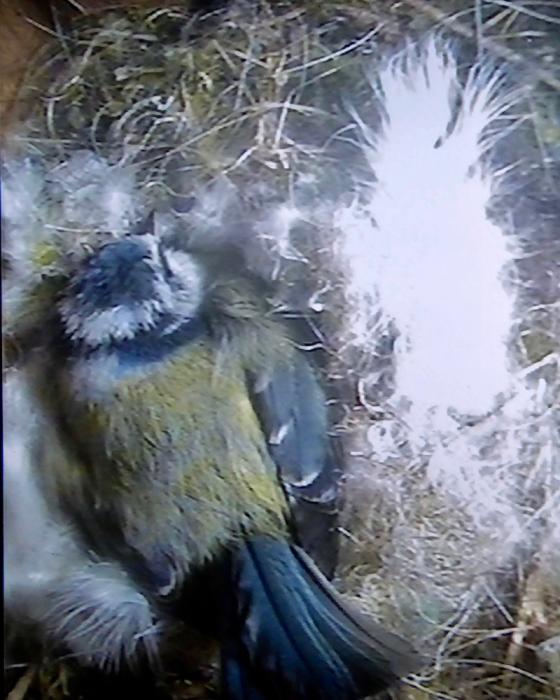
Eggs are laid at the rate of one a day, usually in the morning, until the clutch of 8 - 12 eggs is completed (there are 11 eggs in this nest). The female starts incubating the day before the last egg is laid and she continues to incubate for around two weeks. She will leave the eggs regularly to find food, although the male may bring her some choice items.
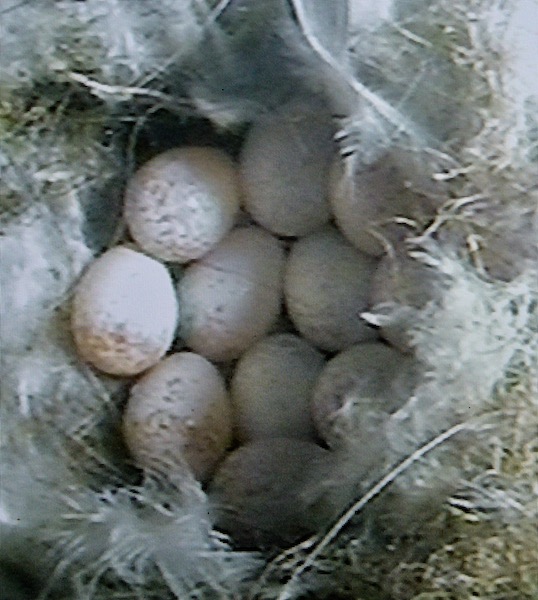
The eggs started to hatch on May 5th and the blind, naked chicks need the female to brood them often to keep them warm. The parents are kept busy providing around 100 caterpillars each day for each chick - a difficult task, particularly during cool or wet weather.
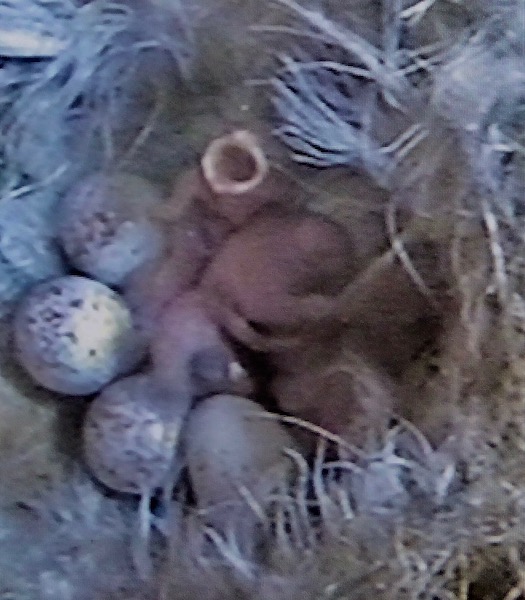
Nine of the eggs had hatched by May 8th - this is not unusual as most broods contain a number of infertile eggs. Only eight were apparently being fed. When food is in short supply, the parent birds usually feed the most active chicks, which often results in only 4 or 5 of the brood surviving until fledging. The cold weather last spring resulted in 12% fewer blue tit fledgelings being produced, compared to the average over the previous 5 years. The consistent cold North-Easterly winds during the end of April and the start of May could well result in further losses from this nest.
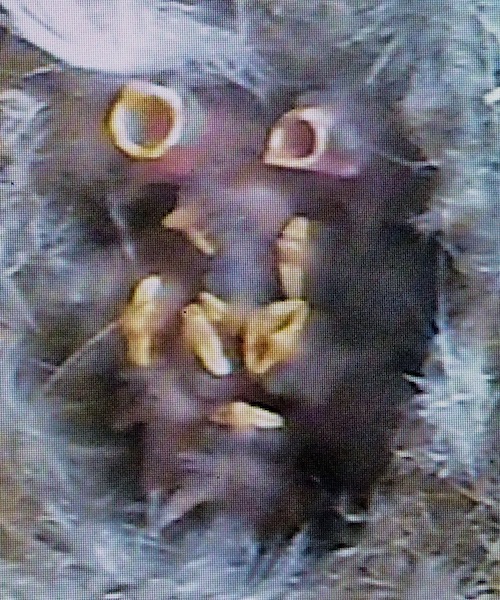
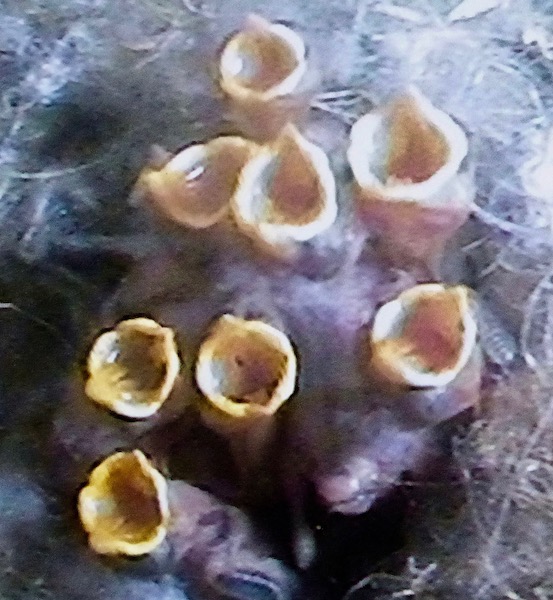
On May 10th, nine young were still visible but showing a tendency to escape from the nest.
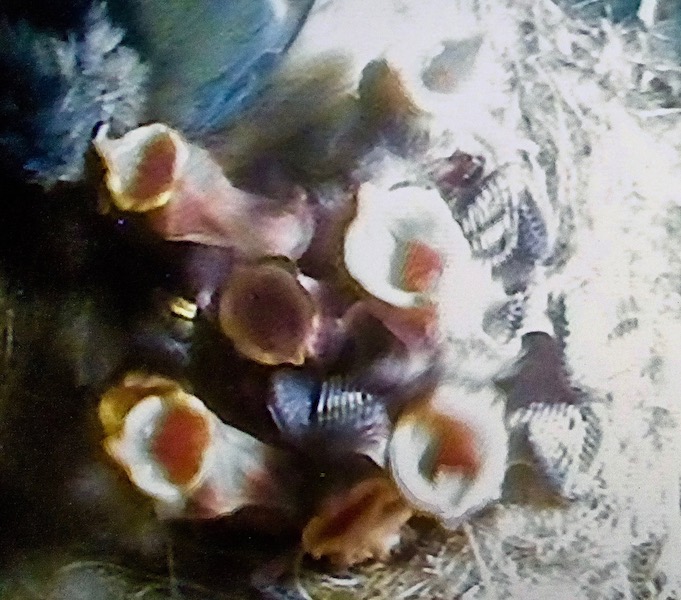
May 12th and still all nine are surviving. You can see in this picture the red gape in many of the chicks. This red colour is to attract the attention of the adults at feeding time and it has been shown that the chicks with the brightest gape colour are the fittest. To get the attention of the adult, the chicks will extend their necks, call loudly and jostle their siblings, with the loudest and most colourful getting the lion's share of the food.
Unfortunately, due to Malcolm going on holiday, we didn't find out how many of the young birds fledged. Perhaps next year......