


Human buildings offer shelter, warmth and food that can provide an attractive habitat for some species. Some wildlife species in this country are dependent on human structures and not found in the wider environment, whilst others simply take occasional advantage of the cover provided.
Visit the NatureSpot galleries to see photos of all Leicestershire and Rutland wildlife. Click on any header below to view the NatureSpot species page.

Varied Carpet Beetle
This small but colourful beetle can be a serious household pest. Its larvae, known as 'woolly bears' feed on natural fibres including carpets and clothing. Away from humans, the adult beetles often lay eggs in bird nests but they commonly get into houses and lay eggs under carpets or in cupboards. The larvae can take up to three years to develop into adults. Amongst other favoured larval foods are dead insects and spiders.
How to ID: 2-3mm. Mottled beige, yellow and black markings. Oval outline.
Where to see it: Often on window-ledges as the adults are attracted to light.
Similar species: There are other closely related species but these are relatively uncommon.

Cellar Spider
Also called the 'Daddy Long-legs Spider' it is a species normally found in warmer countries so is generally only found in houses and out-buildings. It is an effective predator of household pests, including other spiders. They are also cannibalistic - eating each other if food is scarce. Females carry their eggs in their mouths and have been seen feeding their young.
How to ID: Very long legs and a grey cylindrical body. Shakes violently if disturbed.
Where to see it: High corners of rooms, hanging upside down in a loose web.
Similar species: the smaller Psilochorus simoni can easily be mistaken for this species.

White-shouldered House-moth
The moth caterpillars feed on dry plant and animal debris. It has been accidentally introduced into many parts of the world with dried stored goods. It breeds at all times of the year so can be found in any month.
How to ID: 15-2mm. Slim and brown with a white head and white 'shoulders'.
Where to see it: Often rests on walls.
Similar species: None.

Small Black Ant
This is our commonest ant and found everywhere. Breeding males and females grow wings and engage in co-ordinated mass mating flights, triggered by hot, humid weather during July and August.
How to ID: Blackish-brown, around 4mm.
Where to see it: Common in gardens - under slabs and stones, in soil and lawns. Will enter houses if there is a crack, seeking food.
Similar species: Though there are other similar ants, they are not generally found in and around houses.

Silverfish
Silverfish come from an ancient lineage but are less common now due to central heating and drier houses. They are nocturnal, feeding anything organic: paper, sugar, coffee, hair, carpet, clothing and dandruff. However they can live for a year without eating.
How to ID: Up to 2cm, silvery grey. Torpedo-shaped with three bristles at the end of the body. Fish-like wriggling movement.
Where to see it: Damp places such as cellars and bathrooms.
Similar species: None.

Wood Mouse
This has largely replaced the House Mouse as the commonest species to turn up in houses, especially in Autumn. It is mainly a seed eater but also eats berries, invertebrates, worms, carrion and other similar food. It will live just about anywhere that offers food and shelter. It is traditionally found in fields, hedgerows, forests and grasslands but is also common in gardens.
How to ID: Sandy brown fur with a white belly and a tail longer than the body. Large eyes and ears.
Where to see it: Under floors and in wall and roof spaces.
Similar species: The House Mouse is grey-brown, has a shorter tail and lacks the pale belly.

Irish Yellow Slug
Common in gardens, this slug can be found in houses where it can find access and there is a damp corner to hide away in. Slug slime on the floor is most commonly from this species. It isn't a pest but rather feeds on decaying organic plant matter.
How to ID: To 12cm. Green-yellow with darker blotches.
Where to see it: Around buildings, under stones and in compost bins.
Similar species: None (the Yellow Slug is very similar but now considered extinct in Leicestershire and Rutland).
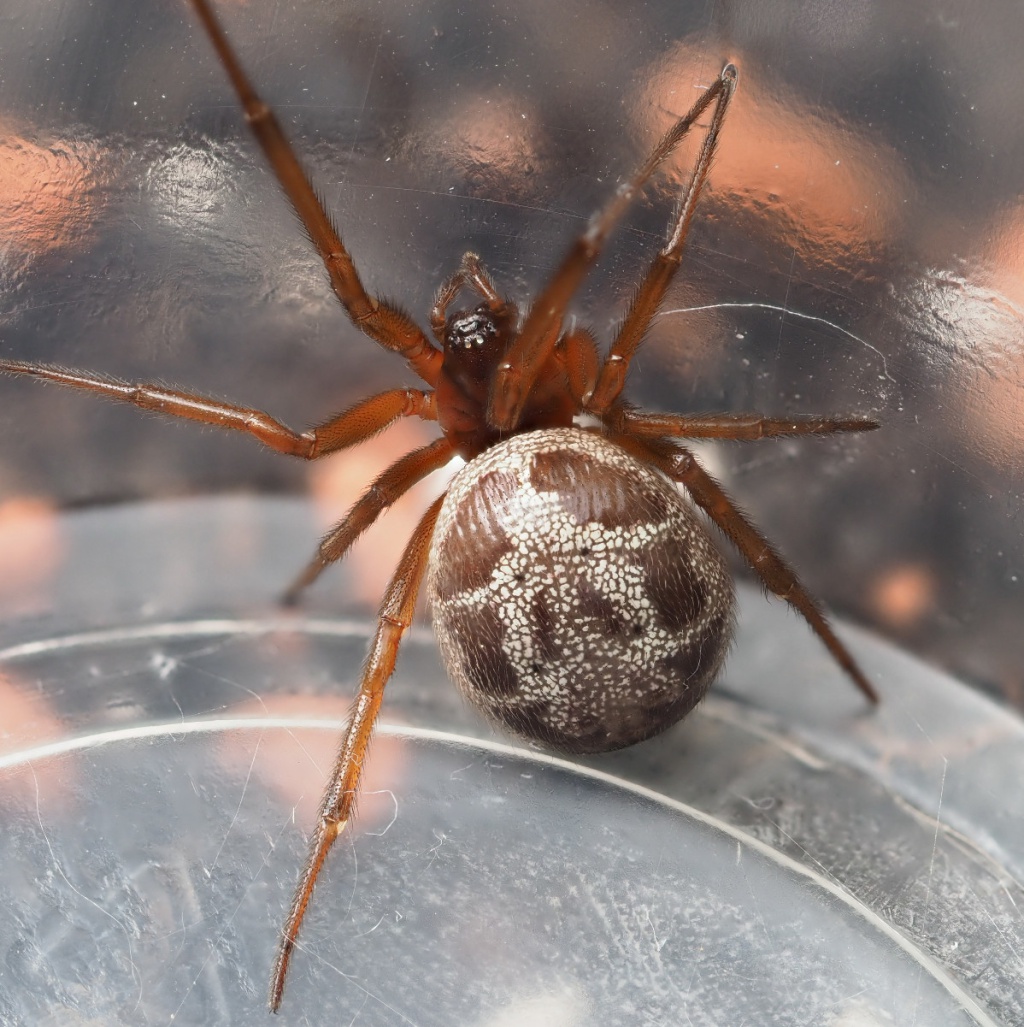
False Widow Spider
This spider is strongly associated with buildings. It builds a strong web with a tubular retreat, usually in a crack or hole. In spite of press hysteria, bites are rare and in most people little different to a bee sting.
How to ID: To 15mm. Red-brown with pale markings and with a cream band at the front of the abdomen.
Where to see it: In and around buildings such as houses, garages, sheds and commercial premises.
Similar species: Steatoda bipunctata and Steatoda grossa are smaller but with similar markings.

Pill Woodlouse
This woodlouse can withstand drier conditions than other species so is the main species to be sometimes found indoors. It feeds on dead organic matter, which it detects by means of taste and smell.
How to ID: Large (to 18mm). Slate grey sometimes with paler spots. Rolls into a ball when disturbed.
Where to see it: Damp areas with gaps in walls and floors. In gardens under logs and stones.
Similar species: The Southern Pill Woodlouse is rare in our area. Pill Millipedes have two pairs of legs per segment

Giant House-spider
These large but harmless spiders are most commonly seen in Autumn when males wander across floors looking for a mate. Females are around all year but more hidden, making large sheet webs with a funnel in which to hide. They can reputedly live for several years and survive for months without food or water.
How to ID: Body length to 18mm, leg span to 45mm. Brown with dark chevrons.
Where to see it: Indoors in undisturbed places. Males wander more openly in Autumn.
Similar species: There are other closely related spider species that are hard to distinguish.
