

Wild Angelica - Angelica sylvestris
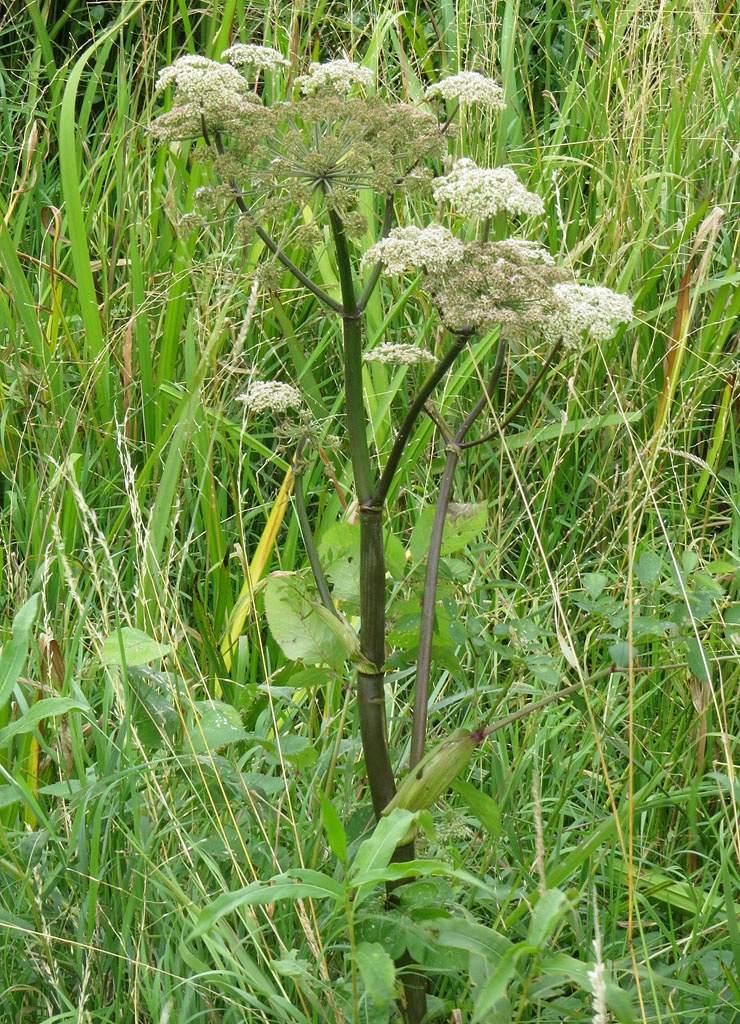
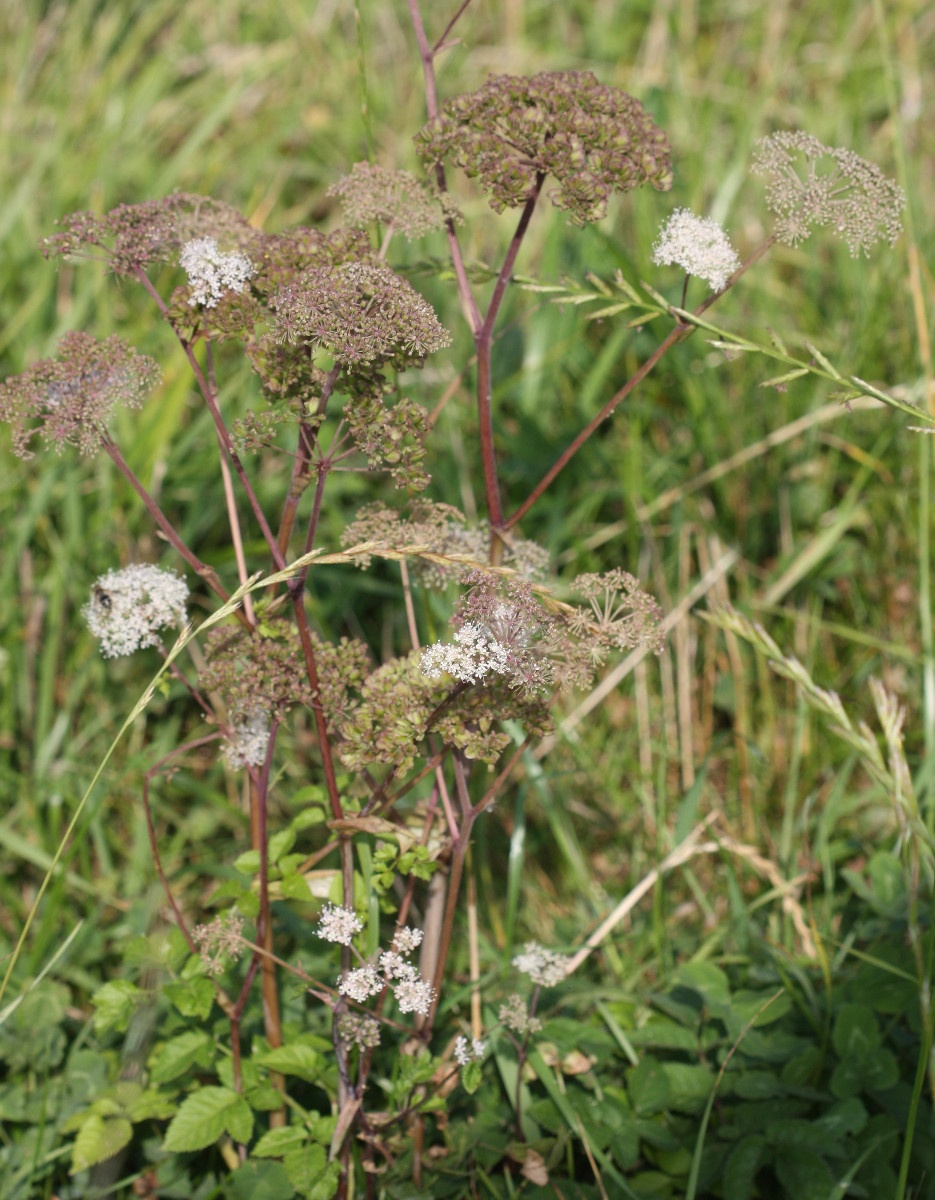
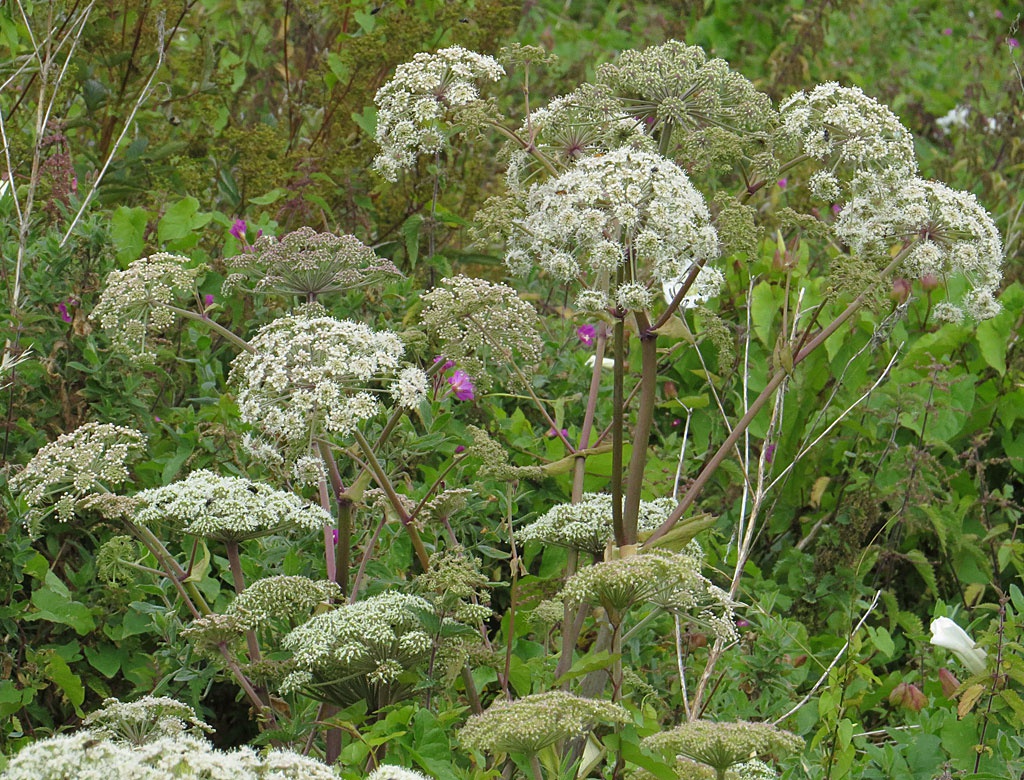
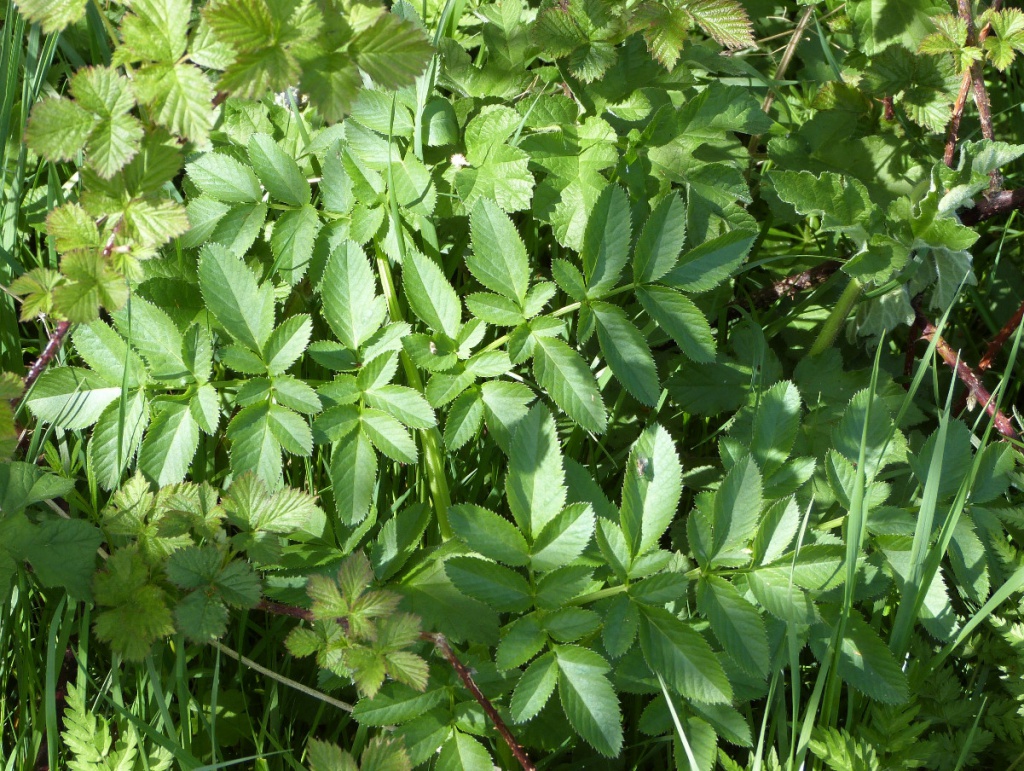
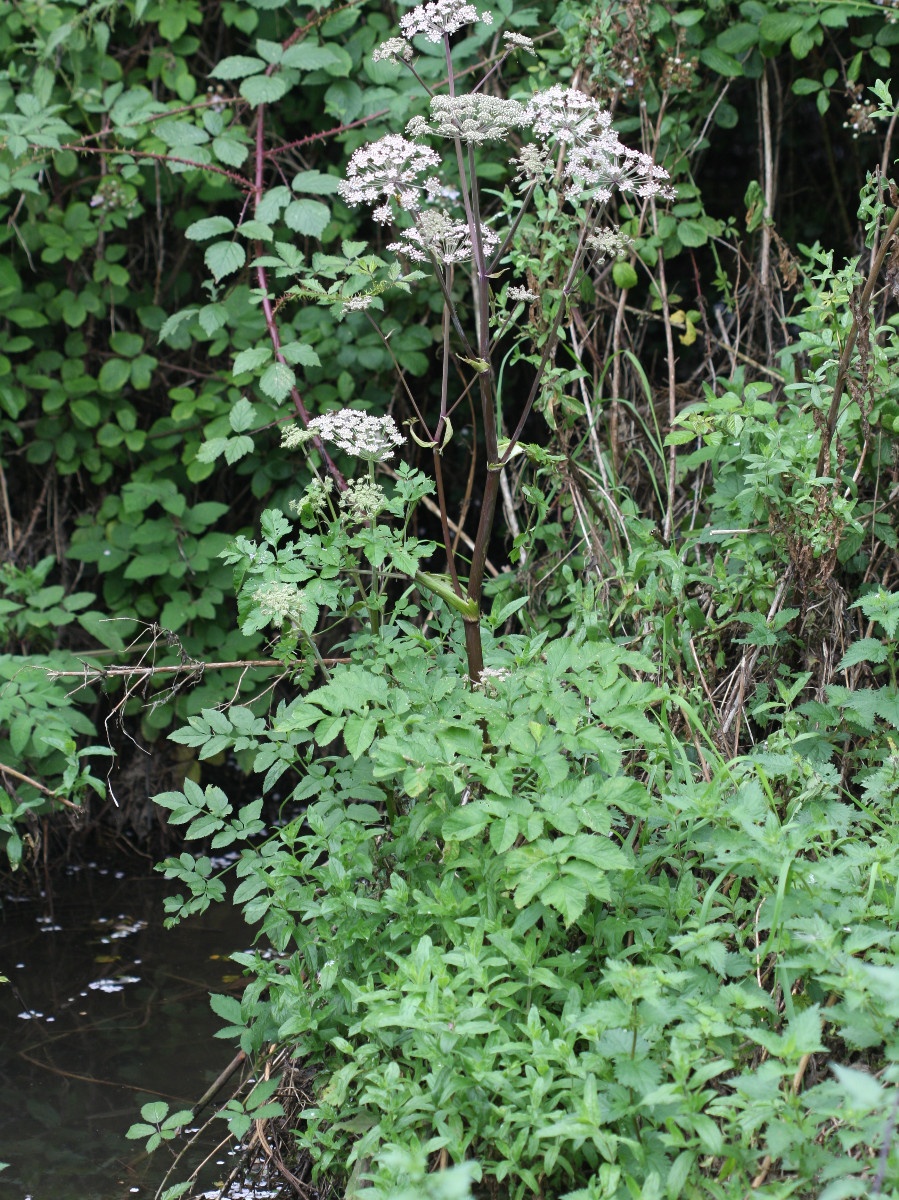
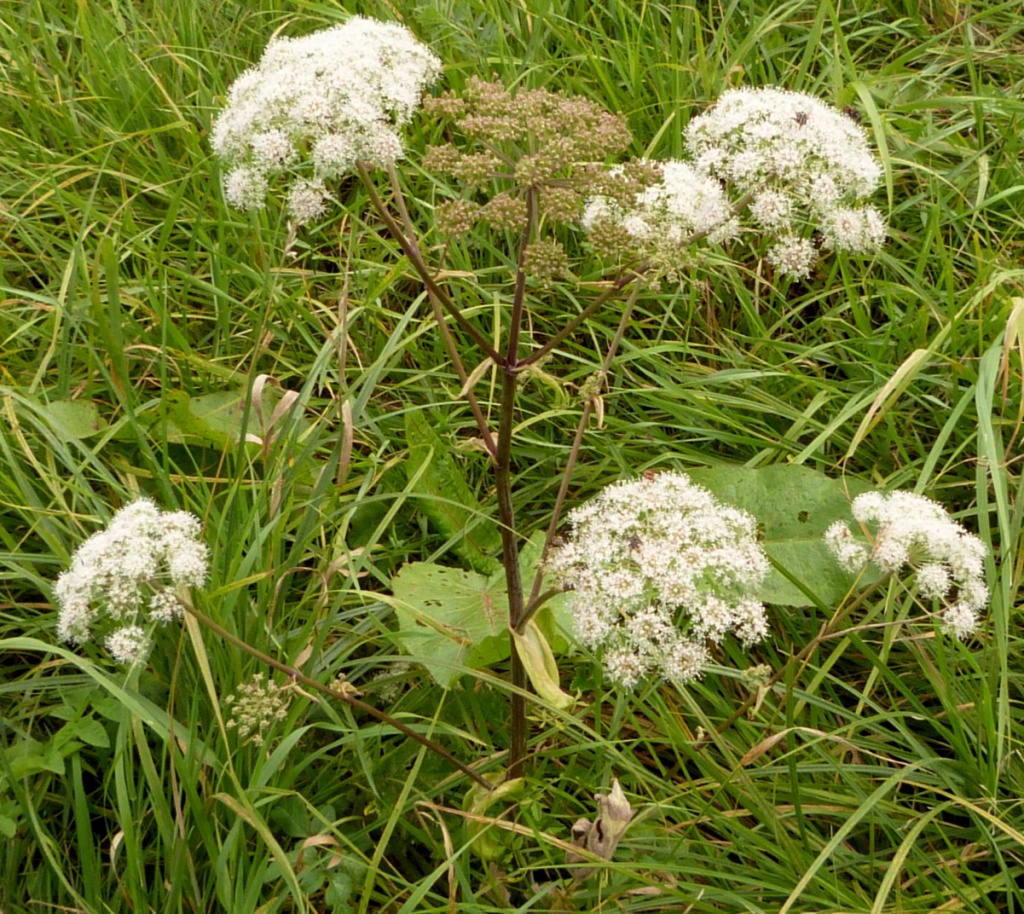
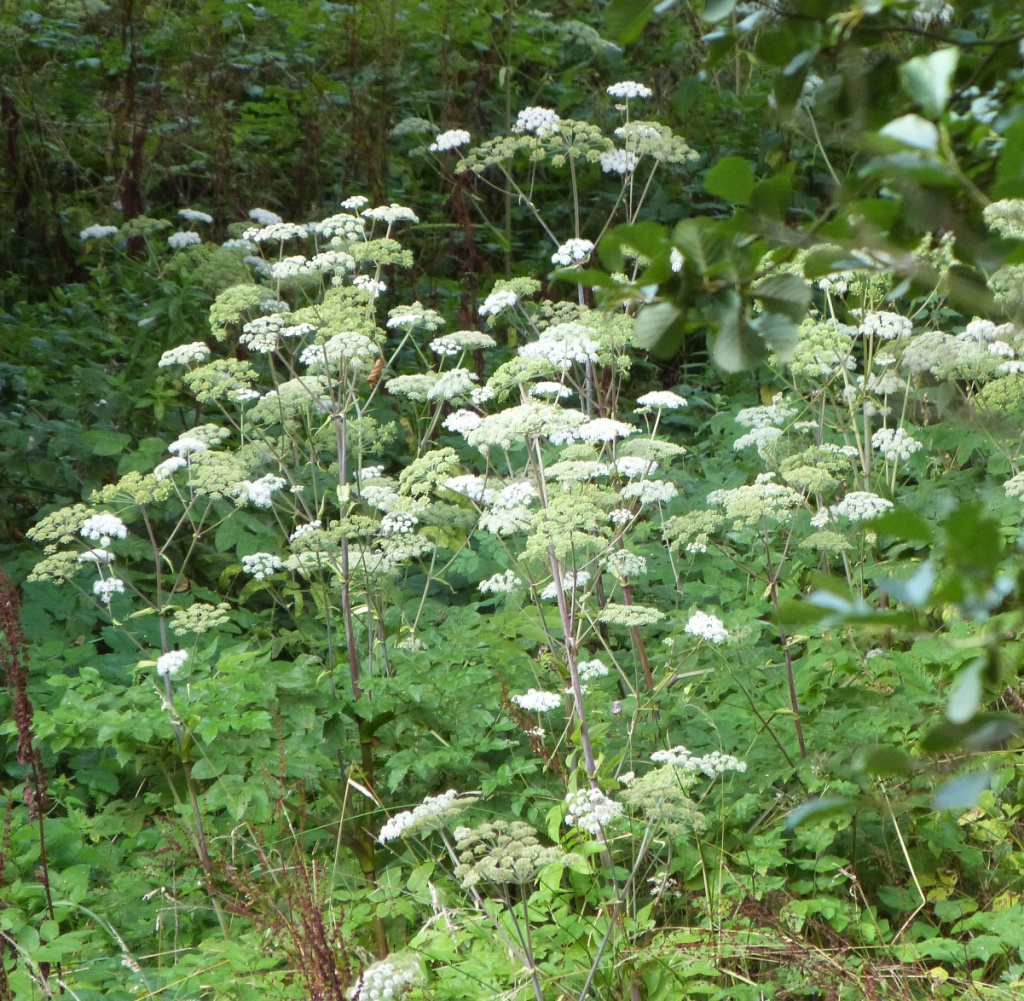
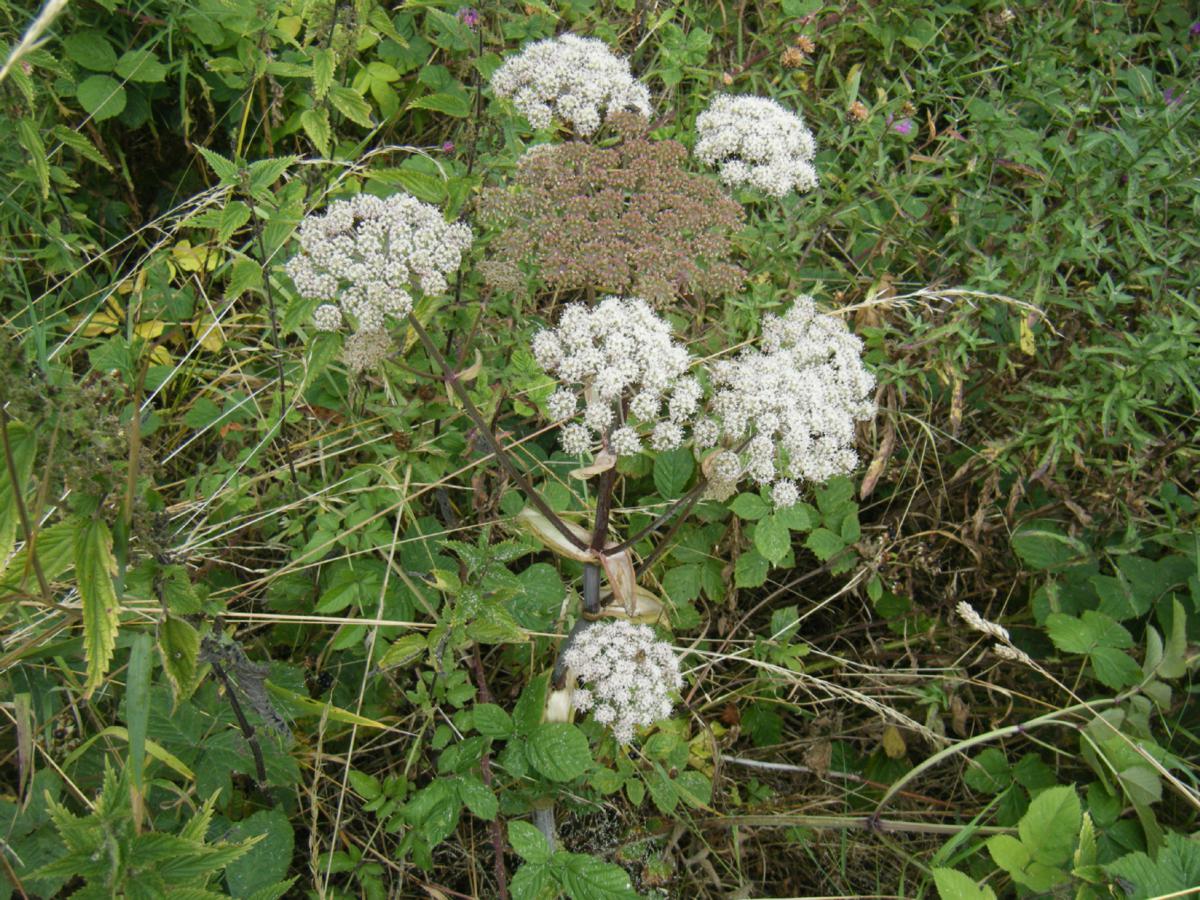
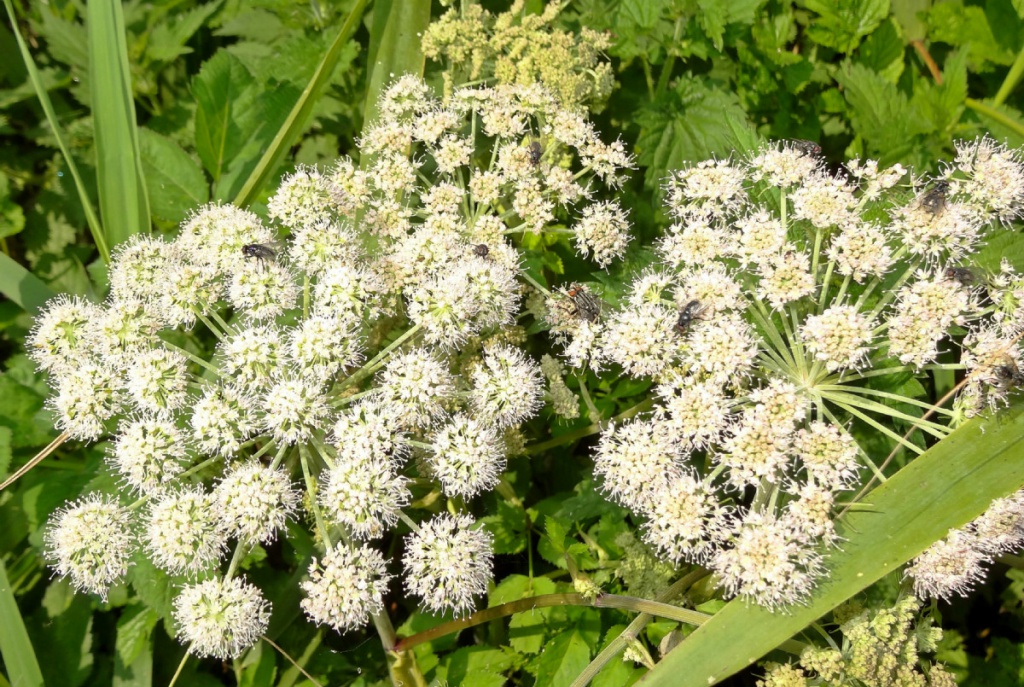
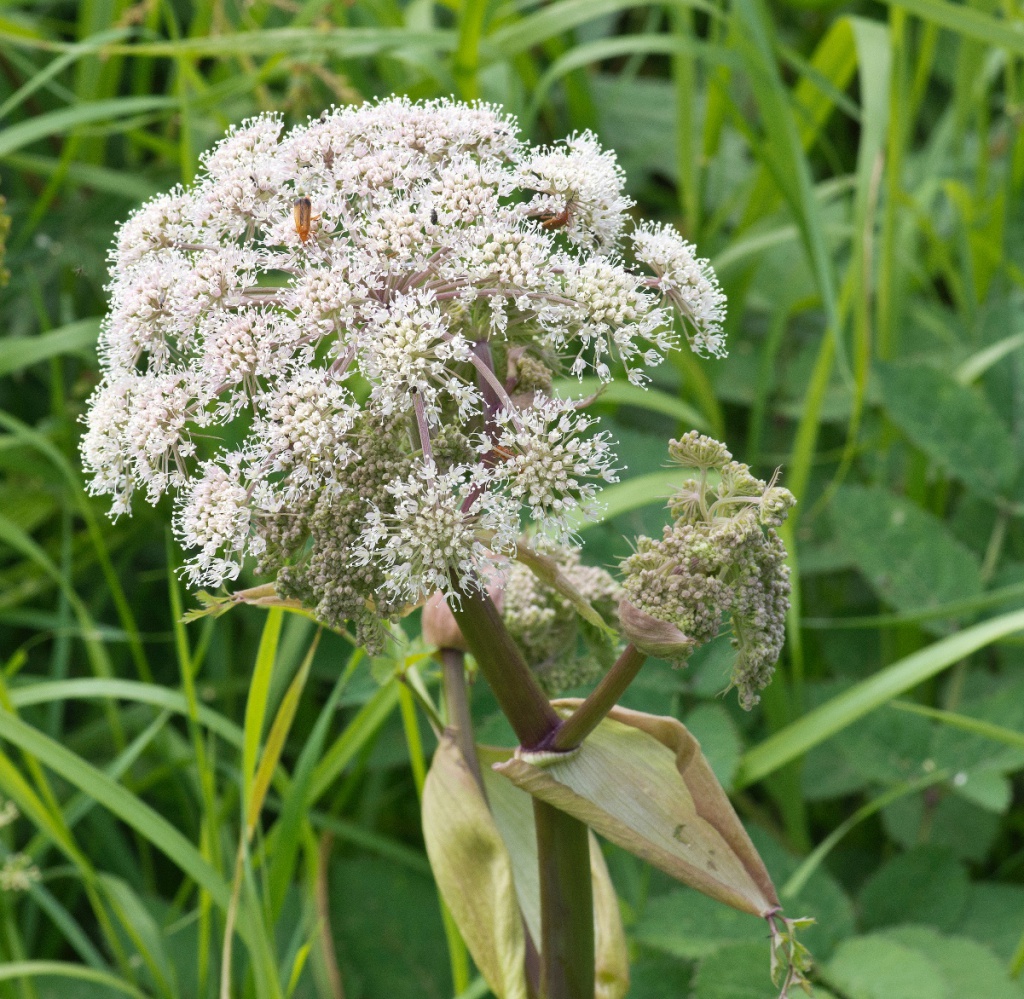
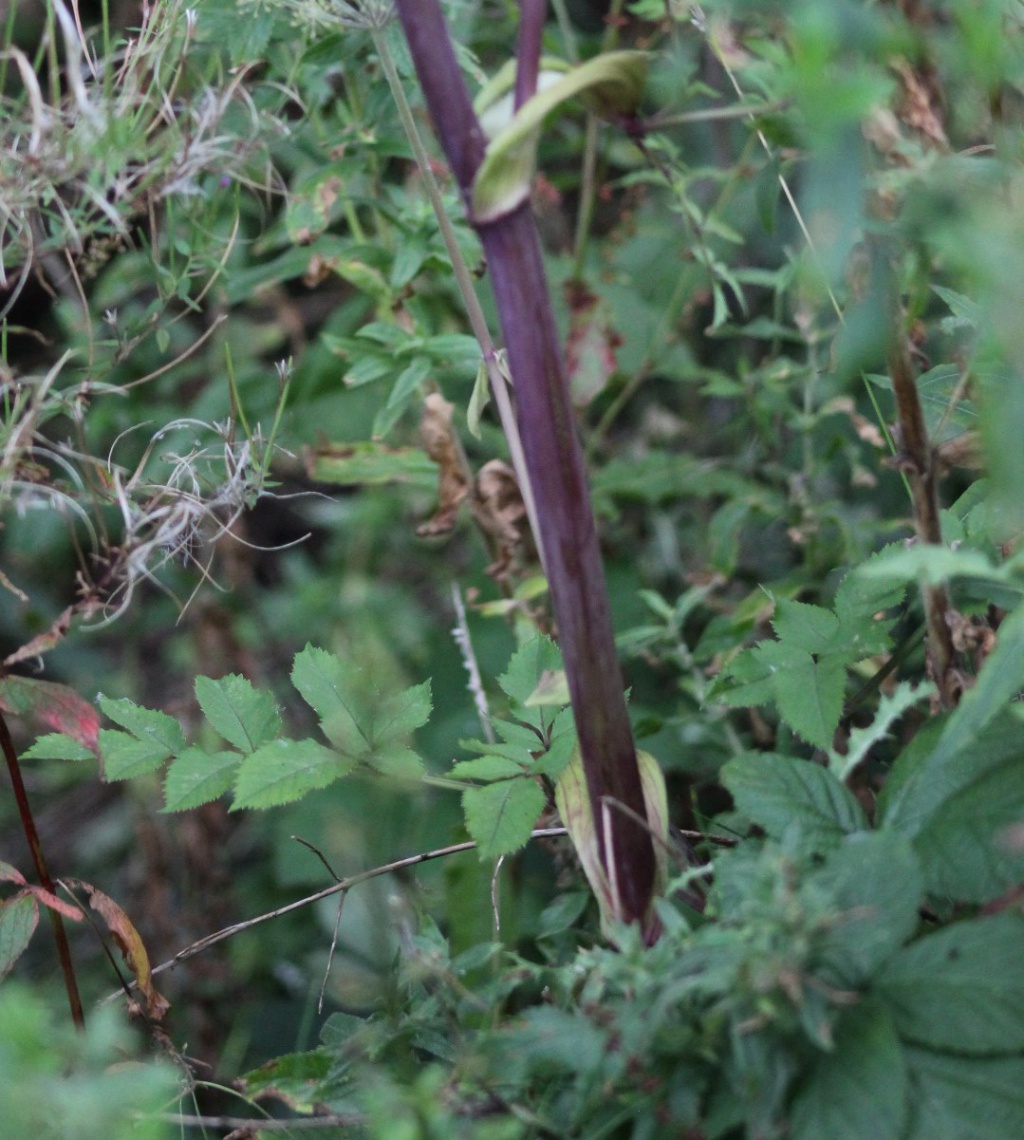
A tall robust almost hairless plant often reaching one metre in height and sometimes 2 metres. Stems are hollow, ridged and often tinged purple. Flowers white or pinkish 2 mm in umbels. The developing umbels partially enclosed in inflated sheaths.

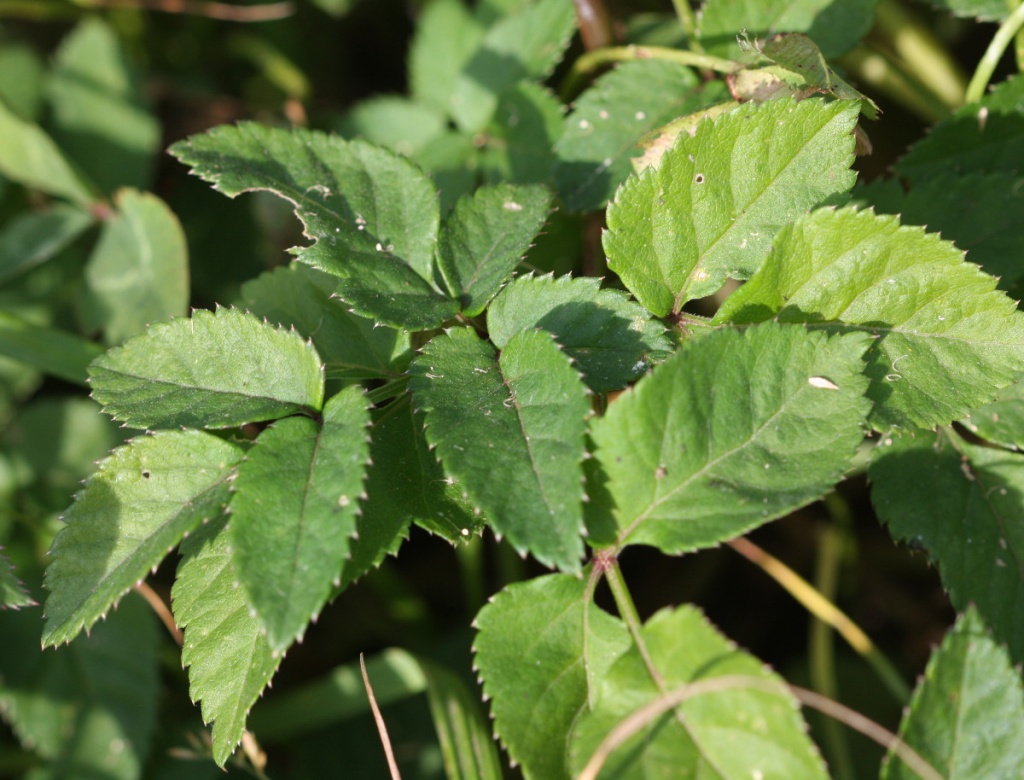
Glabrous, or nearly so; hollow stems; upper leaves with strongly inflated petioles; fruits flattened, oval, with thin membraneous lateral wings
Damp meadows, ditches and woods.
July to October.
Perennial.
Quite common in Britain.
Quite common in Leicestershire and Rutland. In the 1979 Flora survey of Leicestershire it was found in 328 of the 617 tetrads.
In the current Checklist (Jeeves, 2011) it is listed as Native; occasional
 Old Fosse Sapcote SP 4980 9219 (taken 28.7.2006).JPG) Graham Calow
Graham Calow
Sapcote
28 July 2006 Old Fosse Sapcote SP 4980 9219 (taken 18.8.2008).JPG) Graham Calow
Graham Calow
Sapcote
18 August 2008 Graham Calow
Stoney Stanton
23 August 2014 David Gould
The Spearwort Fields
14 August 2013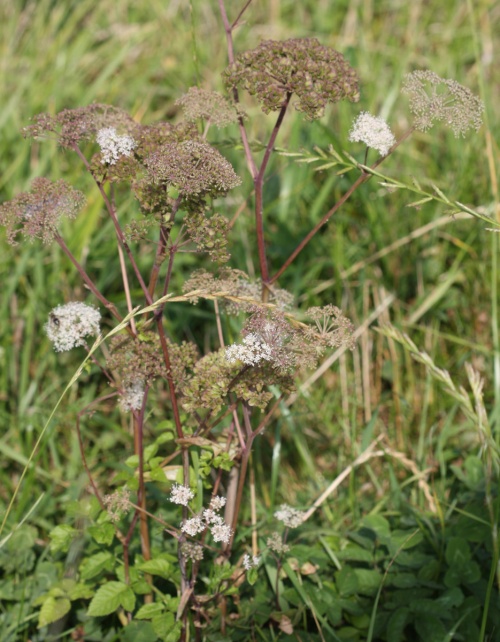 David Nicholls
Ashby Canal
15 September 2012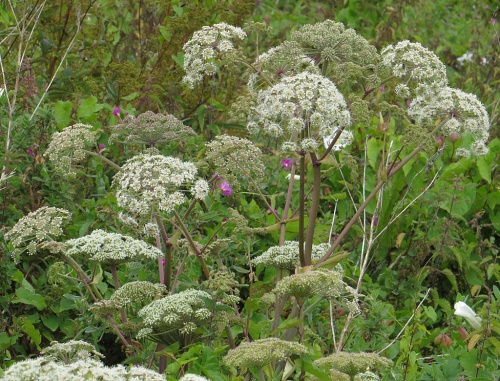 David Gould
Aylestone Meadows
15 August 2014 David Nicholls
Ashby Canal, Shackerstone
15 September 2012 David Nicholls
Launde Fish Ponds
22 September 2012 Graham Calow
The Grange Fields, Broughton Astley
04 May 2015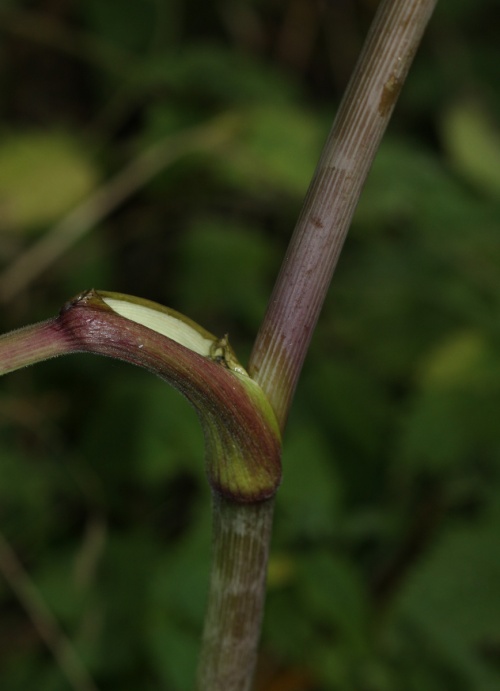 David Nicholls
Launde Fish Ponds
22 September 2012
purplish stems
 Old Fosse Sapcote SP 4980 9219 (taken 28.7.2006).JPG)
 Old Fosse Sapcote SP 4980 9219 (taken 18.8.2008).JPG)
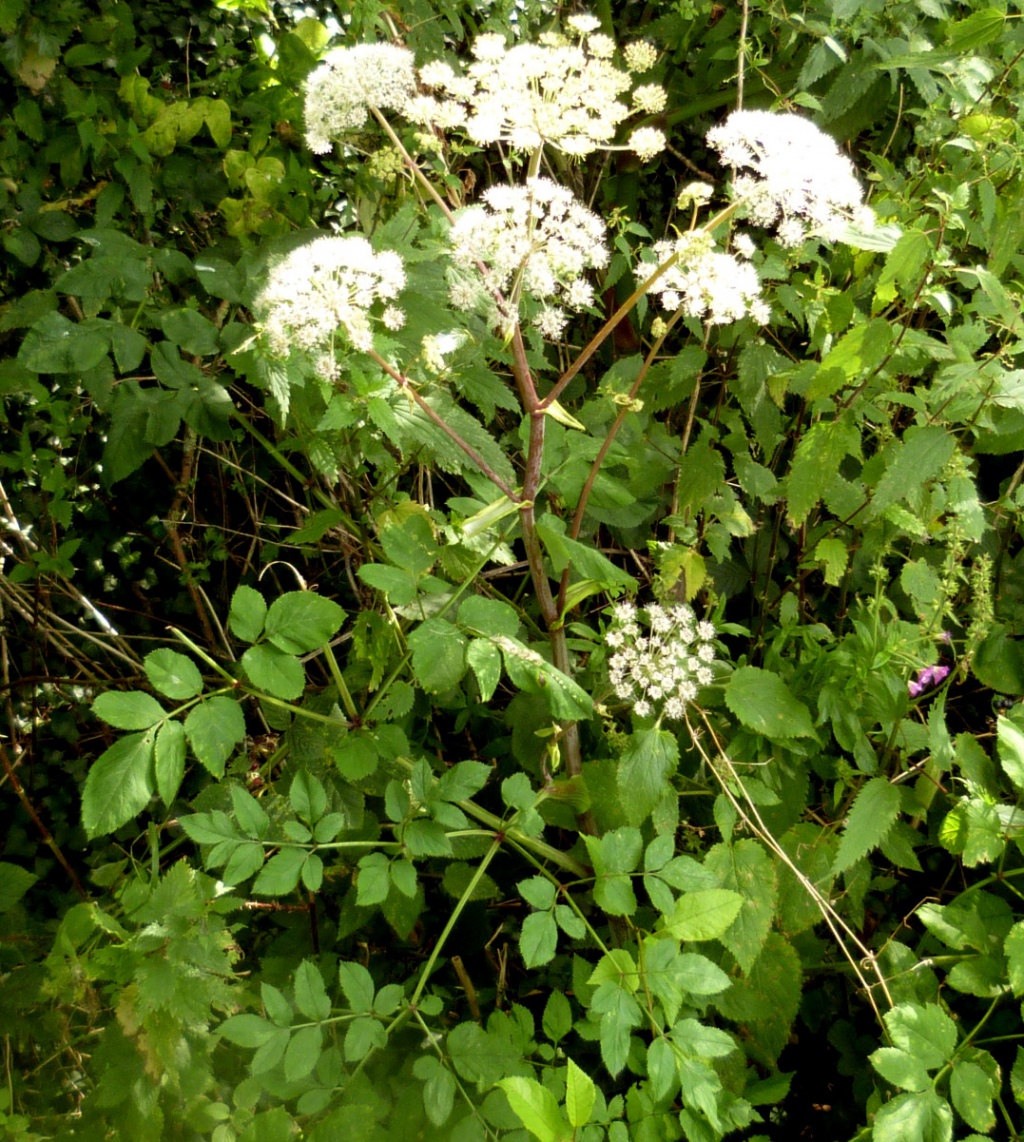


Leicestershire & Rutland Map
Enter a town or village to see local records
MAP KEY:
Yellow squares = NBN records (all known data)
Coloured circles = NatureSpot records: 2025+ | 2020-2024 | pre-2020
UK Map
Species profile
- Common names
- Wild Angelica
- Species group:
- flowering plant
- Kingdom:
- Plantae
- Order:
- Apiales
- Family:
- Apiaceae
- Records on NatureSpot:
- 277
- First record:
- 01/01/1979 (Patricia Evans)
- Last record:
- 06/05/2026 (Higgott, Mike)
Total records by month
% of records within its species group
10km squares with records
The latest images and records displayed below include those awaiting verification checks so we cannot guarantee that every identification is correct. Once accepted, the record displays a green tick.
In the Latest Records section, click on the header to sort A-Z, and again to sort Z-A. Use the header boxes to filter the list.
Latest images
Latest records
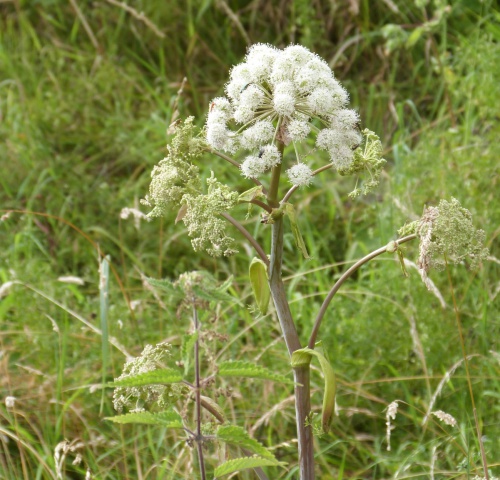 Graham Calow
Verge of M69 Sapcote
27 July 2016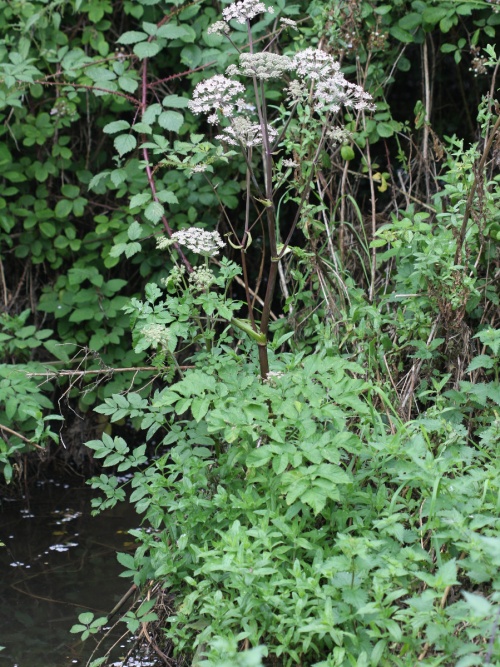 David Nicholls
Wirlybones Wood
18 August 2012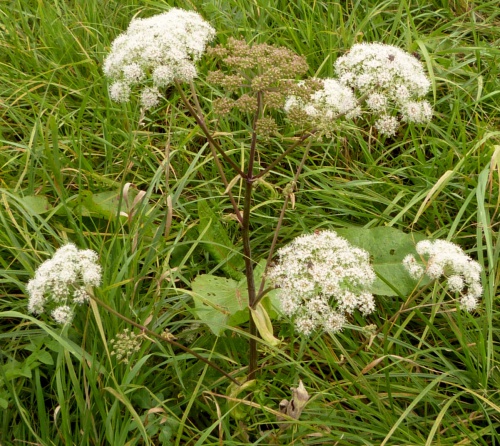 Graham Calow
Foot of Croft Hill
29 August 2014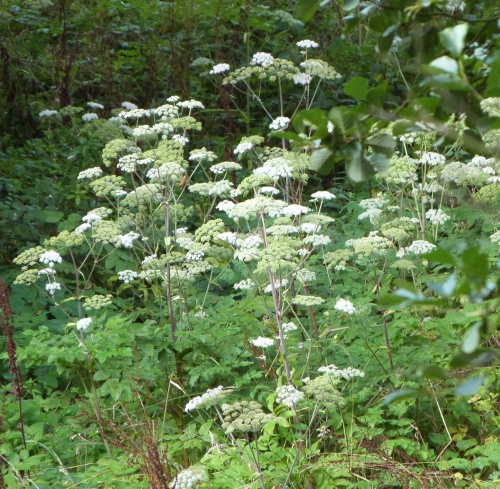 Graham Calow
Off Station Road, Elmesthorpe
01 September 2016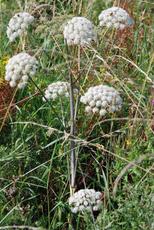 John Cranfield
Stanford Reservoir
20 August 2011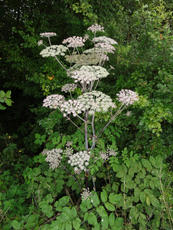 Peter Smith
Cropston Reservoir
22 August 2010 David Gould
Croft Hill, Leics
17 July 2014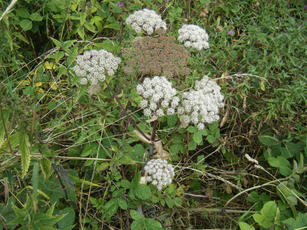 Graham Calow
Ellistown
19 August 2011 Lostash
Narborough Bog Nature Reserve
26 August 2013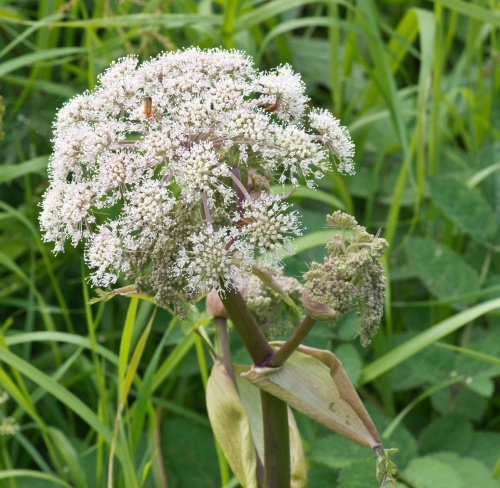 AJ Cann
Croft Hill
24 July 2016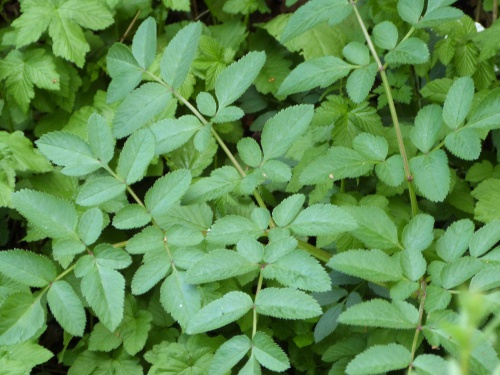 Graham Calow
Wykin
12 May 2015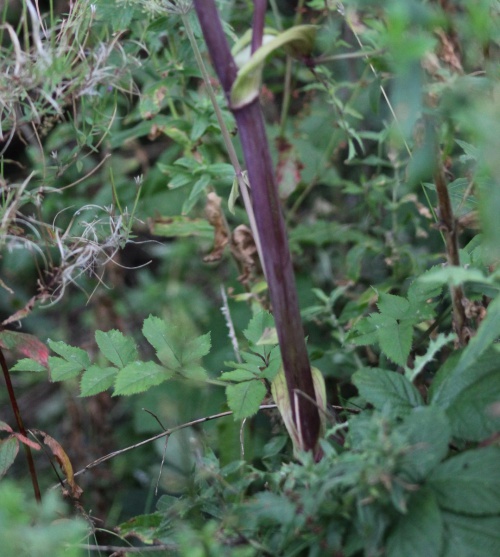 PhilipCrowfoot
Woodgate
05 September 2015
stem often purple tinged





Melanagromyza angeliciphaga
The larva of the Agromyzid fly Melanagromyza angeliciphaga is an internal stem borer. It is very difficult to identify the adult fly but the species can be identified by examination of the pale yellow puparium within the stem of the host plant. The host plants are Angelica, Heracleum and Pastinaca.

Phytomyza angelicastri
The larva of the Agromyzid fly Phytomyza angelicastri mines the leaves of Wild Angelica and Ground Elder. This can be a variable leafmine though often linear, following the leaf margin but sometimes creating a blotch mine on the upper leaf surface.
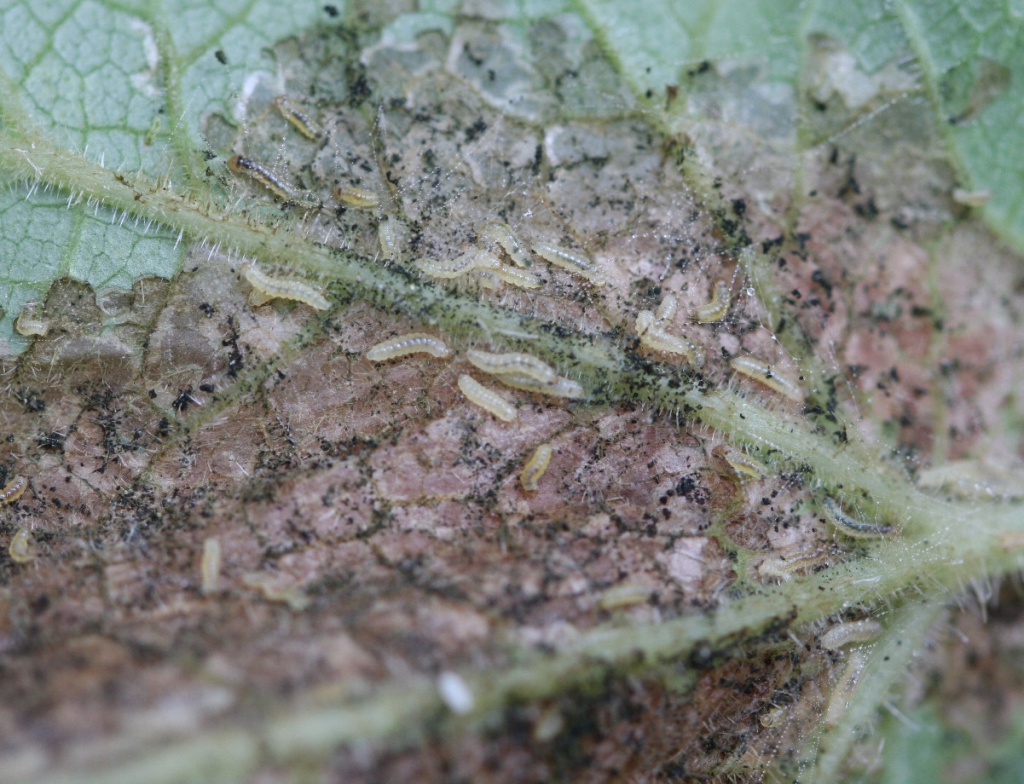
Epermenia chaerophyllella
The larvae of the moth Epermenia chaerophyllella feed on umbelliferous plants, perhaps most often Hogweed but also Wild Parsnip and Angelica among others. In later instars the larvae feed gregariously on the underside of the leaves, creating distinctive feeding windows.
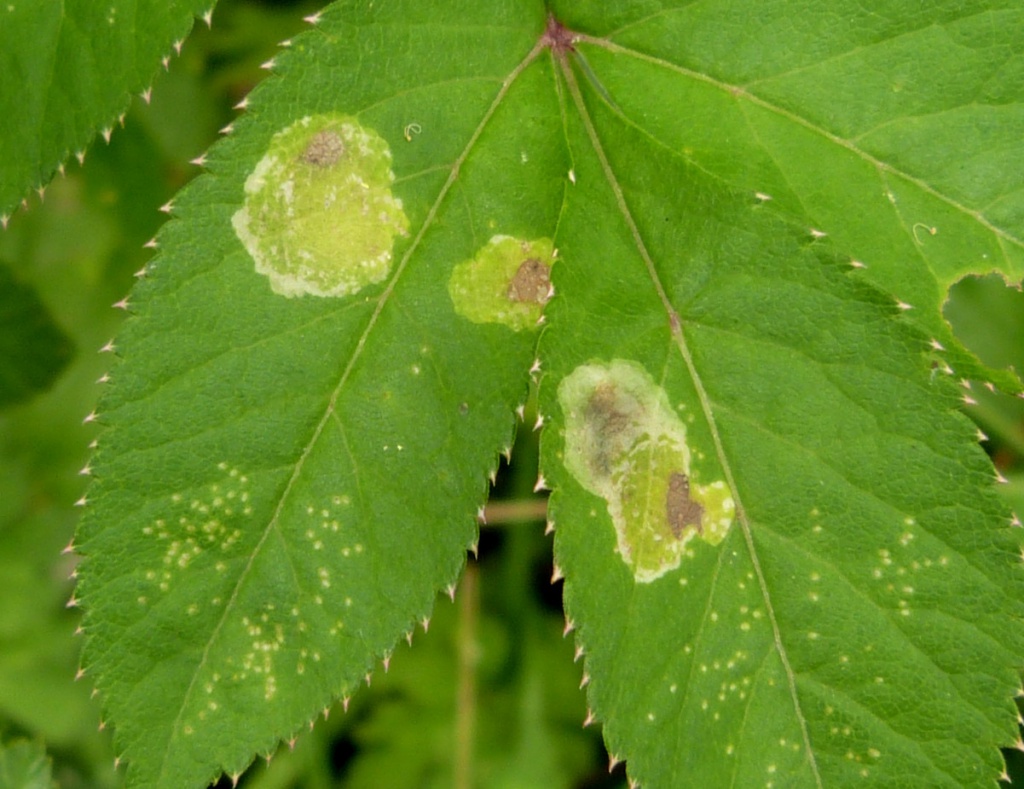
Phytomyza angelicae
The larva of the Agromyzid fly Phytomyza angelicae mines the leaves of Wild Angelica. The mine is on the upper surface and usually an oval or circular blotch. Several larvae often feed together. The blotch is generally greenish when fresh but then becomes more yellow with age.