

Welted Thistle - Carduus crispus
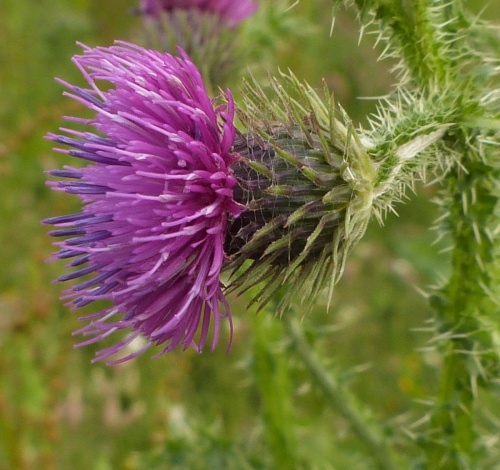
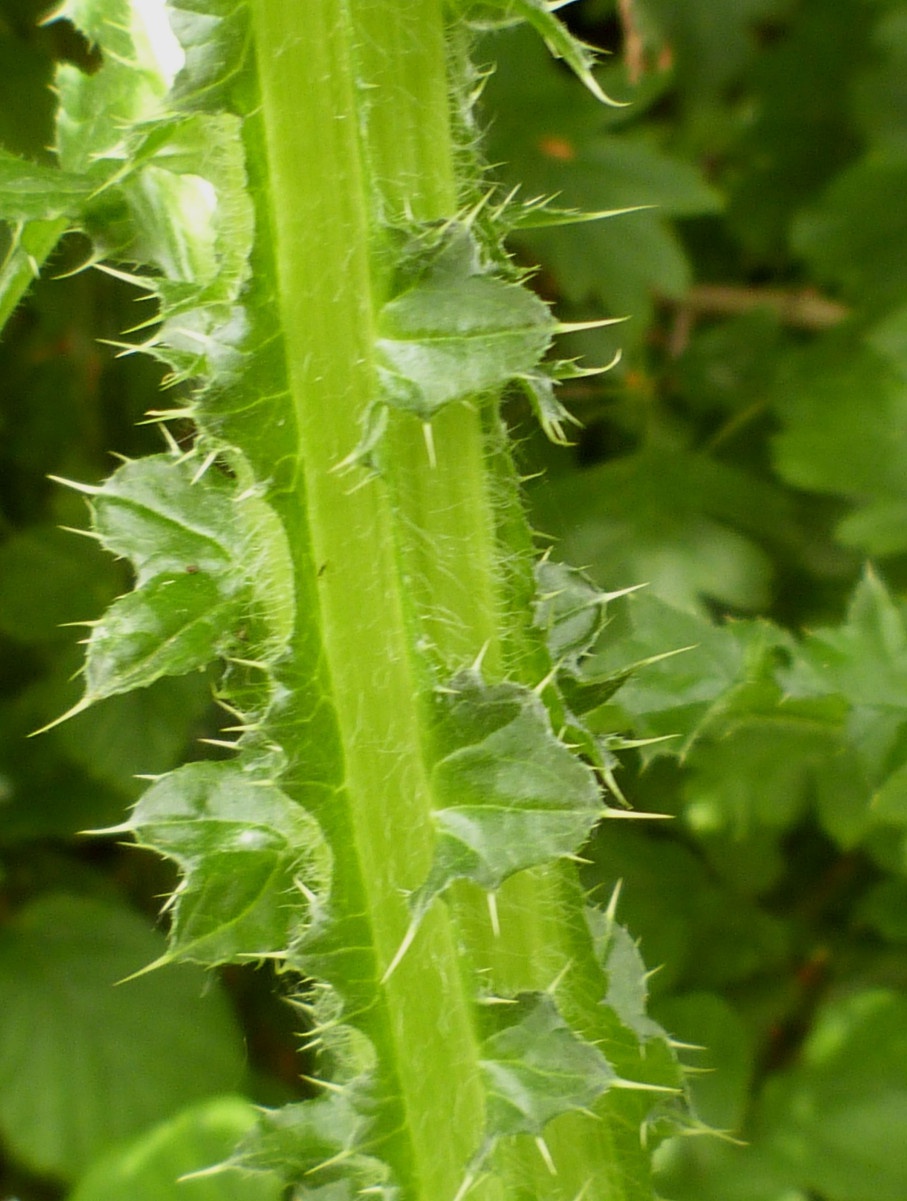
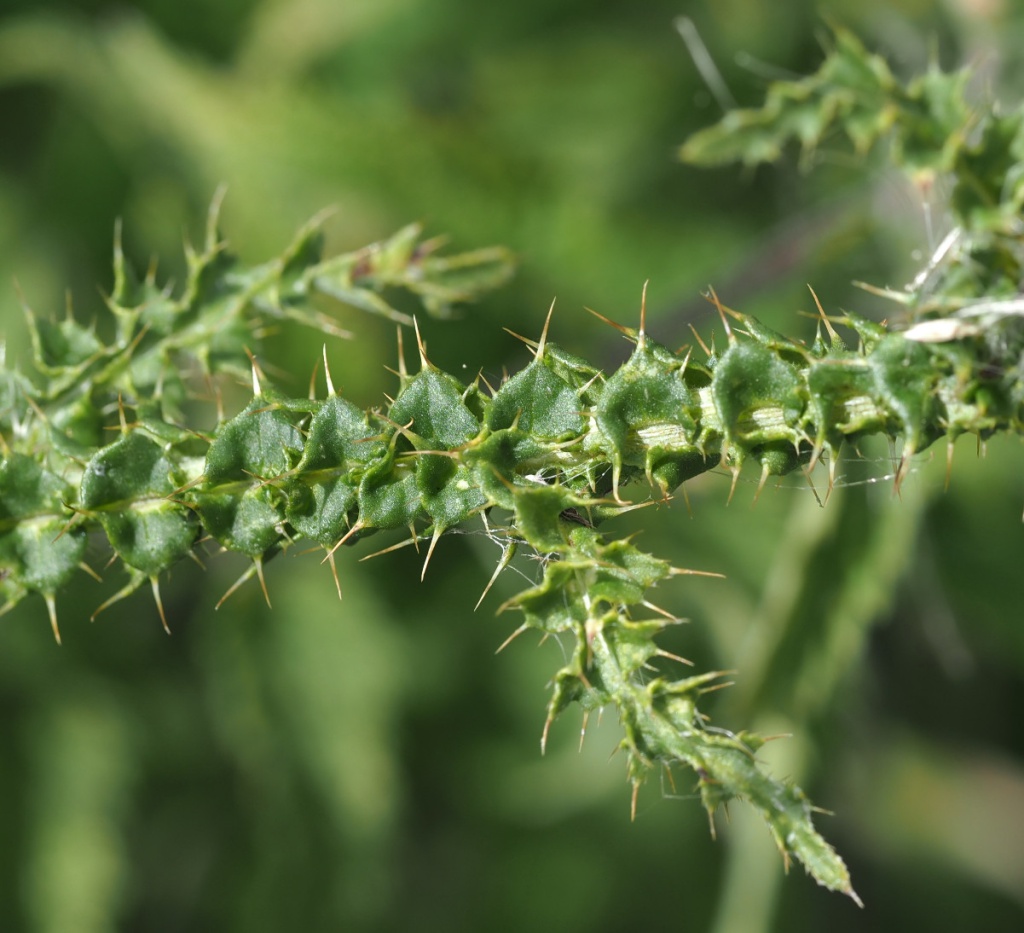
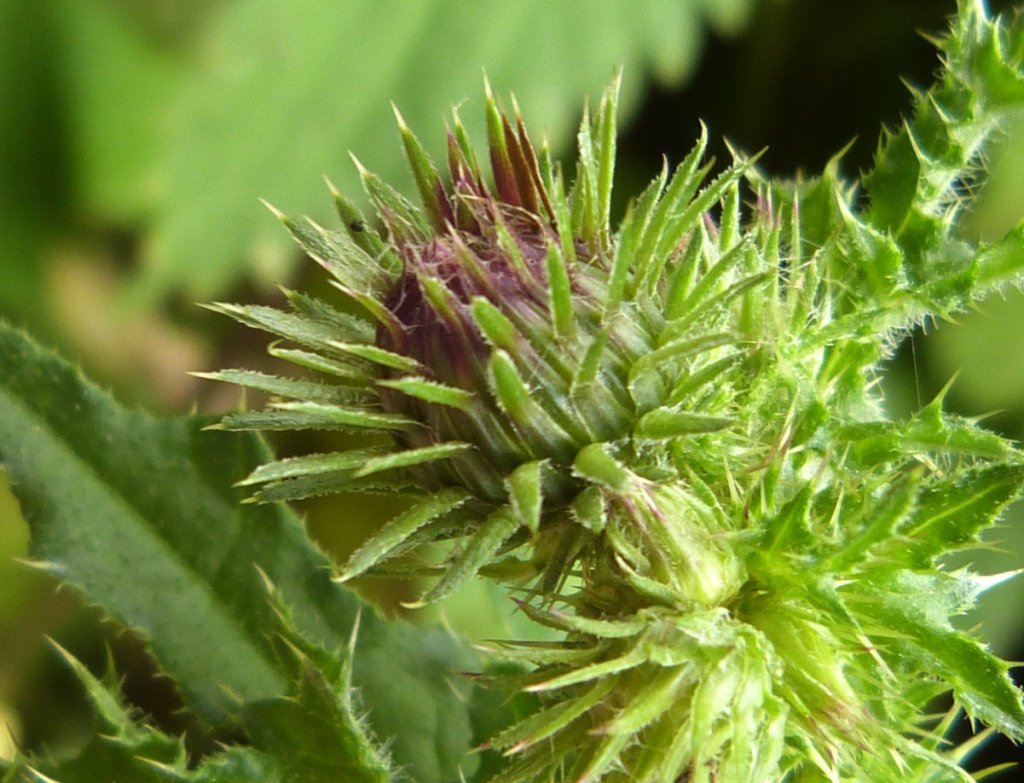
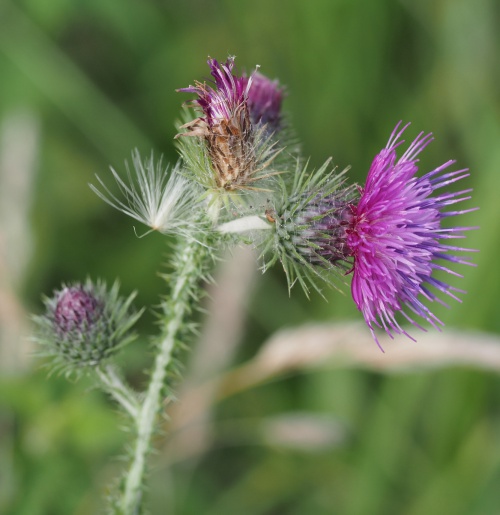
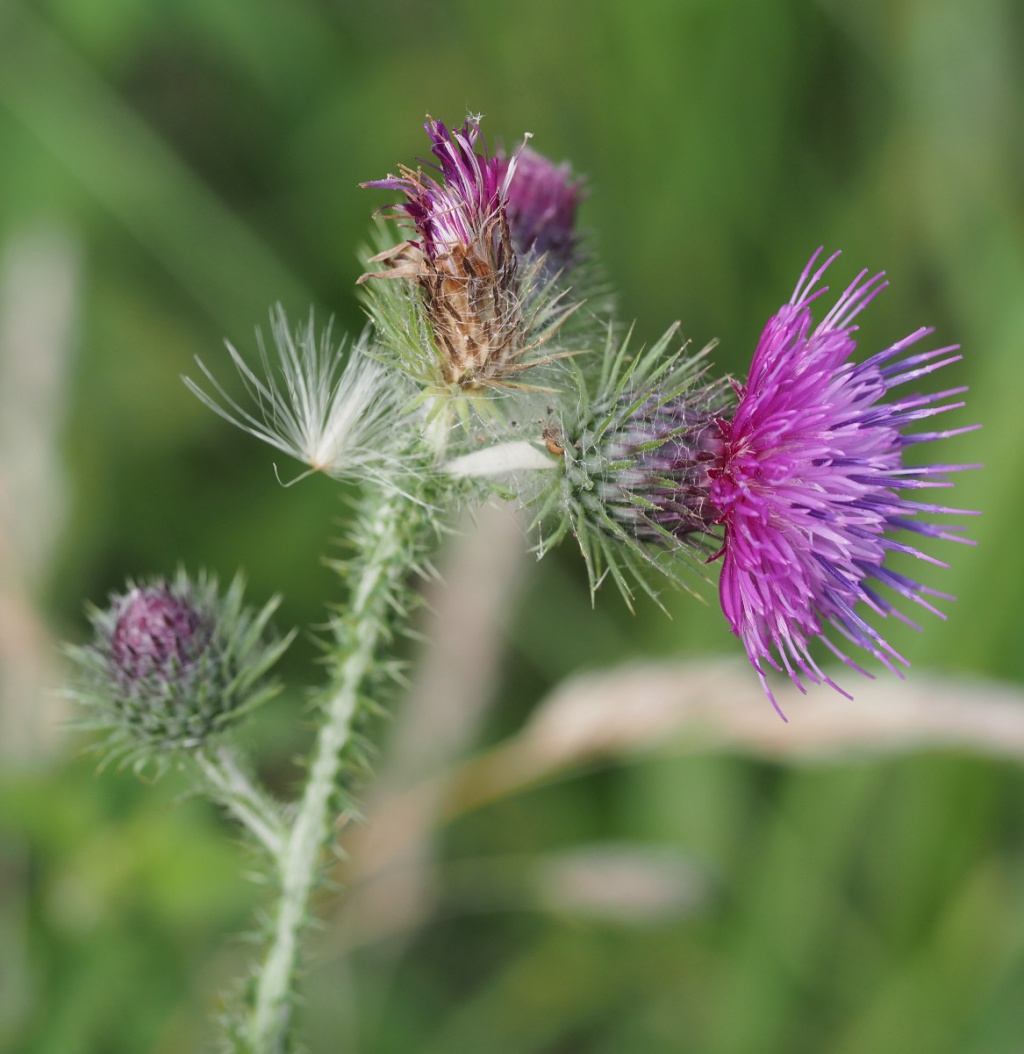
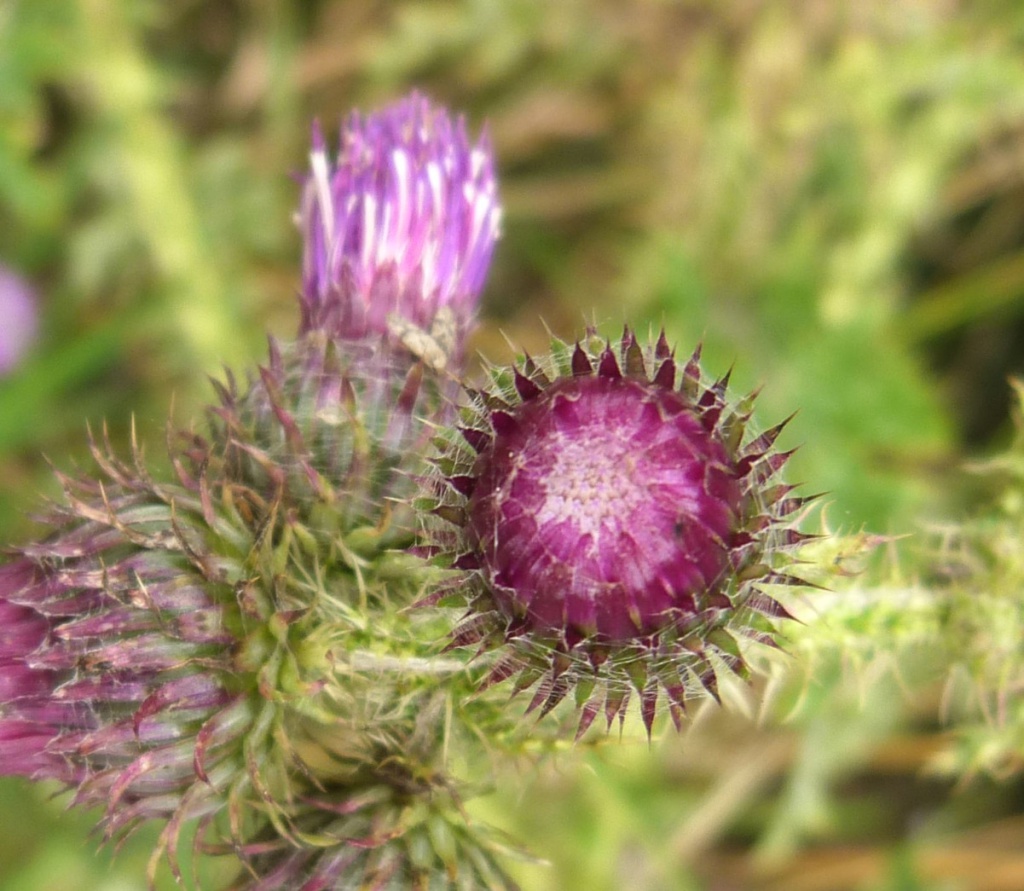
Tall hairy plant to 2 metres, stems branched and spiny winged, except just below the flowerheads. Leaves oblong to lanceolate, pinnately lobed, weak spined. Flowerheads reddish purple, 10 to 25 mm erect, solitary or in small clusters. Flower bracts slightly spreading or erect with a weak spine tip.
Carduus tenuiflorus. Creeping Thistle or Marsh Thistle can look similar - check the pappus hairs if in doubt.

As with all Carduus, the pappus-hairs (the silky white hairs attached to the seed - the thistledown) are not feathery or branched, but simple. The stems have spiny wings, continuous all the way to just below the flower-head. C tenuiflorus has a narrow, almost cylindrical flowerhead; C crispus is rounded.
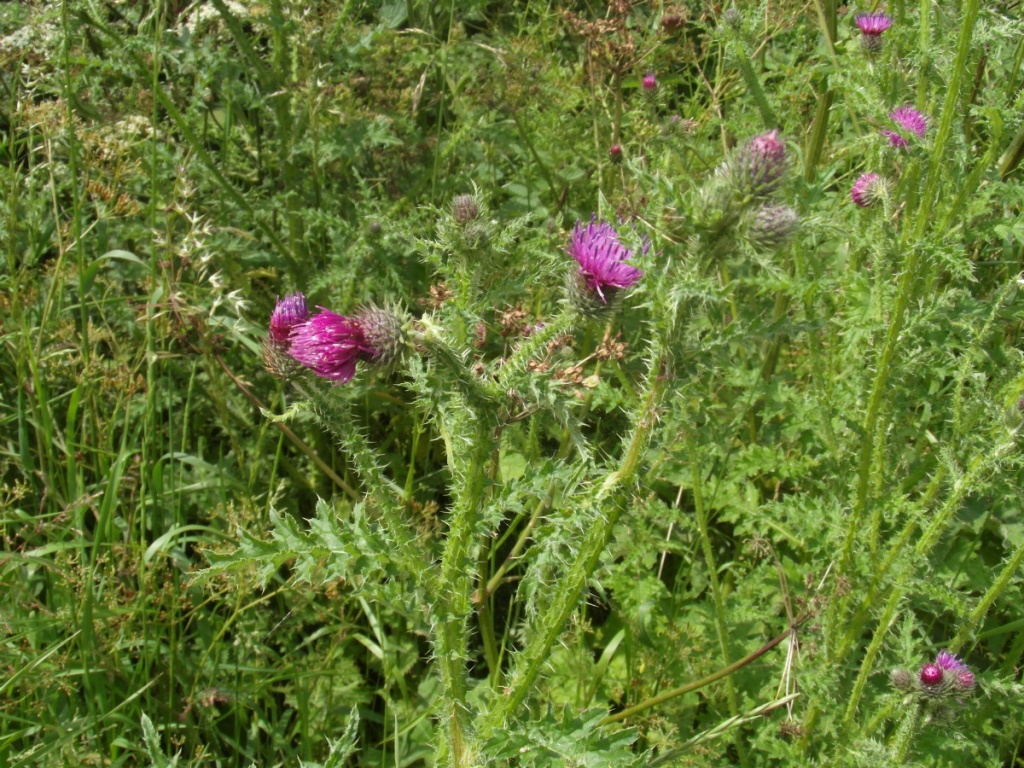
A photograph of the whole plant, including stem as well as flower heads.
Often damp grassland, stream sides.
June to August.
Biennial.
Widespread and common in lowland Britain north to the Moray Firth.
Very common in Leicestershire and Rutland. In the 1979 Flora survey of Leicestershire it was found in 604 of the 617 tetrads.
 Graham Calow
Sapcote
24 June 2013 Graham Calow
Sapcote
24 June 2013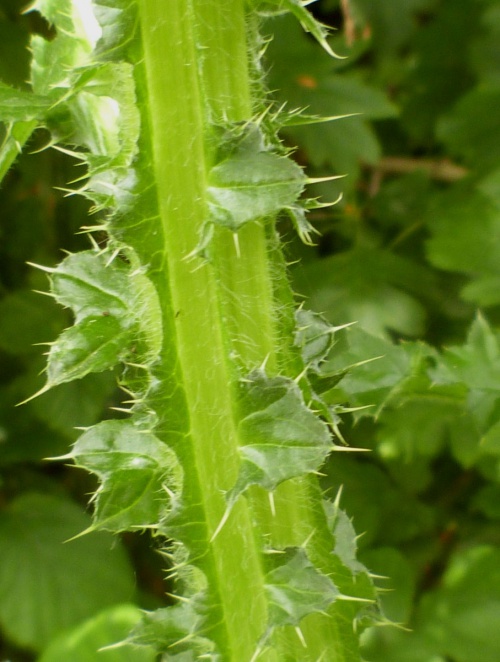 Graham Calow
Fosse Meadows, Sharnford
22 May 2014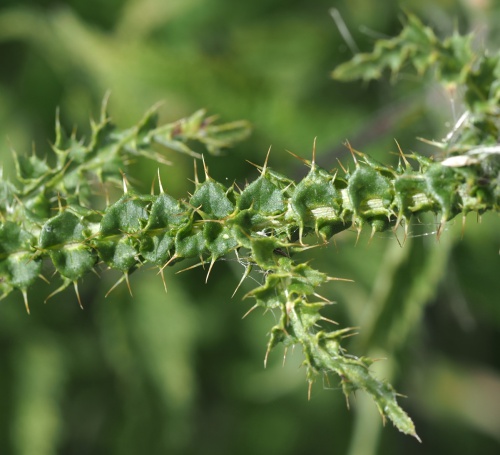 David Nicholls
Castle Hill Country Park
19 August 2023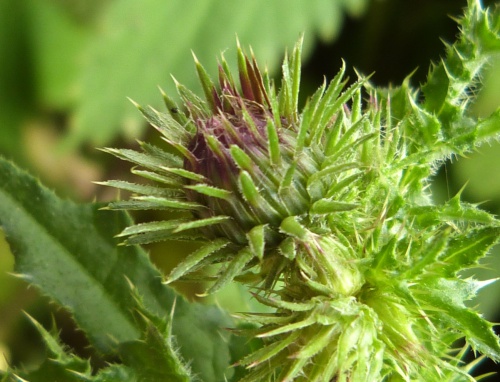 Graham Calow
Cotesbach Hall land (near car parking area)
19 June 2023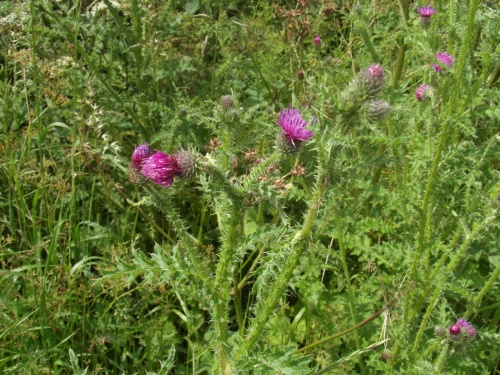 Alan Semper
Eastwell, Waltham La verge
05 July 2012


Leicestershire & Rutland Map
Enter a town or village to see local records
MAP KEY:
Yellow squares = NBN records (all known data)
Coloured circles = NatureSpot records: 2025+ | 2020-2024 | pre-2020
UK Map
Species profile
- Common names
- Welted Thistle
- Species group:
- flowering plant
- Kingdom:
- Plantae
- Order:
- Asterales
- Family:
- Asteraceae
- Records on NatureSpot:
- 122
- First record:
- 07/06/2006 (Calow, Graham)
- Last record:
- 15/05/2026 (Pochin, Christine)
Total records by month
% of records within its species group
10km squares with records
The latest images and records displayed below include those awaiting verification checks so we cannot guarantee that every identification is correct. Once accepted, the record displays a green tick.
In the Latest Records section, click on the header to sort A-Z, and again to sort Z-A. Use the header boxes to filter the list.
Latest images
Latest records
 David Nicholls
Castle Hill Country Park
19 August 2023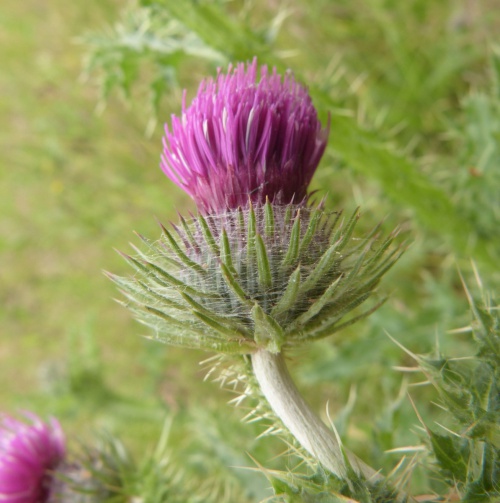 Graham Calow
Sapcote, land behind Northfield Road
21 June 2021 Graham Calow
Sapcote, Field off Sapcote Road
09 May 2022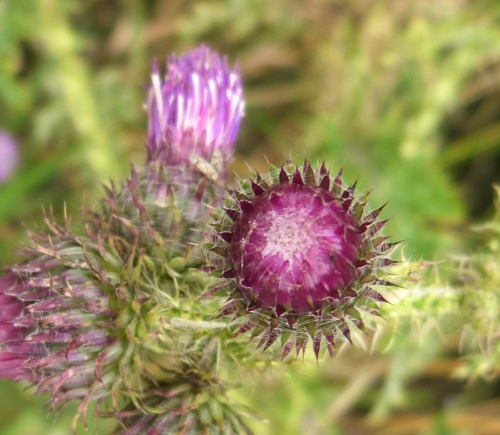 Graham Calow
Sapcote, B4114 Coventry Road
01 August 2023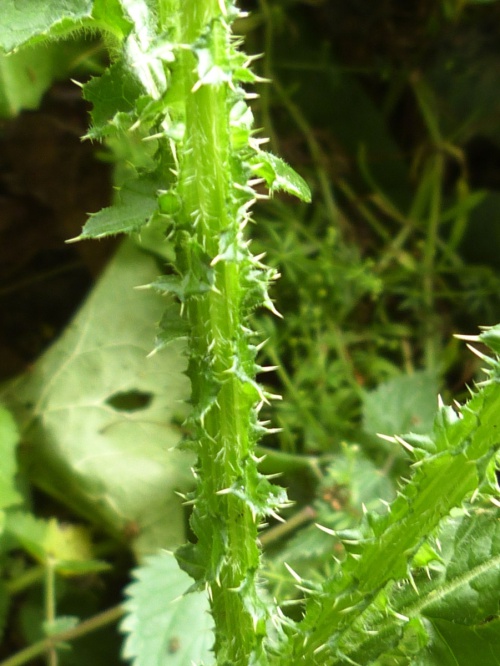 Graham Calow
Cotesbach Hall land (near car parking area)
19 June 2023



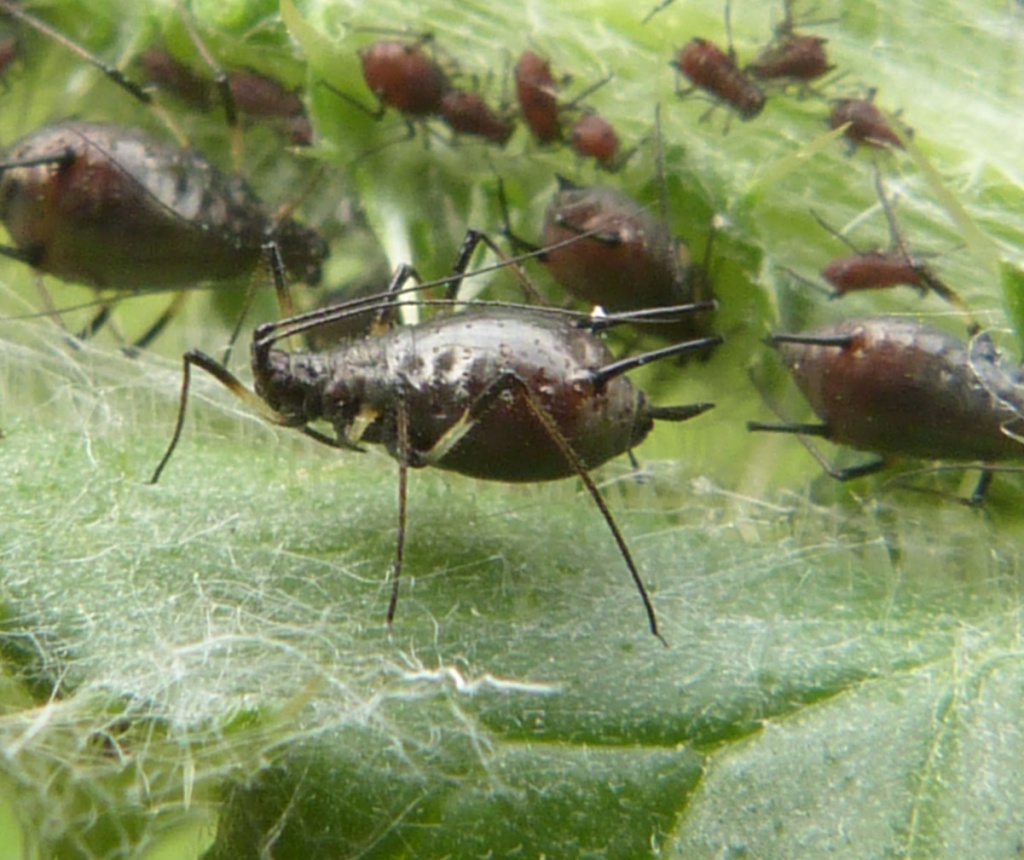
Uroleucon aeneum
The adult Uroleucon aeneum apterae has a body length of is 3.0 to 4.3 mm. The cauda (tail) in this species is black which helps to identify it. It is associated with Thistles.
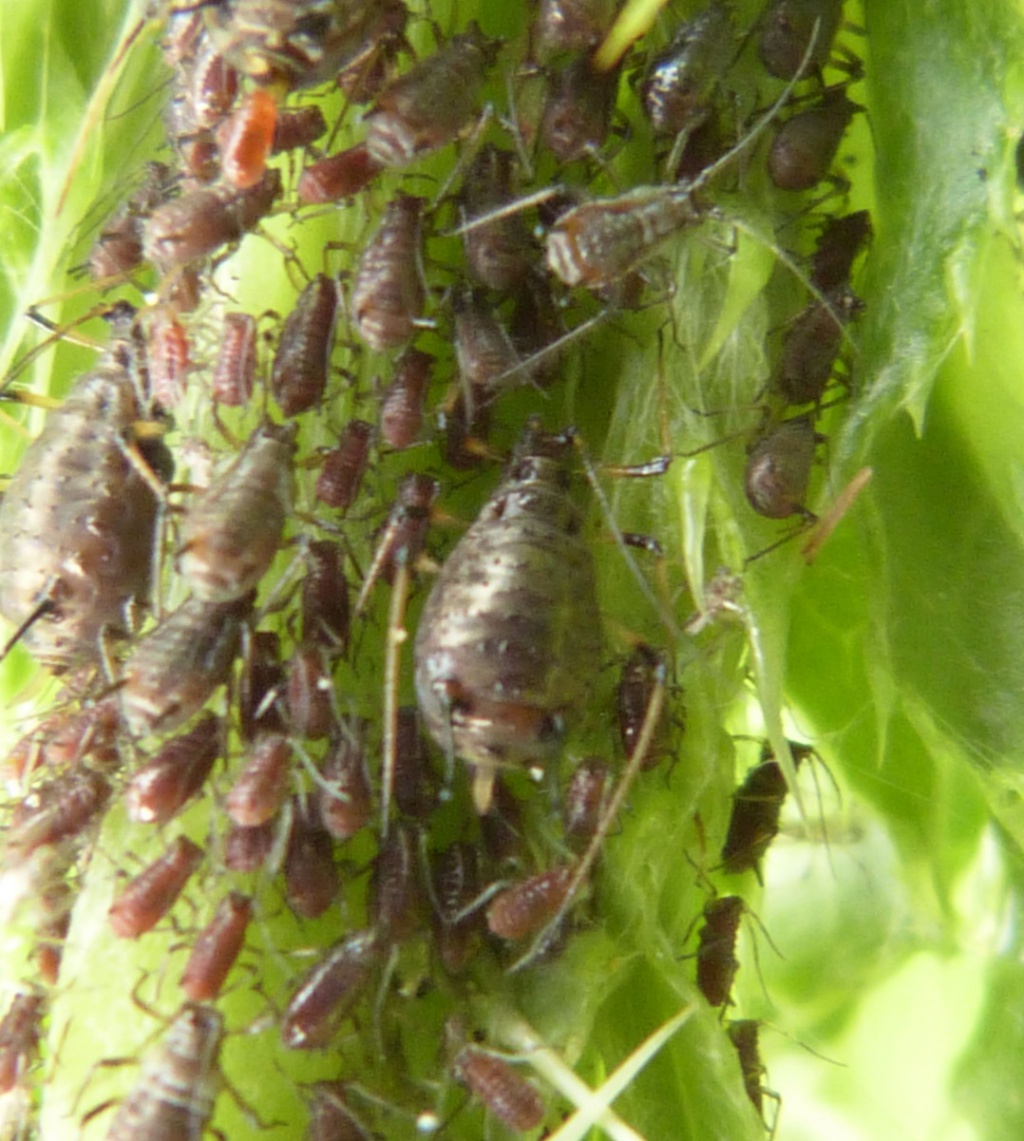
Large Thistle Aphid
The Large Thistle Aphid (Uroleucon cirsii) is found on Thistles, especially Creeping Thistle. It is between 4 and 5.2 mm in length and has characteristic two tone legs. The cauda (tail) is pale dusky yellow in this species which helps to distinguish it from other thistle feeding aphids.
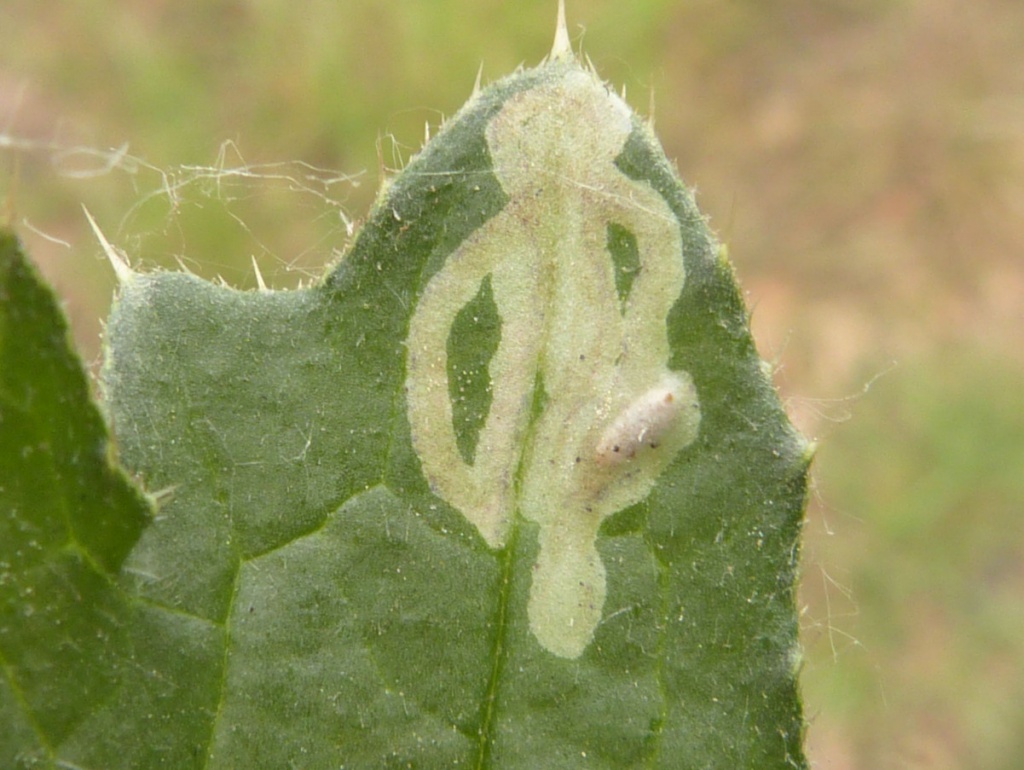
Chromatomyia spinaciae
The larvae of the fly Chromatomyia spinaciae form long narrow greenish mines in the leaves of various thistles, and also in the leaves of Knapweed and Perennial Cornflower. The puparium is white and forms at the end of the mine, underneath the leaf. The frass grains are large and scattered. The leafmine of this species is identical to that of Chromatomyia autumnalis and can only be separated by the puparium features. The puparium of Chromatomyia spinaciae is white whereas that of Phytomyza autumnalis is black.