Weasel - Mustela nivalis
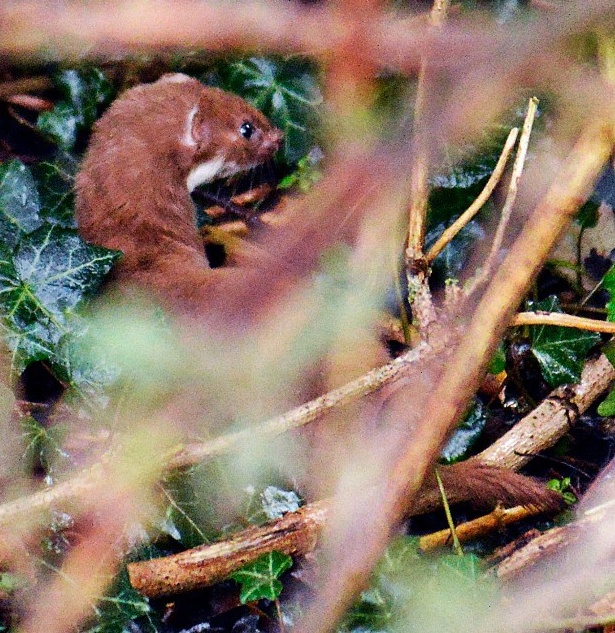
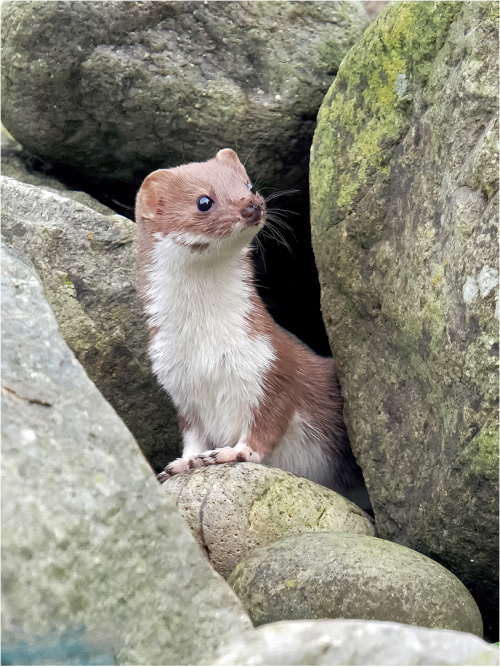
Britain's smallest native carnivore, the weasel has a long slender body, and a short tail. The fur is ginger to a rich chocolate-russet brown in colour, and the underparts are creamy-white. The narrow head is supported on a long neck, and the legs are short. The large eyes are black, and the ears are rounded. It is usually a solitary, highly active predator with a short lifespan.
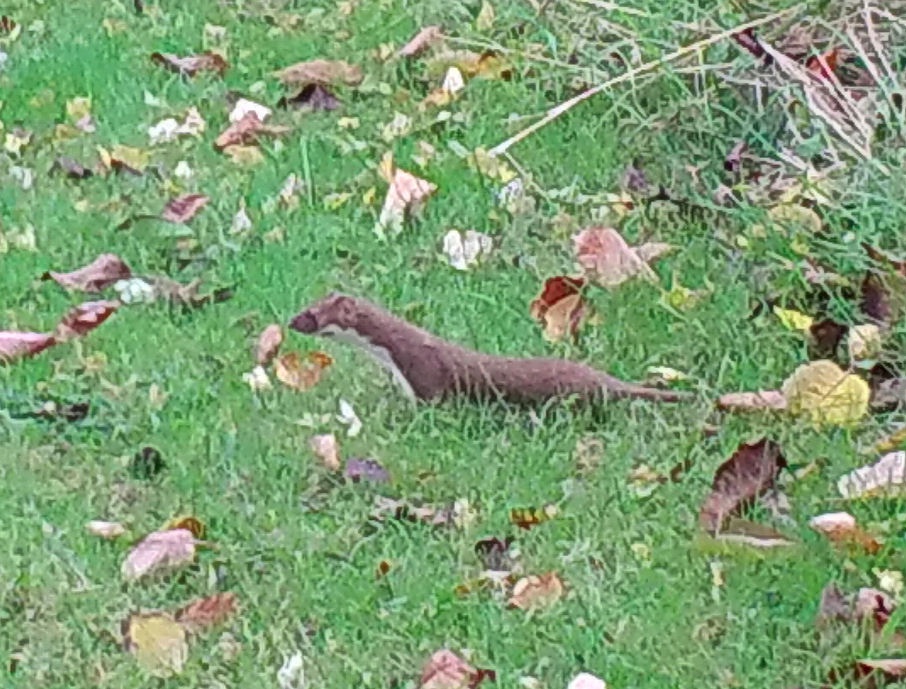
It has a running gait compared to a Stoat which bounds.
Stoat (which is larger, has a black tipped tail and white bib with straight edges)
Adult  Droppings
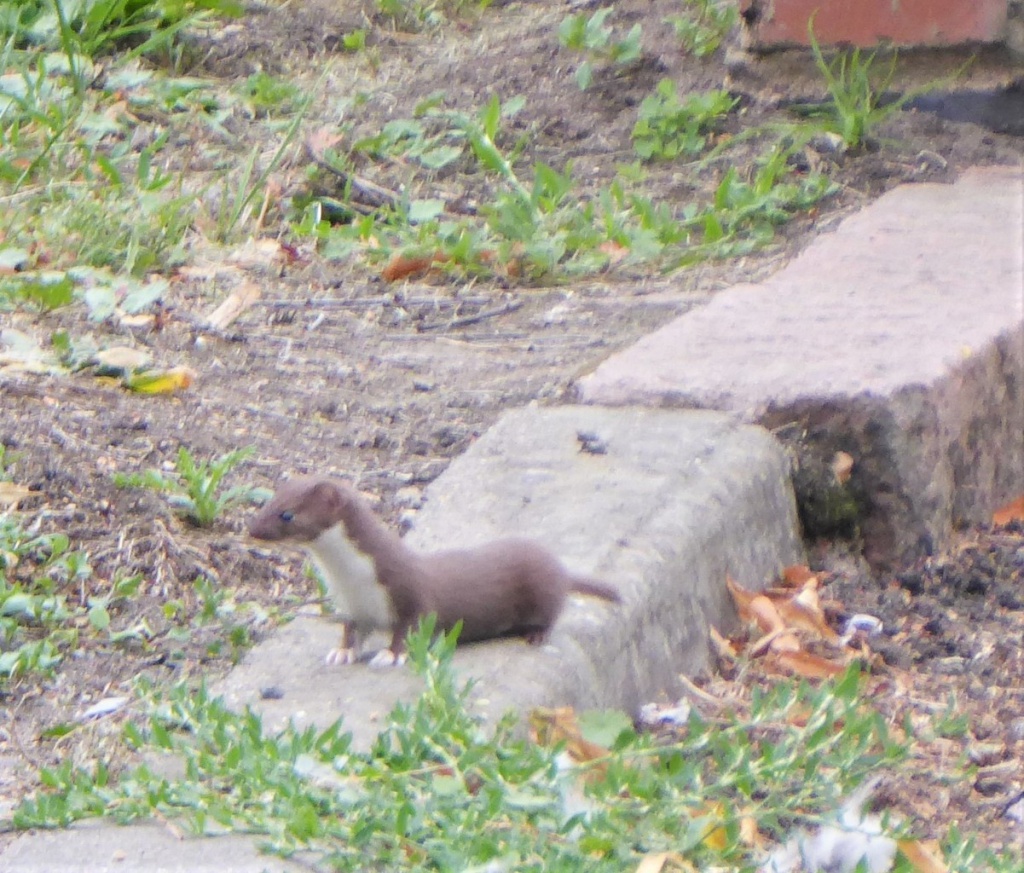
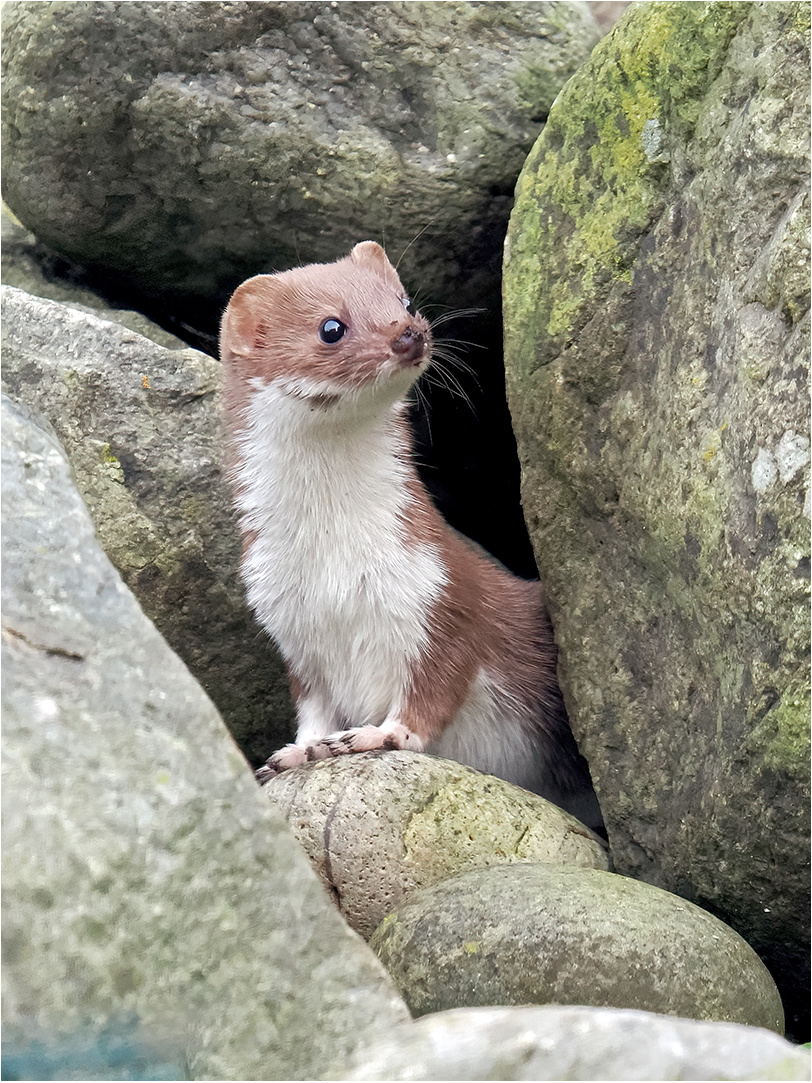
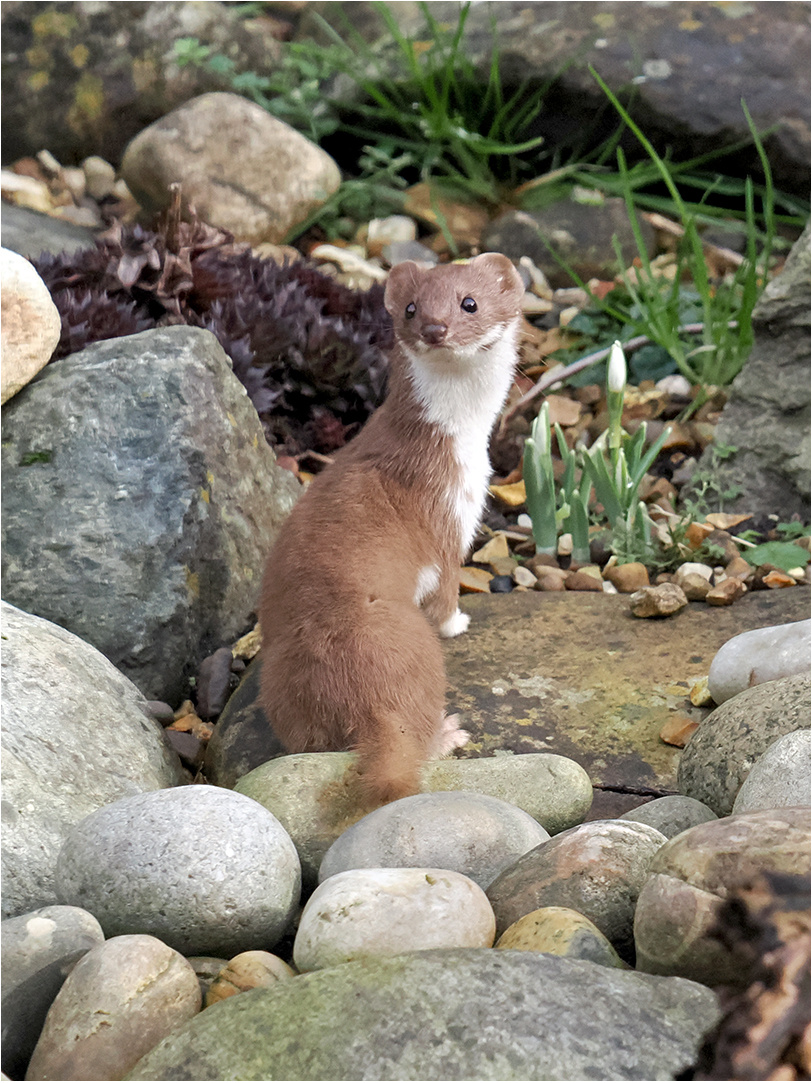
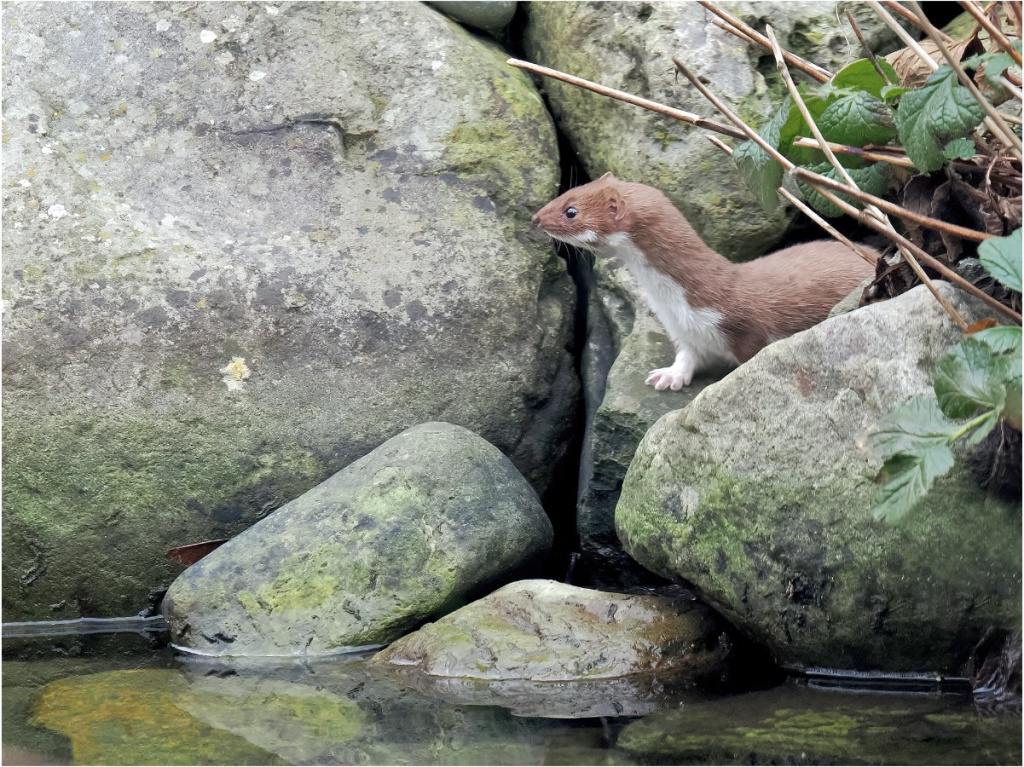
Ginger/russet coloured fur, white bib with jagged edge and several spots around neck area. short, stubby tail - NO black tip
The weasel does not change colour over winter and remains a ginger/russet brown colour throughout the year.
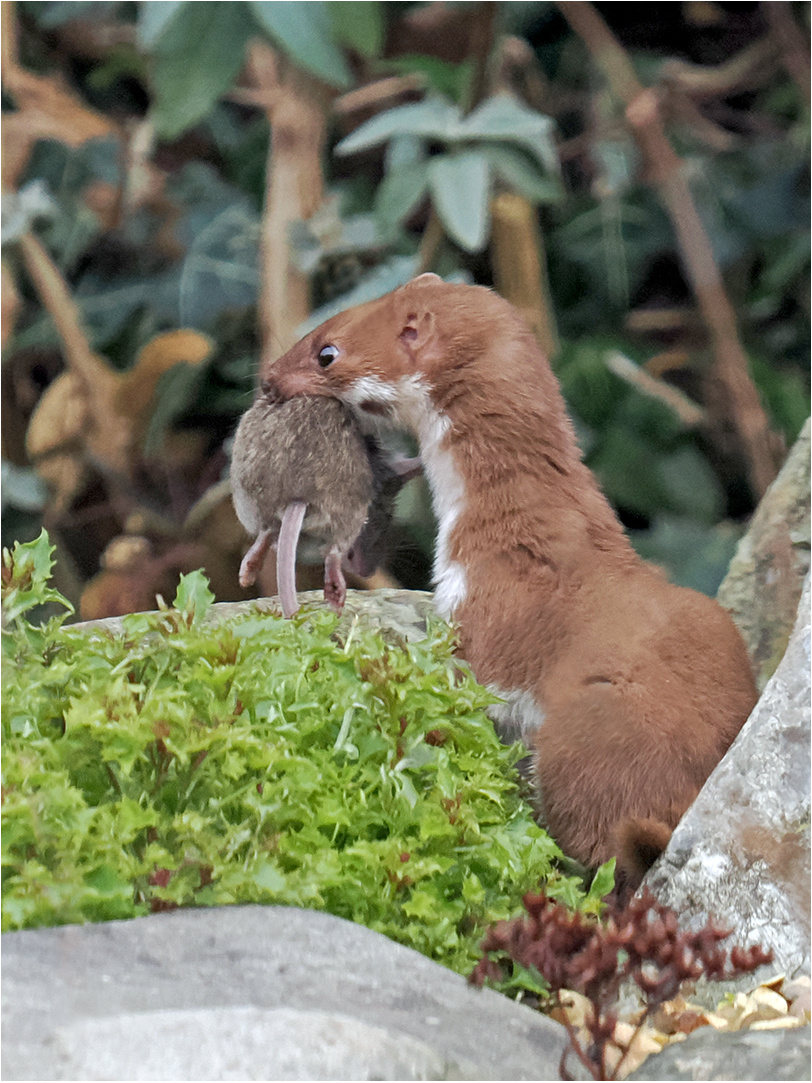
The white bib of the weasel is jagged and often has several spots at the side near to the neck - these differ between individuals. This is a useful identification feature and separates them from a Stoat. The tail is short and a little stubby without a black tip
A clear photograph of the individual showing ID features. If not possible, full description in the comments of where seen and what it looked lik.
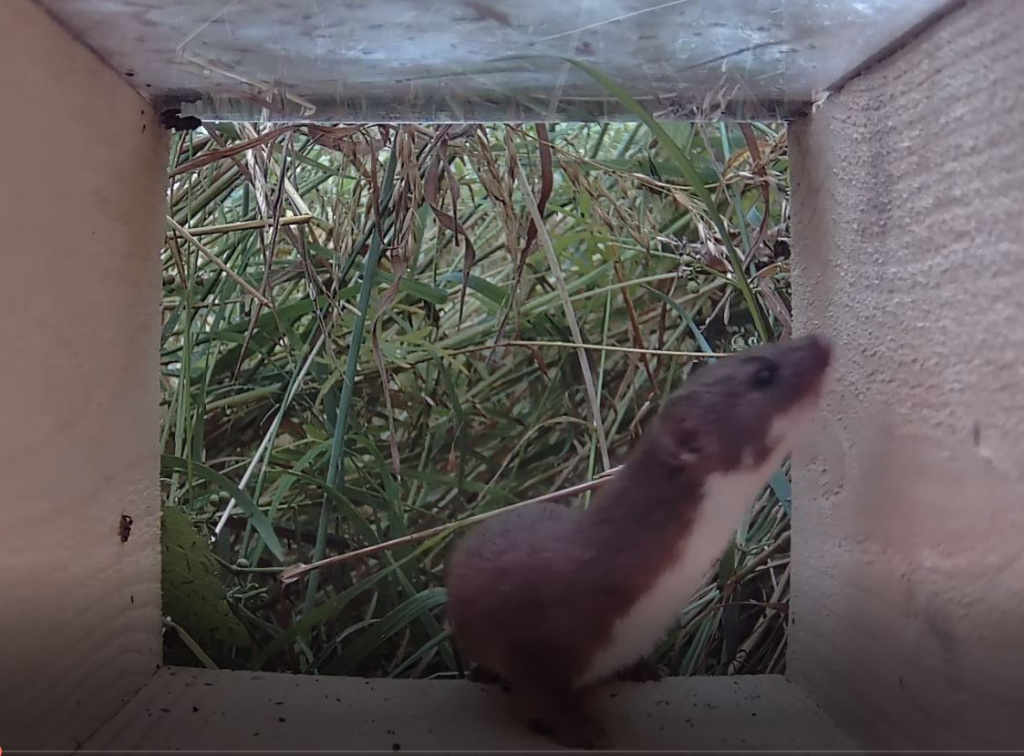
Found in a range of habitats where there is good cover and plentiful prey, including woodland, grassland, sand dunes, mountains, urban areas, marshes and moors. They will thrive in areas of dense cover and abundant prey and will take over the old burrows or nests of prey. Have been found using bird and dormouse boxes They feed mainly on small rodents, rabbits, birds and eggs
All year round - they do not hibernate. They will hunt during the day or at night. Generally they are solitary animals and difficult to spot, but after the breeding season, females seen with their young who will actively play together in open areas
Weasels are active at any time of day or night, and intersperse periods of activity with a rest period. They often take over the nests of their prey, lining their dens with fur from prey during cold weather. A number of dens will be used within the home range. Males and females occupy separate territories, and defend these against members of the opposite sex. They breed in spring and a single litter of between 4 and 6 naked, blind and deaf kits is produced (pregnancy around 36 days) each year. The kits are weaned after 3 to 4 weeks and begin to hunt well by 8 weeks of age, often accompanying their mother to hunt in 'gangs'. By 9 to 12 weeks after birth the family group starts to split up.
They have a short life expectancy with 75% dying in their first year and only 10% surviving to 2 years old in the wild.
Widespread throughout mainland Britain, and on large islands around the UK, but absent from Ireland.
Fairly common in Leicestershire and Rutland but under-recorded in parts of the counties
 John Tinning
Ervin Way Queniborough
02 February 2025
Adult - jagged bib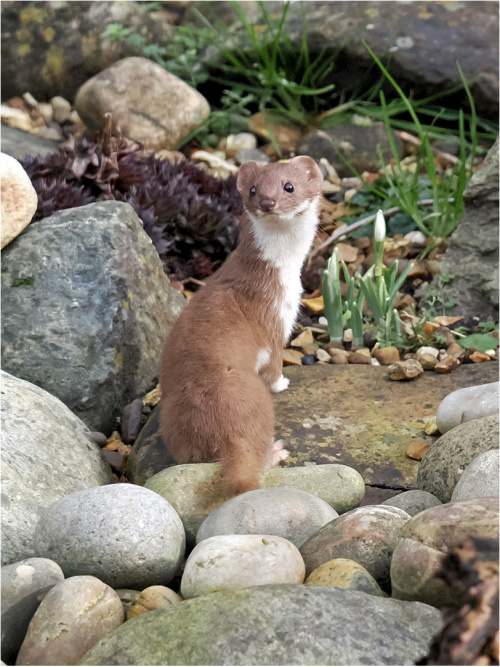 John Tinning
Ervin Way Queniborough
02 February 2025
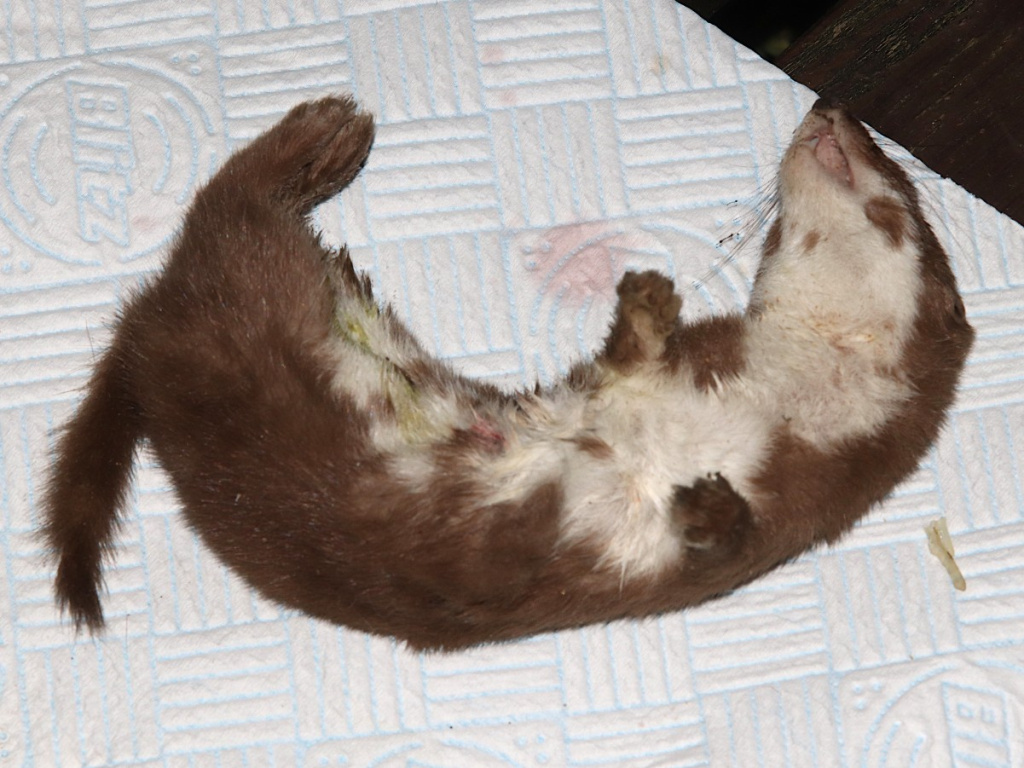
Adult - jagged bib, short tail - no black tip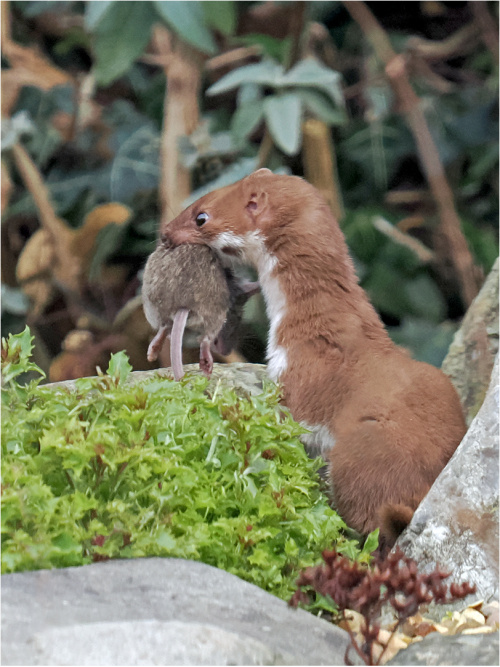 John Tinning
Ervin Way Queniborough
02 February 2025
Adult - jagged bib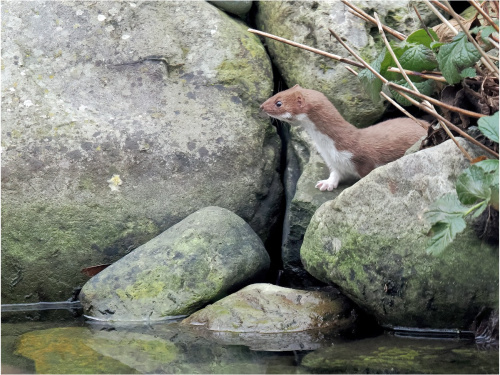 John Tinning
Ervin Way Queniborough
02 February 2025
Adult - jagged bib and spots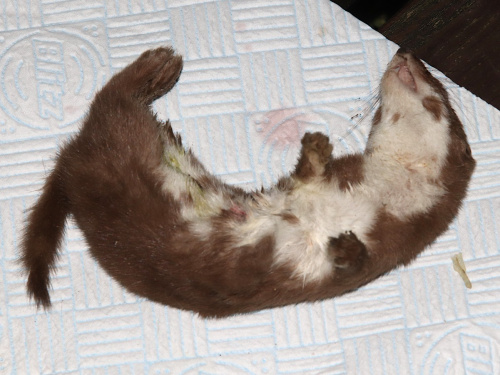 Mike Higgott
Anstey garden
05 November 2024
Jagged bib with spots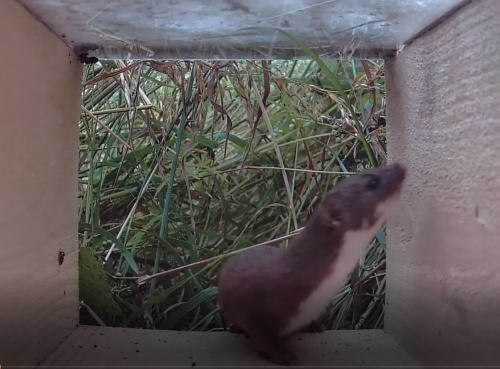 Helen O'Brien 2
Lodge Farm, Hoby
15 July 2024
Adult - coloured spots on throat and jagged bib
Leicestershire & Rutland Map
Enter a town or village to see local records
MAP KEY:
Yellow squares = NBN records (all known data)
Coloured circles = NatureSpot records: 2025+ | 2020-2024 | pre-2020
UK Map
Species profile
- Common names
- Weasel
- Species group:
- terrestrial mammal
- Kingdom:
- Animalia
- Order:
- Carnivora
- Family:
- Mustelidae
- Records on NatureSpot:
- 69
- First record:
- 01/01/2006 (Ellison, Lorraine)
- Last record:
- 09/06/2026 (Mabbett, Craig)
Total records by month
% of records within its species group
10km squares with records
The latest images and records displayed below include those awaiting verification checks so we cannot guarantee that every identification is correct. Once accepted, the record displays a green tick.
In the Latest Records section, click on the header to sort A-Z, and again to sort Z-A. Use the header boxes to filter the list.
Latest images
Latest records
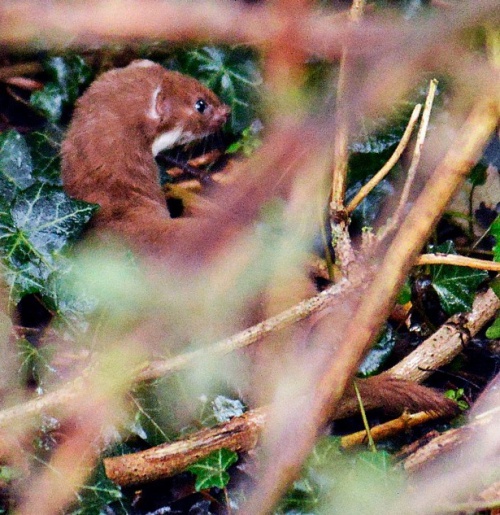 Lostash
Whetstone Fields
04 January 2015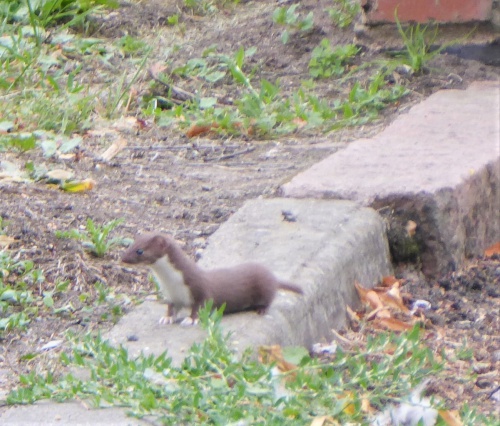 Saharima Roenisch
Oadby
04 August 2020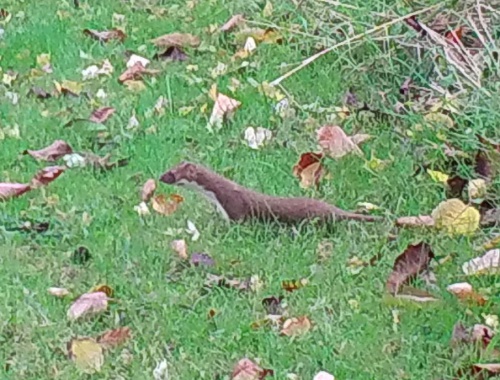 Barbara Cooper
Long Clawson
27 October 2021