

Spotted Hawkweed - Hieracium spilophaeum
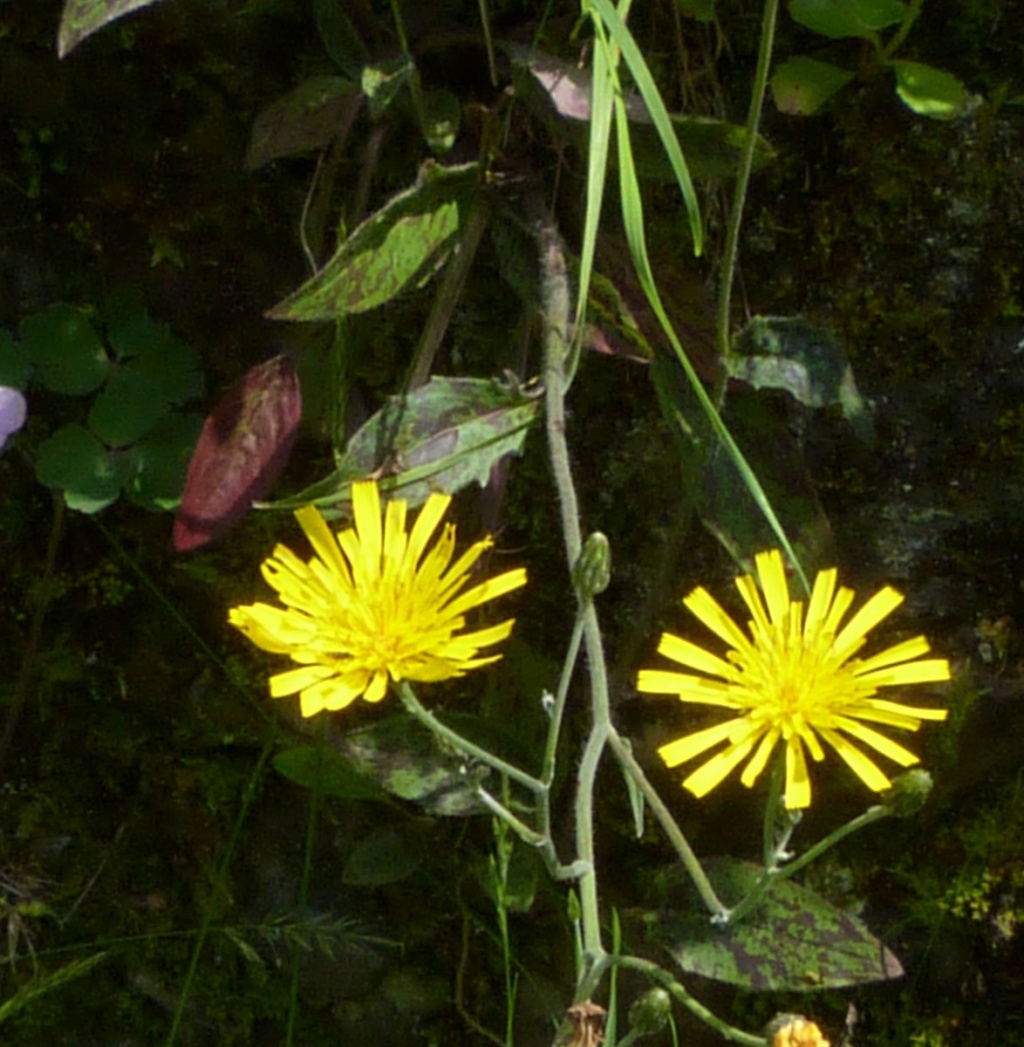
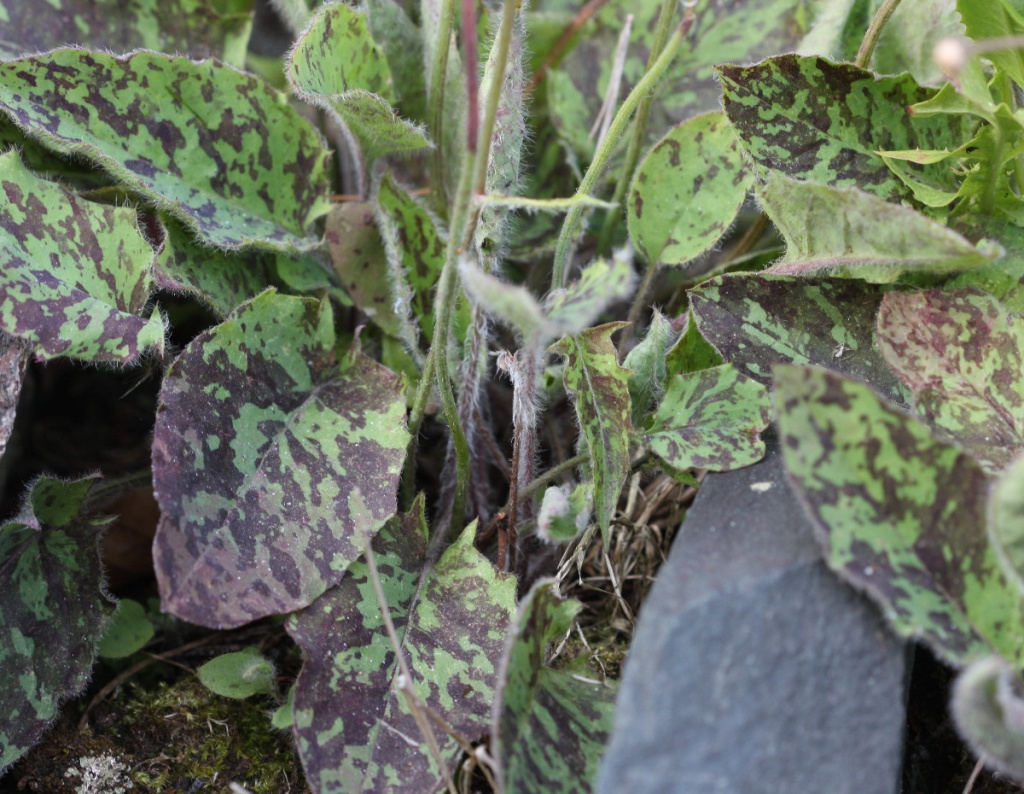
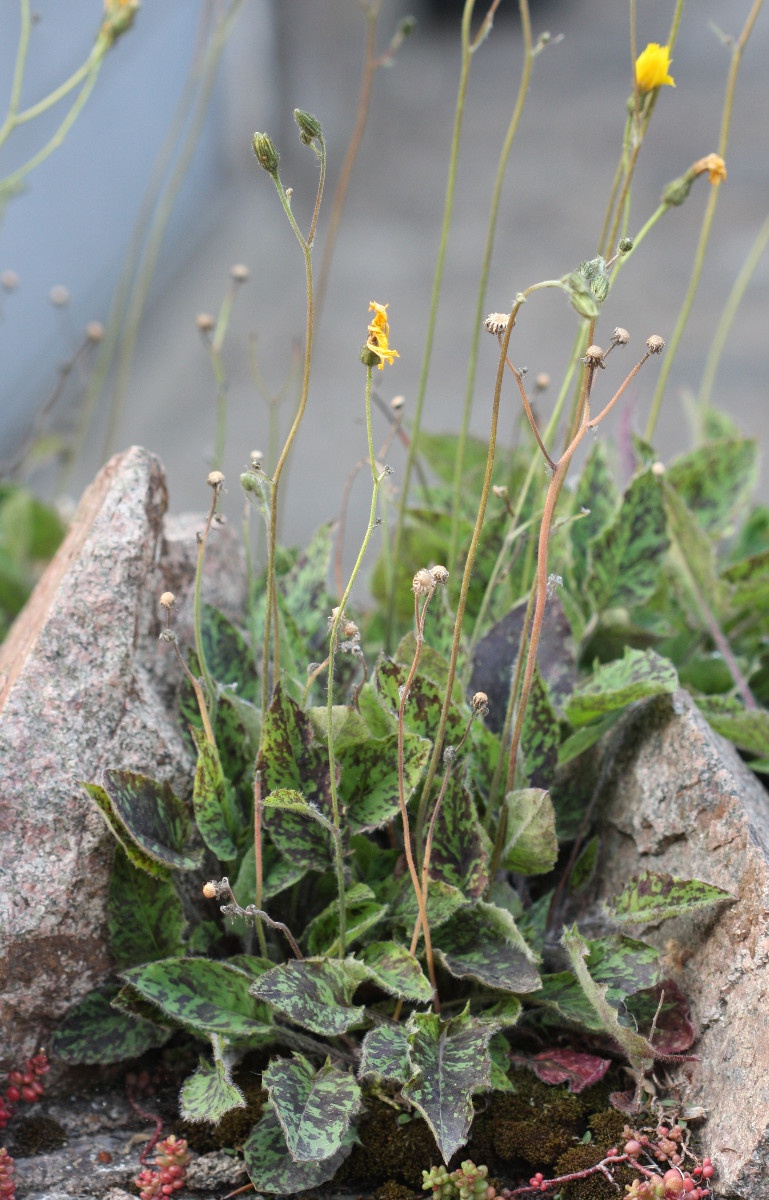
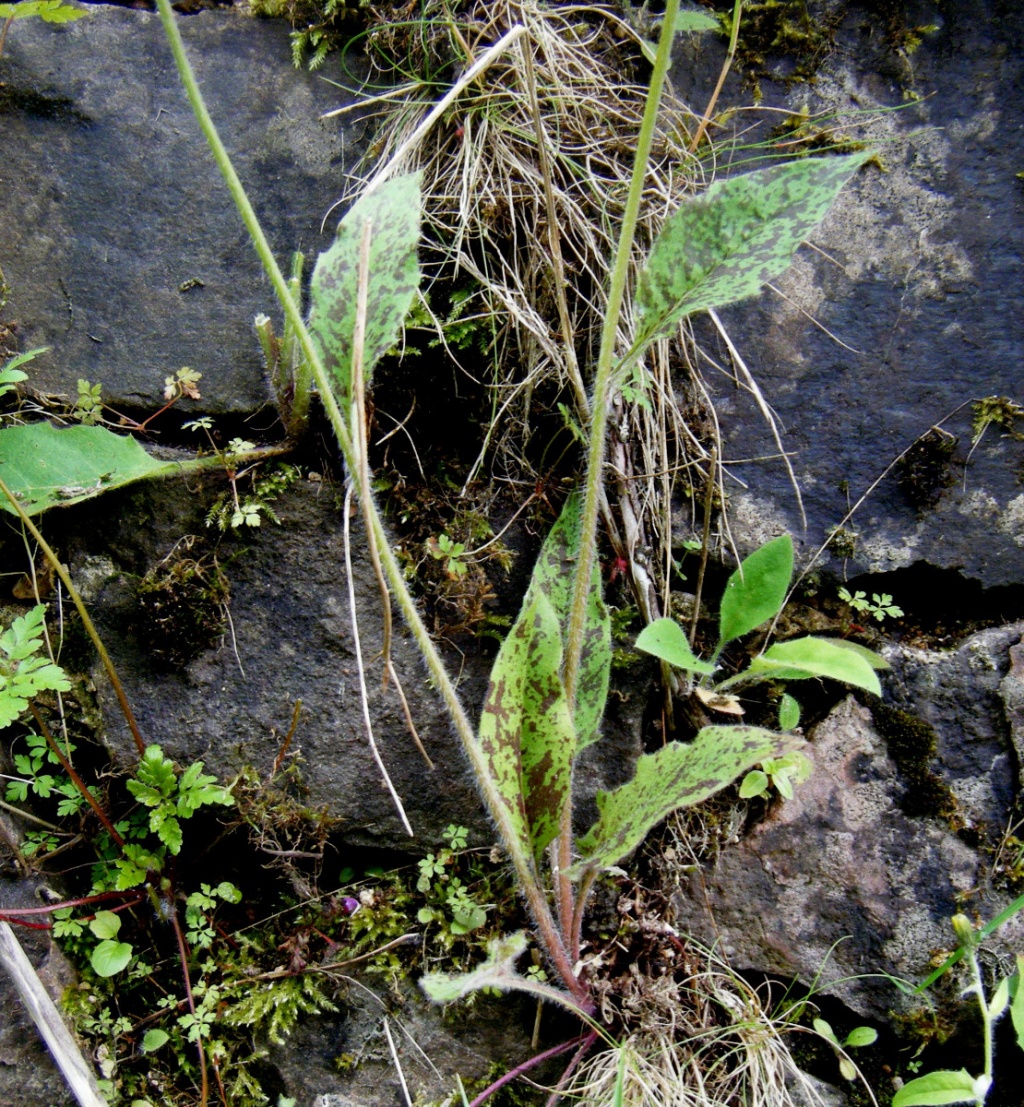
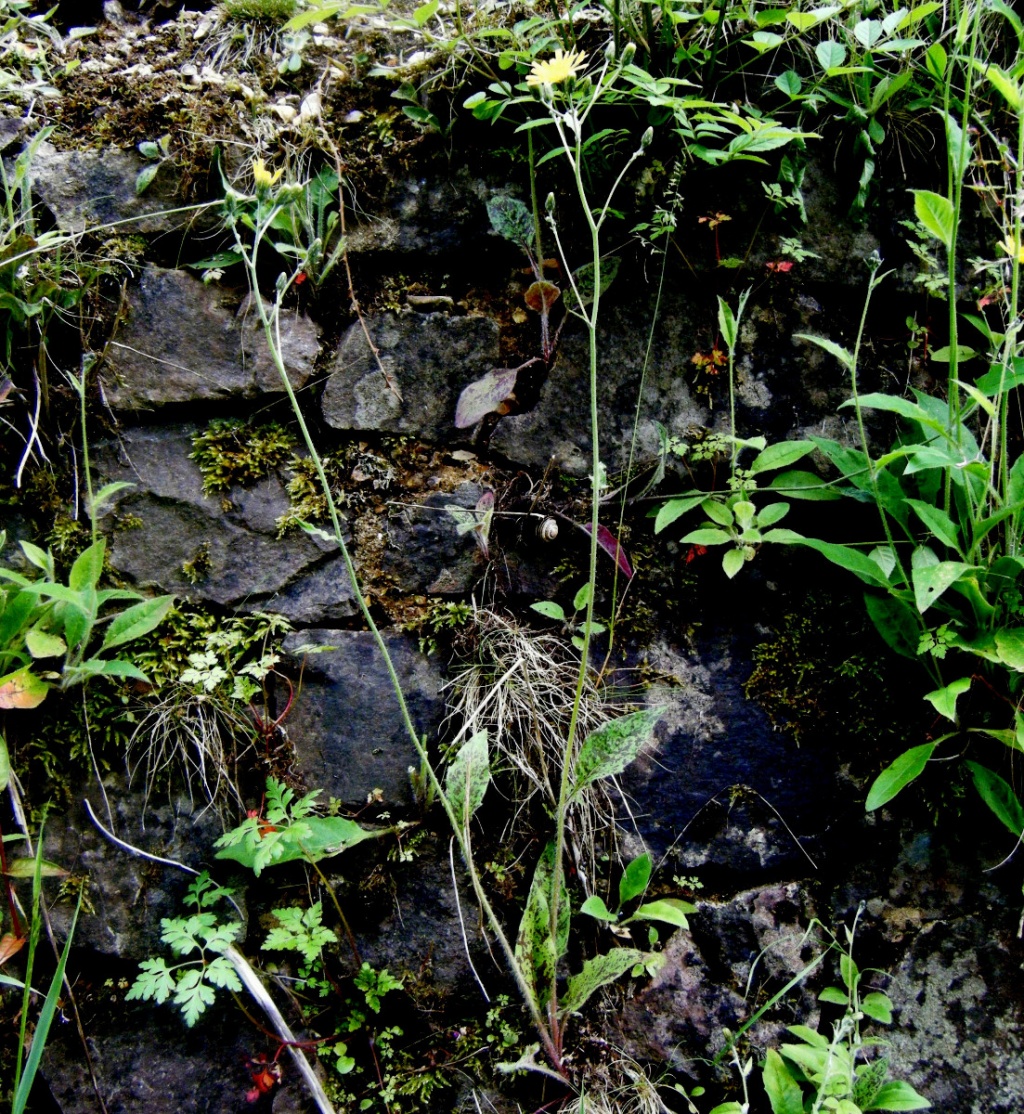
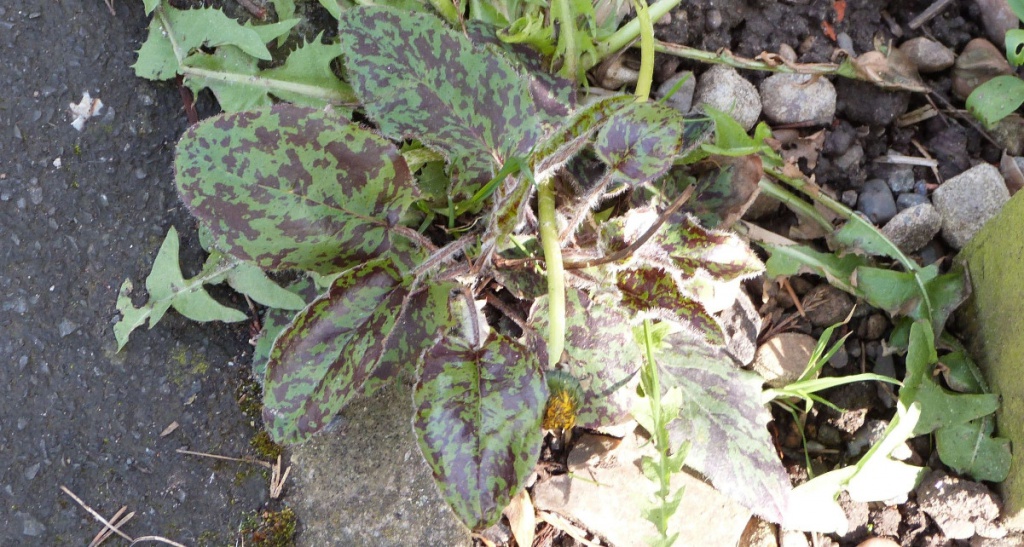
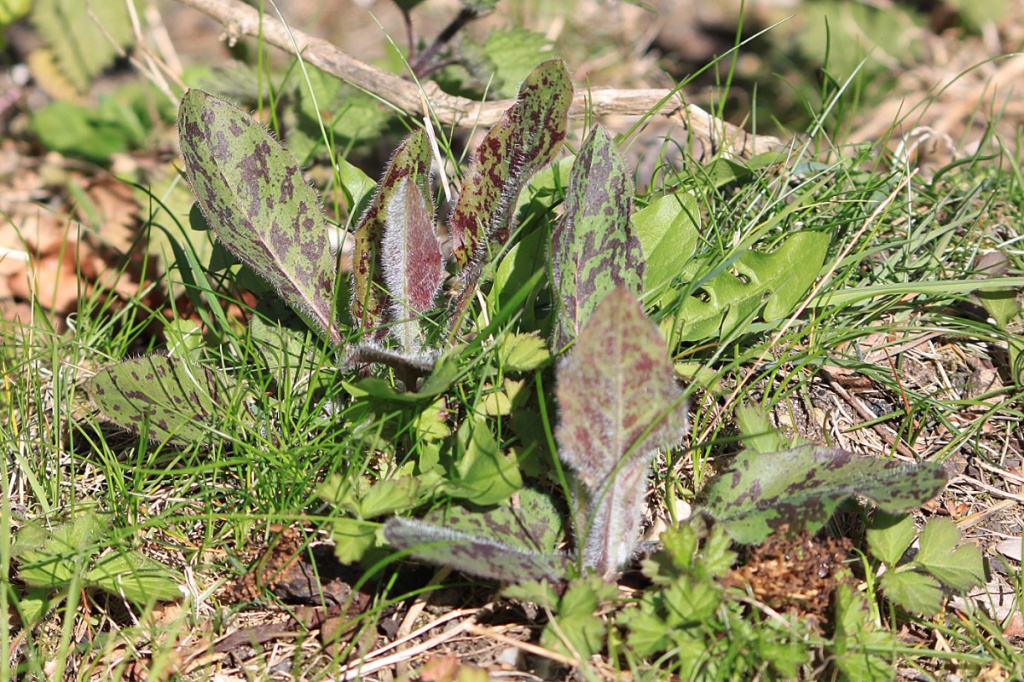
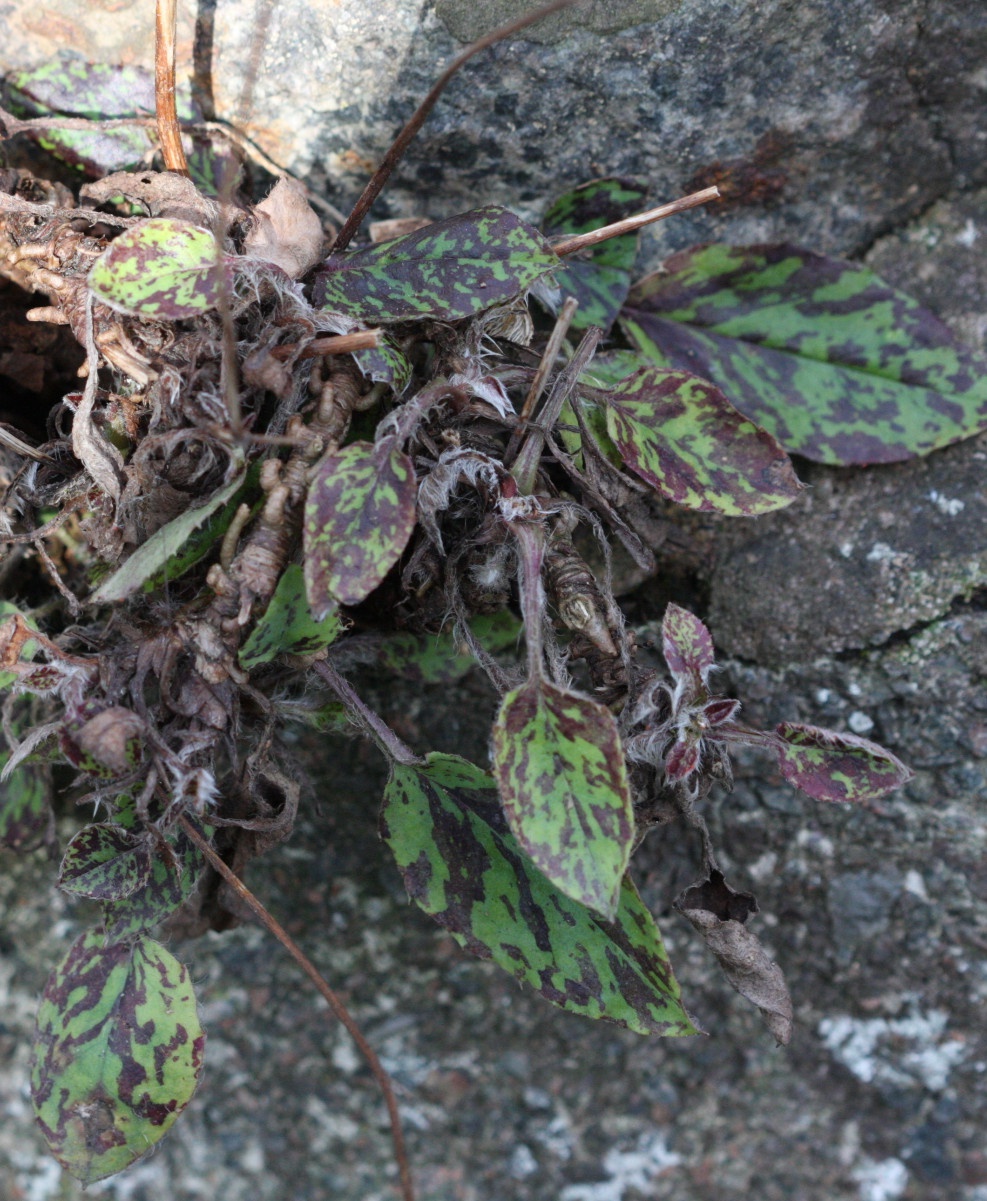
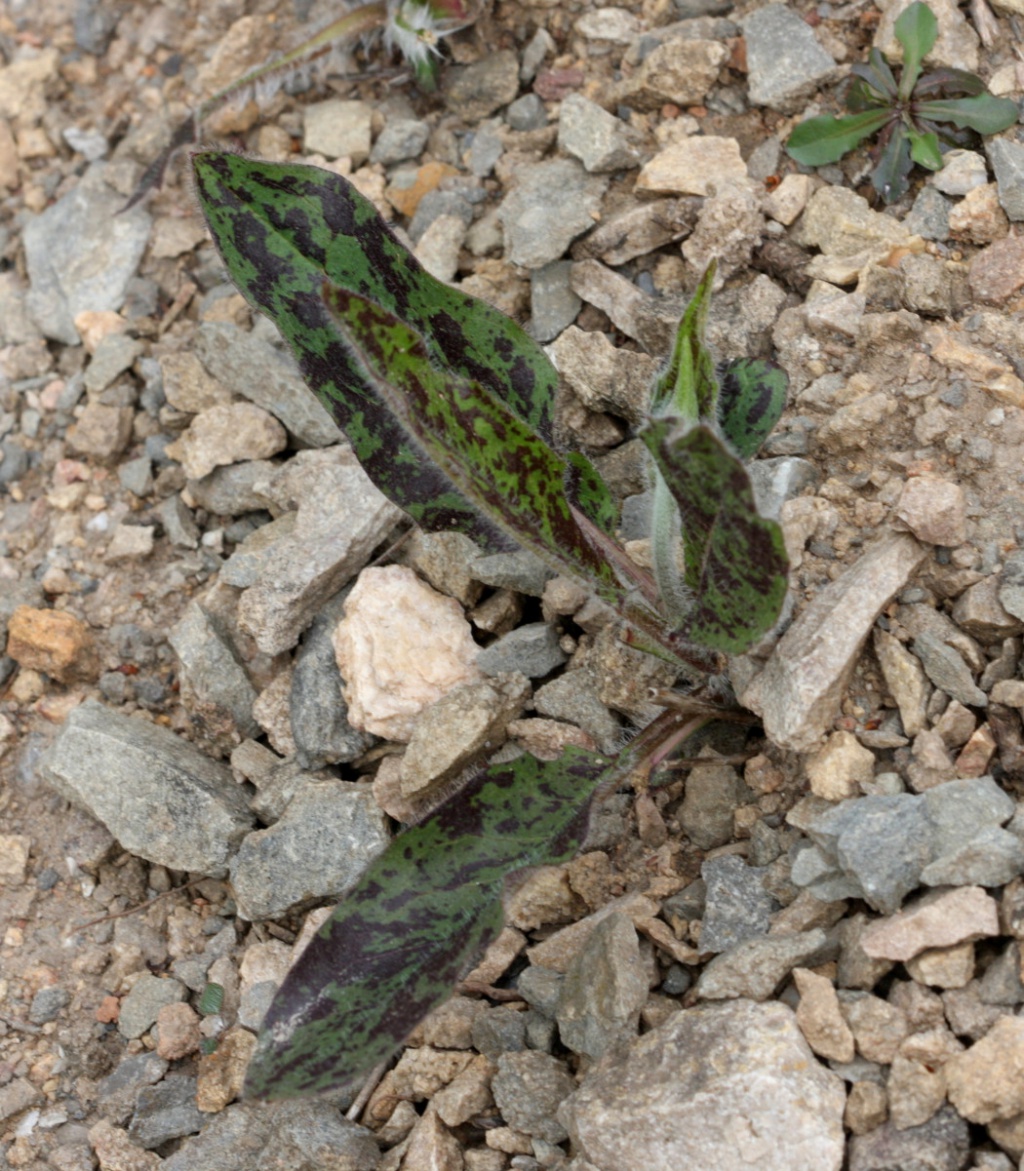
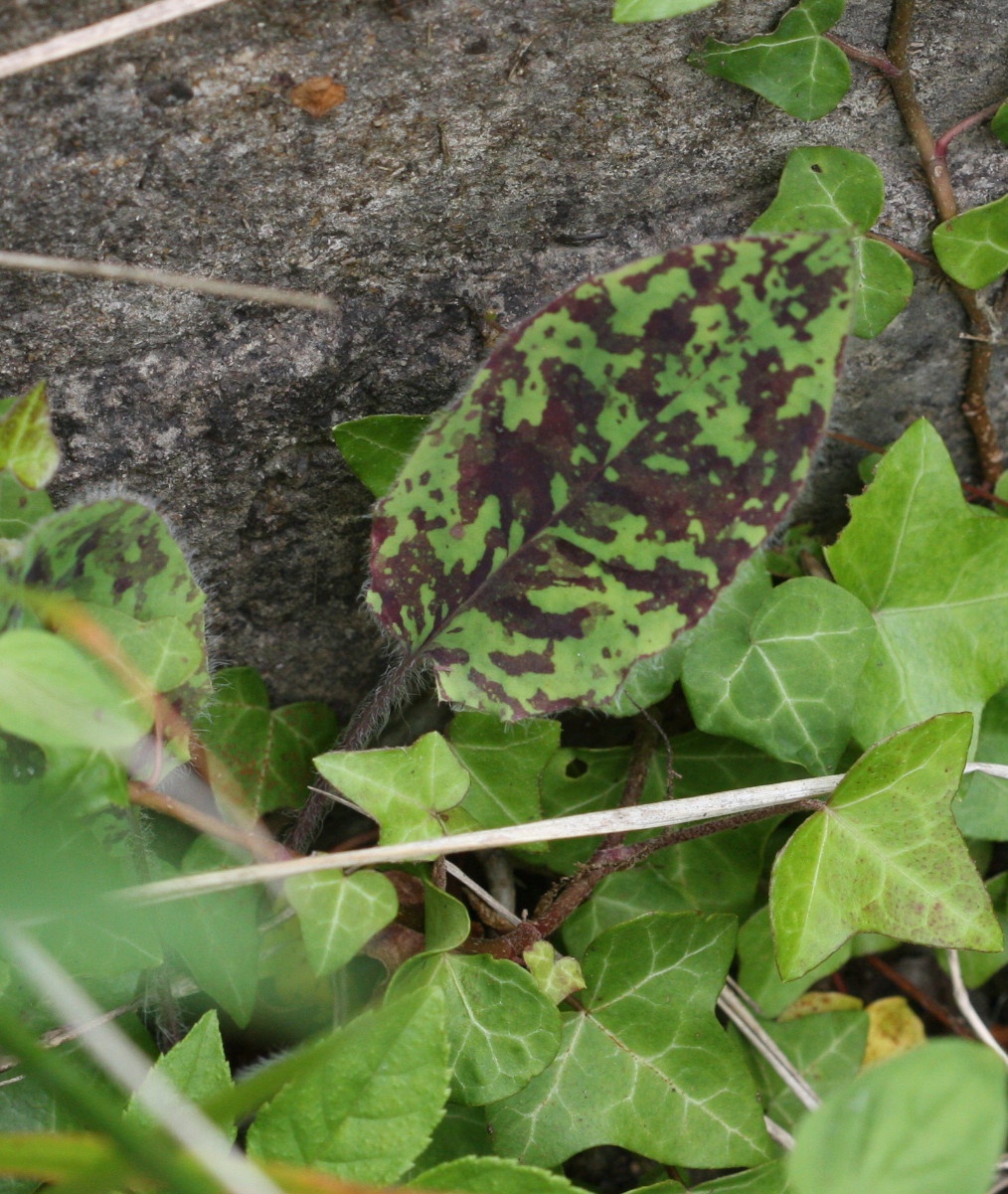
Also known as Common Hawkweed. This plant has the usual yellow flowers associated with the genus, but the leaves are often deeply purple spotted.
Several other species in Sect. Vulgata have purple-spotted leaves.

Identifying most Hieracium to species-level is extremely difficult, and can only be done from a specimen by an expert in the genus. Stace (4th edition) separates the 415 microspecies into 15 sections which can be identified with care on the basis of leaf characteristics.
A specimen is required for verification
Rough grassland, waste areas, railway embankments and quarries.
June to August.
Perennial.
Local. Most records come from south of a line between the Humber and the Severn.
Local in Leicestershire and Rutland. In the 1979 Flora survey of Leicestershire it was found in 24 of the 617 tetrads.
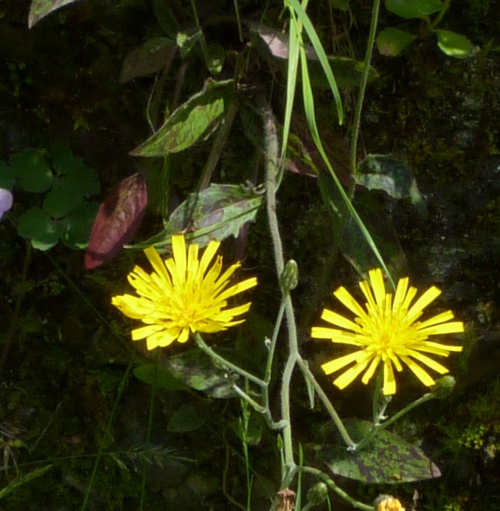 Graham Calow
Jubilee Walk Leire
25 June 2012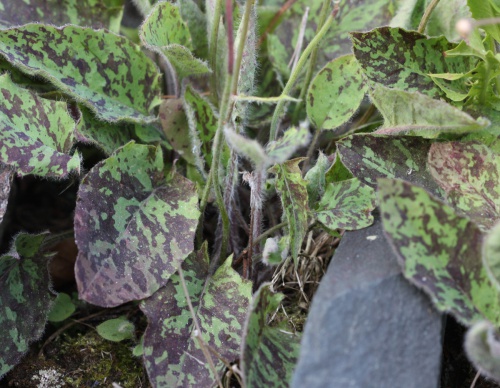 David Nicholls
Bradgate Park
05 July 2013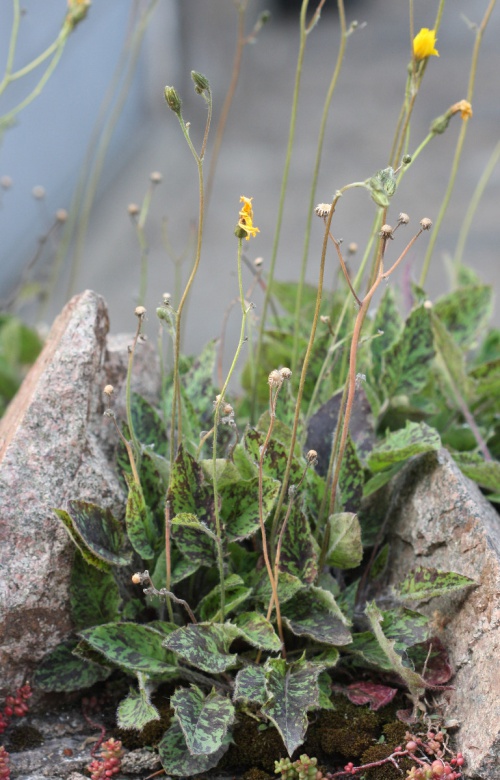 David Nicholls
Bradgate Park
05 July 2013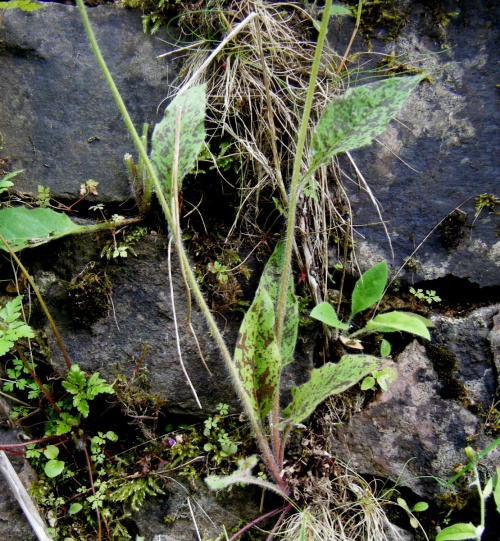 Graham Calow
Jubilee Walk Leire
16 June 2012
Leicestershire & Rutland Map
Enter a town or village to see local records
MAP KEY:
Yellow squares = NBN records (all known data)
Coloured circles = NatureSpot records: 2025+ | 2020-2024 | pre-2020
UK Map
The latest images and records displayed below include those awaiting verification checks so we cannot guarantee that every identification is correct. Once accepted, the record displays a green tick.
In the Latest Records section, click on the header to sort A-Z, and again to sort Z-A. Use the header boxes to filter the list.
Latest images
Latest records
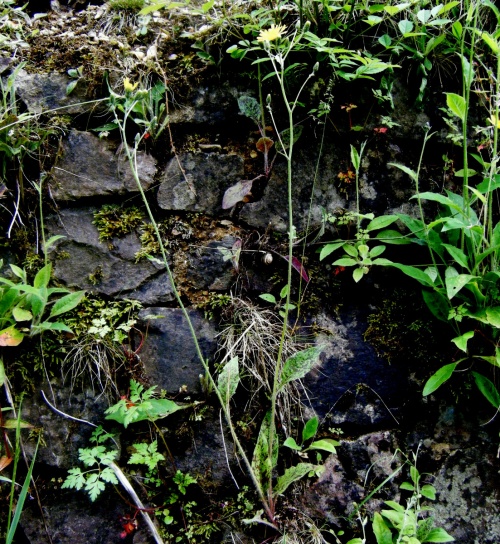 Graham Calow
Jubilee Walk Leire
16 June 2012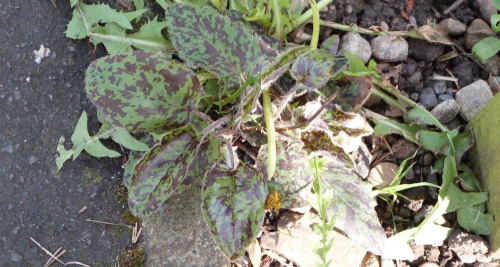 Graham Calow
Stoke Golding
23 March 2017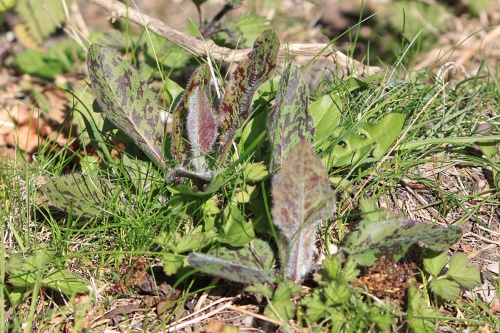 Paul Ruddoch
Cribbs Meadow
29 April 2015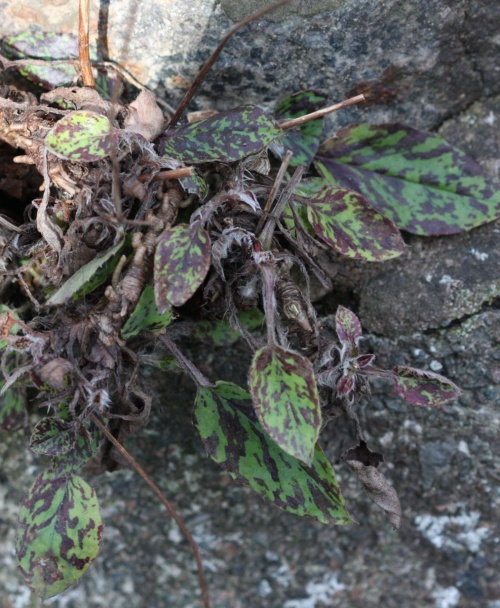 David Nicholls
Bradgate Park
11 February 2016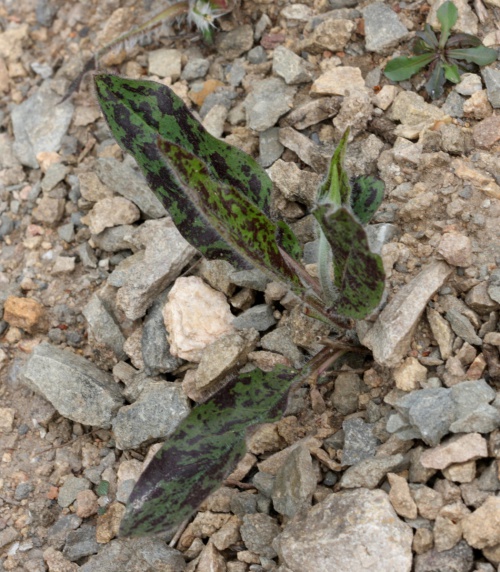 David Nicholls
Cloud Wood
04 May 2015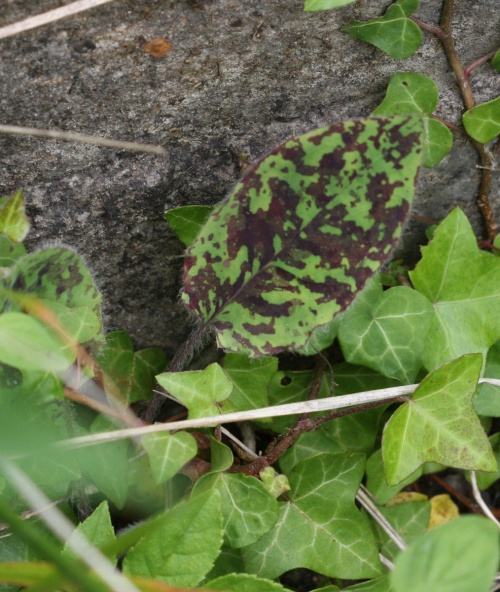 David Nicholls
Ketton Quarry
13 June 2014
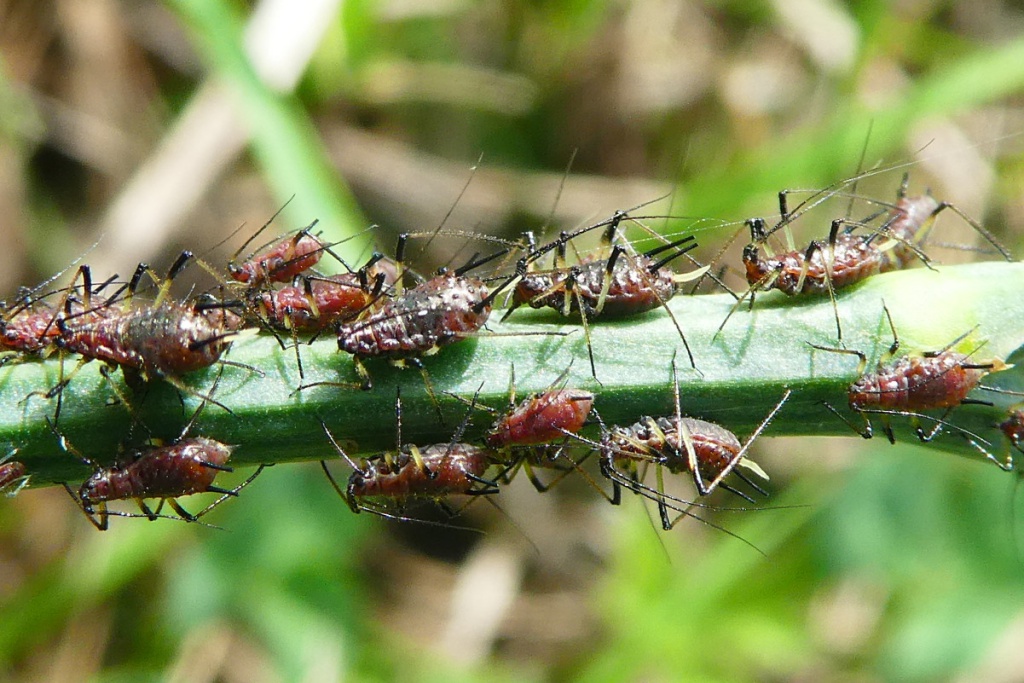
Uroleucon obscurum
Uroleucon obscurum has been recorded on 26 Hieracium species. The species does not host alternate. It can be found on the upper parts of stems of Hawkweeds (Hieracium spp.). Adult apterae of Uroleucon obscurum are reddish brown to bronze with black antennae and siphunculi and a yellow cauda. The body length of an adult Uroleucon obscurum aptera is rather less than for most species at 1.8 to 3.7 mm.