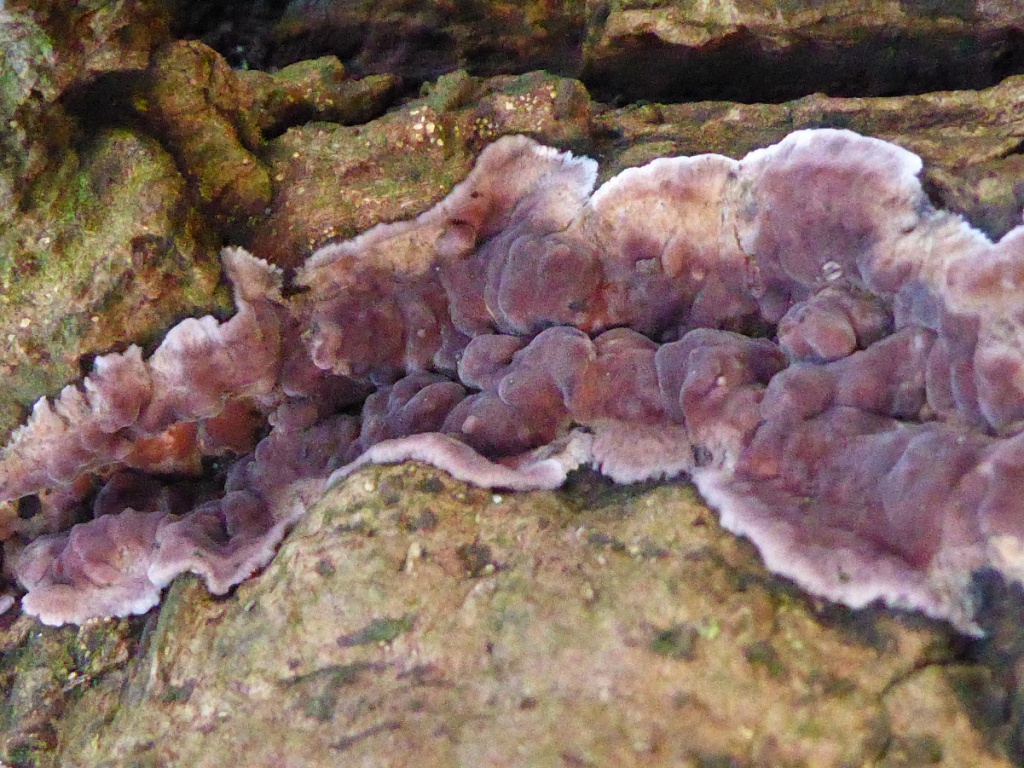
Silverleaf Fungus - Chondrostereum purpureum
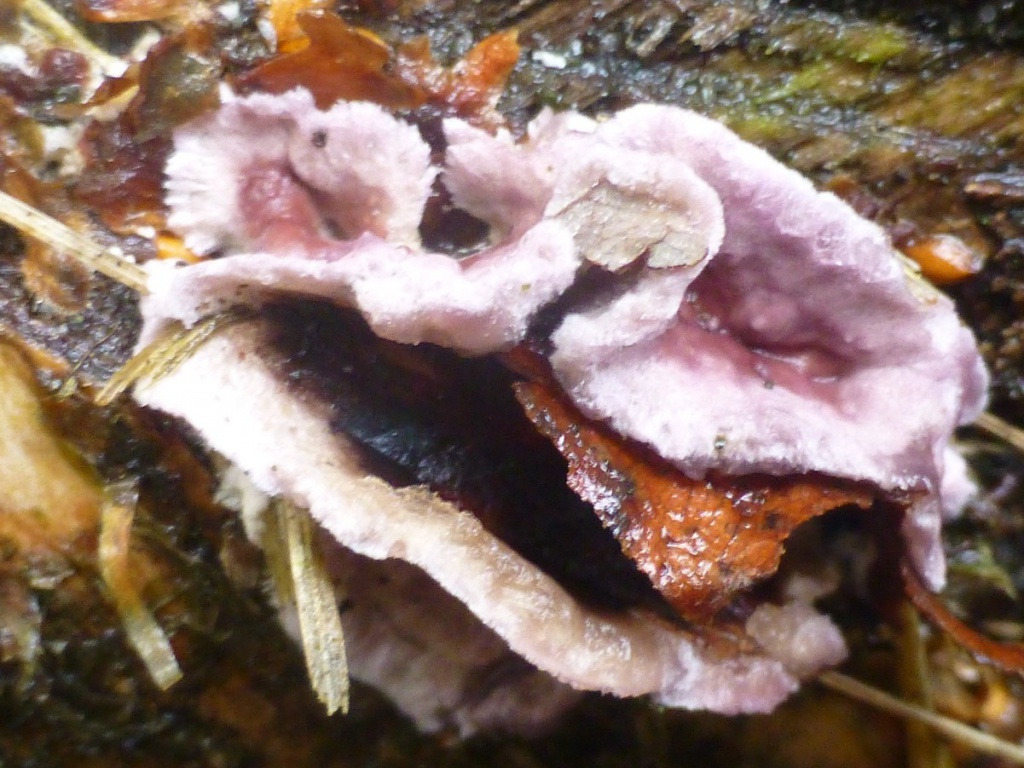
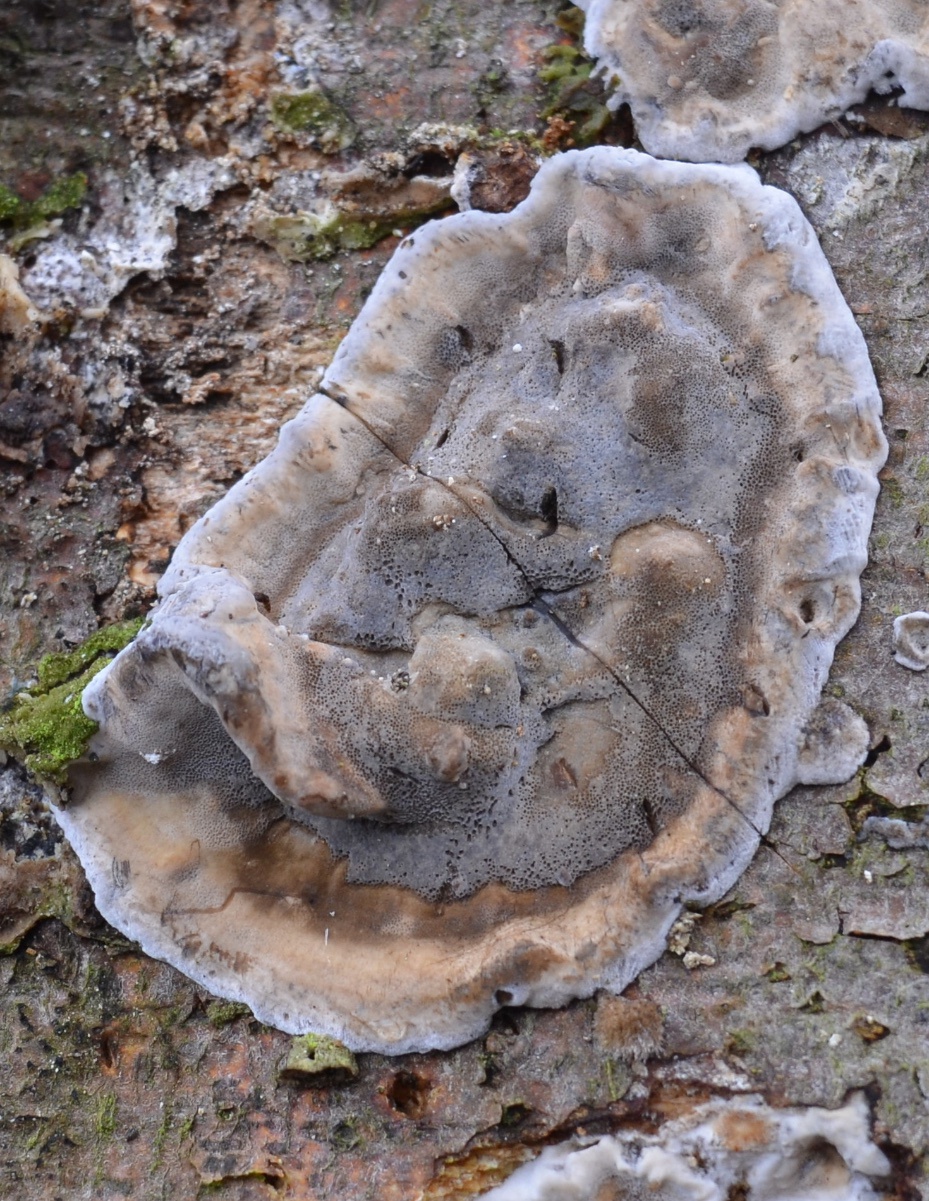
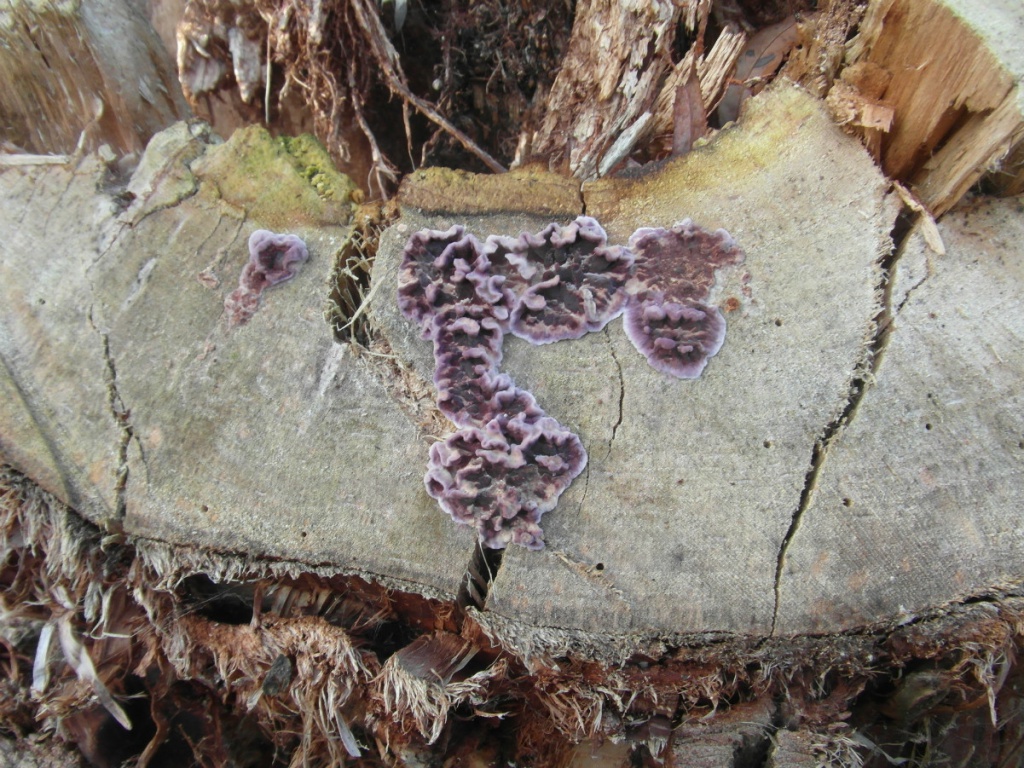
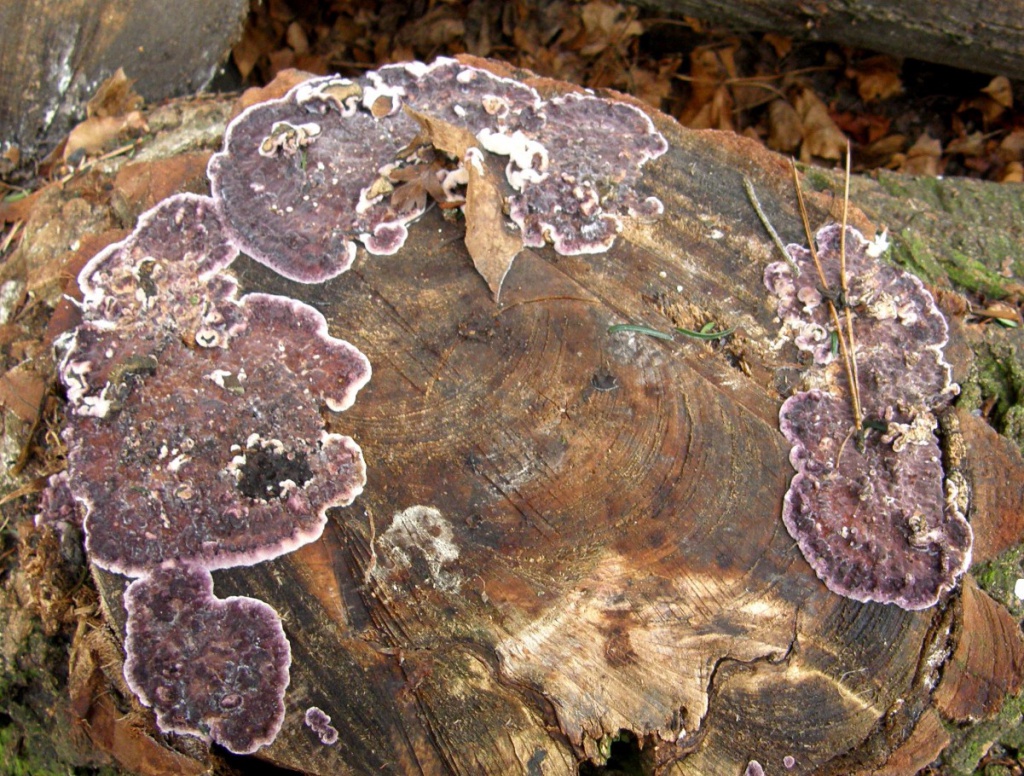
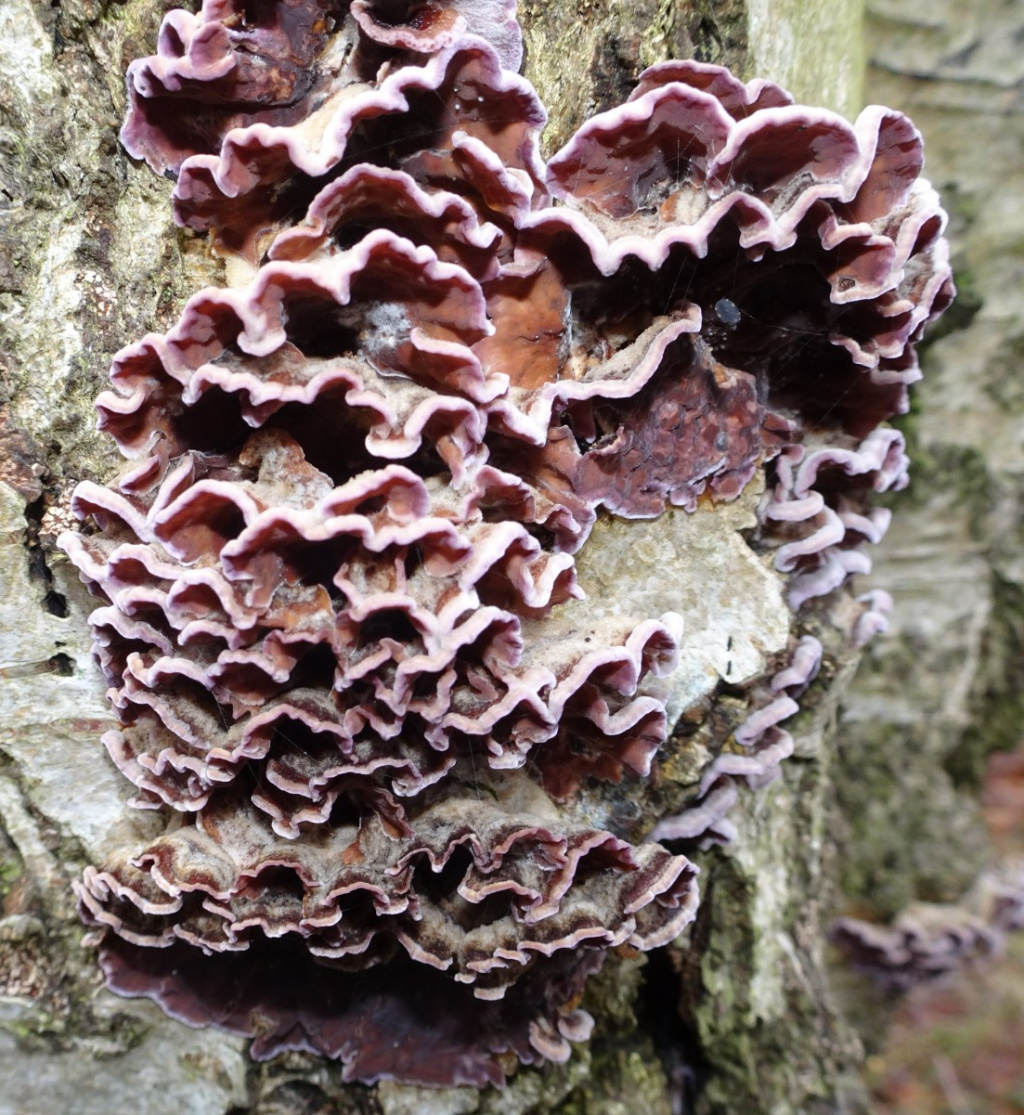
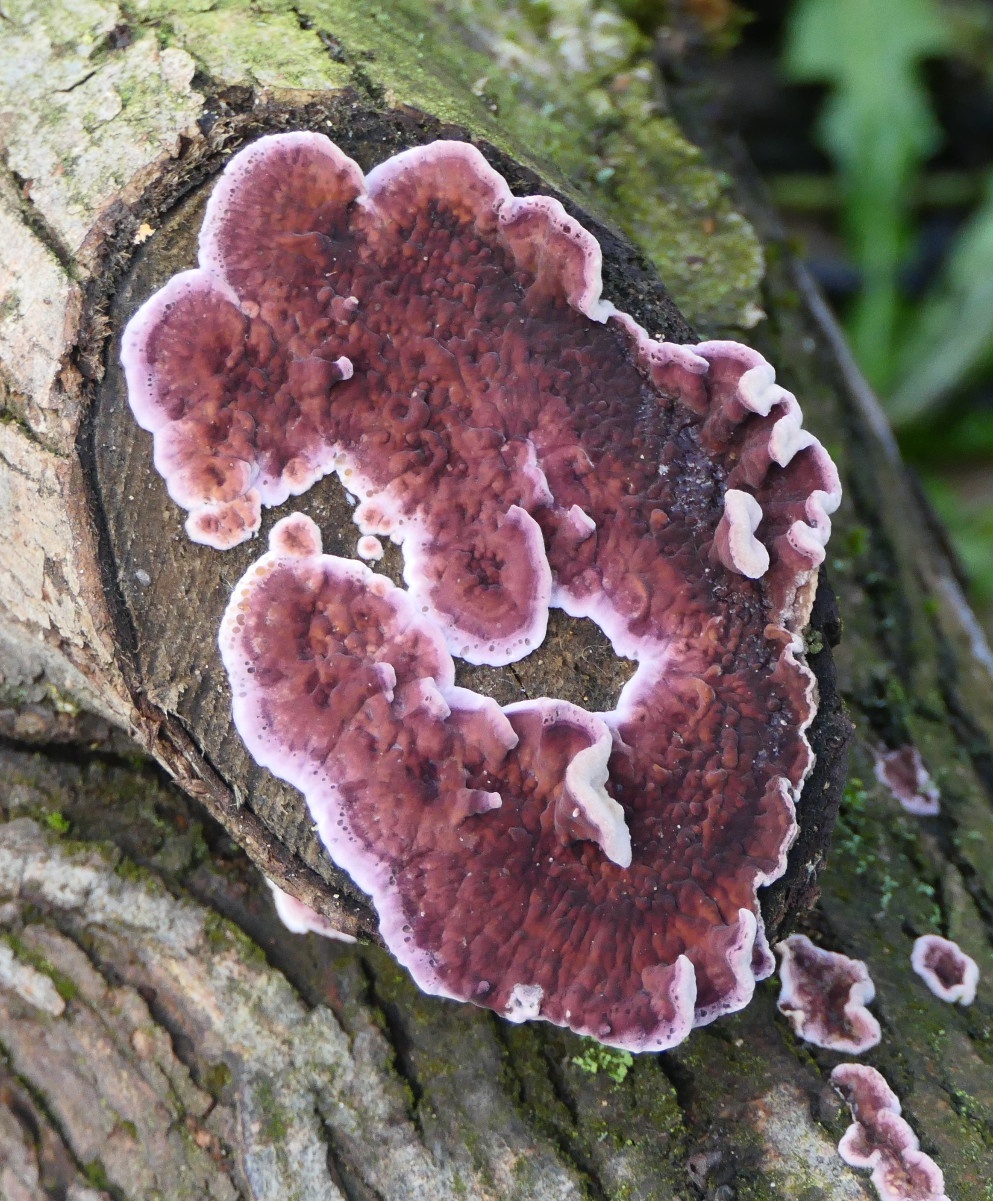
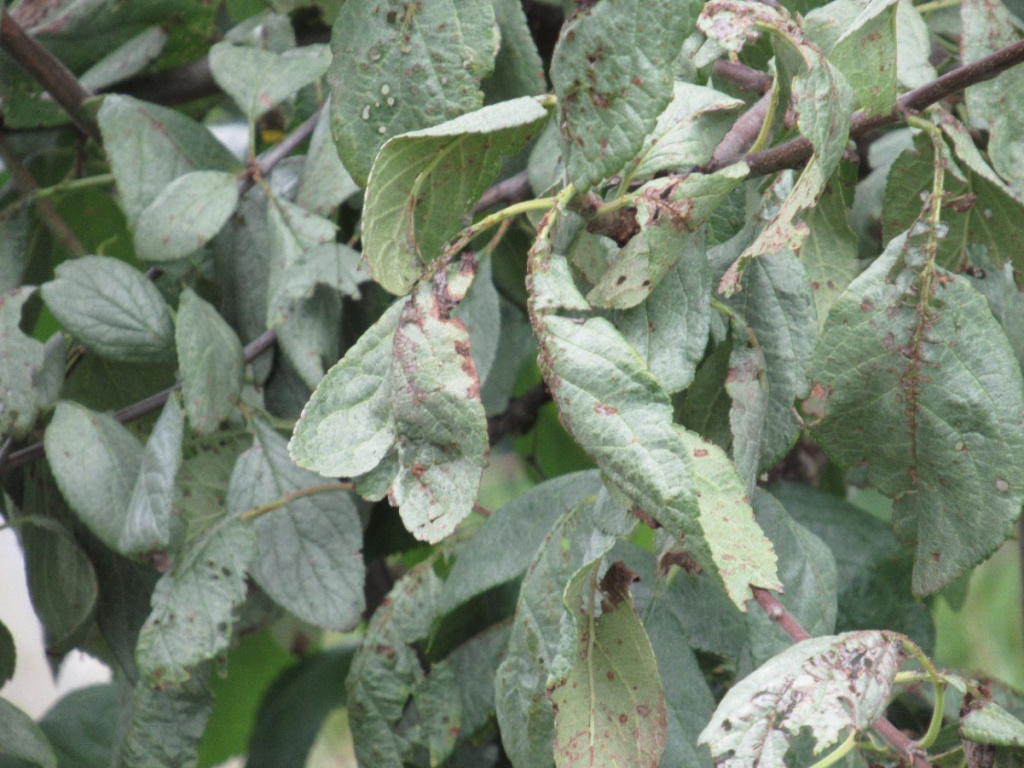
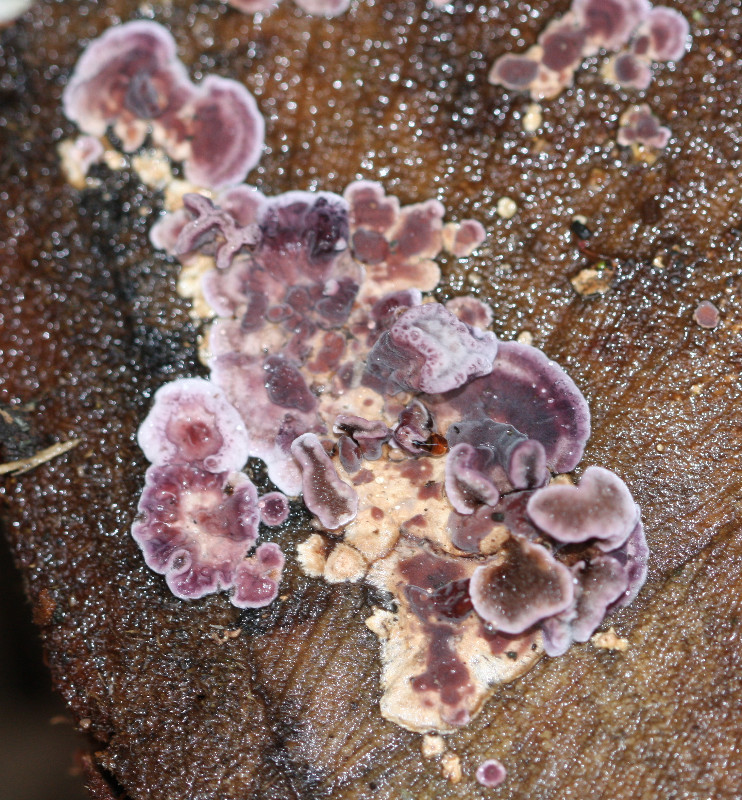
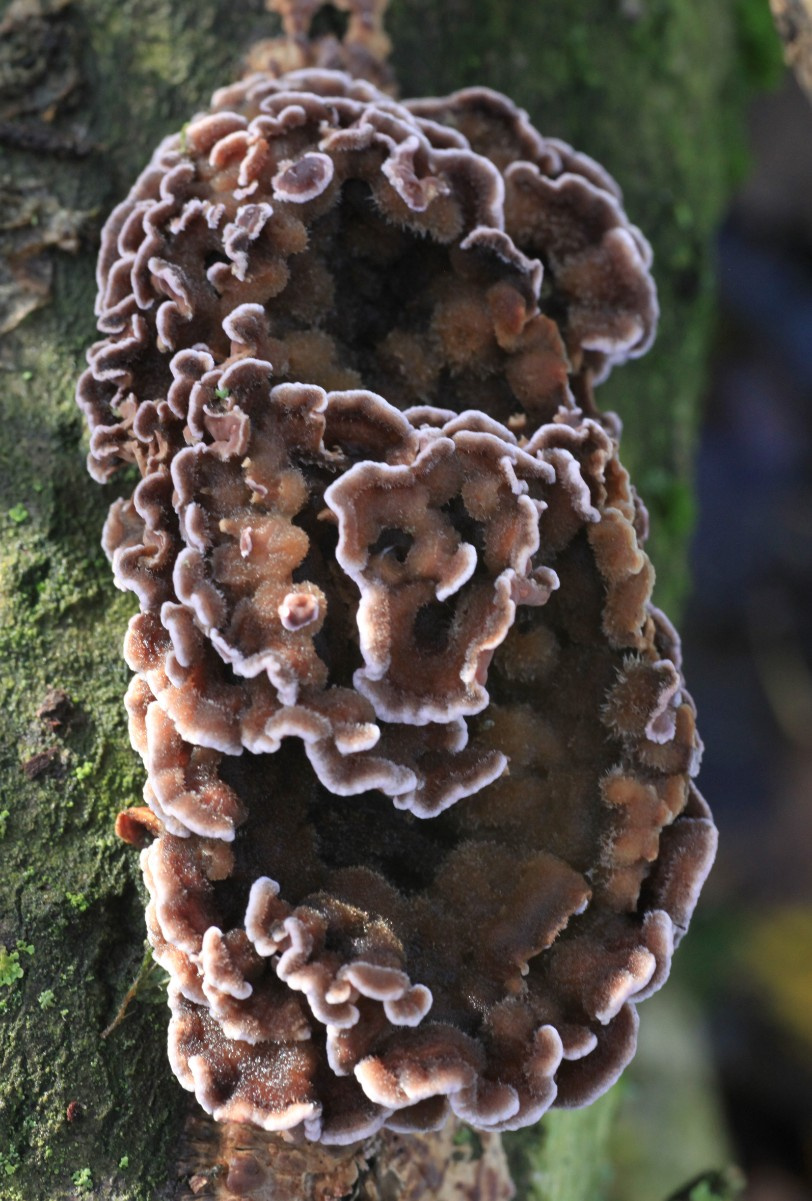
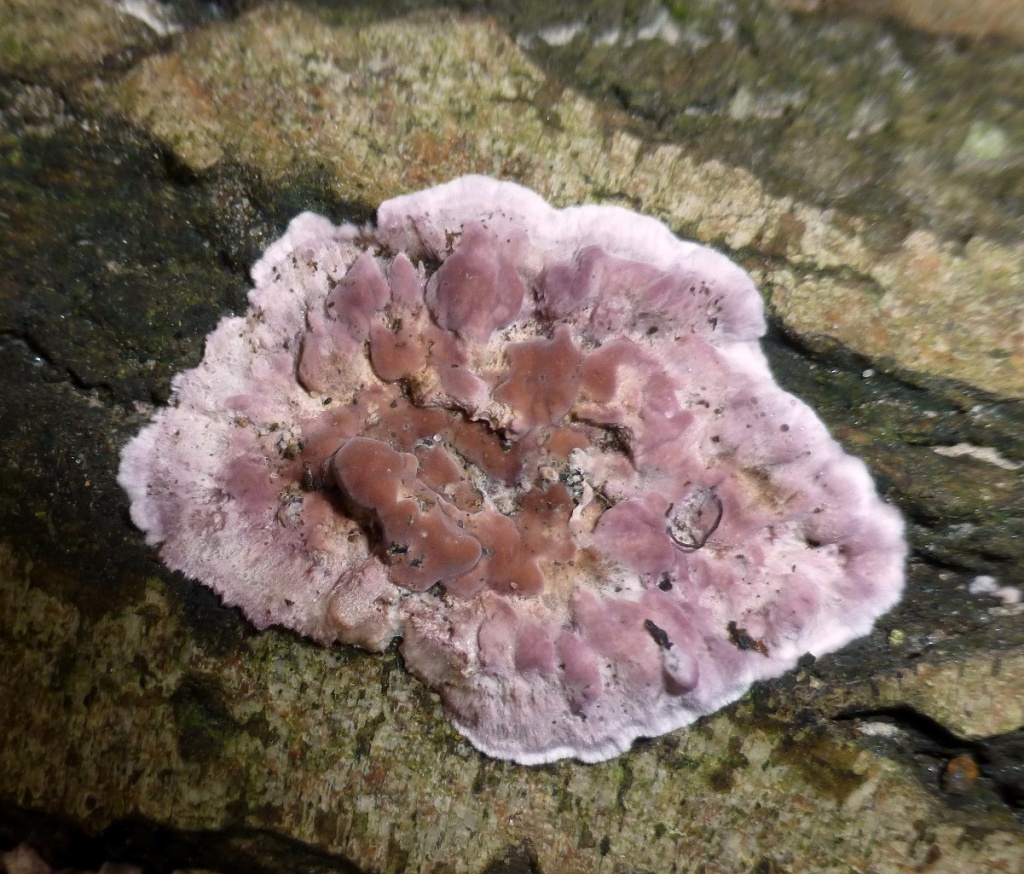
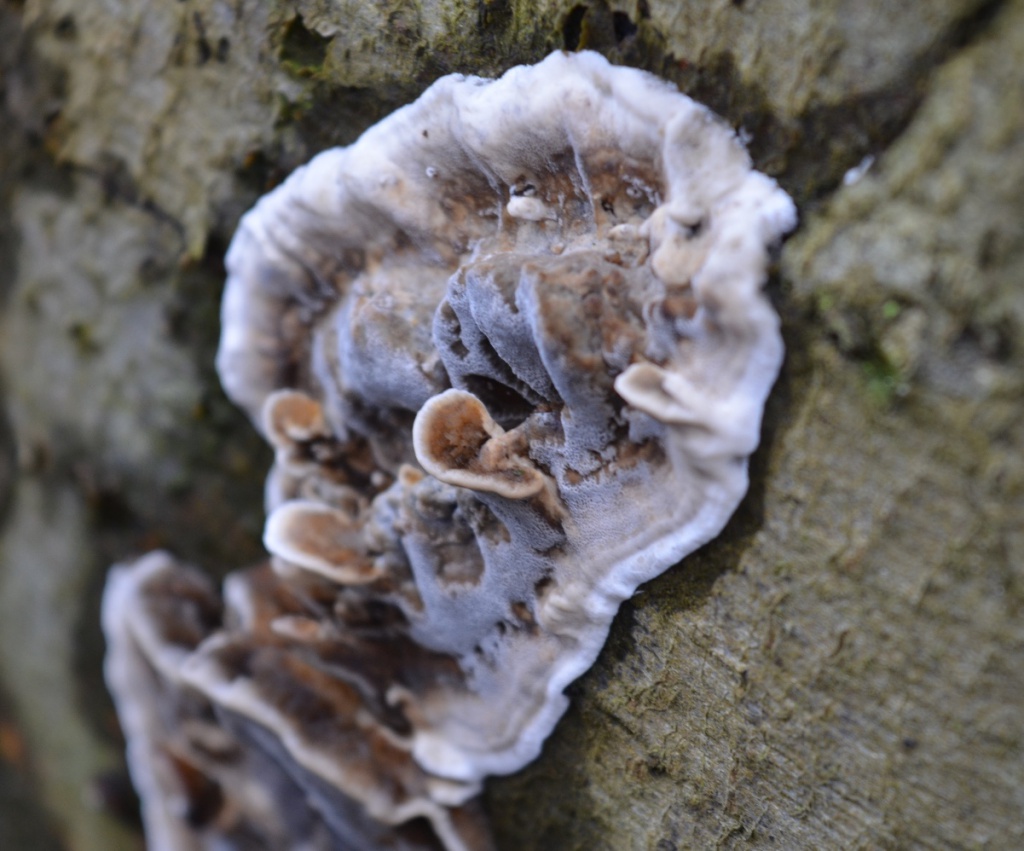
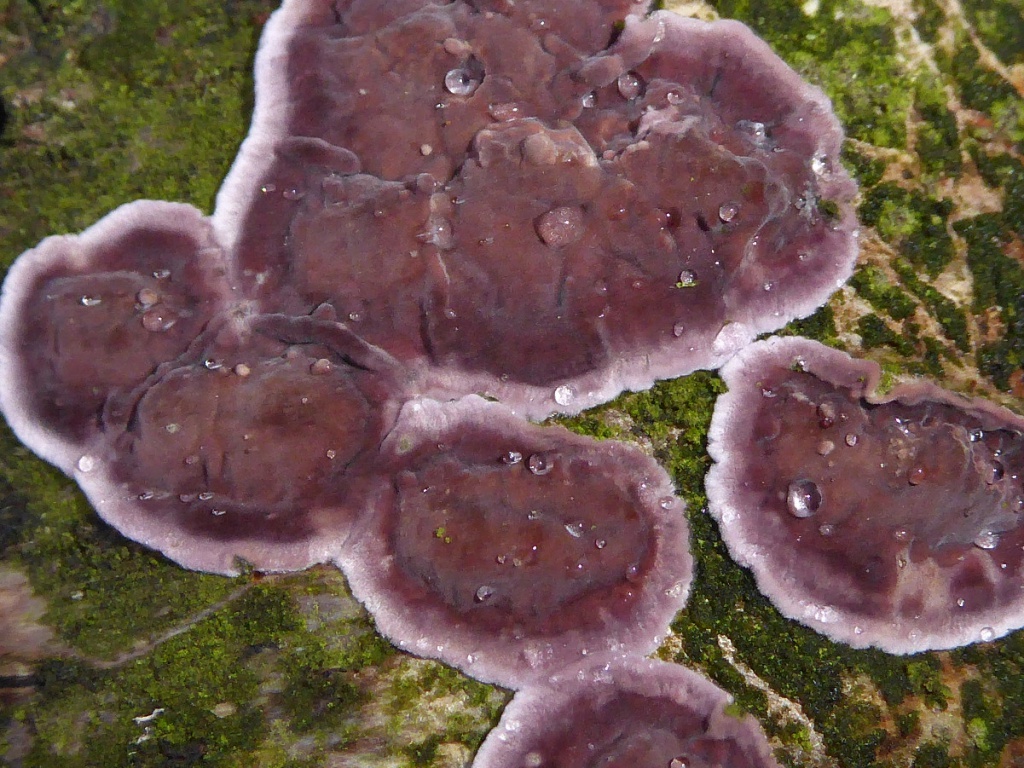
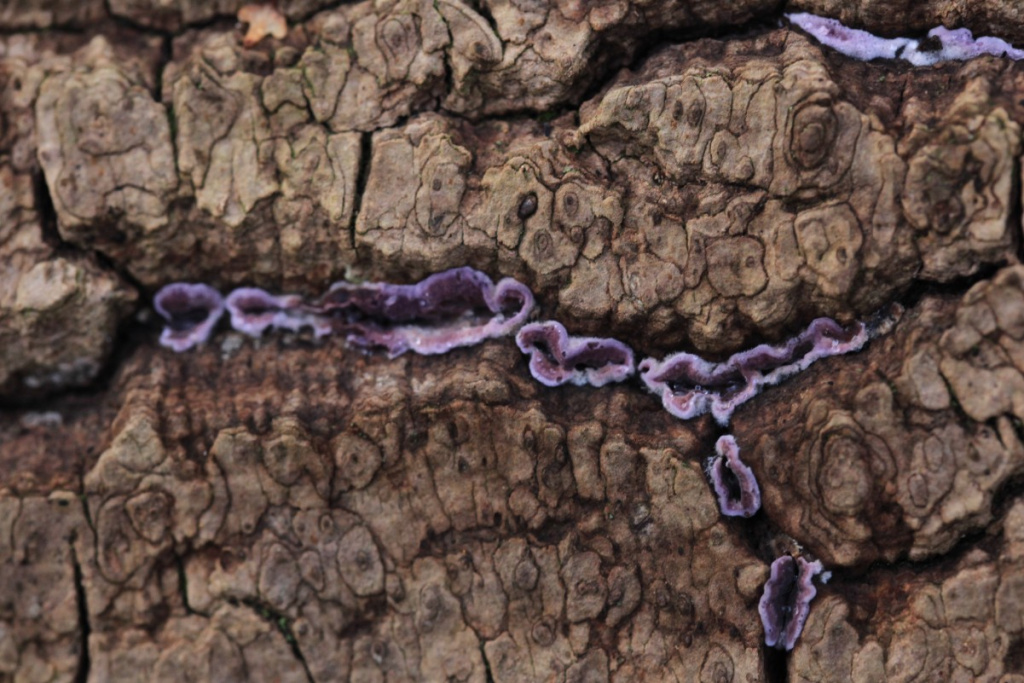
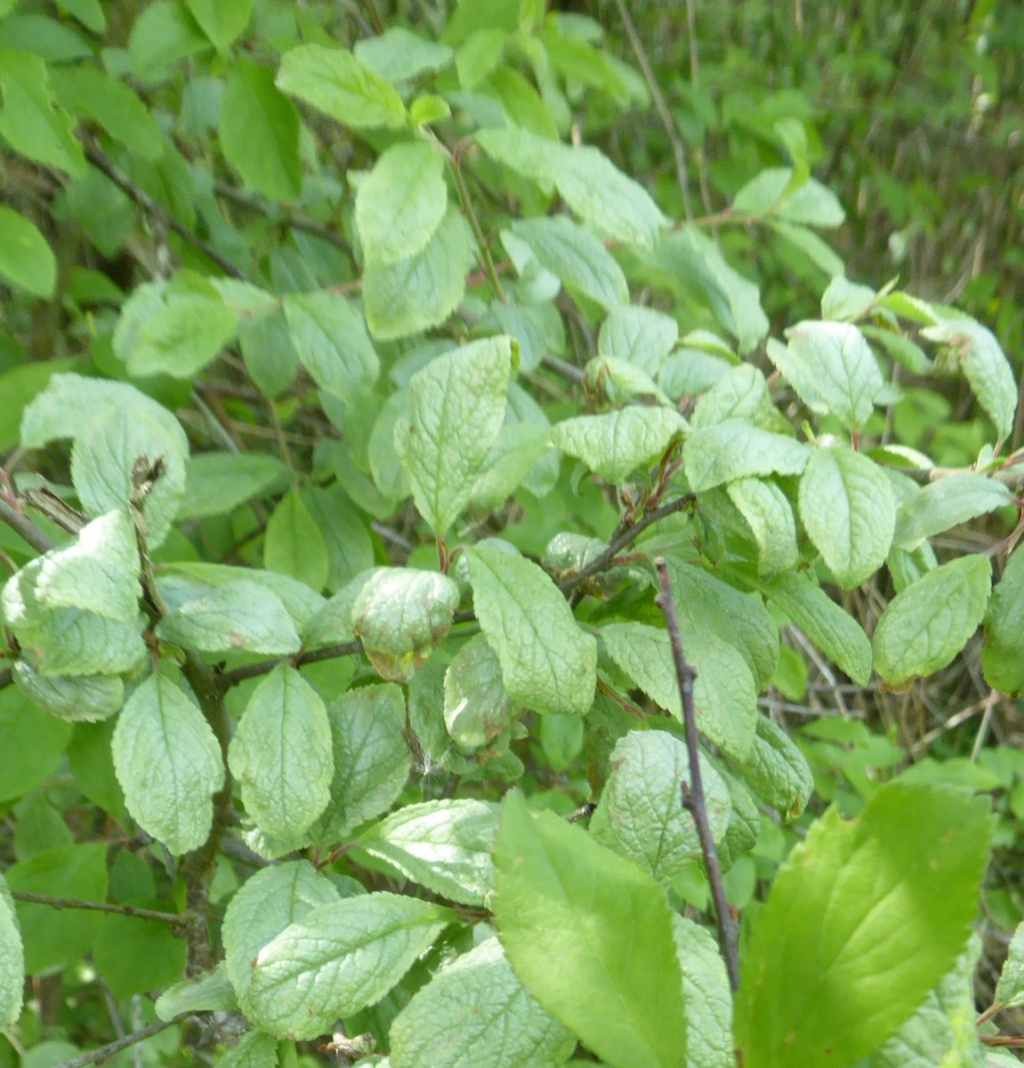
A reflexed corticoid, with a pale hairy cap and smooth purplish fertile surface underneath. It is very variable in appearance, and older dried specimens can be difficult to identify with certainty. Fresh specimens are resupinate and usually more purple; as it ages it becomes paler, and browner. It causes Silverleaf disease on the foliage of the Plum and Cherry family; leaves develop a silvery sheen before the whole branch dies back; the cut branches of affected trees show a darker stain in the centre.
Older specimens can look like a Stereum species or Laxitextum bicolor

If recording the fruiting bodies, photograph upper and lower fertile surface. If recording silverleaf disease, photograph foliage and (if possible) a cut branch. Always note host plant and substrate.
Fruitbodes on dead deciduous wood, often appearing on the sawn ends of felled trunks. Silverleaf disease mainly affects Prunus, but other garden trees and shrubs may be infected.
All year round.
Infrequent but widespread in Britain.
Occasional in Leicestershire and Rutland.
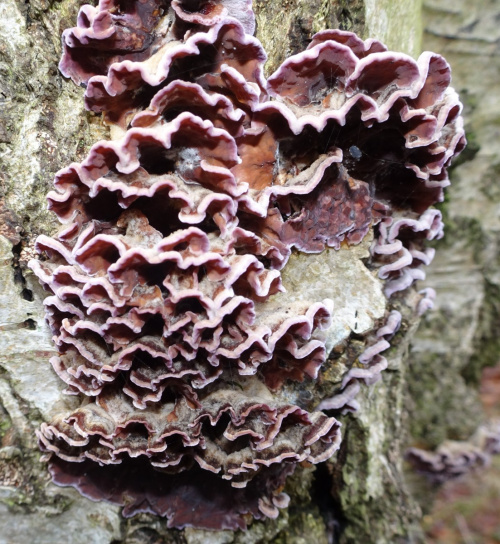 Hazel Graves
Beacon Hill
05 January 2024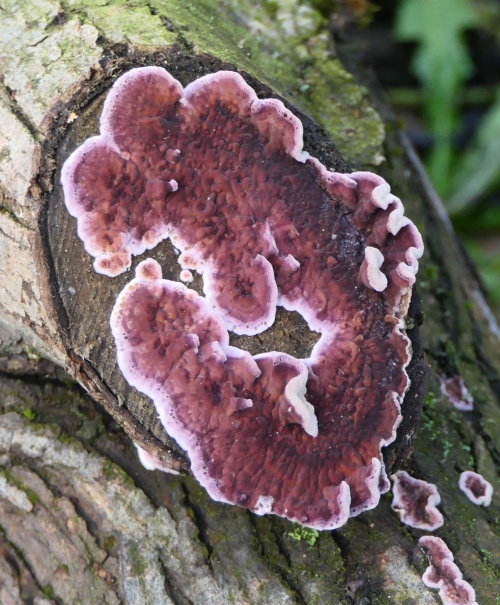 David Nicholls
Ratby, Pear Tree Wood
13 December 2018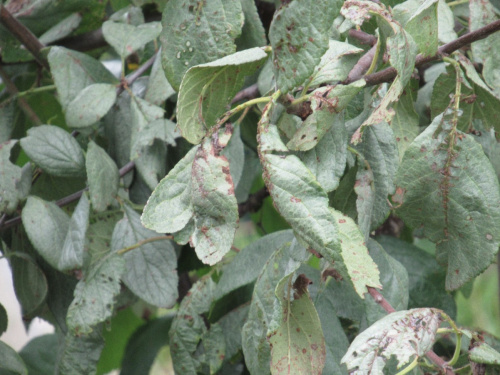 Sally Cunningham
Rowley Fields allotments
12 August 2017
Silverleaf disease, on a Prunus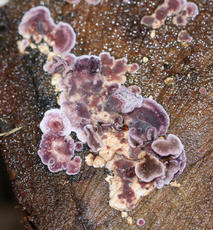 David Nicholls
Whittington Rough, Ratby
17 December 2011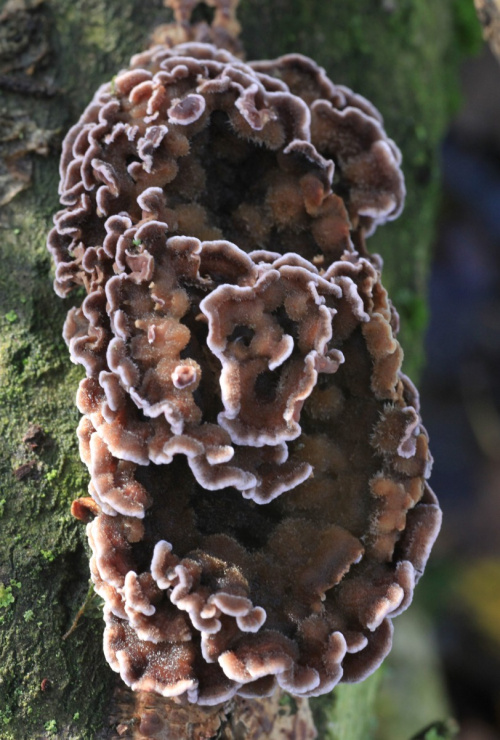 GHunt
GHunt
Shady Lane Arboretum
24 November 2024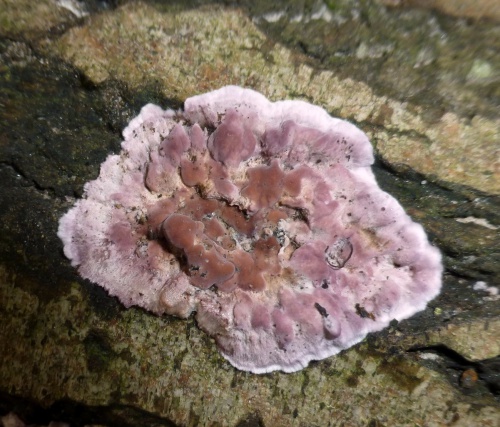 Kate Nightingale
Swithland Woods
14 October 2016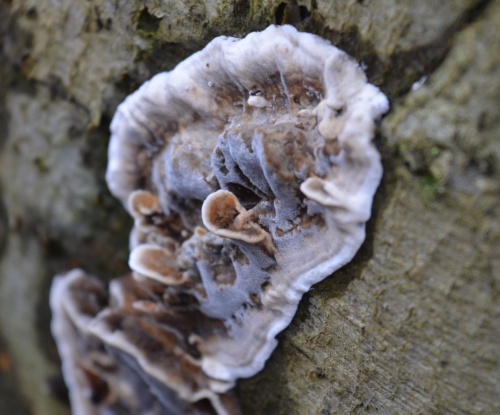 Steve Mathers
Beacon Hill CP
16 February 2017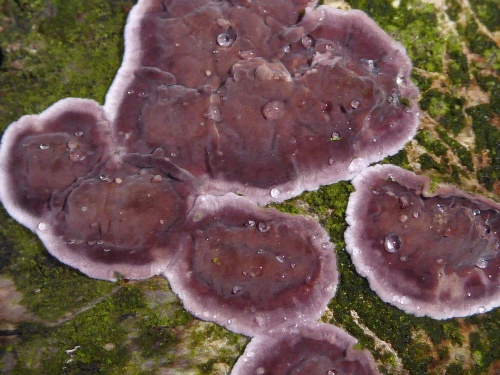 Annie Smith
Charnwood Lodge NNR
25 January 2018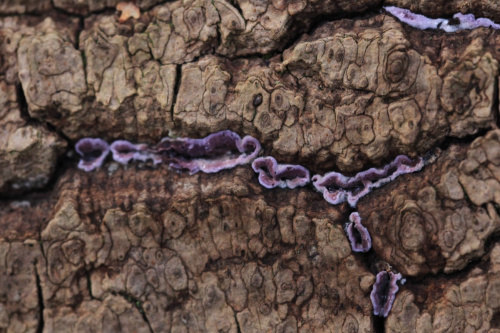 GHunt
GHunt
Shady Lane Arboretumpolu
30 December 2025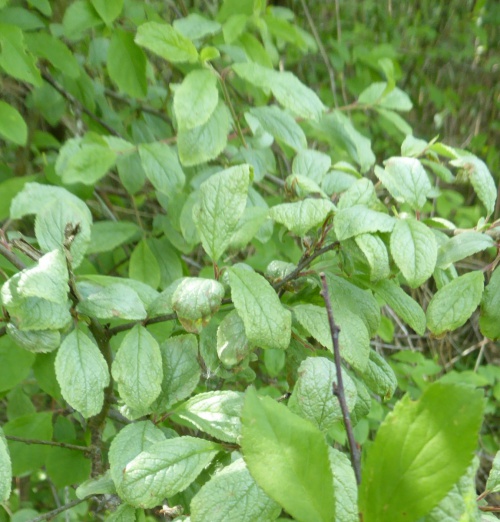 sue
sue
Bagworth, nut wood
08 May 2020
Leicestershire & Rutland Map
Enter a town or village to see local records
MAP KEY:
Yellow squares = NBN records (all known data)
Coloured circles = NatureSpot records: 2025+ | 2020-2024 | pre-2020
UK Map
Species profile
- Common names
- Silver Leaf Disease
- Species group:
- fungus
- Kingdom:
- Fungi
- Order:
- Agaricales
- Family:
- Cyphellaceae
- Records on NatureSpot:
- 84
- First record:
- 05/11/2004 (Nicholls, David)
- Last record:
- 21/02/2026 (Nicholls, David)
Total records by month
% of records within its species group
10km squares with records
The latest images and records displayed below include those awaiting verification checks so we cannot guarantee that every identification is correct. Once accepted, the record displays a green tick.
In the Latest Records section, click on the header to sort A-Z, and again to sort Z-A. Use the header boxes to filter the list.
Latest images
Latest records
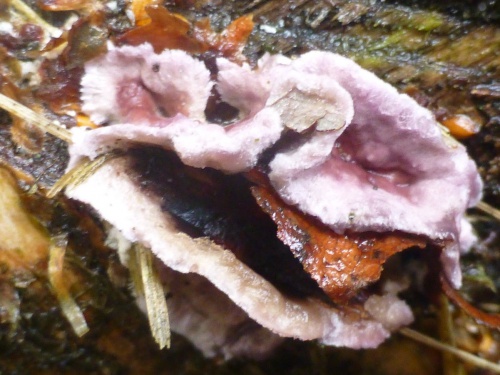 Annie Smith
Charnwood Lodge
13 October 2016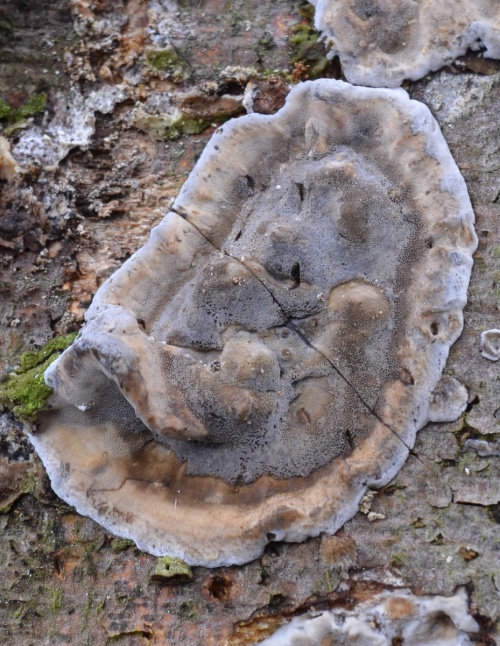 Steve Mathers
Beacon Hill CP
16 February 2017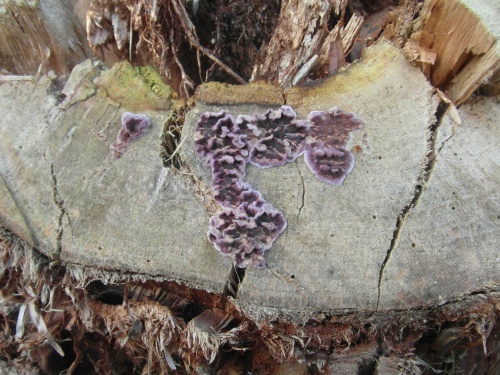 Alan Semper
Harby, canal
29 November 2013
On willow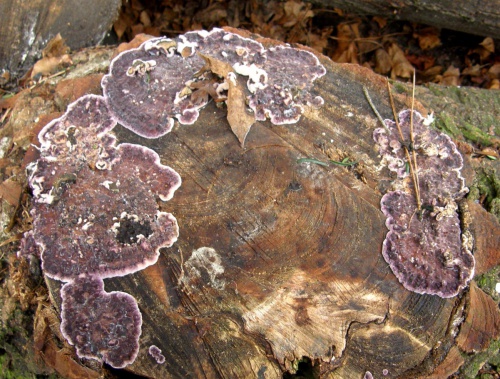 Saharima Roenisch
Abbey Park
22 January 2017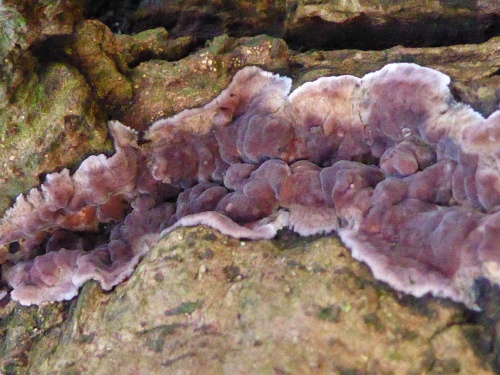 Annie Smith
Ashby Folville
22 January 2018