

Scots Pine - Pinus sylvestris
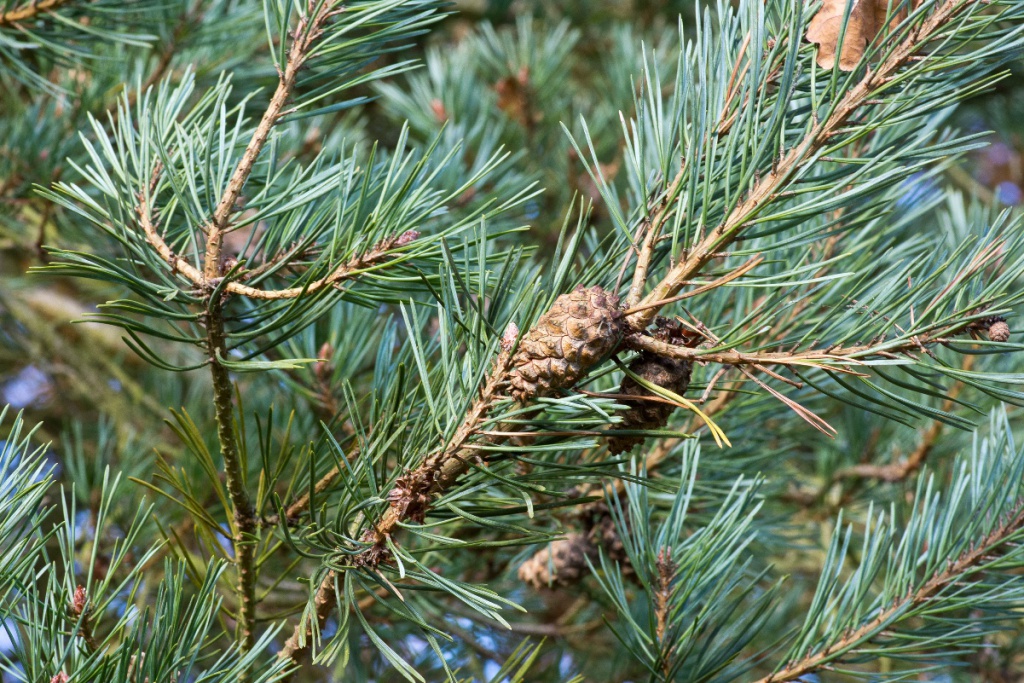
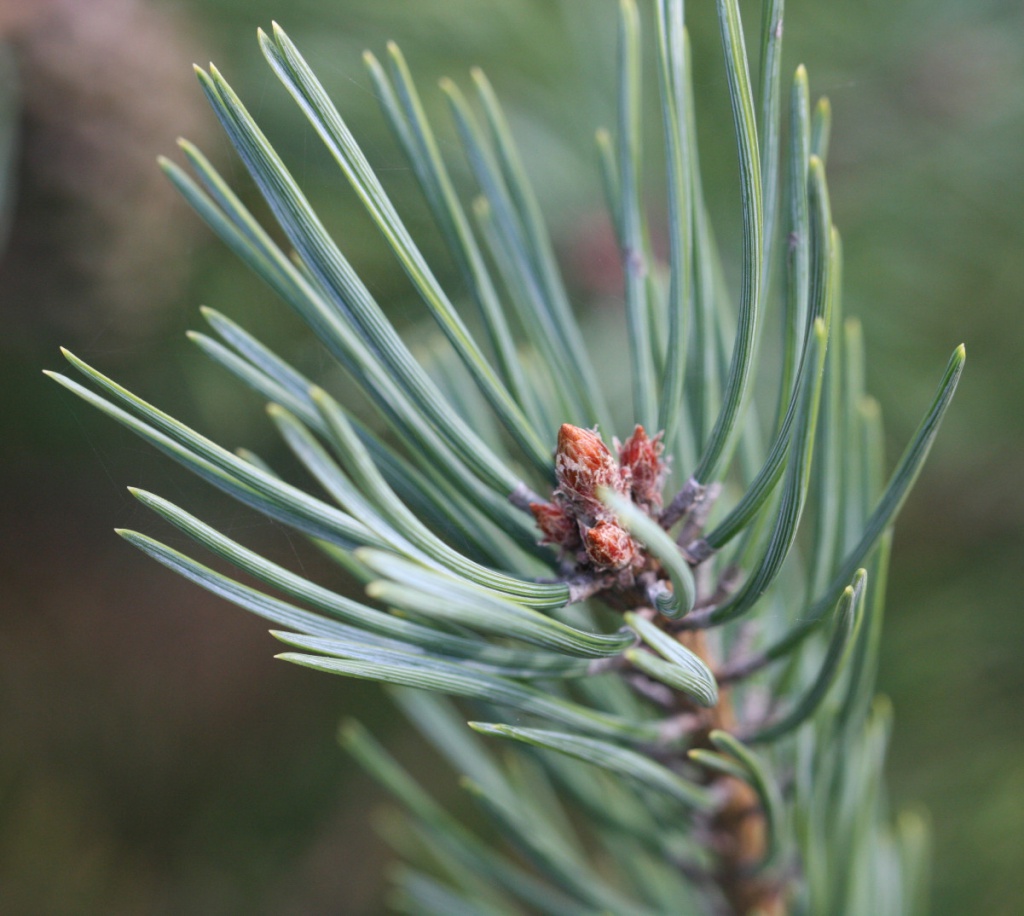
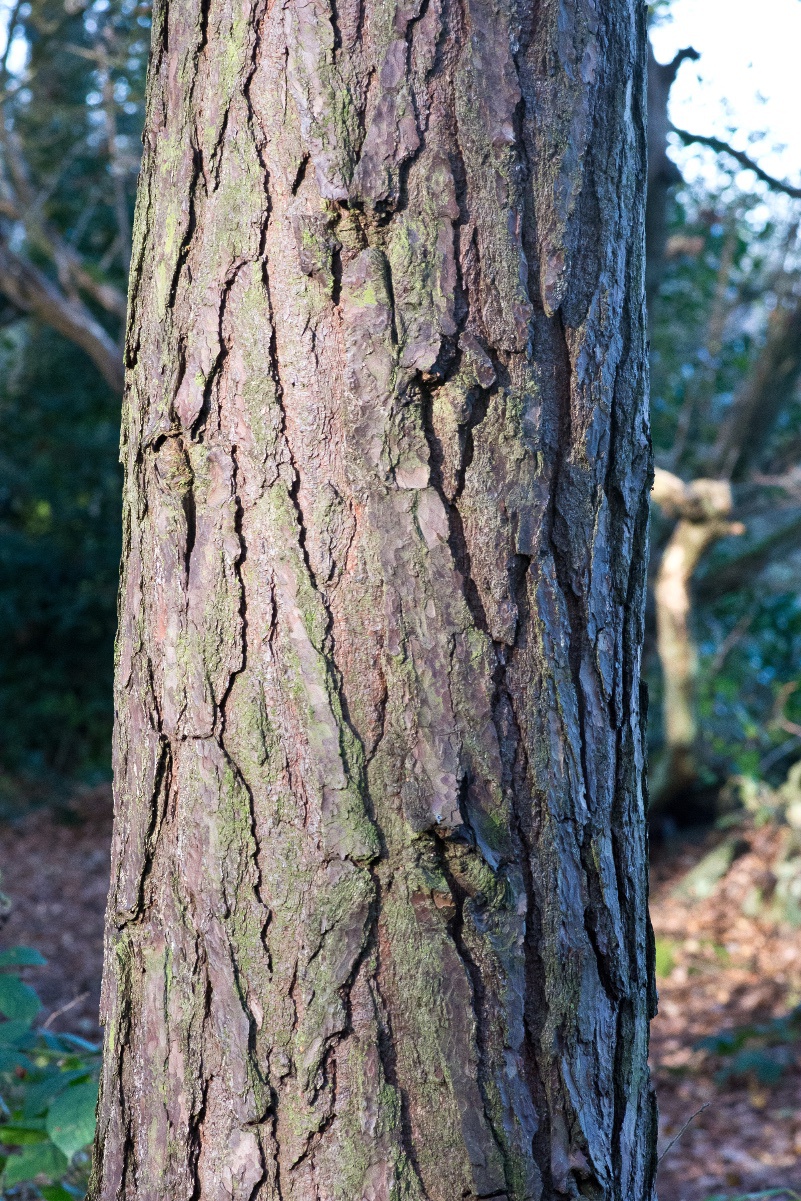
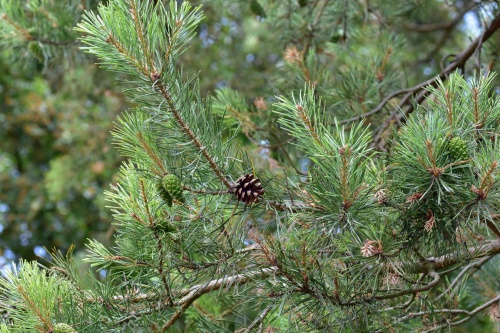
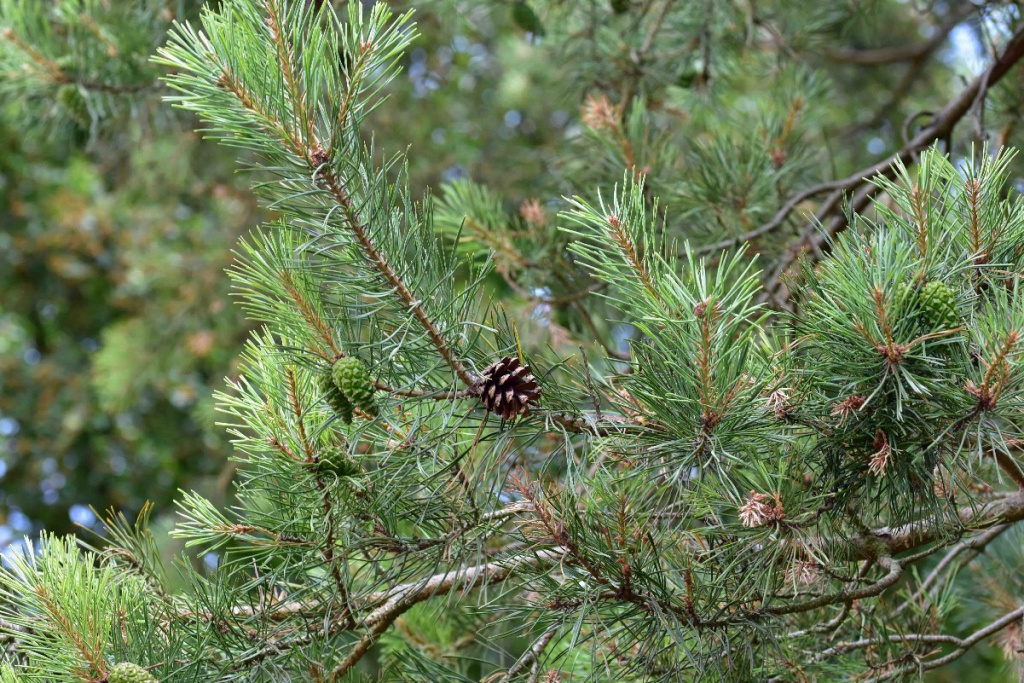
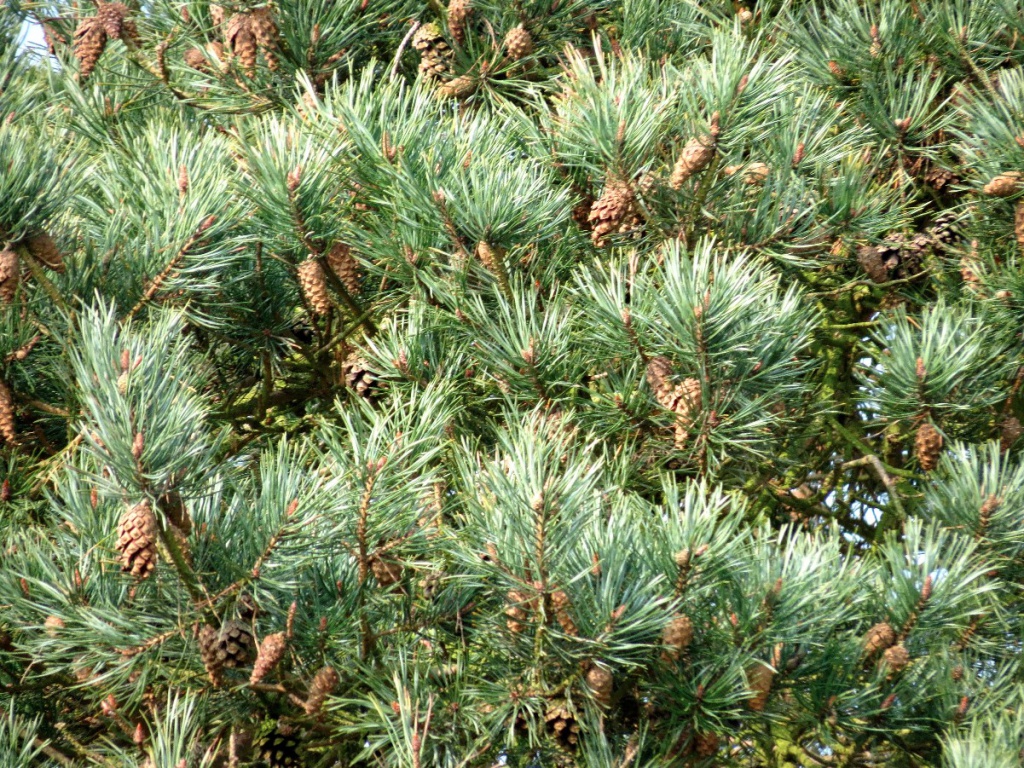
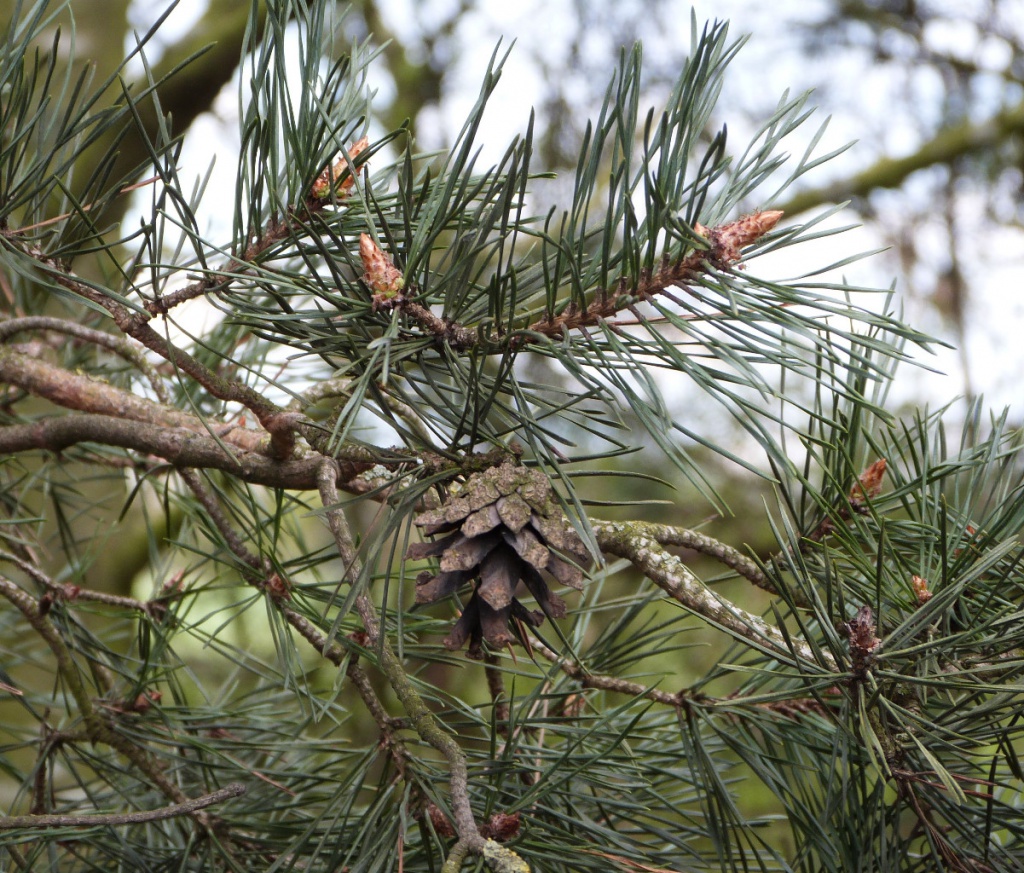
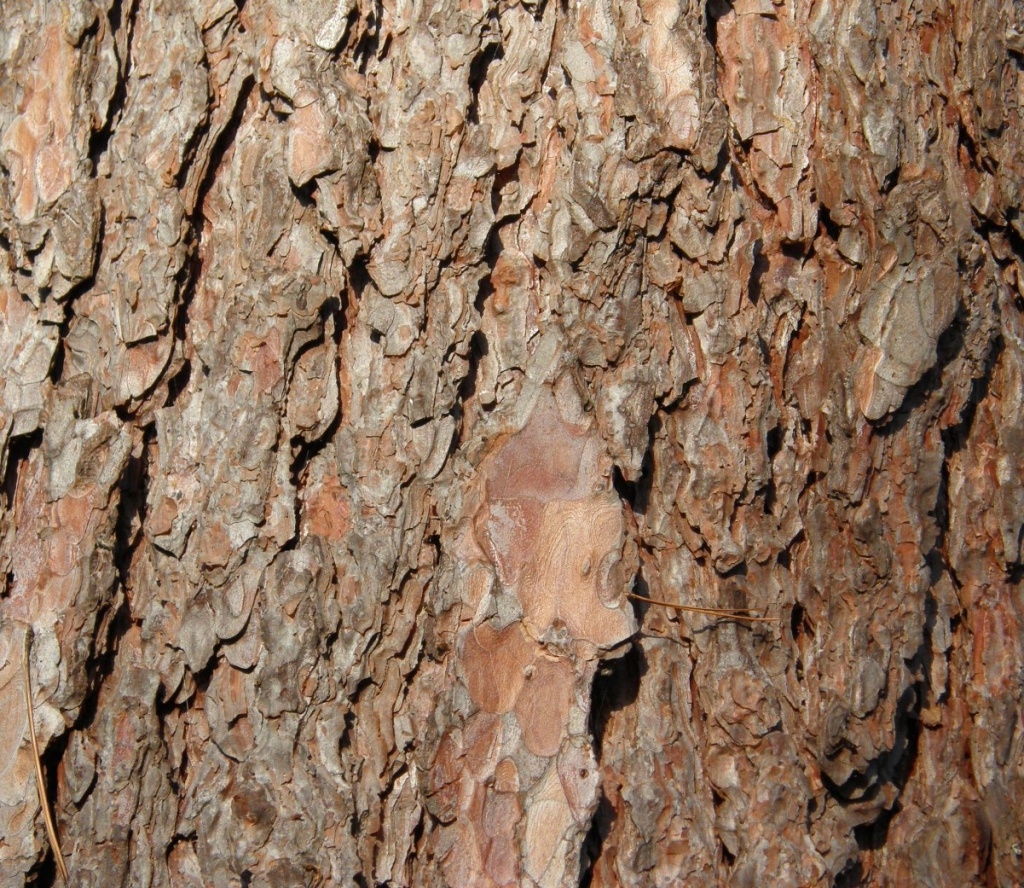
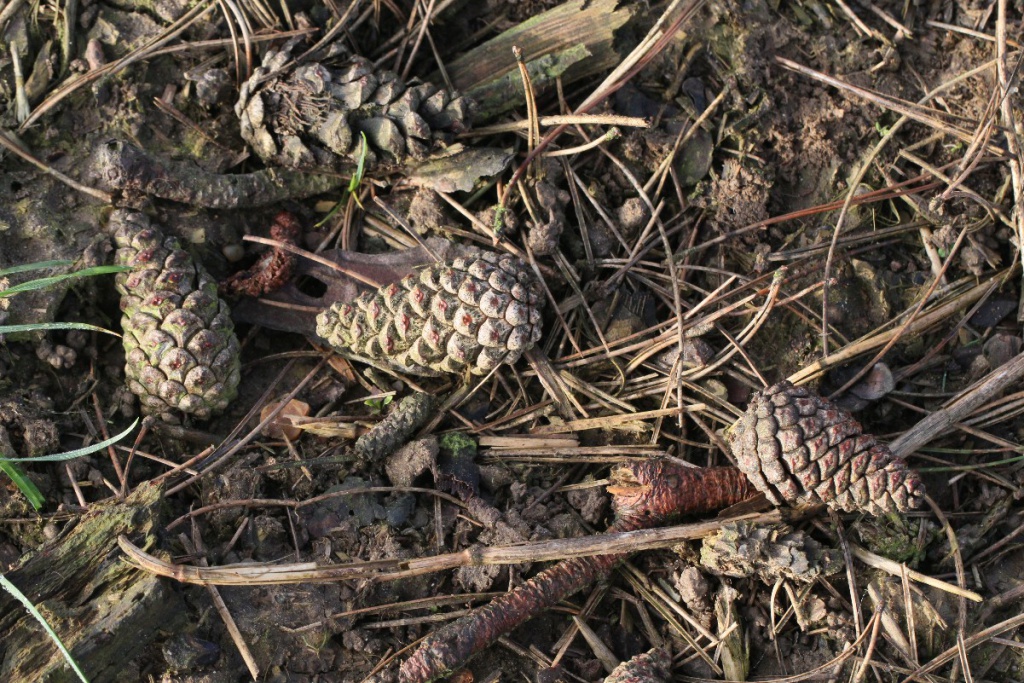
Large tree to 40 metres, bark reddish brown, flaking. Needles in pairs, greyish green and twisted 3 to 7 cm. Shoots yellowish green, becoming browner with sticky buds. Cones pendent, dull yellowish brown, egg shaped 3 to 6 cm.
Pinus nigra and subspecies; several ornamental species of Pine are planted in parks and gardens; Lodgepole Pine (P contorta) sometimes in forestry plantations

Leaves in pairs, mostly <10cm, glaucous and twisted; trunk orange-red above when mature
Photo of shoot and needles; photo of whole tree
Forests and woodlands but also occasionally hedgerows and roadsides.
May to June.
Evergreen.
Common and native to the central and western Scottish Highlands, but semi-naturalised elsewhere in Britain especially the heaths in the south of England.
Fairly frequent in Leicestershire and Rutland probably includes planted stock. In the 1979 Flora survey of Leicestershire it was found in 215 of the 617 tetrads.
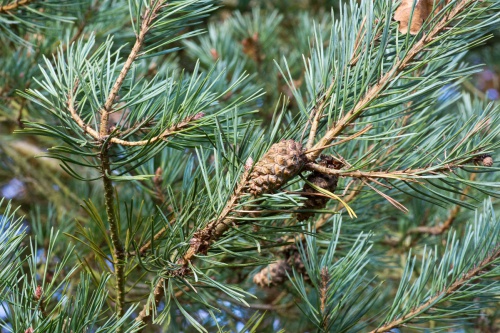 AJ Cann
Cademan Wood
18 November 2017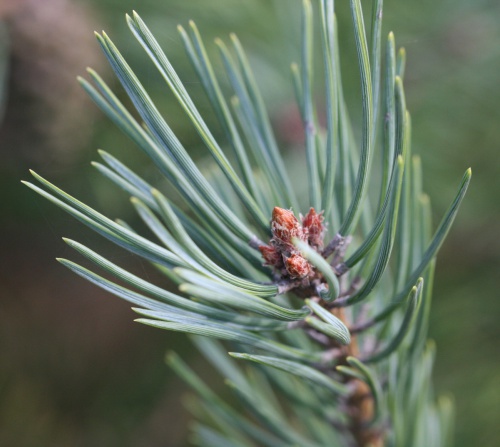 David Nicholls
Bardon Hill
15 October 2016 B4114 near junction with Leicester Road Sapcote SP 5019 9299 (taken 27.8.2007).JPG) Graham Calow
Graham Calow
Sapcote
27 August 2007
cones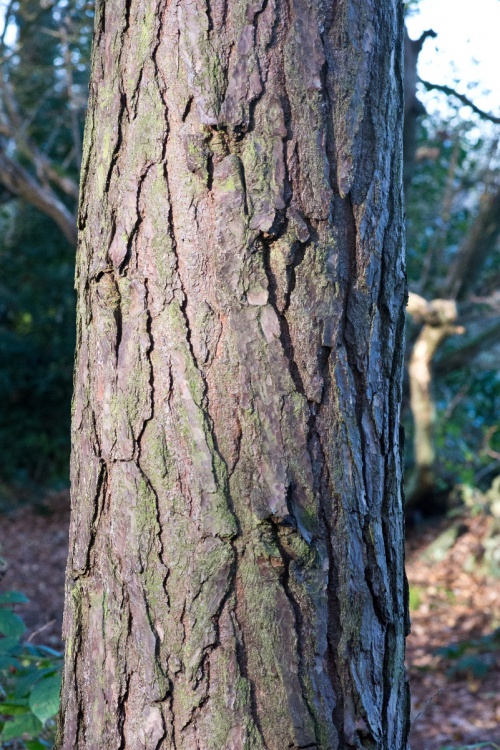 AJ Cann
Cademan Wood
18 November 2017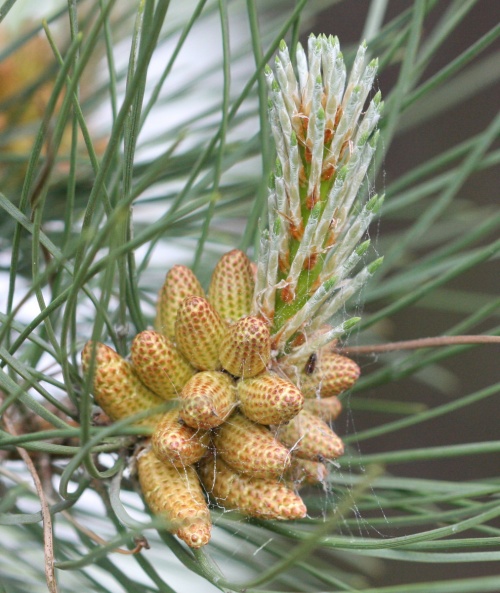 David Nicholls
Thornton Reservoir
05 June 2012
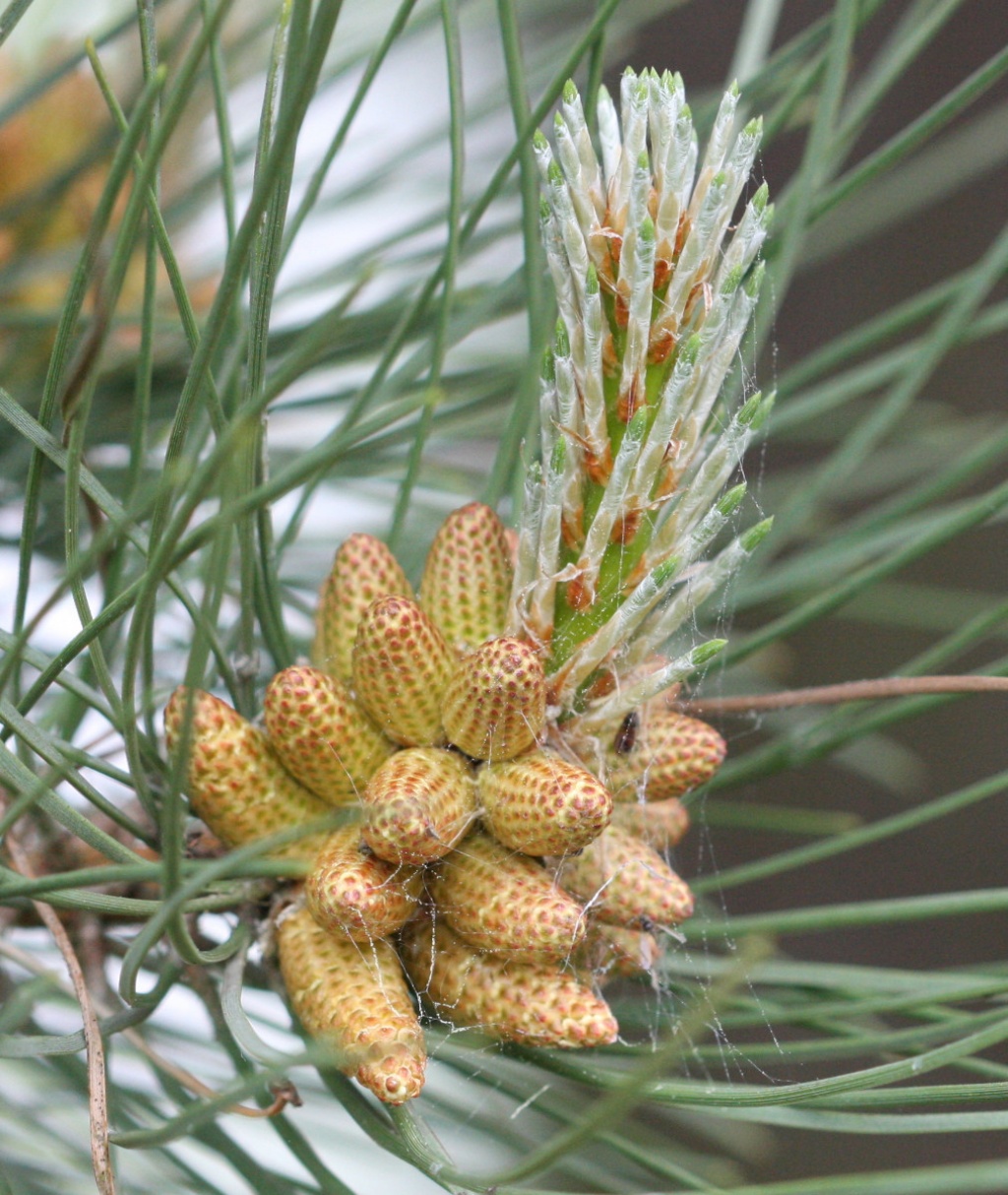
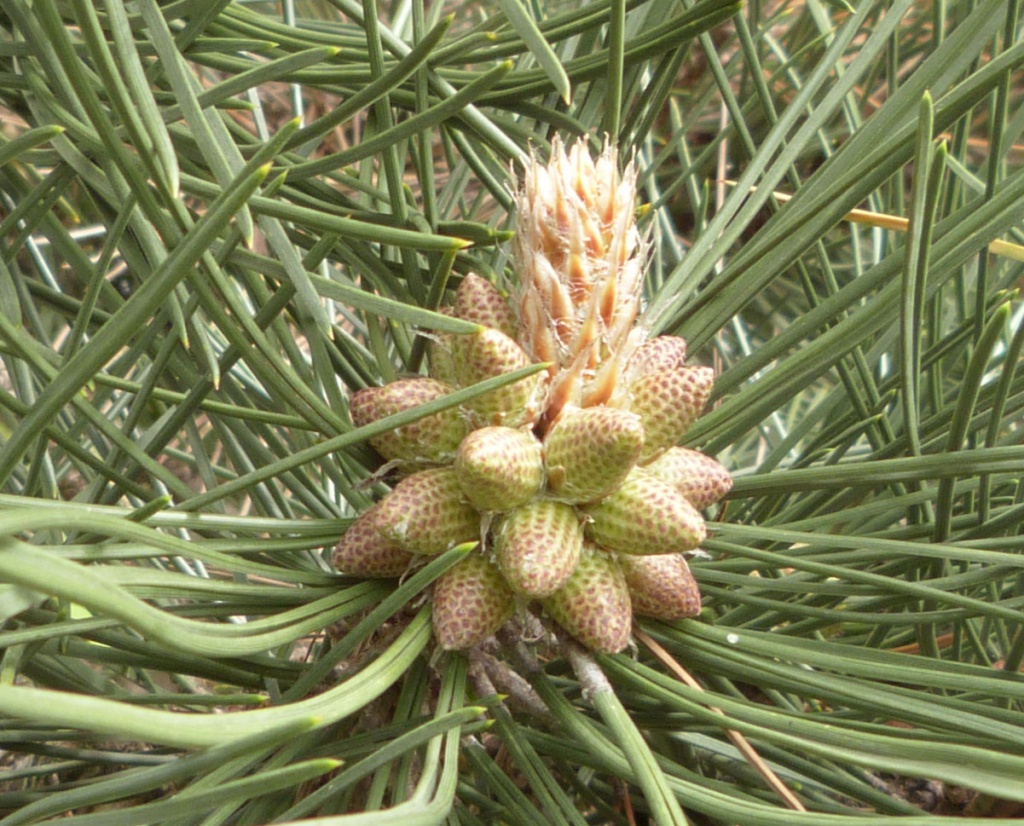
male flowers B4114 near junction with Leicester Road Sapcote SP 5019 9299 (taken 16.9.2007)..JPG) Graham Calow
Graham Calow
Sapcote
16 September 2007
 B4114 near junction with Leicester Road Sapcote SP 5019 9299 (taken 27.8.2007).JPG)
 B4114 near junction with Leicester Road Sapcote SP 5019 9299 (taken 16.9.2007)..JPG)
Leicestershire & Rutland Map
Enter a town or village to see local records
MAP KEY:
Yellow squares = NBN records (all known data)
Coloured circles = NatureSpot records: 2025+ | 2020-2024 | pre-2020
UK Map
Species profile
- Common names
- Scots Pine, Native Scots Pinewood
- Species group:
- conifer
- Kingdom:
- Plantae
- Order:
- Pinales
- Family:
- Pinaceae
- Records on NatureSpot:
- 126
- First record:
- 27/08/2007 (Calow, Graham)
- Last record:
- 25/08/2025 (Higgott, Mike)
Total records by month
% of records within its species group
10km squares with records
The latest images and records displayed below include those awaiting verification checks so we cannot guarantee that every identification is correct. Once accepted, the record displays a green tick.
In the Latest Records section, click on the header to sort A-Z, and again to sort Z-A. Use the header boxes to filter the list.
Latest images
Latest records
 Andy's Rutland
Headland/Footpath-Love's Lane to Gunnel Lane Meadow-Empingham
17 July 2018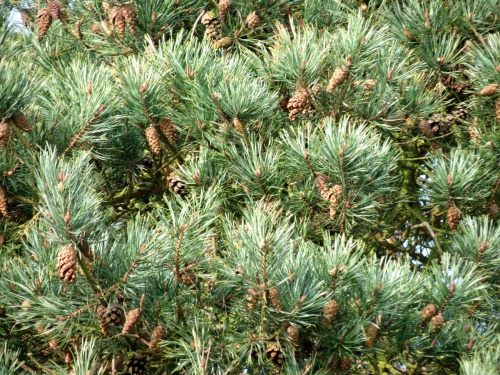 egaten
Normanton Turville
09 April 2015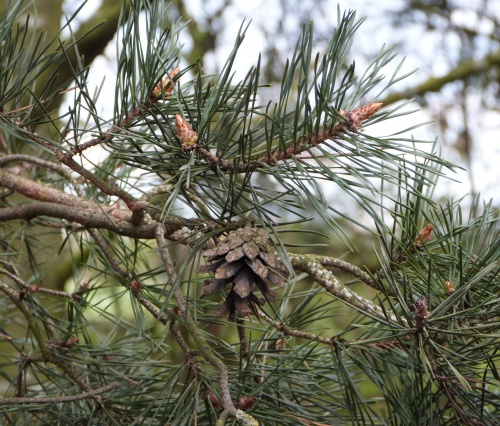 Graham Calow
Stanton Road, Elmesthorpe
17 April 2016 Leicester Road Fosse Lay-By Sapcote SP 5032 9301 (taken 11.5.2008).JPG) Graham Calow
Graham Calow
Sapcote
11 May 2008
male flowers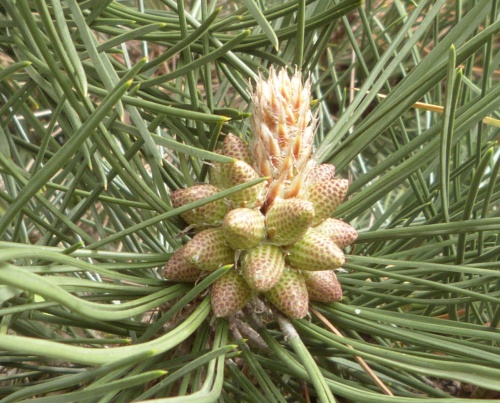 Graham Calow
Higham on the Hill
15 May 2015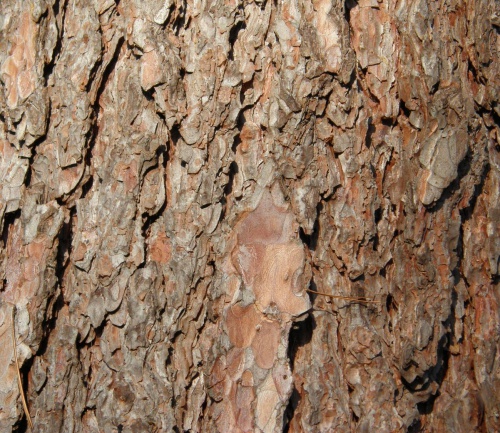 Saharima Roenisch
Spinney Hill Park
14 December 2017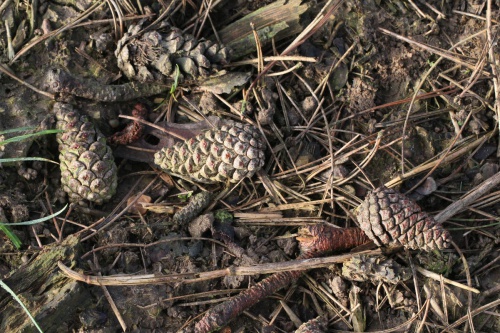 Craig Mabbett
Bitteswell Stewardship Land
25 March 2017
 Leicester Road Fosse Lay-By Sapcote SP 5032 9301 (taken 11.5.2008).JPG)
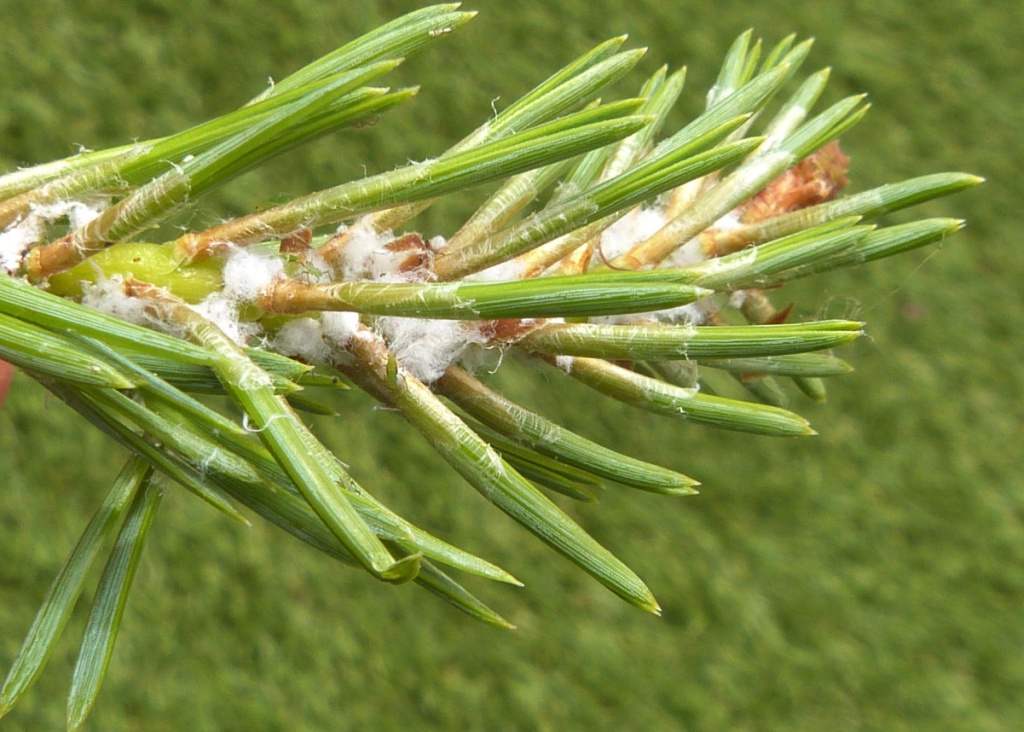
Pine Woolly Aphid
The apterous female of Pineus pini adelgid, known as the 'sistens' is covered in white wax wool. Under the wax the sistens is dark brown to dark red, and almost spherical. The adult Pineus pini aptera has a body length of 1.0 to 1.2 mm. It is associated with Scots Pine where it can cause serious damage. It causes the needles to become twisted, forming a loose gall, with the adelgid nymphs living between the needles.
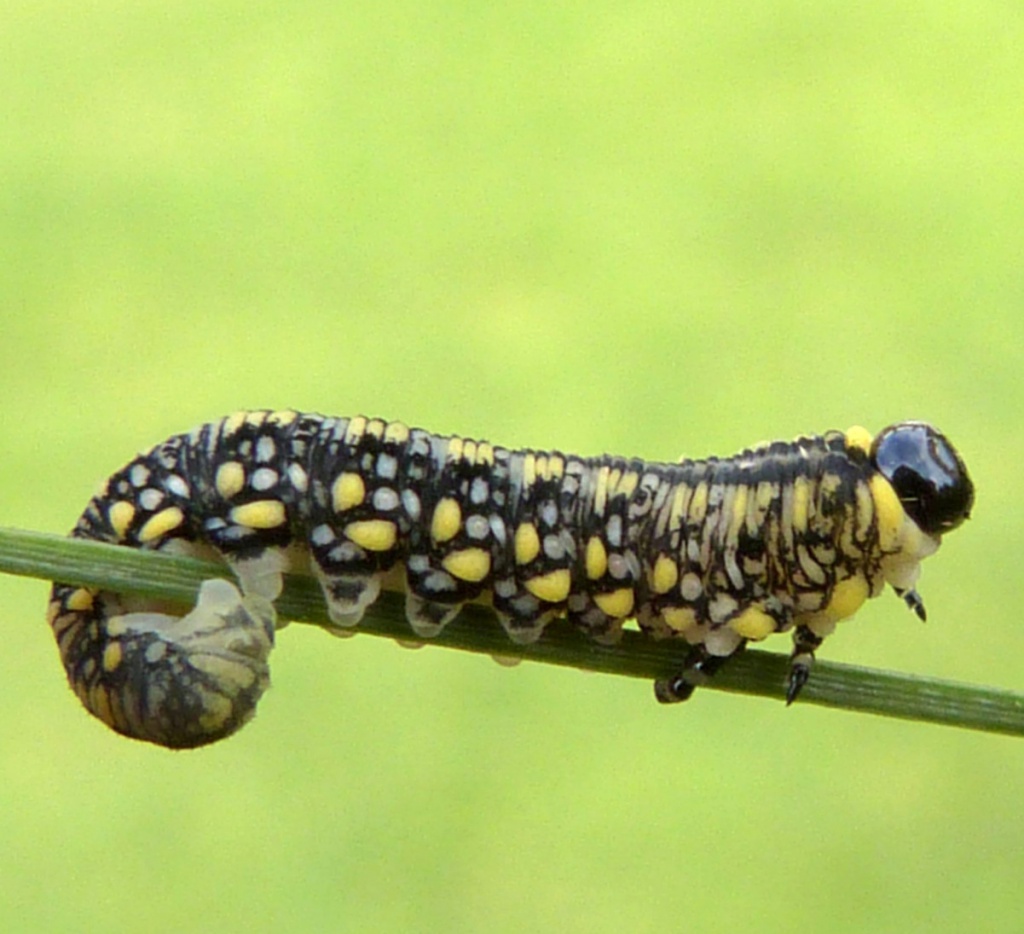
Imported Pine Sawfly
The late instar larvae of the Imported Pine Sawfly (Diprion similis) feed on Pine. They are very distinctively patterned with yellow and white rounded spots mingling with black, and a double black dorsal line extending the length of the body. The young larvae also feed on pine, they are gregarious, and feed in small colonies, whereas the older larvae disperse and are solitary. Fully grown larvae are 18 to 28 mm long.
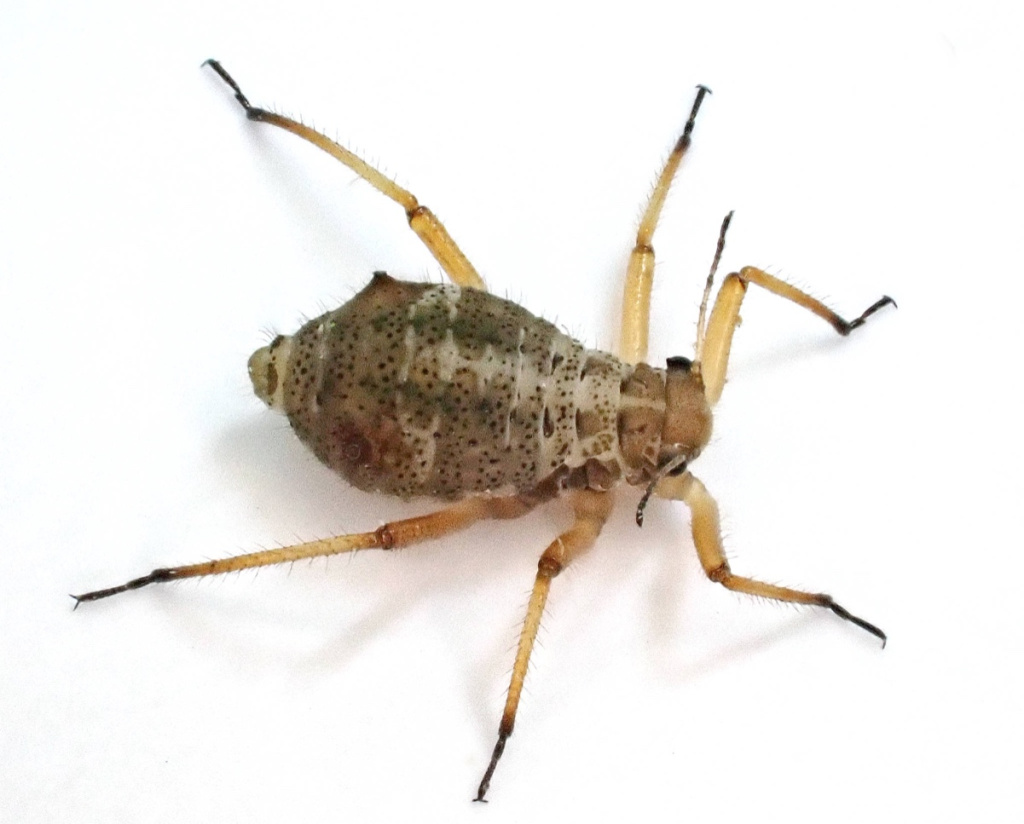
Cinara pinea
Cinara pinea aphids are found on young trees and new shoots of Scots pine, and sometimes on other pine species including Corsican pine in dry areas.
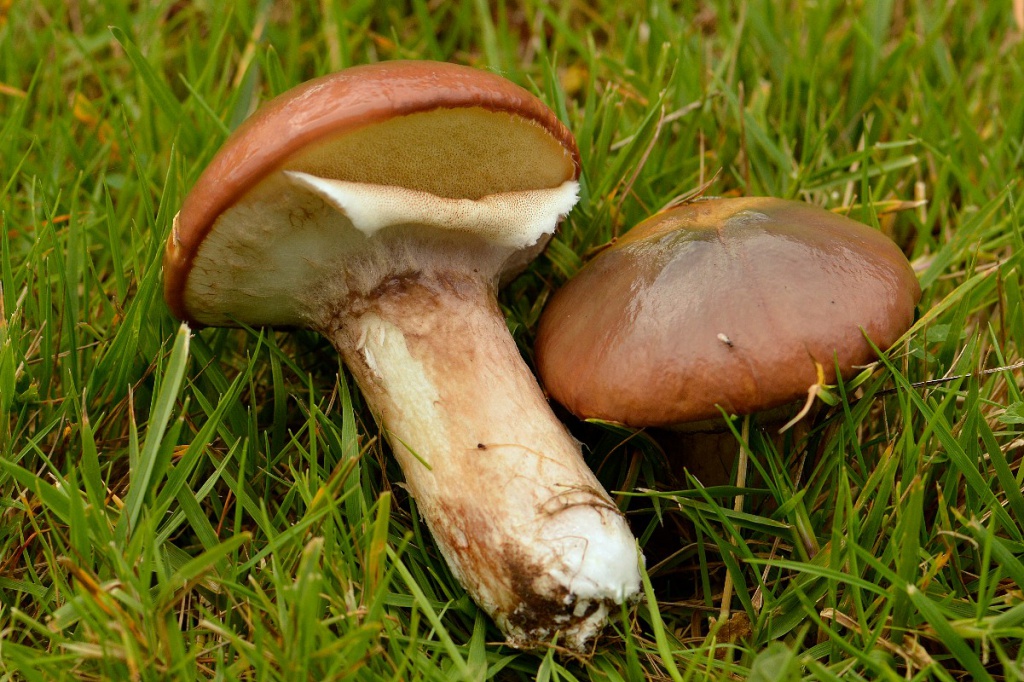
Slippery Jack
The Slippery Jack fungus (Suillus luteus) is associated with Scots Pine and is found in pine litter, but also in grassland near pine trees. When wet the caps of this species are slimy; in hot sunny weather they dry to a smooth semi-matt finish. Cap usually a rich purple brown but becoming paler as it ages. The cap has lemon yellow pores, covered initially by a veil membrane which peels away to leave an irregular ring on the stem and occasionally with remnants around the cap margin. The veil is creamy-white when young but soon develops a deep lilac or violet colour.
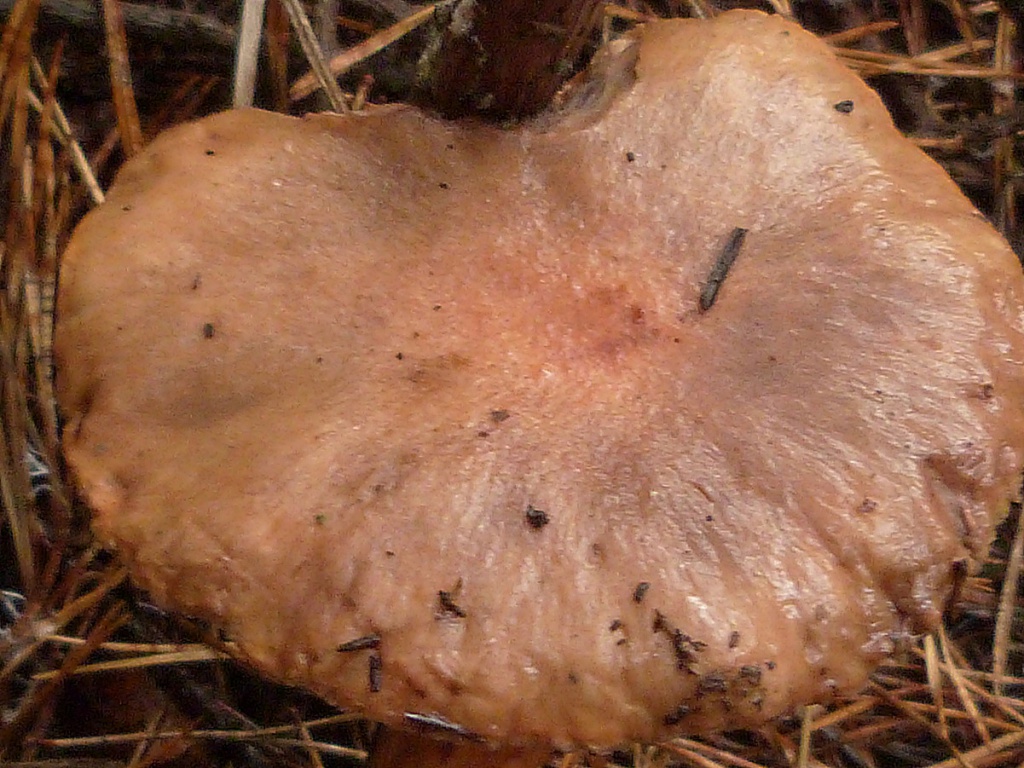
Copper Spike
The Copper Spike fungus (Chroogomphus rutilus) has a strong association with pine trees which limits the habitat to pine litter.
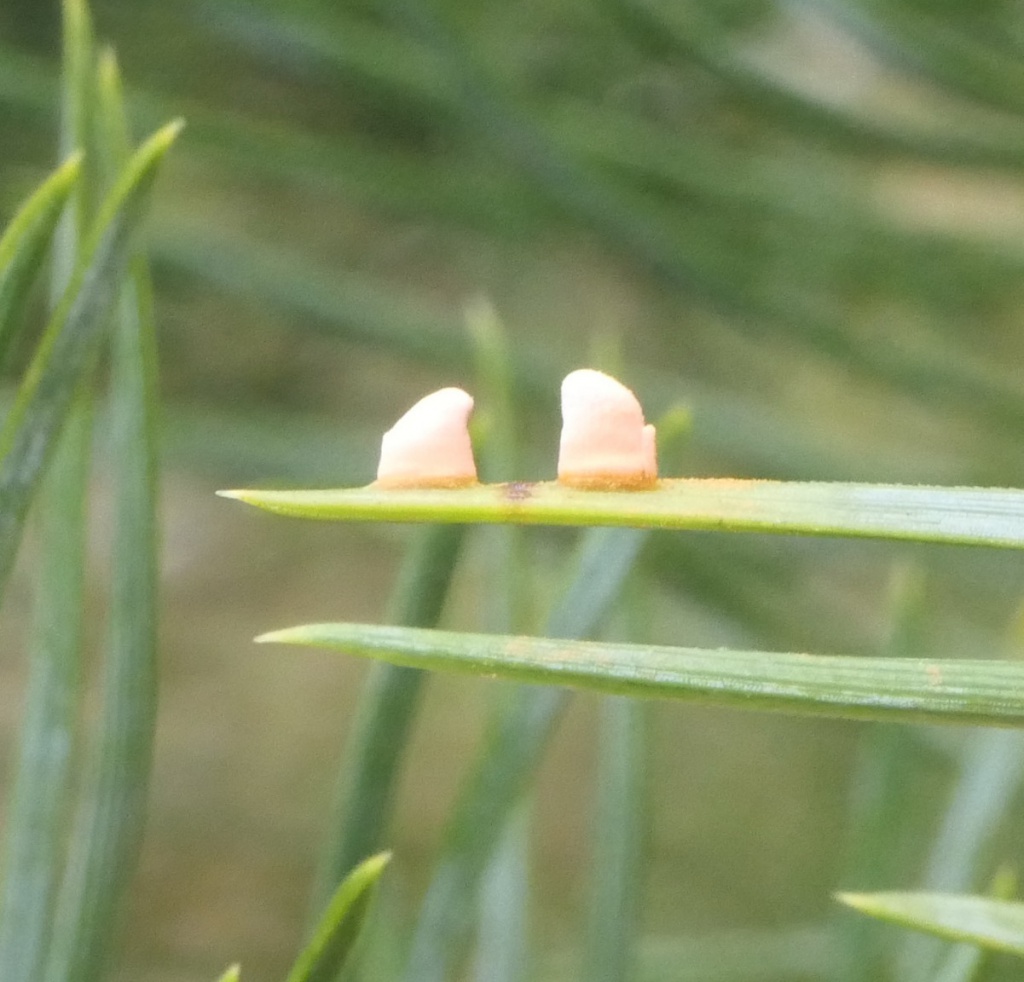
Coleosporium tussilaginis s. lat.
Pine, (mainly Scots Pine) is the alternate host of the rust fungus Coleosporium tussilaginis, spermagonia and aecia affect the needles.
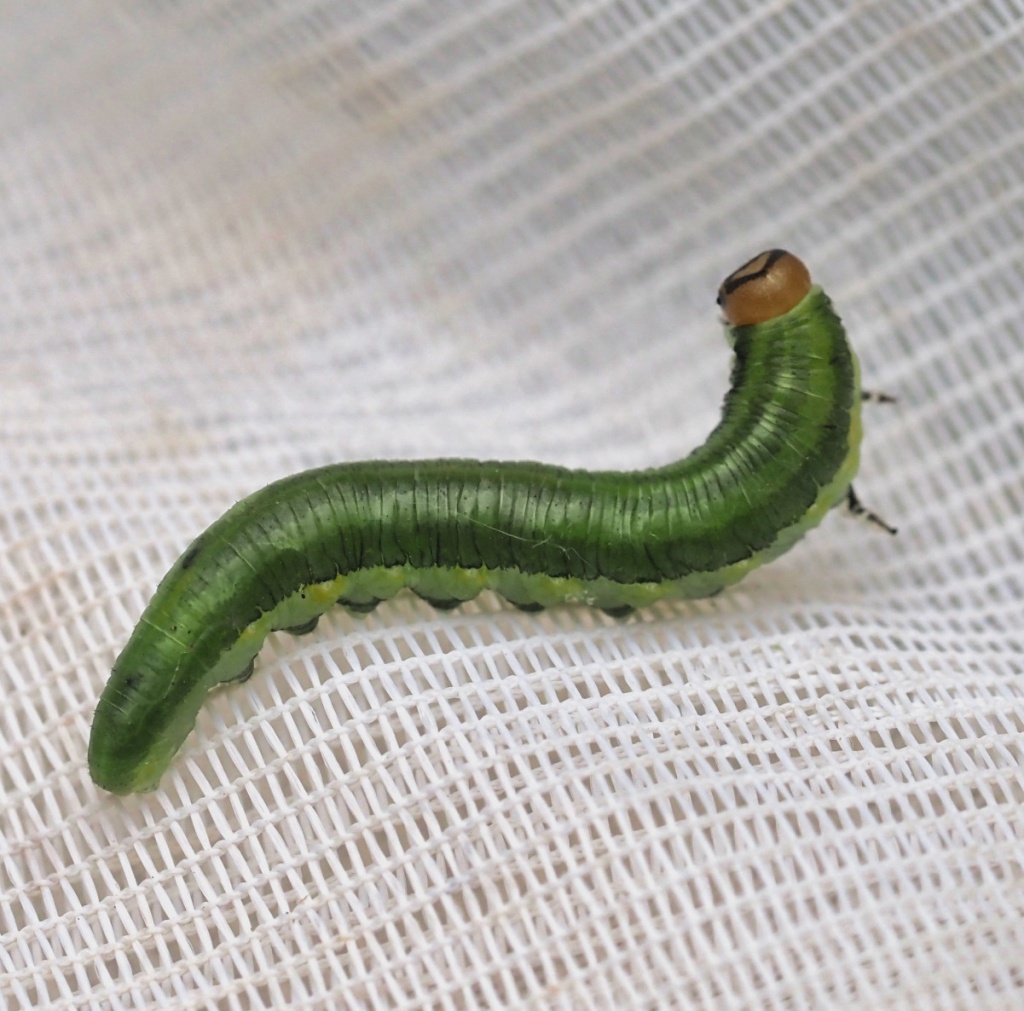
Gilpinia frutetorum
The larvae of the sawfly Gilpinia frutetorum are solitary feeders on pine, usually young Scots Pine. They are two-tone green with a pale brown head. Some larvae have a dark mask on the face.
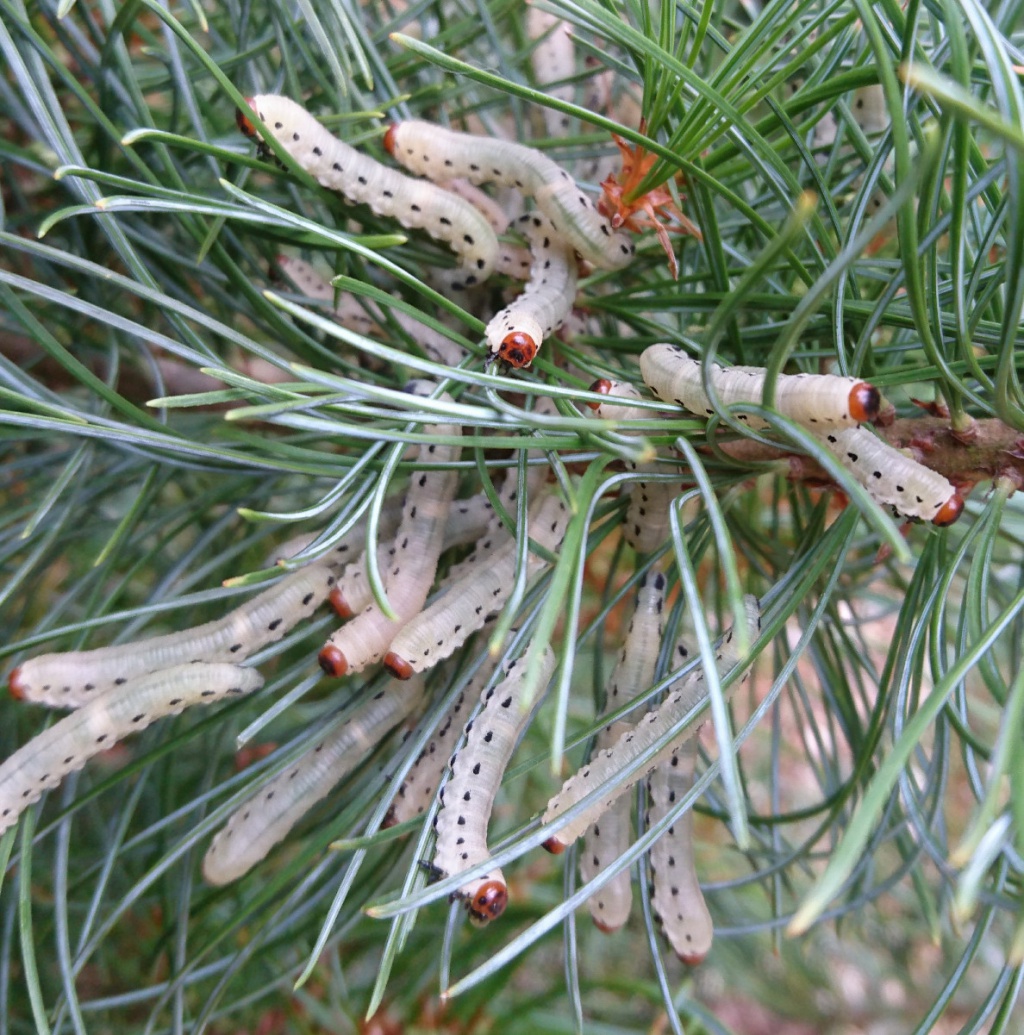
Common Pine Sawfly
The larvae of the Common Pine Sawfly (Diprion pini) are a very pale lemon (almost off white) with rows of dark spots – they may infest various species of pine including Scots Pine.
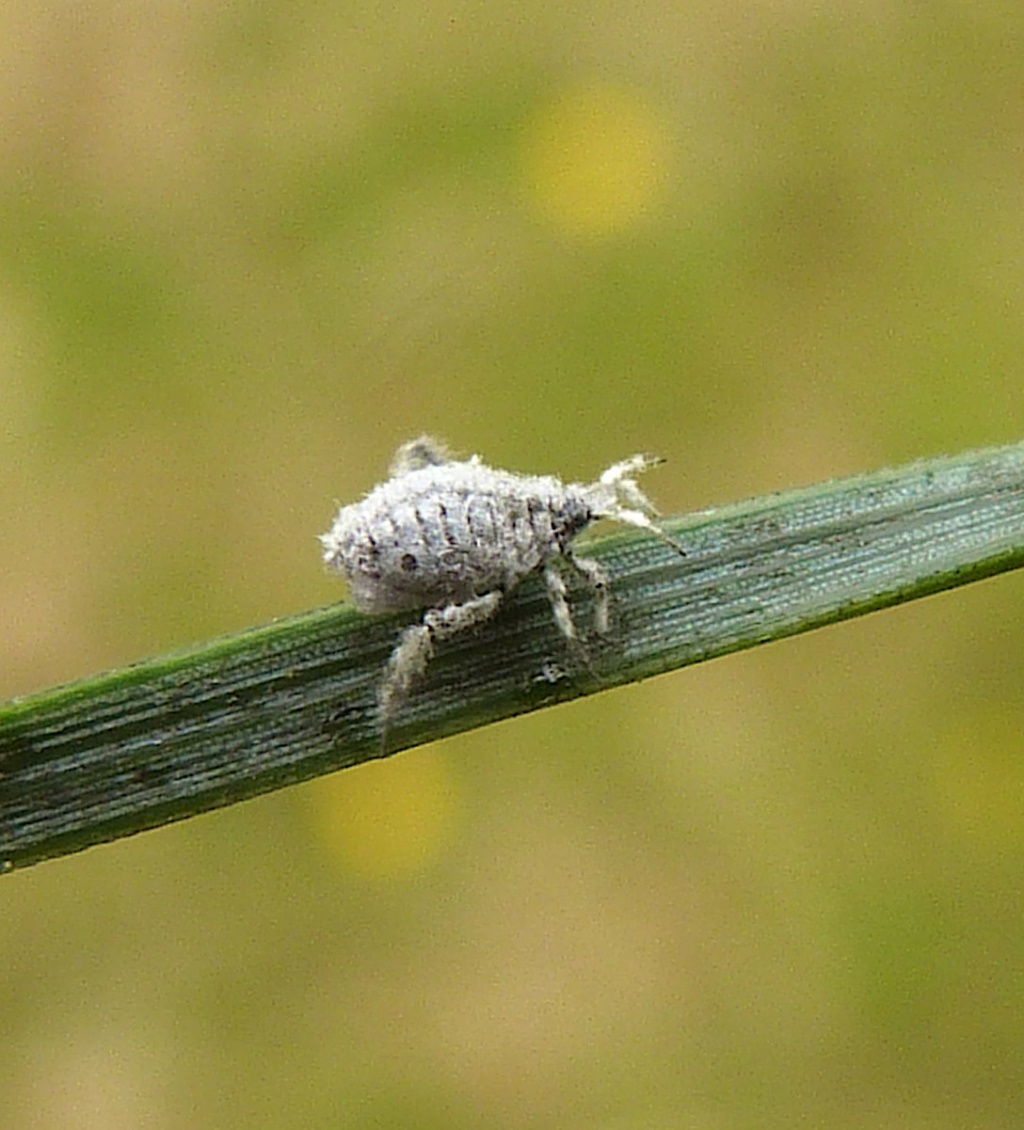
Schizolachnus pineti
Schizolachnus pineti aphids are found on numerous species of Pines (Pinus spp.), especially on young Scots Pine, forming dense colonies in rows along the previous year's needles.

Exoteleia dodecella
The larva of the moth Exoteleia dodecella mines the needles of Pine (Pinus sp.), entering from a small hole below the leaf tip, which is then sealed with silk. It feeds towards the needle tip, eventally causing a large mine. The larva is brown with a dark head.
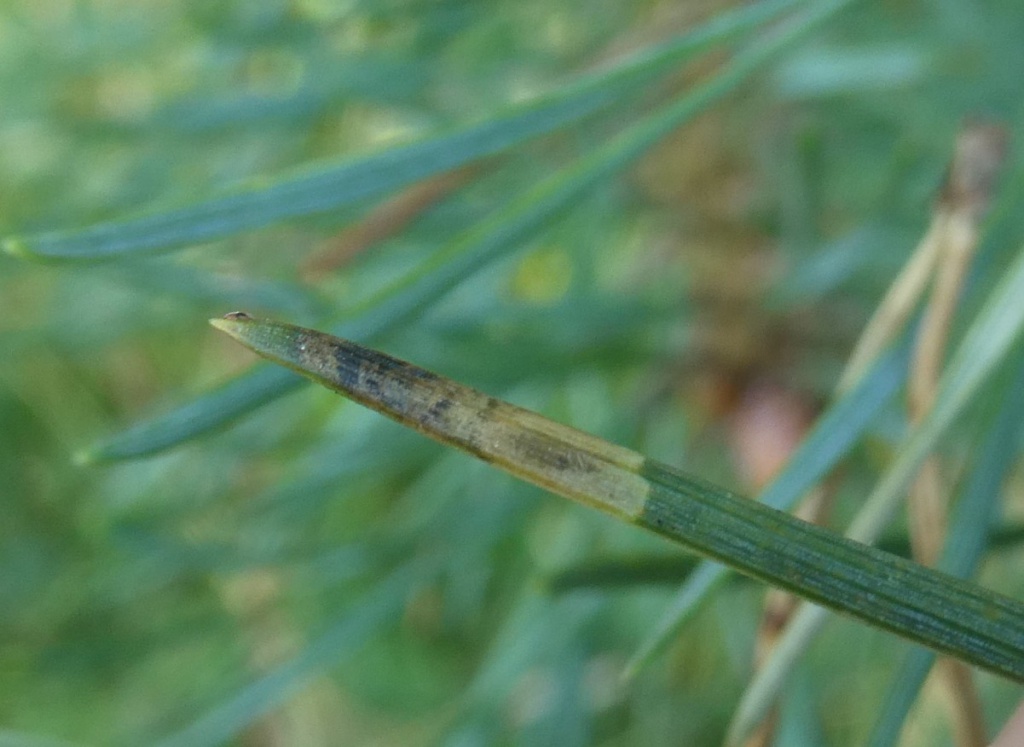
Cedestis subfasciella
The larva of the moth Cedestis subfasciella a mines pine needles, starting from an oval egg at the tip; larva is green at end of summer