

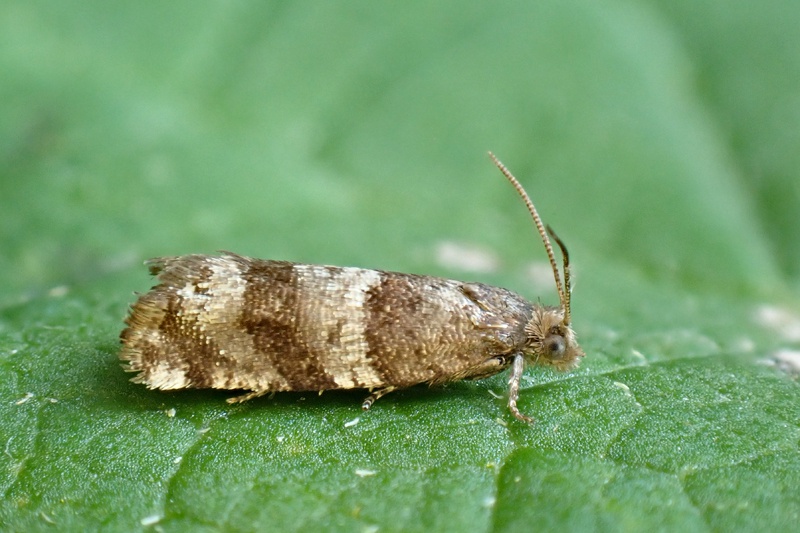
Rhopobota myrtillana
Bilberry Bell
Wingspan 9 to 12 mm.

Unless identified by a recognised expert, a photo is required. If the photo doesn't show the key ID features, then in the comments box describe the size and identifying characters you have observed.
A moorland and heathland species found in areas where Bilberry is present.
May and June when the moth can be seen in the late afternoon/early evening sunshine, in flight over its foodplant.
The larva feeds on Bilberry.
This species has a more northern distribution. Although it is found widely throughout Britain, its distribution is limited by the availability of its foodplant. In the Butterfly Conservation's Microlepidoptera Report 2011 this species was classified as Nationally Scarce B.
There had been no records in Leicestershire and Rutland for more than 100 years until it was rediscovered at Warren Hills 3rd June 2023.
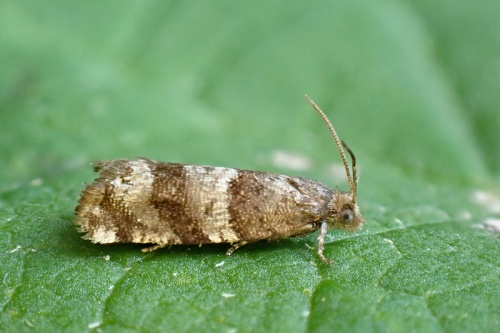 Mark Skevington
Warren Hills
03 June 2023
Leicestershire & Rutland Map
Enter a town or village to see local records
MAP KEY:
Yellow squares = NBN records (all known data)
Coloured circles = NatureSpot records: 2025+ | 2020-2024 | pre-2020
UK Map
Species profile
- Common names
- Bilberry Bell, Small Bilberry Marble
- Species group:
- insect - moth
- Kingdom:
- Animalia
- Order:
- Lepidoptera
- Family:
- Tortricidae
- Records on NatureSpot:
- 1
- First record:
- 03/06/2023 (Skevington, Mark)
- Last record:
- 03/06/2023 (Skevington, Mark)
Total records by month
% of records within its species group
10km squares with records
The latest images and records displayed below include those awaiting verification checks so we cannot guarantee that every identification is correct. Once accepted, the record displays a green tick.
In the Latest Records section, click on the header to sort A-Z, and again to sort Z-A. Use the header boxes to filter the list.