

Red Deer - Cervus elaphus
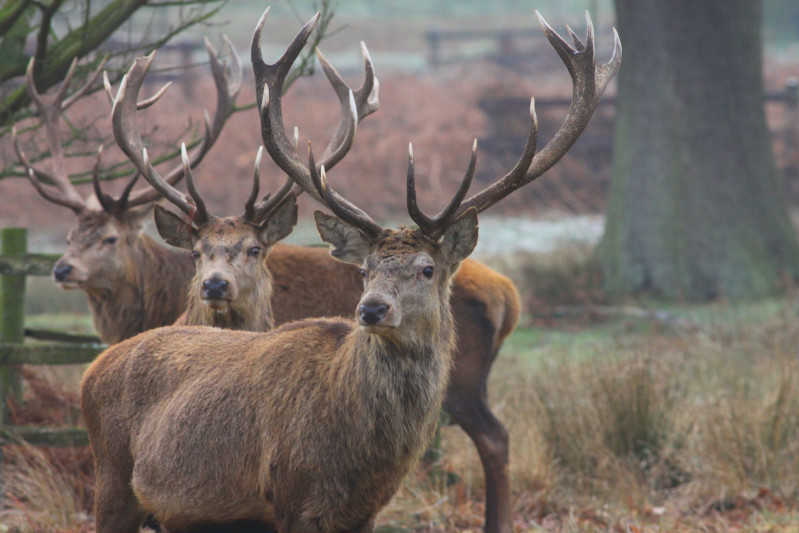
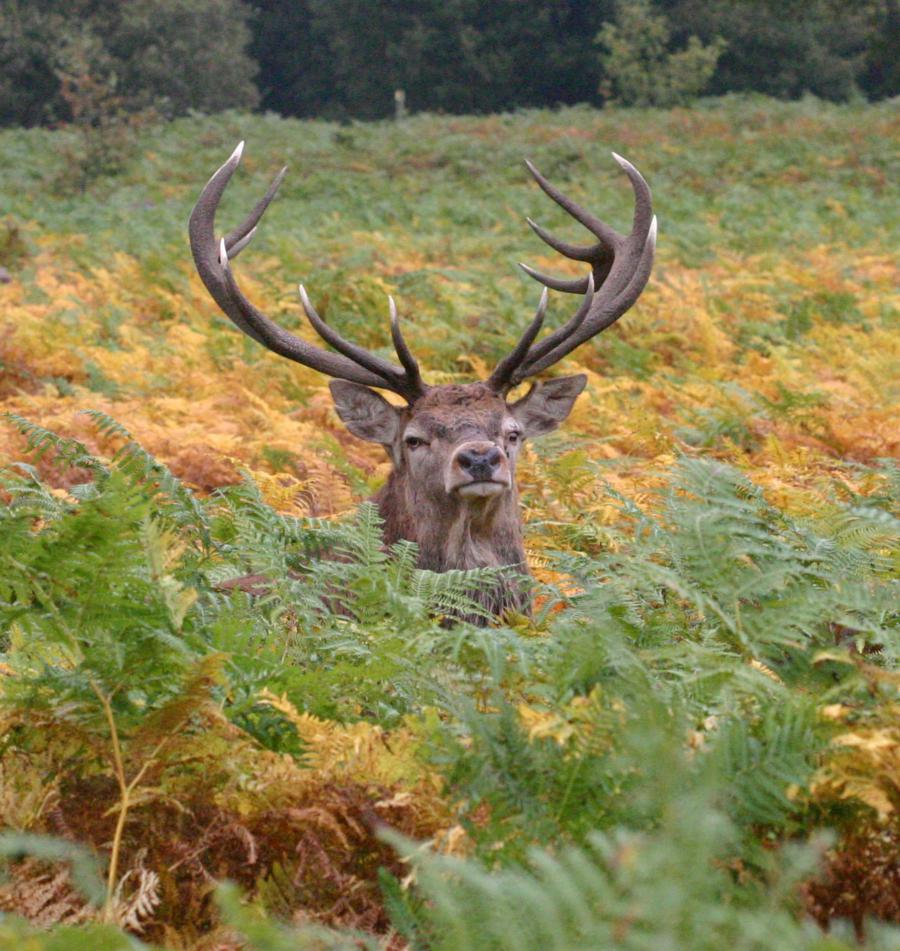
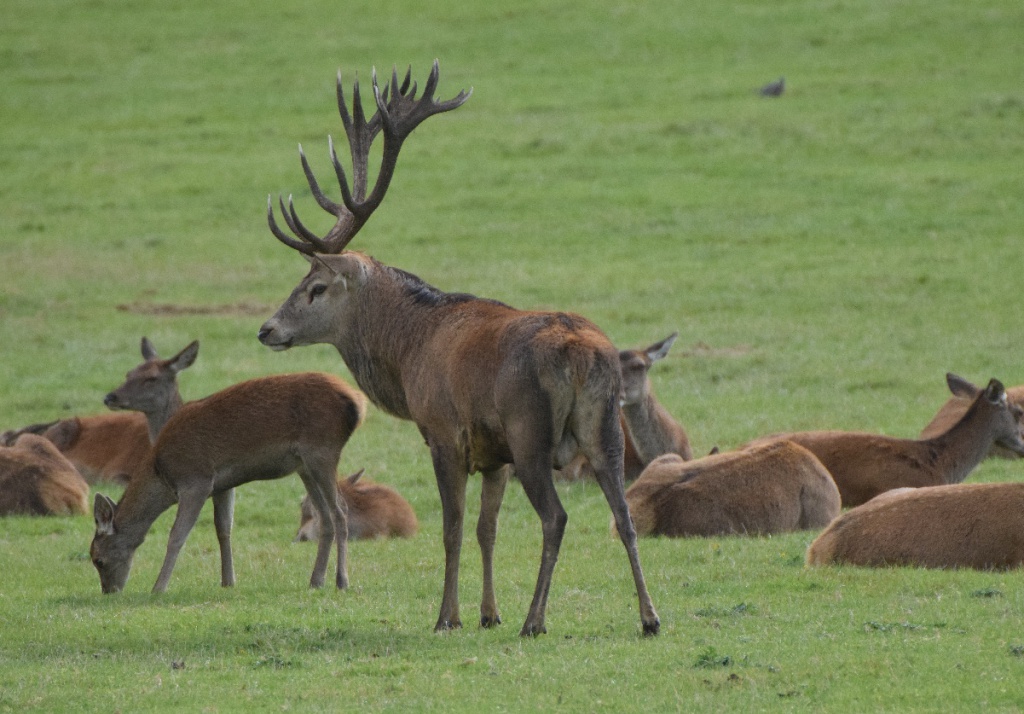
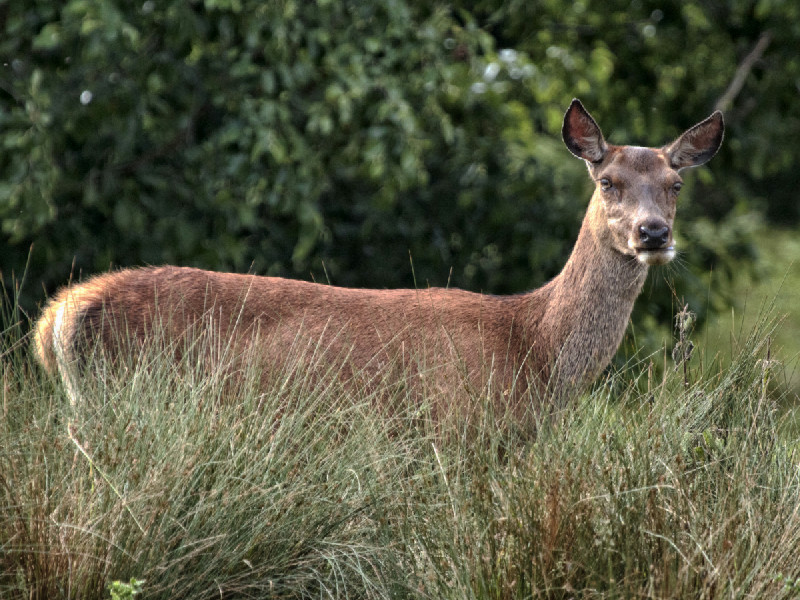
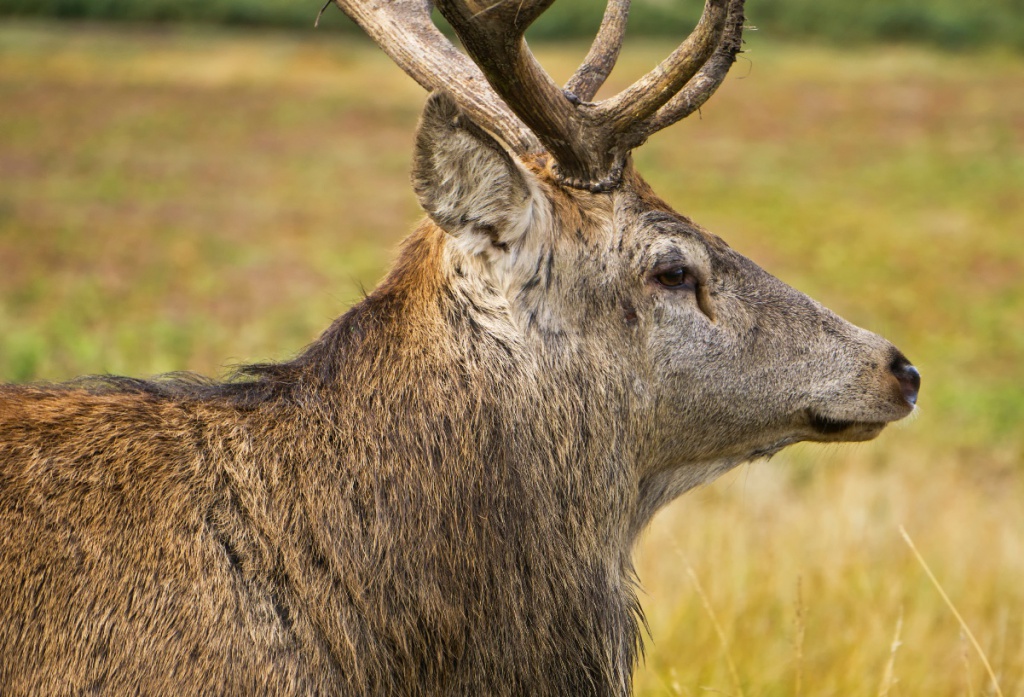
Britain's largest land mammal, the male (stag) is larger than the female (hind) and has well developed branching antlers. The male's antlers are shed each February, reappear in the spring and become larger with each successive season (the number of branches indicates its age) Summer coat is red/russet brown for both male and female but it becomes more grey/brown in winter. They have a creamy/gingery rump and short tail. Stags have a shaggy beard under the chin.
Sika deer
Roe deer
Adult  , Slots (Hoof prints)
  , Droppings
Tracks/Slots: Deer have cloven hooves where the hoof is divided into two parts known as cleaves which leave a clear indentation on soft ground or mud. The Red Deer has the largest prints as befits its size. The forefoot of a fully grown stag is 8-9 cm L and 6-7 cm W. A fully grown hind is 6-7 cm L and 4-5 cm W. They have a rounded outline on the back of each cleave whilst the front edges are curved symmetrically towards the tip
Faeces: Do not have an obvious colouration or smell. They may be excreted in a clump (similar to Sheep faeces) or found as individual droppings. Circular in shape (male - approximate size of a malteser). Usually found on a well-used track/pathway the deer like to use to establish their territory or when feeding as part of a small herd (females and young).
Mammal Fur/Hair: Red/gingery or grey/brown coarse outer hair may be found on sharp objects where it has caught as the animal jumps over and walks passed features such as barbed wire fences, scrub with spikes e.g. hawthorn, blackthorn or gorse.
Mammal Dens/Burrows: Not applicable. The Red deer is a nomadic animal that will sleep or rest in the open by creating temporary areas and depressions in the vegetation. Females will secret their new born in dense vegetation to protect them.
Clear photograph indicating size and description of any field signs is required
This species occupies a range of habitats including grassland, woodland and upland moors.
All year round
The Red deer can live up to 20 years (normally 16 years old in the wild). The 'rut' occurs in September-November when temperatures drop and breeding starts. Young stags (5-6 years old) will seek out females (hinds) at this time. They will defend groups of ~ 10-15 hinds to prevent mating by other stags Calves ae born in May or June and hidden in vegetation for the first few weeks. The calves are weaned by 8 months and increase in weight by 30kg in their first winter. The hinds are fertile at 15-16 months and stags, although sexually mature, don't generally hold a harem until 5-6 years old.
Stags will live in separate sex herds for much of the year, and spends much of the day resting or wallowing in mud, being most active from dusk to dawn.
Red Deer are patchily distributed in the UK; they are widespread and locally common in the north of Scotland. Populations in Scotland and the north-west of England represent native stock, whereas in south-west Scotland and most of England they are likely to be escapees from deer parks. Conservation efforts have resulted in an increase of Red Deer populations.
Park herds only in Leicestershire and Rutland with occasional sightings nearby.
Mammal Society Red Deer https://mammal.org.uk/british-mammals/red-deer
British Deer Society Red Deer https://bds.org.uk/information-advice/about-deer/deer-species/red-deer/
Field Study Council Mammal tracks and signs ID guide https://www.field-studies-council.org/shop/publications/mammal-tracks-and-signs-guide/
 Jonesboy1
newtown linford
15 January 2012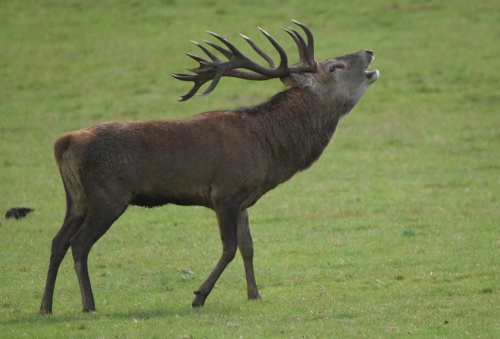 Steve Mathers
Bradgate Park
2016
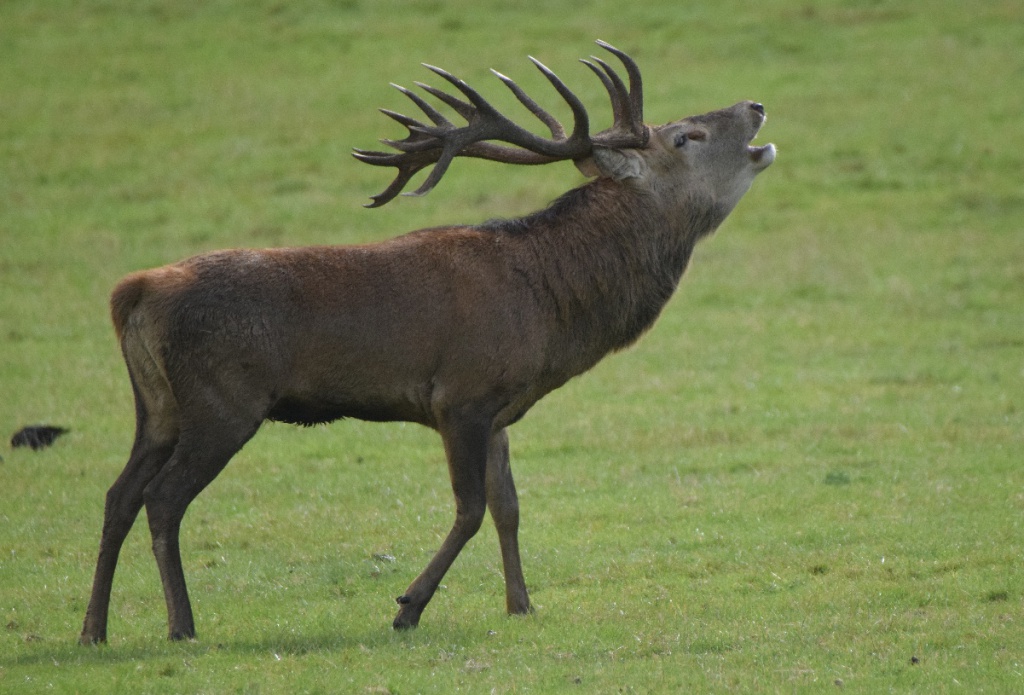
Stag bellowing during rut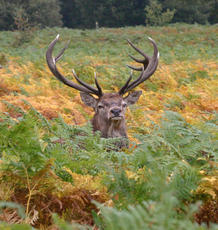 David Nicholls
Bradgate Park
12 October 2007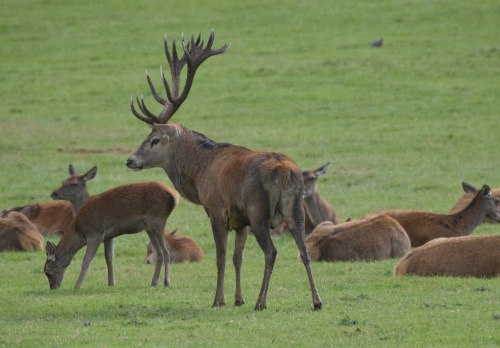 Steve Mathers
Bradgate Park (around Bradgate House)
10 October 2016
stag with hinds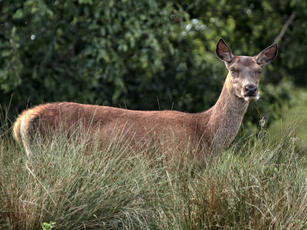 HAPeacock
Bradgate Park
07 June 2011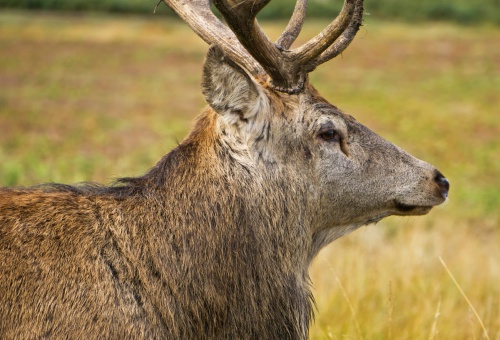 AJ Cann
Bradgate Park
21 October 2016
Stag
Leicestershire & Rutland Map
Enter a town or village to see local records
MAP KEY:
Yellow squares = NBN records (all known data)
Coloured circles = NatureSpot records: 2025+ | 2020-2024 | pre-2020
UK Map
Species profile
- Common names
- Red Deer
- Species group:
- terrestrial mammal
- Kingdom:
- Animalia
- Order:
- Artiodactyla
- Family:
- Cervidae
- Records on NatureSpot:
- 34
- First record:
- 12/10/2007 (Nicholls, David)
- Last record:
- 04/07/2024 (Thickitt, John)
Total records by month
% of records within its species group
10km squares with records
The latest images and records displayed below include those awaiting verification checks so we cannot guarantee that every identification is correct. Once accepted, the record displays a green tick.
In the Latest Records section, click on the header to sort A-Z, and again to sort Z-A. Use the header boxes to filter the list.
Latest images
Latest records
 Bradgate Park SK534104 (taken by Mrs Denise Stretton 30.08.2010).JPG) Denise Stretton
Denise Stretton
Bradgate Park
30 August 2010
 Bradgate Park SK534104 (taken by Mrs Denise Stretton 30.08.2010).JPG)