

Pine Beauty - Panolis flammea
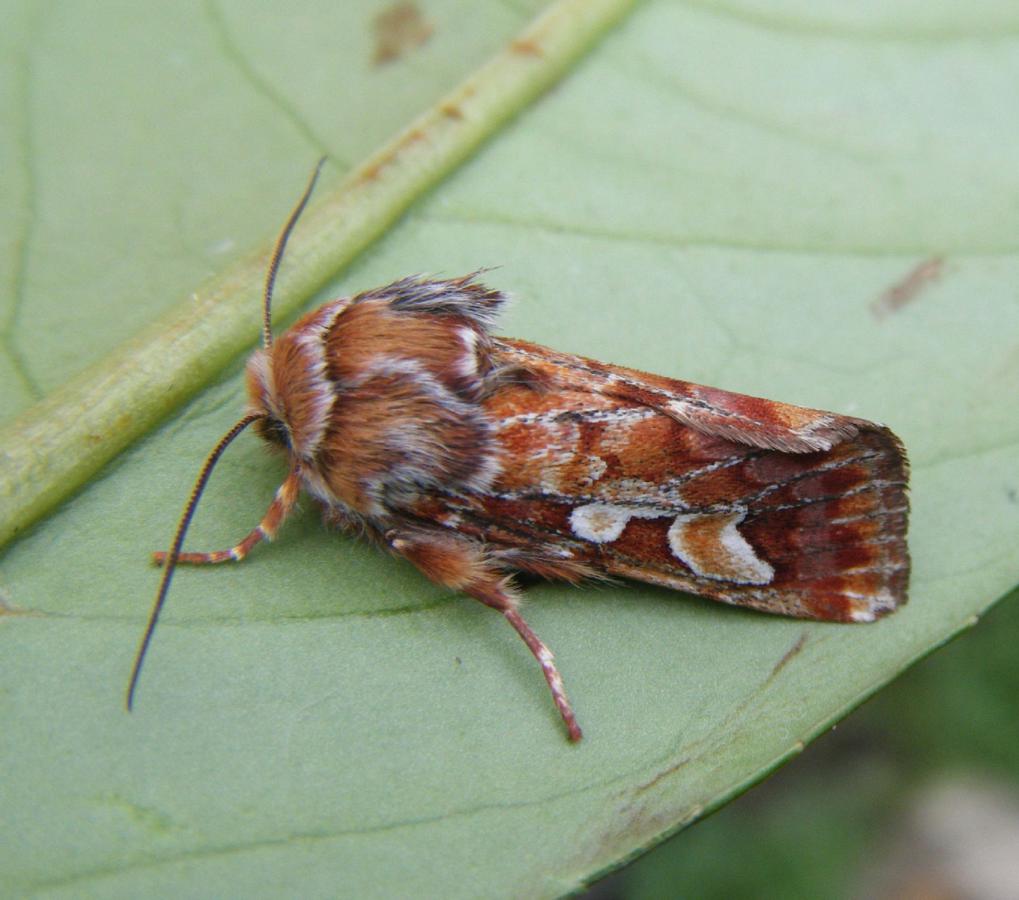
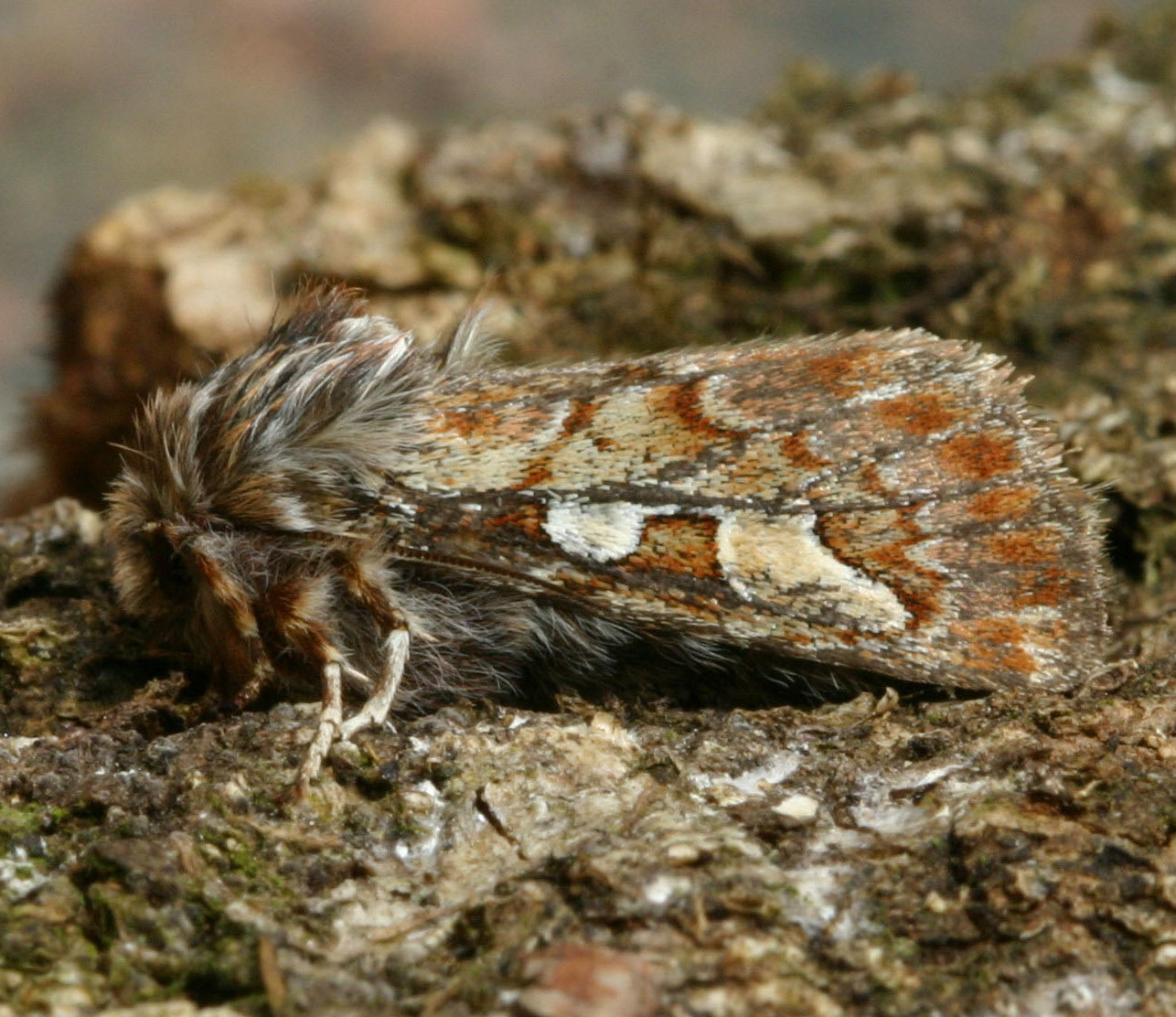
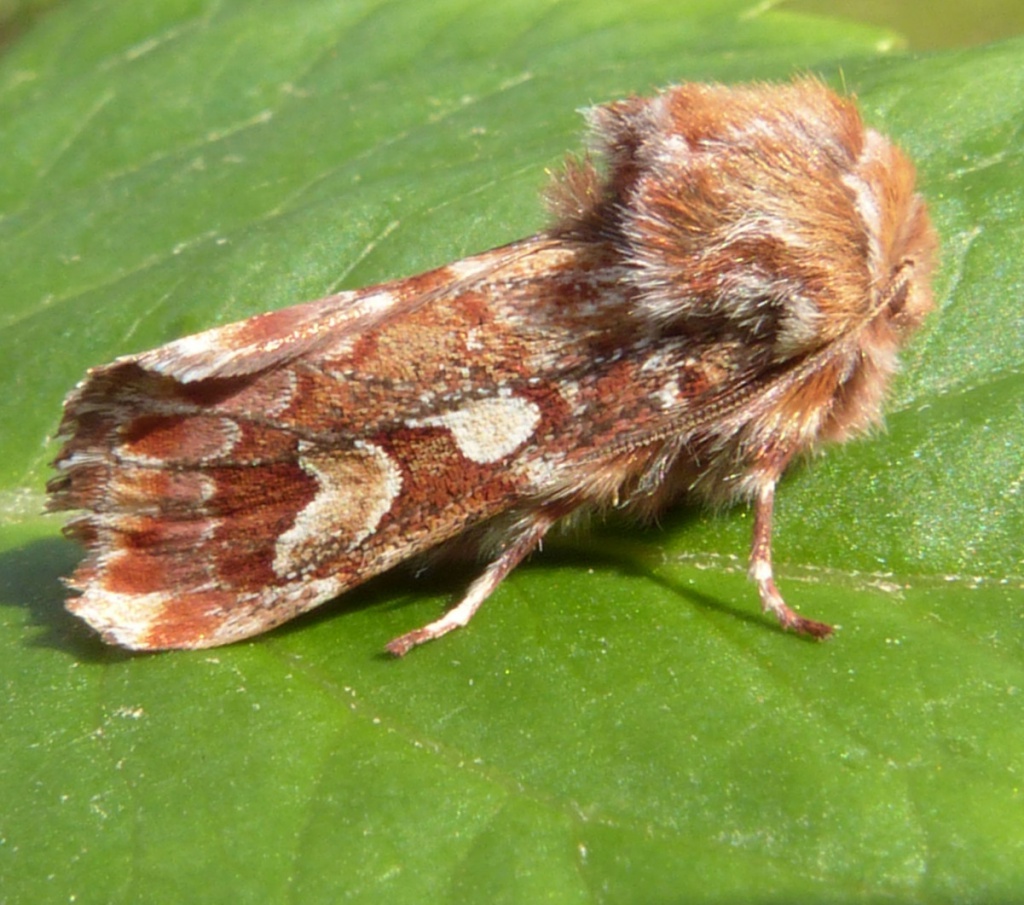
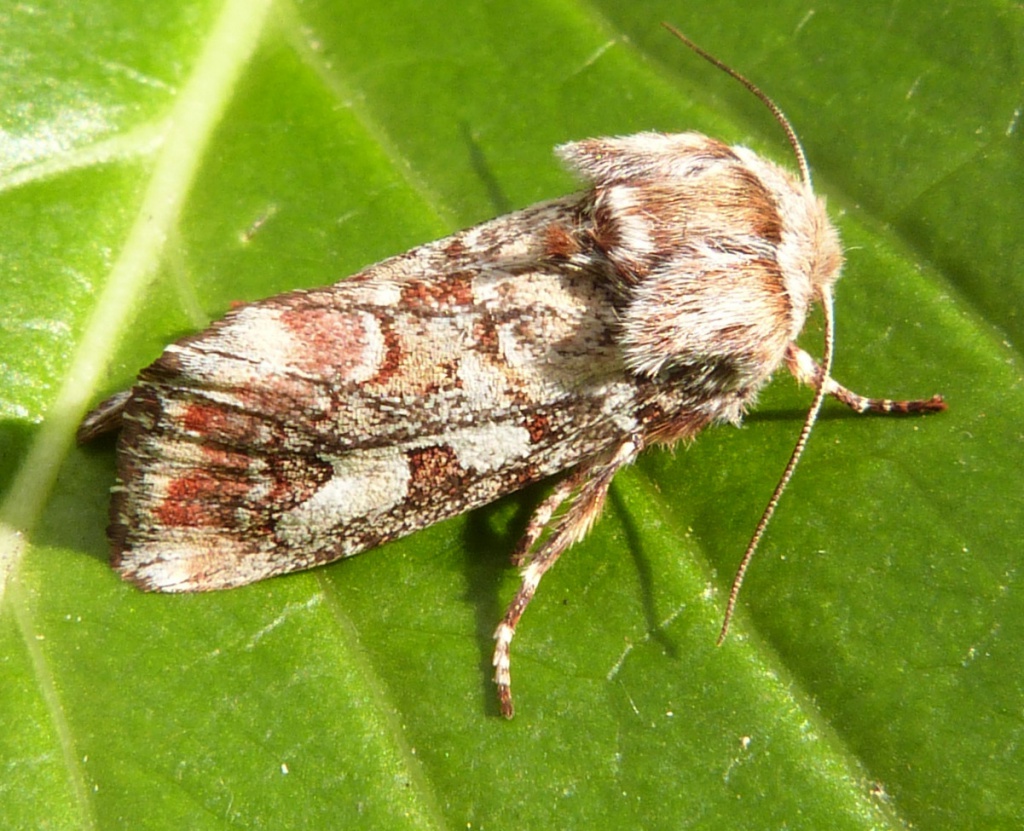
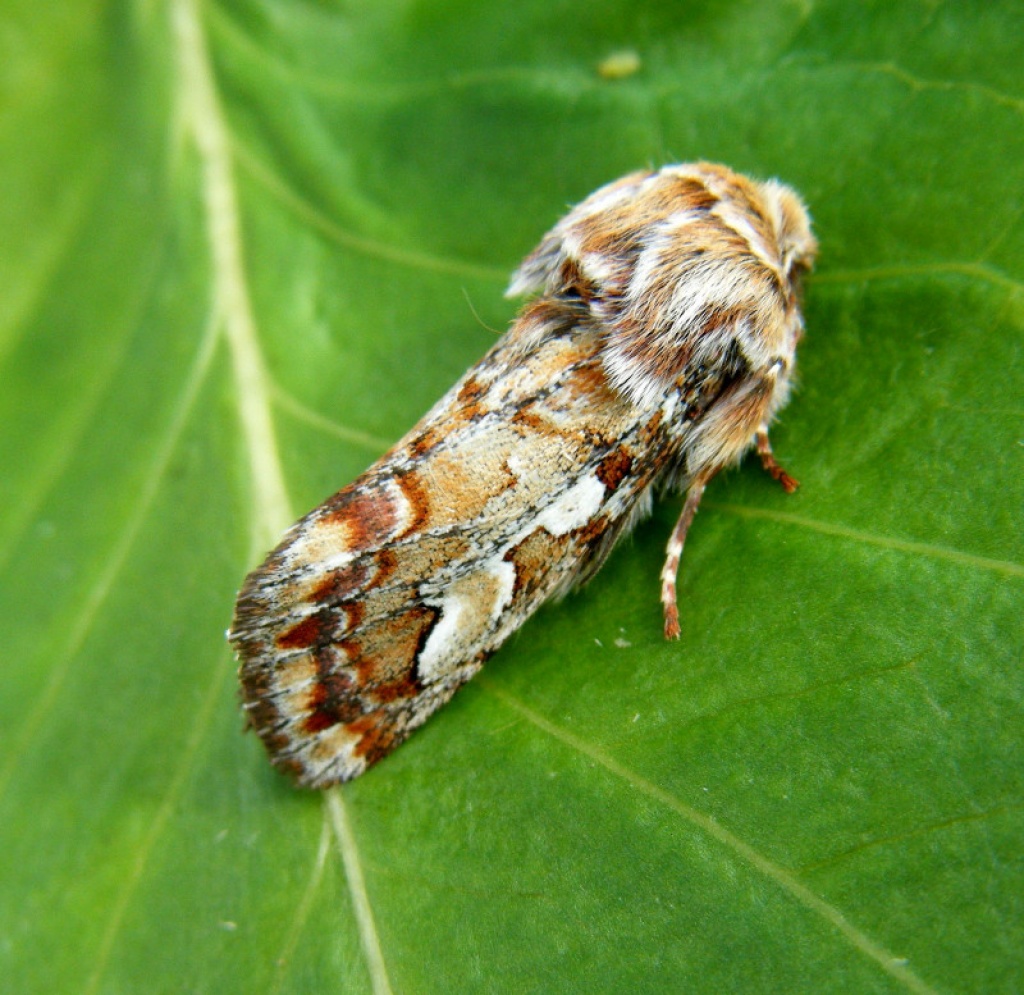
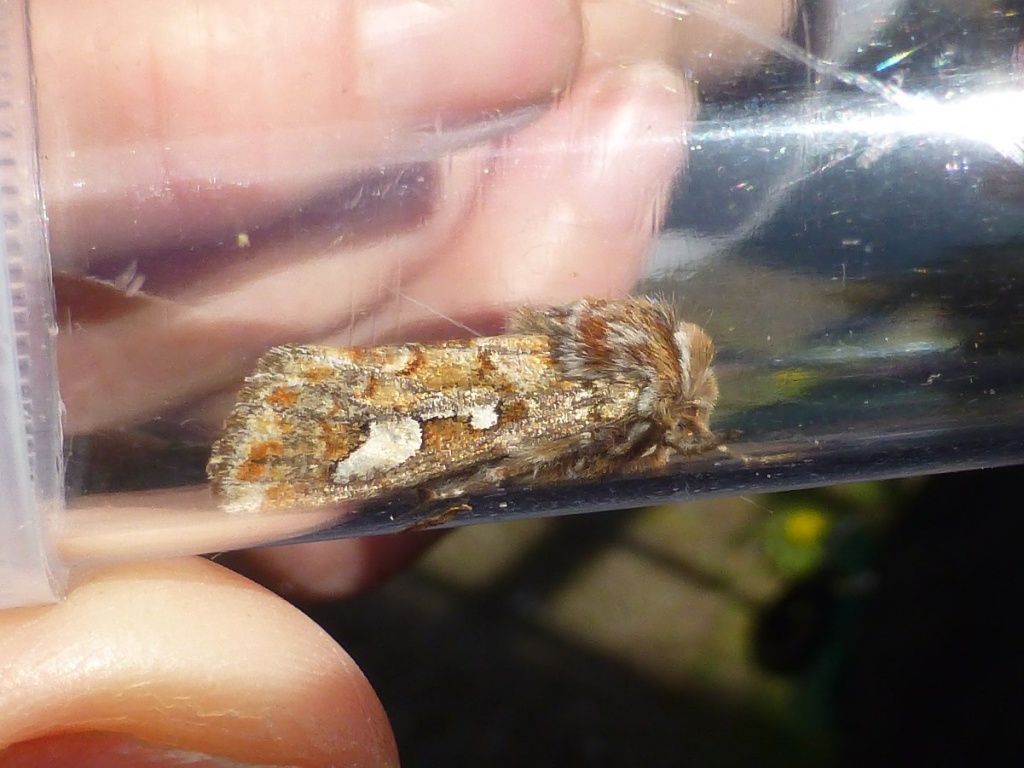
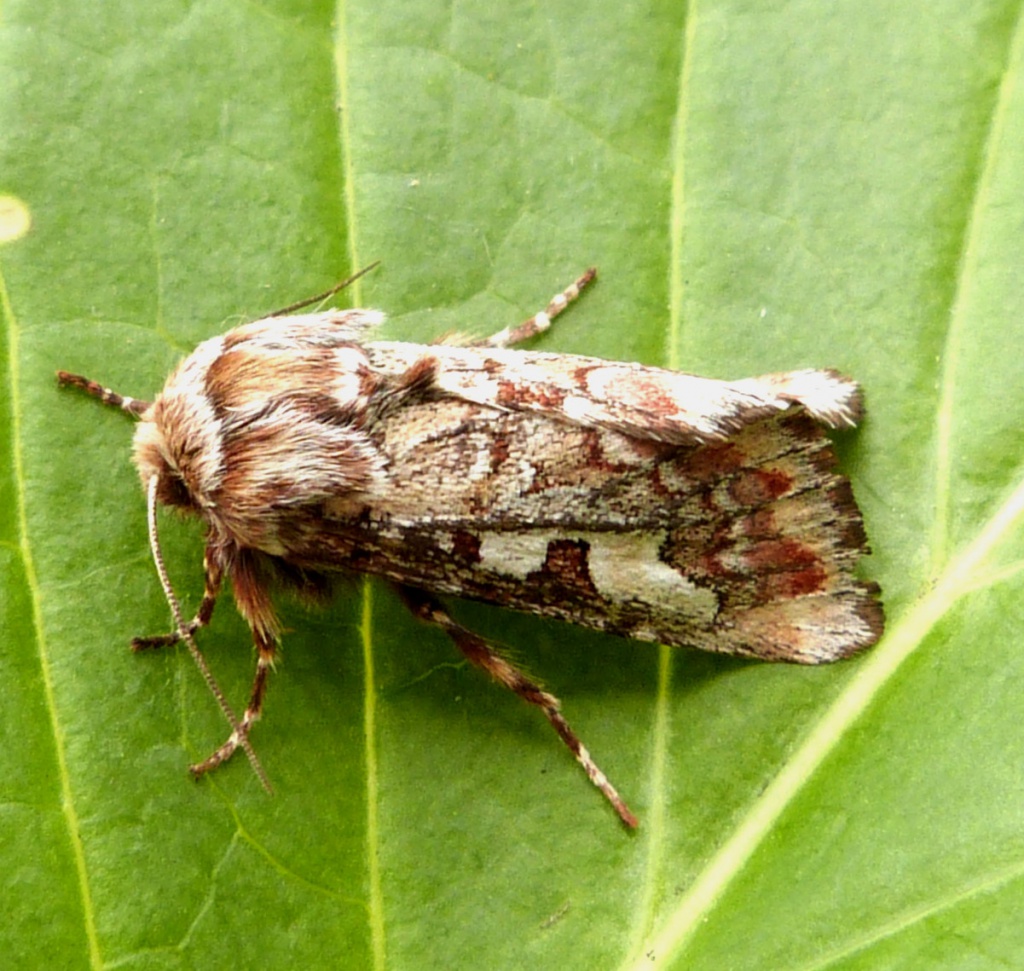
Wingspan 30-33 mm. Unmistakable with a large white kidney mark drawn out close to leading edge towards wing tip. Forewing rather narrow and pointed orange brown, reddish brown or brick red often yellowish along the outer edge and sometimes dusted white.

It occupies coniferous forests and plantations, mixed woodlands, parks and gardens.
Flying in March and April. The adults rest among the spring buds of coniferous trees, well camouflaged. They also feed in spring on Willow and are attracted to light.
The larvae feed on the needles of Scots Pine as well as other Pinaceae, and themselves are difficult to see with their longitudinal stripes.
This species is quite common over much of Britain in suitable habitat. In a recent survey to determine the status of all macro moths in Britain this species was classified as common.
Fairly frequent but not common in Leicestershire & Rutland. L&R Moth Group status = B (scarce resident or restricted distribution or regular migrant)
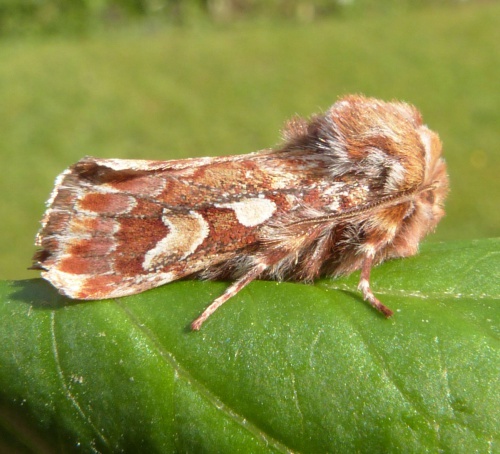 Graham Calow
Sapcote garden1
10 April 2015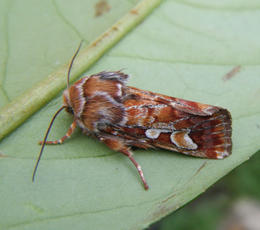 Graham Calow
Sapcote garden1
15 March 2011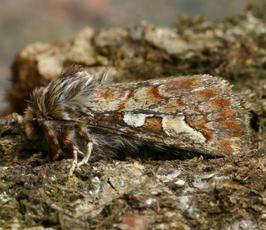 David Nicholls
Ratby garden1
26 April 2008
Leicestershire & Rutland Map
Enter a town or village to see local records
MAP KEY:
Yellow squares = NBN records (all known data)
Coloured circles = NatureSpot records: 2025+ | 2020-2024 | pre-2020
UK Map
Species profile
- Common names
- Pine Beauty
- Species group:
- insect - moth
- Kingdom:
- Animalia
- Order:
- Lepidoptera
- Family:
- Noctuidae
- Records on NatureSpot:
- 59
- First record:
- 24/04/2004 (Skevington, Mark)
- Last record:
- 14/04/2026 (Johnson, Andrew)
Total records by month
% of records within its species group
10km squares with records
The latest images and records displayed below include those awaiting verification checks so we cannot guarantee that every identification is correct. Once accepted, the record displays a green tick.
In the Latest Records section, click on the header to sort A-Z, and again to sort Z-A. Use the header boxes to filter the list.
Latest images
Latest records
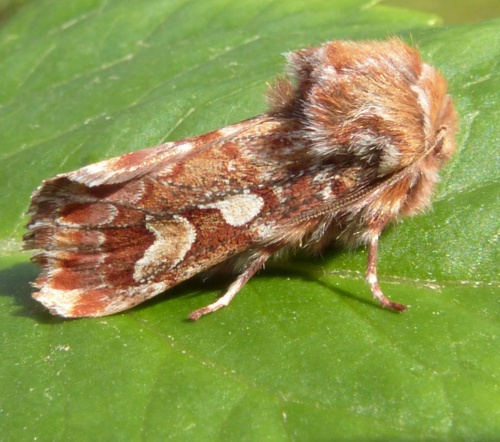 Graham Calow
Sapcote garden1
10 April 2015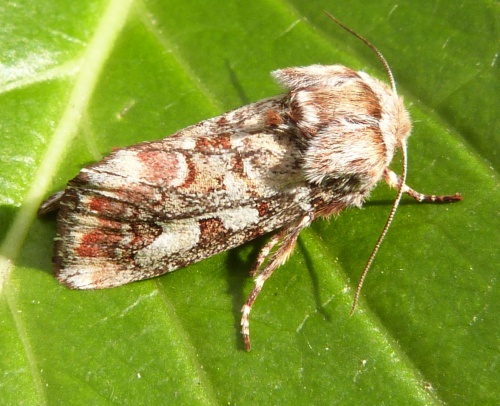 Graham Calow
Sapcote garden1
12 May 2014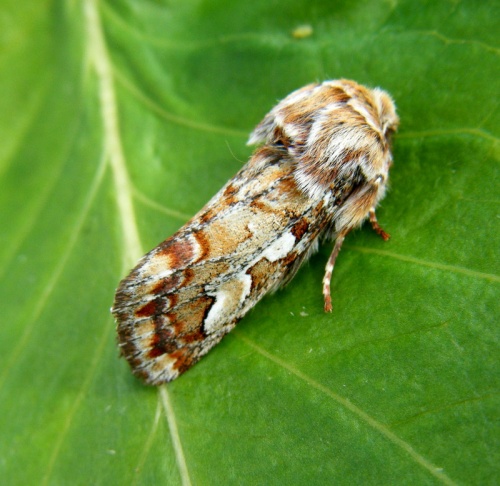 Graham Calow
Sapcote garden1
22 April 2012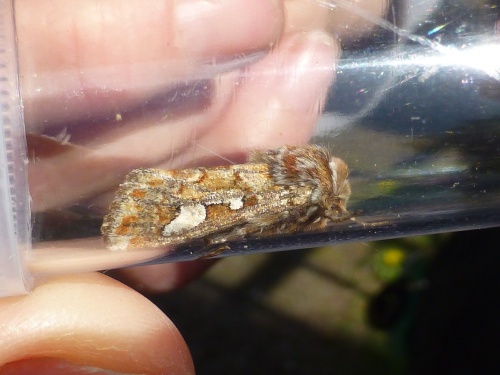 Annie Smith
Charnwood Lodge
04 May 2016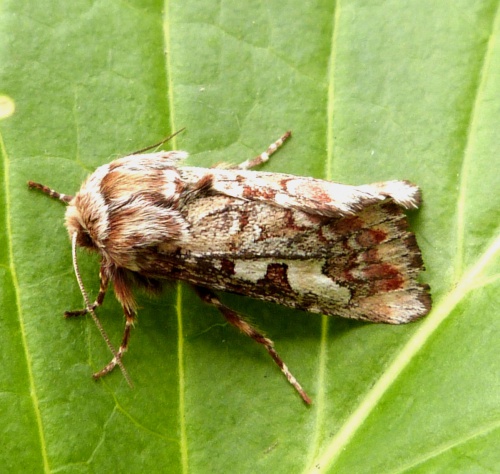 Graham Calow
Sapcote garden1
12 May 2014 Garratt's Croft Church Street Sapcote SP48799327 (20.5.2010),,.JPG) Graham Calow
Graham Calow
Sapcote
20 May 2010
 Garratt's Croft Church Street Sapcote SP48799327 (20.5.2010),,.JPG)