

Pied Flycatcher - Ficedula hypoleuca
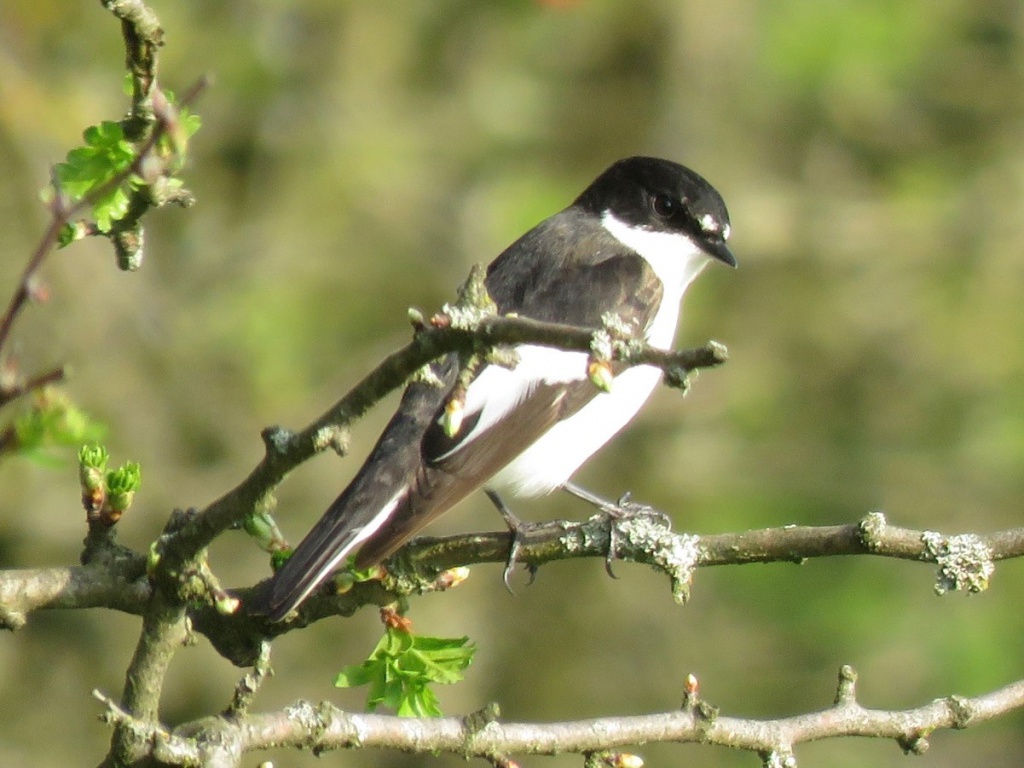
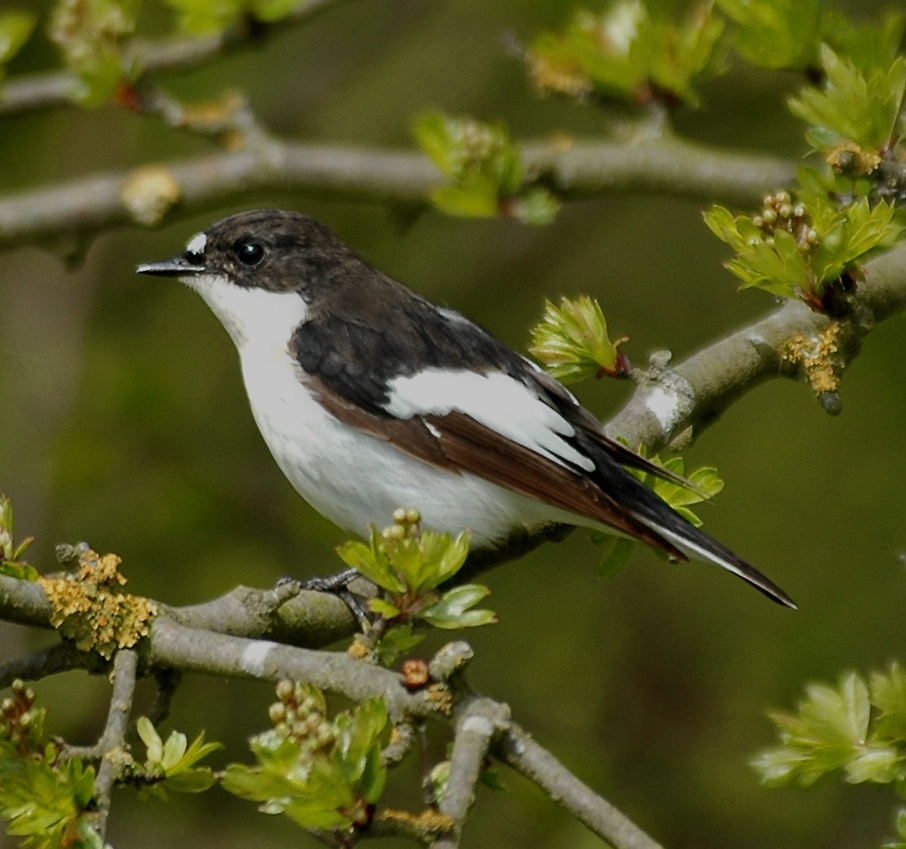
The breeding male Pied Flycatcher is easily identified with his bright, white underparts, black and white wings and little white spot on his forehead. In all other plumages they are duller, not so clean below and with brown not black upperparts. They can easily be told from Spotted Flycatchers by the white markings which go down as well as across the wing. Their habit of letting the wings droop below the level of the tail is typical of the Flycatchers. In female, or non-breeding plumages, they can be hard to distinguish from the other Ficedula Flycatchers but notice that the white at the base of the primaries and the pale second wing bar (on the median coverts) are either very small or lacking completely.

Found in mature woodlands. You may also see it in spring and autumn at coastal migration watchpoints.
Late April to September.
It is estimated that there are 35,000 to 40,000 breeding pairs in Britain each year. It is found mainly to the west of the UK, and not found in Northern Ireland. The valleys and hillsides of Wales are a good place to look for breeding birds in summer and the RSPB's Nagshead reserve has a good population.
Scarce passage migrant. Does not breed.
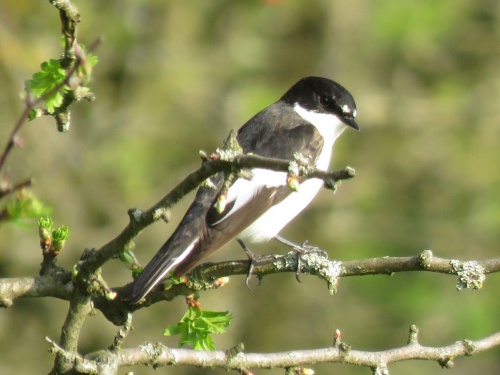 egaten
Croft Hill
10 April 2020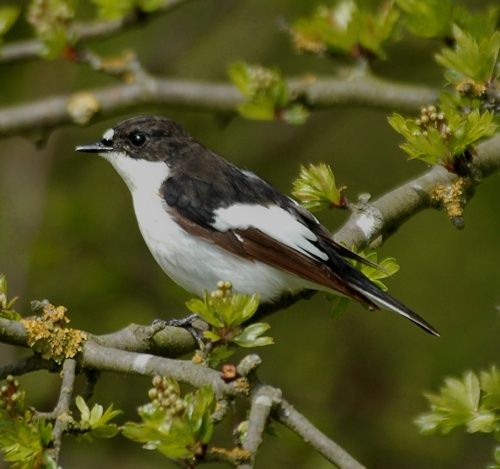 David Taylor
Croft Hill
18 April 2008
Leicestershire & Rutland Map
Enter a town or village to see local records
MAP KEY:
Yellow squares = NBN records (all known data)
Coloured circles = NatureSpot records: 2025+ | 2020-2024 | pre-2020
UK Map
Species profile
- Common names
- European Pied Flycatcher, Pied Flycatcher
- Species group:
- bird
- Kingdom:
- Animalia
- Order:
- Passeriformes
- Family:
- Muscicapidae
- Records on NatureSpot:
- 4
- First record:
- 18/04/2008 (Taylor, David)
- Last record:
- 10/04/2020 (Gaten, Ted)
Total records by month
% of records within its species group
10km squares with records
The latest images and records displayed below include those awaiting verification checks so we cannot guarantee that every identification is correct. Once accepted, the record displays a green tick.
In the Latest Records section, click on the header to sort A-Z, and again to sort Z-A. Use the header boxes to filter the list.