Phyllonorycter spinicolella
Sloe Midget
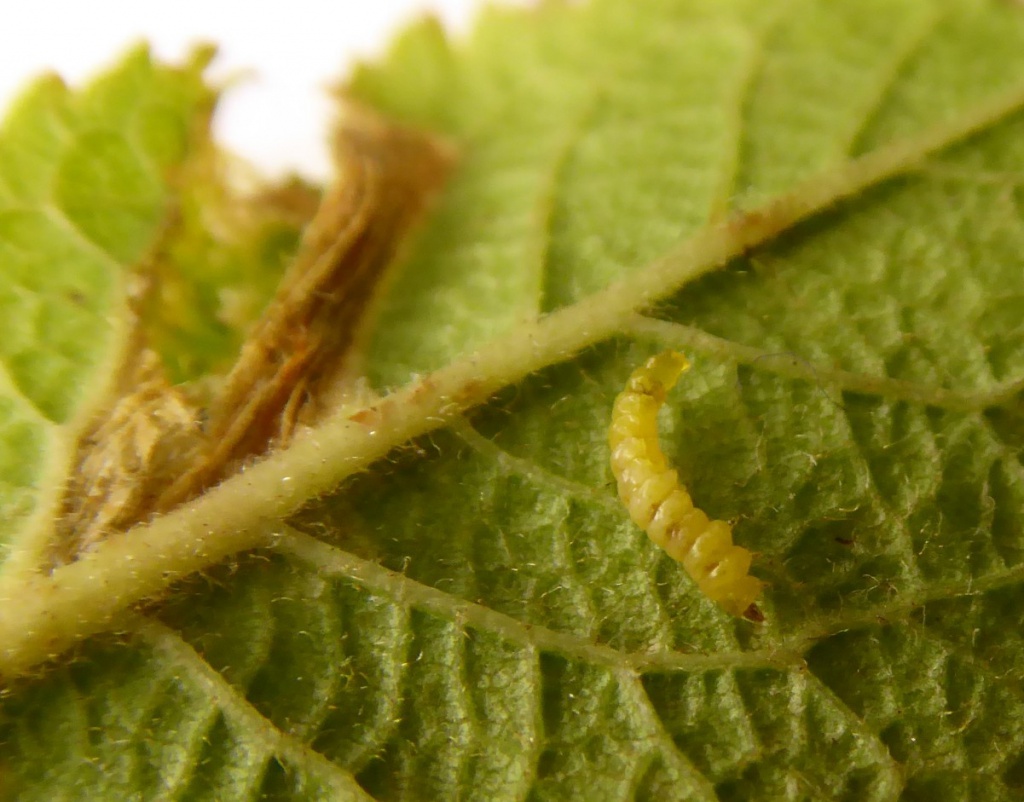
Wingspan 6 to 8 mm. The adult moths are very similar in appearance to P. cerasicolella and the two species are best separated by genitalia dissection or by recording as a leafmine with a note of the host foodplant. The larva mines the leaves of Prunus (usually Blackthorn).
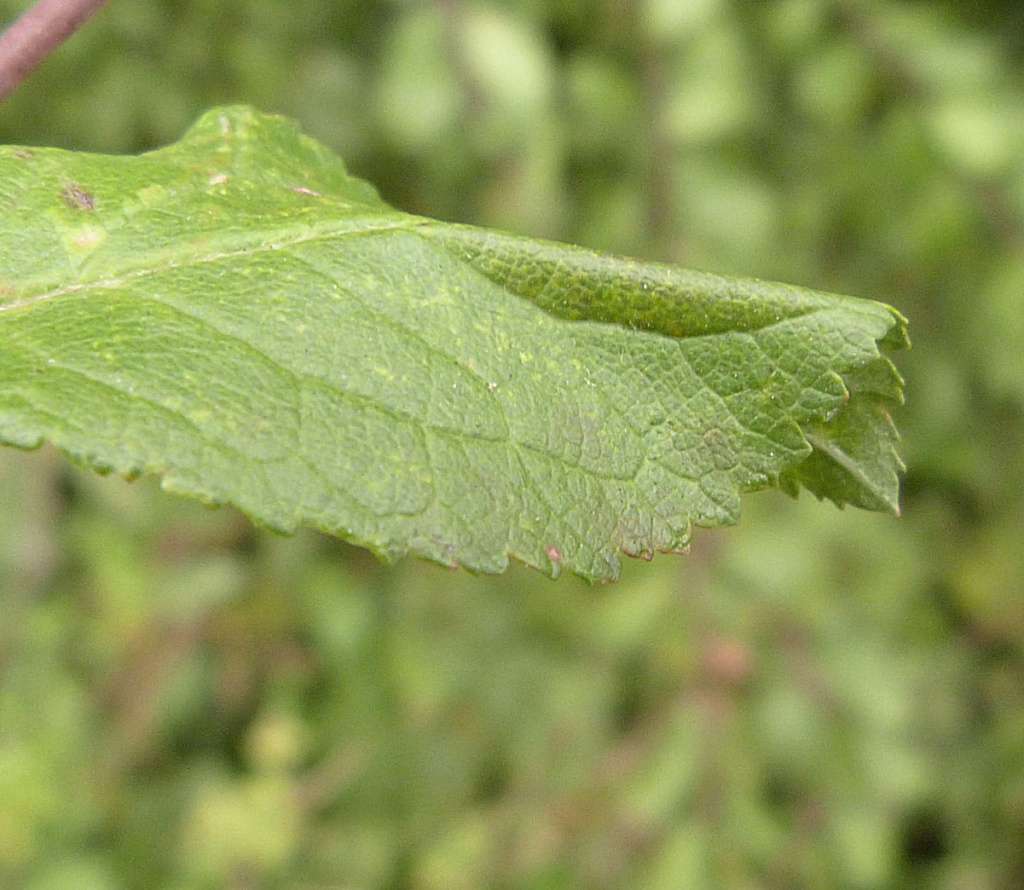
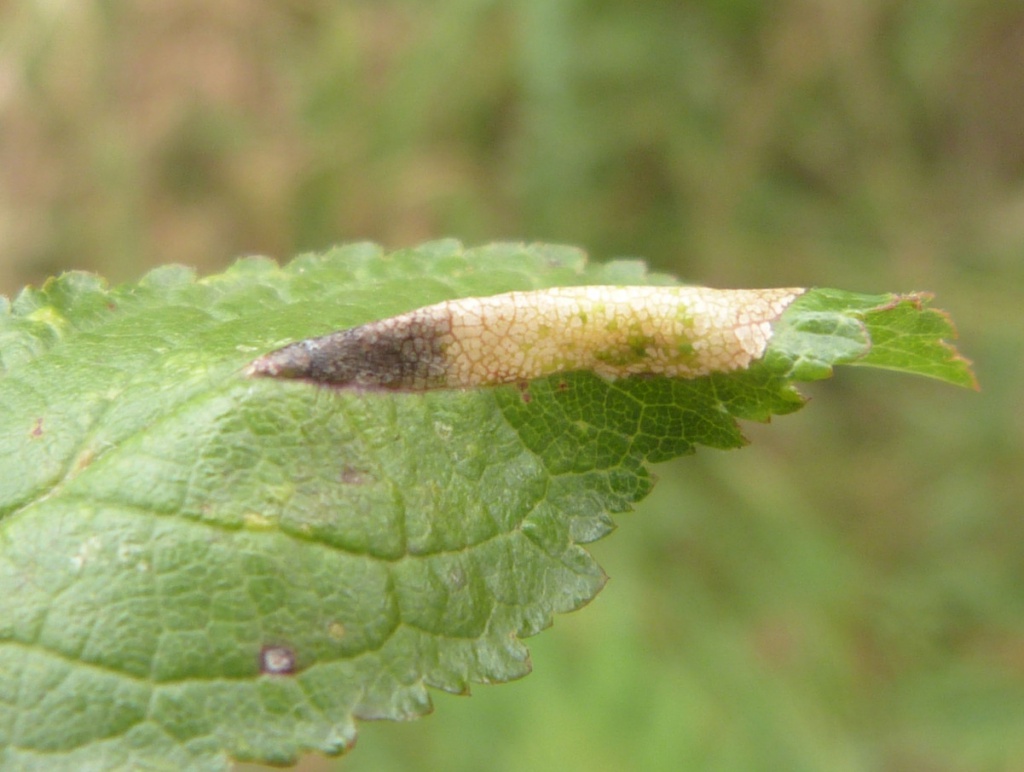
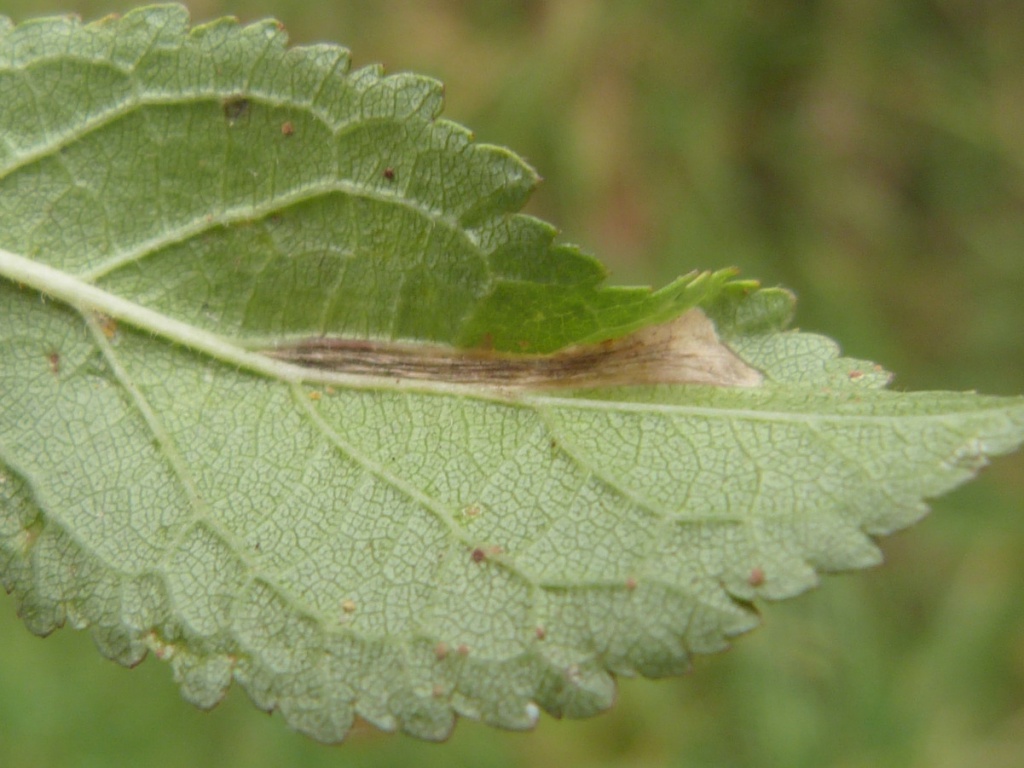
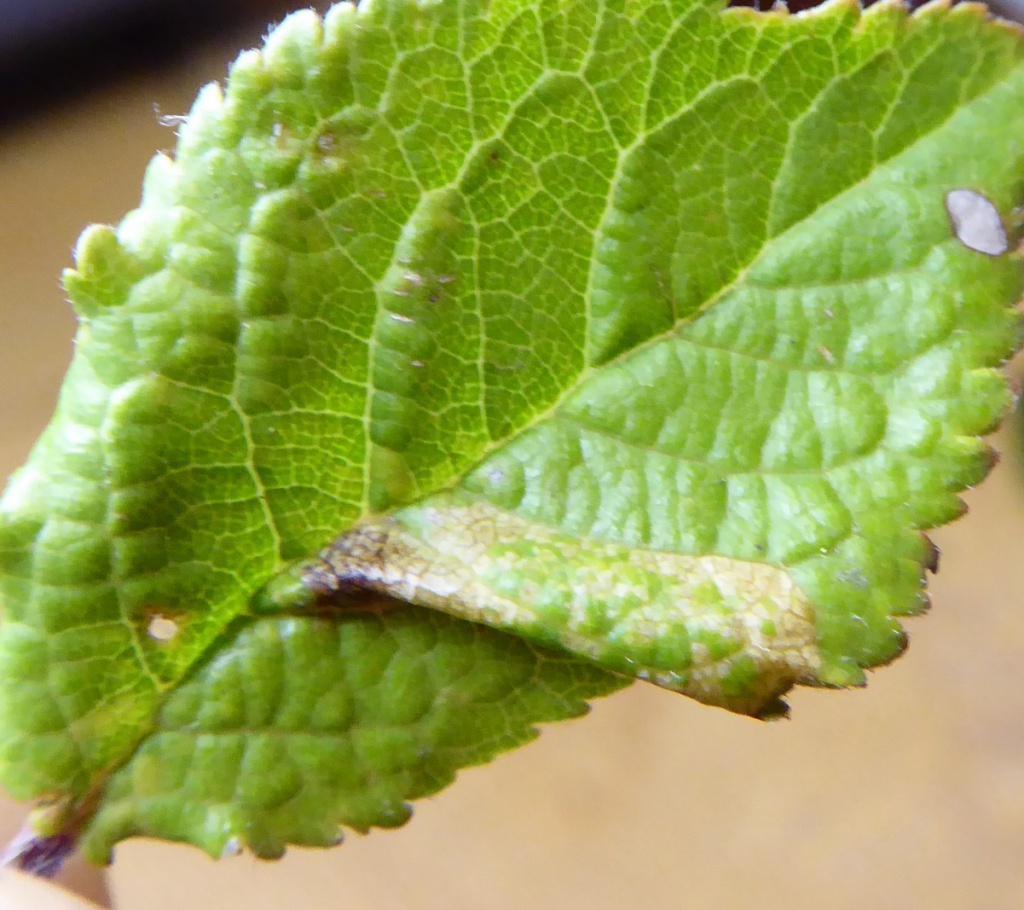
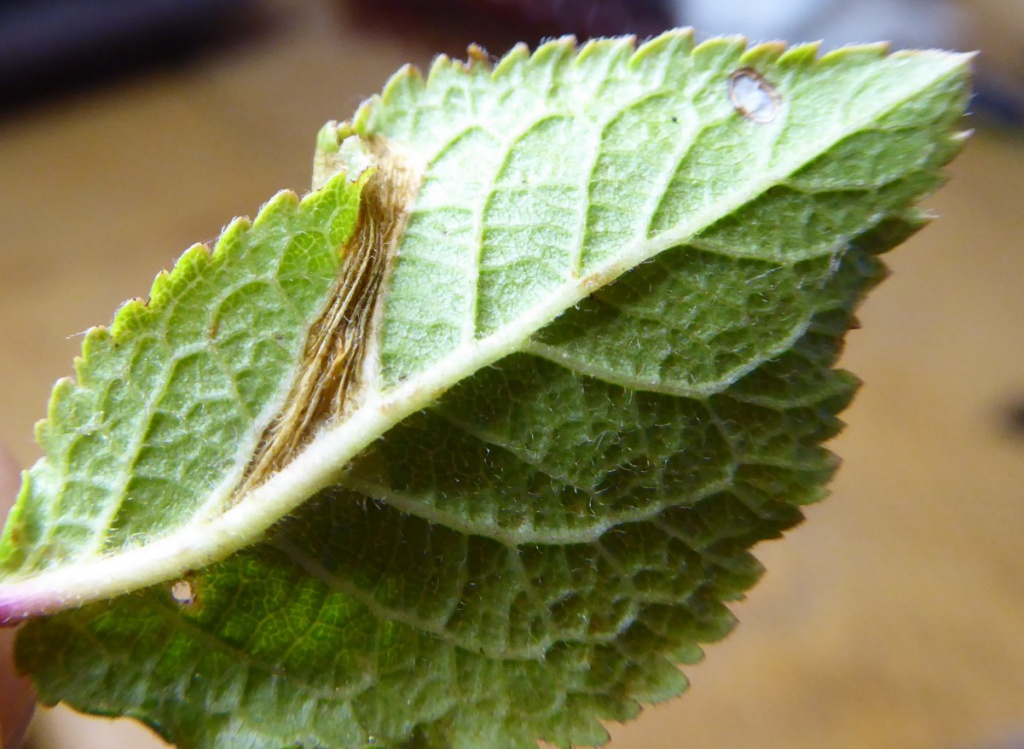
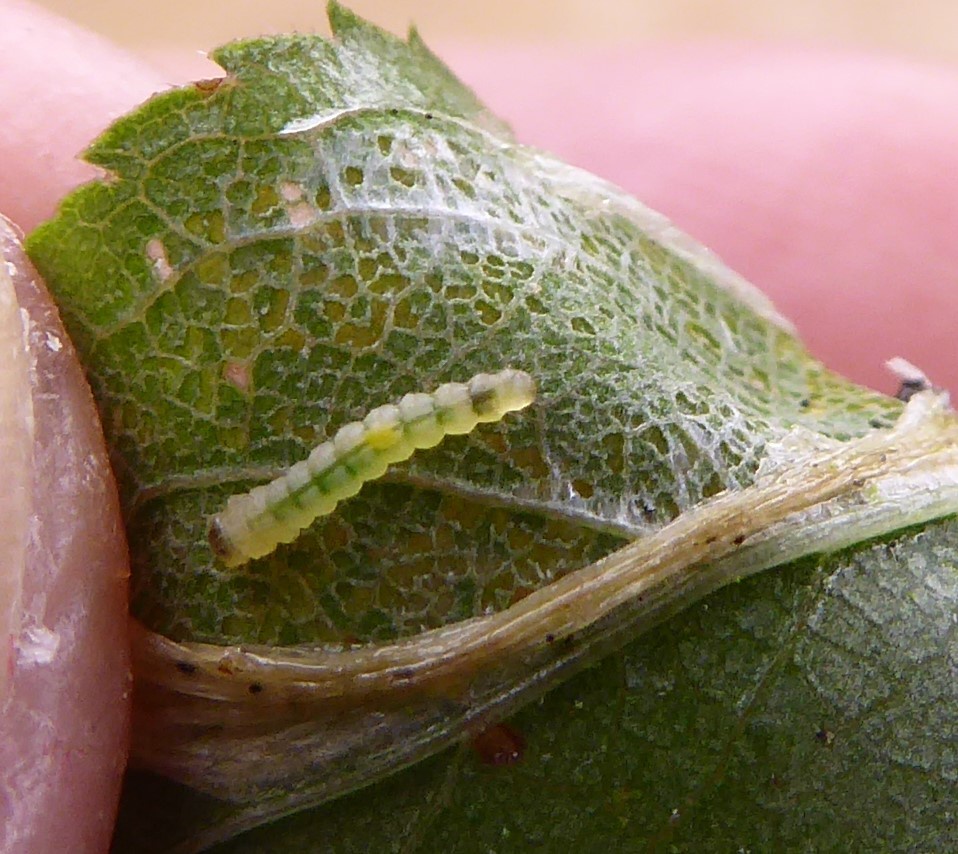
Adult  Leafmine
Areas where the larval foodplants occur.
The moths fly in two generations, in May and August.
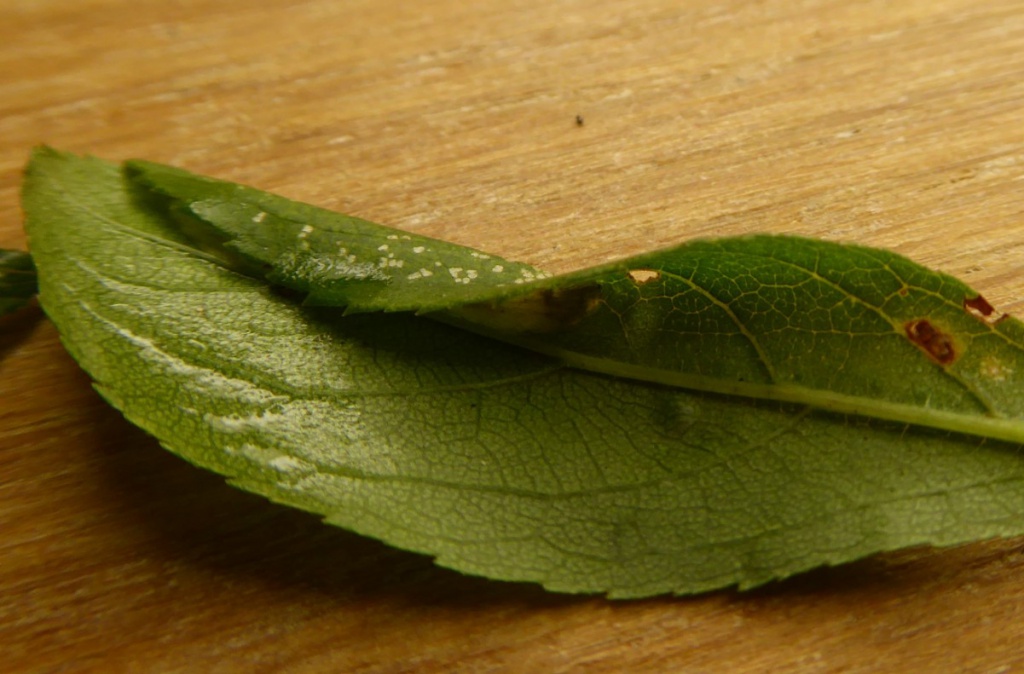
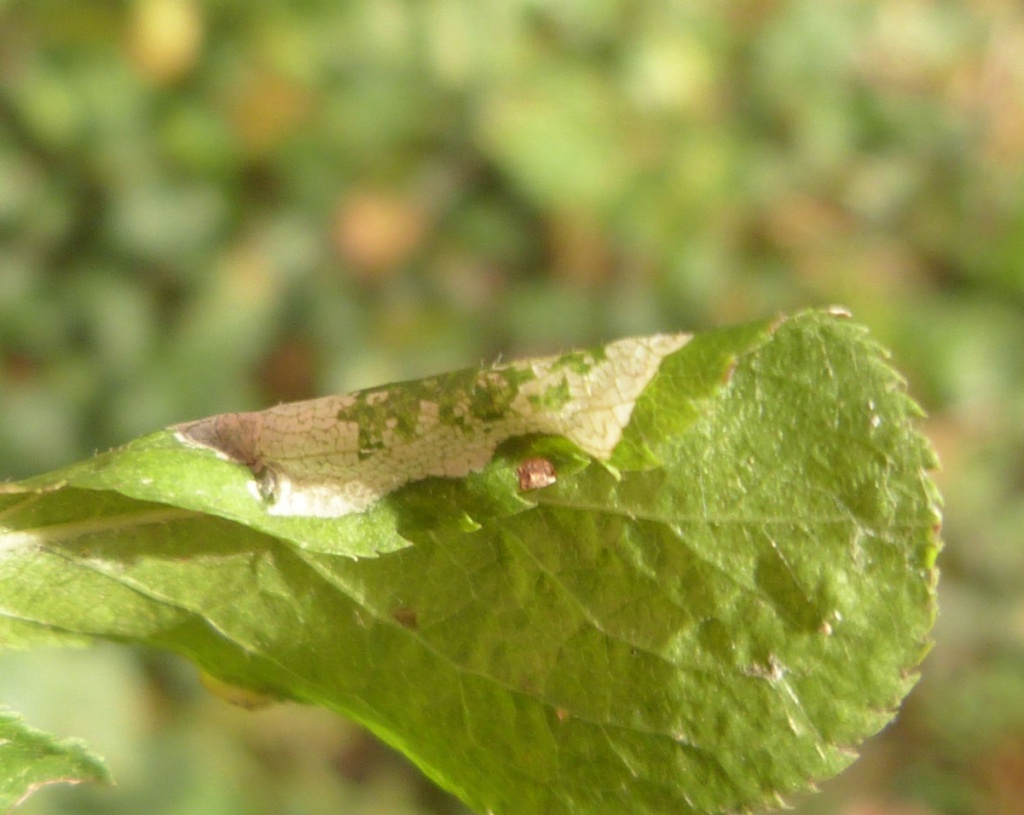
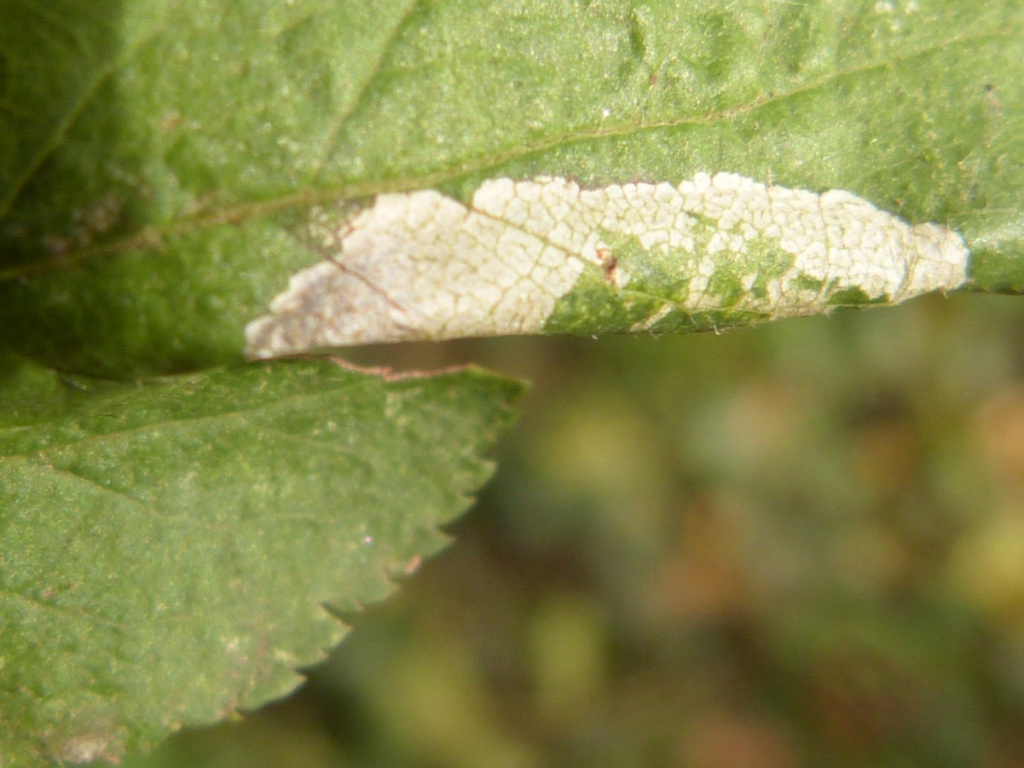
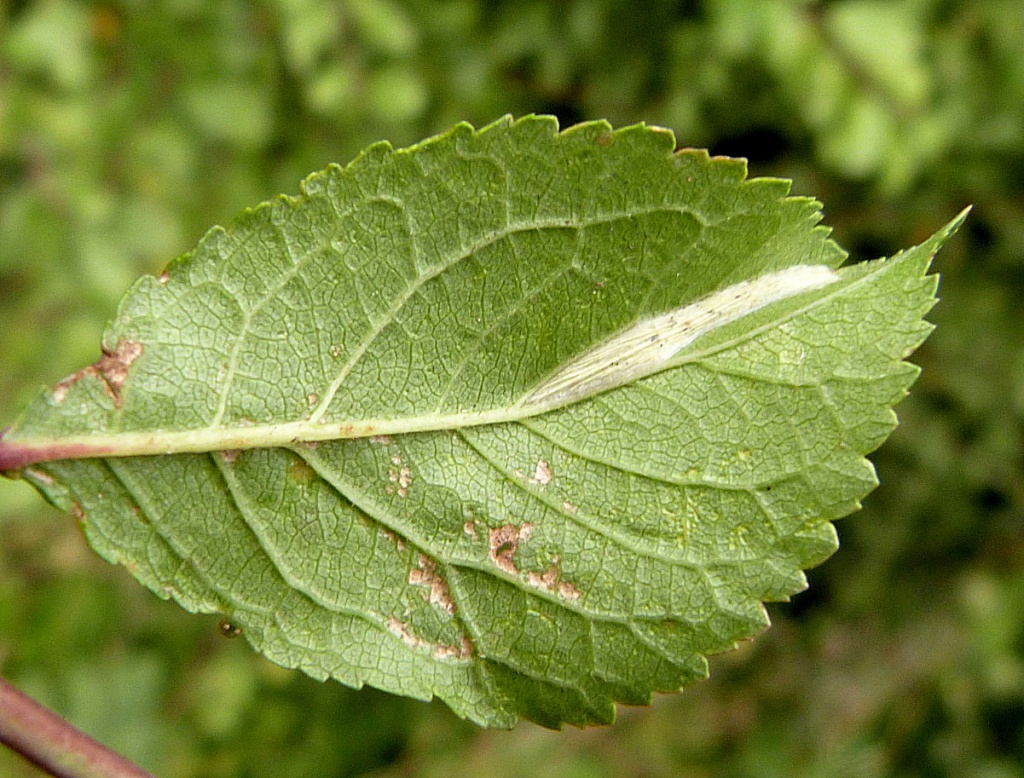
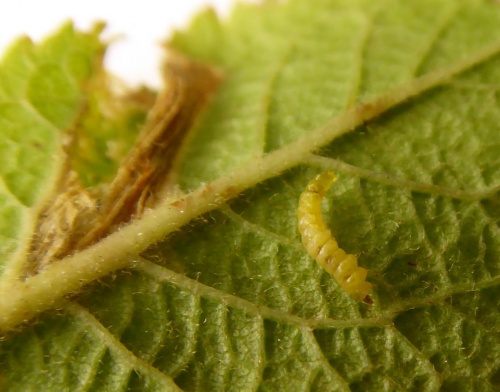
The larvae feed on Blackthorn (Prunus spinosa) or sometimes Wild Plum (Prunus domestica). On Blackthorn the mines are narrow and cause the leaf to pucker strongly, often folding right over, and being whitish can resemble those of the blackthorn-feeding Parornix species.
A common and widespread species throughout most of the British Isles. In the Butterfly Conservation's Microlepidoptera Report 2011 this species was classified as common.
It appears to be uncommon in Leicestershire and Rutland, where there are few records. L&R Moth Group status = D (rare or rarely recorded).
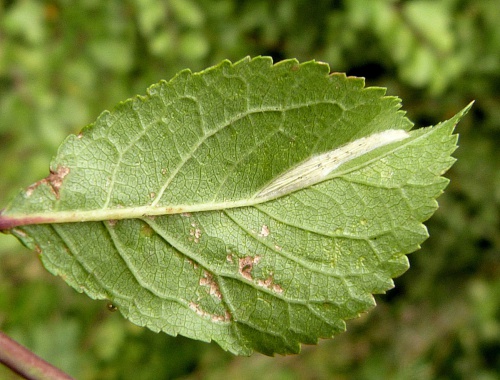 Graham Calow
Leicester Road, Sapcote
04 October 2017
leafmine on Blackthorn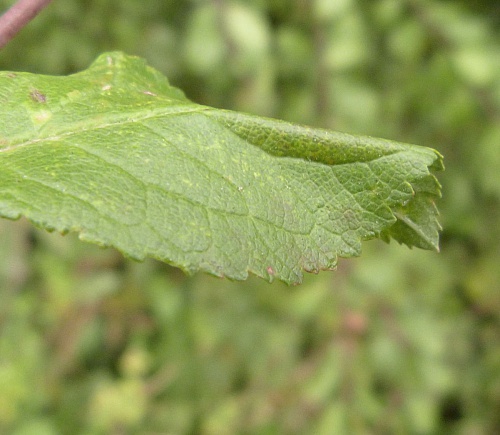 Graham Calow
Leicester Road, Sapcote
04 October 2017
leafmine on Blackthorn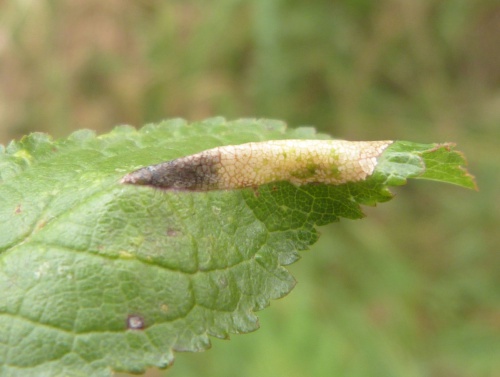 Graham Calow
Croft, Footpath off Station Road
10 November 2020
leafmine on Blackthorn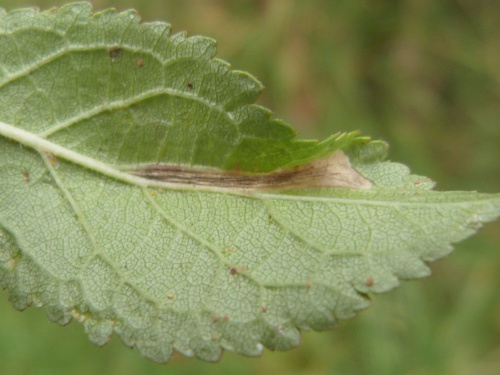 Graham Calow
Croft, Footpath off Station Road
10 November 2020
leafmine on Blackthorn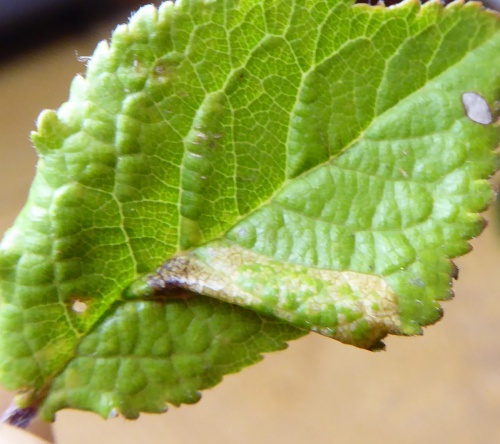 sue
sue
Breedon on the Hill, S of Church
20 October 2018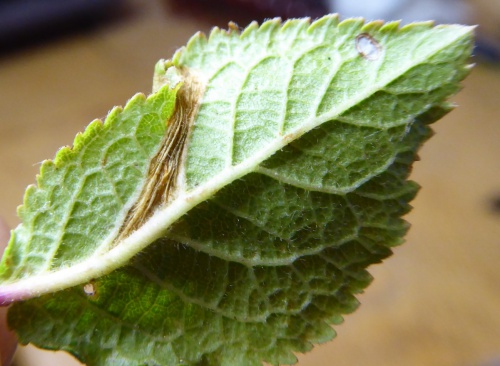 sue
sue
Breedon on the Hill, S of Church
20 October 2018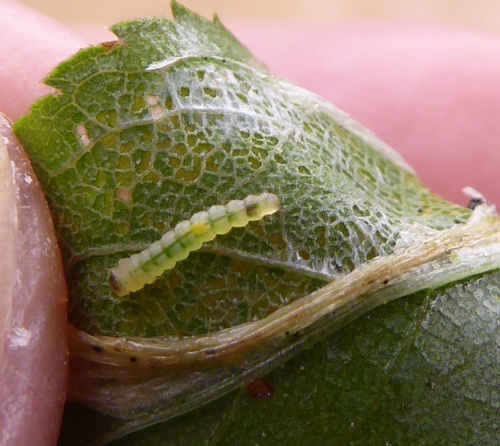 sue
sue
Barlestone, May Meadow
13 October 2019
Leicestershire & Rutland Map
Enter a town or village to see local records
MAP KEY:
Yellow squares = NBN records (all known data)
Coloured circles = NatureSpot records: 2025+ | 2020-2024 | pre-2020
UK Map
Species profile
- Common names
- Sloe Midget, Blackthorn Leaf-miner
- Species group:
- insect - moth
- Kingdom:
- Animalia
- Order:
- Lepidoptera
- Family:
- Gracillariidae
- Records on NatureSpot:
- 161
- First record:
- 22/10/2015 (Russell, Adrian)
- Last record:
- 05/11/2025 (Graves, Hazel)
Total records by month
% of records within its species group
10km squares with records
The latest images and records displayed below include those awaiting verification checks so we cannot guarantee that every identification is correct. Once accepted, the record displays a green tick.
In the Latest Records section, click on the header to sort A-Z, and again to sort Z-A. Use the header boxes to filter the list.
Latest images
Latest records
 sue
sue
Breedon on the Hill, S of Church
20 October 2018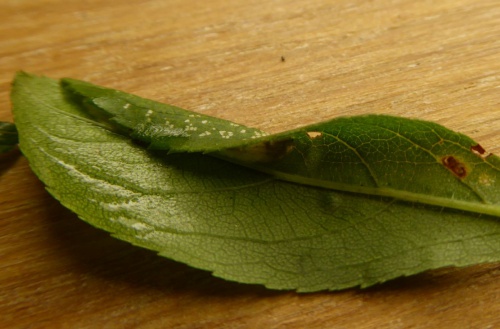 sue
sue
Barlestone, May Meadow
13 October 2019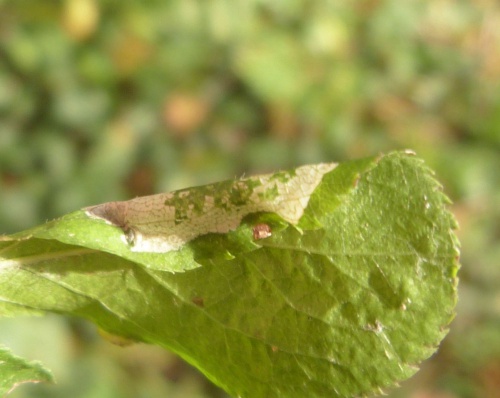 Graham Calow
Leire, Station Lane (track)
19 October 2020
leafmine on Blackthorn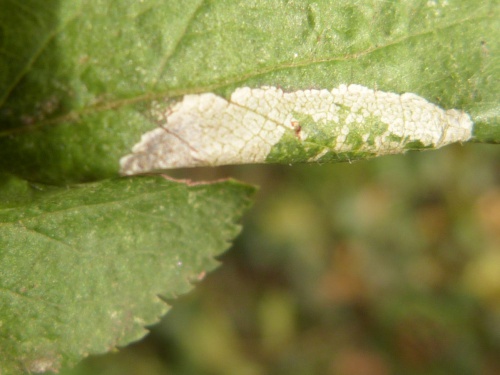 Graham Calow
Leire, Station Lane (track)
19 October 2020
leafmine on Blackthorn