Phyllonorycter nicellii
Red Hazel Midget
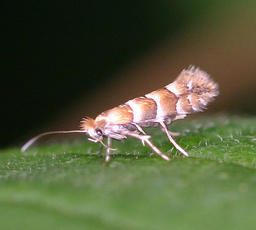
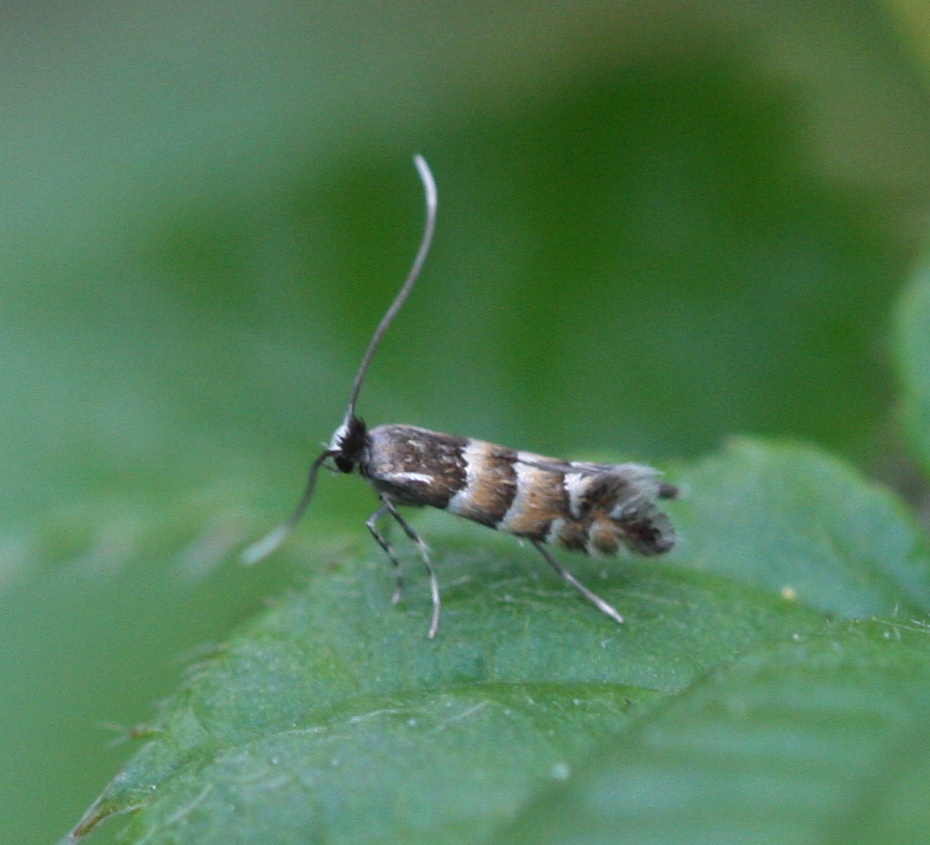
Wingspan 7- 8 mm. This can be a difficult group to distinguish.
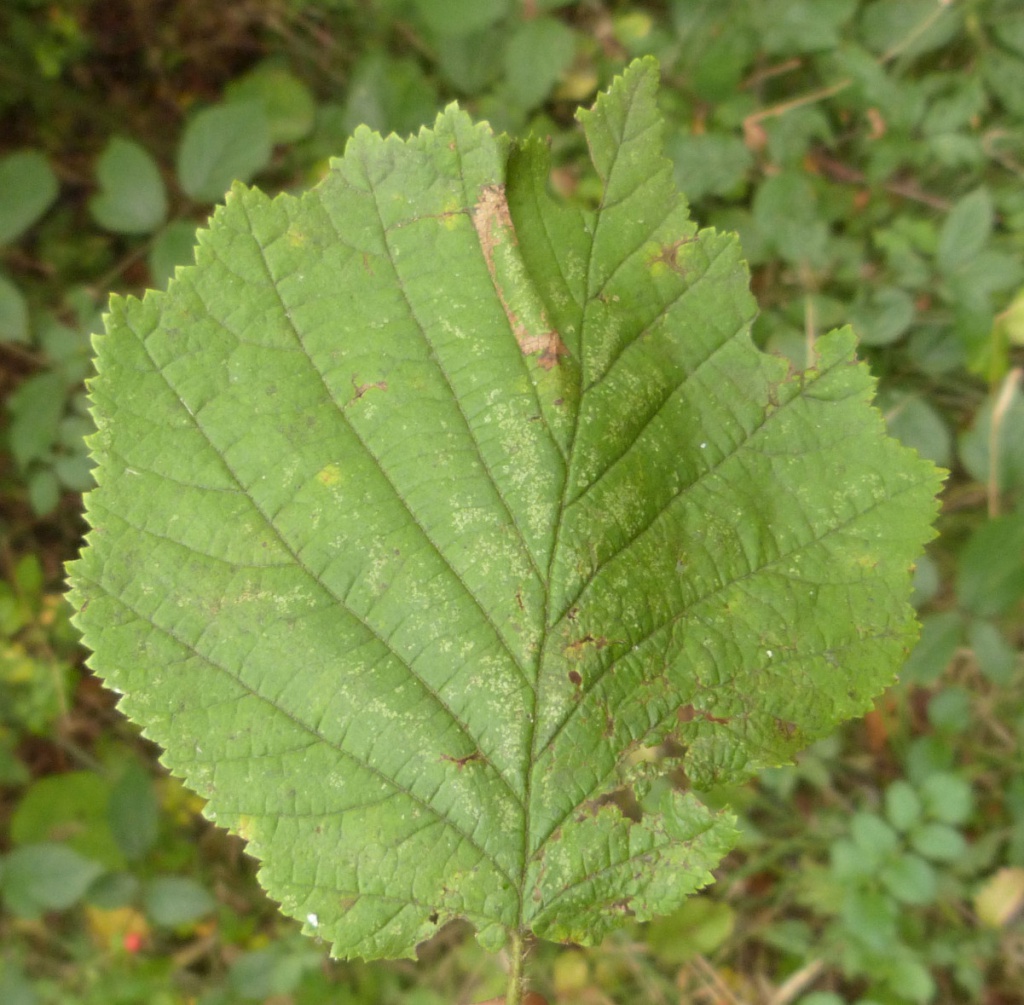
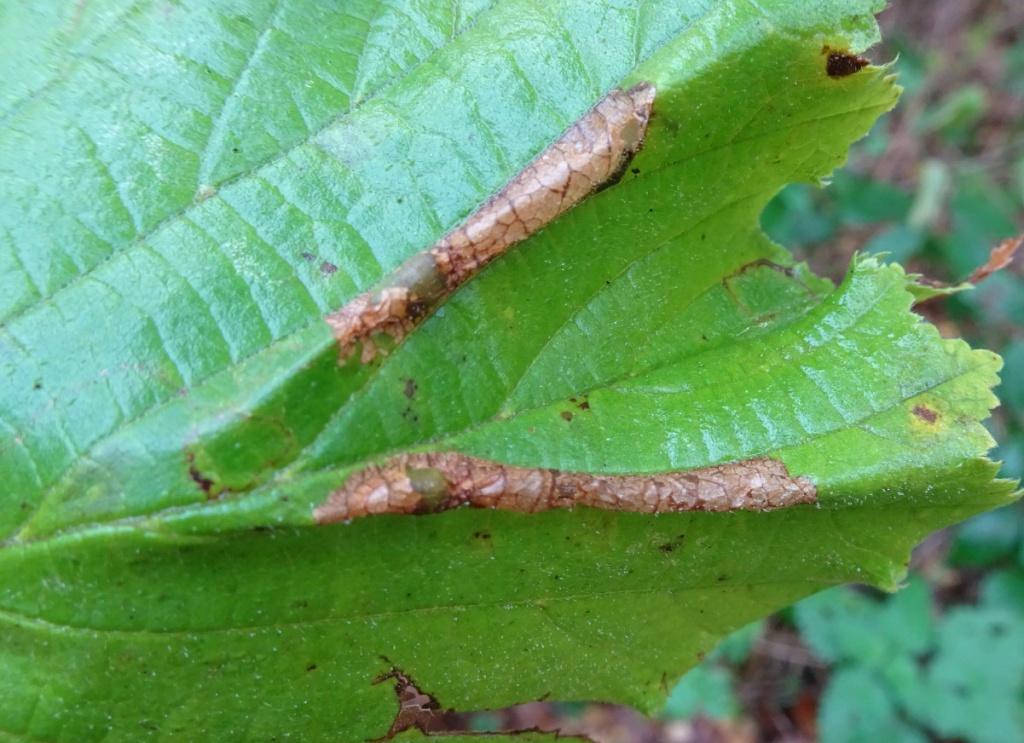
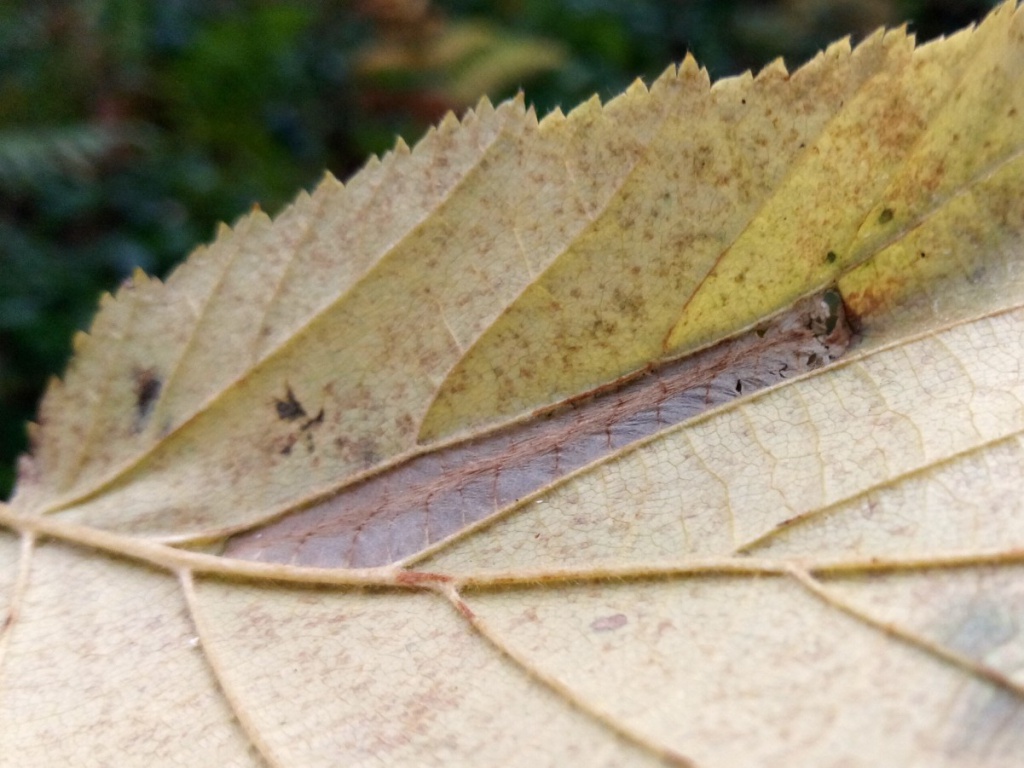
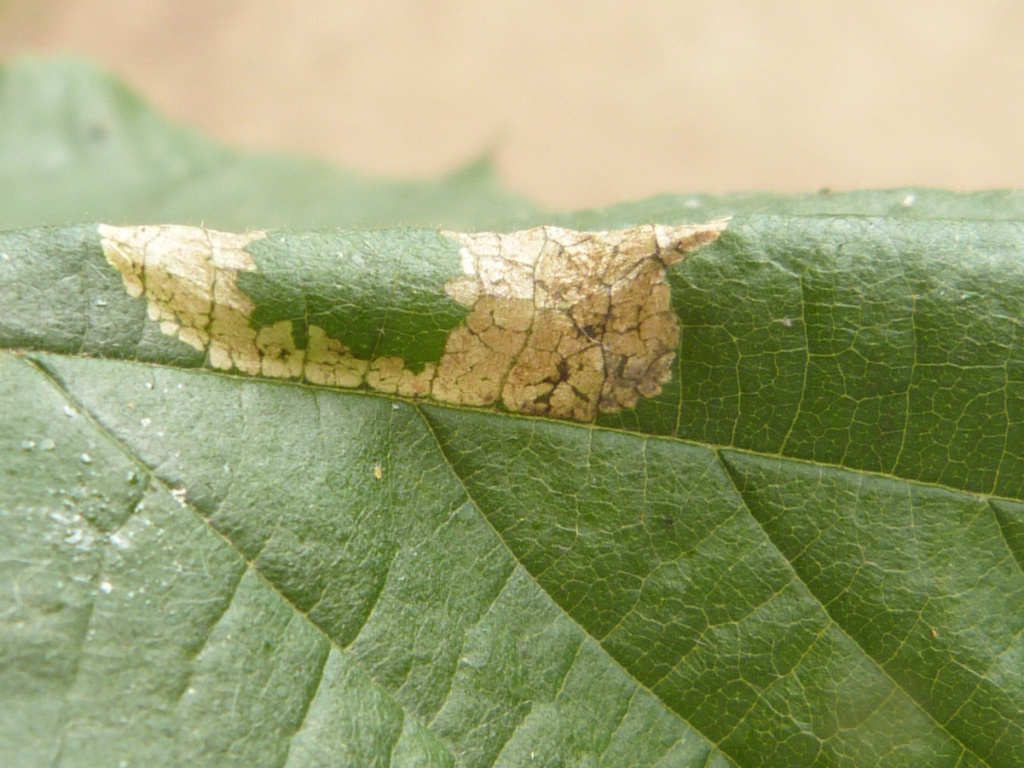
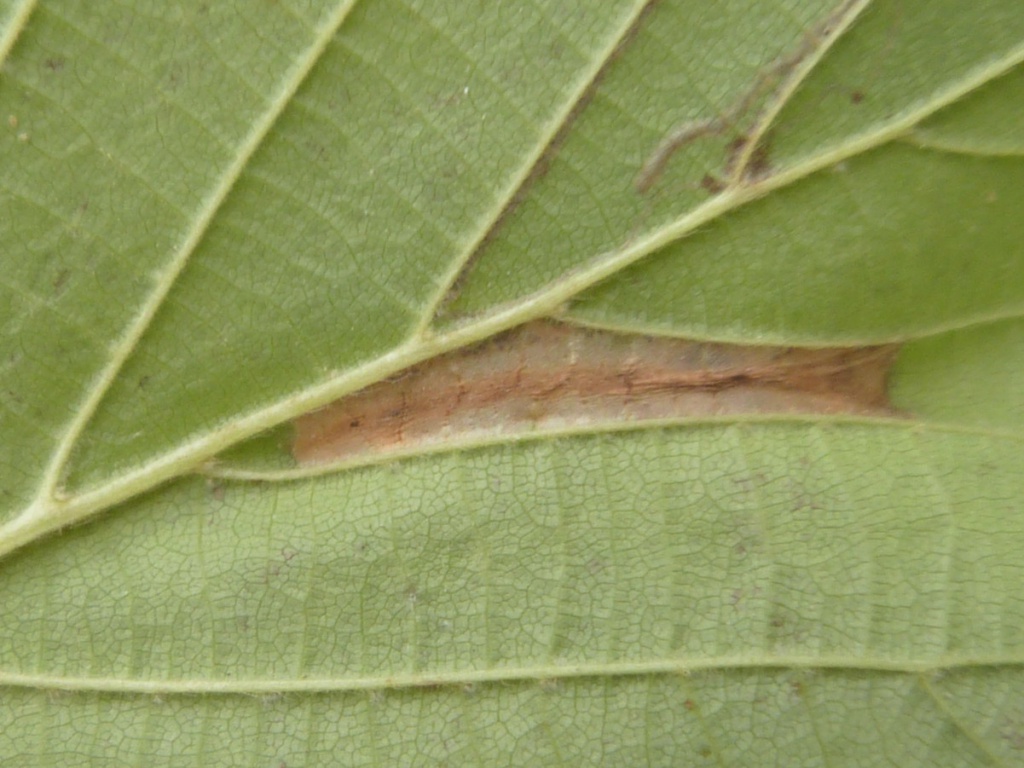
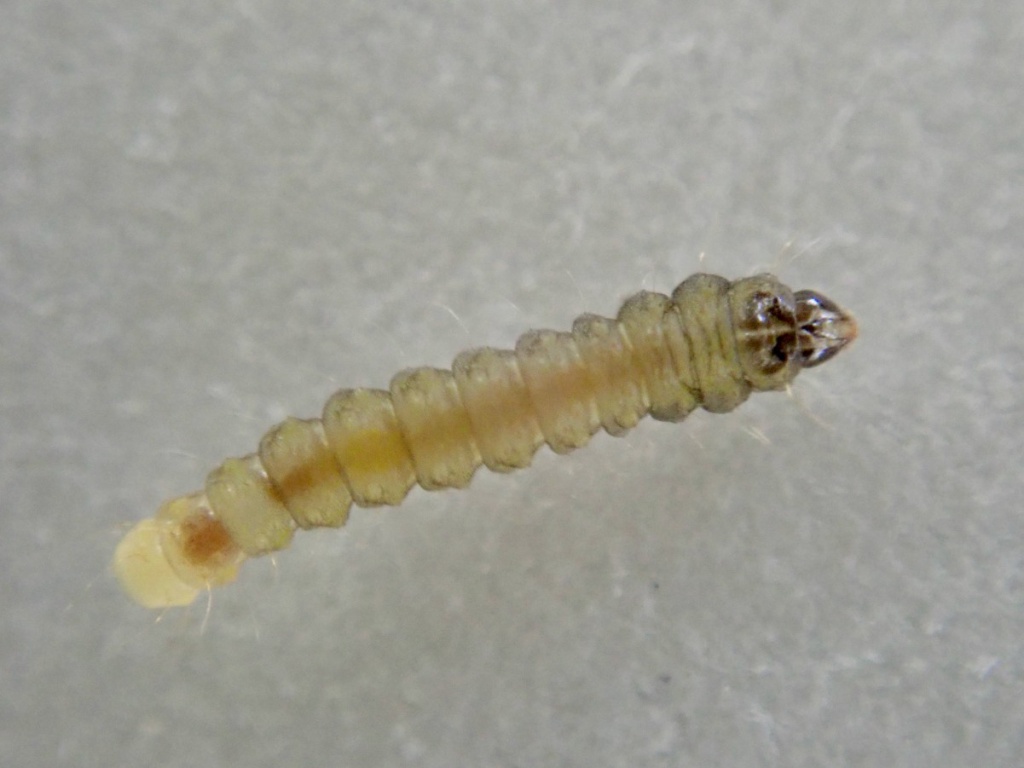
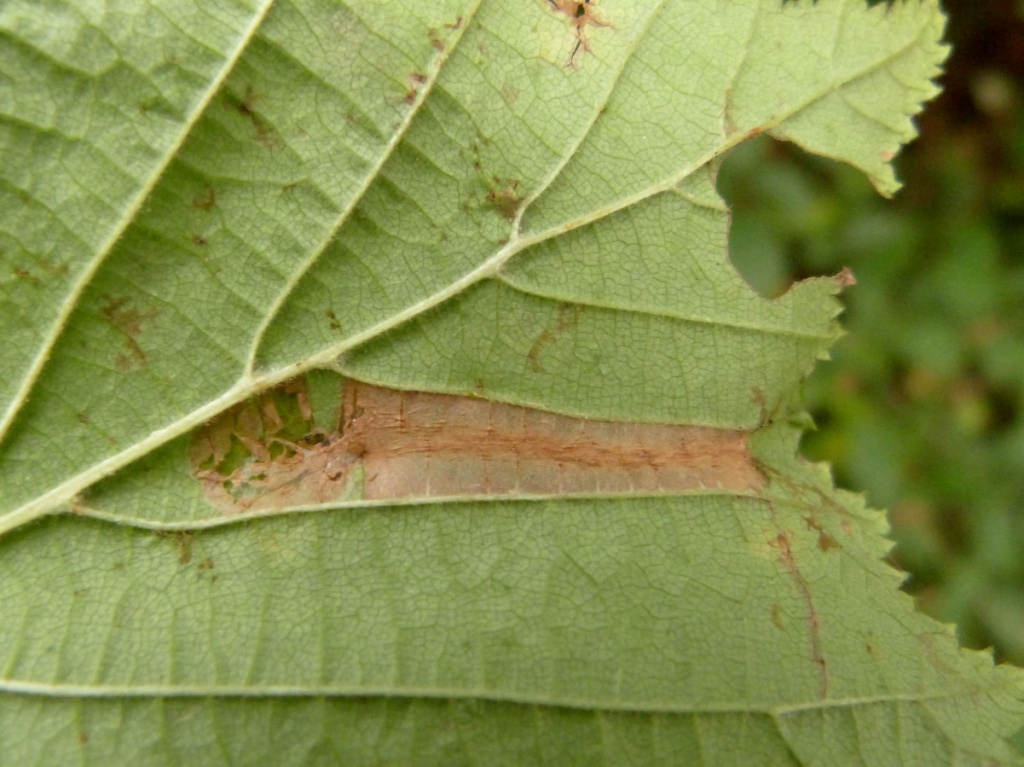
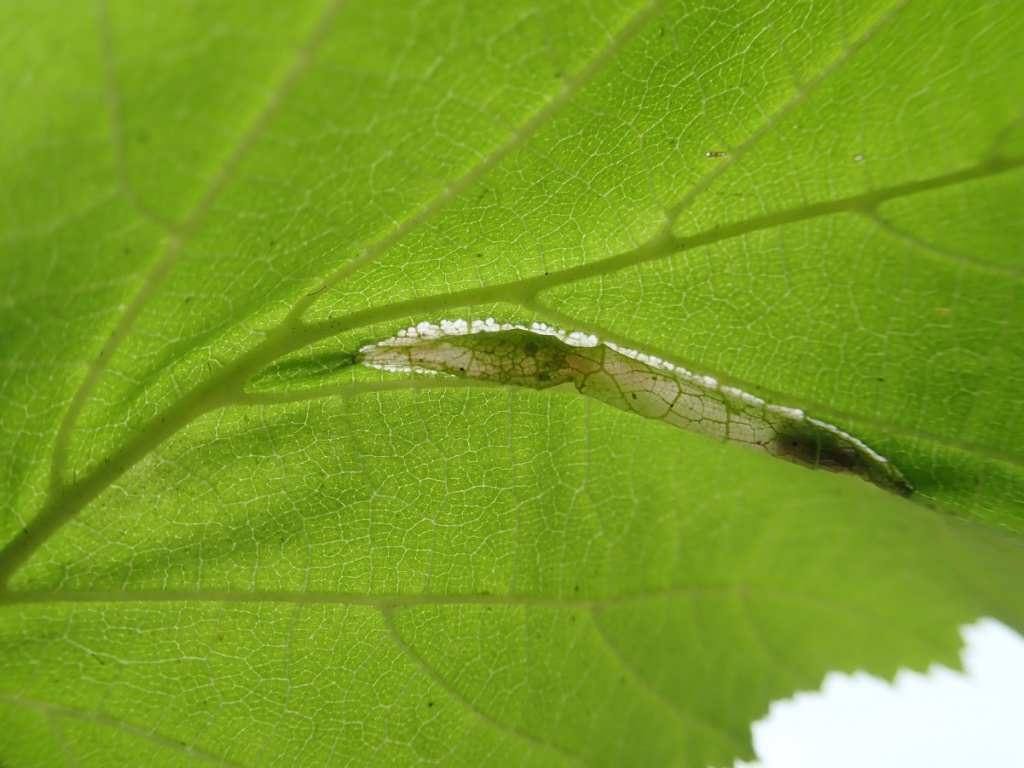
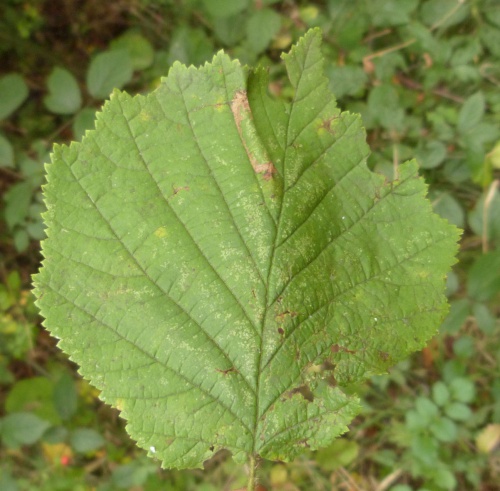
The larva feeds on Hazel, causing a lower surface tentifrom mine; the upper surface is usually netted brown, with a green patch on top. The larva is pale yellow/greyish (due to a speckling of minute black warts) with dark markings on head
leafmine can be similar to Parornix devoniella
Adult  Leafmine
Photograph the mine and note host species; if in doubt check larva.
Found in various habitats.
Moth has two generations and may be found flying in May and August.
Larva forms a long mine between the veins of a Hazel (Corylus) leaf and is strongly arched. The leaf mines may be found in July and then September to October. Larva overwinters as a pupa in a cocoon.
This moth is common and found throughout Britain. In the Butterfly Conservation’s Microlepidoptera Report 2011 this species was classified as common.
Fairly frequent in Leicestershire and Rutland, but may be under recorded.
 David Nicholls
Martinshaw Wood
30 May 2008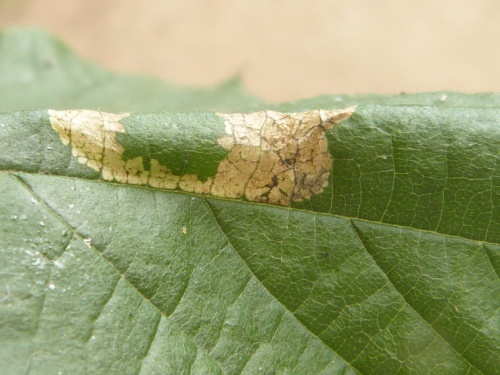 Graham Calow
Sharnford, Fosse Meadows
15 July 2021
leafmine on Hazel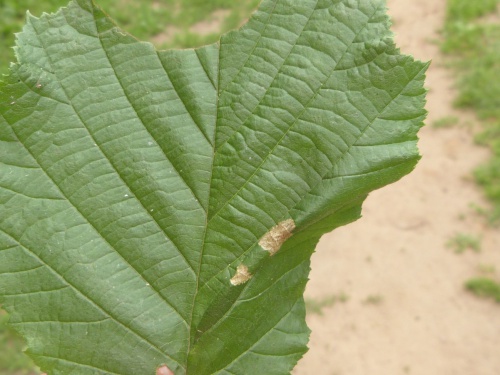 Graham Calow
Sharnford, Fosse Meadows
15 July 2021
leafmine on Hazel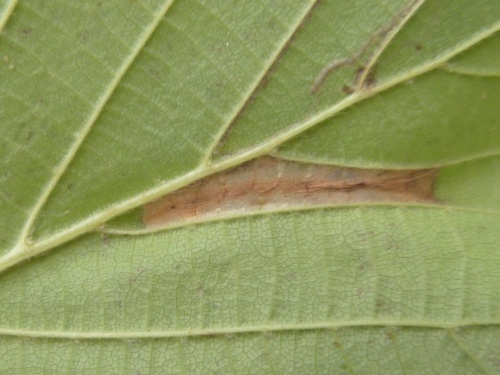 Graham Calow
Croft, Footpath off Station Road
10 November 2020
leafmine on Hazel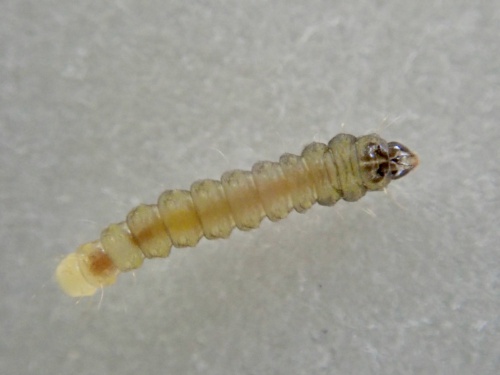 egaten
Aylestone Meadows
03 October 2022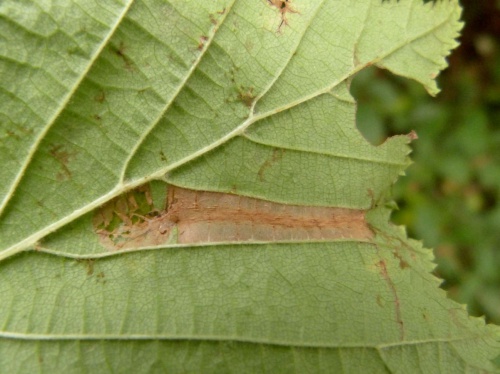 Graham Calow
Smithy Lane, Burbage
08 October 2017
leafmine on Hazel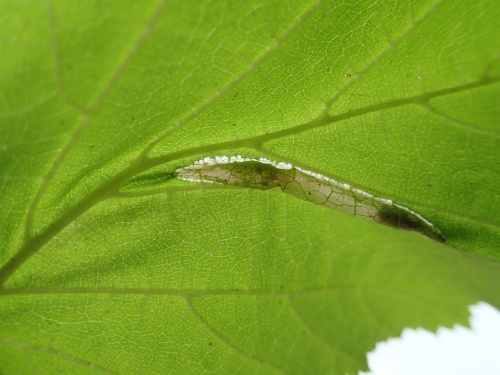 egaten
Sence Valley FP
27 October 2021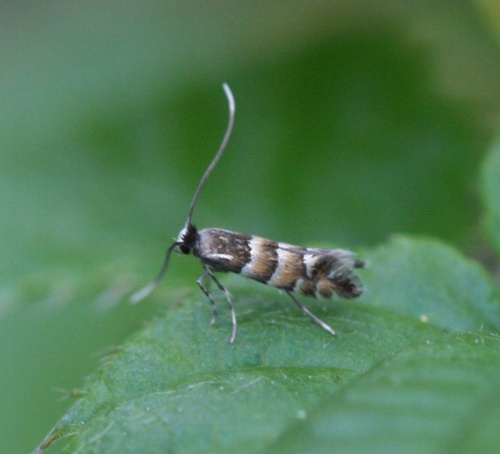 David Nicholls
Sheet Hedges Wood
02 May 2014


Leicestershire & Rutland Map
Enter a town or village to see local records
MAP KEY:
Yellow squares = NBN records (all known data)
Coloured circles = NatureSpot records: 2025+ | 2020-2024 | pre-2020
UK Map
Species profile
- Common names
- Red Hazel Midget, Hazel leaf-miner
- Species group:
- insect - moth
- Kingdom:
- Animalia
- Order:
- Lepidoptera
- Family:
- Gracillariidae
- Records on NatureSpot:
- 140
- First record:
- 30/05/2008 (Nicholls, David)
- Last record:
- 30/10/2025 (Calow, Graham)
Total records by month
% of records within its species group
10km squares with records
The latest images and records displayed below include those awaiting verification checks so we cannot guarantee that every identification is correct. Once accepted, the record displays a green tick.
In the Latest Records section, click on the header to sort A-Z, and again to sort Z-A. Use the header boxes to filter the list.
Latest images
Latest records
 Graham Calow
Smithy Lane, Burbage
08 October 2017
leafmine on Hazel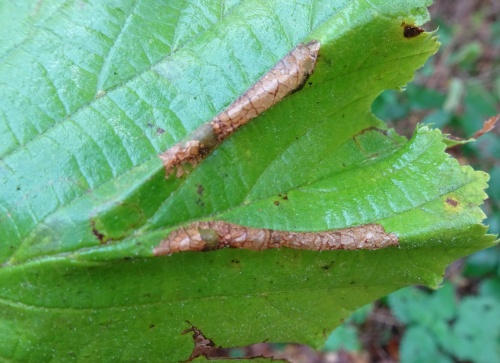 Hazel Graves
Swithland Woods
13 November 2022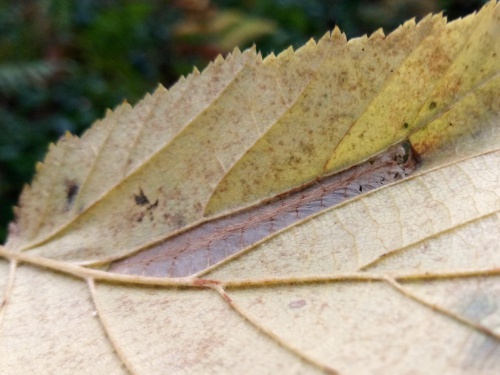 Peter Smith
Shepshed, White Horse Wood
30 November 2022