

Phaonia trimaculata
Around 10mm, this is a fairly distinctive and well marked species though still requires a specimen to be examined in detail for identification to be sure.

- scutum & scutellum pattern typical
- hairy eyes
- 2+3 ac / 3+4 dc
- few hairs on notopleural next to rear seta (at least in male)
- darkened cross vein (in male)
Unless identified by a recognised expert, a photo is required and the specimen should be examined with a microscope. In the comments box, state the key or ID method used and describe the size and identifying characters.
Often recorded in agricultural areas.
Late spring and summer.
The larvae of Phaonia trimaculata feed on the larvae of Delia radicum, often known as the Cabbage Root Fly.
Widespread in the southern half of Britain, but lack of records makes true status difficult to determine.
Status in Leicestershire and Rutland not known.
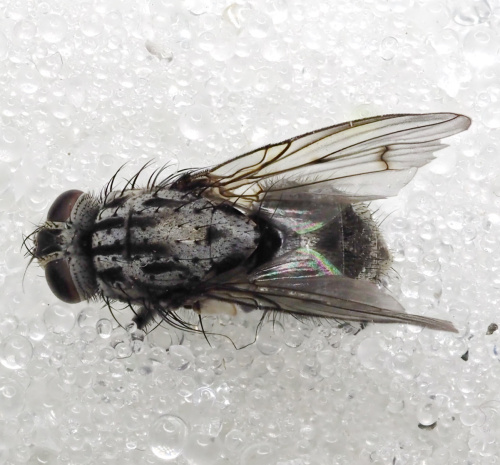 David Nicholls
Ratby garden
29 October 2024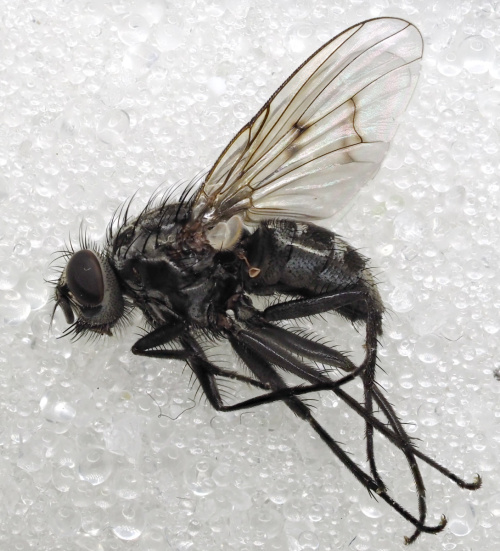 David Nicholls
Ratby garden
29 October 2024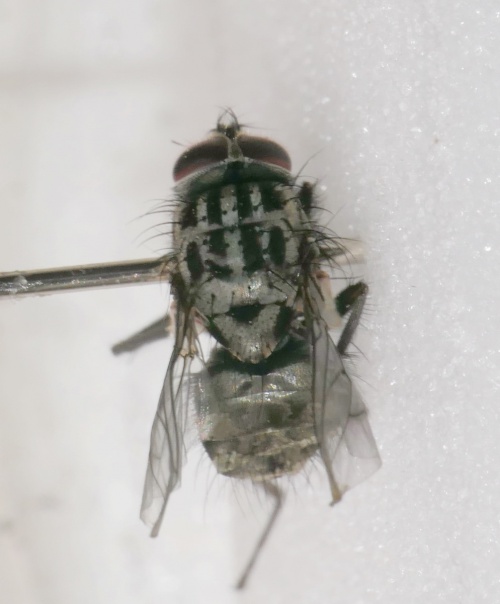 David Nicholls
Sheet Hedges Wood
23 April 2020


Leicestershire & Rutland Map
Enter a town or village to see local records
MAP KEY:
Yellow squares = NBN records (all known data)
Coloured circles = NatureSpot records: 2025+ | 2020-2024 | pre-2020
UK Map
Species profile
- Species group:
- insect - true fly (Diptera)
- Kingdom:
- Animalia
- Order:
- Diptera
- Family:
- Muscidae
- Records on NatureSpot:
- 2
- First record:
- 23/04/2020 (Nicholls, David)
- Last record:
- 29/10/2024 (Nicholls, David)
Total records by month
% of records within its species group
10km squares with records
The latest images and records displayed below include those awaiting verification checks so we cannot guarantee that every identification is correct. Once accepted, the record displays a green tick.
In the Latest Records section, click on the header to sort A-Z, and again to sort Z-A. Use the header boxes to filter the list.
Latest images
Latest records
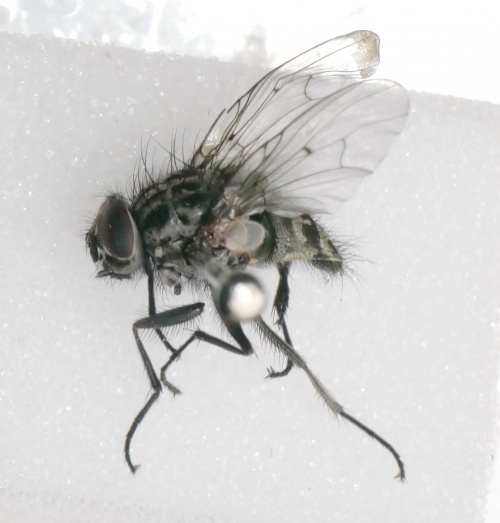 David Nicholls
Sheet Hedges Wood
23 April 2020
