

Perforate St John's-wort - Hypericum perforatum
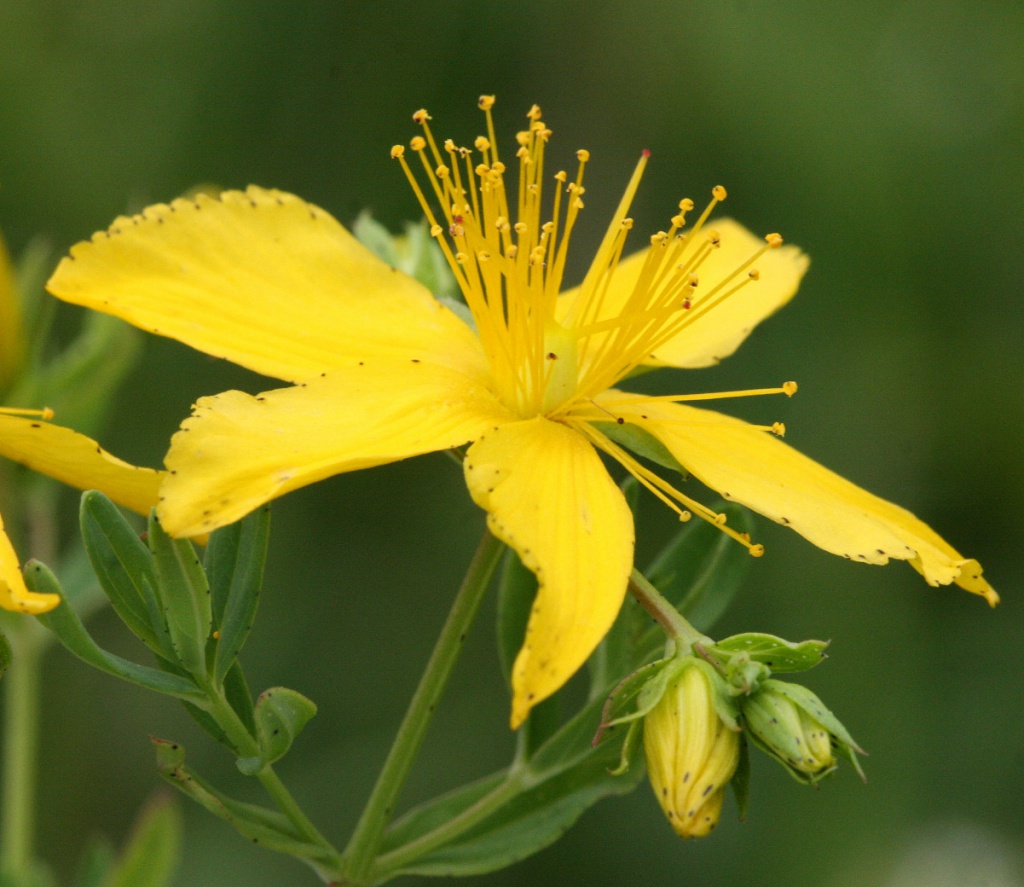
Short to tall, hairless, erect plant. Stems round with 2 raised lines, spreading and rooting at the base. Leaves opposite, linear to oval, unstalked, with large translucent dots. Flowers yellow, 18 to 22 mm in broad panicles, the petals with numerous black dots, mostly around the edges. Sepals narrow, with or without black glands, much shorter than the petals.
Other St.John's-worts. See ID Aids below.

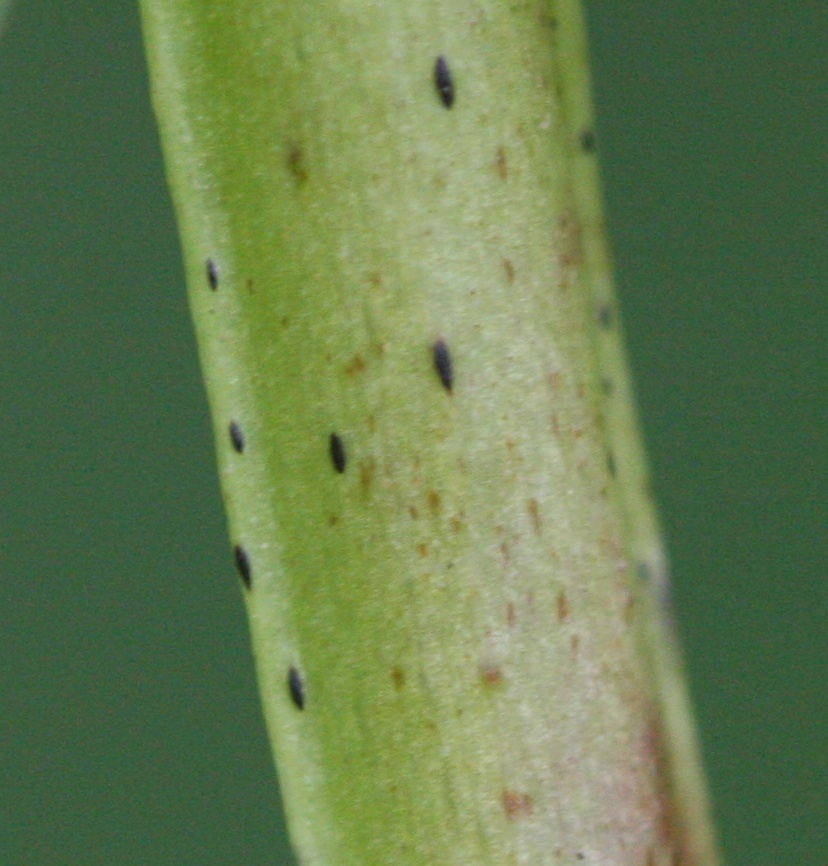
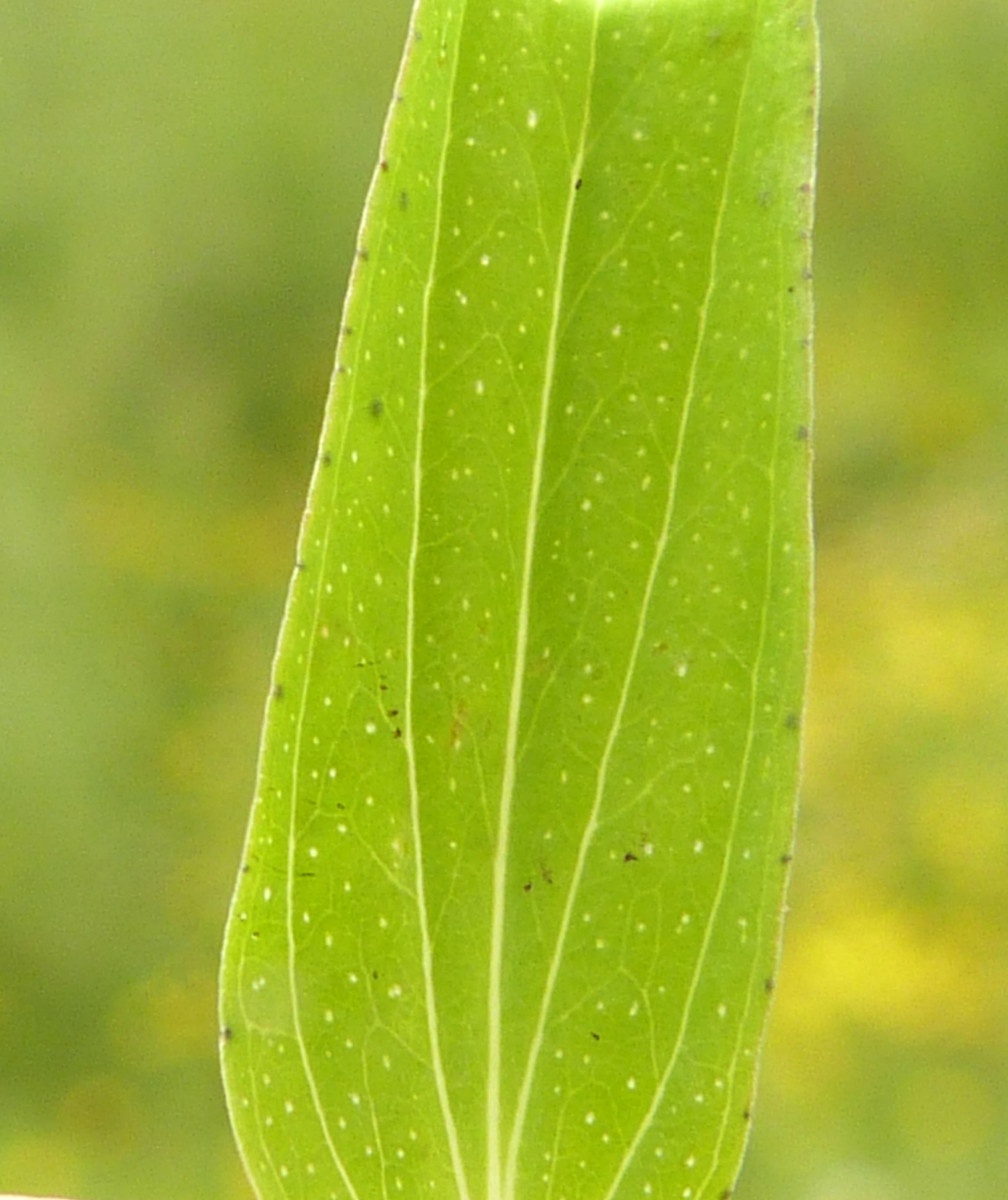
Stem with 2 ridges; leaves with translucent glands (hold the leaf up to the light); sepals equal; some black glands on petals, sepals and leaves
The St John's Wort (Hypericum) family are attractive, yellow-flowered perennials. They can look confusingly similar but can be distinguished by careful examination of key features. A hand-lens may be required (depending how good your eyesight is!). The leaf perforations are visible as translucent dots if the leaf is held up to the light.

A photo of the plant in its habitat and confirmation that leaves have translucent glands
Rough grassland, road verges and hedgebanks.
May to September.
Perennial.
Common throughout much of Britain, but rare in central and northern Scotland.
Common in Leicestershire and Rutland. In the 1979 Flora survey of Leicestershire it was found in 305 of the 617 tetrads.
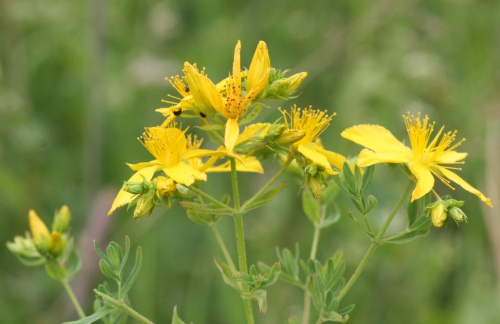 David Nicholls
Bloody Oaks
02 July 2015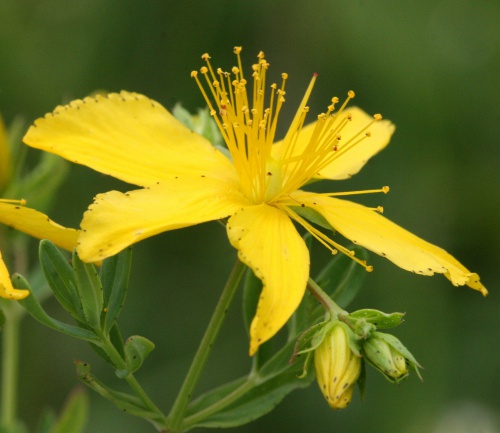 David Nicholls
Bloody Oaks
02 July 2015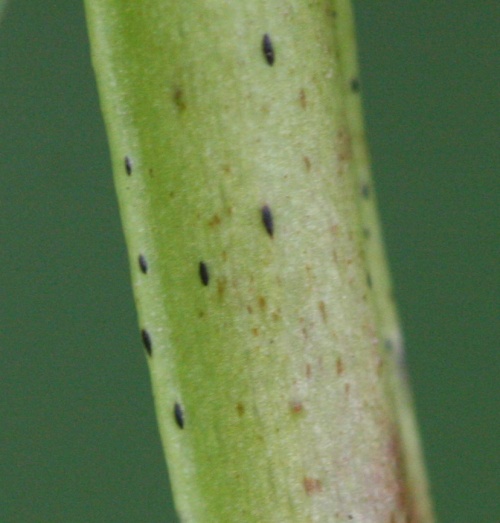 David Nicholls
Nature Alive, Coalville
12 July 2012 Graham Calow
Sapcote
24 June 2013
Perforate leaf Graham Calow
Dunton Bassett Quarry
16 July 2015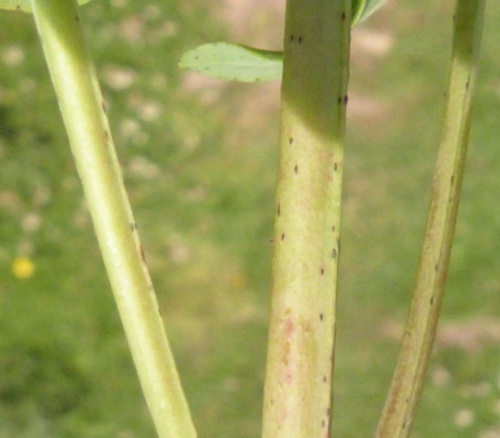 Graham Calow
Sapcote
21 June 2014



Leicestershire & Rutland Map
Enter a town or village to see local records
MAP KEY:
Yellow squares = NBN records (all known data)
Coloured circles = NatureSpot records: 2025+ | 2020-2024 | pre-2020
UK Map
Species profile
- Common names
- Perforate St. John's-Wort, Common St. John's Wort, Perforate St John's-wort
- Species group:
- flowering plant
- Kingdom:
- Plantae
- Order:
- Malpighiales
- Family:
- Hypericaceae
- Records on NatureSpot:
- 195
- First record:
- 21/06/2001 (Jane McPhail;John Kramer)
- Last record:
- 29/09/2025 (Hunt, Graham)
Total records by month
% of records within its species group
10km squares with records
The latest images and records displayed below include those awaiting verification checks so we cannot guarantee that every identification is correct. Once accepted, the record displays a green tick.
In the Latest Records section, click on the header to sort A-Z, and again to sort Z-A. Use the header boxes to filter the list.
Latest images
Latest records
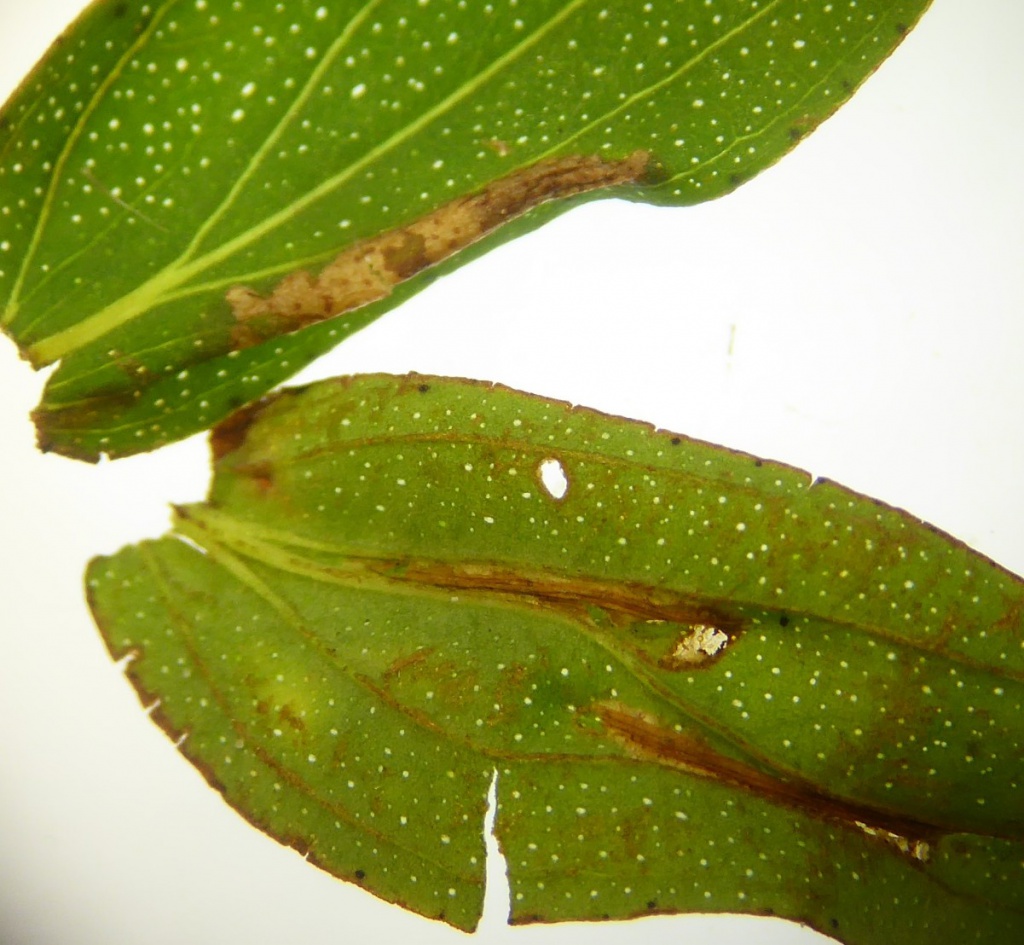
Fomoria septembrella
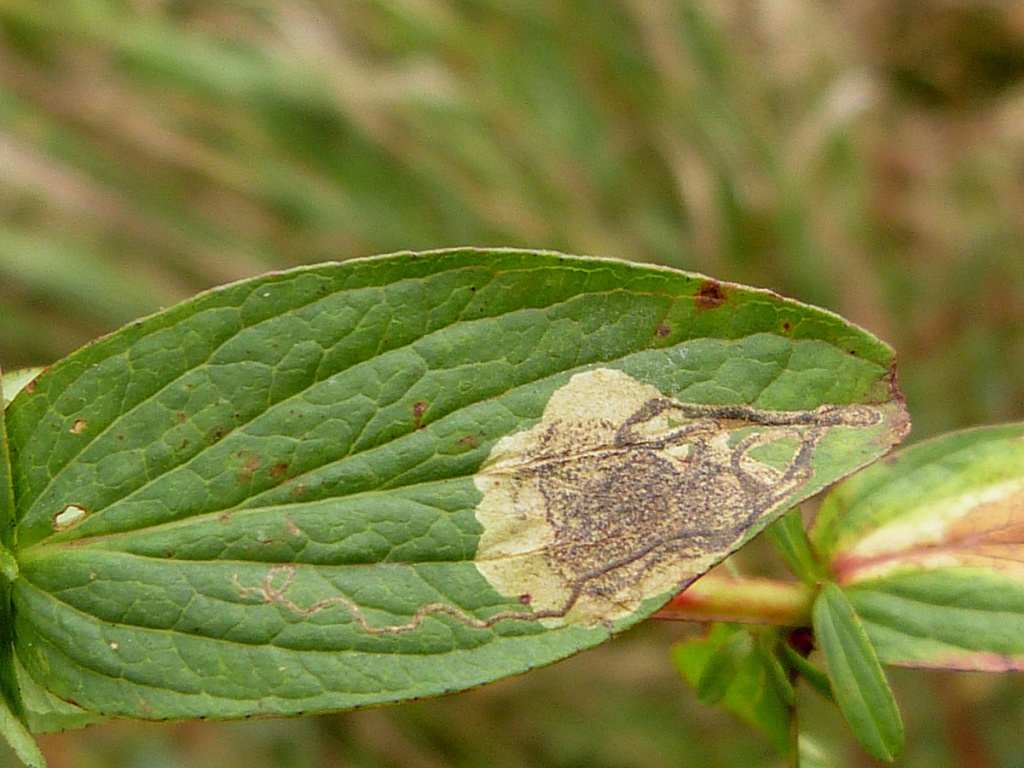
The larva of the moth Fomoria septembrella mines the leaves of Hypericum species, most commonly Perforate St John's-wort at first in a narrow gallery, later becoming a blotch mine.
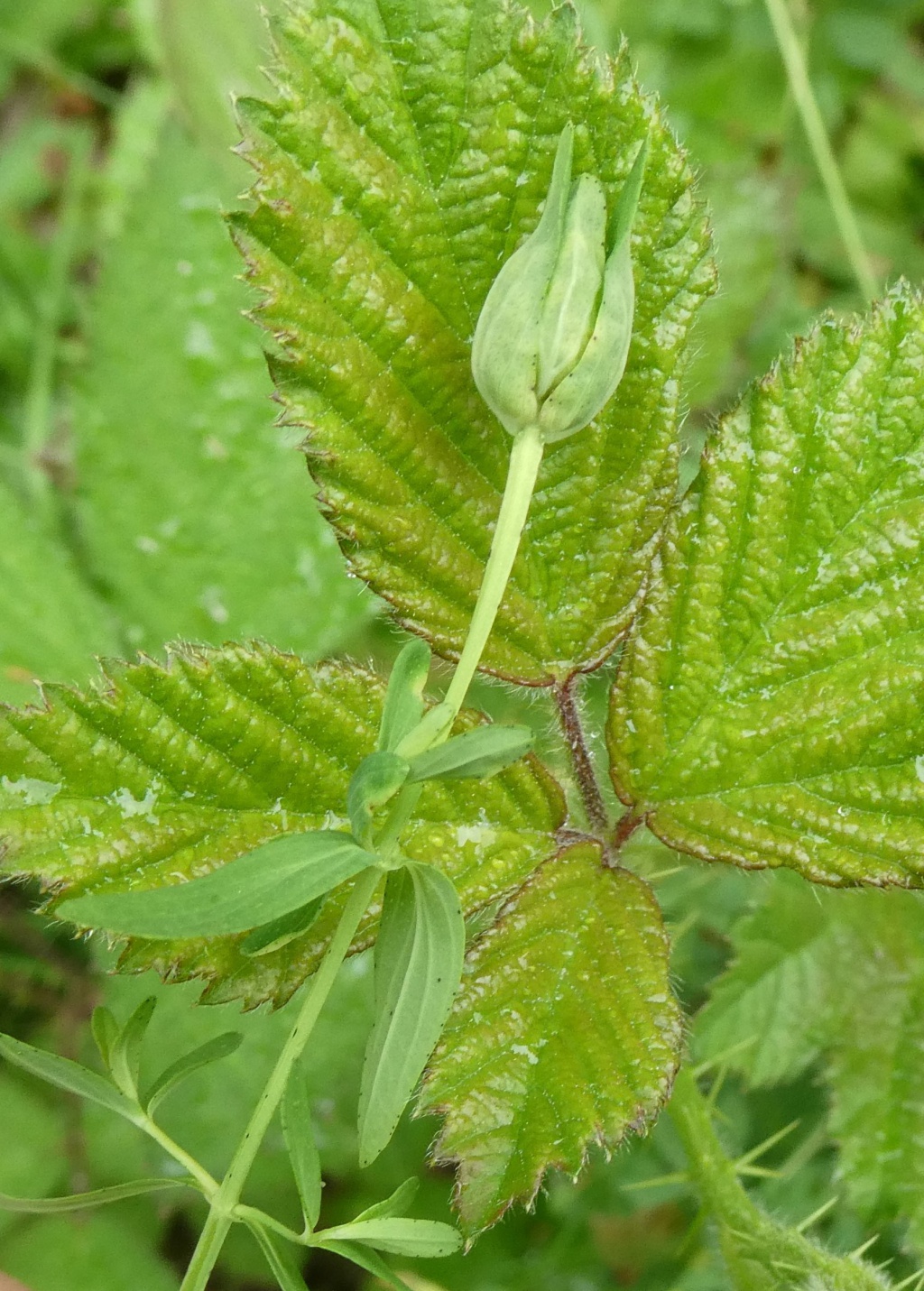
Euspilapteryx auroguttella
The larva of the moth Euspilapteryx auroguttella mines the leaves of various Hypericum species such as St John's-worts initially in a lower surface gallery and then into a blotch, becoming a small narrow tentiform mine lined with silk. Later on the larva feeds and pupates in a leaf margin folded down.
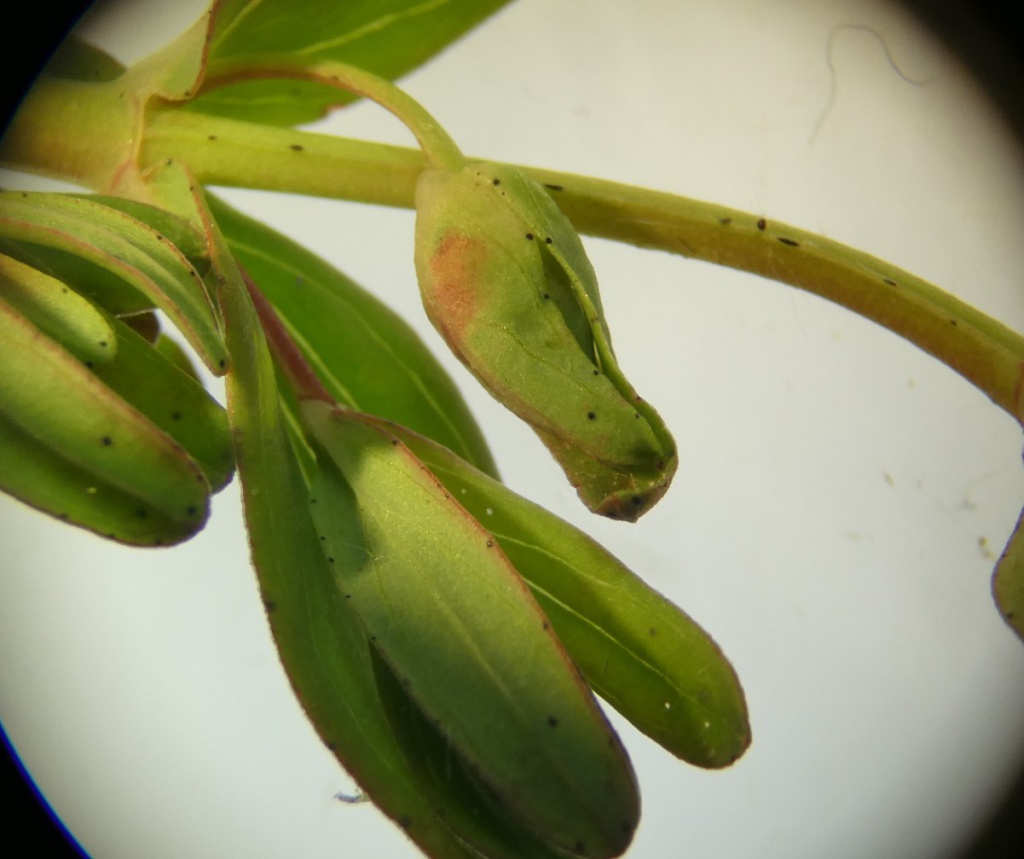
Dasineura hyperici
The larvae of the midge Dasineura hyperici cause galls on various Hypericum species (e.g. St John’s-worts). The topmost leaves form a loose ball; the basal part of the leaves is swollen and discoloured, but the upper part is not affected as much. There may be several larvae to a single gall, they are whitish at first, becoming orange or red later.
Dasineura serotina
The larva of the midge Dasineura serotina produces galls on Hypericum species such as St John's-worts. The gall is formed out of the terminal bud of a stem. The hyaline white larva is surprisingly small in relation to its gall.