

Norway Spruce - Picea abies
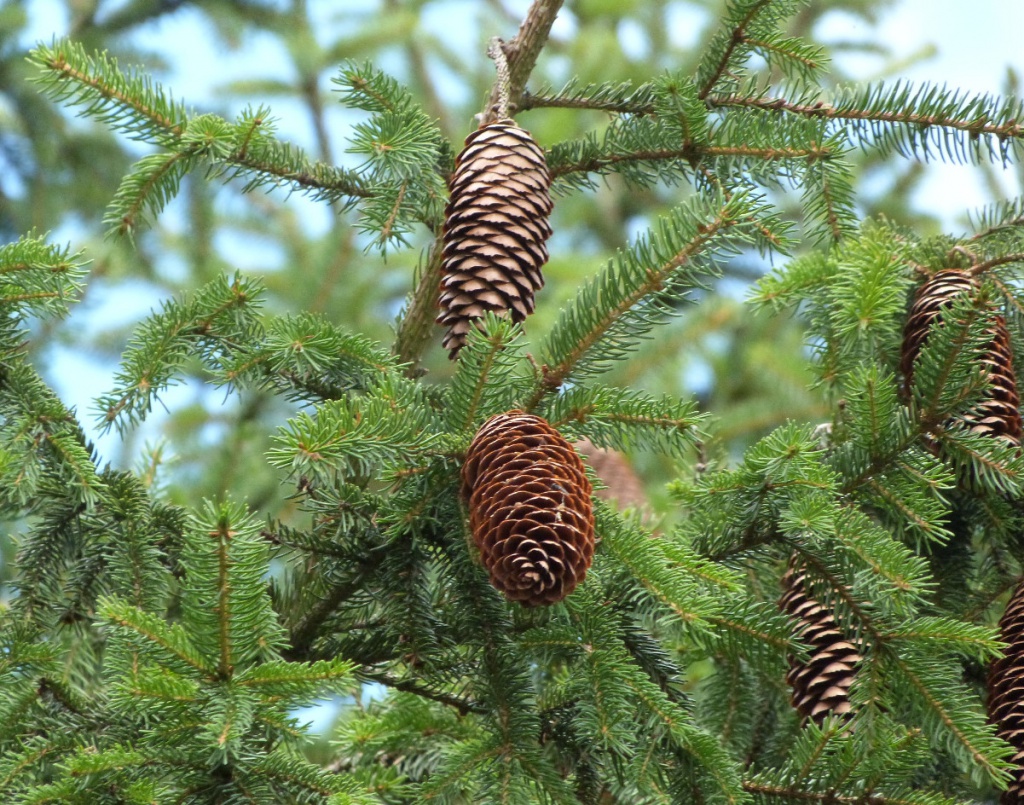
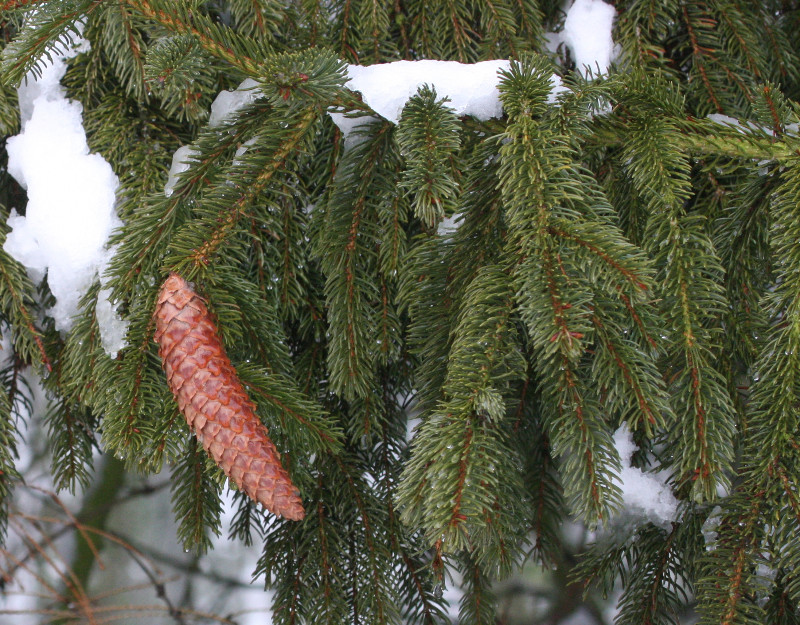
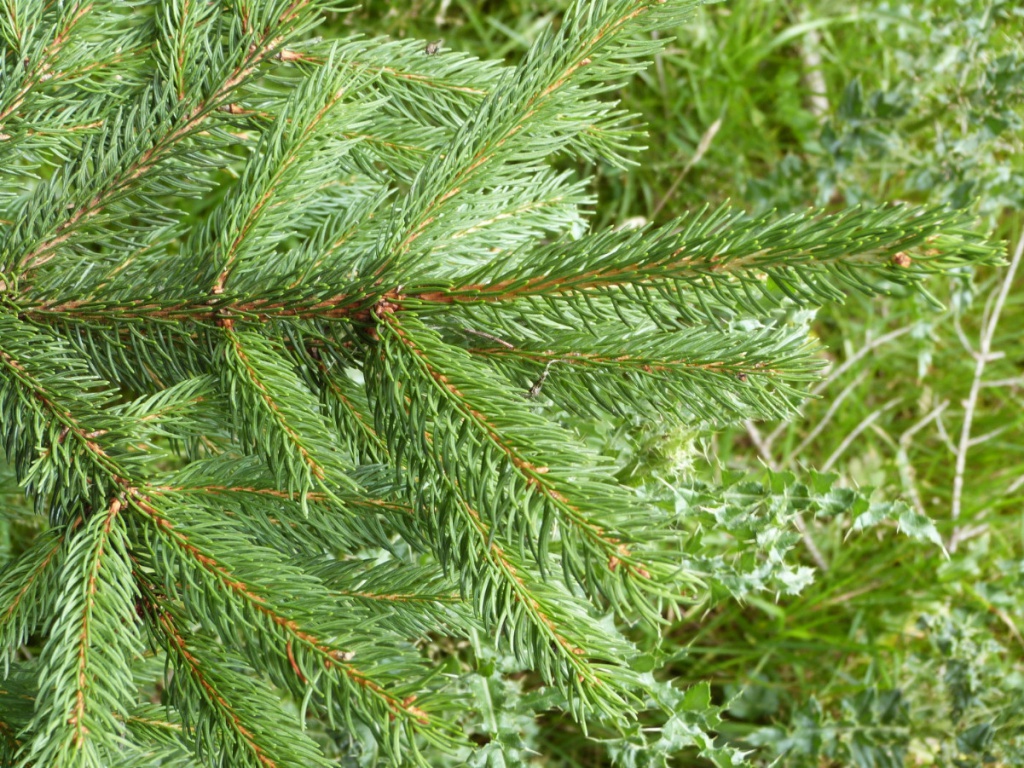
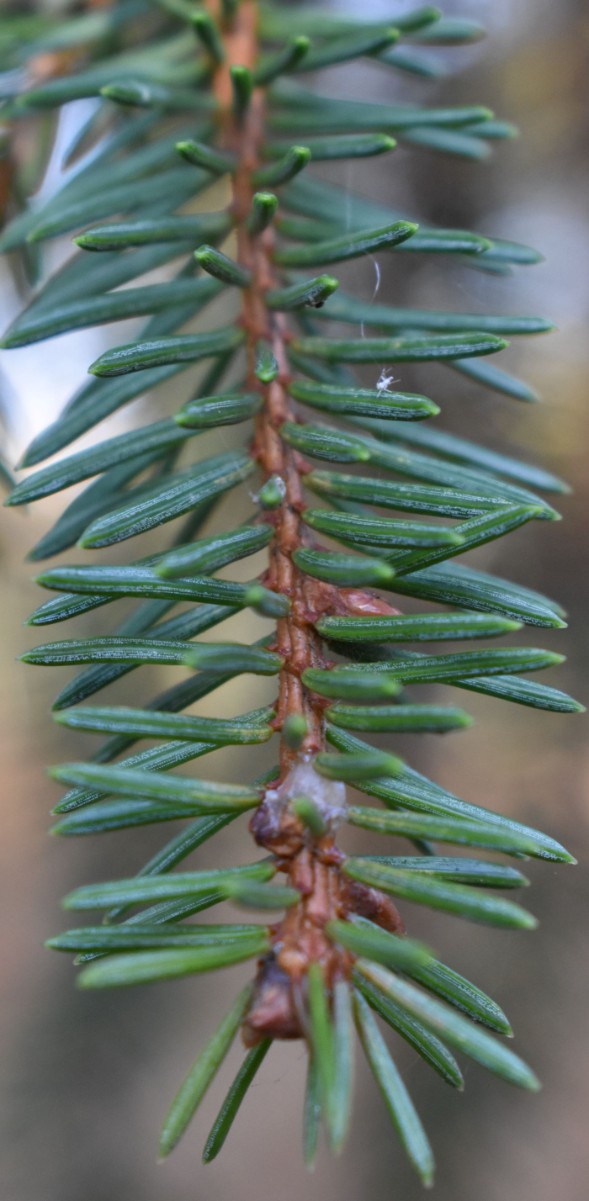
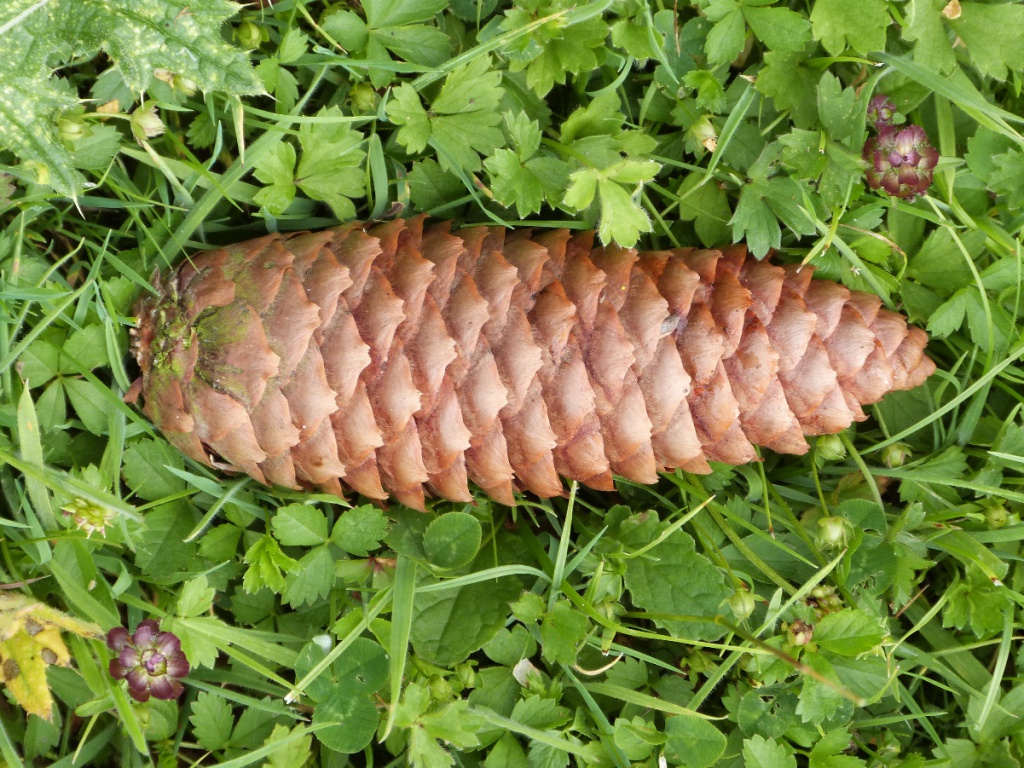
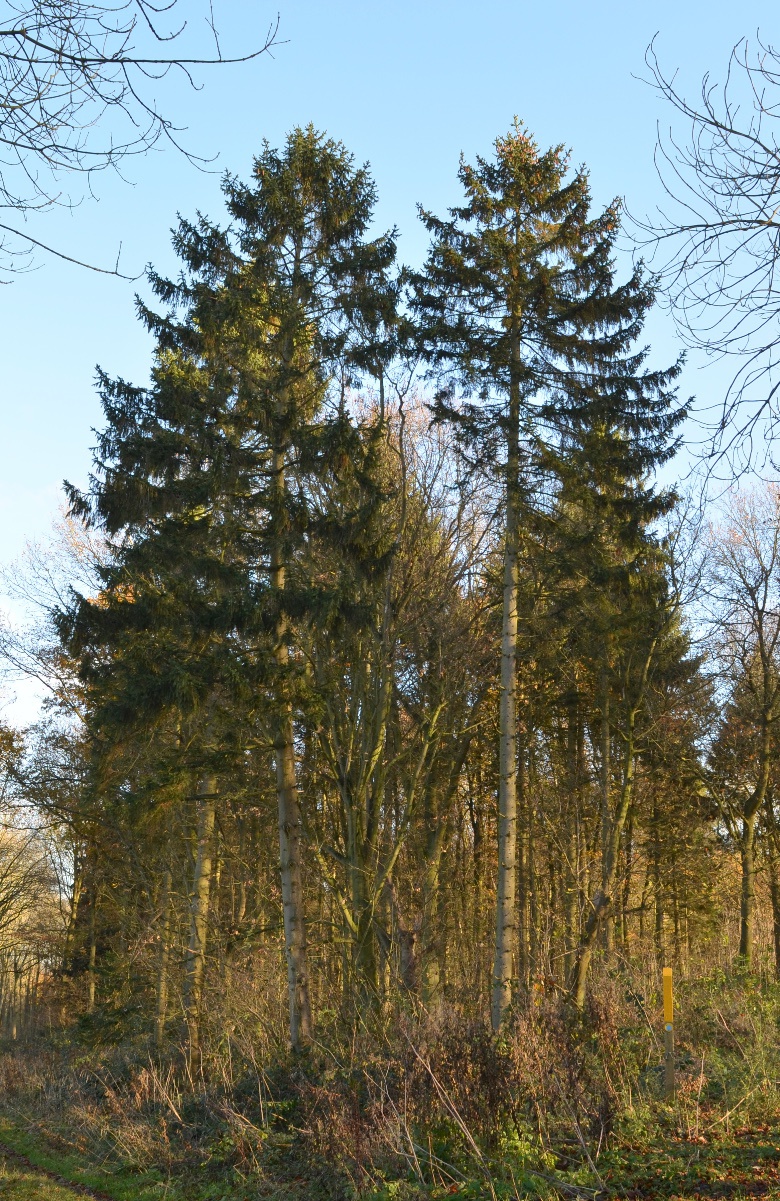
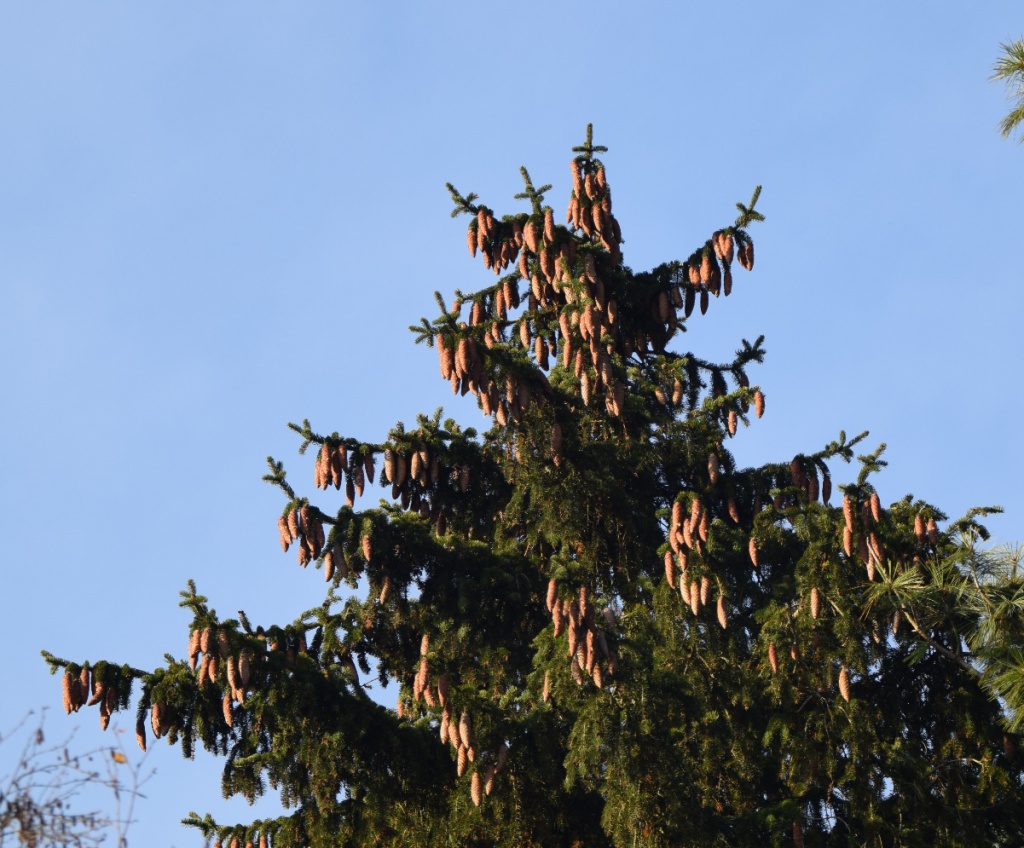
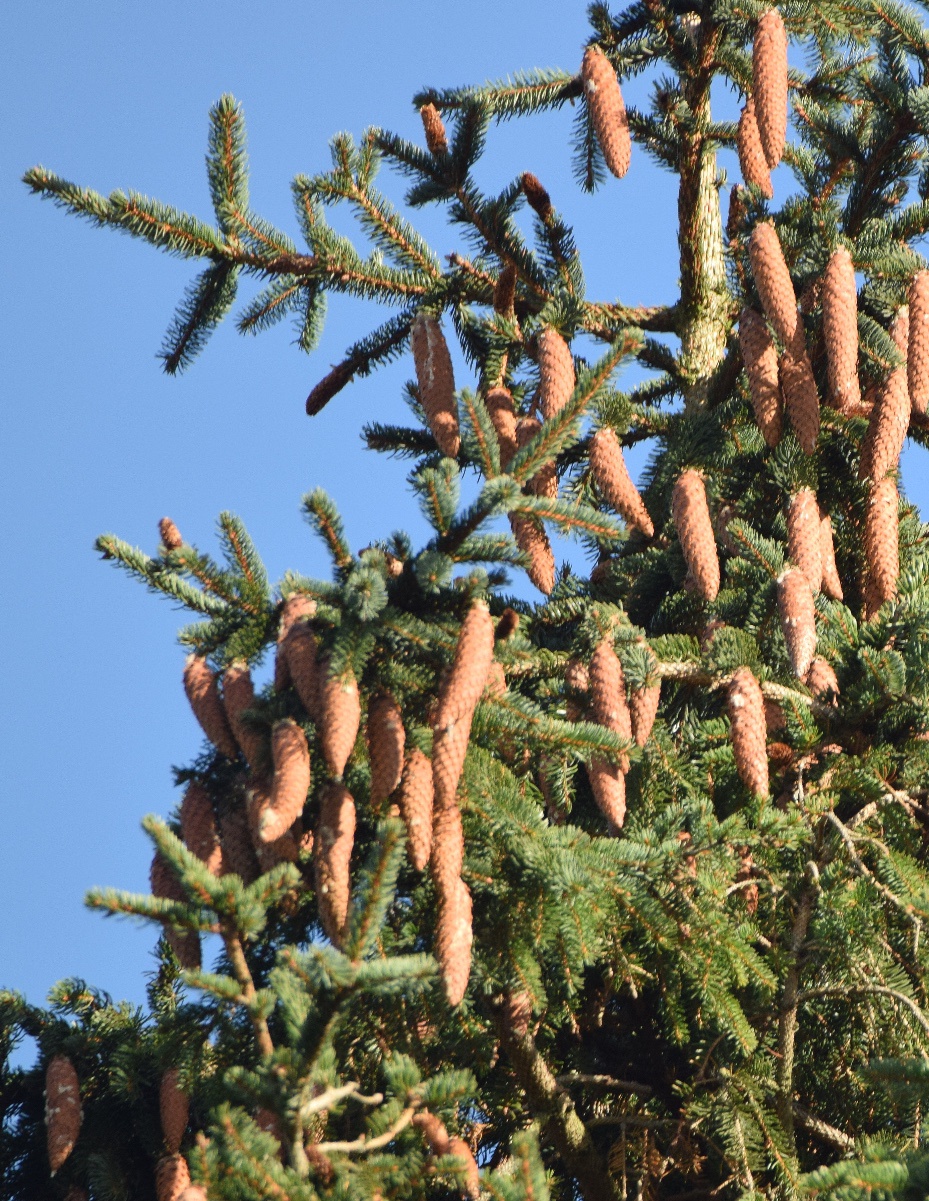
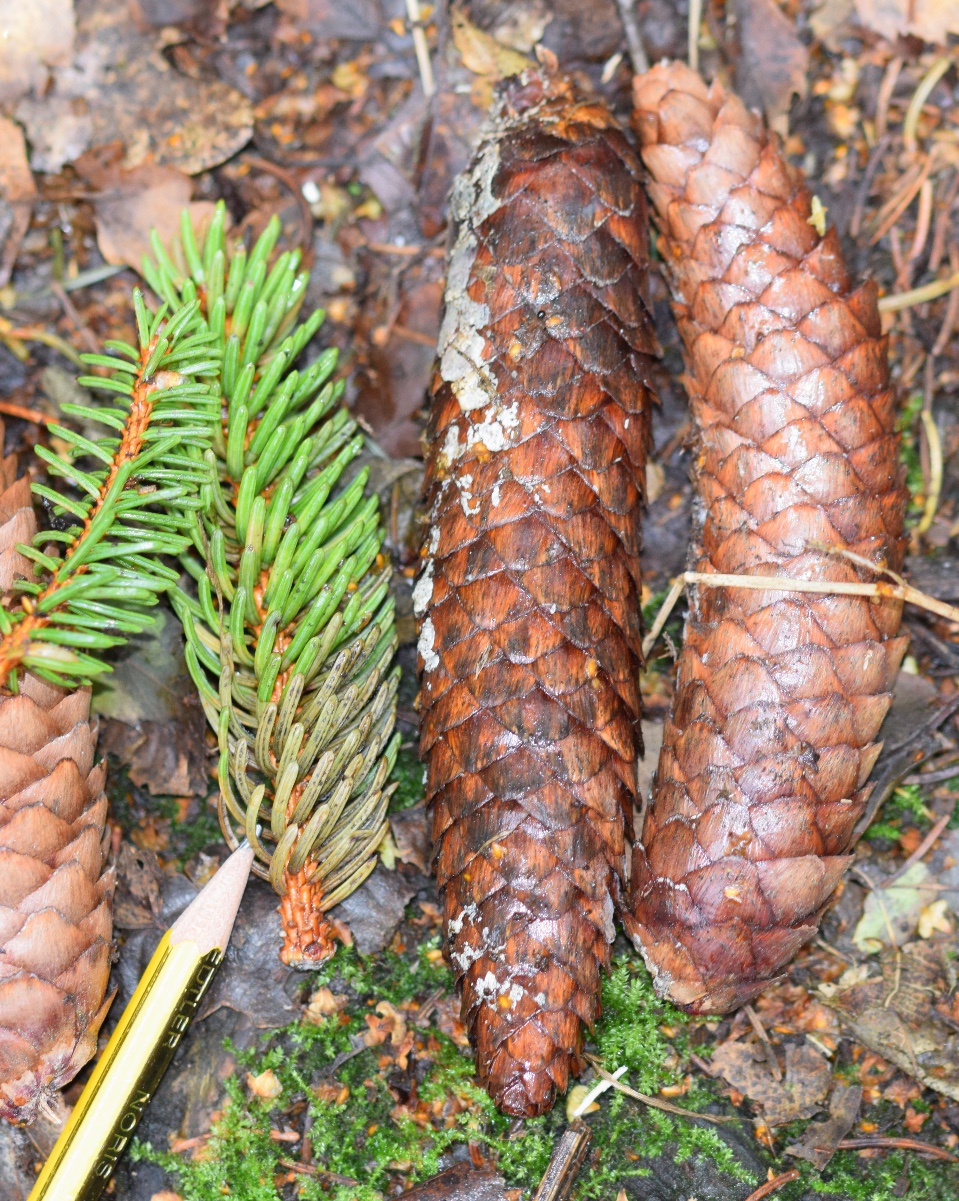
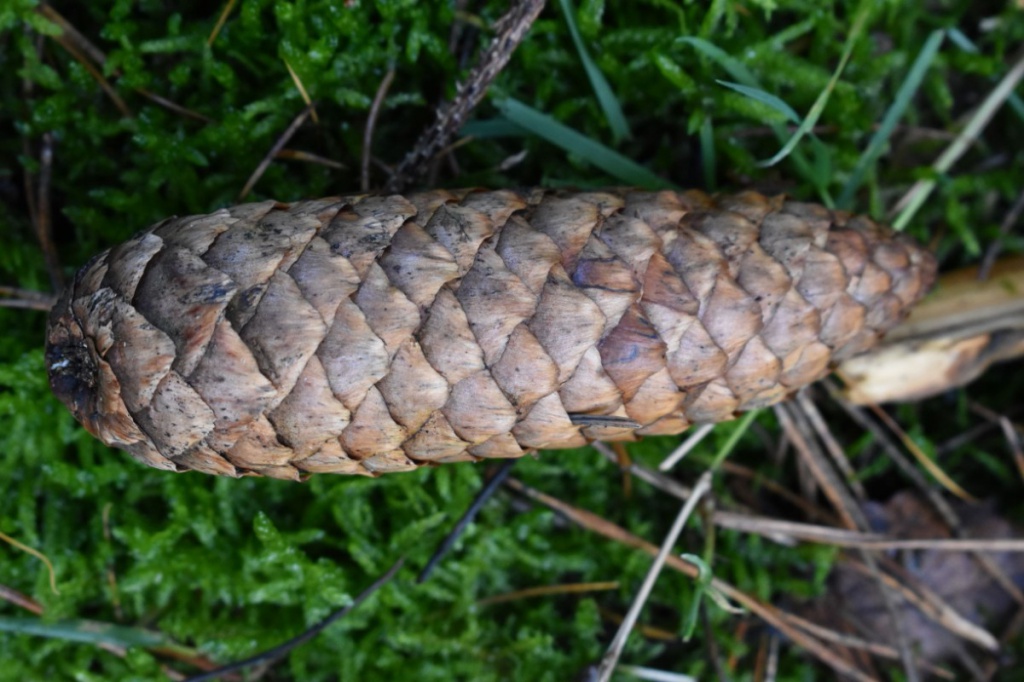
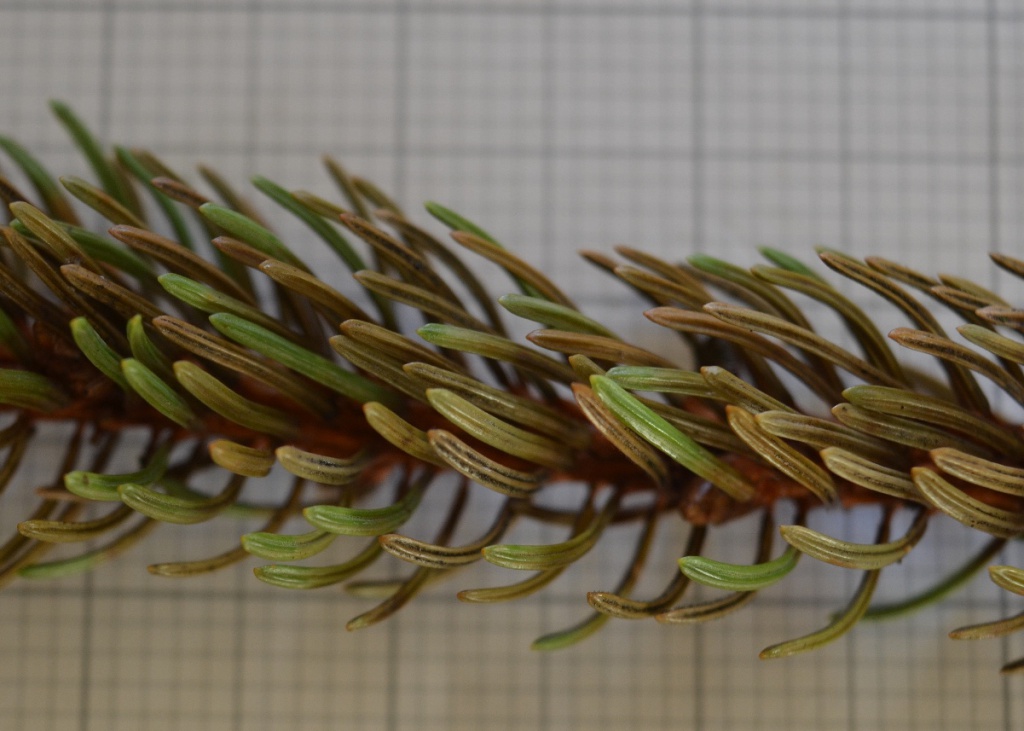
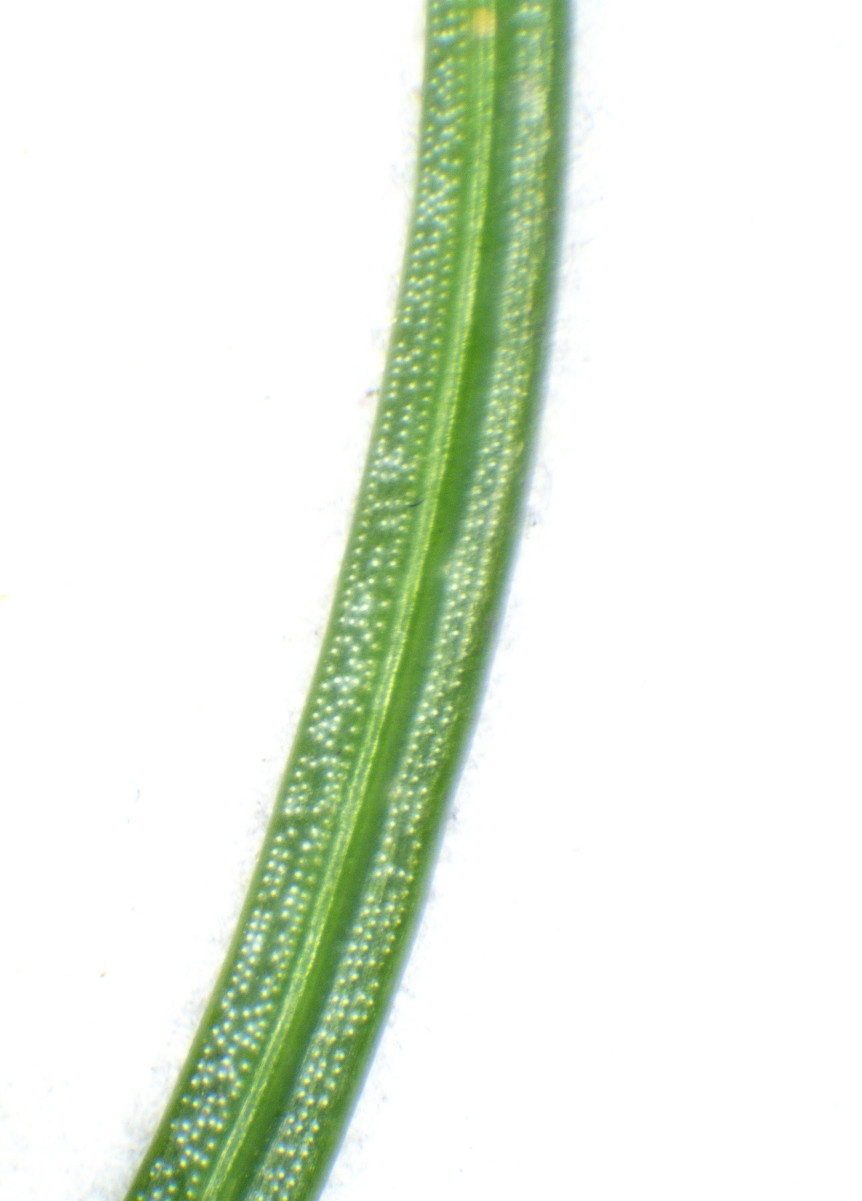
It is a large evergreen coniferous tree growing to between 115 and180 feet tall. The shoots are orange-brown and hairless and the leaves are needle-like, 12 to 24 mm long, quadrangular in cross-section (not flattened), and dark green on all four sides with inconspicuous lines. The cones are 9 to17 cm long (the longest of any spruce), and have bluntly to sharply triangular-pointed scale tips. They are green or reddish, maturing brown 5 to 7 months after pollination.
Sitka Spruce, and other ornamental Picea that may be planted in parks and gardens. Similar to other Pinaceae species with needles borne singly, but Picea have needles on brown petiole-like pegs

Leaves 4-angled in x-section, with faint whitish stripes; cones 10-20cm
Photos of cones and details of needles
Often planted, but does sometime regenerate in the wild.
All year round.
Evergreen.
Fairly widespread in Britain.
Occasional in Leicestershire and Rutland. In the 1979 Flora survey of Leicestershire it was found in 64 of the 617 tetrads.
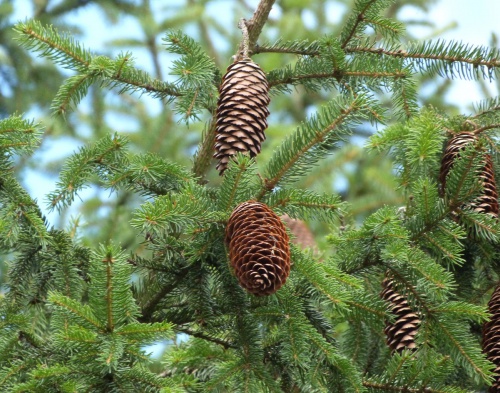 Graham Calow
Dunton Gorse
12 July 2017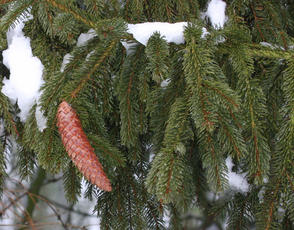 David Nicholls
Thornton Reservoir
05 February 2012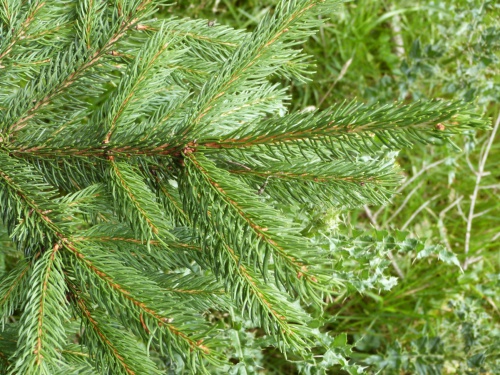 Graham Calow
Dunton Gorse
12 July 2017 stepgray4
Charnwood Lodge
22 November 2020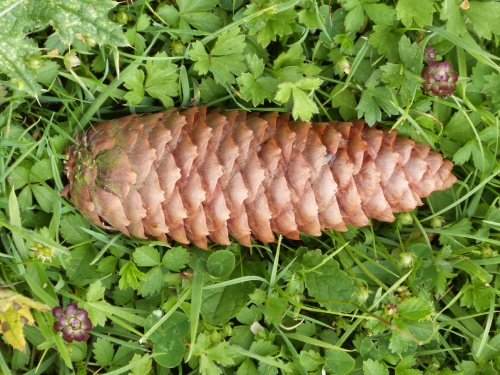 Graham Calow
Dunton Gorse
12 July 2017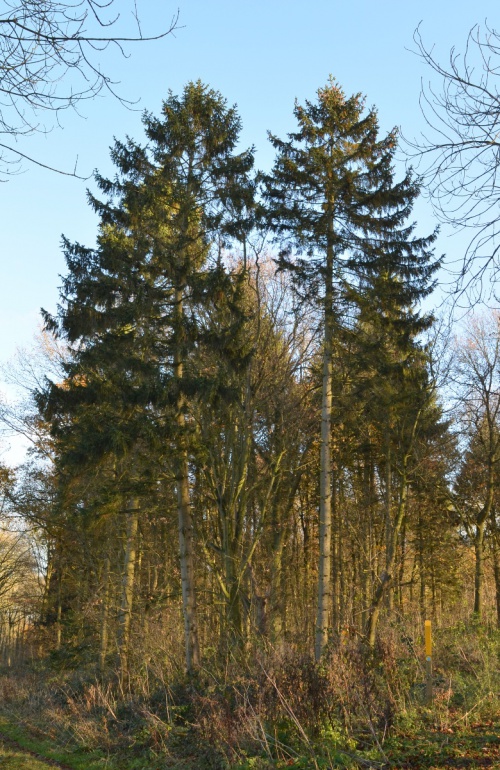 Steve Mathers
Belvoir Woods
04 December 2016
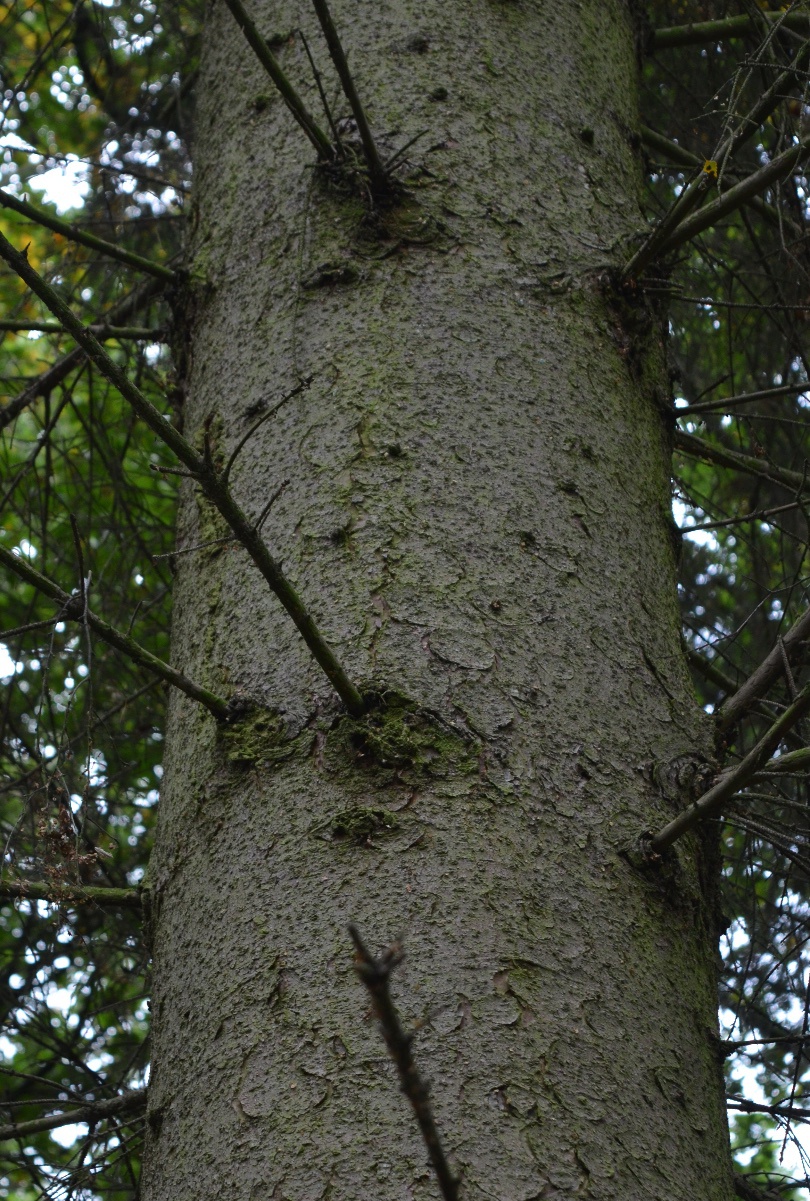
15m tall straight trunks Steve Mathers
Martinshaw Wood
19 October 2016
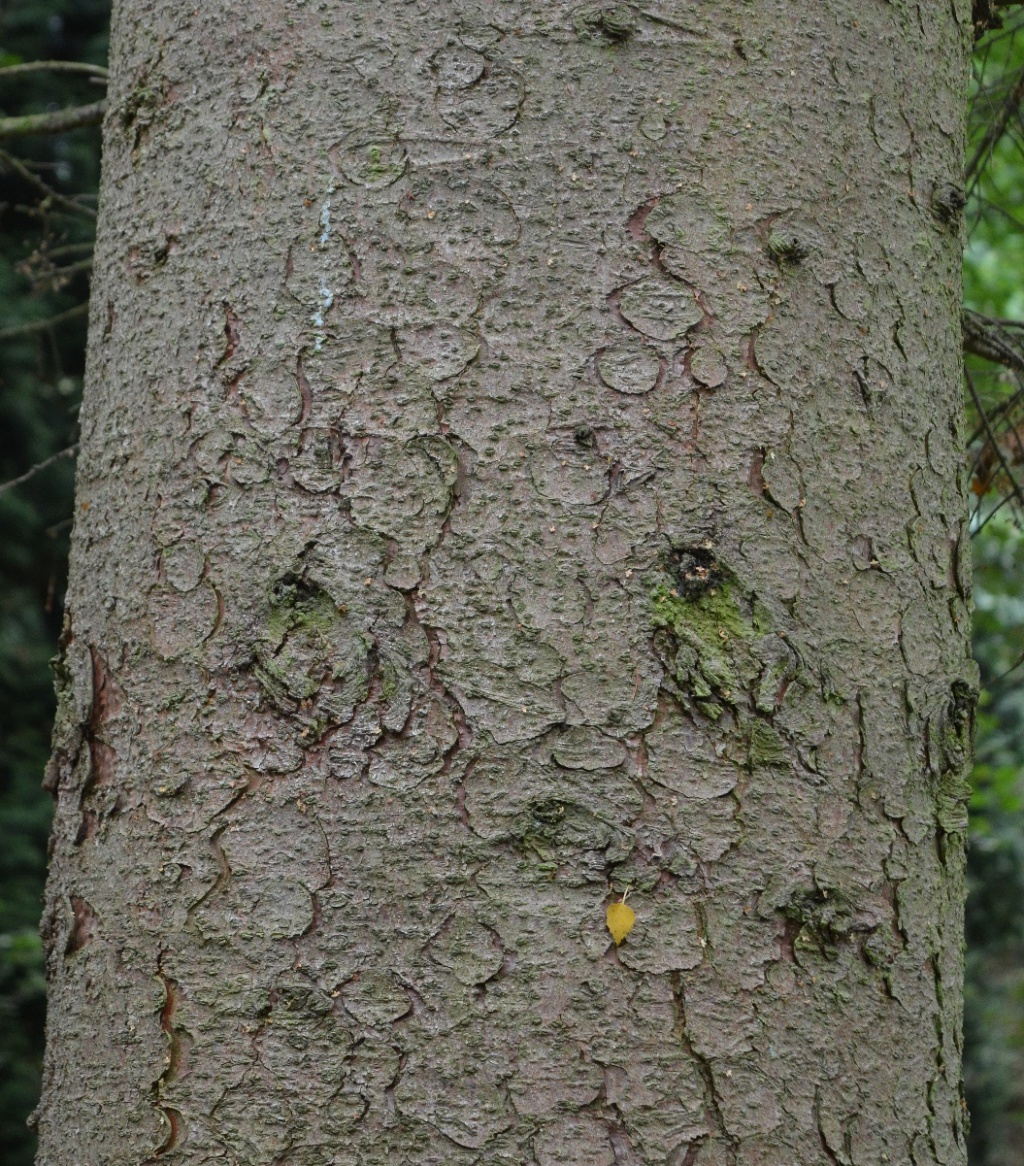
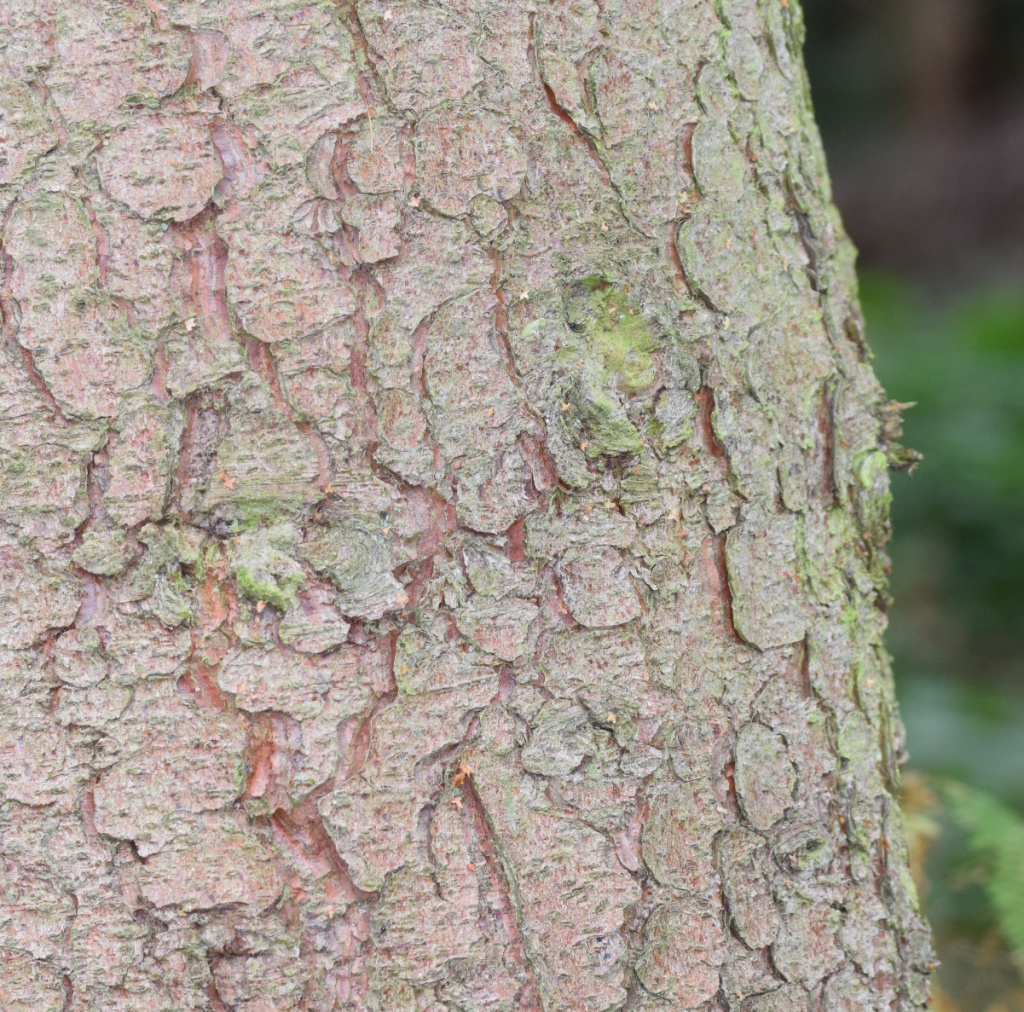
bark detail
Leicestershire & Rutland Map
Enter a town or village to see local records
MAP KEY:
Yellow squares = NBN records (all known data)
Coloured circles = NatureSpot records: 2025+ | 2020-2024 | pre-2020
UK Map
Species profile
- Common names
- Norway Spruce
- Species group:
- conifer
- Kingdom:
- Plantae
- Order:
- Pinales
- Family:
- Pinaceae
- Records on NatureSpot:
- 23
- First record:
- 05/02/2012 (Nicholls, David)
- Last record:
- 12/05/2025 (Pugh, Dylan)
Total records by month
% of records within its species group
10km squares with records
The latest images and records displayed below include those awaiting verification checks so we cannot guarantee that every identification is correct. Once accepted, the record displays a green tick.
In the Latest Records section, click on the header to sort A-Z, and again to sort Z-A. Use the header boxes to filter the list.
Latest images
Latest records
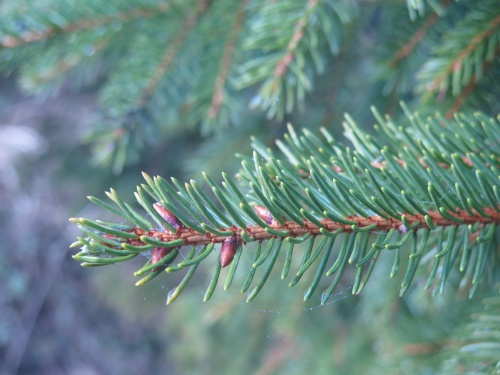 David Nicholls
Thornton Reservoir
17 December 2016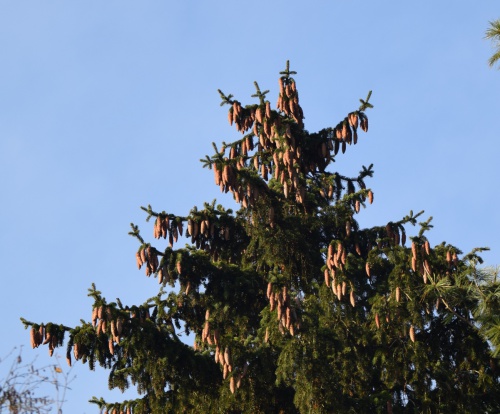 Steve Mathers
Swithland Reservoir Dam
14 December 2016
clusters of pendant female cones at apex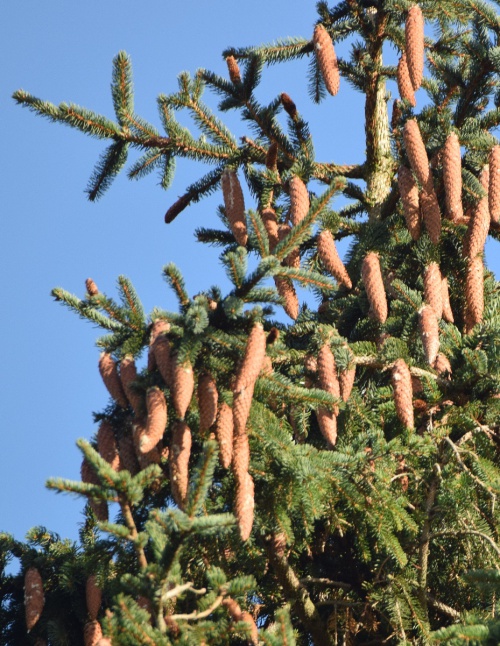 Steve Mathers
Brown"s Hill Quarry
13 November 2016
Long female cones at top of tree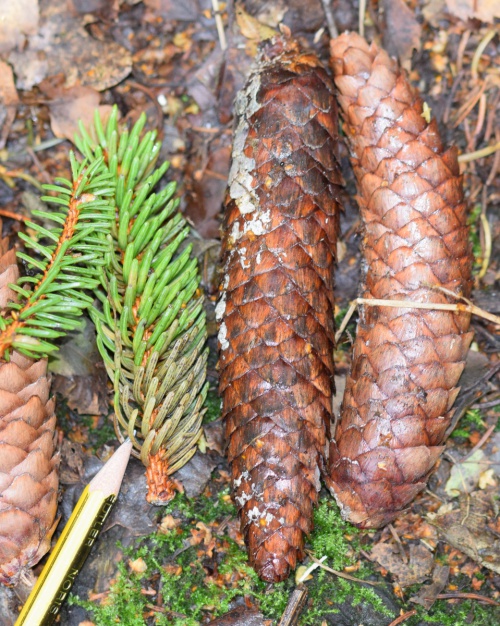 Steve Mathers
Martinshaw Wood (West of M1)
19 October 2016
cones and leaves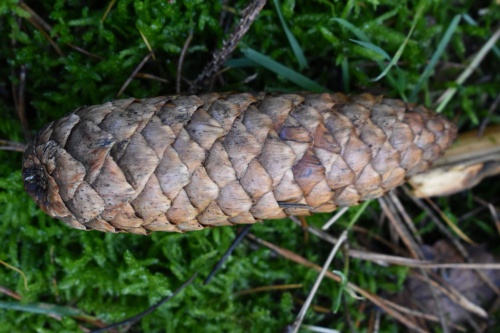 stepgray4
Charnwood Lodge
22 November 2020
Cone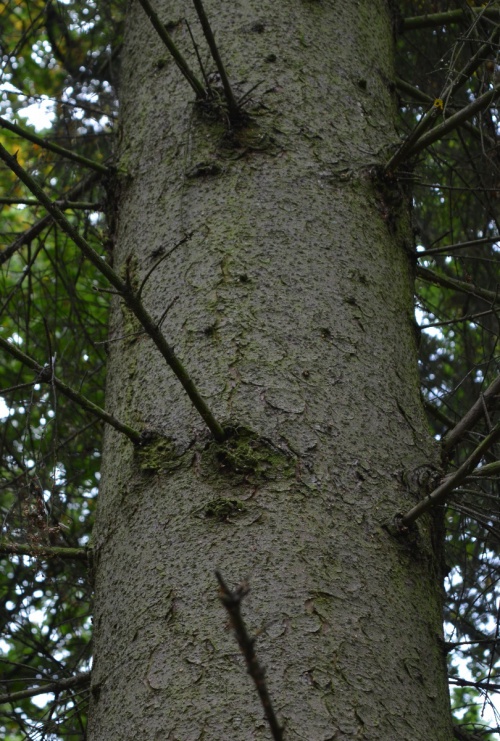 Steve Mathers
Martinshaw Wood (West of M1)
19 October 2016
trunk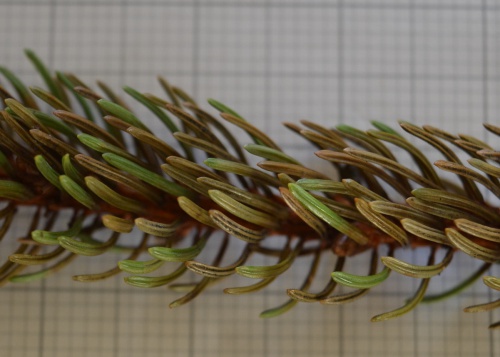 Steve Mathers
Belvoir Woods (Stathern to Terrace Hills)
04 December 2016
single needles on pegs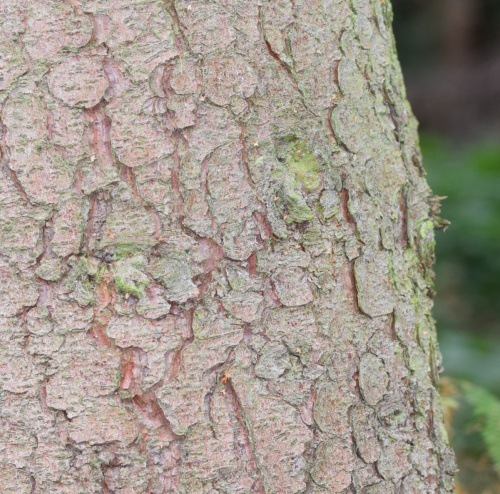 Steve Mathers
Martinshaw Wood (West of M1)
19 October 2016
bark detail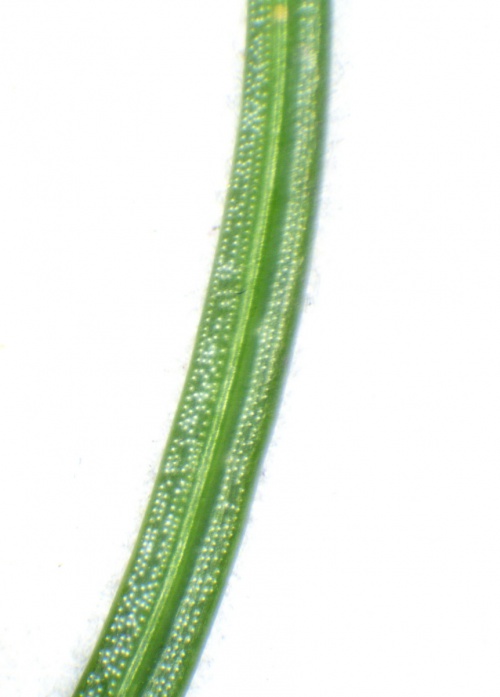 David Nicholls
Thornton Reservoir
18 January 2018
needles with faint white dotted lines

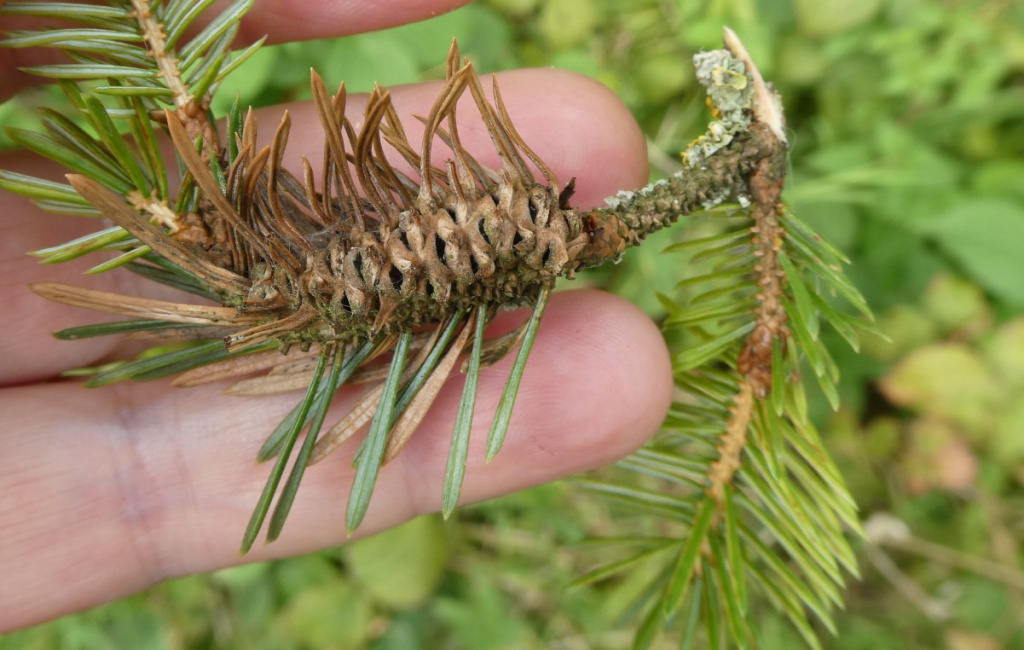
Gilletteella cooleyi
The adelgid bug Gilletteella cooleyi causes a gall on the shoots of Spruce (Picea). The gall is elongated, often curved, and formed of the swollen bases of adjacent spruce needles fused to the shoot. The nymphs live inside chambers within the gall. Unlike other adelgid galls on this host, the needles remain sticking out of the gall, although shorter than usual.
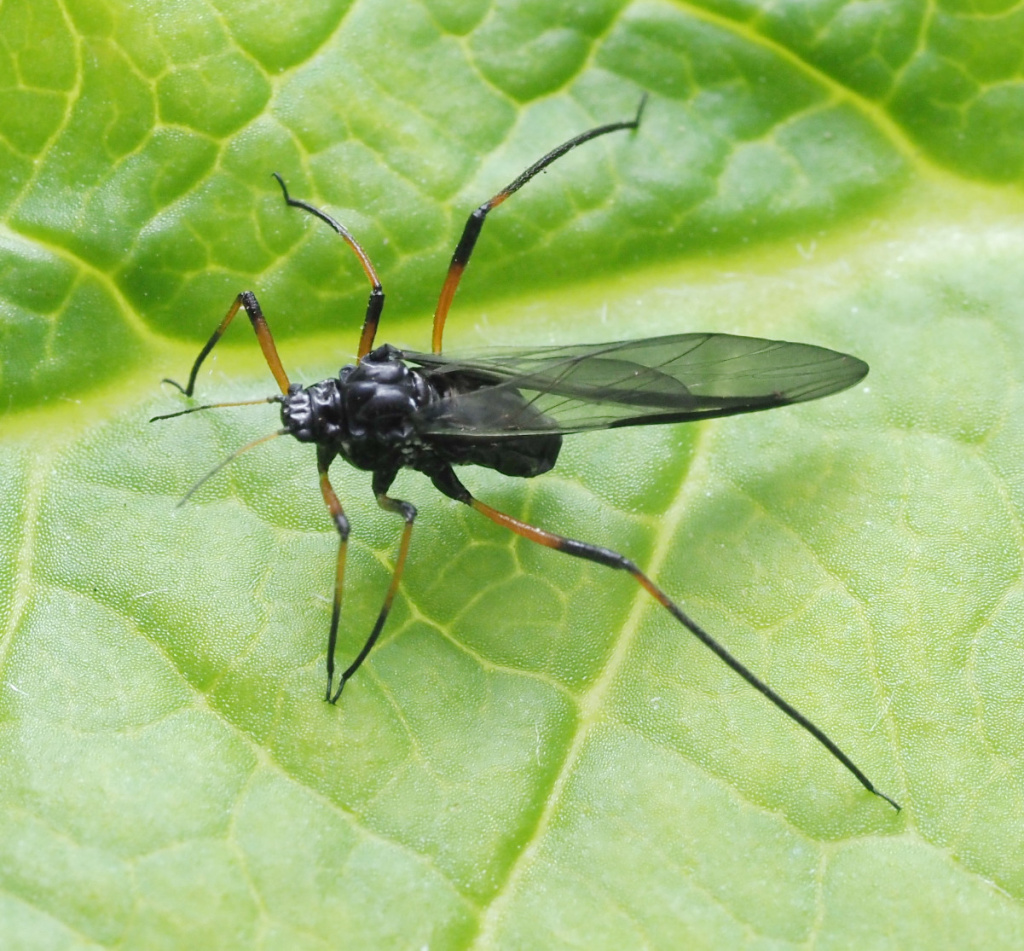
Greater Black Spruce Bark Aphid
The Greater Black Spruce Bark Aphid (Cinara piceae) is a strikingly large (4.5 to 6.7 mm), all-black aphid with partially red/brown legs (the distal end of tibia and femora are black). The thorax is glossy black whilst the abdomen is matt black. Alates (winged) have dark tinted wings. Large colonies of these aphids can appear on the undersides of older branches and on the trunks of Spruce.

Elatobium abietinum
A pale to dark green aphid found on Spruce species (Picea) or on Silver Fir (Abies) needles. It is most commonly recorded on Sitka Spruce (Picea sitchensis).
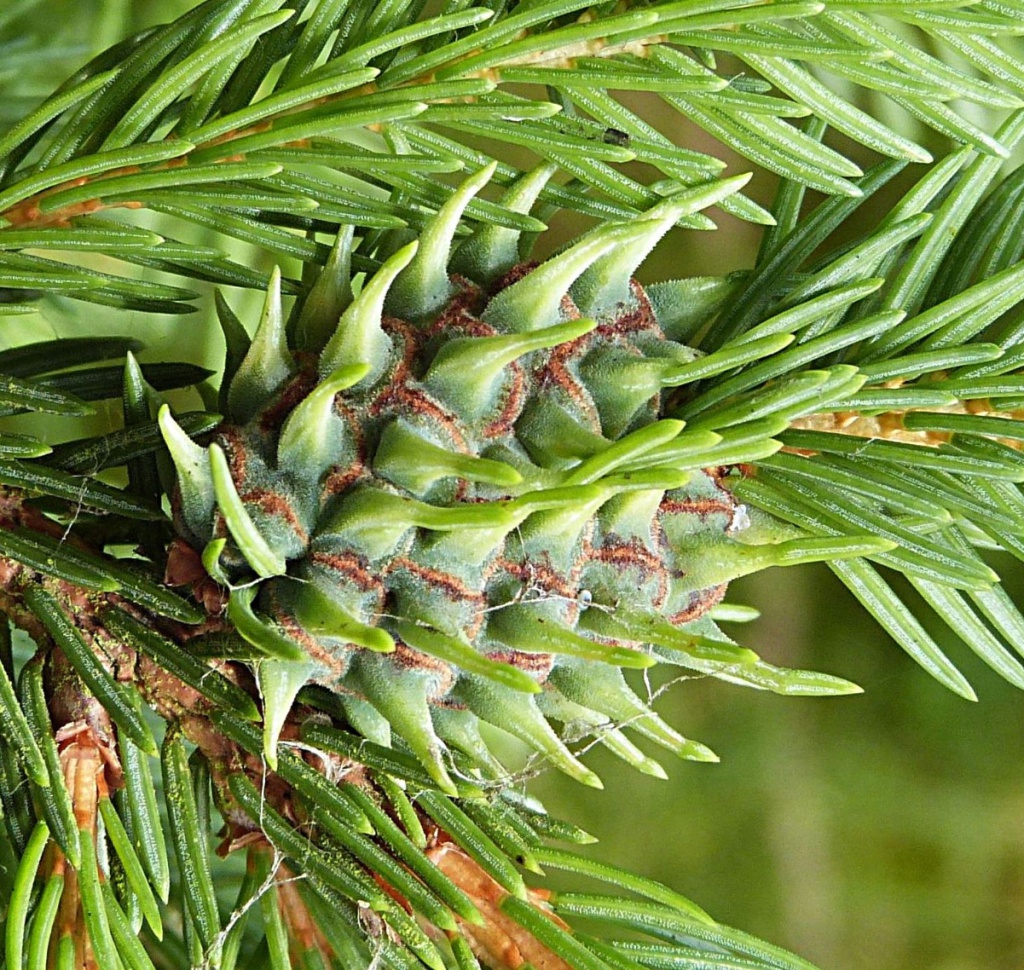
Pineapple Gall Adelgid
The Pineapple Gall Adelgid (Sacchiphantes abietis) produces galls on Spruce species. The gall is ellipsoidal with its length less than 1.5 times the width and usually about 15 to 20 mm in length. The spruce needles on the gall are shorter than normal. The gall is only slightly paler green than a normal shoot. The slits to gall chambers are often orange-red or deep pink before opening. There are often several galls together at the base of adjacent shoots, and plant growth often continues beyond gall.