

Nettle Rash - Leptosphaeria acuta
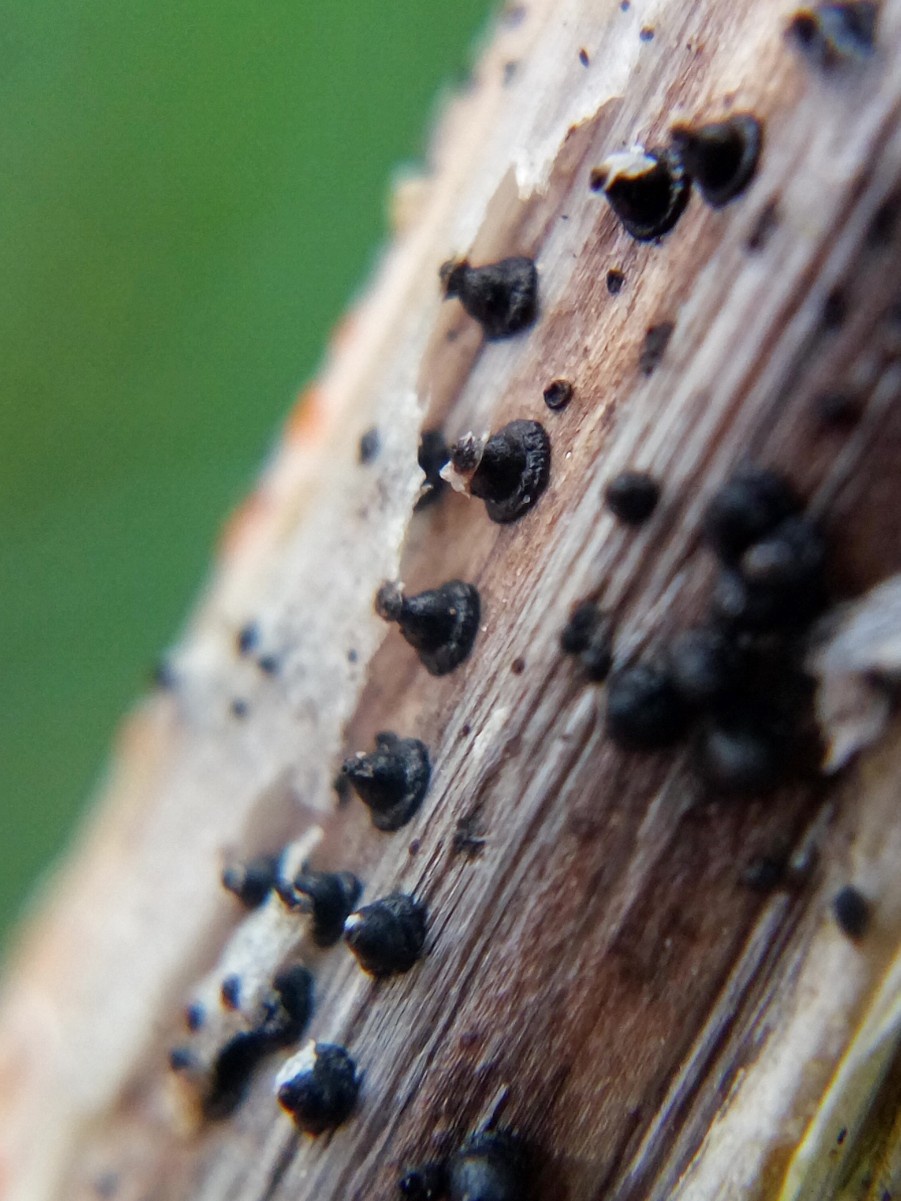
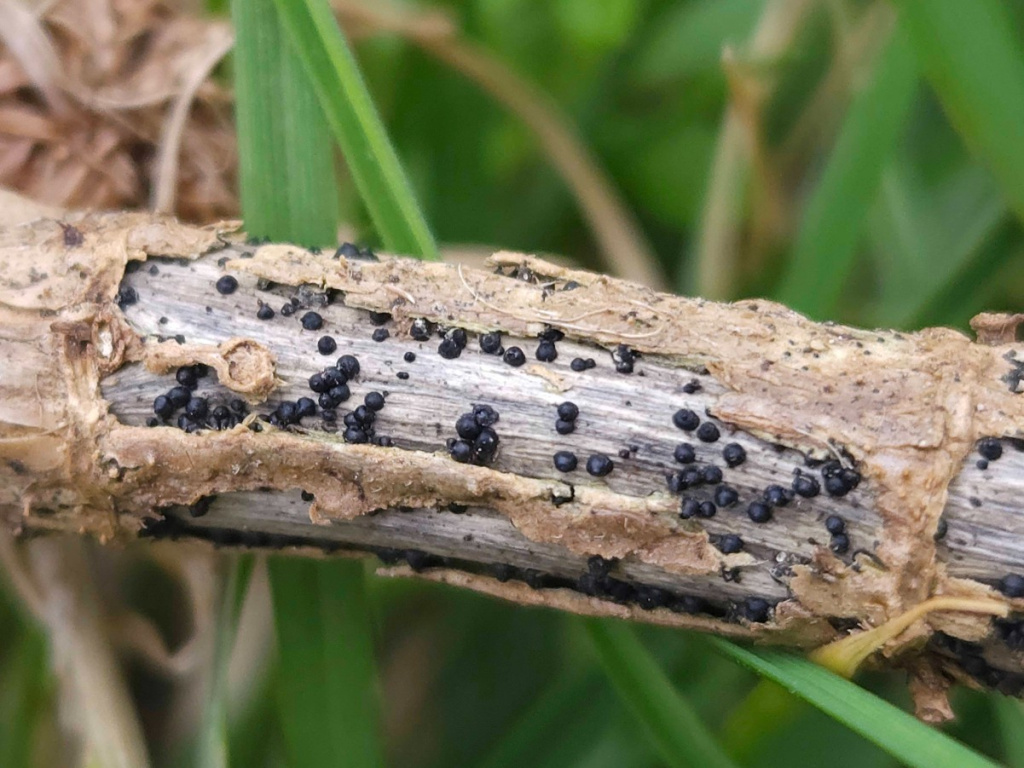
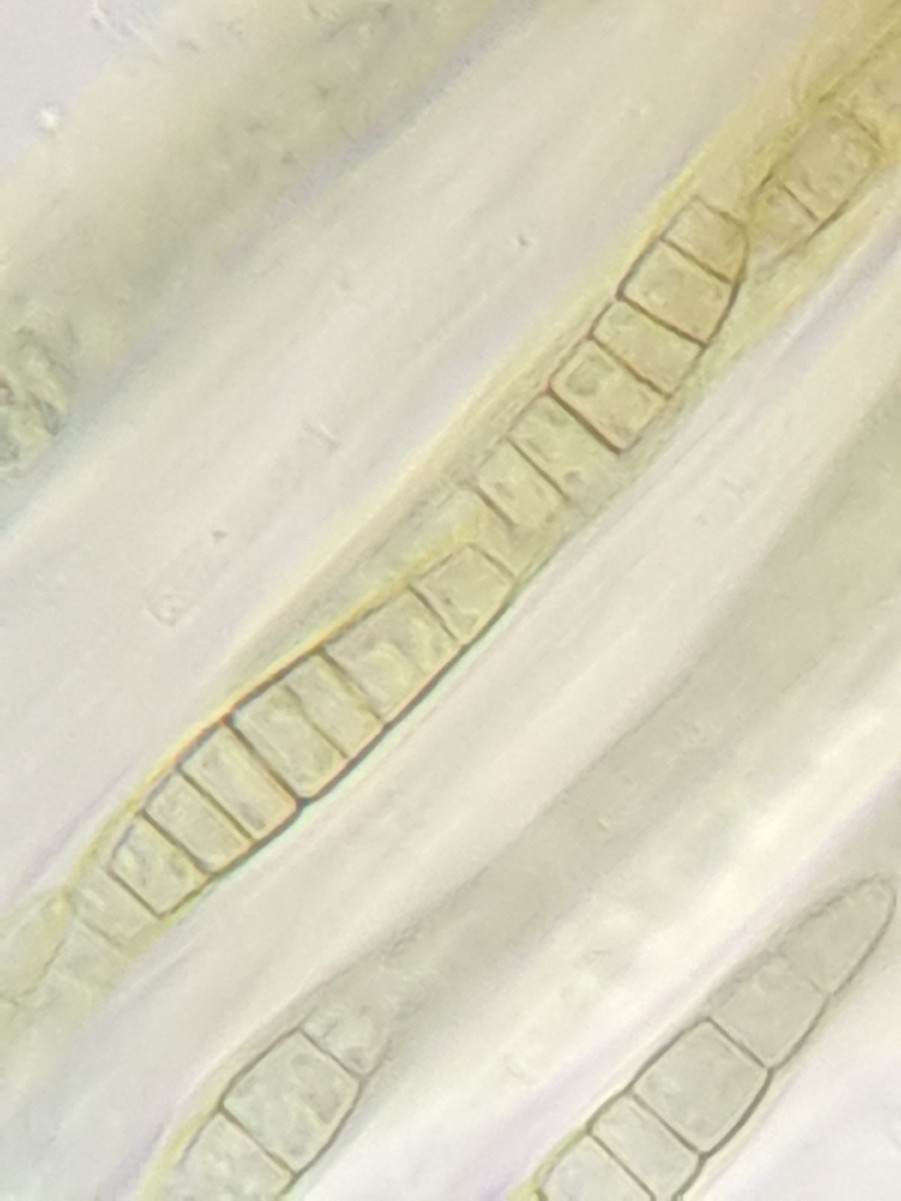
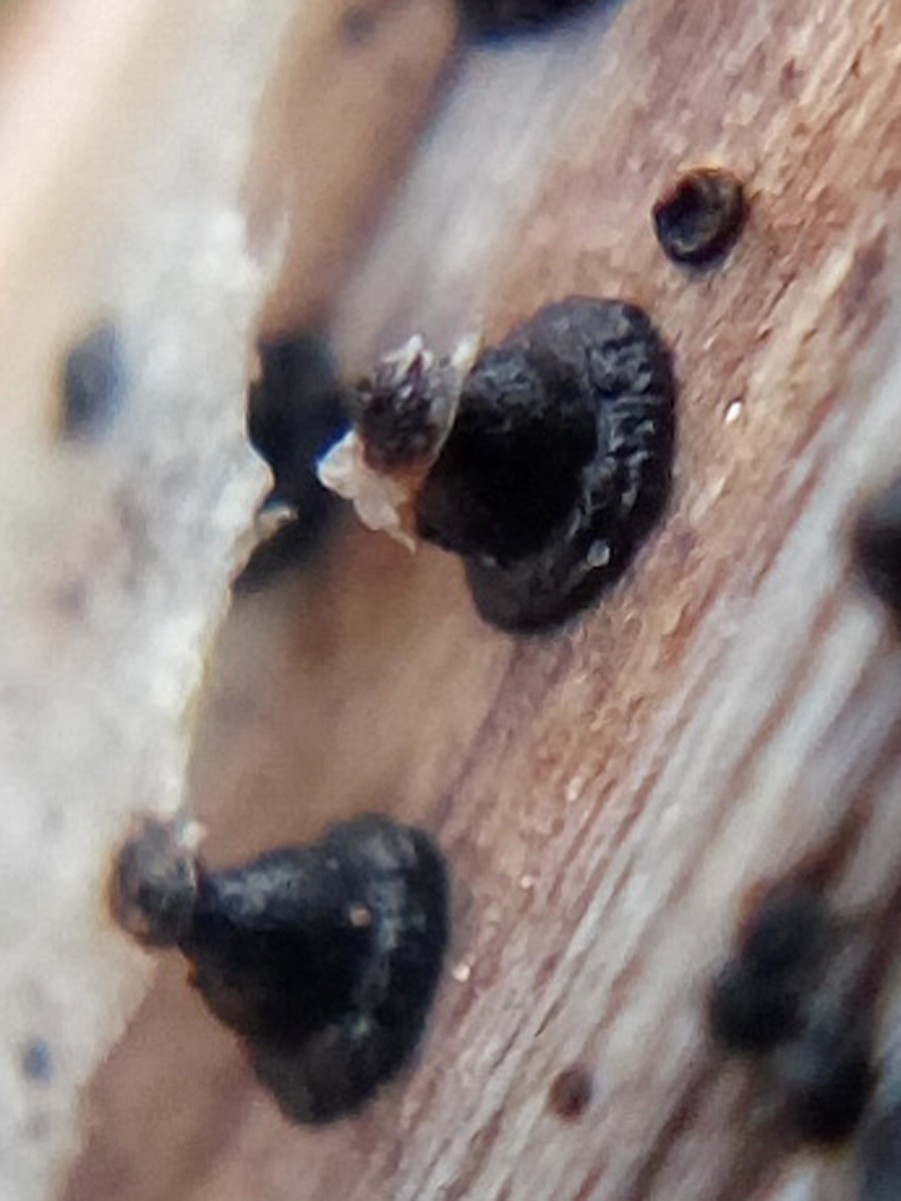
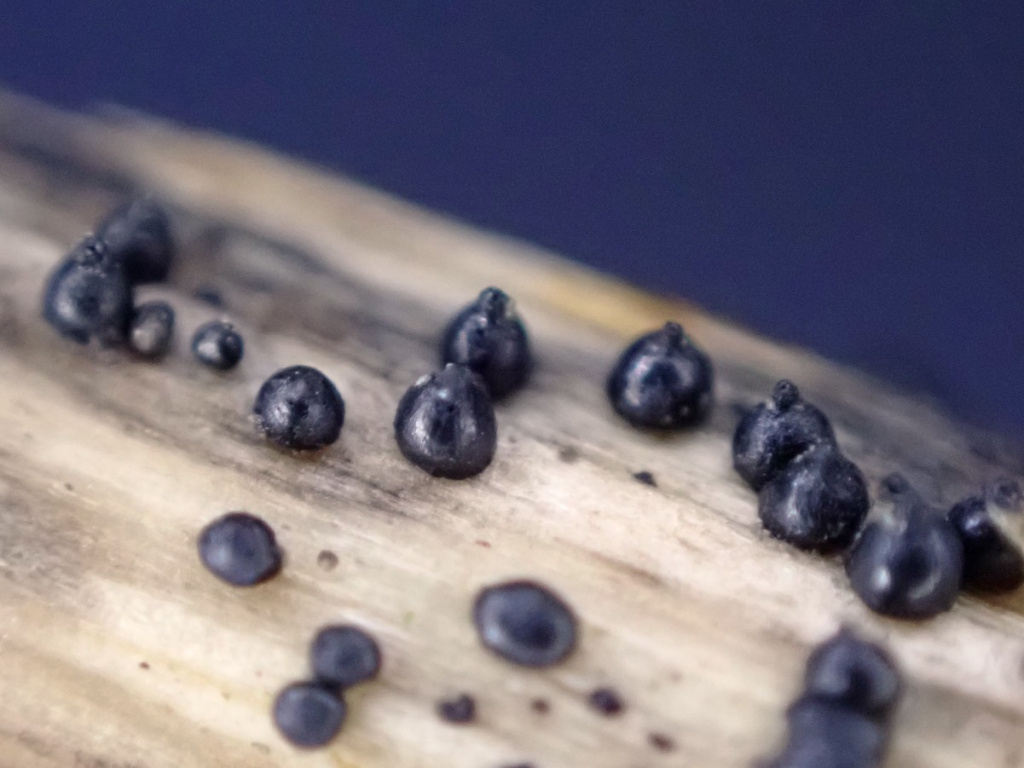
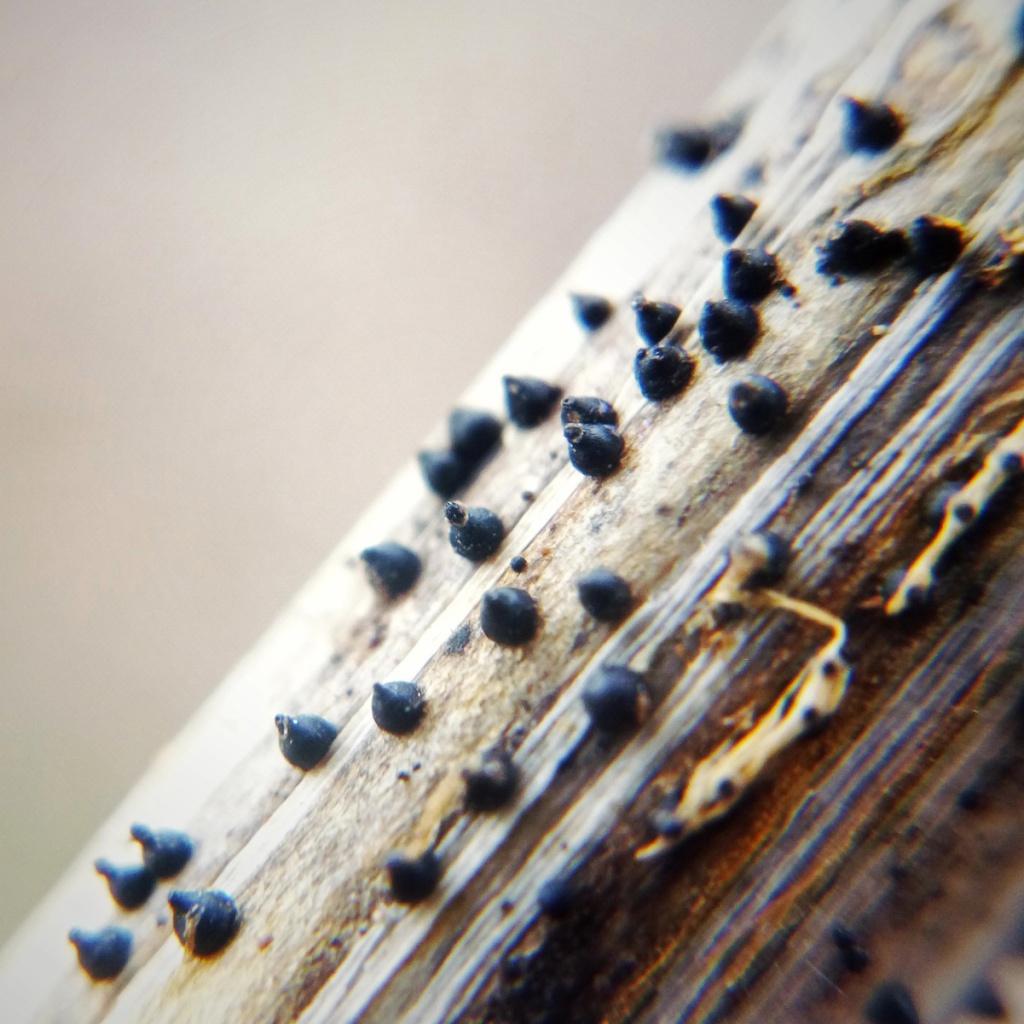
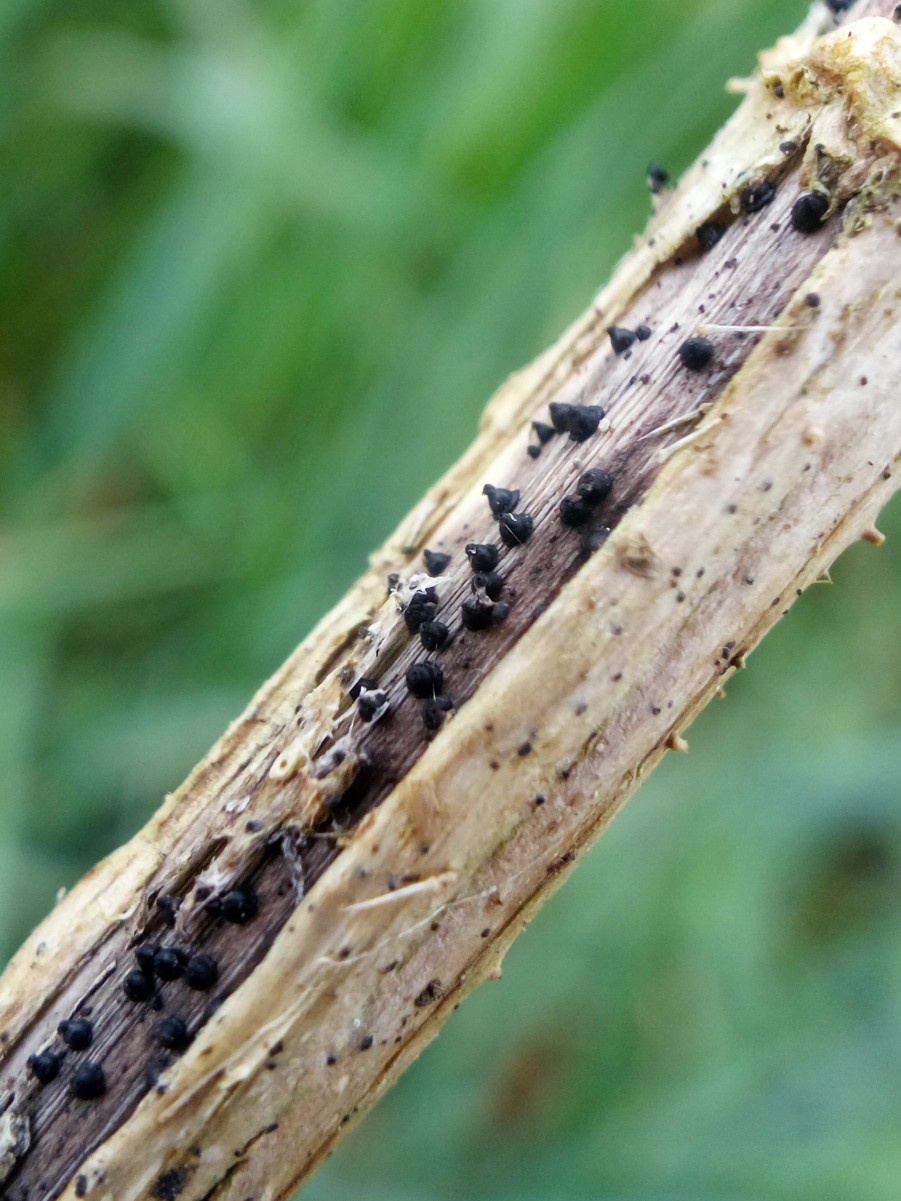
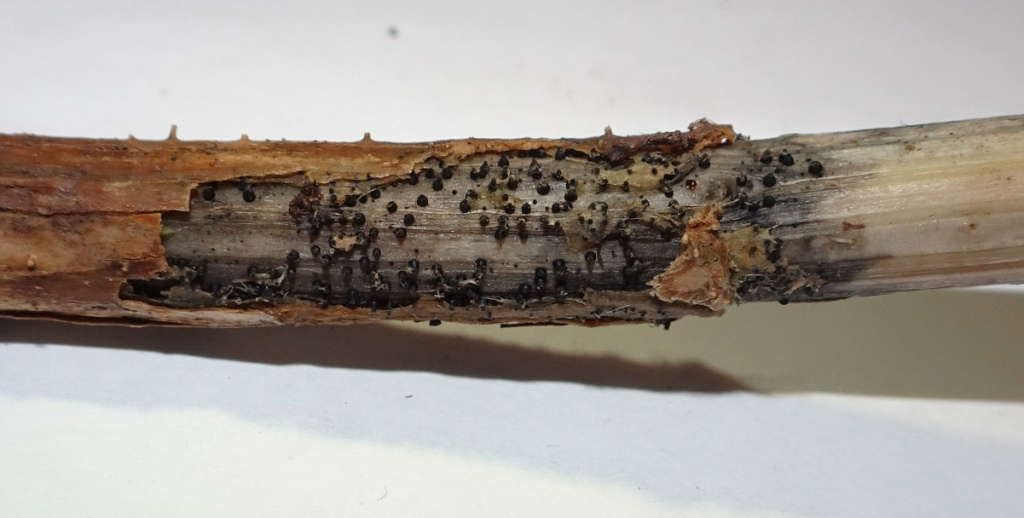
The fruit bodies are small (c. 0.5mm diameter) black, rounded-conical fruitbodies embedded in nettle stems. Prominent chimney-like or nipple-like ostioles break through the outer surface of the nettle stem, often in large numbers. Spores are released through the ostioles, and are pale yellow-brown with between 4 and 13 septa or divisions. This is variable, and different information sources give different number of septa.
[Thompson (2013) has 6 - 12 septa; Breitenbach & Kranzlin (1984) have (4) 6 - 11 (13) septa; Laessoe and Petersen (2019) have 5-9 celled.]
Leptosphaeria doliolum is also found on nettle stems, and has a simlar shape but with 2 concentric raised rings on the fruitbody. It has 3-septate/4-celled spores. It has occasionally been recorded in VC55. There are many other species associated with different hosts.

Photograph on host; note substrate and associated plant species. Clear photos of individual fruitbodies are needed in order to separate this from other species on nettle; microscopic examination or confirmation by an expert may be needed
Found growing clustered at the bases of dead stems of Common Nettle.
Maturing in late winter and spring, though fruit bodies may be seen throughout the year.
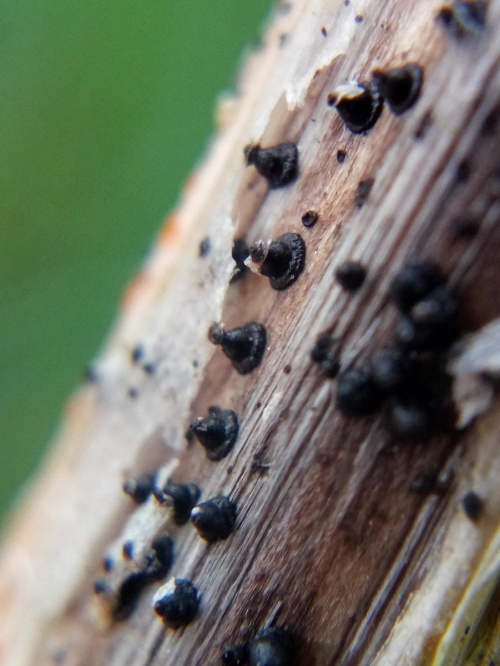 Peter Smith
Cropston, Slate Bridge
12 April 2022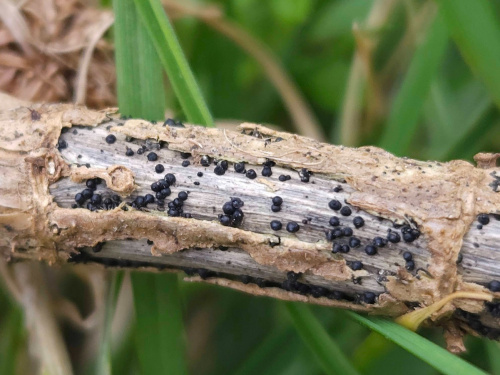 Peter Smith
Wymeswold, Kingston Brook (Leics. side)
05 February 2024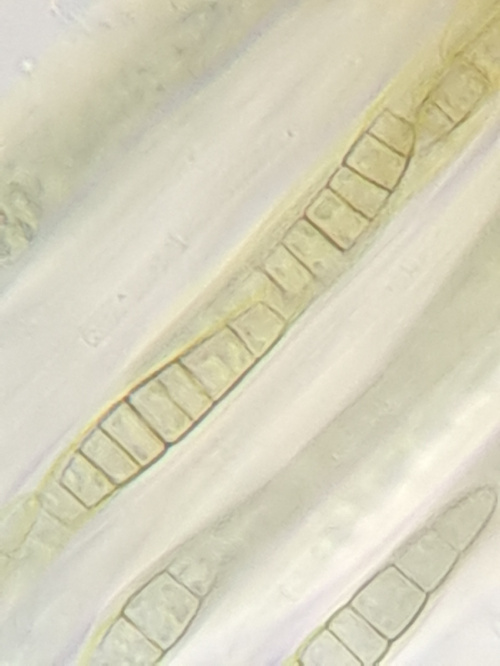 Melinda Bell
Newtown Lindford,Sheet Hedges Wood
14 February 2025
pale yellow ascospores, c.9-10 septate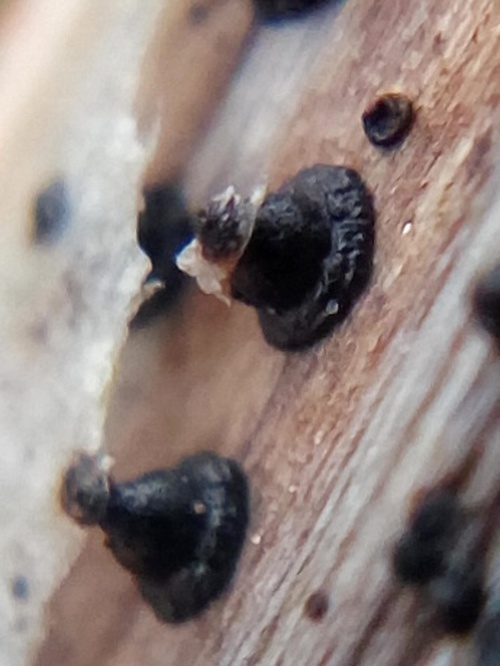 Peter Smith
Cropston, Slate Bridge
12 April 2022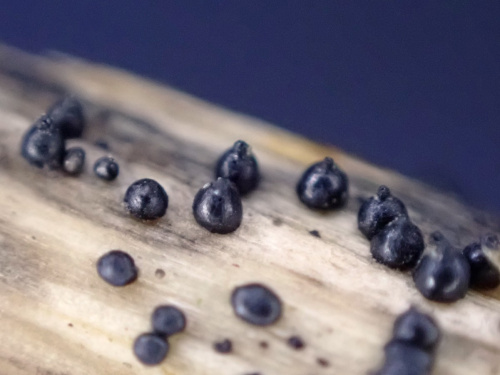 Peter Smith
Thrussington, Old Gate Road
01 February 2025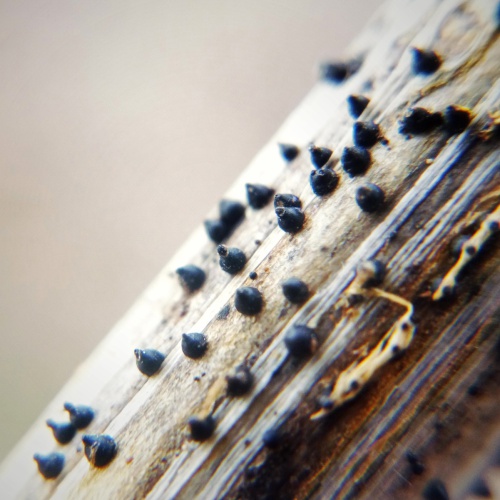 Peter Smith
Seagrave, footpath to Wymeswold
22 February 2023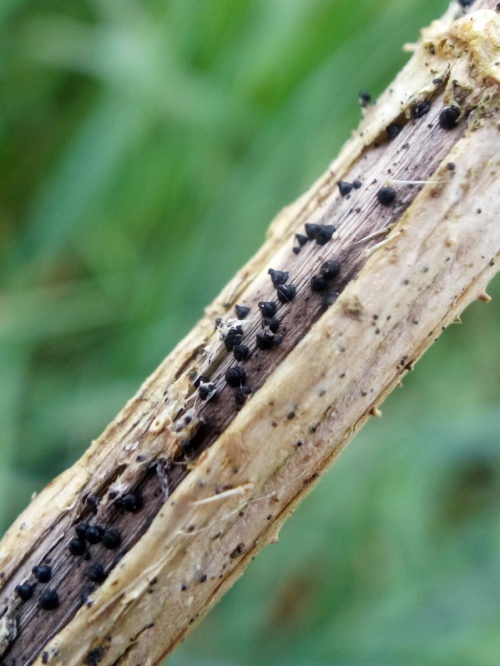 Peter Smith
Cropston, Slate Bridge
12 April 2022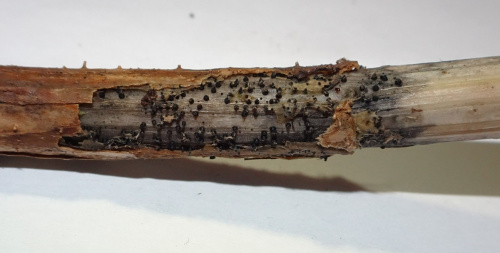 Hazel Graves
Blackbrook & Dishley Pool, Loughborough
17 February 2024
Leicestershire & Rutland Map
Enter a town or village to see local records
MAP KEY:
Yellow squares = NBN records (all known data)
Coloured circles = NatureSpot records: 2025+ | 2020-2024 | pre-2020
UK Map
Species profile
- Common names
- Nettle Rash
- Species group:
- fungus
- Kingdom:
- Fungi
- Order:
- Pleosporales
- Family:
- Leptosphaeriaceae
- Records on NatureSpot:
- 35
- First record:
- 07/07/2013 (Thompson, Peter)
- Last record:
- 03/05/2025 (lemmon, roy)
Total records by month
% of records within its species group
10km squares with records
The latest images and records displayed below include those awaiting verification checks so we cannot guarantee that every identification is correct. Once accepted, the record displays a green tick.
In the Latest Records section, click on the header to sort A-Z, and again to sort Z-A. Use the header boxes to filter the list.