

Mugwort - Artemisia vulgaris
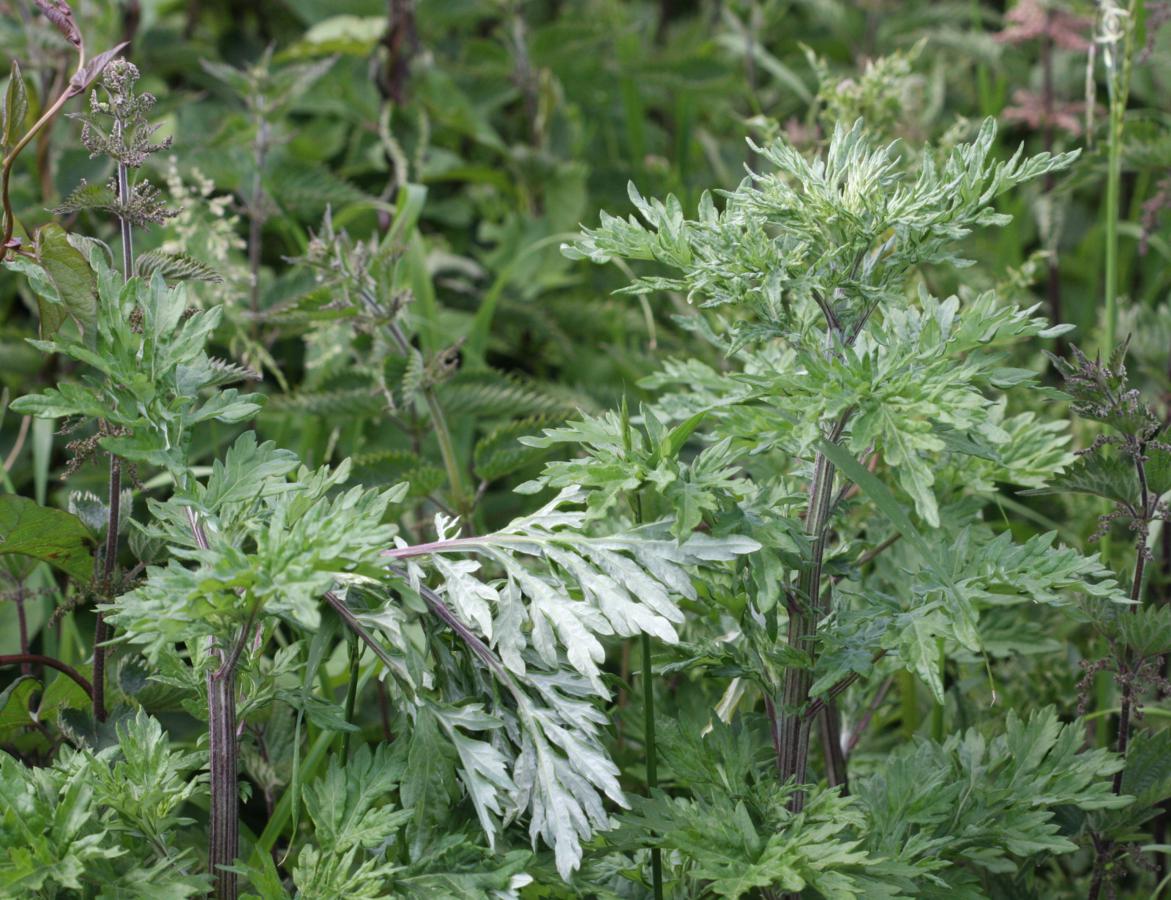
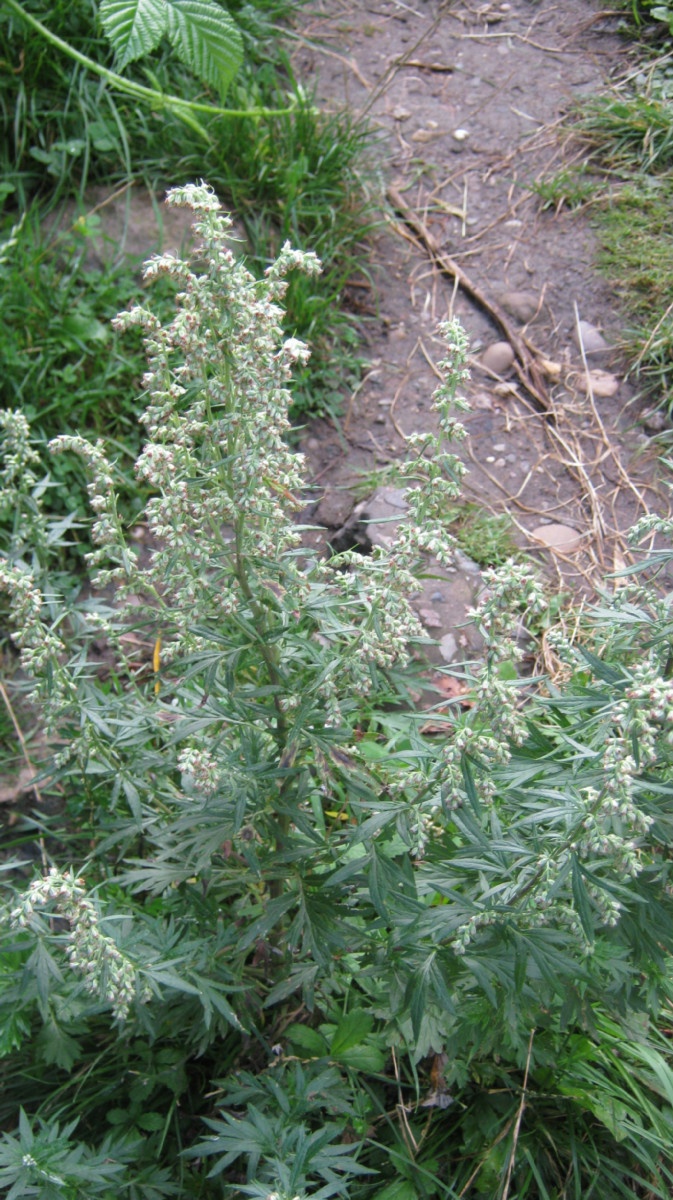
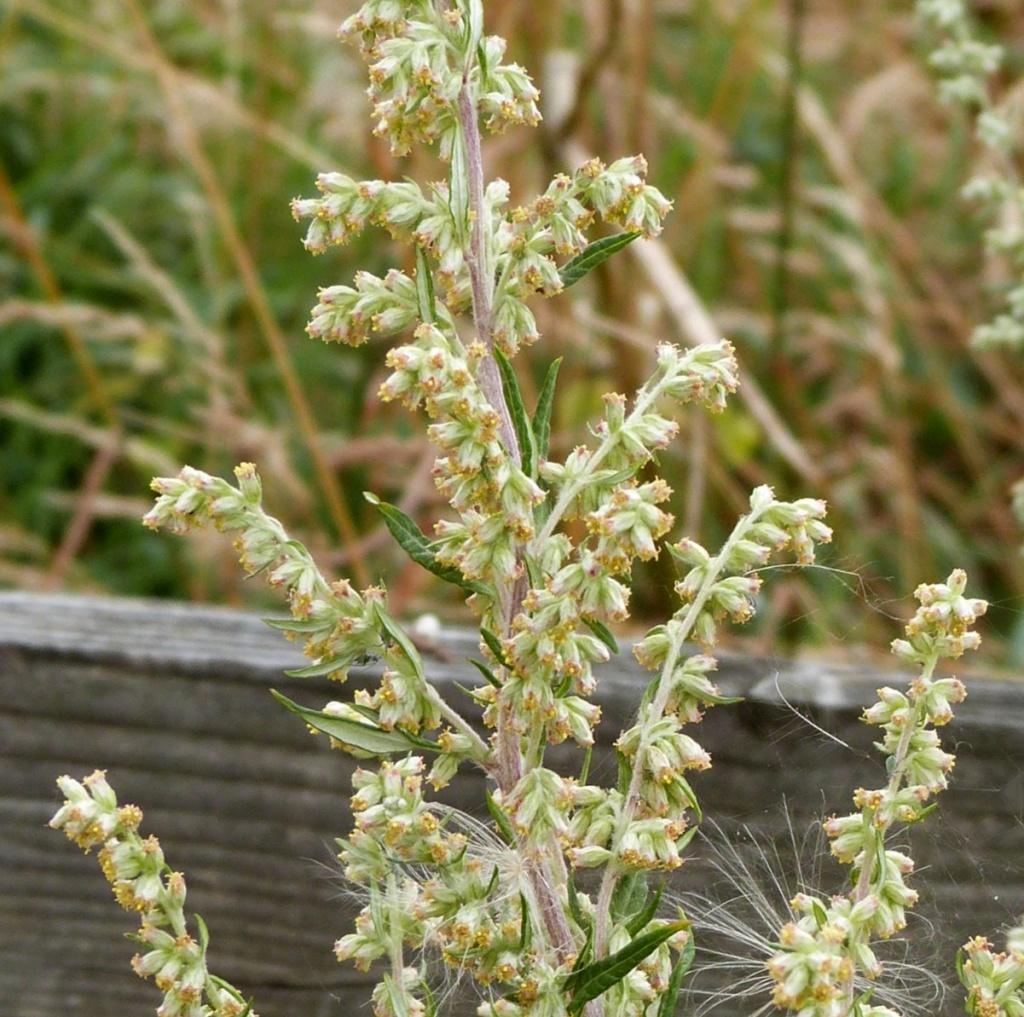
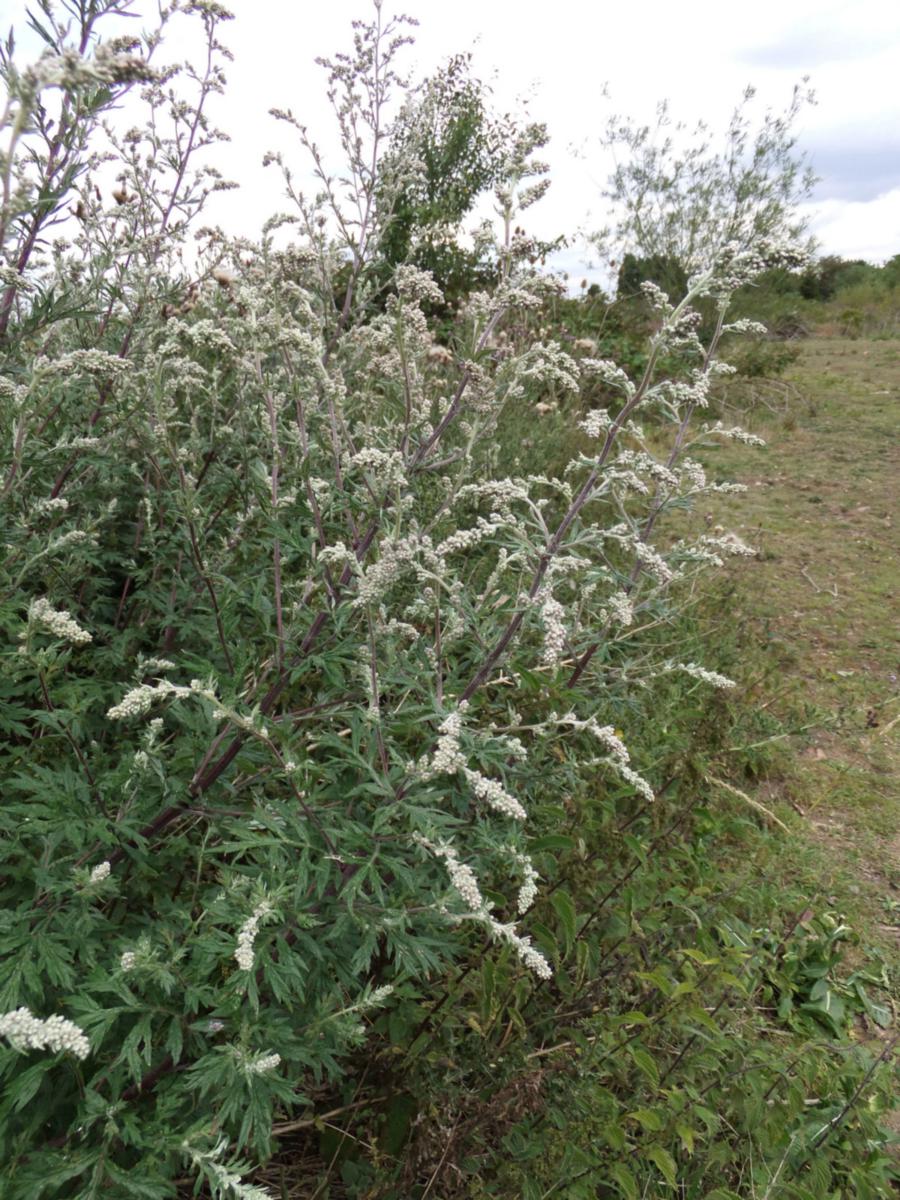
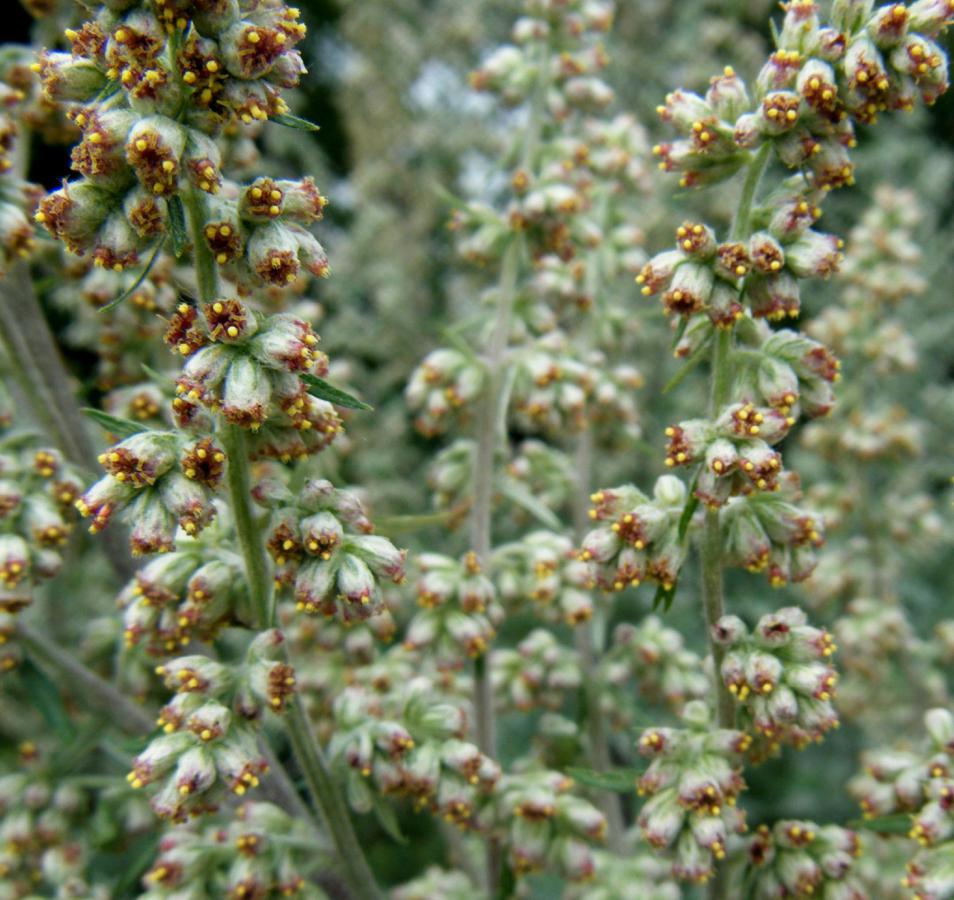
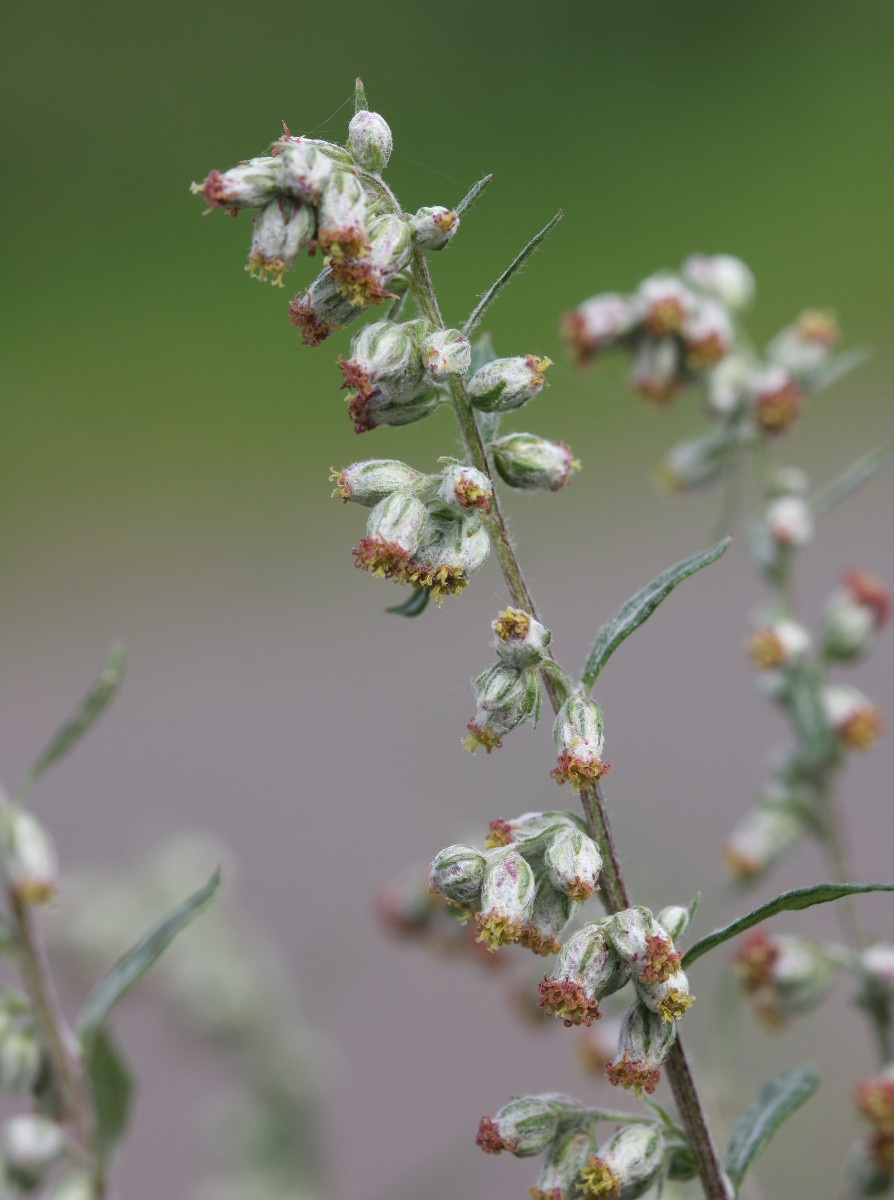
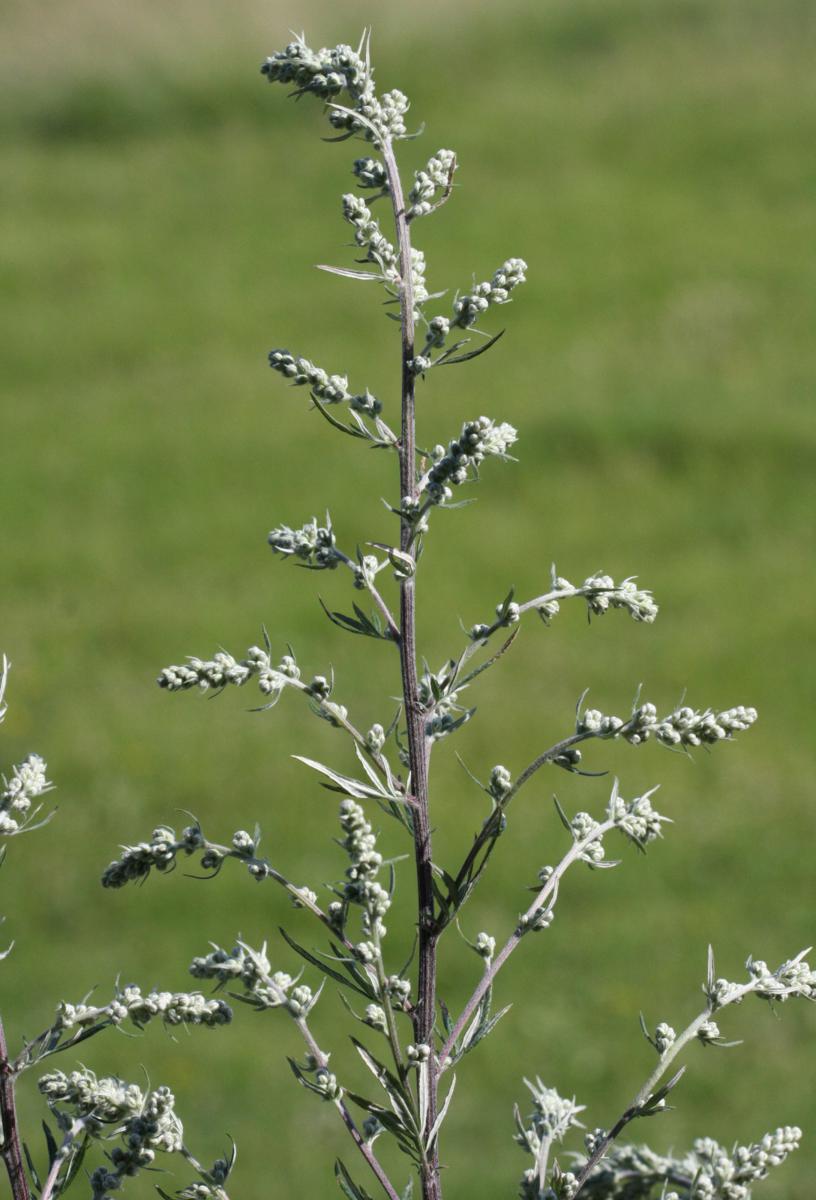
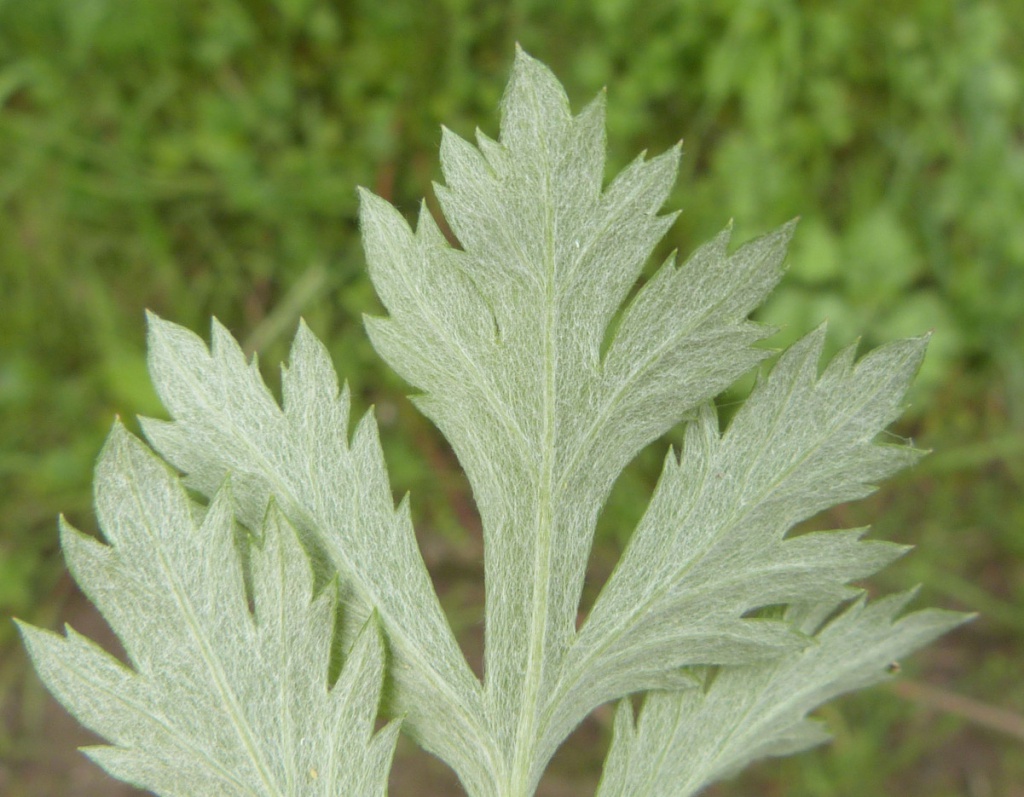
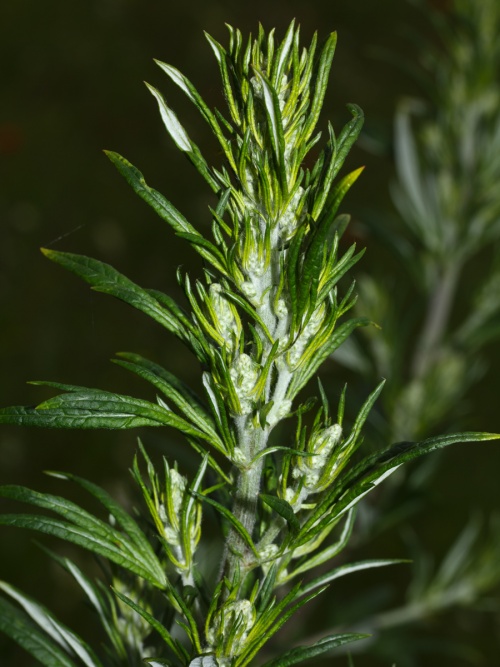
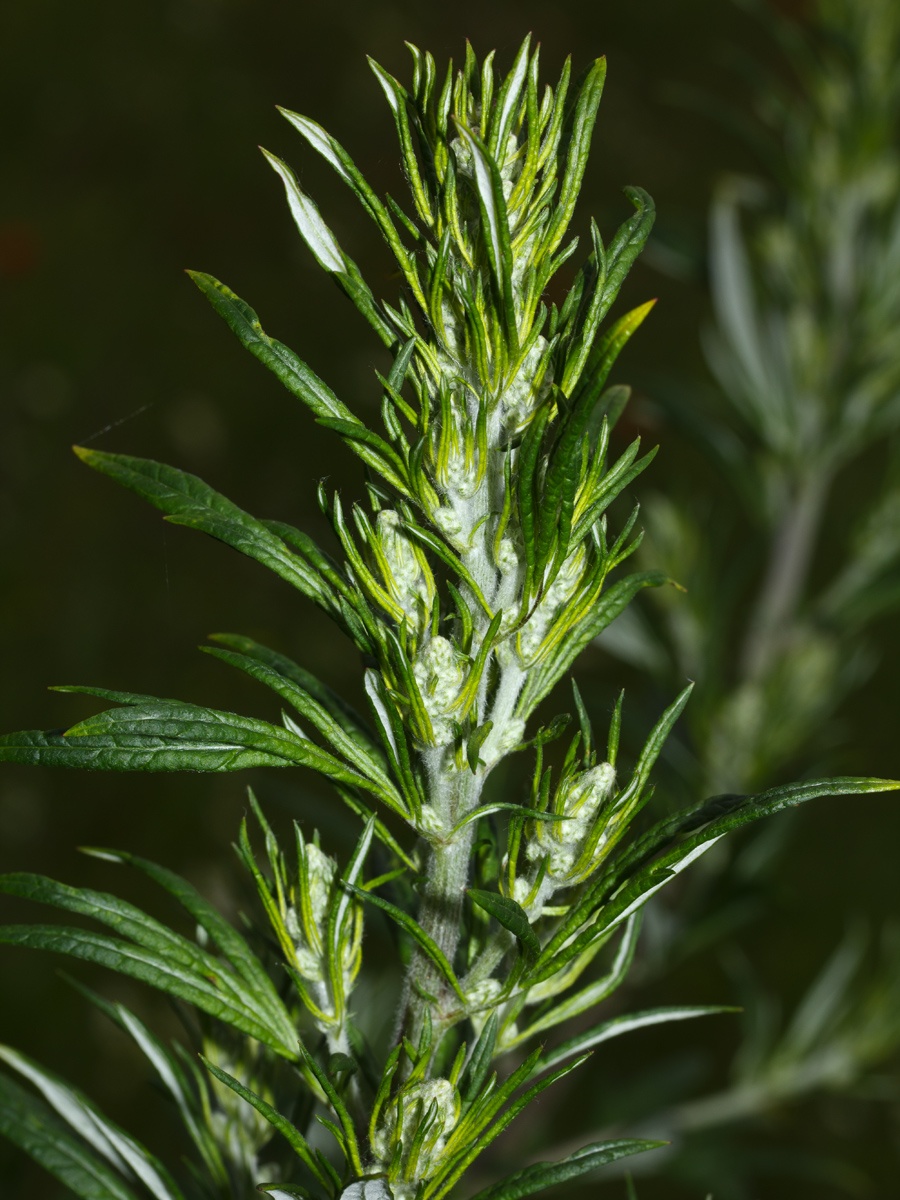
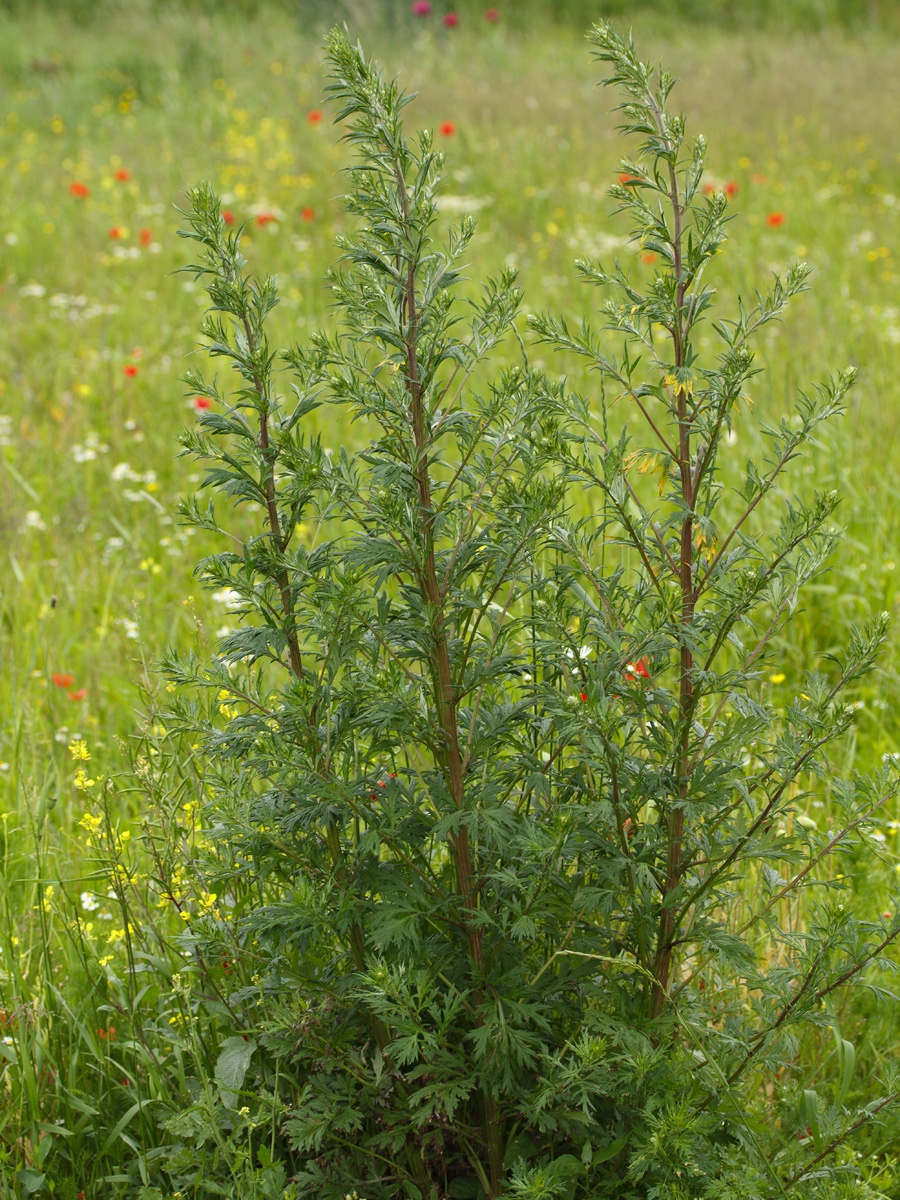
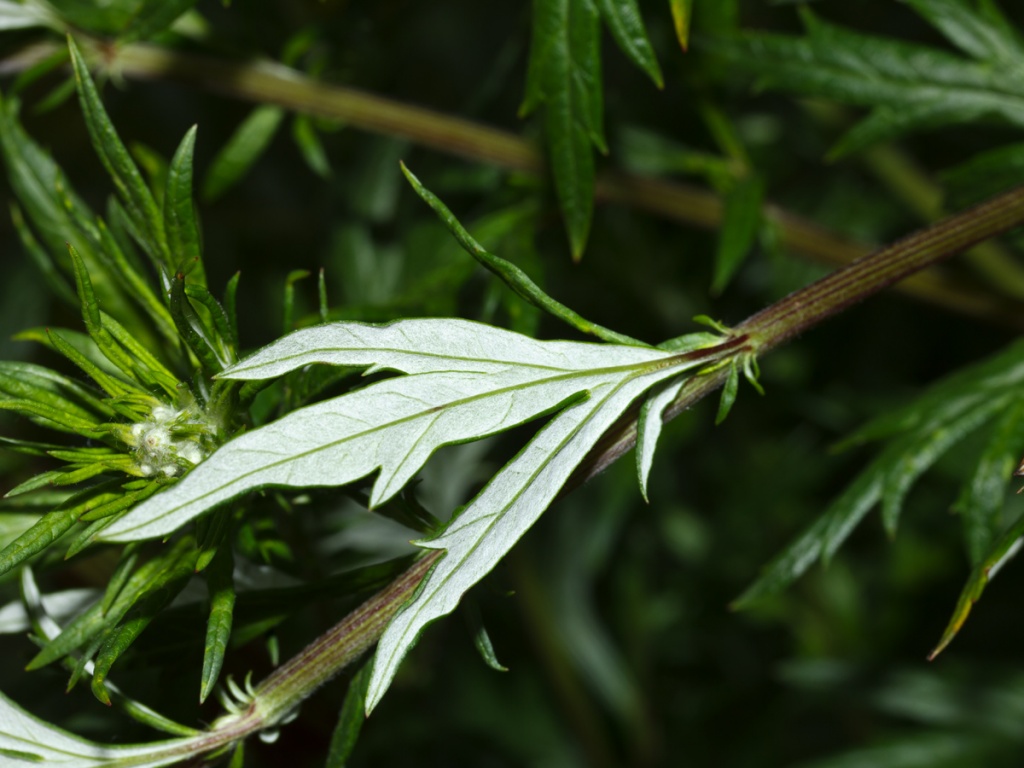
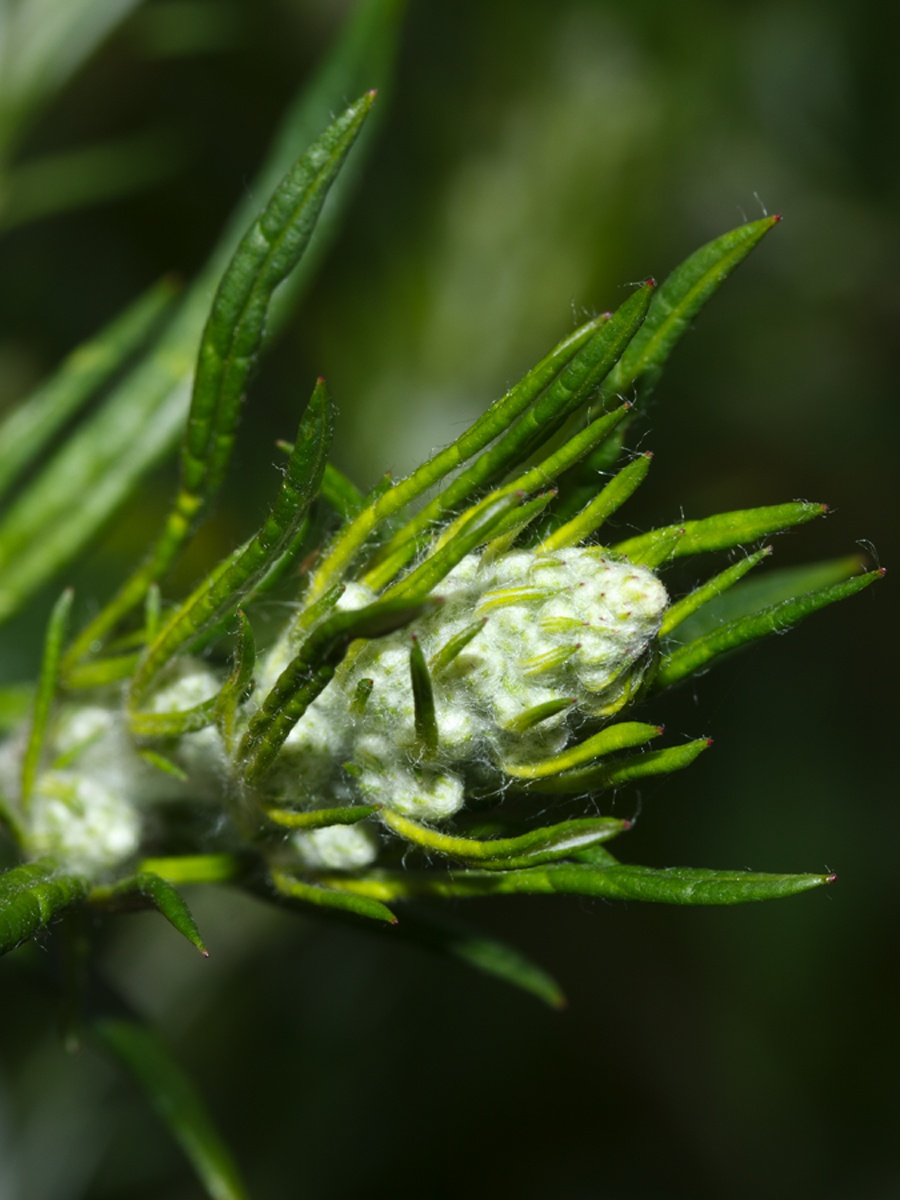
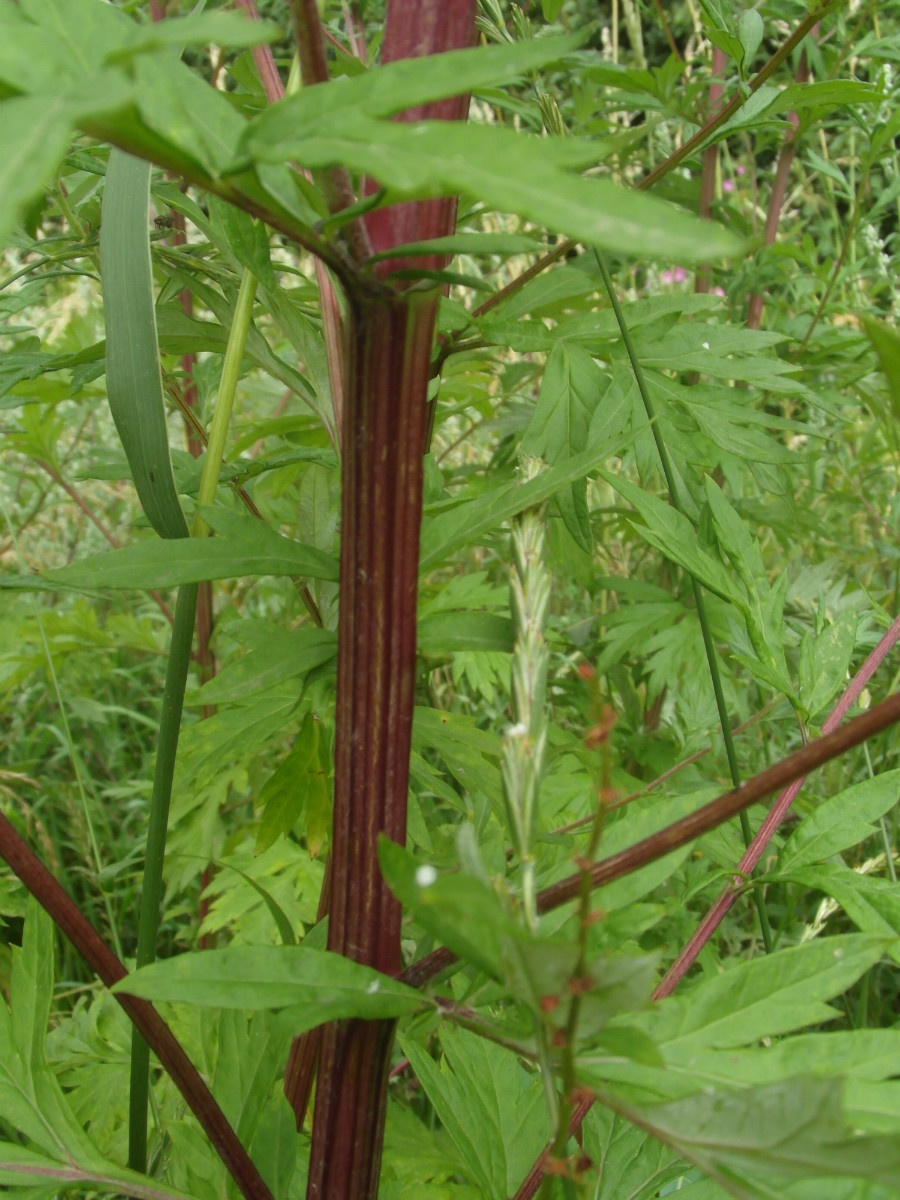
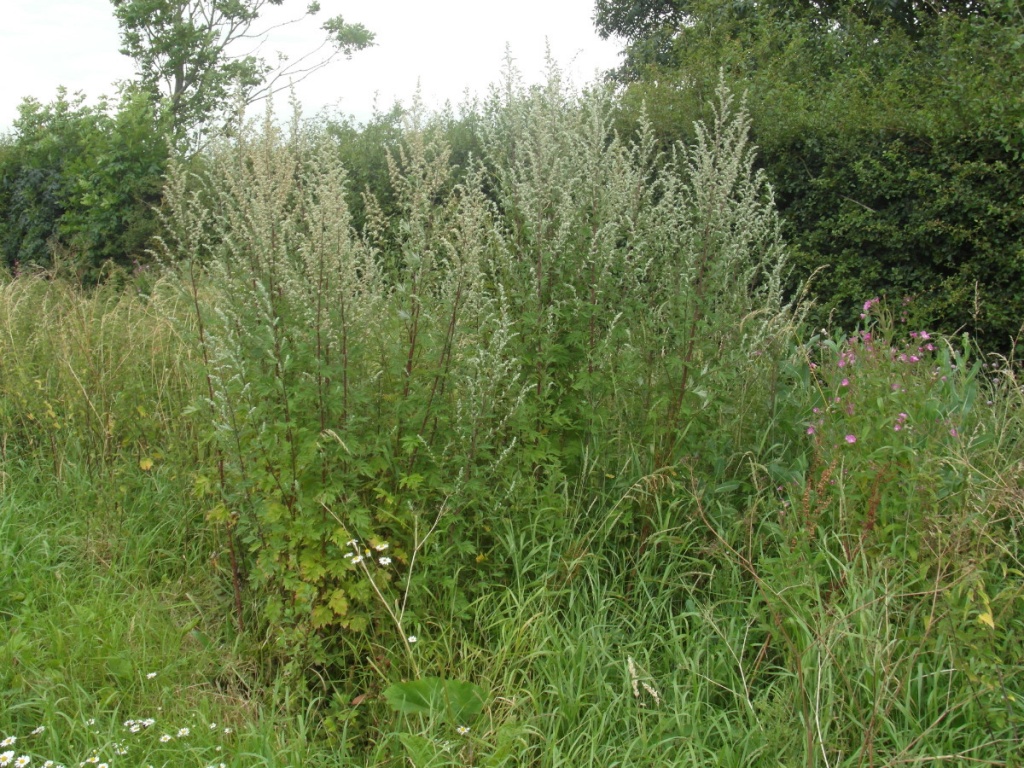
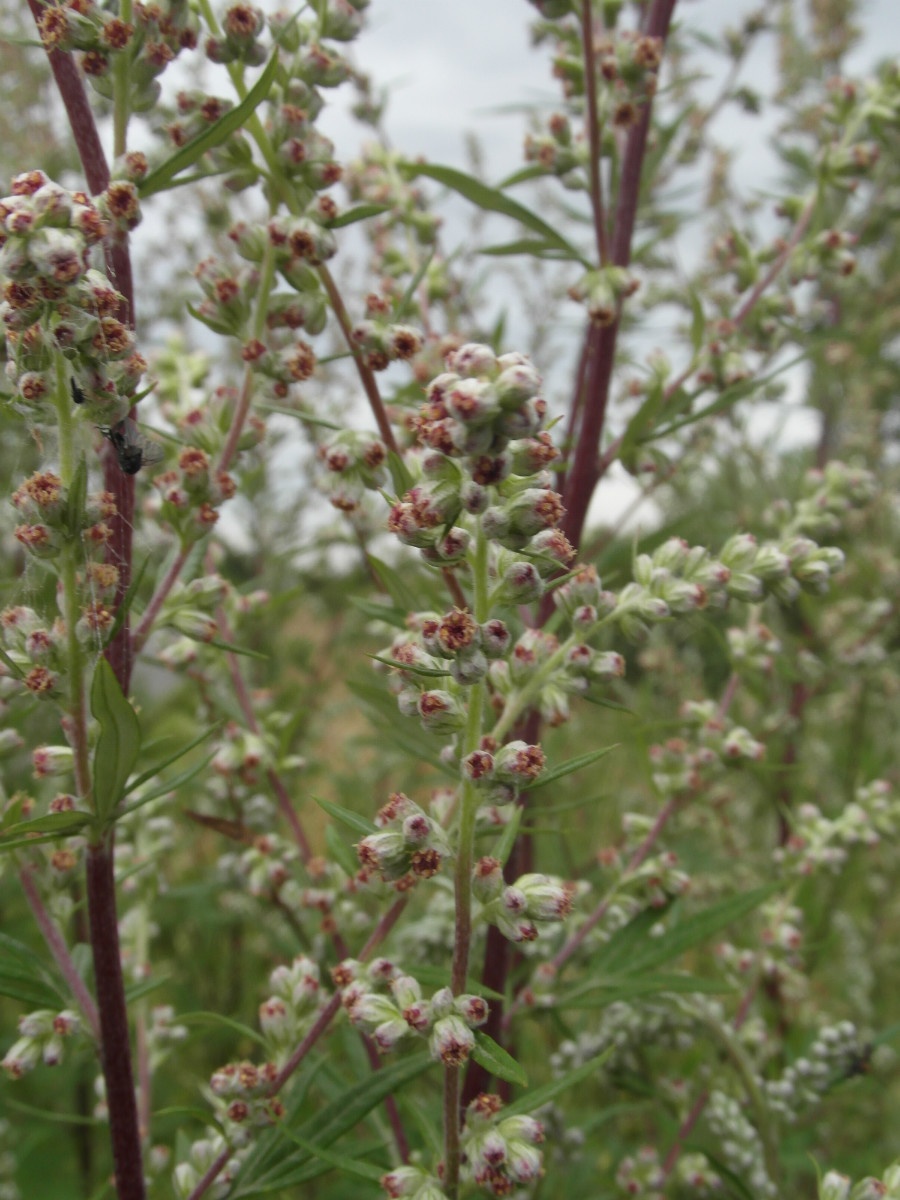
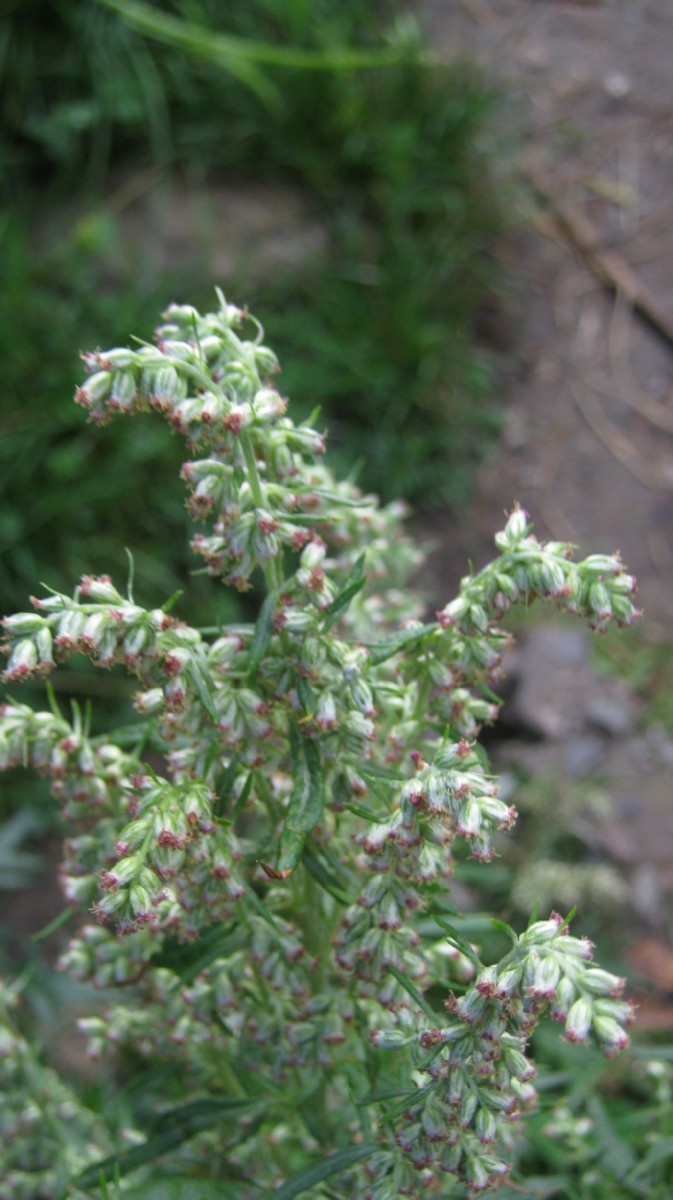
Medium to tall somewhat hairy, tufted plant. Slightly aromatic, erect. The stems often reddish or purplish with a wide pith. Leaves 1 to 2 pinnately lobed, the upper unstalked, dark green above, silvery downy beneath. Flowerheads 3 to 4 mm long reddish-brown, yellowish or purplish, egg shaped, unstalked, borne in panicles.

Mature leaves glabrous, or nearly so, on the upperside
Roadsides, waste ground, embankments etc.
May to September.
Perennial.
Found commonly throughout much of Britain, but mainly coastal in Scotland.
Common in Leicestershire and Rutland. In the 1979 Flora survey of Leicestershire it was found in 381 of the 617 tetrads.
 B4114 Sapcote SP 4935 9250 (taken 14.8.2006).JPG) Graham Calow
Graham Calow
Sapcote
14 August 2006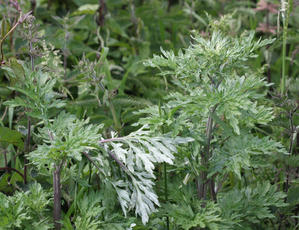 David Nicholls
Hill Hole Quarry
02 June 2011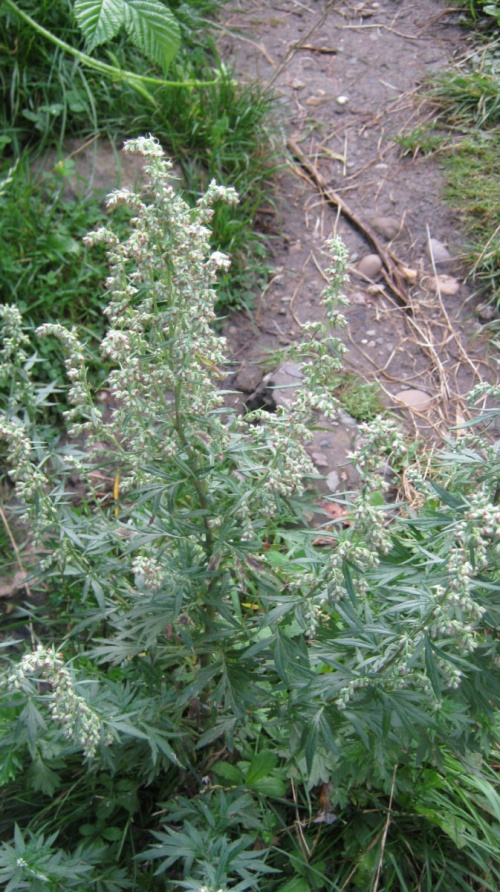 Ruth Dring
Broughton Astley
27 August 2012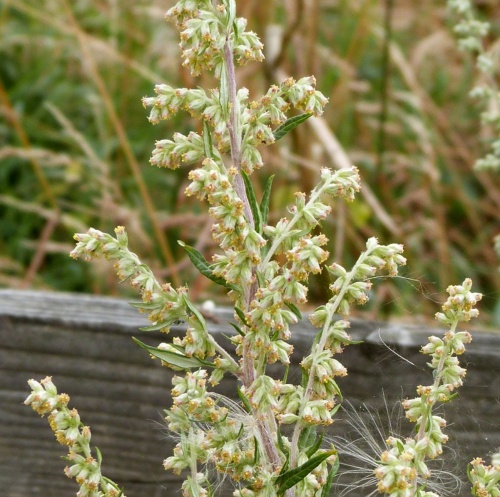 Graham Calow
Road alongside M69, Elmesthorpe
01 August 2016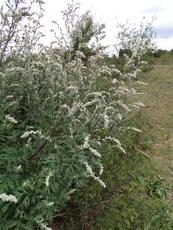 Ron.stevens
Broughton Astley
22 July 2011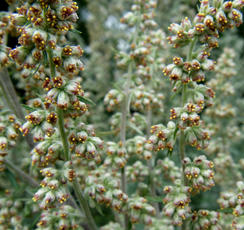 Graham Calow
Sapcote
26 July 2011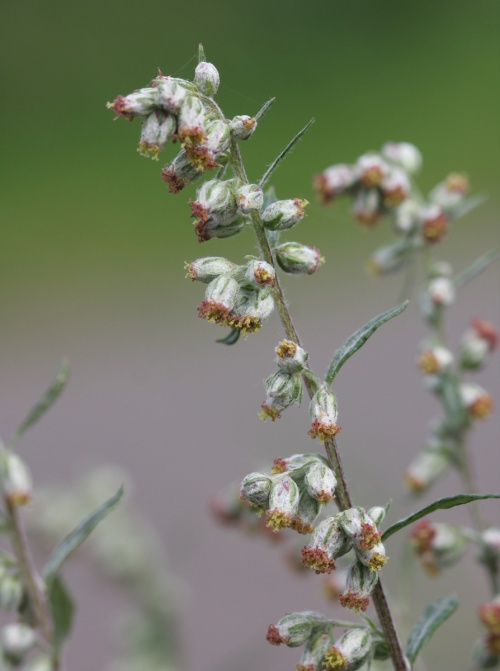 David Nicholls
Burroughs Road, Ratby
18 August 2012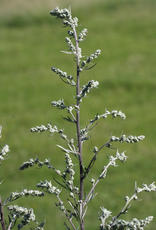 David Nicholls
Ratby Disused Railway
09 July 2011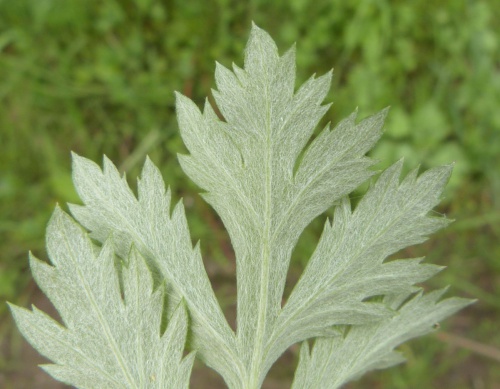 Graham Calow
Countesthorpe Road, Cosby
20 May 2016
 B4114 Sapcote SP 4935 9250 (taken 14.8.2006).JPG)
Leicestershire & Rutland Map
Enter a town or village to see local records
MAP KEY:
Yellow squares = NBN records (all known data)
Coloured circles = NatureSpot records: 2025+ | 2020-2024 | pre-2020
UK Map
Species profile
- Common names
- Mugwort
- Species group:
- flowering plant
- Kingdom:
- Plantae
- Order:
- Asterales
- Family:
- Asteraceae
- Records on NatureSpot:
- 265
- First record:
- 27/05/2000 (MBNHS;Steve Woodward)
- Last record:
- 21/05/2026 (Mabbett, Craig)
Total records by month
% of records within its species group
10km squares with records
The latest images and records displayed below include those awaiting verification checks so we cannot guarantee that every identification is correct. Once accepted, the record displays a green tick.
In the Latest Records section, click on the header to sort A-Z, and again to sort Z-A. Use the header boxes to filter the list.
Latest images
Latest records
 HAPeacock
Gilroes Cemetery Extension
26 June 2012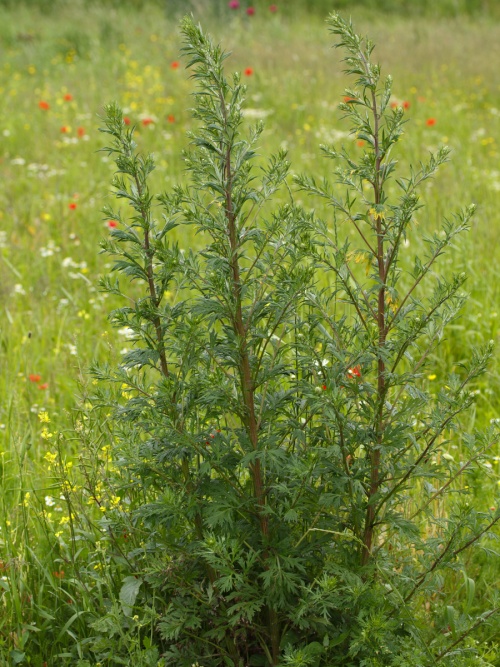 HAPeacock
Gilroes Cemetery Extension
26 June 2012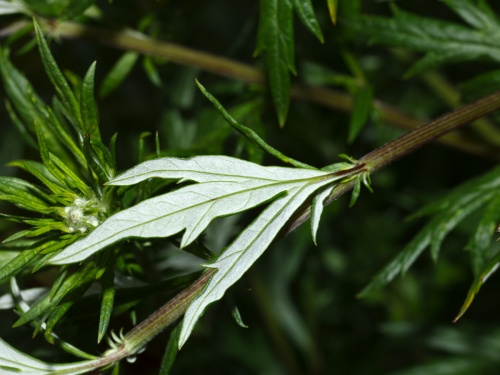 HAPeacock
Gilroes Cemetery Extension
26 June 2012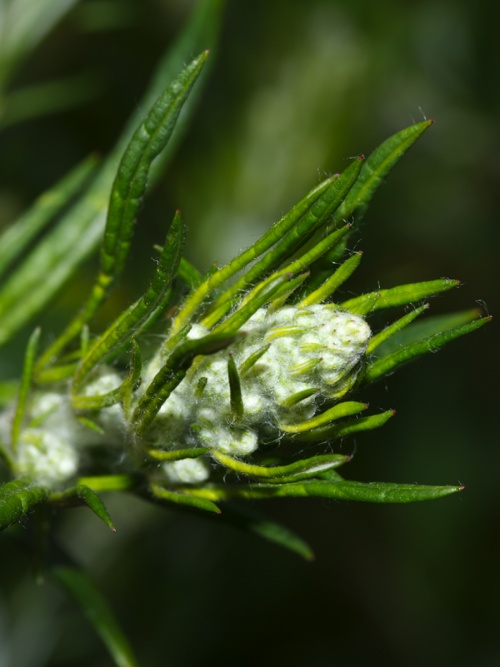 HAPeacock
Gilroes Cemetery Extension
26 June 2012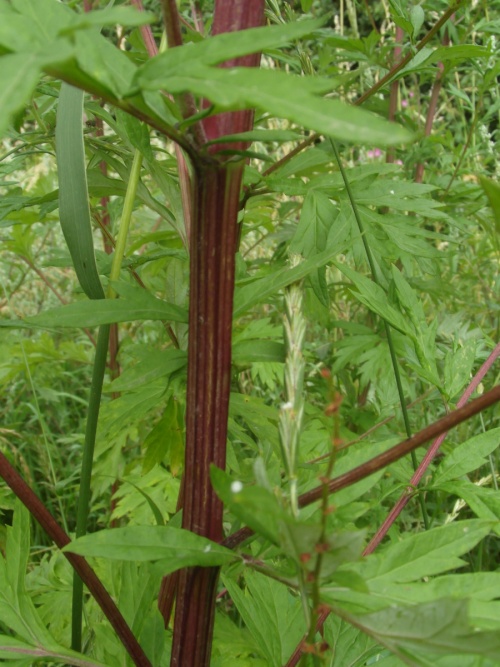 Alan Semper
Harby, Colston La verge
01 August 2012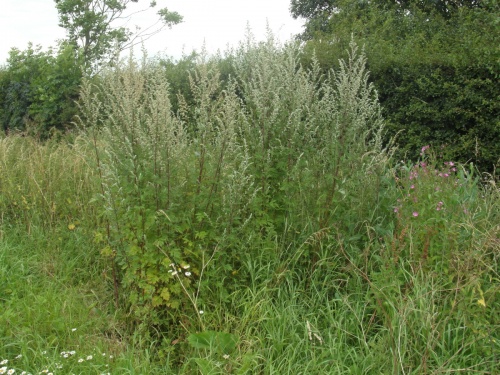 Alan Semper
Harby, Colston La verge
01 August 2012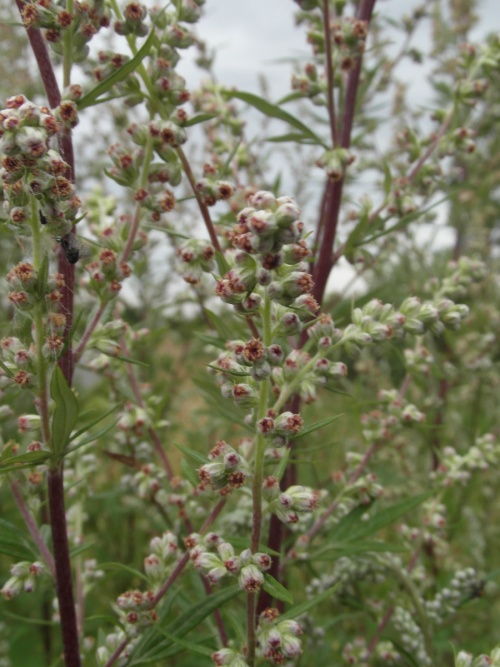 Alan Semper
Harby, Colston La verge
01 August 2012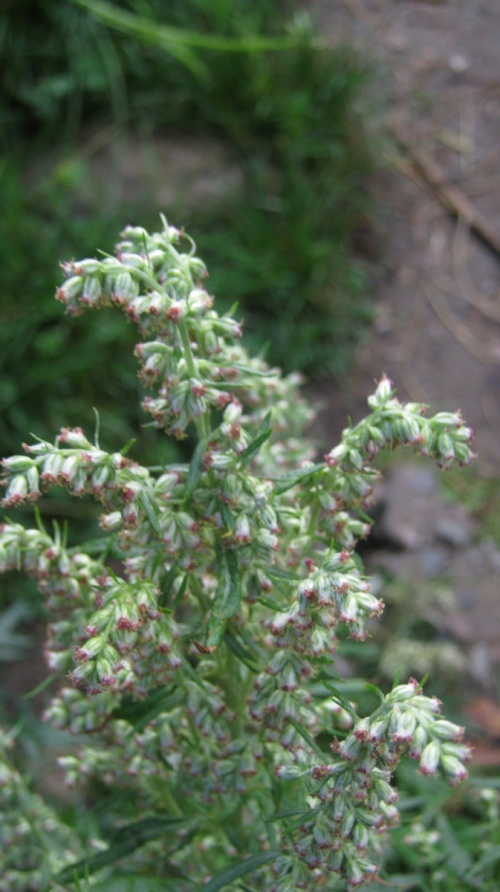 Ruth Dring
Broughton Astley
27 August 2012
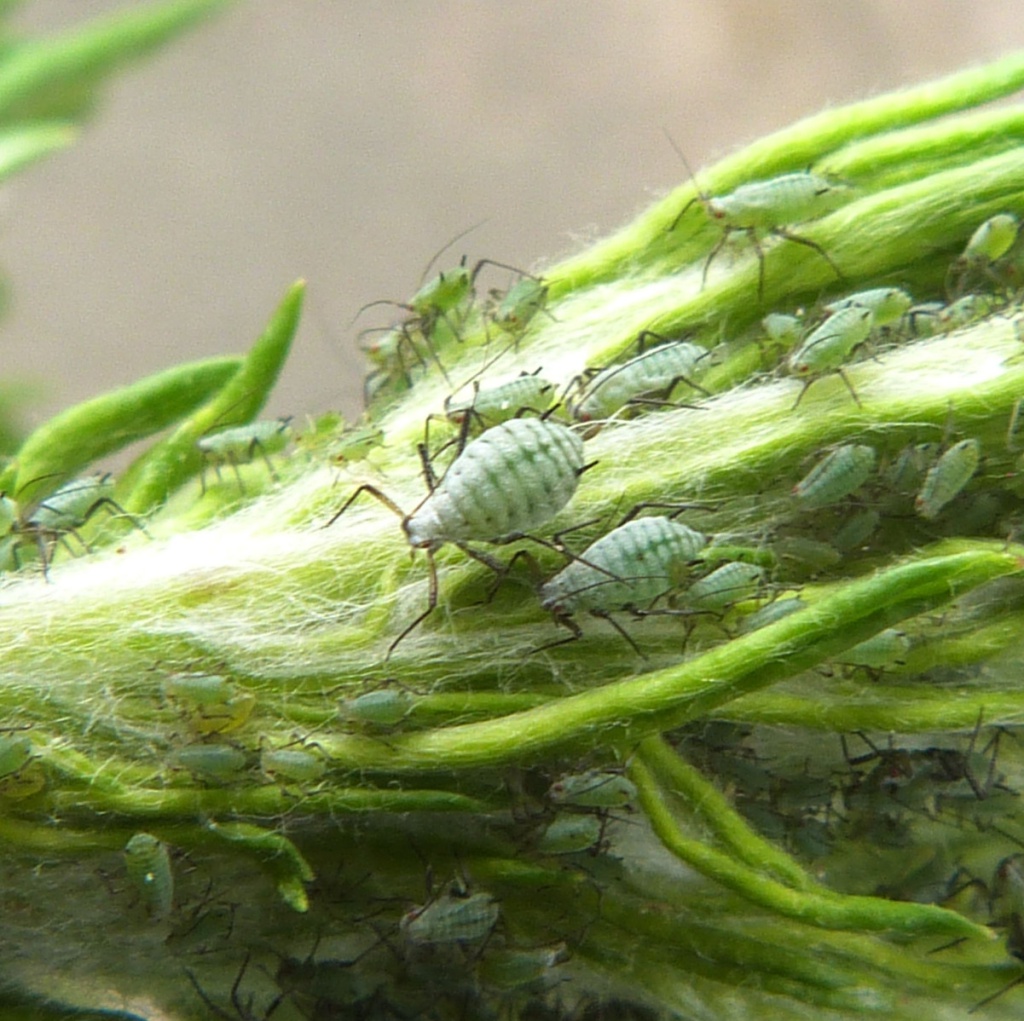
Mugwort Aphid
The Mugwort Aphid (Macrosiphoniella artemisiae) lives on the upper parts of Mugwort (Artemisia vulgaris) especially amongst the flowers. Sexual forms occur in the autumn, and the species overwinters as eggs.
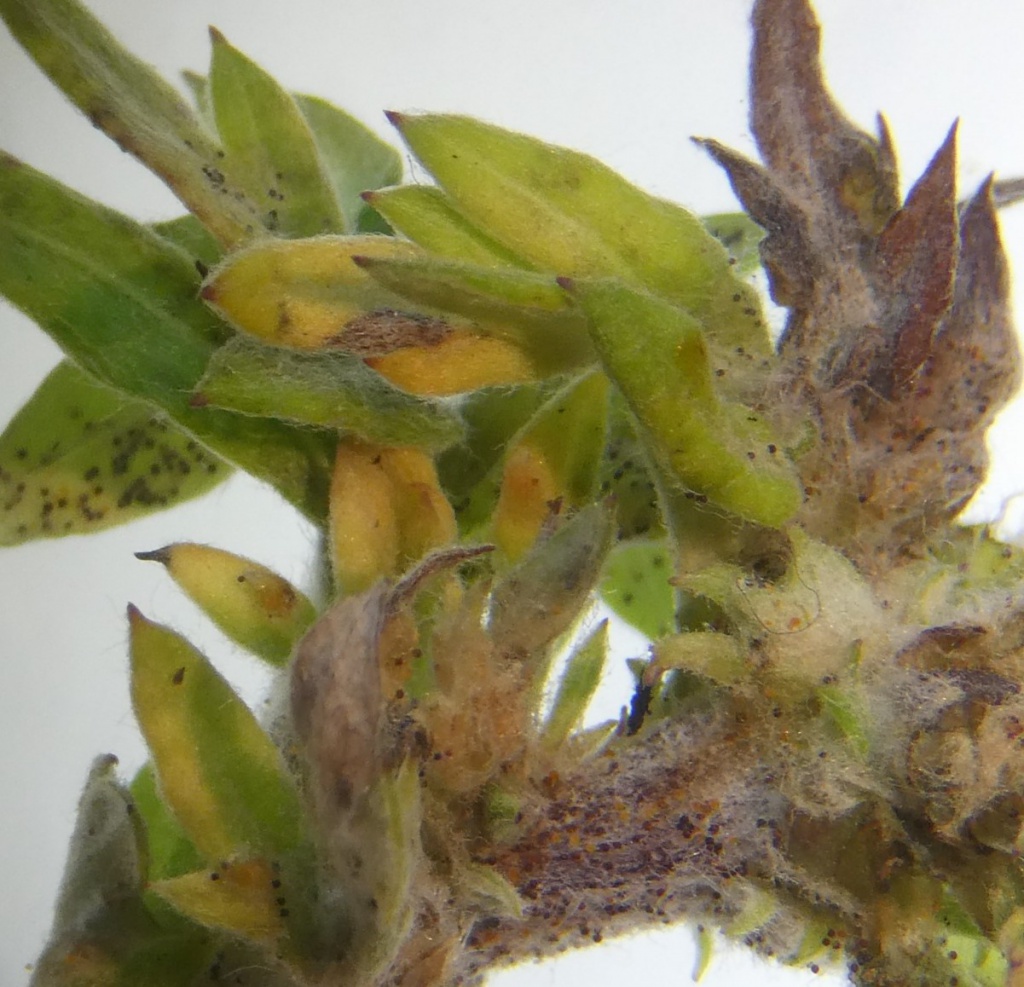
Rhopalomyia foliorum
The larvae of the midge Rhopalomyia foliorum cause small oval galls, about 2 mm long, first on the stem or leaf of Artemisia (Mugwort) and then generally at the upperside of a thick vein. Eventually the plant may become distorted with leaves bunching. Larva is orange.
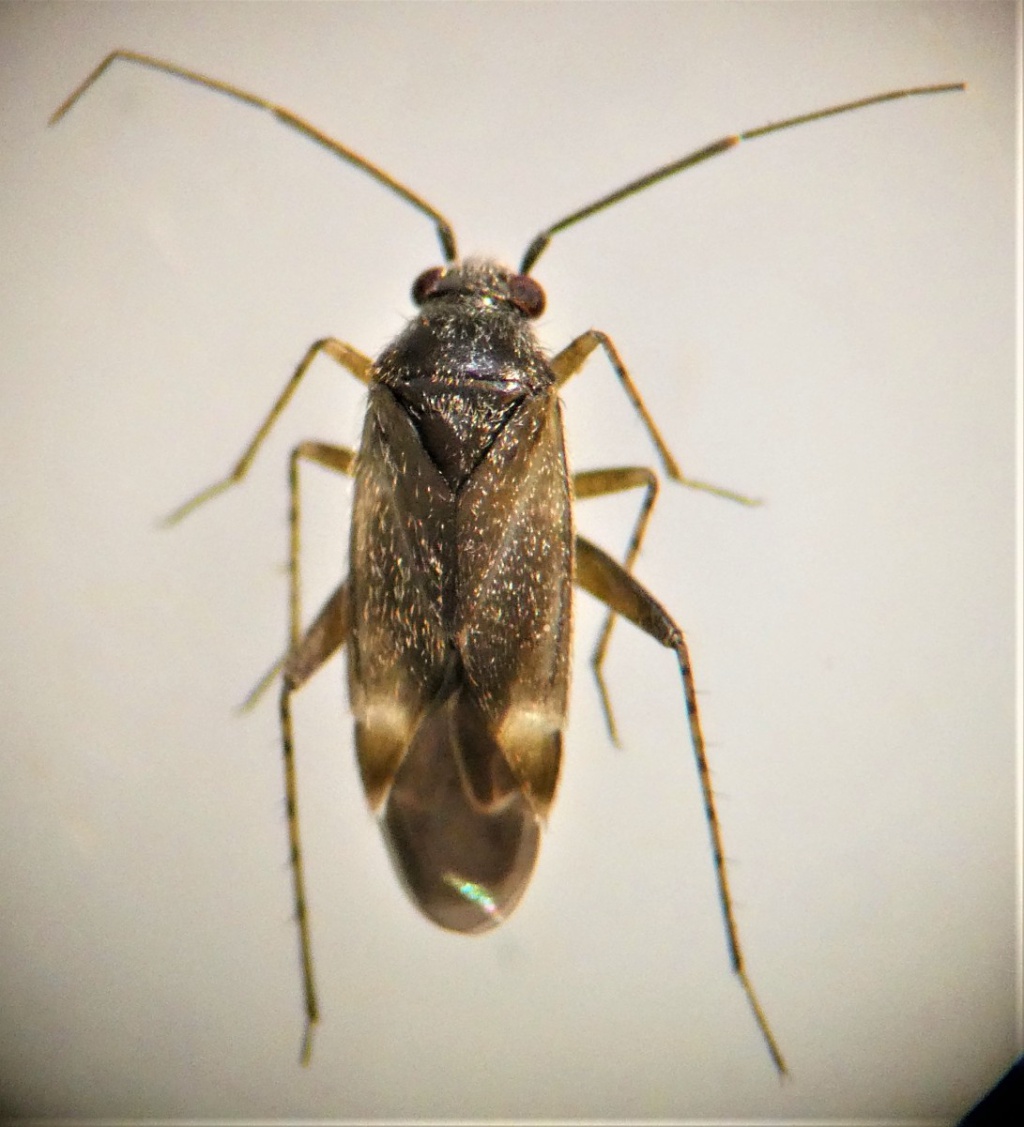
Europiella artemisiae
A small (c. 3mm) greyish bug found on Mugwort (Artemisia vulgaris). The basal segments of the antennae are black, and there is a pale mark on the cuneus. The dorsal surface has pale hairs. The tibial spines arise from dark spots.
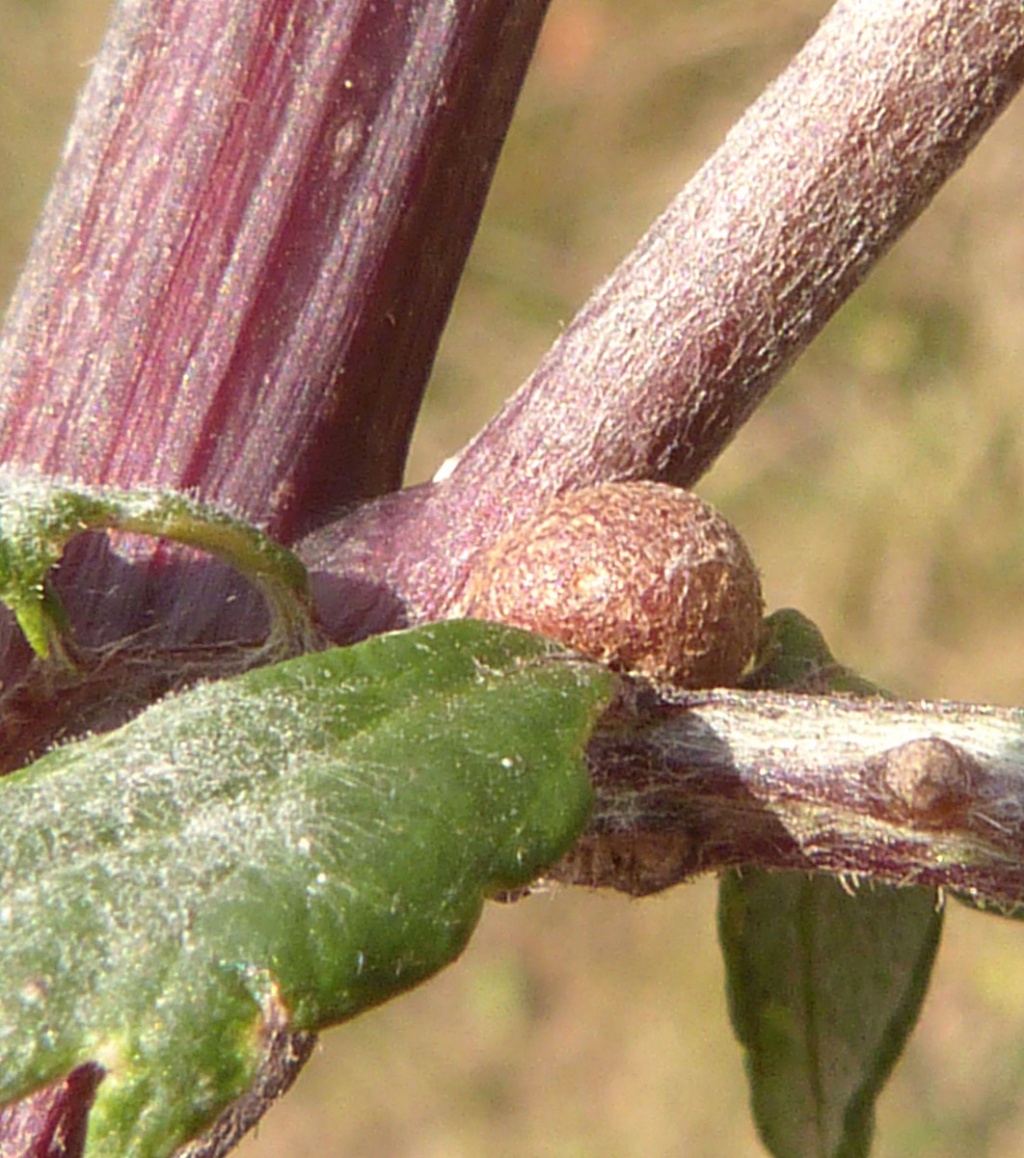
Rhopalomyia baccarum
The larva of the gall midge Rhopalomyia baccarum cause galls on Artemisia species such as Mugwort. The gall affects buds, mainly those near the very base of the stem, which become swollen into a berry-like, fleshy and juicy gall, usually 2 to 6 mm, sometimes slightly larger. The gall contains a solitary, orange larva. Pupation occurs within the gall.
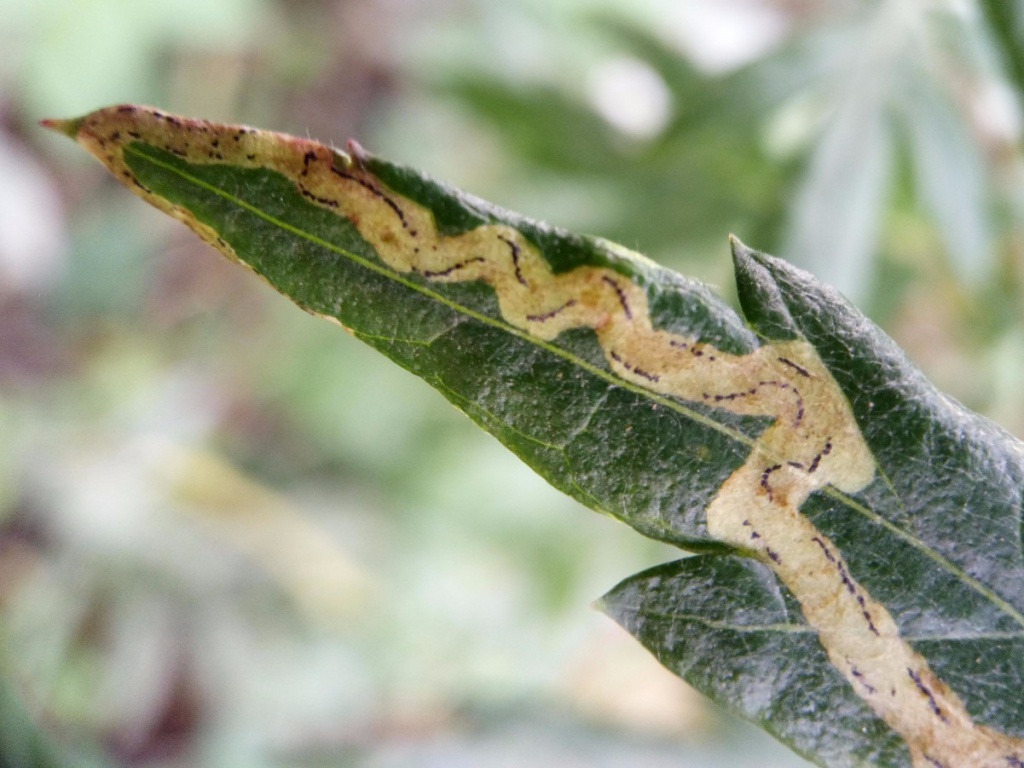
Phytomyza artemisivora
The larva of the Agromyzid fly Phytomyza artemisivora mines the leaves of Mugwort and other plants in the genus Artemisia, and also Chrysanthemum species. They form mines with a long corridor, often partly following the leaf veins or margin. The frass consists of separate grains resembling a string of pearls. This species forms a black puparium, distinguishing it from Liriomyza spp.. which form similar mines but have an orangey-yellow puparium.
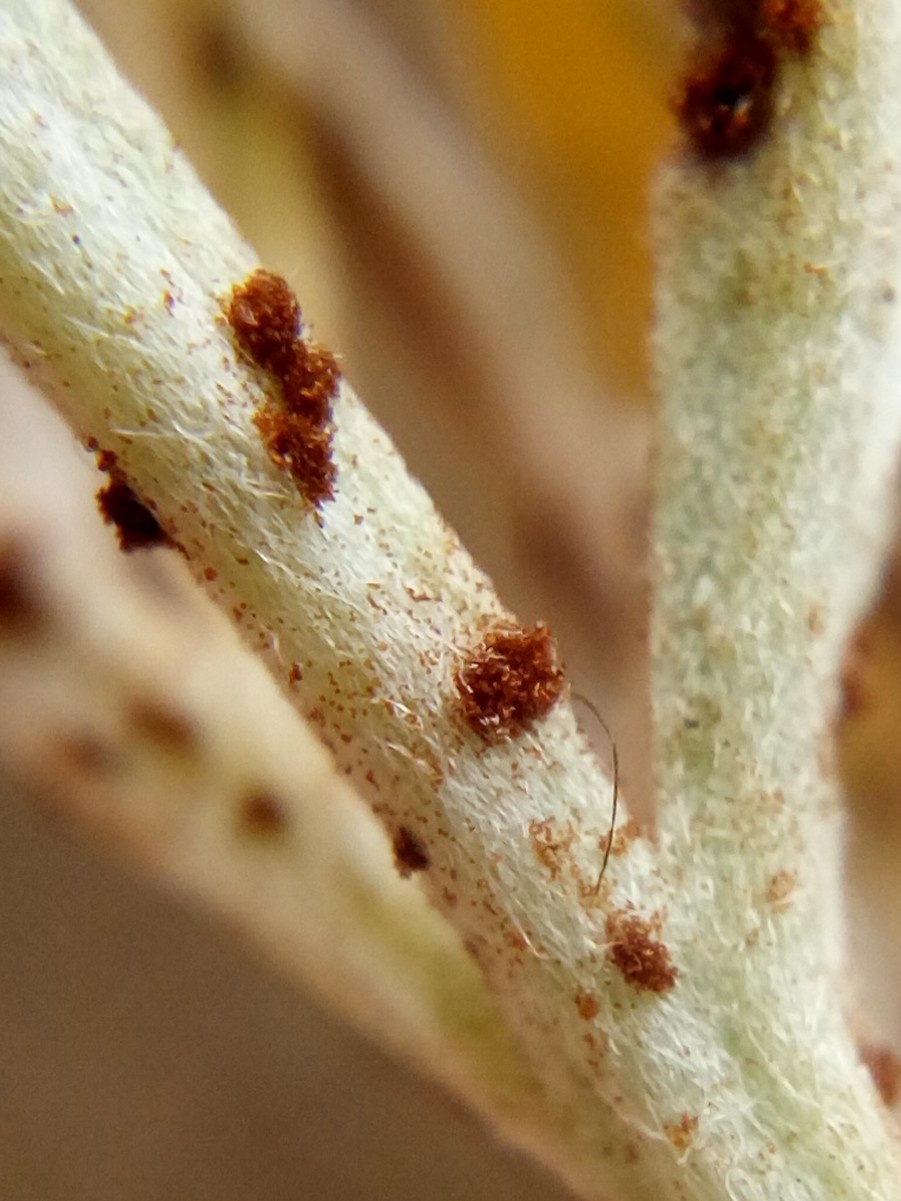
Puccinia tanaceti s.lat.
Puccinia tanaceti is a rust fungus that affects the leaves of Tansy, Feverfew and Mugwort (Tanacetum, Artemisia), with brown uredinia and darker telia on both sides of the leaf. There is no host alternation, and spermagonia and aecia are not formed. It is not considered to be a gall-causer.
Taxonomy is complex, and some authors consider that a range of different species affect Artemisia.

Macrosiphoniella absinthii
The aphid Macrosiphoniella absinthii is associated with Wormwood and other Artemisia species such as Mugwort. The apterae have a body length of 1.7 to 2.5 mm. It is reddish-brown and wax-powdered. It has a black head, antennae, legs, siphunculi and cauda, and a black spot in the centre of the abdomen which is highlighted by a white surround of powdered wax. The siphunculi are very thick and short.
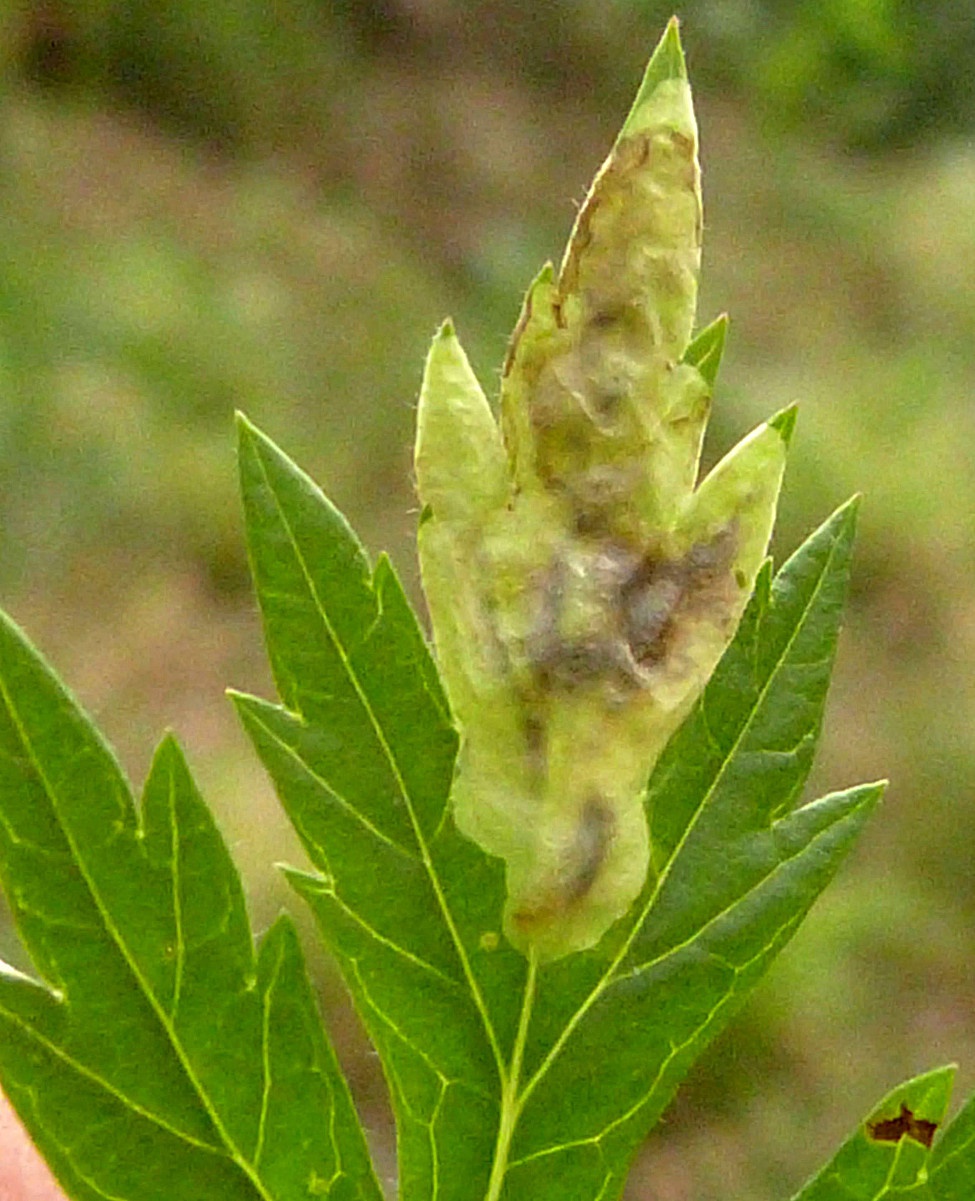
Calycomyza artemisiae
The larva of the Agromyzid fly Calycomyza artemisiae mines the leaves of Mugwort and some related plant species. The mine is an opaque, pale upper-surface blotch.
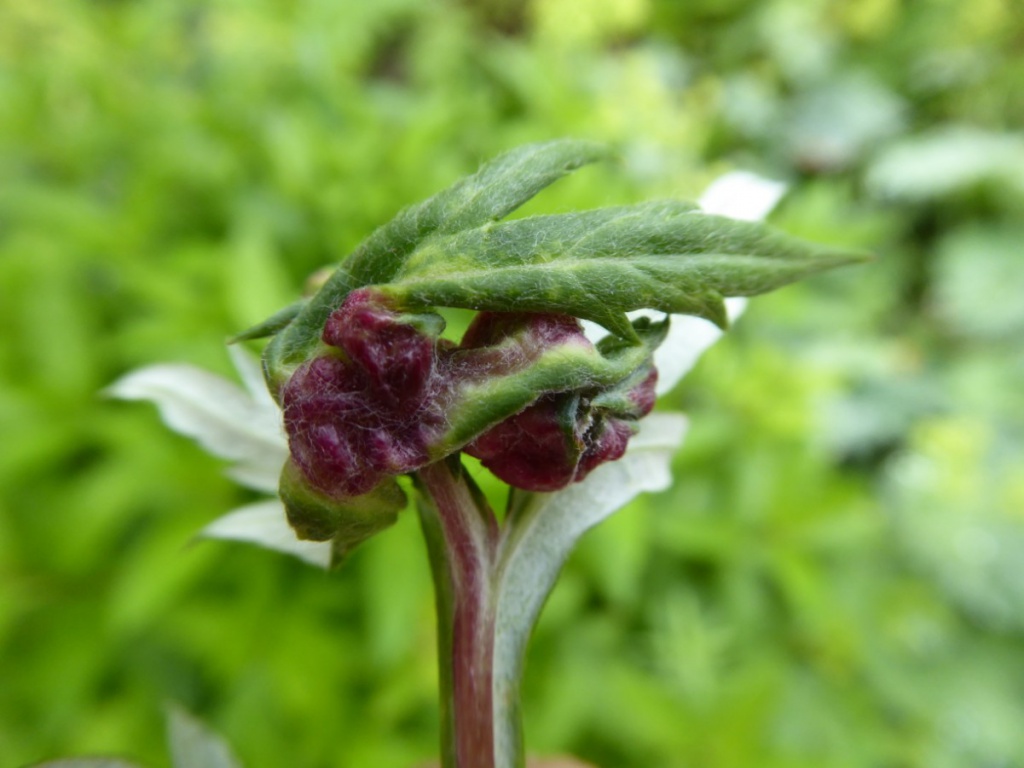
Cryptosiphum artemisiae
The aphid Cryptosiphum artemisiae forms, and lives within, red globular leaf galls on Mugwort (Artemisia vulgaris).