

Hypomyces aurantius
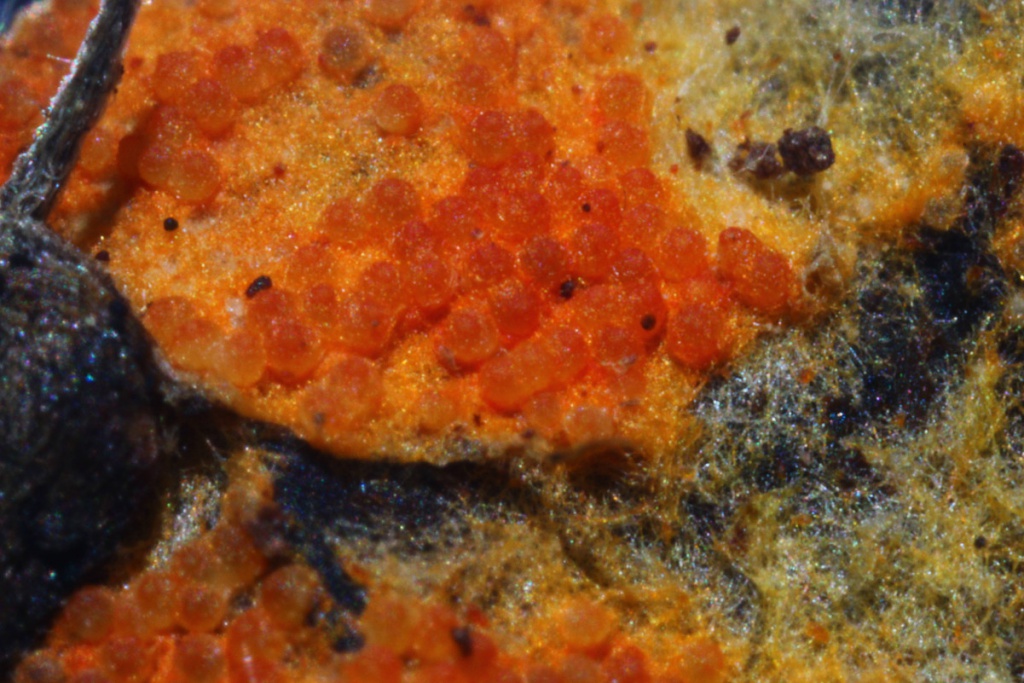
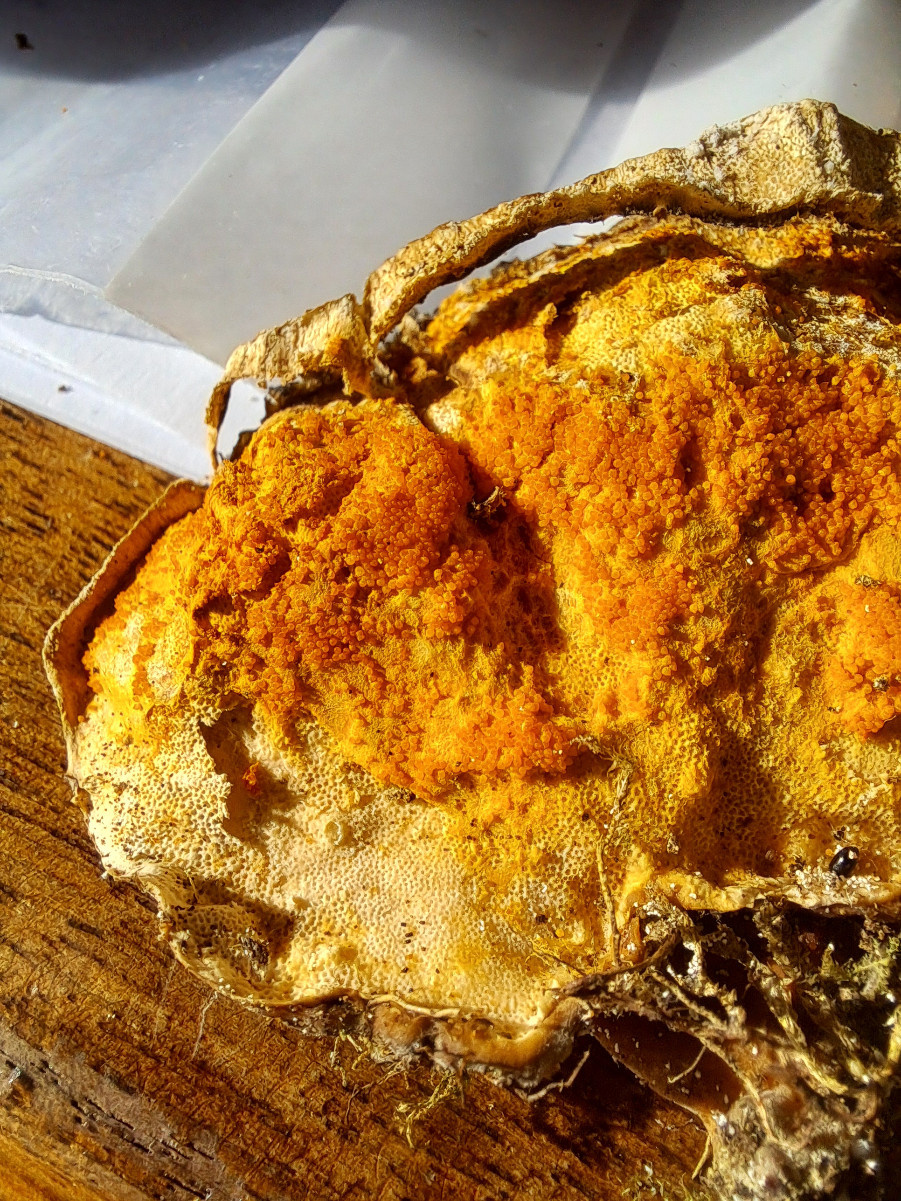
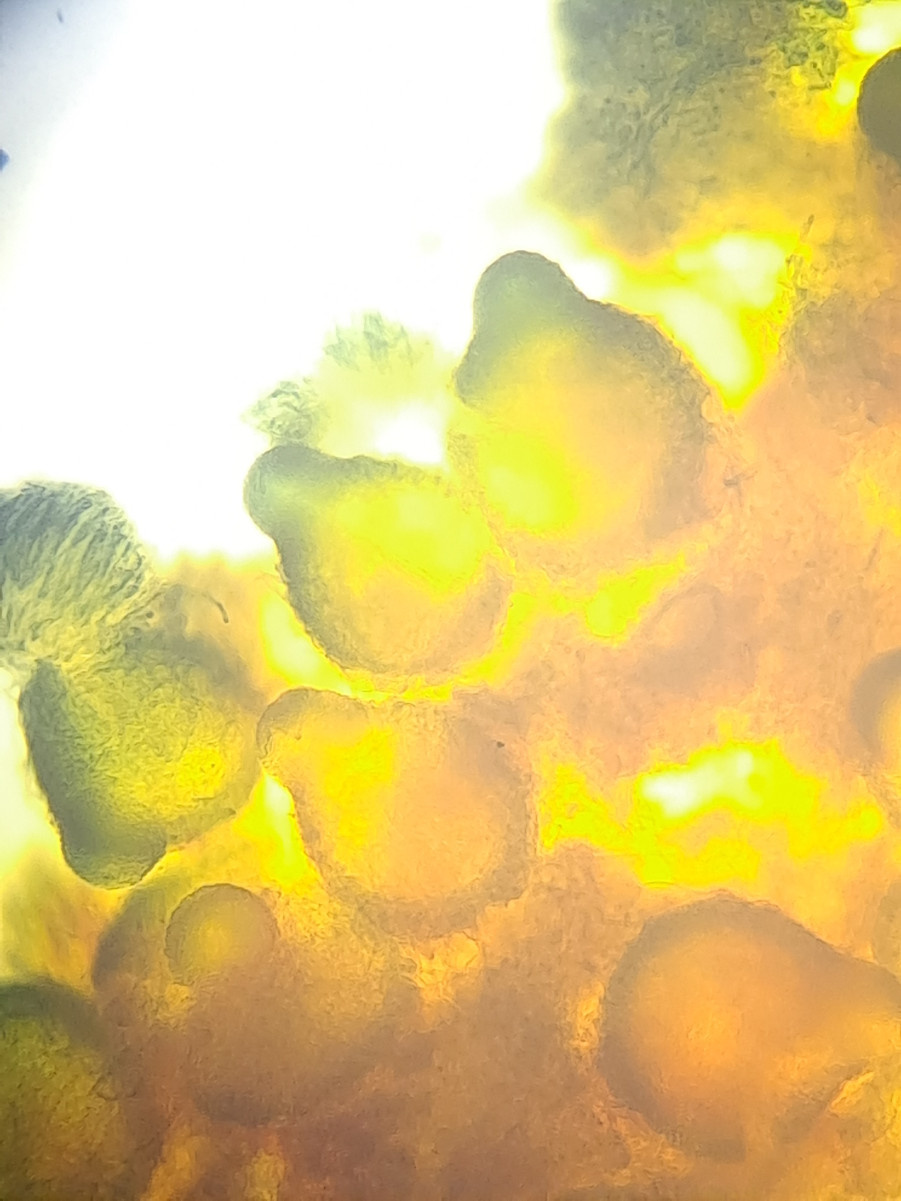
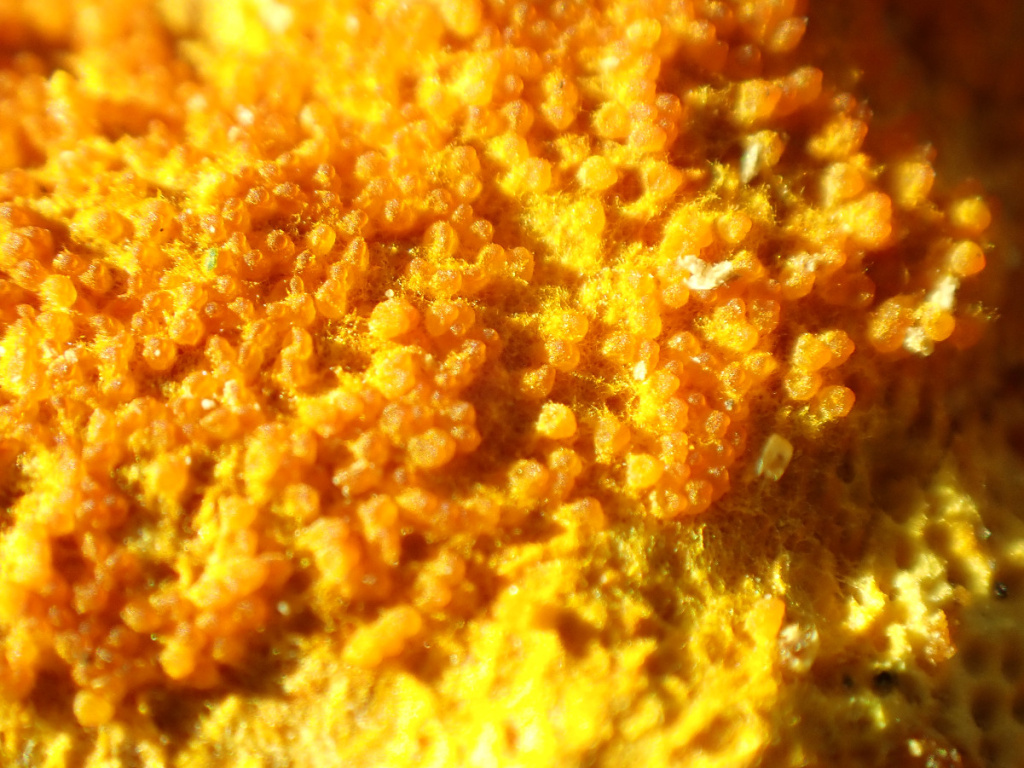
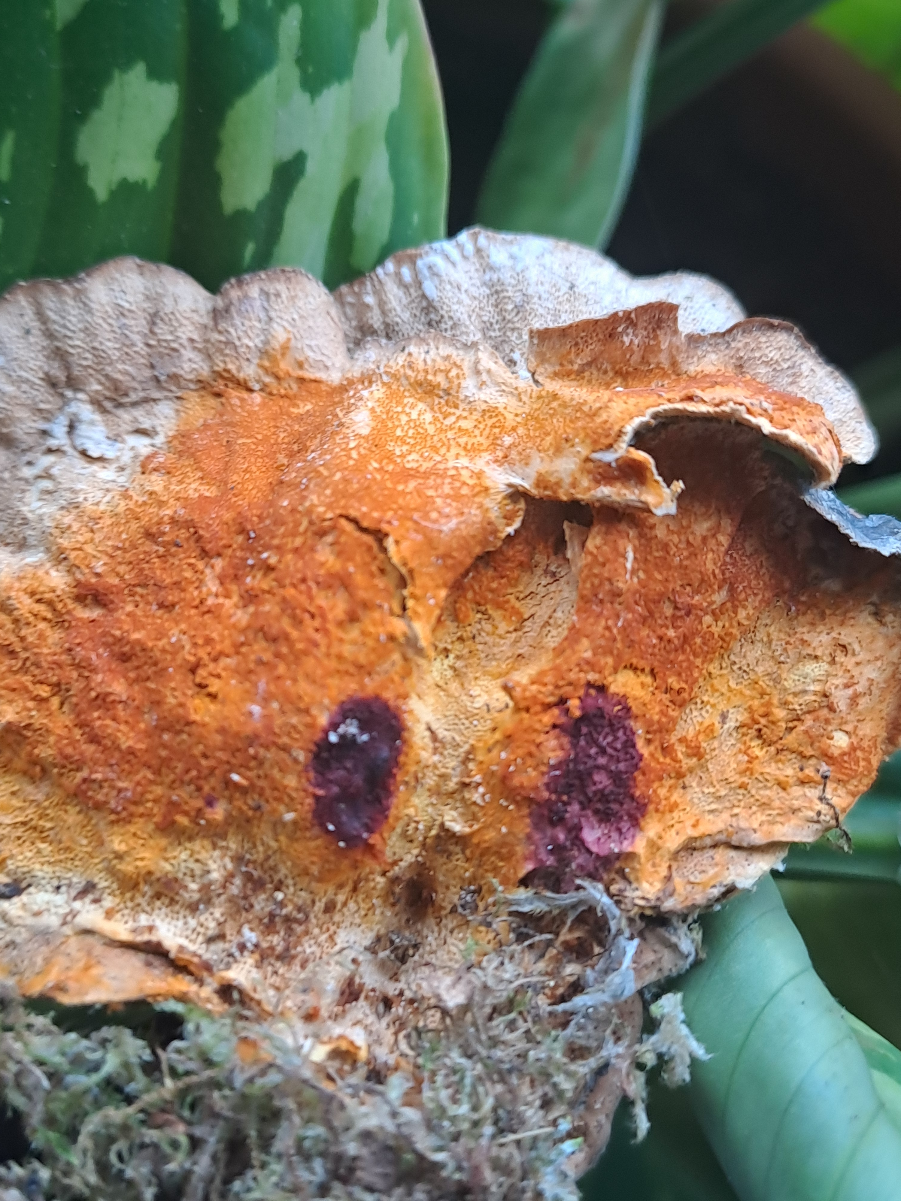
The asexual stage produces hyaline conidia; originally these were given the name 'Cladobotryum' before the connection with the sexual state was understood. The sexual stage is more often recorded; it is parasitic on old polypores, and produces a dense pimply crust of orange perithecia in a loose cobwebby white subiculum over the surface of the polypore. The perithecia are pear-shaped and stain purple with Potassium Hydroxide (KOH). Ascospores are released from the perithecia; these are two-celled, long and with sharp pointed ends.
host/microscopy 
Microscopic examination and treatment with KOH is needed. Note habitat and substrate.
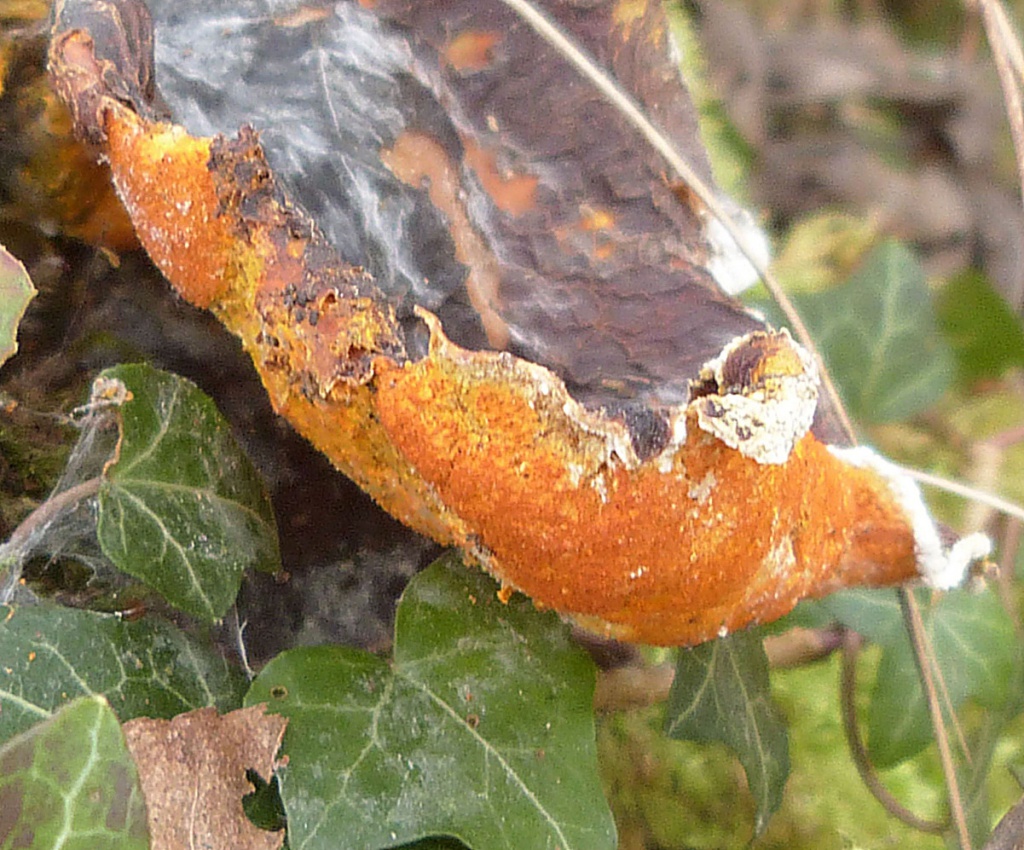
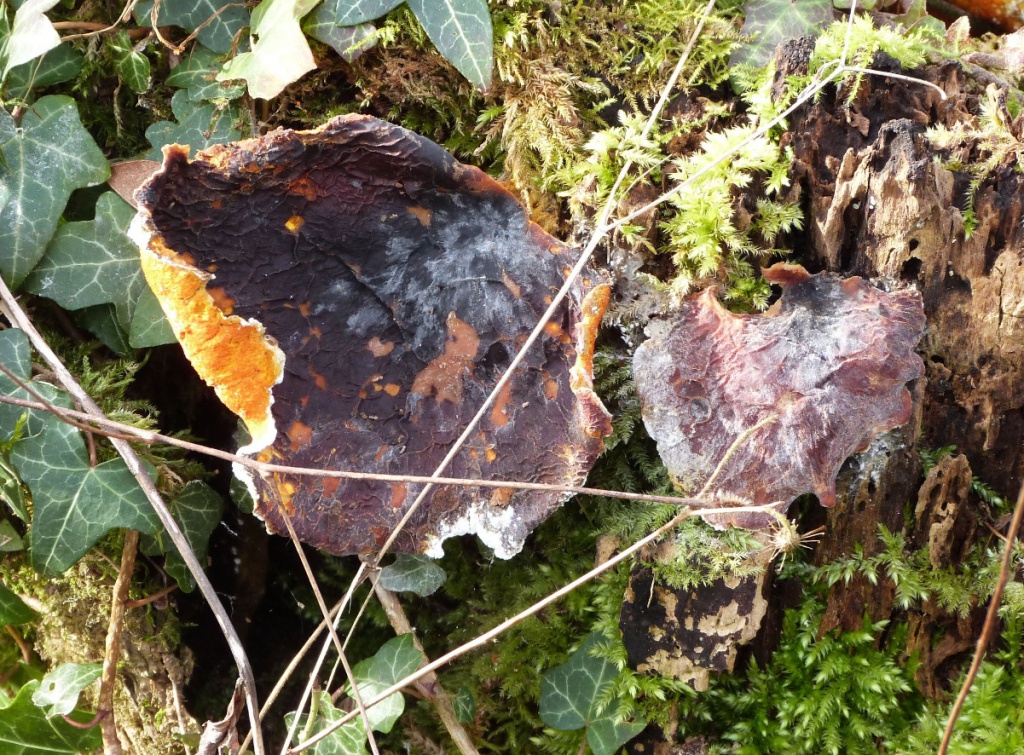
Grows densely clustered on the fungal fruit bodies of rotting polypores (bracket fungi).
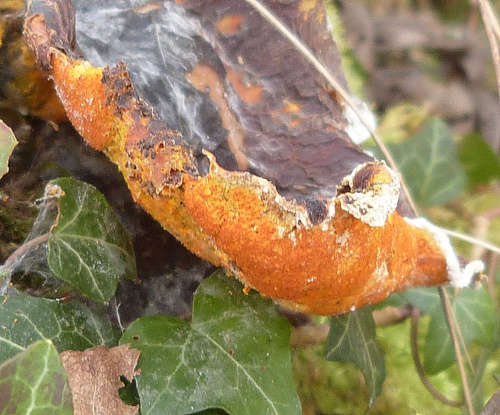 Graham Calow
Burbage Wood
21 February 2017
growing on old polypore fungus
conf. P Thompson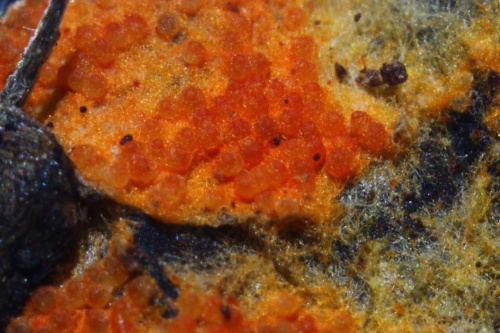 Peter Thompson
Lucas' Marsh
17 July 2013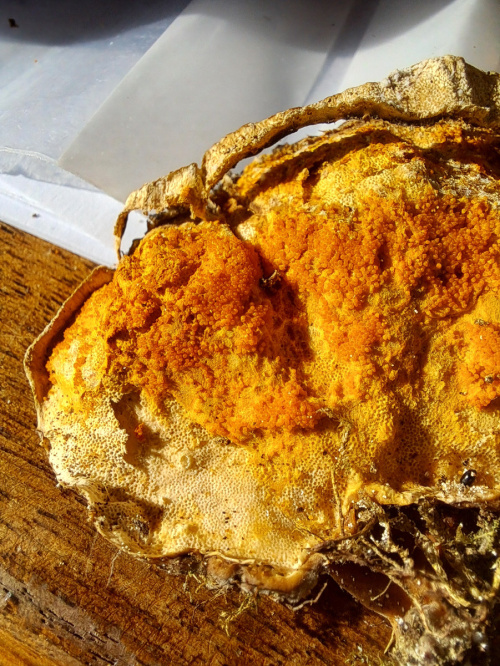 Melinda Bell
Willesley Wood
02 April 2026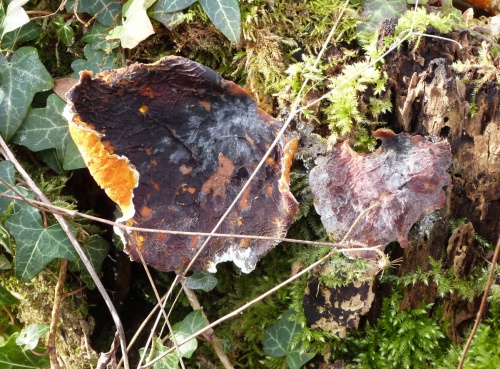 Graham Calow
Burbage Wood
21 February 2017
growing on old polypore fungus
conf. P Thompson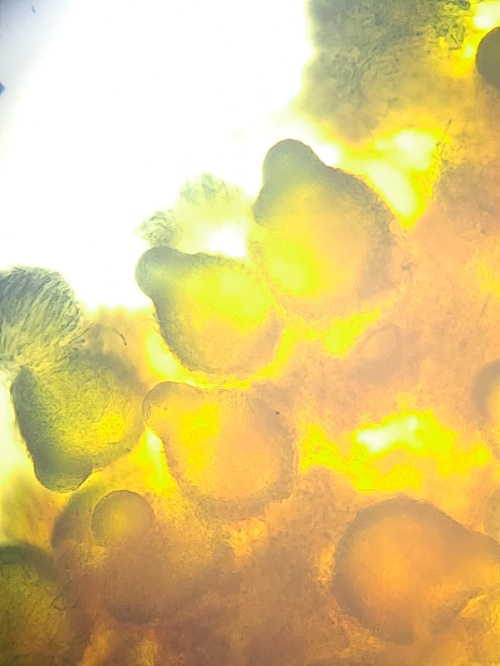 Melinda Bell
Willesley Wood
02 April 2026
perithecia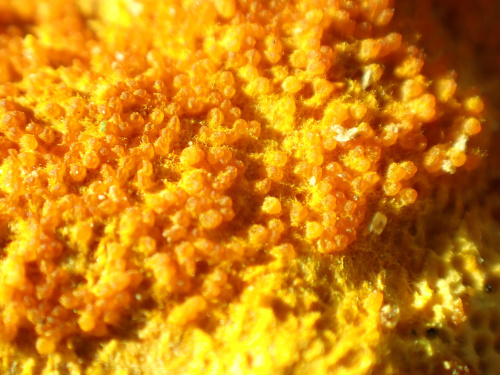 Melinda Bell
Willesley Wood
02 April 2026
perithecia in mat of hyphae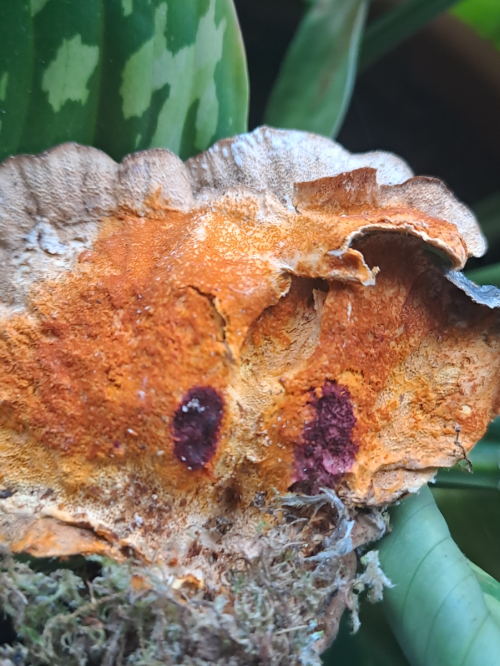 Melinda Bell
Willesley Wood
02 April 2026
reaction with KOH
Leicestershire & Rutland Map
Enter a town or village to see local records
MAP KEY:
Yellow squares = NBN records (all known data)
Coloured circles = NatureSpot records: 2025+ | 2020-2024 | pre-2020
UK Map
Species profile
- Common names
- Orange Polypore Mould
- Species group:
- fungus
- Kingdom:
- Fungi
- Order:
- Hypocreales
- Family:
- Hypocreaceae
- Records on NatureSpot:
- 3
- First record:
- 17/07/2013 (Thompson, Peter)
- Last record:
- 02/04/2026 (Bell, Melinda)
Total records by month
% of records within its species group
10km squares with records
The latest images and records displayed below include those awaiting verification checks so we cannot guarantee that every identification is correct. Once accepted, the record displays a green tick.
In the Latest Records section, click on the header to sort A-Z, and again to sort Z-A. Use the header boxes to filter the list.