

Heath Waxcap - Gliophorus laetus
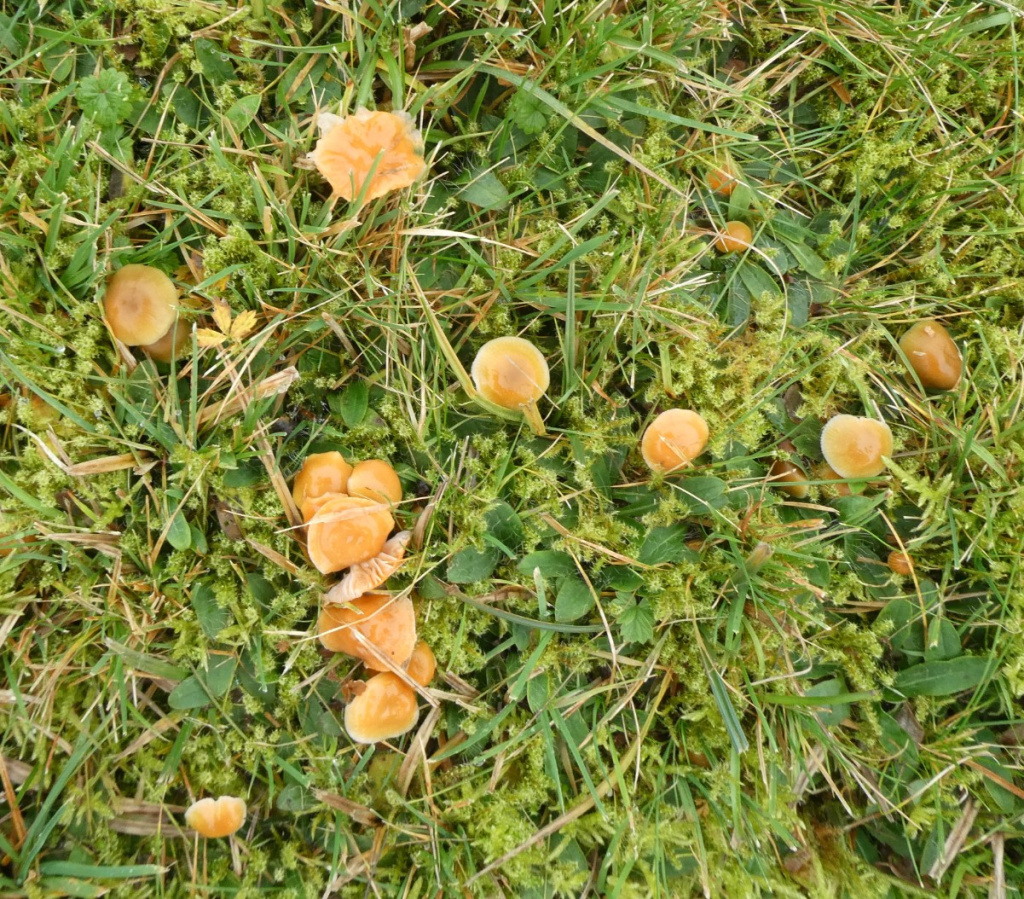
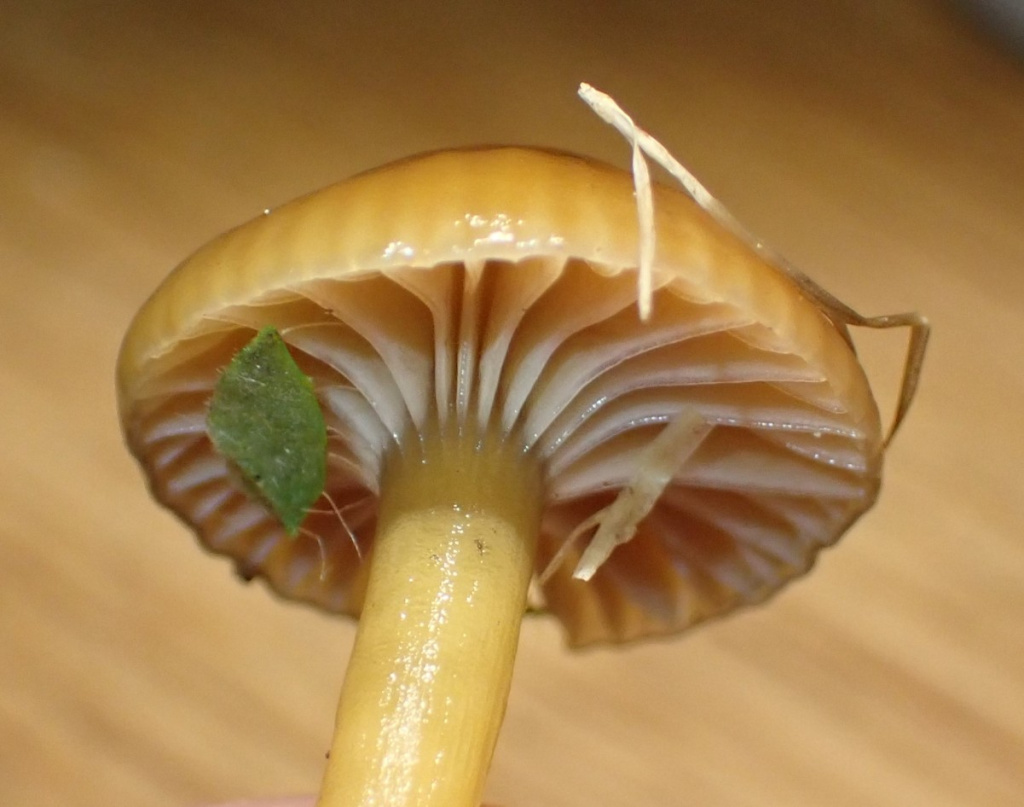
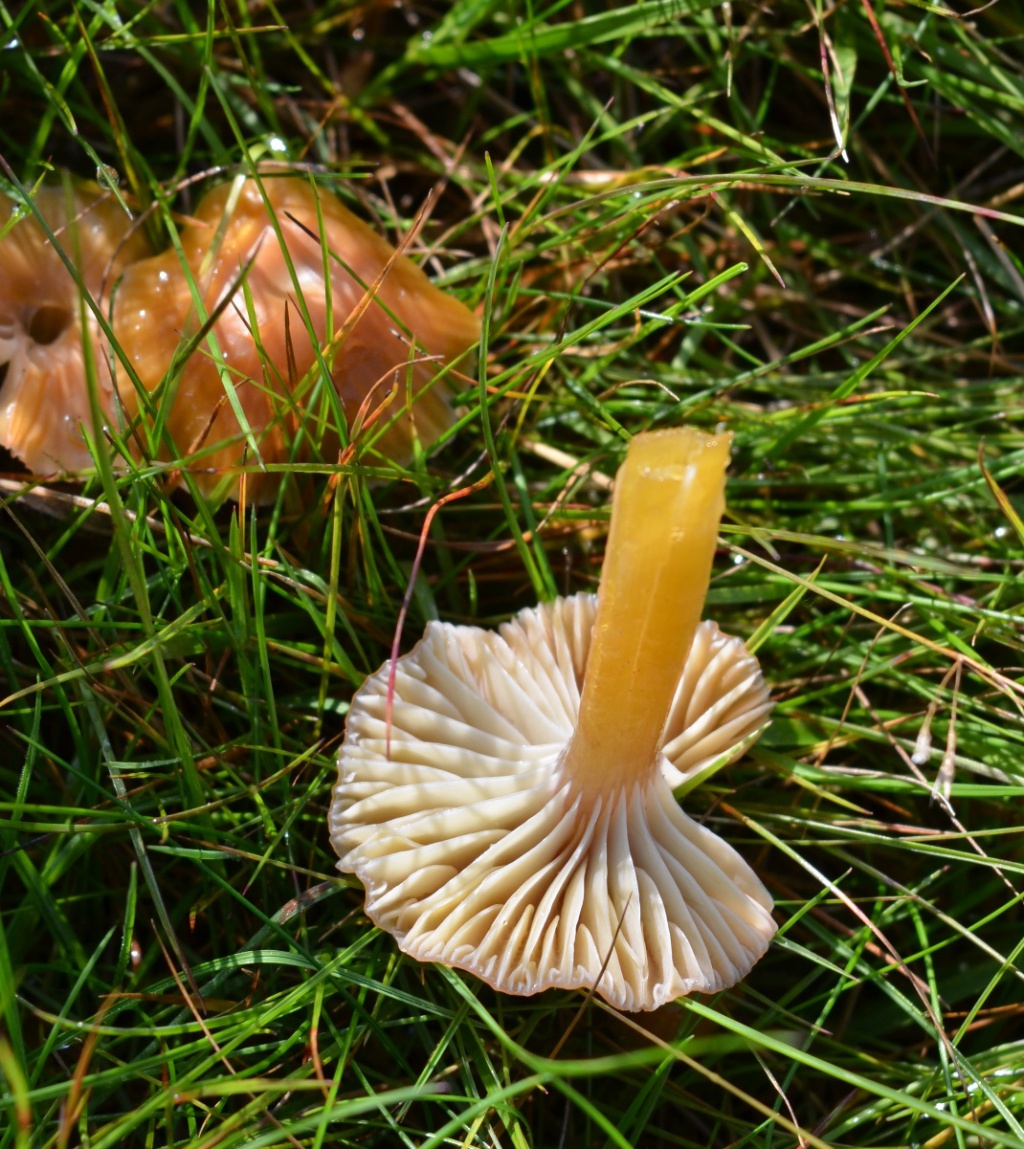
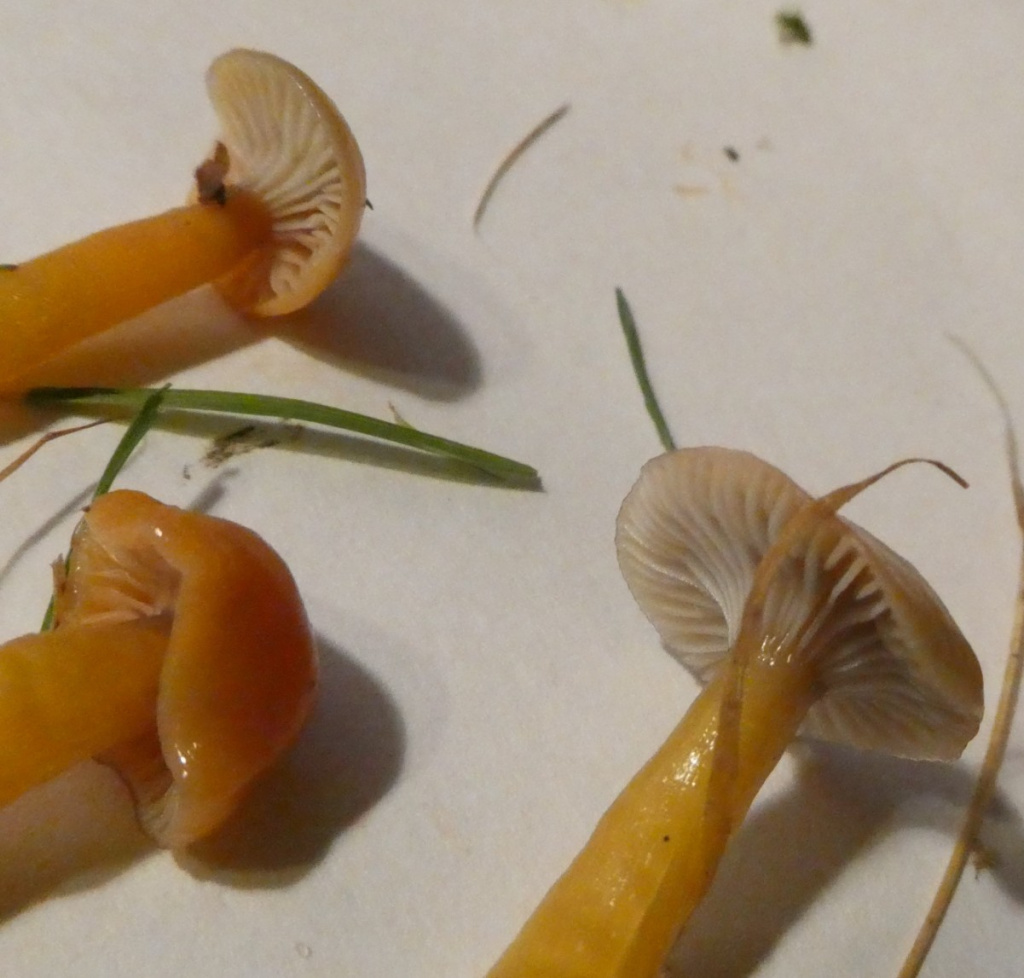
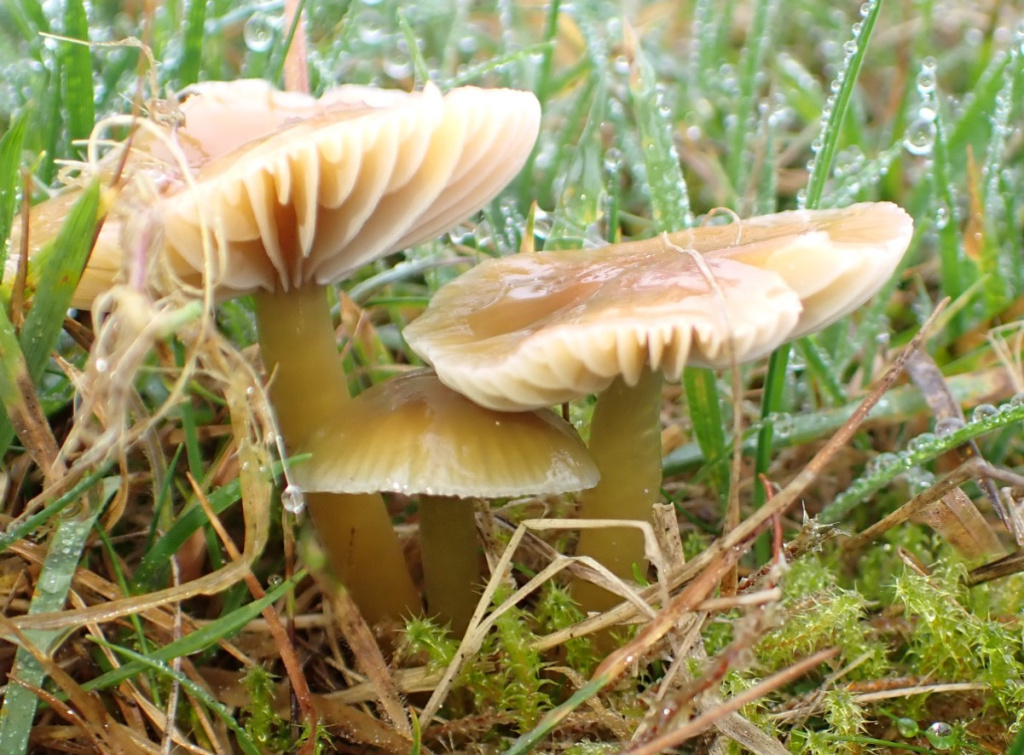
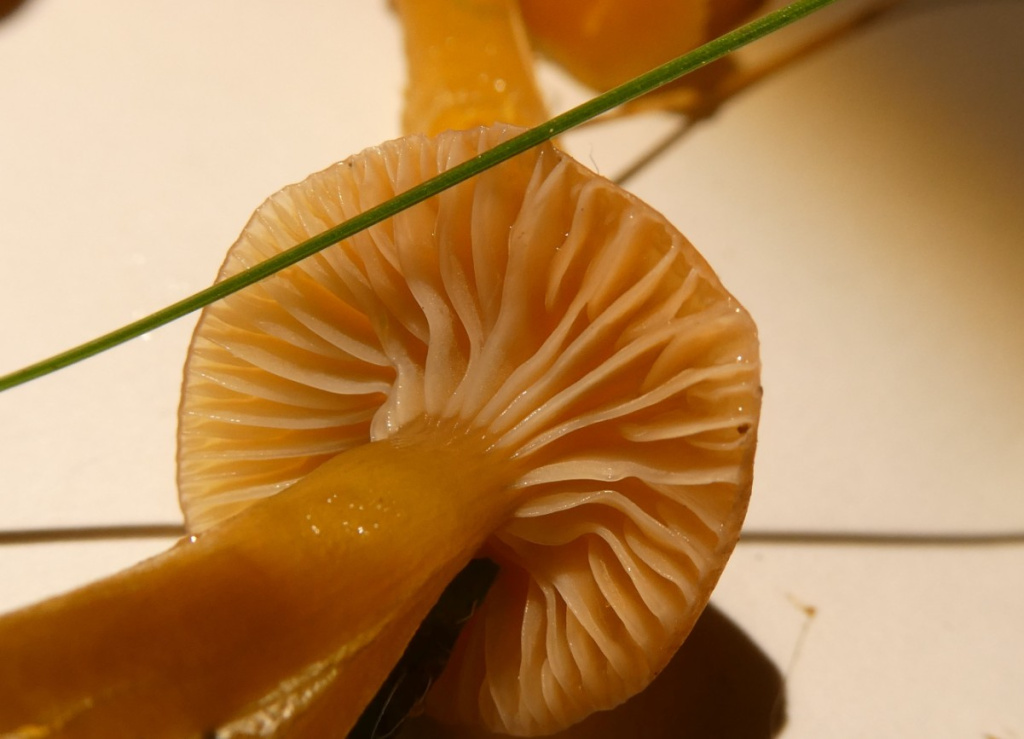
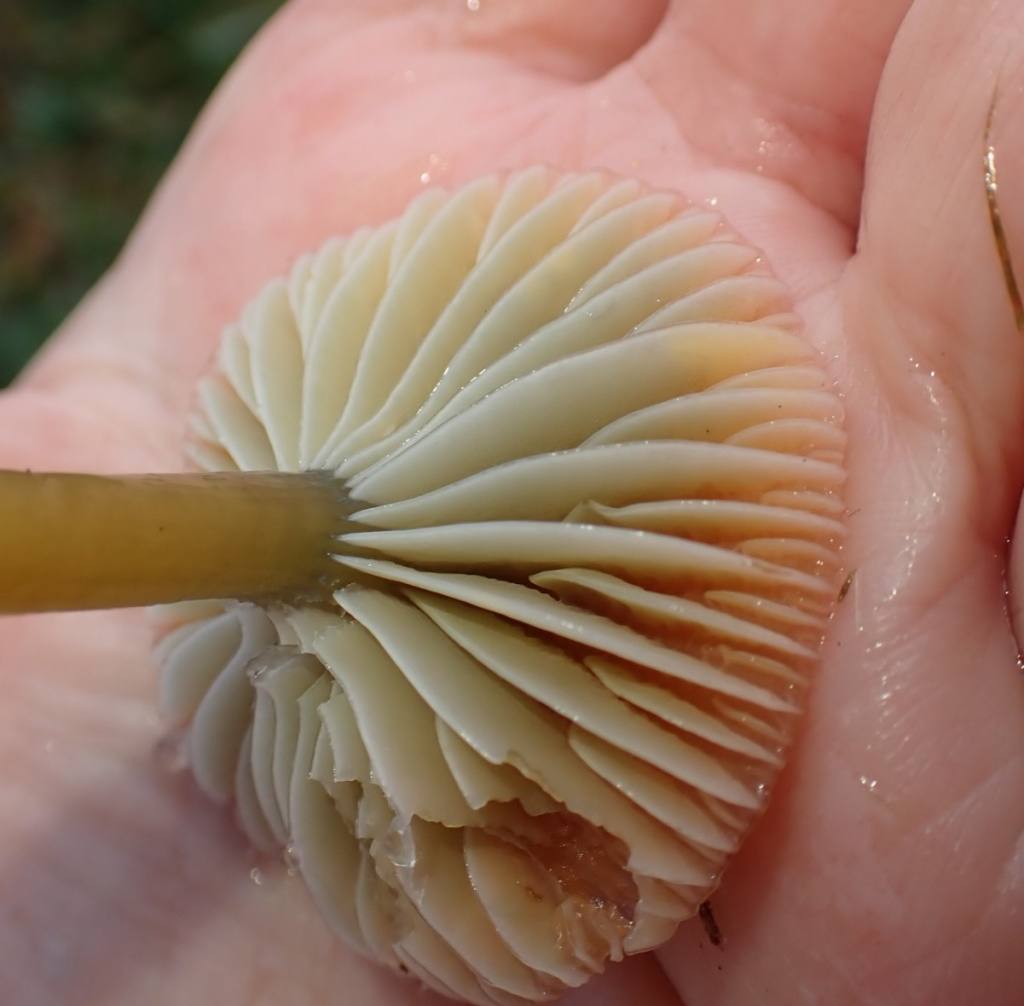
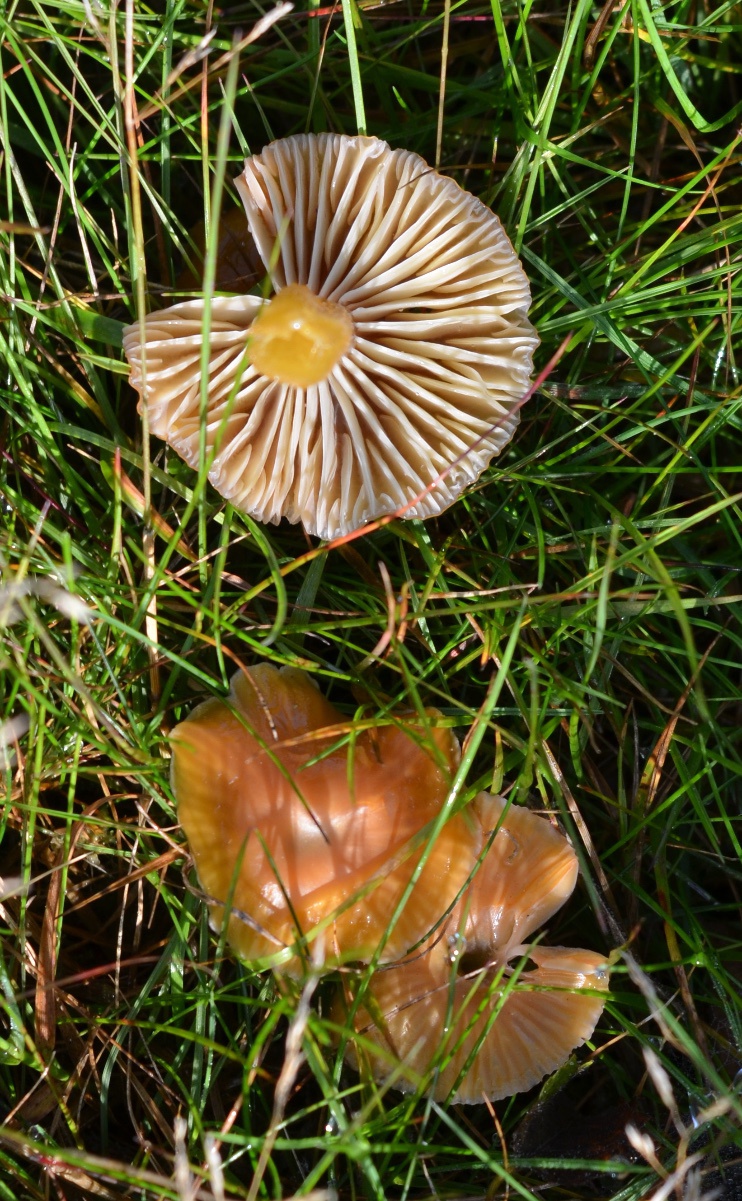
The small domed caps are yellowy-brown, hemispherical at first but gradually flattening. Deep striations cover the outer two-thirds of the cap, and the margin becomes slightly toothed with age. The cap is sticky and slimy when wet, but slightly slimy when dry. The stipe is also slimy. Gills are pale grey at first but turning salmon colour as the fruitbody ages, and are slightly decurrent; they also have a sticky edge.
texture 
Photos are required showing the cap from above and the gills from below. Your notes should describe the texture of the cap and stipe (sticky/slimy/greasy/dry?)
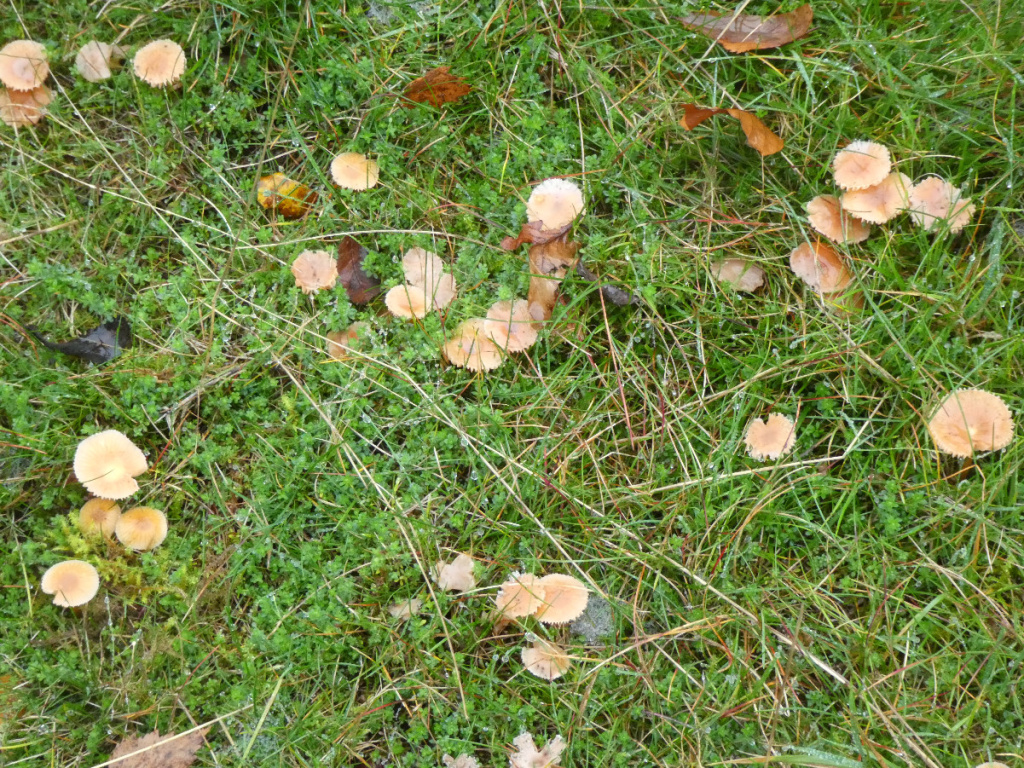
Heath Waxcaps often occur in quite large clusters on acid grassland and heaths, favouring short, well grazed turf.
August to November in Britain.
Waxcaps have long been considered to be saprobic on the dead roots of grasses and other grassland plants, but it is now considered likely that there is some kind of mutual relationship between waxcaps and mosses.
Widespread but rather local in Britain.
Occasional in acid grassland
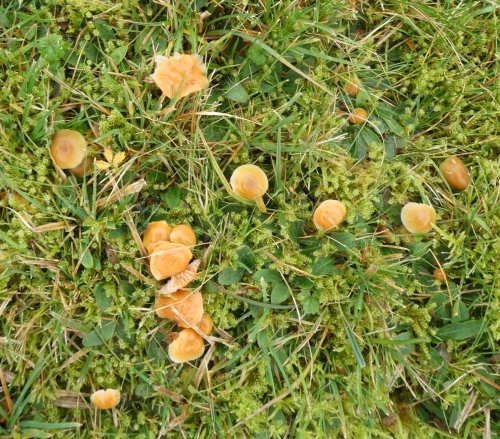 sue
sue
Coleorton, Church Town, St John's chapel yard
22 November 2023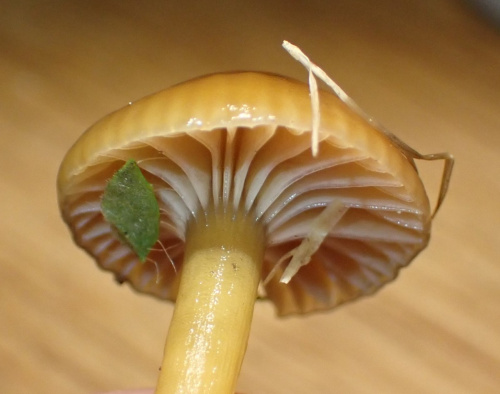 sue
sue
Shepshed Cemetery
06 November 2024
grey gills with sticky edge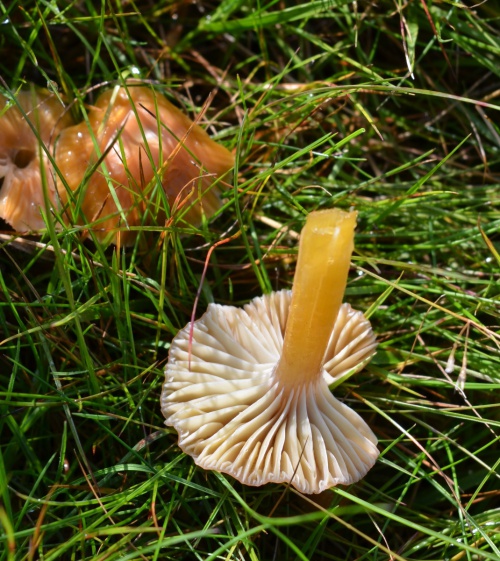 Steve Mathers
Ulverscroft NR
24 September 2017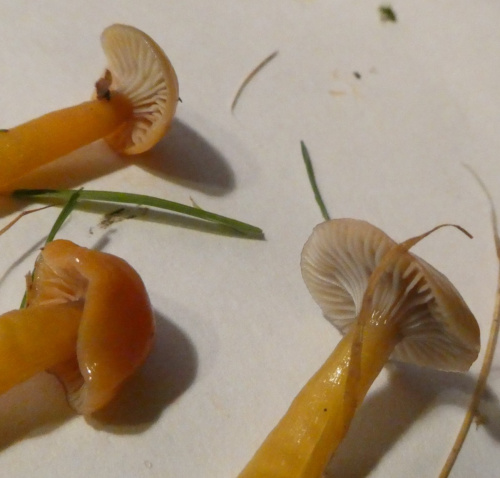 sue
sue
Coleorton, Church Town, St John's chapel yard
22 November 2023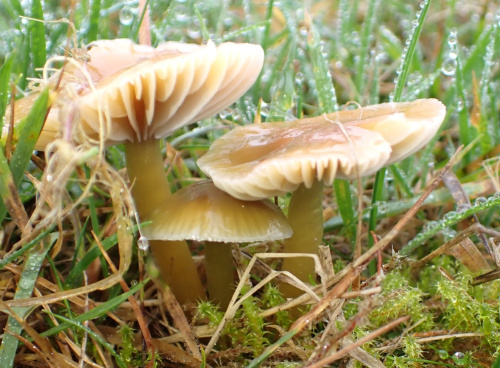 sue
sue
Markfield, Billa Barra LNR, northern slope
07 November 2024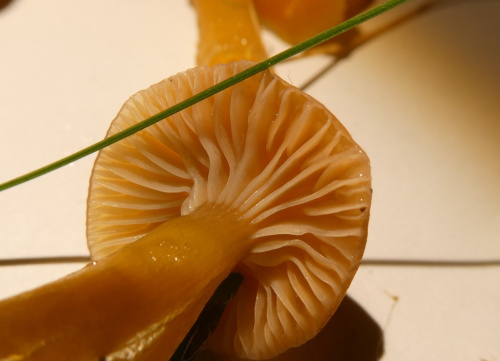 sue
sue
Coleorton, Church Town, St John's chapel yard
22 November 2023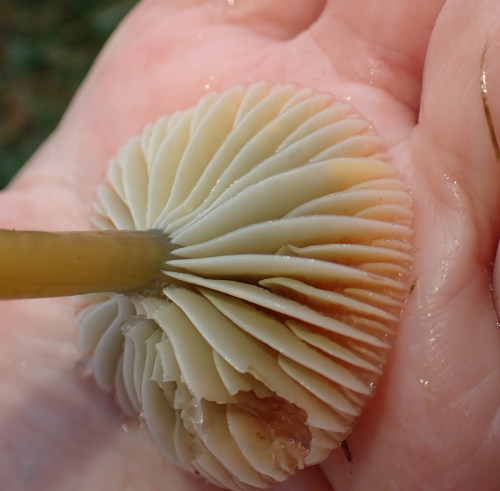 sue
sue
Markfield, Billa Barra LNR, northern slope
07 November 2024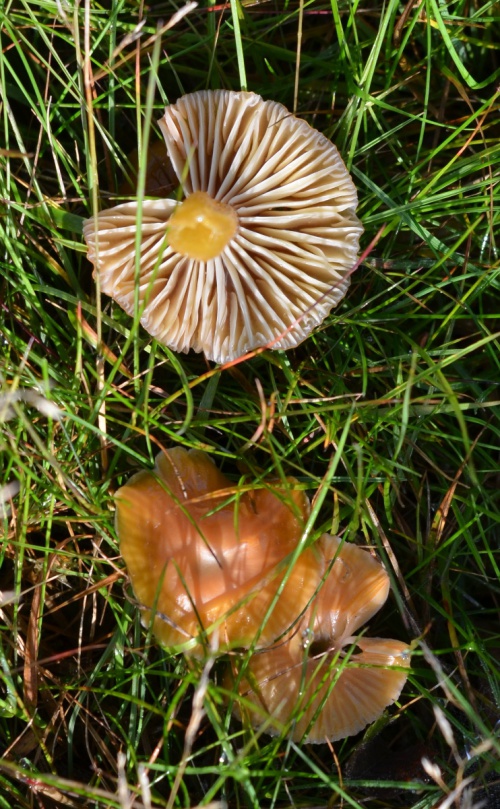 Steve Mathers
Ulverscroft NR
24 September 2017
cap c 3cm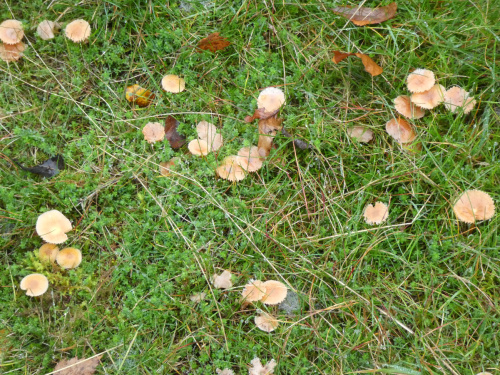 Melinda Bell
Beacon Hill Country park
07 November 2024
approx 2 cm diameter caps
Leicestershire & Rutland Map
Enter a town or village to see local records
MAP KEY:
Yellow squares = NBN records (all known data)
Coloured circles = NatureSpot records: 2025+ | 2020-2024 | pre-2020
UK Map
Species profile
- Common names
- Heath Waxcap
- Species group:
- fungus
- Kingdom:
- Order:
- Family:
- Records on NatureSpot:
- 10
- First record:
- 22/11/2023 (Timms, Sue)
- Last record:
- 07/11/2024 (Bell, Melinda)
Total records by month
% of records within its species group
10km squares with records
The latest images and records displayed below include those awaiting verification checks so we cannot guarantee that every identification is correct. Once accepted, the record displays a green tick.
In the Latest Records section, click on the header to sort A-Z, and again to sort Z-A. Use the header boxes to filter the list.