

Guelder-rose - Viburnum opulus
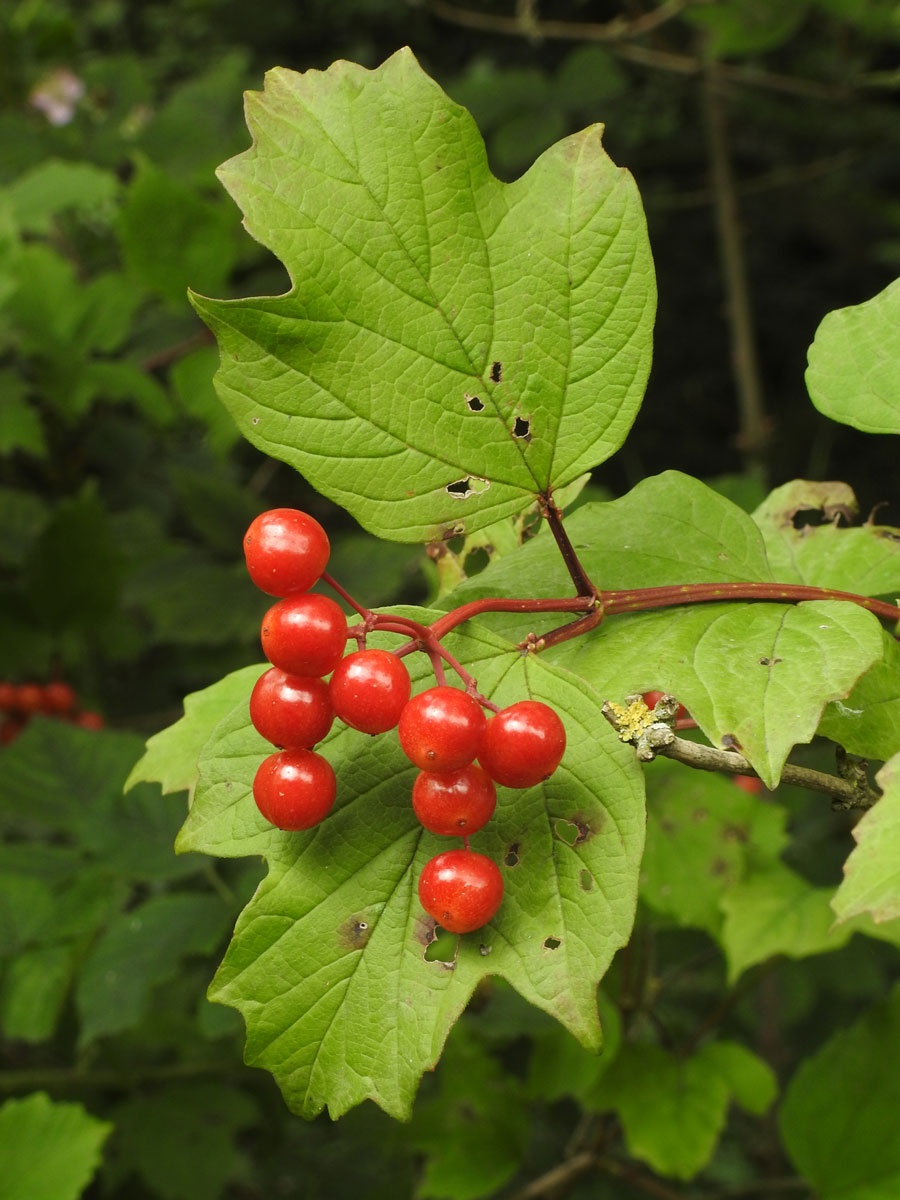
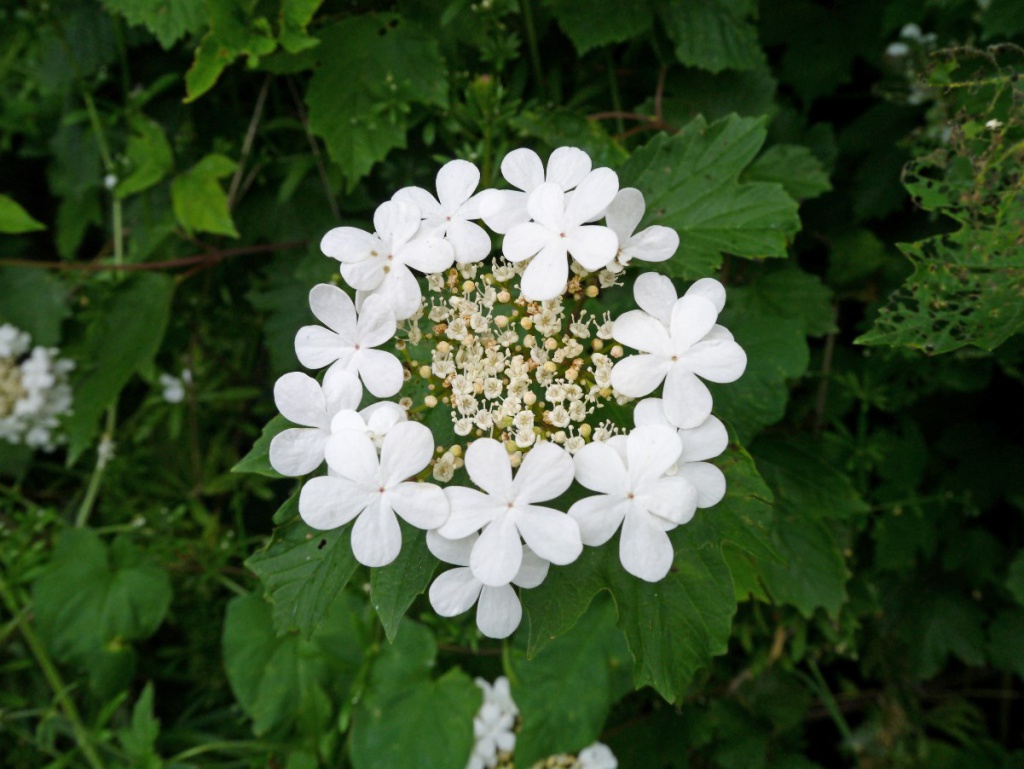
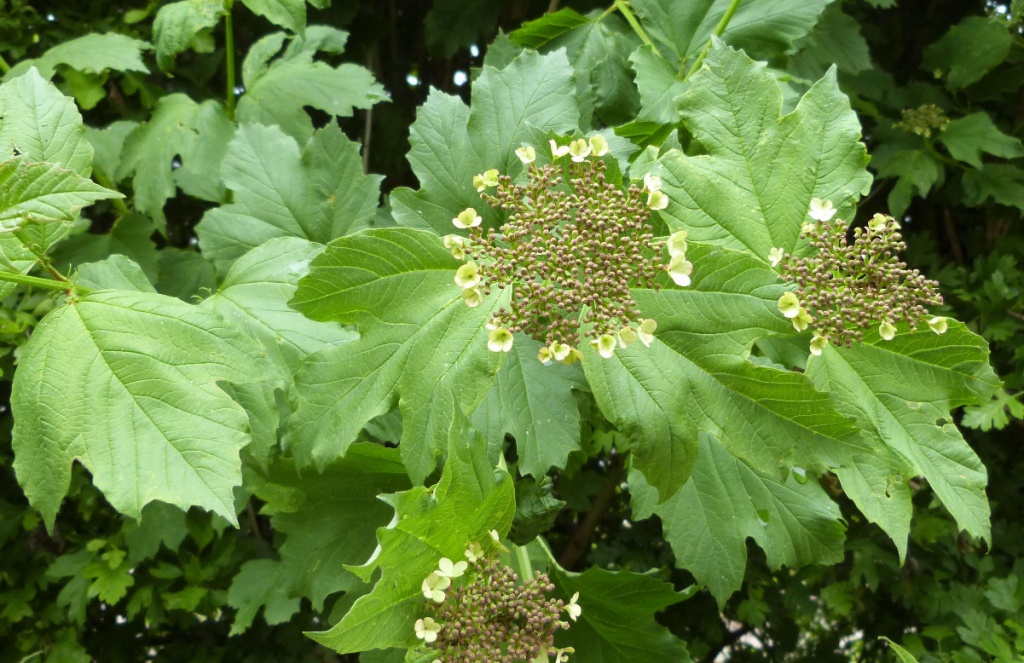
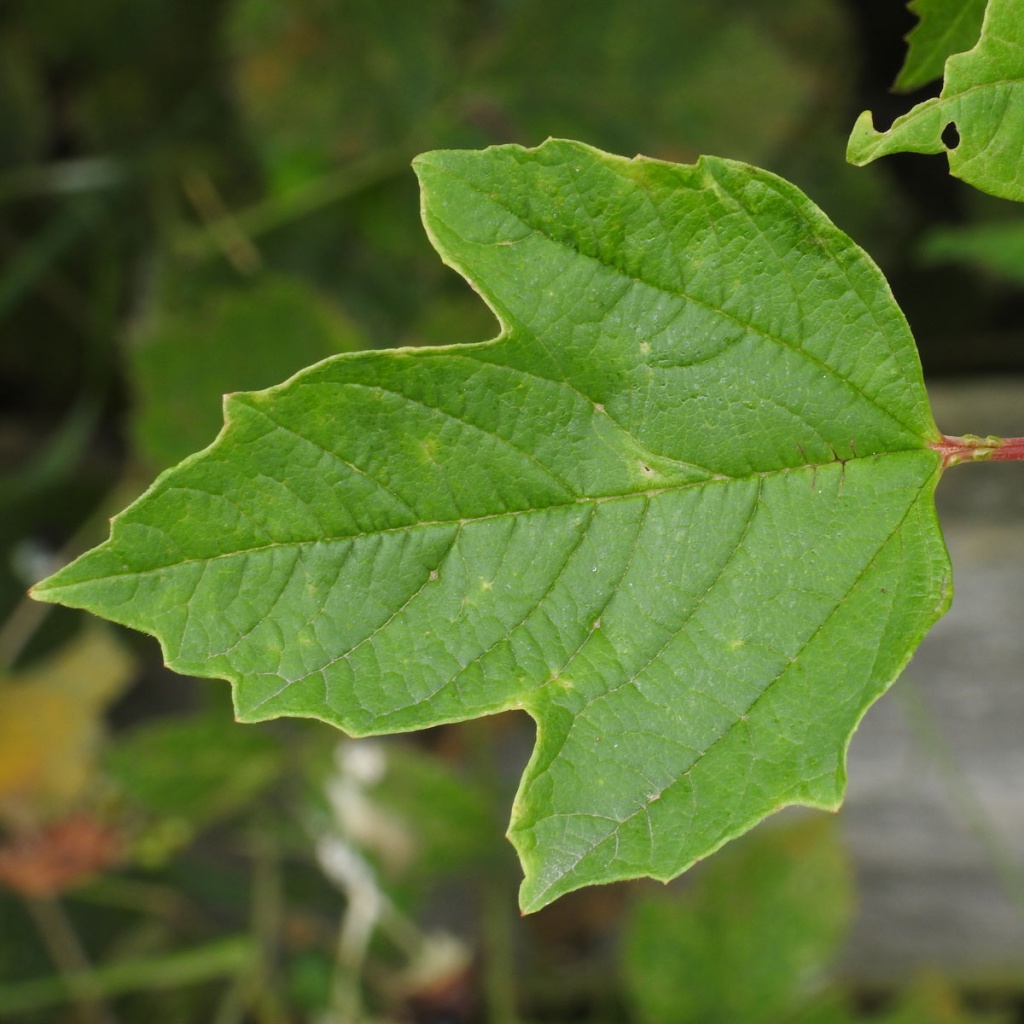
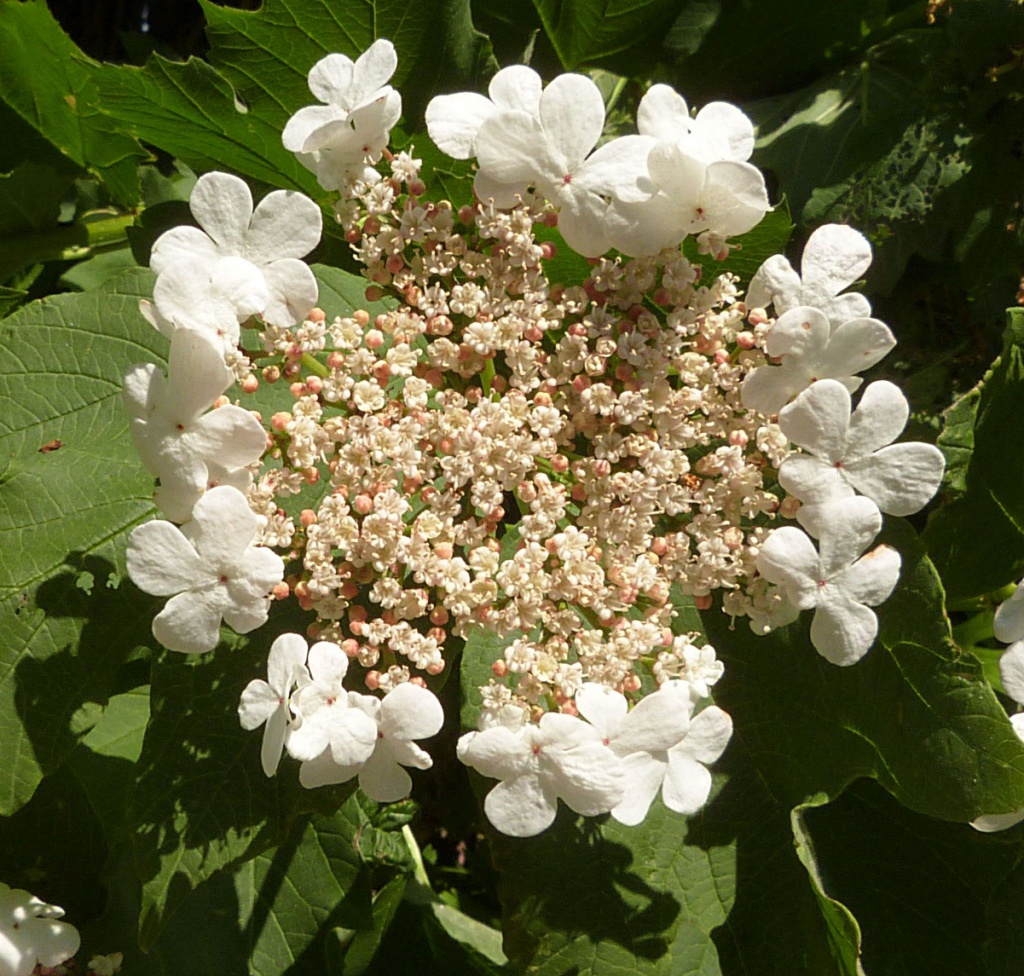
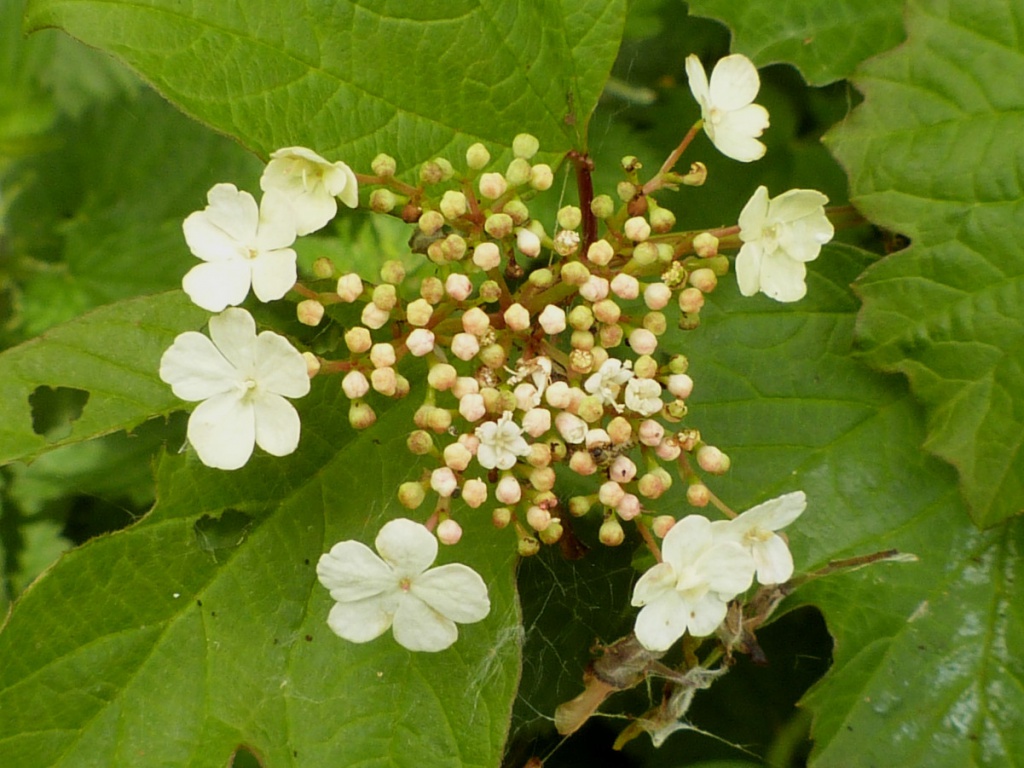
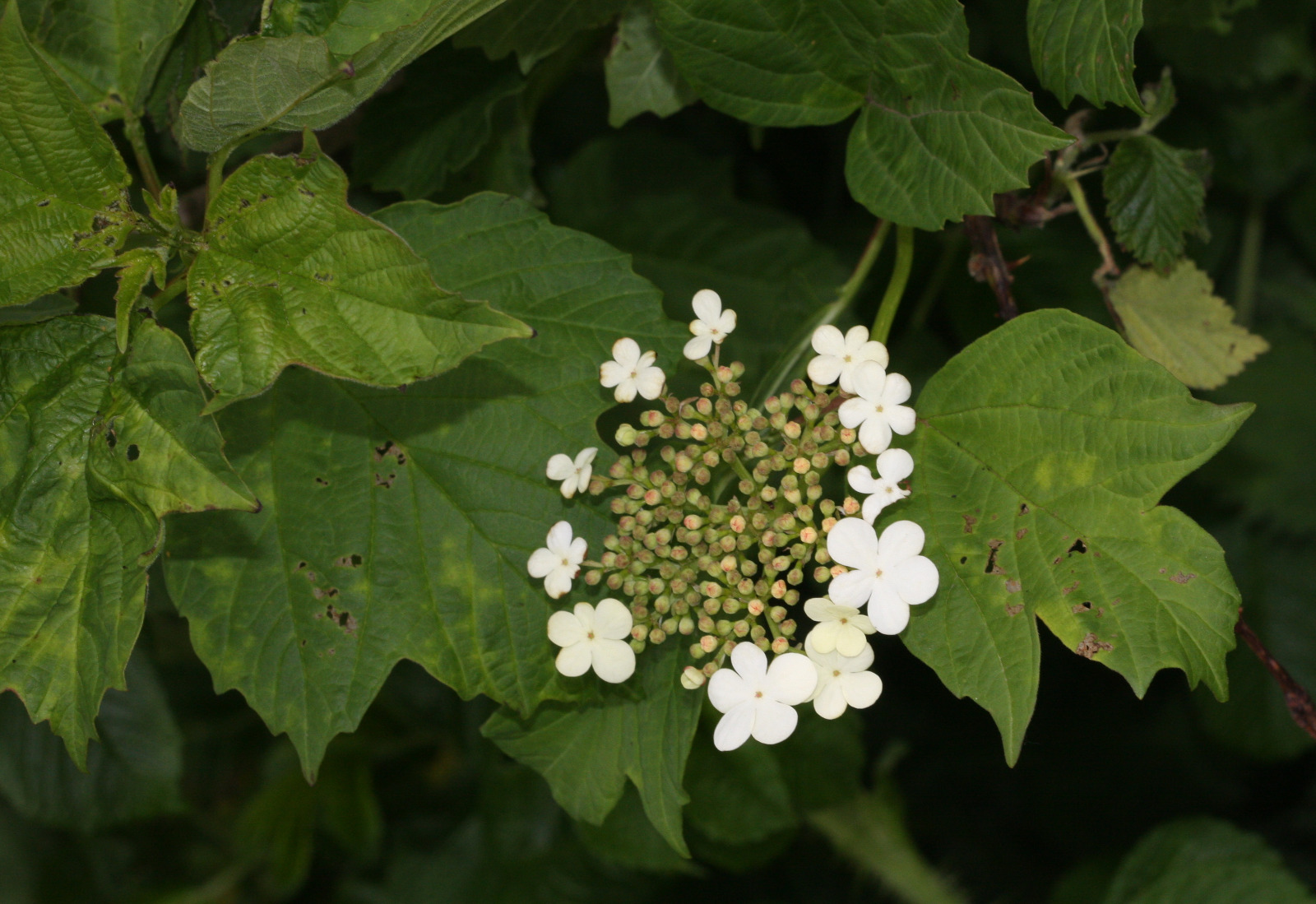
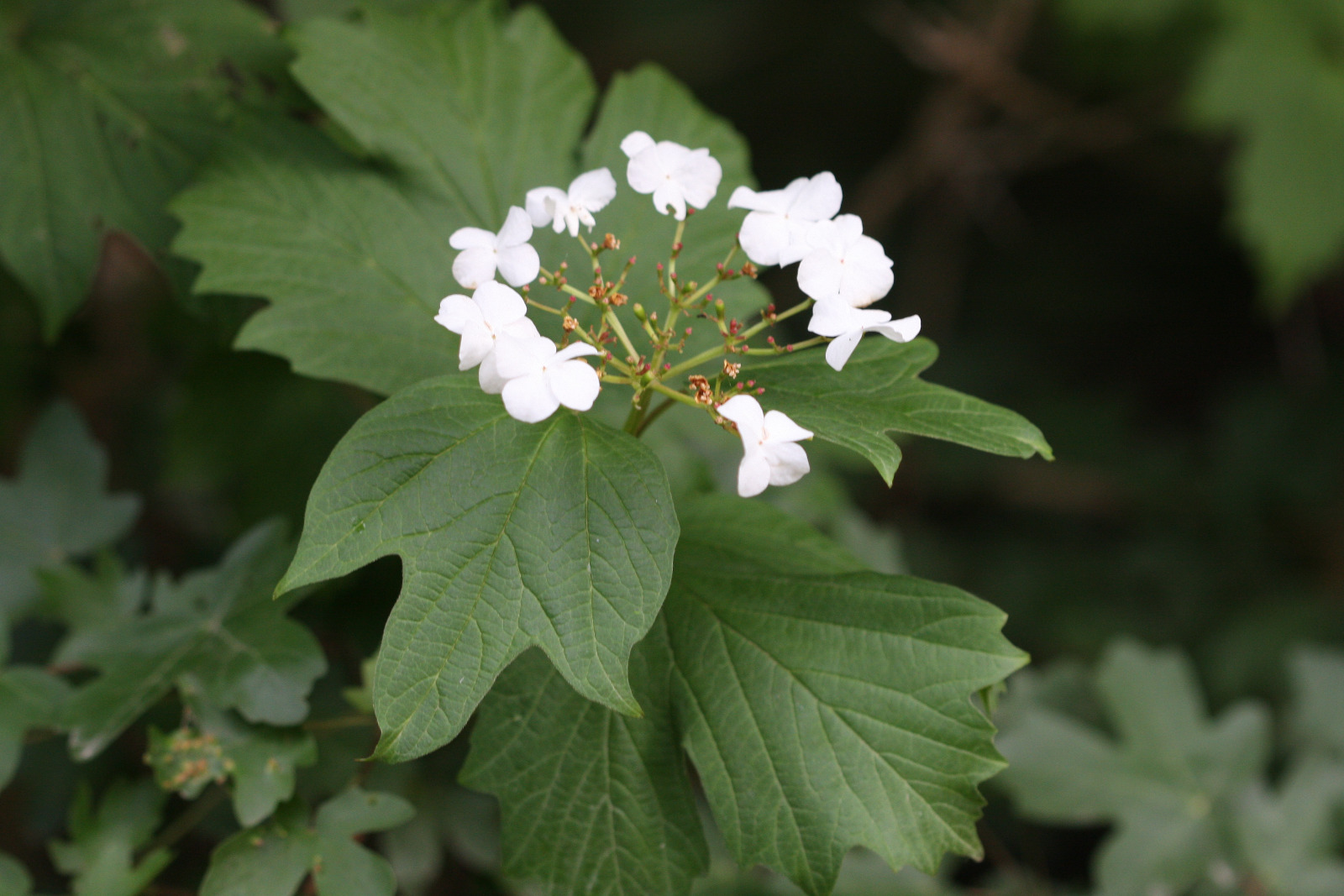
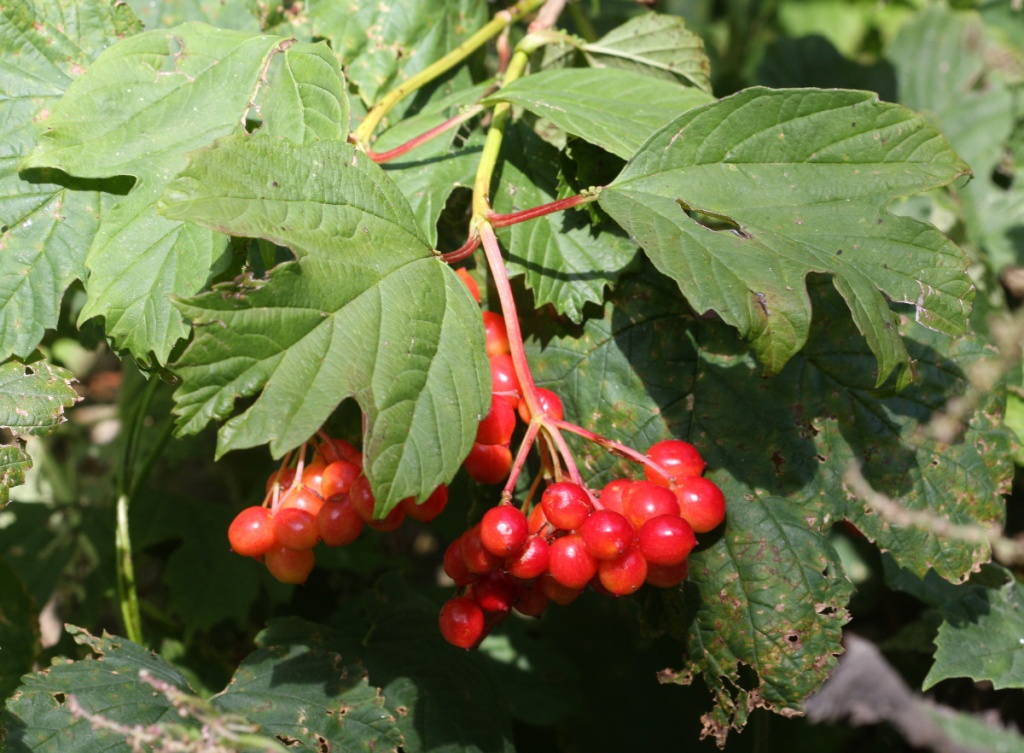
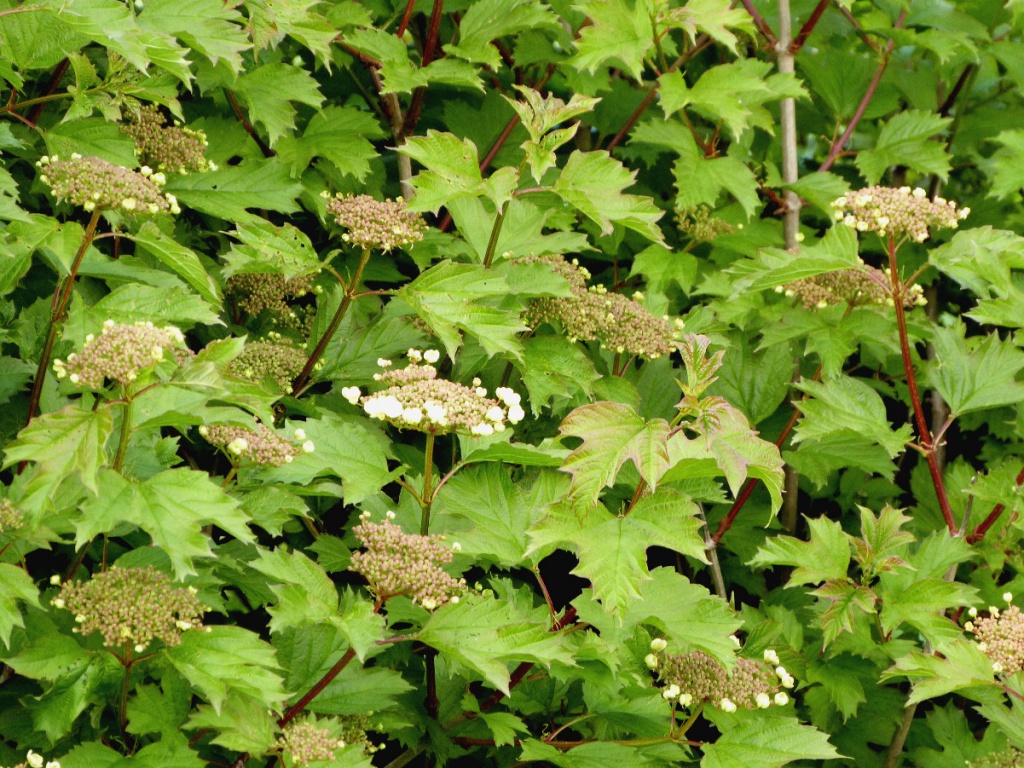
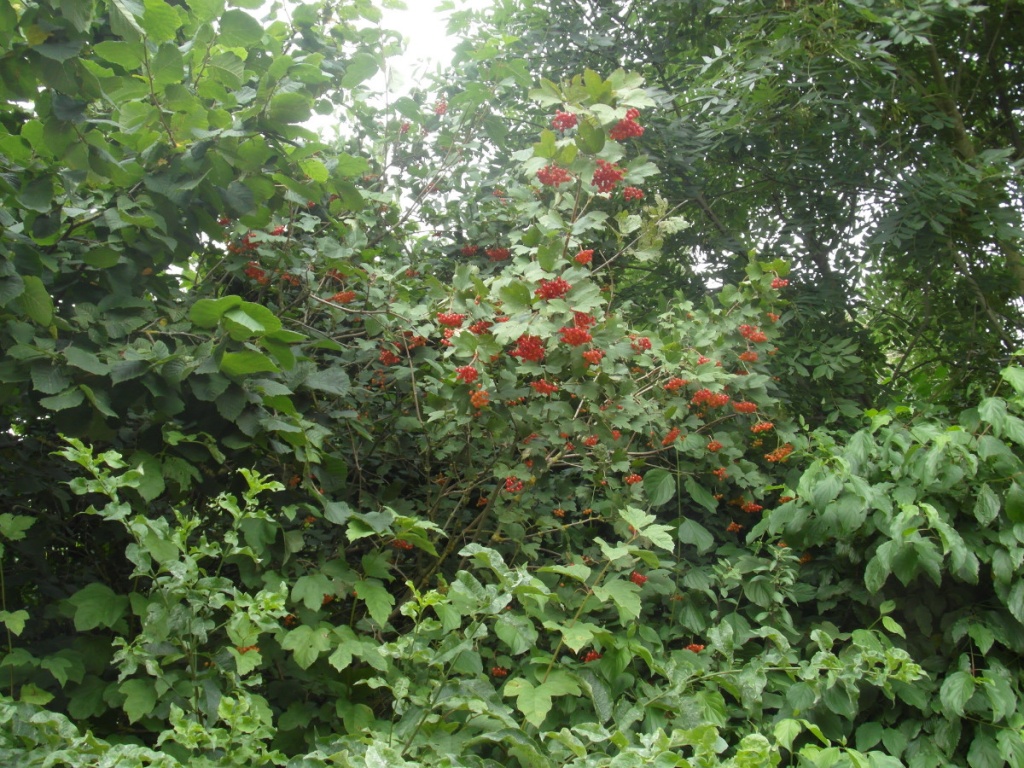
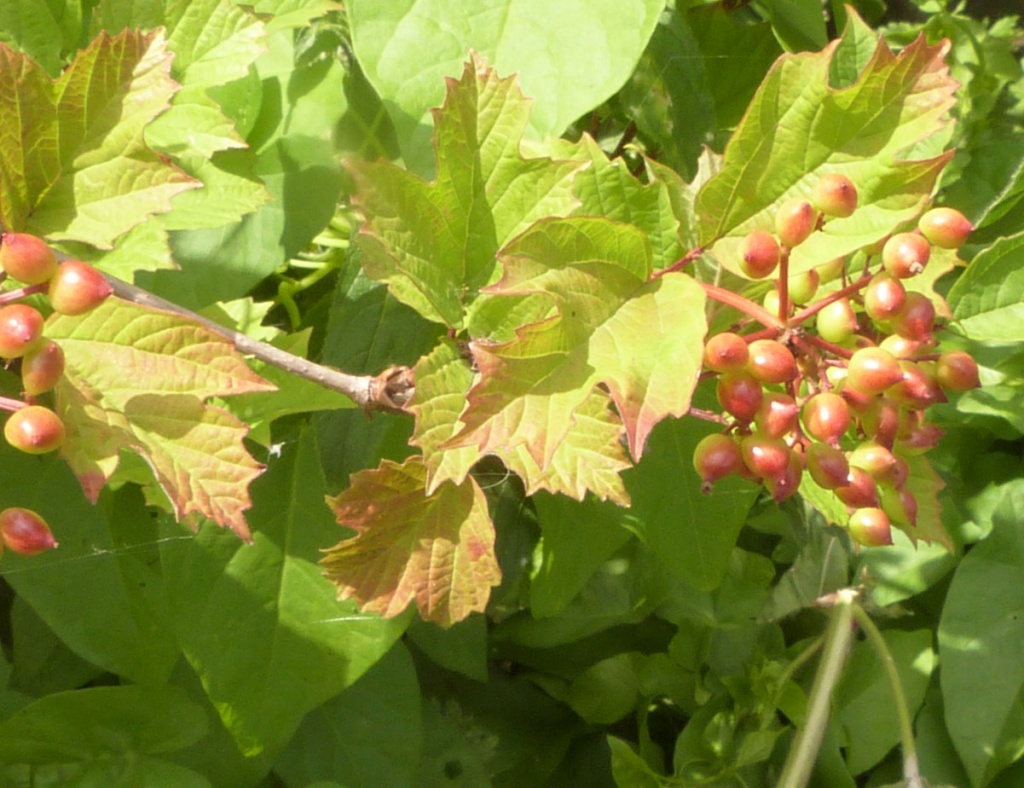
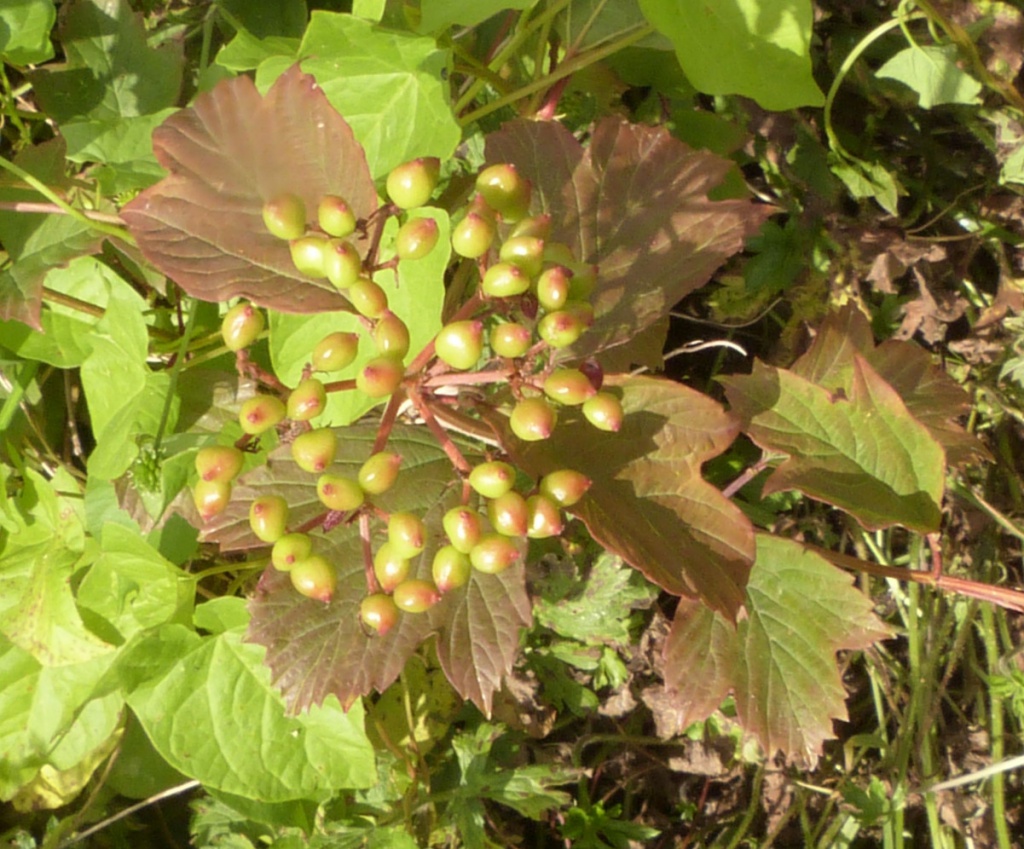
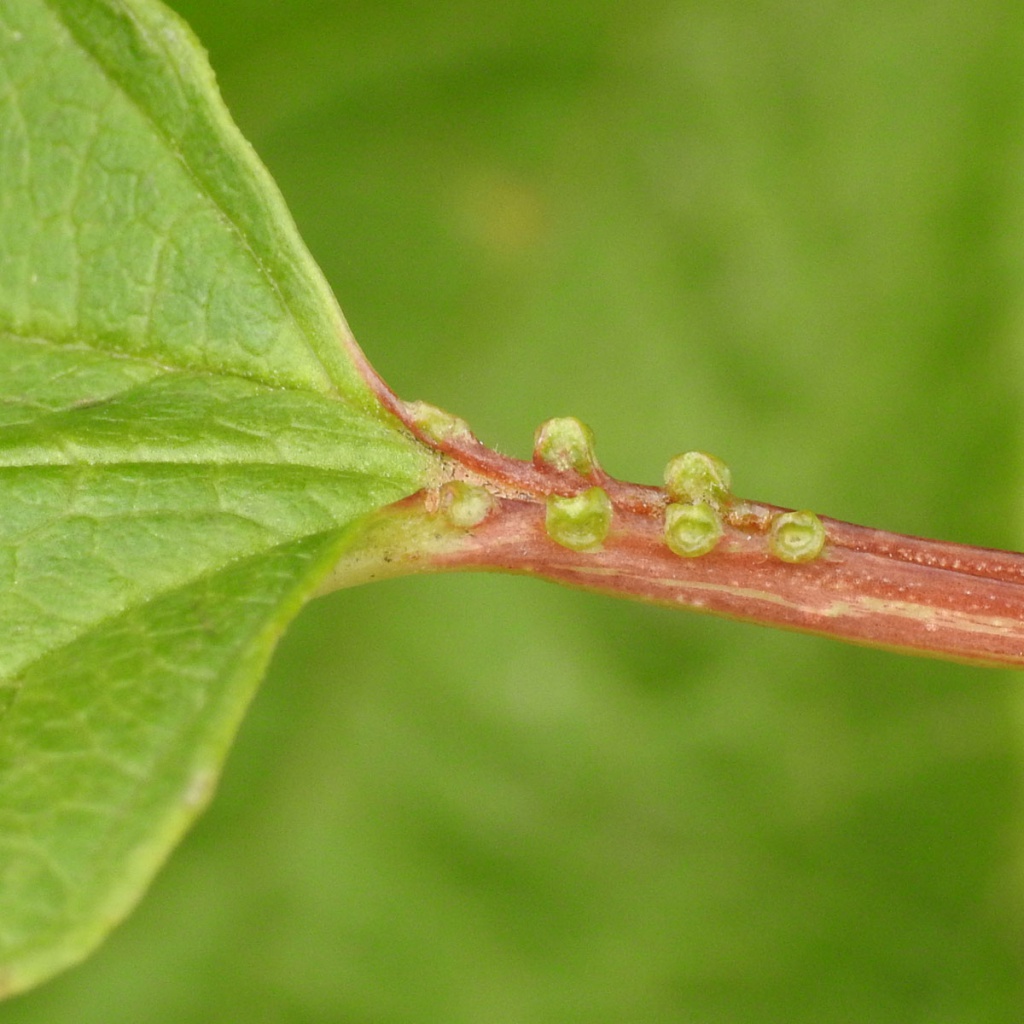
Shrub to 4 metres, with angled young twigs. Flowers white, in broad flat topped clusters 4.5 to 10.5 cm across, inner florets fertile 4 to 7 mm surrounded by a few large sterile flowers 15 to 20 mm. Berry is shiny red when ripe.

Hedgerows and woodland on damp soils.
June and July.
Deciduous.
Frequent throughout most of Britain, less common in Scotland.
Quite common in Leicestershire and Rutland. In the 1979 Flora survey of Leicestershire it was found in 308 of the 617 tetrads.
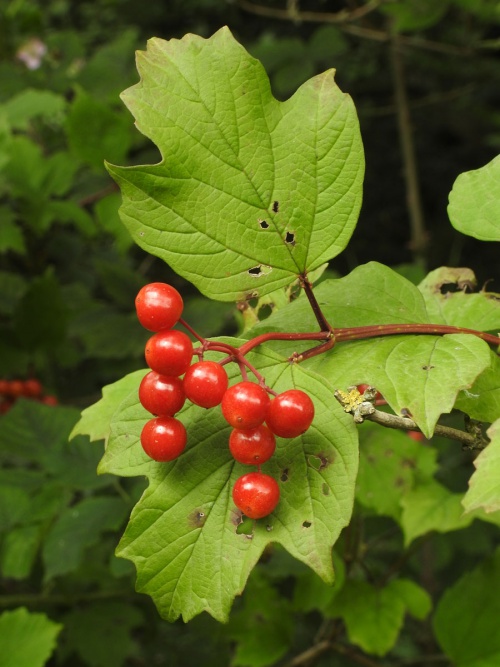 David Gould
Narborough Bog
11 August 2017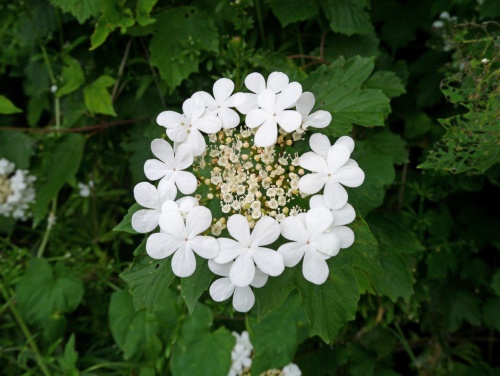 Peter Smith
Belgrave
08 June 2015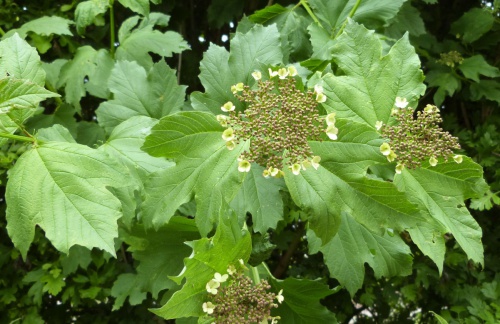 Graham Calow
Higham on the Hill
24 May 2015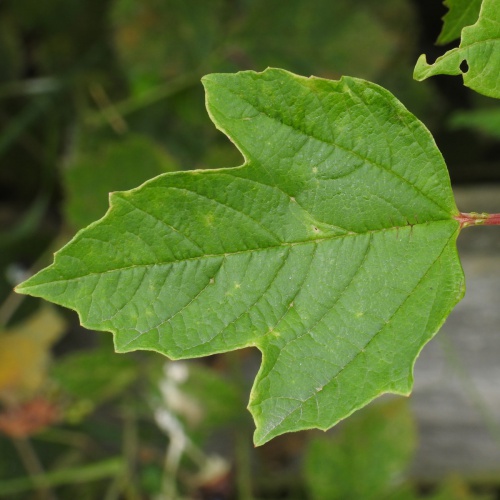 David Gould
The Spearwort Fields
29 July 2017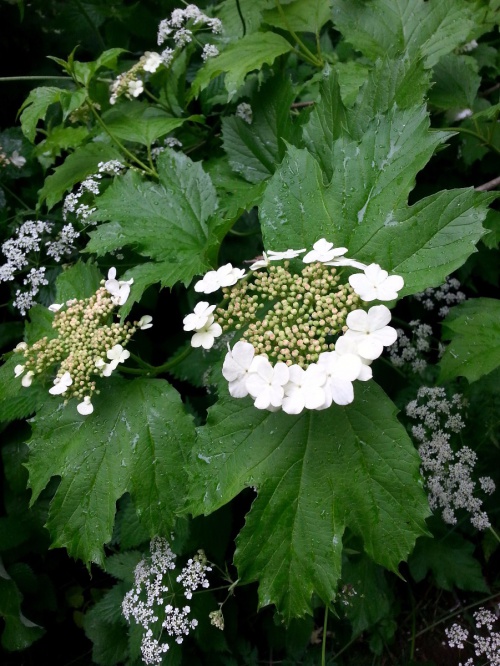 Bob Sheridan
Langham Woodland
31 May 2016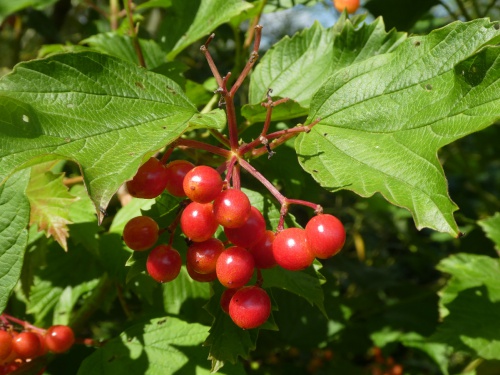 Melinda Bell
Ashby Canal,Congerstone
23 August 2021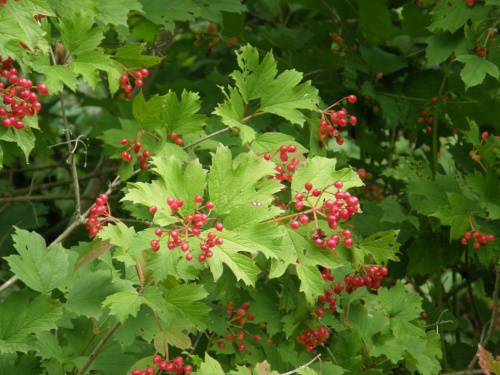 Saharima Roenisch
Beacon Hill Country Park
16 August 2018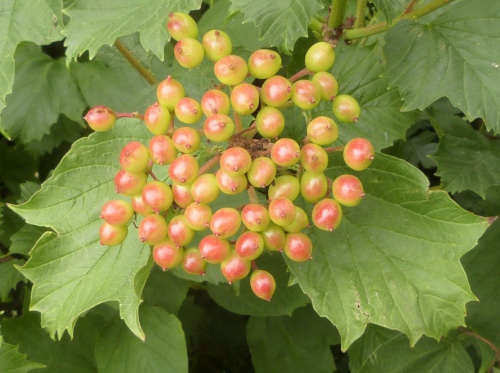 Graham Calow
Frolesworth
23 July 2015
fruits ripening. new leaves on angled young twigs Old Fosse Sapcote SP 4990 9230 (taken 2.5.2008).JPG) Graham Calow
Graham Calow
Sapcote
02 May 2008
young growth with angular stems
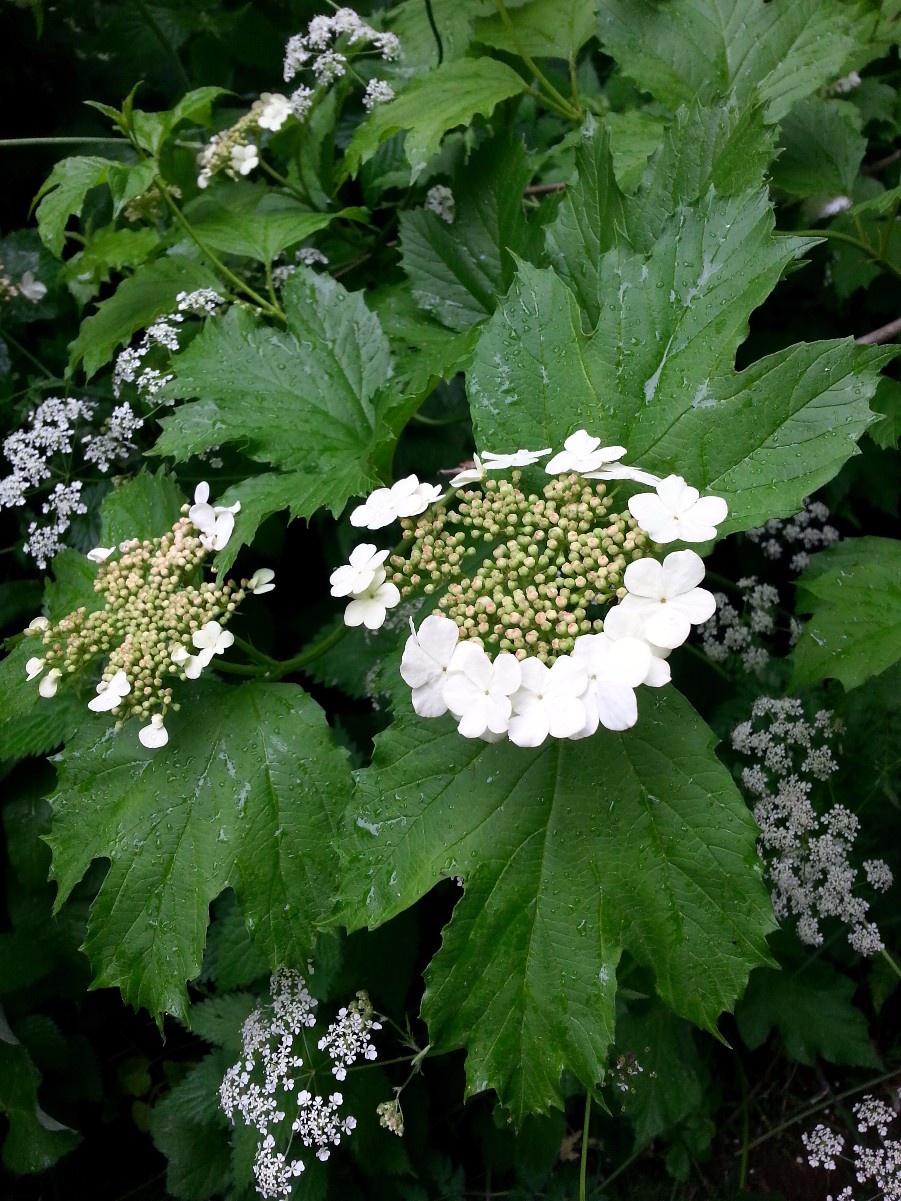
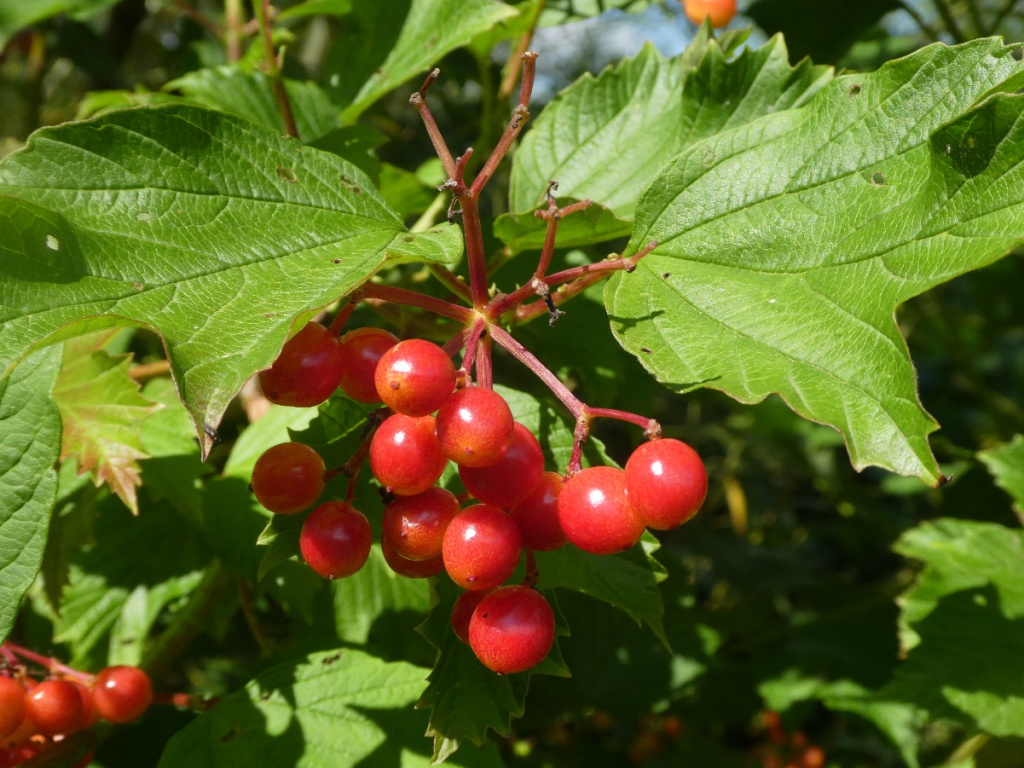
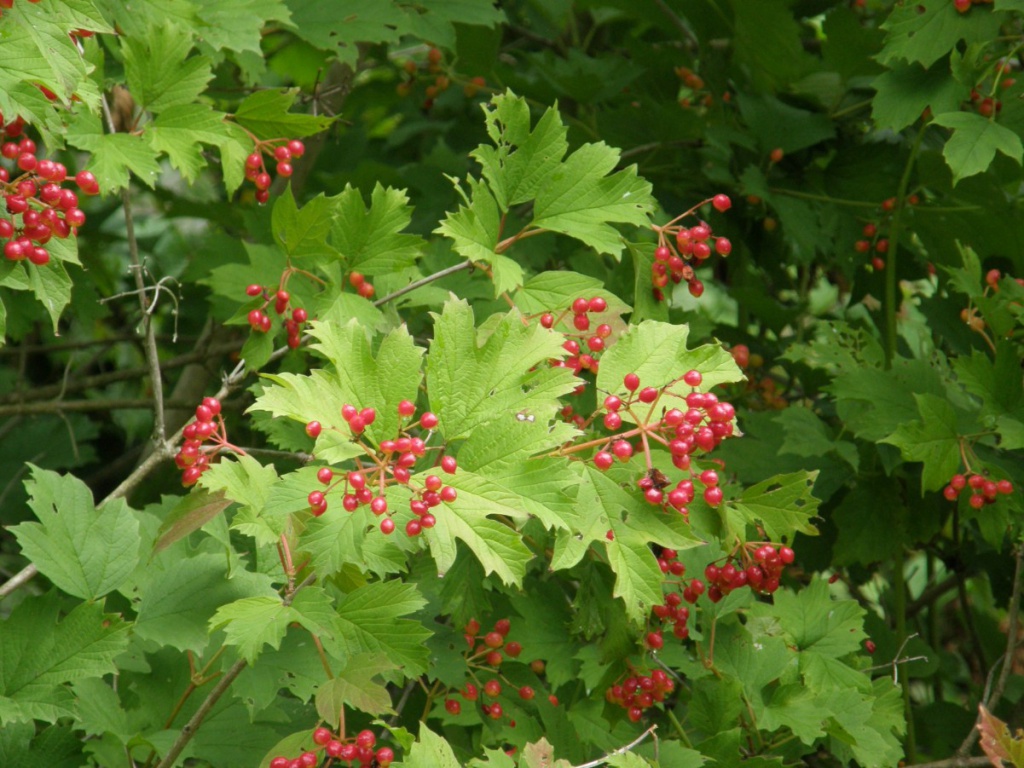
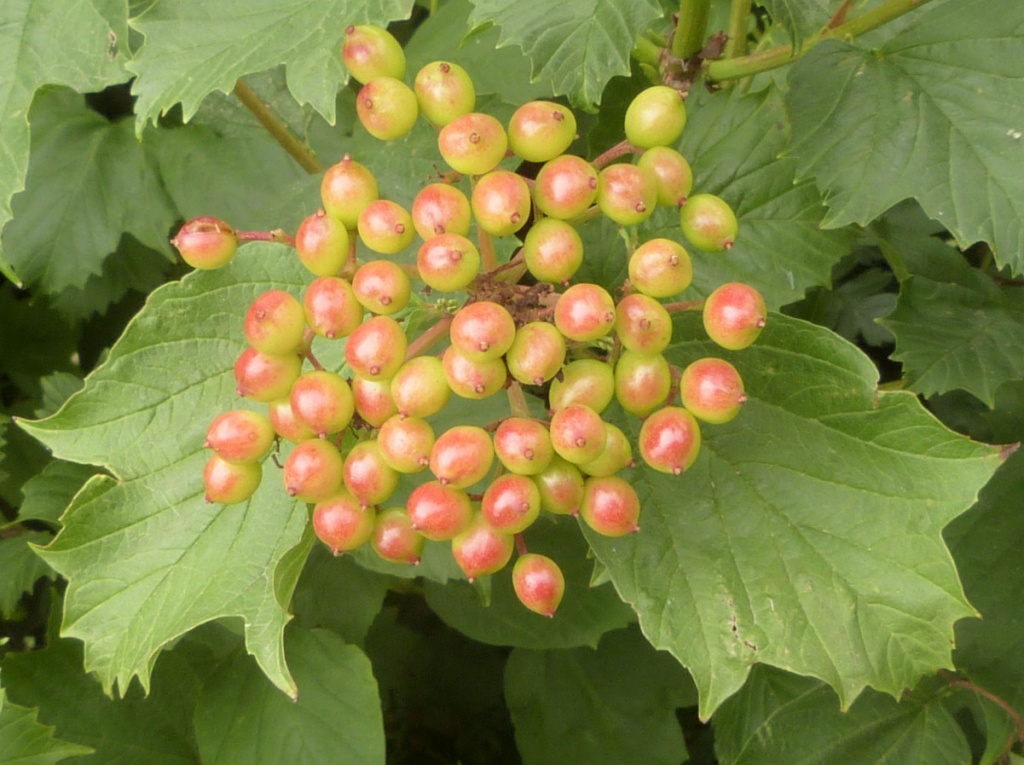
. new leaves on angled young twigs Old Fosse Sapcote SP 4990 9230 (taken 2.5.2008).JPG)
Leicestershire & Rutland Map
Enter a town or village to see local records
MAP KEY:
Yellow squares = NBN records (all known data)
Coloured circles = NatureSpot records: 2025+ | 2020-2024 | pre-2020
UK Map
Species profile
- Common names
- Guelder-rose
- Species group:
- flowering plant
- Kingdom:
- Plantae
- Order:
- Dipsacales
- Family:
- Adoxaceae
- Records on NatureSpot:
- 253
- First record:
- 11/05/1992 (John Mousley;Steve Grover)
- Last record:
- 07/05/2026 (Nicholls, David)
Total records by month
% of records within its species group
10km squares with records
The latest images and records displayed below include those awaiting verification checks so we cannot guarantee that every identification is correct. Once accepted, the record displays a green tick.
In the Latest Records section, click on the header to sort A-Z, and again to sort Z-A. Use the header boxes to filter the list.
Latest images
Latest records
 Old Fosse Sapcote SP 4990 9230 (taken 2.6.2006).JPG) Graham Calow
Graham Calow
Sapcote
02 June 2006
flowers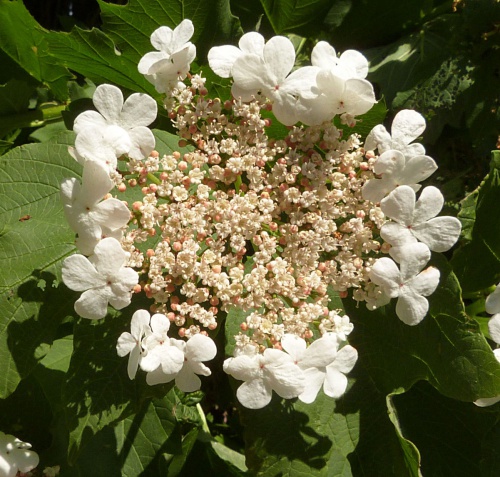 Graham Calow
Higham on the Hill
11 June 2015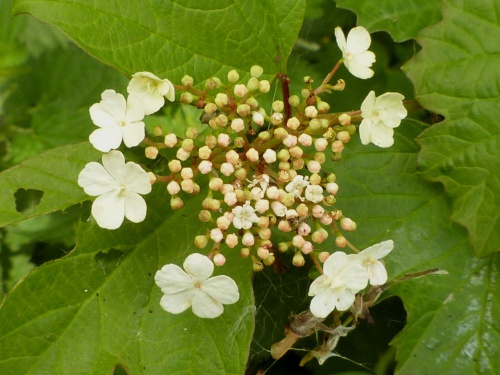 Graham Calow
Fosse Meadows, Sharnford
21 May 2014 David Nicholls
Burroughs Lane, Ratby
13 May 2011 David Nicholls
Rutland Water
27 May 2011 Old Fosse Sapcote SP 4990 9230 (taken 28.7.2006).JPG) Graham Calow
Graham Calow
Sapcote
28 July 2006
fruits Old Fosse Sapcote SP 4990 9230 (taken 2.6.2006)...JPG) Graham Calow
Graham Calow
Sapcote
02 June 2006, Old Fosse Sapcote SP 4990 9230 (taken 20.8.2007).JPG) Graham Calow
Graham Calow
Sapcote
20 August 2007
fruits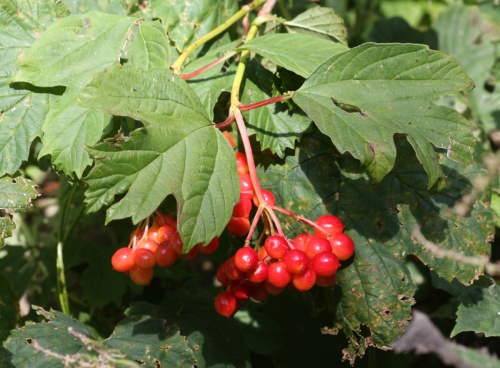 David Nicholls
Watermead Country Park
06 September 2012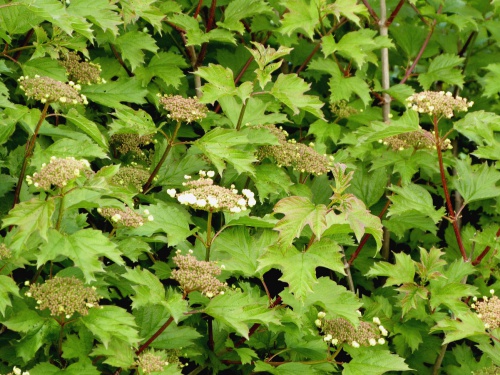 Graham Calow
Sapcote
14 May 2014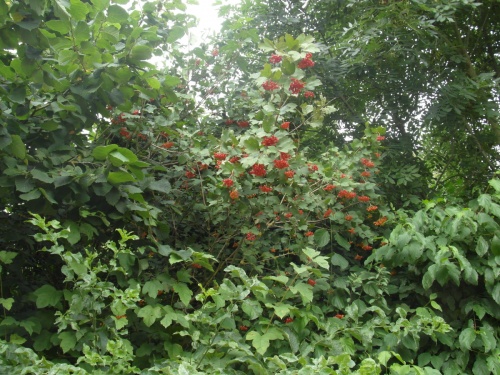 Alan Semper
Harby nature reserve
31 August 2012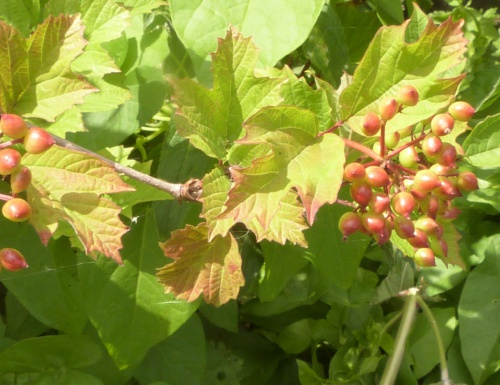 Graham Calow
Higham on the Hill
09 July 2015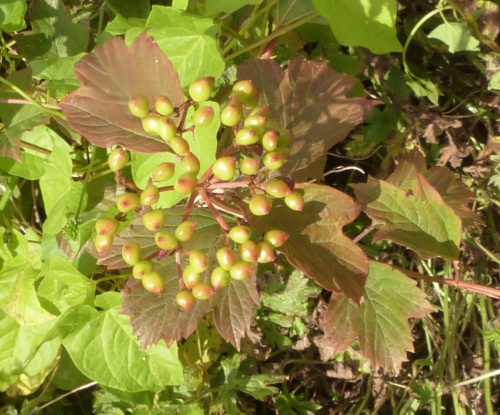 Graham Calow
Higham on the Hill
09 July 2015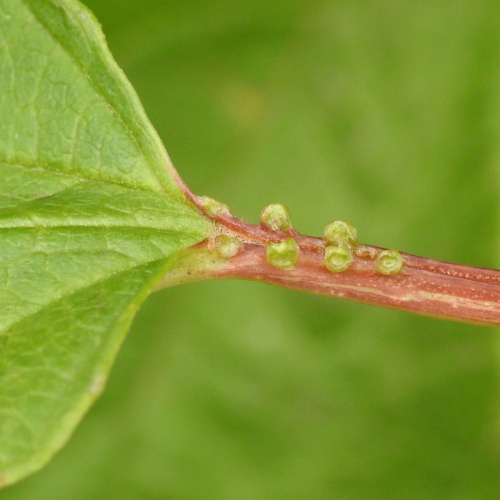 David Gould
The Spearwort Fields
29 July 2017
 Old Fosse Sapcote SP 4990 9230 (taken 2.6.2006).JPG)
 Old Fosse Sapcote SP 4990 9230 (taken 28.7.2006).JPG)
 Old Fosse Sapcote SP 4990 9230 (taken 2.6.2006)...JPG)
, Old Fosse Sapcote SP 4990 9230 (taken 20.8.2007).JPG)
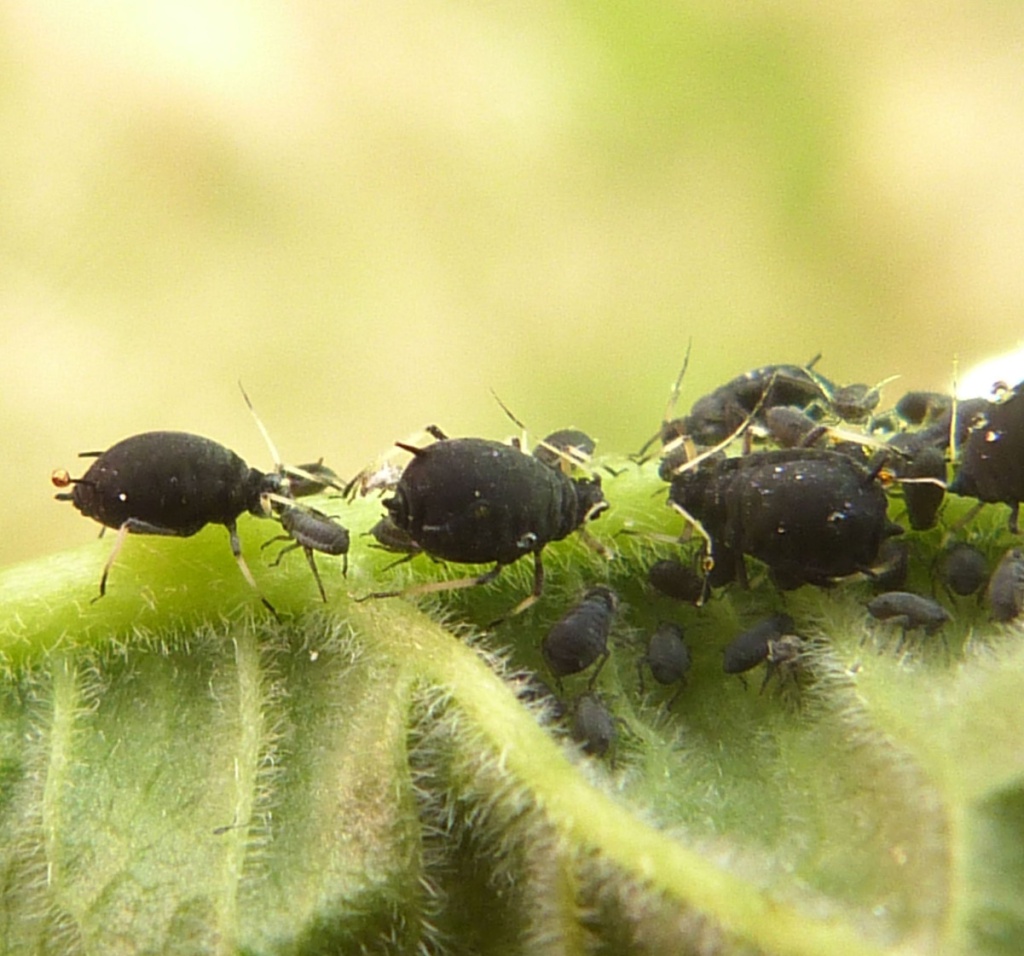
Aphis viburni
The aphid Aphis viburni can often be found in a gall-like gathering of the leaves of Guelder-rose. Apterae of Aphis viburni are slate-coloured or even blackish, brownish-green or dark brown, sometimes with paired pleural wax spots on the abdomen. Of all the 'black aphid' group, A. viburni is probably the most variable in colour.

Phyllonorycter lantanella
The larva of the moth Phyllonorycter lantanella mines the leaves of several Viburnum species including Wayfaring-tree and less frequently Guelder-rose or Laurustinus (Viburnum tinus). The larval mine is on the underside of the leaf, causing a strong fold and distorting the leaf, sometimes more than one mine to a leaf.