

Greater Periwinkle - Vinca major
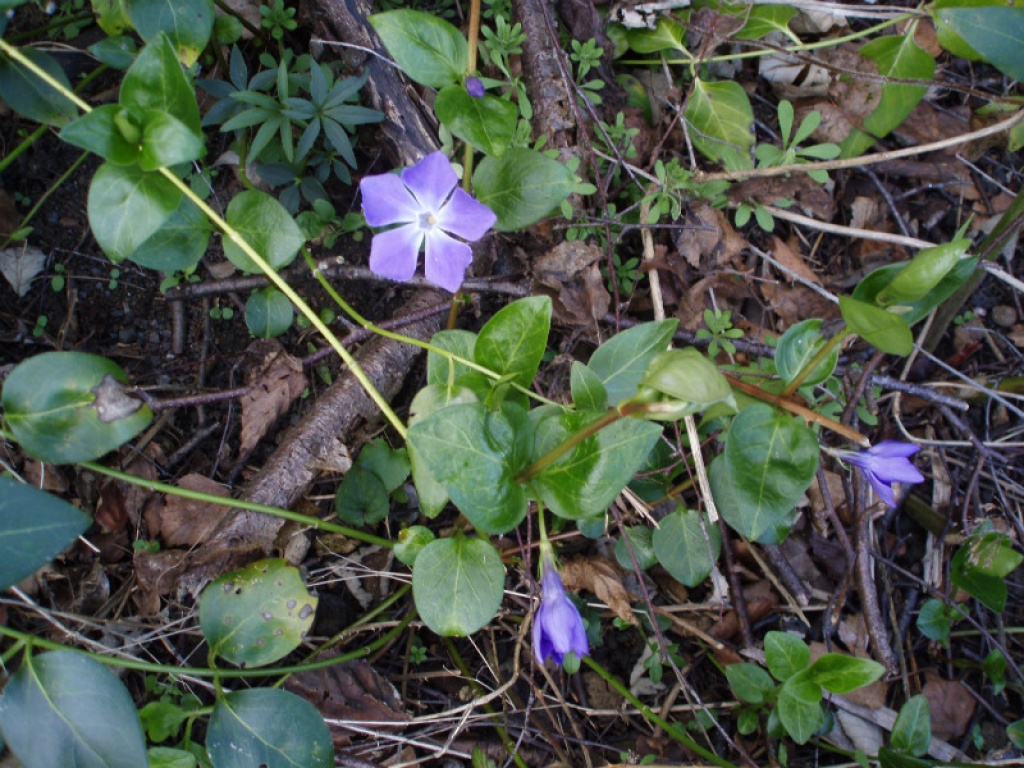
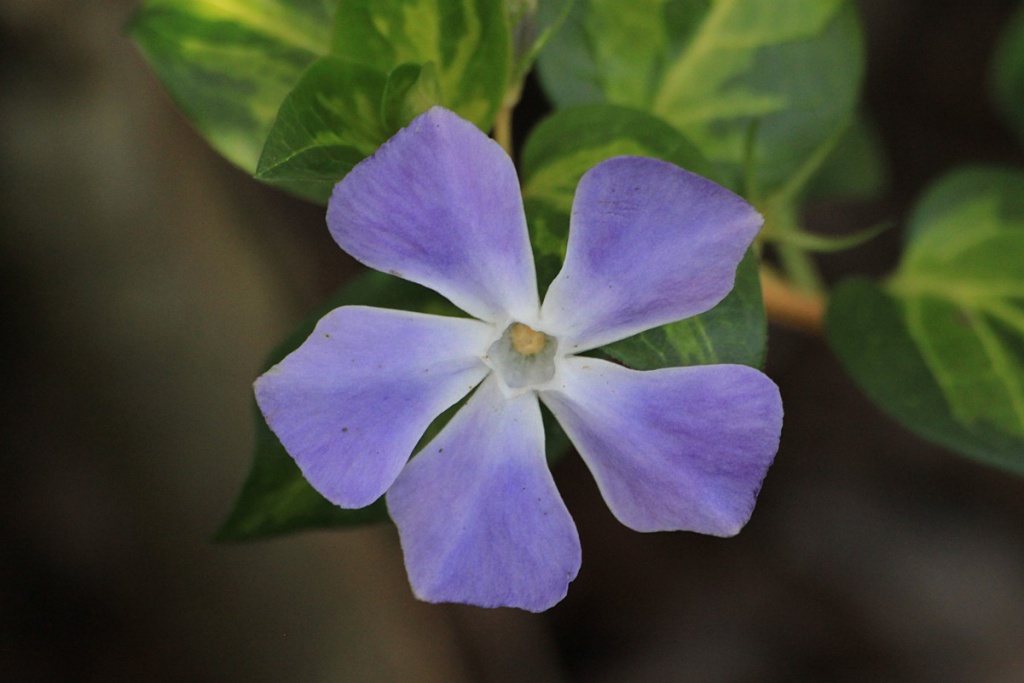
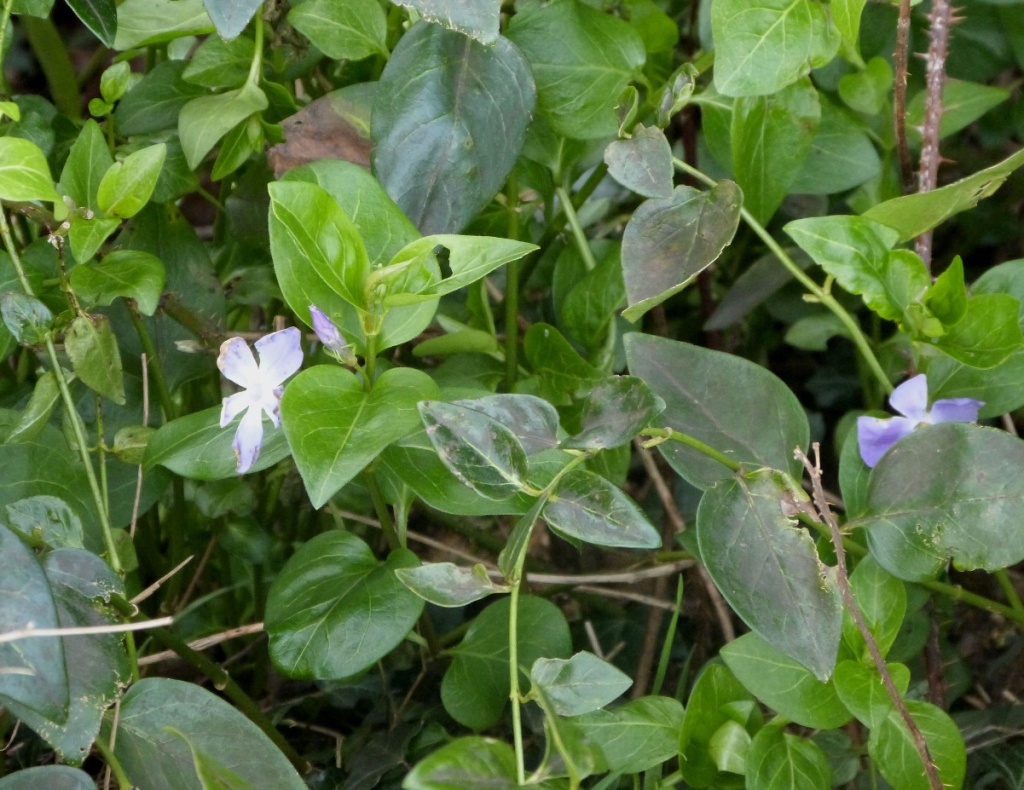
Short to medium spreading evergreen subshrub with trailing and arching stems, often rooting down at the tip. Leaves shiny green oval and hairy fringed at the outside margins. Flowers 30 to 50 mm purplish blue five parted.
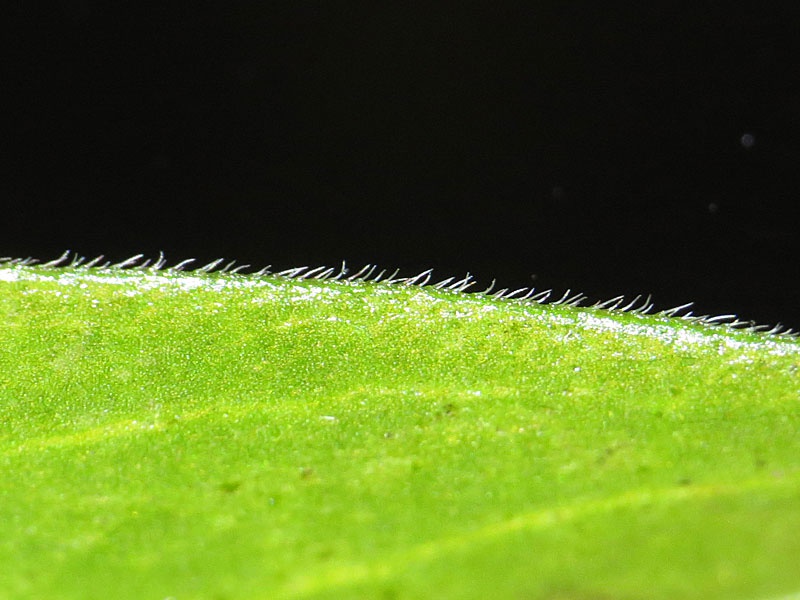
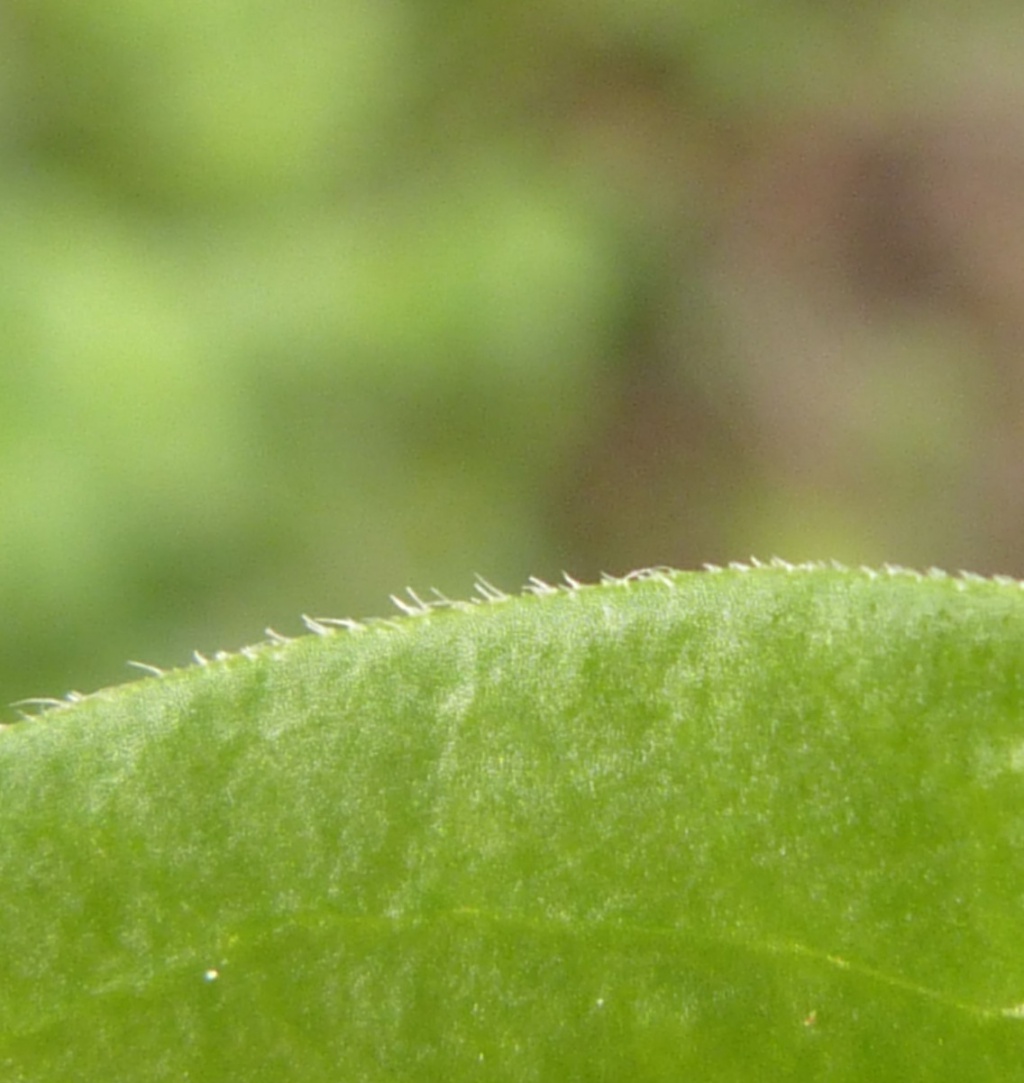
Lesser Periwinkle, Vinca minor, is similar but smaller and with less upright growth. They can be easily separated by examining the edges of the leaves: Vinca major have hairy edges whilst Vinca minor are hairless.

A garden escape sometimes becoming established in hedgerows and on roadside and railway verges.
March to May.
Perennial.
Fairly frequent and widespread in Britain.
Occasional as a wild plant in Leicestershire and Rutland. In the 1979 Flora survey of Leicestershire it was found in 29 of the 617 tetrads.
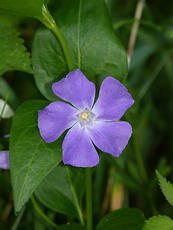 Mark Skevington
Birstall Lodge
29 April 2011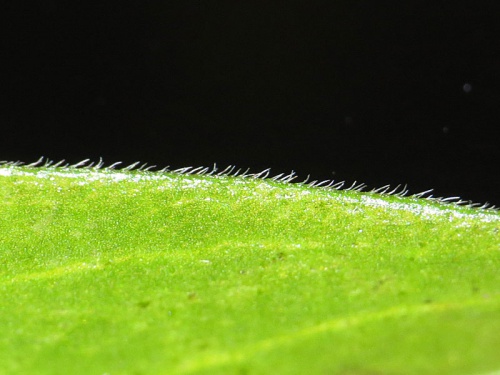 David Gould
Great Central Way, Leicester
18 February 2015
Minutely hairy leaf edge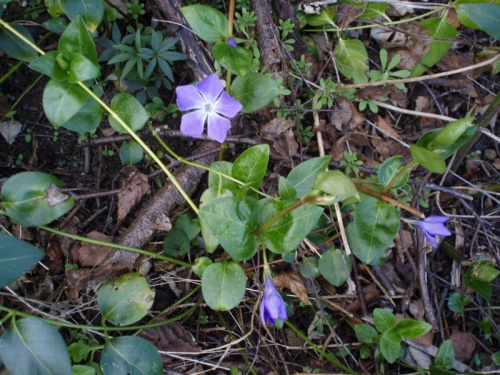 Alan Semper
Harby, Gas Walk hedge bottom
09 March 2012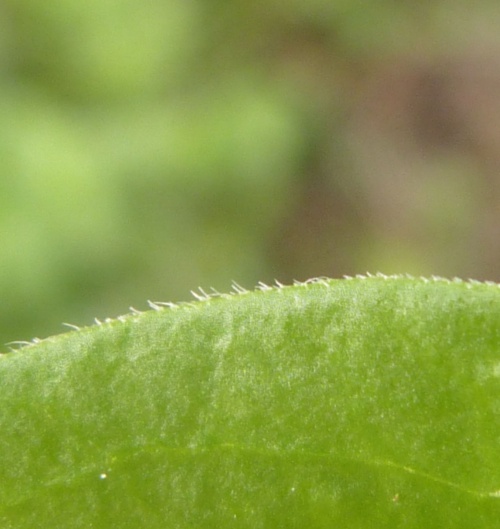 Graham Calow
Narborough Road, Cosby
03 March 2016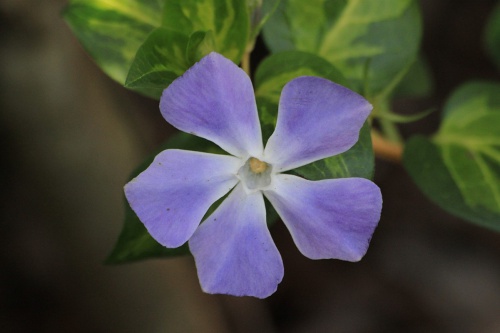 Paul Ruddoch
Melton Country Park
24 February 2015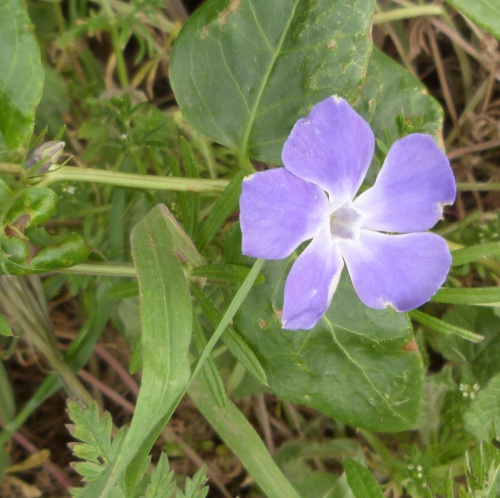 Graham Calow
Sapcote
22 May 2015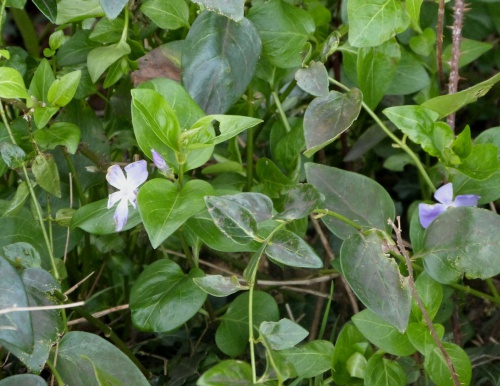 Graham Calow
Narborough Road, Cosby
03 March 2016
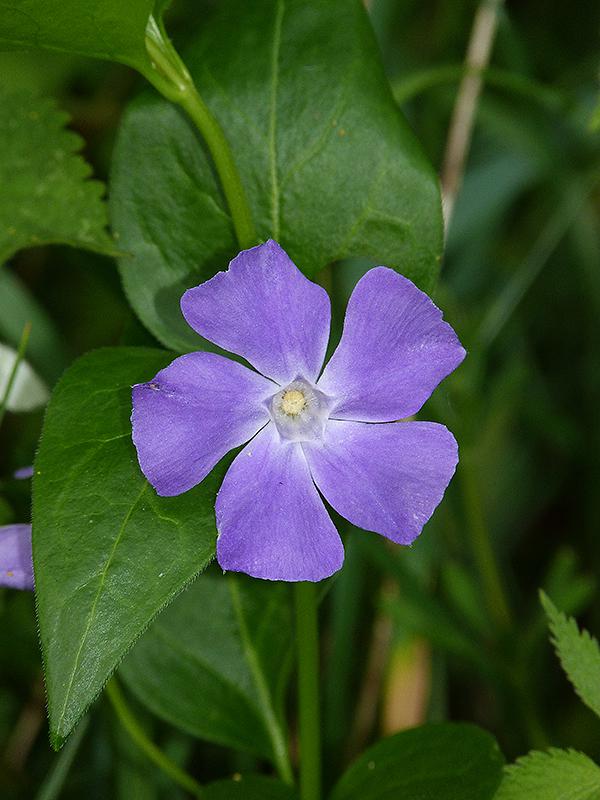

Leicestershire & Rutland Map
Enter a town or village to see local records
MAP KEY:
Yellow squares = NBN records (all known data)
Coloured circles = NatureSpot records: 2025+ | 2020-2024 | pre-2020
UK Map
Species profile
- Common names
- Greater Periwinkle
- Species group:
- flowering plant
- Kingdom:
- Plantae
- Order:
- Gentianales
- Family:
- Apocynaceae
- Records on NatureSpot:
- 48
- First record:
- 29/04/2011 (Skevington, Mark)
- Last record:
- 20/05/2026 (Calow, Graham)
Total records by month
% of records within its species group
10km squares with records
The latest images and records displayed below include those awaiting verification checks so we cannot guarantee that every identification is correct. Once accepted, the record displays a green tick.
In the Latest Records section, click on the header to sort A-Z, and again to sort Z-A. Use the header boxes to filter the list.
Latest images
Latest records
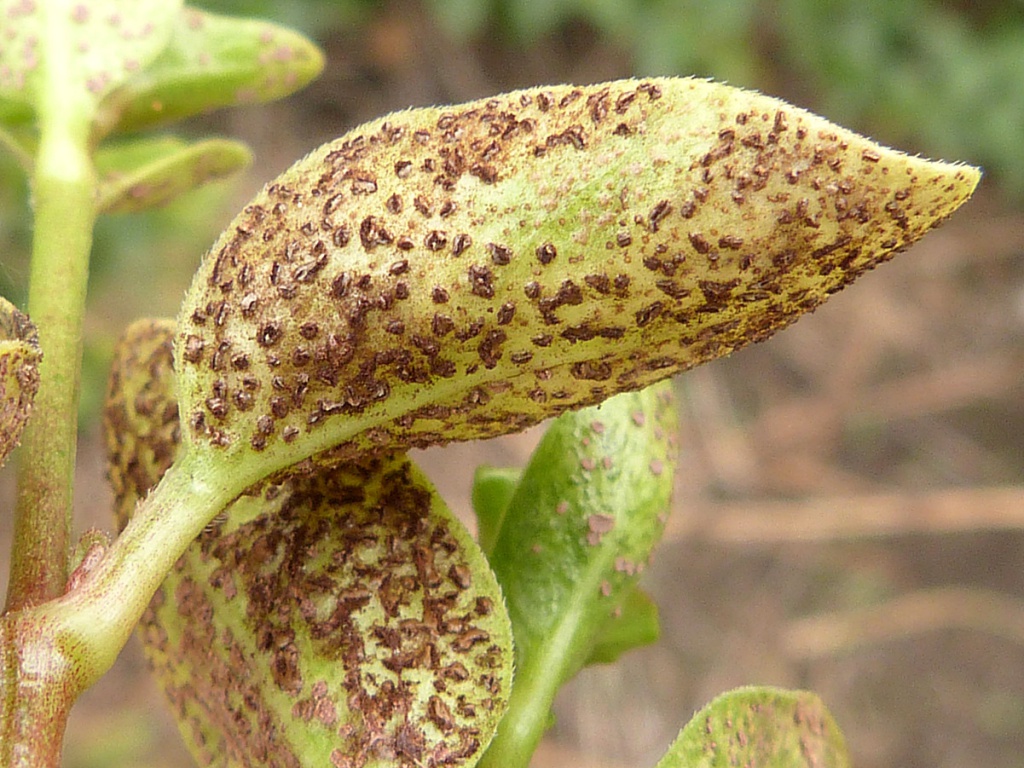
Periwinkle Rust
Periwinkle Rust (Puccinia vincae) causes galls on Greater Periwinkle (Vinca major). There is no host alternation, and no aecia. Uredinia brown and telia dark brown, borne on leaf undersides. Infested shoots are sterile.