

Gastrancistrus
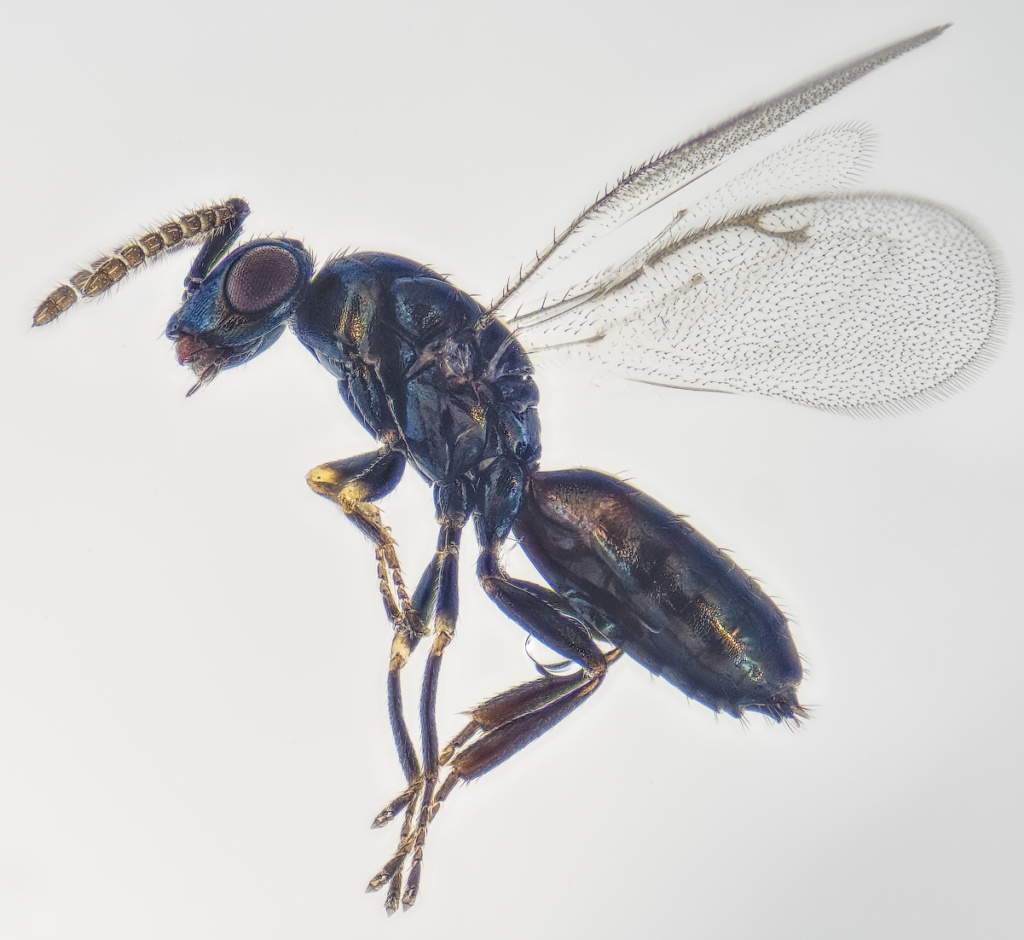
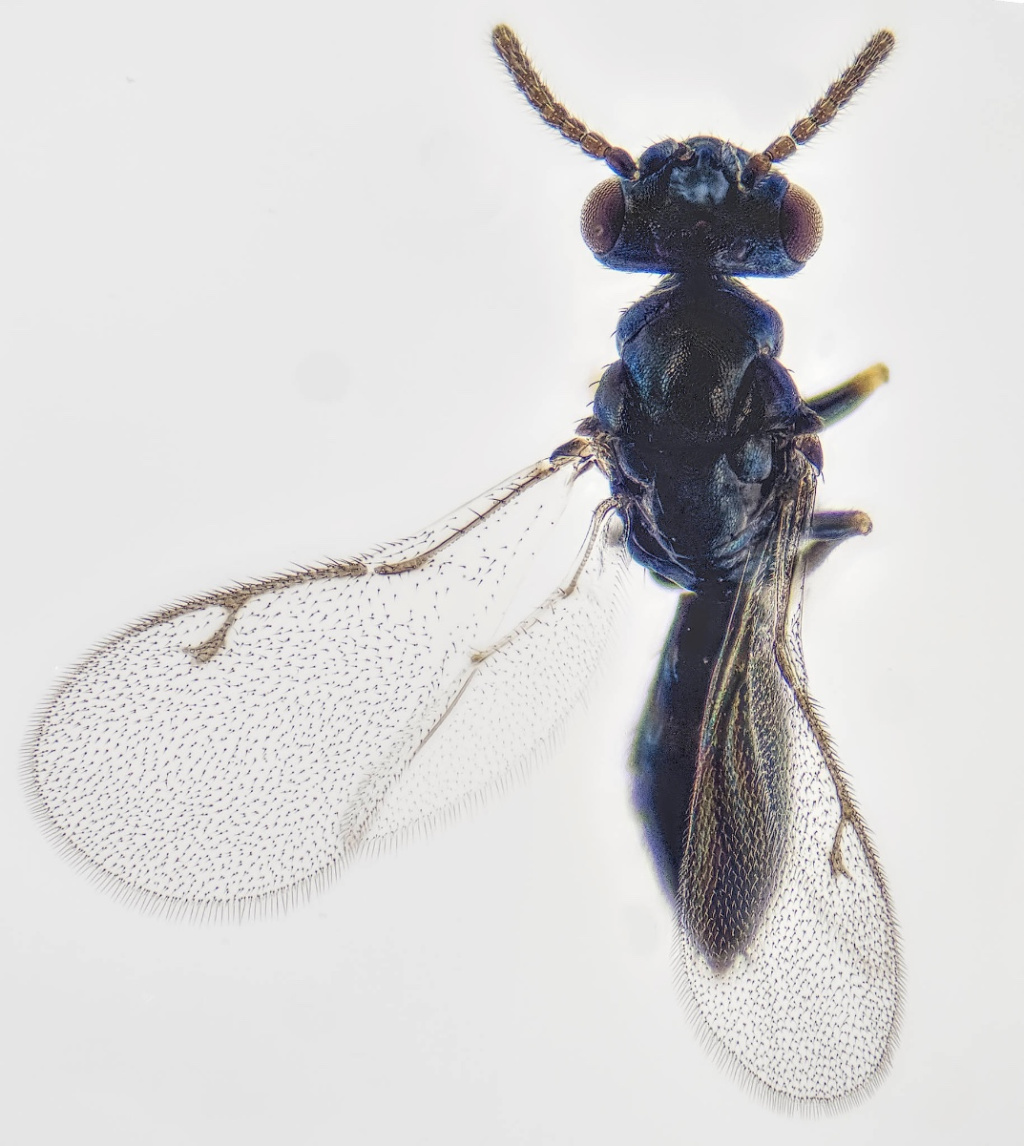
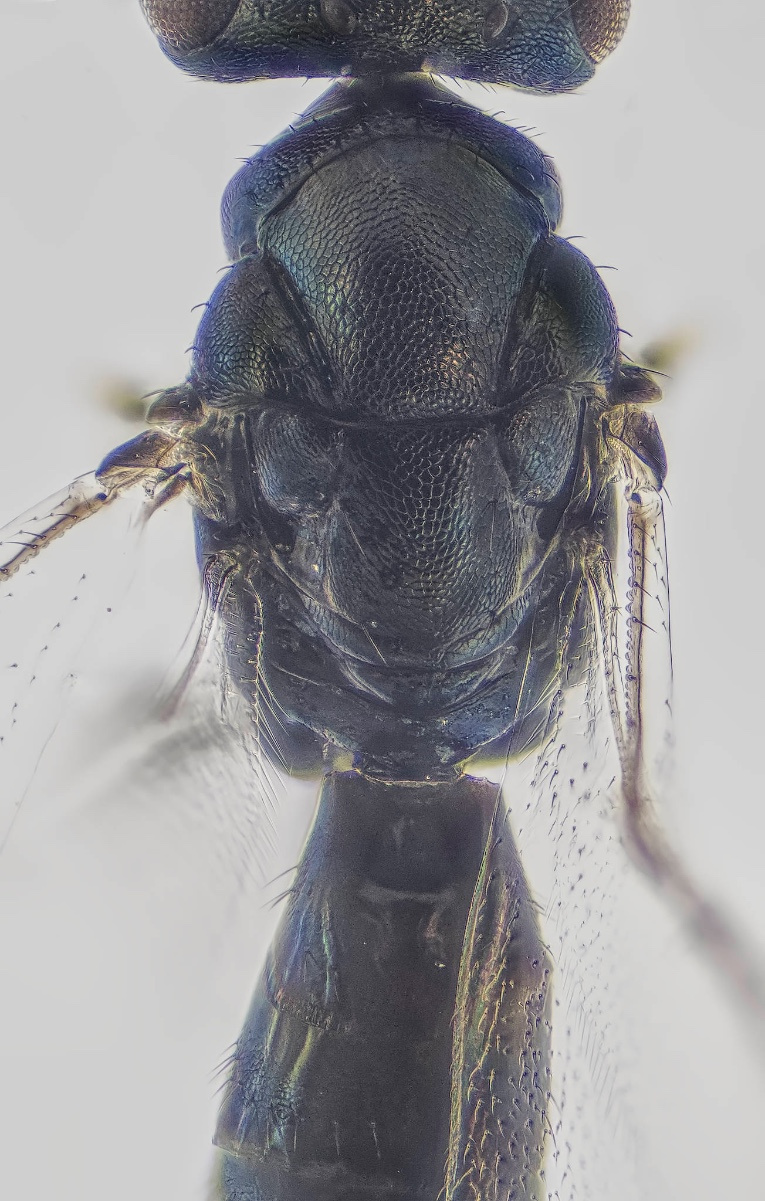
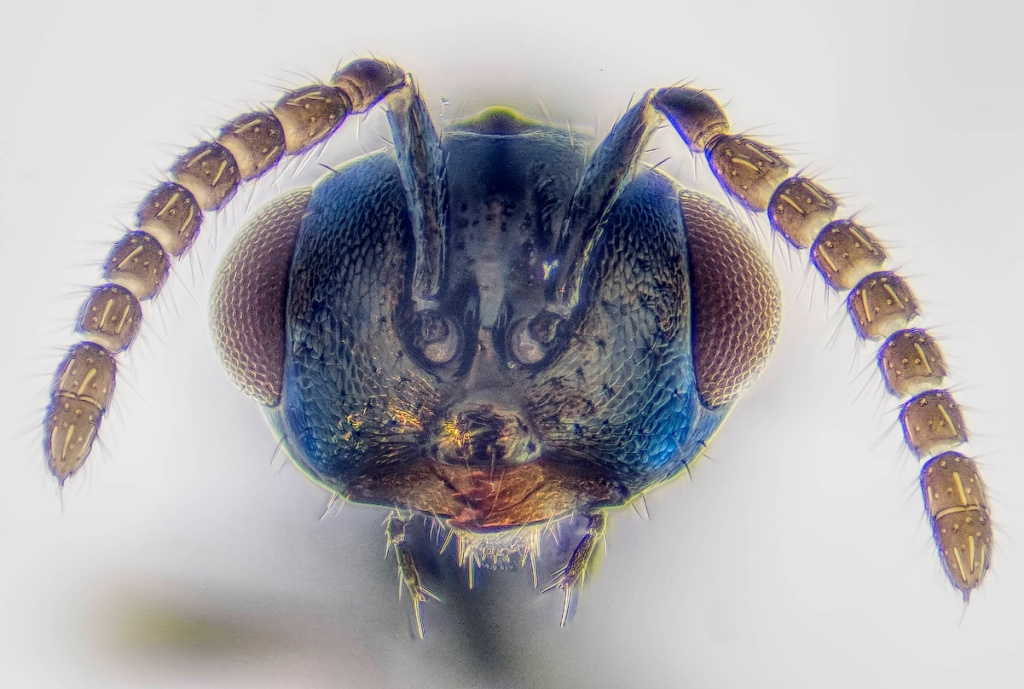
Length 2-3mm. Antennal toruli (antenna sockets) are positioned low on the face, at or below the level of the lower margin of the eyes. Female antennae have 5 or 6 funicle segments and a 3-segmented club (clava); male antennae have 6 funicular segments and a 2-segmented club. The clypeus is convex with a curved anterior margin, and they possess 4-toothed mandibles. The notauli (the longitudinal grooves on the mesoscutum) are complete and relatively deep. The body surface is largely smooth or exhibits a very shallow, delicate reticulate (net-like) patterning, giving them a distinct metallic green, blue, or bronze sheen. The forewings have a distinctly long, thick marginal vein; the postmarginal and stigmal veins are short by comparison.
50 UK species, very difficult to identify.

Unless identified by a recognized expert, explain how the specimen was identified and submit photos of key features.
The majority of Gastrancistrus species are parasitoids of Diptera, often Cecidomyiidae (gall midges).
Widespread.
Unknown.
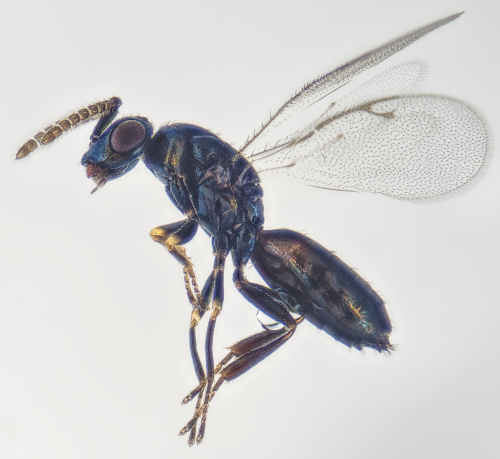 AJ Cann
Asfordby
11 May 2026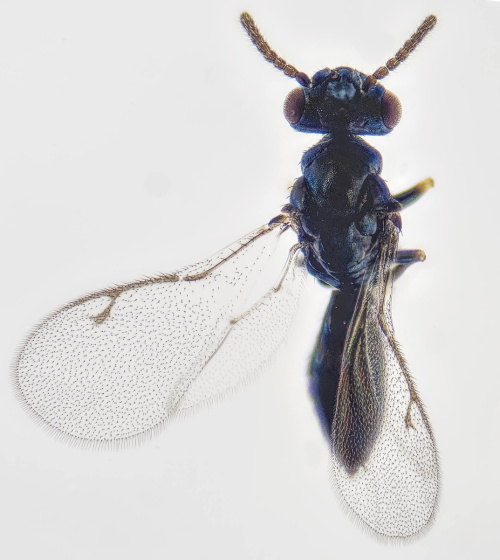 AJ Cann
Asfordby
11 May 2026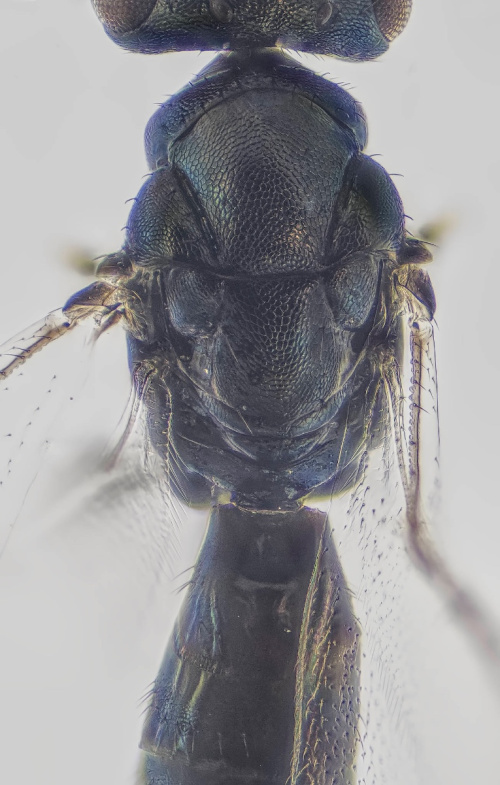 AJ Cann
Asfordby
11 May 2026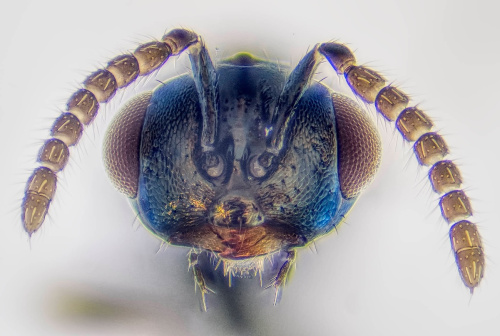 AJ Cann
Asfordby
11 May 2026
Leicestershire & Rutland Map
Enter a town or village to see local records
MAP KEY:
Yellow squares = NBN records (all known data)
Coloured circles = NatureSpot records: 2025+ | 2020-2024 | pre-2020
UK Map
Species profile
- Species group:
- insect - hymenopteran
- Kingdom:
- Animalia
- Order:
- Hymenoptera
- Family:
- Pteromalidae
- Records on NatureSpot:
- 1
- First record:
- 11/05/2026 (Cann, Alan)
- Last record:
- 11/05/2026 (Cann, Alan)
Total records by month
% of records within its species group
10km squares with records
The latest images and records displayed below include those awaiting verification checks so we cannot guarantee that every identification is correct. Once accepted, the record displays a green tick.
In the Latest Records section, click on the header to sort A-Z, and again to sort Z-A. Use the header boxes to filter the list.