

English Elm - Ulmus procera
Large suckering domed tree to 30 metres, but rarely reaching maturity in Britain since the ravages of Dutch Elm Disease. Bark cracks into squares and branches have corky ridges. Leaves have 10 to 12 pairs of lateral veins. Flowers in small clusters appearing before the leaves. Fruits rounded 10 to 17 mm winged with seed above the middle.

Either obtain confirmation from a County Recorder before submitting a record, or submit detailed images showing key features. We recommend that you take and retain a specimen; the County Recorder may wish to see this for confirmation.
Common within its range in hedgerows. Rare in woodland.
March to April.
Deciduous. Can become quite common in some hedgerows often reaching the size of a small tree when it usually dies, having already produced suckers that become the next generation.
Common in southern and central England, scarcer further north.
Quite common in Leicestershire and Rutland. In the 1979 Flora survey of Leicestershire it was found in 525 of the 617 tetrads.
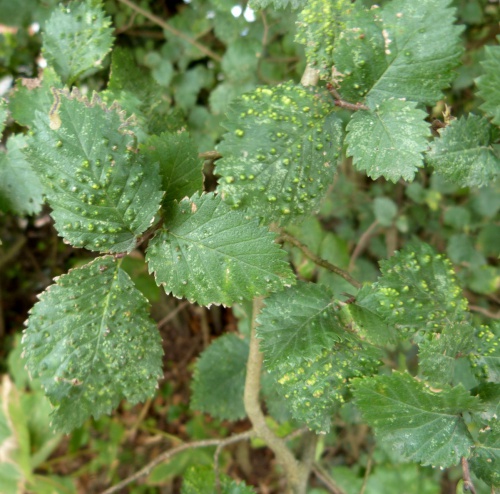 Graham Calow
Sapcote, near 'The Limes'
03 August 2020
specimen examined by County Recorder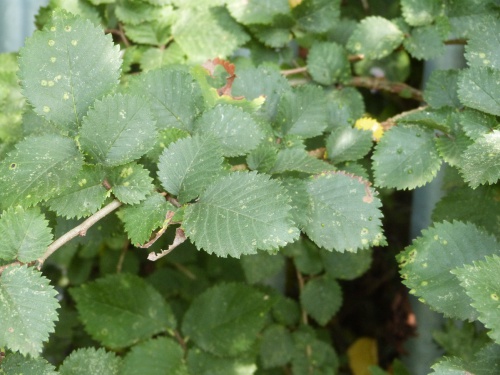 Graham Calow
Sapcote, land behind William Spencer Avenue
14 August 2020
specimen examined by County Recorder
Leicestershire & Rutland Map
Enter a town or village to see local records
MAP KEY:
Yellow squares = NBN records (all known data)
Coloured circles = NatureSpot records: 2025+ | 2020-2024 | pre-2020
UK Map
Species profile
- Common names
- English Elm
- Species group:
- flowering plant
- Kingdom:
- Plantae
- Order:
- Rosales
- Family:
- Ulmaceae
- Records on NatureSpot:
- 3
- First record:
- 07/09/2019 (Nicholls, David)
- Last record:
- 14/08/2020 (Calow, Graham)
Total records by month
% of records within its species group
10km squares with records
The latest images and records displayed below include those awaiting verification checks so we cannot guarantee that every identification is correct. Once accepted, the record displays a green tick.
In the Latest Records section, click on the header to sort A-Z, and again to sort Z-A. Use the header boxes to filter the list.
Latest images
Latest records
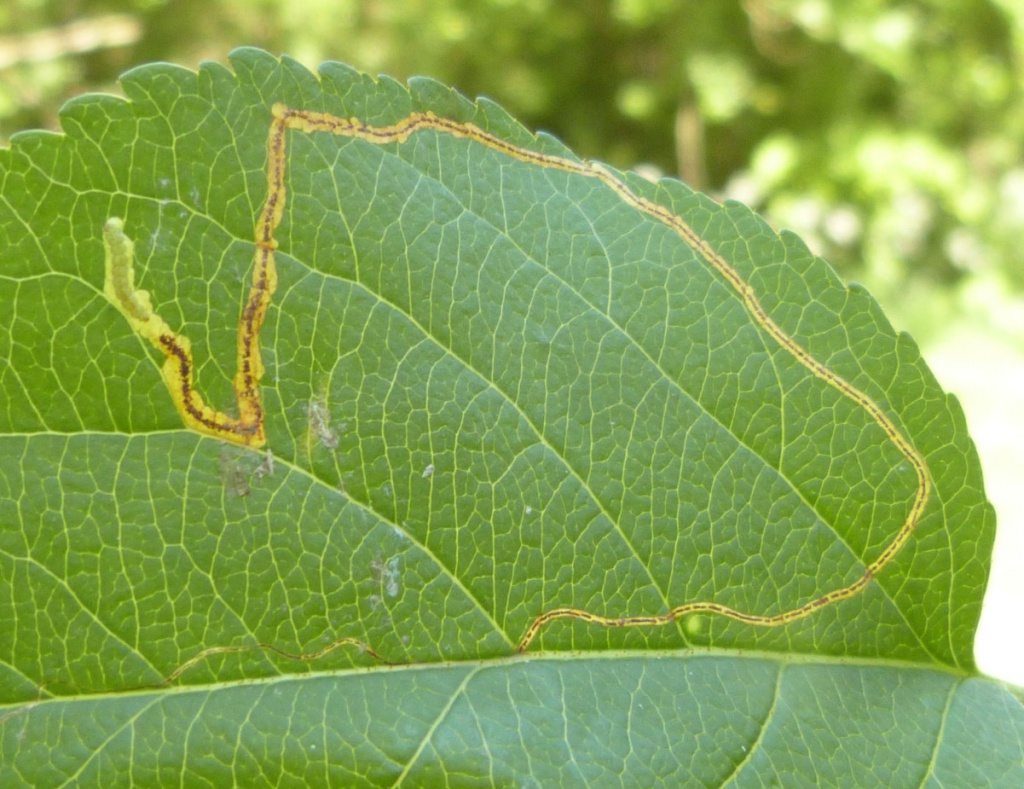
Apple Leaf Miner
The larva of the Apple Leaf Miner moth (Lyonetia clerkella) produces a leafmine on a number of species, and ocasionally uses Elm. The mine is long smoothly curved gallery with frass in a central line; older mines look whitish. The larva is long and slender. It has a segmented body and 6 dark feet.
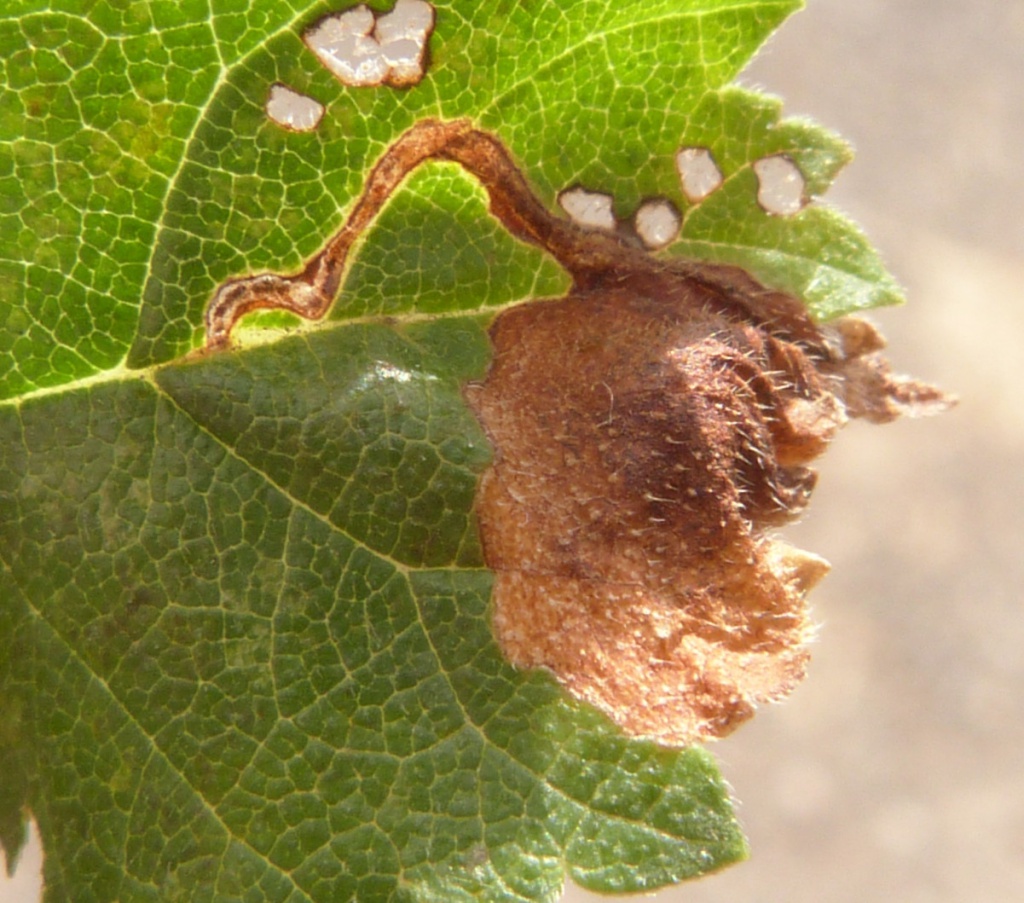
European Elm Flea Weevil
The European Elm Flea Weevil (Orchestes alni) is a very small (2.5 to 3.5mm) weevil. Each red/orange wing case (elytron) usually has two or more dark blotches, which gives this weevil a rather ladybird like appearance. The larva mines Elm, creating a narrow gallery starting from the midrib, widening into a blotch at the leaf-edge. The mines of Orchestes betuleti on Elm are similar but tend to appear later in the year.
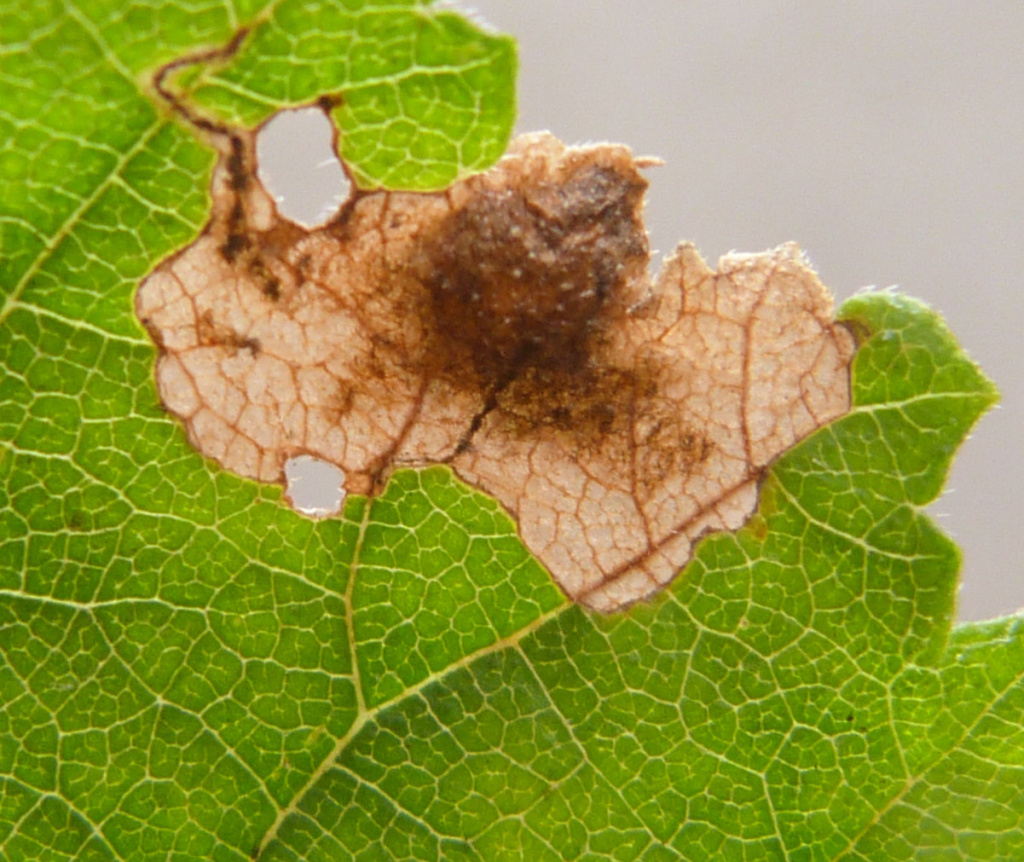
Orchestes betuleti
Orchestes betuleti is a very small ( 2.5 mm or less) weevil associated with Elm. It may vary from orange-red to darker red. The unmarked elytra, head, legs and rostrum are all red. The larva mines the leaves of Elm, creating a narrow gallery which widens into a blotch at the leaf-edge. The mines of Orchestes alni on Elm are similar but tend to appear earlier in the year.
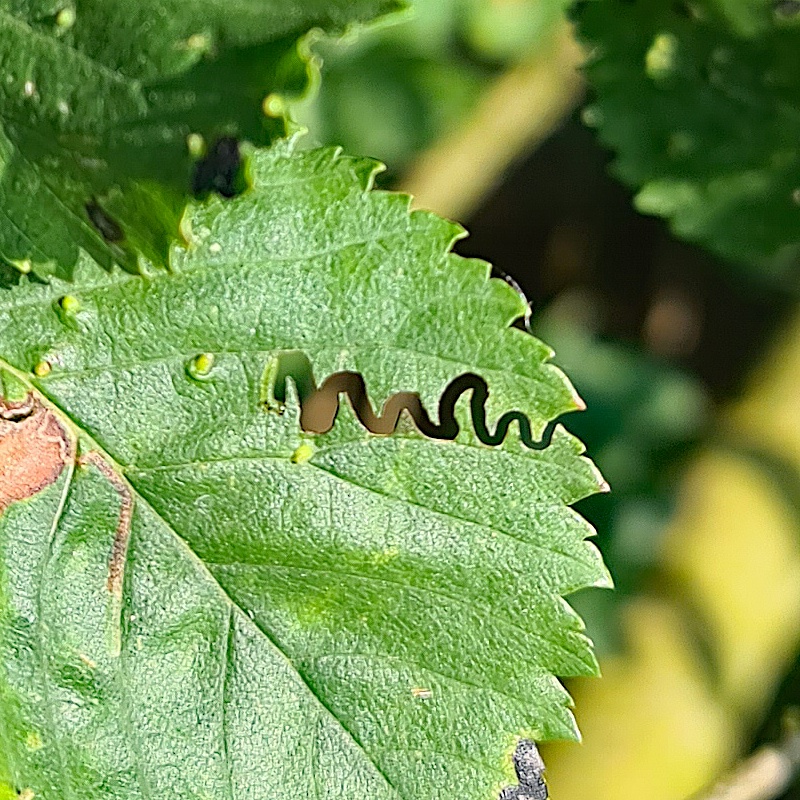
Zig-zag Elm Sawfly
The larvae of the Zig-zag Elm Sawfly (Aproceros leucopoda) feed on the leaves of Elm, prodicing characteristic zig-zag cut-out patterns in the leaf.
%20on%20English%20Elm%20(Ulmus%20procera)%20Field%20near%20Granitethorpe%20Quarry%20Sapcote%20SP%204949%209367%20(taken%2028.5.2009)_gall.JPG)
Aceria campestricola
Aceria campestricola is a gall mite that causes numerous small pouch galls to form on the upper leaf surfaces of certain species of Elm.
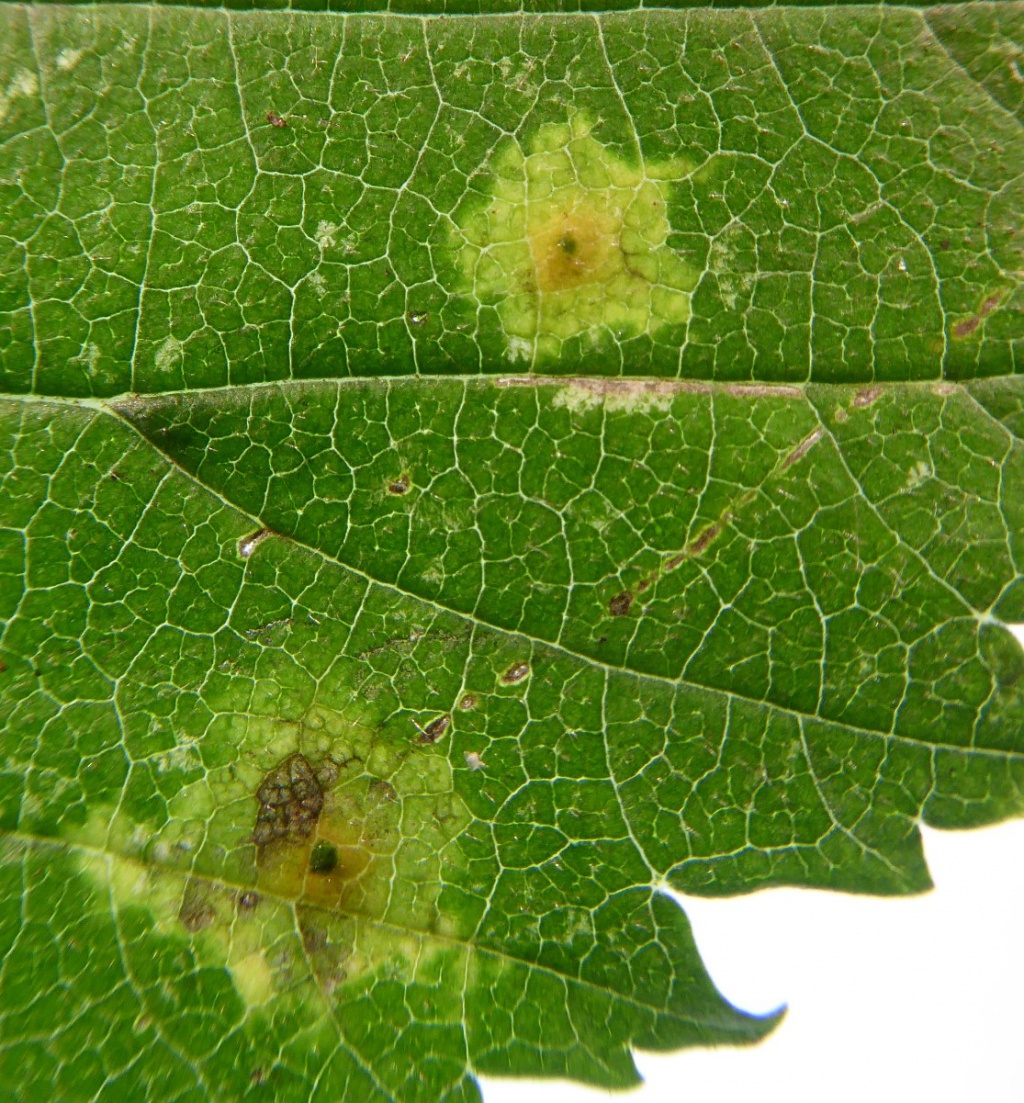
Physemocecis ulmi
The larvae of the gall midge Physemocecis ulmi produce yellowish, blister-like galls on the leaves of Elm species. The galls contain a white larva.
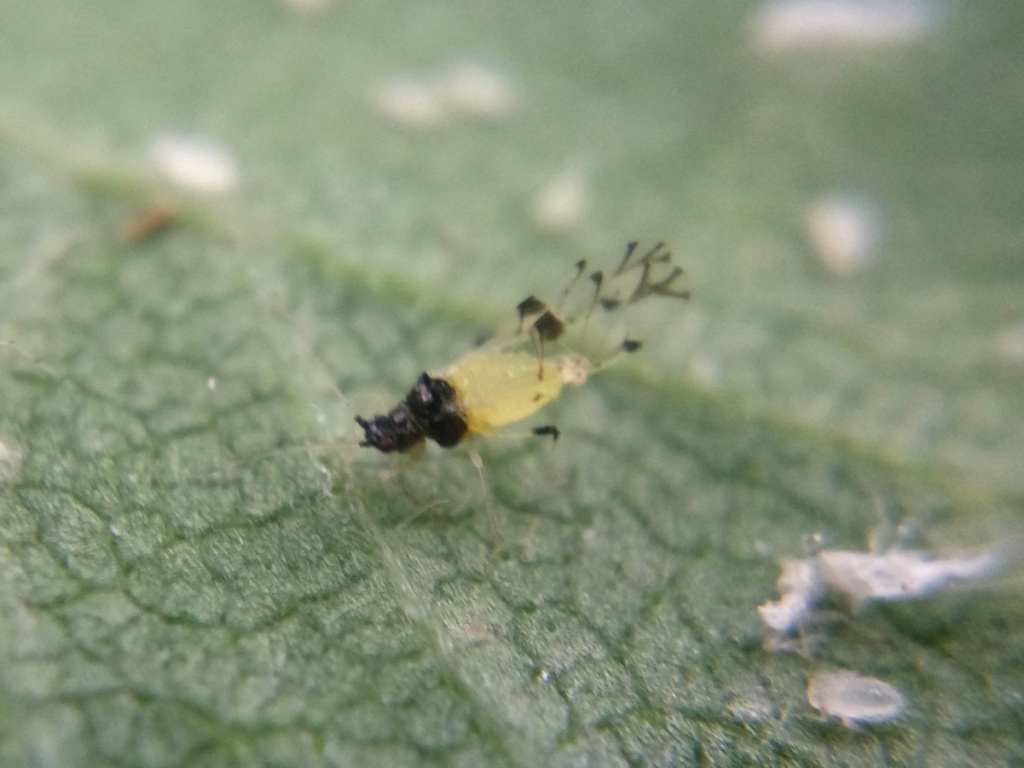
Tinocallis takachihoensis
All adult of the aphid Tinocallis takachihoensis viviparae are winged. These alates are pale yellow-green with a shiny black head and thorax. The pattern of black markings on the wings is diagnostic.
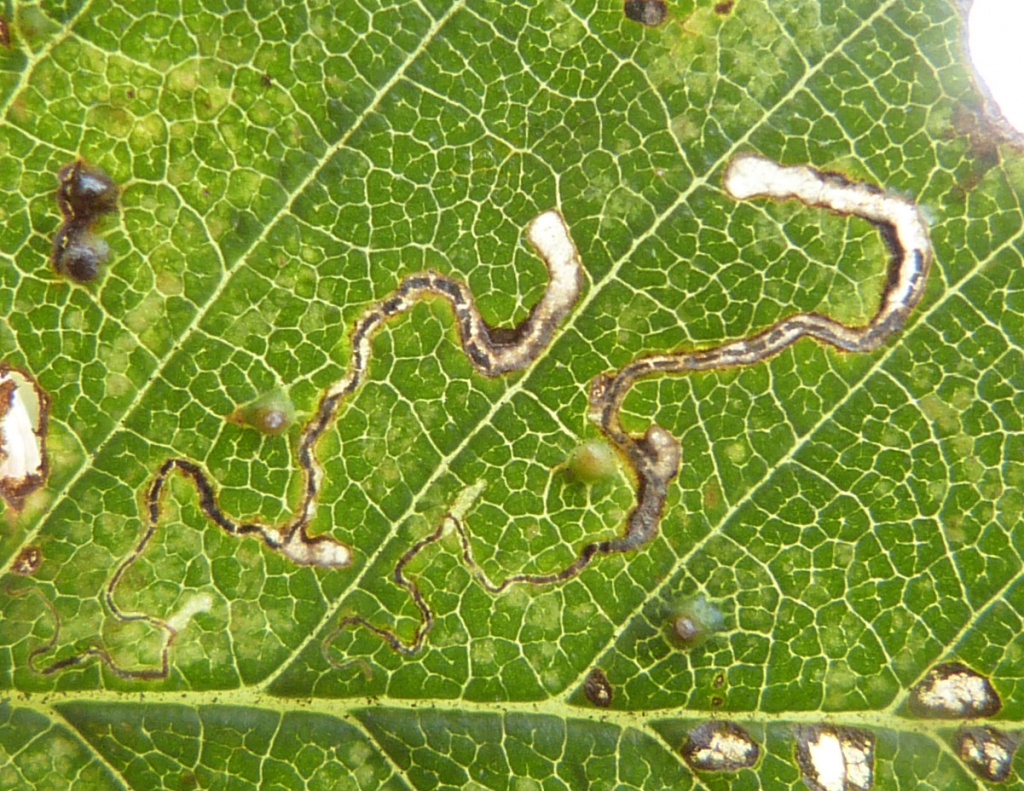
Bucculatrix albedinella
The larvae of the moth mines the leaves of elm producing a short gallery with linear frass, and one or more short frass-free projections from the mine

Stigmella viscerella
The green larva of the moth Stigmella viscerella mines the leaves of Elm (Ulmus). The mine starts as a slender contorted gallery that looks like a tiny blotch, then progresses in a series of very tight 'S' turns. The fresh frass is reddish in colour.
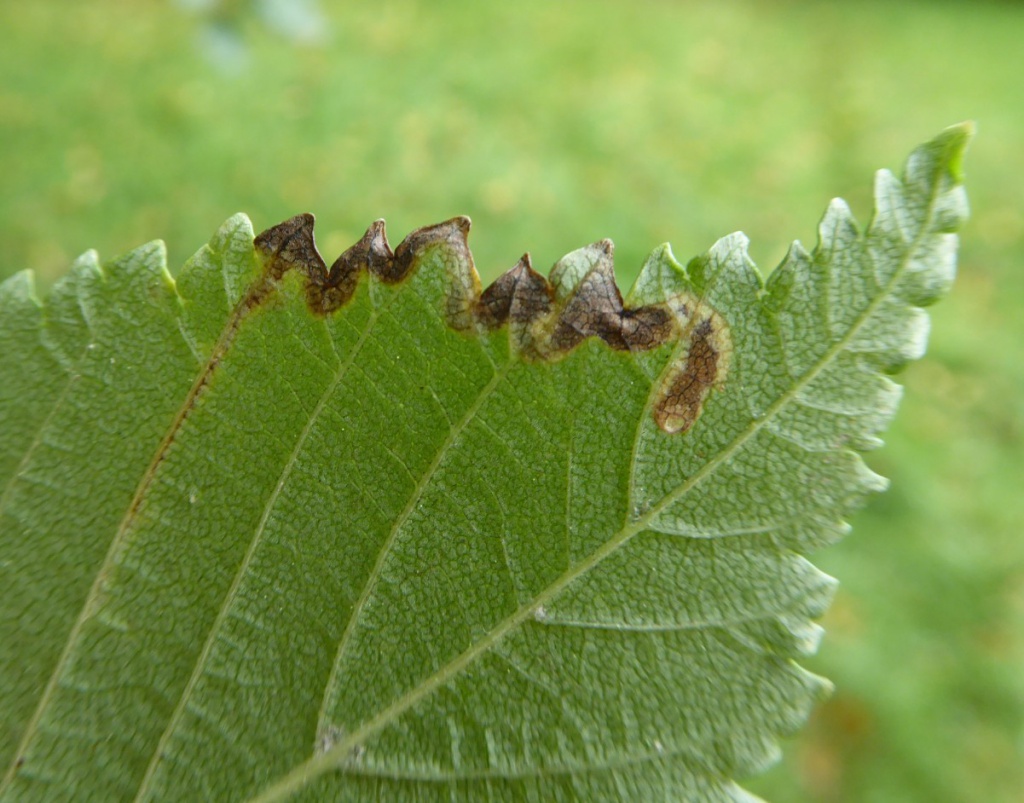
Stigmella ulmivora
The larva of the moth Stigmella ulmivora mines the leaves of Elm (Ulmus). It forms a long min e with linear frass in early part of mine. The green larva leaves the mine via an exit hole on the underside of the leaf.
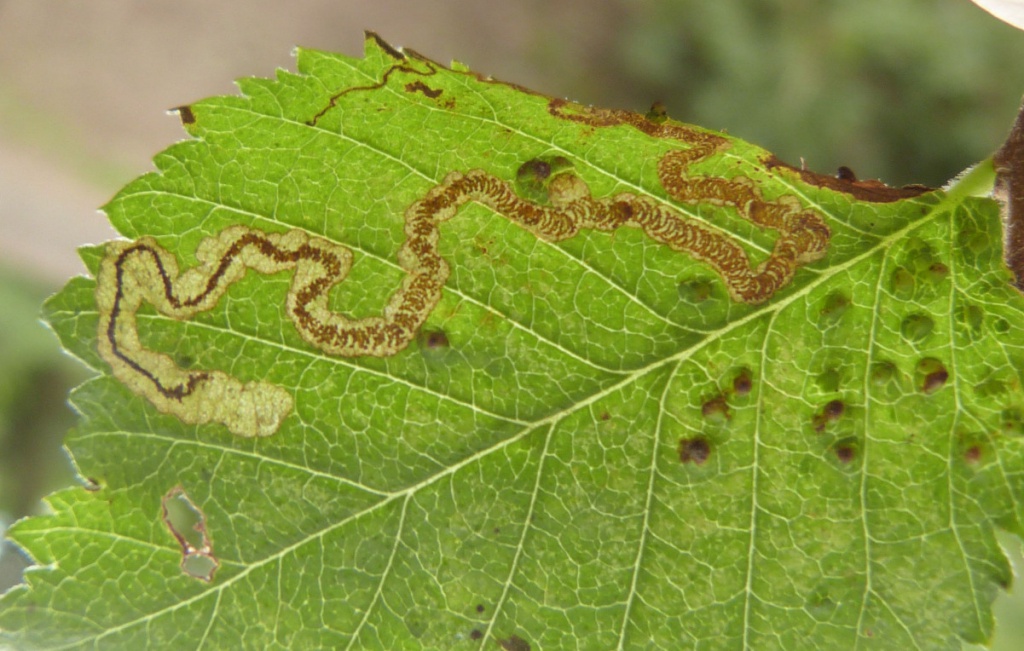
Stigmella lemniscella
The larva of the moth Stigmella lemniscella mines the leaves of Elm (Ulmus) including Wych Elm (U. glabra). It forms a narrow gallery almost filled with frass, often following the leaf margin. The yellow larva leaves the mine via an exit hole on the upper surface of the leaf.
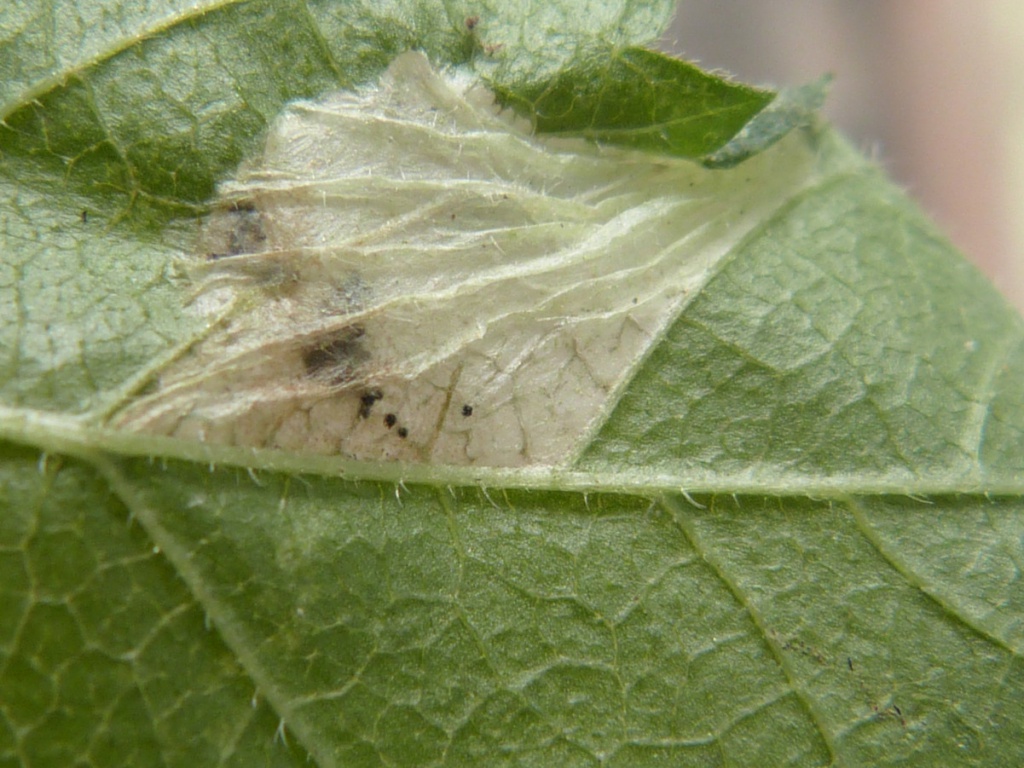
Phyllonorycter schreberella
The larva of the moth Phyllonorycter schreberella feeds on Elm (Ulmus) forming a rounded mine. This species rarely uses Wych Elm.

Phyllonorycter tristrigella
The larvae of the moth Phyllonorycter tristrigella feed on Elm (Ulmus), creating a long, narrow blotch mine on the underside of a leaf between two veins.
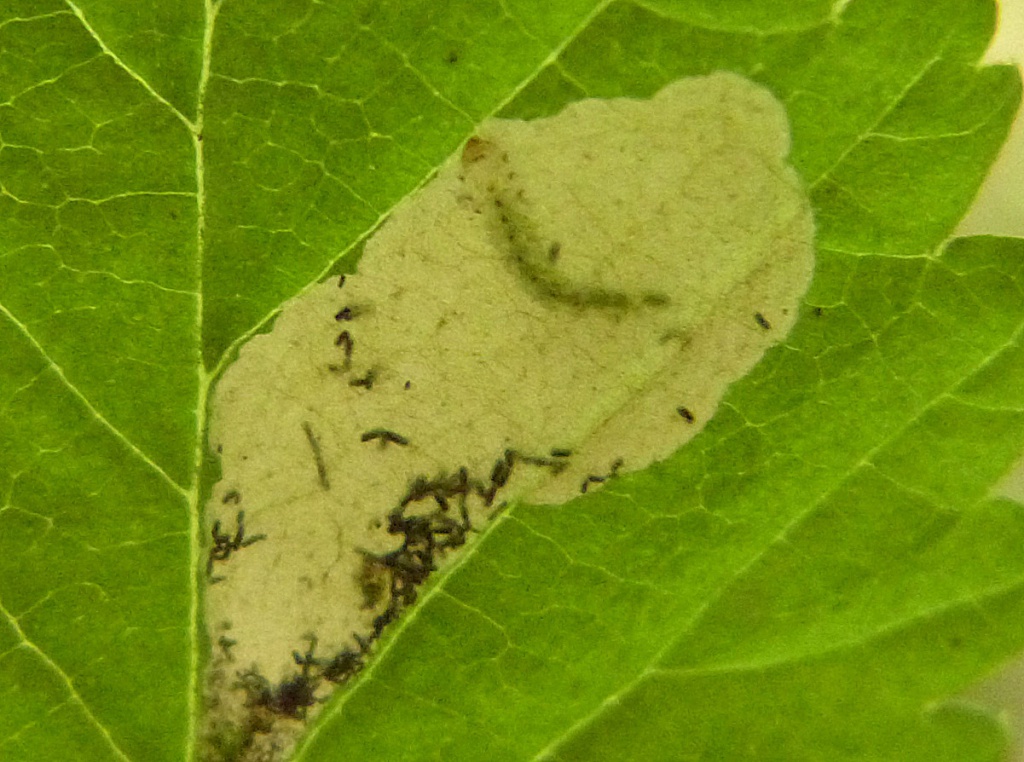
Fenusa pusilla agg.
The species is most likely to be recorded from the leafmine produced by the sawfly larva which is a full depth blotch mine on Elm. The taxonomy of the sawflies feeding on Ulmus is problematic and unresolved at present. Some authors e.g. Lacourt (2020) consider all the Ulmus feeding leafminers belong to one species - Fenusa pusilla. Fenusa ulmi was recorded in Ireland (2004, Knight) as F. pusilla. In Europe there are at most two species on Elm, F. ulmi and F. altenhoferi and we have decided to treat these as F. pusilla agg. until such time as the taxonomy is resolved.
,_gall.JPG)
Eriosoma lanuginosum
Eriosoma lanuginosum is an aphid which causes the formation of a leaf gall on Elm which takes the form of a bladder looking like a pale green egg or pear which may be 6 or even 8 cm long and nearly as wide. The gall is more often seen than the adult aphid.
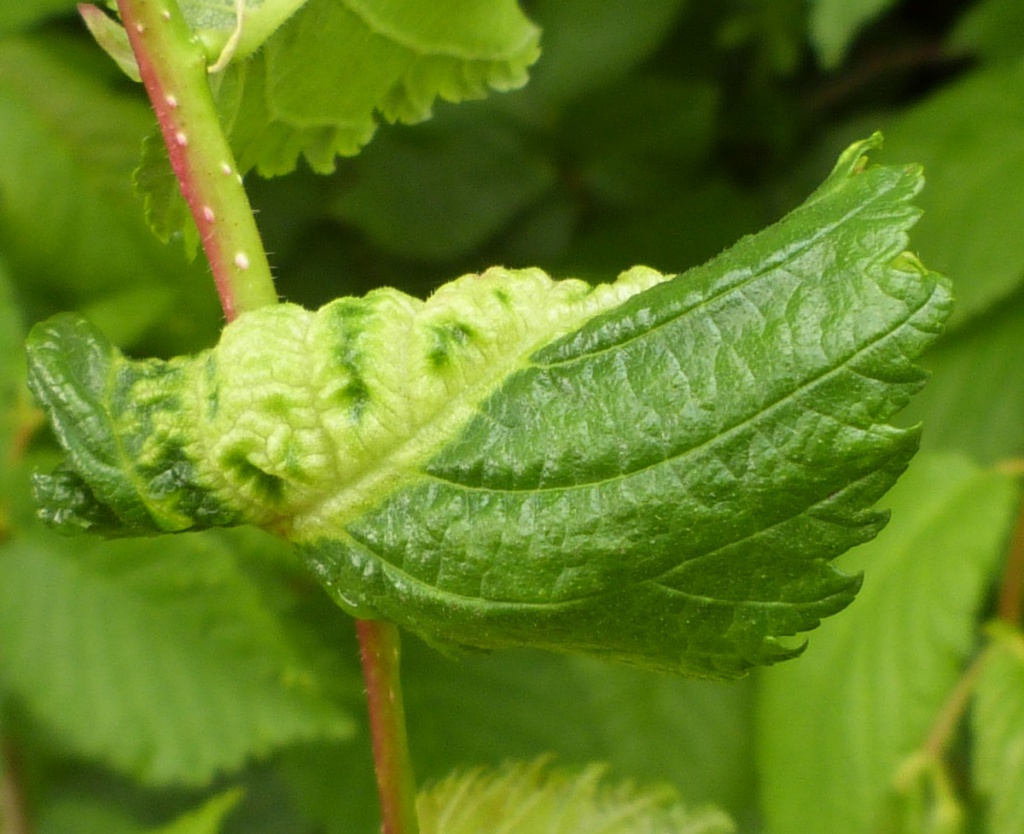
European Elm Leafcurl Aphid
Eriosoma ulmi is a greyish waxy aphid that causes a leaf roll gall to form on the leaves of Elm. One half of the Elm leaf blade crinkles and rolls in to form a tubular pouch. The gall is seen more often than the aphid.
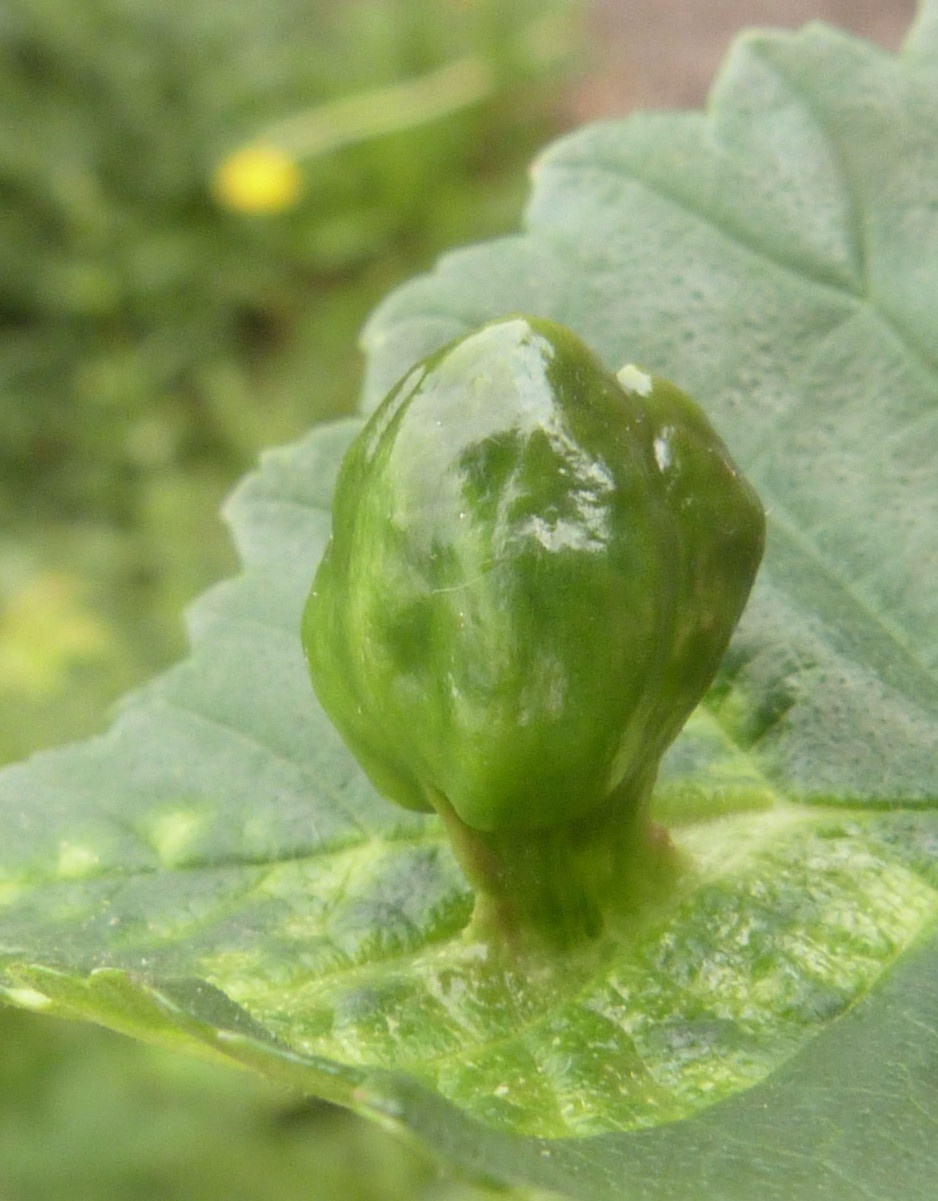
Fig Gall
The aphid Tetraneura ulmi causes a fig like gall to be formed on certain species of elm. This is a quite large, solitary, upright, pouch like gall on the upper surface of the leaf. The gall is more often seen than the adult aphid.