

Dogwood - Cornus sanguinea
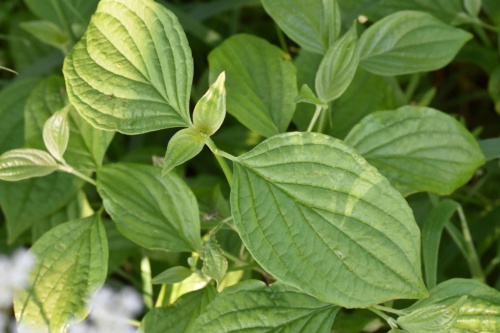
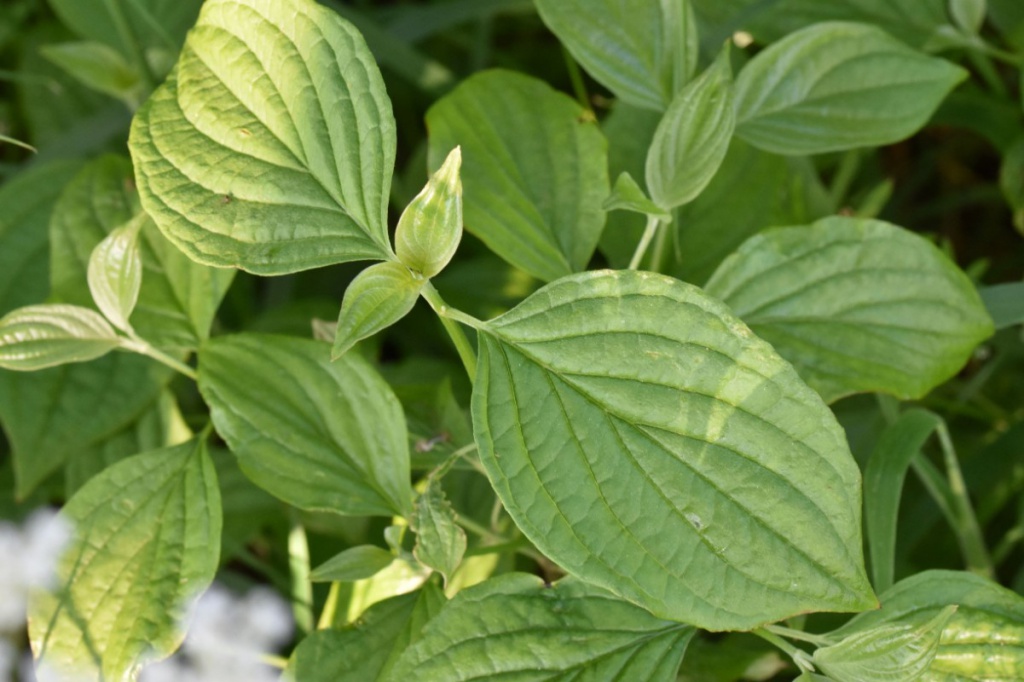
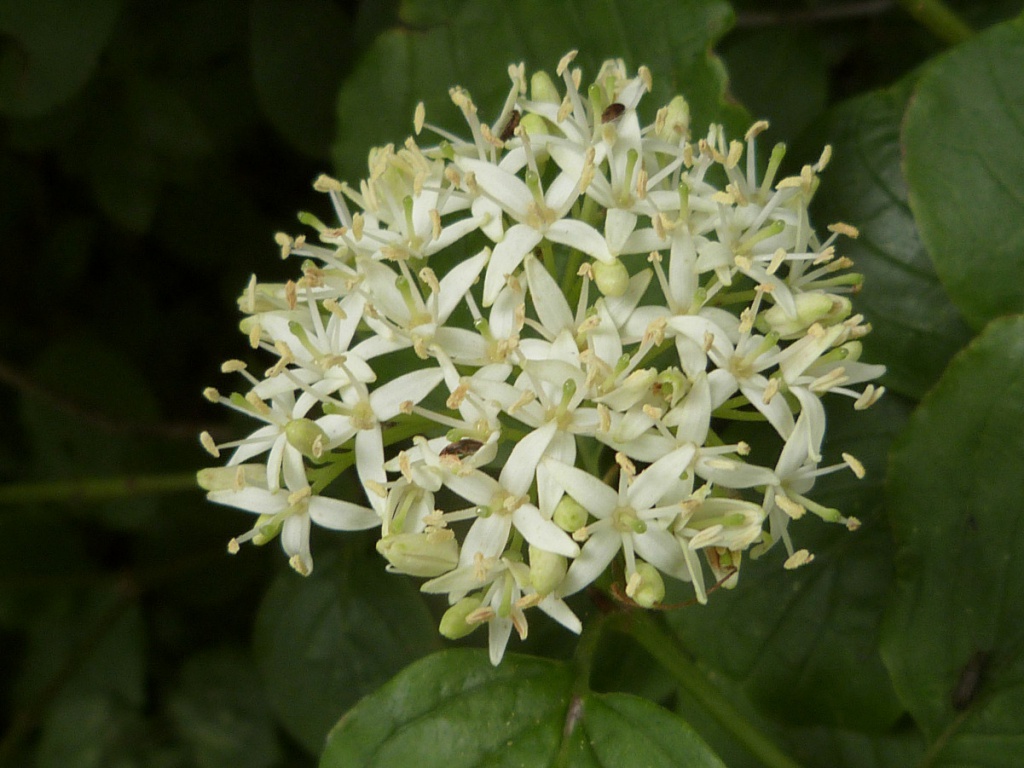
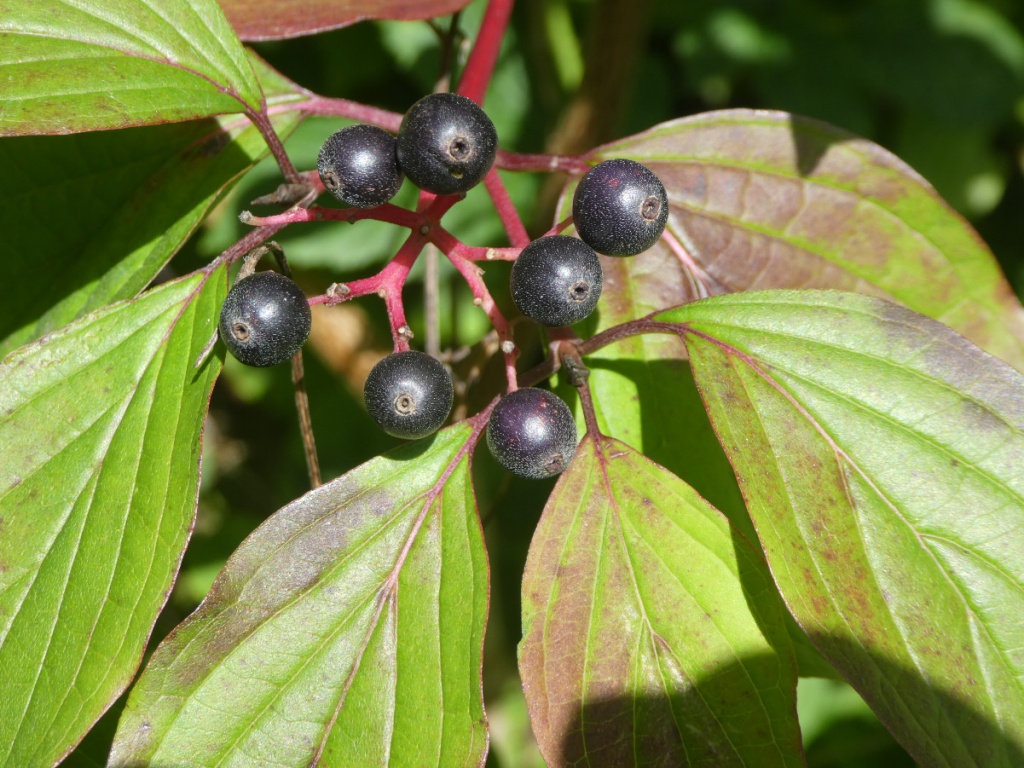
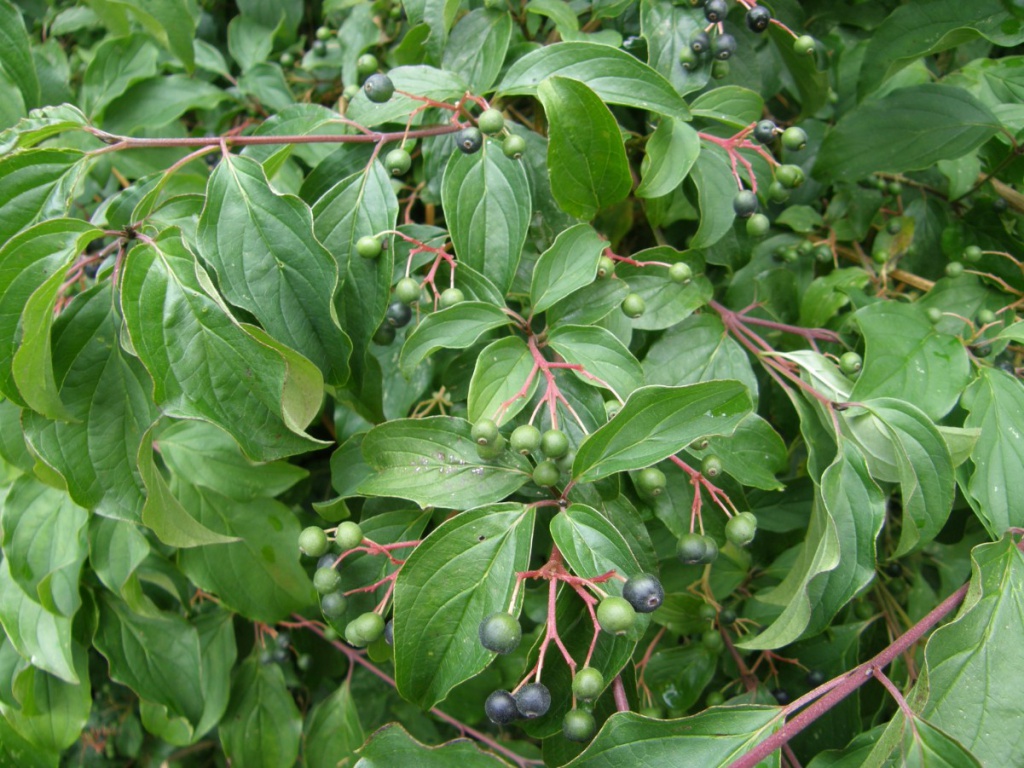
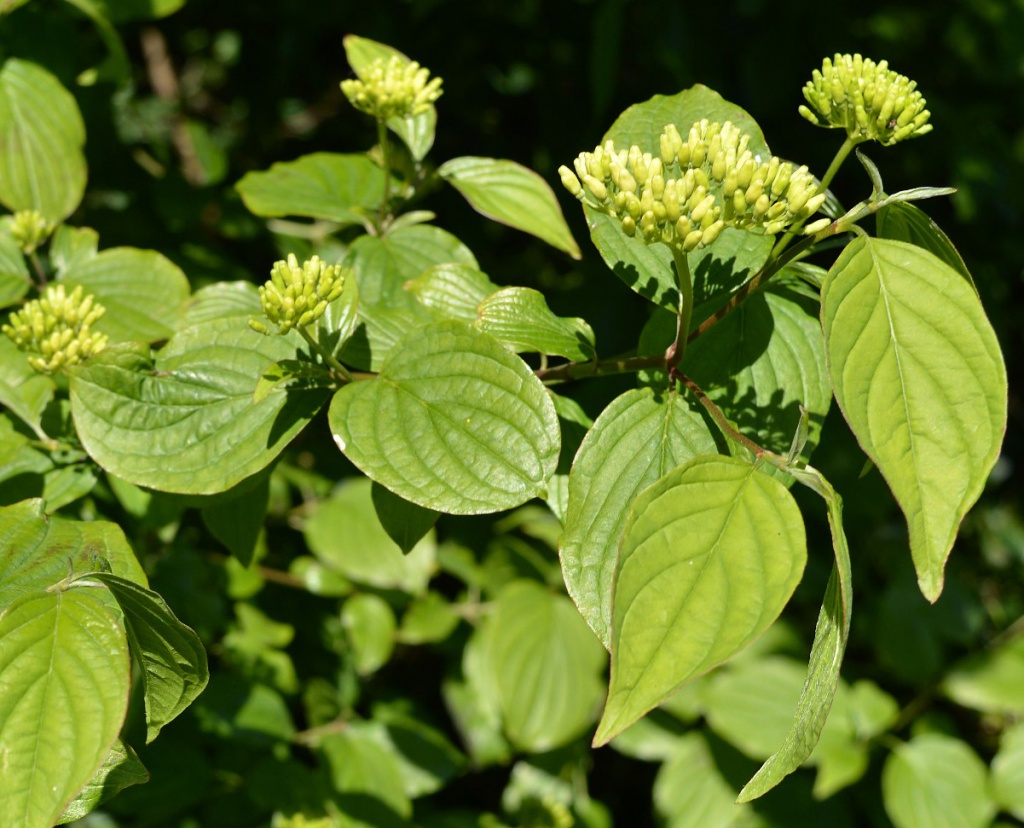
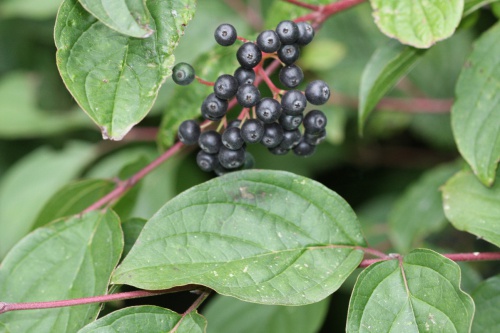
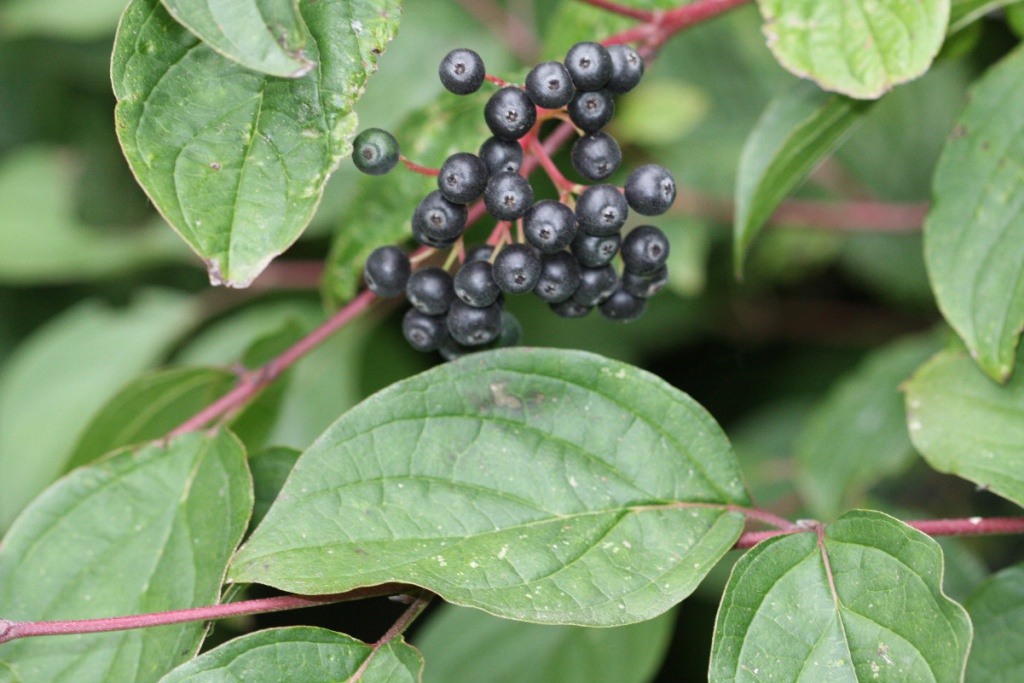
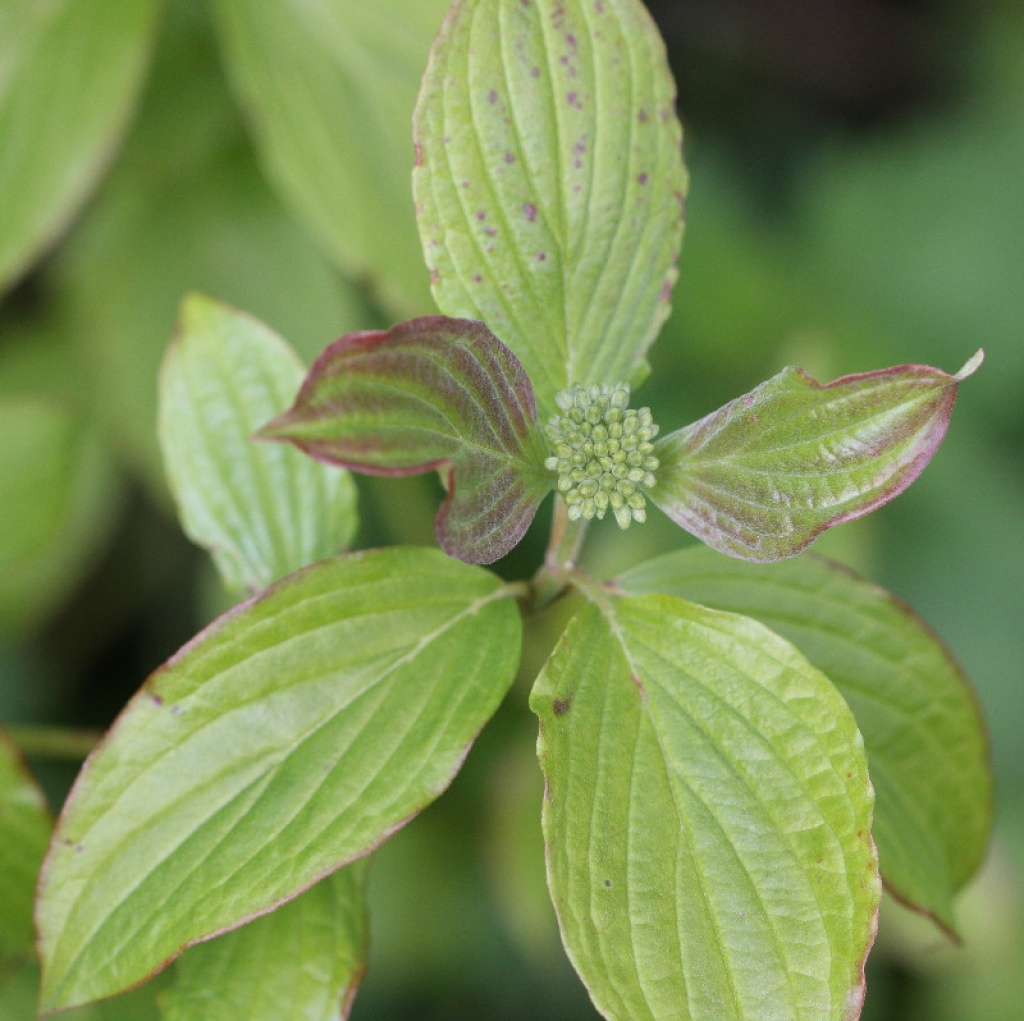
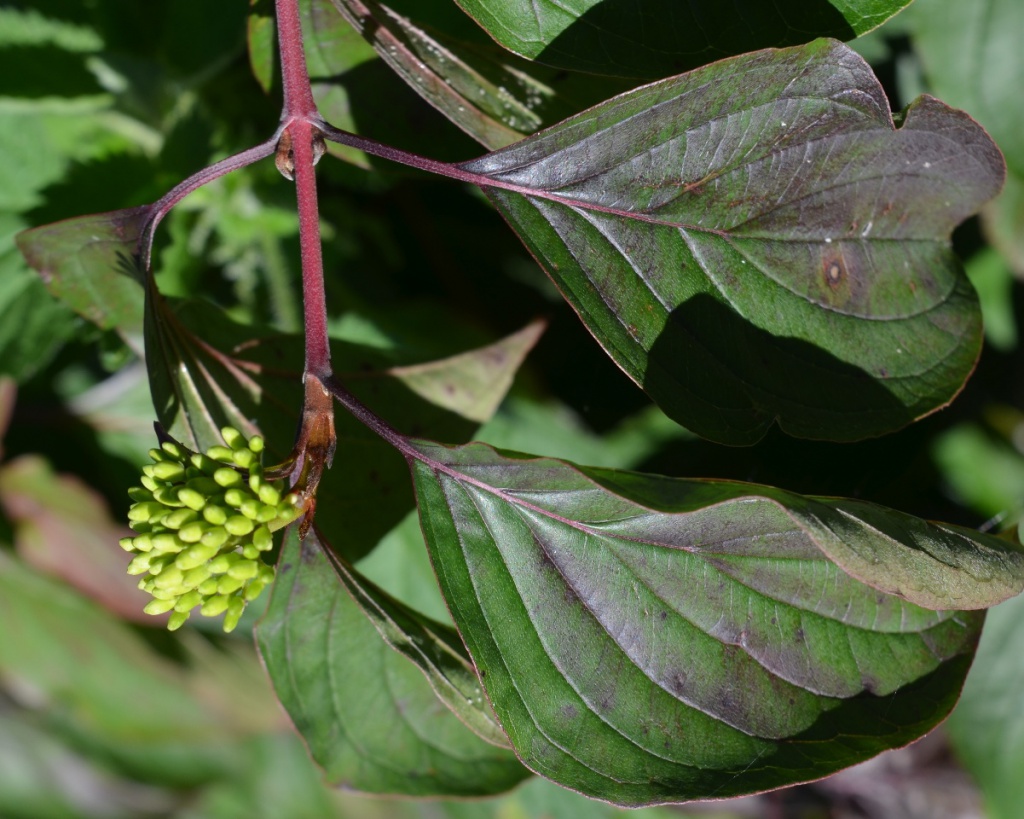
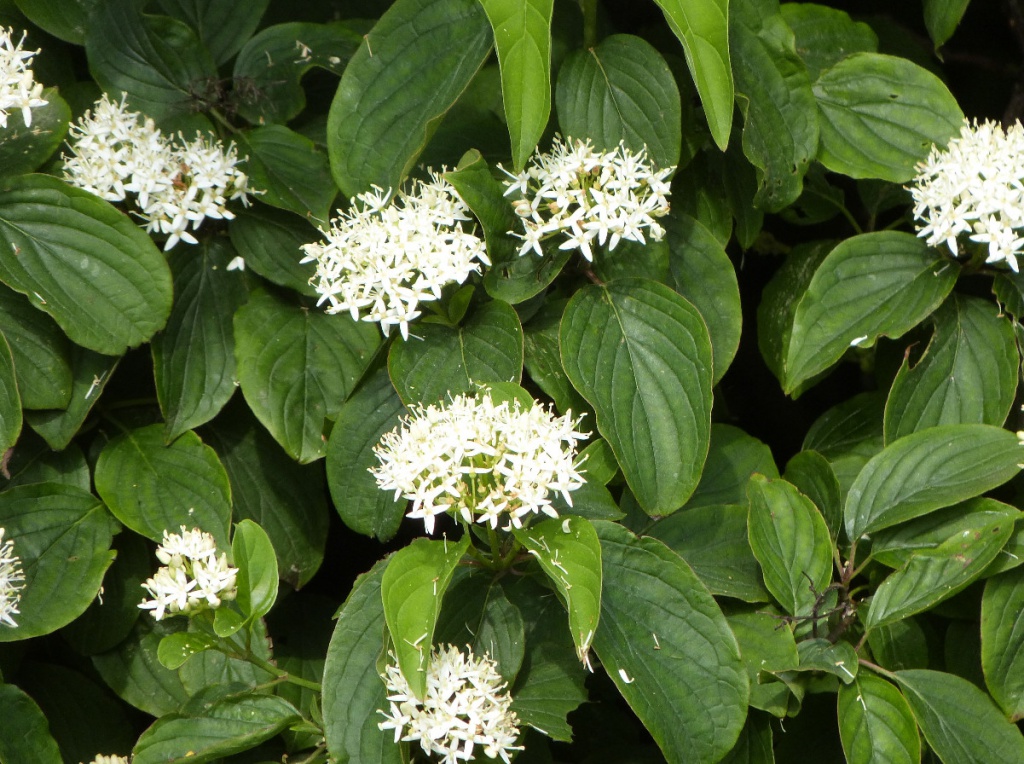
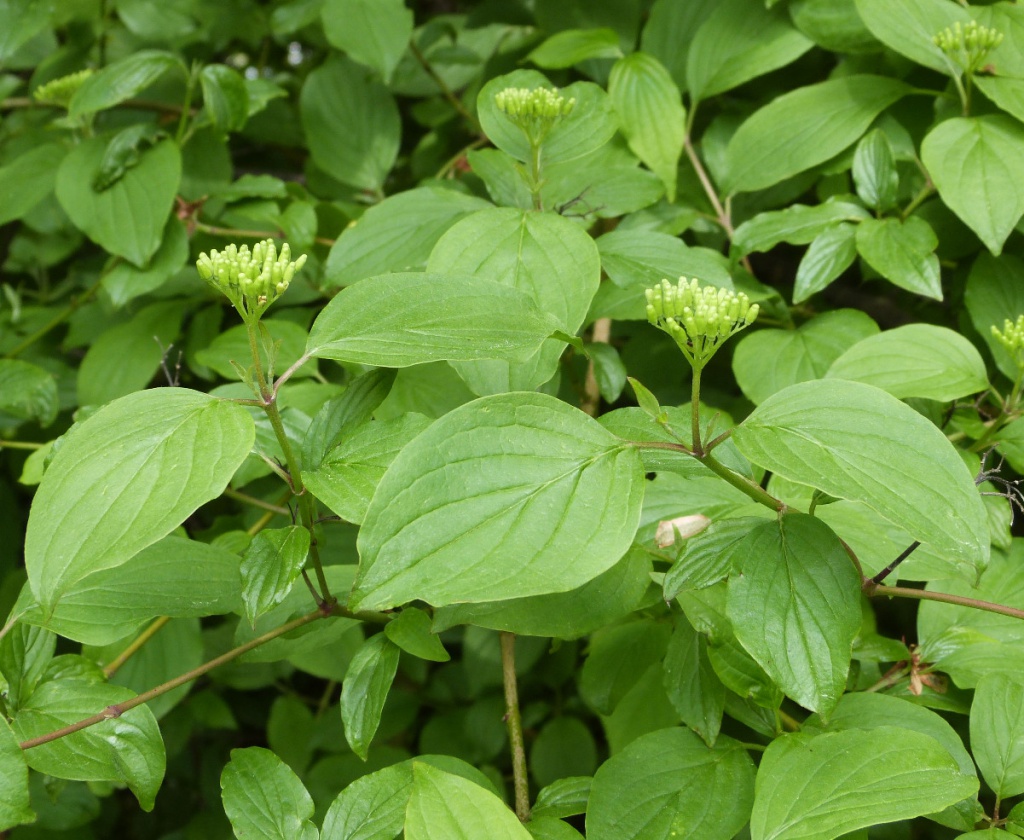
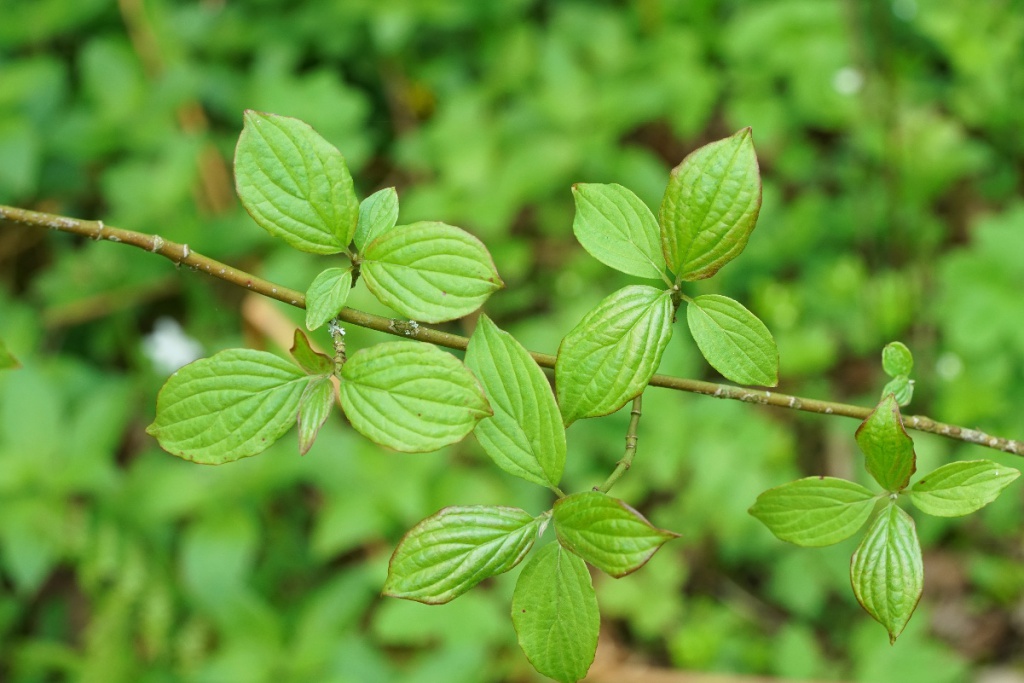
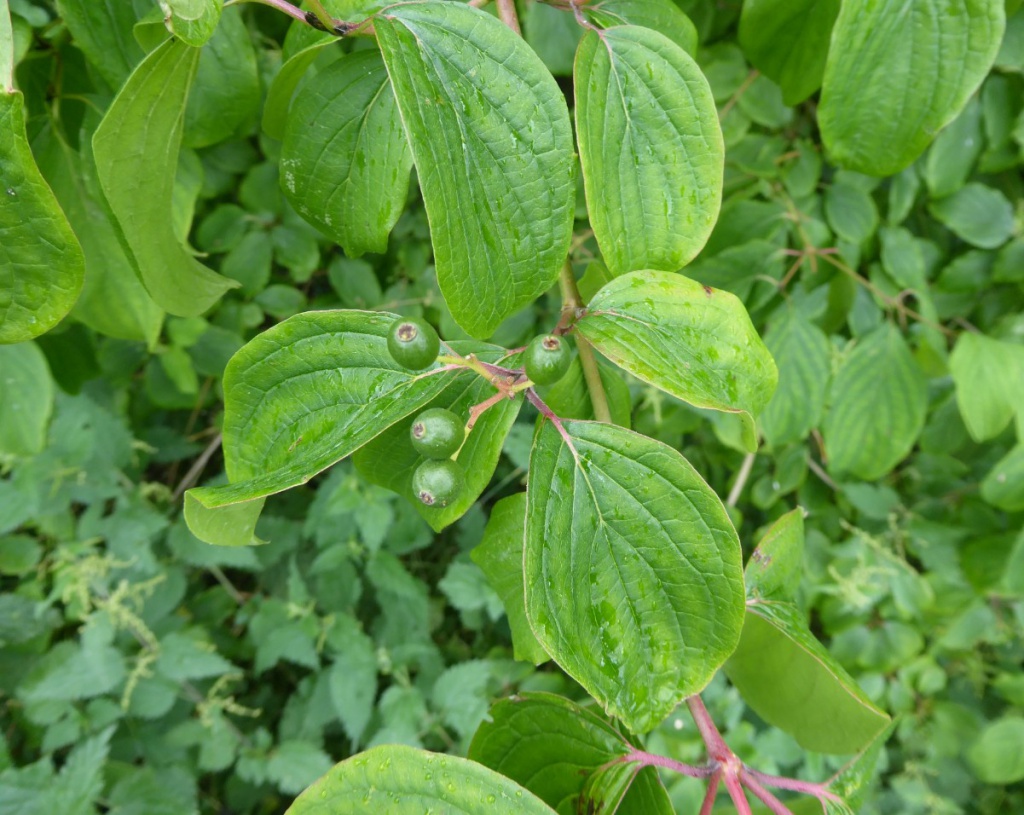
Shrub to 4 metres with dark red twigs. Leaves opposite, elliptical to oval pointed untoothed, hairy with 3-4 pairs of main veins. Flowers dull white 8 to 10 mm in umbel like clusters. Fruit almost globose black when ripe.
Several other species are occasionally planted in wild situations

Wood, scrub and hedgerows.
June and July.
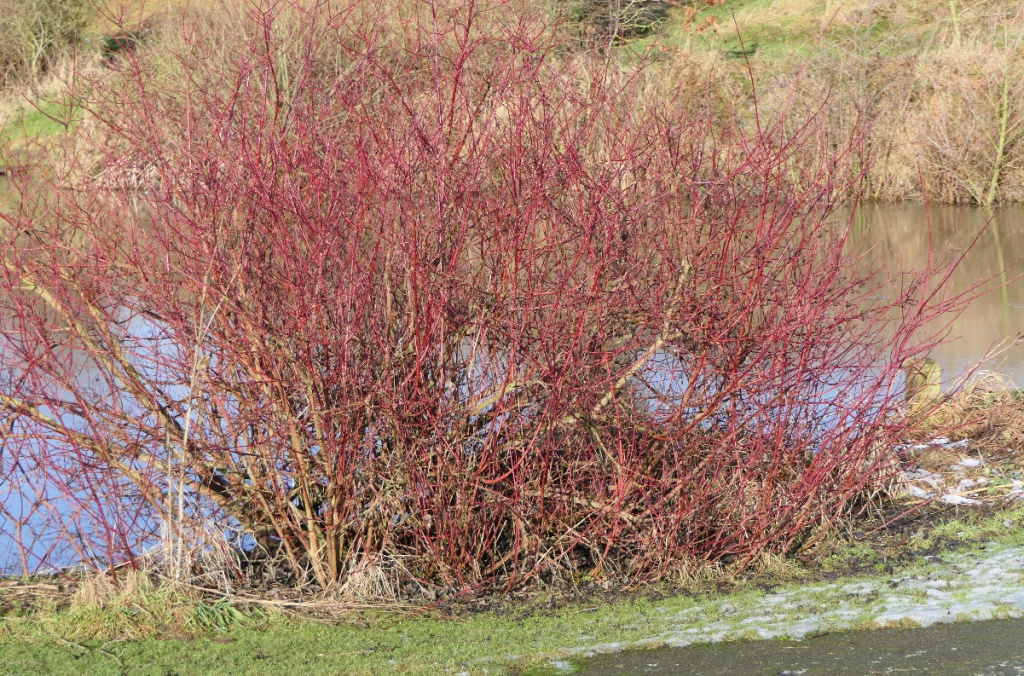
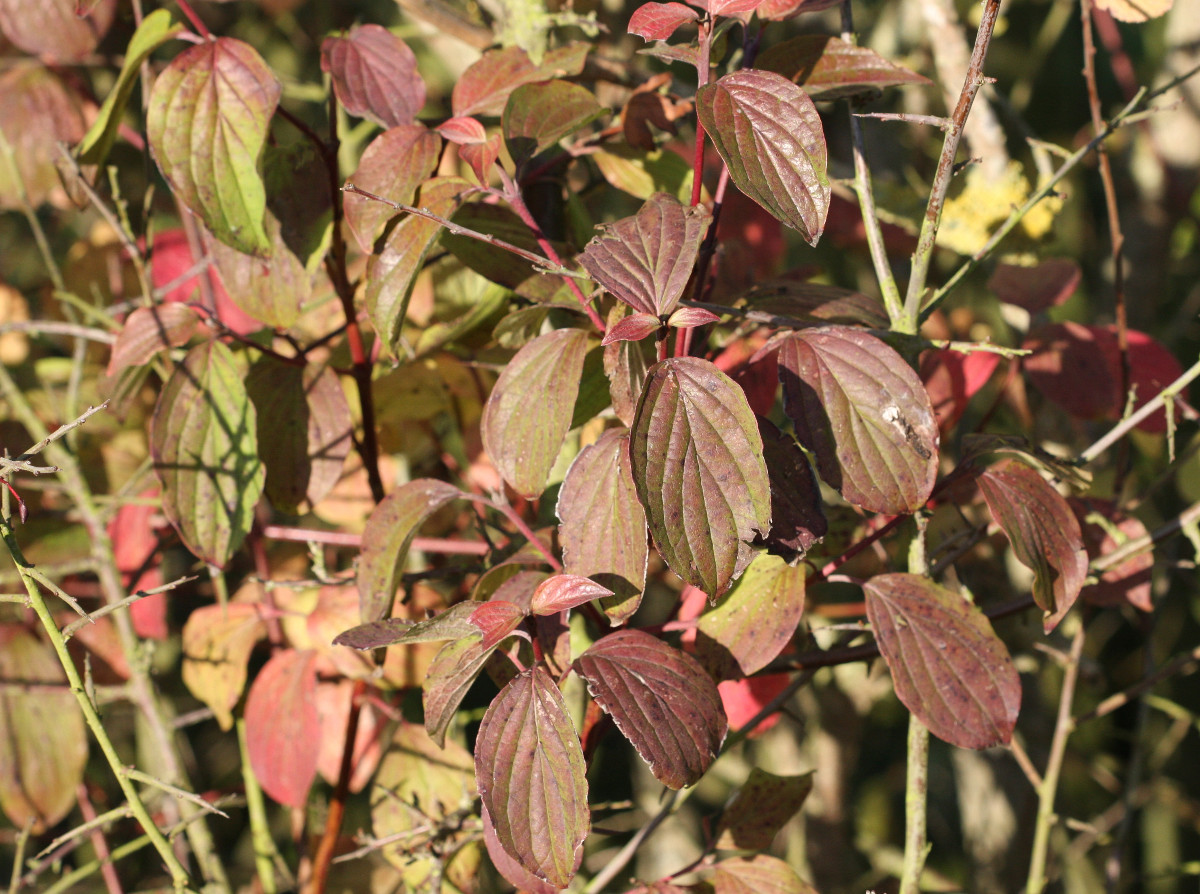
Deciduous. The leaves often turn a rich purple-red in autumn and the bare red shoots are very conspicuous in the winter.
Fairly common in England as far north as Durham, much scarcer in the south-west of England and elsewhere in Britain.
Fairly common in Leicestershire and Rutland. In the 1979 Flora survey of Leicestershire it was found in 416 of the 617 tetrads.
 stepgray4
Wymeswold Burton Lane Verge
05 June 2021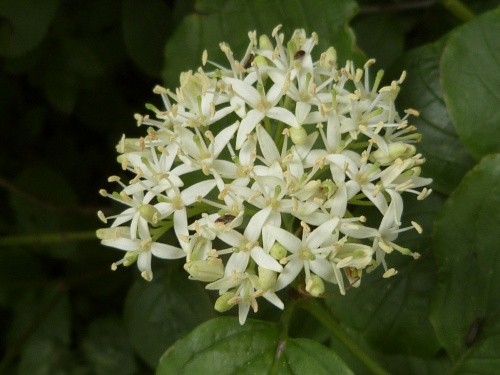 Graham Calow
Wykin
26 June 2015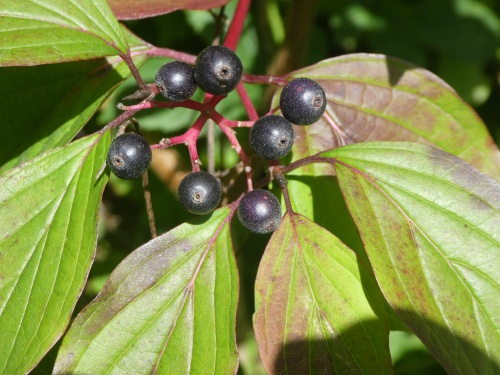 Melinda Bell
Moira, Moira Junction Reserve
05 September 2020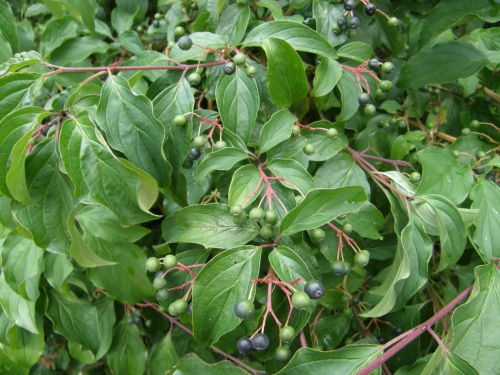 Saharima Roenisch
Knighton Park
10 August 2018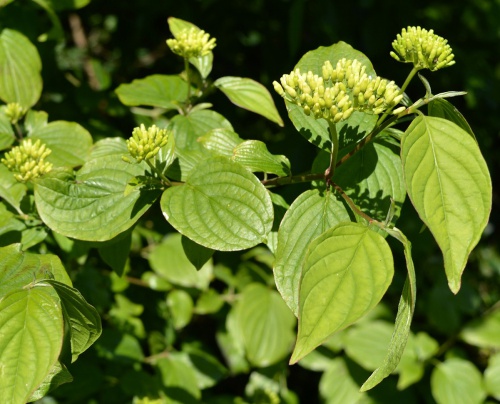 Barbara Cooper
Walton on the Wolds
11 June 2015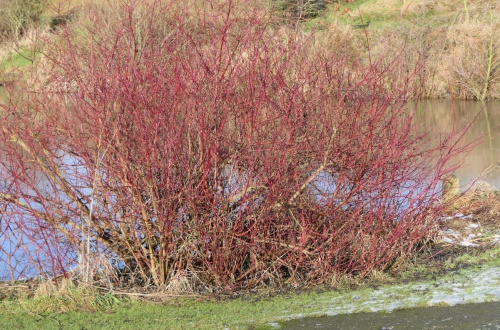 David Nicholls
Bagworth Heath
22 January 2018
Leicestershire & Rutland Map
Enter a town or village to see local records
MAP KEY:
Yellow squares = NBN records (all known data)
Coloured circles = NatureSpot records: 2025+ | 2020-2024 | pre-2020
UK Map
Species profile
- Common names
- Dogwood
- Species group:
- flowering plant
- Kingdom:
- Plantae
- Order:
- Cornales
- Family:
- Cornaceae
- Records on NatureSpot:
- 246
- First record:
- 23/06/2006 (Calow, Graham)
- Last record:
- 17/05/2026 (Stephen Gray)
Total records by month
% of records within its species group
10km squares with records
The latest images and records displayed below include those awaiting verification checks so we cannot guarantee that every identification is correct. Once accepted, the record displays a green tick.
In the Latest Records section, click on the header to sort A-Z, and again to sort Z-A. Use the header boxes to filter the list.
Latest images
Latest records
 David Nicholls
Kirby Muxloe Castle
13 September 2013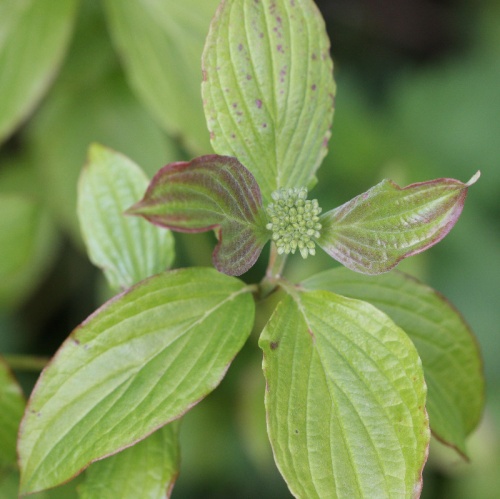 David Nicholls
Burroughs Road, Ratby
05 May 2012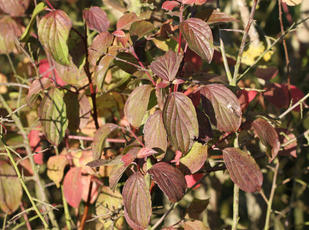 David Nicholls
Change Spinney, Ratby
17 November 2011 Old Fosse Sapcote SP 4980 9216 (taken 1.11.2007).JPG) Graham Calow
Graham Calow
Sapcote
01 November 2007
With dull red twigs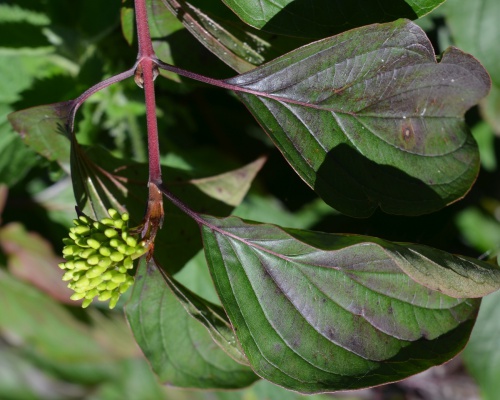 Steve Mathers
Watermead Park (South)
22 September 2017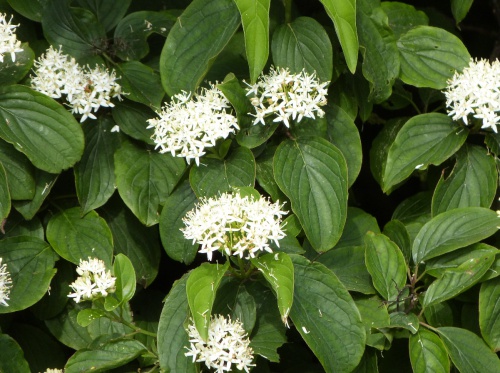 Graham Calow
B581 Broughton Way, Broughton Astley
02 June 2017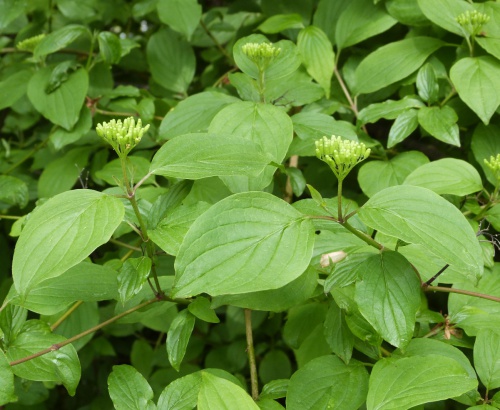 Graham Calow
Stanton Road, Elmesthorpe
27 May 2016 Old Fosse Sapcote SP 4980 9216 (taken 5.10.2009).JPG) Graham Calow
Graham Calow
Sapcote
05 October 2009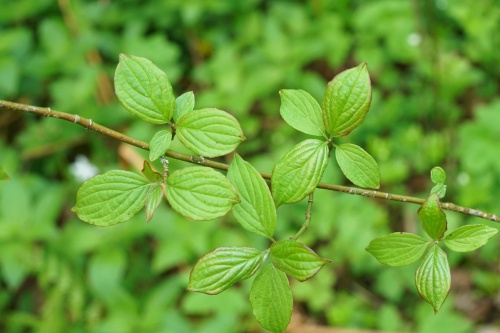 AJ Cann
Tugby
05 May 2018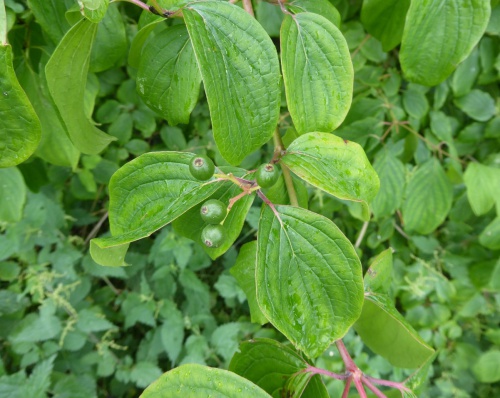 Saharima Roenisch
Leicester Victoria Park, Eco-area
06 August 2020
 Old Fosse Sapcote SP 4980 9216 (taken 1.11.2007).JPG)
 Old Fosse Sapcote SP 4980 9216 (taken 5.10.2009).JPG)
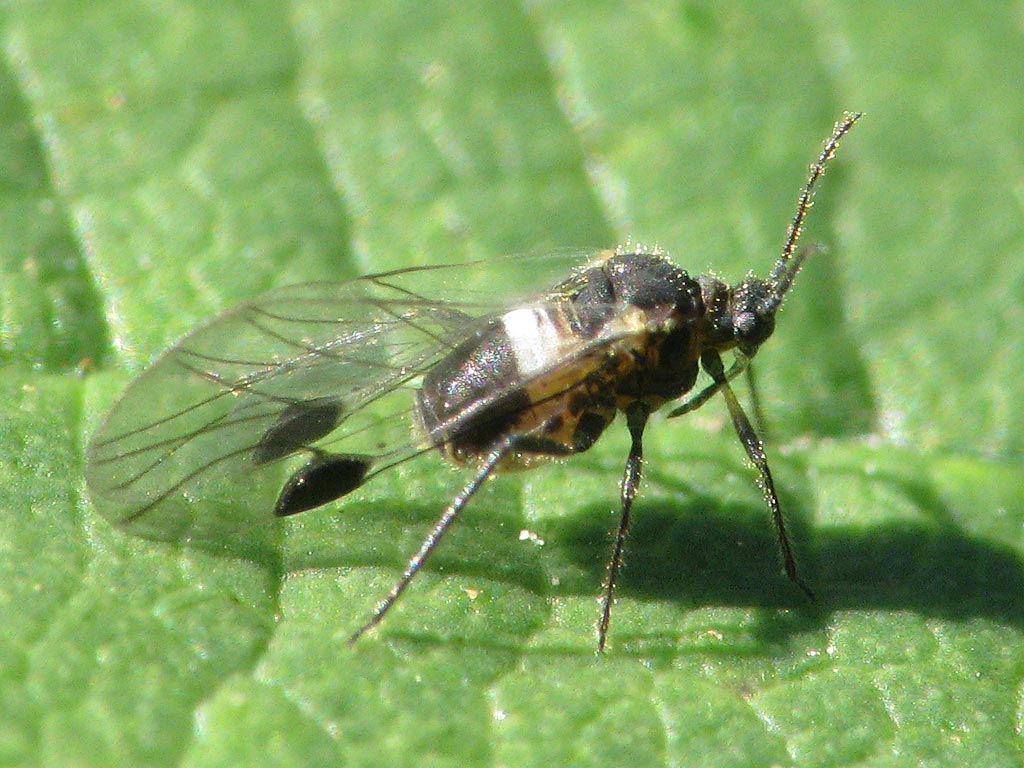
Anoecia corni
Sexual morphs of the aphid Anoecia corni feed, mate and produce winter eggs on Dogwood.
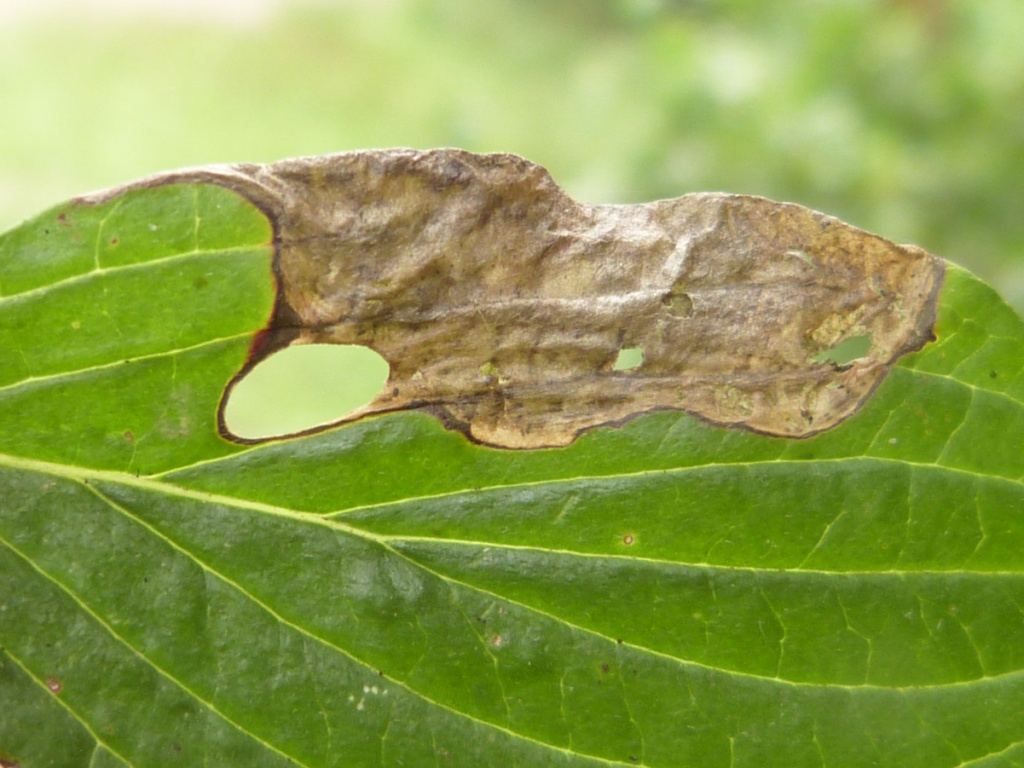
Antispila metallella
The larva of the moth Antispila metallella mines the keaves of Dogwood forming blotch-mines in leaves, and when fully grown, cuts out a small oval to form a pupating case. The cut out size needs to be measured - length of the long axis of the oval cut out for Antispila metallella should be 5.5 to 7 mm. For the similar mines of Antispila petryi this is 4 to 5 mm. Antispila metallella mines usually have some 'practice marks' at the start of the mine, caused by the female making a few attempts at oviposition; these are not found in Antispila petryi mines.
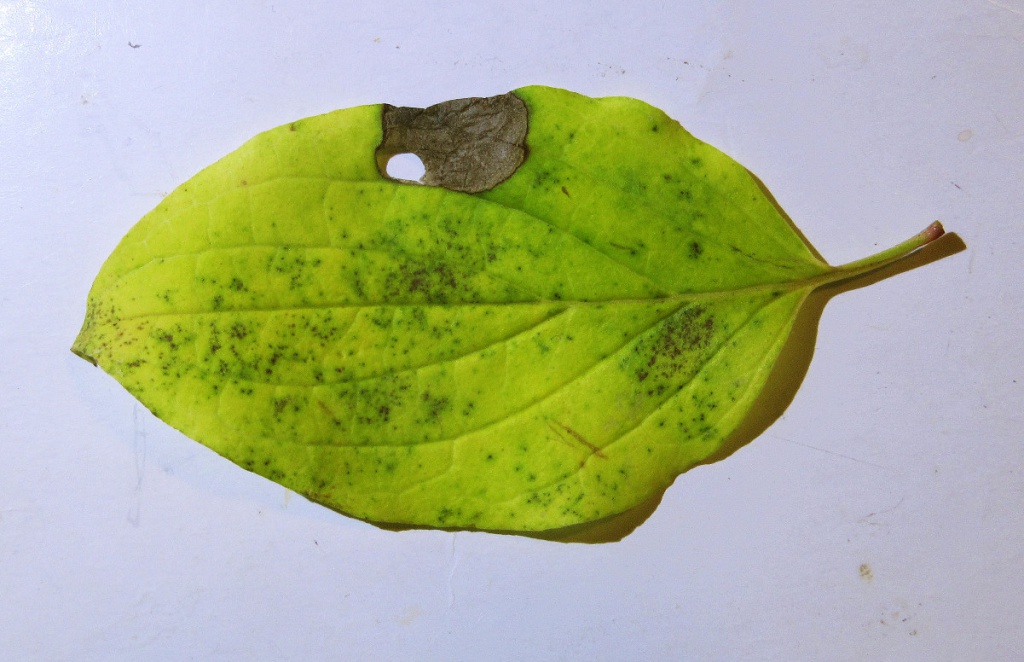
Antispila petryi
The larva of the moth Antispila petryi mines the leaves of Dogwood forming blotch-mines in leaves, and when fully grown, cuts out a small oval to form a pupating case. The cut out size needs to be measured as the mine of Antispila metallella is very similar. The length of the long axis of the oval cut out for Antispila metallella should be 5.5 to 7 mm. For the mines of Antispila petryi this is 4 to 5 mm. Antispila metallella mines usually have some 'practice marks' at the start of the mine, caused by the female making a few attempts at oviposition; these are not found in Antispila petryi mines.
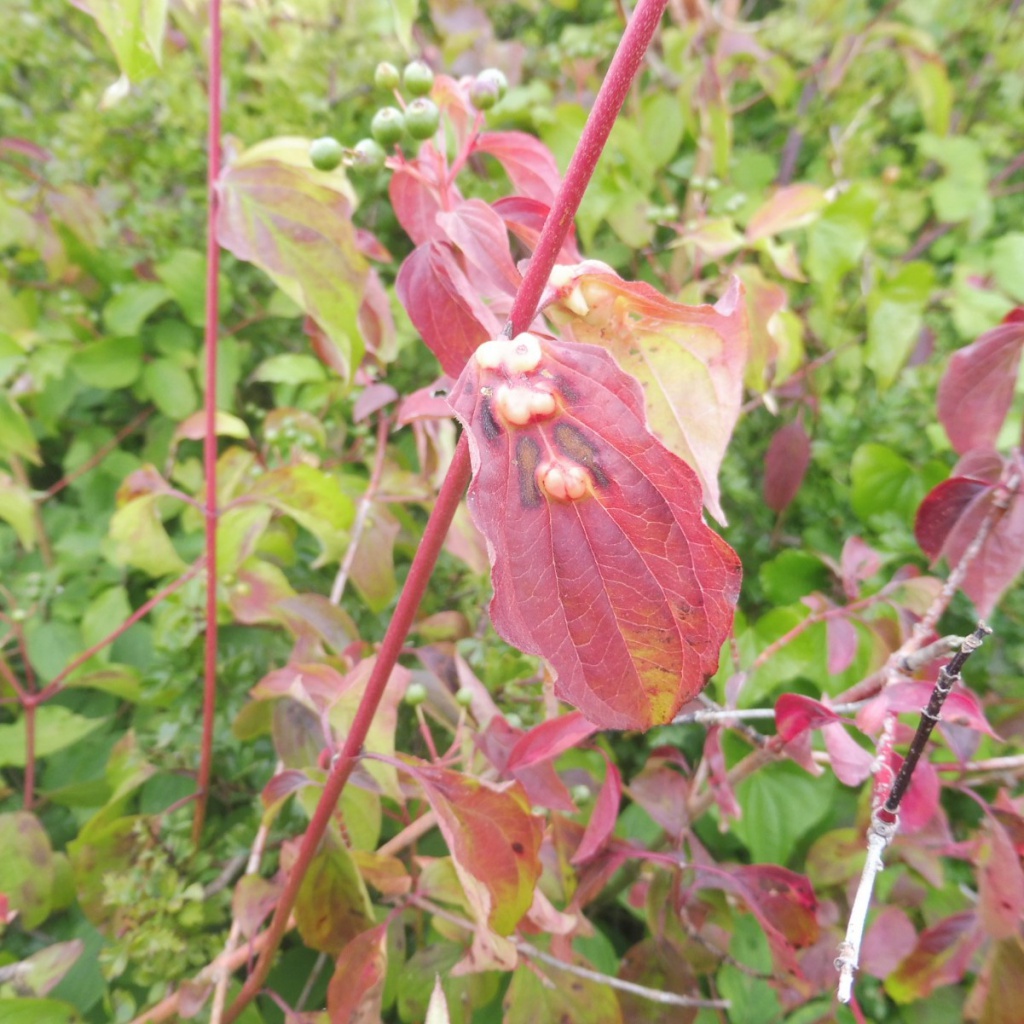
Dogwood Rivet Midge
The larvae of the midge Craneiobia corni cause galls on the leaves of Dogwood (Cornus sanguinea) and possibly on other Cornus species. The galls are flask shaped and obvious on both sides of the leaf, they are domed above, 3 to 5 mm across protruding below from midrib or side vein 8 to 10 mm, often several on a leaf. The galls are greenish yellow, often tinged pink or purple.
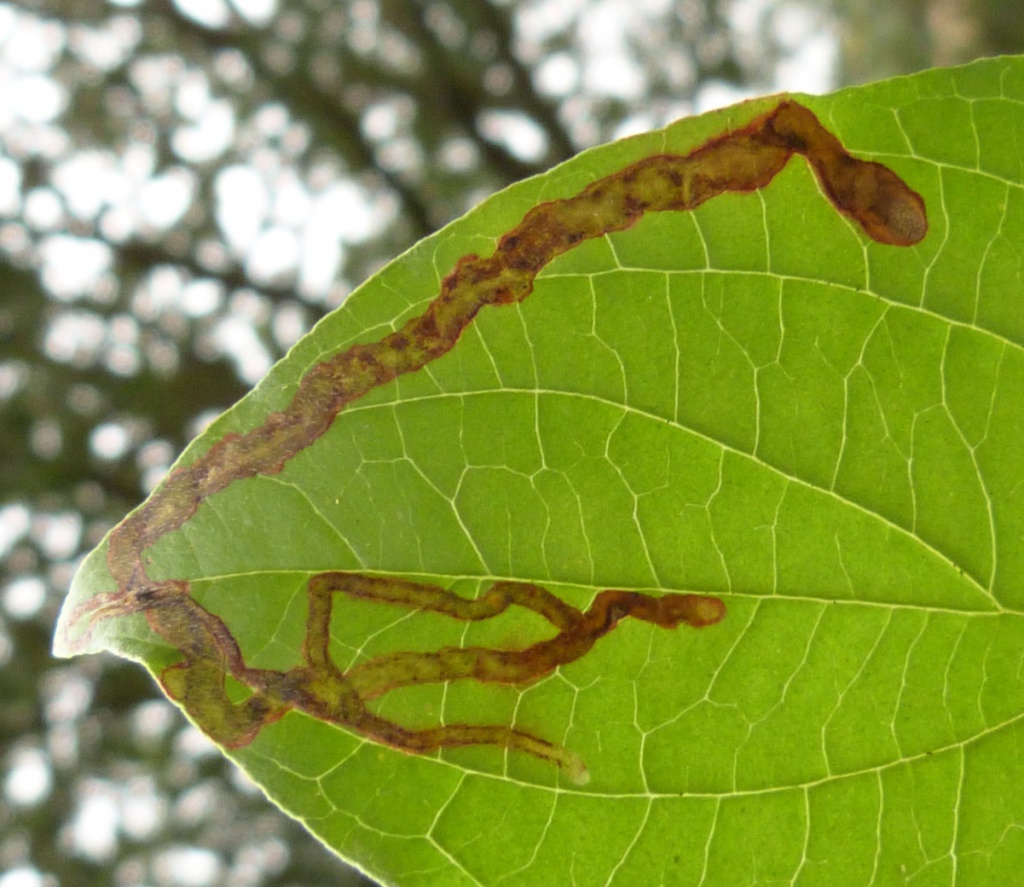
Phytomyza agromyzina
This fly's larvae mine the leaves of Dogwood. The long mines are found on the upper surface of the leaf. Frass in the mine is usually a broad dark-brown to blackish central band.