Dead Man's Fingers - Xylaria polymorpha
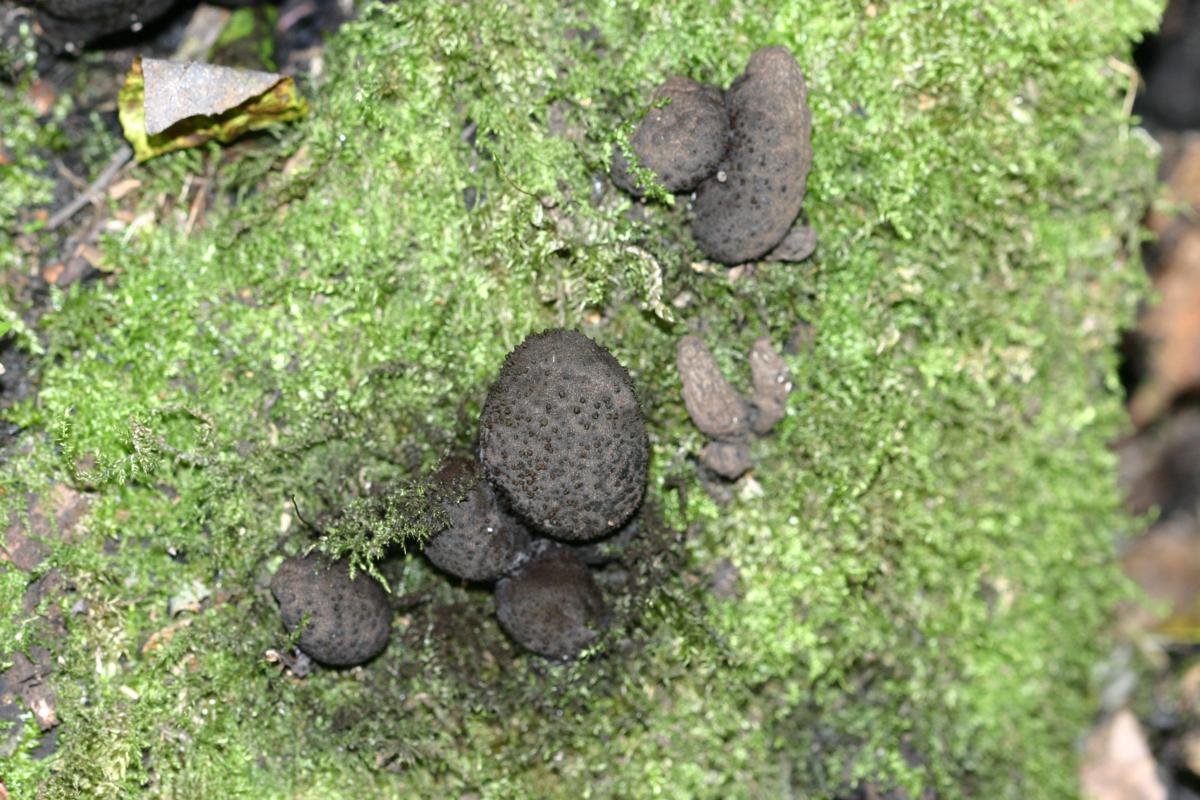
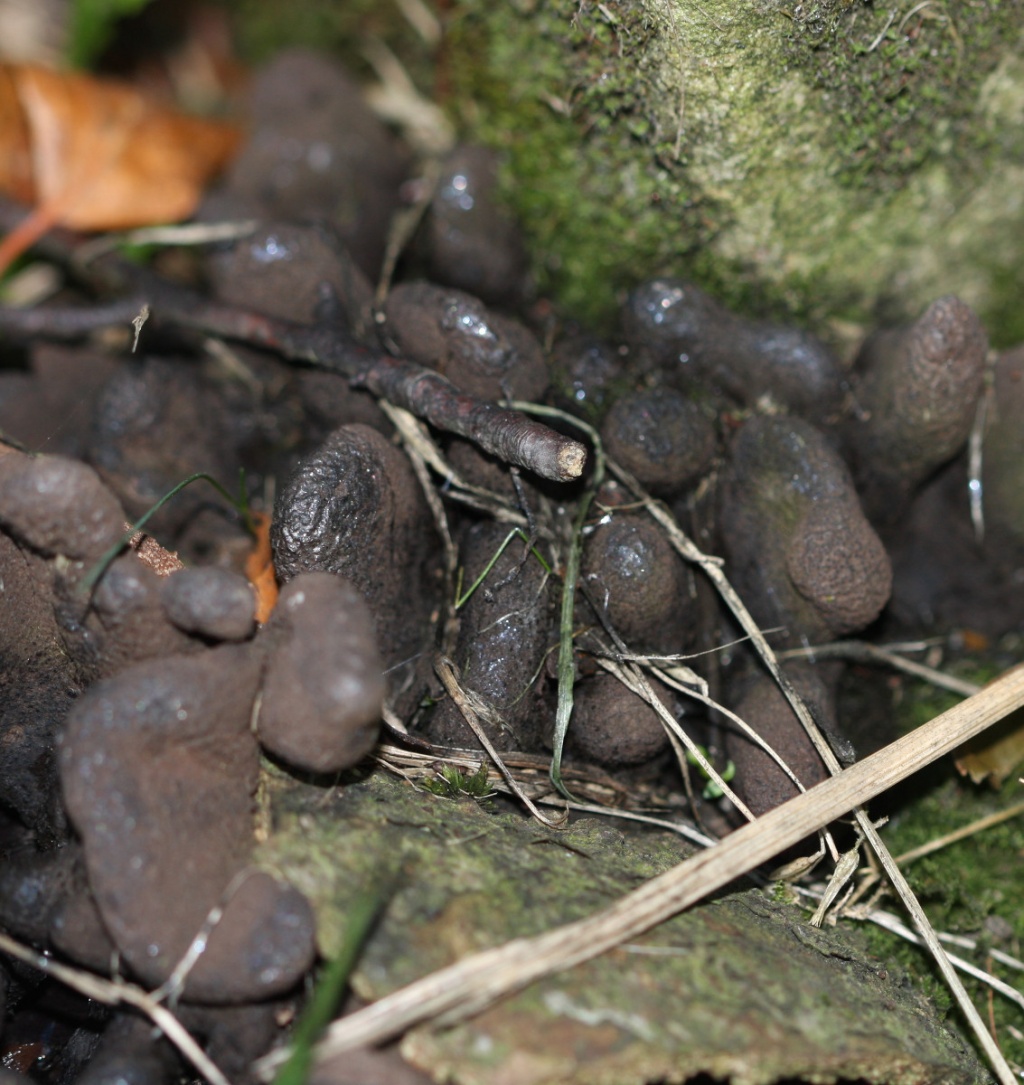
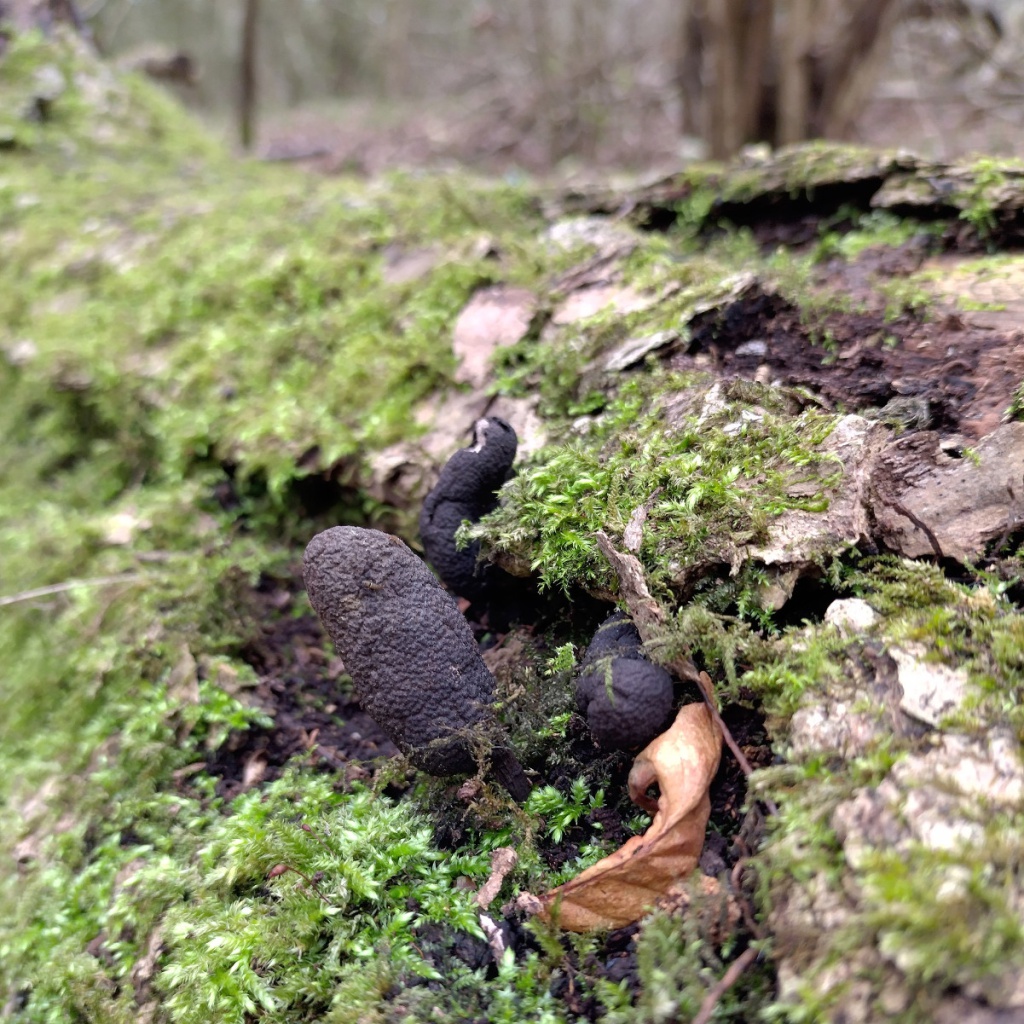
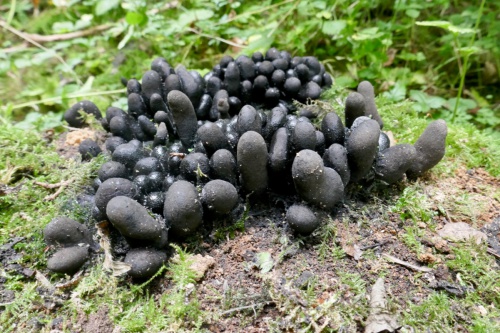
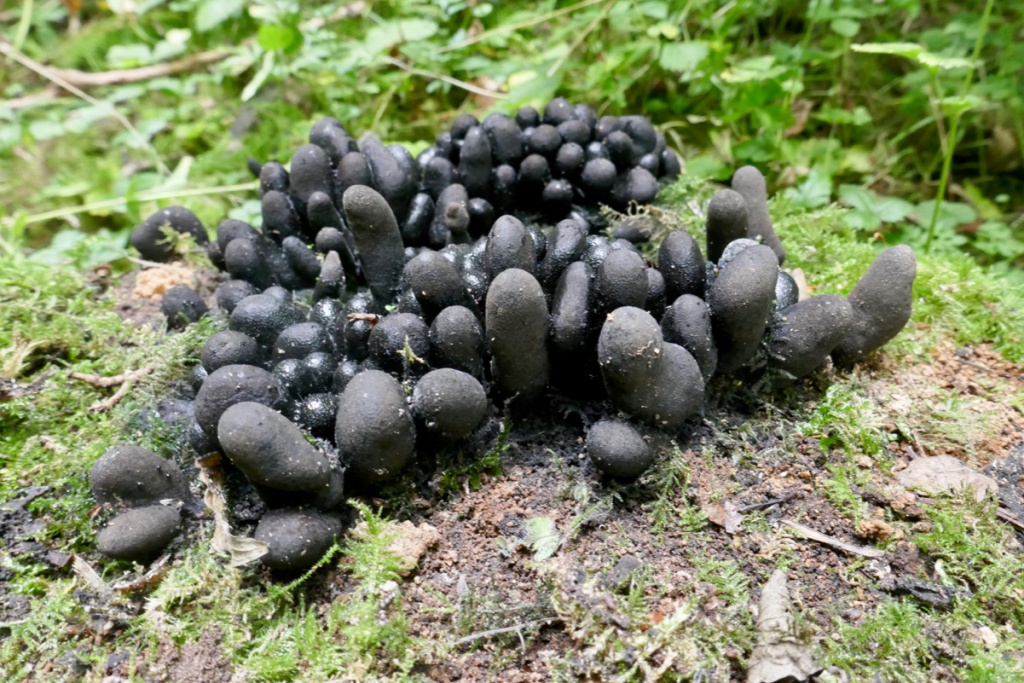
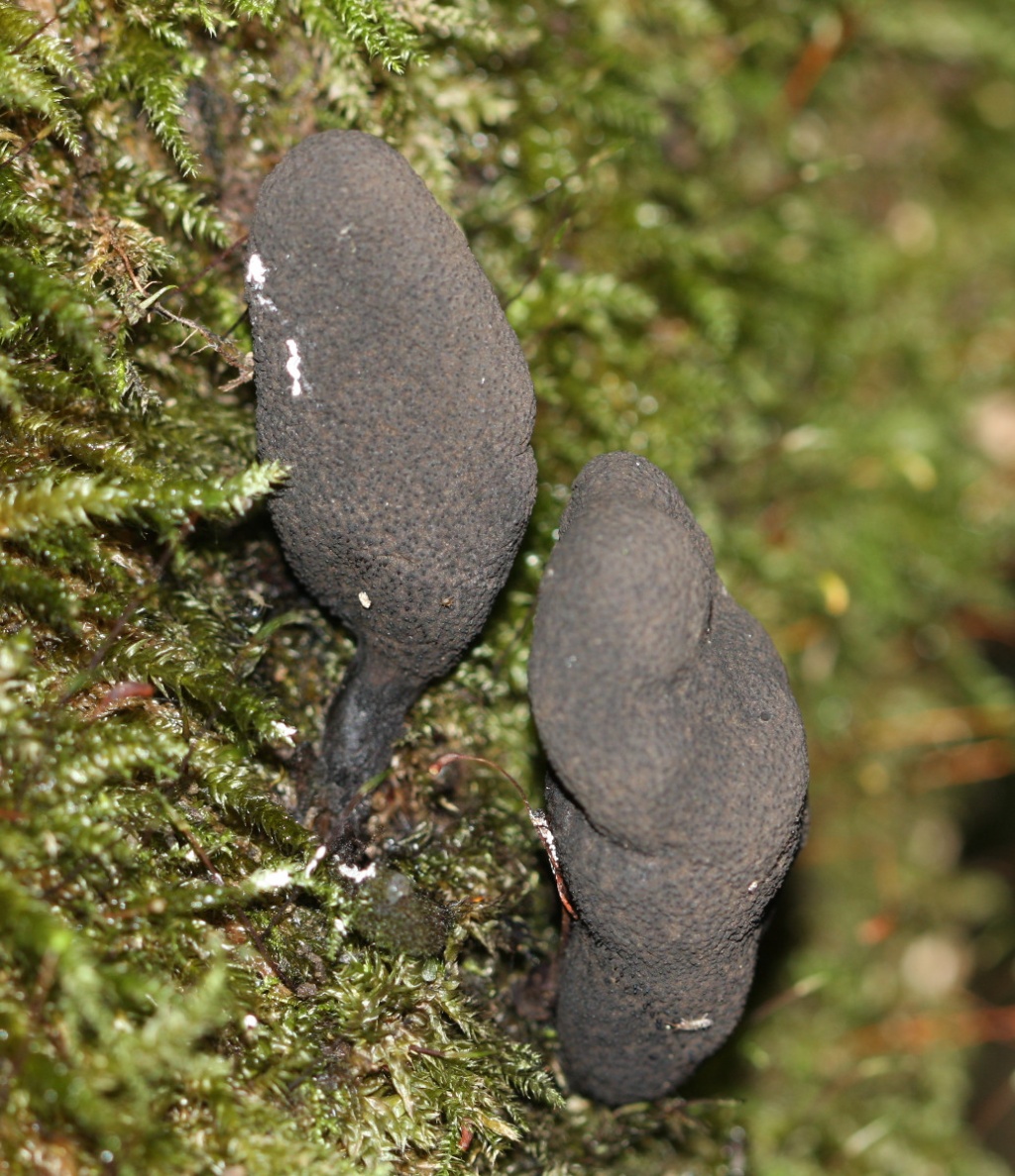
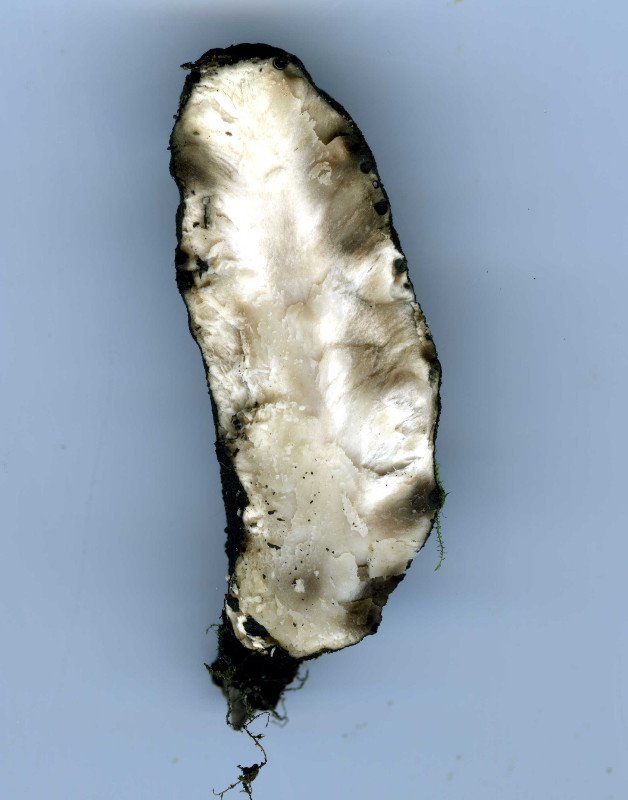
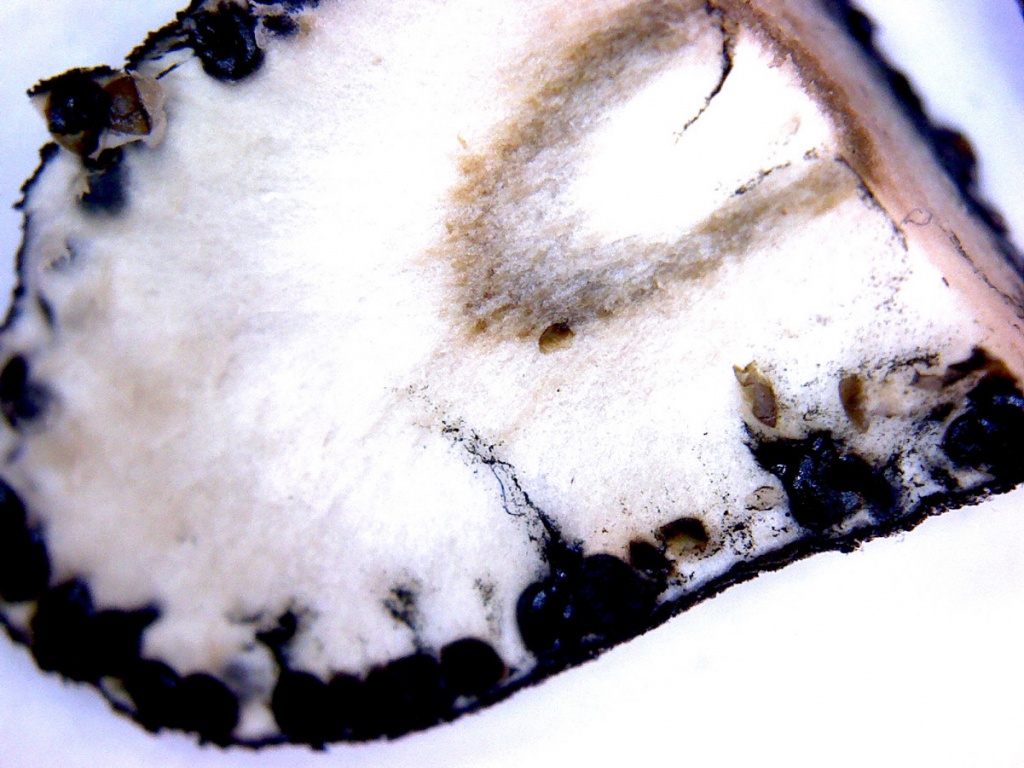
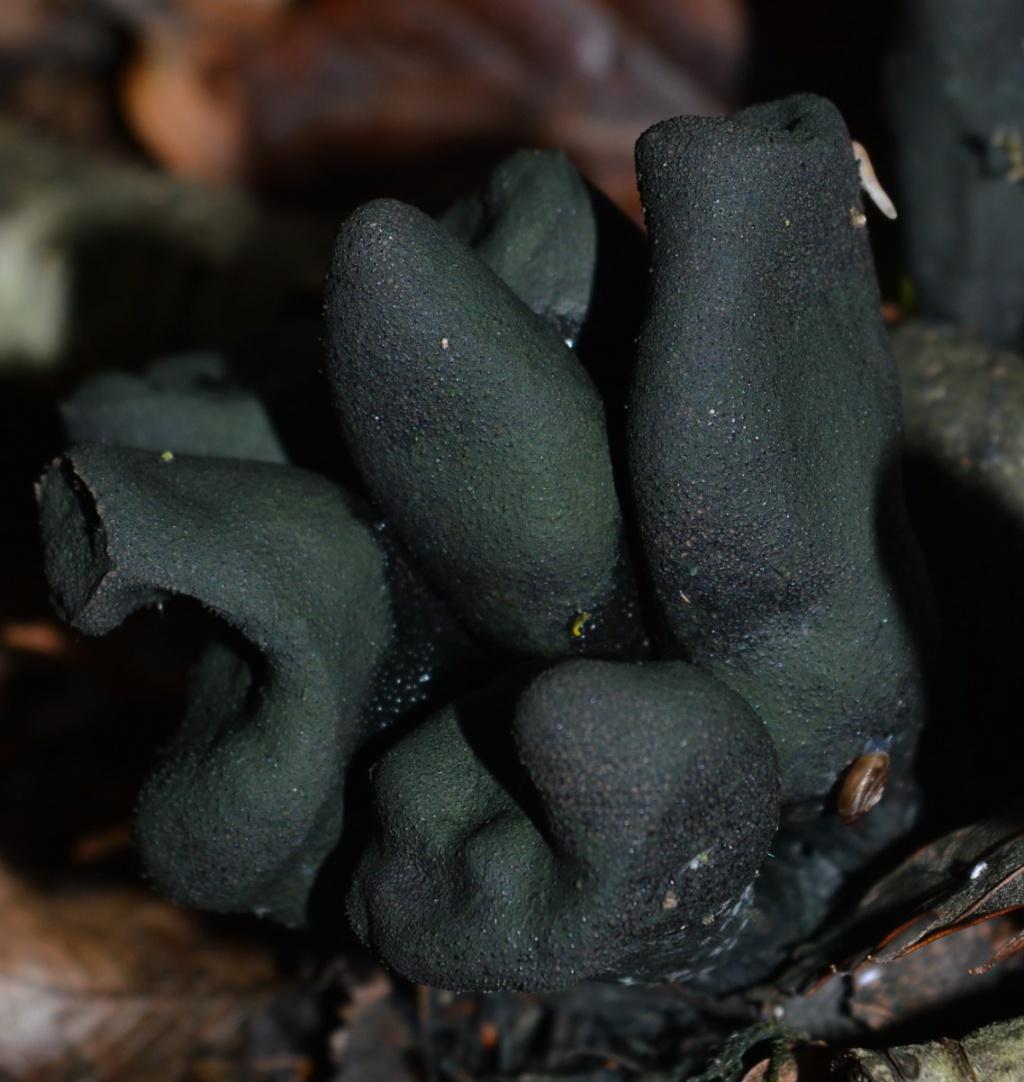
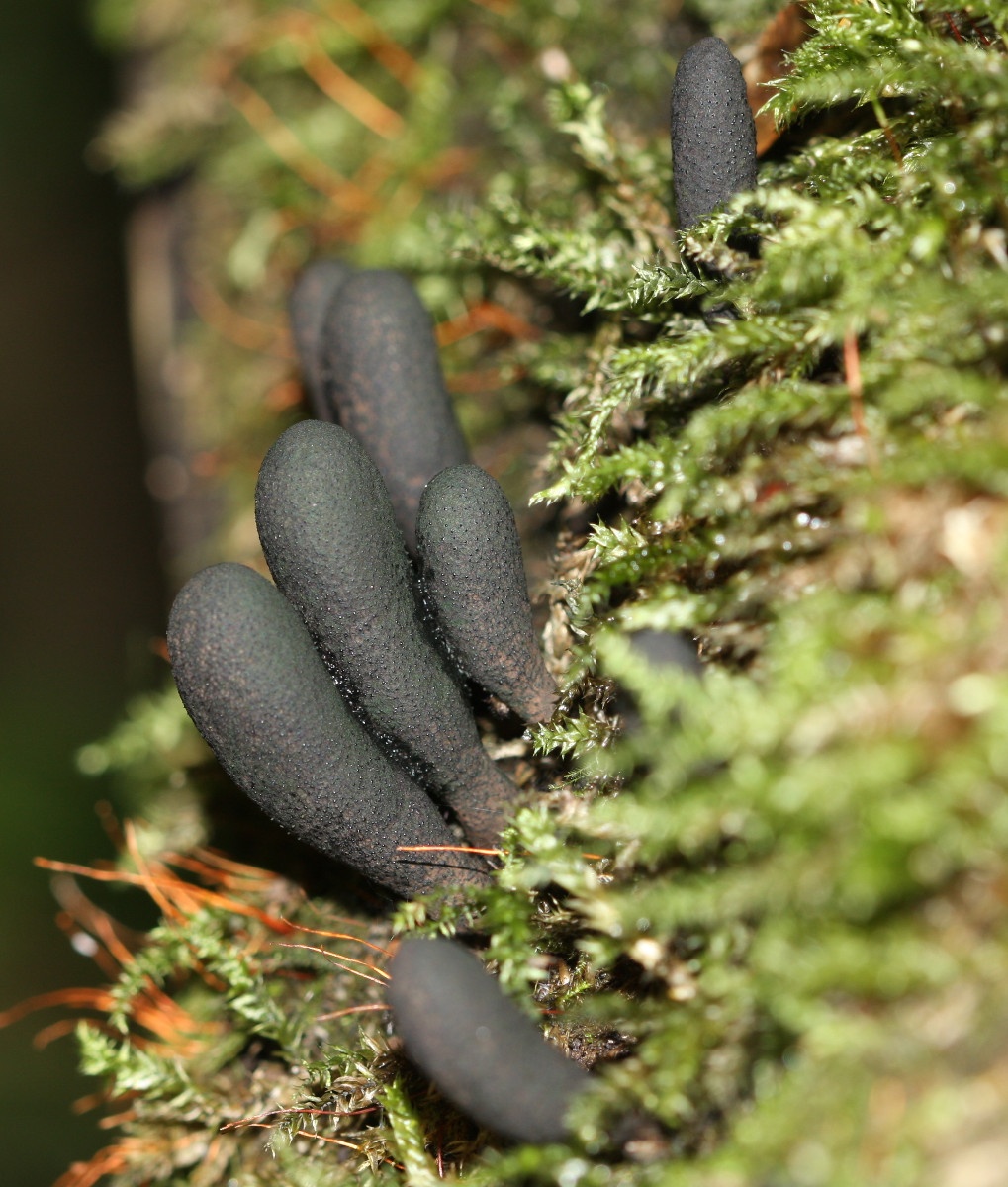
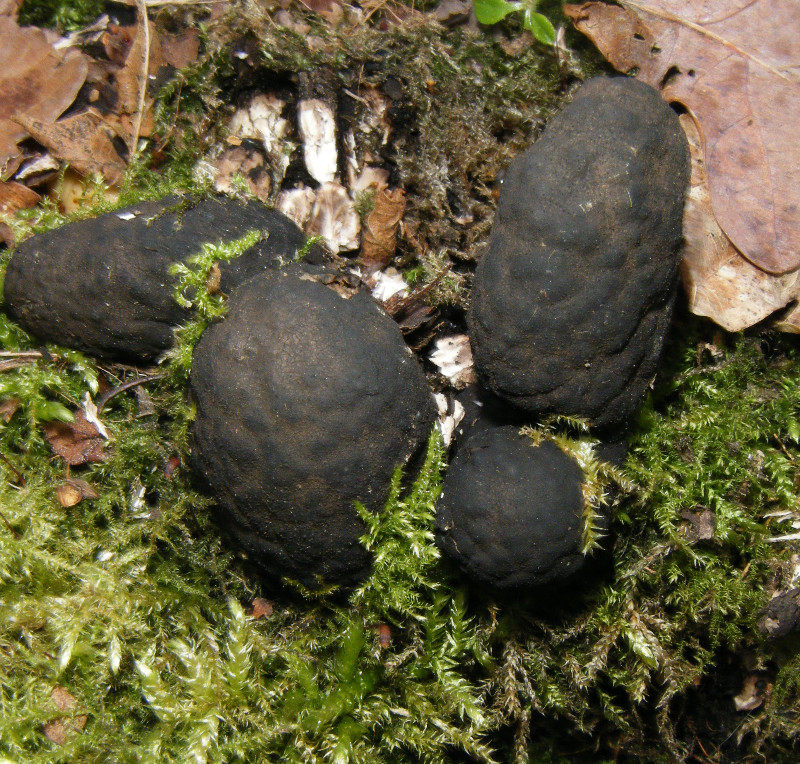
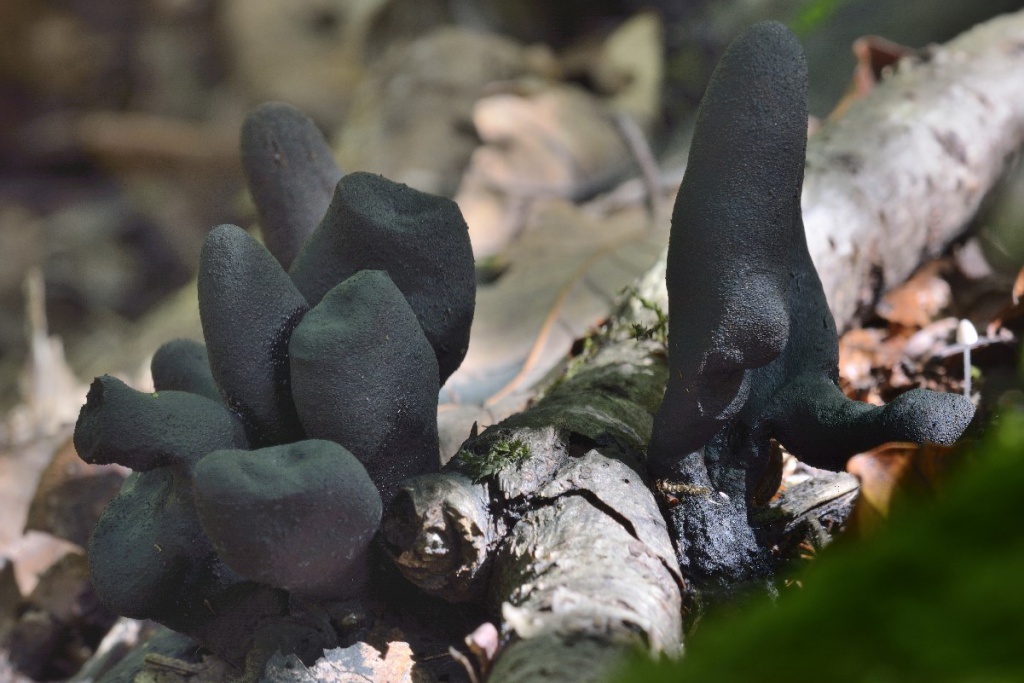
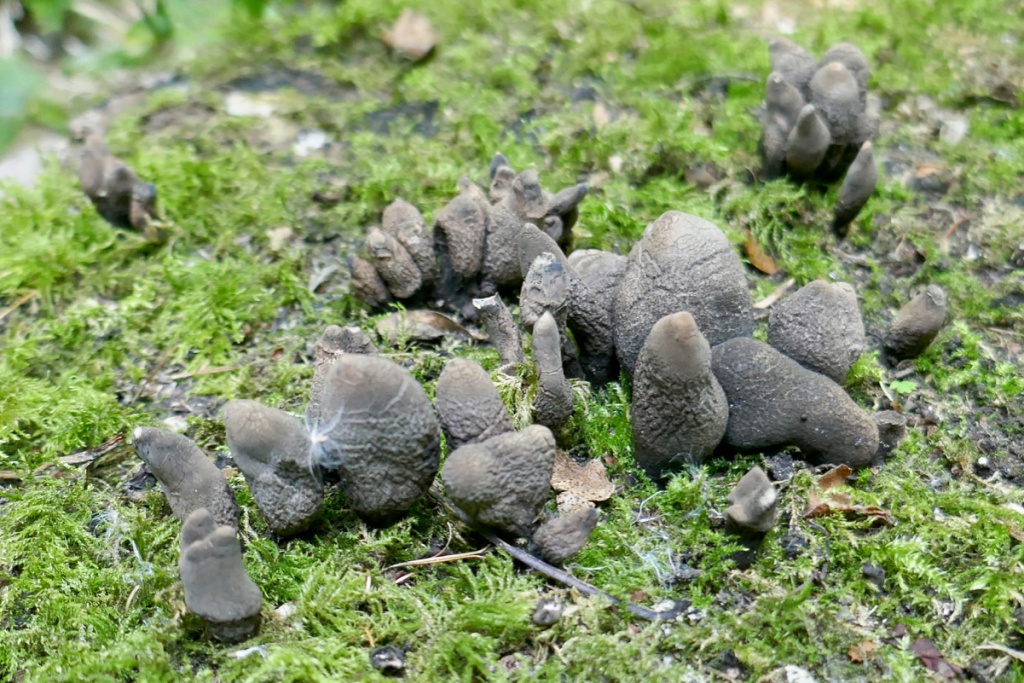
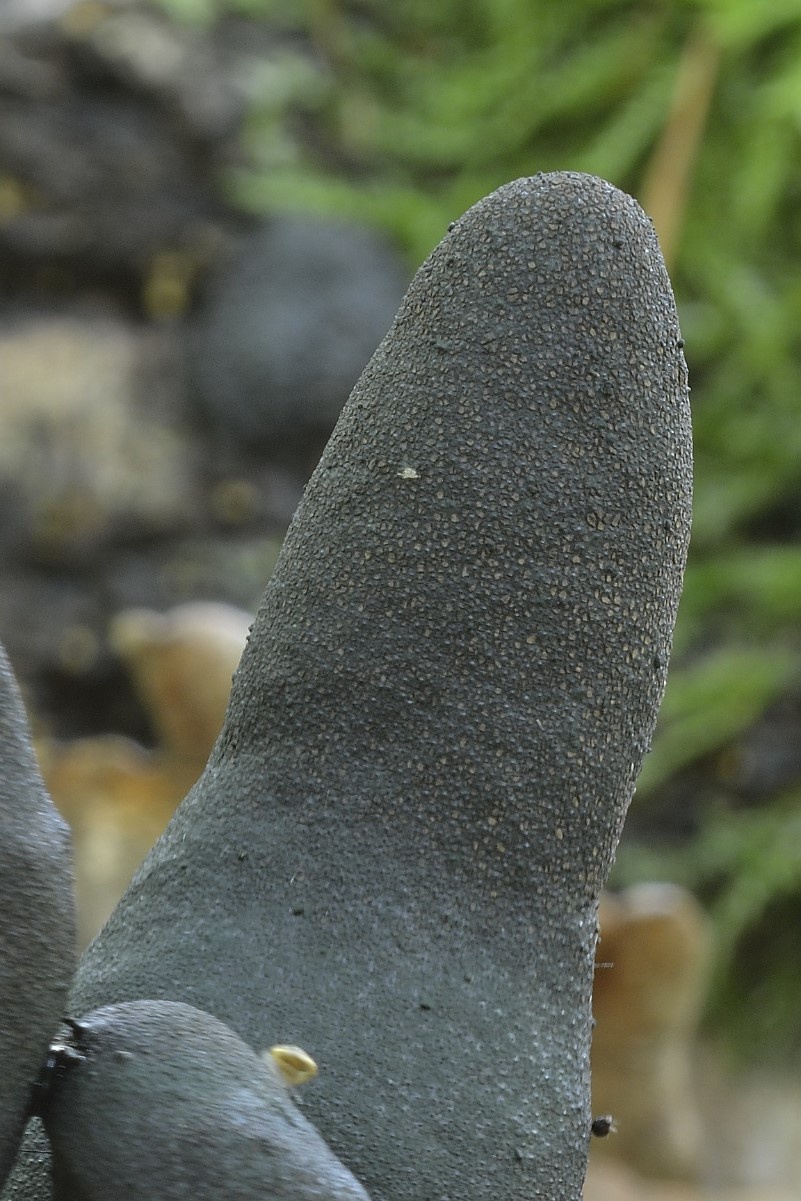
The blackish fruitbodies are variable in shape, but are usually thick, squat and rounded at the tip, occasionally branched or lobed. Initially they are covered in greyish conidia, the asexual stage. In the sexual stage, spore-producing perithecia develop in the white stroma inside the fruit body. The perithecia are seen as tiny pimples on the outer surface. Eventuially the spores are ejected through minute ostioles.
Dead Moll's Fingers (Xylaria longipes) is usually longer and more slender, with a tapering tip and stem, and is almost exlusively on Sycamore, Both species are variable in form and some specimens may need to be examined microscopically to identfy with certainty.. Sometimes confused with Earth-tongues (Geoglossum) but these grow in grasslands, not on dead wood

Photograph in habitat; note substrate and associated tree species.
On decaying deciduous wood
 granniejo
Billesdon Woodland Pool
01 September 2021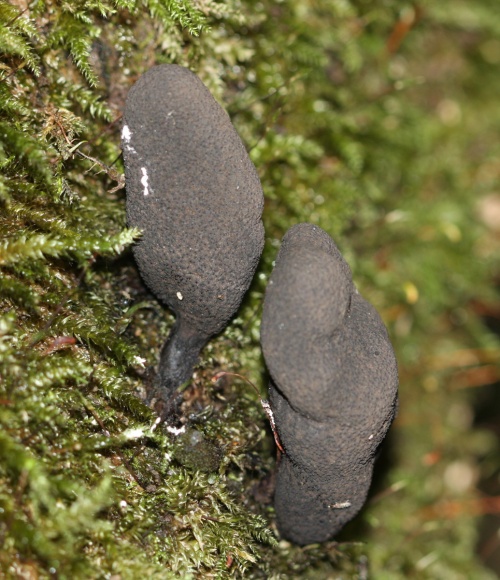 David Nicholls
Launde Fish Ponds
22 September 2012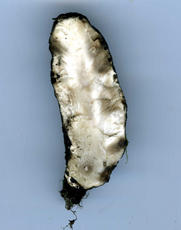 Graham Calow
Burbage Common and Woods
16 February 2012
inside is white stroma
det. R Iliffe.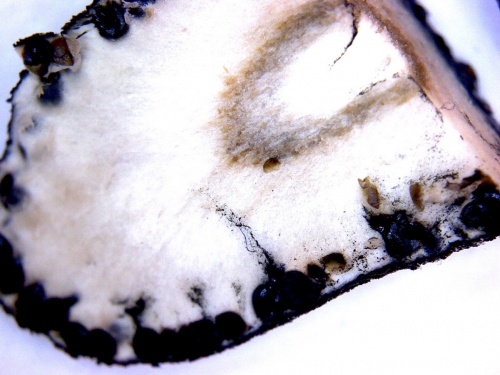 Melinda Bell
Burbage Woods
04 September 2021
white stroma with perithecia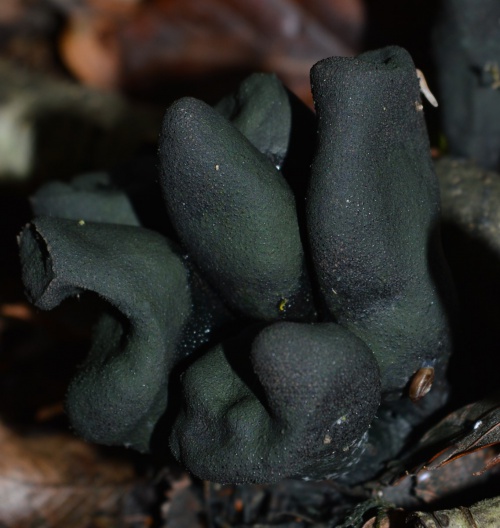 Barbara Cooper
The Outwoods
17 September 2015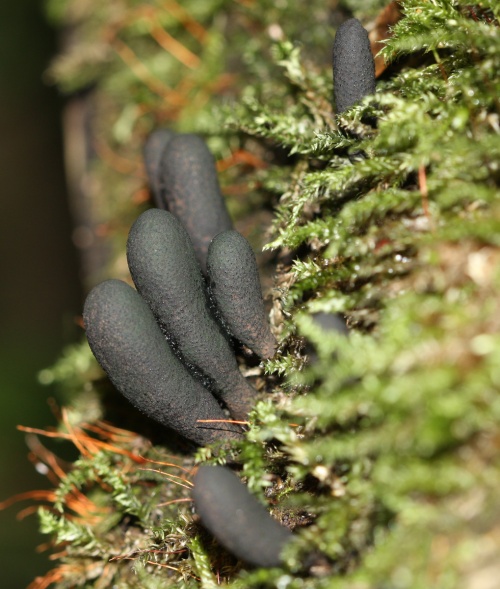 David Nicholls
Launde Fish Ponds
22 September 2012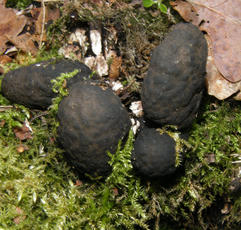 Graham Calow
Burbage Common and Woods
16 February 2012
det. R Iliffe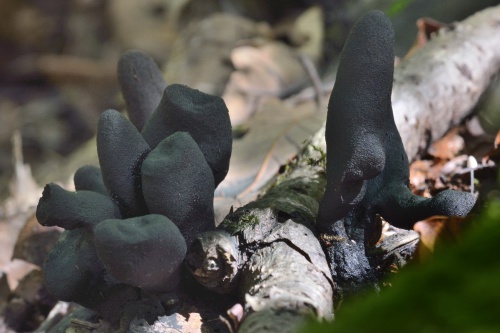 Barbara Cooper
The Outwoods
17 September 2015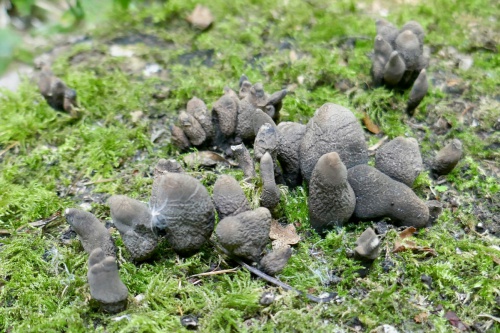 granniejo
Billesdon Woodland Pool
26 July 2020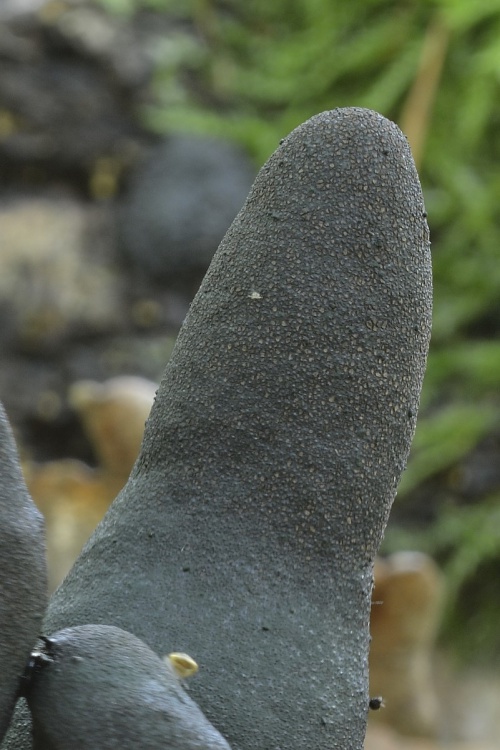 Barbara Cooper
The Outwoods
17 September 2015
Leicestershire & Rutland Map
Enter a town or village to see local records
MAP KEY:
Yellow squares = NBN records (all known data)
Coloured circles = NatureSpot records: 2025+ | 2020-2024 | pre-2020
UK Map
Species profile
- Common names
- Dead Man's Fingers
- Species group:
- fungus
- Kingdom:
- Fungi
- Order:
- Xylariales
- Family:
- Xylariaceae
- Records on NatureSpot:
- 42
- First record:
- 02/10/2005 (Nicholls, David)
- Last record:
- 22/10/2025 (hammersley, janine)
Total records by month
% of records within its species group
10km squares with records
The latest images and records displayed below include those awaiting verification checks so we cannot guarantee that every identification is correct. Once accepted, the record displays a green tick.
In the Latest Records section, click on the header to sort A-Z, and again to sort Z-A. Use the header boxes to filter the list.
Latest images
Latest records
 David Nicholls
Thornton Reservoir
08 September 2006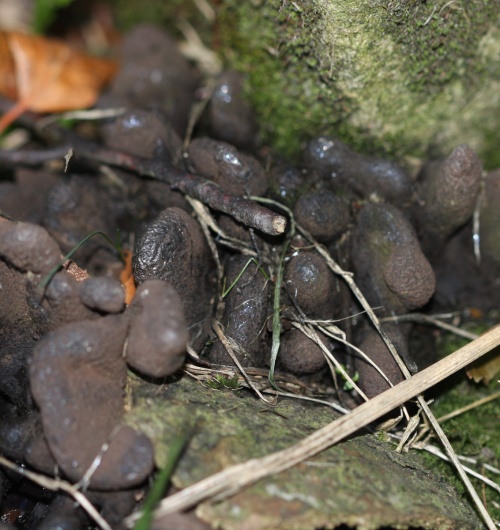 David Nicholls
Gilroes Cemetery
10 October 2012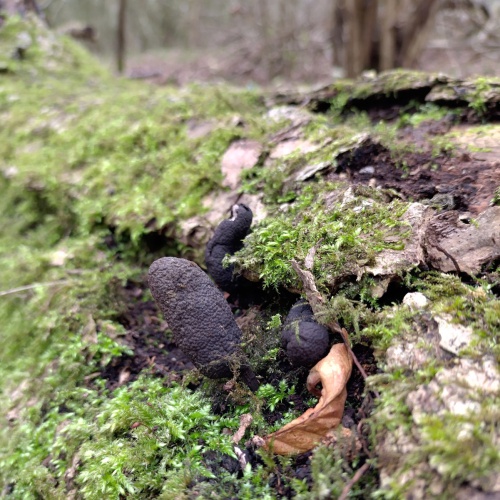 mttnx
mttnx
Great Merrible Wood
12 February 2022