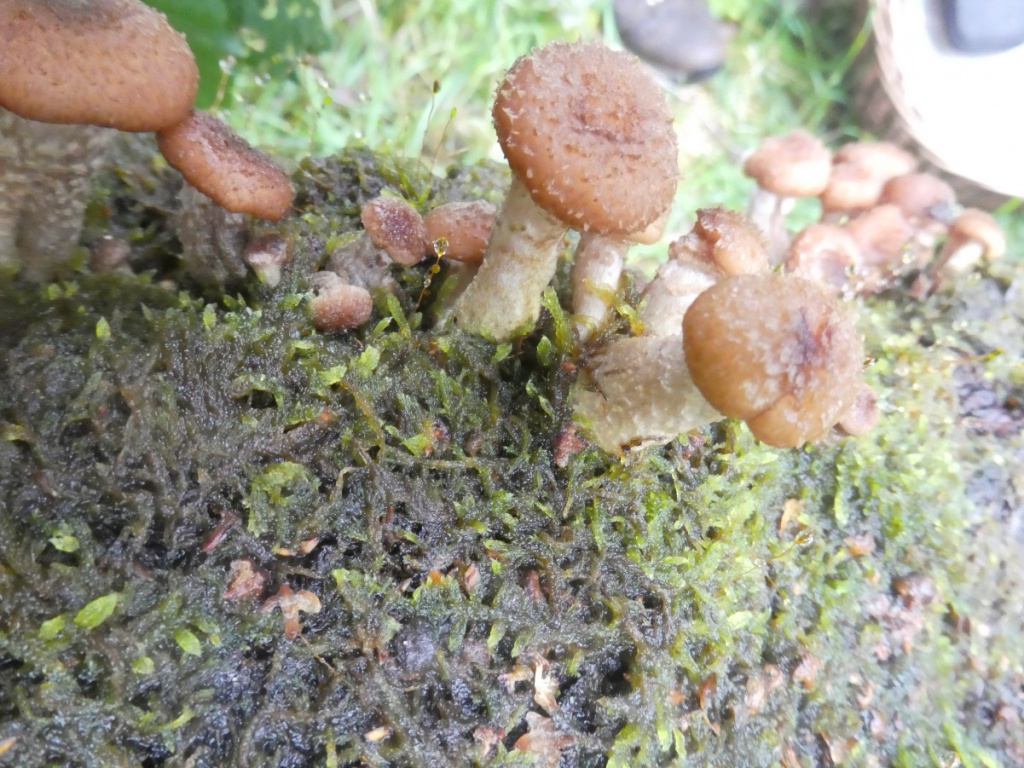
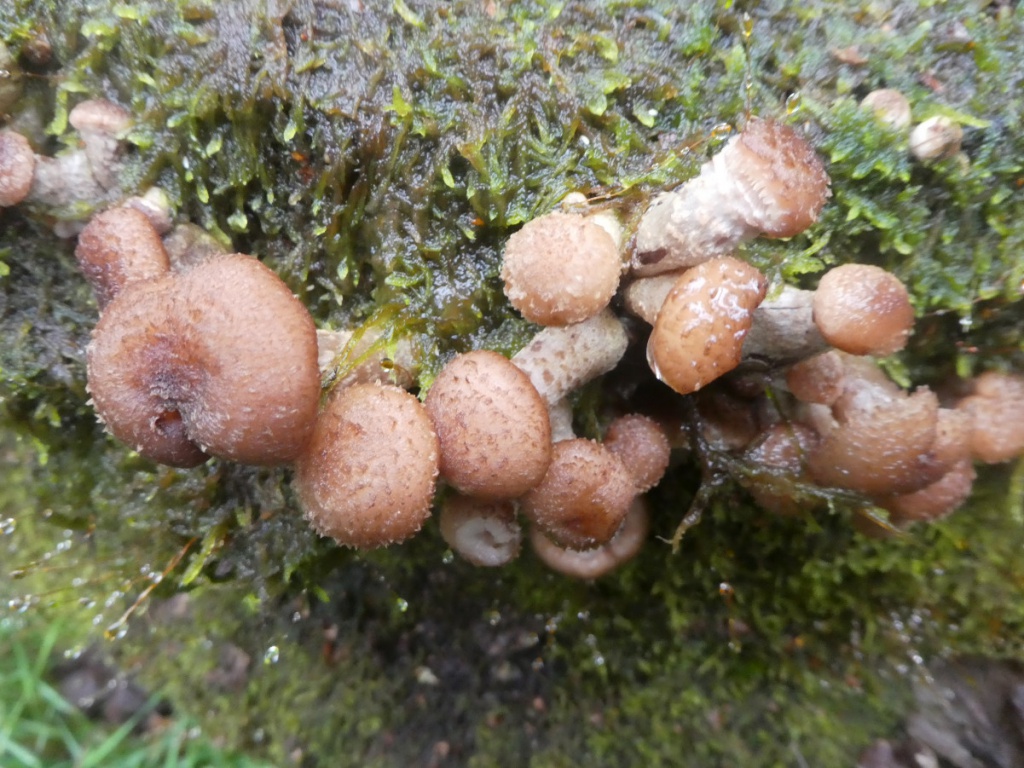
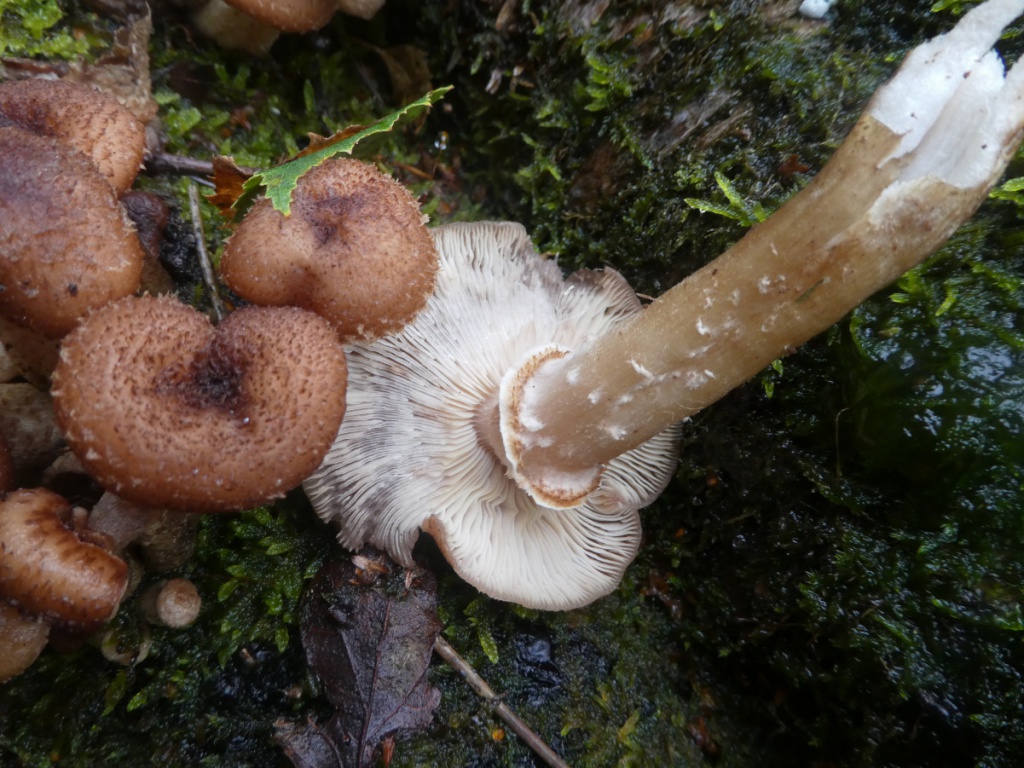
Dark Honey Fungus - Armillaria ostoyae
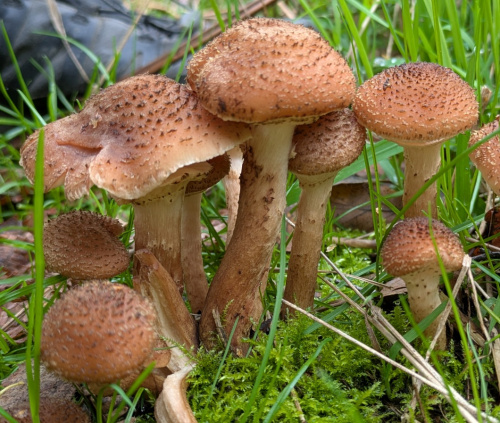
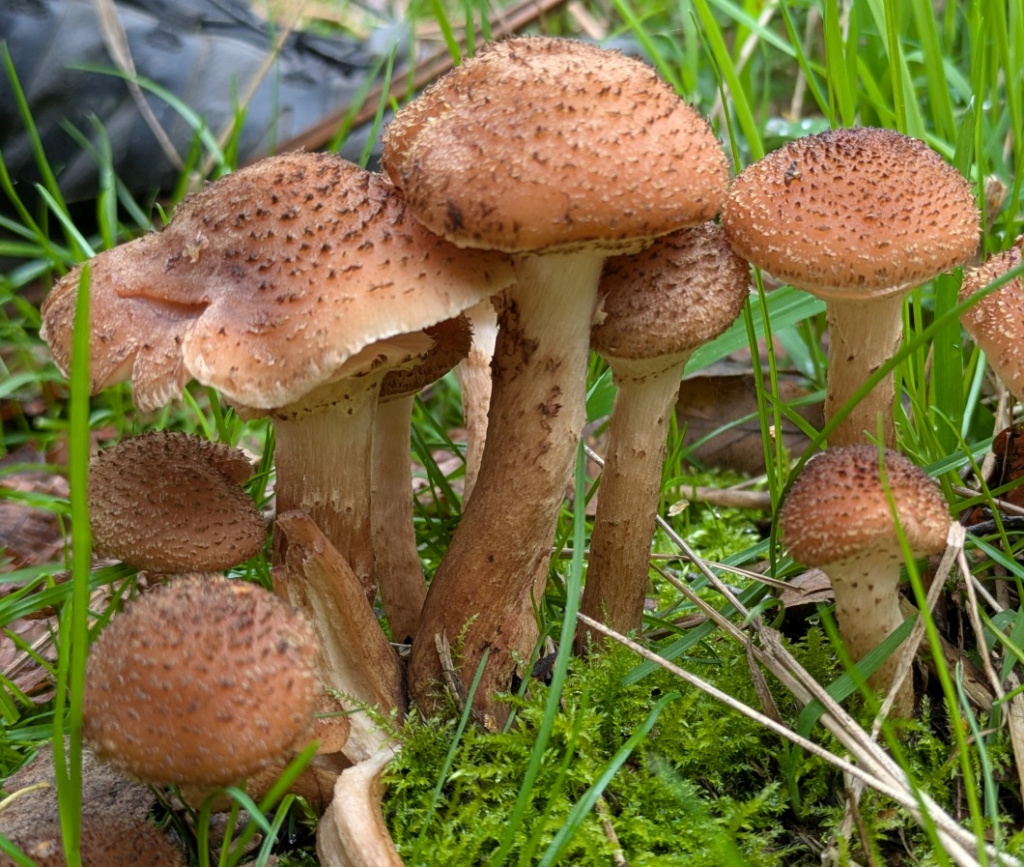
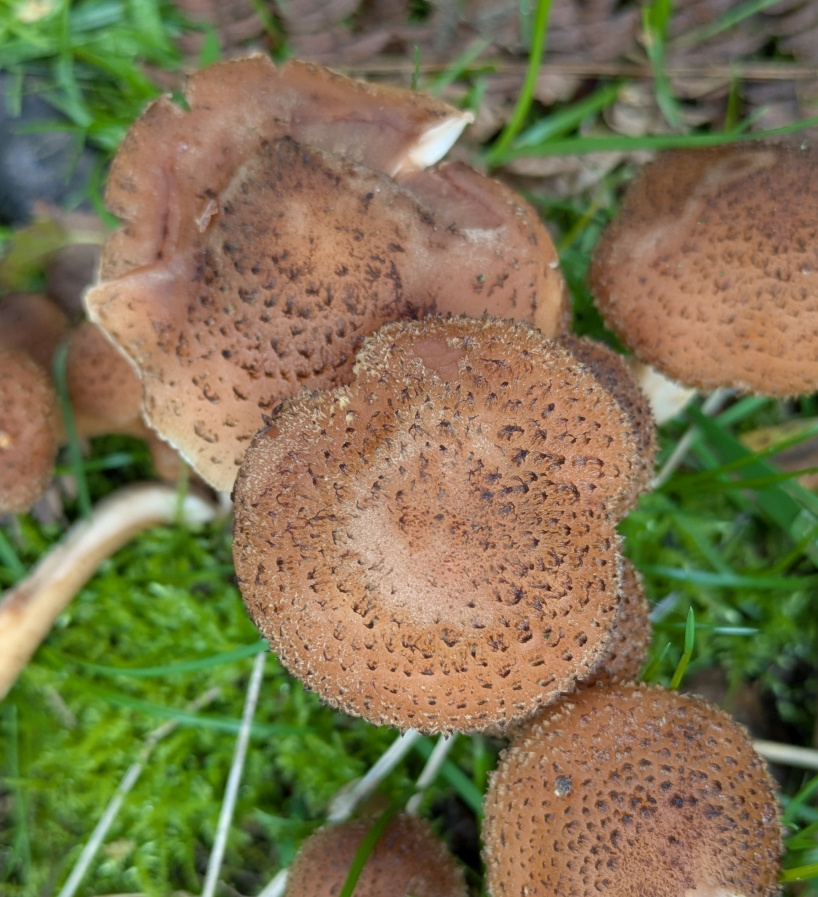
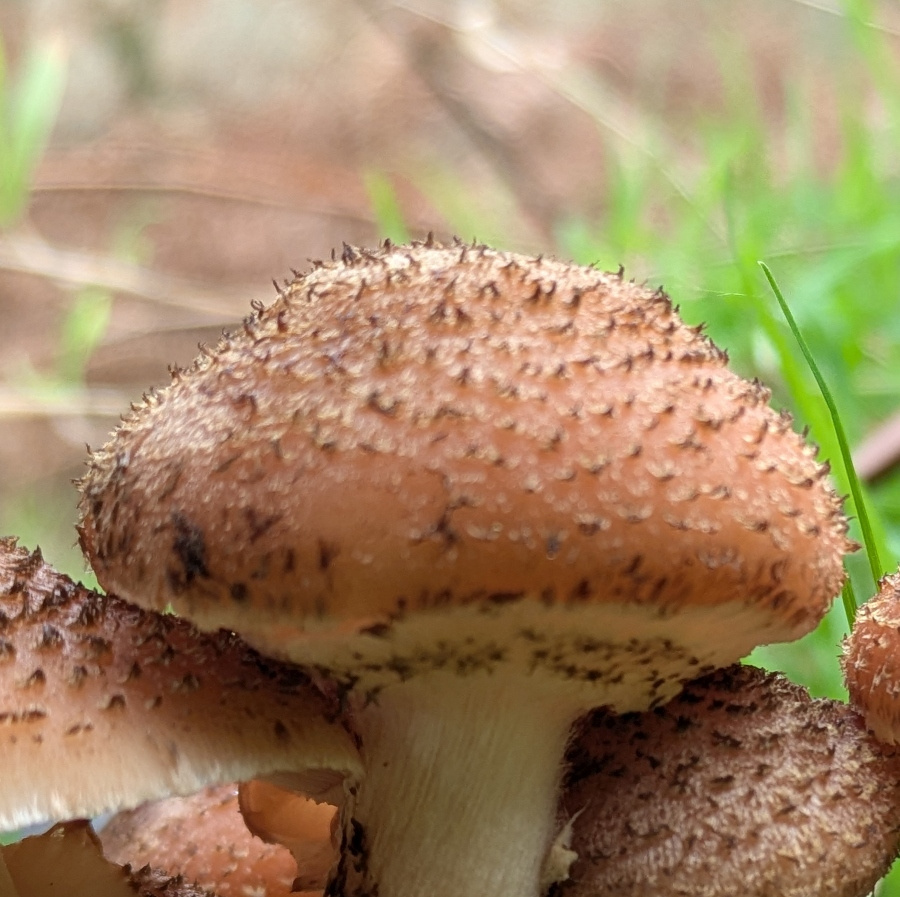
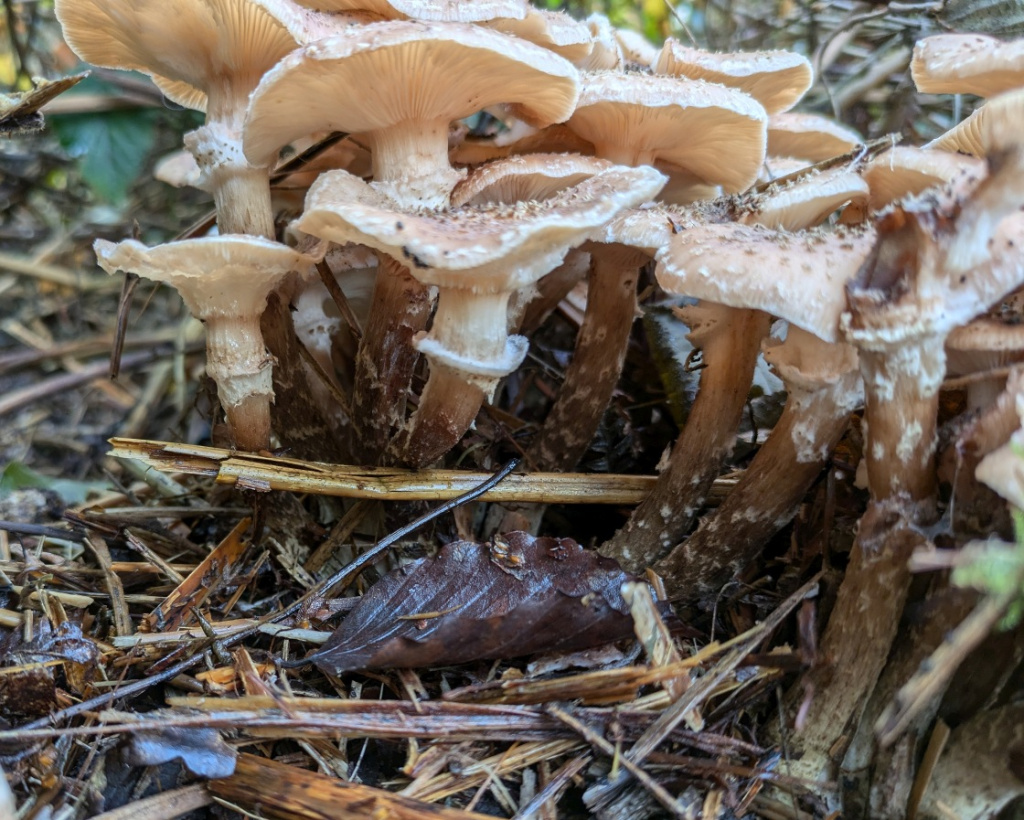
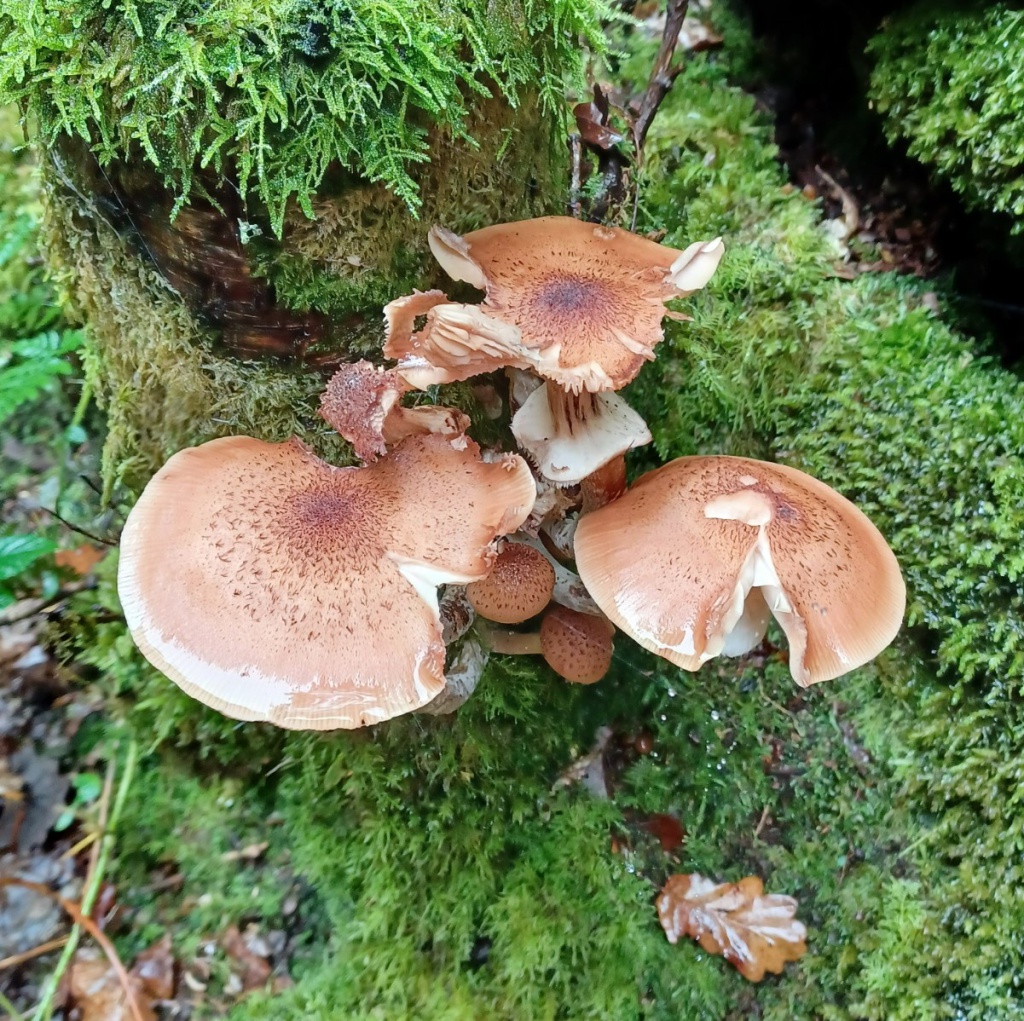
Caps are an ochraceous-brown colour with prominent darker scales all over. The stipe also has darker squamules over a pale ochre base; it has a well-developed white woolly ring which usually also has black squamules along the margin and underneath.
It is a serious tree parasite causing the death of many species of conifer, and other species.
other Armillaria species: Bulbous Honey fungus Armillaria gallica and Honey fungus Armillaria mellea. (In the past it has been considered to be a variety of A mellea, but is now treated as separate species)

Photograph from top down, in side view and from underneath to show gills and full length of stipe. Note habitat and substrate.
Parasitic, then saprotrophic on living and dead wood of deciduous and coniferous trees.
Peaking from September to November
Fairly common
common
 Groby John
Groby, Lady Hay Wood
27 October 2025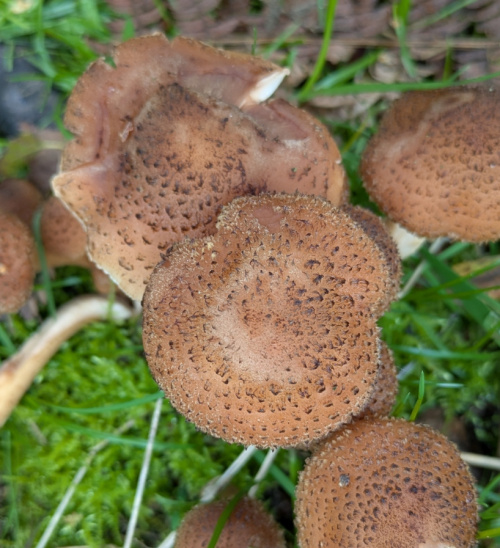 Groby John
Groby, Lady Hay Wood
27 October 2025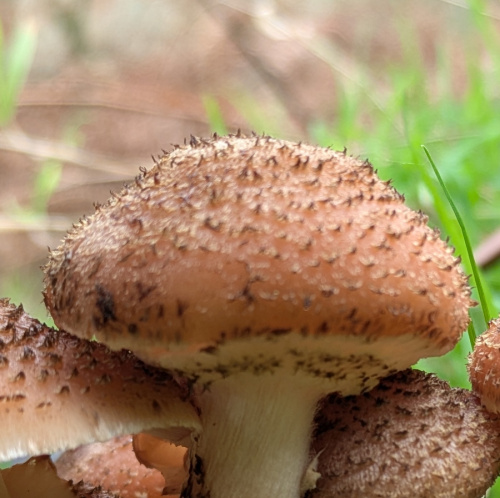 Groby John
Groby, Lady Hay Wood
27 October 2025 Armillaria ostoyae.(DarkHoney Fungus) All Saints Church Yard (taken 7.11.2006)....JPG) Graham Calow
Graham Calow
All Saints Chuch, Sapcote
02 November 2006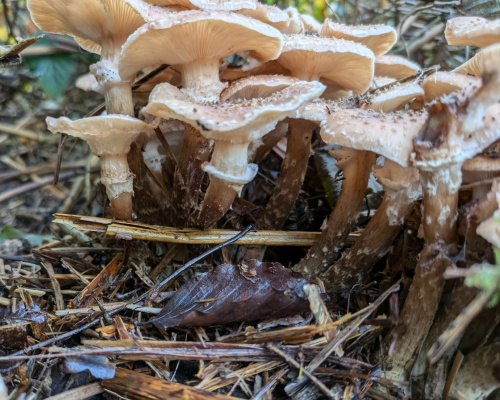 Groby John
The Outwoods
18 October 2024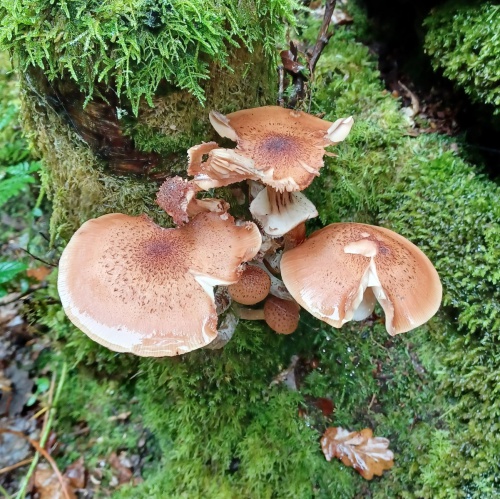 Margaret McLoughlin
Charnwood Lodge NNR
26 October 2023
 Armillaria ostoyae.(DarkHoney Fungus) All Saints Church Yard (taken 7.11.2006)....JPG)
Leicestershire & Rutland Map
Enter a town or village to see local records
MAP KEY:
Yellow squares = NBN records (all known data)
Coloured circles = NatureSpot records: 2025+ | 2020-2024 | pre-2020
UK Map
Species profile
- Common names
- Dark Honey Fungus
- Species group:
- fungus
- Kingdom:
- Fungi
- Order:
- Agaricales
- Family:
- Physalacriaceae
- Records on NatureSpot:
- 12
- First record:
- 02/11/2006 (Calow, Graham)
- Last record:
- 27/10/2025 (Alton, John)
Total records by month
% of records within its species group
10km squares with records
The latest images and records displayed below include those awaiting verification checks so we cannot guarantee that every identification is correct. Once accepted, the record displays a green tick.
In the Latest Records section, click on the header to sort A-Z, and again to sort Z-A. Use the header boxes to filter the list.
Latest images
Latest records
 Armillaria ostoyae. (Dark Honey Fungus) All Saints Churchyard (taken 2.11.2006).JPG) Graham Calow
Graham Calow
All Saints Chuch, Sapcote
02 November 2006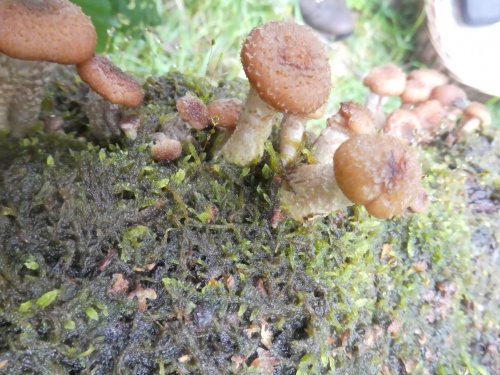 Melinda Bell
Charley,Charnwood Lodge
06 October 2019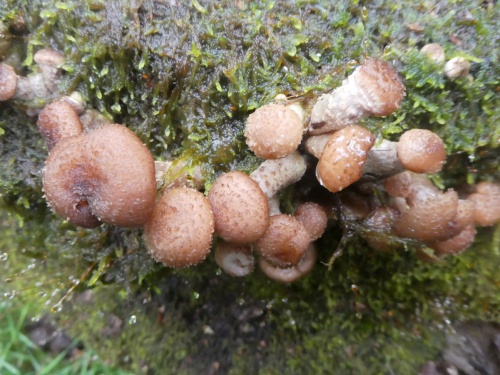 Melinda Bell
Charley,Charnwood Lodge
06 October 2019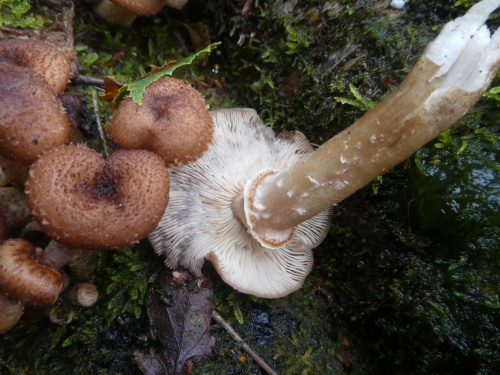 Melinda Bell
Charley,Charnwood Lodge
06 October 2019
 Armillaria ostoyae. (Dark Honey Fungus) All Saints Churchyard (taken 2.11.2006).JPG)