

Cochylidia heydeniana
Blue-fleabane Conch
Wingspan about 10 mm.

Unless identified by a recognised expert, a photo is required. In view of the rarity of this species in our area the moth should be retained as determination by genitalia examination (gen. det.) may be required to confirm records to full species.
Dry pastures, wasteland and sand dunes.
The two generations of moths fly in April and May and again in July.
The larvae feed on blue fleabane (Erigeron acer) and Canadian fleabane (Conyza canadensis), feeding either on the seeds, or in the shoots.
A very local species in Britain, distributed mainly in East Anglia and southern England. In the Butterfly Conservation's Microlepidoptera Report 2011 this species was classified as Nationally Scarce A.
Rare in Leicestershire and Rutland.
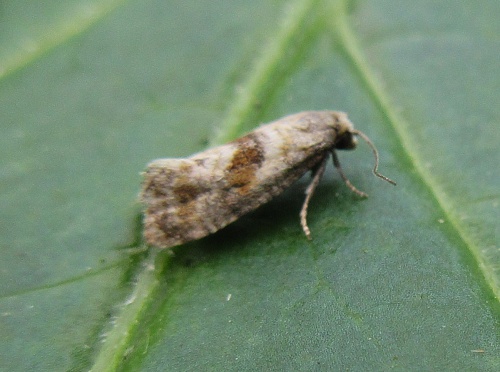 Pete Leonard
South Quarry, Sproxton
02 June 2021
confirmed by gen det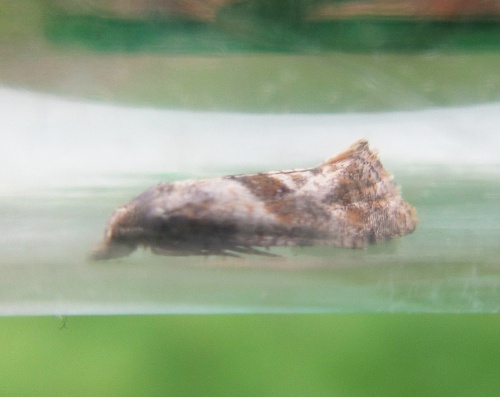 Pete Leonard
South Quarry, Sproxton
02 June 2021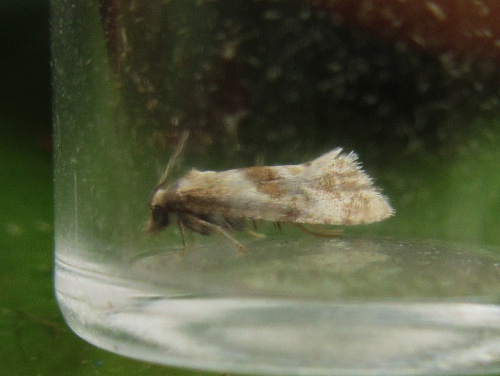 Pete Leonard
South Quarry, Sproxton
20 August 2021
confirmed by gen det


Leicestershire & Rutland Map
Enter a town or village to see local records
MAP KEY:
Yellow squares = NBN records (all known data)
Coloured circles = NatureSpot records: 2025+ | 2020-2024 | pre-2020
UK Map
Species profile
- Common names
- Blue-fleabane Conch
- Species group:
- insect - moth
- Kingdom:
- Animalia
- Order:
- Lepidoptera
- Family:
- Tortricidae
- Records on NatureSpot:
- 2
- First record:
- 02/06/2021 (Leonard, Pete)
- Last record:
- 20/08/2021 (Leonard, Pete)
Total records by month
% of records within its species group
10km squares with records
The latest images and records displayed below include those awaiting verification checks so we cannot guarantee that every identification is correct. Once accepted, the record displays a green tick.
In the Latest Records section, click on the header to sort A-Z, and again to sort Z-A. Use the header boxes to filter the list.