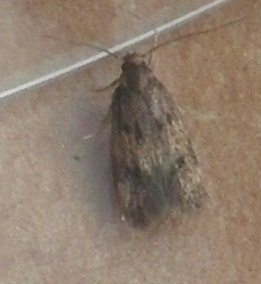
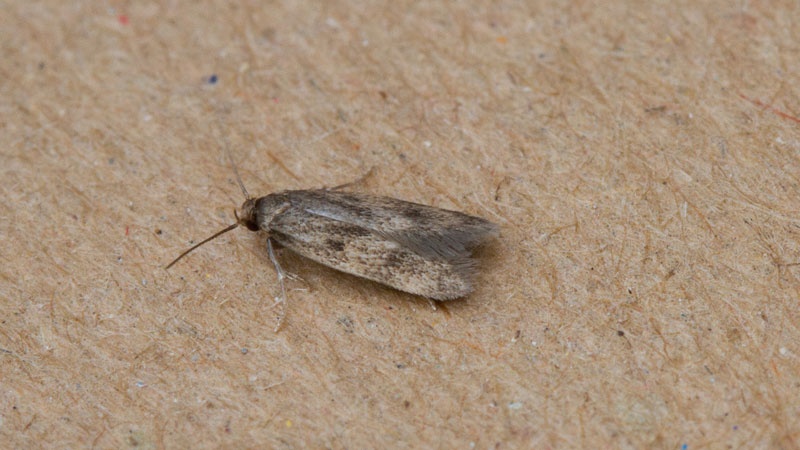
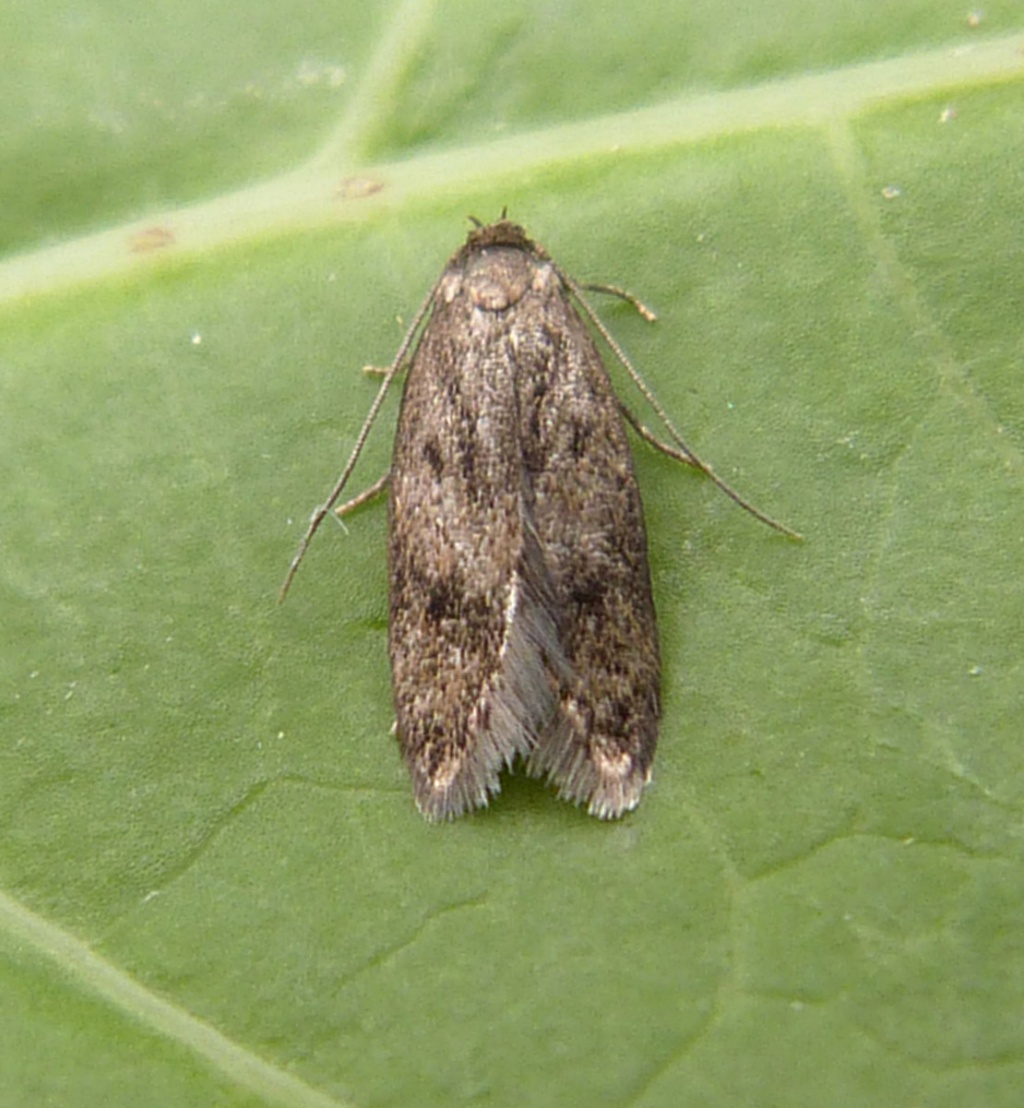
Borkhausenia fuscescens
Small Dingy Tubic
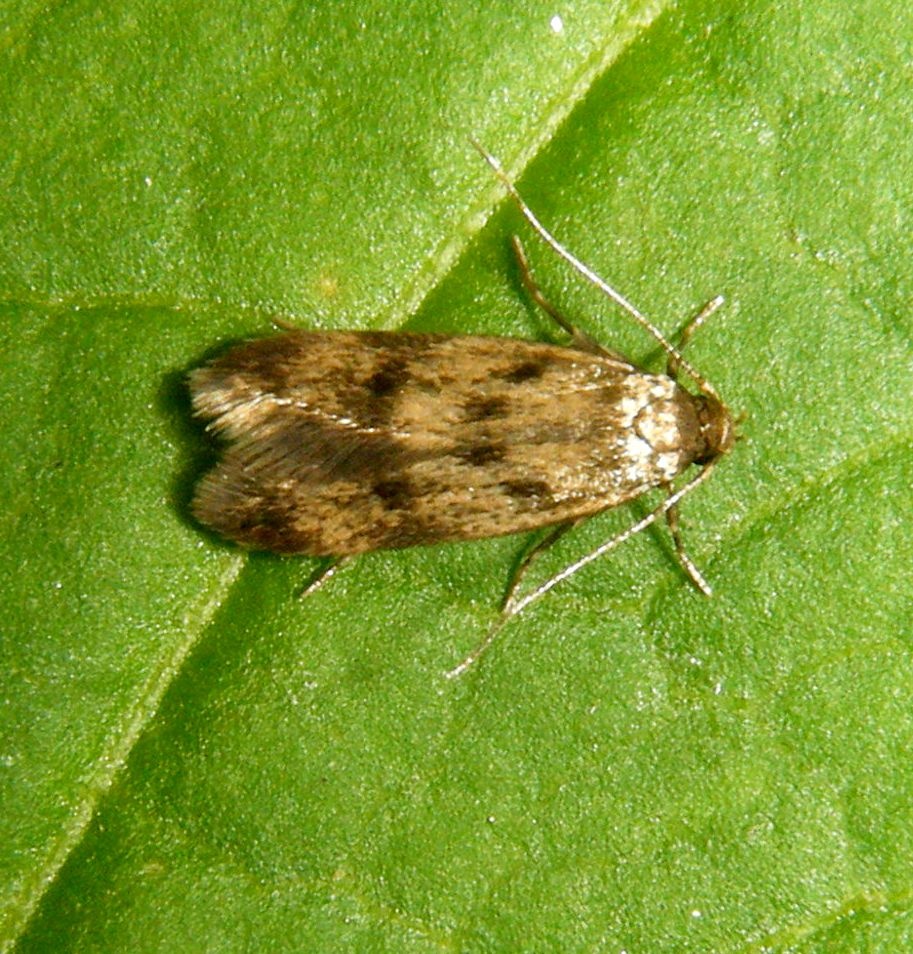
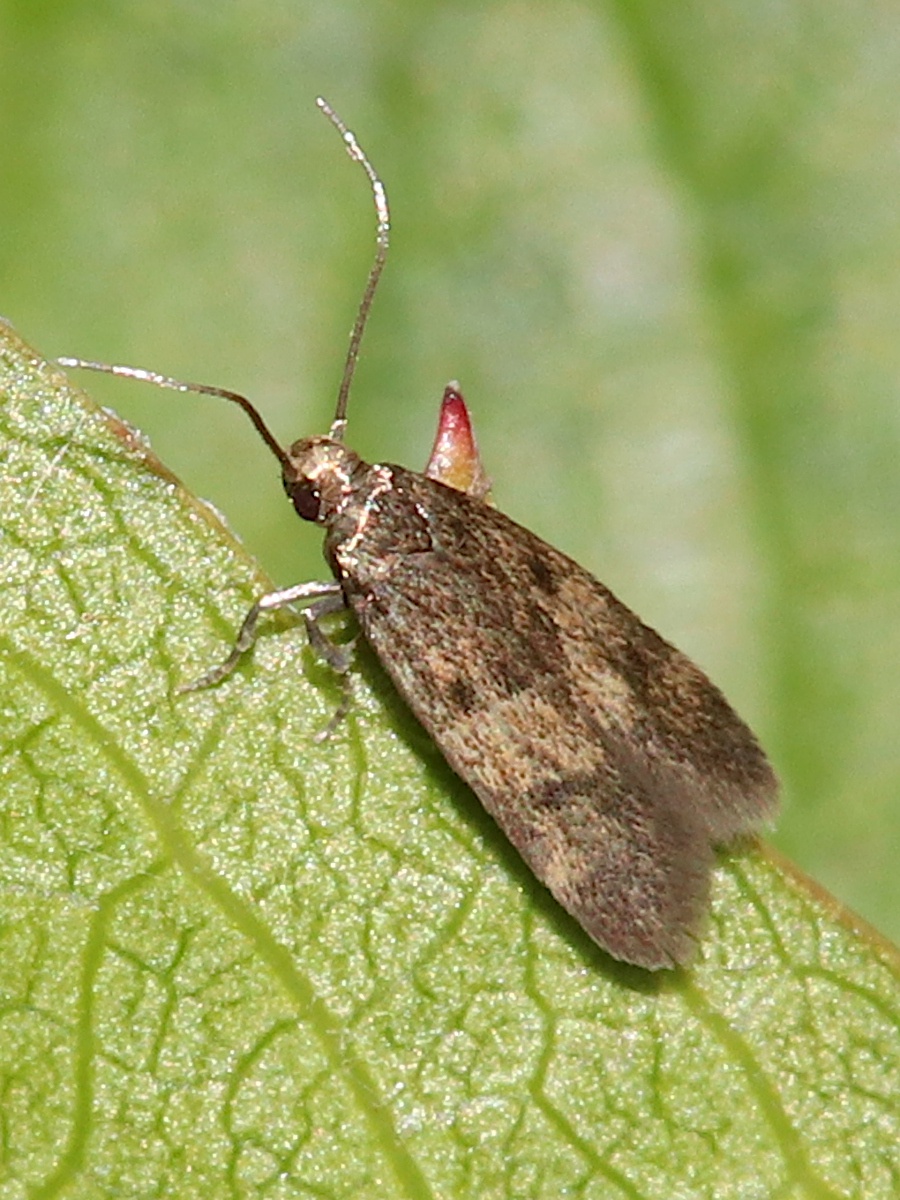
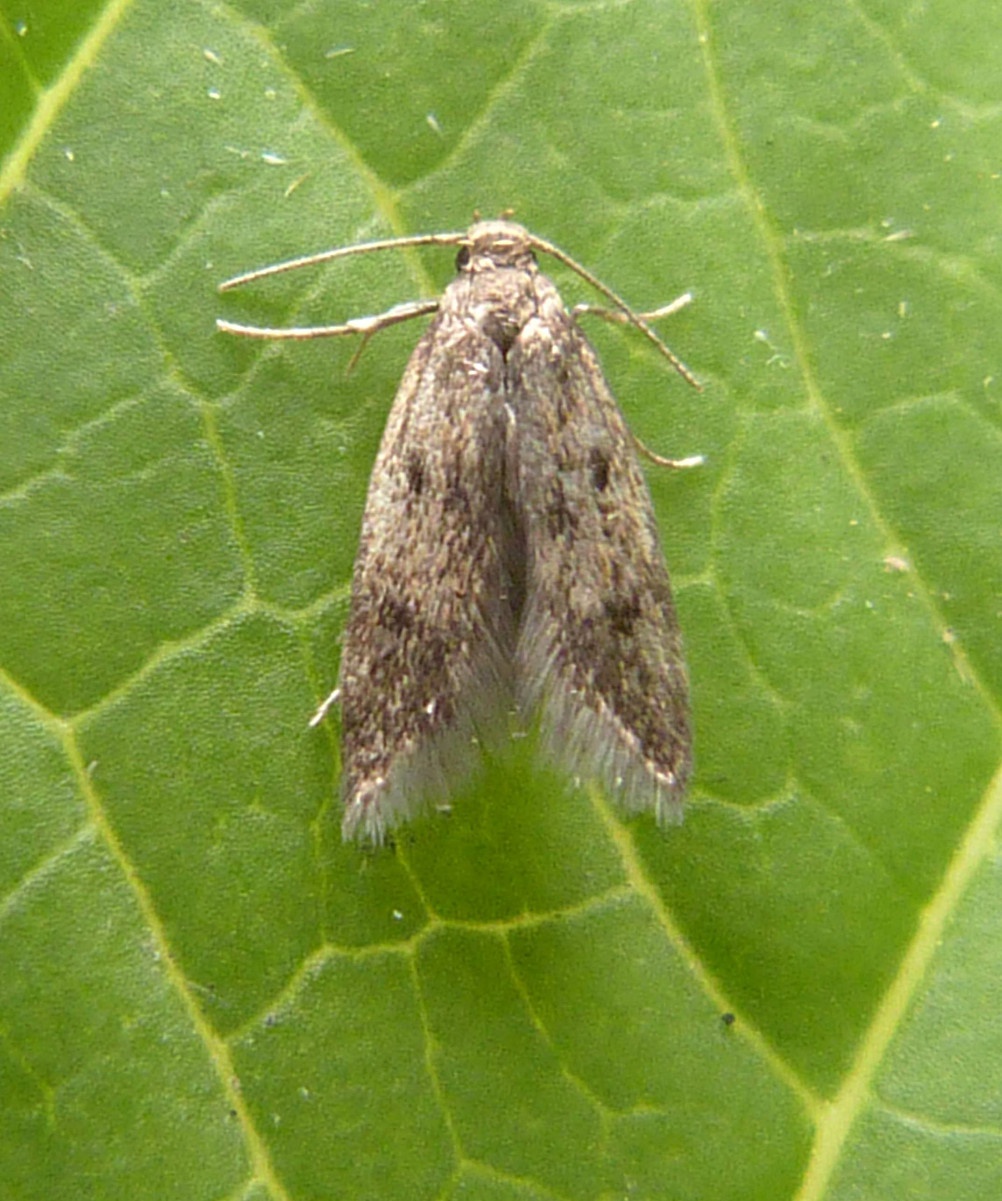
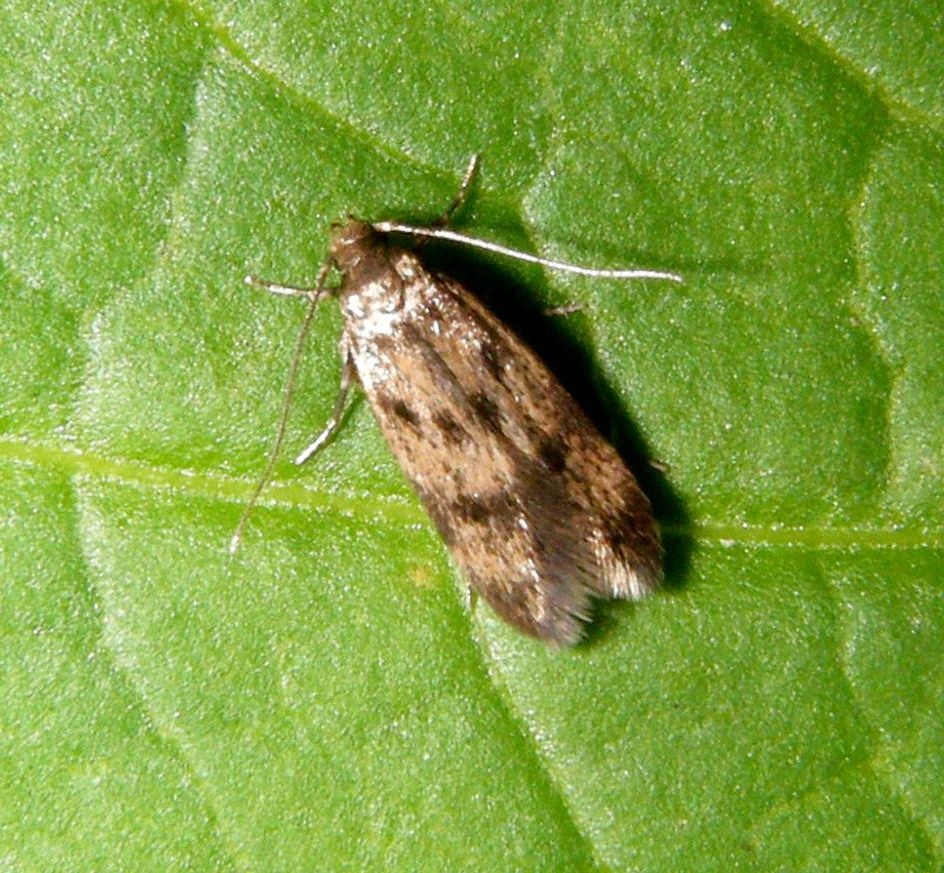
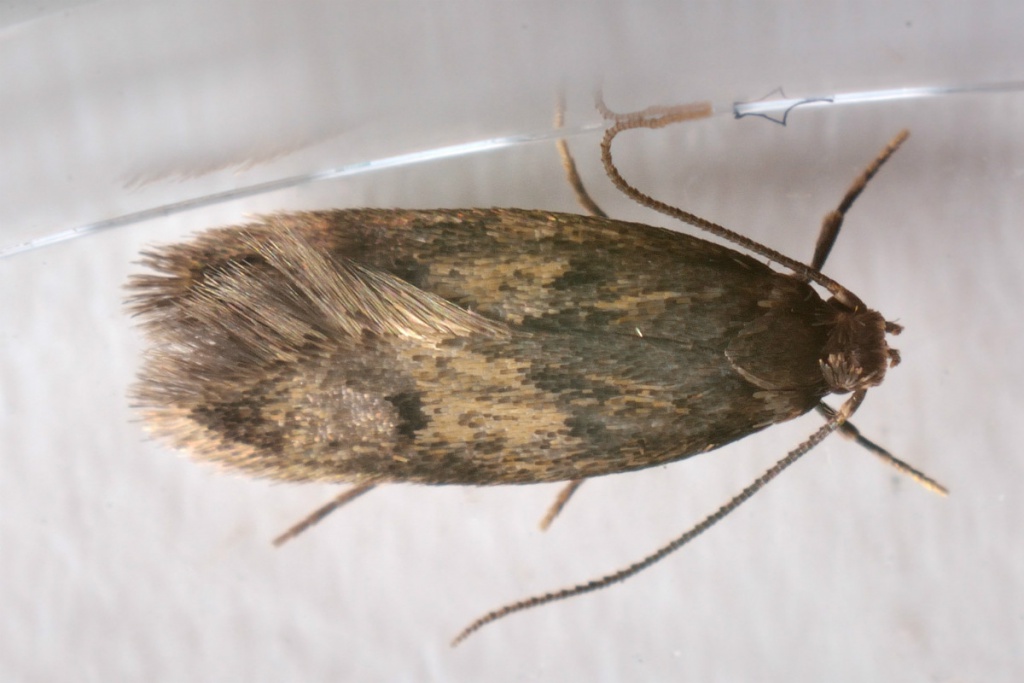
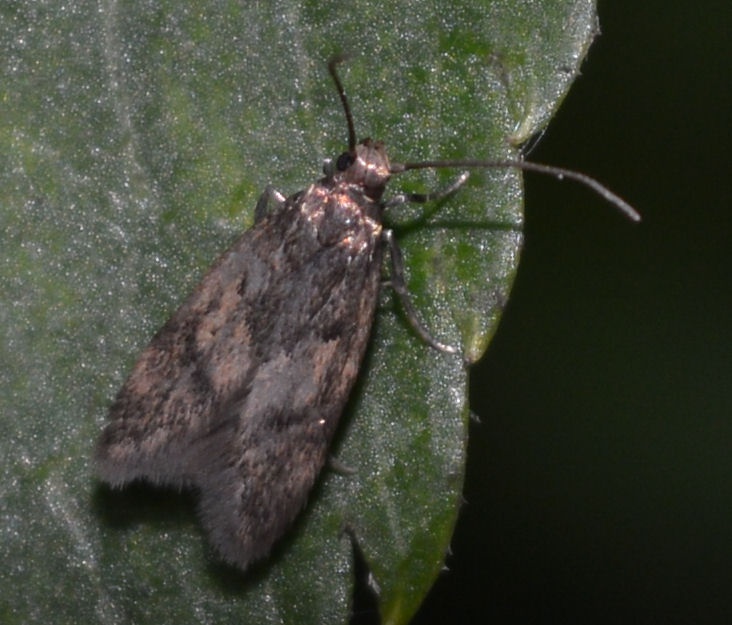
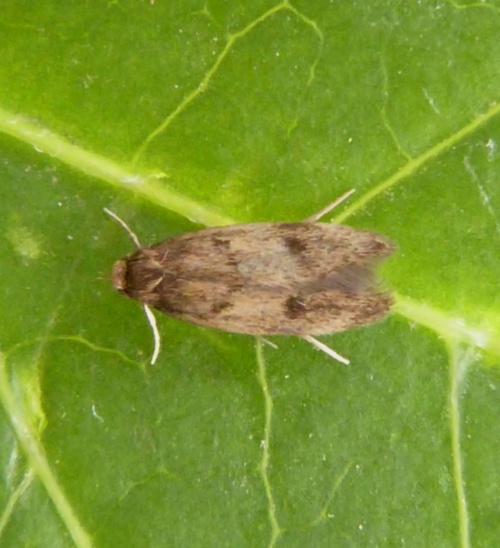
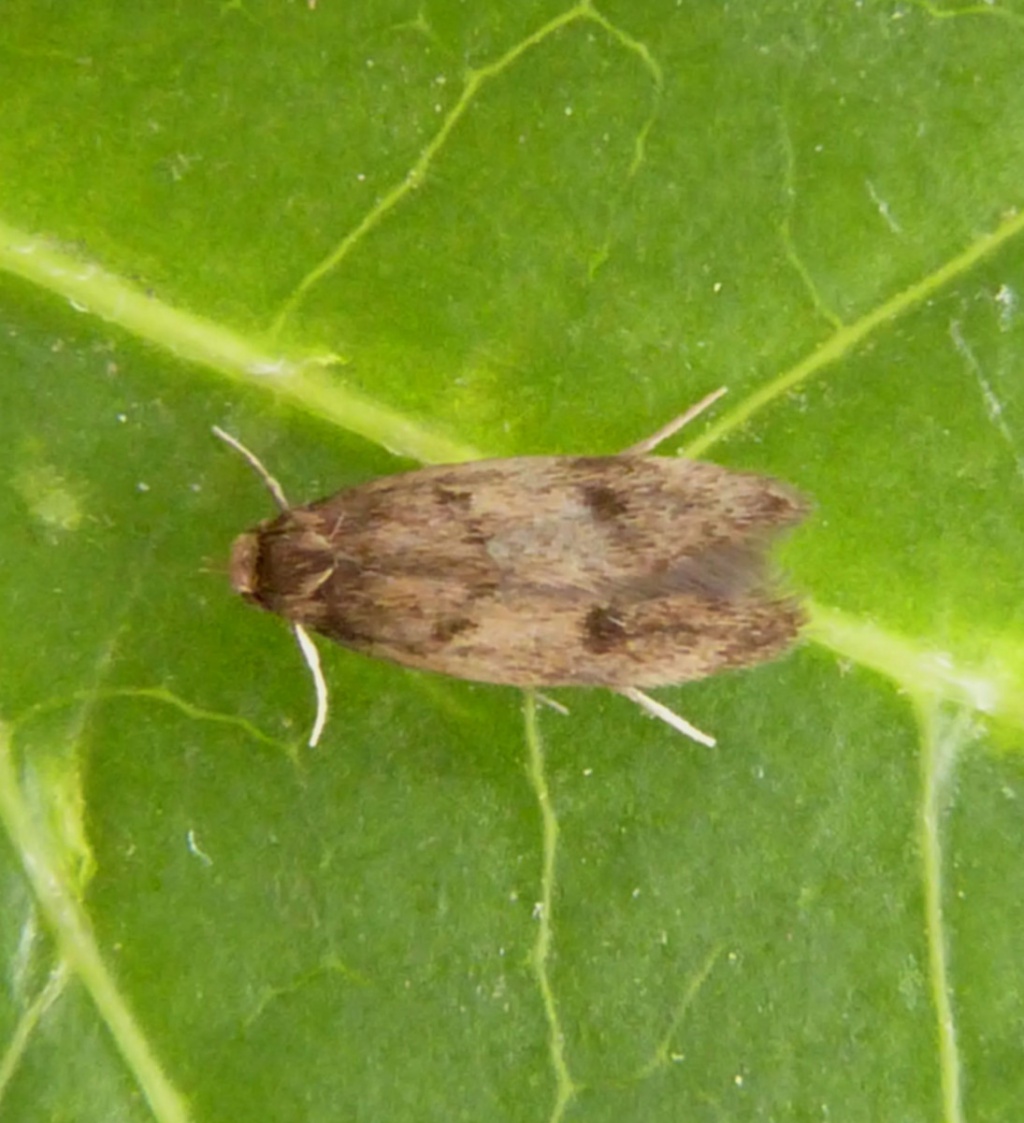
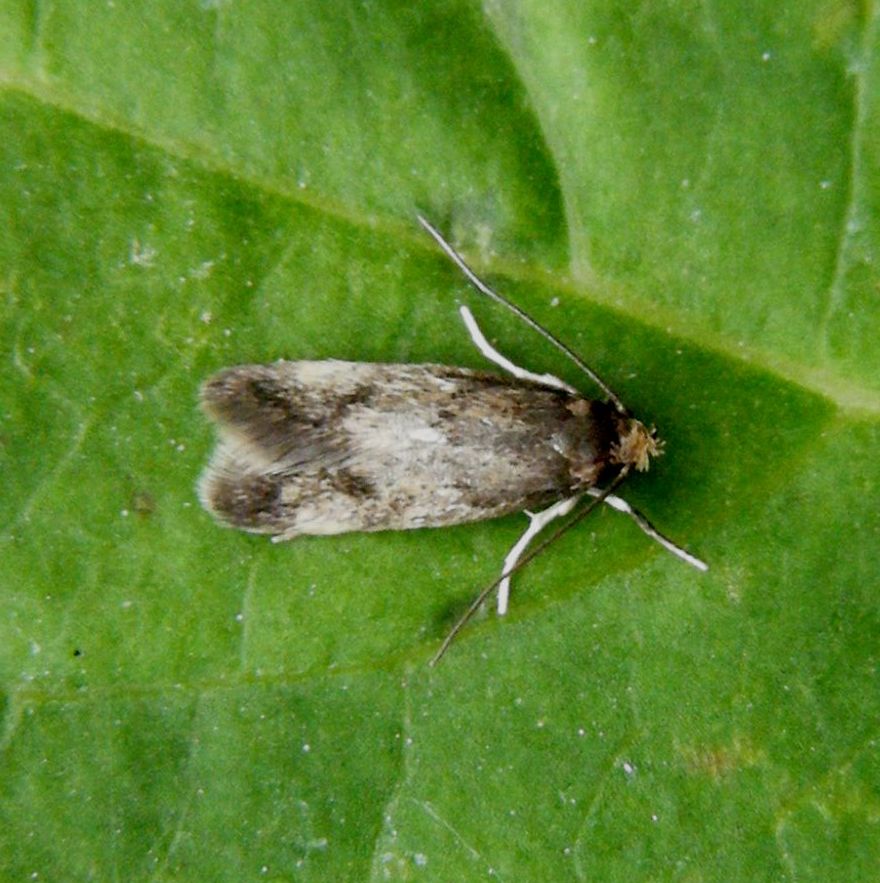
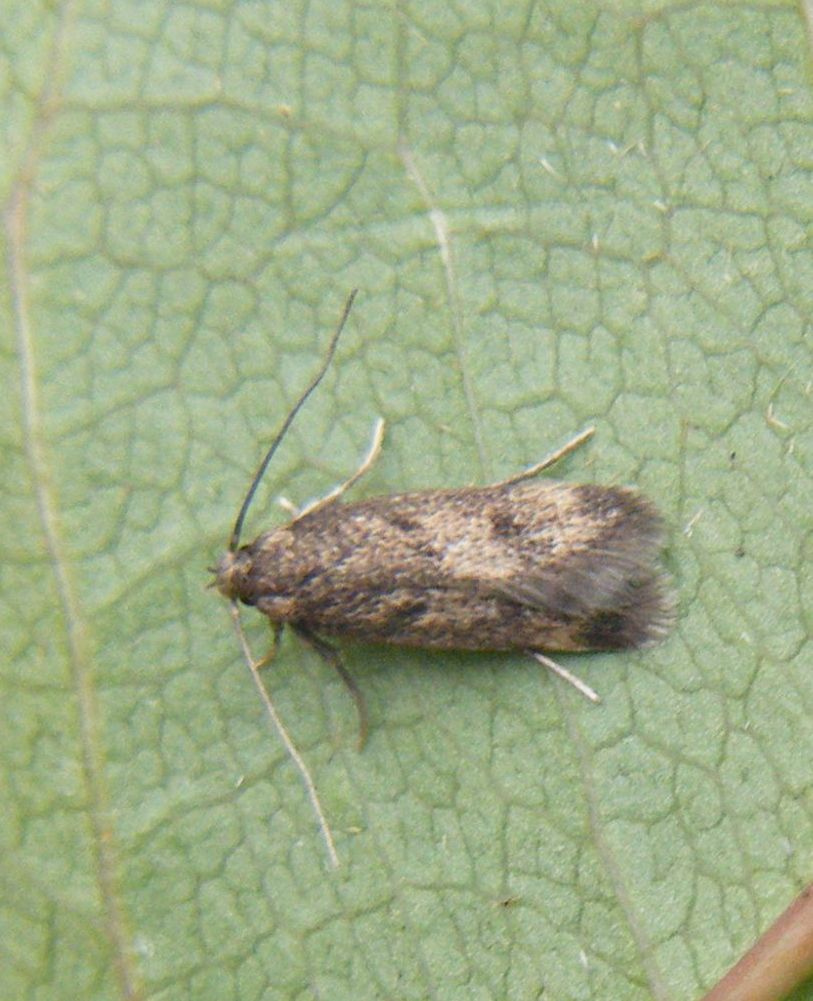
Wingspan 7 to 12 mm. A small, stubby-looking moth with a pale transverse band against a slightly darker brownish ground colour. A darker spot is visible beyond the band and a dark suffusion before it.

The moths occur in July and August.
The larvae feed on a wide range of dried plant matter, such as dead leaves and birds' nests, normally within a silken tube.
The species is fairly common and widely distributed throughout most of the British Isles. In the Butterfly Conservation’s Microlepidoptera Report 2011 this species was classified as common.
This species seems to be uncommon or under recorded in Leicestershire and Rutland. L&R Moth Group status = D (rare or rarely recorded)
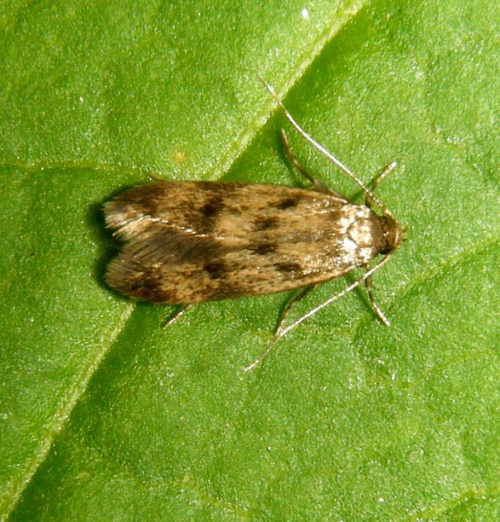 Graham Calow
Sapcote garden1
08 August 2012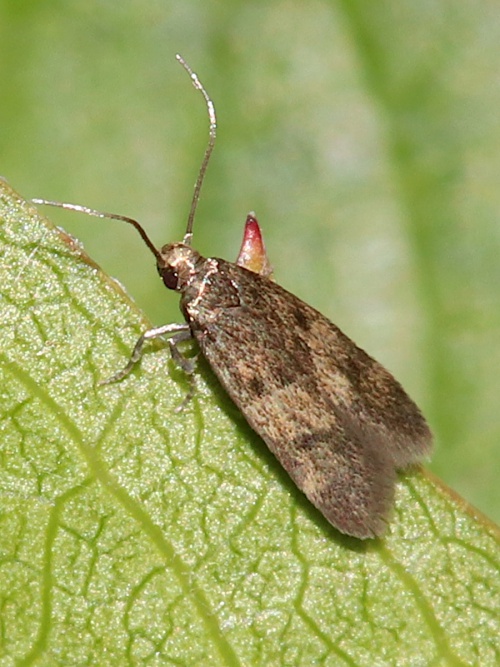 Mike Higgott
Anstey garden
29 July 2019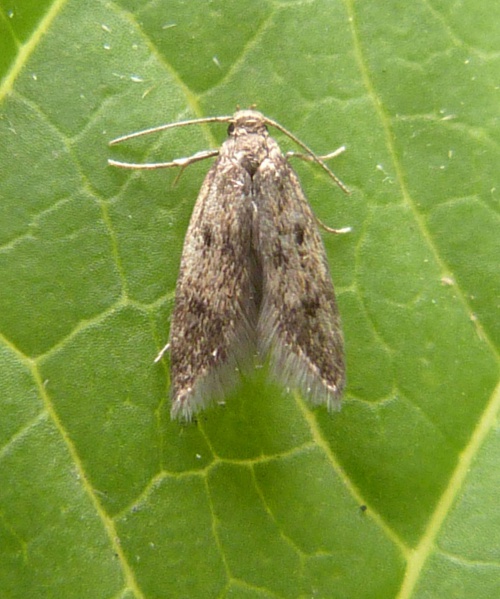 Graham Calow
Sapcote garden1
10 August 2015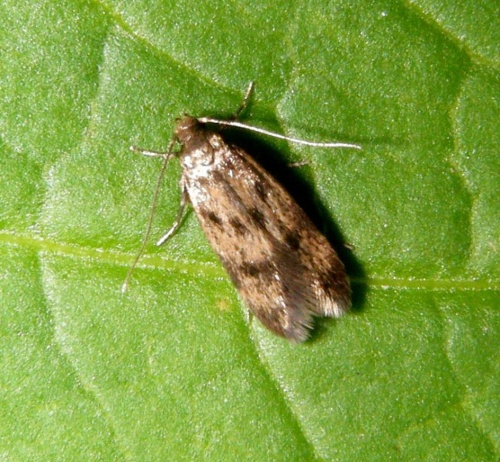 Graham Calow
Sapcote garden1
08 August 2012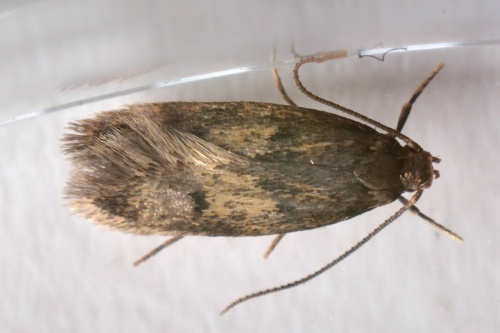 Barbara Cooper
Long Clawson
01 August 2013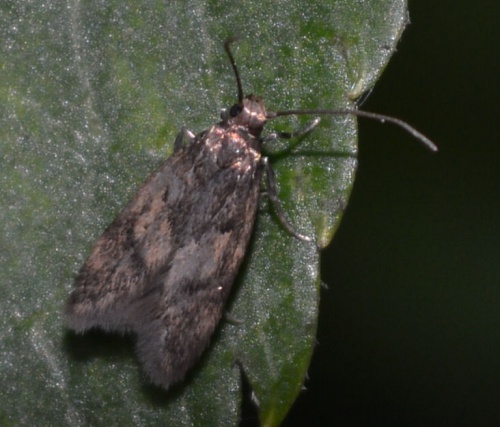 Barbara Cooper
Long Clawson
27 July 2015
Leicestershire & Rutland Map
Enter a town or village to see local records
MAP KEY:
Yellow squares = NBN records (all known data)
Coloured circles = NatureSpot records: 2025+ | 2020-2024 | pre-2020
UK Map
Species profile
- Common names
- Small Dingy Tubic, Dingy Concealer
- Species group:
- insect - moth
- Kingdom:
- Animalia
- Order:
- Lepidoptera
- Family:
- Oecophoridae
- Records on NatureSpot:
- 62
- First record:
- 02/08/2010 (Calow, Graham)
- Last record:
- 08/07/2025 (Poole, Adam)
Total records by month
% of records within its species group
10km squares with records
The latest images and records displayed below include those awaiting verification checks so we cannot guarantee that every identification is correct. Once accepted, the record displays a green tick.
In the Latest Records section, click on the header to sort A-Z, and again to sort Z-A. Use the header boxes to filter the list.
Latest images
Latest records
 Graham Calow
Sapcote garden1
01 July 2014 Harecroft Crescent Sapcote SP49019371 (taken 2.8.2010)..JPG) Graham Calow
Graham Calow
Sapcote garden1
02 August 2010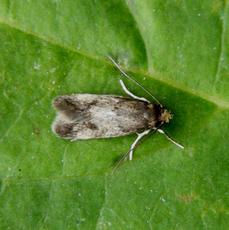 Graham Calow
Sapcote garden1
12 July 2011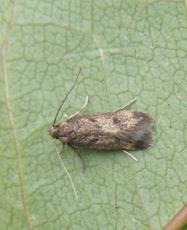 Graham Calow
Sapcote garden1
28 July 2011 Harecroft Crescent Sapcote SP49019371 (taken 2.8.2010),.JPG) Graham Calow
Graham Calow
Sapcote garden1
02 August 2010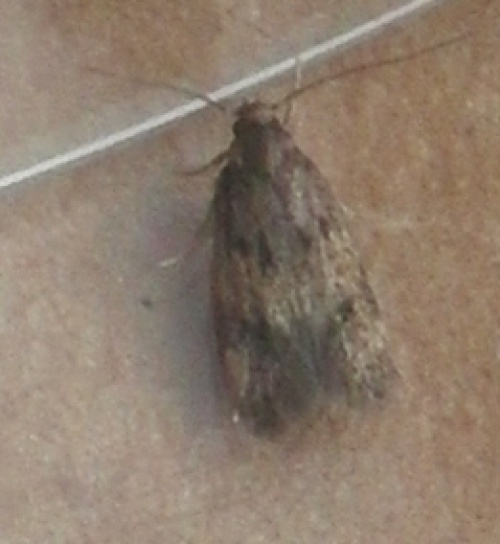 Alan Semper
Harby house
31 July 2013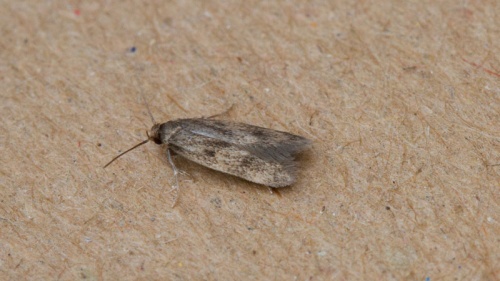 Rod Baker
Newton Harcourt
15 August 2012- Barbara Cooper
Long Clawson
27 July 2015 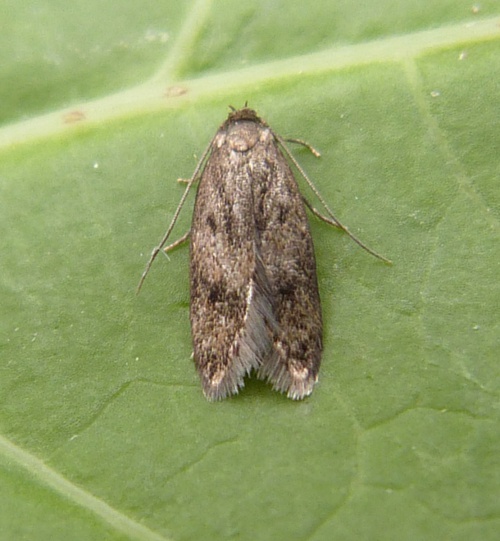 Graham Calow
Sapcote garden1
18 July 2015
 Harecroft Crescent Sapcote SP49019371 (taken 2.8.2010)..JPG)
 Harecroft Crescent Sapcote SP49019371 (taken 2.8.2010),.JPG)