

Aspen - Populus tremula
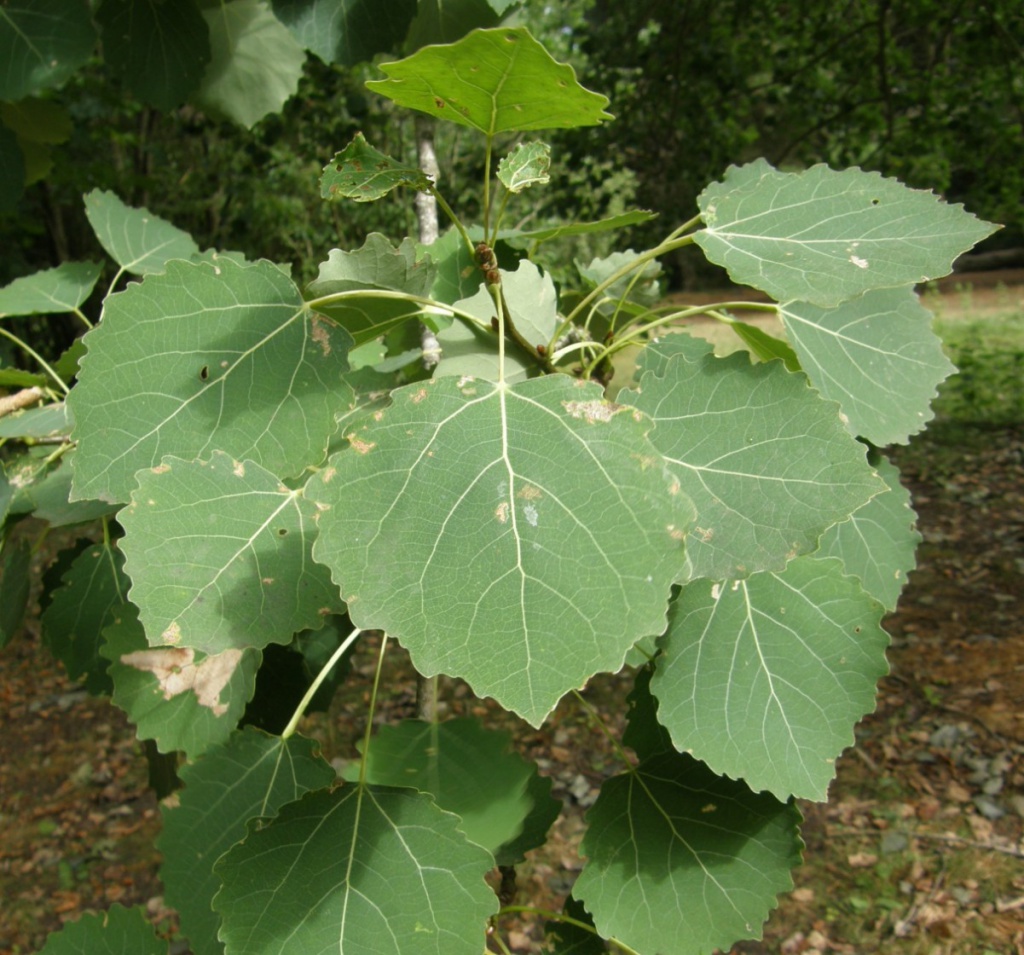
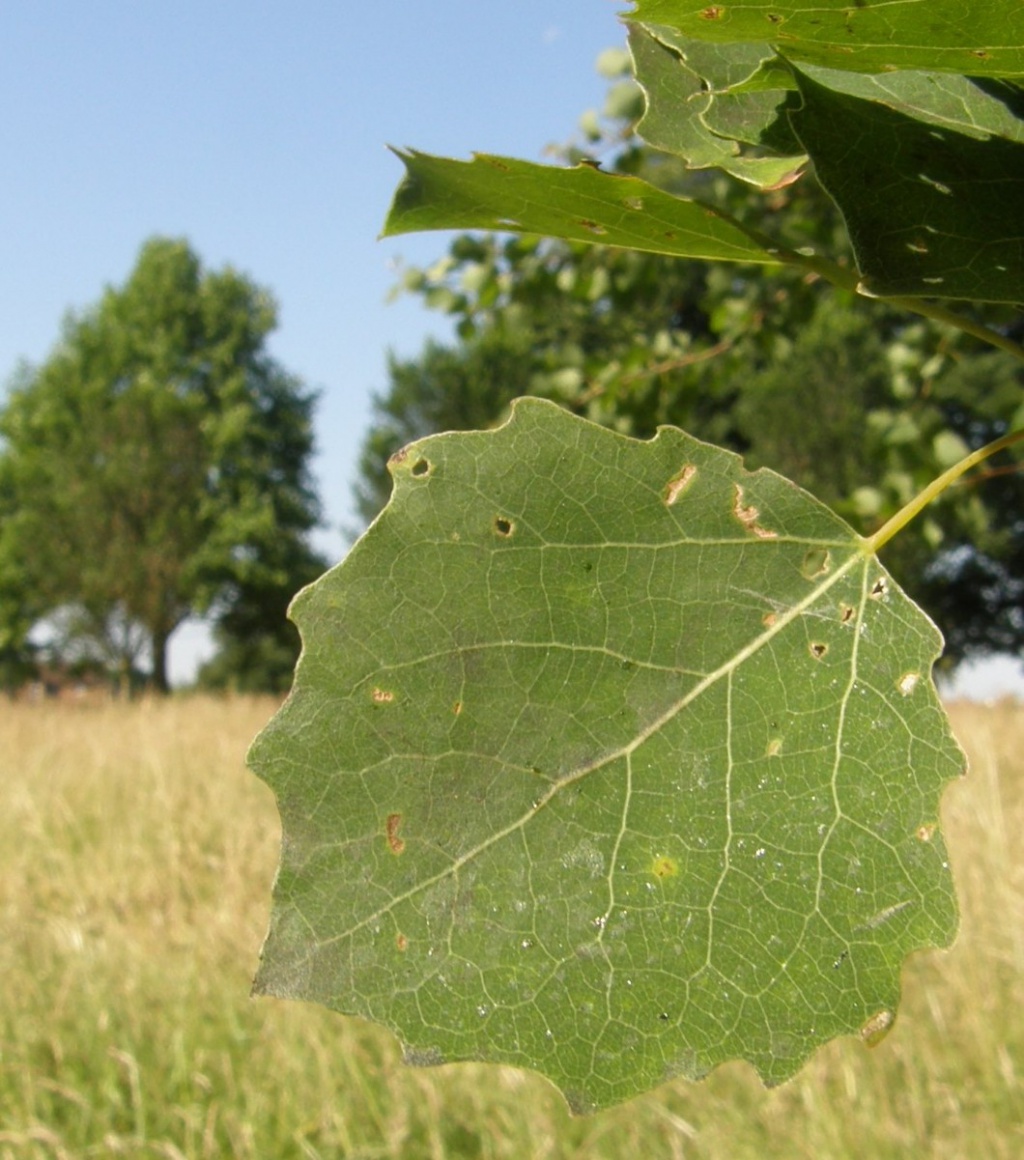
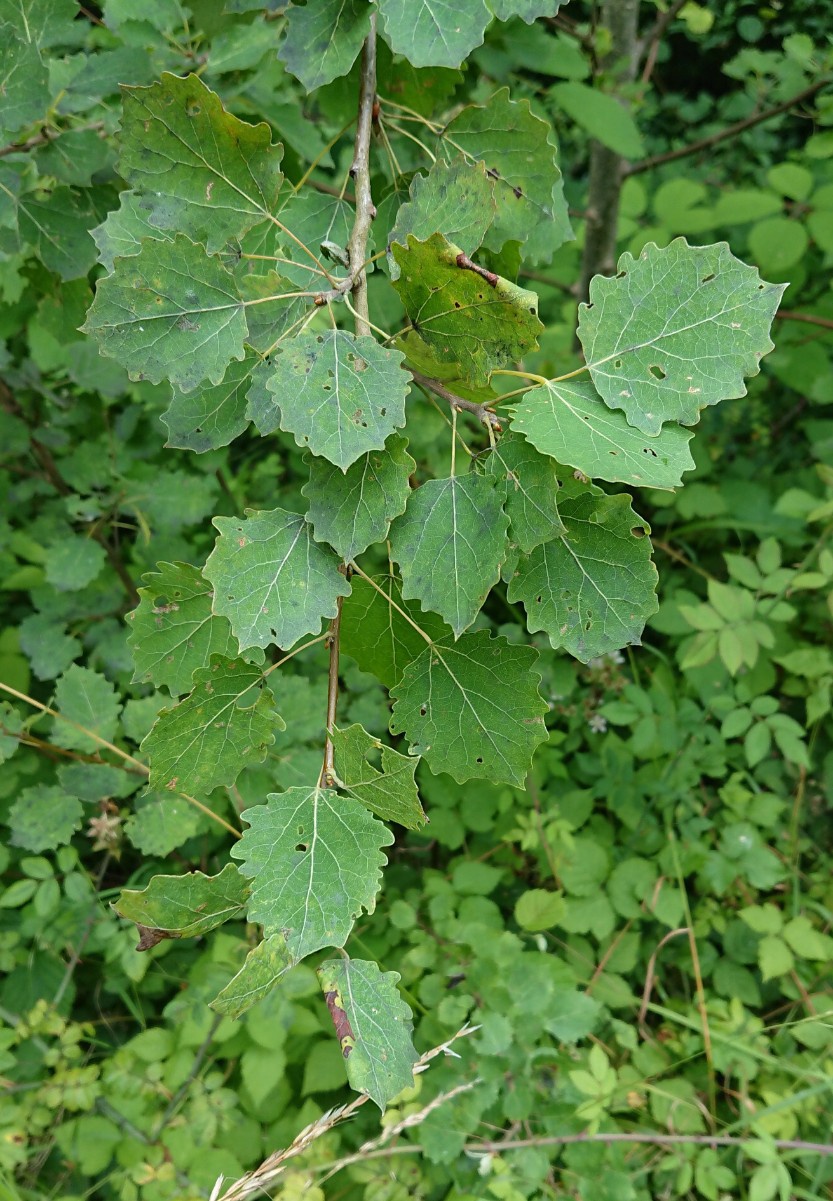
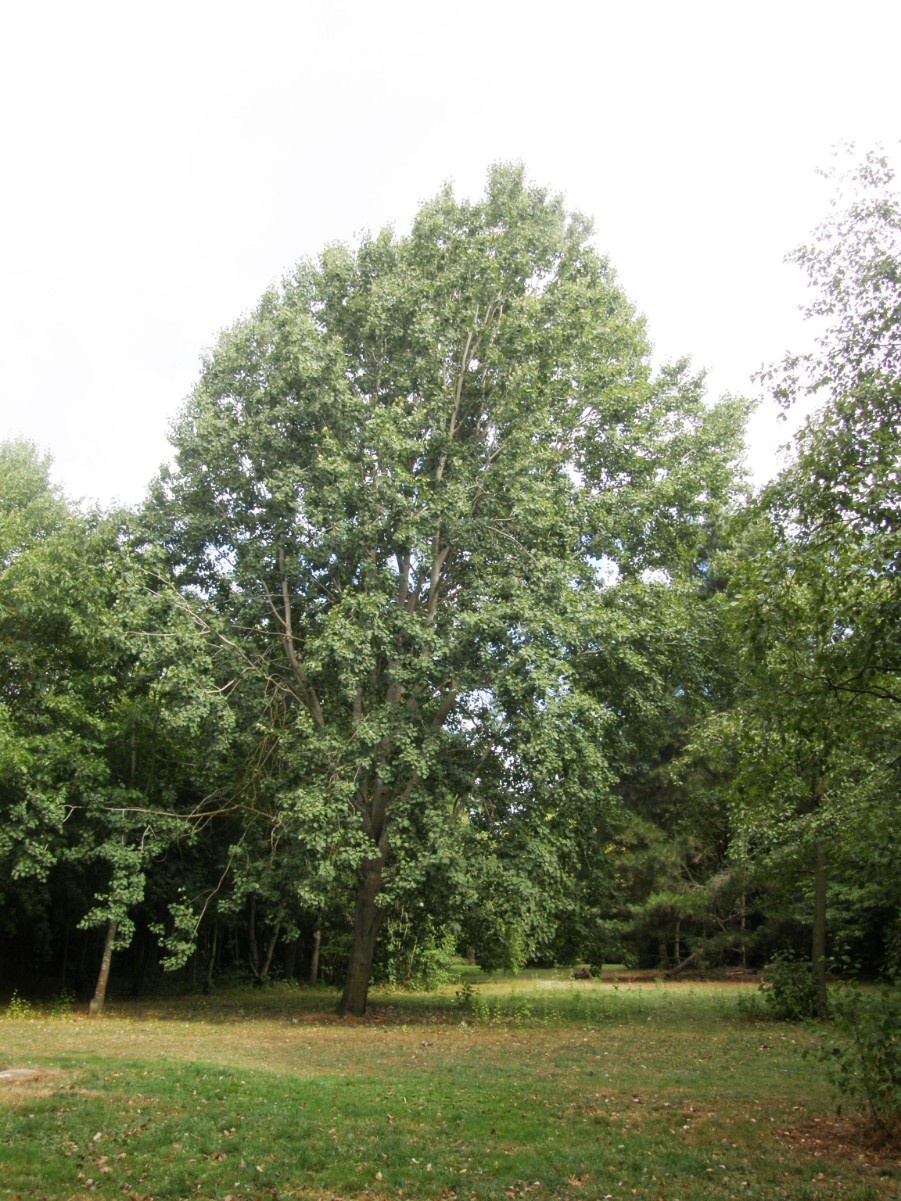
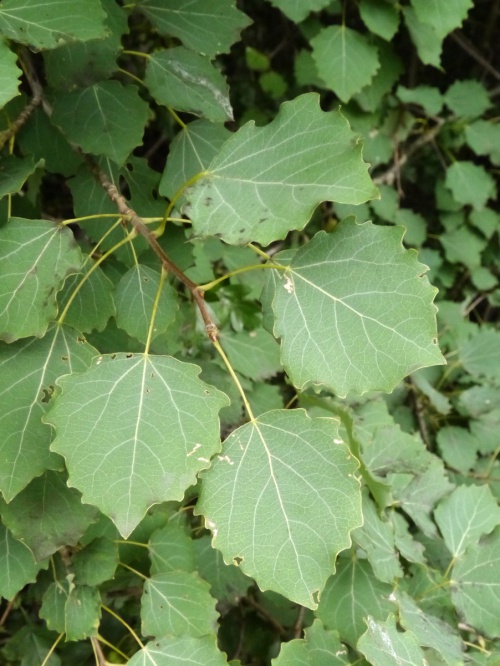
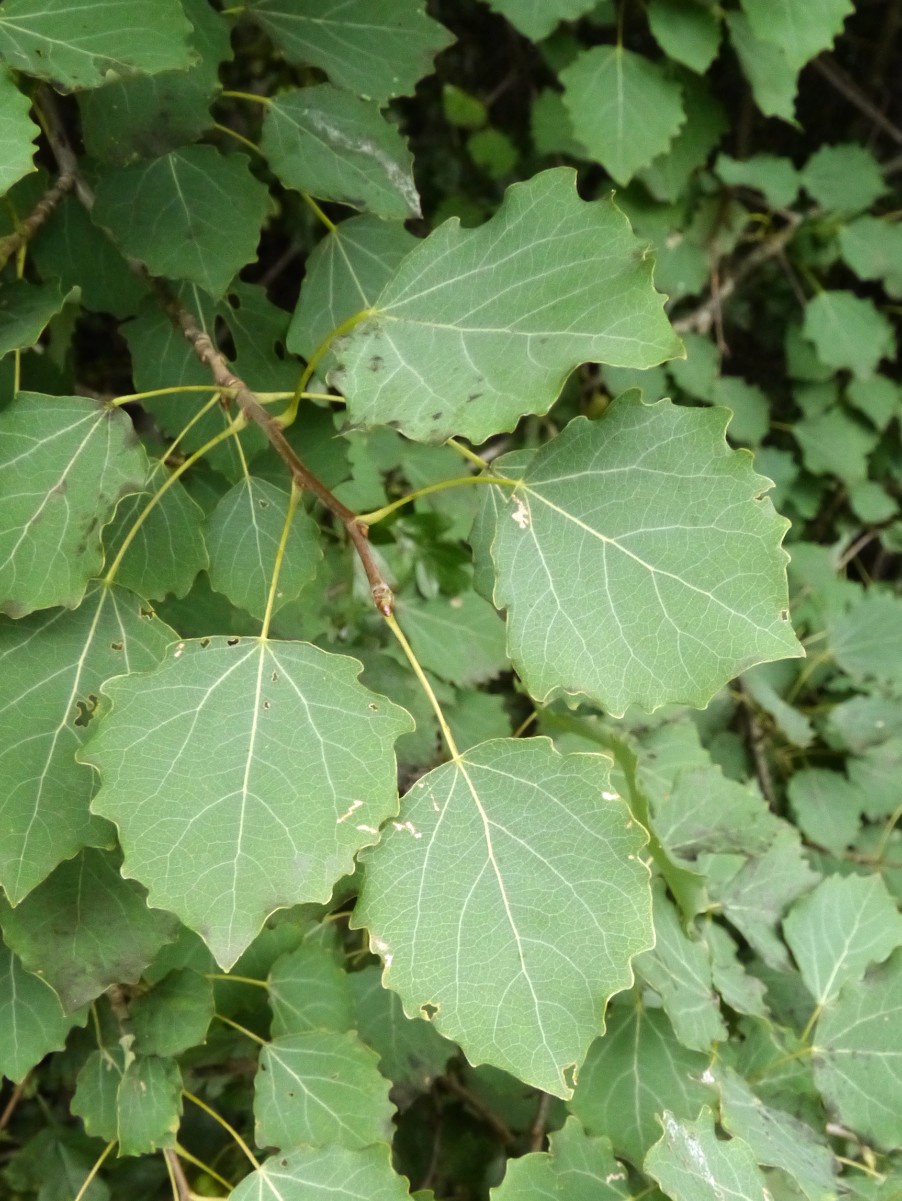
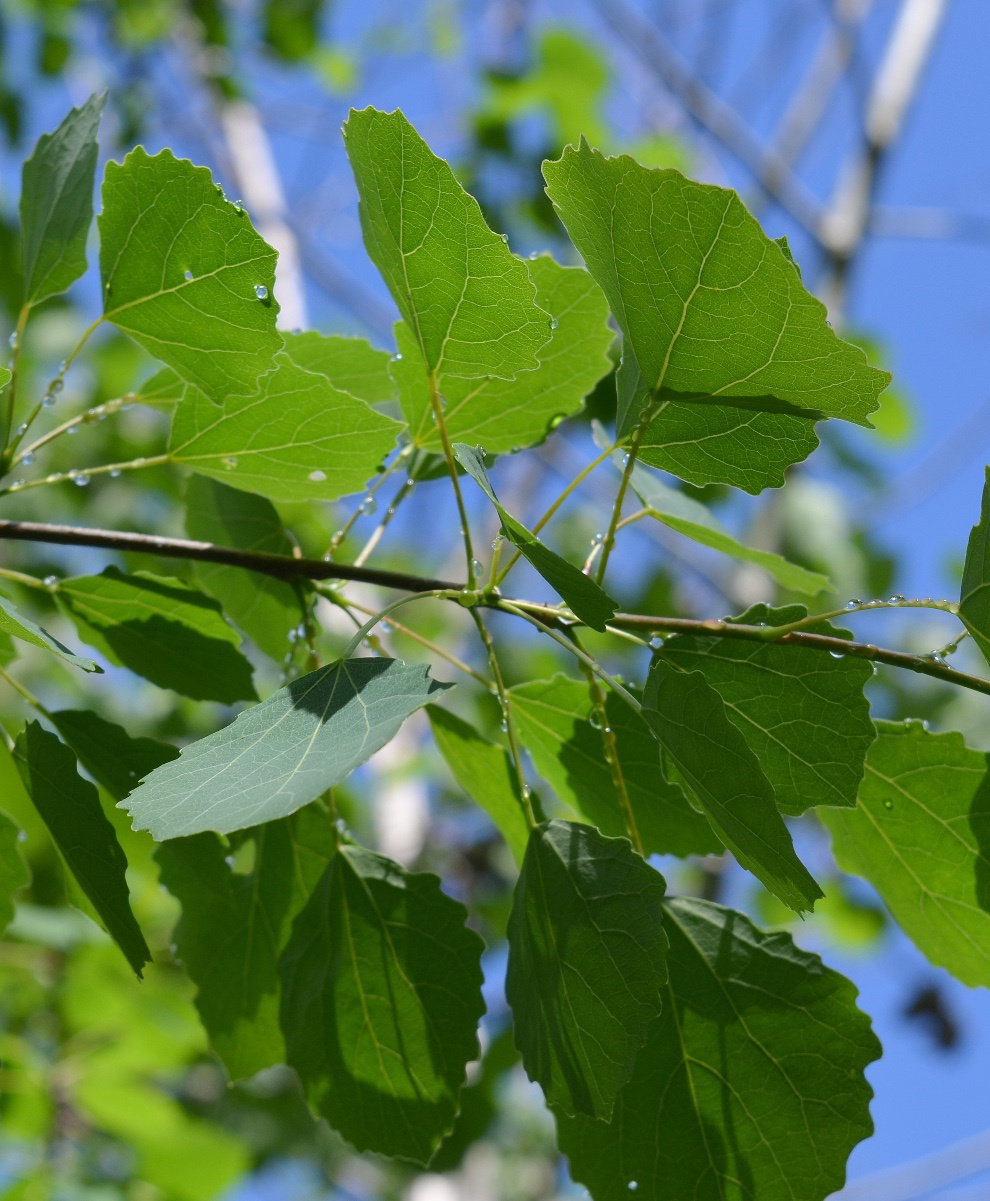
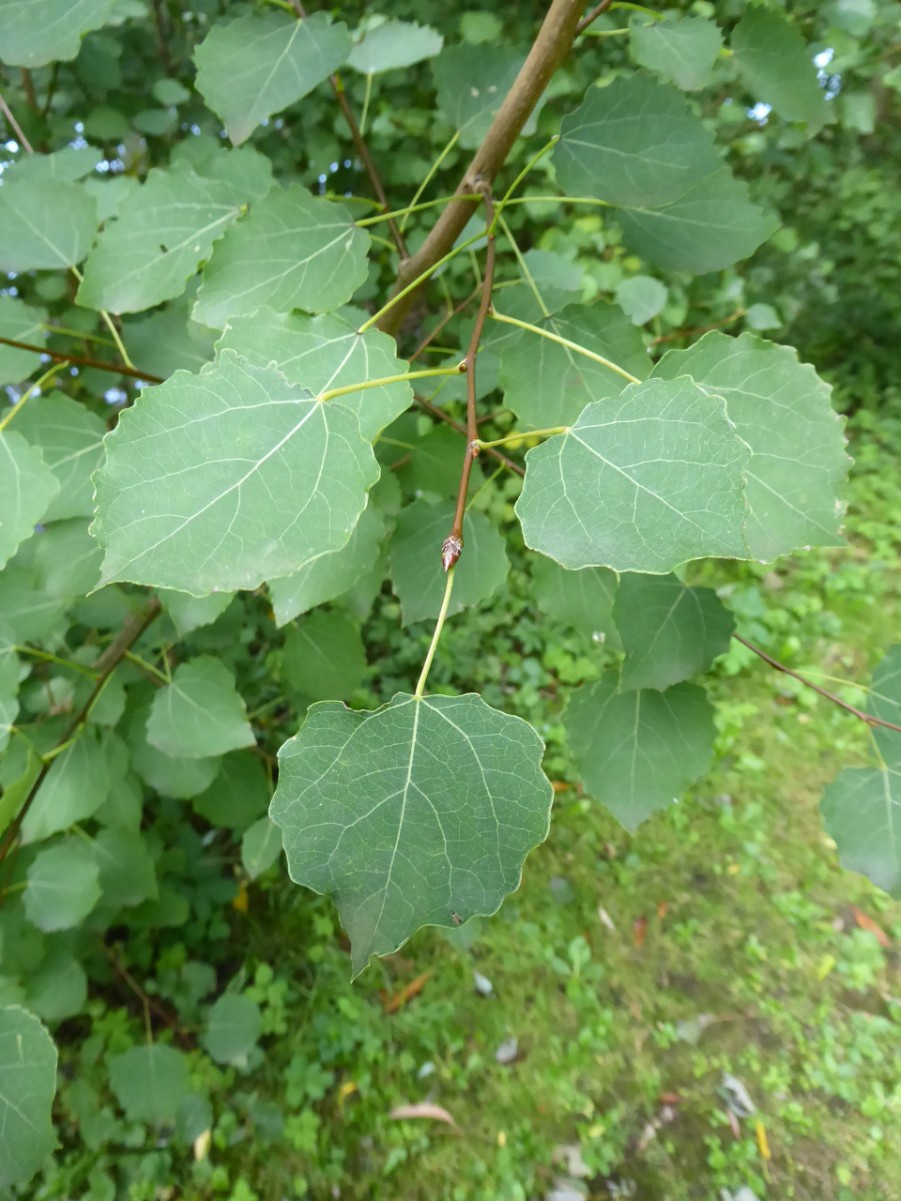
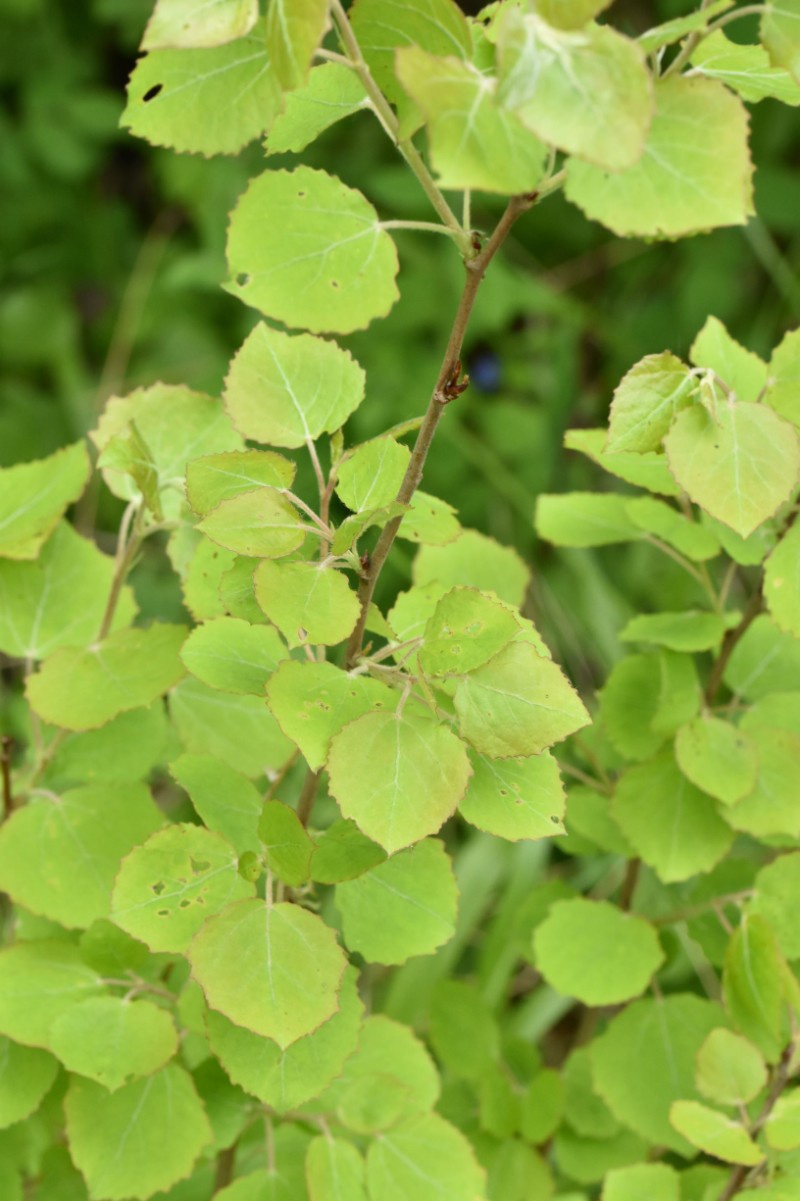
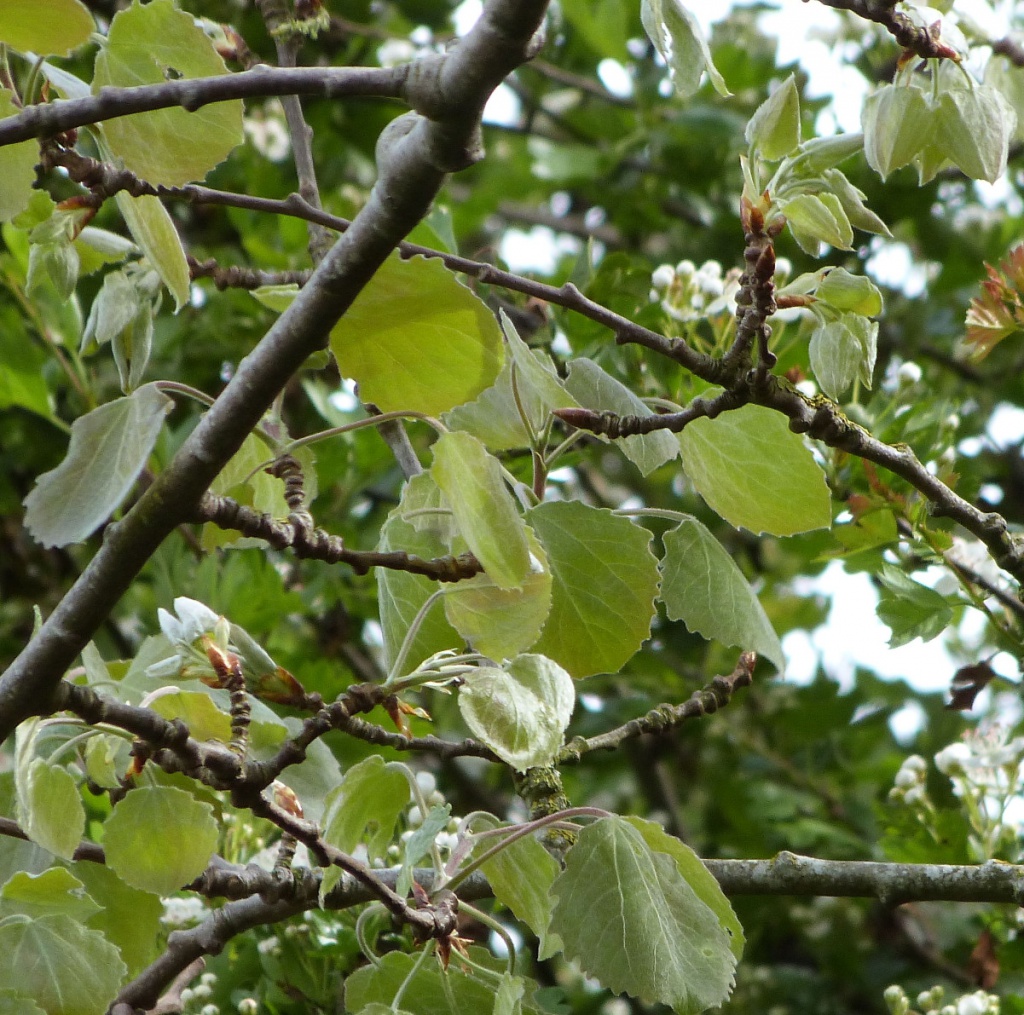
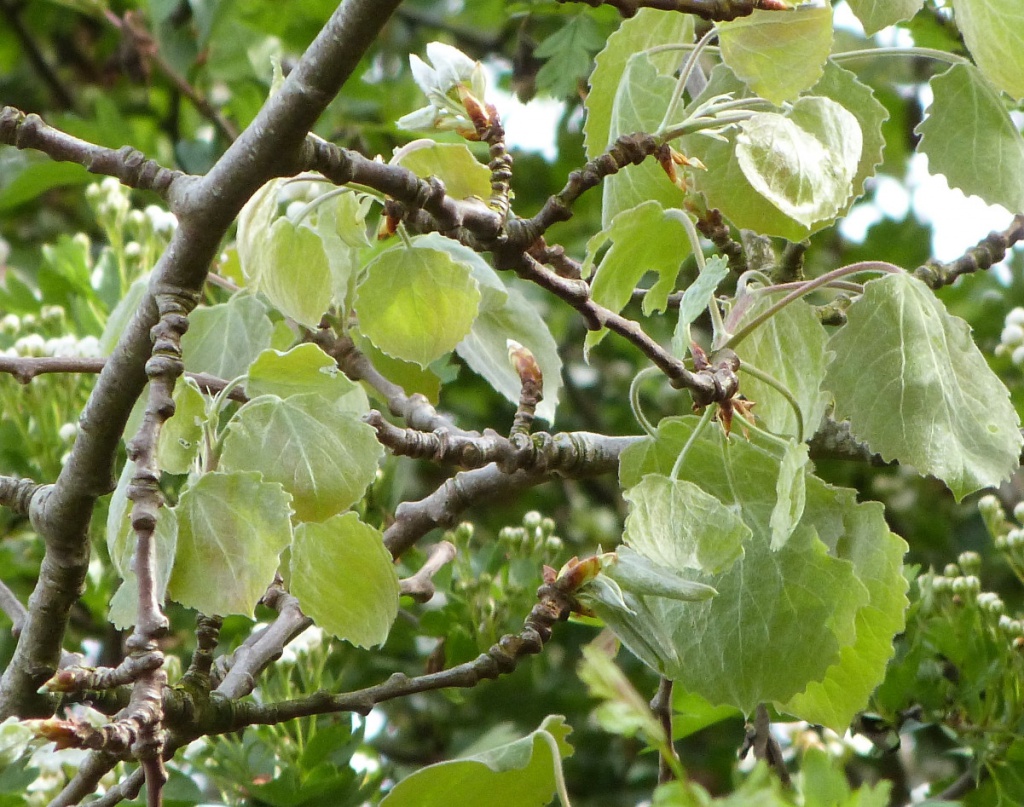
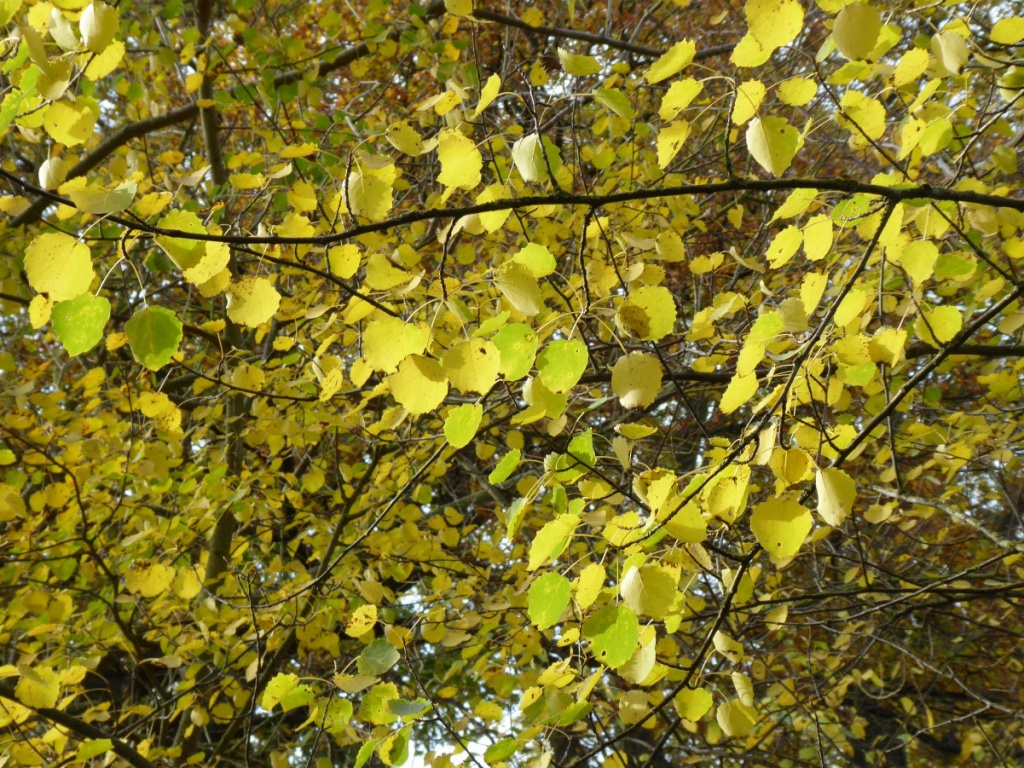
Spreading tree to 20 metres, freely suckering and forming thickets. Leaves greyish beneath and fluttering on long flattened stalks; glabrous when mature - but note that the leaves on suckers/epicormic are oval or cordate, and hairy.
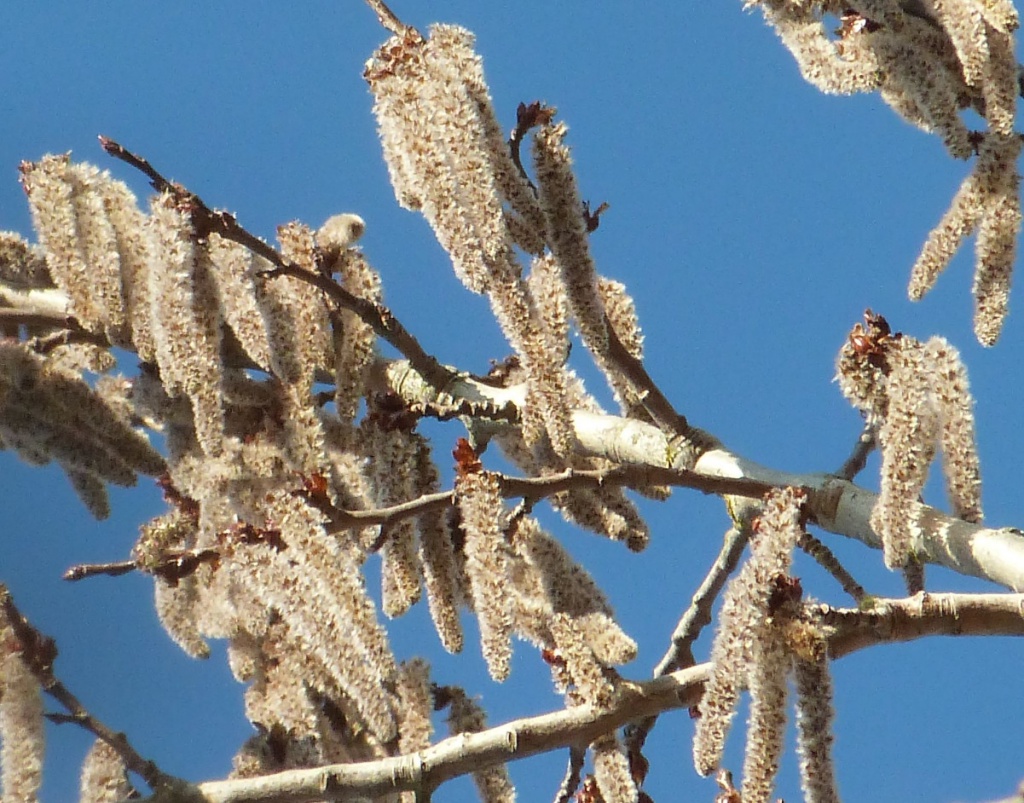
Male catkins are grey brown, briefly yellow before pollen is shed. Female catkins are greenish with re-brown bracts, becoming woolly and white in may before shedding the woolly seeds
Grey Poplar (P x canescens) can have similar shaped leaves.

Photographs of leaves from crown, under and upper side, but NOT form suckers or epicormic growth, which should not be used to identify the species.
Woodland, hedgerows and the banks of rivers and streams.
February to March.
Damp woods, copses.
Frequent and widespread in Britain.
Fairly frequent in Leicestershire and Rutland. In the 1979 Flora survey of Leicestershire it was found in 102 of the 617 tetrads.
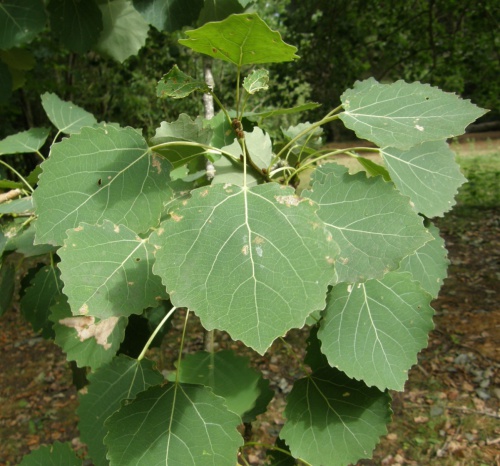 Saharima Roenisch
Knighton Park
10 August 2018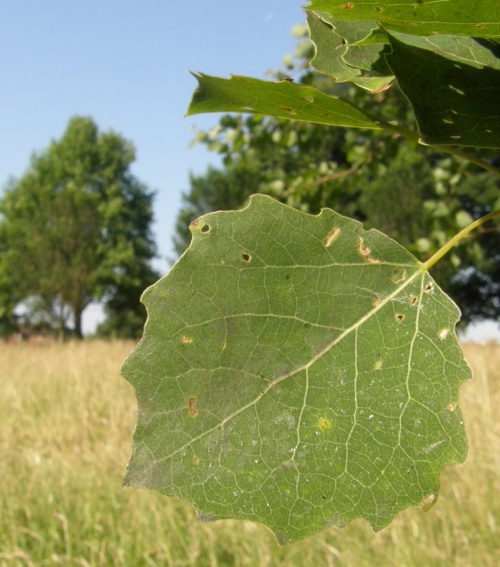 Saharima Roenisch
Evington Park
05 July 2018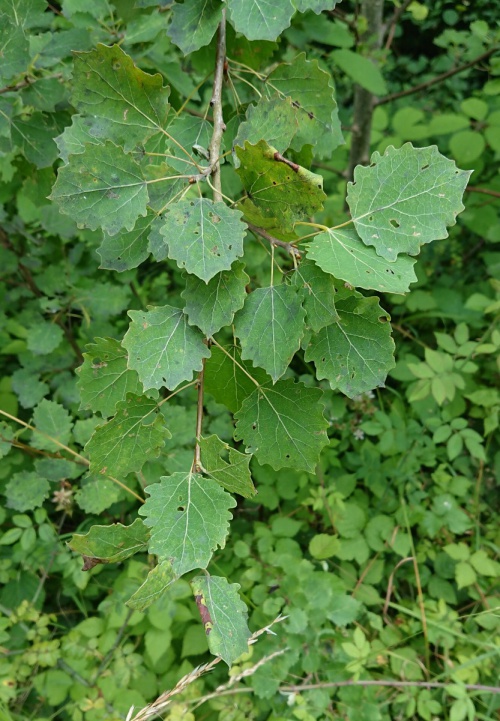 steven lewis
Pickworth Great wood
17 July 2019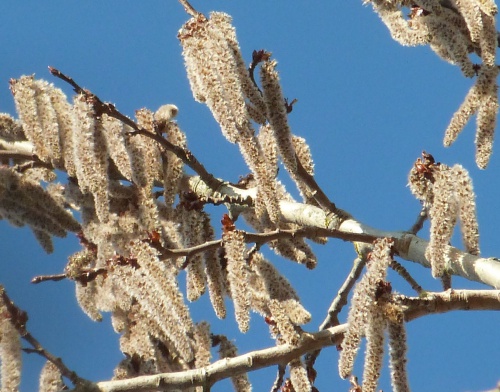 Graham Calow
Sharnford, Fosse Meadows
26 February 2019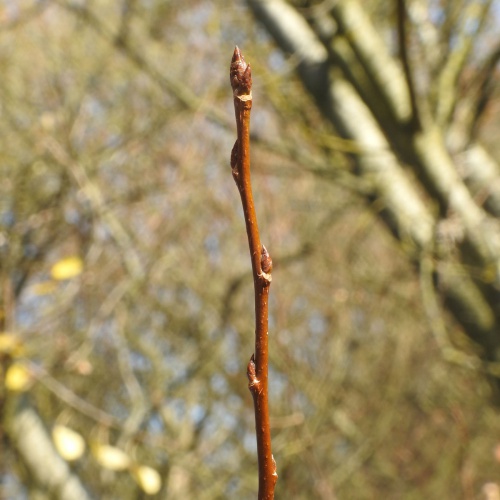 David Gould
Aylestone Playing Fields, Leicester.
18 November 2018
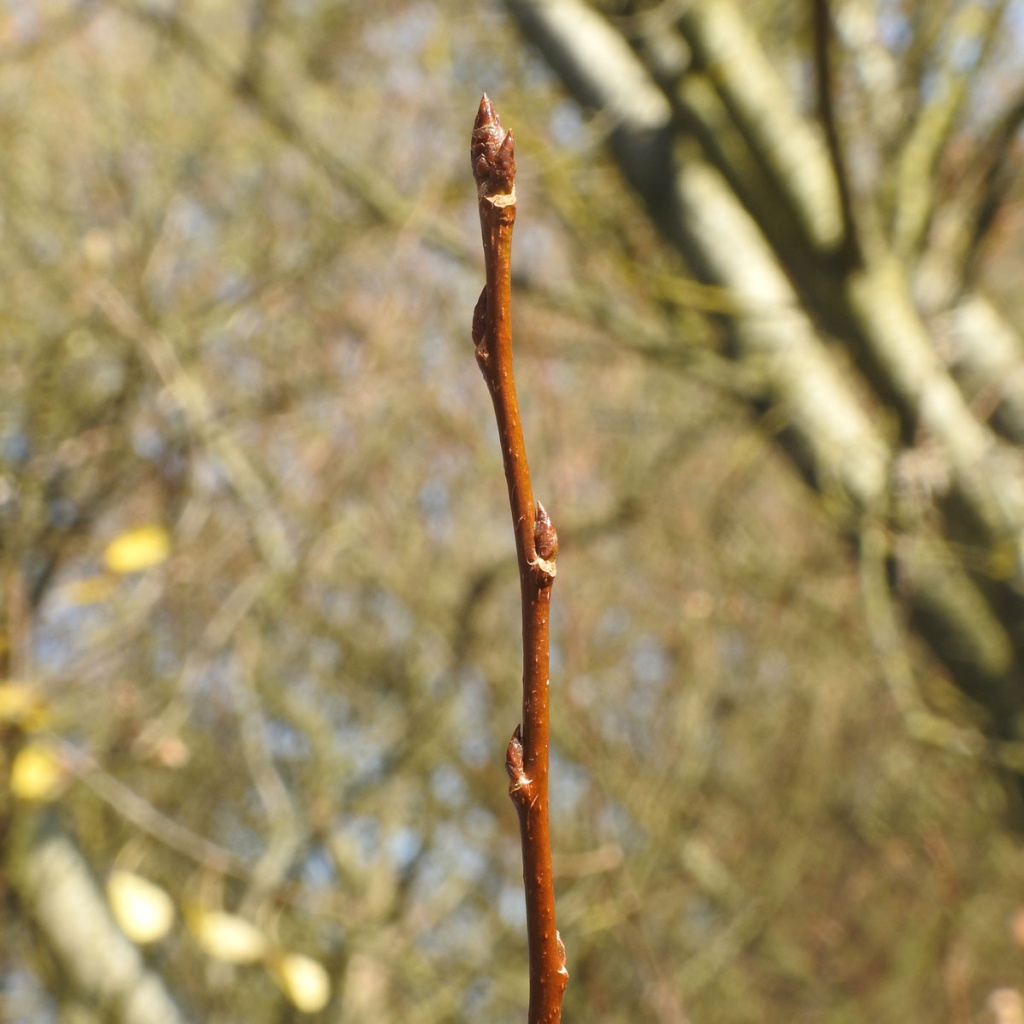
winter twig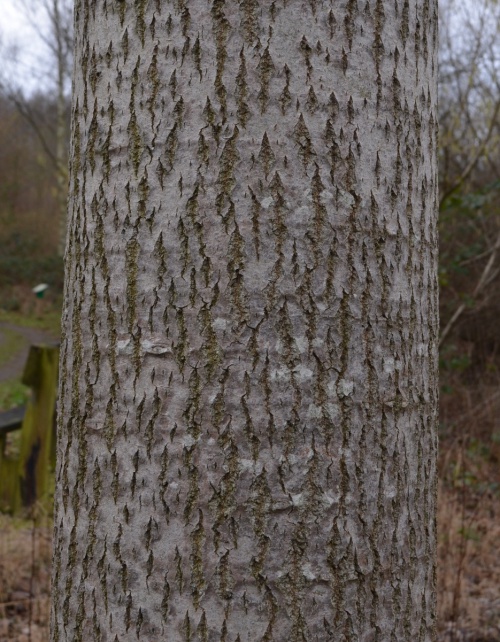 Steve Mathers
Beacon Hill CP
16 February 2017
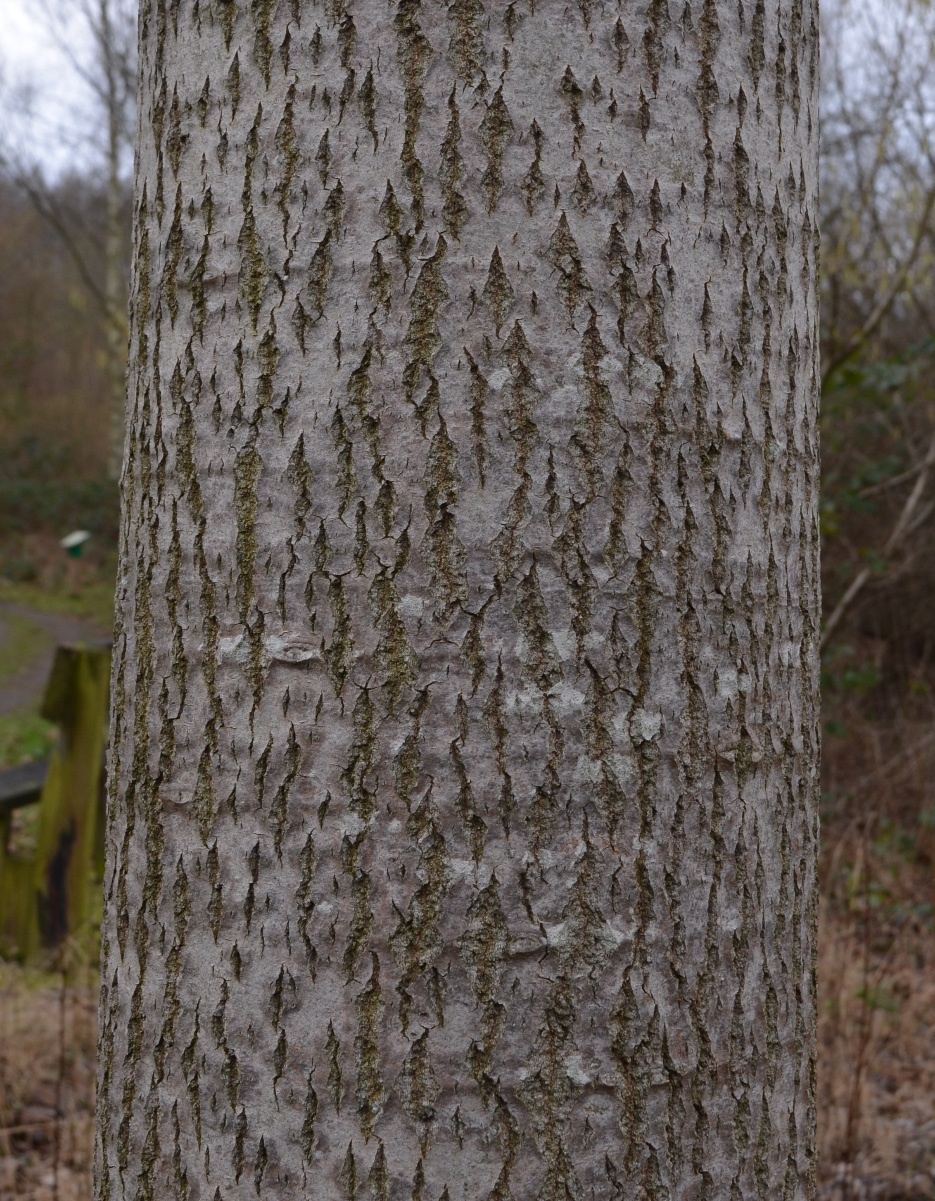
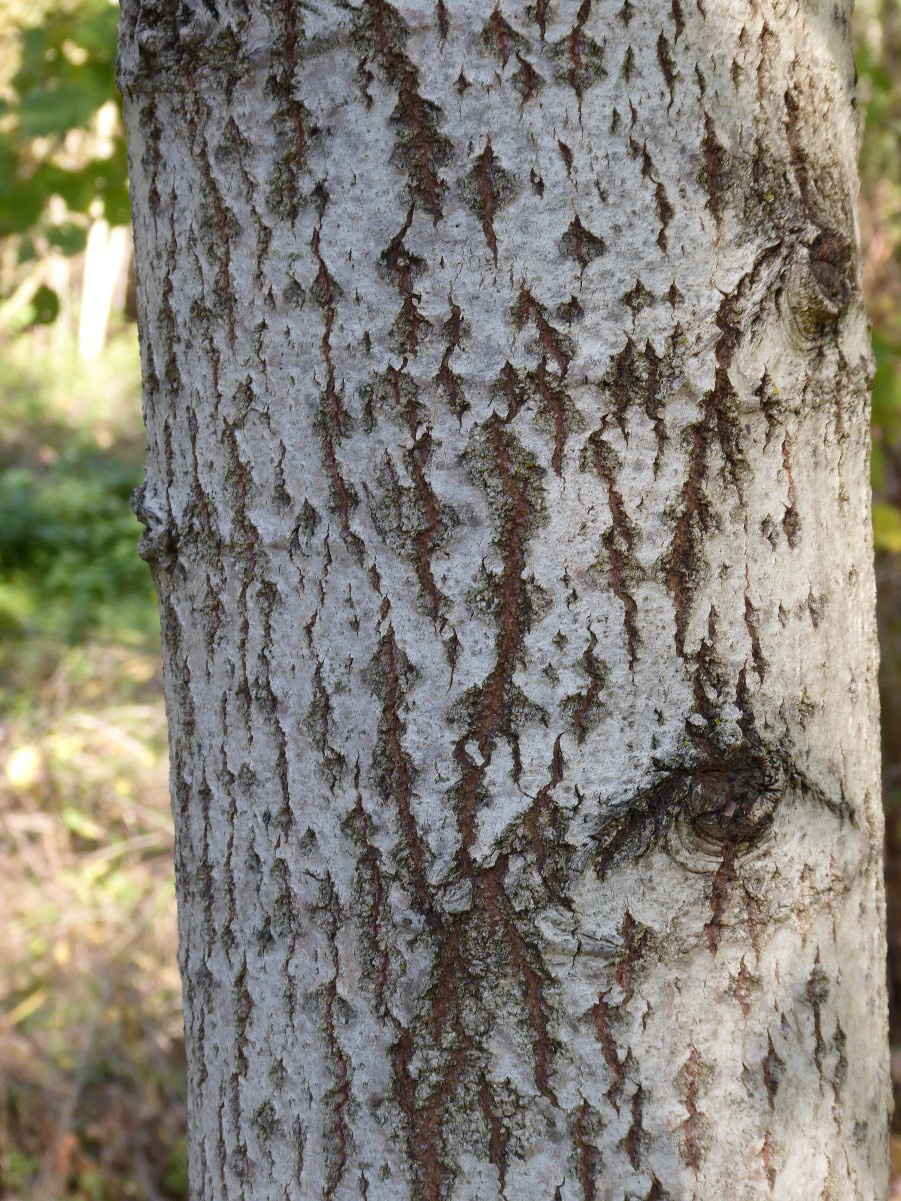
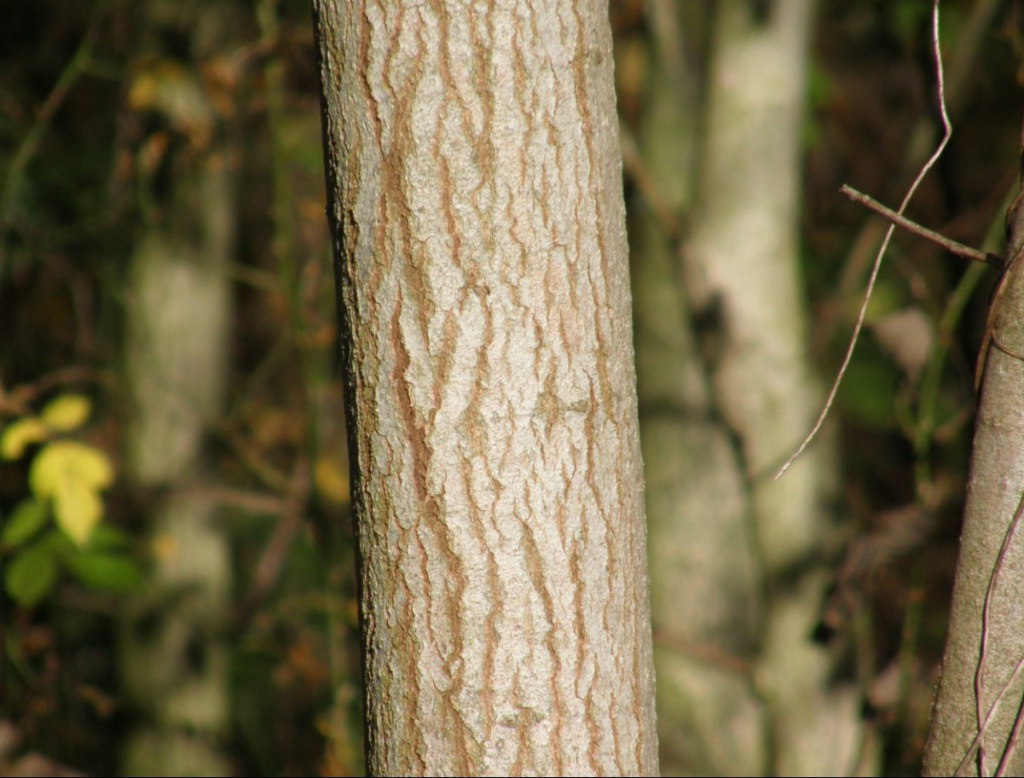
characteristic bark-trunk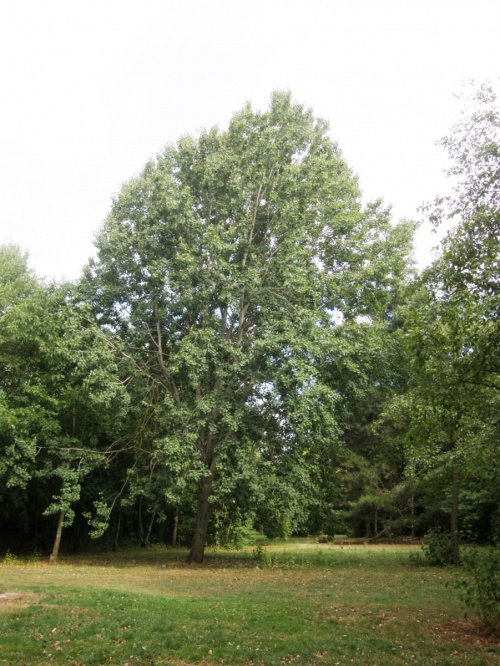 Saharima Roenisch
Knighton Park
10 August 2018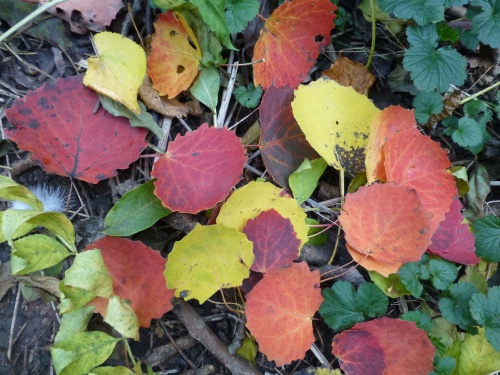 JamieG
Brocks Hill Country Park
12 January 2018 Copse at end of Donkey Lane Sapcote SP 4853 9288 (taken 11.5.2009).JPG) Graham Calow
Graham Calow
Donkey Lane Copse, Sapcote
11 May 2009
leaves from suckers

 Copse at end of Donkey Lane Sapcote SP 4853 9288 (taken 11.5.2009).JPG)
Leicestershire & Rutland Map
Enter a town or village to see local records
MAP KEY:
Yellow squares = NBN records (all known data)
Coloured circles = NatureSpot records: 2025+ | 2020-2024 | pre-2020
UK Map
Species profile
- Common names
- Aspen, Poplar
- Species group:
- flowering plant
- Kingdom:
- Plantae
- Order:
- Malpighiales
- Family:
- Salicaceae
- Records on NatureSpot:
- 107
- First record:
- 07/05/2009 (Calow, Graham)
- Last record:
- 06/05/2026 (Pugh, Dylan)
Total records by month
% of records within its species group
10km squares with records
The latest images and records displayed below include those awaiting verification checks so we cannot guarantee that every identification is correct. Once accepted, the record displays a green tick.
In the Latest Records section, click on the header to sort A-Z, and again to sort Z-A. Use the header boxes to filter the list.
Latest images
Latest records
 Peter Smith
Packington, Redburrow Lane
04 August 2021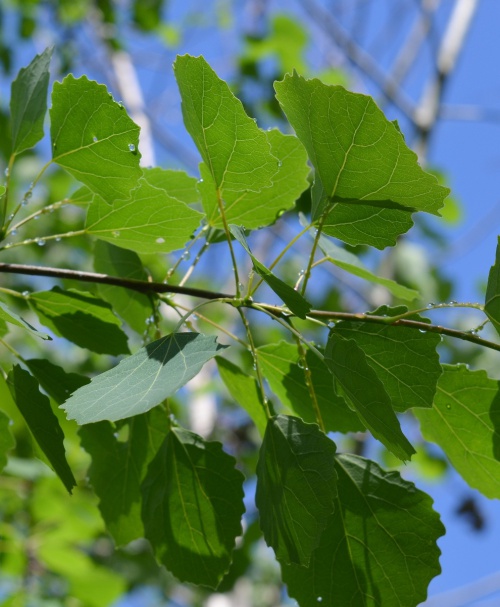 Steve Mathers
Watermead Park South
18 May 2017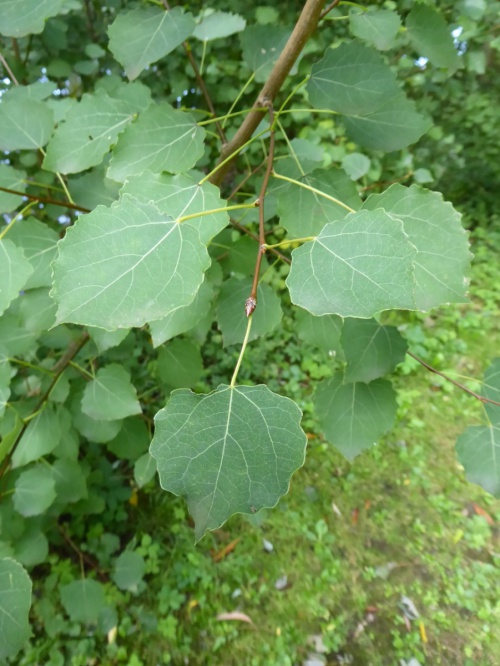 Alan Semper
Melton Priors Close
03 September 2020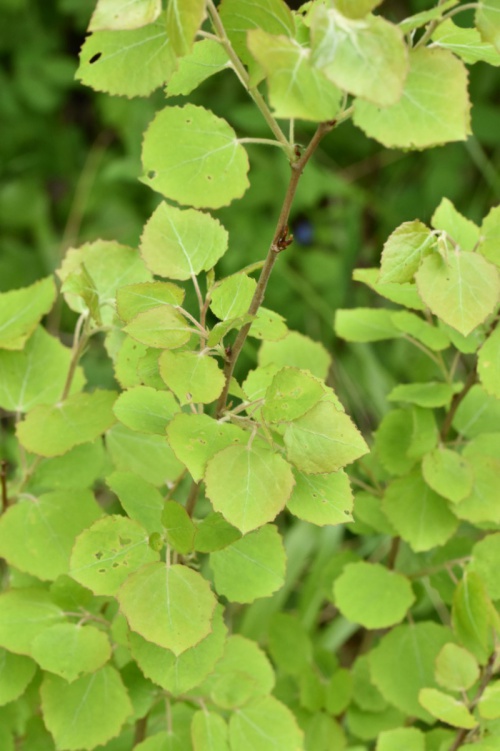 stepgray4
Cloud Wood
28 May 2021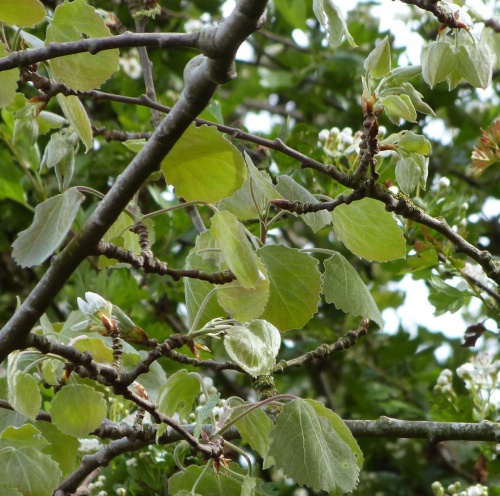 Graham Calow
Bramble Walk disused railway, Cosby
20 May 2016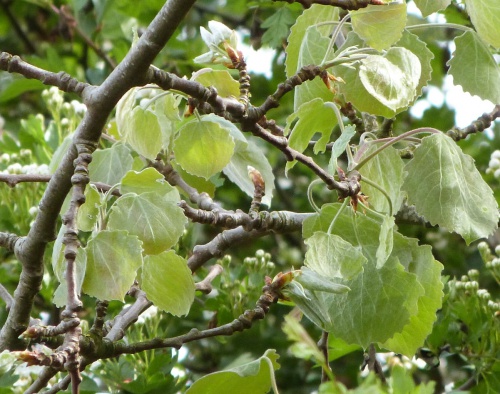 Graham Calow
Bramble Walk disused railway, Cosby
20 May 2016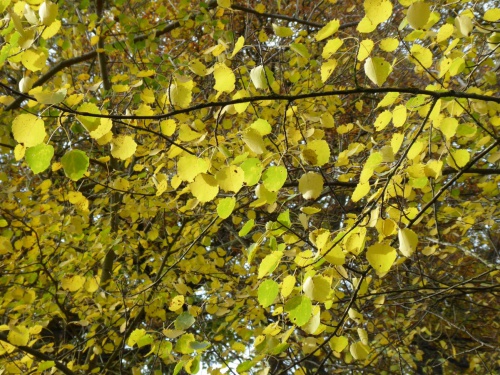 Alan Semper
Melton Priors Close
12 November 2020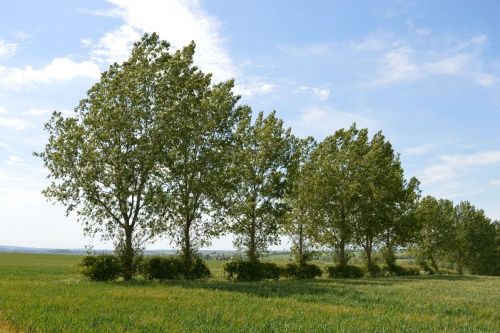 Barbara Cooper
Cotes
04 June 2015
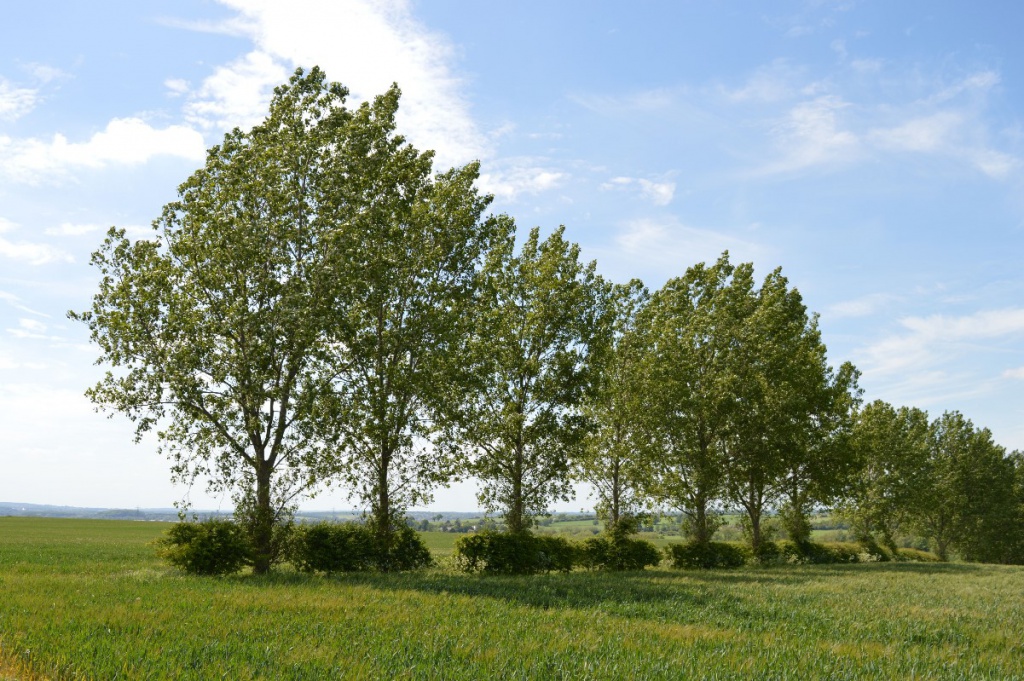
line of Aspen marking an old field boundary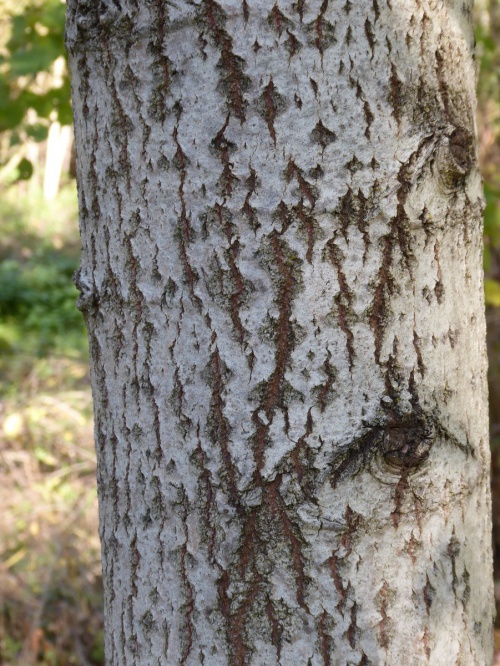 Alan Semper
Rutland Water
25 September 2018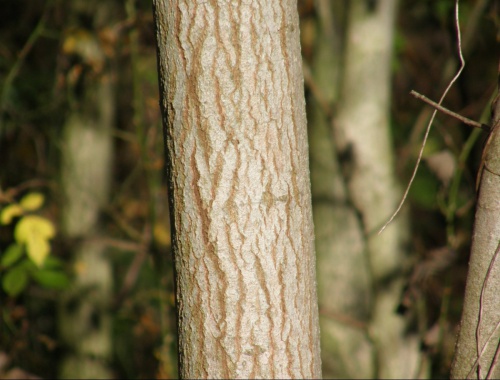 Saharima Roenisch
Watermead Country Park
18 November 2018
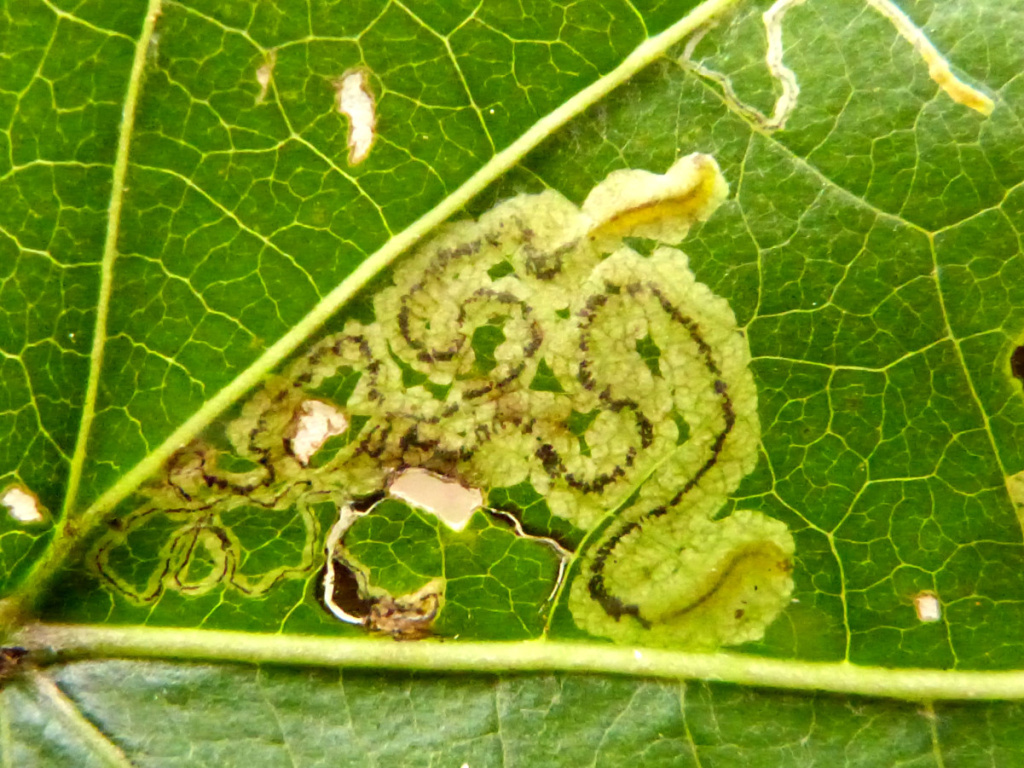
Stigmella assimilella
A small moth with a wingspan of 5.4 to 6.2 mm. Adults difficult to distinguish from other Stigmella species, and more frequently recorded in the larval stage where it creates a leaf mine on the leaves of Aspen (Populus tremula) and occasionally Grey Poplar or White Poplar. The initial corridor is contorted, then widening into a blotch-like corridor; central frass line leaving a clear zone either side.
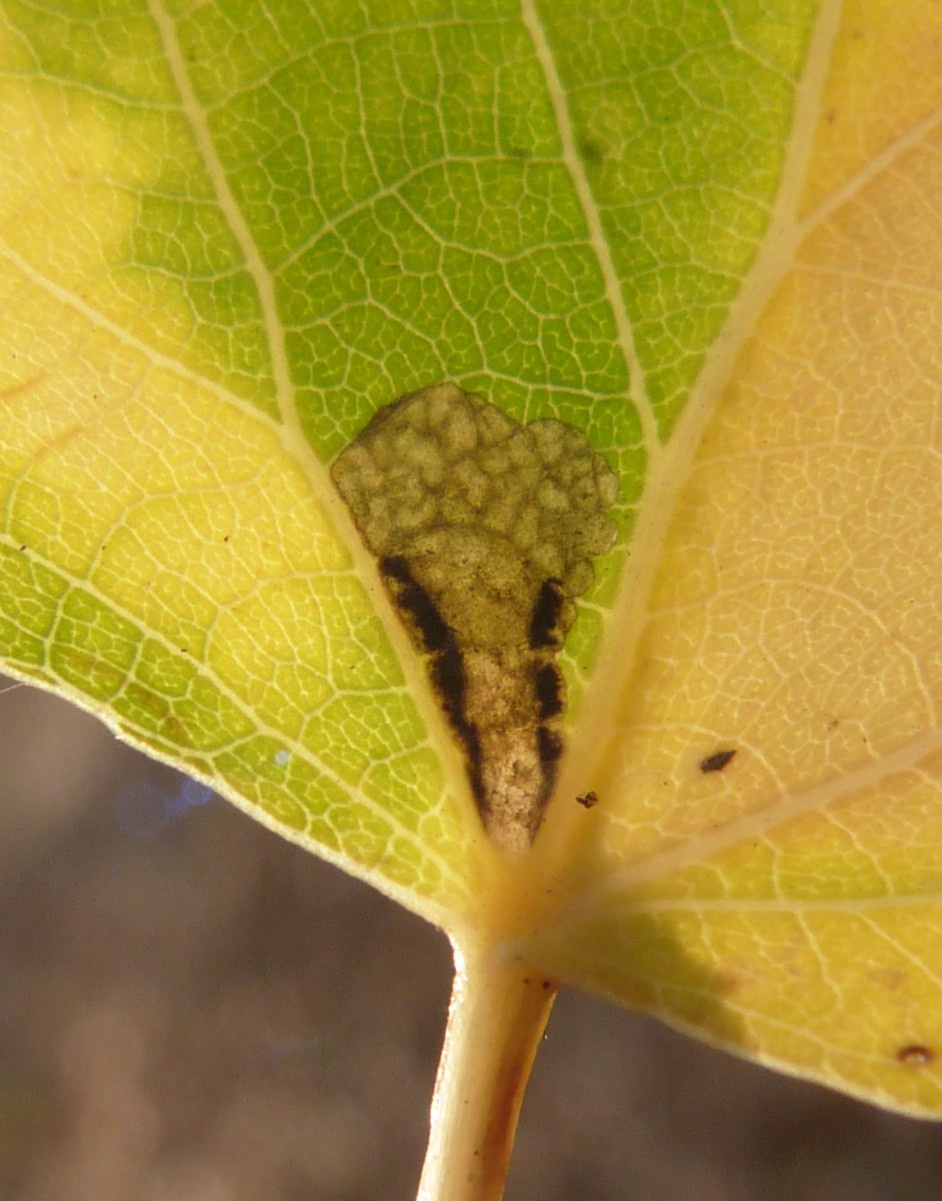
Ectoedemia argyropeza
A small moth with a wingspan of about 7 mm. It lacks discrete white spots but does show a suggestion of mid-costal and dorsal white spots; frontal tuft pale ferruginous, collar concolorous; eyecaps white. The larva mines the leaves of Aspen, first galling the leaf petiole, then forming a triangular blotch extending from the midrib. The larvae continue to feed in 'green islands' in fallen leaves.
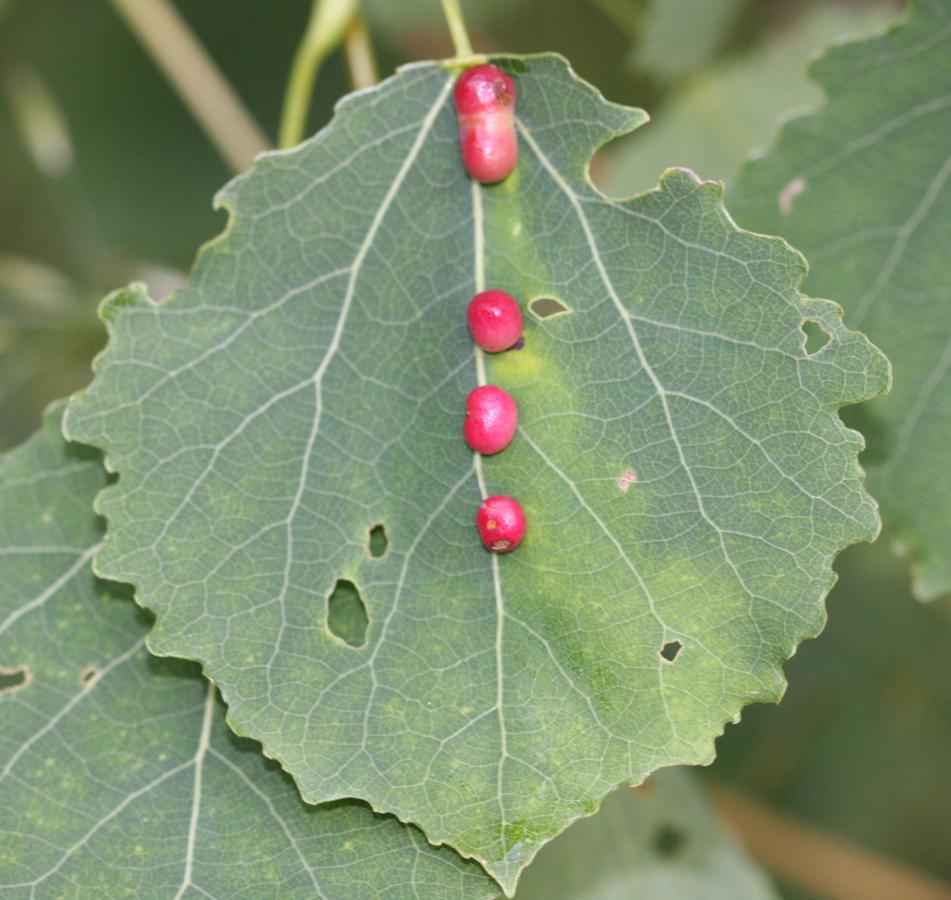
Harmandiola tremulae
Harmandiola tremulae is a gall midge whose larvae feed on Aspen causing galls to form on the upperside of the leaves. The galls are globose, 3 to 4 mm across with thick walls, glossy-red when mature but often turning black later. The opening to the gall is underside, and surrounded by a slightly protruding rim.
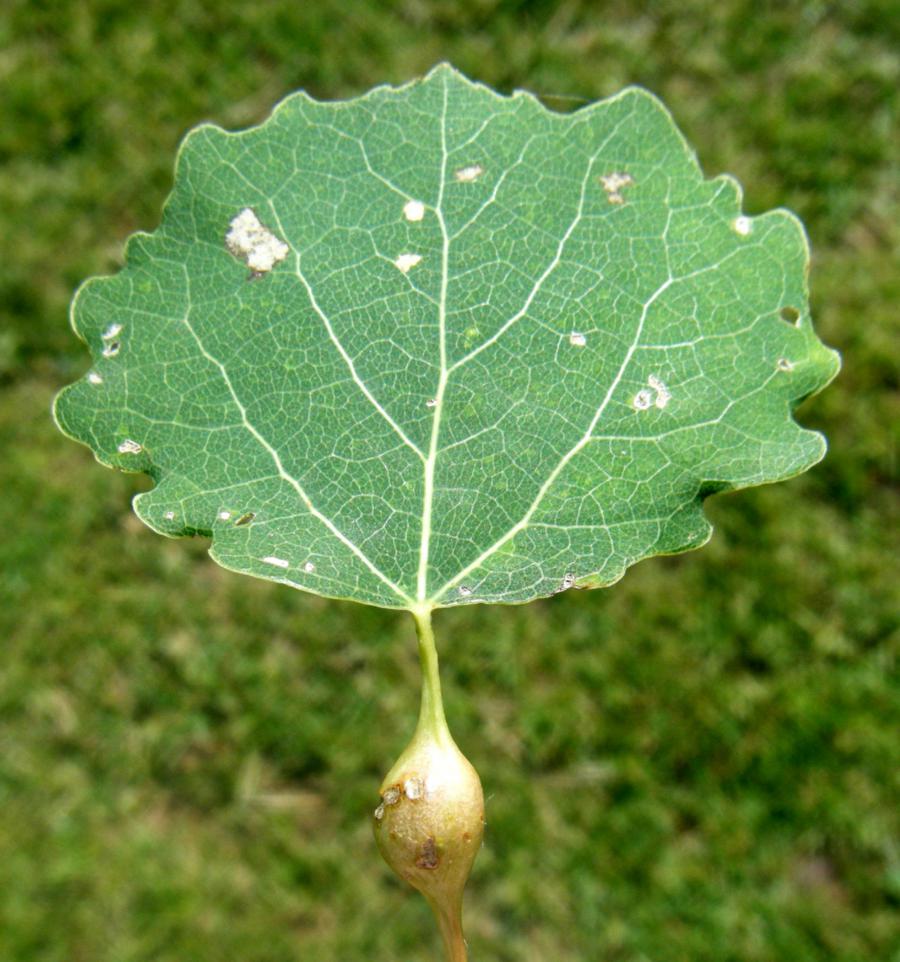
Contarinia petioli
The gall midge Contarinia petioli has a larva that causes a gall to form on the petiole (stalk) of Aspen leaves. The gall is seen more often than the midge. The gall is globular or pear shaped, 3 to 8 mm across and sometimes reddens.
It can occasionally occur in the stem at the junction with a petiole, and also it seems where the petiole enters the leaf.

Harmandiola globuli
The gall midge Harmandiola globuli causes galls on the leaves of Aspen and White Poplar. The galls are raised, rounded, with thin walls, and sometimes with a collar-like ring. They 2.5 mm across and are dull red or yellowish. They contain larva which are orange when mature.

Agromyza albitarsis
The larvae of the fly Agromyza albitarsis mine the leaves of Aspen, hybrid Black Poplar, other poplars and willows, forming a large greenish blotch mine which turns brown.
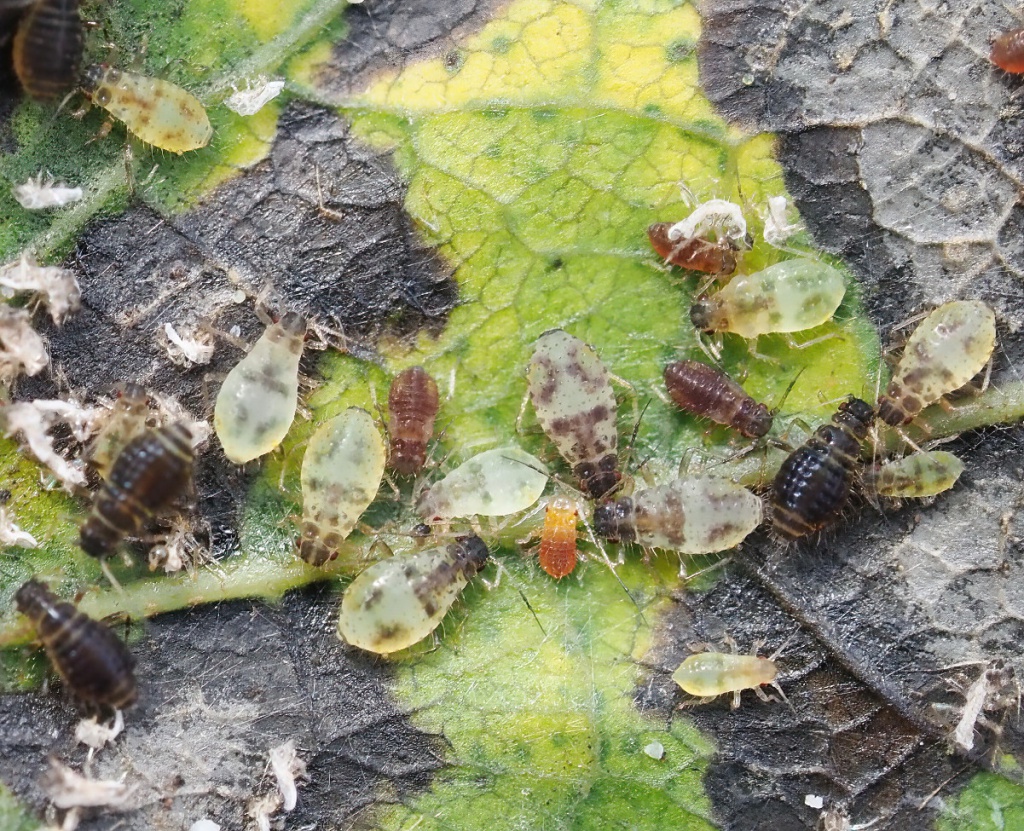
Chaitophorus tremulae
The apterae of the aphid Chaitophorus tremulae are elongate oval with the dorsum solidly blackish sclerotic, rather densely sculptured with denticular spinules (=small toothlike spines), and very often with a paler line along the mid-dorsum.
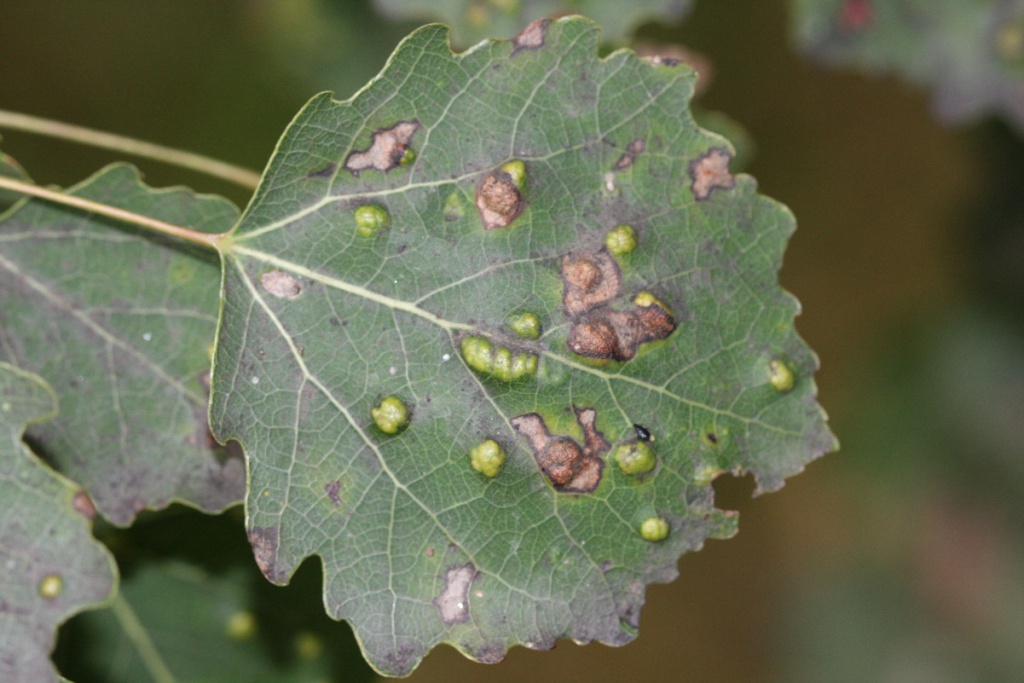
Phyllocoptes populi
Phyllocoptes populi is a mite that causes galls to form on the leaves of Aspen and very occasionally on other members of the Poplar family. The gall has a distinctive yellowish bulge on upperside; the underside is an erineum with hairs that the mites live in between. The hairs below are pale at first, reddish or brown later, each broadened at the tip.

Heterarthrus ochropoda
The larva of the sawfly Heterarthrus ochropoda mine the leaves of Populus species, usually Aspen in Britain, forming a large, deep, upper-surface blotch that starts at the leaf margin, without an accumulation of frass. Around the oviposition site the leaf turns reddish brown. Frass occurs in scattered grains. The larva is white with a brown head, and distinctive markings just beneath the head on the underside. Feet are short and stubby.
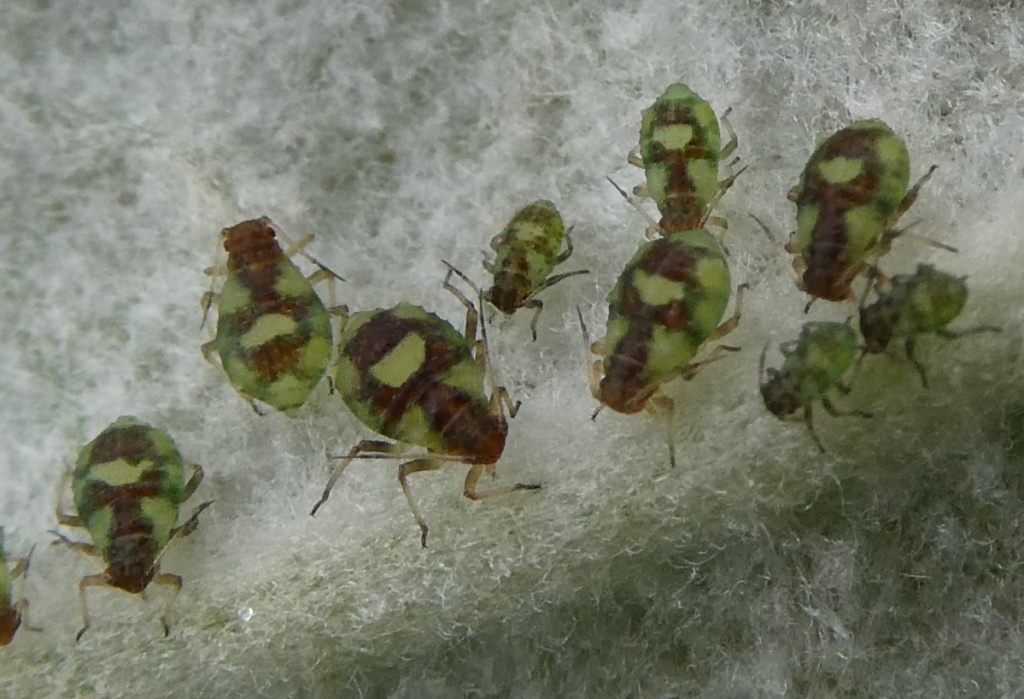
Chaitophorus populeti
The aphid Chaitophorus populeti lives on the young shoots and terminal leaf petioles of various Poplar species, especially those of Aspen and White Poplar and their hybrid Grey Poplar. The body length is 1.5 to 2.9 mm. The nymphs of this species are distinctively patterned, the adult apterae are black and more difficult unless recorded in association with nymphs.
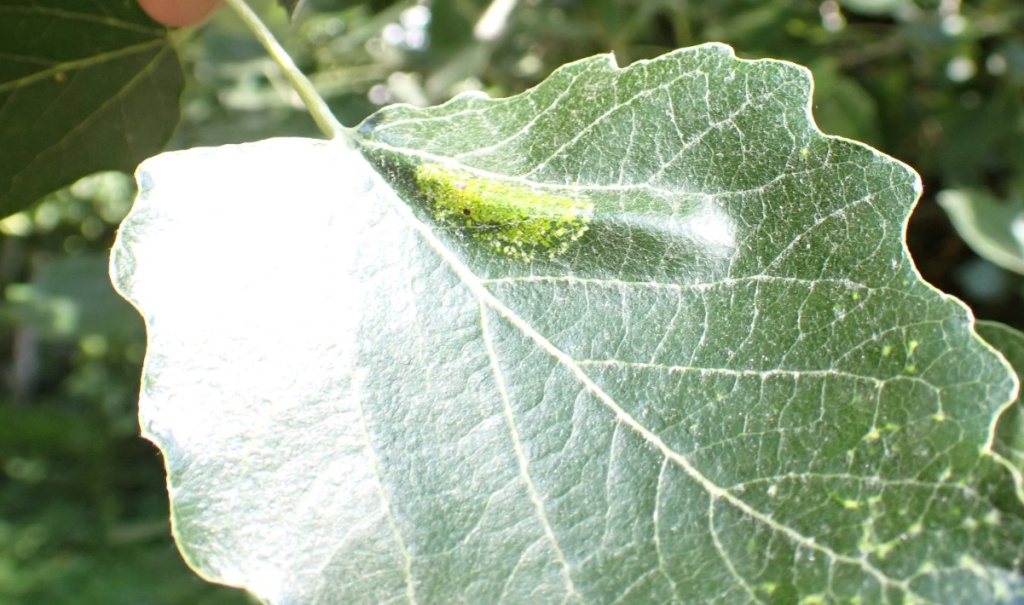
Phyllonorycter comparella
The larva of the moth Phyllonorycter comparella makes a mine on the underside of leaves of Grey Poplar, White Poplar and occasionally Hybrid Black Poplar. The mines are small and hard to find on the commonest hosts, Grey or White Poplar; there is little contraction or distortion of the leaf, and the underneath of the mine is hidden in the woolly undersurface of the leaf.
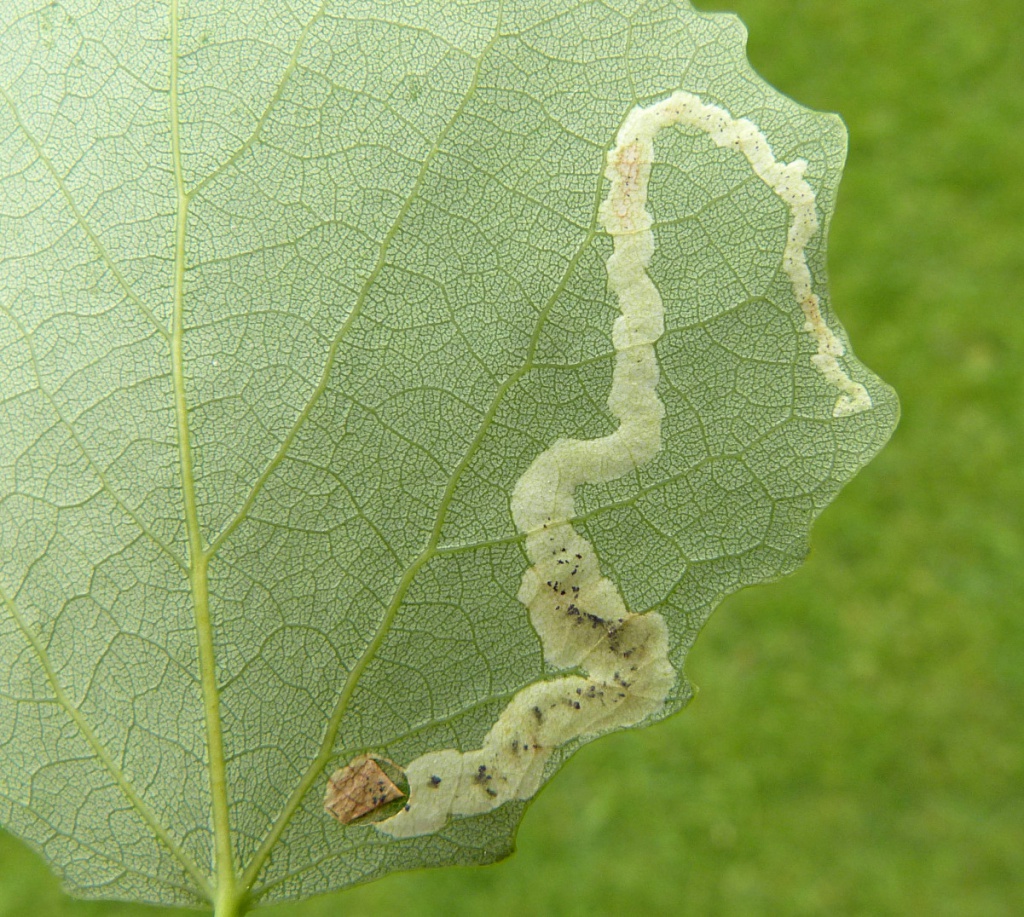
Aulagromyza tremulae
The larva of the Agromyzid fly Aulagromyza tremulae mines the leaves of Aspen (and possibly Black Poplar). The mine is a long winding gallery on the underside of the leaf.
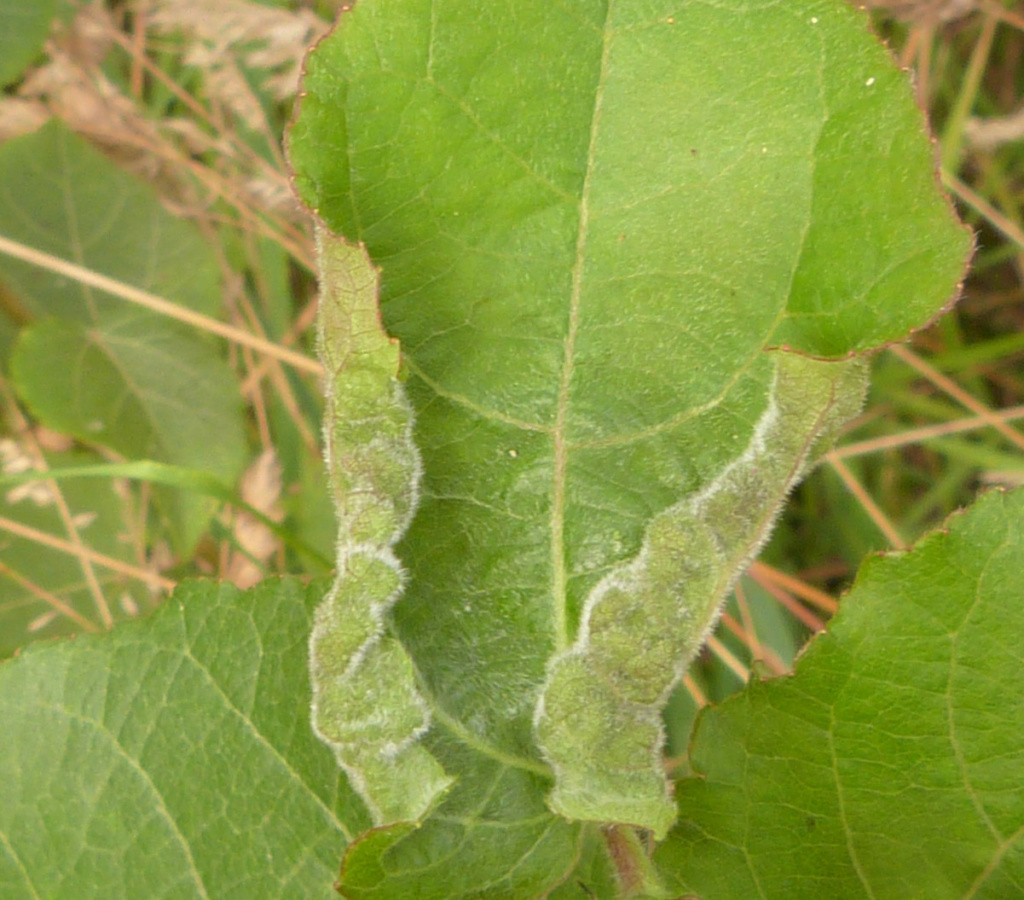
Dasineura populeti
The larvae of the gall midge Dasineura populeti cause galls to form on the leaves of some Poplar species. The host is nearly always Aspen, but very rarely Populus alba or P x canescens are used. The leaf margins roll upwards to form the galls and these may contain the white midge larvae. Identification of the species causing the gall is difficult, and unless the larvae have been bred through and the adults identified, the identification of species cannot be confirmed with certainty.
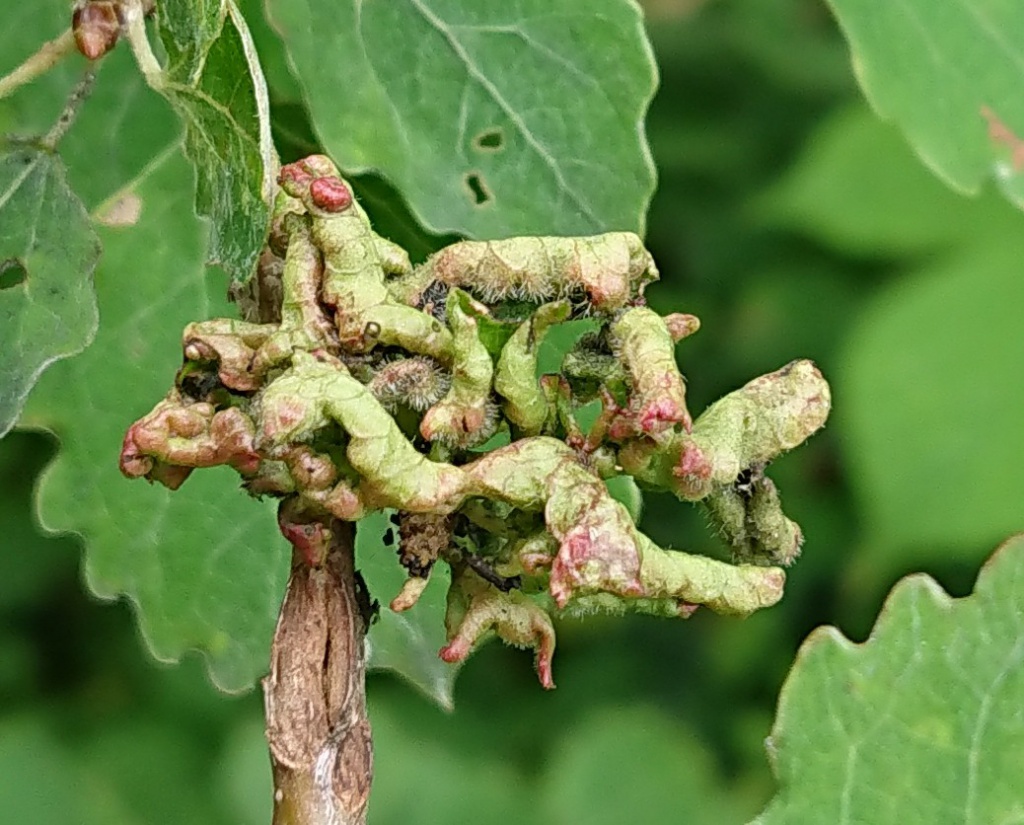
Aceria dispar
The mite Aceria dispar causes galling of the leaves of Aspen (and possibly White Poplar). The margins of the young leaves are rolled towards the midrib, usually affecting both sides. It often affects many leaves, which become distorted and often bunched together. These leaf rolls contain mites.